

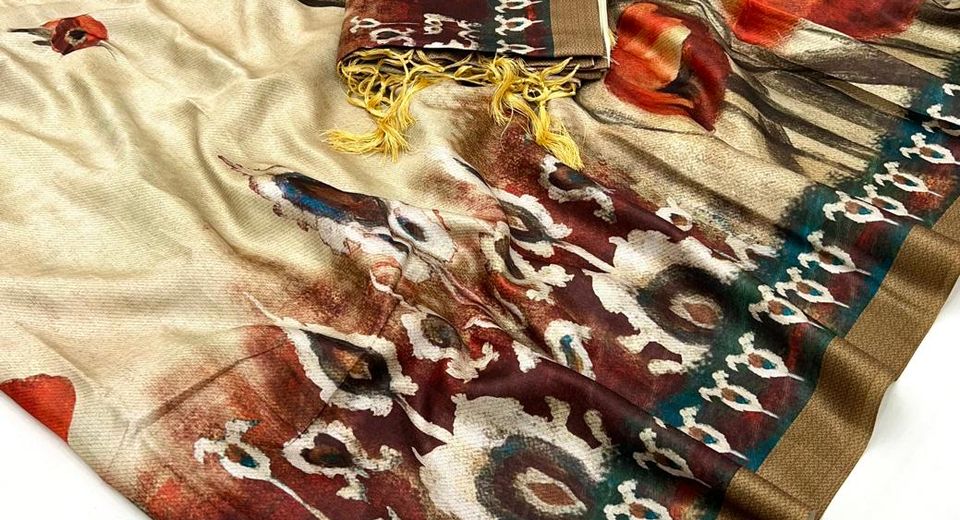
A cold-weather layer should warm an ethnic outfit without turning its most beautiful details into a blank silhouette. Winter Shawls and Stoles That Complement Ethnic Wear Instead of Hiding It depend on three practical decisions: fabric weight, visual proportion and drape placement. A soft pashmina can frame a saree, salwar suit or lehenga while leaving the blouse, zari border and embroidery visible.
The easiest mistake is choosing a large, heavily patterned wrap and wearing it across the entire front of the outfit. A better approach treats the shawl or stole as part of the composition. The layer should either echo one colour already present, create a deliberate contrast or add texture to a simple garment.
Winter Shawls and Stoles That Complement Ethnic Wear Instead of Hiding It: Why do layers hide the outfit?
Winter layers hide ethnic wear when their scale, contrast or placement competes with the garment underneath. A broad shawl pulled tightly around the shoulders can cover a blouse neckline, saree pallu, dupatta work and the upper embroidery of a lehenga in one movement.
Visual weight matters as much as physical weight. A dense jacquard shawl in dark maroon may look heavier than a fine ivory pashmina even when both wraps are similar in size. Large, high-contrast motifs attract attention before the eye reaches the outfit. That effect can be useful with a plain kurta, but distracting with a heavily embroidered anarkali.
Layering becomes more balanced when one garment leads and the other supports it. A saree with a wide zari border benefits from a shawl with a restrained edge or quiet body. A monochrome salwar suit can handle a printed stole because the base garment provides visual space. A sequin lehenga usually needs a solid wrap with a narrow border rather than another heavily embellished layer.
Winter Shawls and Stoles That Complement Ethnic Wear Instead of Hiding It: How should you choose fabric?
Choose a shawl by matching its warmth, weight and fall to the structure of the ethnic outfit. A fluid saree works with a softly falling wrap, a structured lehenga needs controlled shoulder placement, and a salwar suit can handle a more graphic stole.
Which fibres provide useful winter warmth?
Pashmina is valued for warmth, softness and a light hand, making it suitable when coverage is needed without a bulky outline. Wool gives stronger insulation but can appear more structured. Silk blends offer sheen and a smooth fall, although silk blends may need another layer in very cold weather. Cotton stoles suit mild winter days but don't provide the same warmth as pashmina or wool.
For an outdoor evening in northern India, a medium-weight pashmina or wool wrap is more practical than a very thin decorative stole. For an indoor wedding venue, a lighter shawl may be enough because heating, movement and close seating reduce the need for maximum insulation. Fibre labels should be checked instead of relying only on words such as "winter" or "warm."
How does proportion affect the silhouette?
A shawl should cover the shoulders and upper arms without extending so far forward that it erases the waistline or front embellishment. A narrow stole suits a fitted kurta, while a wider shawl works with a simple saree blouse or understated suit. Very wide wraps can overpower petite frames unless one end is allowed to fall vertically.
A shoulder wrap that ends around the hip creates a neat, contained line. A longer shawl reaching the knee produces a dramatic column and works best with a relatively simple outfit. Petite wearers can reduce bulk by folding a broad shawl lengthwise before draping it.
Winter Shawls and Stoles That Complement Ethnic Wear Instead of Hiding It: How do colour and pattern help?
Colour looks intentional when the shawl repeats a secondary shade from the outfit or introduces a controlled contrast. Matching the exact dominant colour is unnecessary; matching an undertone, border colour or jewellery finish often creates a more sophisticated result.
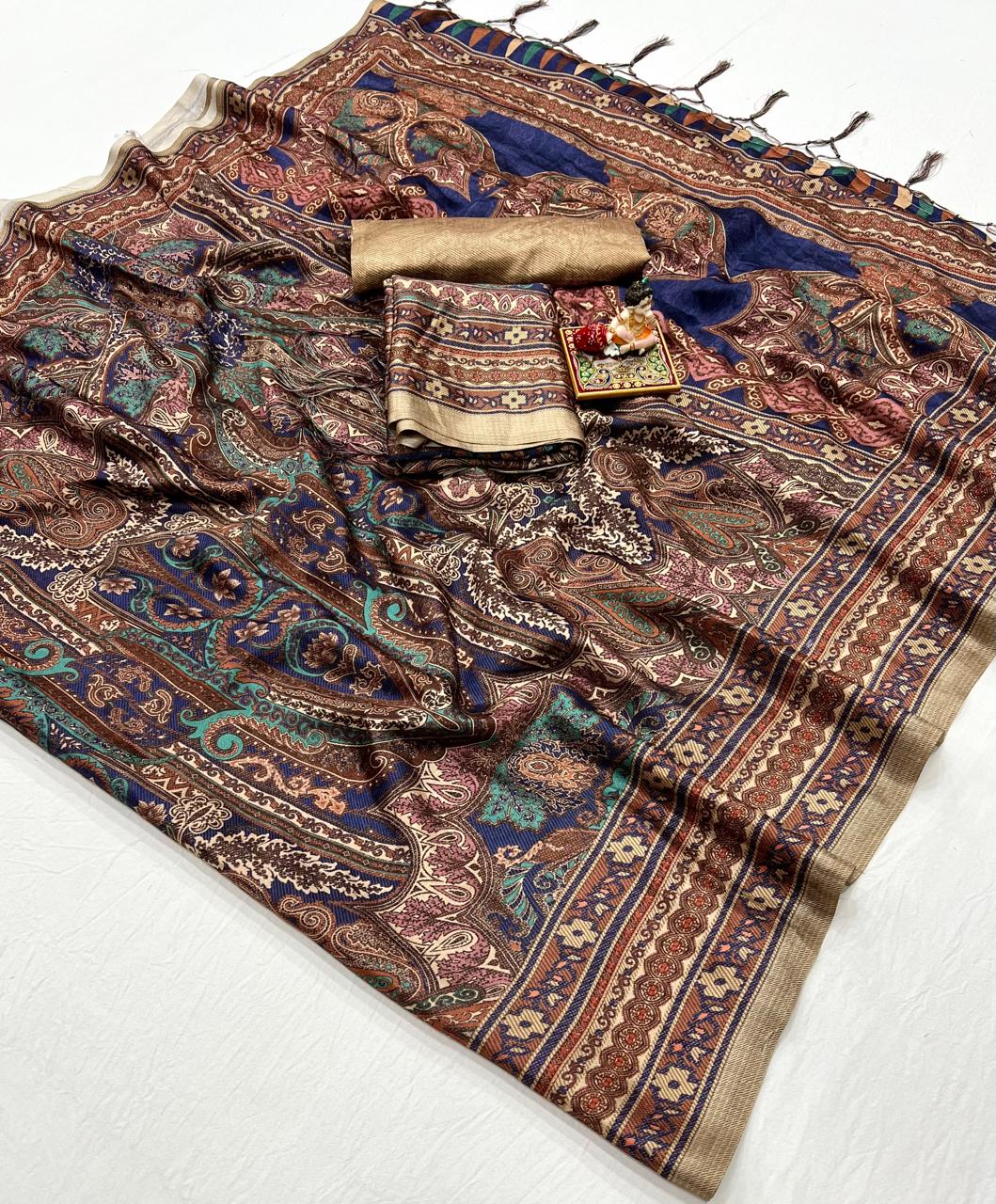
An ivory shawl can soften a jewel-toned saree, while a deep brown wrap can ground cream, rust and gold. A blue shawl can bring out blue threadwork in a neutral suit without requiring matching jewellery. When the outfit already contains several colours, select the least dominant shade for the wrap so the layer supports rather than multiplies the visual noise.
Print scale should follow garment detail. Small florals suit fine embroidery and narrow saree borders because small motifs don't compete with individual design elements. Paisley designs create a stronger traditional statement and are most effective over a plain or lightly patterned base. Broad geometric borders can echo the straight lines of a bandhani border, temple border or tailored kurta panel.
Metallic elements require restraint. A shawl with zari can work beautifully with a silk saree that has a narrow gold edge, but two broad metallic borders can make the upper body appear crowded. Gold zari generally harmonises with warm ivory, mustard, rust and green. Silver zari sits naturally with grey, blue, mauve and cool pink.
Winter Shawls and Stoles That Complement Ethnic Wear Instead of Hiding It: Which drapes preserve detail?
The open shoulder drape preserves the most outfit detail because the shawl rests behind the neck or across the arms instead of covering the torso. The right method depends on whether warmth, movement or a formal silhouette matters most.
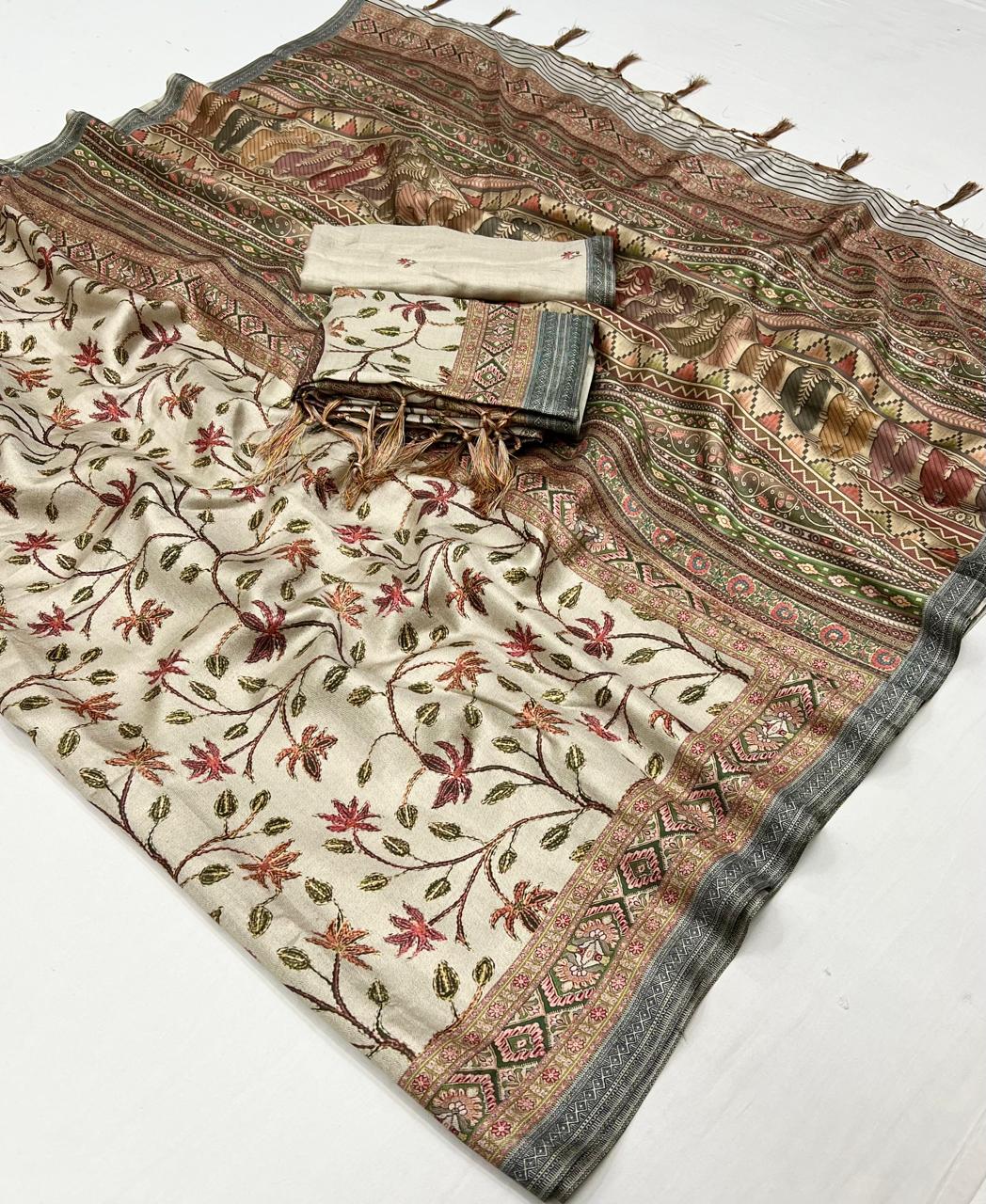
Open shoulder drape
Place the centre of the shawl behind the neck and let both ends fall evenly over the front of the shoulders. Keep the front open so the blouse, kurta neckline or lehenga embroidery remains visible. The method works especially well with a saree because the pallu and shawl remain separate visual elements.
One-shoulder vertical fall
Rest one end on the opposite shoulder and allow the longer end to fall straight down the front or back. The vertical line keeps one side of the outfit exposed and can make the overall silhouette appear longer. A discreet brooch can secure the shoulder, but delicate pashmina fibres should not be pierced repeatedly because punctures may damage the weave.
Folded stole across the arms
Fold a broad stole lengthwise and place it across the forearms rather than around the neck. The method adds warmth during photographs or seated conversations while leaving the neckline and front panel unobstructed. The folded edge should remain smooth instead of being scrunched into a thick roll.
Back-drape for a lehenga
Place the shawl across the upper back and secure it lightly at both shoulders, leaving the front of the choli and skirt clear. The arrangement is useful when the blouse has significant embroidery or when the lehenga waistband needs to remain visible. A shorter wrap prevents the back-drape from dragging near the hem.
Winter Shawls and Stoles That Complement Ethnic Wear Instead of Hiding It: What combinations work?
Specific fabric and colour combinations make styling easier than broad rules about traditional or modern dressing. The following examples show how a shawl can add warmth while retaining the identity of the base garment.
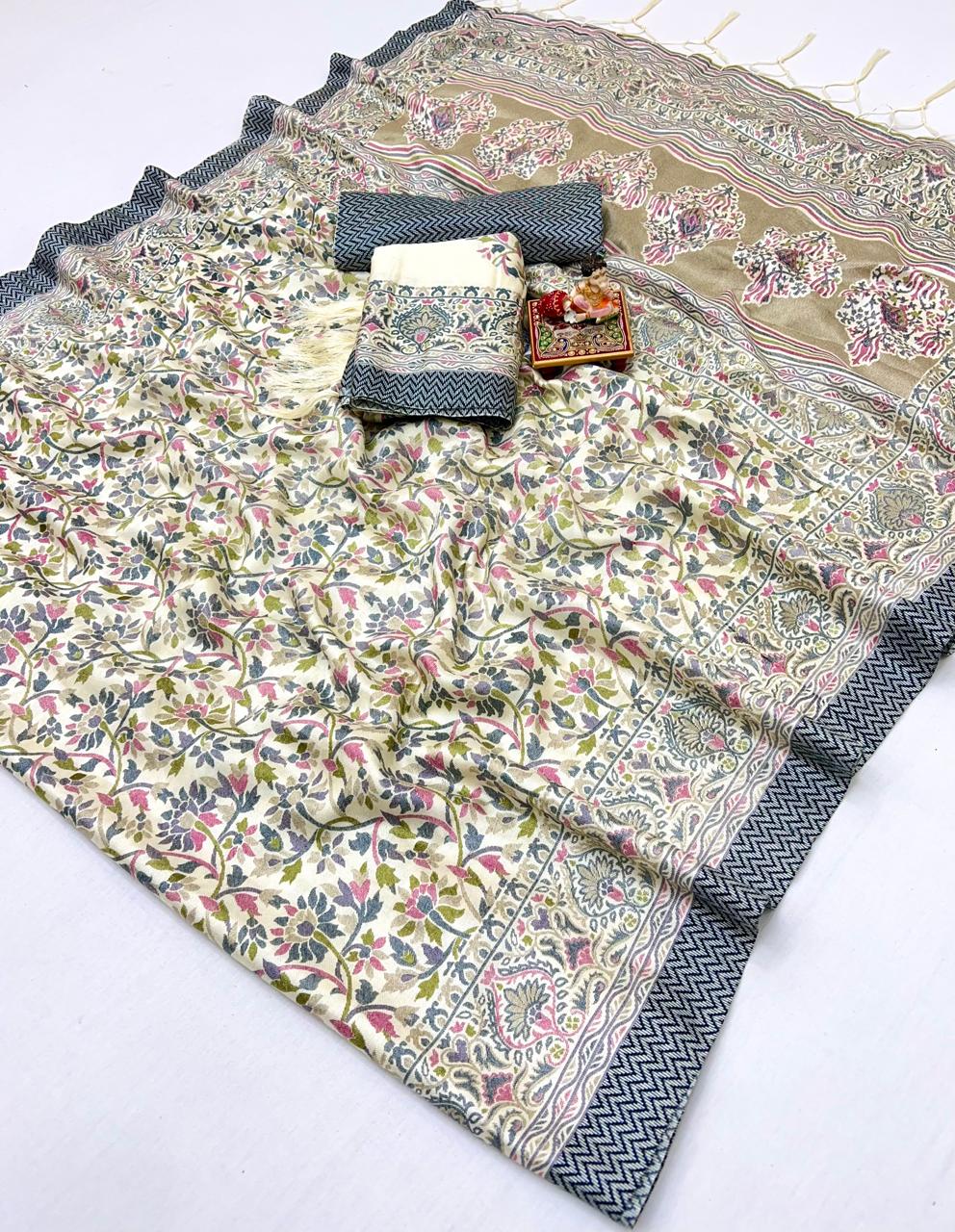
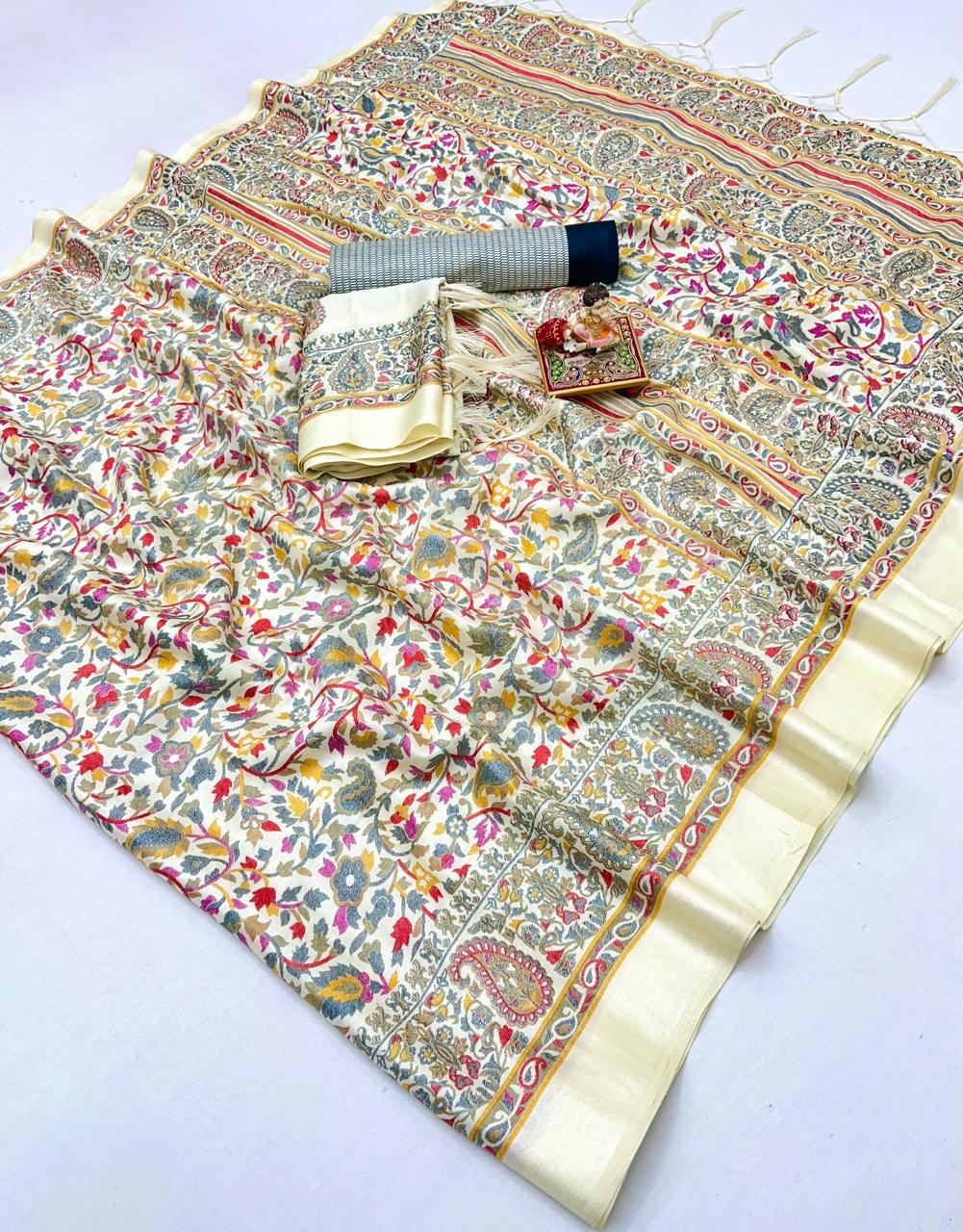
Cream Floral Printed Pashmina Saree With Shawl Set demonstrates a low-contrast approach. Cream allows the floral print to remain visible without creating a harsh break between saree, blouse and wrap. Wear the shawl over both shoulders for a formal setting, or use the open shoulder drape when the saree border deserves attention.
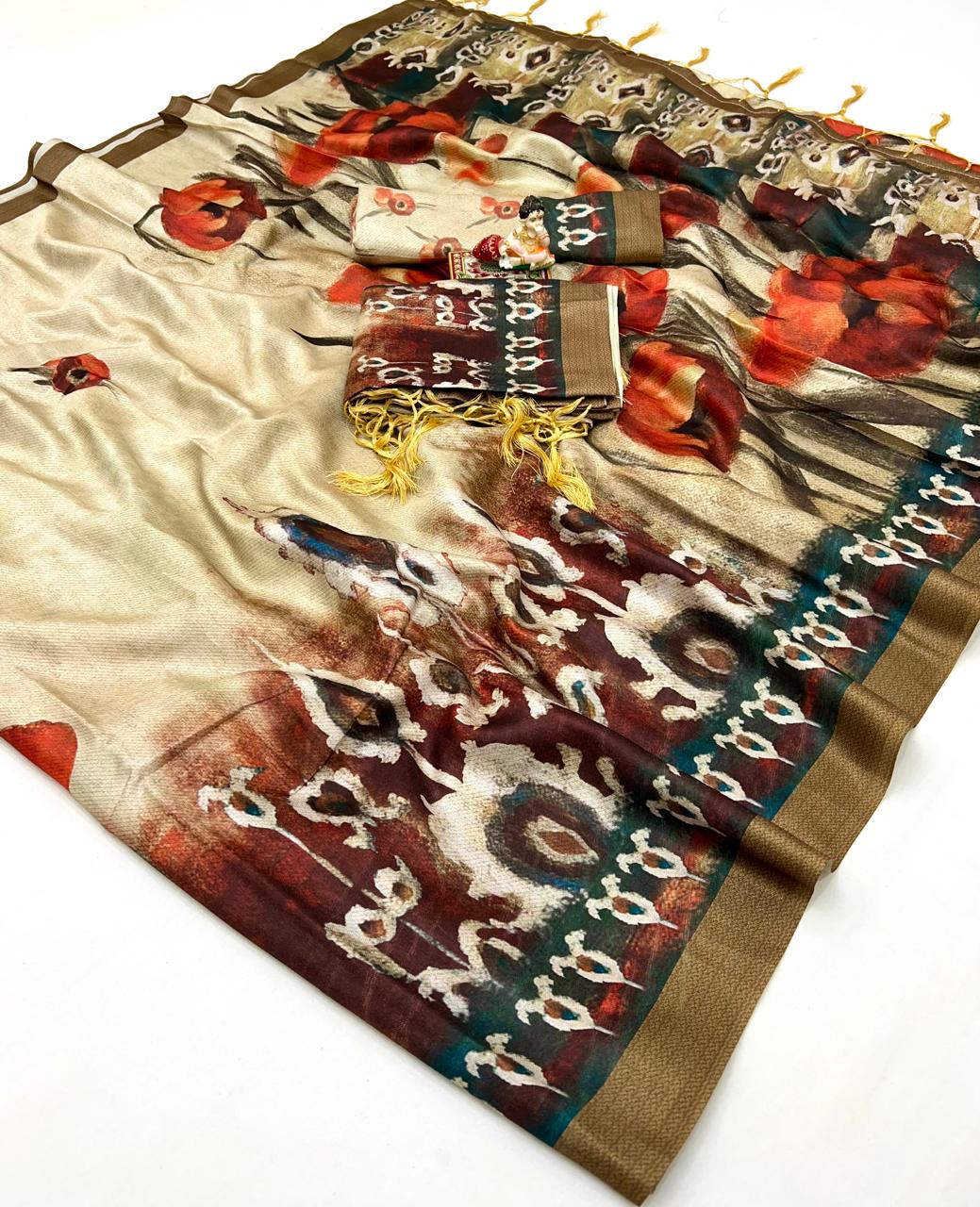
Brown Floral Pashmina Saree With Shawl And Blouse suits earthy jewellery such as antique gold, brass or uncut-style stones. Brown creates a grounded winter palette with rust, beige and muted orange. Keep the shawl slightly open at the front so the blouse remains part of the outfit rather than disappearing under the wrap.
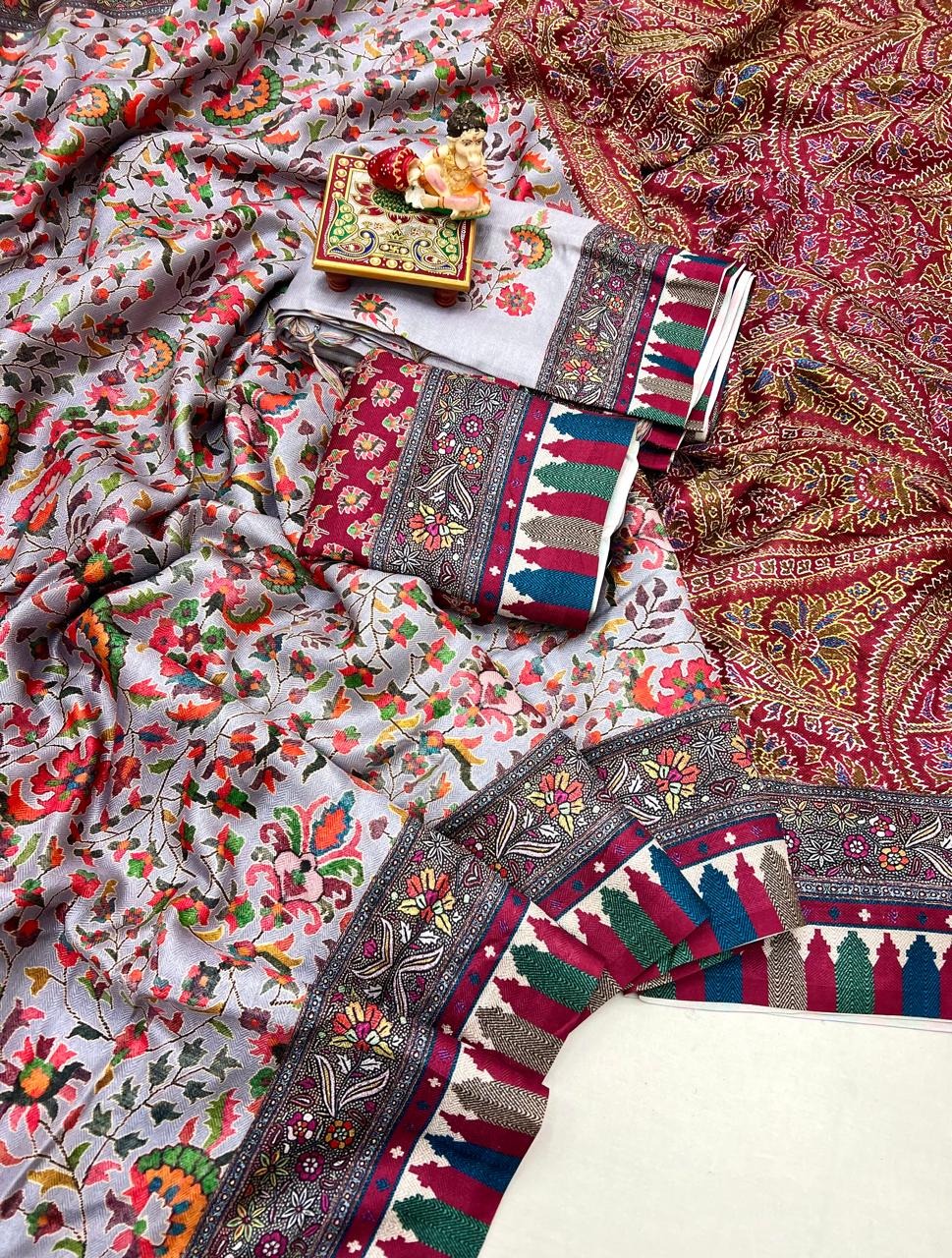
Multicolor Paisley Pashmina Saree With Shawl Set already carries strong pattern and colour, so the drape should be uncomplicated. A single-shoulder fall prevents paisley motifs from bunching near the neckline. Choose jewellery in one of the quieter colours from the print instead of adding another bright shade.
Soft Floral Pashmina Saree with Shawl Combo works well for a daytime gathering because a soft floral pattern has less visual weight than a large paisley or broad border. Fold the shawl lengthwise if the saree has detailed pleats, and let the folded edge sit just below the shoulder line.
Traditional Cream Pashmina Saree With Shawl For Women offers a neutral base for a coloured blouse, embroidered potli or gemstone jewellery. A contrasting blouse in emerald, wine or royal blue can remain the focal point when the cream shawl is worn open. A narrow waist belt should be avoided if the shawl is wrapped tightly because extra layers can create an uneven fit.
Kashmiri Style Pashmina Saree With Shawl Set benefits from a restrained drape that allows its regional-inspired character to lead. Let one patterned edge fall vertically rather than folding the entire shawl over the front. The placement gives the eye a clear view of the saree while preserving the warmth and craft of the wrap.
Heritage Paisley Pashmina Saree has enough pattern to function as the principal statement. Pair it with a plain blouse and minimal earrings, then keep the shawl behind the shoulders or over one arm. A crowded necklace can interrupt the neckline and compete with the paisley scale.
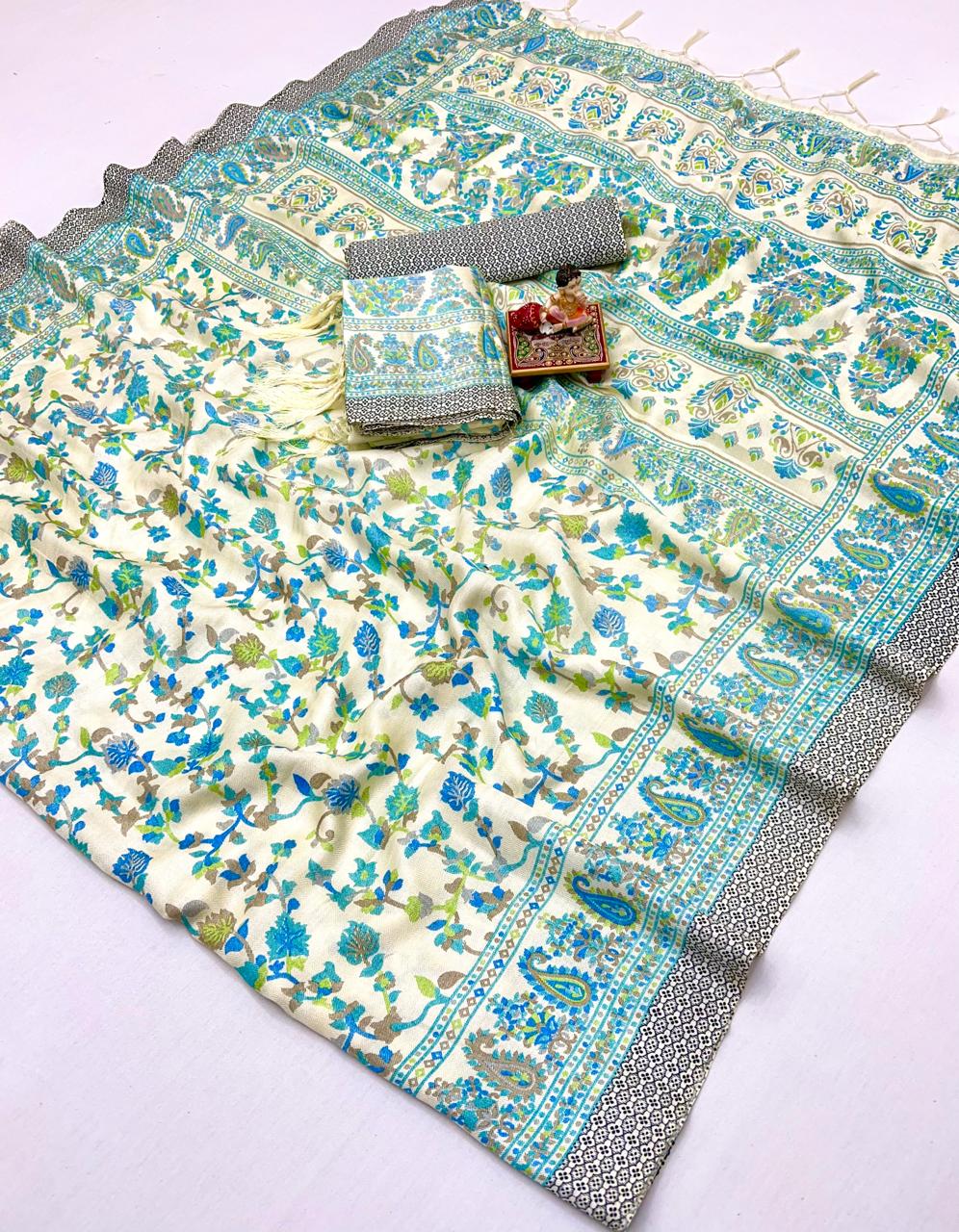
Blue Floral Pashmina Saree With Shawl Ethnic Wear can be styled with silver-toned jewellery, pearls or unembellished oxidised metal. A pale grey or cream blouse creates separation if the saree and shawl share a deep blue ground. Keep the front open during photographs so the floral placement remains legible.
Winter Shawls and Stoles That Complement Ethnic Wear Instead of Hiding It: How should you style them for occasions?
Formal weddings call for controlled draping, while daytime gatherings allow more relaxed movement and texture. Occasion, venue temperature and the amount of existing embellishment should determine how much coverage the shawl brings.
For a wedding ceremony, choose a shawl with a clean edge and secure one shoulder with a concealed pin or small brooch. Leave the blouse neckline and saree border visible during the ceremony, then pull the shawl closer around the arms outdoors. A solid pashmina works particularly well with a heavily embroidered silk saree or lehenga.
For a Haldi ceremony, lighter fabrics and washable construction are more practical than delicate, heavily embellished wraps. Yellow, ivory, peach and green can complement the celebratory palette, but a highly absorbent or fragile shawl may be difficult to clean after turmeric contact. Keep the wrap over the shoulders rather than allowing it to trail near the floor.
For a winter reception, a silk-blend or finely finished wool shawl can add polish to a saree without competing with crystal, sequin or zari work. An one-shoulder drape photographs well because the vertical edge creates definition. Avoid tying a thick knot at the neck because the knot adds bulk and hides earrings and neckline details.
For office celebrations or family lunches, a printed stole over a solid kurta or salwar suit gives enough warmth without appearing overly ceremonial. Keep the stole folded and let both ends fall evenly. Small floral prints, restrained paisley and muted checks are easier to combine with practical footwear and a structured handbag.
Winter Shawls and Stoles That Complement Ethnic Wear Instead of Hiding It: How should you care for them?
Proper care preserves warmth, softness, colour and drape, especially when a shawl contains fine pashmina fibres or zari. Storage and cleaning matter because compression, moisture and friction can permanently change the surface.
Read the care label before washing any shawl. Pashmina and wool generally respond better to professional dry cleaning or careful hand washing in cool water with a mild wool detergent, depending on the maker's instructions. Hot water, bleach and vigorous twisting can shrink fibres, distort the shape and weaken decorative borders.
Dry a washed shawl flat on a clean towel rather than hanging it while wet. Hanging can stretch the shoulders and create uneven corners. Pressing should be gentle and performed at a low temperature with a thin cotton cloth between the iron and the shawl. Direct heat can flatten the nap of pashmina and affect zari.
Store the shawl folded loosely in a breathable cotton cover. Avoid placing heavy garments on top of the fold, and refold the shawl every few months so a permanent crease doesn't form. Cedar or neem storage products can help deter insects, but strong fragrance products should not touch delicate fibres directly.
Before an event, test pins on an inconspicuous edge and use a brooch with a smooth fastening. Rough metal can snag pashmina, silk blends and fine wool. Removing jewellery before taking off the shawl also reduces the chance of catching threads on rings, bangles or necklace clasps.
Winter Shawls and Stoles That Complement Ethnic Wear Instead of Hiding It: What is the final styling check?
The final styling check is simple: confirm that the shawl warms the shoulders, leaves the main garment visible and stays secure when you walk or sit. A good winter layer should not require constant adjustment.
- Check the focal point. Identify whether the blouse, saree border, lehenga embroidery or kurta neckline should lead visually.
- Check the edge. Place the most decorative shawl border where it can be seen rather than burying it inside a fold.
- Check the balance. If the wrap is patterned, keep jewellery and accessories quieter. If the wrap is plain, one stronger accessory can add interest.
- Check movement. Walk, sit and raise both arms slightly before leaving. A shawl that slips immediately needs a better shoulder placement or discreet fastening.
- Check the weather. Choose a genuinely warm pashmina or wool layer for outdoor use instead of relying on a thin decorative stole.
Thoughtful layering makes winter ethnic dressing more comfortable without sacrificing craft or silhouette. When fabric weight, colour, scale and drape work together, a shawl becomes a frame for the outfit rather than a cover placed over it.
Common Questions About Winter Shawls and Stoles With Ethnic Wear
How do I wear a shawl with a saree without hiding the blouse?
Use an open shoulder drape or a one-shoulder vertical fall so the blouse neckline and saree border remain visible. Avoid wrapping the shawl tightly across the front, especially when the blouse has embroidery or a distinctive neckline.
Which shawl is warmest for winter ethnic wear?
Pashmina and wool generally provide more warmth than cotton or very thin decorative stoles. The best choice depends on fibre content, weave density and the temperature of the venue, so check the care and material label before buying.
Can I wear a printed shawl with an embroidered lehenga?
Yes, but the printed shawl should usually have a smaller motif or quieter colour range than the lehenga. A solid shawl is safer when the lehenga has dense sequins, zari, mirror work or a large multicolour design.
How should I style a shawl for a Haldi ceremony?
Choose a manageable fabric in a celebratory colour and keep the shawl over the shoulders rather than trailing near the floor. Avoid delicate wraps that are difficult to clean because turmeric can leave persistent stains.
How do I stop a pashmina shawl from slipping?
Place the shawl with an even amount of fabric on both shoulders and use a smooth, discreet brooch if needed. Avoid rough pins and repeated punctures because delicate pashmina fibres can snag or weaken.
How should I wash and store a winter shawl?
Follow the care label, and use professional cleaning when the label recommends it. Store a clean, completely dry shawl folded loosely in a breathable cotton cover, away from direct sunlight, moisture and heavy garments.


