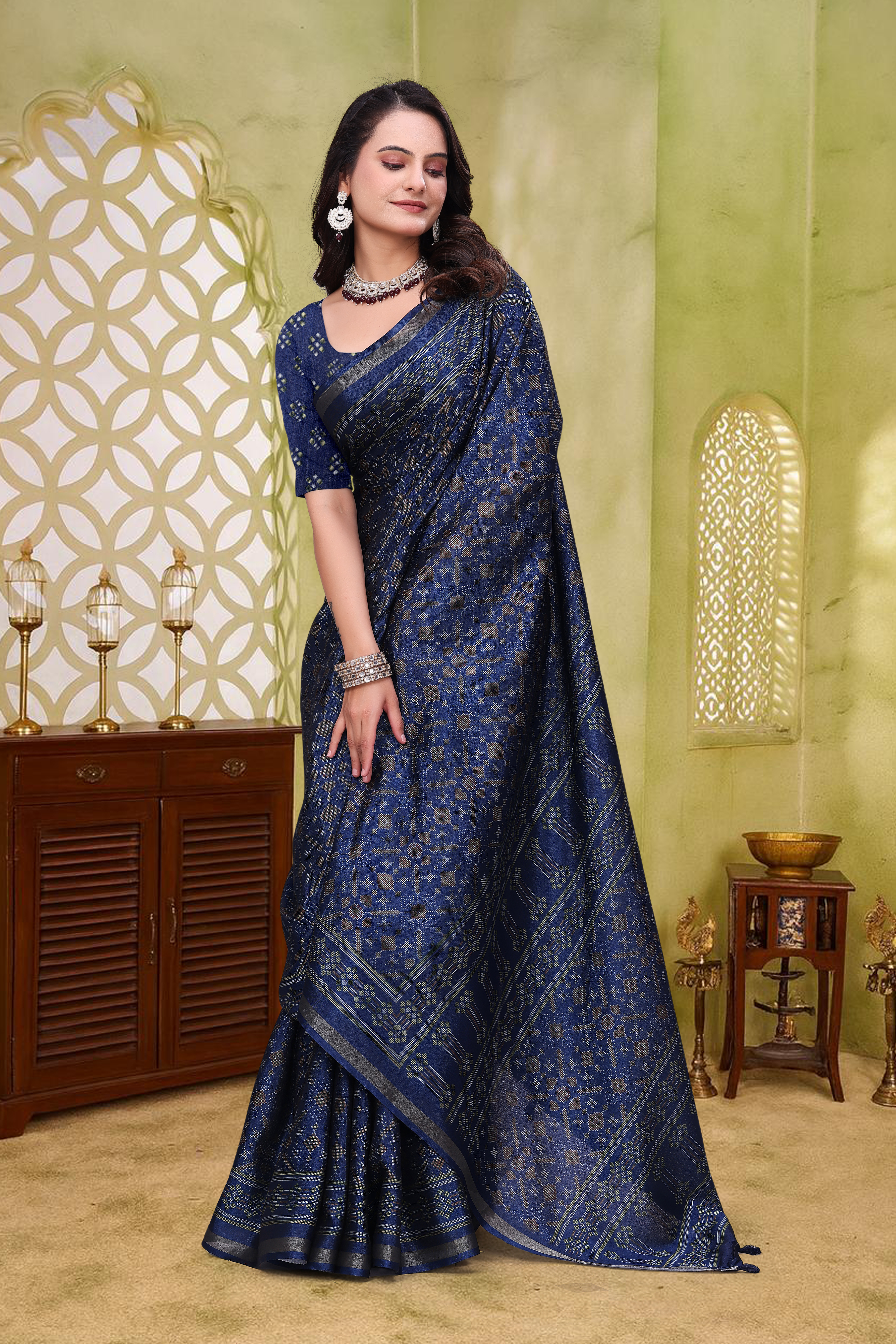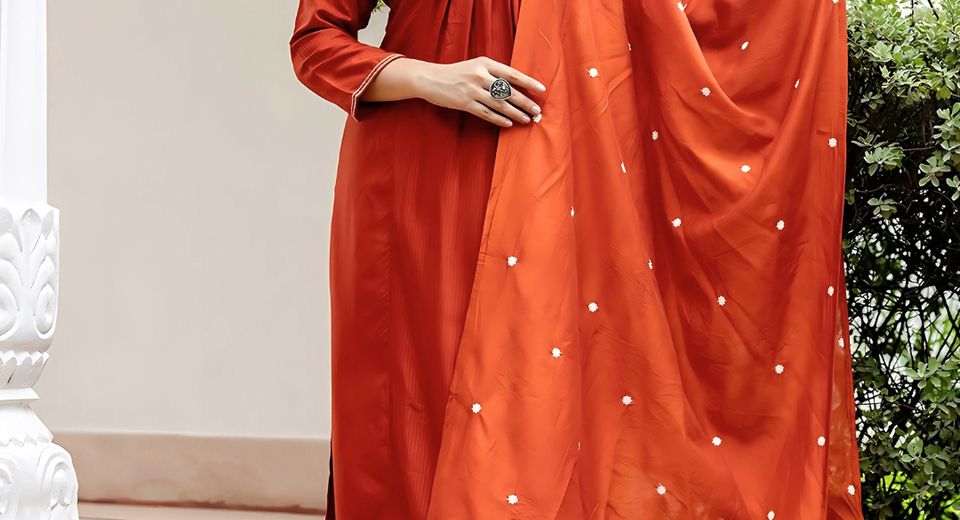
A beautiful product photograph can hide a weak seam, uneven hem or uncomfortable armhole. Seams and Finishing Details to Inspect for Kurti Stitching Quality Online gives you a practical way to judge a salwar suit before ordering, even when you can't touch the garment. The most useful evidence comes from close-up images, garment measurements, construction descriptions and reviews that mention fit after wearing.
Stitching quality affects more than appearance. A secure seam supports repeated sitting and washing, a balanced hem keeps a kurti hanging correctly, and properly finished embroidery prevents threads from catching on jewellery. The same checks apply to a kurti, palazzo, salwar, pant and dupatta, although each garment has different stress points.
Why Seams and Finishing Details to Inspect for Kurti Stitching Quality Online Matter
Seams and finishing details matter because they determine whether a salwar suit remains comfortable, stable and presentable after regular use. Decorative fabric can't compensate for a twisted side seam or an armhole that cuts into the skin.
A kurti experiences tension at the shoulders, armholes, bust, side seams and hip area. A palazzo or pant receives repeated strain at the crotch, waistband and pocket openings. A dupatta needs clean edge finishing because loose threads become visible along its border. Looking at each area separately is more reliable than judging a garment by its print or colour alone.
Construction also explains price differences. A cotton kurti with simple topstitching may be intentionally uncomplicated, while a silk kurti with embroidery requires additional handling around the motif, lining and seam allowance. Good quality doesn't always mean heavy decoration; it means that construction suits the fabric, silhouette and intended use.
Which seam areas should you check first in an online kurti?
Check the shoulder seams, armholes, side seams, neckline and garment hem first because these areas reveal the most about fit and durability. Product photographs should show whether seam lines are straight, smooth and properly matched.
Shoulder and armhole seams
Shoulder seams should sit evenly from the neckline to the sleeve join without a visible ridge or sudden diagonal pull. An armhole should form a smooth curve rather than a series of sharp points. If an armhole looks tight in the photograph, the garment may restrict movement even when the bust measurement appears correct.
Look for a consistent seam finish on the inside edge. Overlocked edges, enclosed seams or neat binding reduce fraying in cotton and silk blends. A raw cut edge may be acceptable in a deliberately distressed design, but it's a warning sign for a conventional everyday salwar suit.
Side seams and bust area
Side seams should fall vertically from the underarm to the hem when the model stands naturally. A side seam that swings towards the front can indicate twisting, uneven cutting or insufficient room across the bust and hip. Horizontal drag lines near the bust often suggest that the garment is too small or that the pattern has not been balanced correctly.
Check whether printed or woven motifs meet at the side seam. Exact matching isn't mandatory for every design, but a large geometric border should not stop abruptly without explanation. A jacquard kurti may have pattern variation caused by the weave, whereas a printed motif should usually align more predictably.
Neckline, placket and hem
A neckline should have an even curve, stable facing and no puckering around embroidery or piping. A front opening should lie flat instead of gaping between buttons or hooks. Button spacing should be regular, and buttonholes should be fully cut and secured rather than left with loose threads.
A kurti hem should be level from front to back unless the design is intentionally asymmetrical. The hem fold should be wide enough to hold its shape, particularly in medium-weight cotton. Narrow, uneven folds can curl after washing and make the garment look shorter on one side.
How can product photos reveal stitching quality before purchase?
Product photos reveal stitching quality when you inspect zoomed details, garment edges and areas under natural tension instead of relying only on the full-length image. A single styled photograph is rarely enough evidence on its own.
- Open every available close-up. Examine the neckline, sleeve edge, hem, embroidery and dupatta border at the highest available resolution. A close-up should show whether thread density is even and whether finishing is folded, bound or overlocked.
- Compare both sides of the garment. Symmetrical sleeves, balanced front panels and matching side lengths indicate careful cutting and assembly. A model's pose can conceal unevenness, so use flat-lay or back-view photographs whenever available.
- Study the fabric's reaction to seams. Puckering beside a seam suggests excessive thread tension, a blunt needle or fabric that has not been handled correctly. Smooth fabric doesn't prove perfect construction, but visible puckering is a concrete warning.
- Inspect embellishment boundaries. Embroidery, zari and woven borders should stop cleanly at seams and hems. Loose metallic threads, exposed knots and abrupt unfinished ends can snag on jewellery or handbags.
- Read the measurement chart beside the model information. A garment can look roomy in a styled image while having only a small ease allowance. Compare garment measurements with a well-fitting kurti already in your wardrobe.
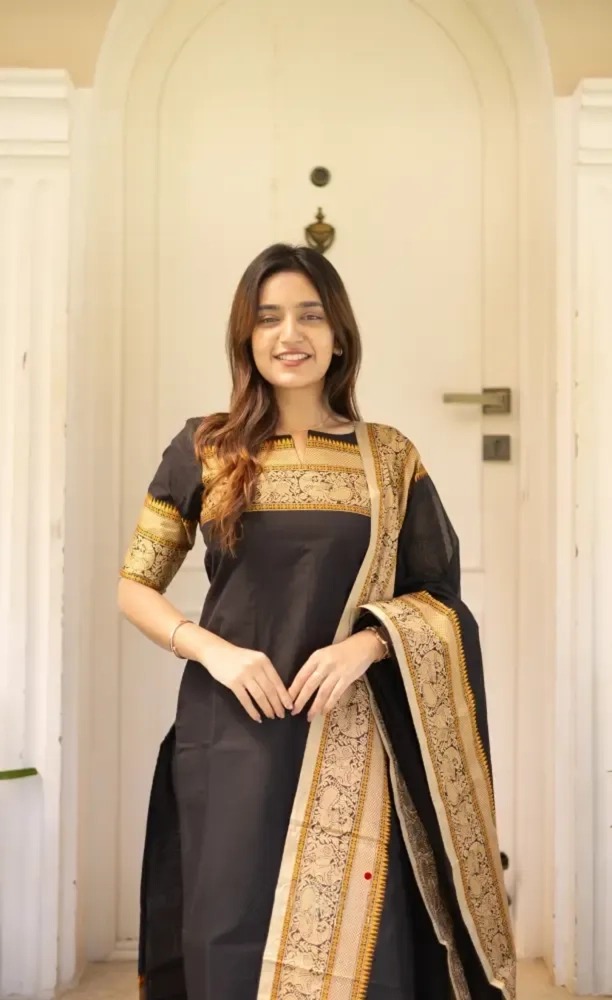
The Black Kanchi Cotton Jacquard Kurti with Woven Dupatta Set is an useful example of why texture deserves close inspection. Examine the woven surface, side seams and dupatta edge rather than making a colour-based decision. A textured jacquard weave can hide small construction faults, so magnification is particularly useful.
What finishing details matter in cotton, silk and zari salwar suits?
Finishing details should match the fabric: cotton needs controlled fraying, silk needs smooth seam handling, and zari needs secure ends that don't snag. The right inspection changes slightly according to the material and embellishment.
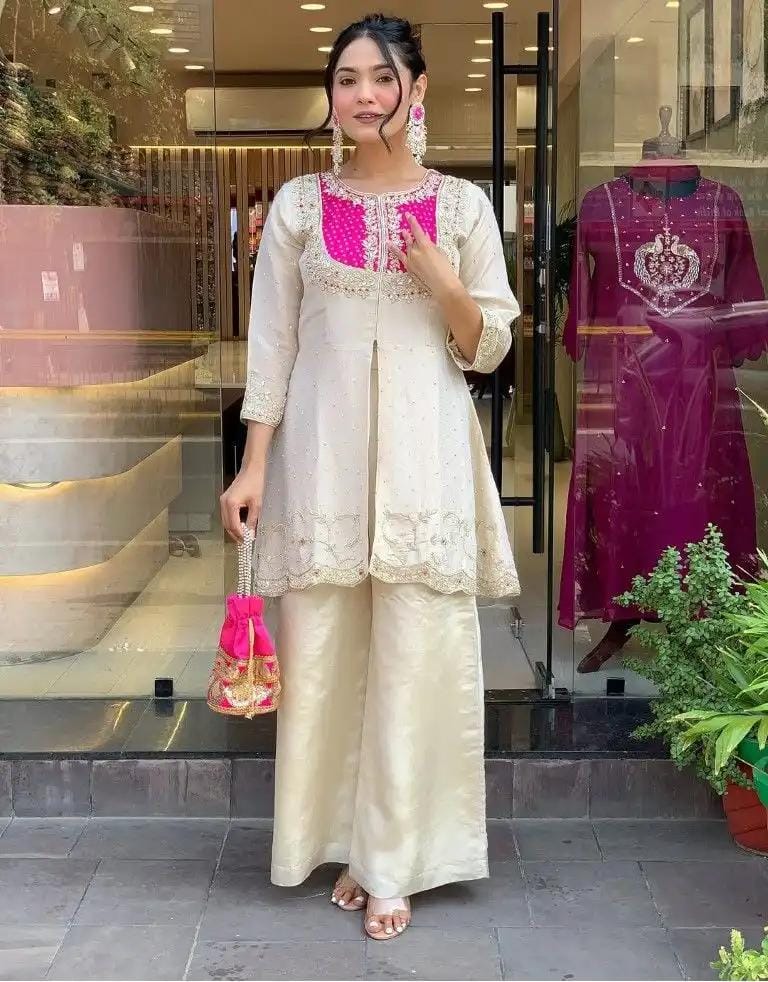
Cotton and woven fabrics
Cotton can fray at cut edges, especially after repeated washing. Look for overlocking, a clean turned hem or a bound seam at the neckline and armhole. Kanchi cotton and cotton jacquard can also show bulk where several layers meet, so inspect whether the neckline facing lies flat.
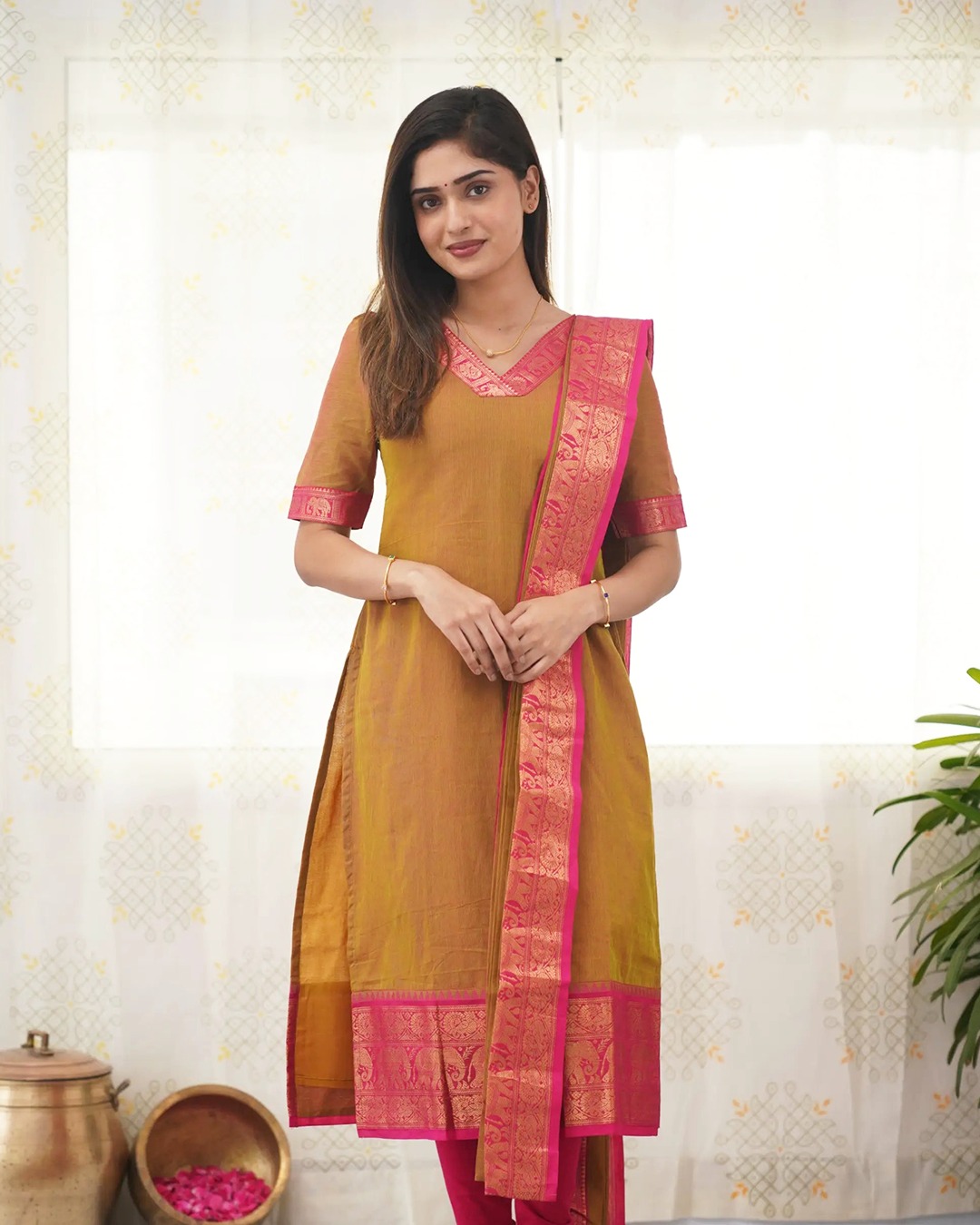
The Mustard Kanchi Cotton Kurti Set with Zari Dupatta shows why the kurti and dupatta deserve separate checks. Inspect the kurti's side and hem seams, then examine whether the zari dupatta border is firmly attached and whether its corners are neatly finished. Zari should not have long floating threads on the reverse.
Printed collections such as Kalamkari Print Salwar Suits (Copy) call for additional print inspection. A printed border should run consistently along the garment, while stitching should not create obvious diagonal distortion in a straight silhouette.
Silk and silk-like fabrics
Silk and silk-like fabrics show needle marks, puckering and uneven pressing more readily than sturdy cotton. Seams should be fine but secure, with no skipped stitches around curves. A lining should sit slightly inside the outer fabric so that it doesn't roll outward at the hem or armhole.
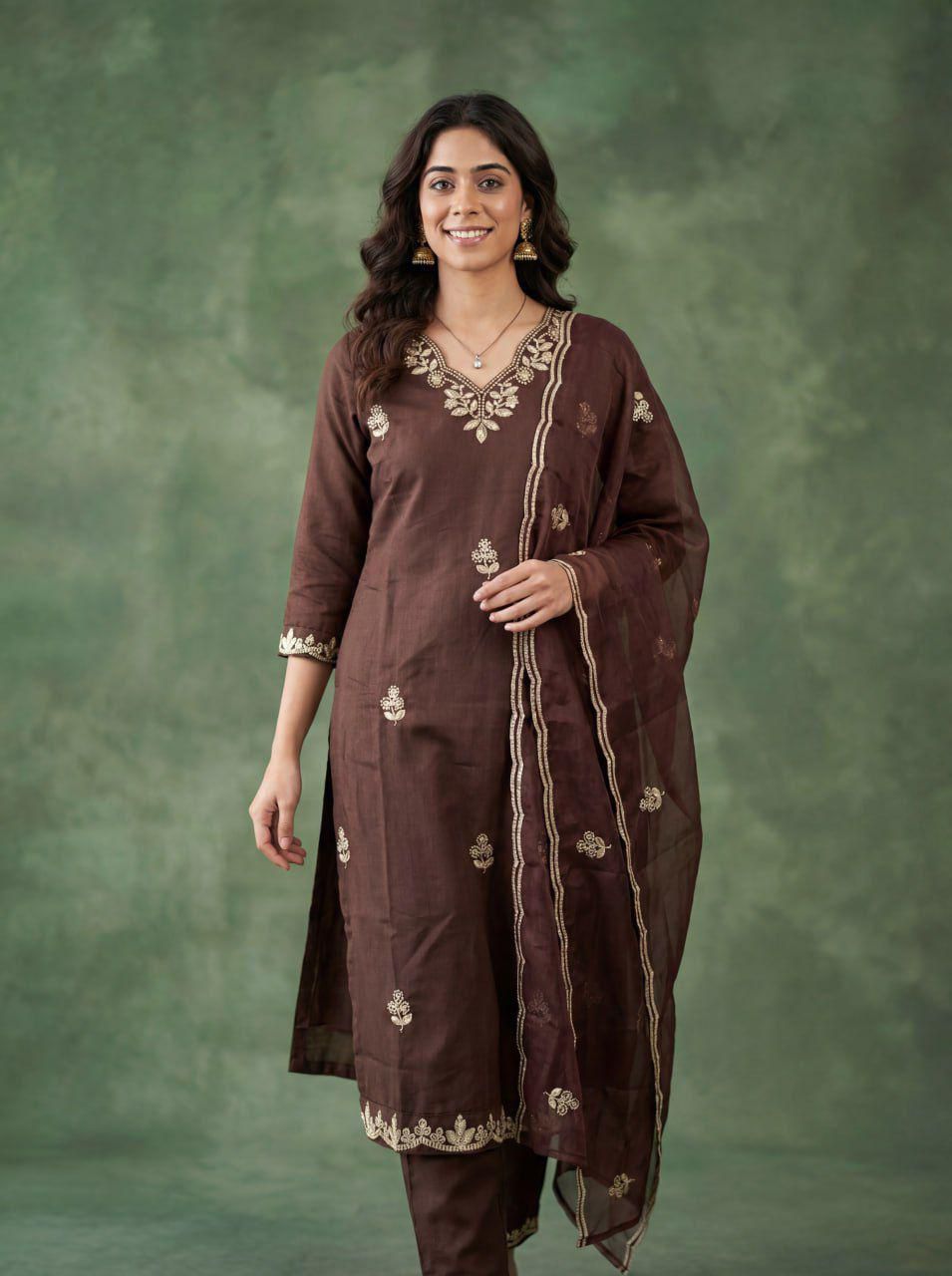
The Mustard Silk Embroidered Kurti Palazzo Dupatta Set and Cream Embroidered Silk Kurti Pant with Designer Dupatta demonstrate why three-piece sets need garment-by-garment inspection. Check that embroidery doesn't pull the fabric into ripples, that the pant waistband remains flat, and that the designer dupatta has a finished perimeter rather than a cut edge concealed only by styling.
Zari and decorative work
Zari work should be secured at motif ends, borders and points where the thread changes direction. Loose metallic ends can catch quickly against bangles, rings and handbag hardware. Online, look for reverse-side images or descriptions of lining and embroidery backing.
The Blue Ethnic Cotton Kurti Set with Zari Work requires a different quality check from an unembellished cotton set. Examine whether zari is evenly spaced, whether motifs are centred, and whether added weight has caused sagging around the neckline. Heavy work should not make the shoulder seam sit lower than the rest of the garment.
How should you inspect palazzo, pant and dupatta construction?
Inspect the waistband, crotch, hems and accessory edges because these components experience different kinds of wear from the kurti. A coordinated set can have a well-made top and a weaker bottom, so never assume that one garment represents the whole set.
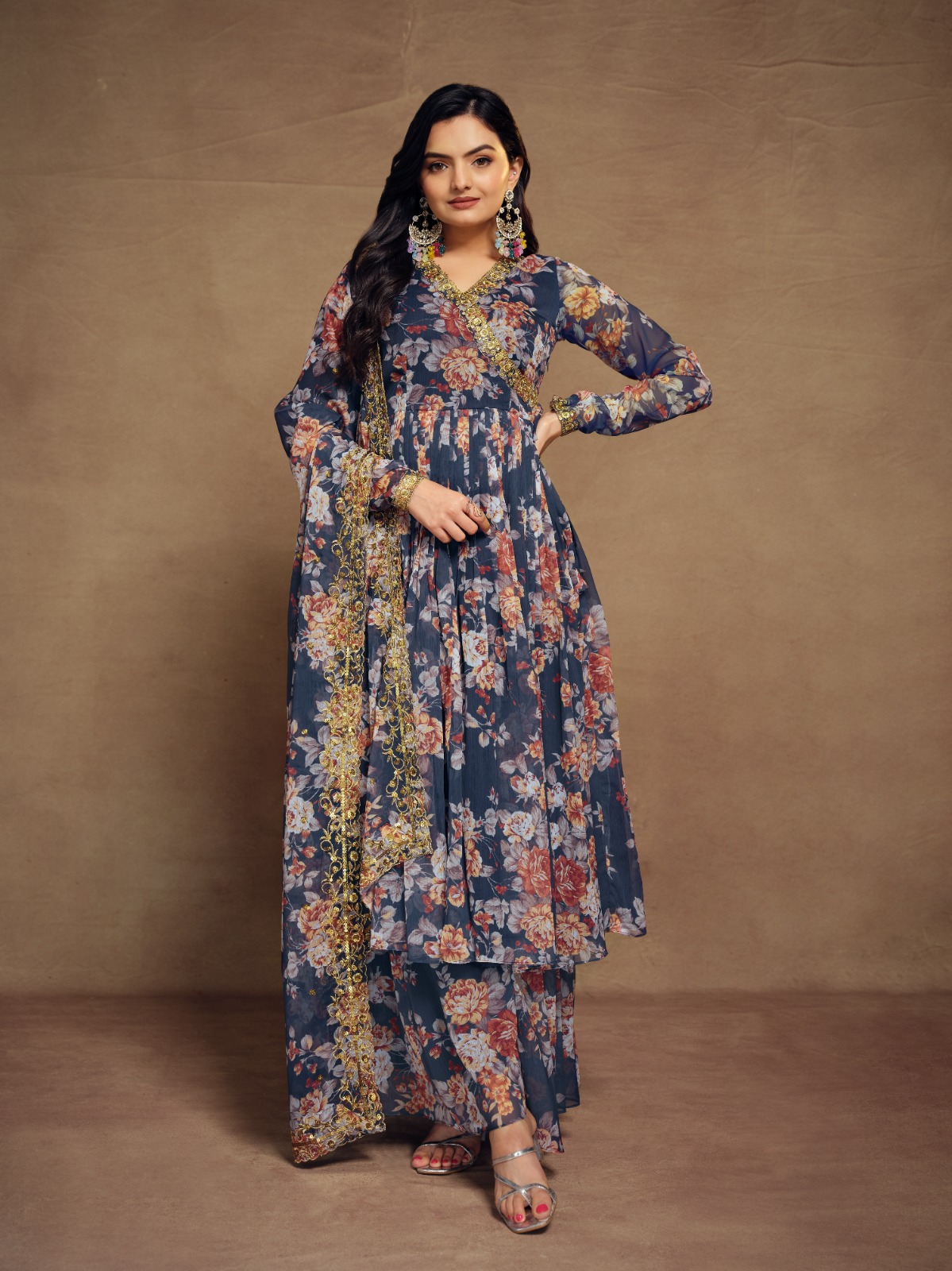
A palazzo waistband should lie flat without twisting, and elastic should be distributed evenly if elastic is used. The crotch seam should be reinforced or securely overlocked because repeated sitting places concentrated strain there. Wide-leg trousers should have equal inseam lengths; an uneven hem becomes obvious when the wearer walks.
Pants with a side zip need zip tape that lies flat and a top closure that doesn't dig into the waist. Pocket openings should be reinforced at both ends. The Mauve Crunchy Silk Embroidered Kurti Palazzo Set for Women is an useful prompt to inspect how textured fabric behaves at the waistband and whether the palazzo hem is cleanly turned.
A dupatta should have even width, stable corners and a border attached without puckering. A narrow rolled edge may suit a lightweight dupatta, while a heavier woven or zari border generally needs stronger attachment. Hold the dupatta by two corners in your imagination while viewing the photograph: uneven drape can indicate inconsistent width or excess weight at one end.
The Blue Kanchi Cotton Jacquard Kurti with Elegant Dupatta and Maroon Ethnic Weave Kurti Set with Elegant Dupatta are examples where the dupatta border deserves as much attention as the kurti. Check whether the border follows the edge continuously, whether the corners are square, and whether the woven fabric has loose floats.
How do measurements and reviews help verify stitching quality?
Measurements and detailed reviews verify stitching quality by showing how the finished garment performs on real bodies, not just how it looks on a model. Use both sources together because measurements predict fit while reviews reveal comfort and finishing after wear.
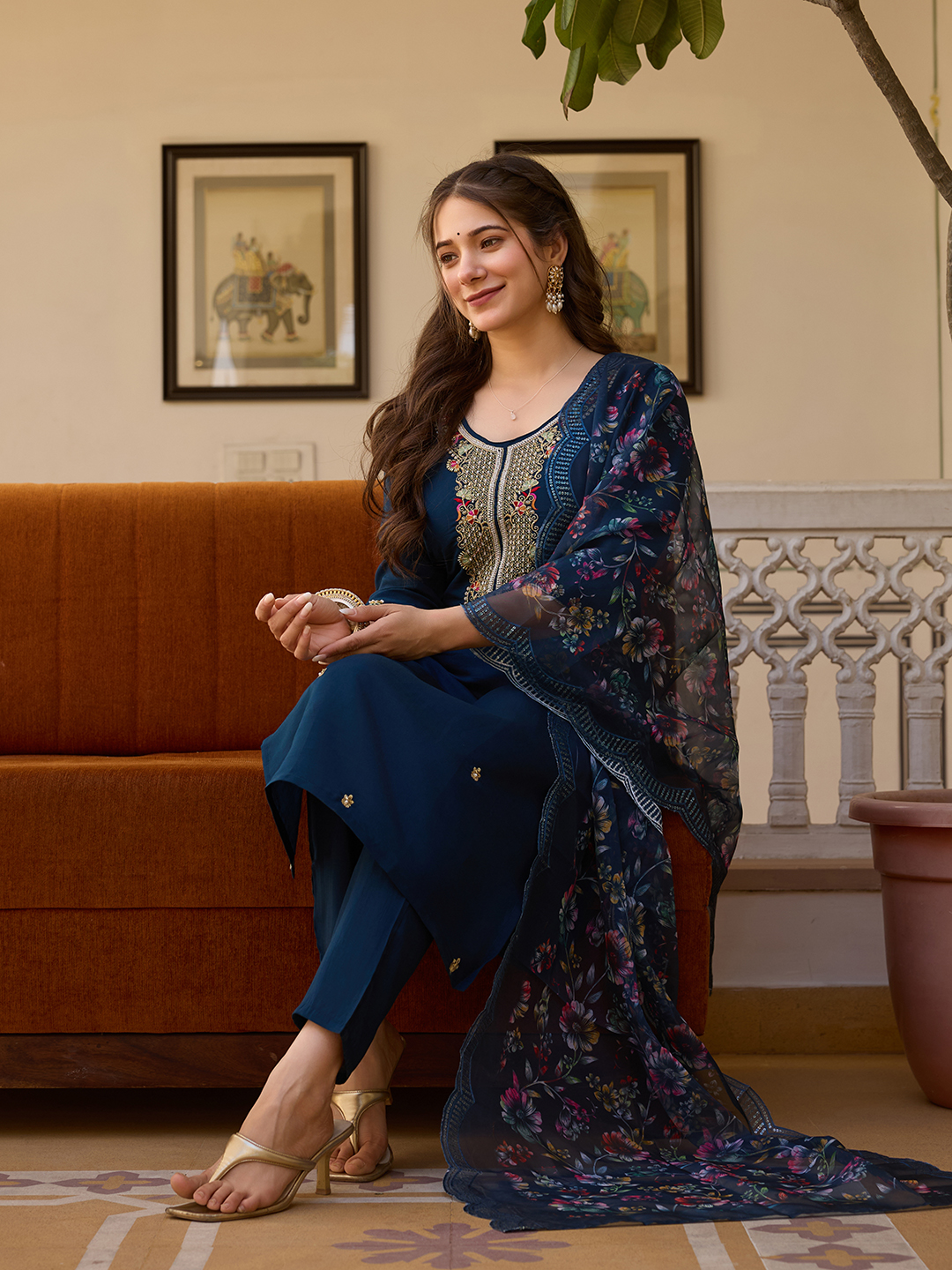
Compare bust, waist, hip, shoulder and kurti length measurements with a garment that fits you well. Leave enough ease for movement: many wearers need approximately 5 to 8 centimetres of additional room at the bust, depending on the silhouette and personal preference. A fitted kurti and a relaxed straight suit should not be judged using the same ease allowance.
For palazzos and pants, compare waist, hip, rise, inseam and thigh measurements. A waist measurement alone can't predict comfort if the rise is too short. For a dupatta, check stated length and width when available; a border can make a shorter dupatta feel even less versatile.
Useful reviews mention skipped stitches, tight armholes, uneven hems, lining exposure, waistband twisting or loose zari after washing. Reviews that only say "striking" provide little evidence about workmanship. Look for comments posted after several wears or a wash, since some seam problems appear only after fabric movement and laundering.
The Black Kanchi Cotton Jacquard Kurti with Woven Dupatta Set and Blue Kanchi Cotton Jacquard Kurti with Elegant Dupatta can also be assessed by comparing weave, fit and edge finishing across their photographs. Similar fabric categories don't guarantee identical construction, so read each measurement chart independently.
Which regional collections need special construction checks?
Regional-inspired salwar suit collections need checks for motif placement, border continuity and fabric handling because decorative identity often depends on repeated patterns and contrasting edges. Construction should support the visual language rather than distort it.
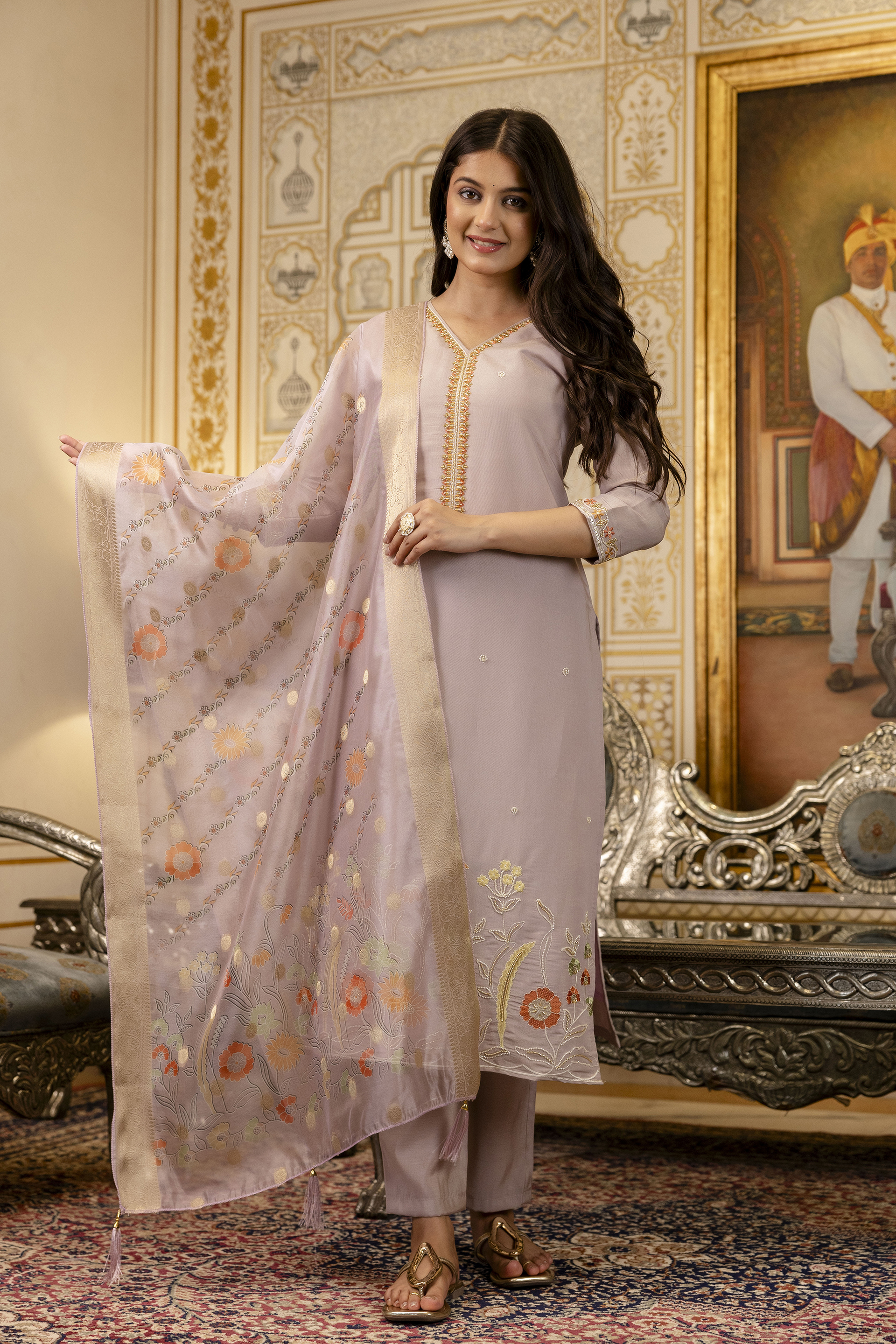
Maharashtra Paithani Inspired Salwar Suits may feature prominent borders or traditional colour contrasts, making hem alignment and motif placement especially important. Gujarat Bandhej Salwar Suits require close attention to the relationship between the dotted pattern, seams and gathered areas. Odisha Sambalpuri Salwar Suits benefit from checking whether the ikat-inspired motifs remain visually balanced across front panels.
Punjab Patiala Salwar Suits need a separate fit assessment because the salwar has generous pleats and fabric volume. Inspect the waistband attachment, pleat regularity and crotch construction rather than judging the bottom by its waist measurement alone. Kalamkari Print Salwar Suits (Copy) call for consistent print direction and careful border placement around the neckline and hem.
A style inspired by regional textiles doesn't automatically prove handloom production or hand finishing. Product descriptions should identify the actual fabric and construction where relevant. Separate cultural appearance from measurable workmanship, and make the purchase decision using evidence such as measurements, close-ups and care instructions.
What should you do when online photos don't show enough detail?
Ask for specific construction information or choose a seller that publishes complete measurements, fabric details and clear return terms when photographs don't show enough detail. Guessing from a single front image creates avoidable fit and quality risk.
Useful questions include whether the garment is lined, how the neckline and hem are finished, whether the waistband uses elastic or a concealed closure, and whether the zari or embroidery is backed. Ask for a close-up of the inside seam if the product is heavily embellished. A clear, specific answer is more useful than a general statement that the garment is "premium quality."
Save the product page and measurement chart before ordering because online listings can change. On delivery, inspect the garment in daylight before removing tags. Check every seam, closure, hem, embroidered area and accessory edge within the exchange window, and avoid washing a questionable garment until the fit and construction are acceptable.
A short inspection takes less than ten minutes: measure the garment, turn it inside out, examine stress points, check loose threads, test closures gently and compare both trouser legs. That routine turns Seams and Finishing Details to Inspect for Kurti Stitching Quality Online from a vague shopping concern into a repeatable quality check.
Common Questions About Checking Kurti Stitching Before Buying Online
How can I check kurti stitching quality online?
Check close-up images of the shoulder, armhole, side seam, neckline and hem, then compare the measurement chart with a kurti that fits you. Look for straight seams, even hems, secure embroidery and finished inside edges rather than relying only on colour or styling photographs.
What does a good kurti seam look like?
A good kurti seam is straight, smooth and evenly stitched without puckering, skipped stitches or visible thread gaps. The inside edge should be overlocked, enclosed or neatly bound unless the design intentionally uses a raw finish.
How do I inspect a salwar suit online for loose zari threads?
Use zoomed photographs to inspect zari borders, motif ends and corners, and look for reverse-side images when available. Long floating threads, exposed knots and abrupt metallic ends can snag on jewellery and usually indicate weak finishing.
How much ease should a readymade kurti have?
Many wearers need approximately 5 to 8 centimetres of additional room at the bust for comfortable movement, although the correct amount depends on the silhouette and personal preference. Compare the garment's bust, shoulder, waist and hip measurements with a well-fitting garment instead of choosing by labelled size alone.
What should I check in a kurti palazzo set?
Check the kurti seams separately from the palazzo waistband, crotch seam, hem and any pockets. Confirm that the waistband lies flat, both trouser legs are equal in length, and embroidery or textured fabric does not pull the seams out of shape.
How can I tell whether a dupatta is well finished?
A well-finished dupatta has even width, stable square corners and a border attached without puckering or loose threads. Inspect the perimeter and border joins because a dupatta can look attractive in a styled photograph while having weak edge finishing.