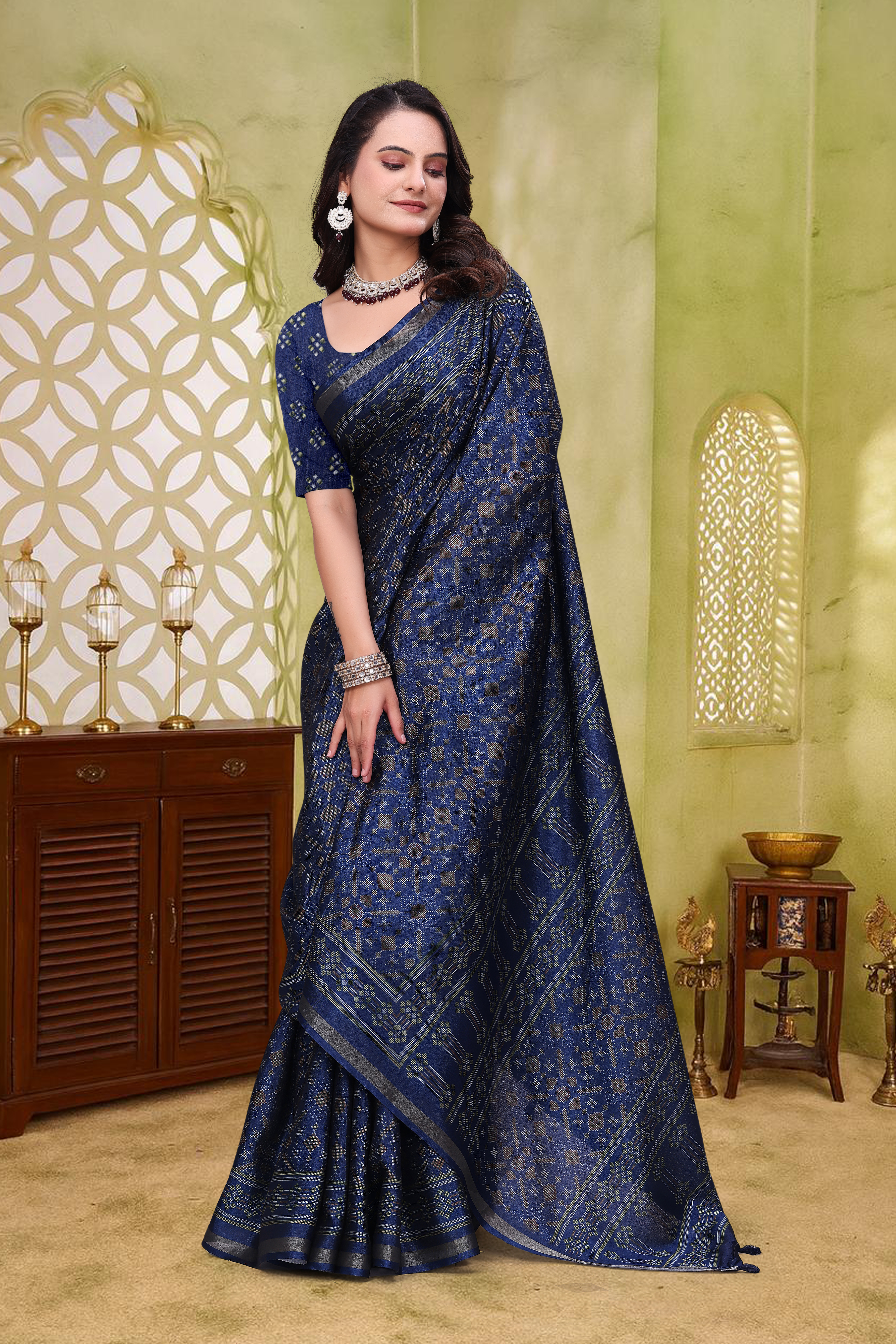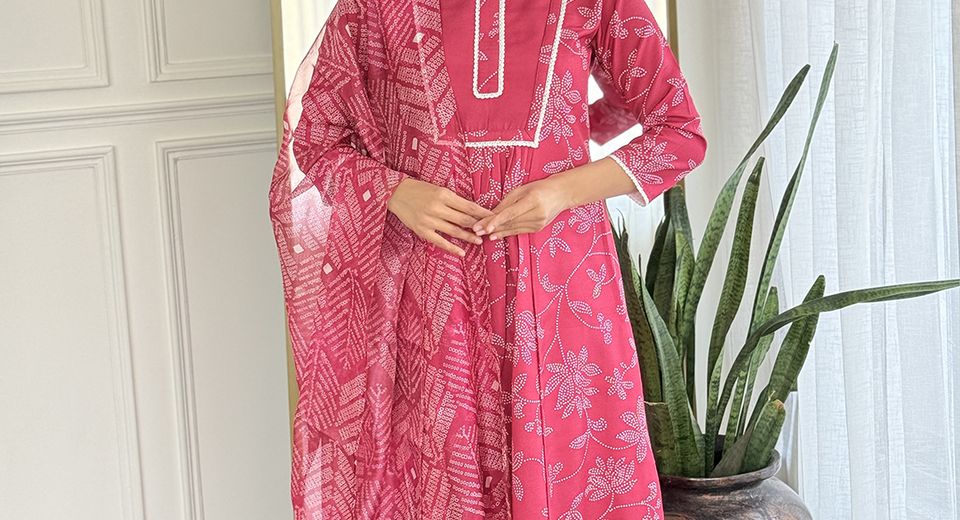
Placement That Adds Function Without Extra Bulk for Kurtis With Pockets begins with a practical design decision: where the pocket sits can matter as much as whether the kurti has one. A pocket placed too close to the side seam may be awkward to reach, while a pocket set too low can pull the hem and distort the line of a salwar suit. The most useful pocket balances access, carrying capacity, fabric weight and the shape of the garment.
A kurti pocket isn't merely a storage compartment. A phone, keys or a small cardholder adds weight at one point on the garment, so the pocket construction must distribute that weight without making the hip appear wider or causing the front panel to hang unevenly. The right placement also allows access when a dupatta is draped over one shoulder or across the front.
Placement That Adds Function Without Extra Bulk for Kurtis With Pockets and fit
Pocket placement changes fit because a filled pocket creates downward and outward tension on the surrounding fabric. The effect is strongest on straight kurtis, narrow A-line silhouettes and lightweight fabrics such as Chanderi silk or fine cotton.
A side-seam pocket usually works best when the opening begins several centimetres below the natural waist and follows the hand's resting position. That position lets the wearer slide a hand in without lifting the elbow or pulling the kurti across the bust. A pocket located around the upper hip is generally easier to access than a pocket placed close to the hem.
High pocket openings can interrupt embroidery, mirror work or a printed border. Low openings can make the wearer bend or search for the entry point. An opening that begins around 8 to 12 centimetres below the waist is often a practical starting point, although the correct position depends on the wearer's height, kurti length and side-slit placement.
Side slits require particular attention. A pocket opening that ends near the slit may expose the pocket bag when the wearer walks or sits. A secure design keeps the pocket bag above the slit or anchors the bag into a separate seam so that the opening remains stable during movement.
Which pocket position creates the least visible bulk?
A concealed side-seam pocket placed slightly below the natural waist usually creates the least visible bulk. The pocket bag should lie flat and remain no larger than the items it's intended to carry.
A phone-sized pocket doesn't need to be oversized. Excess cloth inside a large pocket gathers at the hip even when the pocket is empty. For a compact phone, an internal depth of approximately 16 to 19 centimetres is often practical, while a small everyday pocket may need only 12 to 15 centimetres. The correct measurement varies with phone size and garment proportions.
Patch pockets can be functional, but patch pockets add a visible layer to the outside of the kurti. A neat rectangular patch pocket may suit a relaxed cotton silhouette, while a hidden inseam pocket is usually better for a dressier straight suit or a formal Chanderi set.
Placement That Adds Function Without Extra Bulk for Kurtis With Pockets by fabric
The best pocket construction depends on the fabric's weight, drape and recovery. A dense pocket bag can support a cotton kurti, but the same pocket bag may drag down lightweight Chanderi silk.
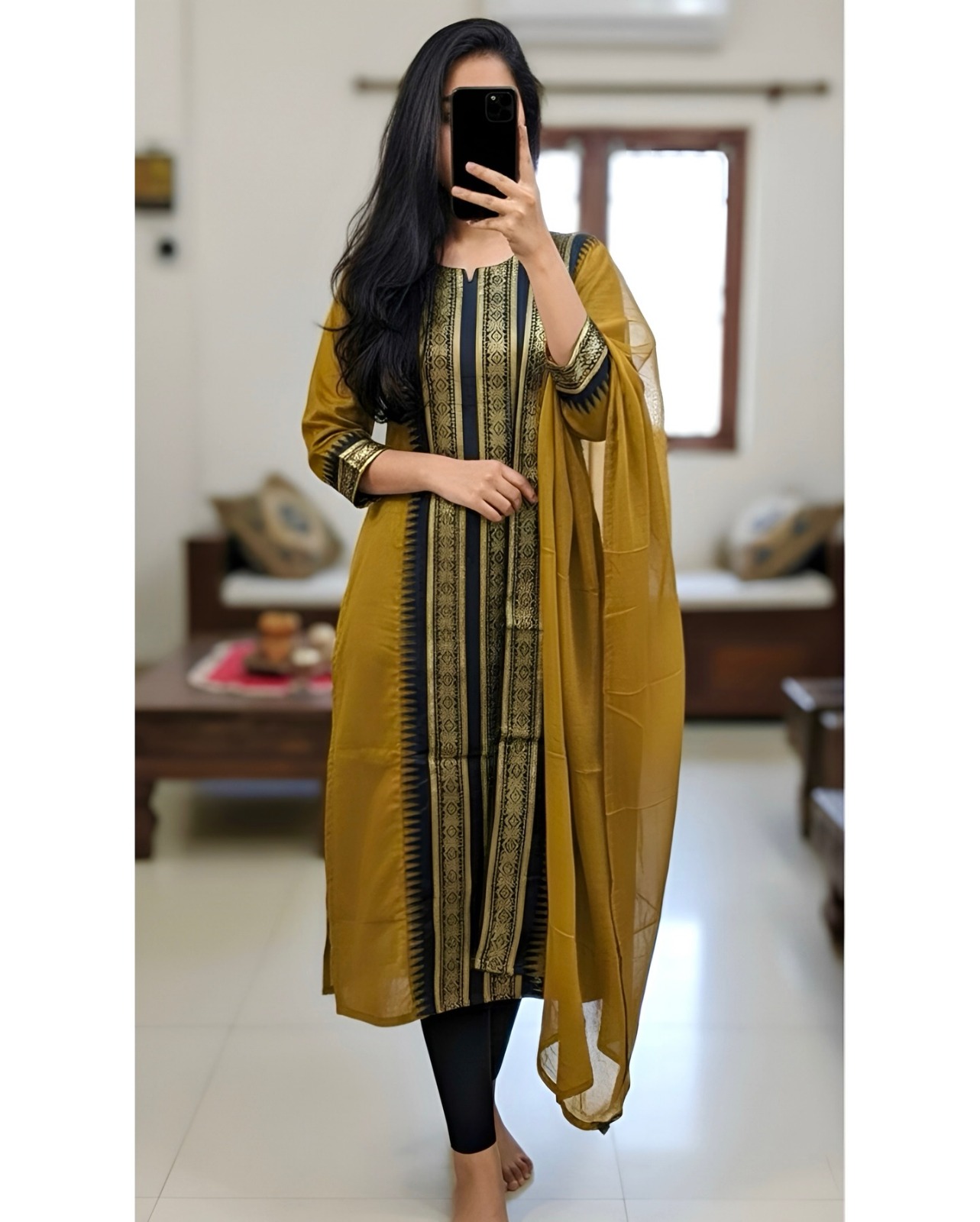
Cotton is forgiving because it has enough body to support a pocket opening and tolerate regular washing. Designer Cotton A-Line Kurti Pant Set with Mirror Work illustrates why pocket placement should avoid the densest decorated areas. Mirror work can add local weight, so keeping the pocket opening in an undecorated side section helps preserve the A-line fall.
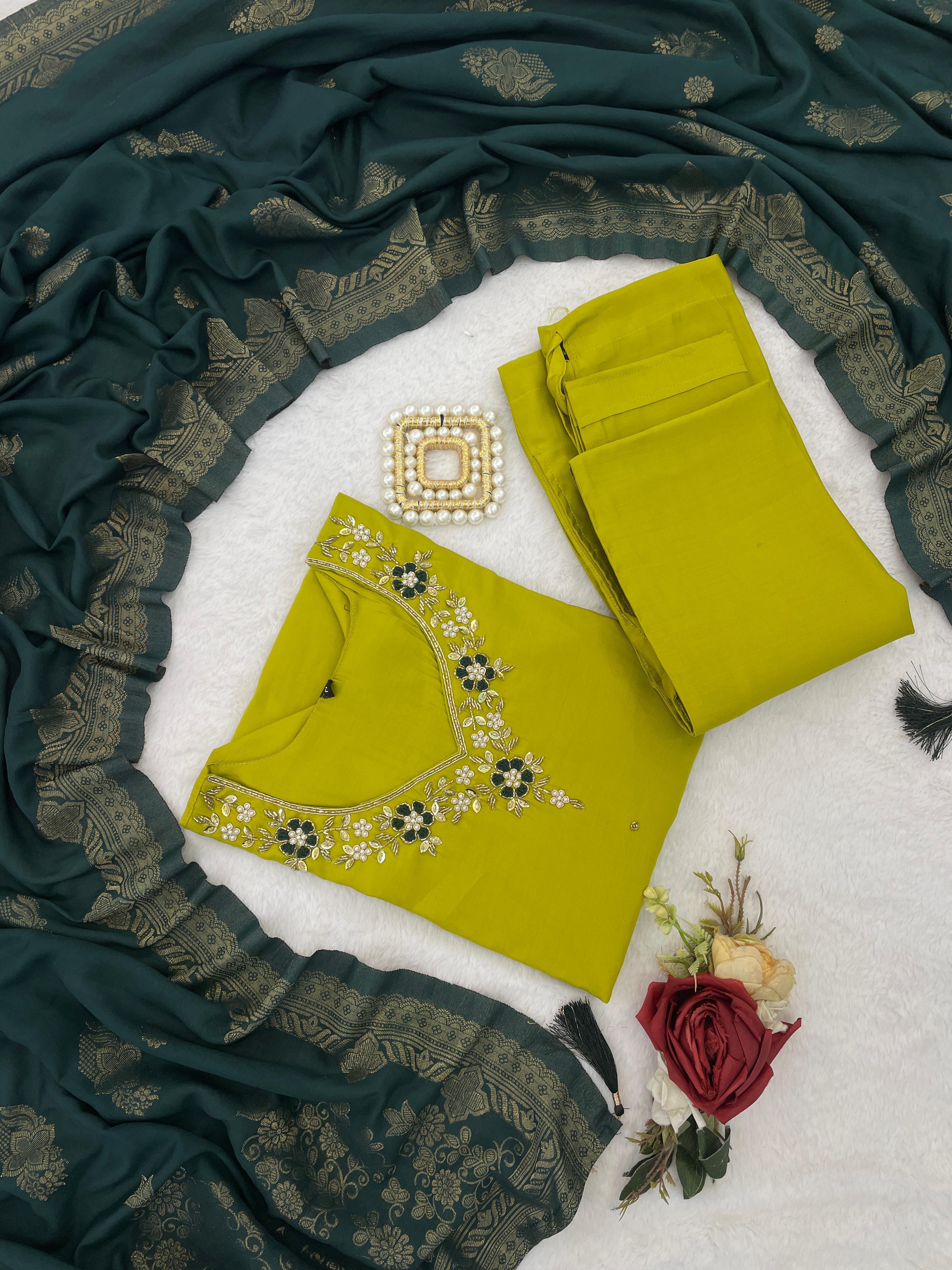
Chanderi silk and woven fabrics need lighter pocket bags and careful seam finishing. Navy Floral Woven Chanderi Kurti Pant Dupatta Set and Elegant Green Chanderi Silk Kurti Pant Dupatta Set represent silhouettes where a bulky lining or deep pocket can disturb the delicate drape. A lightweight cotton voile or fine polyester-cotton pocket bag is generally less disruptive than a thick fabric cut on the bias.
Woven dupattas don't make a pocket unsuitable, but they do influence visual balance. Navy Kanchi Cotton Kurti Set with Woven Dupatta already combines texture in the dupatta and kurti. A discreet side pocket keeps the practical feature from competing with the woven surface.
Mirror work, zari and dense weaving also create areas that should not be pierced unnecessarily. A pocket opening through zari can weaken decorative threads and make repairs difficult. The pocket should instead sit in a plain side panel or follow an existing seam wherever possible.
Does a pocket make a lightweight kurti look heavier?
A pocket makes a lightweight kurti look heavier only when the pocket bag, opening or carried item pulls the fabric away from its original line. Lightweight materials can retain a clean appearance when the pocket is shallow, flat and placed away from the centre front.
Empty-pocket testing is useful when buying online. Check whether the side seam falls vertically, whether the hip area shows a triangular flare and whether the lower hem remains even. A pocket that puckers when empty may become significantly more noticeable after carrying a phone.
Placement That Adds Function Without Extra Bulk for Kurtis With Pockets and depth
Pocket depth should be based on the objects the wearer carries, not on the visual promise of a very deep pocket. A phone, two keys and one cardholder usually need less space than a wallet, cosmetics pouch and sunglasses.
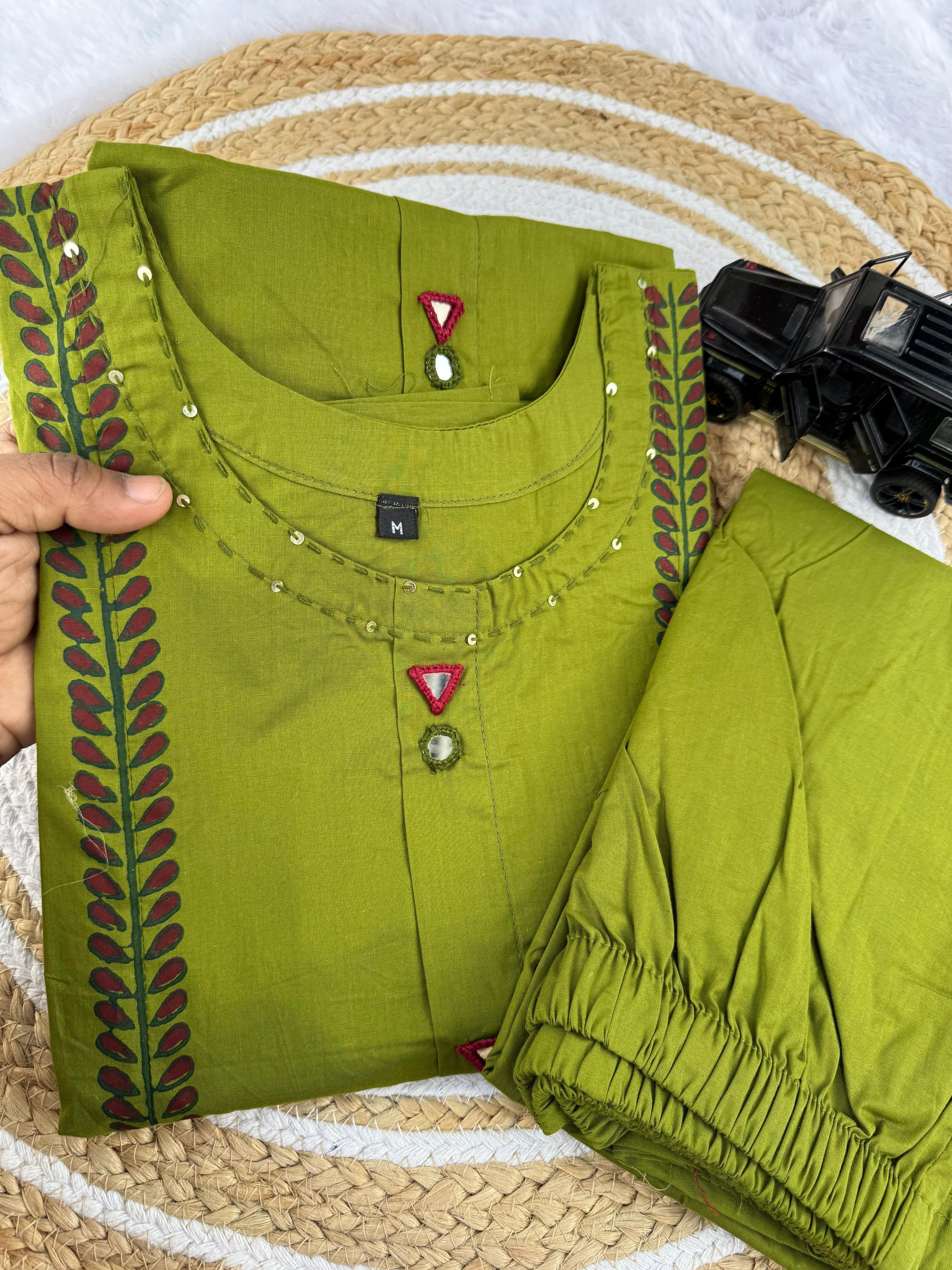
- For a phone: allow enough depth for the device to sit below the opening, with approximately 2 to 3 centimetres of fabric above the phone's top edge.
- For keys: use a smaller pocket with a secure seam because metal keys can strain a long, loose pocket bag.
- For cards: choose a compact pocket that reduces stretching and prevents cards from sliding into the bottom corner.
- For occasional storage: a deeper pocket can work, but it should have a reinforced opening and a stronger side seam.
Depth also affects retrieval. A very deep pocket forces the hand down through a narrow opening, which can stretch the seam. A pocket should be deep enough to retain an item during walking but open enough for the hand to enter without twisting the garment.
The opening should not be so loose that a phone falls out when the wearer sits. The opening should also not be so narrow that the wearer must use two hands. A slightly angled opening can improve access, provided the angle follows the side seam and doesn't cut across a major print or border.
Reinforcement matters when a pocket will carry a phone every day. A short bar tack at the ends of the opening can reduce seam stress, while neatly finished pocket-bag edges prevent fraying during washing. These small construction details often determine whether a pocket remains useful after months of wear.
Placement That Adds Function Without Extra Bulk for Kurtis With Pockets across silhouettes
Straight kurtis, relaxed A-line kurtis and moderately flared kurta sets generally carry pockets most comfortably because their side seams have enough vertical or diagonal length to support a pocket.
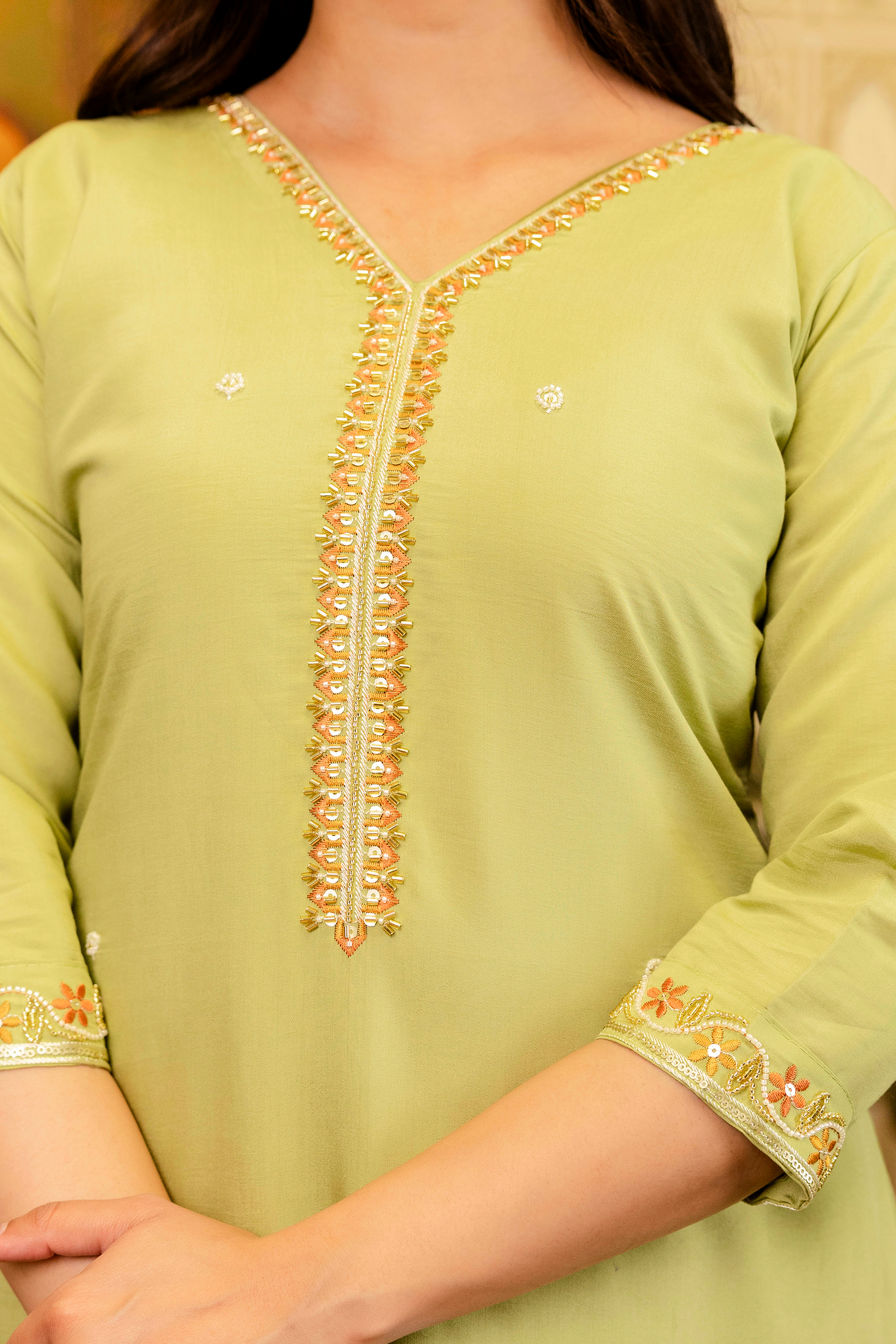
A straight silhouette offers a predictable side seam and works well with a concealed inseam pocket. Designer Cream Straight Kurti Set with Dupatta is an example of a clean, structured outfit where a hidden pocket can preserve the front's simplicity. A straight cut also makes pocket access relatively consistent whether the wearer stands, walks or sits.
An A-line kurti gives the pocket bag more room to fall away from the body. Teal Cotton A-Line Kurti Pant Set with Handwork can accommodate a practical pocket without forcing the fabric tightly against the hip, especially when the pocket is placed above the widest point of the flare.
A very flared Anarkali can hide a pocket well, but a pocket set too low may swing with the skirt portion. A pocket near the waist seam or upper side panel is usually more stable. A narrow palazzo or cigarette pant can also affect how the kurti drapes because the lower silhouette gives less visual volume to balance a heavy pocket.
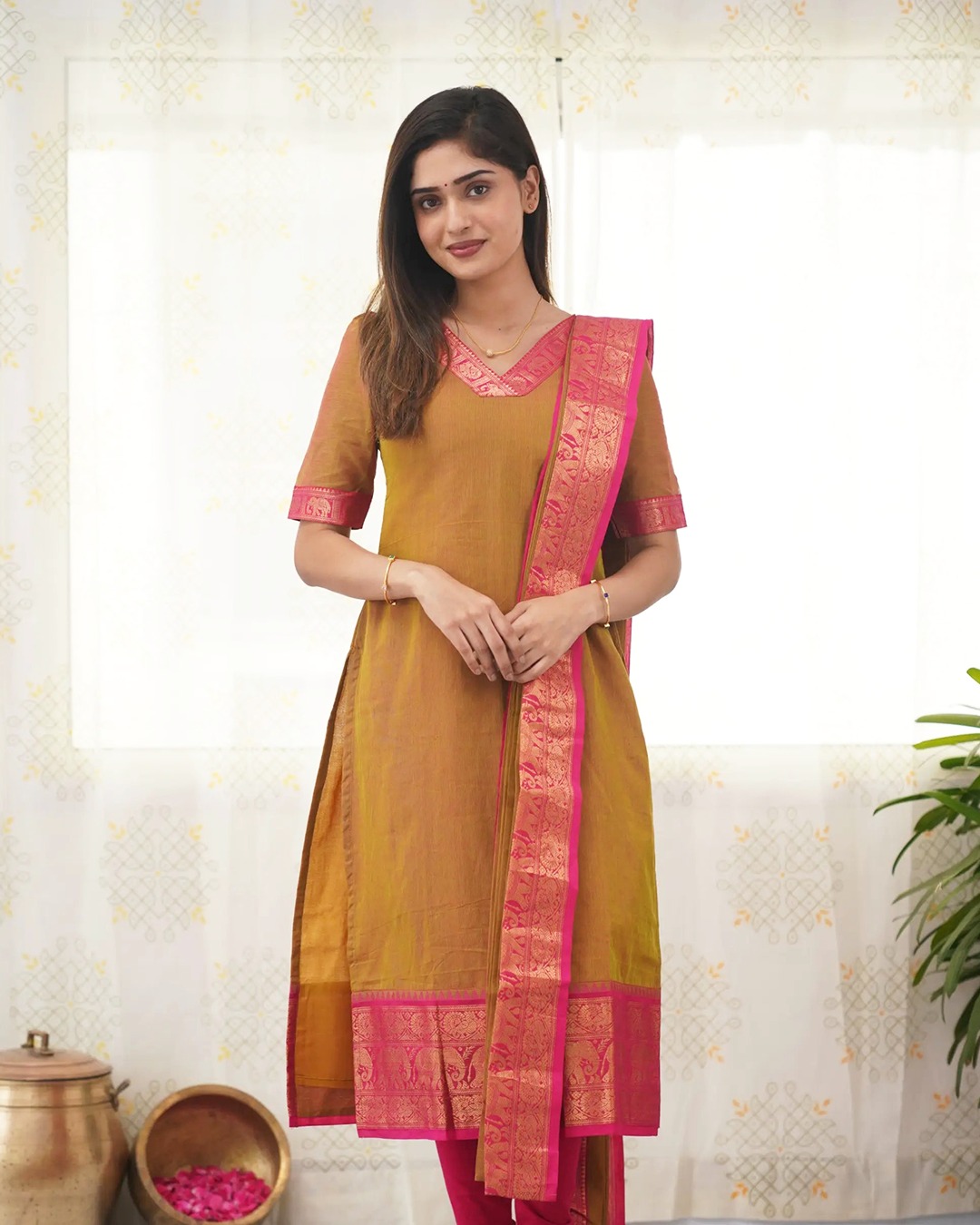
Three-piece sets with dupattas need an additional styling check. A pocket should remain reachable when the dupatta is worn over one shoulder or across the front. Mustard Designer Kurti Dupatta Set with Rich Weaving and Maroon Heritage Weave Kurti Dupatta Set show why a pocket opening should not be hidden beneath a thick folded dupatta border.
Are pockets suitable for festive salwar suits?
Pockets are suitable for festive salwar suits when the construction is concealed and the pocket doesn't interrupt embroidery, zari or woven borders. A discreet pocket can be more useful than decorative additions that make a garment difficult to wear for several hours.
For festive styling, carry only light items in the kurti pocket. A phone and a slim cardholder are less likely to distort a decorated garment than a large wallet or a heavy key ring. For weddings, a small potli or clutch can hold larger items while the pocket keeps a phone accessible.
Regional design references also benefit from restrained functional detailing. Kalamkari Print Salwar Suits can use a pocket hidden in a plain side section, while Maharashtra Paithani Inspired Salwar Suits may require extra care around rich woven borders. Gujarat Bandhej Salwar Suits and Odisha Sambalpuri Salwar Suits often have strong surface patterning, so a pocket should not break the most prominent repeat.
Placement That Adds Function Without Extra Bulk for Kurtis With Pockets when shopping online
Online shoppers can assess a kurti pocket by checking the garment measurements, pocket position, opening photographs and fabric description before ordering. Product images may show that a pocket exists without revealing whether the opening is practical or whether the pocket bag adds volume.
What should you check before buying a pocketed kurti online?
Before buying a pocketed kurti online, check the opening position, pocket depth, side-seam construction, fabric weight and finished garment measurements. These details reveal more about daily usability than the word "pocket" alone.
- Check the opening position: compare the pocket with the model's waist and hip line, and confirm that the opening will remain reachable under the planned dupatta drape.
- Check the listed measurements: compare kurti length and hip ease with a garment already in your wardrobe. A close-fitting kurti has less room to conceal a filled pocket.
- Study the fabric: cotton can usually support a more substantial pocket, while Chanderi silk, fine woven fabric and lightweight blends benefit from a lighter pocket bag.
- Look for surface decoration: identify whether mirror work, zari, embroidery or a woven border occupies the side panel where the pocket would sit.
- Consider your essentials: measure your phone and check whether the stated pocket dimensions provide enough depth without leaving a large empty bag.
Colour and pattern also affect visibility. A pocket crease is usually less noticeable on a small print or textured weave than on a solid cream or pastel kurti. Designer Cream Straight Kurti Set with Dupatta therefore benefits from especially neat pocket finishing if a pocket is included, because a pale, clean surface reveals puckering more readily.
Movement is the final test. Raise one arm, sit on a chair, walk several steps and place a phone inside the pocket. The garment should not pull sharply across the bust, twist at the side seam or lift at the hem. A pocket that works only while standing still isn't genuinely functional.
Placement That Adds Function Without Extra Bulk for Kurtis With Pockets in care routines
Pocket care protects both the garment and the pocket opening. Empty every pocket before washing, turn the kurti inside out when the surface includes mirror work or delicate weaving, and follow the garment's stated wash instructions rather than assuming that all cotton can be machine washed.
Heavy objects should not remain in a pocket while the kurti is stored on a hanger. A phone or key ring can stretch the opening and place continuous strain on the side seam. Remove items promptly after use, and smooth the pocket bag flat before hanging the garment.
For cotton salwar suits, inspect the pocket opening after several washes for loose stitches or fraying. For Chanderi silk and richly woven garments, avoid aggressive ironing directly over the pocket opening because heat and pressure can flatten the surrounding drape or damage decorative threads.
A pocket that has begun to sag may sometimes be repaired by shortening the pocket bag or reinforcing the opening, but the repair should preserve the original seam line. Replacing a bulky pocket bag with a lighter lining can restore the fall without changing the visible design.
A functional kurti pocket should disappear when empty, remain secure when filled and stay reachable when the outfit is styled as intended.
Practical Questions About Pocket Placement in Salwar Suits
Where should a pocket be placed on a kurti for easy access?
A pocket should usually begin slightly below the natural waist and sit along the upper hip or side seam. That position keeps the opening reachable while reducing the chance of the pocket pulling down the hem or widening the hip visually.
How deep should a kurti pocket be for a mobile phone?
A phone pocket often needs approximately 16 to 19 centimetres of internal depth, depending on the device size. The phone should sit below the opening with about 2 to 3 centimetres of fabric above its top edge to reduce the risk of it slipping out.
Do pockets add bulk to Chanderi silk kurtis?
Pockets can add visible bulk to Chanderi silk kurtis when the pocket bag is heavy, oversized or poorly placed. A shallow concealed pocket with a lightweight lining and a side-seam opening usually preserves the fabric's delicate drape.
Are patch pockets or side-seam pockets better for salwar suits?
Side-seam pockets are usually better for dressier salwar suits because they remain concealed and preserve a clean front. Patch pockets can be more practical on relaxed cotton kurtis, but they add a visible layer and may change the garment's styling.
Can festive kurtis have pockets without disturbing embroidery or zari?
Festive kurtis can have pockets when the opening is placed in a plain side panel or an existing seam away from embroidery, zari, mirror work and woven borders. Carrying only light items, such as a phone and slim cardholder, helps protect the decorated fabric from distortion.
How can I check whether an online kurti pocket will be useful?
Check the pocket opening position, stated depth, kurti measurements, fabric weight and product photographs before buying. Compare those details with the phone or essentials you normally carry, then look for signs of puckering, a low opening or a pocket bag that extends below the side slit.