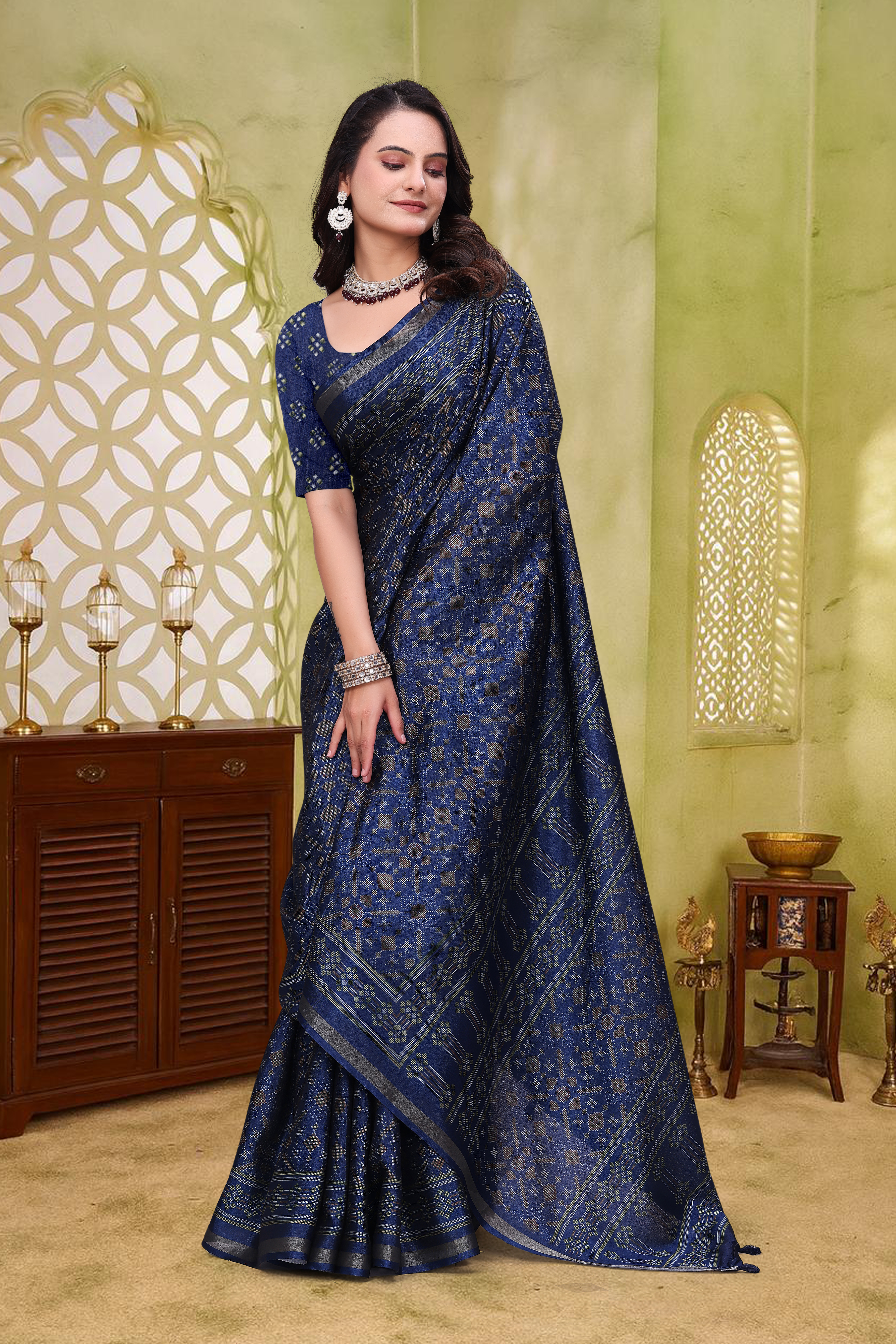
Building Your First Ethnic Wardrobe Before Buying Trend Pieces saves money, reduces outfit repetition and gives you something dependable to wear when a festival, family dinner or office celebration appears on the calendar. Your first purchases should cover different levels of formality, seasons and styling needs. A versatile kurta set, a dressier dupatta, comfortable bottoms and two useful colour families will usually serve you better than several highly decorative outfits bought because they're currently popular.
A first ethnic wardrobe doesn't need to be large. Six to eight well-chosen garments can create more combinations than a cupboard full of occasion-specific pieces. A practical test is simple: every new item should work with at least two existing garments, suit a real event you attend and remain comfortable for four to six hours of wear.
Building Your First Ethnic Wardrobe Before Buying Trend Pieces starts with your calendar
The most useful first step is to list the occasions you actually dress for during a typical year. A wardrobe built around office celebrations needs different foundations from a wardrobe built around weddings, Navratri evenings or frequent family functions.
Write down the approximate number of occasions in four groups: everyday wear, work or semi-formal events, festive gatherings and weddings or formal celebrations. If most of your year consists of office days and small family visits, cotton-blend kurtas, Chanderi layers and adaptable dupattas deserve priority. If you attend several weddings, one embellished Anarkali or a richly woven saree may be justified after the everyday foundation is complete.
- Everyday ethnic wear: Choose breathable fabrics, moderate prints and washable pieces that can be repeated with different bottoms.
- Work and semi-formal dressing: Select clean silhouettes, restrained embroidery and colours that look polished under indoor lighting.
- Festive dressing: Add zari, woven texture, brighter colour or a more expressive dupatta without making every garment heavily embellished.
- Formal celebrations: Reserve one higher-impact outfit for weddings, receptions or religious ceremonies rather than buying several similar heavy sets.
The calendar also reveals whether separates will serve you better than complete sets. A kurta that works with palazzo trousers, straight pants and a contrasting dupatta gives you more usable outfits than a highly matched set that can only be worn one way.
Which ethnic wardrobe essentials should you buy first?
The first ethnic wardrobe essentials should cover one neutral base, one light or mid-tone colour, one festive colour, one adaptable layer and at least two bottom silhouettes. This structure creates outfit variety without requiring a large number of garments.
A dependable kurta set comes first
A dependable kurta set is the strongest first purchase because it solves dressing quickly while establishing your preferred fit. Elegant Sky Blue Woven Ethnic Suit Set offers an example of a soft, mid-level colour that can work for daytime celebrations, lunches and smaller festive events. Woven texture adds visual interest without requiring dense embroidery.
Look for a kurta length that suits your height and a neckline that doesn't need constant adjustment. Check whether the trousers have a comfortable waistband, whether the dupatta is long enough to drape securely and whether the lining feels breathable. These construction details matter more than a short-lived sleeve trend.
A neutral creates more outfit combinations
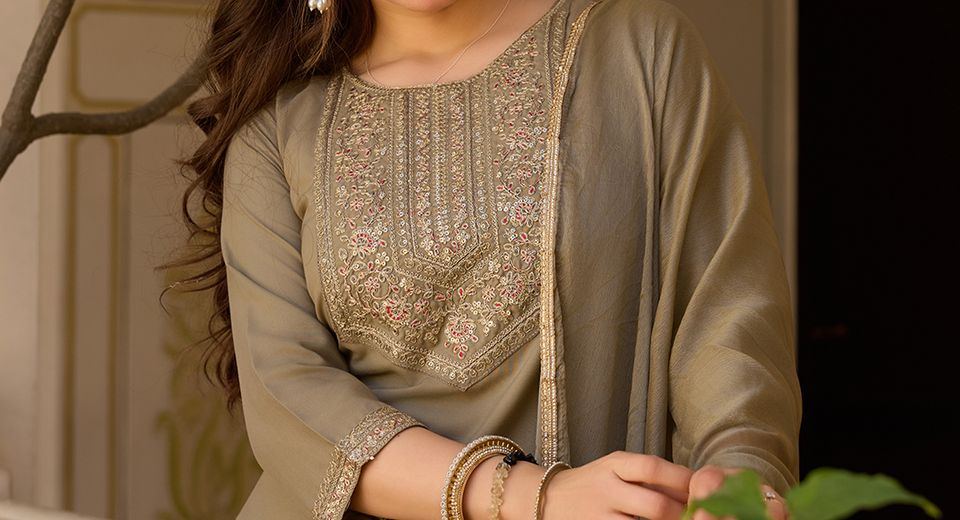
A neutral ethnic outfit should be able to change character through jewellery, footwear and dupattas. Brown Embroidered Kurta Pant Dupatta Set for Women shows how a warm neutral can sit between everyday and festive dressing. Brown pairs naturally with cream, rust, gold, olive and muted pink, so the set can support several styling directions.
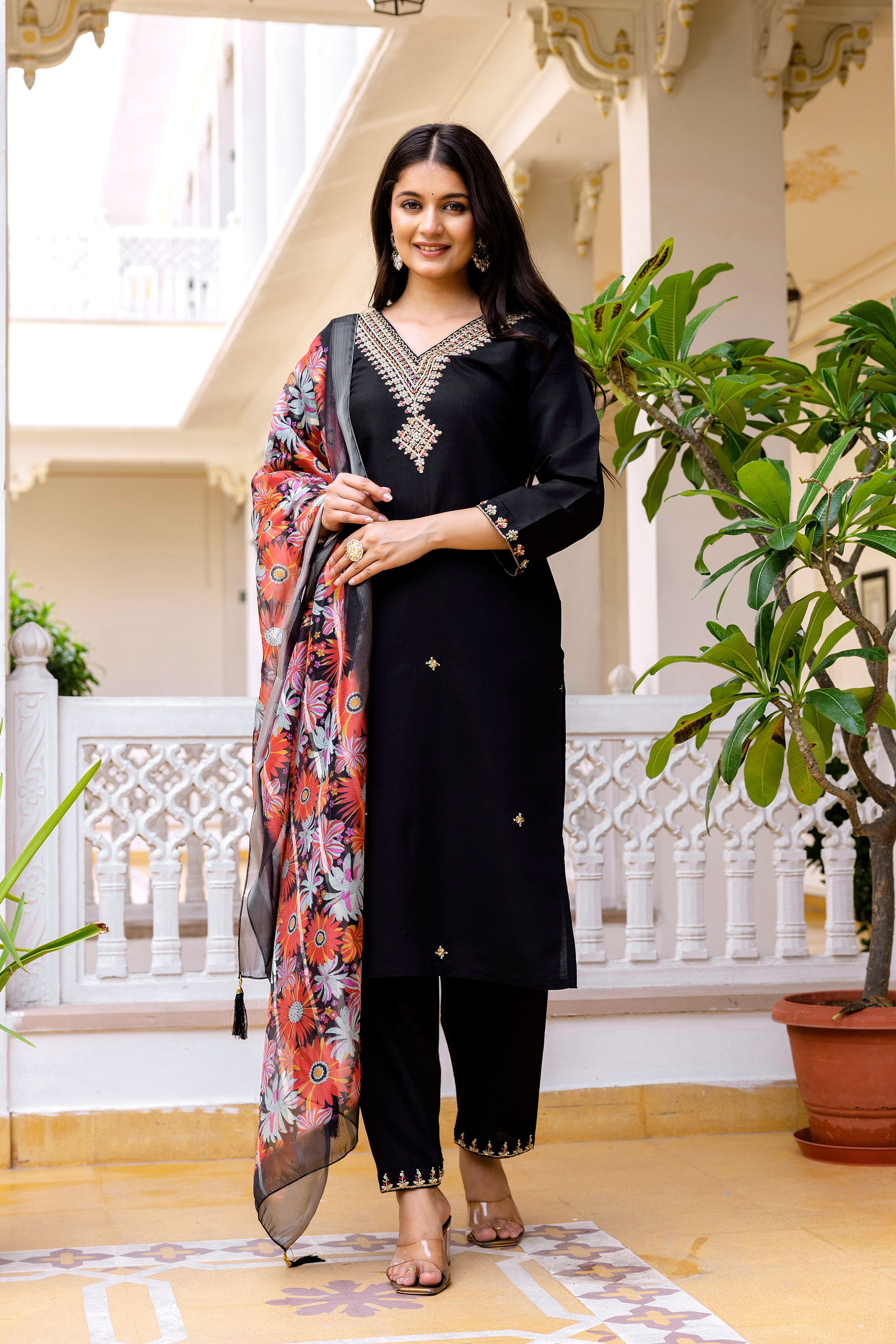
Black also performs well as a wardrobe anchor, but fabric and surface detail determine its versatility. Black Embroidered Chanderi Kurti Pant Dupatta Set brings a lighter, more textured option than a plain black cotton kurta. Chanderi has a subtle sheen and a relatively light hand, making it suitable for festive afternoons when heavy silk or dense embellishment would feel excessive.
One coordinated silhouette adds contemporary variety
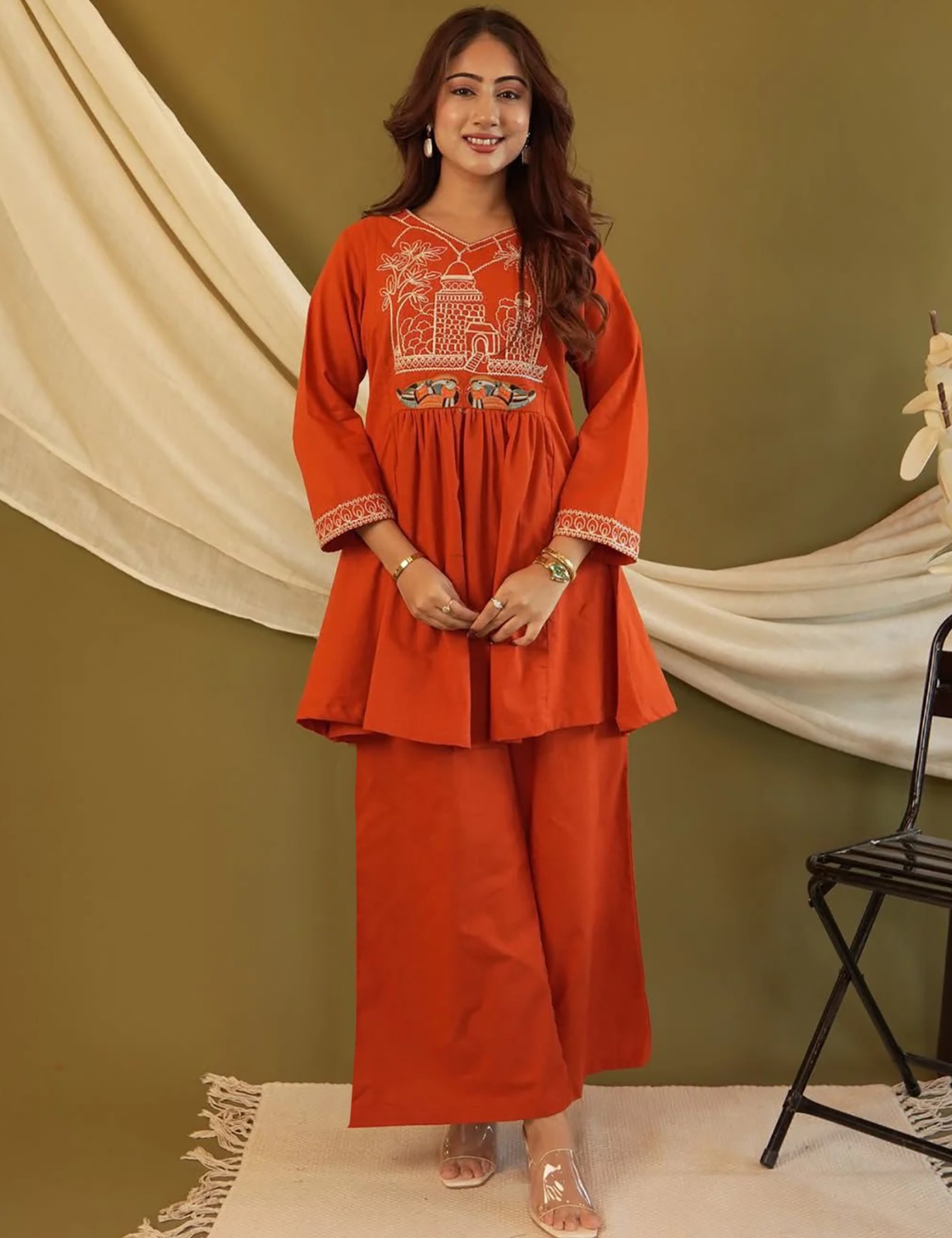
A coordinated set is useful when you want the visual neatness of matching separates without the formality of a heavily embellished suit. Stylish Rust Orange Ethnic Co-Ord Set for Women can fill that role with a warm, noticeable colour that remains easier to wear than neon shades or very specific seasonal tones.
Before buying a co-ord set, assess whether the top and bottom can be worn independently. A top that works with ivory palazzos or denim and trousers that work with a plain kurta will double the set's practical value. Independent wear is especially important when your first wardrobe is still small.
How should you choose colours for a first Indian-wear wardrobe?
Choose colours by combining one neutral family, one muted colour family and one festive accent rather than buying every shade you like individually. A three-part colour plan makes mixing easier and reduces accidental duplicates.
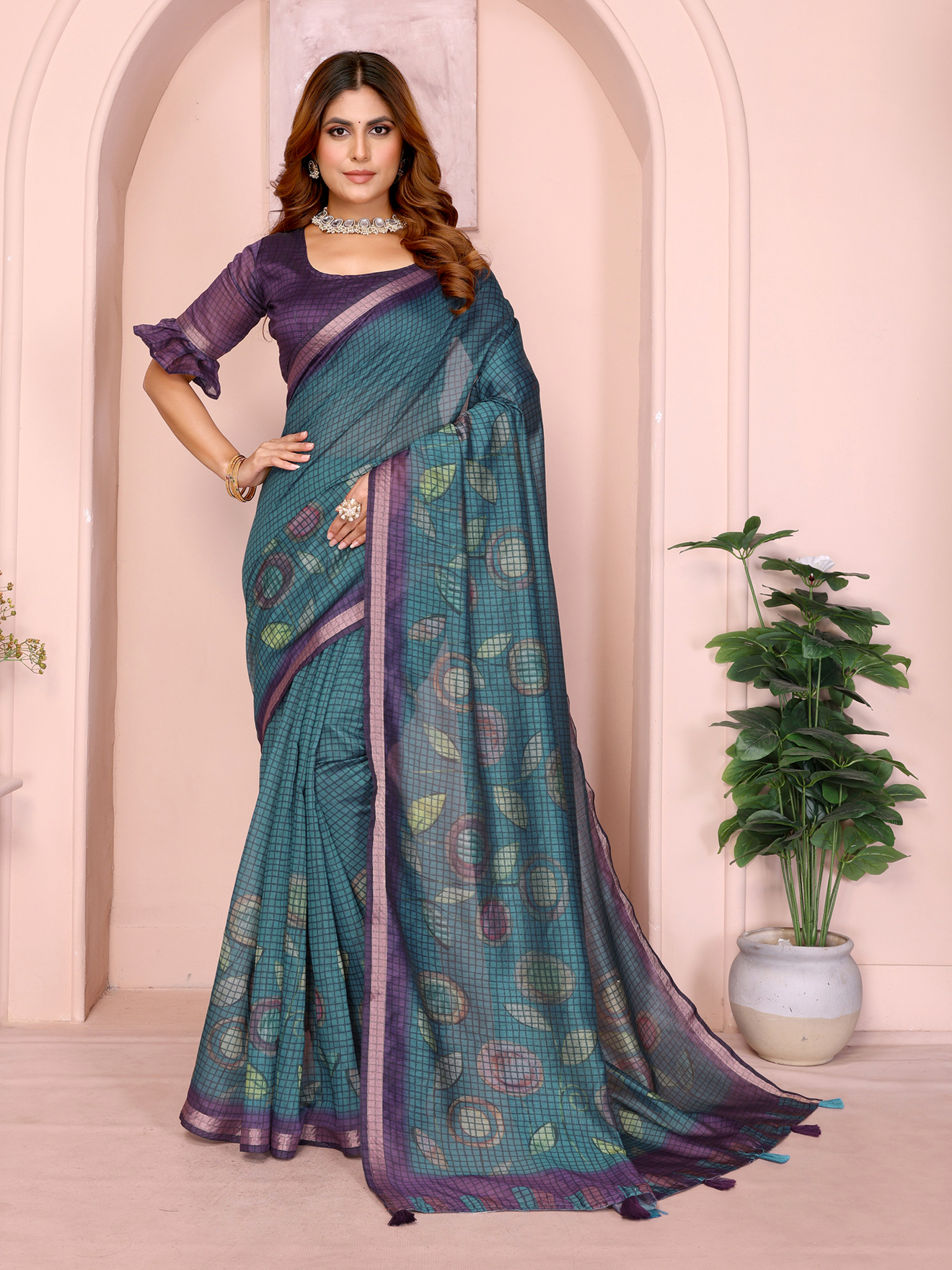
Warm nude families include brown, camel, beige, ivory and white. Cool or pure families include sky blue, sage, olive, grey and dusty pink. Festive accents include rust orange, emerald green, magenta, marigold and deep red. A wardrobe doesn't need every family; two compatible groups are enough to begin.
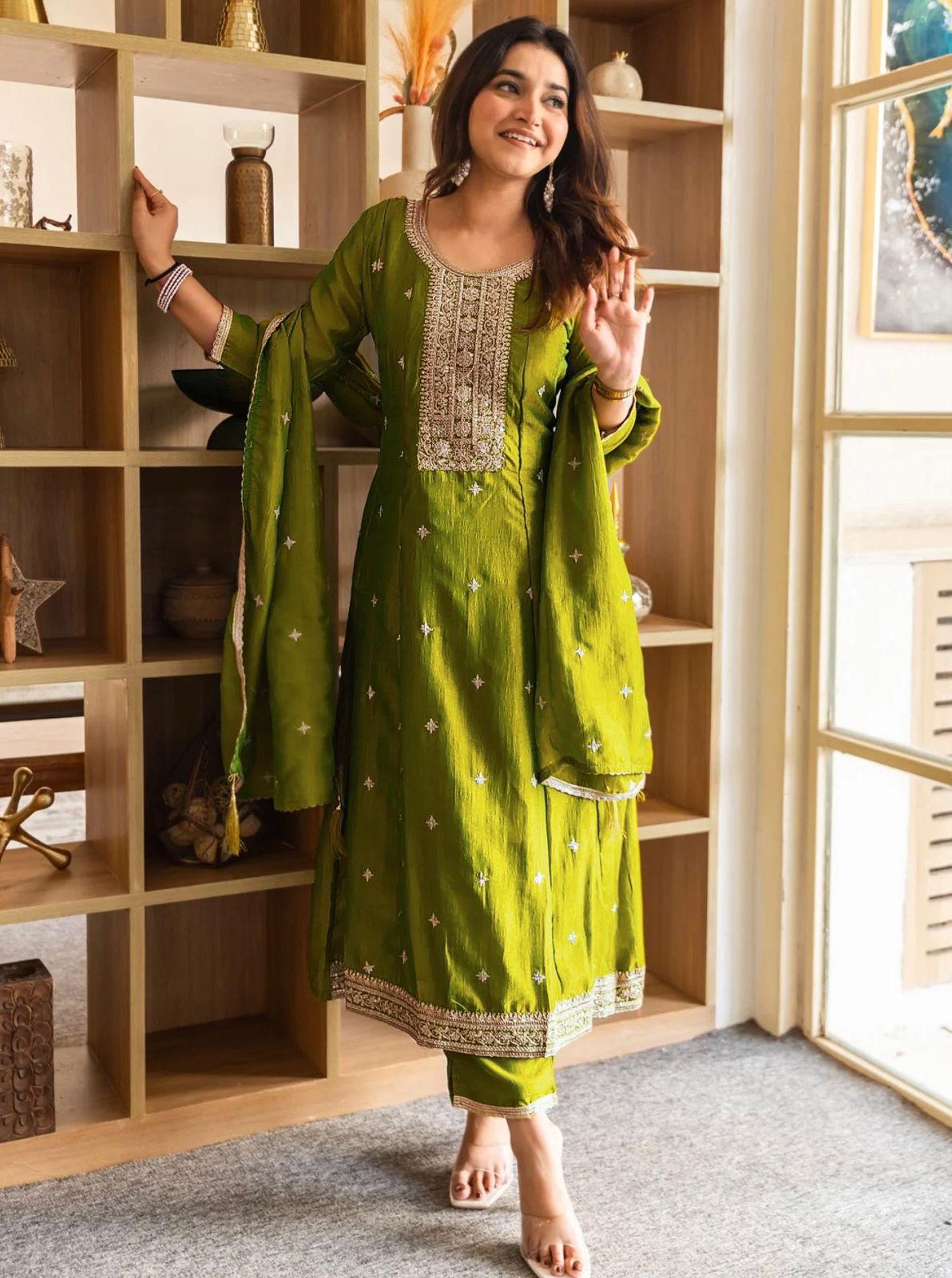
Trendy Olive Green Anarkali Suit Set with Dupatta illustrates why a muted colour can be more useful than a brighter version of the same hue. Olive green works with antique gold jewellery, tan footwear, brown bags and cream accessories. An Anarkali silhouette also brings more movement and occasion presence than a straight kurta while remaining less formal than a heavily sequined outfit.
Consider lighting before deciding that a colour is adaptable. Deep black, navy and emerald can appear elegant in evening photographs but may absorb detail in dim indoor rooms. Pale blue, ivory and soft pink can look fresh in daylight but may need stronger jewellery or makeup for a night event. A balanced wardrobe includes colours that perform across both settings.
Which fabrics deserve space before seasonal trends?
Breathable cotton blends, Chanderi, silk blends and easy-care viscose deserve priority because they cover more weather and occasion conditions than fragile trend fabrics. Fabric choice affects comfort, ironing time, transparency, drape and the cost of cleaning.
Cotton and cotton blends suit hot weather and frequent wear, although pure cotton may crease quickly. A cotton blend can retain a neater appearance while remaining more breathable than heavy synthetic fabric. Cotton is especially useful for daily kurtas, Haldi ceremony gatherings and summer travel.
Chanderi is lightweight and softly lustrous, making it useful for daytime festive dressing. Chanderi garments may be delicate, particularly when they contain fine embroidery or zari, so follow the care label and avoid rough bags that can snag the surface.
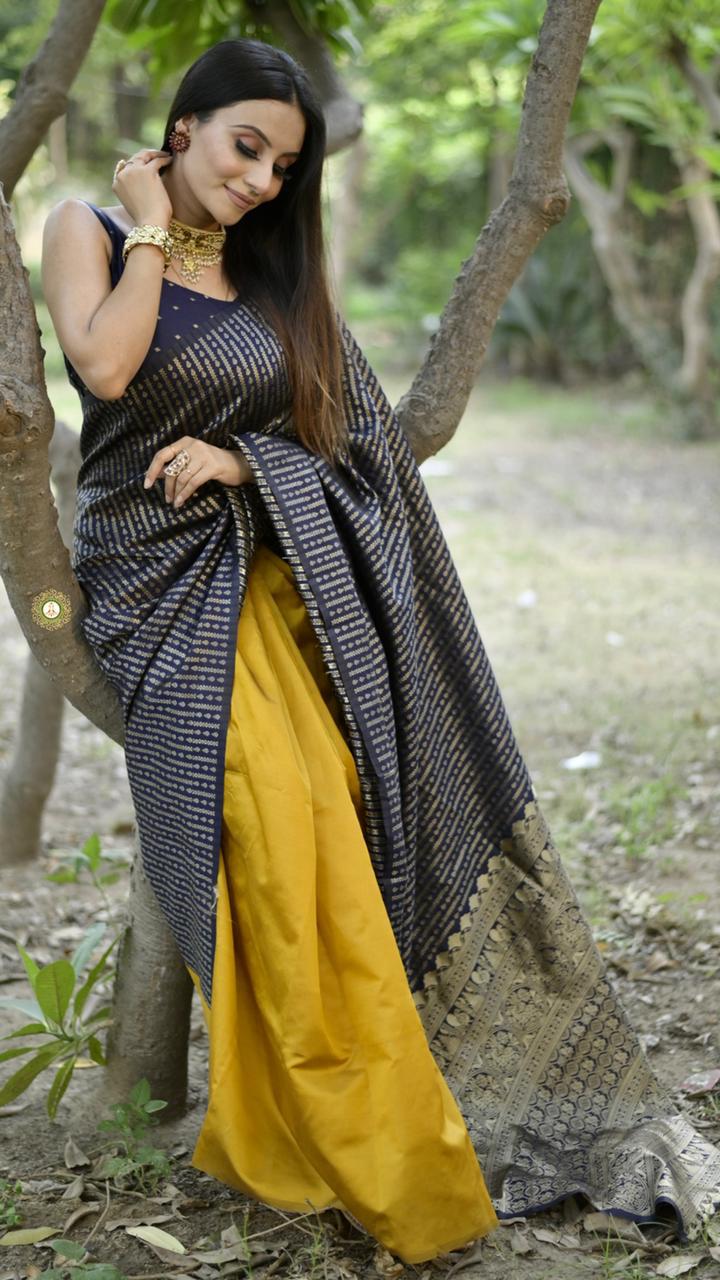
Silk and silk blends offer richer drape and formal presence. Banarasi silk and Kanjeevaram are important traditional choices for sarees, but a first wardrobe doesn't automatically require both. Buy a silk garment when you've a genuine use for its maintenance, storage and occasion level.
Viscose and rayon blends can offer fluid movement at a generally accessible price. Check the wash instructions because some versions shrink, lose shape or develop surface wear when washed aggressively.
Zari, sequins and dense embroidery should be treated as occasion details rather than everyday necessities. A wardrobe with one zari-rich garment and several quieter pieces gives you more styling range than a wardrobe where every outfit competes for attention.
How many silhouettes should a beginner own?
A beginner benefits from three core silhouettes: a straight kurta set, an Anarkali or flared set, and a coordinated or relaxed separates outfit. These shapes create visible variety while keeping fit and styling manageable.
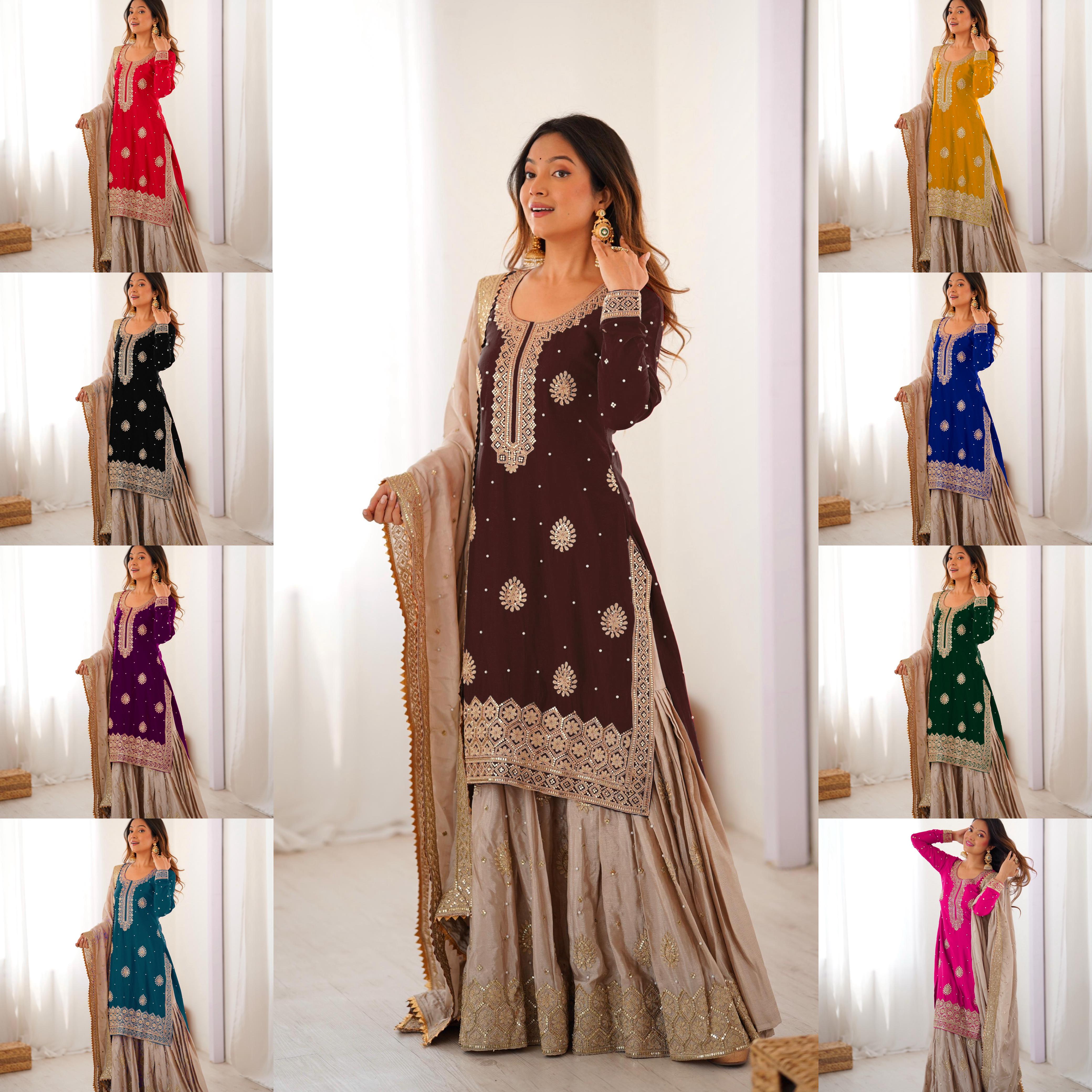
A straight kurta set is generally the easiest to repeat for work, lunches and casual festive visits. An Anarkali provides movement and a more ceremonial appearance, particularly when paired with a structured dupatta and low-to-medium jewellery. A co-ord or relaxed kurta-and-pant combination is useful for travel, informal gatherings and days when you want a contemporary proportion.
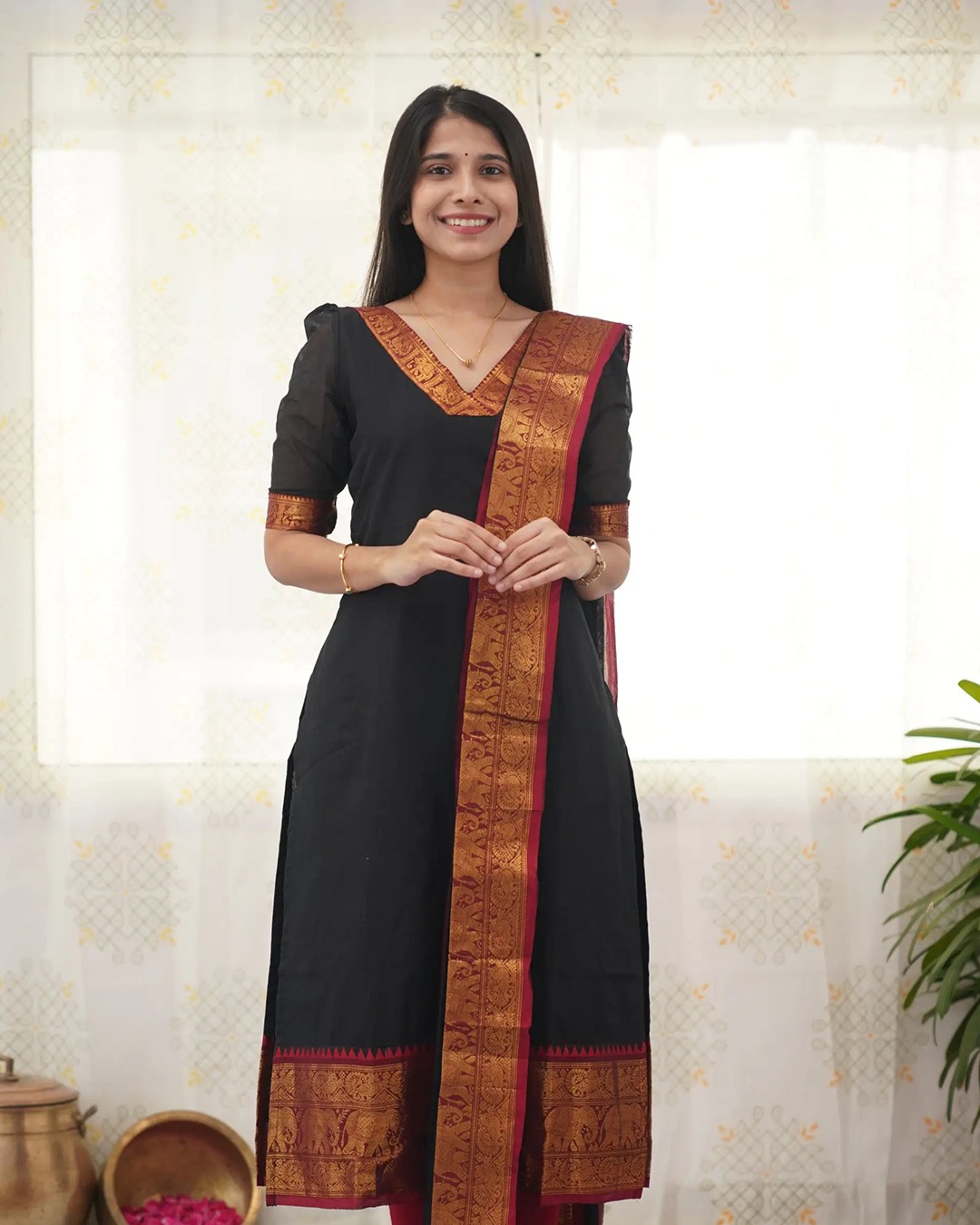
Black Heritage Weave Kurti Dupatta Set brings another valuable lesson: a textured or heritage-inspired surface can make a simple silhouette feel considered. Such a piece can be dressed down with flat sandals or elevated with metallic earrings and a structured bag.
Fit should be judged while moving, sitting and lifting your arms. A neckline that looks attractive while standing may become uncomfortable when seated. Trousers should not pull across the hips, and sleeve openings should allow normal arm movement. Alterations are often worth budgeting for because a well-fitted basic will be worn more frequently than a dramatic but uncomfortable trend piece.
When should trend pieces enter the wardrobe?
Trend pieces should enter after your wardrobe has reliable neutral, everyday and festive foundations, usually after four to six flexible purchases. A trend item earns its place when it adds a new silhouette, colour or styling function rather than repeating something you already own.
Use a three-question filter before buying. Can the item be worn to at least two types of event? Can it work with two existing accessories or bottoms? Will you still want to wear it after the trend cycle changes? If the answer is no to two questions, wait 48 hours before purchasing.
Trend-led details can still be practical when their scale is controlled. A contemporary sleeve, asymmetric hem, contrast border or unusual colour can refresh a familiar kurta without making the garment difficult to style. A heavily cut-out back, extreme crop length or very specific embellishment usually has fewer repeat-wear opportunities.
Price should be measured by cost per wear rather than the ticket amount alone. An outfit costing ₹3,000 and worn ten times costs ₹300 per wear, while a ₹1,500 outfit worn once costs ₹1,500 per wear. This calculation isn't a reason to avoid special garments; it's a way to understand which purchases deserve the larger share of your budget.
How can accessories multiply a small ethnic wardrobe?
Accessories multiply a small ethnic wardrobe when they change the formality, colour balance or finish of an outfit. Three pairs of footwear, two flexible dupattas and a small jewellery rotation can create more visible difference than another similar kurta set.
- Footwear: Keep one neutral jutti or sandal, one comfortable flat for long events and one dressier metallic or embroidered pair.
- Dupattas: A solid ivory, gold, rust or deep green dupatta can alter the appearance of multiple kurtas. Choose fabrics that don't slide constantly from the shoulder.
- Jewellery: Medium gold-toned earrings, small studs, a festive jhumka and a simple bangle stack cover more situations than several highly specialised sets.
- Bags: A structured neutral potli or shoulder bag works for celebrations, while a larger fabric tote is more practical for daytime and travel.
Accessories should also balance surface detail. Heavy zari or sequins usually need quieter jewellery, while a plain cotton kurta can carry larger earrings or a more decorative dupatta. Matching every element exactly can make an outfit look less modern and prevents individual pieces from working elsewhere.
Storage affects how often ethnic clothing gets worn. Fold embroidered garments with soft cotton fabric between layers, keep zari away from damp areas and avoid hanging heavy Anarkalis for long periods if the fabric may stretch. Air garments after wear before returning them to a cupboard, and follow professional-cleaning instructions for silk, Chanderi and embellished clothing.
A practical purchase order for your first ethnic wardrobe
A sensible purchase order begins with an adaptable everyday set, followed by a neutral set, a second bottom option, an adaptable dupatta and one festive silhouette. Trend pieces come only after these categories have a clear role.
- First purchase: Select a comfortable straight kurta set in a colour you can wear during the day.
- Second purchase: Add a neutral or dark set with different surface texture, such as embroidery or Chanderi.
- Third purchase: Buy a separate palazzo, straight pant or skirt that works with at least two kurtas.
- Fourth purchase: Choose an adaptable dupatta in ivory, rust, olive, gold or another established wardrobe colour.
- Fifth purchase: Add an Anarkali, flared suit or other festive silhouette for greater occasion variety.
- Sixth purchase: Consider a trend piece only after checking its compatibility with the first five purchases.
The resulting wardrobe can cover a work celebration, a family lunch, a festival evening and a more formal gathering without making every outfit look identical. Building Your First Ethnic Wardrobe Before Buying Trend Pieces is ultimately a decision-making exercise: buy for your calendar, select fabrics you'll maintain and choose garments that make combinations before chasing novelty.
Common Questions About Building a First Ethnic Wardrobe
What should I buy first for an ethnic wardrobe?
Buy one comfortable straight kurta set in a versatile colour first, followed by a neutral set, a separate bottom and an adaptable dupatta. These pieces cover everyday, work and small festive occasions before you spend on highly specific outfits.
How many ethnic outfits does a beginner need?
A beginner can start with six to eight garments, including two dependable kurta sets, one festive silhouette, two bottoms and one or two versatile dupattas. The exact number depends on how often you attend weddings, festivals and office events.
Which colours are most versatile in Indian wear?
Brown, ivory, black, sky blue, olive, rust orange and deep green are versatile because they coordinate with common gold, tan, cream and metallic accessories. A wardrobe needs only two or three compatible colour families rather than every available shade.
Is Chanderi suitable for everyday ethnic wear?
Chanderi is suitable for light festive and semi-formal wear, but it may require gentler care than cotton. Embroidered Chanderi garments should be protected from rough surfaces and washed or dry-cleaned according to the care label.
When should I buy ethnic-wear trend pieces?
Buy trend pieces after four to six flexible purchases have established your neutral, everyday and festive foundations. A trend item should work with at least two existing garments and suit two different types of event.
How can I make a small ethnic wardrobe look varied?
Change the dupatta, footwear, jewellery, bag and bottom silhouette instead of buying another similar kurta. A plain kurta with a zari dupatta can look festive, while the same kurta with flats and minimal jewellery can work for daytime wear.