

Will This Kurti Be See-Through? Fabric Clues to Check Before Buying is a useful question whenever you shop for a light-coloured salwar suit online. A product photograph can make cream, ivory, pastel pink or mint fabric appear fully opaque even when bright daylight reveals the outline of a camisole or skin underneath. The most reliable clues are weave density, fabric weight, colour, lining, embroidery placement and the lighting used in the photograph.
Transparency doesn't automatically mean poor quality. Chanderi silk, fine cotton and lightweight rayon can be comfortable precisely because they allow air to move through the weave. The practical issue is whether the garment gives enough coverage for the setting, your preferred innerwear and the way the kurti fits your body.
Will This Kurti Be See-Through? Start with the fabric structure
Will This Kurti Be See-Through? The quickest answer comes from examining the weave, surface and colour in close-up photographs rather than relying on the full outfit image.
A kurti looks see-through when light passes through gaps in the yarn structure or through a fabric layer that's too thin to block the colour and outline beneath it. The effect becomes stronger with white and pastel colours, close-fitting silhouettes, strong backlighting and fabrics with an open or delicate weave.
Fabric opacity depends on more than the fibre name. Cotton can be opaque or lightweight, rayon can be thick or fluid, and silk fabrics can vary considerably. A tightly woven cotton kurti may provide more coverage than a loosely woven fabric with a heavier-sounding name. Product descriptions, close-up images and construction details therefore weigh more than the words silk, cotton or rayon alone.
Fabric weight is another useful clue, although weight should not be treated as a guarantee. A light 60-90 GSM fabric will usually allow more light through than a 120-180 GSM fabric of a similar colour, but fibre, weave and finishing also affect opacity. Many online listings don't provide GSM, so use visual evidence and lining information instead of assuming that missing GSM means the garment is transparent.
How does weave density affect coverage?
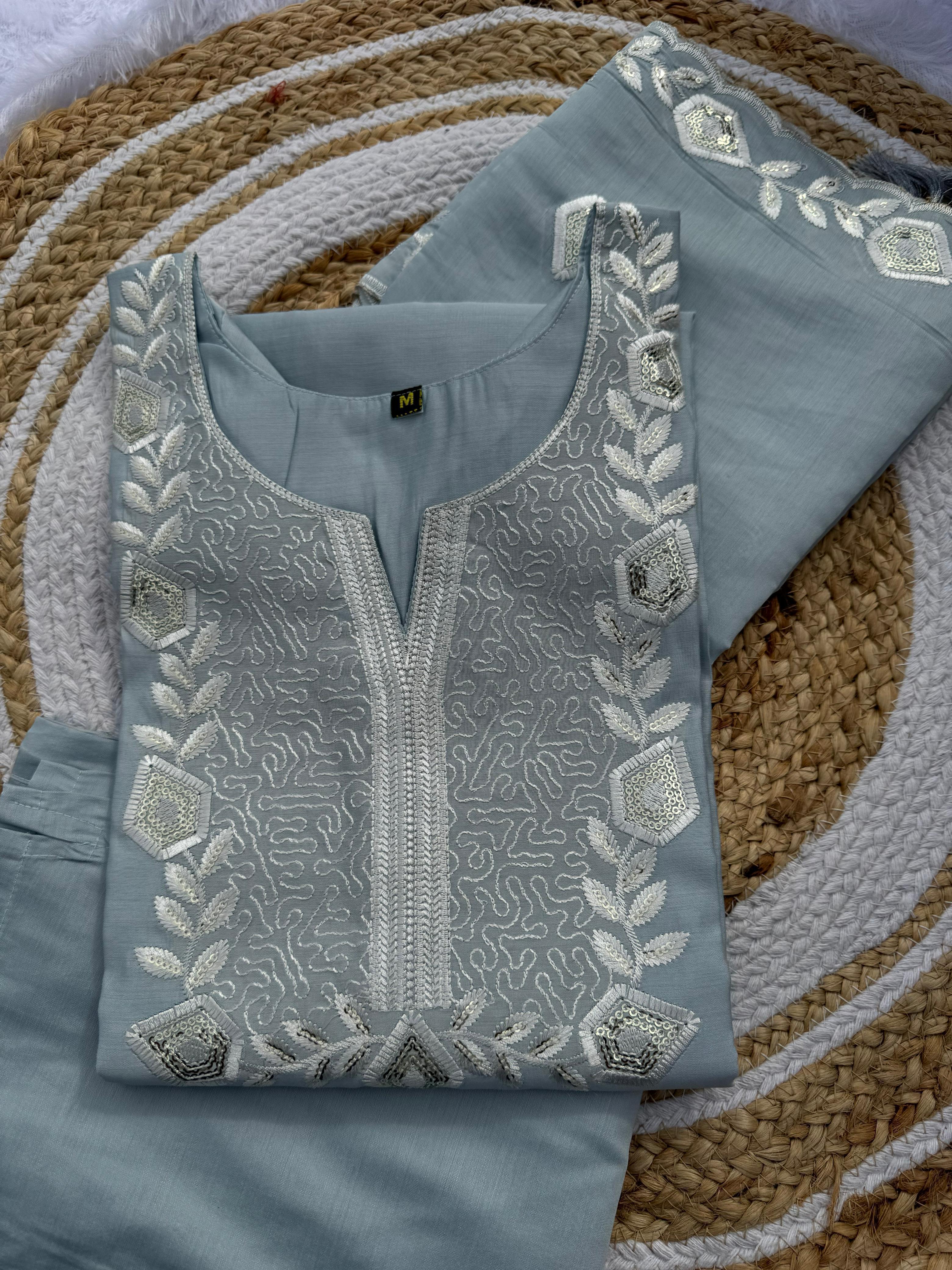
A dense plain weave usually blocks more light than a loose, airy weave. Zoom into the sleeve, side panel or lower hem because embroidery and dupatta layers can conceal the fabric structure in the chest area. If individual warp and weft gaps are clearly visible, expect some translucency in bright light.
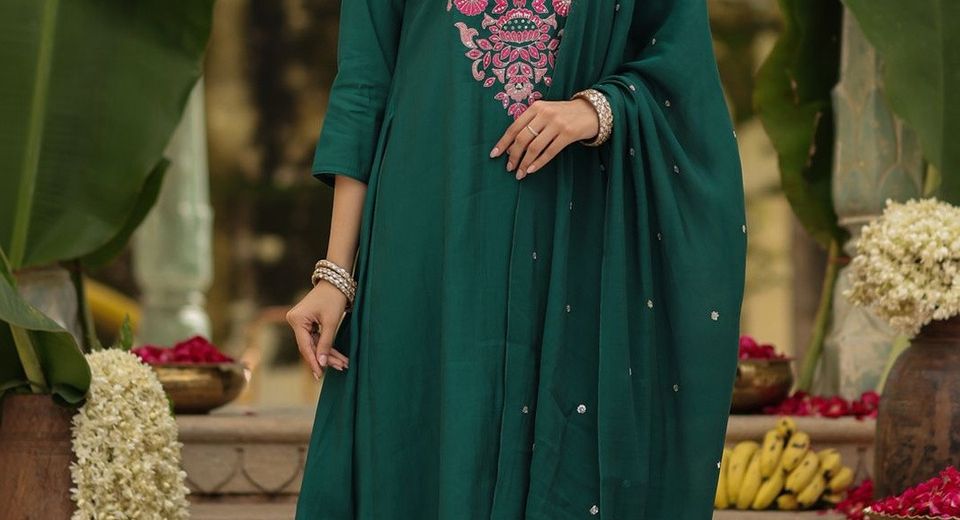
Chanderi is known for a light, crisp hand and a slightly luminous surface, so Chanderi silk may need a lining or a coordinated inner layer when used in pale colours. The Cream Chanderi Silk Kurti Pant Dupatta Set for Women and the Elegant Green Chanderi Silk Kurti Pant Dupatta Set are useful examples of why colour matters: a deep green generally conceals more than cream, even when both garments use a lightweight Chanderi base.
Banarasi silk, Kanjeevaram, Chanderi and cotton are not single opacity categories. Banarasi silk can contain dense zari areas alongside lighter sections, Kanjeevaram is generally associated with substantial silk construction, Chanderi often has a lighter drape, and cotton ranges from sheer voile to firm handloom cloth. Ask which part of the outfit uses the named fabric if the listing isn't specific.
Will This Kurti Be See-Through? Use colour and lighting as evidence
Will This Kurti Be See-Through? Light colours and backlighting make a kurti appear more transparent, while dark colours and front lighting usually make the same weave look more opaque.
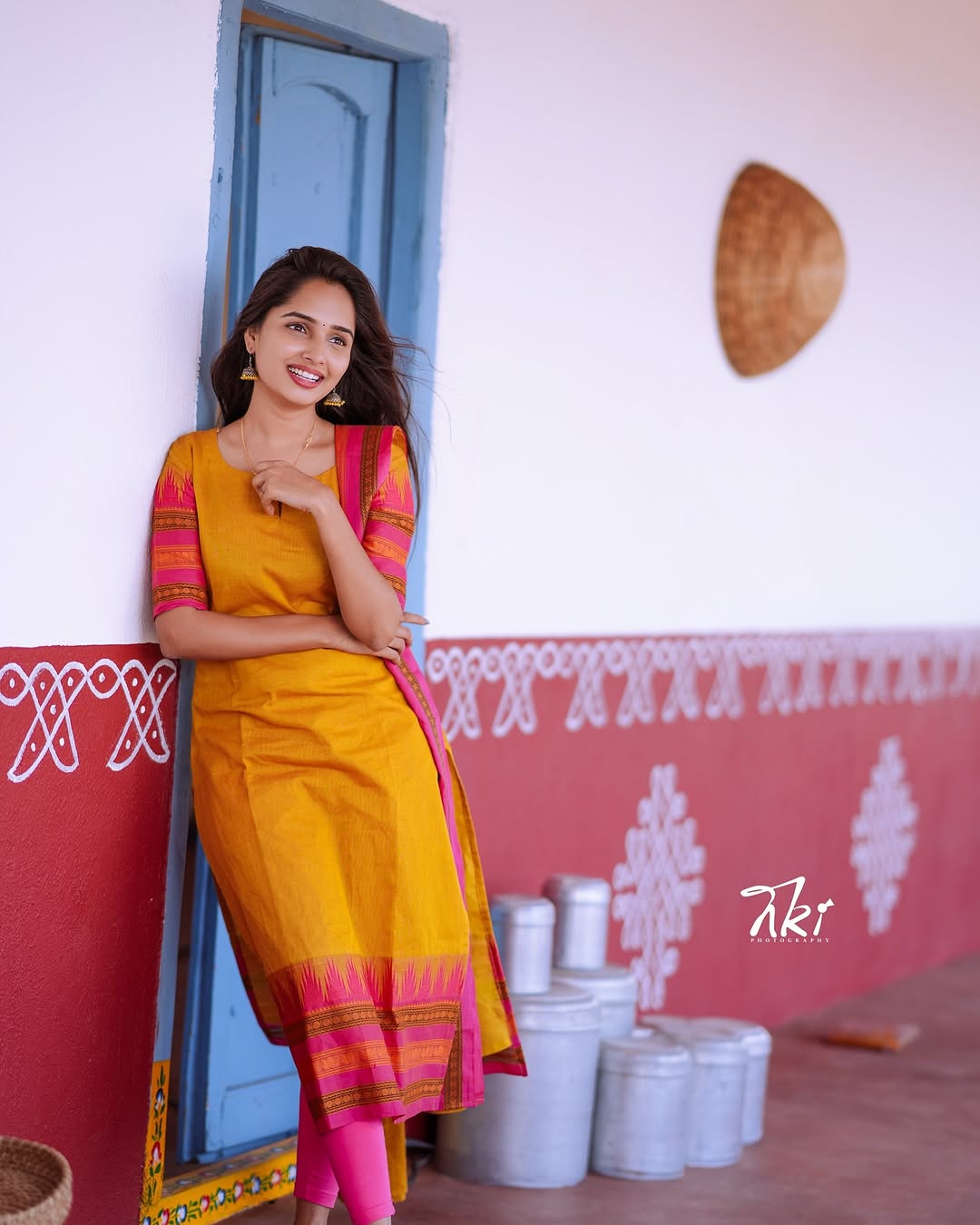
White reflects light but doesn't necessarily block it, which is why white, cream, beige, blush pink and pale yellow kurtis deserve closer inspection. Dark green, navy, maroon and black absorb more visible light and commonly provide better visual coverage. A rich colour can still be sheer if the cloth is very lightweight, so colour is a clue rather than proof.
Product photography can hide transparency in several ways. A front-lit studio image tends to flatten shadows, a darker background can make pale cloth look denser, and a dupatta placed over the torso can conceal the kurti underneath. Search for rear-view photographs, sleeve close-ups and images taken without the dupatta covering the chest.
Rayon can be particularly difficult to judge from photographs because the fabric may look fluid and dense in one pose but reveal a faint outline when stretched. The Green Rayon Embroidered Kurti Pant Dupatta Set and the Pink Rayon Embroidered Kurti Pant Dupatta Set demonstrate why a buyer should assess both colour and construction. Green may offer more visual coverage than pink, but the actual result depends on the rayon weight and whether the kurti has lining.
Why does daylight reveal more than a studio photograph?
Daylight reveals transparency more clearly because strong light travels through the fabric and creates a contrast between the garment and the layer beneath it.
Hold a garment near a window without placing it directly against the glass, then inspect the sleeve and side seam. A fabric that looks solid indoors may show the outline of an inner layer under direct sunlight. An online photograph taken near a window can provide a more realistic clue than a heavily edited image, although even daylight photography can't replace checking the lining details.
Will This Kurti Be See-Through? Check whether the kurti is lined
Will This Kurti Be See-Through? A fully lined kurti generally offers more predictable coverage than an unlined kurti made from the same outer fabric.
Look for specific phrases such as lined kurti, attached lining, cotton lining or fully lined. A listing that says lined yoke or lined front describes only a particular section and should not be read as full lining. Ask whether the lining extends from the shoulder to the hem and whether the sleeves are lined.
Lining can change the way a garment hangs. A cotton lining may add structure and reduce cling, while a synthetic lining may create more slip but feel warmer in humid weather. A lining that ends above the hip can leave the lower kurti more transparent, especially when the fabric is pale and the silhouette is straight.
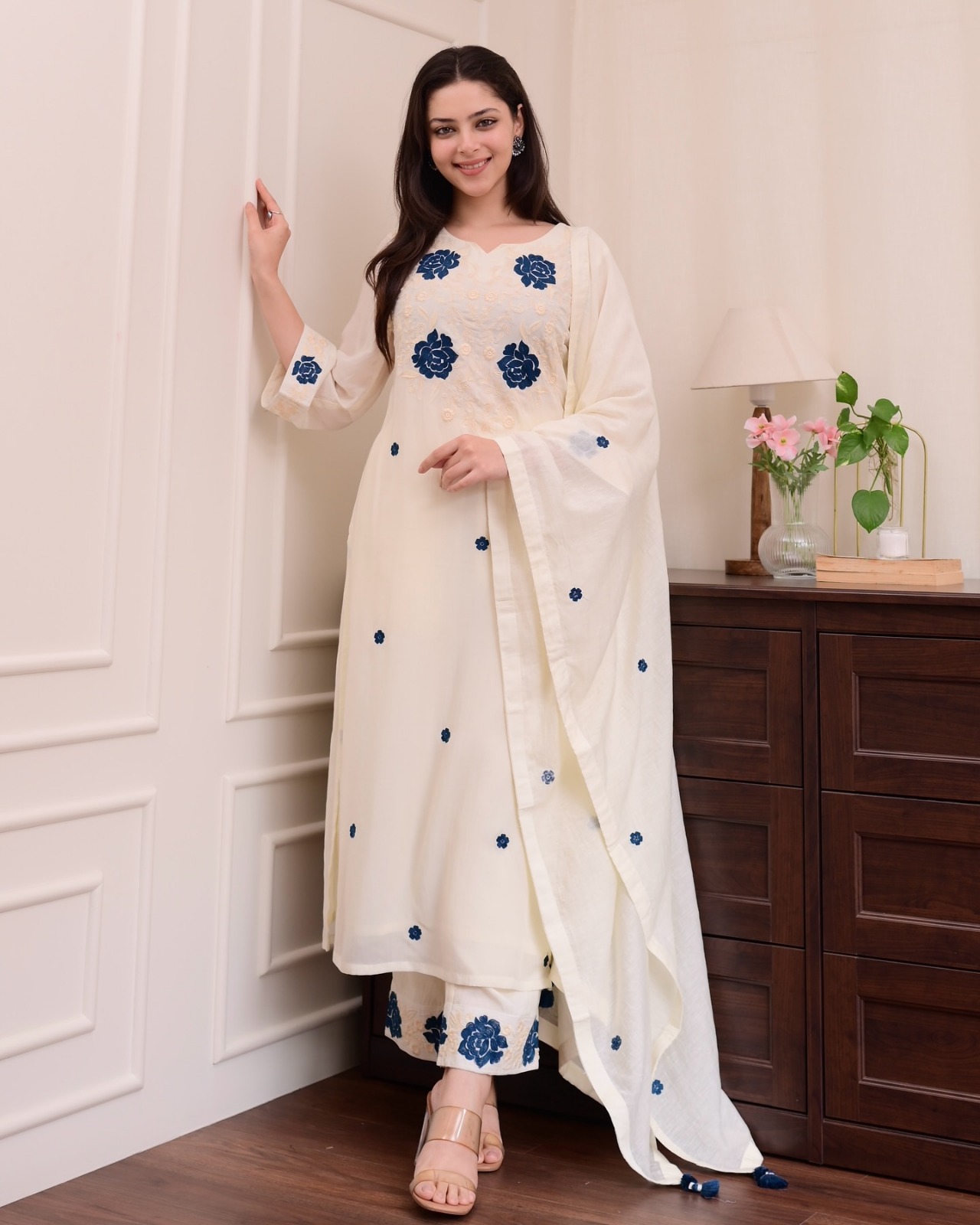
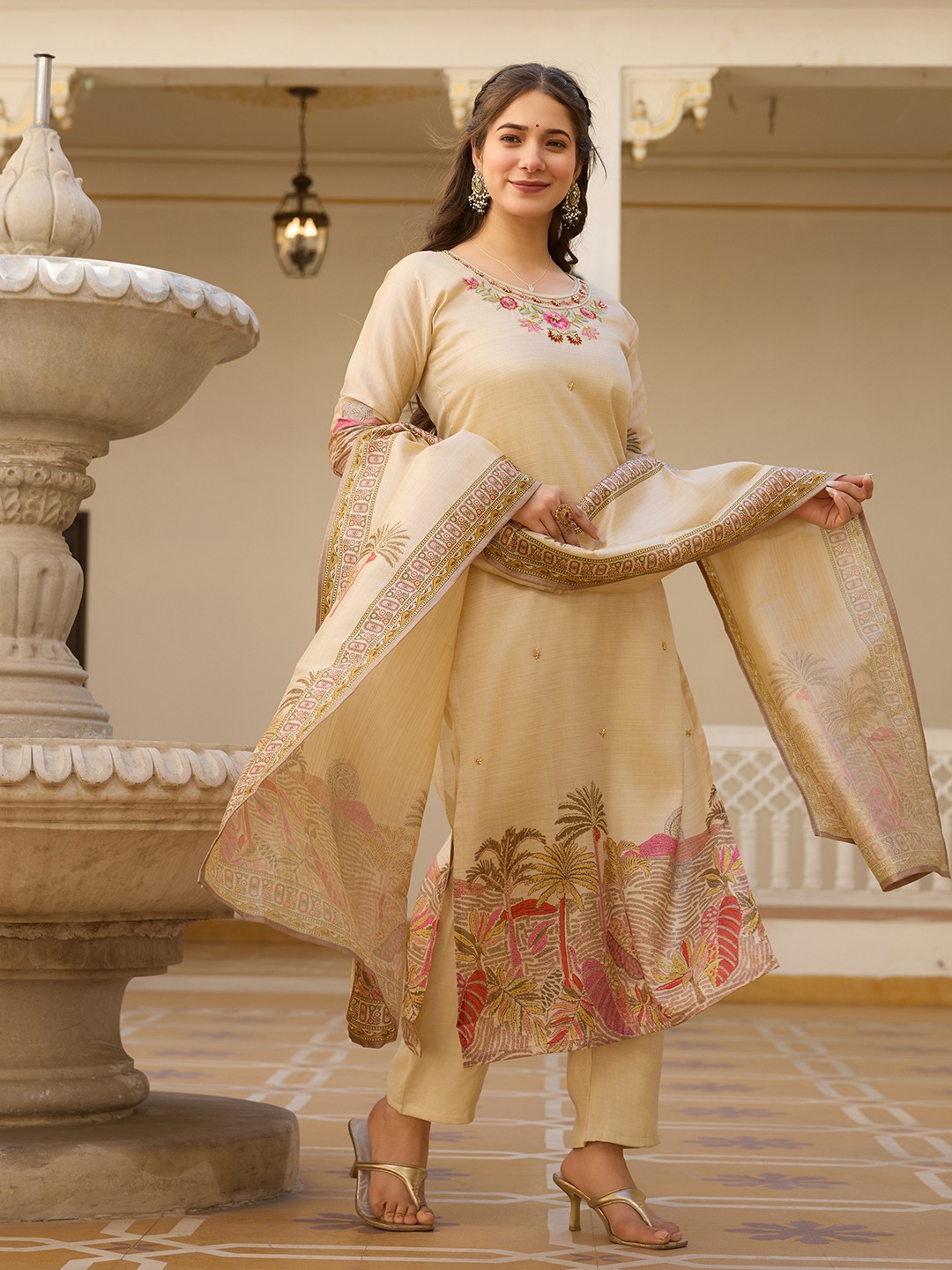
The Cream Embroidered Silk Kurti Pant with Designer Dupatta and the Designer Cream Straight Kurti Set with Dupatta illustrate two common buying situations. Embroidery and a coordinated dupatta may provide visual coverage for a festive outfit, but the buyer should still inspect the sleeve fabric, armhole area and lower hem before deciding whether an inner slip is needed.
Does a dupatta make a transparent kurti practical?
A dupatta adds a second layer over the torso, but a dupatta doesn't guarantee that the kurti itself is opaque.
A dupatta can make a three-piece salwar suit feel more secure during a formal event or family gathering. A dupatta doesn't solve transparency at the neckline, sleeves or back when it moves during walking or when you remove it indoors. Check whether the kurti has lining rather than assuming that a matching dupatta substitutes for a lining.
Will This Kurti Be See-Through? Do not count embroidery as full coverage
Will This Kurti Be See-Through? Embroidery can reduce visible transparency in decorated areas, but it can't guarantee coverage across the entire garment.
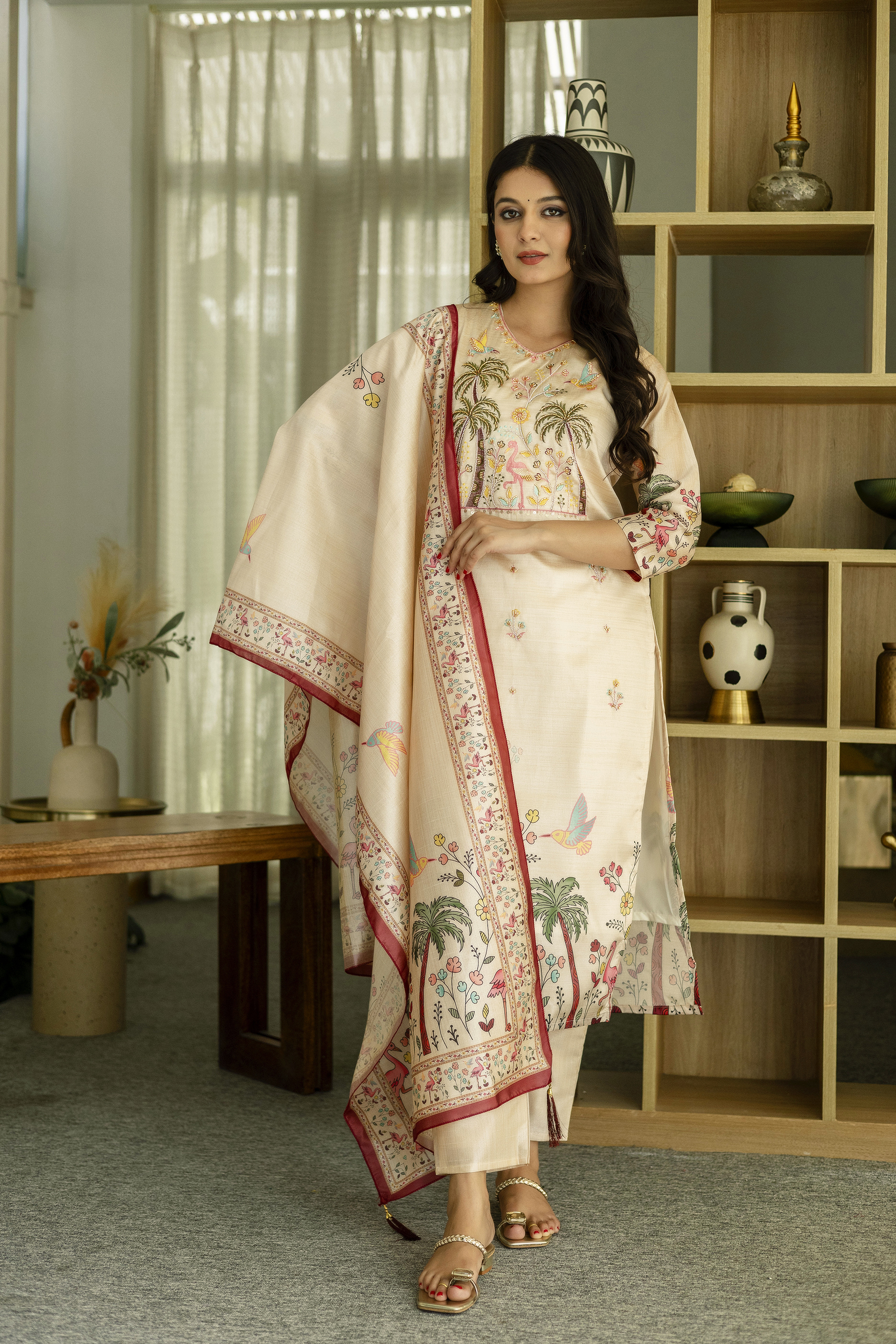
Dense threadwork, zari, appliqué and printed panels interrupt the path of light and can make a front bodice appear more covered. Sparse embroidery leaves the surrounding fabric unchanged, and embroidery usually doesn't cover the sleeves, upper back or lower side panels. A decorated front may therefore look fully covered while the same garment needs an inner layer under strong sunlight.
Zari can create a reflective surface that photographs as dense, but reflective thread isn't the same as a second fabric layer. Inspect the spaces between motifs and check whether the embroidery continues over the bust, sleeves and back. A printed design may disguise the outline of an inner garment without making the underlying cloth thicker.
The Cream Chanderi Silk Kurti Pant Dupatta Set for Women demonstrates why the relationship between fabric and decoration matters. Chanderi silk can have a graceful, light drape, while embroidery or woven detail adds visual interest without necessarily changing the opacity of every panel.
Will This Kurti Be See-Through? Follow an online buying checklist
Will This Kurti Be See-Through? You can estimate the answer online by combining product specifications, close-up photographs, customer images and the conditions in which you plan to wear the garment.
- Search for lining details. Look for terms such as lined kurti, attached lining, cotton lining or fully lined. Treat lined yoke or lined front as partial coverage unless the listing gives more information.
- Inspect sleeves and hems. The sleeve is often more revealing than an embroidered bodice. A hem shown against a light background can also reveal whether the cloth has a compact or open structure.
- Compare backgrounds. A cream kurti photographed against a pale wall may look opaque. A photograph against a darker background may show light passing through the cloth more clearly.
- Read the composition carefully. Fibre content helps predict feel and drape, but fibre content doesn't replace weave and lining information. Lightweight rayon and firm rayon can behave differently.
- Study customer photographs. Look for images taken outdoors, near a window or without a dupatta. Customer photographs often reveal sleeve and side transparency that a styled studio image conceals.
- Ask precise questions. Ask whether the kurti is lined from shoulder to hem, whether the sleeves are lined and whether a skin-toned inner is recommended. Specific questions produce more useful answers than asking only whether the material is thick.
A product name can provide a starting point, but a product name isn't a specification. A kurti described as cotton may be opaque or light; a kurti described as silk may have a lining or may rely on the weave and colour for coverage. Treat construction details as stronger evidence than decorative words such as designer, elegant or premium.
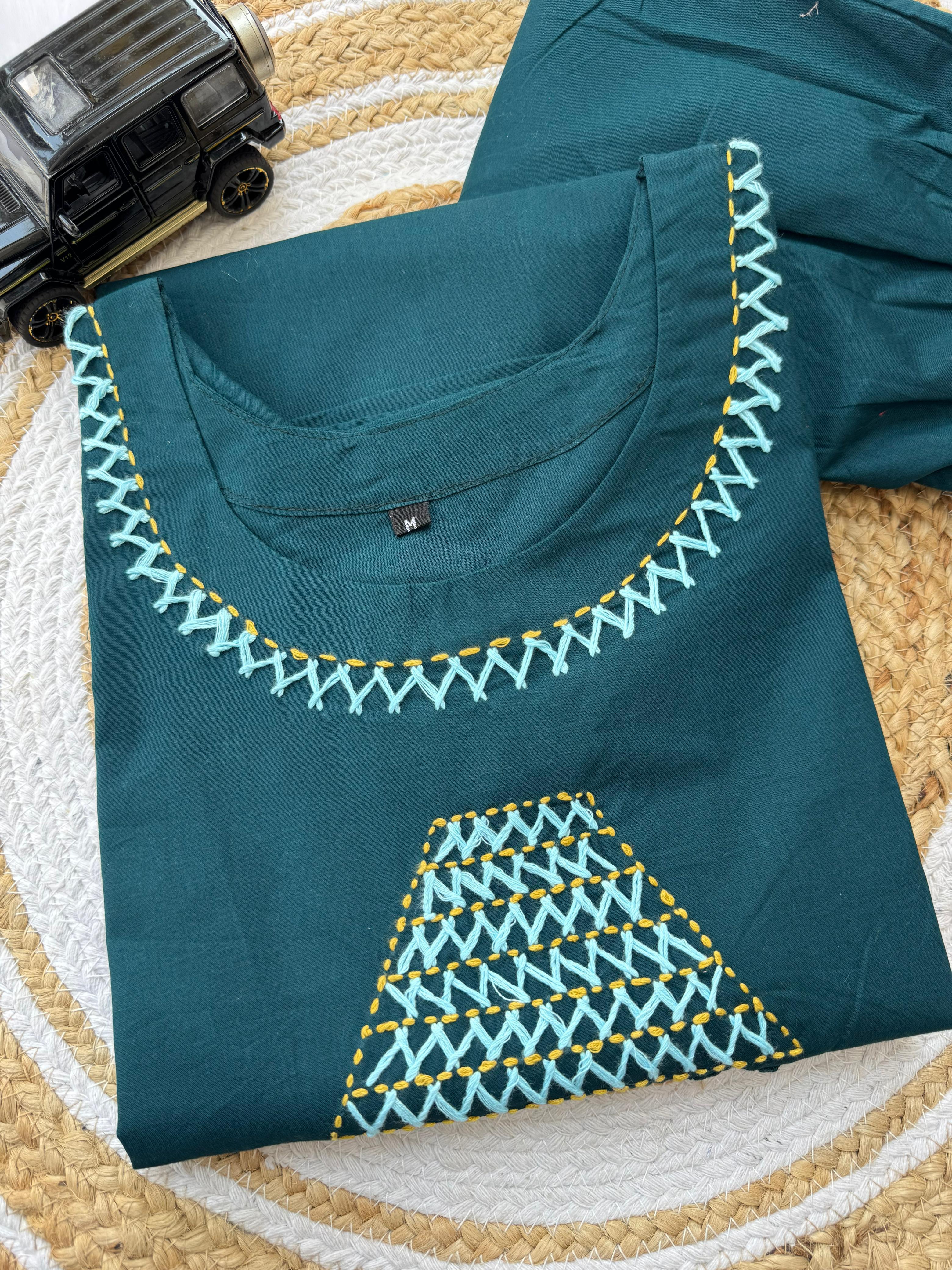
The Parrot Green Kanchi Cotton Kurti with Woven Dupatta and the Teal Cotton A-Line Kurti Pant Set with Handwork show how cotton styling can vary. A woven dupatta, handwork or an A-line cut may add structure and coverage, but examine the kurti body and sleeves separately. A darker teal or parrot green colour may disguise outlines better than cream, but daylight remains the decisive test.
Will This Kurti Be See-Through? Choose the right inner layer and fit
Will This Kurti Be See-Through? A skin-toned inner layer and a comfortable, non-stretched fit usually provide the most reliable solution for a lightweight kurti.
A skin-toned camisole or slip usually creates less visible contrast than a white inner under a cream or pastel kurti. Choose an inner that follows the neckline and armhole without bunching. A high-neck inner under a round-neck kurti can show at the neckline, while a wide camisole strap can become visible beneath a sleeveless or narrow-sleeve design.
Fit changes opacity because stretched fabric opens the spaces between yarns. A kurti that's comfortable at the bust may look more opaque than the same size worn tightly. Leave practical ease around the bust and upper arm, especially when the fabric is lightweight rayon, fine cotton or Chanderi silk.
Consider the movement required by the setting. A kurti worn for commuting, office hours or a Haldi ceremony may shift more than a garment worn for a seated dinner. Test the neckline, armhole and side seams by raising both arms, sitting down and walking several steps before deciding that a garment has adequate coverage.
Will This Kurti Be See-Through? Match opacity to the occasion
Will This Kurti Be See-Through? Match the kurti's coverage to the lighting, movement and formality of the place where you'll wear it.
For office wear, teaching, travel and daytime events, choose a densely woven or lined kurti if you prefer not to adjust an inner layer. A straight kurti set in a pale shade may be comfortable with a skin-toned camisole, but a fully lined design gives more consistency when you move between indoor and outdoor spaces.
For festive dressing, embroidery, zari and a dupatta can create a layered look, but check the construction before relying on decoration. The Maharashtra Paithani Inspired Salwar Suits collection, Gujarat Bandhej Salwar Suits collection and Odisha Sambalpuri Salwar Suits collection can be useful references when comparing woven motifs, printed surfaces and layered styling. Decorative tradition affects appearance, while lining and weave determine physical coverage.
For everyday summer wear, breathable cotton or rayon may be preferable to a heavy lining. The Punjab Patiala Salwar Suits collection and Kalamkari Print Salwar Suits (Copy) collection also show why print and silhouette should not be confused with opacity. A bold print may conceal outlines visually, but the fabric can still transmit light through open areas.
The safest purchase decision comes from combining four checks: the fabric's weave, the garment's lining, the colour under strong light and the fit when worn. No single label can answer the transparency question for every kurti. A few minutes spent zooming into sleeves, reading construction details and planning the correct inner layer can prevent an uncomfortable surprise after delivery.
Common Questions About Kurti Transparency Before Buying
How can I tell if a kurti is see-through when shopping online?
Check close-up images of the sleeves, side seams and hem, then look for explicit lining details. Customer photographs taken outdoors or near a window can reveal transparency more clearly than a styled studio image.
Are Chanderi silk kurtis transparent?
Chanderi silk can be lightly translucent because it often has a fine, airy weave, especially in cream and pastel shades. Check whether the kurti is lined and plan a skin-toned inner if the fabric appears light in close-up photographs.
Does dark-coloured fabric prevent a kurti from being see-through?
Dark colours usually hide outlines better because they absorb more light, but colour does not make an open weave opaque. Inspect the weave and lining even when buying a green, navy, maroon or black kurti.
Does embroidery make a kurti opaque?
Embroidery improves coverage only where the motifs are dense and continuous. Sleeves, side panels, upper back and spaces between motifs can remain translucent, so embroidery should not be treated as a substitute for lining.
What colour inner should I wear under a cream kurti?
A skin-toned inner usually creates less contrast than a white inner under cream or pastel fabric. Choose a camisole or slip with a neckline and armhole that remain hidden beneath the kurti.
Can a dupatta cover a transparent kurti adequately?
A dupatta can add coverage over the torso, but it may shift while walking or sitting and cannot cover the sleeves, neckline or back continuously. A lined kurti provides more dependable coverage than a dupatta alone.


