

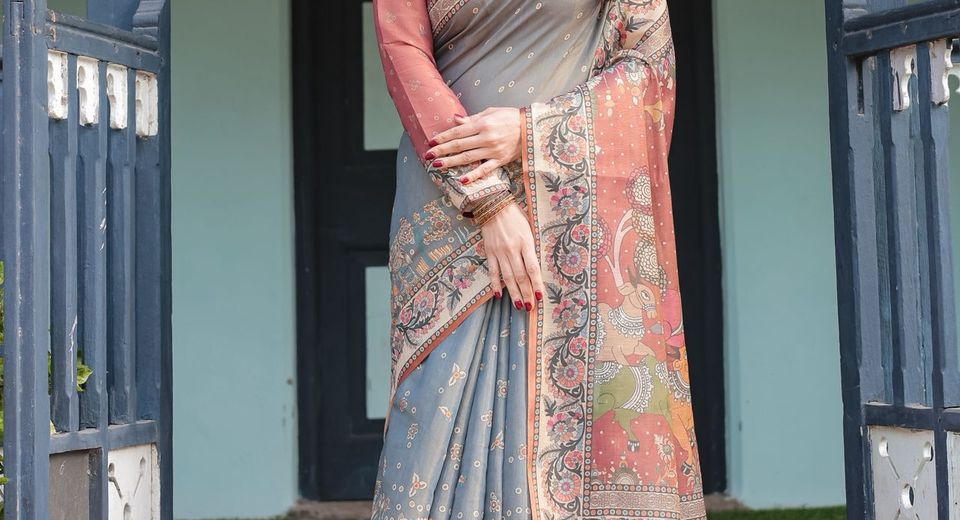
Why the Right Weight Changes the Drape in Saree Fall by Fabric becomes clear when two sarees of similar length are pleated side by side. A lightweight tissue saree may create soft, fluid folds, while a heavier silk saree can hold architectural pleats and a more substantial pallu. Fabric weight affects how a saree gathers at the waist, travels over the shoulder, responds to movement and settles after sitting.
Weight doesn't mean quality, and a heavier saree isn't automatically easier to drape. Fibre, weave, surface finish, zari, starch, width and embellishment all influence the final fall. Understanding those factors helps you choose a saree that behaves well for your height, climate, draping style and occasion instead of choosing only by colour or print.
Why the Right Weight Changes the Drape in Saree Fall by Fabric
The right weight determines whether saree folds stay defined, open softly or collapse during wear. A fabric with enough body supports even pleats, whereas a very light fabric needs careful pinning and a well-fitted petticoat to prevent shifting.
Weight is commonly measured in grams per square metre, but shoppers rarely receive that specification. A practical alternative is to assess how the saree hangs from your hand. A lightweight saree drops quickly and moves easily when lifted. A medium-weight saree shows a controlled bend and moderate swing. A heavier saree resists sudden movement and forms a deeper, more stable fold.
Two sarees made from the same fibre can still drape differently. Tightly woven cotton may feel crisp and hold a box pleat, while loosely woven cotton can appear softer and spread at the waist. Banarasi silk with dense zari has more body than plain silk, and a tissue weave can feel light while retaining a slightly crisp, reflective structure.
What does saree weight change first?
Saree weight changes the pleats first, followed by the pallu and the comfort of the waistband. Front pleats made from medium or heavier fabric tend to stand upright and remain aligned, while very light fabrics often create narrower, softer folds that need extra smoothing.
- Pleat definition: Firm fabrics support five to seven visible pleats, while fluid fabrics may look better with fewer, wider folds.
- Pallu behaviour: Lightweight sarees float and flutter; heavier sarees fall in a clean vertical line.
- Waist pressure: Dense silk and embellished weaves can feel heavier after several hours of tucking.
- Movement: Light fabrics suit walking and dancing, while heavier fabrics feel more grounded during formal standing events.
How Lightweight Sarees Create Soft, Moving Folds
Lightweight sarees create an easy, fluid drape with gentle pleats and a pallu that responds quickly to movement. Lightweight sarees are useful in hot weather, for daytime functions and for wearers who prefer minimal bulk around the waist.
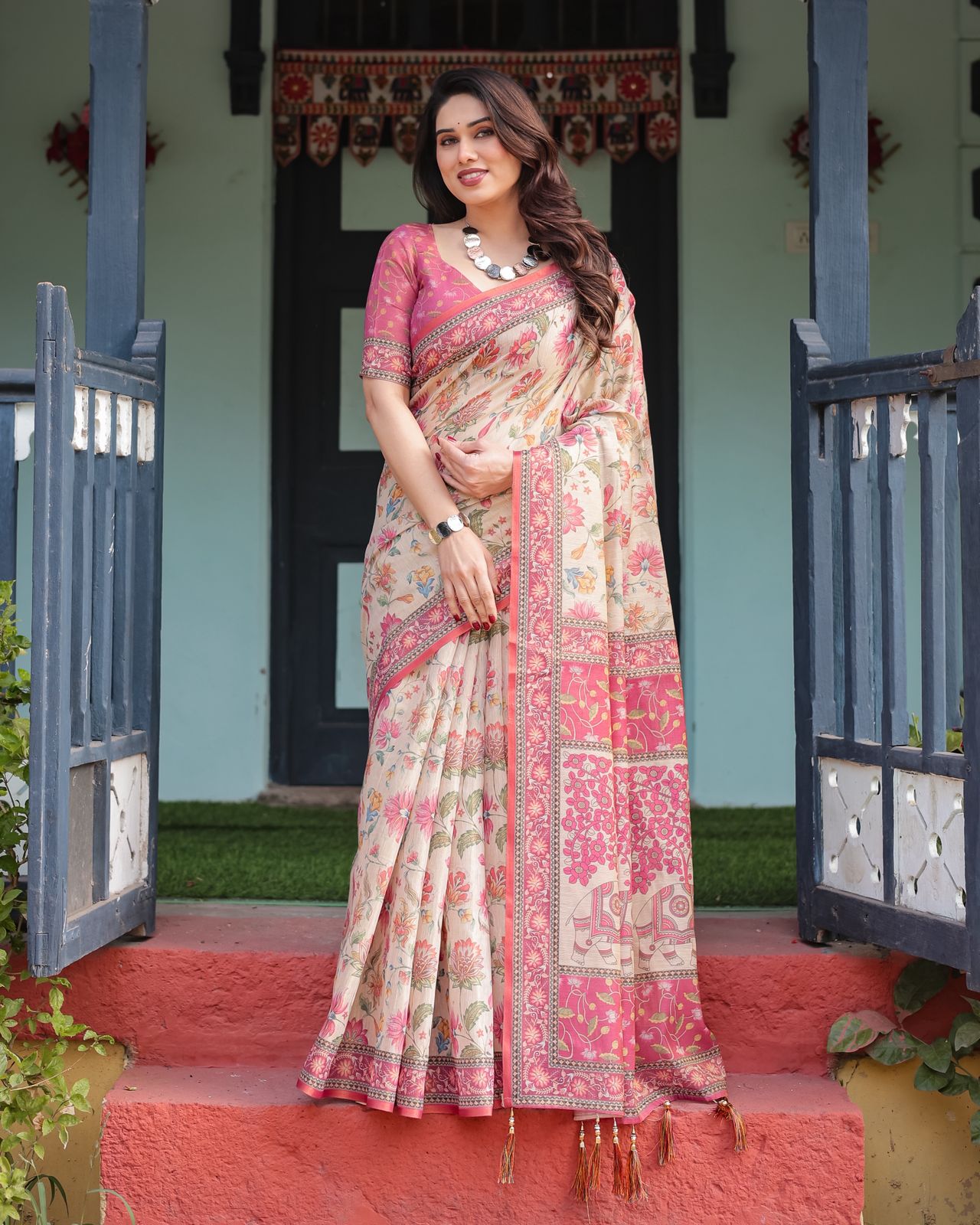
Lightweight fabric generally needs more control during draping because the material has less resistance. The pleats can spread when you walk, the pallu may slip from the shoulder and the lower edge can twist if the petticoat is loose. A narrow belt, three to five discreet safety pins and a properly secured waist tuck can improve stability without making the drape rigid.
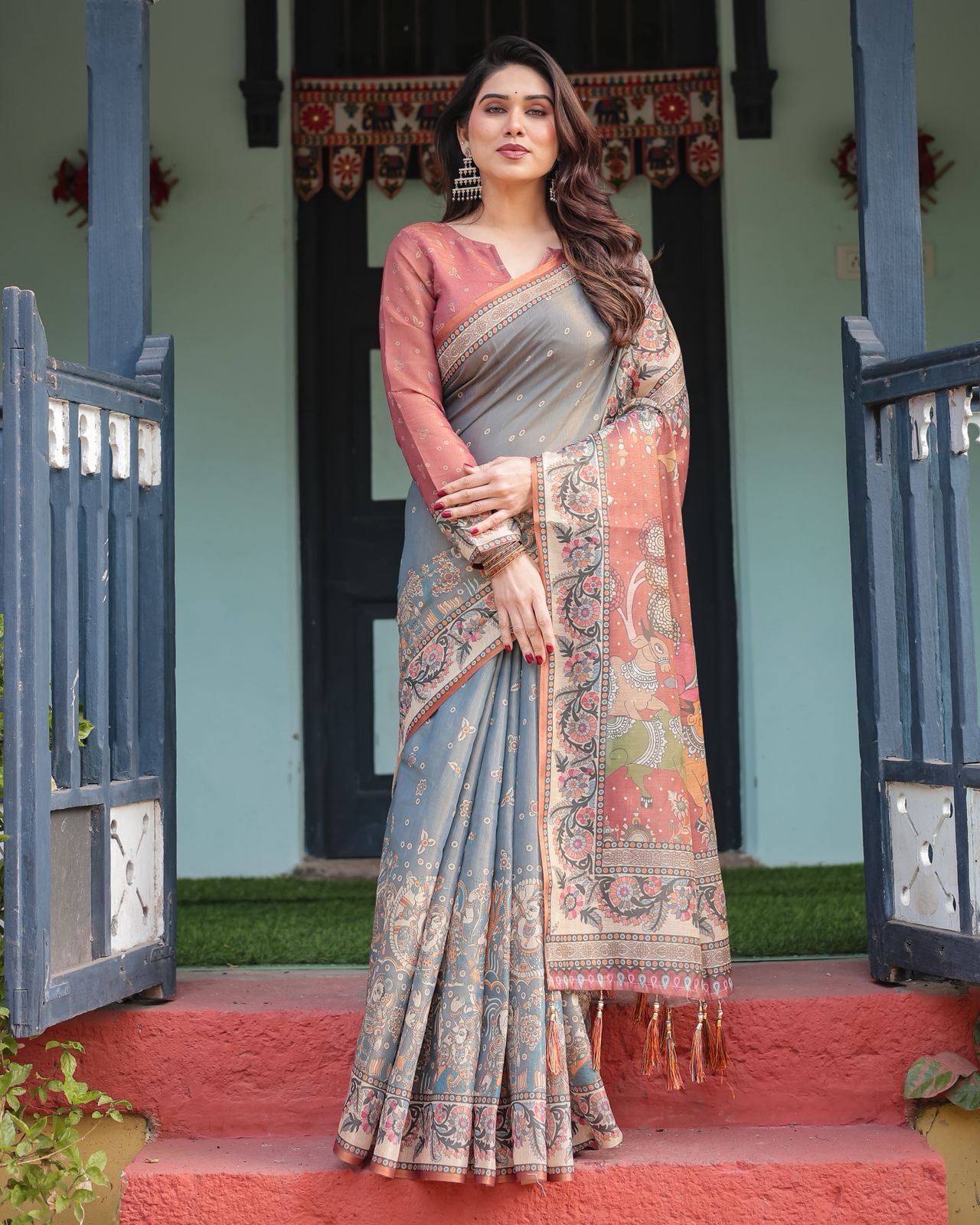
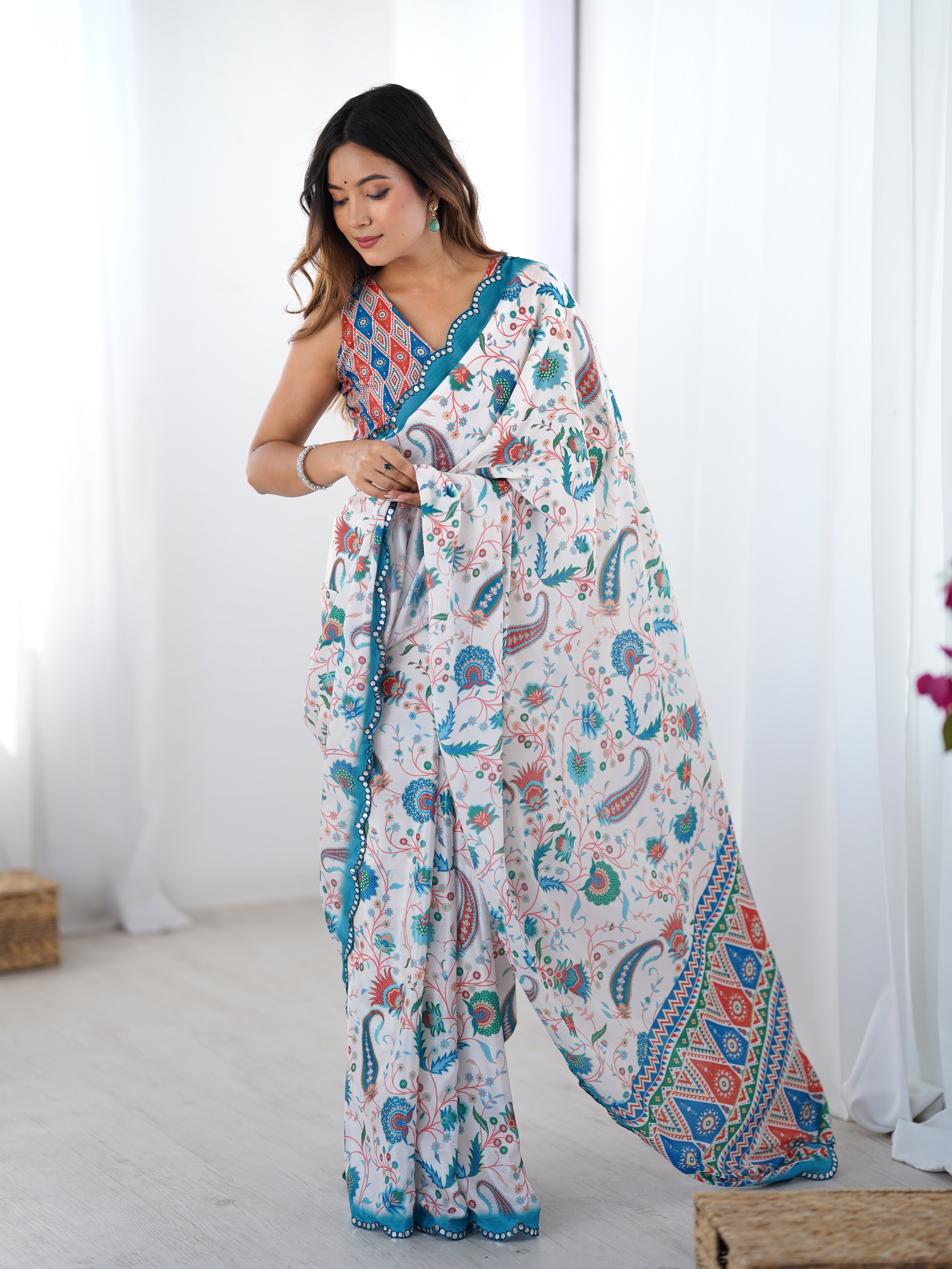
The Lightweight Cream Saree with Designer Floral Pattern shows how a light base can keep a floral print visually airy. A saree with a delicate print often benefits from fewer, wider pleats because excessive folding can interrupt the pattern. The Lightweight Grey Saree with Rust Designer Border offers another useful principle: a defined border can give a light saree a visual edge even when the body remains soft and mobile.
Tissue sarees occupy an interesting place in the lightweight category. The Pastel Floral Tissue Handloom Cotton Saree with Zari Weaves can feel light in the hand but retain more crispness than a plain, loosely woven cotton saree. Zari adds visual structure and may add localised weight along the border or pallu, so the pallu can fall more firmly than the body.
How should a lightweight saree be pleated?
A lightweight saree should usually be pleated in five or six broad folds, pressed with the palms and secured close to the waist. Broad folds reduce the chance of a thin fabric bunching into a narrow rope at the front.
Use a cotton or satin-finish petticoat with a firm drawstring rather than a very slippery underskirt. A petticoat that's too loose allows lightweight fabric to rotate around the body. A petticoat that's too full can create unnecessary volume and prevent the saree from falling close to the legs.
What Medium-Weight Fabrics Do for Pleats and Pallu Shape
Medium-weight fabrics offer the most balanced saree drape because they combine movement with enough body to hold pleats. Linen cotton, handloom cotton and many printed satin sarees can provide structure without the heaviness associated with dense silk or extensive embroidery.
The Teal Floral Linen Cotton Saree with Tassel Pallu illustrates how linen cotton can create a relaxed but intentional silhouette. Linen fibres often contribute a dry hand and slight natural stiffness, while cotton softens the overall feel. The result is usually a pallu with moderate movement and pleats that look textured rather than sharply pressed.
The Soft Pink Floral Linen Cotton Saree with Zari Border adds another consideration: a zari border can pull the lower or outer edge into a straighter line. The body may remain breathable and comfortable, while the border gives the saree a more finished frame. This combination suits daytime celebrations, festive lunches and work-to-evening dressing when paired with a structured blouse.
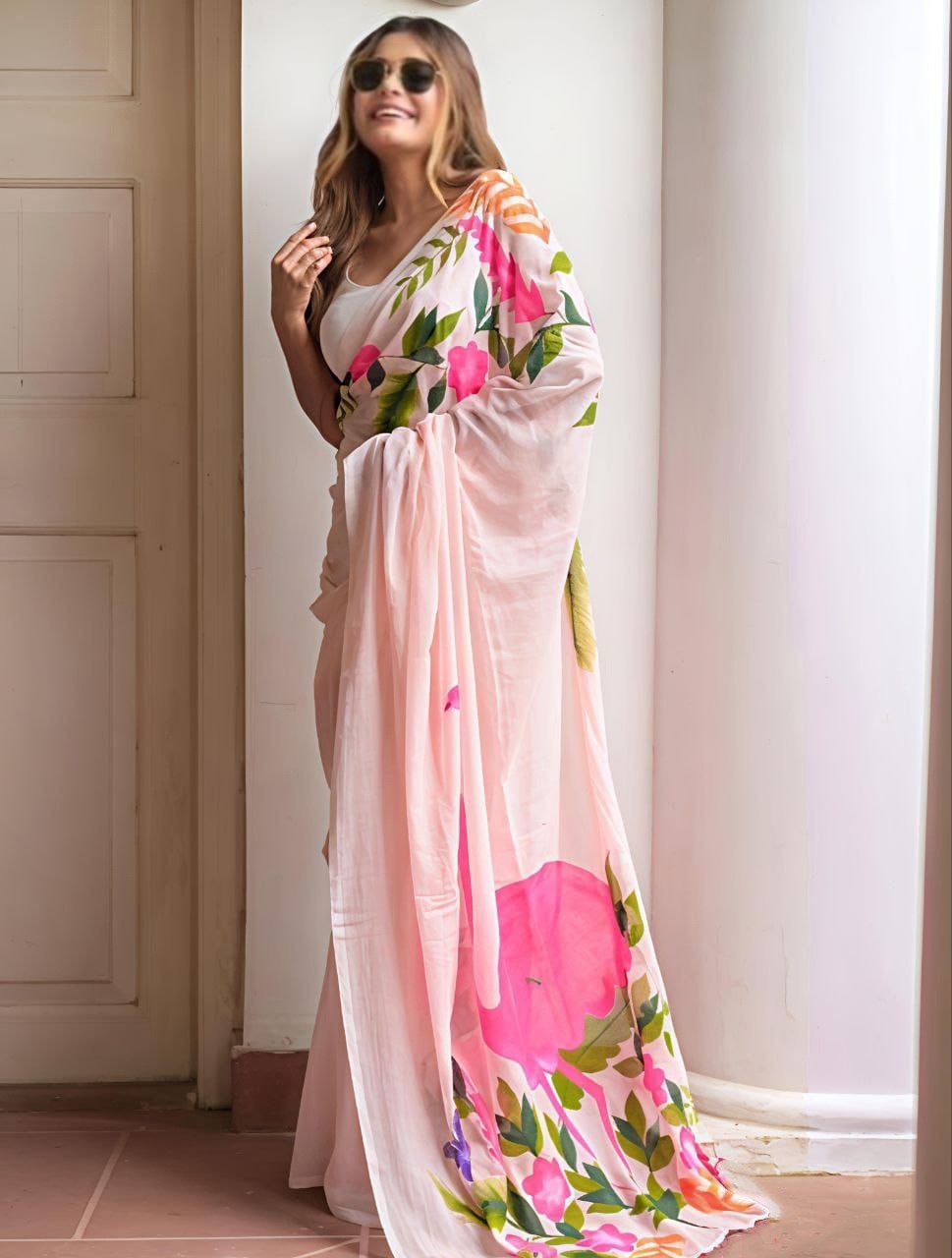
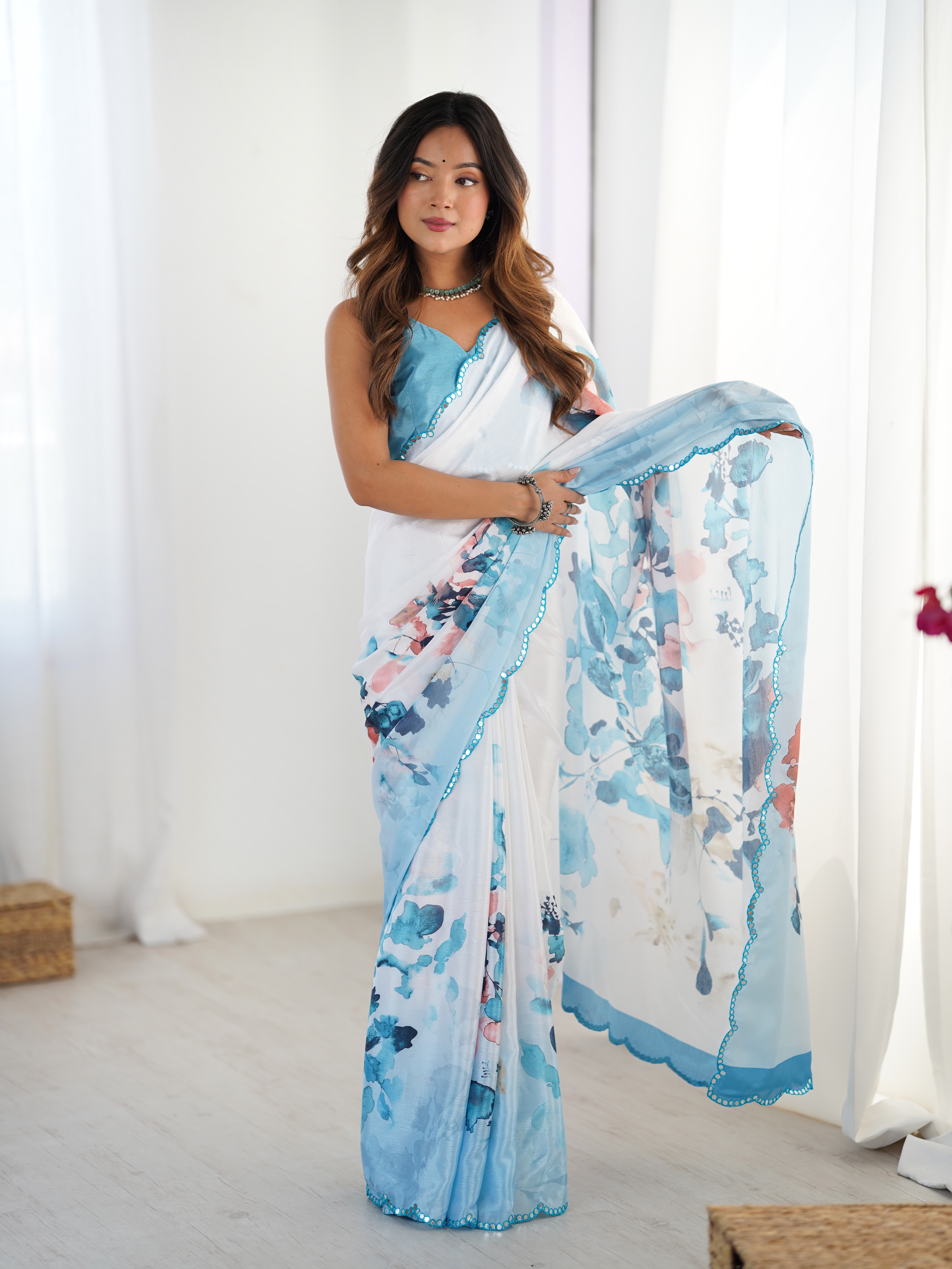
Satin behaves differently from linen cotton even at a similar apparent weight. The Pastel Blue Satin Floral Print Saree with Unstitched Blouse can glide over the petticoat because satin has a smooth surface. Smoothness reduces friction, so the saree may require more precise tucking and pinning than a textured cotton saree. Satin can produce elegant, close-set pleats, but a loosely tied waistband may cause slipping.
How does medium weight affect an everyday drape?
Medium weight makes an everyday drape easier to balance because the saree stays organised without feeling restrictive. Medium-weight sarees are often a safe choice when one garment must work for several hours of sitting, walking, greeting guests and occasional movement.
For a neat result, align the bottom edges before pleating and keep the pleat stack approximately 12 to 16 centimetres wide at the waist. Exact measurements vary with height and body shape, but consistent lower edges matter more than achieving a fixed number of pleats.
Why Heavy Silk and Zari Hold Formal Pleats
Heavy silk and dense zari hold formal pleats because their woven structure and surface weight resist collapse. These sarees create a pronounced fall, a stable pallu and a ceremonial silhouette that photographs with strong vertical lines.

The Royal Blue Silk Saree with Exquisite Zari Work represents the formal end of the weight spectrum in this selection. Silk can support crisp front pleats, while concentrated zari may make the pallu and border fall more decisively. The trade-off is weight at the shoulder and waist, especially when the saree includes a broad border or repeated metallic motifs.
Heavier sarees benefit from deliberate preparation. The petticoat should fit securely at the waist and should not be made from a very thin, slippery fabric. The blouse shoulder must sit correctly because a heavy pallu can pull the neckline or sleeve seam downward. A concealed shoulder pin and a second pin near the pallu pleats can distribute the load.
Heavier fabric also changes how much room you need when sitting. A dense silk saree can occupy more space across the knees than a light cotton saree because the pleats don't compress as easily. Practise sitting on a chair and walking up steps before wearing a heavily embellished saree to a long event.
Does zari always make a saree heavy?
Zari doesn't always make a saree heavy because the final weight depends on the quantity of metallic thread, the weave, the base fibre and the width of the zari area. A narrow zari border may add little physical weight, while a dense pallu and broad metallic body can make a saree substantially heavier.
Zari can also change the distribution of weight rather than simply increasing the total weight. A heavy pallu may pull diagonally from the shoulder, and a dense border may hang more firmly near the ankles. Inspecting the pallu, border and body separately gives a more accurate understanding of the drape than judging the folded saree alone.
How Weave, Finish and Embellishment Alter Saree Fall
Weave and finish can alter saree fall as much as fibre content. A compact weave creates body, a loose weave creates softness, starch creates temporary crispness and embellishment adds weight in specific zones.
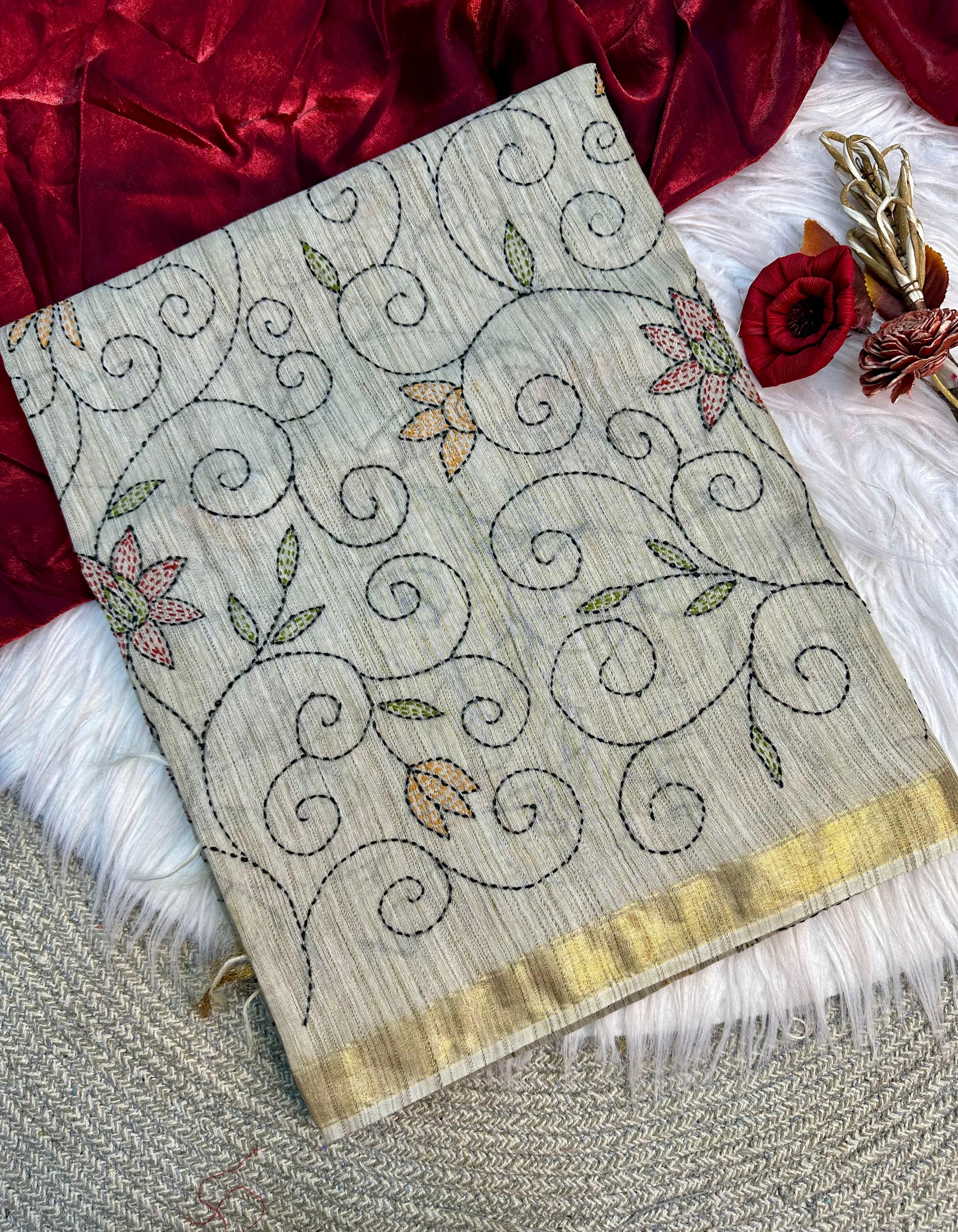
The Floral Tissue Handloom Cotton Saree With Zari - Varnavi combines handloom cotton with a tissue effect and zari, so its drape should be assessed as a layered combination rather than labelled simply as cotton. Handloom cotton can vary noticeably because yarn thickness and weave density are not identical across all sarees.
Starch is another variable. A freshly starched cotton saree may produce sharp pleats and a more upright pallu, but repeated washing gradually reduces that stiffness. Excessive starch can also make a fabric brittle over time if the saree is folded tightly and stored in a damp environment.
Printed surfaces, tassels and borders affect visible movement even when their physical weight is modest. A tassel pallu swings beyond the shoulder and creates motion at the edge. A dark or contrasting border makes the line of the fall look sharper. A large floral print can look more continuous when pleats are deep and shallow.
How to Match Saree Weight to Weather and Occasion
The most suitable saree weight depends on temperature, event duration, movement and the amount of structure required. Hot, humid conditions generally favour lightweight or medium-weight cotton, linen cotton and tissue blends, while evening receptions can accommodate heavier silk and zari.
- Daily wear: Choose lightweight or medium-weight cotton, linen cotton or soft printed fabrics that tolerate sitting and repeated movement.
- Haldi ceremony: Choose a light or medium-weight saree that allows easy walking and doesn't trap excessive heat during outdoor rituals.
- Festive lunch: Choose handloom cotton, tissue cotton or linen cotton with a defined border for comfort and visual structure.
- Wedding reception: Choose silk or a zari-rich saree when a stable pallu and formal pleats matter more than minimum weight.
- Travel: Choose a fabric that resists crushing and can be secured with minimal pins; a very delicate, slippery satin may need more care in transit.
Budget can guide the search without deciding the drape by itself. Sarees from Rs 1000 to Rs 1500 may include practical lightweight and medium-weight options, while Sarees Under 20% Off and Sarees Under 10% Off can help compare fabrics at different price points. A discount doesn't reveal whether a saree will hold pleats, so fabric behaviour still needs to guide the final choice.
A Practical Weight Check Before Buying or Draping
A five-minute inspection can predict most draping problems before purchase. Look at the folded thickness, lift the saree with one hand, examine the pallu and border separately, and check whether the surface feels slippery, crisp, dry or plush.
- Lift the folded saree: Notice whether the bundle feels airy, balanced or dense.
- Open one metre: Hold the fabric at two points and observe whether it drops straight, swings widely or forms a stiff curve.
- Test a pleat: Fold a section into four or five layers. A good pleat should retain its edge without refusing to bend.
- Inspect the pallu: Check whether zari, tassels or embroidery make one end substantially heavier than the body.
- Check surface friction: Smooth satin and some synthetic finishes may slide over the petticoat, while textured cotton usually grips more effectively.
- Plan the pinning: A slippery or very light saree may need shoulder and waist pins; a heavy saree may need load distribution instead.
For storage, fold silk and zari sarees along different lines every few months to reduce permanent creasing. Store cotton sarees completely dry, avoid sealing damp fabric in plastic and refold heavily embellished sarees with soft tissue between dense sections. Proper care preserves the original fall because compacted fibres, crushed zari and excessive starch can all change how a saree drapes.
Choosing Weight for the Drape You Actually Want
Choose lightweight fabric for movement, medium-weight fabric for versatility and heavier silk or zari for formal structure. The best saree weight is the one that supports your preferred pleat shape, remains comfortable for the event duration and suits the petticoat and blouse you'll wear.
A light saree can look polished when its pleats are broad and securely anchored. A medium-weight linen cotton saree can create a graceful everyday silhouette without elaborate styling. A heavy silk saree can deliver ceremonial presence, provided the wearer prepares for its shoulder and waist load.
The most reliable purchase decision comes from combining hand-feel, weave, border construction and intended use. Fabric names provide a starting point, but the actual fall emerges from the complete saree: body, pallu, zari, finish and the way each part distributes weight around the wearer.
Common Questions About Saree Weight and Fabric Fall
Which saree fabric gives the best fall?
Medium-weight fabrics usually give the most balanced fall because they hold pleats while allowing comfortable movement. Linen cotton, handloom cotton with body and well-constructed silk can all drape well, depending on weave, border and finish.
Are lightweight sarees difficult to drape?
Lightweight sarees are not inherently difficult, but they need more control because the pleats and pallu can shift easily. Broad pleats, a fitted petticoat and three to five discreet pins usually improve stability.
Does a heavy saree make sharper pleats?
A heavy saree often makes sharper and more stable pleats because its structure resists collapse. Dense zari, a compact weave and starch can contribute to pleat definition, although excessive weight may make sitting and walking less comfortable.
Is satin or cotton better for saree draping?
Cotton generally offers more surface grip and easier stability, while satin creates a smoother, closer fall with more movement. Cotton is usually simpler for daily draping, whereas satin may require a secure waistband and careful pinning.
How can I tell whether a saree will be too heavy before buying it?
Lift the folded saree, open a metre of fabric and inspect the pallu and border separately. Dense silk, broad zari areas and heavy embellishment can concentrate weight at the shoulder even when the body feels moderate.
What saree weight works best for a Haldi ceremony?
A lightweight or medium-weight saree usually works best for a Haldi ceremony because it supports walking, sitting and outdoor movement without excessive heat or bulk. Cotton, linen cotton and light tissue options can provide comfort while still holding a presentable pleat.


