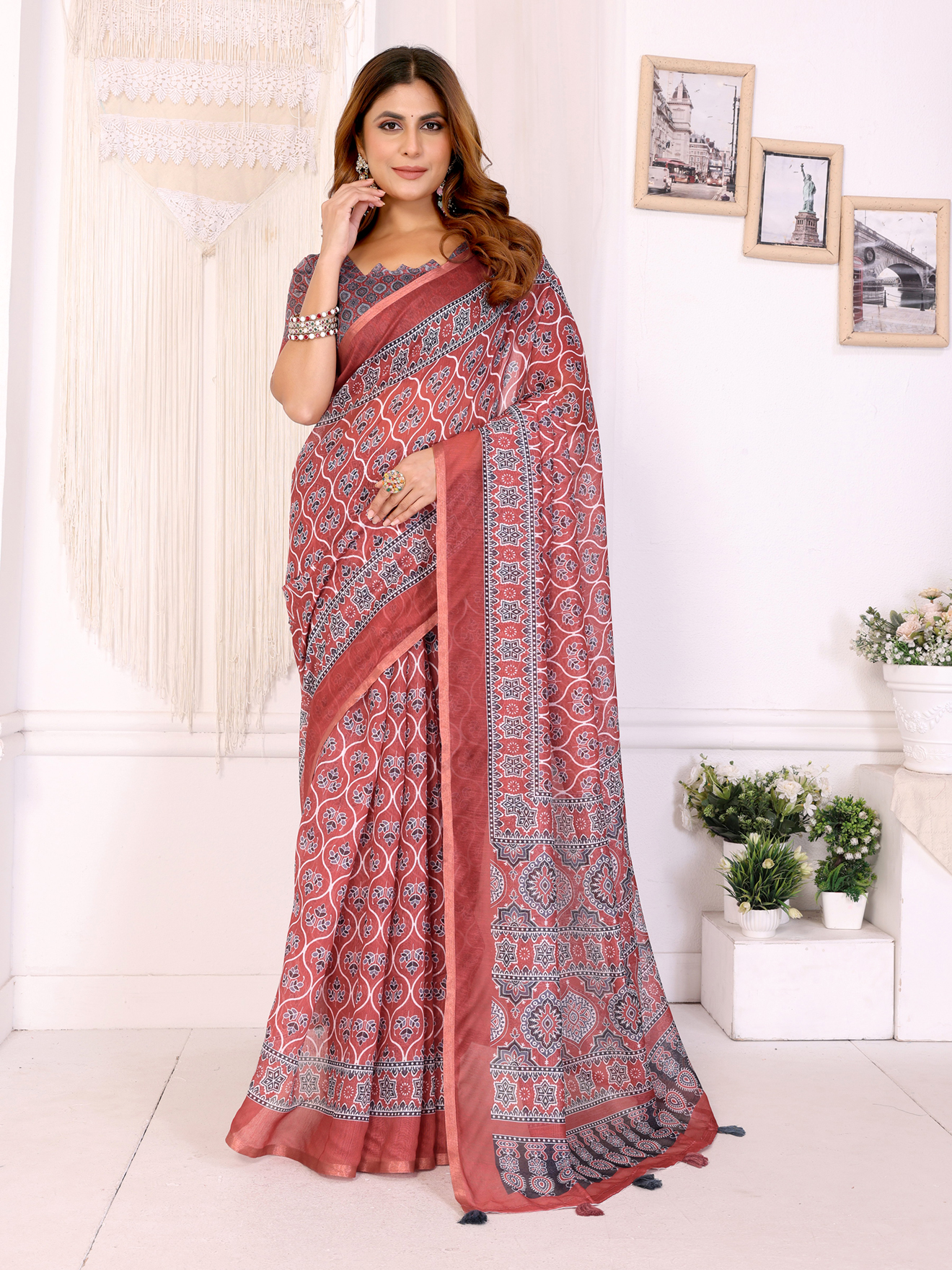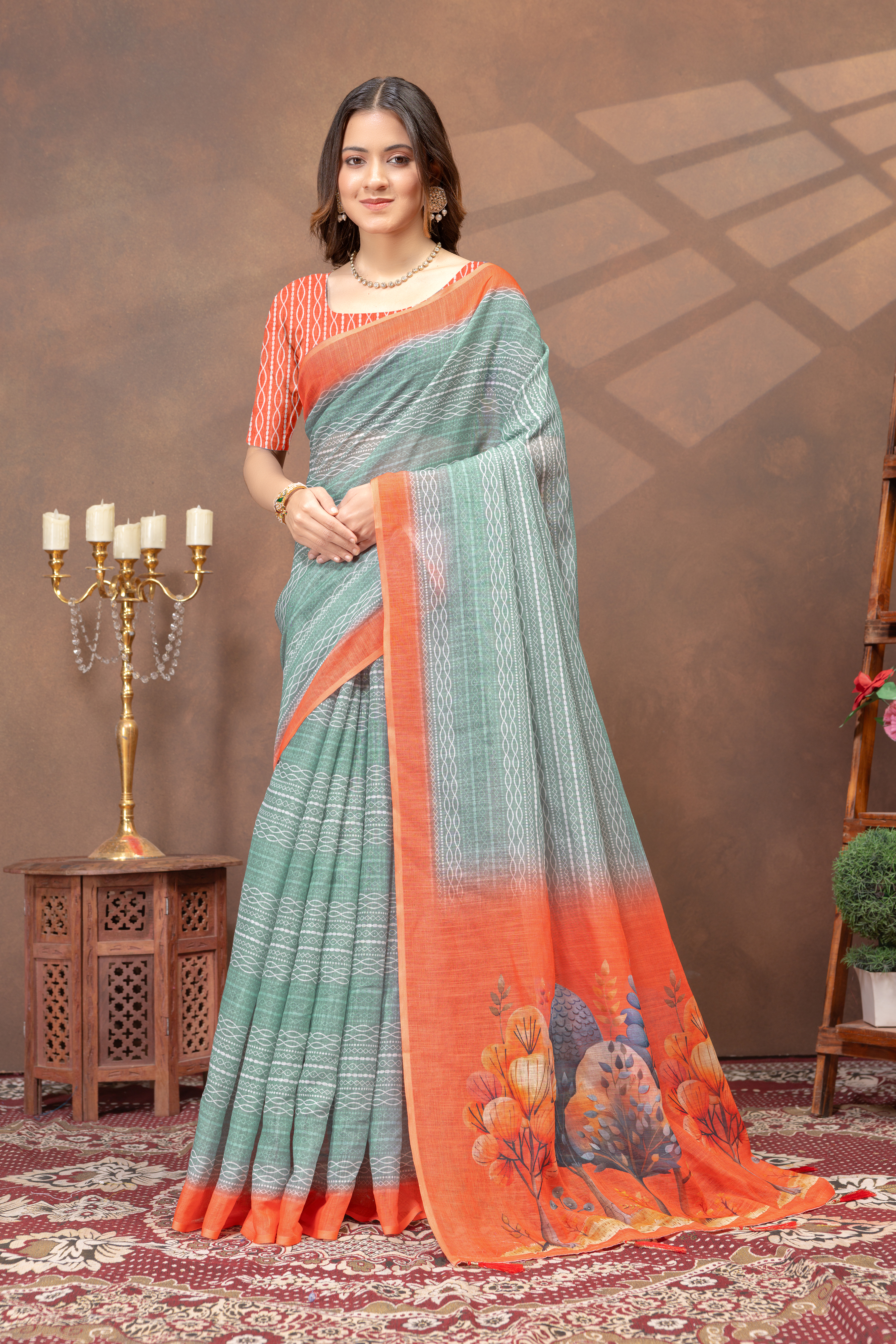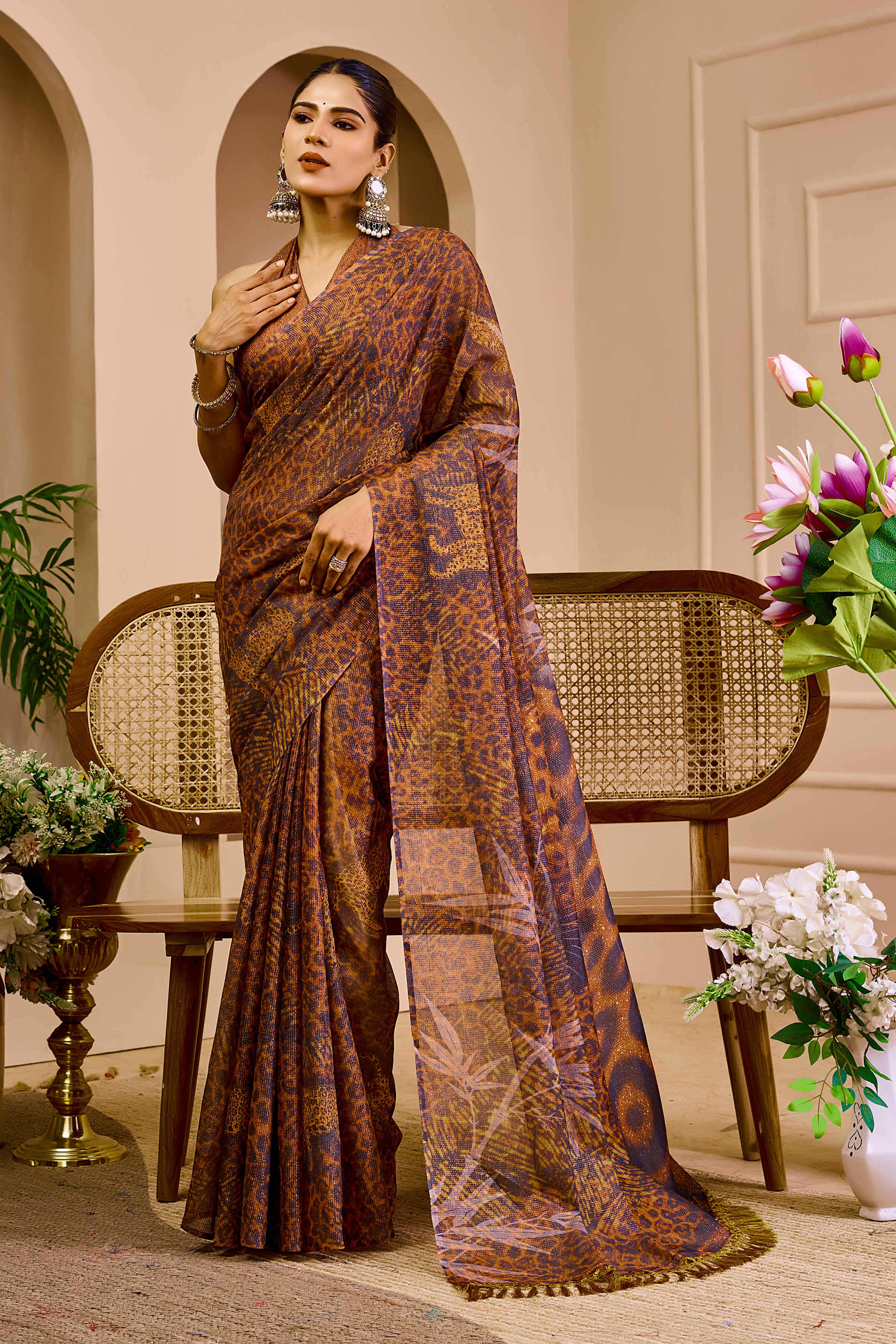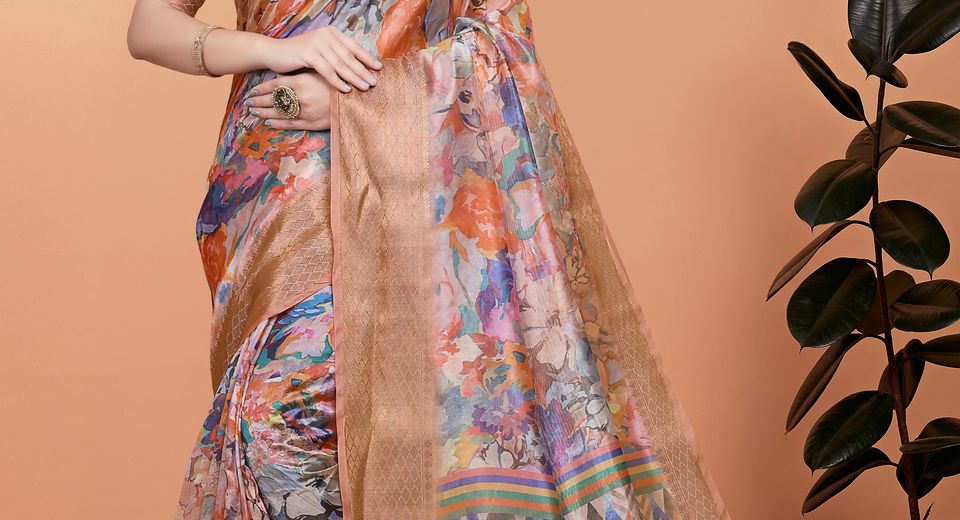
Why Some Sarees Catch on Jewellery More Than Others becomes clear once you inspect the saree's surface, weave and finishing details. A loose thread, raised zari line, sharp earring back or rough bangle edge can hook into fabric during a simple turn or while adjusting the pallu. The risk isn't determined by price alone. Banarasi silk, Chanderi cotton, tissue, crystal-blend fabric and heavily embellished sarees each respond differently to friction, pressure and movement.
Jewellery can catch on a saree in three main ways: a pointed component hooks a thread, a rough surface rubs against the cloth, or a heavy ornament pulls a delicate weave out of shape. Understanding those mechanisms helps you select accessories more intelligently and avoid discovering a snag just before a wedding photograph.
Why Some Sarees Catch on Jewellery More Than Others
Sarees catch on jewellery more readily when their surface contains loose fibres, raised decoration, open spaces in the weave or embellishments that create small catching points. A smooth, tightly woven silk usually offers fewer entry points than a lightweight tissue saree with a slightly open structure, although zari and embroidery can make even a smooth saree vulnerable.
Jewellery doesn't need to look sharp to cause damage. The underside of a pendant, the hinge of a jhumka, the clasp of a necklace and the unfinished edge of a metal bangle can all create friction. Repeated movement makes the problem worse because fabric is pulled across the same point several times during walking, sitting, dancing or repositioning the pallu.
The direction of the snag also matters. A hook moving across the warp or weft may lift one thread, while a diagonal pull can distort several threads at once. A small raised thread should never be cut immediately; cutting can create a larger gap in the weave.
Which saree fabrics and surfaces are most vulnerable?
Lightweight, textured and embellished surfaces generally require more care around jewellery than compact, plain weaves. The most vulnerable areas are often the pallu, blouse-facing edge, border and pleats because those sections receive repeated contact.
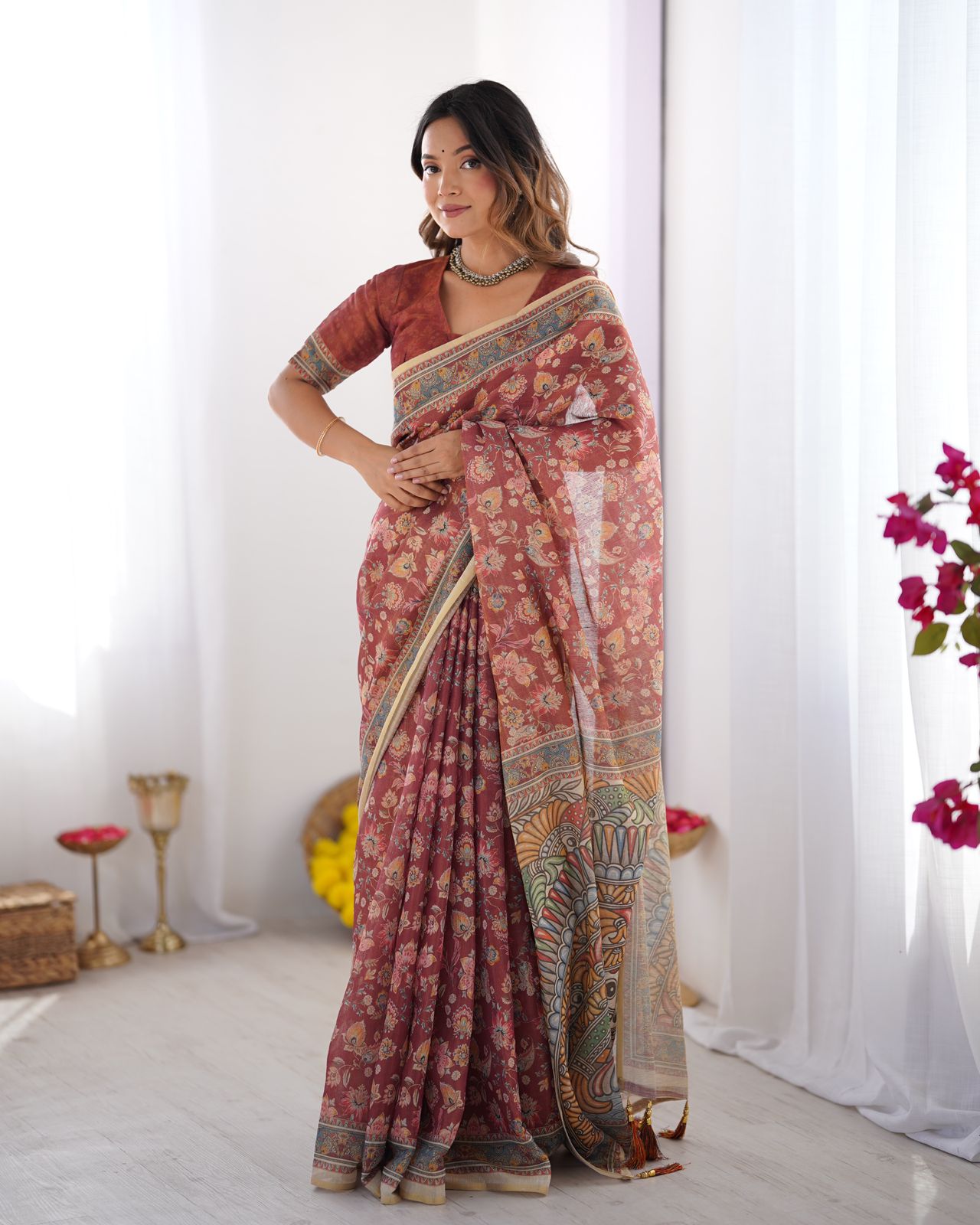
Silk, zari and woven borders
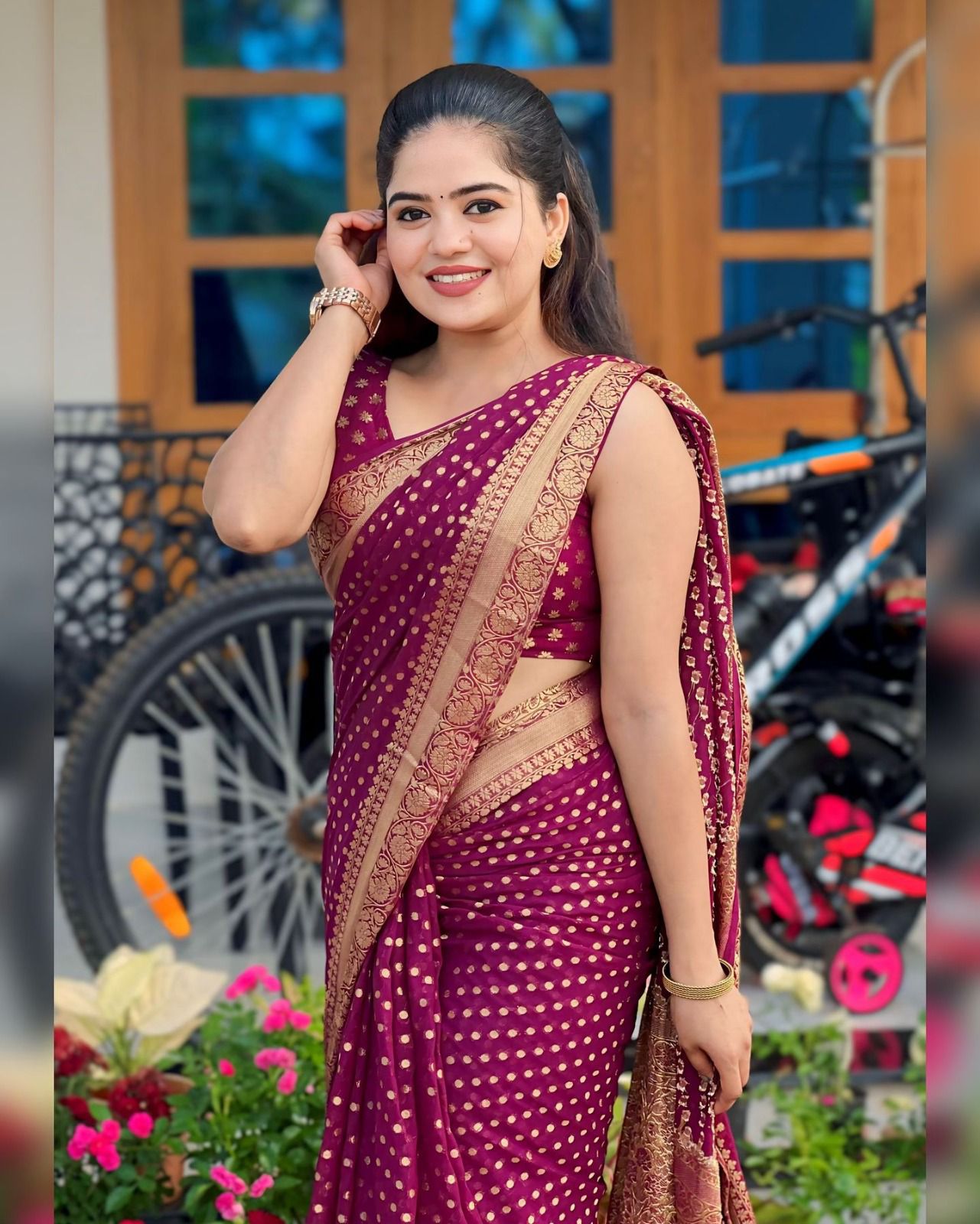
Banarasi silk can snag when a zari motif or border has a raised metallic thread that meets a pointed ornament. A Maroon Banarasi Soft Silk Saree with Golden Zari Border illustrates why border placement matters: a necklace or long pendant that repeatedly crosses the upper border can rub against the zari rather than the smoother body of the saree.
Kanjeevaram and other structured silk sarees are comparatively firm, but their zari borders are not invulnerable. Thick necklaces, waist belts and bangles can catch at the transition between silk and metallic weaving. Keeping the heaviest jewellery away from a densely worked border reduces concentrated friction.
Tissue, crystal blend and embroidered finishes
Tissue sarees can be delicate because their lighter structure allows a hook to catch and pull a thread more easily. The Pastel Floral Tissue Handloom Cotton Saree with Zari Weaves combines a fine-looking surface with woven metallic detail, so rounded jewellery and a controlled pallu arrangement are safer than loose, pointed layers.
Crystal-blend sarees may include glossy surfaces or decorative elements that reflect light but also create small ridges. The Artistic Multicolor Crystal Blend Saree with Golden Borders and Rust Orange Crystal Blend Printed Saree with Woven Border both show why a border should be checked for exposed threads before pairing the saree with stacked bracelets.
Cotton and Chanderi textures
Cotton isn't automatically snag-proof. A closely woven cotton saree can tolerate daily handling, while an airy weave, checked texture or raised thread can catch against rough metal. The Black Chanderi Cotton Saree with Contemporary Checked Weave has a textured visual structure, making smooth, rounded jewellery a more practical match than heavily filigreed bangles.
Chanderi fabric often benefits from gentle handling because its light body can crease or pull under concentrated pressure. A sharp brooch, safety pin or necklace clasp should not be placed where it bears weight on the pallu.
Which jewellery details create the most snagging?
Openwork, hooks, rough edges and exposed settings create the greatest snagging risk because each feature can enter or drag across the saree surface. Jewellery weight matters, but shape and finish usually determine whether the first contact becomes a snag.
- Open filigree: tiny spaces in a necklace, bangle or earring can trap zari, tissue fibres and loose embroidery threads.
- Hooks and clasps: necklace fasteners and earring backs often catch when the pallu is moved over the shoulder.
- Unpolished metal: a rough underside creates friction even when the visible face appears smooth.
- Prongs and pointed settings: stone settings can lift threads, especially on soft silk and fine cotton.
- Layered chains: multiple chains can rub against one another and create moving edges that contact the saree.
- Heavy bangles: stacked bracelets can trap pleats when the arm swings or the wearer adjusts the drape.
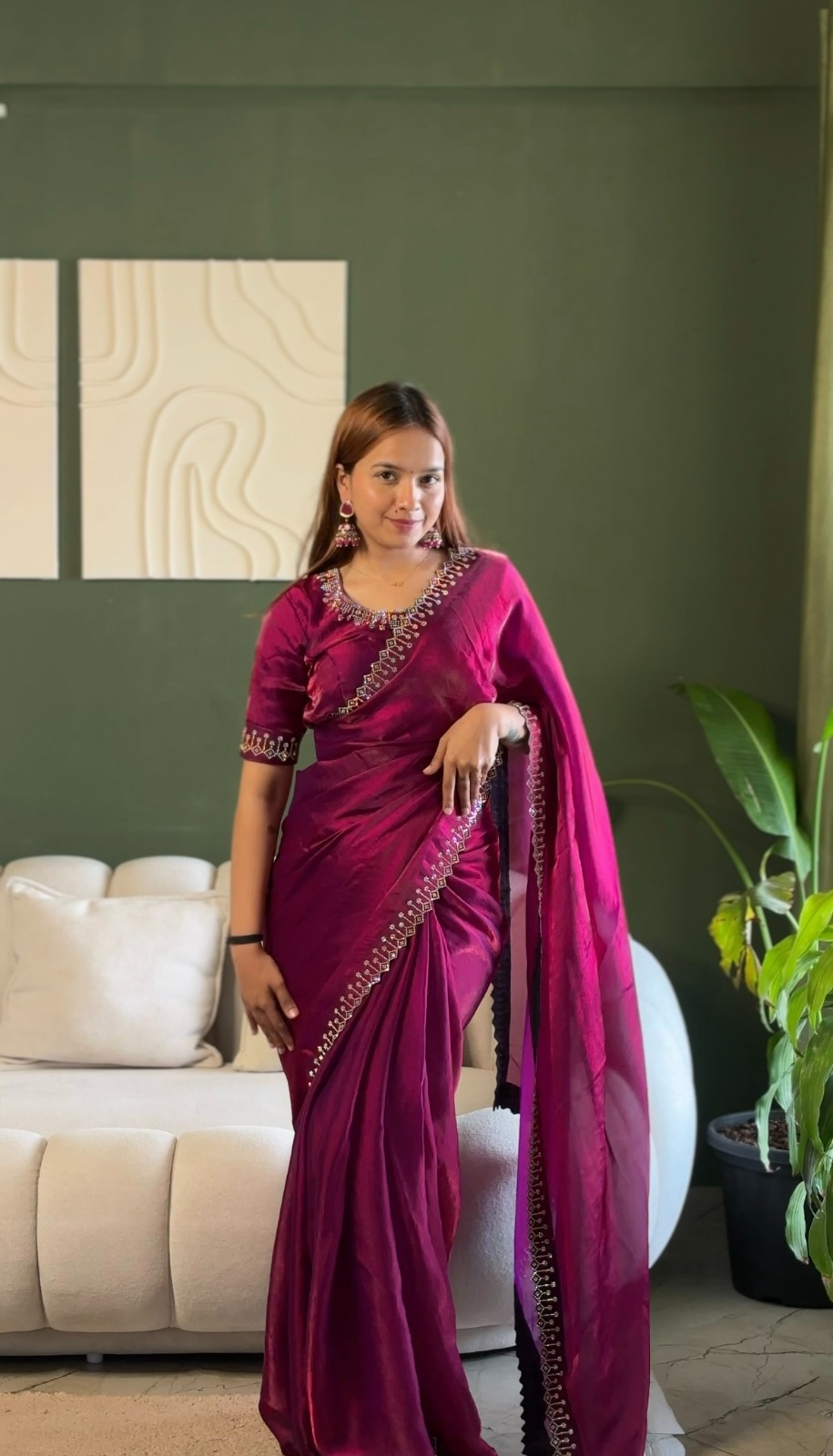
Jarkan diamond work deserves particular attention because the setting may have multiple raised points. With a Magenta Space Silk Saree with Jarkan Diamond Work, a necklace with a smooth underside and earrings without exposed hooks can reduce contact around the embellished area.
Sequins, beads and crystals can also catch on one another. A designer border may look secure while a single loose sequin thread remains capable of catching a chain. Running a clean cotton cloth lightly over the surface before wearing the saree can reveal rough or lifted elements without using force.
How can jewellery be matched to a saree without causing pulls?
Jewellery can be matched safely by comparing its contact points with the saree's weave, border and embellishment rather than choosing accessories only by colour. The safest pairing usually combines a smooth jewellery underside with a stable drape and limited movement across decorated areas.
Necklaces and pendants
A short necklace that rests above the saree's most textured section is often safer than a long pendant that swings over the pallu. Choose a chain with closed links and a pendant whose back is smooth. Turn the necklace over before wearing it and inspect the clasp, bail and stone settings with a fingertip.
For a saree with a broad zari border, a collar necklace can work when it sits securely near the neckline. A long chain is riskier if it crosses the border during movement. The Golden Glow Gold Crush Embroidered Party Wear Saree for Women already has a visibly decorative surface, so restrained necklace movement can preserve the embroidery and keep the look balanced.
Earrings, bangles and rings
Earrings should have covered backs or smooth screw fittings when the pallu will sit near the ear. Large jhumkas can brush against the shoulder fabric as the wearer turns, while sharp earring posts can catch during dressing. A ring with a raised stone should be checked before pleating because fingers repeatedly slide across the saree.
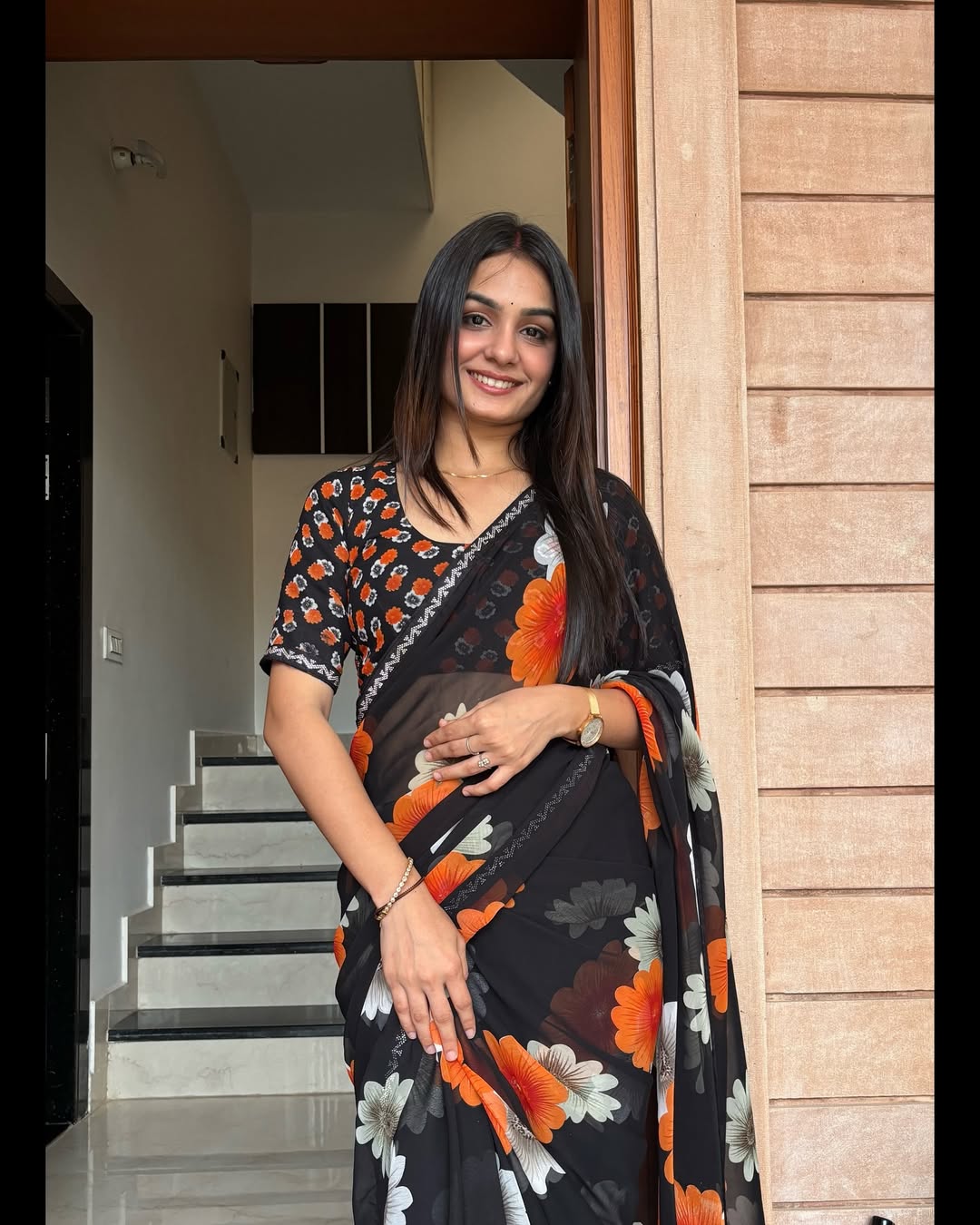
Rounded bangles with polished interiors are safer than open cuffs, cutwork designs or bracelets with hinge gaps. Wear fewer bangles when the saree has delicate tissue, raised embroidery or a loose woven border. A Designer Black Floral Saree With Sparkle Border Work is better paired with accessories that don't repeatedly cross its sparkle border.
Brooches, waist belts and safety pins
A brooch should be used only when its pin is secure, its back is covered and its weight is supported by a stronger section of the drape. Do not fasten a heavy brooch through a lightweight pallu edge. Waist belts should have smooth inner surfaces because the belt presses against the saree as the wearer sits.
Safety pins are useful but can create hidden snags when left partly open. Close each pin completely, position the sharp point inside the fold and use the smallest number needed to hold the drape. A pin should secure fabric without piercing decorative zari or embroidery.
What is the safest way to test a saree before an event?
The safest test is a five-minute friction check using the exact jewellery and blouse that will be worn. Testing the complete outfit reveals problems that a fabric inspection alone can't show.

- Lay the saree on a clean, flat surface and inspect the pallu, border, pleats and blouse-facing edge under bright light.
- Run a clean cotton cloth gently over the surface; stop if the cloth catches on zari, sequins or a raised thread.
- Wear the intended blouse and jewellery, then make the pallu arrangement you plan to use.
- Walk, sit, raise both arms and turn slowly for five minutes.
- Check the shoulder, neckline, forearm, waist and side seam for lifted fibres or pulled threads.
- Replace the risky accessory or change the drape before the event rather than applying adhesive or cutting a loose thread.
Photographing the drape during the test can also reveal where a necklace or bangle travels as the body moves. If the same ornament crosses one border repeatedly, repositioning the pallu by a few centimetres may solve the problem without changing the jewellery.
How should a snagged saree be handled?
A minor snag should be secured from the reverse side without cutting the raised thread. Cutting the thread can weaken the surrounding weave and leave a visible hole.
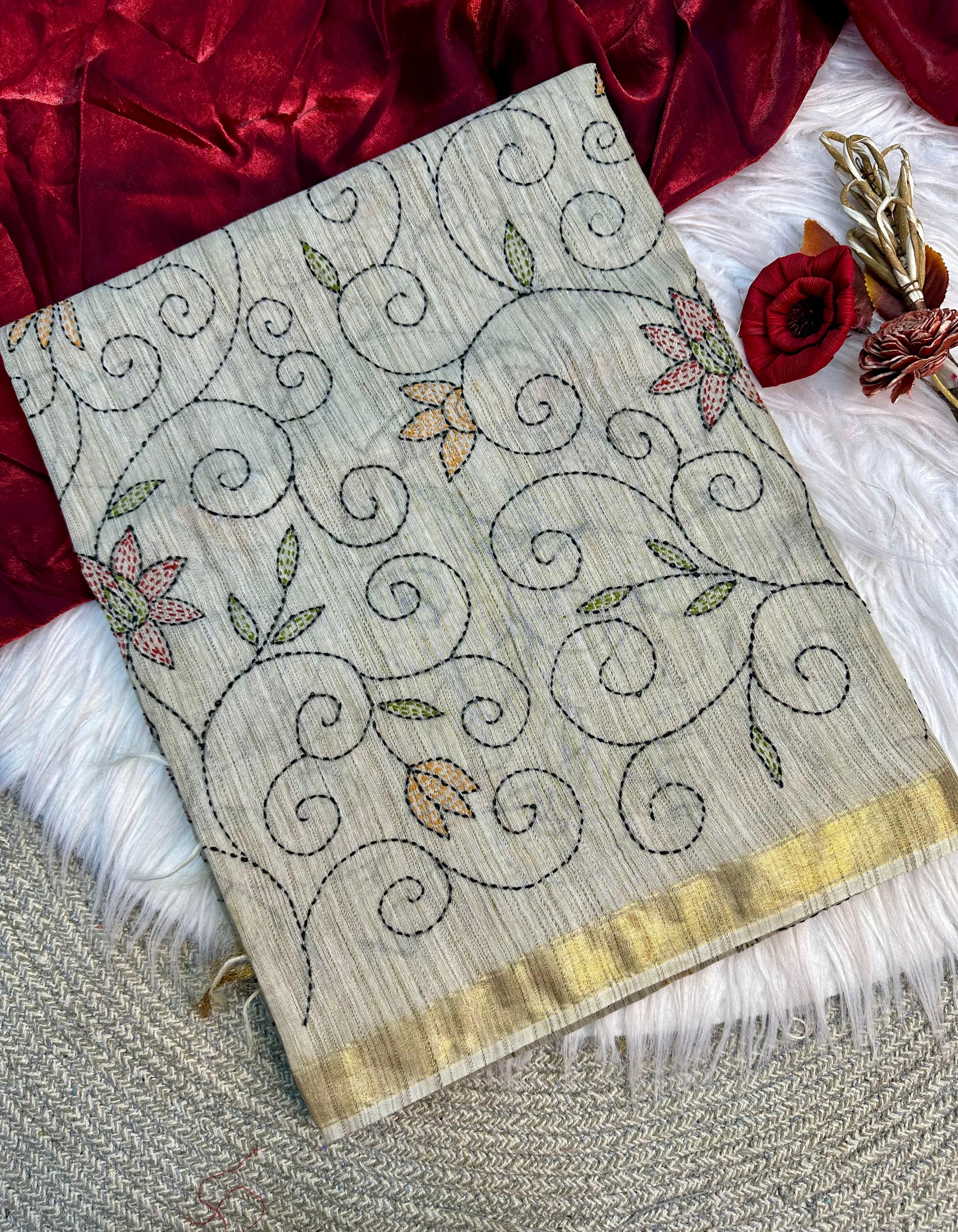
First, remove the jewellery slowly in the direction opposite to the pull. Do not yank the ornament away from the fabric. Place the saree flat, use a fine needle or snag-repair tool to ease the loose loop toward the reverse side, and stop if the thread resists.
Professional repair is advisable for a pulled zari line, damaged embroidery, a large loop or a snag near a border. A textile specialist can redistribute the thread more safely than repeated home attempts. Store the repaired saree folded with soft cotton between heavily embellished sections so metallic work doesn't rub against the body fabric.
Dry cleaning instructions should be checked before treatment because finishing, zari and embellishments can respond differently to moisture and solvents. Avoid ironing directly over raised work; place a thin pressing cloth between the iron and the saree and use the temperature recommended for the fabric.
How do budget and discounted sarees affect jewellery choices?
Price doesn't predict snag resistance, so a discounted saree still deserves a construction and surface check before jewellery is selected. Collections such as Sarees from Rs 1000 to Rs 1500, Sarees Under 20% Off and Sarees Flat 50% Off can include different fibres, weaves and levels of embellishment, making the product description and close inspection more useful than the discount percentage.
A lower-priced cotton saree with a compact weave may be easier to wear with daily jewellery than a more expensive tissue saree with raised zari. Conversely, a heavily embellished party saree may need simpler accessories regardless of its price. The practical decision is based on where the ornament will touch, how often it will move and whether the surface contains exposed catching points.
For a high-friction outfit, keep a smooth scarf or clean cotton cloth available while dressing, remove sharp-edged accessories before folding the saree, and never place metal jewellery directly on top of the folded embellished surface. These small habits protect both everyday sarees and occasion pieces without limiting personal style.
Questions About Saree Snags, Jewellery and Safer Styling
Why do some sarees catch on jewellery more than others?
Sarees catch more easily when they have loose fibres, open weaves, raised zari, sequins, embroidery or textured borders. Jewellery hooks, rough edges, clasps and stone prongs can enter those surface details and pull threads during movement.
Which jewellery is safest for a delicate saree?
Smooth, polished jewellery with covered backs, closed links and rounded edges is generally safest for delicate sarees. Avoid open filigree, exposed hooks, rough metal, sharp prongs and heavy pieces that repeatedly cross the pallu or border.
Does Banarasi silk snag easily on jewellery?
Banarasi silk can snag when raised zari motifs or metallic borders meet pointed or rough jewellery. A smooth necklace underside, secure earring backs and fewer bangles can reduce contact with the zari.
How can I check whether a saree will snag before wearing it?
Test the complete outfit for five minutes using the intended jewellery and drape. Walk, sit, turn and raise your arms, then inspect the pallu, neckline, border and pleats for lifted threads or repeated friction points.
What should I do if jewellery pulls a thread from my saree?
Remove the jewellery slowly in the opposite direction of the pull and do not cut the raised thread. Ease a small loop toward the reverse side with a fine needle, but send a large snag, damaged zari line or border pull to a textile repair specialist.
Are cotton sarees less likely to catch on jewellery?
A tightly woven cotton saree may resist snagging better than a lightweight embellished saree, but cotton is not automatically snag-proof. Textured Chanderi cotton, open weaves, raised borders and loose threads can still catch on rough bangles, hooks and pointed settings.