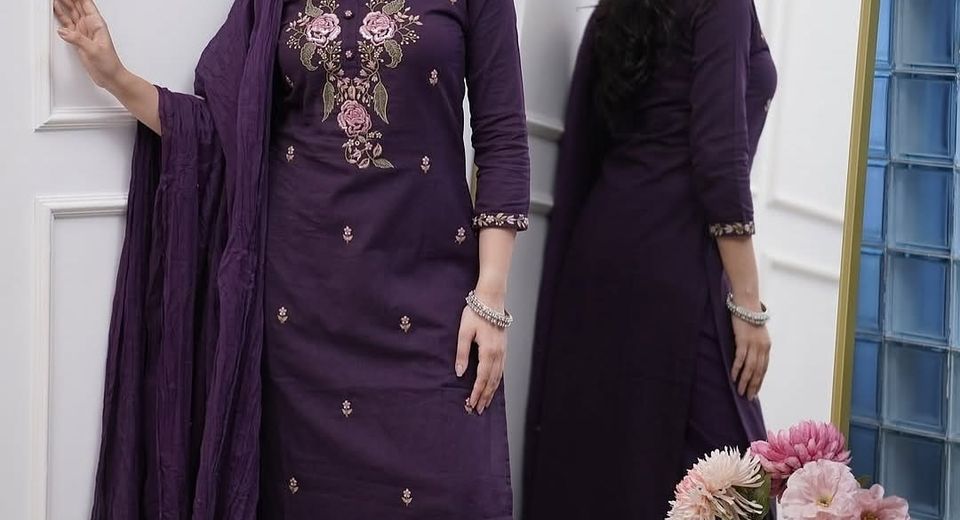
Kurti Plackets That Sit Flat Instead of Pulling Open begin with enough room across the bust and upper torso. A placket can look neat on a hanger and still gape when you sit, raise your arms or reach forward. The problem usually comes from a combination of insufficient bust ease, unstable fabric, misplaced buttons or a closure that doesn't match the garment's weight. Understanding those details helps you choose a ready-made kurti more accurately and identify a practical alteration before the garment becomes uncomfortable.
Why Kurti Plackets That Sit Flat Instead of Pulling Open Need More Than Extra Buttons
Kurti plackets pull open when horizontal tension across the bust is stronger than the closure, fabric stability or available ease can handle. The centre-front edges then separate between buttons, creating small gaps or diagonal strain lines.
Bust fullness is the most common source of tension, particularly in straight kurtis and close-fitting A-line silhouettes. A garment that matches your shoulder measurement may still be too narrow across the chest. Fabric is pushed outward from the bust apex, while the placket is pulled inward by the buttons and stitching.
Button spacing also matters. A long gap between two buttons leaves a larger unsupported section where the placket can open. The highest-pressure point is often around the fullest part of the bust rather than at the waist. A kurti with eight buttons can gape if the buttons are poorly positioned, while a kurti with fewer buttons may sit well when the spacing follows the body's pressure points.
Fabric behaviour adds another layer. Lightweight Chanderi can shift if the placket has not been reinforced. Soft rayon may stretch during movement. Cotton can relax slightly with wear but may resist movement when heavily starched. Zari-woven fabric may have enough body to hold a line, yet a bulky seam can prevent the two front edges from meeting cleanly.
How Much Ease Helps Kurti Plackets That Sit Flat Instead of Pulling Open?
A comfortable kurti generally needs about 2 to 4 inches of total bust ease, depending on the silhouette, fabric and personal preference. Total ease means the difference between the garment's finished bust measurement and the wearer's body measurement.
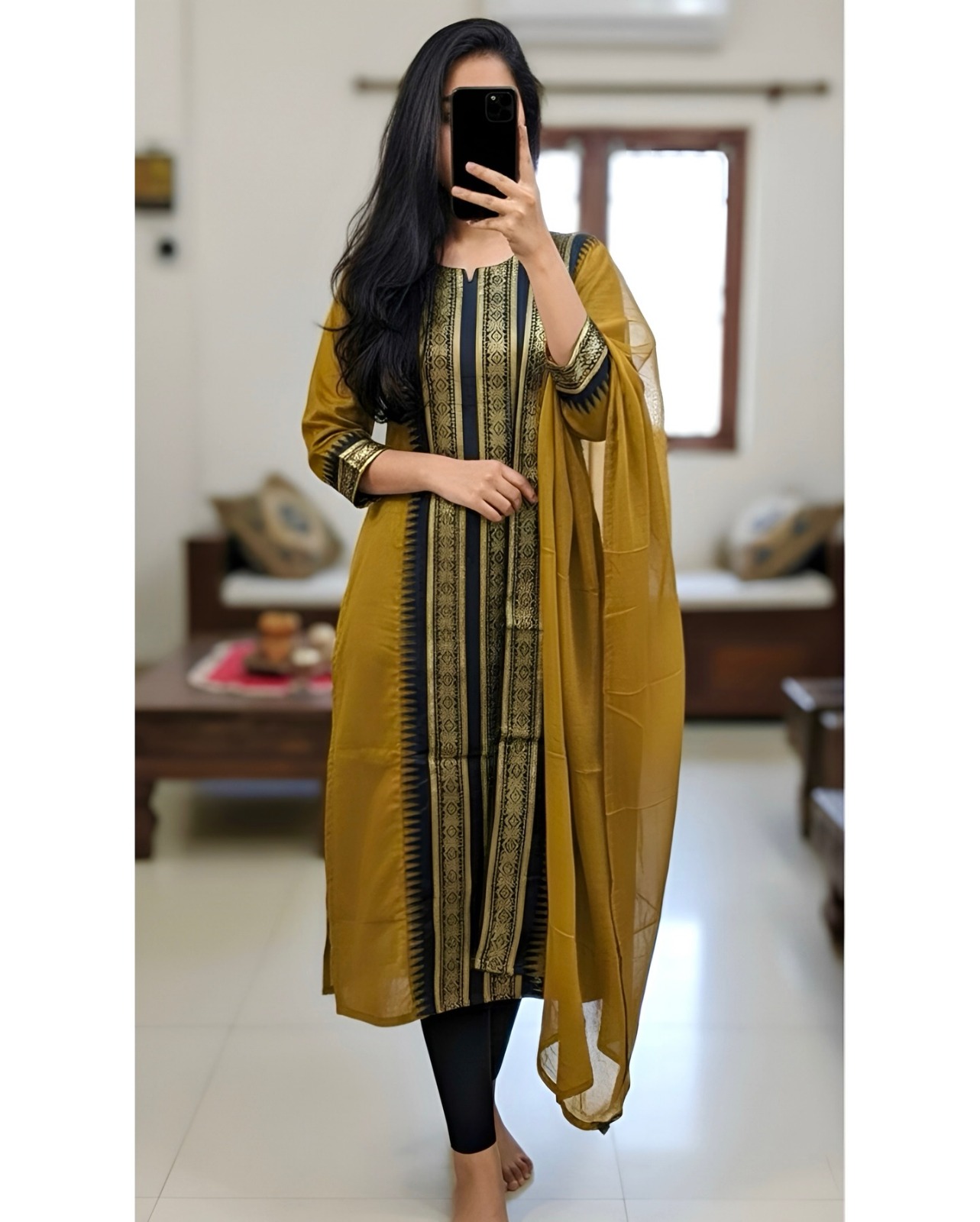
A close-fitting straight kurti in firm cotton may feel comfortable near the lower end of that range, while a fluid kurti or layered salwar suit often benefits from more room. A relaxed kurti can have 4 to 6 inches of ease without looking oversized, especially when the sleeves and hem are deliberately loose.
How can you check bust ease before buying a kurti?
Measure the fullest part of your bust and compare that number with the garment's finished bust measurement rather than relying only on the size label. A 36-inch bust generally needs a kurti measuring at least 38 to 40 inches across the same area for moderate ease.
When product measurements are unavailable, inspect the garment laid flat. Measure from one underarm seam to the other, double the result and remember that seam placement can slightly affect accuracy. Check the placket while gently smoothing the fabric, then check it again with your arms raised. A reliable fit should not form sharp horizontal wrinkles across the bust.
Shoulder width and armhole depth deserve equal attention. A narrow shoulder can drag the front placket upward, while a shallow armhole can pull the entire bodice when you move. A kurti that fits the bust but restricts the upper arm may still force the placket apart during everyday activity.
Construction Choices Behind Kurti Plackets That Sit Flat Instead of Pulling Open
A flat placket needs stable support behind the buttons, clean seam control and enough fabric width to prevent the front edge from rolling. Good construction reduces the amount of work the buttons must do.
Why does interfacing matter in a kurti placket?
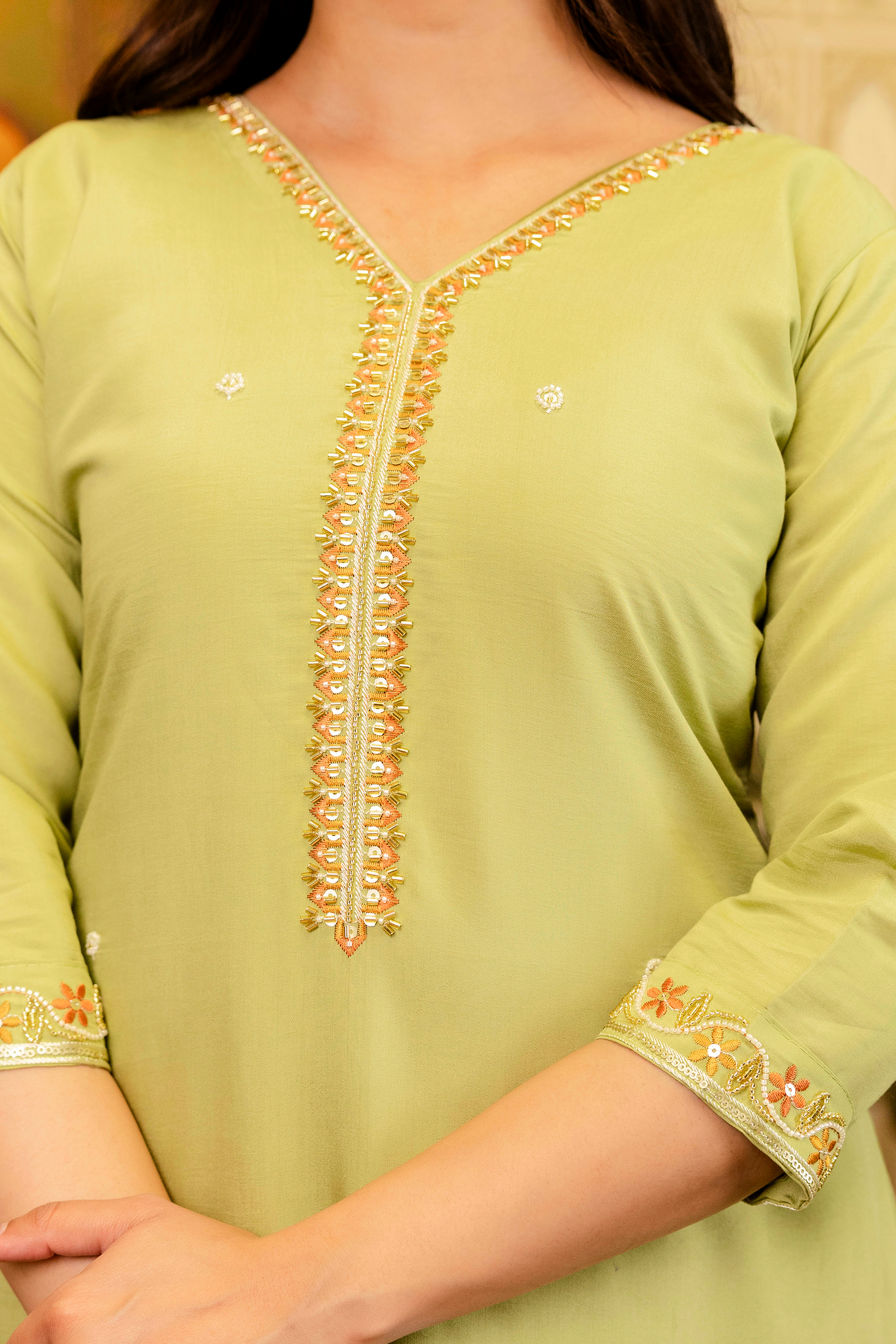
Interfacing strengthens the fabric beneath the placket and prevents the button area from stretching or collapsing. A narrow strip of lightweight fusible interfacing is often suitable for cotton, Chanderi and other medium-weight fabrics, while heavier support may create unwanted stiffness.
Interfacing should end cleanly before the seam allowance so the placket doesn't develop a thick ridge. A tailor can also use an inner facing or concealed fabric strip behind the visible front edge. Support should extend beyond both the button line and buttonhole line because both sides experience stress during movement.
Which closure works best for a kurti?
A closure works best when its strength and visibility suit the fabric and the wearer's movement. Flat buttons with securely stitched shanks, concealed press buttons used as support, hooks or a short zip can all work when properly installed.
Press buttons are useful as secondary support between visible buttons, but press buttons alone can pop open under strong bust tension. A concealed hook near the bust apex can stop a small gap without changing the appearance of the front. Large decorative buttons may suit an embroidered kurti, but their weight can pull the placket outward if the backing is weak.
Buttonholes should be cut cleanly and aligned with the grain or placket edge. A buttonhole that's too large allows the button to shift, while a buttonhole that's too tight distorts the front edge every time the garment is fastened. High-stress buttonholes should have dense reinforcement rather than a loose machine finish.
Which Fabrics Support Kurti Plackets That Sit Flat Instead of Pulling Open?
Fabric weight, surface structure and recovery influence whether a kurti placket remains aligned throughout the day. A stable woven fabric generally holds a straight placket more reliably than a very soft or loosely constructed fabric.
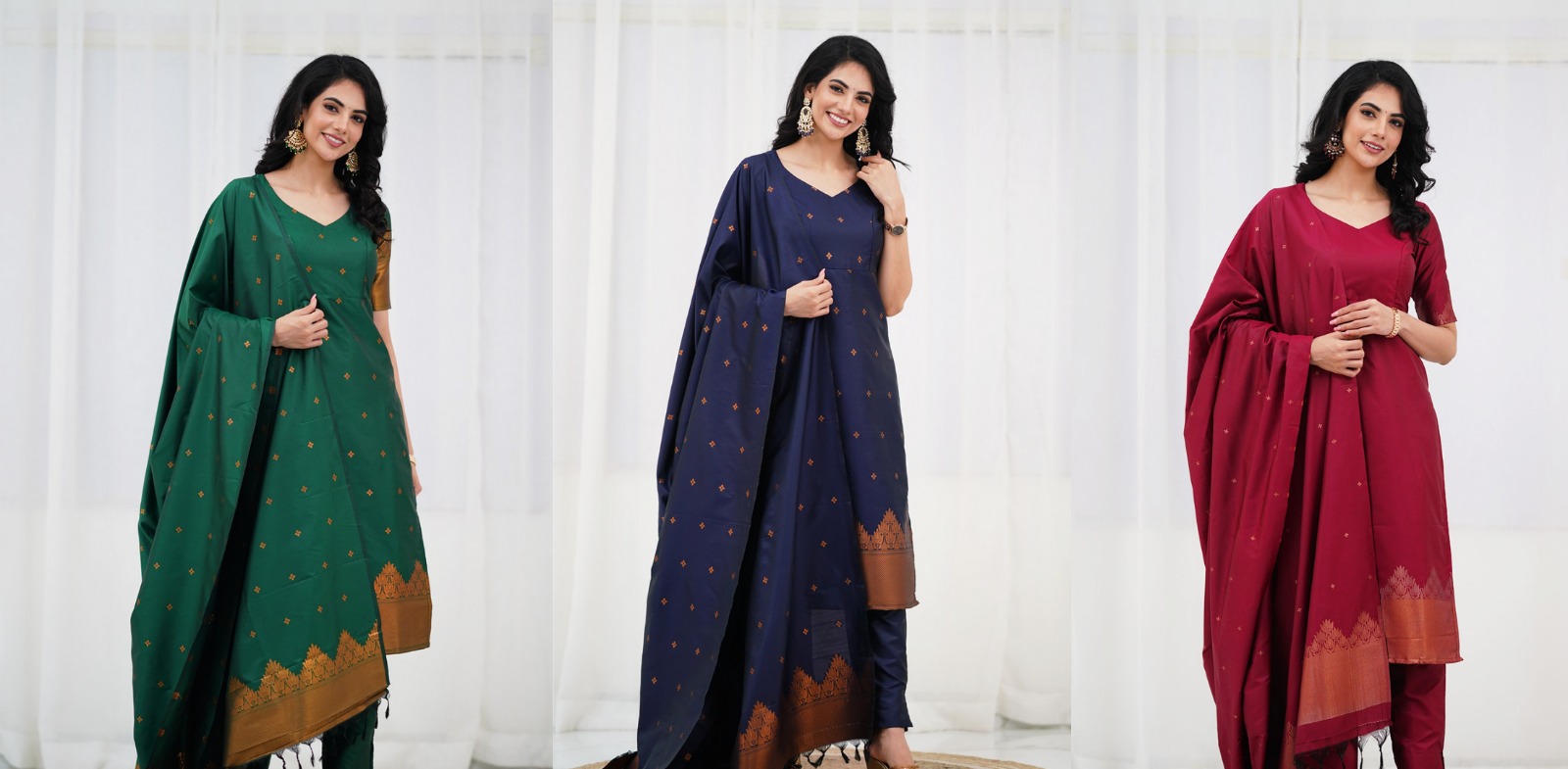
Chanderi has a light, crisp hand that can look polished in a straight or gently flared kurti, but its placket benefits from precise interfacing. Navy Floral Woven Chanderi Kurti Pant Dupatta Set demonstrates why a lightweight woven set should be assessed for both drape and front-edge stability. Navy Kanchi Cotton Kurti Set with Woven Dupatta has a more structured cotton character, which can help the front retain its shape when the bust ease is correct.
Cotton is breathable and practical, but cotton plackets can pull when the garment is cut too closely or when shrinkage has not been considered. Pre-washed cotton is easier to assess because the finished measurements are less likely to change significantly after the first wash. Designer Cotton A-Line Kurti Pant Set with Mirror Work shows how surface embellishment and an A-line cut can work together: the flare provides lower-body room, while the upper bodice still needs adequate bust ease.
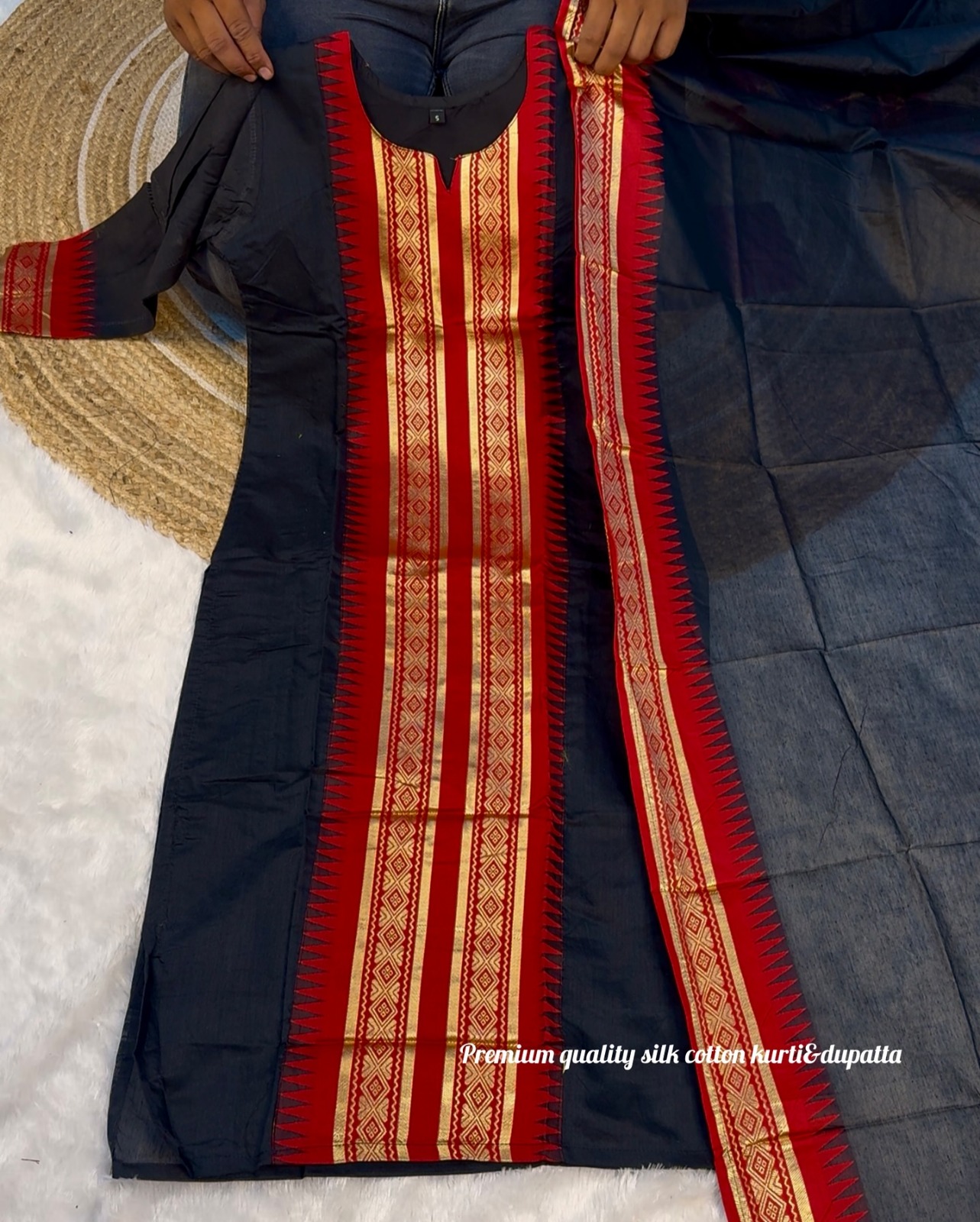
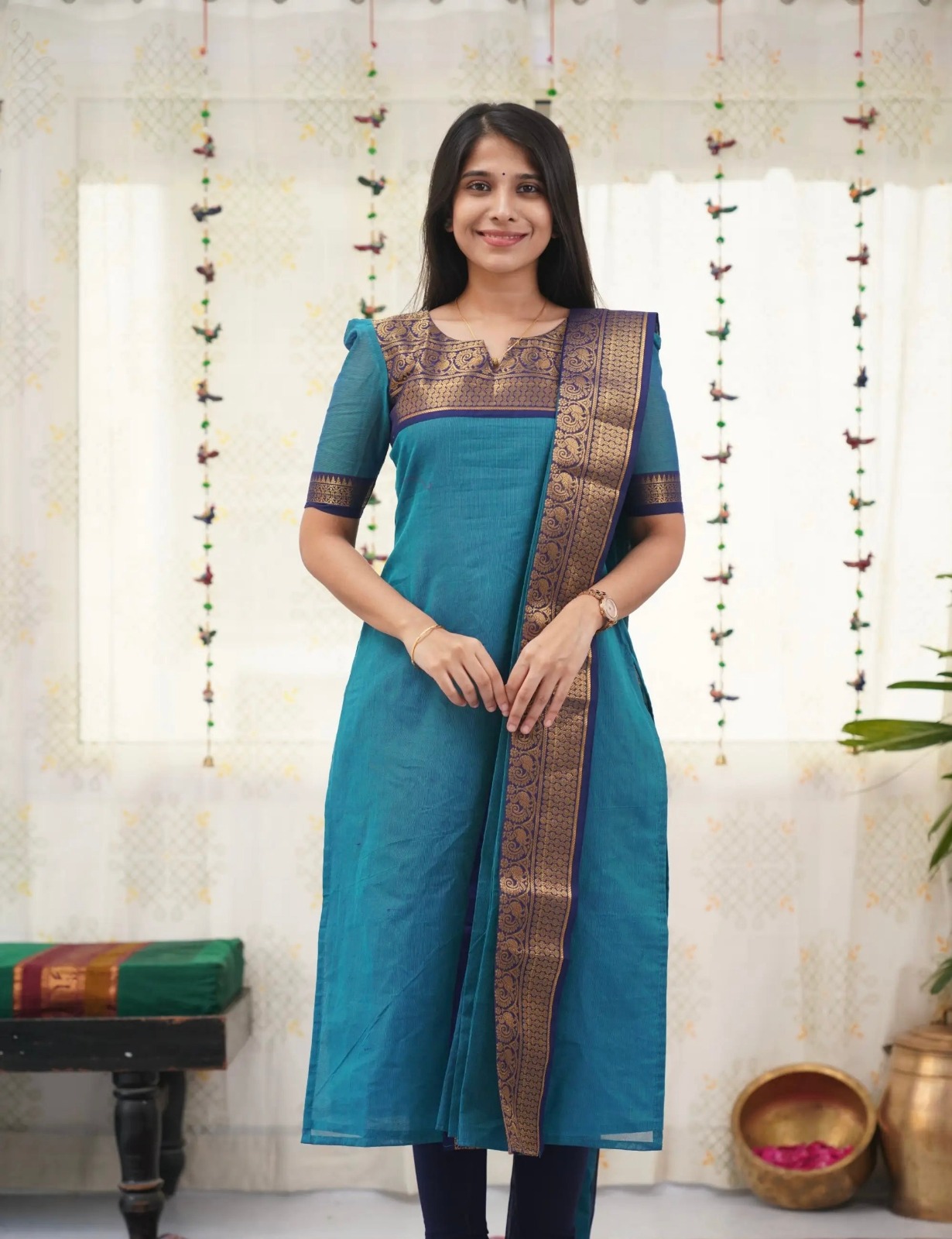
Banarasi silk, Kanjeevaram and zari are associated with formal ethnic dressing, but a kurti doesn't need a heavy ceremonial fabric to look refined. Zari-woven cotton can have a firm handle and a slightly bulky surface, so the placket should be checked for thickness at the seam. Kanchi Cotton Zari Woven Kurti Set with Traditional Dupatta is a useful example of why woven detail should be considered alongside closure construction rather than treated as decoration alone.
Very fluid fabrics can be comfortable but may need a facing, lining or inner placket to stop the front from shifting. A relaxed silhouette can reduce stress, although excessive fullness near the button line may cause the fabric to fold rather than lie flat. Matching fabric behaviour to the cut produces a more dependable result than expecting every material to perform identically.
How to Check Kurti Plackets That Sit Flat Instead of Pulling Open
A ready-made kurti should be checked while standing naturally, sitting and moving both arms forward. These positions reveal more than a static mirror check because placket stress changes as the torso bends and the shoulders rotate.
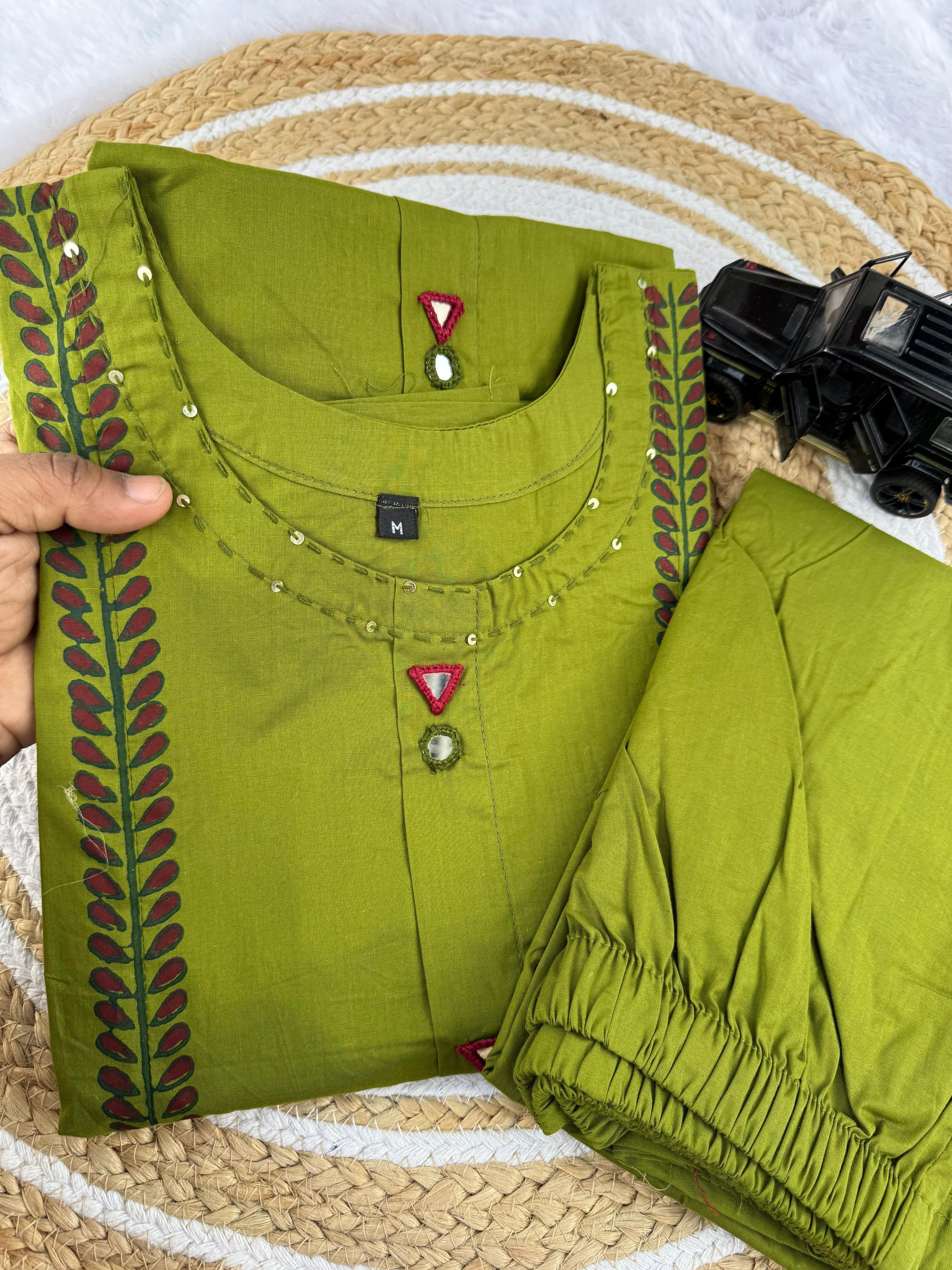
- Check the centre front: The placket should form one continuous vertical line from the neckline to the hem or the end of the opening. Diagonal wrinkles pointing towards the bust suggest insufficient ease.
- Check the button area: Buttons should lie at the centre of the buttonholes without tilting. A button sitting at the outer edge of its hole may be under tension.
- Check the bust apex: The fabric should skim rather than cling. A horizontal pull line between two buttons indicates that you may need a larger size or a more relaxed cut.
- Check the side seams: Side seams that swing towards the front often indicate that the bust needs more room. Side seams should hang approximately vertically when you stand naturally.
- Check the armhole: Raise both arms and reach forward. If the placket rises or opens, the issue may involve armhole depth or shoulder width rather than the buttons alone.
- Check layering: Try the kurti over the camisole or inner layer you normally wear. Added fabric can make a close placket feel tighter than it did over a thin trial garment.
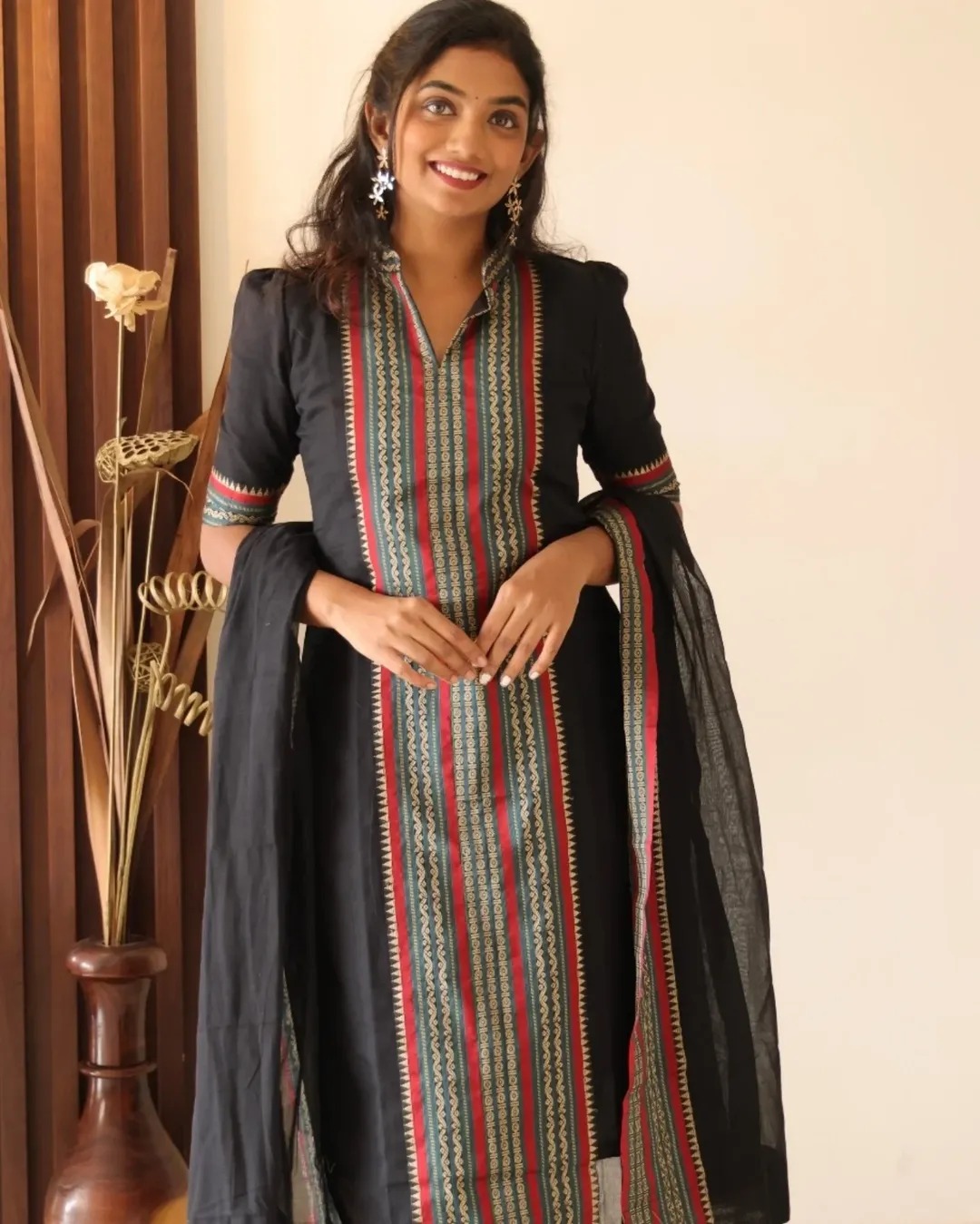
Three-piece sets make this assessment especially important because the dupatta can hide early signs of gaping. Mustard Designer Kurti Dupatta Set with Rich Weaving and Designer Cream Straight Kurti Set with Dupatta should be assessed with the dupatta temporarily moved aside. A coordinated dupatta improves styling, but it should not conceal a front opening that feels unstable.
Alterations That Help Kurti Plackets That Sit Flat Instead of Pulling Open
The most effective alteration depends on whether the garment lacks room, lacks support or has poorly placed closures. A tailor should diagnose the tension before adding extra buttons.
Can extra buttons stop a kurti from gaping?
Extra buttons can stop a kurti from gaping when existing spacing leaves unsupported sections, but extra buttons can't solve a bodice that's fundamentally too tight. A tailor should place additional closures around the bust-pressure area rather than distributing them randomly.
A concealed press button between two visible buttons can provide discreet support. The added closure should be sewn through reinforced fabric, because a press button attached only to delicate outer cloth may tear or create a visible dimple. Matching thread and a small backing patch can make the alteration less noticeable.
What if the kurti is tight across the bust?
A kurti that's tight across the bust needs more fabric or a larger size; changing the buttons alone won't create wearing ease. A tailor may release side-seam allowance, add narrow side panels or adjust the front princess seam when the construction permits it.
Side panels are most successful when their colour and texture look intentional. A narrow panel in a coordinating cotton can suit everyday wear, while a matching woven strip may work better on a dressier set. If the garment has little or no seam allowance, buying a larger size and adjusting the shoulder or side seam is usually safer than forcing a small garment to fit.
Mustard Embroidered Kurti Pant Dupatta Set Women and Embroidered Kurti Pant Set with Taby Dupatta show why embroidery placement should be considered before alteration. Cutting into dense embroidery can damage motifs or interrupt the design, so a tailor should inspect the seam allowance and embellishment path first.
Styling and Care for Kurti Plackets That Sit Flat Instead of Pulling Open
Correct styling and washing habits help a well-fitted placket retain its shape, although styling can't compensate for insufficient bust ease. A dupatta should be arranged without pulling the kurti front sideways.
For a Haldi ceremony, a lightweight dupatta can be pinned at one shoulder and left loose across the torso rather than tightly wrapped around the bust. For daily office wear, keep the dupatta balanced over both shoulders if one-sided weight makes the placket shift. Kalamkari Print Salwar Suits, Maharashtra Paithani Inspired Salwar Suits and Gujarat Bandhej Salwar Suits offer different visual treatments, but each should be layered without creating lateral pressure across the buttons.
Odisha Sambalpuri Salwar Suits and Punjab Patiala Salwar Suits often encourage more relaxed styling, which can make movement easier when the kurti has moderate bust ease. A dupatta pin should secure the accessory to the shoulder seam or inner layer rather than piercing the placket edge. Pins placed directly beside a buttonhole can enlarge the opening and weaken the fabric.
Wash a cotton or Chanderi kurti according to its care label, and avoid pulling the garment into shape while it's wet. Remove heavy jewellery before laundering embroidered or zari-woven pieces. Air-dry the kurti on a broad hanger or flat surface, and press the placket from the reverse side using the temperature suited to the fabric.
Store buttoned kurtis flat or on a broad hanger so the front edge doesn't fold sharply. Avoid hanging a damp garment, because moisture and gravity can stretch the placket area. A quick inspection after laundering can reveal a loose button, stretched buttonhole or lifted interfacing before a small repair becomes a larger fitting problem.
When Should Kurti Plackets That Sit Flat Instead of Pulling Open Be Replaced?
A kurti should usually be replaced or exchanged when the bust remains strained after correct fastening, the side seams angle forward, or the garment has insufficient seam allowance for alteration. Persistent horizontal drag lines indicate a structural fit issue rather than a minor button problem.
Exchange the garment when the shoulder, armhole and bust all feel restrictive at the same time. Choose a different silhouette when a straight kurti is tight through the chest but loose at the hip; an A-line cut can provide lower-body room without requiring excessive upper-body width. Choose a relaxed cut when the fabric is rigid or heavily embellished and can't comfortably accommodate movement.
A small gap caused by button spacing is a reasonable alteration. A centre front that repeatedly separates, a buttonhole that tears, or fabric that strains across the bust calls for a different size or pattern. The most polished salwar suit is one that remains comfortable while walking, sitting, reaching and carrying a dupatta.
Common Questions About Kurti Plackets That Stay Flat
Why do my kurti buttons keep opening at the bust?
Kurti buttons usually open at the bust because the garment has insufficient bust ease, widely spaced buttons or weak placket support. Check the finished bust measurement and look for diagonal wrinkles pointing towards the bust; a concealed press button can help only when the underlying fit is already close to correct.
How much extra room should a kurti have around the bust?
A kurti generally needs about 2 to 4 inches of total bust ease for a comfortable moderate fit. Firm cotton straight kurtis may suit the lower end, while fluid fabrics and relaxed silhouettes often need 4 to 6 inches.
Can a tailor fix a kurti that gapes between the buttons?
A tailor can fix gaping caused by button spacing, weak interfacing or a small amount of missing ease. The tailor may add a concealed closure, reinforce the placket or release side-seam allowance, but a severely tight bodice usually needs a larger size or added panels.
Do press buttons prevent kurti plackets from opening?
Press buttons can prevent small gaps when used as secondary support between visible buttons. Press buttons alone may pop open under strong bust tension, so they should be attached to reinforced fabric and combined with sufficient garment ease.
Which fabric is least likely to make a kurti placket gape?
A stable woven fabric with adequate bust ease is least likely to gape, although no fabric can correct a garment that is too small. Medium-weight cotton often holds a placket reliably, while Chanderi, soft rayon and delicate zari-woven fabrics need suitable interfacing and careful construction.
Should I size up if my kurti pulls open at the bust?
Sizing up is usually sensible when the kurti pulls open across the bust and restricts arm movement. If the larger size fits the bust but is loose at the shoulders or hips, a tailor can adjust those areas more easily than expanding a garment with no usable seam allowance.