Fabric Grain Can Change the Way a Saree Falls on the Body, even when the colour, border and blouse remain exactly the same. A saree may form sharp, narrow pleats in one direction and spread into softer folds in another because yarns, weave density, fibre and finishing control how the cloth bends. Understanding that behaviour helps you choose a saree that suits your height, movement and occasion rather than judging the fabric only by its photograph.
Grain matters most when a saree has a firm hand, a visible weave, a crisp finish or a weighted border. Cotton, tissue, organza cotton silk and zari-woven fabrics each respond differently to pinning and folding. A small change in how the saree is handled can improve the waistline, keep the pallu from collapsing and reduce bulk around the hips.
Fabric Grain Can Change the Way a Saree Falls on the Body: What Does Grain Mean?
Fabric grain describes the direction in which the warp and weft yarns run through woven cloth. The warp runs lengthwise from the roll, while the weft runs across the width; the selvedge edges usually follow the warp direction.
The lengthwise grain generally has less give and better structural stability because warp yarns are held under tension during weaving. The crosswise direction can feel slightly more flexible, although the amount of movement depends on fibre, yarn twist and weave density. A diagonal pull combines both directions and often creates the greatest apparent stretch or distortion.
In a saree, grain isn't a printed arrow telling you exactly how to drape. Grain is a property of the cloth that influences how the body of the saree folds, how the pallu hangs and whether a border stays level. Handloom weaving may create subtle variations in tension, while finishing can make a fabric feel temporarily crisper or smoother.
How can you identify grain at home?
You can identify the main grain by locating the selvedge, examining border alignment and gently comparing resistance in different directions. The selvedge is the finished edge running along the saree's length, and it usually marks the warp direction.
Lay the saree flat and place one hand near each edge. Pull gently along the length, across the width and diagonally without forcing the fabric. The direction that feels firmer is often the lengthwise grain. Avoid stretching delicate tissue, organza or zari sarees because repeated tension can leave visible distortion.
Fabric Grain Can Change the Way a Saree Falls on the Body: Why Does It Matter?
Fabric grain changes a saree's fall because yarn direction controls resistance, bending, recovery and the distribution of fabric weight. A stable lengthwise section usually hangs in a cleaner line, while a more flexible section may form softer or wider folds.
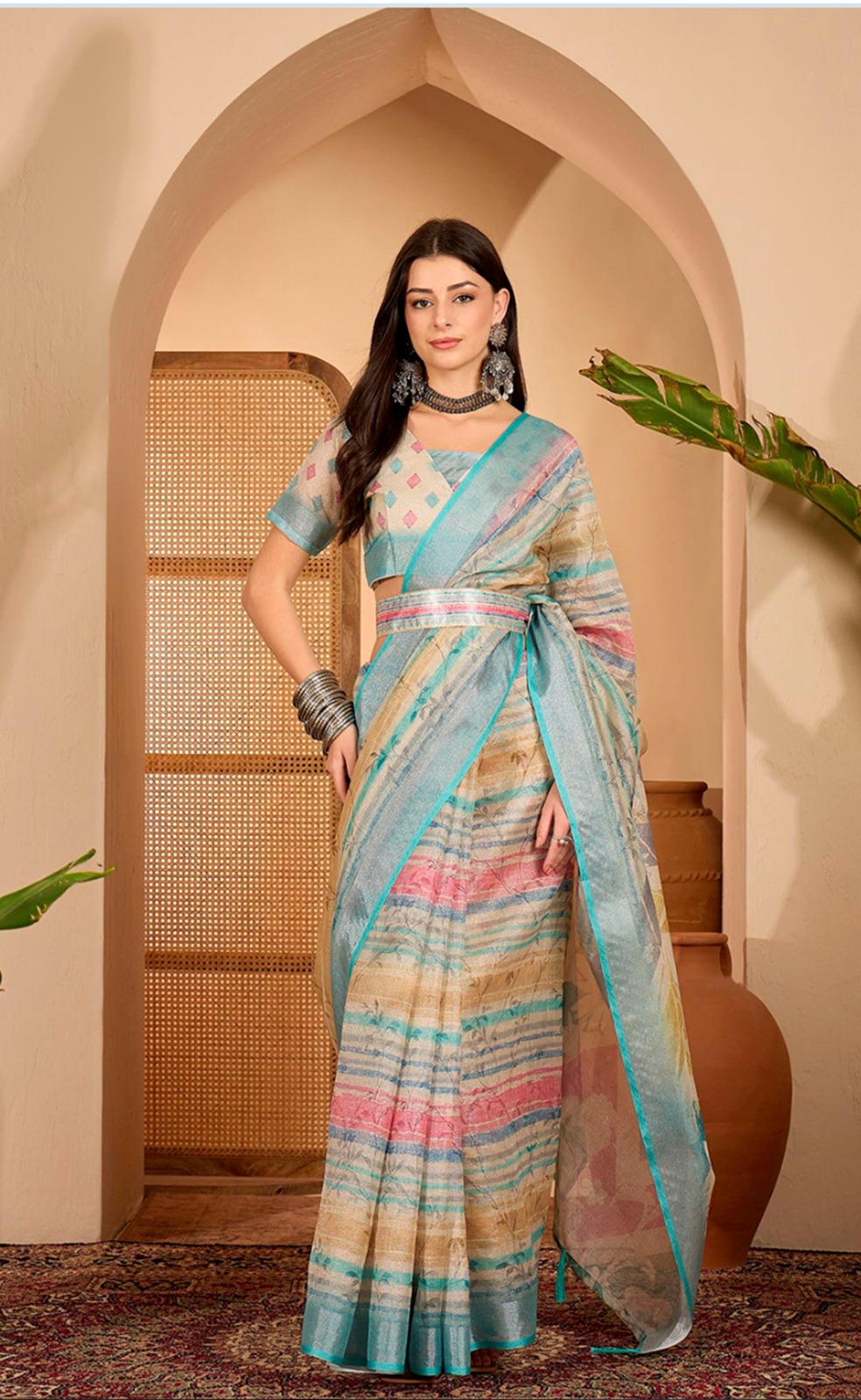
Gravity acts on every fold, but gravity doesn't act alone. A tightly woven cotton saree resists collapsing and can hold a pleat edge. A tissue weave may catch light and retain a crisp ridge while remaining lightweight. Organza cotton silk can stand away from the body, producing a fuller pallu and more visible pleat structure.
Border construction also changes the result. A zari border adds weight along one edge, so the border can pull the lower edge outward or make the pallu turn inward if the cloth isn't aligned. A printed border has less added mass, but repeated motifs can make a crooked grain easier to notice.
How do warp, weft and bias affect draping?
The warp direction usually gives the saree its strongest lengthwise stability, which helps the lower edge remain controlled during walking. The weft direction may allow more lateral movement, making the fabric appear softer around the torso. A diagonal or bias position can create fluidity, but excessive biasing may cause the border to tilt.
Many saree folds naturally involve small changes of direction because the cloth wraps around the waist and travels over the shoulder. The goal isn't to force every part of the saree into one orientation. The goal is to keep the visible border, waist pleats and pallu edge aligned enough to look intentional.
Fabric Grain Can Change the Way a Saree Falls on the Body: How Do Fabrics Behave?
Cotton sarees usually produce a grounded, stable drape, while tissue and organza-based sarees create lighter, crisper or more expansive folds. Fibre content, yarn thickness, weave density and finishing can change the result within each category.

Cotton and handloom cotton
Cotton absorbs moisture and has enough body to hold pleats without becoming excessively slippery. Handloom cotton can show small variations in yarn tension, giving the saree a textured fall that looks relaxed rather than perfectly uniform.
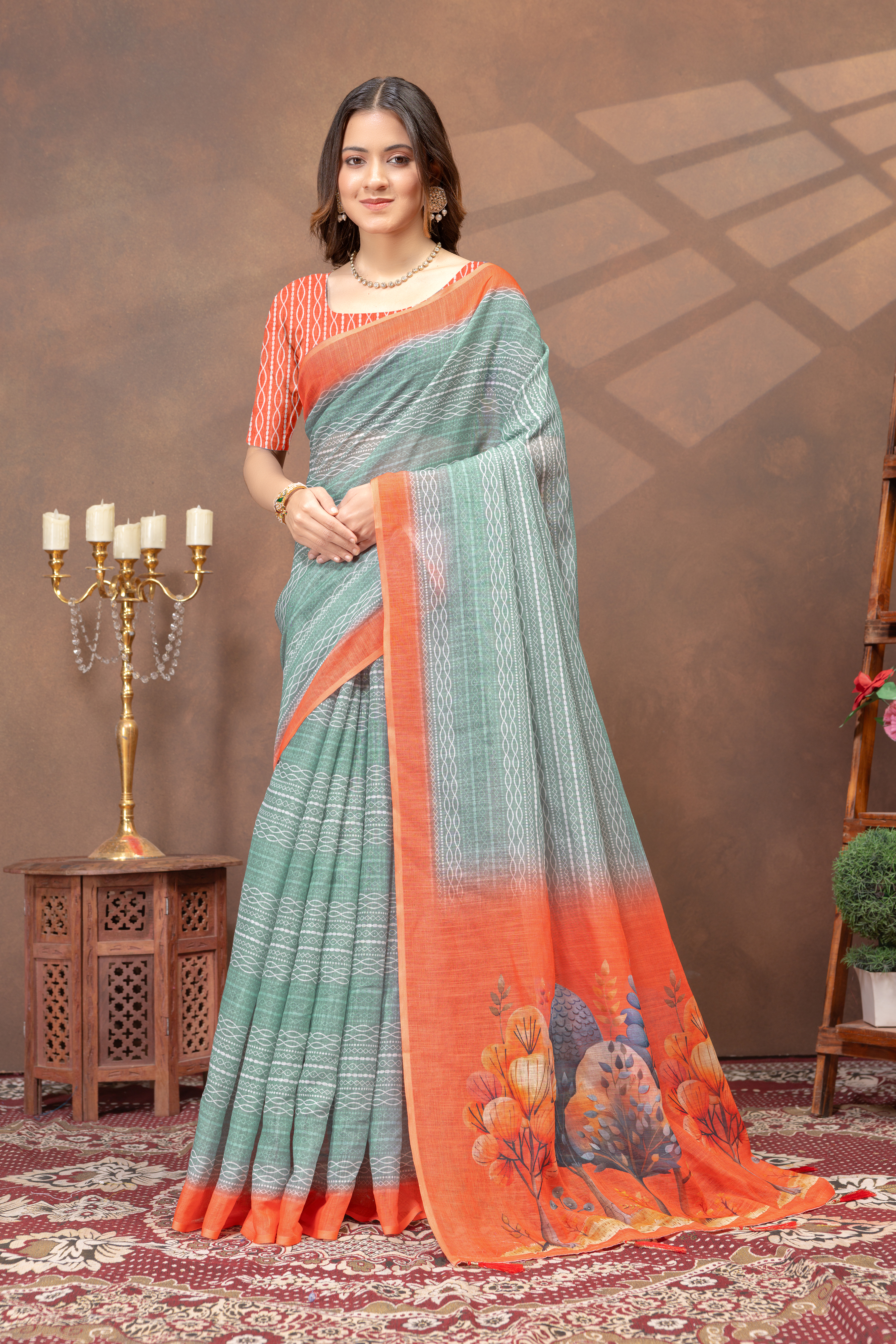
The Sea Green Tissue Handloom Cotton Saree With Floral Patterns shows why weave and surface matter together. A floral pattern draws attention across the fabric, while the handloom structure can make each pleat appear slightly different. Pressing the pleats before draping is more useful than pulling hard to make every fold identical.
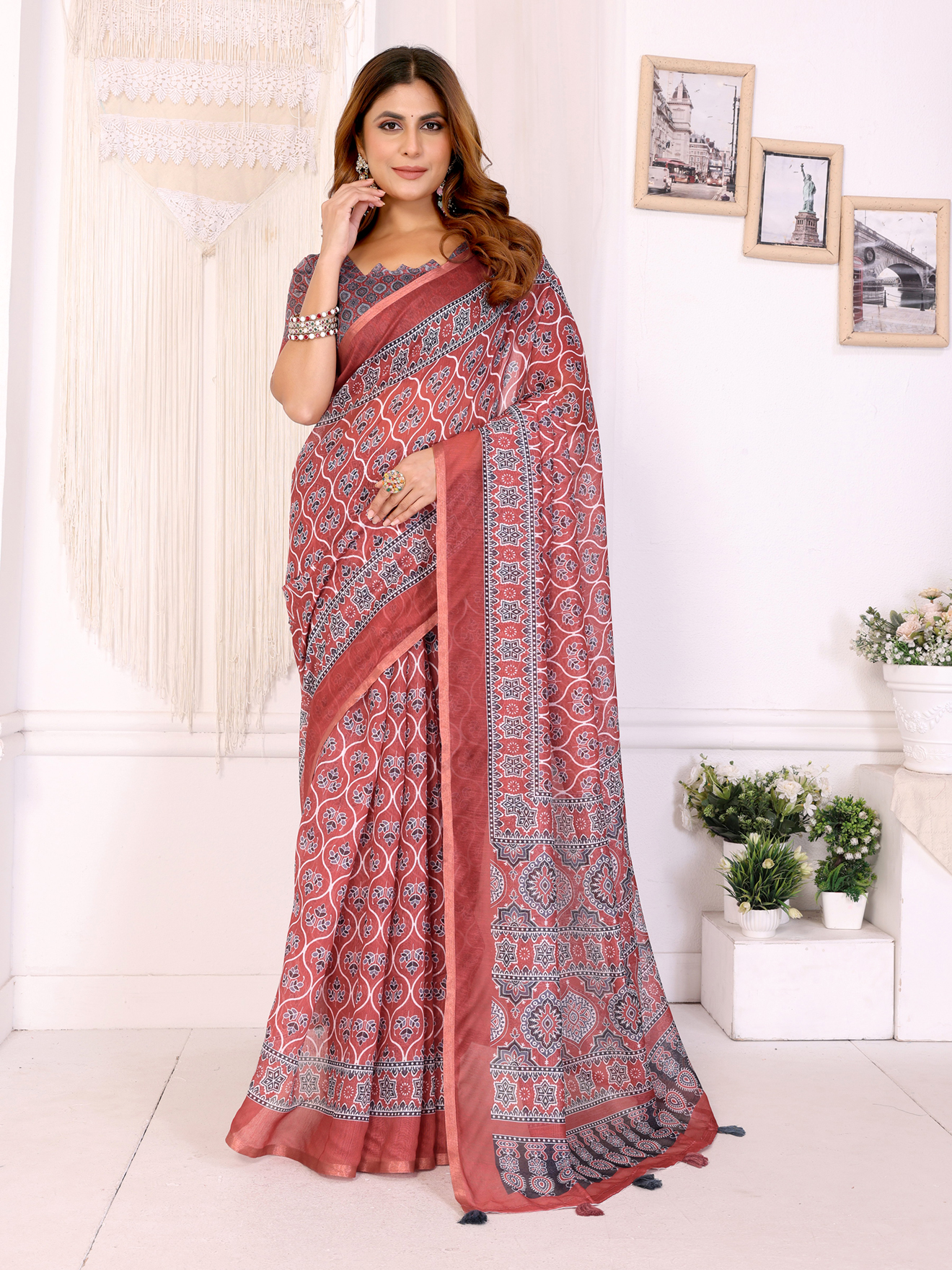
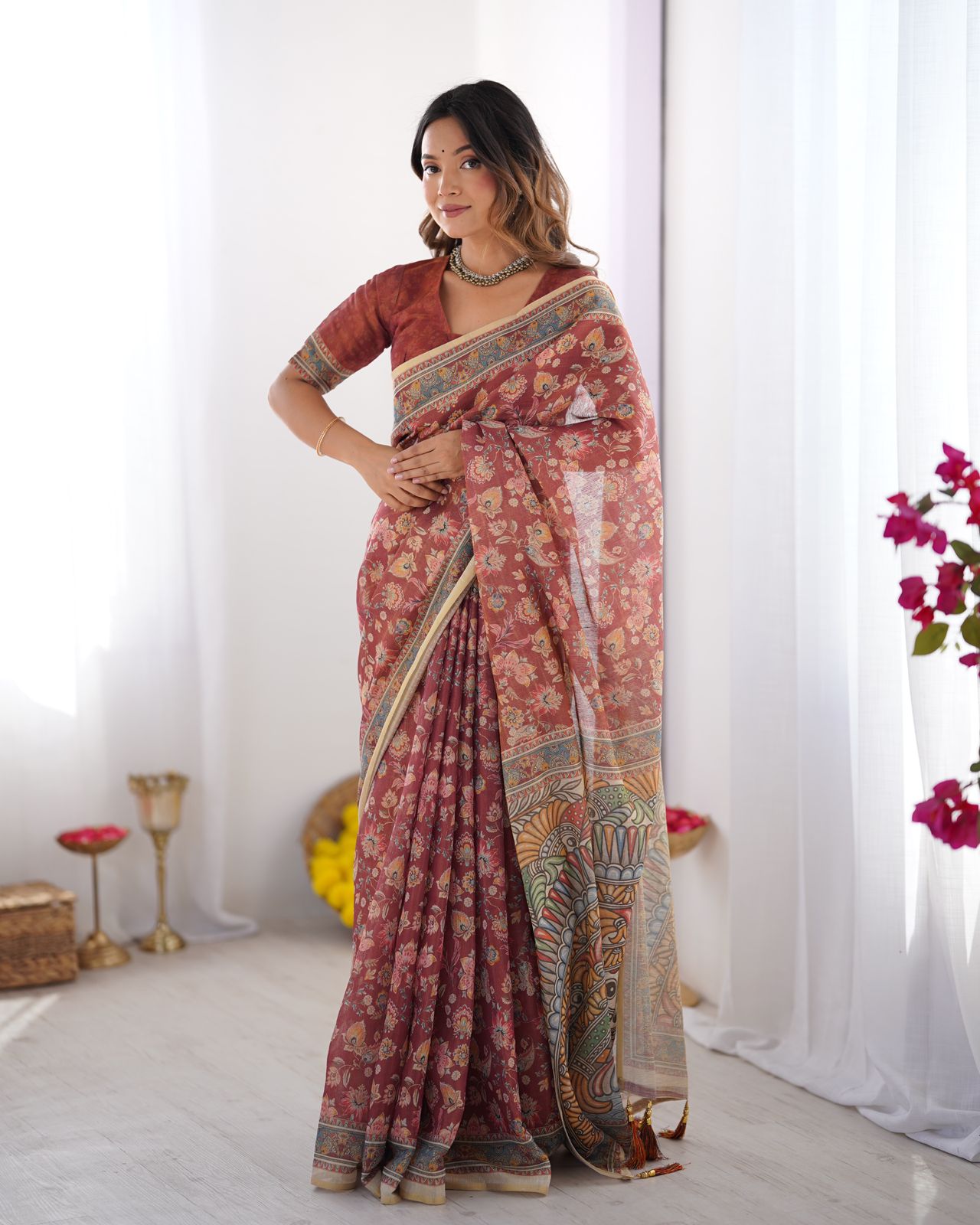
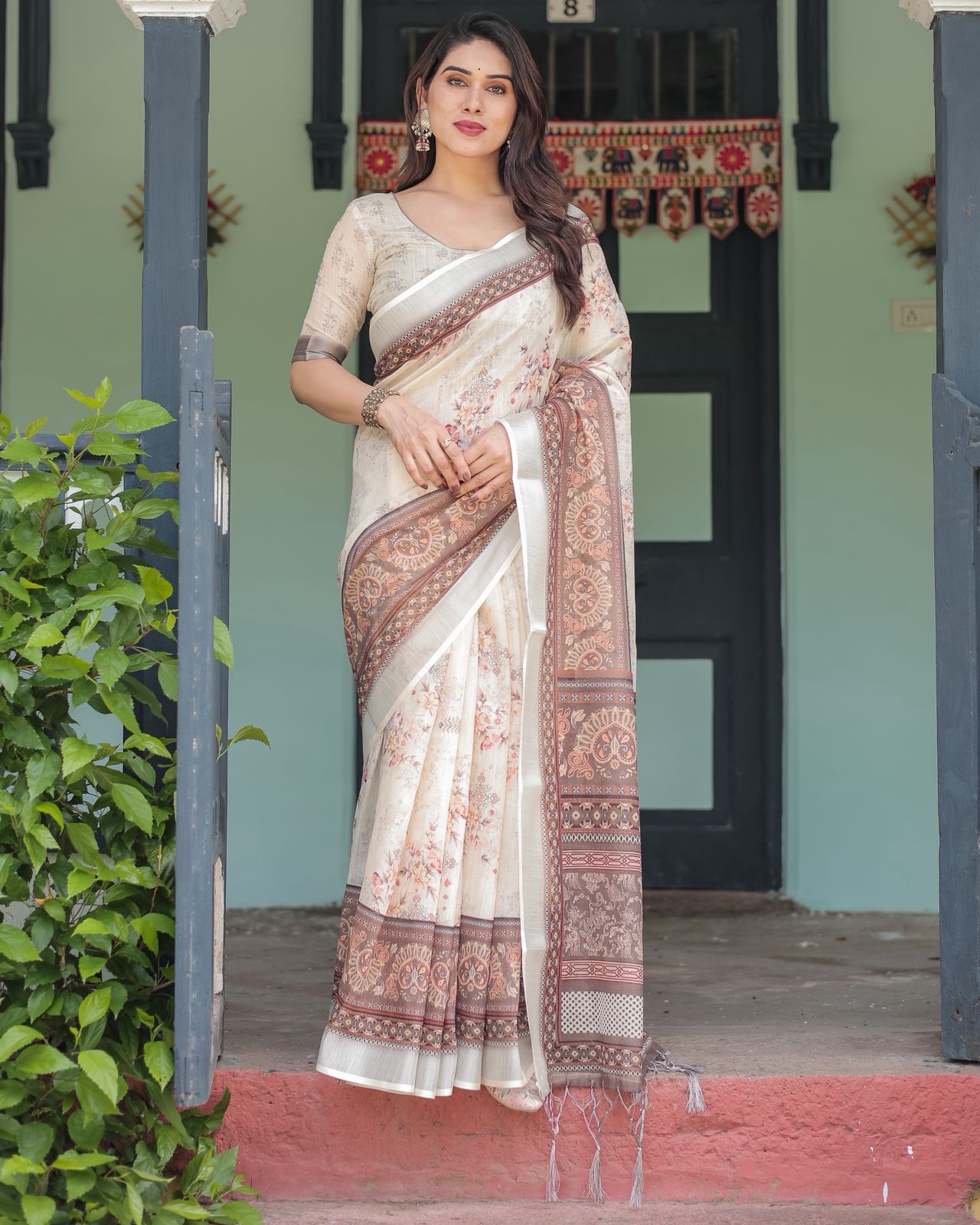
The Classic Beige & Coffee Brown Printed Cotton Saree works well with a flatter pleat profile for everyday dressing. Excessive puffing can interrupt the visual rhythm of a restrained print. The Maroon Cotton Saree with Zari Work for Wedding needs similar awareness of weight because zari can make the lower edge sit differently from a plain cotton edge.
Tissue and tissue cotton
Tissue fabrics often have a crisp handle and a subtle reflective surface because of their yarn arrangement or lustrous fibres. Tissue cotton can remain breathable while creating more structure than a soft, loosely woven cotton saree.
The Peach Green Tissue Cotton Saree With Print Blouse Piece can be approached with medium-width pleats rather than very narrow pleats. Medium pleats allow the fabric's body and print to remain visible, while a firm first tuck at the waist prevents the pleats from fanning outward.
The Peach Tissue Cotton Saree With Floral Print has a different visual demand because floral placement and fabric sheen compete for attention. A clean, vertical pleat line keeps the print readable and prevents the pallu from becoming a bulky cluster near the shoulder.
Organza cotton silk
Organza cotton silk usually has a crisp, airy structure that creates volume away from the body. Organza can resist flattening, so narrow pleats may spring open unless they're pressed and secured at the waist.
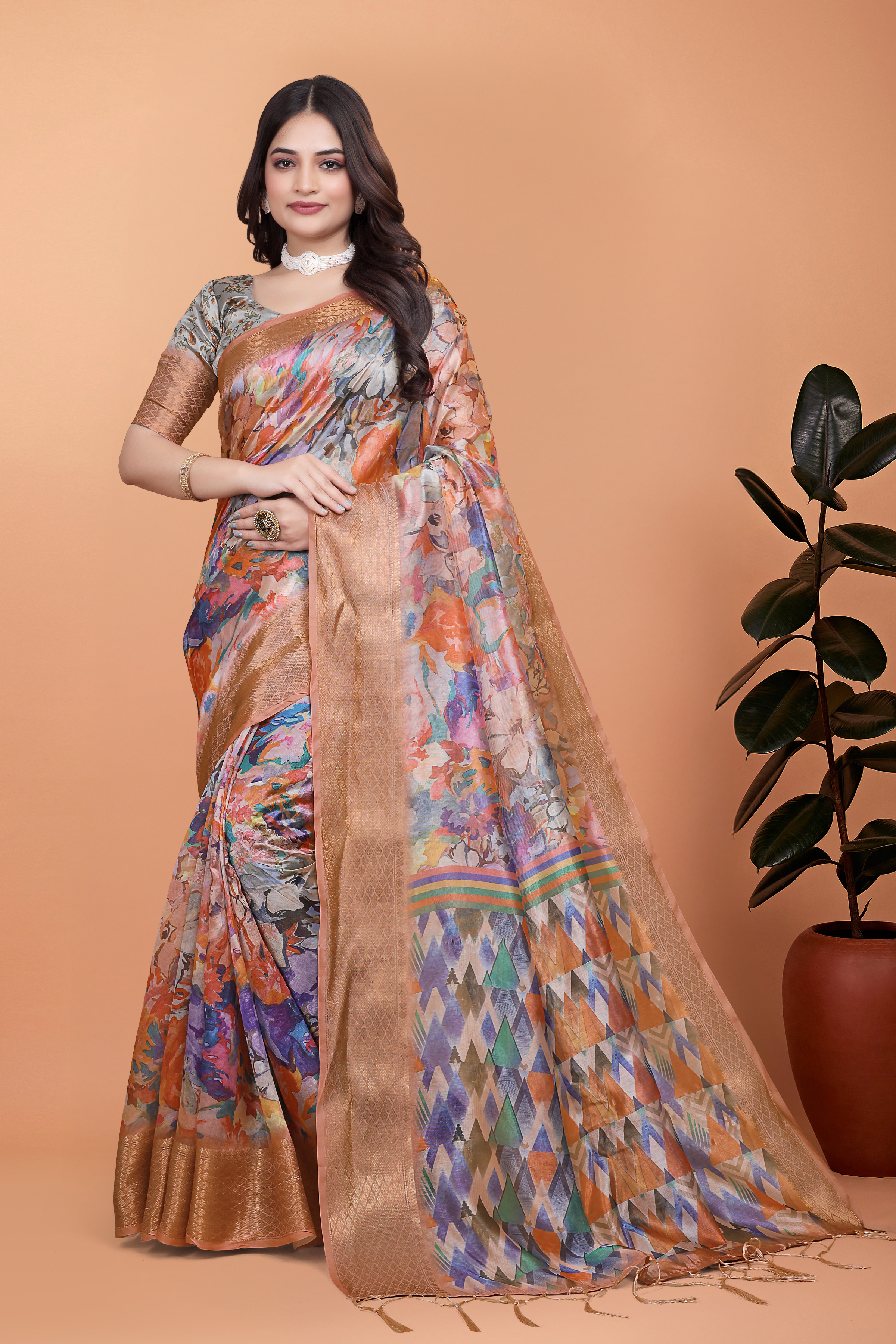
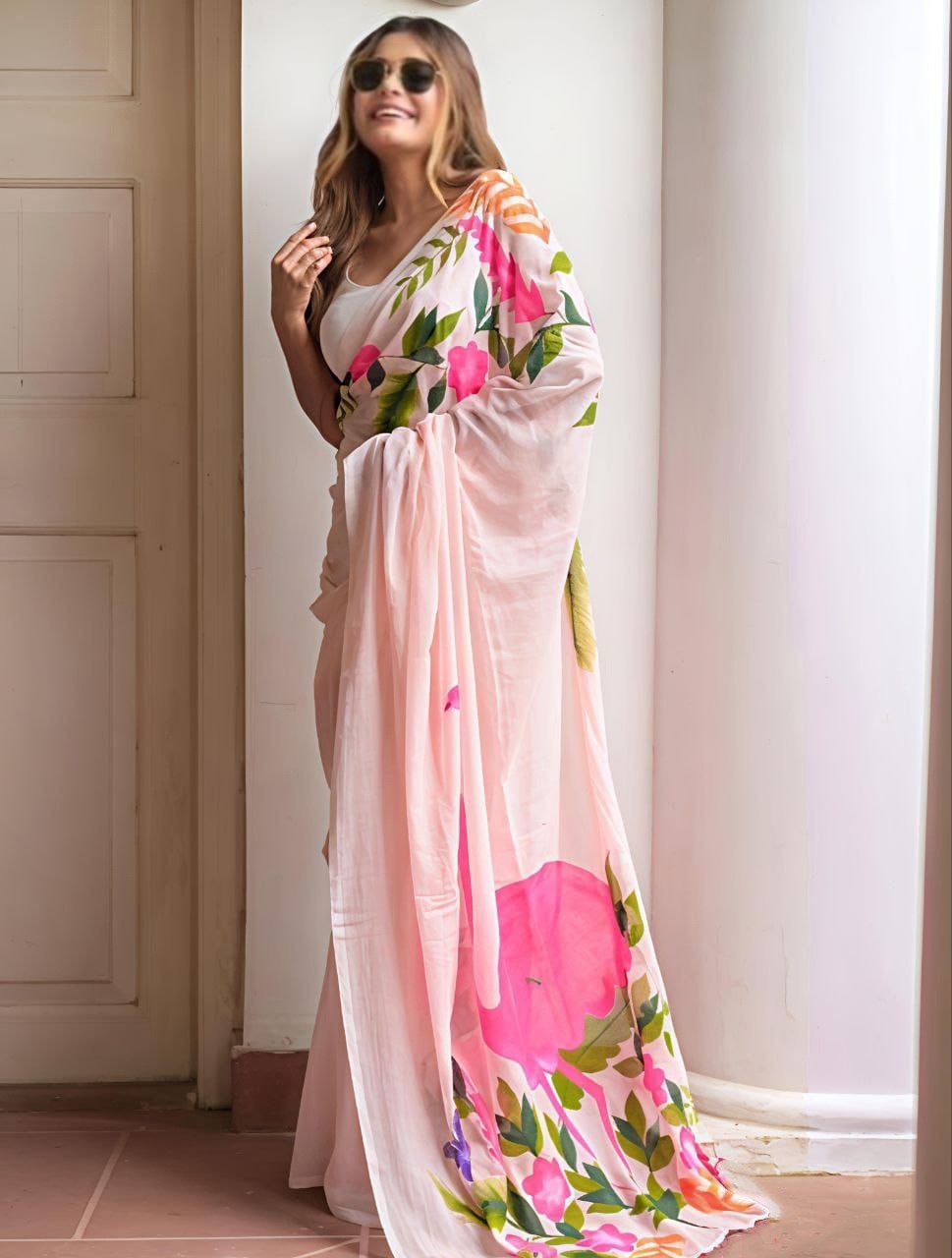
The Peach Floral Organza Cotton Silk Saree benefits from a measured pallu rather than excessive gathers. Letting the pallu fall in two or three broad folds can show the fabric's transparency and floral surface while reducing shoulder bulk.
Fabric Grain Can Change the Way a Saree Falls on the Body: How Should You Pleat It?
Saree pleats should follow the fabric's natural resistance instead of forcing every fold into the same width. The correct pleat size is the width that stays upright, stacks without excessive thickness and allows the border to remain reasonably level.
- Check the lower edge first. Hold the saree at the waist and observe whether the border hangs straight before making the main pleats. A tilted border may indicate uneven tension or an accidental diagonal pull.
- Make a small test stack. Fold four or five pleats by hand and release them. If the stack immediately opens, use wider pleats or press the folds before pinning.
- Keep the first tuck firm. The first tuck carries the weight of the remaining fabric. A secure tuck reduces slipping without requiring tight compression around the waist.
- Use fewer folds for bulky fabrics. Zari-woven cotton, crisp tissue and organza often look cleaner with five to seven substantial pleats than with many narrow folds.
- Use more folds for fluid fabrics. Softer cotton can accommodate seven to nine narrower pleats when the fabric doesn't become transparent or overly thick.
- Pin only after alignment. A safety pin can hold the top of the pleat stack, but pinning a crooked stack simply preserves the error.
The Tissue Handloom Cotton Saree with Zari Weave & Floral Print demonstrates why a fabric may need both structure and restraint. Zari adds visual and physical weight, while the floral print benefits from an orderly front. Medium-width pleats generally allow the weave to show without creating an overloaded waistline.
Fabric Grain Can Change the Way a Saree Falls on the Body: How Does It Shape the Silhouette?
Fabric grain affects the pallu by controlling how far the fabric stands from the shoulder, how the edge hangs and how quickly folds collapse. A pallu placed with its stable lengthwise direction along the shoulder may look more controlled, while a softer crosswise section can create a relaxed cascade.
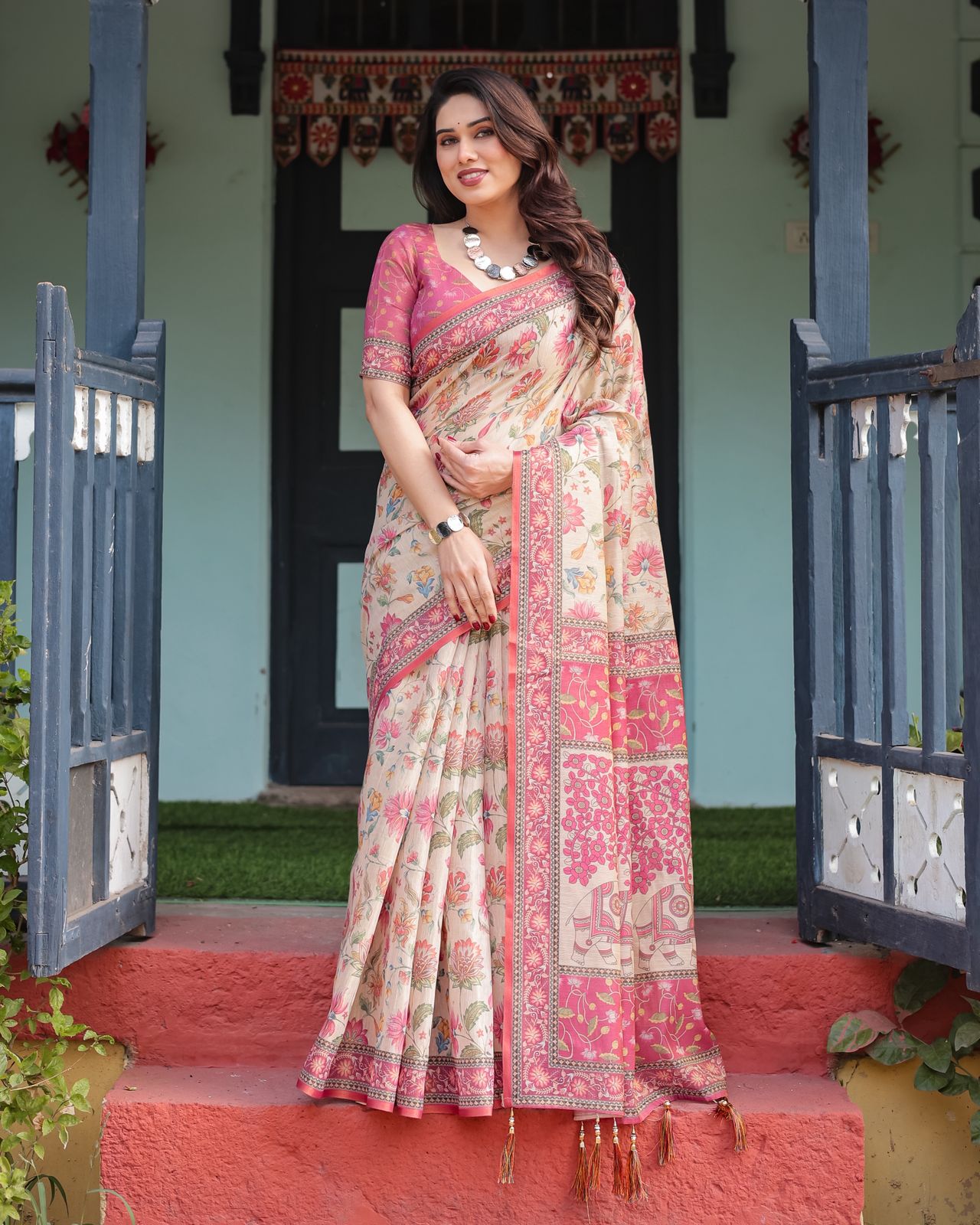
A person with a shorter torso may prefer a flatter pallu because extra volume can visually shorten the upper body. A person with a straighter frame may use a slightly fuller pallu to create movement and dimension. These are draping choices, not fixed rules; fabric response should decide the final adjustment.
For a neat office or daytime drape, pleat the pallu into four or five broad folds and pin near the shoulder seam. For a festive drape, allow more surface to remain open, but keep the top edge supported so the saree doesn't slide backward. A blouse with a firm shoulder seam provides a better anchor than a very slippery blouse fabric.
Grain also affects perceived proportion at the waist. Vertical folds lengthen the visual line, while folds that fan sideways add width. If the saree keeps spreading at the hips, reduce the pleat width, smooth the fabric along the waist and check whether the cloth has been pulled diagonally.
Fabric Grain Can Change the Way a Saree Falls on the Body: What Should You Check Before Buying?
Before buying online, check the fabric description, border construction, approximate weight and close-up photographs because those details predict drape more reliably than colour alone. Product photographs show appearance, but they can't fully show stiffness, recovery or how the grain behaves during movement.

Look for named fibre information such as cotton, cotton silk, silk or a blend, and note whether the description identifies handloom construction, tissue texture or zari work. A handloom cotton saree may have a more tactile, irregular surface than a highly finished mill-woven fabric. A saree with zari may feel heavier along the border than the body suggests.
Price can help establish expectations but can't determine drape by itself. The Sarees from Rs 1000 to Rs 1500 collection may include practical fabrics suited to frequent wear, while Sarees Under 20% Off and Sarees Under 10% Off can be useful for comparing construction details at different reductions. Sarees Flat 60% Off and Sarees Flat 50% Off should still be assessed by fibre, weave and measurements rather than discount percentage alone.
When a listing gives measurements, compare the saree length with your preferred tuck and pallu style. A saree around 5.5 metres may feel different from a 6-metre saree once the blouse allowance, waist folds and shoulder pleats are accounted for. Check whether the blouse piece is included, especially when the blouse fabric has a different weight or finish from the saree body.
What information is most useful in a product photograph?
A close-up photograph of the weave, border and pallu is more useful for judging fall than a heavily styled full-length image. Look for whether the border lies flat, whether the pallu forms broad or narrow folds and whether the fabric reflects light evenly.
Colours such as peach, sea green, maroon and beige can appear different under studio lighting, but lighting doesn't explain every difference in fall. A crisp ridge along a fold usually indicates fabric structure, while a soft collapse suggests a more fluid hand. Those clues help you anticipate how much pressing or pinning will be needed.
Fabric Grain Can Change the Way a Saree Falls on the Body: How Can You Care for It?
Care should preserve the saree's weave, grain and finish by reducing unnecessary stretching, heat and moisture. Store sarees folded along existing fold lines, refold them every few months and avoid hanging heavy zari borders on narrow hangers for long periods.
Use a low or medium iron setting appropriate to the fibre, and place a thin cotton cloth between the iron and delicate tissue, organza or printed surfaces. Do not drag the iron diagonally across the fabric because that action can distort the grain. Press from the reverse side when the surface has metallic work or a raised print.
Allow a worn saree to dry completely before folding it away. Perspiration and humidity can affect cotton, metallic yarn and dyes over time. Professional cleaning is safer for sarees with extensive zari, uncertain fibre blends or delicate surface finishes than repeated home washing.
A well-draped saree doesn't require the fabric to behave against its nature. When the grain, weight and weave are respected, cotton can look composed, tissue can retain its crisp elegance, and organza can create volume without becoming unwieldy. The result is a better fit between textile structure and the way the body actually moves.
Fabric Grain Can Change the Way a Saree Falls on the Body: Questions Readers Ask
Does saree grain affect pleat width?
Yes, saree grain affects pleat width because stable fabric can hold narrower folds while crisp or bulky fabric often looks better in wider pleats. A four- or five-pleat test stack shows whether the cloth stays upright before the saree is fully draped.
Why do my saree borders keep tilting?
Saree borders often tilt because the fabric has been pulled diagonally, the pleats have uneven tension or one edge carries more weight from zari. Lay the saree flat, align the lower edge and rebuild the first few pleats without stretching the cloth.
Are cotton sarees easier to drape than organza sarees?
Cotton sarees are generally easier to control because cotton has body and moderate grip. Organza sarees can require pressed pleats, fewer folds and secure shoulder pinning because organza resists flattening and may spring open.
How can I make a tissue saree look less bulky?
You can make a tissue saree look less bulky by using medium-width waist pleats, limiting pallu gathers and keeping the first tuck firm rather than tight. A smooth, supportive blouse shoulder also prevents extra fabric from accumulating near the neck.
Does a zari border change the way a saree hangs?
A zari border can change the way a saree hangs because metallic yarn adds weight along the edge. The added weight may pull the lower border outward or make the pallu turn, so balanced pleats and careful edge alignment are important.
Should I iron saree pleats before draping?
Ironing saree pleats can improve control, especially for cotton and tissue fabrics, but the heat must match the fibre and finish. Use a pressing cloth for delicate tissue, organza and printed sarees, and avoid dragging the iron across the grain.
Fabric Grain Can Change the Way a Saree Falls on the Body: Practical Questions
Does saree grain affect pleat width?
Yes, saree grain affects pleat width because stable fabric can hold narrower folds while crisp or bulky fabric often looks better in wider pleats. A four- or five-pleat test stack shows whether the cloth stays upright before the saree is fully draped.
Why do my saree borders keep tilting?
Saree borders often tilt because the fabric has been pulled diagonally, the pleats have uneven tension or one edge carries more weight from zari. Lay the saree flat, align the lower edge and rebuild the first few pleats without stretching the cloth.
Are cotton sarees easier to drape than organza sarees?
Cotton sarees are generally easier to control because cotton has body and moderate grip. Organza sarees can require pressed pleats, fewer folds and secure shoulder pinning because organza resists flattening and may spring open.
How can I make a tissue saree look less bulky?
You can make a tissue saree look less bulky by using medium-width waist pleats, limiting pallu gathers and keeping the first tuck firm rather than tight. A smooth, supportive blouse shoulder also prevents extra fabric from accumulating near the neck.
Does a zari border change the way a saree hangs?
A zari border can change the way a saree hangs because metallic yarn adds weight along the edge. The added weight may pull the lower border outward or make the pallu turn, so balanced pleats and careful edge alignment are important.
Should I iron saree pleats before draping?
Ironing saree pleats can improve control, especially for cotton and tissue fabrics, but the heat must match the fibre and finish. Use a pressing cloth for delicate tissue, organza and printed sarees, and avoid dragging the iron across the grain.