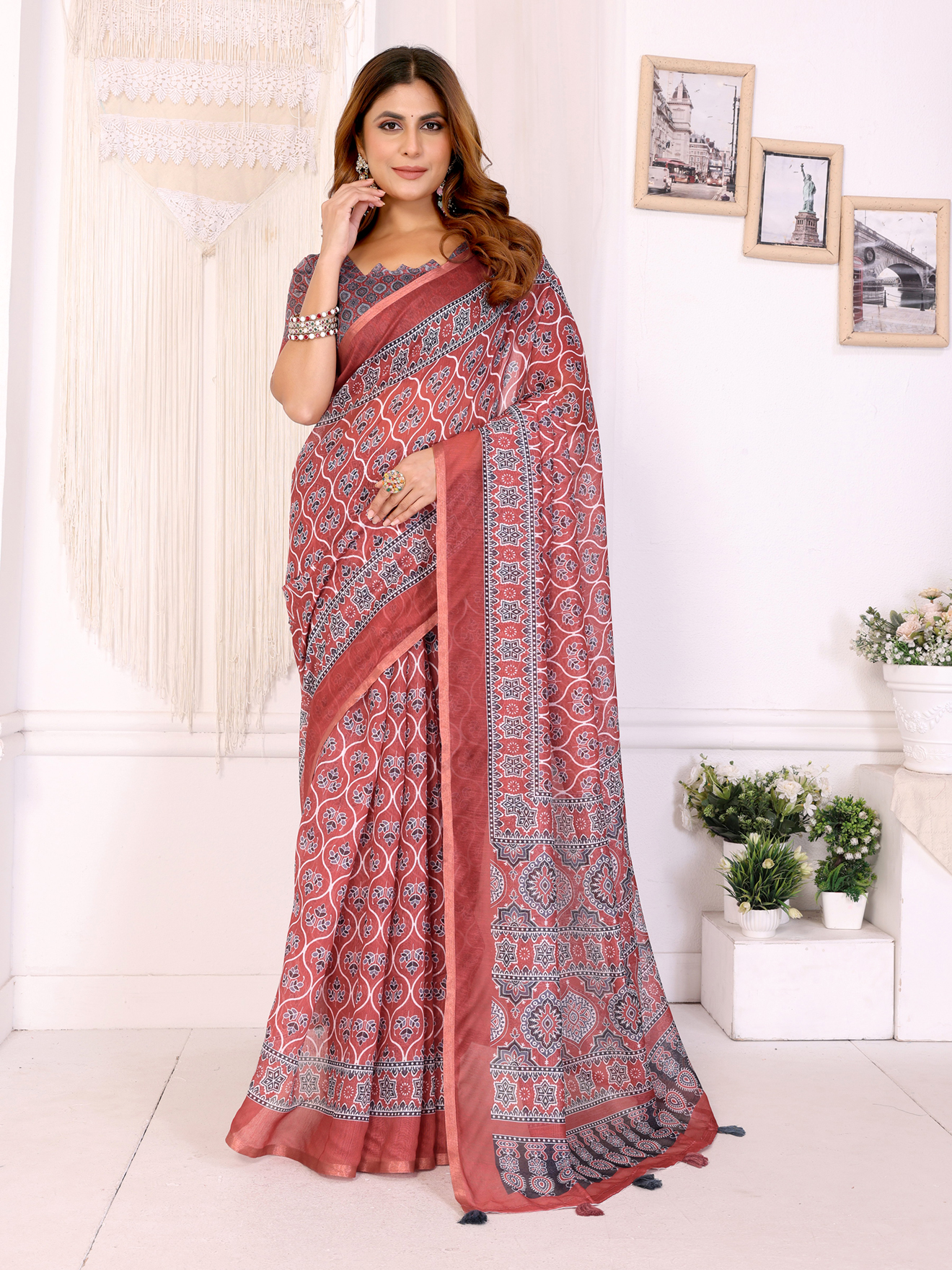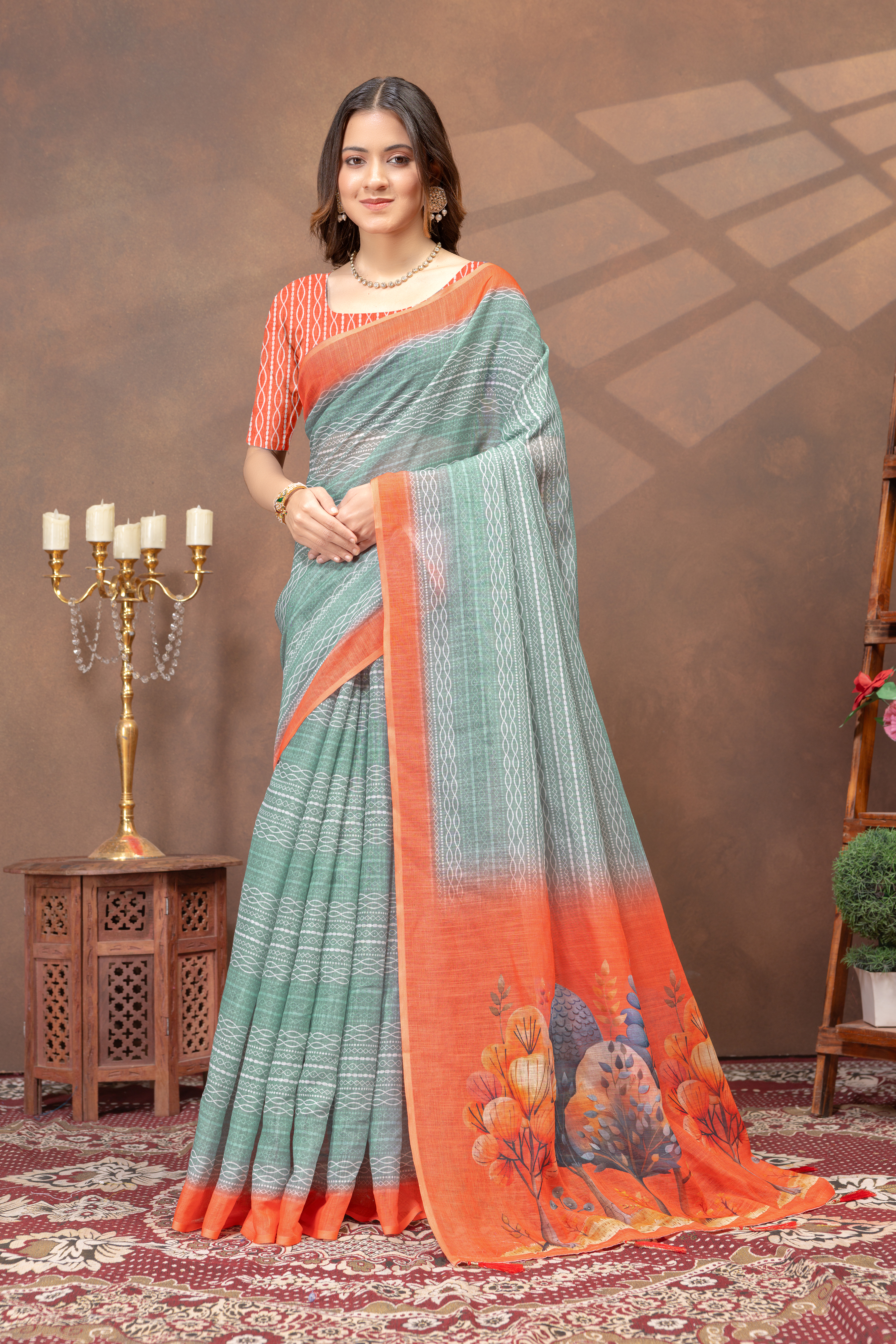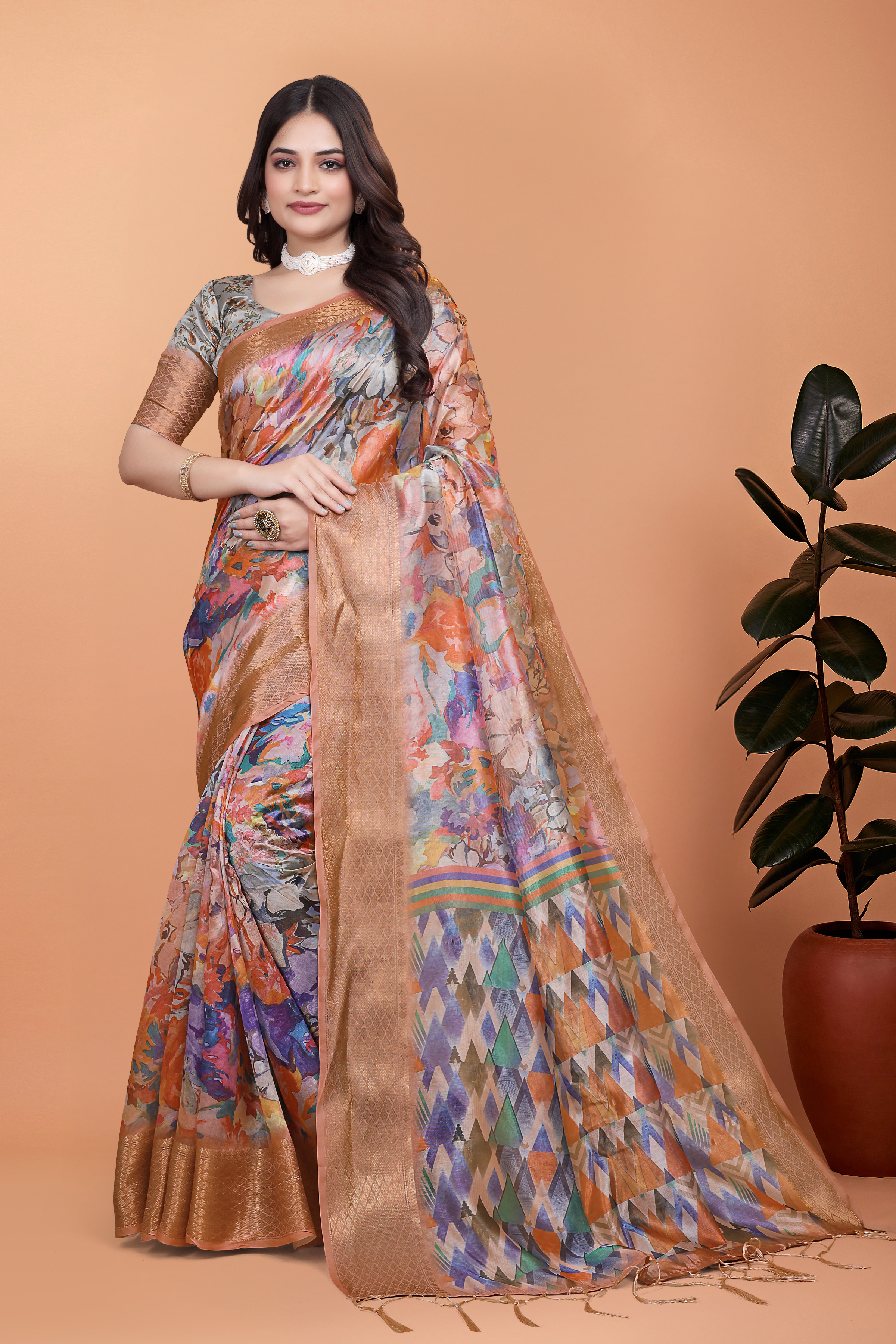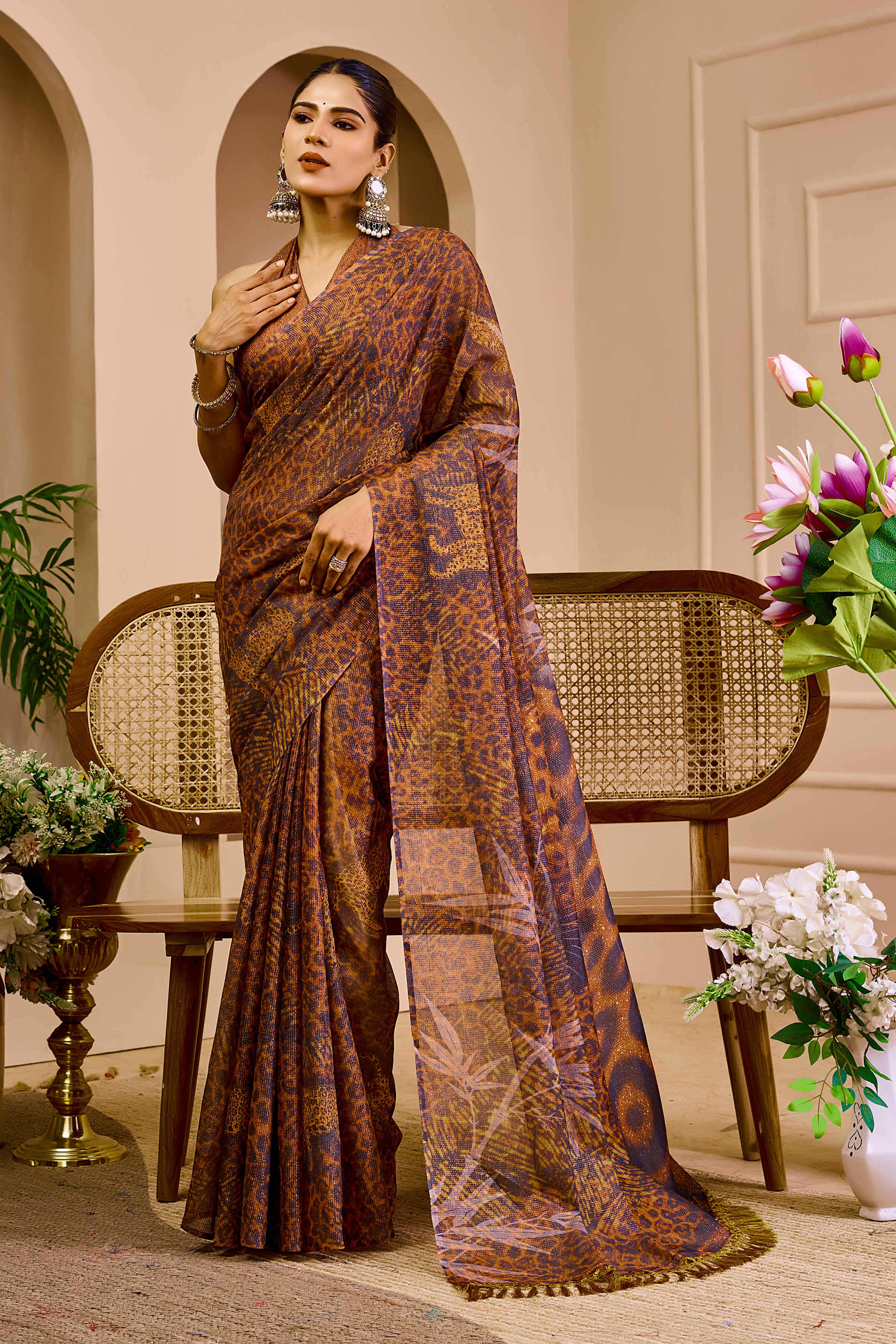
What makes a saree look expensive even without embroidery is rarely a single decorative feature. The impression comes from several quiet details working together: the quality of the fibre, the way the fabric falls, the depth of the colour, the proportion of the border, and the precision of the final styling. A well-finished plain silk saree can look more refined than a heavily decorated saree with a stiff drape or poorly matched blouse.
That distinction matters when you're shopping online. Product photographs often draw attention to sequins and motifs, but a luxurious-looking saree depends just as much on what the camera can't immediately show: surface texture, body, weight, recovery after folding and the neatness of the selvedge. This guide gives you a practical way to judge those qualities before buying and to style them once the saree arrives.
What makes a saree look expensive even without embroidery?
A saree looks expensive without embroidery when its fabric, finish, colour and construction appear intentional and balanced. A smooth fall, controlled sheen, clean border, rich colour and well-fitted blouse usually create more visual value than decoration alone.
Luxury is often associated with shine, but excessive shine can make a saree look synthetic or difficult to style. The more useful question is whether the surface reflects light evenly. Banarasi silk, handloom silk and some organza silk can look elevated because their texture and lustre have character, not because every inch carries embellishment. Chanderi can appear graceful through its lightness and translucent surface, while Kanjeevaram is recognised for a more substantial silk body and traditional border presence.
A saree also looks costly when the design has visual restraint. A single strong border, a finely printed field or a distinctive weave gives the eye somewhere to rest. When colour, border, blouse and accessories all compete, the outfit can look busy regardless of its price.
Fabric quality creates the first impression
Fabric quality creates a premium impression through its hand feel, fall, opacity, surface consistency and response to movement.
Look at the fall before the ornament
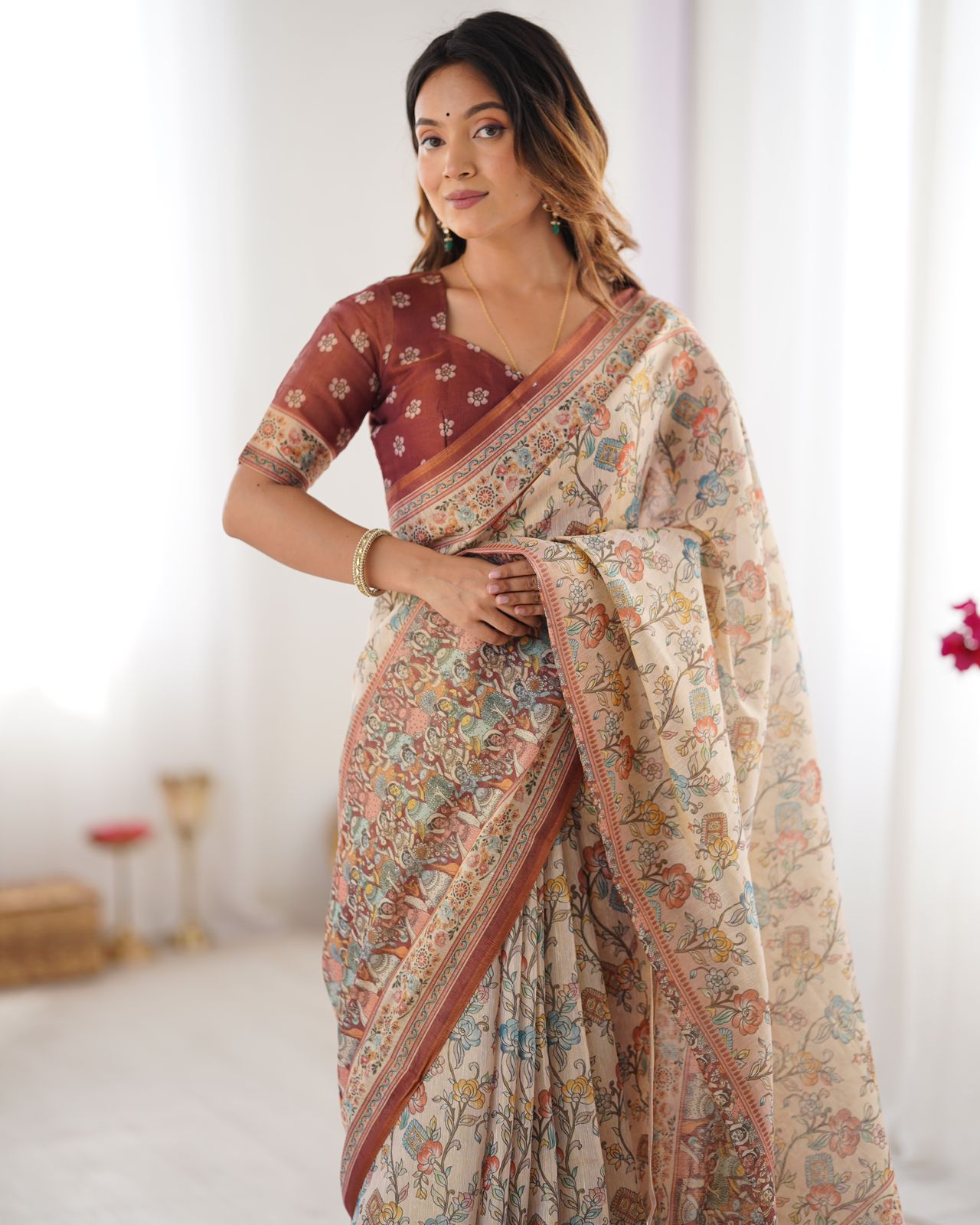
The fall describes how the saree hangs from the waist and gathers into pleats. Silk with moderate body generally forms defined pleats, while linen gives a more relaxed, textured structure. Organza holds a crisp shape and creates volume, but organza silk requires careful pleating because uneven folds become visible quickly.
A good online description should identify the fabric rather than relying only on words such as premium or designer. Premium Handloom Silk Saree with Handkatha invites attention to handloom character and surface detail rather than requiring sequins to make the saree noticeable. Pastel Blue Pure Linen Printed Saree with Blouse can look sophisticated for the opposite reason: linen's natural texture gives a quieter, more architectural finish.
Use weight as a practical clue
Weight is useful, but heavier doesn't automatically mean better. A very light saree may be ideal for summer and movement, while a heavier silk may provide the formal structure expected at a wedding. Ask whether the weight suits the intended wear, whether the pleats will hold, and whether the blouse can support the pallu comfortably.
Check the product measurements, blouse-piece length and care instructions before purchase. A saree that needs constant adjustment won't look polished for long, even when the fabric itself is beautiful. A saree that drapes predictably allows the wearer to focus on proportion and posture.
How do colour and surface finish make a saree look richer?
Colour looks richer when the shade has depth, the surface reflects light consistently and the saree has a clear relationship between its body and border.
Deep jewel tones such as rani pink, purple, emerald and wine often appear formal because they absorb and reflect light in changing ways. Soft neutrals can look equally expensive when the fabric has texture and the styling is precise. Off-white organza, muted gold and pastel blue are not visually empty; their elegance depends on clean finishing and controlled contrast.
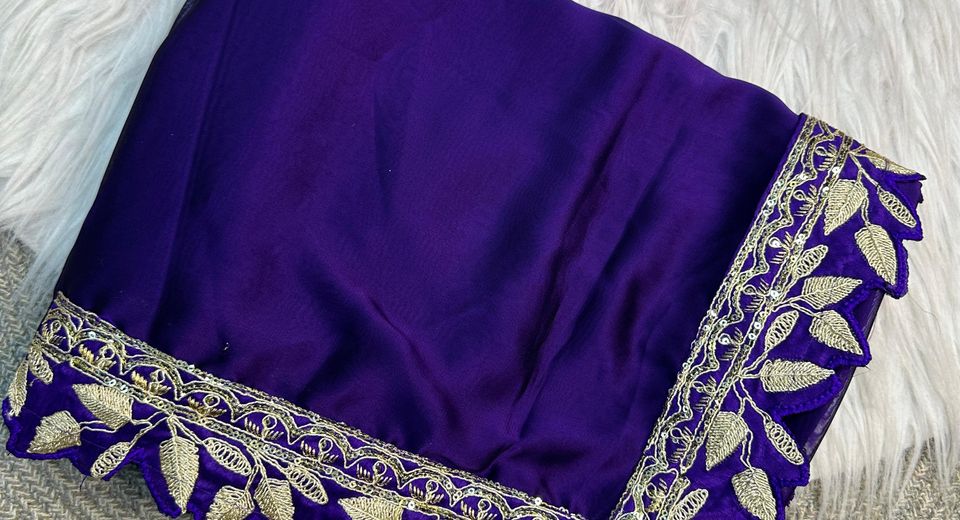
Colour names should be read alongside fabric information. Purple Rangoli Silk Saree with Lace Border demonstrates how a distinctive colour and a defined border can carry the design without relying on all-over decoration. The border provides a frame, while the saree body remains visually calm. A similar principle applies to Pink Rangoli Silk Saree with Cording Embroidery and Double Sequins Work, although the embroidery changes the surface effect and makes the saree more overtly festive.
Surface finish also matters. A matte or softly textured saree often looks more expensive in daylight because the fabric reveals its construction. Metallic finishes can be effective for evening wear, but they should be balanced with a simpler blouse and restrained jewellery. A saree that sparkles from every angle can lose the quiet sophistication associated with fine textiles.
Why do borders and selvedges matter so much?
Borders matter because they establish the saree's visual frame, control the proportions of the drape and remain visible in photographs, pleats and the pallu.
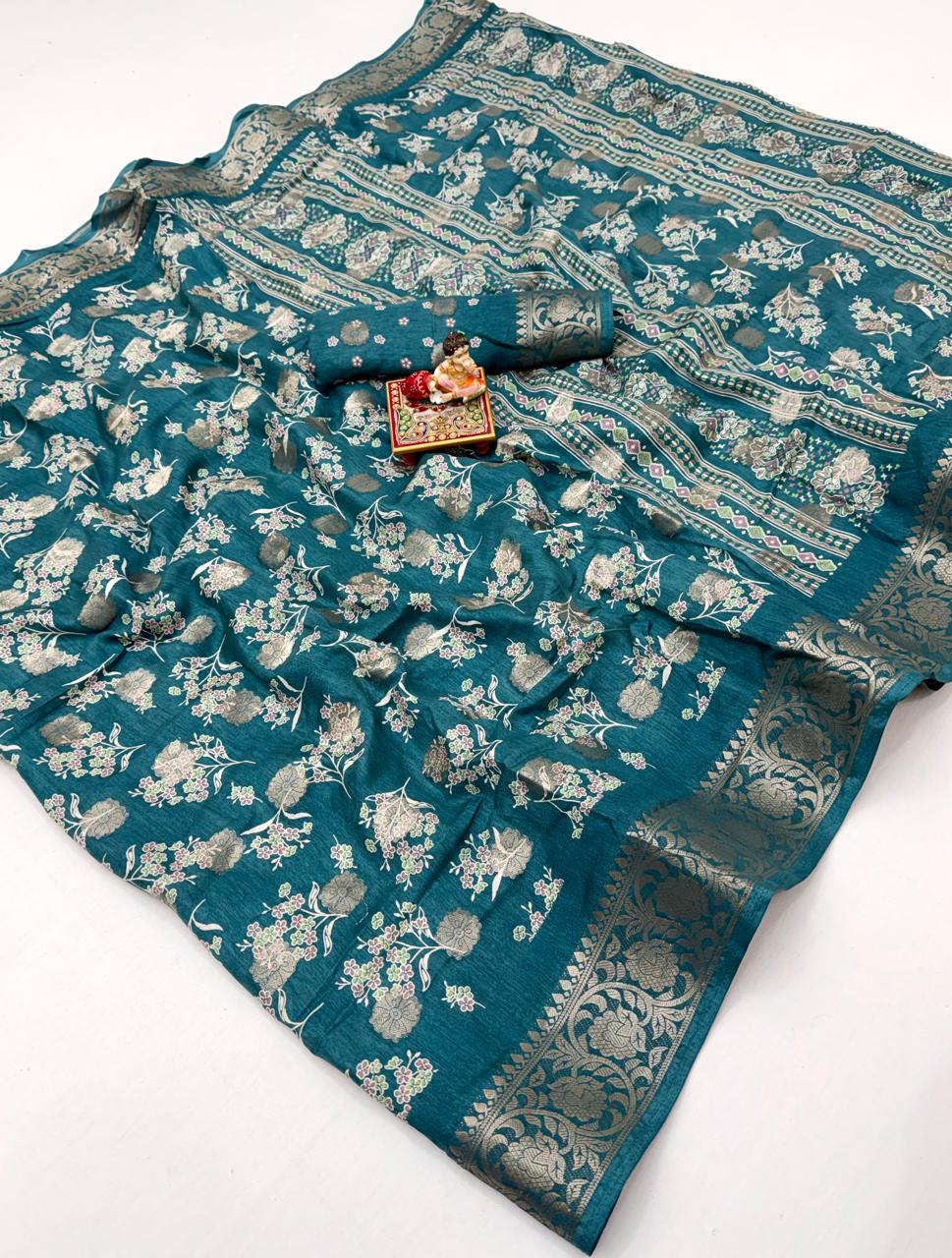
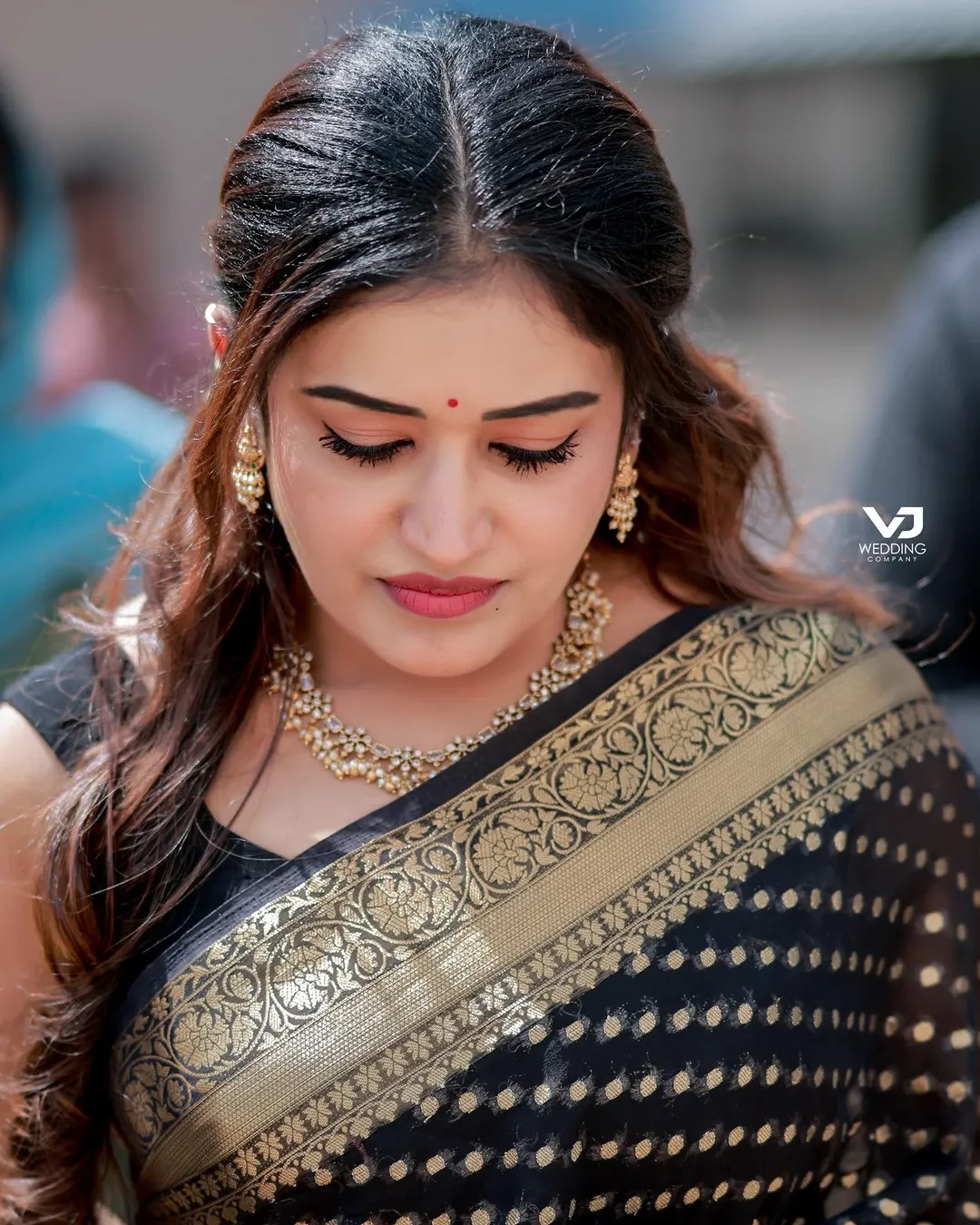
A narrow border can make a light saree look modern and elongated. A wider zari border gives a classic, ceremonial presence and works especially well when the blouse repeats only one element from it. Lace borders introduce a delicate edge, while a contrast border creates a stronger graphic effect. The correct width depends on height, body proportions, fabric weight and the occasion rather than on a universal rule.
Inspect the border's alignment in product photographs. A clean, continuous edge usually signals careful finishing. The selvedge should not look excessively twisted, wavy or loosely finished. Zari should sit securely rather than appearing scraped, patchy or uneven. These details may seem minor, but they become visible when the pallu is draped over the shoulder.
Golden Glow Gold Crush Embroidered Party Wear Saree for Women offers an useful contrast: metallic texture and embroidery already supply visual drama, so its styling can remain relatively controlled. A saree without embroidery needs the same attention to framing, but the border, weave or colour must carry more of the design responsibility.
Can a simple saree look more plush through draping?
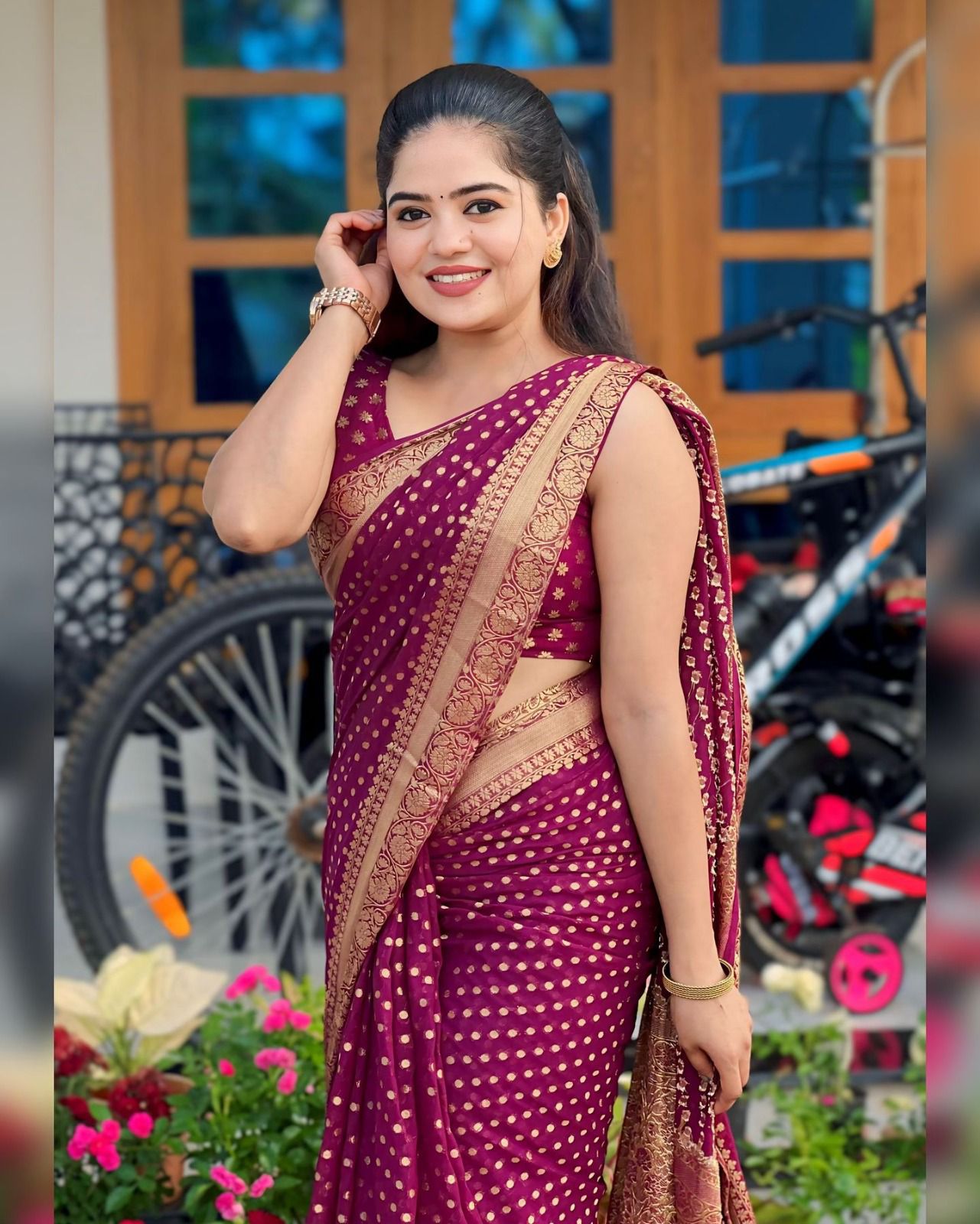
A simple saree can look more luxurious through even pleats, a secure shoulder drape, an appropriate petticoat and a blouse that follows the body without pulling.
Make the pleats deliberate
Five to seven front pleats are a practical starting point for many sarees, although the number depends on fabric width and thickness. Keep the pleats similar in width, align the lower edges and pin them discreetly if the fabric is slippery. Organza usually benefits from fewer, crisp pleats, while linen can accommodate a more relaxed arrangement.
Control the pallu
The pallu should fall at a consistent length and should not bunch around the shoulder. A neatly pleated pallu creates a formal appearance; an open pallu works better when the fabric has an attractive print, border or texture. Keep the visible portion of the border facing outward so the design reads clearly from a distance.
Pastel Green Floral Heavy Chinnon Ready to Wear Saree shows why construction can affect the finished impression. A ready-to-wear format reduces the time needed to create uniform pleats, although the waist fit and pallu placement still need checking. Rani Pink Heavy Smooth Sitara Saree with Sequin Embroidery also benefits from controlled draping because a smooth, embellished surface can reveal creases quickly.
Use a petticoat that matches the saree's colour closely and has enough structure to support the drape. A visibly contrasting petticoat can interrupt the line of a light saree. The petticoat should also sit securely at the waist; repeated slipping changes the pleat position and makes the entire outfit look less finished.
How should the blouse and accessories be chosen?
The blouse and accessories should support the saree's strongest feature instead of introducing a second competing focal point.
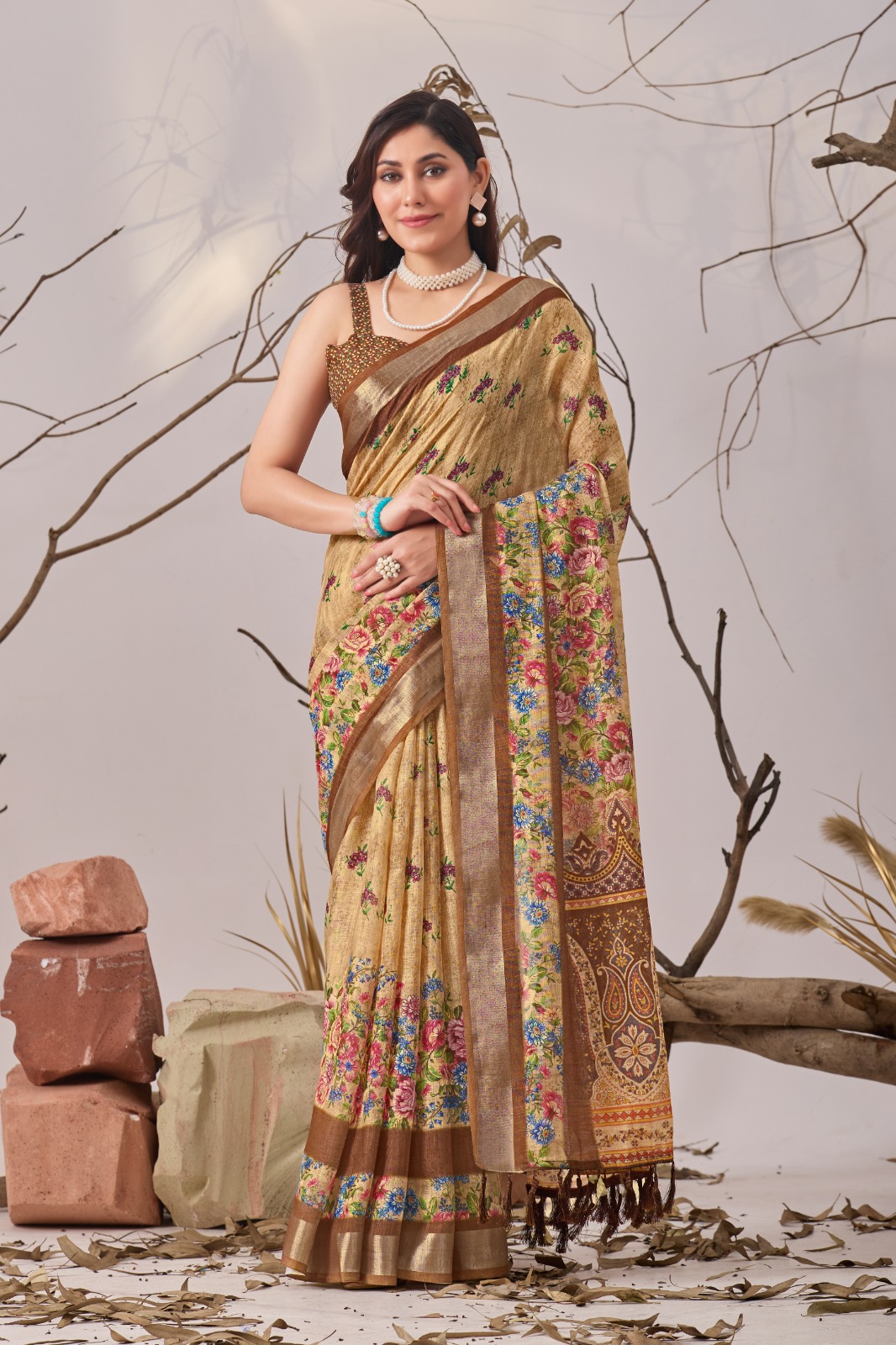
For a textured handloom silk saree, a blouse in the same colour family creates a continuous, expensive-looking line. For a printed linen saree, a solid blouse taken from one minor print colour often looks more considered than a blouse matching the loudest shade. For a saree with a strong zari or metallic border, a matte blouse can prevent the outfit from becoming excessively shiny.
Neckline and sleeve proportions influence the overall balance. A high-neck or elbow-sleeve blouse can give a plain saree a composed, formal character, while a sleeveless or short-sleeve blouse may suit a lighter contemporary drape. The key requirement is fit: shoulder seams should sit correctly, the armhole should not pull, and the blouse should remain smooth beneath the saree.
Jewellery should repeat a material, colour or shape already present in the saree. Gold-toned jewellery works naturally with gold zari, while silver or oxidised metal can sharpen cool pastels and blue linen. One substantial necklace, a pair of earrings or a structured bangle stack is usually enough when the saree itself has a strong texture. Expensive-looking styling comes from editing, not from wearing every matching accessory.
What should you check when buying a non-embroidered saree online?
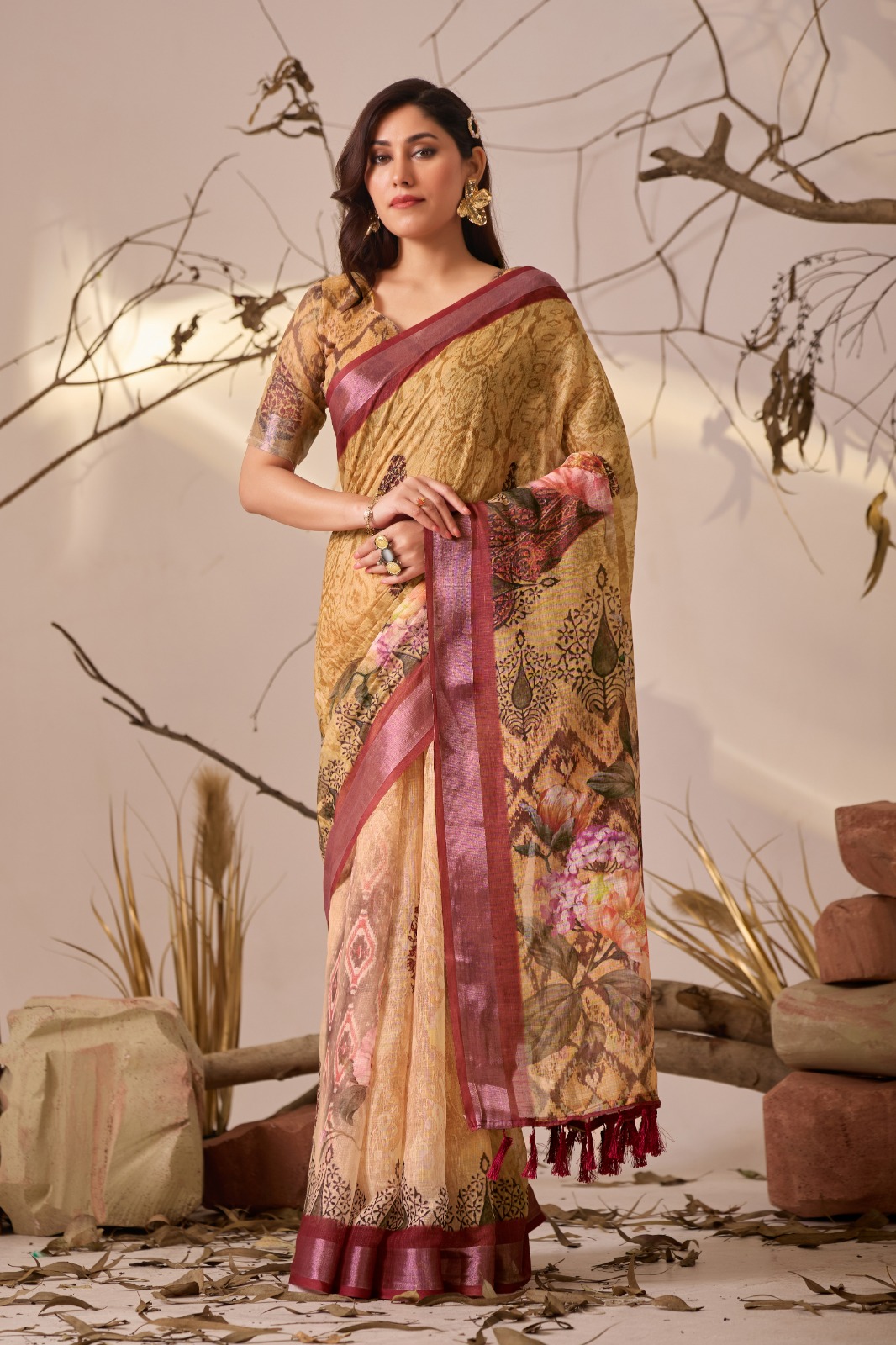
Online buyers should check the fabric name, measurements, close-up images, blouse details, care instructions and return conditions before judging a saree's value.
- Read the fibre description. Distinguish silk, silk blends, linen, organza, chinnon and synthetic fabrics instead of treating every shiny surface as silk.
- Inspect close-up photographs. Look for weave consistency, print sharpness, zari placement and the quality of the border.
- Check the finished length. A saree commonly needs approximately 5.5 metres, plus a blouse piece where supplied, but measurements vary by design and ready-to-wear construction.
- Compare the blouse fabric. A blouse piece that differs visibly in texture or colour can change the finished look.
- Review care instructions. Handloom silk, organza silk and linen may require different washing, ironing and storage methods.
- Judge value against use. A saree for weekly office wear should be assessed for comfort and maintenance, while a wedding saree may justify more structure or metallic detail.
Price collections can help narrow the search, but discount percentage should not replace fabric evaluation. Sarees from Rs 1000 to Rs 1500 may contain attractive printed, linen or blended options, while Sarees Under 20% Off and Sarees Under 10% Off can be useful for comparing regular and reduced prices. Larger promotions such as Sarees Flat 60% Off and Sarees Flat 50% Off still require careful checking of fabric, measurements and care requirements.
The most reliable test is consistency. A saree looks expensive when the colour, fabric, border, blouse and drape tell the same story. Choose one dominant quality-such as handloom texture, a handsome border, a deep colour or a crisp silhouette-and let the remaining styling reinforce it. That approach produces a polished result without depending on embroidery.
Common Questions About Creating a Luxurious Saree Look Without Embroidery
What makes a saree look expensive even without embroidery?
A saree looks expensive without embroidery when it has a quality fabric, controlled sheen, rich colour, clean border and well-balanced drape. A well-fitted blouse and restrained accessories complete the polished effect.
Which saree fabrics look luxurious without heavy embellishment?
Handloom silk, Banarasi silk, Kanjeevaram, Chanderi, organza silk and quality linen can all look luxurious without heavy embellishment. The best choice depends on the desired fall, season, occasion and level of structure.
How can I make a plain saree look rich for a wedding?
Use a structured blouse, even front pleats, a secure pallu and jewellery that repeats the saree's border or colour. A strong zari border, deep jewel tone or refined silk texture can create a formal wedding look without all-over embroidery.
Does a wider saree border make the saree look more expensive?
A wider border can create a ceremonial and substantial appearance, but border width alone does not determine quality. The border should suit the fabric, body proportions, pallu and blouse rather than overpowering the saree.
How do I choose a blouse for a simple saree?
Choose a blouse that repeats one colour or material from the saree and fits smoothly at the shoulders, armholes and waist. A matte blouse balances a shiny saree, while a solid blouse usually complements a printed linen or textured saree.
Can a budget saree look premium?
A budget saree can look premium when its colour, fabric finish and construction are consistent and the drape is carefully arranged. Precise pleats, a matching petticoat, a well-fitted blouse and edited jewellery often make a larger visual difference than the purchase price.