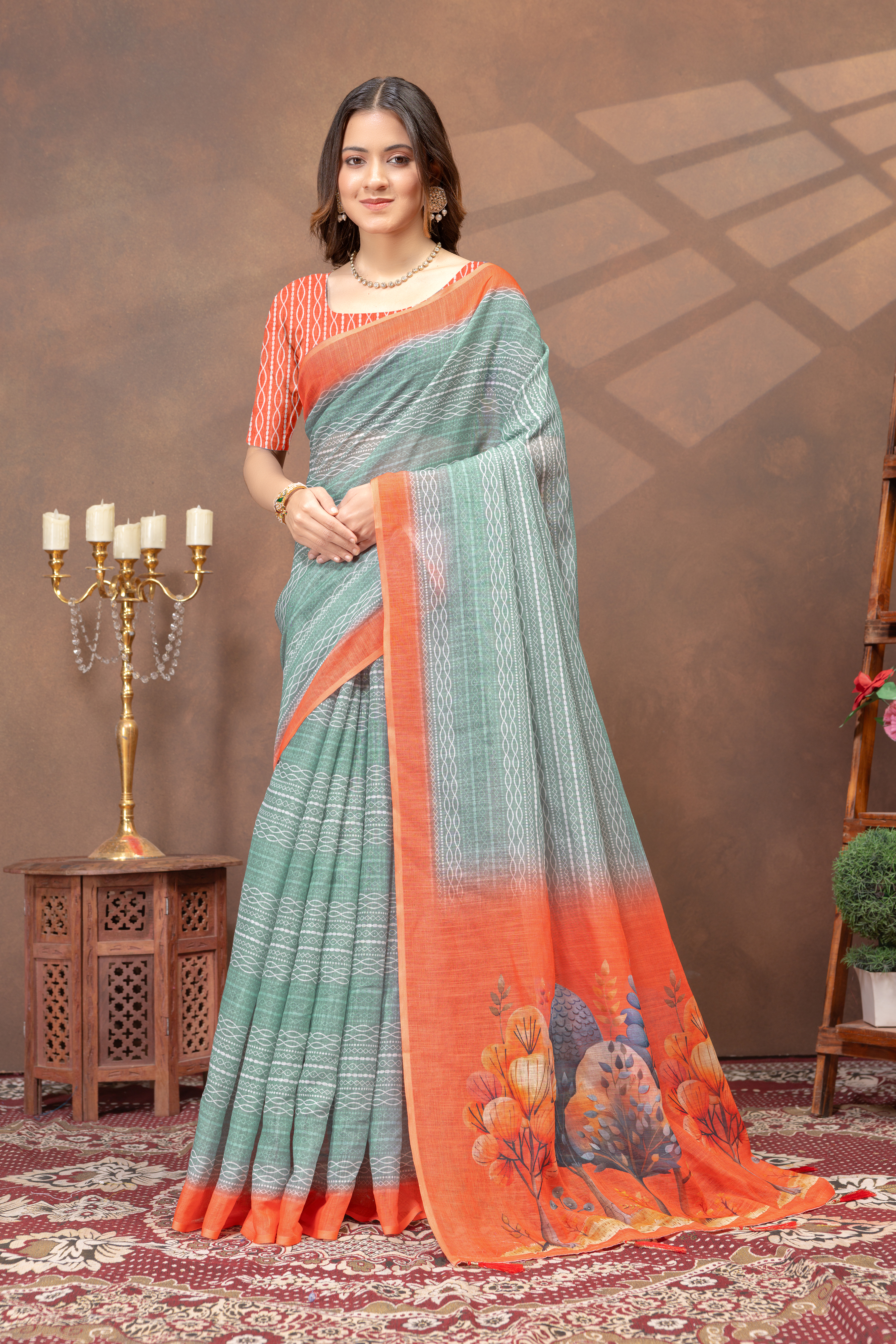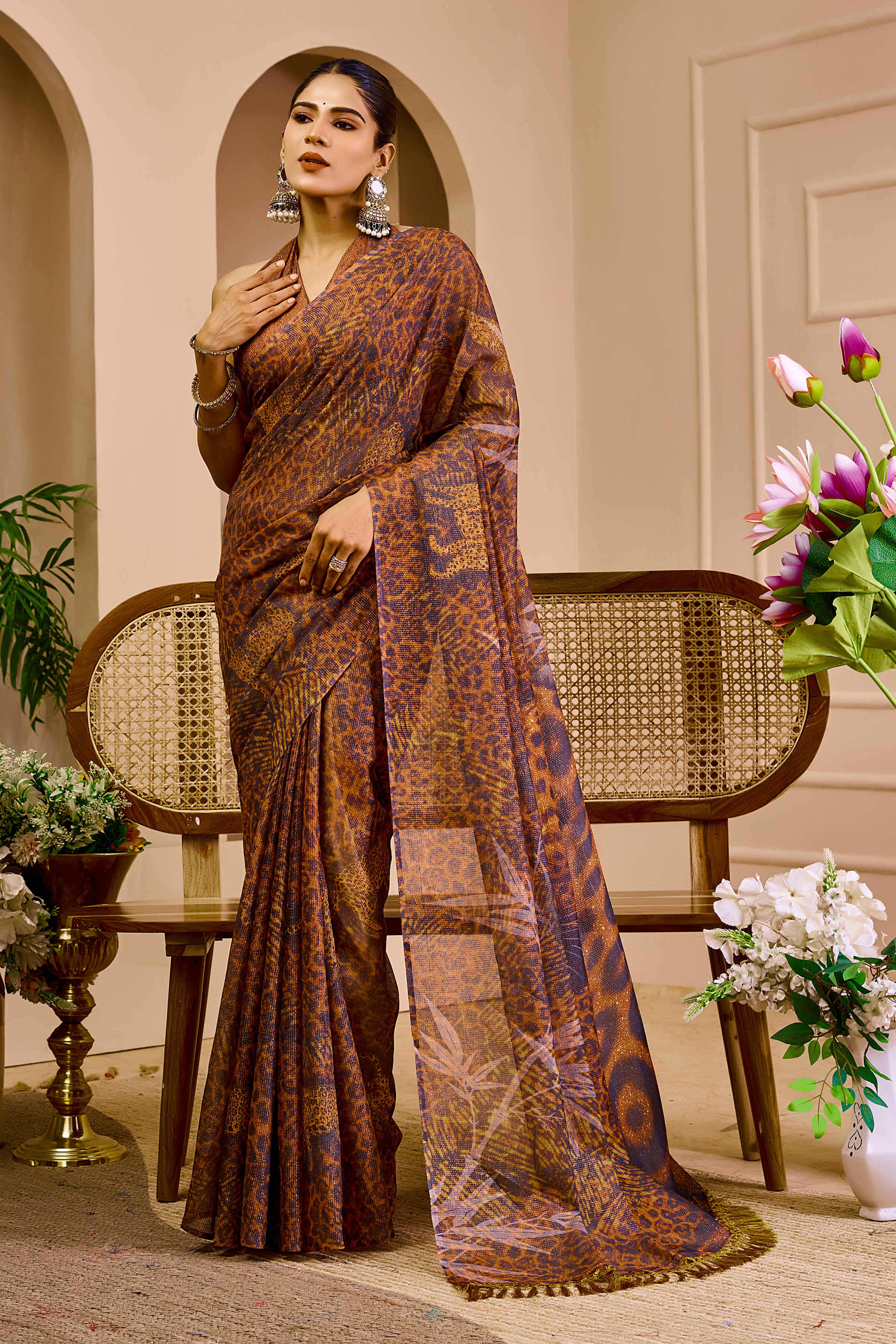
Saree Fabrics That Recover Better After Being Packed in a Suitcase can save time when a wedding, work trip or family celebration begins soon after arrival. The most travel-friendly choices are medium-weight handloom cotton, cotton-linen blends and resilient Chanderi cotton, provided each saree is folded along broad sections and packed with gentle support. A short airing period and careful hanging often improve the result more than hurried ironing.
Travel creases are not caused by fabric alone. Fold depth, moisture, heat, zari, print placement and the pressure of shoes or toiletry bags all affect how a saree looks after several hours in luggage. Understanding those variables helps you choose between a Rust Maroon Handloom Cotton Saree with Floral Print and Traditional, a delicate tissue weave or a structured linen-cotton option with greater confidence.
Saree Fabrics That Recover Better After Being Packed in a Suitcase: What controls recovery?
Fibre resilience, yarn twist, fabric weight and weave structure determine how quickly a saree releases temporary bends after suitcase pressure is removed.
Handloom cotton often performs better than very fine, tightly pressed cotton because its slightly irregular yarn structure distributes pressure across the cloth. Linen fibres can crease visibly, but a linen-cotton blend usually relaxes more readily than pure linen because cotton softens the fold response. Chanderi cotton is comparatively light and crisp; it can regain a neat fall after hanging, although sharply compressed pleats may remain visible.
Surface decoration also matters. A printed saree generally tolerates normal folding more easily than a saree carrying heavy raised embroidery. Zari can develop unwanted pressure marks if it's folded directly against a rough seam or compressed beneath dense clothing. Tissue weaves require particular care because fine, reflective yarns can show crushed areas or pulled threads.
- Best general travel balance: medium-weight handloom cotton and cotton-linen blends.
- Best for light luggage: Chanderi cotton, when folded loosely and kept above heavier garments.
- Best for a polished festive finish: structured cotton with a stable print and moderate border weight.
- Most demanding in a suitcase: fragile tissue, very fine silk, heavily embellished fabric and heavily starched sarees.
Saree Fabrics That Recover Better After Being Packed in a Suitcase: Which weaves travel well?
Medium-weight handloom cotton, cotton-linen blends and Chanderi cotton usually recover more predictably after suitcase packing than delicate tissue or heavily embellished sarees.
Why does handloom cotton work well for travel?
Handloom cotton is a practical choice for train journeys, flights and multi-day events because the fabric has enough body to hold a drape without becoming excessively stiff.
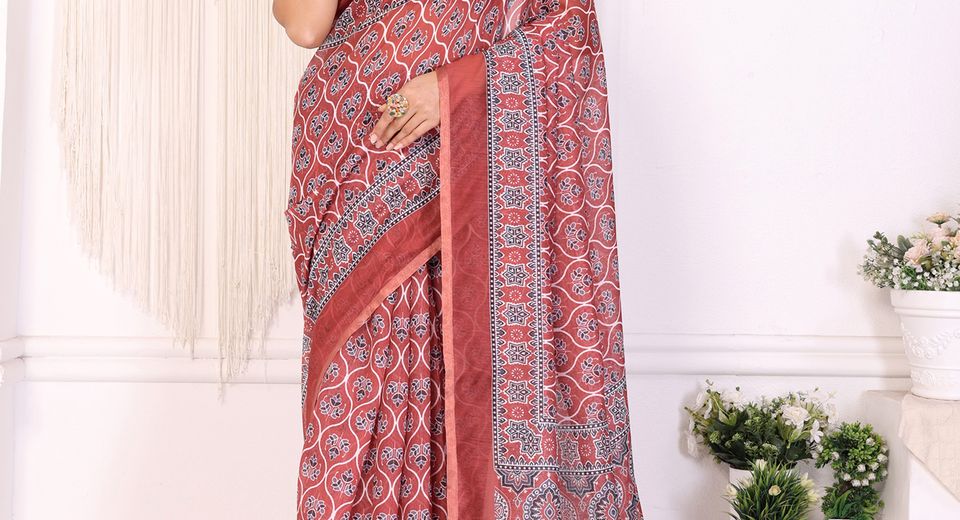
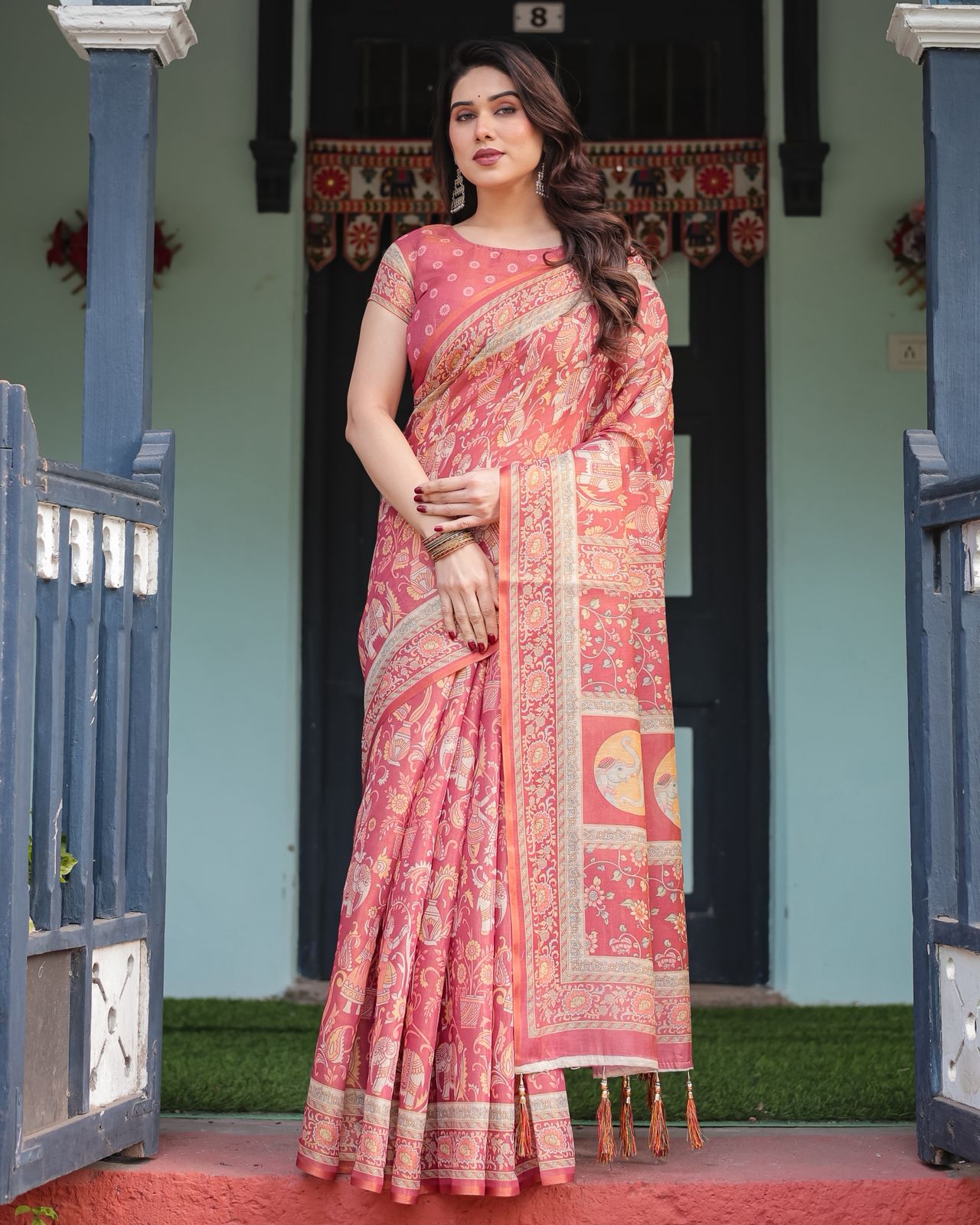
The Rust Red Handloom Printed Saree with Ethnic Border shows why a printed handloom cotton saree can be useful for travel. Broad folding, a dry packing environment and a few minutes on a hanger can soften ordinary fold lines without demanding professional pressing.
Handloom cotton may show soft creases, but those lines often look less severe than the hard shine created by pressing a synthetic or highly finished surface. Cotton also tolerates moderate steam better than metallic tissue, although the care label should always take priority. Cotton should never be packed while damp from washing or humid weather because trapped moisture can produce a stale smell and encourage colour transfer between folded surfaces.
Why is Chanderi cotton suitable for light luggage?
Chanderi cotton is light, airy and relatively easy to refresh after travel, but it should not be crushed underneath dense luggage.
The Rust Printed Chanderi Cotton Saree with Traditional Borders illustrates why Chanderi cotton suits travellers who want a dressy appearance without carrying a heavy silk saree. Chanderi cotton can develop fine horizontal lines when folded repeatedly in the same place, so fold positions should be rotated during longer storage.
A smooth cotton cover is safer for Chanderi cotton than a plastic sleeve. Hanging Chanderi cotton for 30 to 60 minutes often allows mild creases to relax. Deeper lines may need low-temperature ironing from the reverse side with a clean pressing cloth.
Can linen cotton look good after a journey?
Linen cotton can look polished after travel when its naturally textured finish is treated as part of the fabric rather than pressed completely flat.
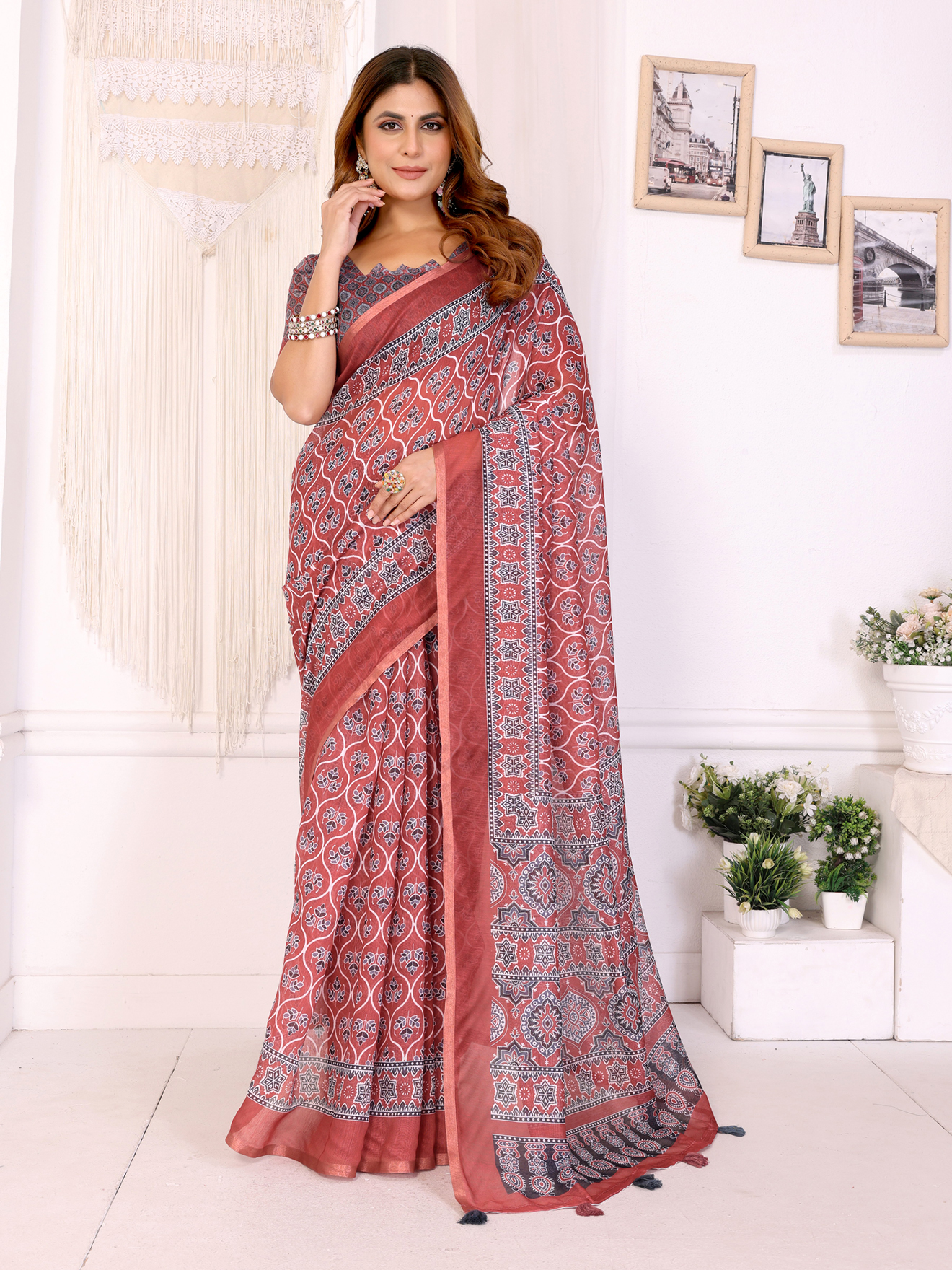
The Elegant Rust Linen Cotton Printed Saree Set offers a useful example of a fabric direction that can retain structure while accommodating a few soft fold marks. Linen fibres crease more readily than cotton, so linen cotton is less suitable when a perfectly smooth surface is essential and no refresh time is available.
Linen cotton usually responds well to light steam. A steamer should remain approximately 15 to 20 centimetres from the cloth, move continuously and allow the saree to cool fully before the saree is folded again.
Saree Fabrics That Recover Better After Being Packed in a Suitcase: How should tissue and zari be protected?
Tissue and zari sarees need more protection from compression because reflective yarns can show pressure marks, snags or distorted folds more readily than plain cotton.

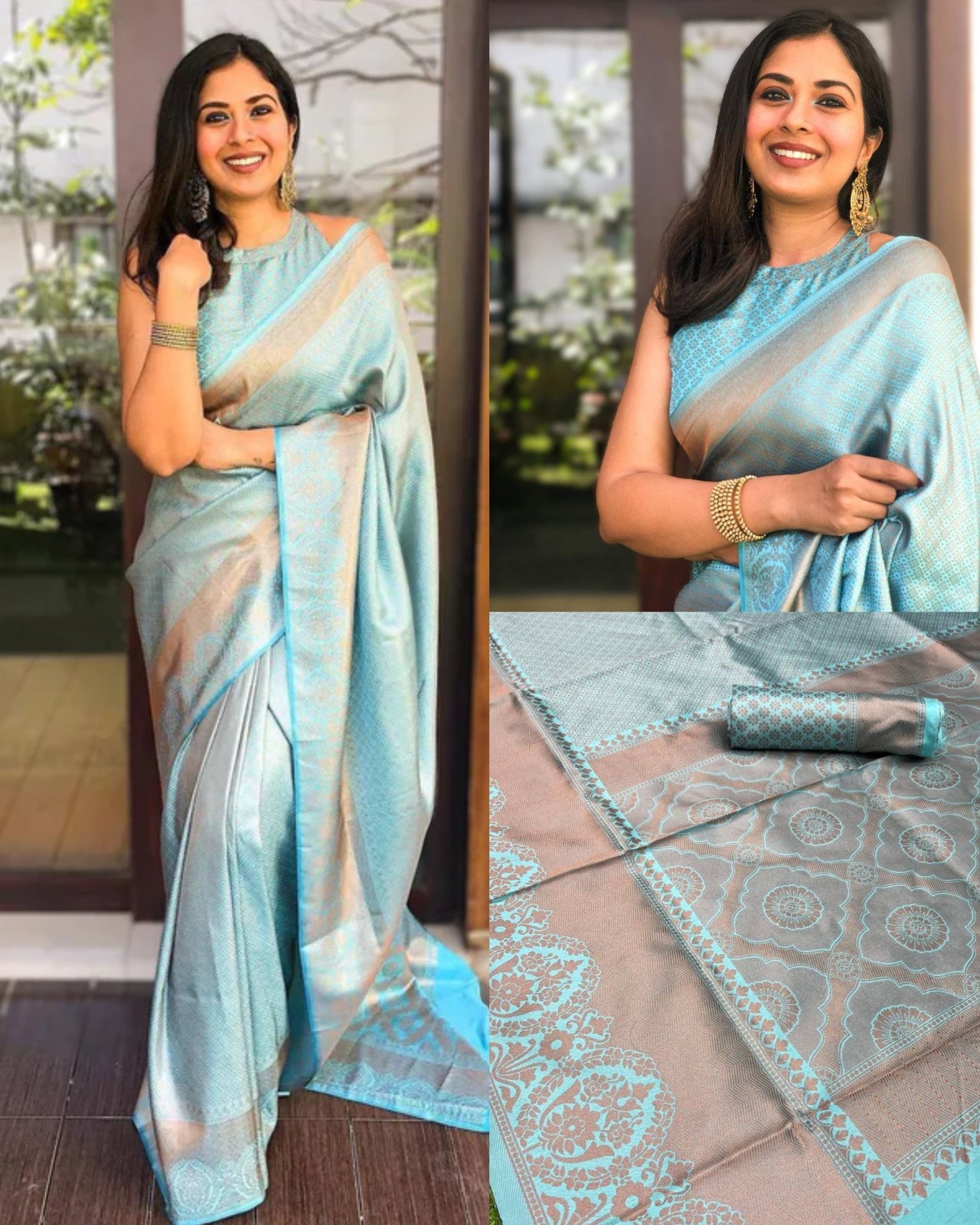
The Sea Green Tissue Handloom Cotton Saree With Floral Patterns and the Tissue Handloom Cotton Saree with Zari Weave & Floral Print should be packed above shoes, belts and toiletry pouches. Tissue handloom cotton may have a cotton foundation, but its reflective surface still deserves the precautions used for decorative fabrics.
A clean, soft cotton sheet should separate major layers, especially around zari borders and printed pallus. A heavy charger, shoe box or cosmetic case should never rest on the folded pallu. The pallu often contains the densest weave, zari or detailed print and can acquire a stubborn pressure line when compressed.
A broad, shallow fold is safer than repeatedly folding the same narrow strip. An expansion panel or flat garment compartment is preferable to the narrowest suitcase corner. Direct high heat can flatten tissue texture or create uneven sheen, so a steamer should be tested on an inconspicuous inner edge before the visible area is treated.
Saree Fabrics That Recover Better After Being Packed in a Suitcase: What is the safest folding method?
A saree should be clean, completely dry and folded into broad, supported layers before it enters a suitcase.

- Inspect the saree: Check for moisture, loose threads, damp borders, makeup marks and pins. Remove safety pins and brooches before folding.
- Close fastenings: Secure the blouse separately so hooks and clasps can't catch the saree.
- Align the length: Lay the saree on a clean bed or table and match the side edges without dragging the cloth.
- Use broad folds: Fold sections approximately 30 to 45 centimetres wide instead of making many narrow accordion folds. Broad folds reduce the number of sharp pressure points.
- Protect the surface: Place a clean muslin or cotton sheet between decorative layers, especially around zari, tissue and printed pallus.
- Pack flat: Put the saree near the top of the suitcase or in a flat garment compartment. Keep footwear, denim, books and toiletry bags away from the cloth.
- Release pressure: Open the suitcase soon after arrival, remove the saree and hang it on a wide hanger. Do not leave the saree compressed until the event.
A saree should not be rolled tightly as a universal rule. Rolling can reduce long horizontal fold lines in some plain cotton sarees, but a tightly rolled border or zari pallu can develop circular compression marks. Broad folding is the safer default for mixed fabrics and decorated sarees.
A cotton sleeve or clean muslin cover is more useful than a sealed plastic bag for most journeys. Plastic can trap humidity when a suitcase moves between air-conditioned transport and a warm destination. A breathable cover also reduces friction between the saree and rough luggage lining.
Saree Fabrics That Recover Better After Being Packed in a Suitcase: How long should recovery take?
A packed saree should rest on a wide hanger for at least 30 minutes, while deeper creases may need several hours or gentle steaming.
A medium-weight cotton saree may soften ordinary travel folds after 30 to 60 minutes in a dry, ventilated room. Chanderi cotton often benefits from one to two hours because its light structure needs time to regain an even fall. Linen cotton may need light steam followed by 20 minutes of cooling before pleating.
A thin wire hanger should not support a saree. A narrow metal edge can leave a line across the shoulder area, particularly in lightweight Chanderi cotton. A padded or broad wooden hanger distributes weight more evenly. A saree should hang by its top fold rather than by a single pinned point, and a heavy zari pallu should remain supported.
When ironing is necessary, the lowest suitable setting should be used, with a clean pressing cloth over printed or metallic areas. Ironing should happen from the reverse side whenever possible. Direct heat can darken some prints, flatten tissue texture or change the surface appearance of zari.
Saree Fabrics That Recover Better After Being Packed in a Suitcase: Which saree suits each trip?
The right travel saree depends on trip length, available refresh time, luggage pressure and the formality required immediately after arrival.
What should you pack for a one-day work trip?
A medium-weight printed handloom cotton saree is usually the most practical choice for a one-day work trip because it can move from suitcase to hanger with limited preparation.
The Navy Cotton Saree with Rust Print and Handloom Style Border gives an useful example of a fabric direction that can look composed while allowing a little natural texture. A separate cotton sleeve and a compact pressing cloth are useful additions when a hotel iron is available.
What works for a festive family visit?
Chanderi cotton or moderately decorative handloom cotton works well for a festive family visit because both fabrics can look occasion-ready without the weight of a heavy silk saree.
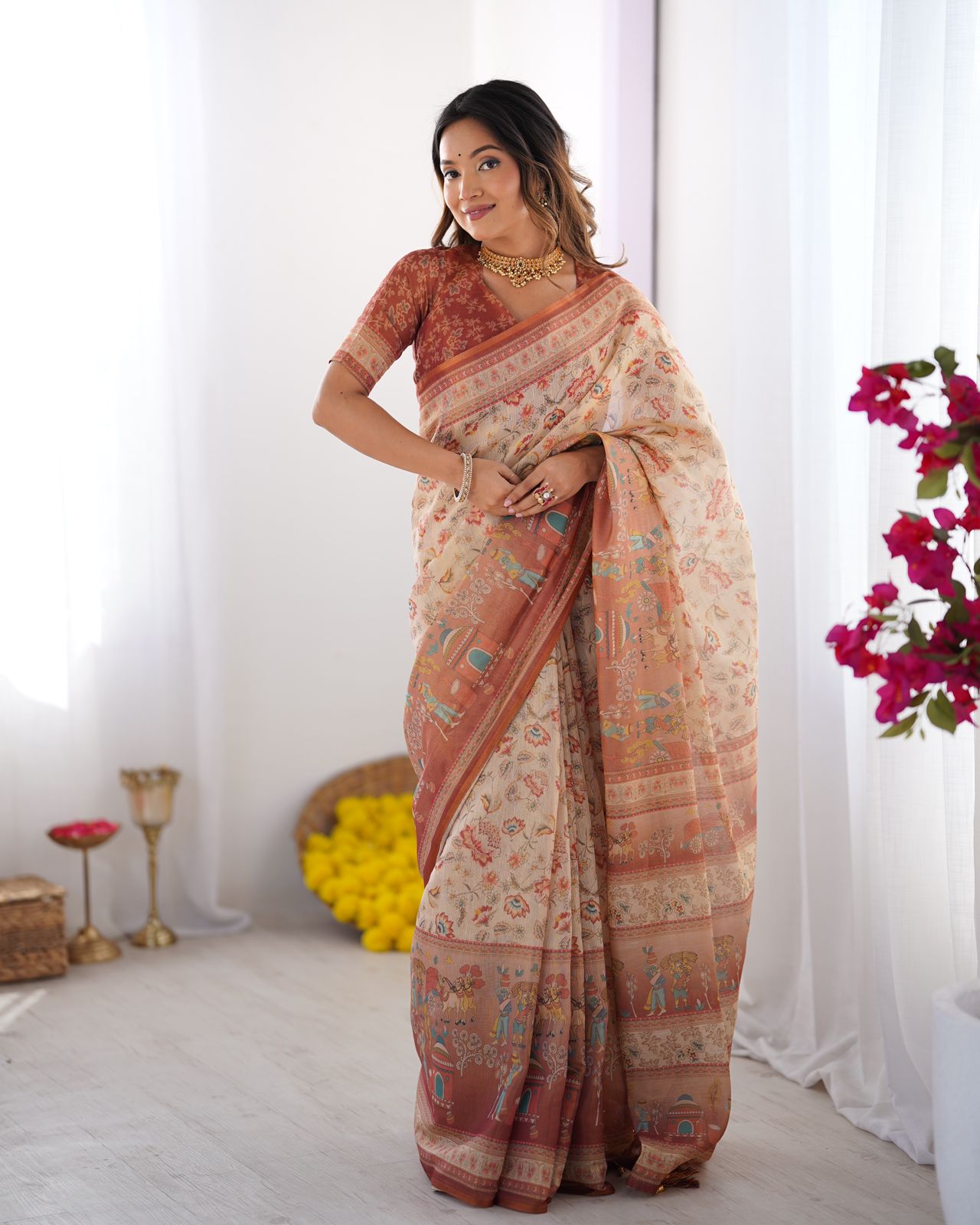
The Ivory Rust Handloom Floral Saree with Storytelling Pallu can be packed above heavier garments and given extra protection around the pallu. A saree with a detailed pallu should be unpacked first because the pallu usually shows pressure more clearly than the plain body.
What should you carry for a wedding or formal event?
A wedding saree should be selected according to the time available for steaming and the amount of decorative work, rather than appearance alone.
A tissue or zari saree can be carried for a formal event when it has a flat compartment, a breathable cover and enough unpacking time. Travellers who want lower preparation demands may prefer a printed cotton or linen-cotton saree from collections such as Sarees from Rs 1000 to Rs 1500, Sarees Under 20% Off or Sarees Under 10% Off. Discount status doesn't determine crease recovery; weave, weight and packing conditions do.
For a multi-saree journey, one structured cotton option, one Chanderi cotton option and one lighter festive weave create more useful variety than three delicate sarees. The Rust Maroon Handloom Cotton Saree with Floral Print and Traditional, the Sea Green Tissue Handloom Cotton Saree With Floral Patterns and the Elegant Rust Linen Cotton Printed Saree Set demonstrate how different surface textures require different refresh expectations.
Collections such as Sarees Flat 60% Off and Sarees Flat 50% Off can help with price comparison, but the fabric composition and care instructions should be checked before the discount is considered. A lower-priced saree that can be refreshed in 30 minutes may be more practical for travel than a more expensive saree requiring specialist pressing.
Saree Fabrics That Recover Better After Being Packed in a Suitcase: A practical pre-travel checklist
A reliable pre-travel check takes less than ten minutes and prevents most avoidable suitcase damage.
- Confirm that the saree is completely dry before folding.
- Remove brooches, safety pins and detachable jewellery.
- Check whether the saree contains zari, tissue, embroidery or a delicate print.
- Fold broad sections with a muslin or cotton layer where surfaces may rub.
- Place the saree above hard and heavy luggage items.
- Keep a wide hanger and pressing cloth ready at the destination.
- Open the suitcase promptly and air the saree before wearing it.
Fabric choice, packing pressure and recovery time work together. Medium-weight handloom cotton is the safest all-round choice, Chanderi cotton is useful when lightness matters, linen cotton accepts a relaxed texture and tissue or zari requires the most careful handling. Choosing according to the journey makes a saree more wearable and reduces unnecessary ironing, moisture exposure and surface damage.
Common Questions About Saree Fabrics That Recover Better After Being Packed in a Suitcase
Which saree fabric creases the least during travel?
Medium-weight handloom cotton and cotton-linen blends usually show fewer difficult creases than delicate tissue, very fine silk or heavily starched sarees. Chanderi cotton is also travel-friendly when it is packed loosely and kept away from heavy luggage.
Is Chanderi cotton good for packing in a suitcase?
Chanderi cotton is good for suitcase travel because it is lightweight and often refreshes after 30 to 60 minutes on a hanger. Deep fold lines may still need low-temperature ironing from the reverse side through a pressing cloth.
How do I pack a saree so it does not crease badly?
Fold the saree into broad 30 to 45 centimetre sections, place a clean muslin or cotton layer between decorative surfaces and keep the folded saree above shoes and hard objects. Unpack the saree promptly and hang it on a broad hanger after arrival.
Can I steam a zari or tissue saree after travelling?
A zari or tissue saree can sometimes be refreshed with gentle, distant steam, but direct high heat may flatten texture or change the sheen. Test an inconspicuous area first, keep the steamer about 15 to 20 centimetres away and follow the care label.
How long should a saree hang after being packed?
A saree should hang for at least 30 minutes after unpacking, while Chanderi cotton may benefit from one to two hours. Linen cotton may need light steam and approximately 20 minutes of cooling before pleating.
Is linen cotton better than pure linen for travel?
Linen cotton is generally easier to manage in luggage because cotton softens the pronounced creasing of linen while retaining a structured, textured appearance. Linen cotton still develops natural fold marks, so it is best when a relaxed finish is acceptable.