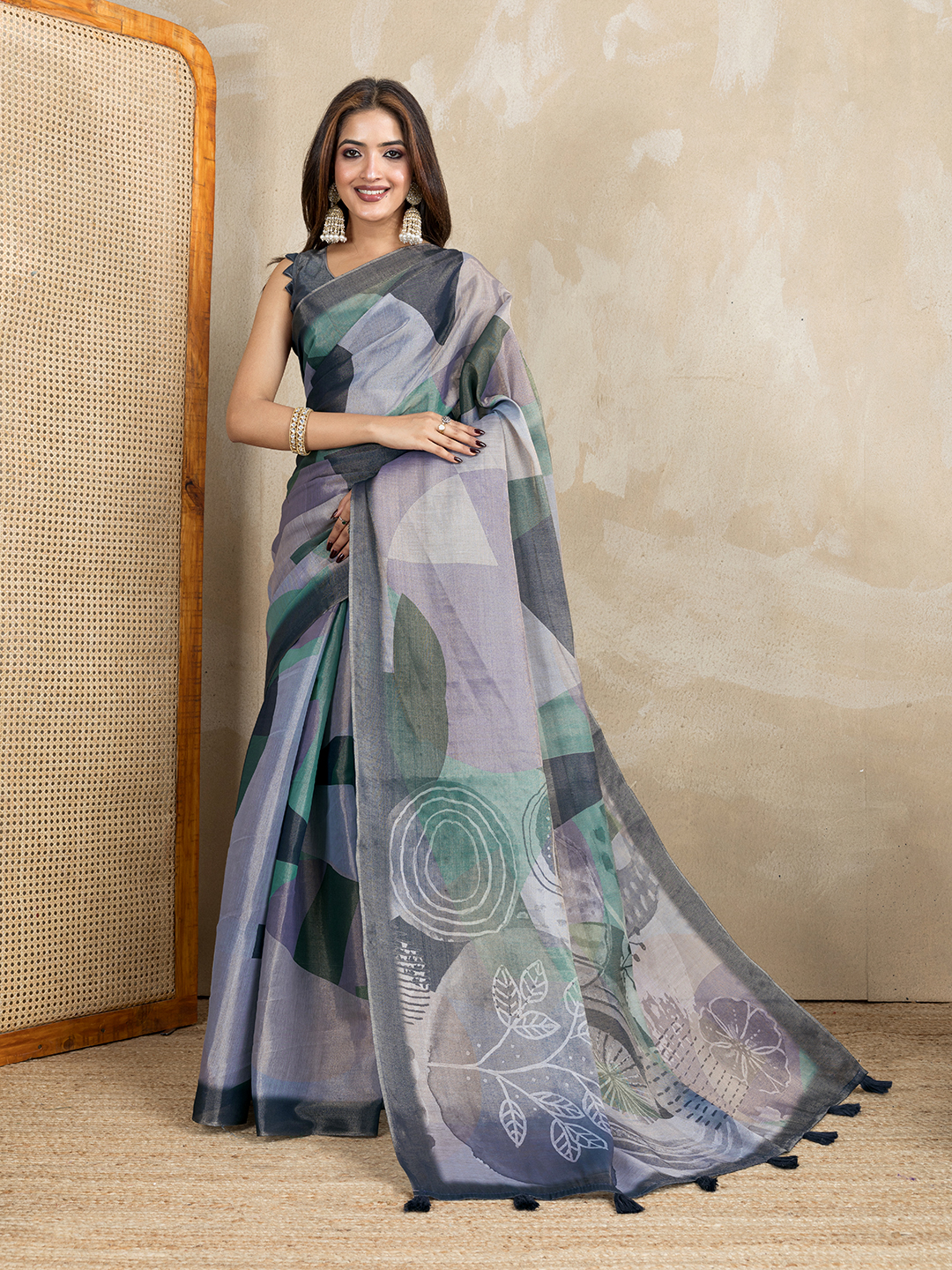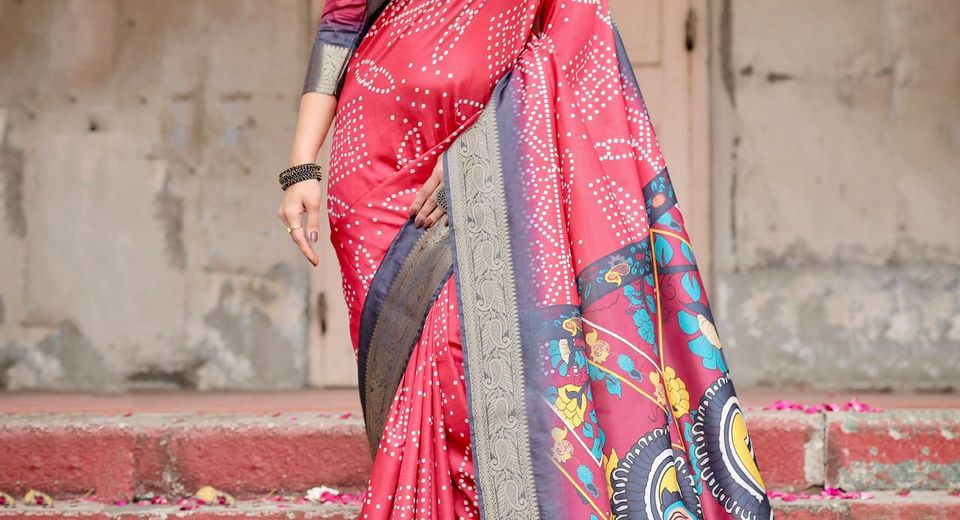
Why some saree borders shrink differently from the main fabric becomes noticeable after washing: the body may remain smooth while the edge pulls inward, puckers or feels shorter. Uneven shrinkage usually comes from differences in fibre content, yarn tension, weaving, printing, embroidery and finishing between the saree body and its border. Understanding those differences helps you choose a safer cleaning method before a saree develops a permanent wavy edge.
A saree isn't always made from one uniform textile. A linen body may meet a silk border, a georgette body may carry a zari strip, and a printed pallu may have a separately woven or attached section. Each area absorbs water, releases moisture and responds to heat at a different rate. The result can be a border that contracts more-or less-than the main fabric.
Why Some Saree Borders Shrink Differently From the Main Fabric
Some saree borders shrink differently because the border and the main fabric can contain different fibres, yarn densities and finishing treatments. A saree body woven with loosely twisted cotton yarns may relax after washing, while a tightly woven zari border changes very little. A silk border can also respond differently from a linen, viscose, polyester or georgette body.
Lengthwise and widthwise shrinkage are separate measurements. If a border contracts by 2 centimetres across the saree length while the body contracts by only 0.5 centimetres, the edge has less fabric available than the adjacent section. That imbalance produces ripples, diagonal pulling or a scalloped appearance. A border that shrinks less can create the opposite problem by pushing excess body fabric into small gathers.
Manufacturers may also attach a border after weaving the saree body. The seam, folded edge or decorative tape then has its own tension. Washing loosens some tensions and tightens others, especially when wet fabric is dragged, twisted or dried in direct sunlight.
Which Materials Create the Greatest Difference in Shrinkage?
Natural fibres with different moisture responses create the greatest risk of uneven shrinkage, particularly when linen, cotton, silk, viscose or wool-like fibres meet synthetic yarns, metallic threads or adhesive finishes. The fibre label gives useful information, but the weave and border construction matter just as much.

Linen, cotton and handloom yarns
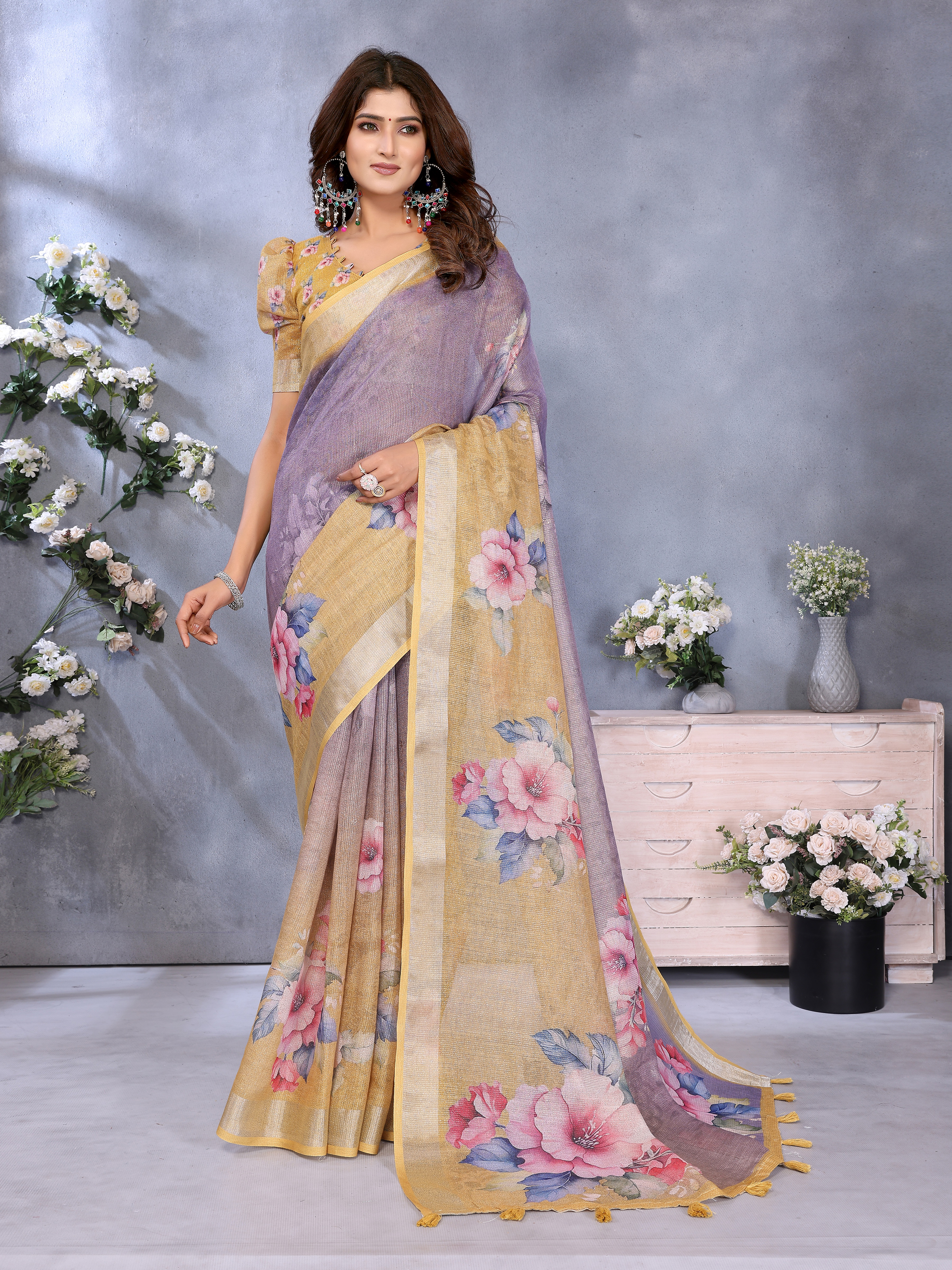
Linen and cotton can relax or contract noticeably during their first wet treatment, especially when the yarns were not pre-shrunk. Handloom fabrics may show small variations because hand-tensioned yarns are not identical across the entire width. The Elegant Beige & Peach Linen Saree with Designer Border demonstrates why a linen body needs gentle handling when a decorative border has a denser structure.
Linen becomes stronger when wet but is vulnerable to sharp creases. Twisting a wet linen saree can pull the border seam out of alignment. Cotton borders may absorb water quickly, then dry at a different speed from the body, leaving temporary or permanent puckering.
Silk, zari and metallic yarns
Silk generally has lower wash shrinkage than many untreated plant fibres, but silk borders can still contract because of finishing, yarn tension or a different weave. Zari isn't a single fibre: traditional zari may use metal-coated thread, while contemporary zari commonly wraps metallic film around a textile core. Water, detergent alkalinity and heat can dull, stiffen or distort the metallic surface.
The Navy Blue Floral Silk Saree with Peach Zari Border and the Black Bandhani Silk Saree with Elephant Zari Border show why a silk body and decorative zari edge should not be treated like a basic washable fabric. A zari border can remain dimensionally stable while the silk body relaxes, or the border can tighten around a softer silk weave.
Georgette, satin and blended fabrics
Georgette and satin often have a smooth, tightly finished surface, but their internal fibres may include silk, polyester, viscose or blends. A synthetic satin border may shrink very little while a viscose body responds more strongly to water. A georgette body can also stretch while wet, making the border appear shorter even when the border itself has not contracted.
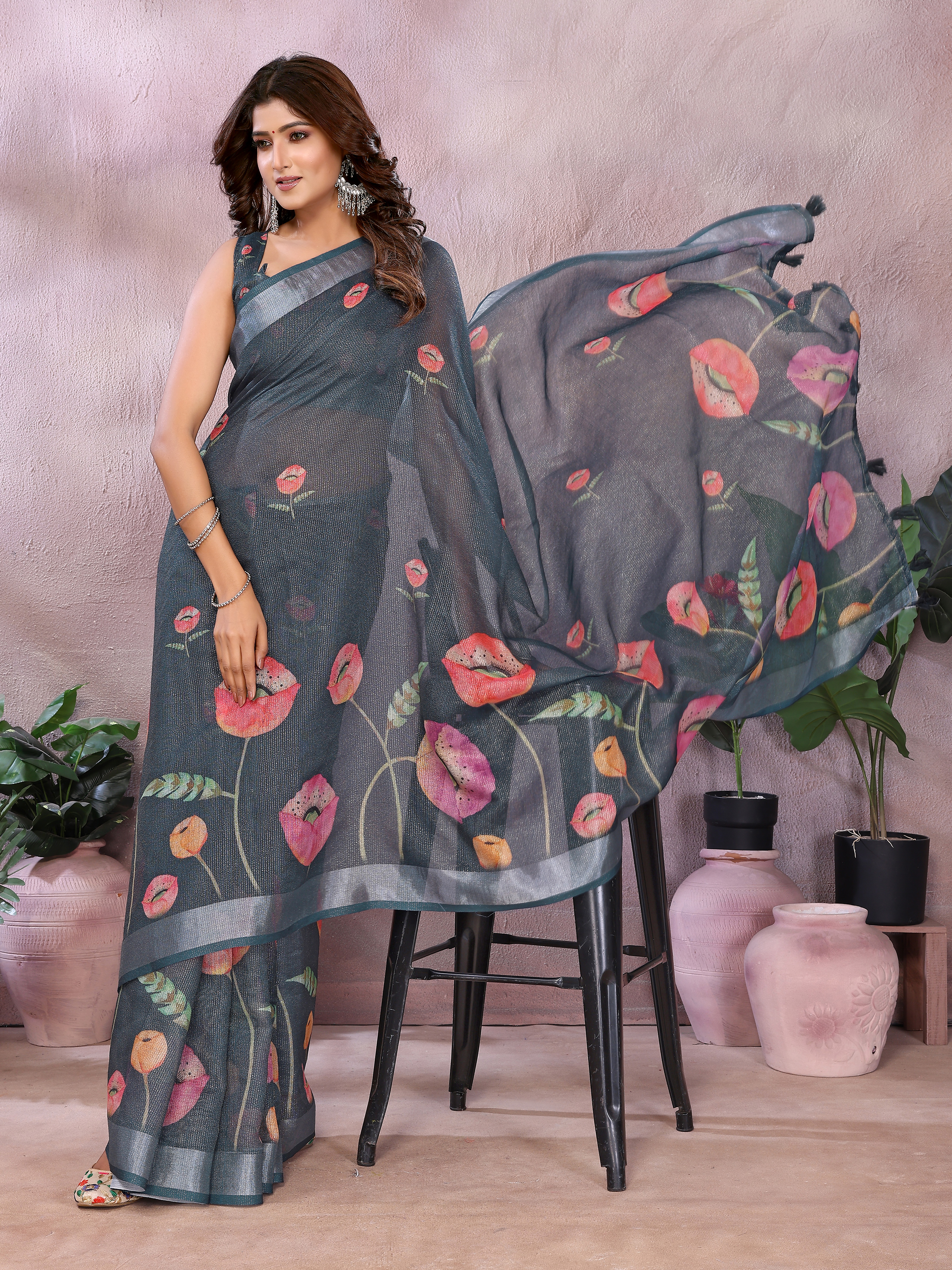
The Teal Rust Floral Satin Saree with Printed Pallu and Borders and the Teal Moss Mellow Georgette Zari Border Saree are useful examples of why surface appearance doesn't reveal fibre behaviour. Printed pallu areas, selvedges and zari sections may have different coatings or yarn arrangements from the main field.
How Do Weaving, Printing and Finishing Change Shrinkage?
Weave density, yarn direction, border attachment and finishing processes determine how much each saree section can move when exposed to moisture and heat. Two sarees with similar-looking surfaces can therefore need different care.
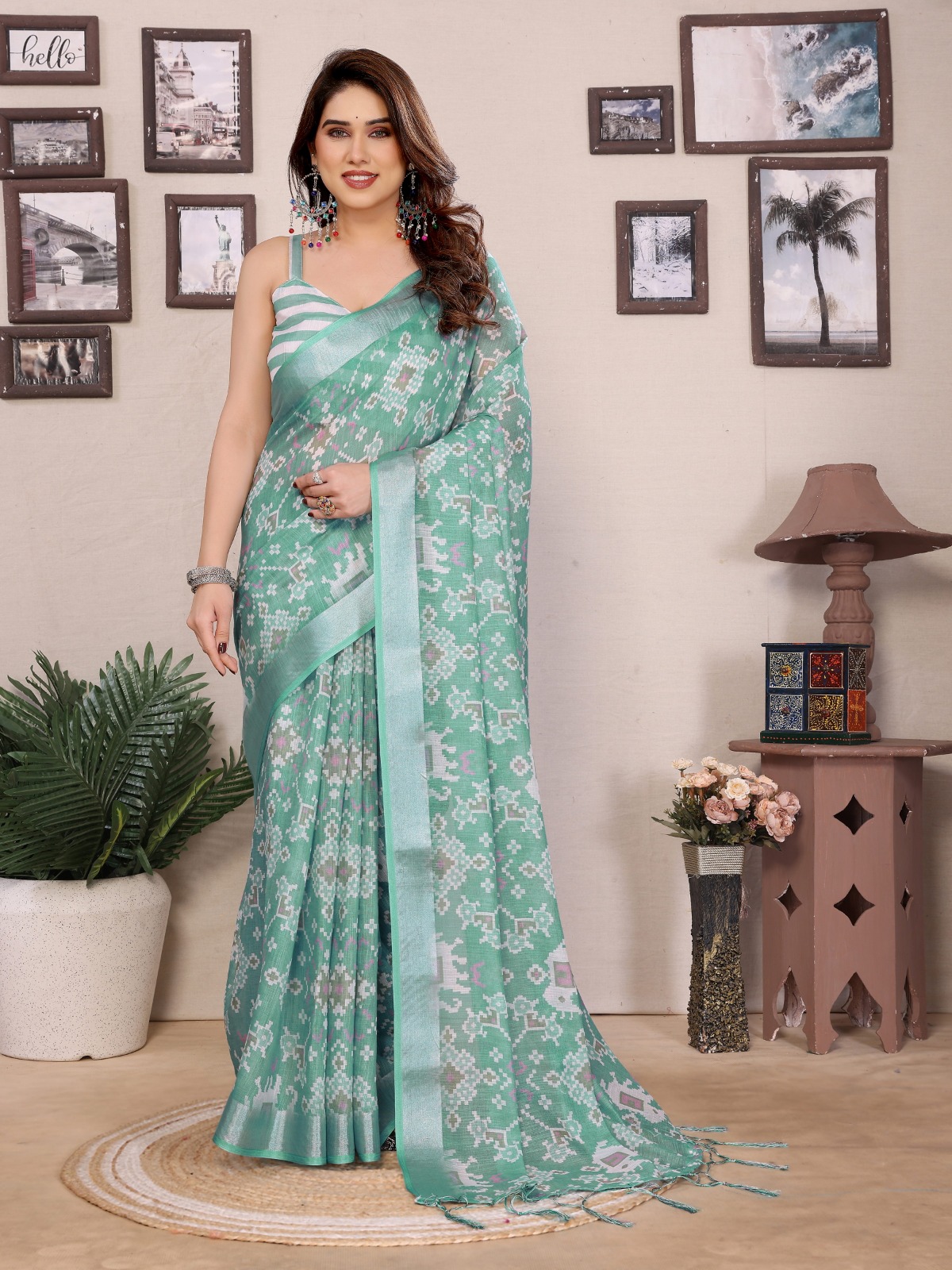
A plain-weave body usually has a balanced arrangement of warp and weft yarns, while a jacquard or brocade border may pack more yarn into the same width. A dense border has less room to relax, but its attached seam may exert greater tension on the body. In a Banarasi silk saree, supplementary zari or brocade structures can behave differently from a plain silk ground. Kanjeevaram sarees can also have strongly defined border and body structures, so harsh home washing isn't a safe default.
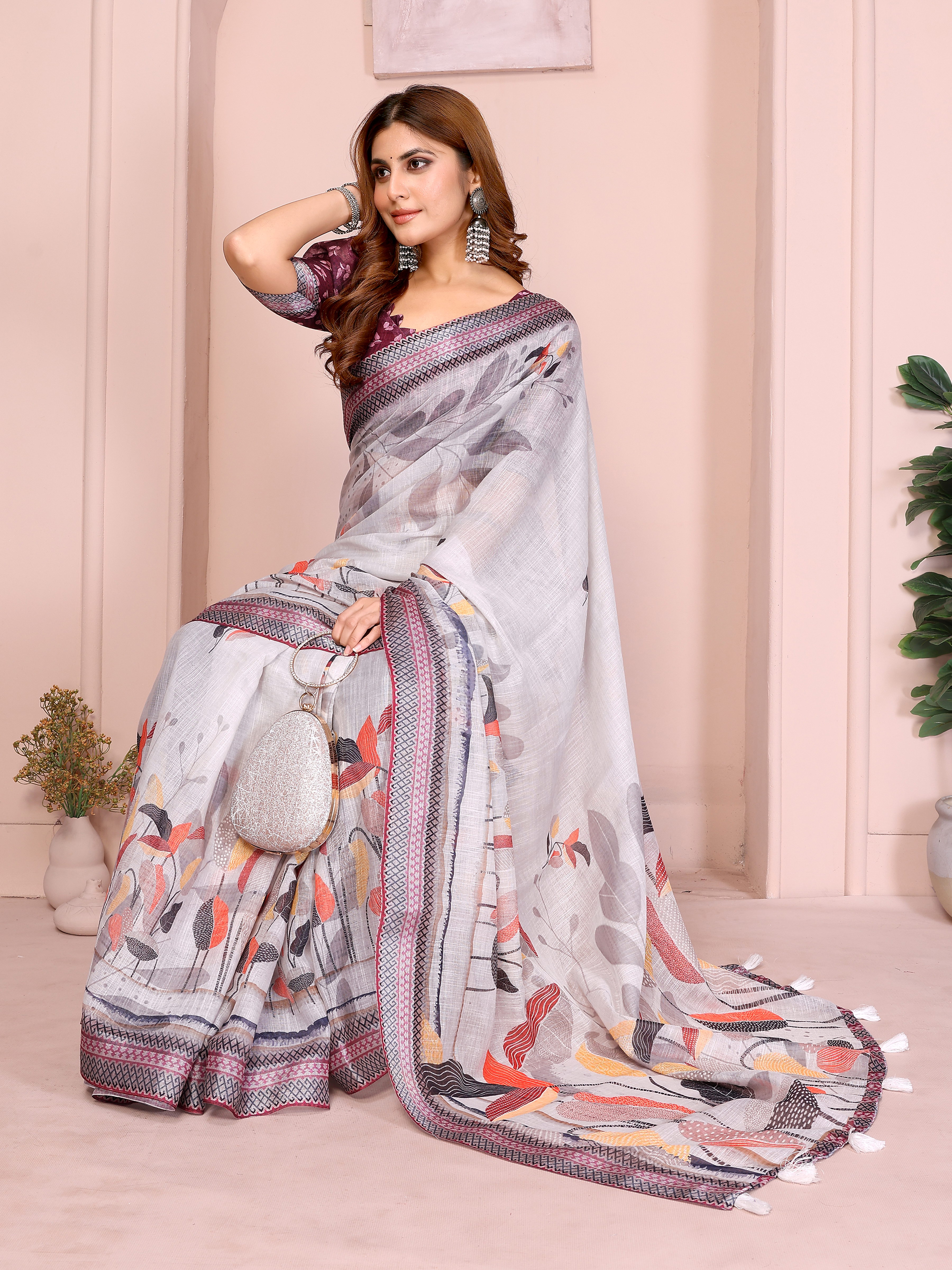
Printing adds another variable. Pigments, binders and surface finishes can make printed areas feel stiffer than unprinted fabric. The Rust Red Handloom Printed Saree with Ethnic Border combines a handloom-style body with a distinct decorative edge, so rough washing or high heat can encourage uneven relaxation between the two areas.
Bandhani and other resist-dyed textiles may contain areas with different yarn tension after tying and dyeing. The Wine Red Bandhani Print Tussar Silk Saree with Zari has a main field and decorative sections that may differ in handle. Such differences are not automatically defects; they're construction details that influence care.
What Washing Mistakes Make a Saree Border Pucker?
Hot water, soaking, wringing, aggressive detergent, machine agitation and uneven drying are the main washing mistakes that make saree borders pucker. Border distortion often occurs when wet fabric is dragged by its heavier edge or compressed in a small washing-machine drum.
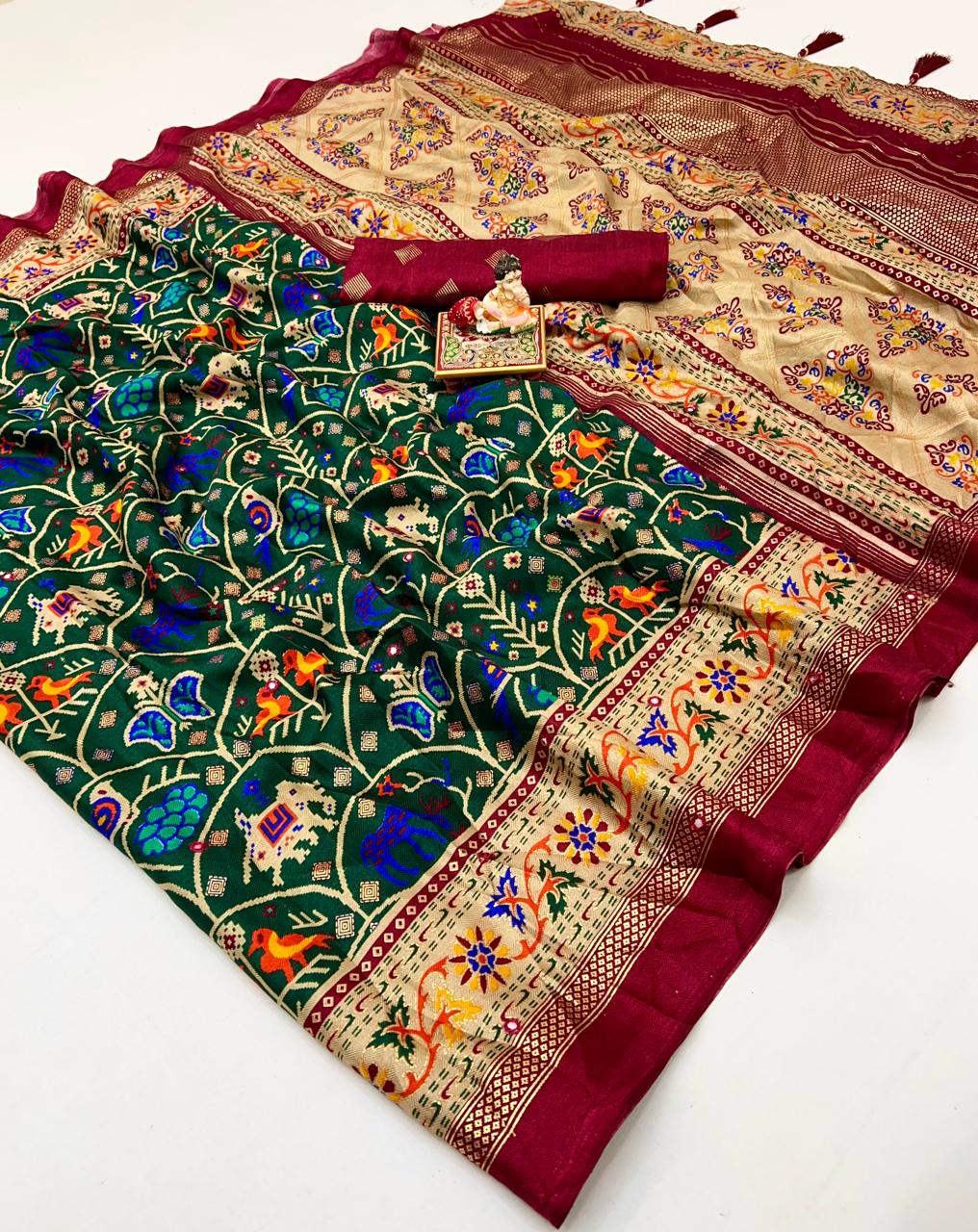
- Hot water: Temperatures above about 30°C can accelerate relaxation in linen, cotton, viscose and some silk finishes. Warm water also increases dye movement and may affect metallic-thread coatings.
- Long soaking: A 10-minute gentle wash and a two-hour soak don't expose fibres to the same stress. Prolonged soaking lets different sections absorb water to different saturation levels.
- Wringing: Twisting creates diagonal force along the border seam. The edge can emerge permanently wavy even when the fabric itself has not dramatically shrunk.
- Machine spinning: High-speed spinning folds the border repeatedly and presses it into creases. The heavier border may stretch or pull the adjacent body.
- Direct sun drying: Strong sunlight dries exposed sections quickly and unevenly. Heat can also fade dyes and make some finishes brittle.
- Strong detergent or bleach: Alkaline products can affect silk, zari, dyes and surface finishes. Chlorine bleach should not be used on sarees with silk, zari or coloured prints.
A saree should be washed only when the care label permits it. Dry cleaning is safer for many silk, zari, embellished and structured-border sarees, but the cleaner should be told about metallic yarns and strong colour contrast before treatment.
How Can You Prevent Uneven Saree Shrinkage?
You can reduce uneven saree shrinkage by testing colour fastness, using cool water when washing is permitted, supporting the saree evenly and drying it away from direct heat. Preventive care is more effective than trying to reshape a border after it has puckered.

- Read the fibre and care information: Record whether the saree contains silk, linen, cotton, viscose, polyester, zari or a blend. A mixed-fibre saree should be treated according to its most sensitive component.
- Test a concealed area: Press a damp white cotton cloth on an inside fold for 10 seconds. Colour transfer indicates that home washing may be unsafe. Do not rub zari or printed areas during testing.
- Use cool water and mild detergent: If hand washing is allowed, use water around 20-30°C and a small amount of pH-neutral liquid detergent. Avoid powder detergent because undissolved particles can lodge in dense borders.
- Keep the wash brief: Gently move the saree through the water for a few minutes instead of scrubbing or soaking. Wash separately when a dark body sits beside a pale border.
- Remove water without twisting: Press the saree between clean towels or support the full length over a broad drying surface. Never lift a dripping saree by one corner.
- Dry in shade: Spread the saree smoothly on a clean, dry towel or hang it over a wide line with the border fully supported. Avoid sharp clips on zari or wet silk.
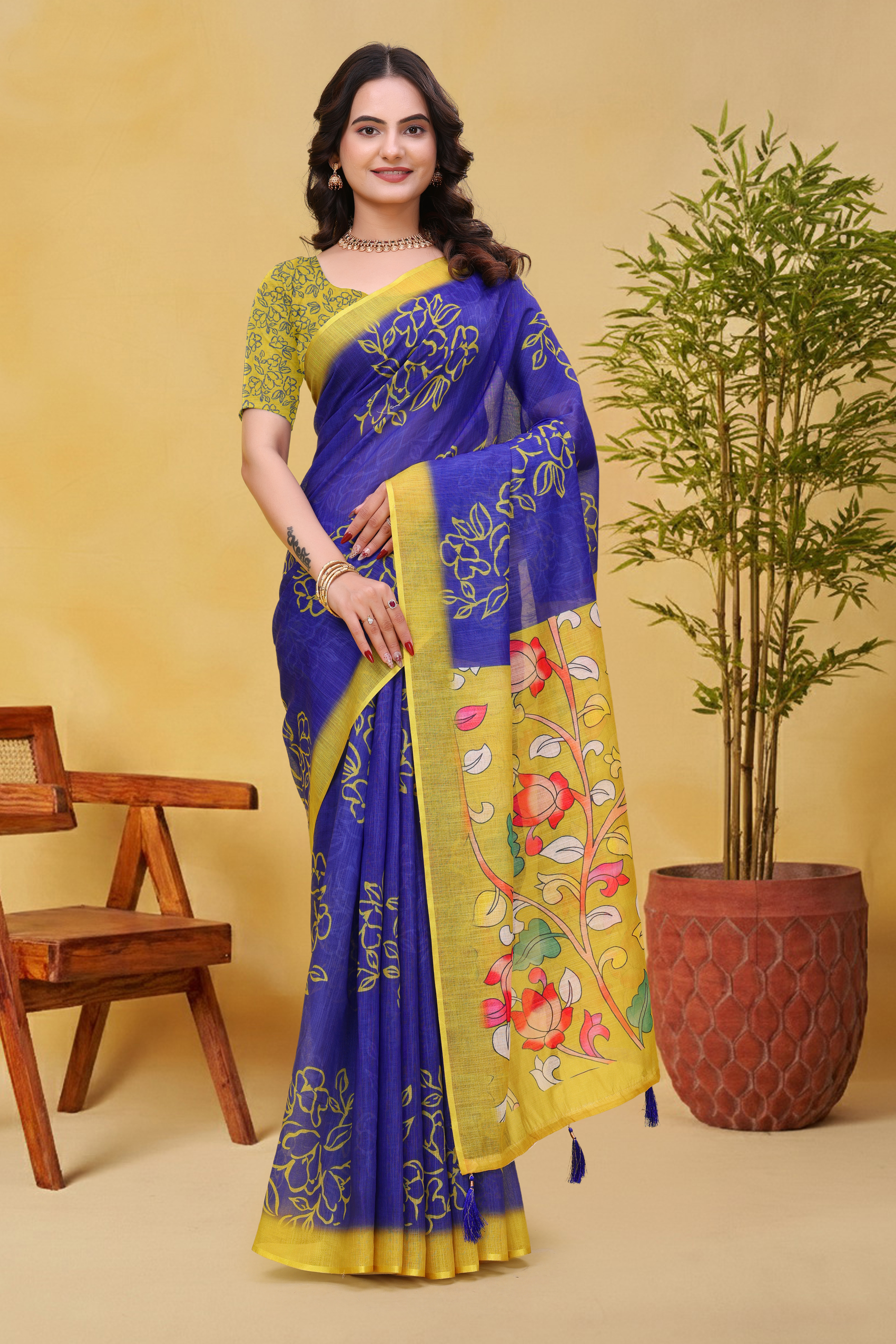
The Traditional Yellow Saree with Blue Zari Border Design demonstrates why contrast deserves attention: colour transfer from a saturated yellow body can stain a pale or metallic blue border during a long soak. The same principle applies to a darker border on a lighter body.
Budget doesn't determine whether a saree needs careful treatment. Sarees from Rs 1000 to Rs 1500 may include delicate blends, printed finishes or zari borders that need more attention than their price suggests. Sarees Under 20% Off and Sarees Under 10% Off should be assessed by fibre and construction rather than discount level.
Can Pressing Fix a Shrunken or Wavy Saree Border?
Gentle steaming and low-temperature pressing can improve mild waviness, but pressing can't reliably restore fibres that have permanently shrunk. A professional saree specialist should handle severe puckering, separated seams, melted metallic film or a visibly shortened border.
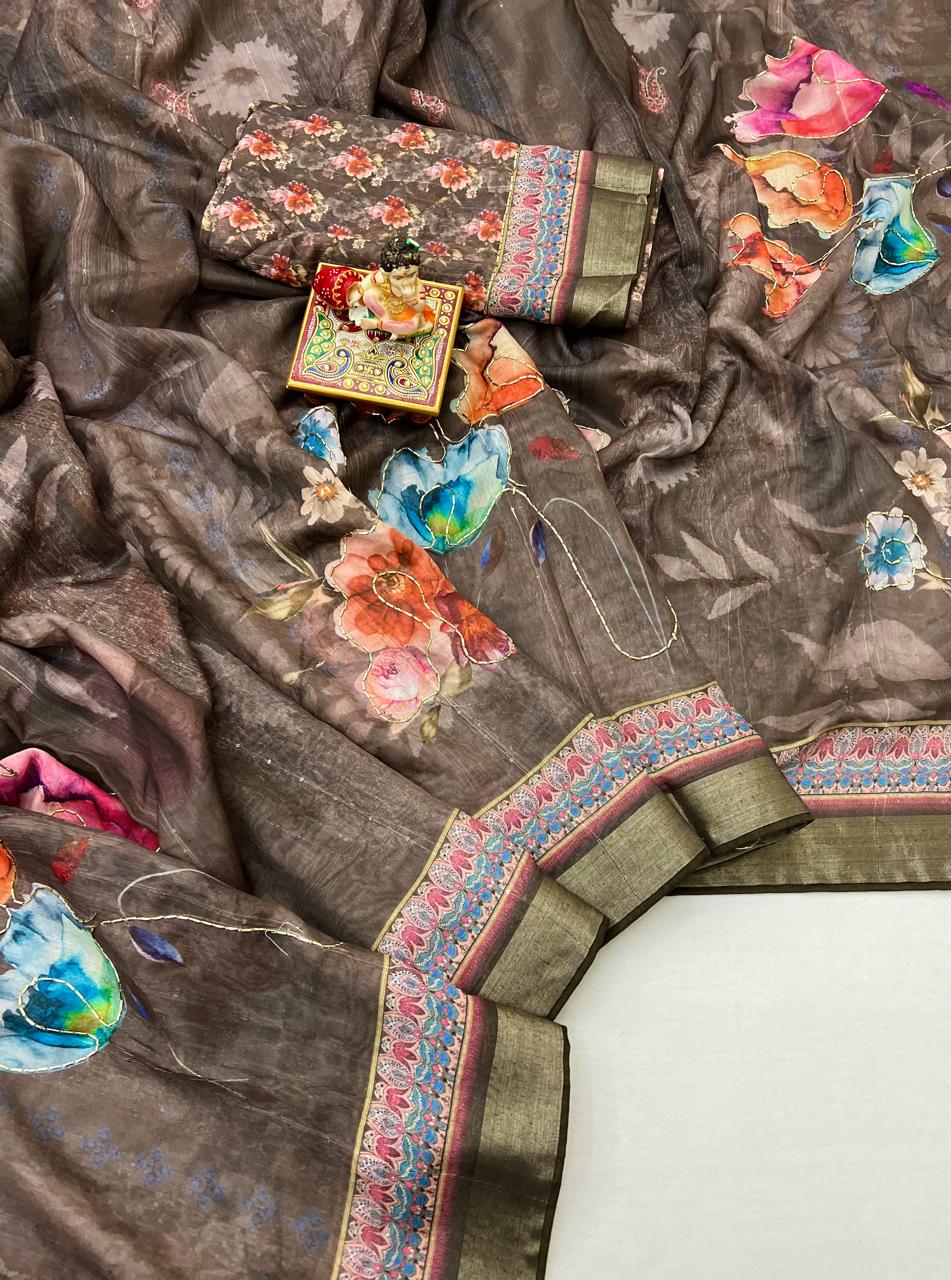
Place a clean cotton pressing cloth between the iron and the saree. Use the lowest temperature suitable for the most delicate fibre, keep the iron moving and avoid pressing directly over zari, sequins, raised prints or metallic film. Steam from a short distance rather than leaving a hot iron in one spot.
For a slightly uneven edge, lay the saree flat while damp, align the border without stretching it and allow the fabric to dry in that position. Do not pull the border to force it to match the body, because stretching can produce a temporary improvement followed by renewed distortion.
How Should You Store a Saree After Washing?
A clean, completely dry saree should be folded along broad lines, wrapped in breathable cotton or muslin and stored away from direct sunlight. Proper storage prevents moisture, pressure and repeated sharp folds from worsening border distortion.
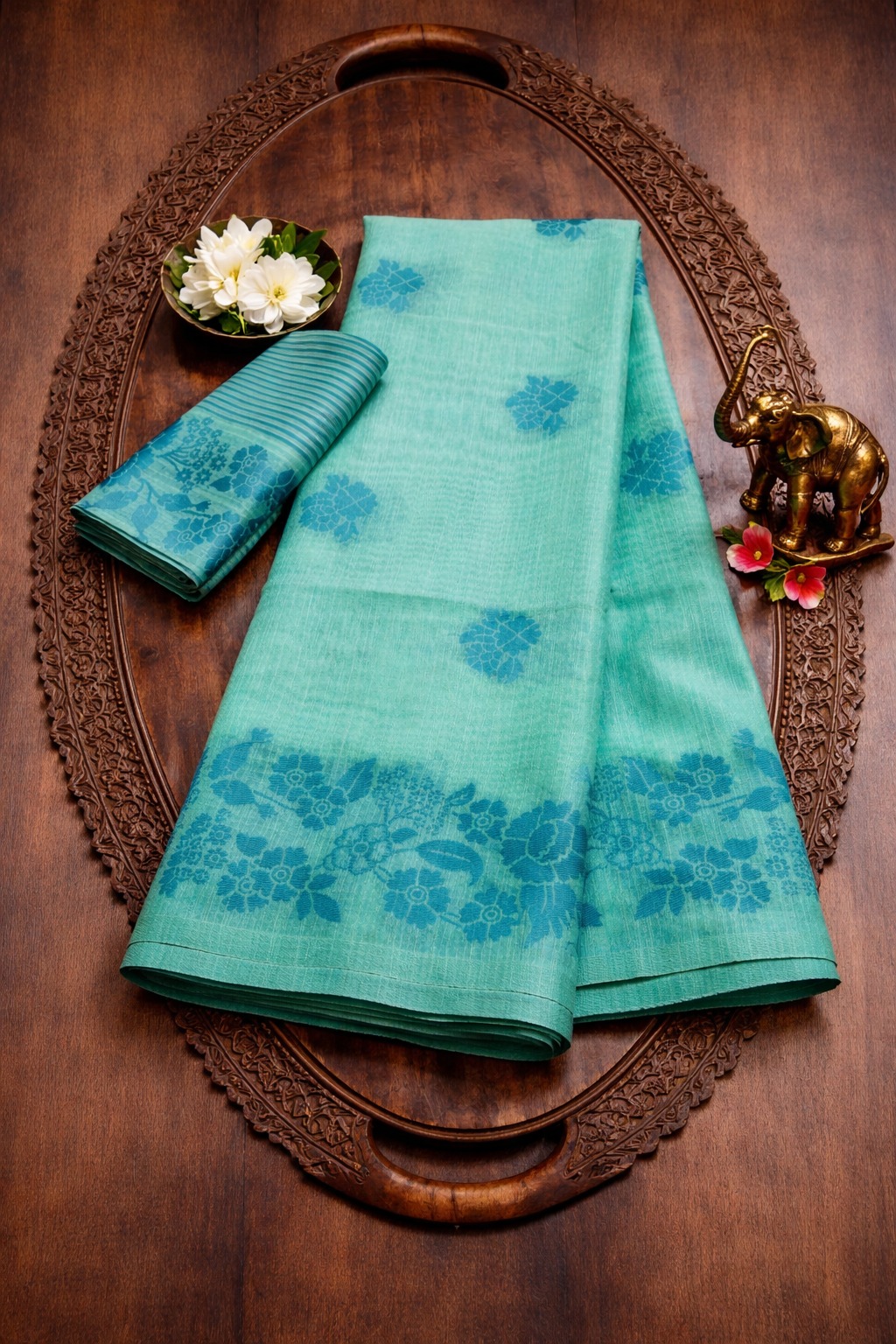
Refold silk, linen and zari sarees every few months so that one crease doesn't remain permanently pressed into the border. Avoid plastic bags for long-term storage because trapped humidity can encourage mildew and tarnish metallic threads. Do not stack heavy garments on a delicate zari edge.
Very delicate pieces, including the Black Bandhani Silk Saree with Elephant Zari Border, should be stored with acid-free tissue between folds if available. Keep perfume, deodorant, incense smoke and oily cosmetics away from the fabric because residue can become more difficult to remove after storage.
Sale filters such as Sarees Flat 60% Off and Sarees Flat 50% Off can help with browsing, but care information remains the more important buying detail. Before purchasing a saree with a contrasting border, check the fibre composition, wash instructions and whether the border is woven into the body or attached separately.
What Does Uneven Shrinkage Tell You About Saree Quality?
Uneven shrinkage doesn't automatically prove that a saree is poor quality; it usually reveals that different components were made with different fibres, densities or finishes. A high-quality saree can still require specialist cleaning when it combines silk, zari, handloom yarns or colour-sensitive prints.
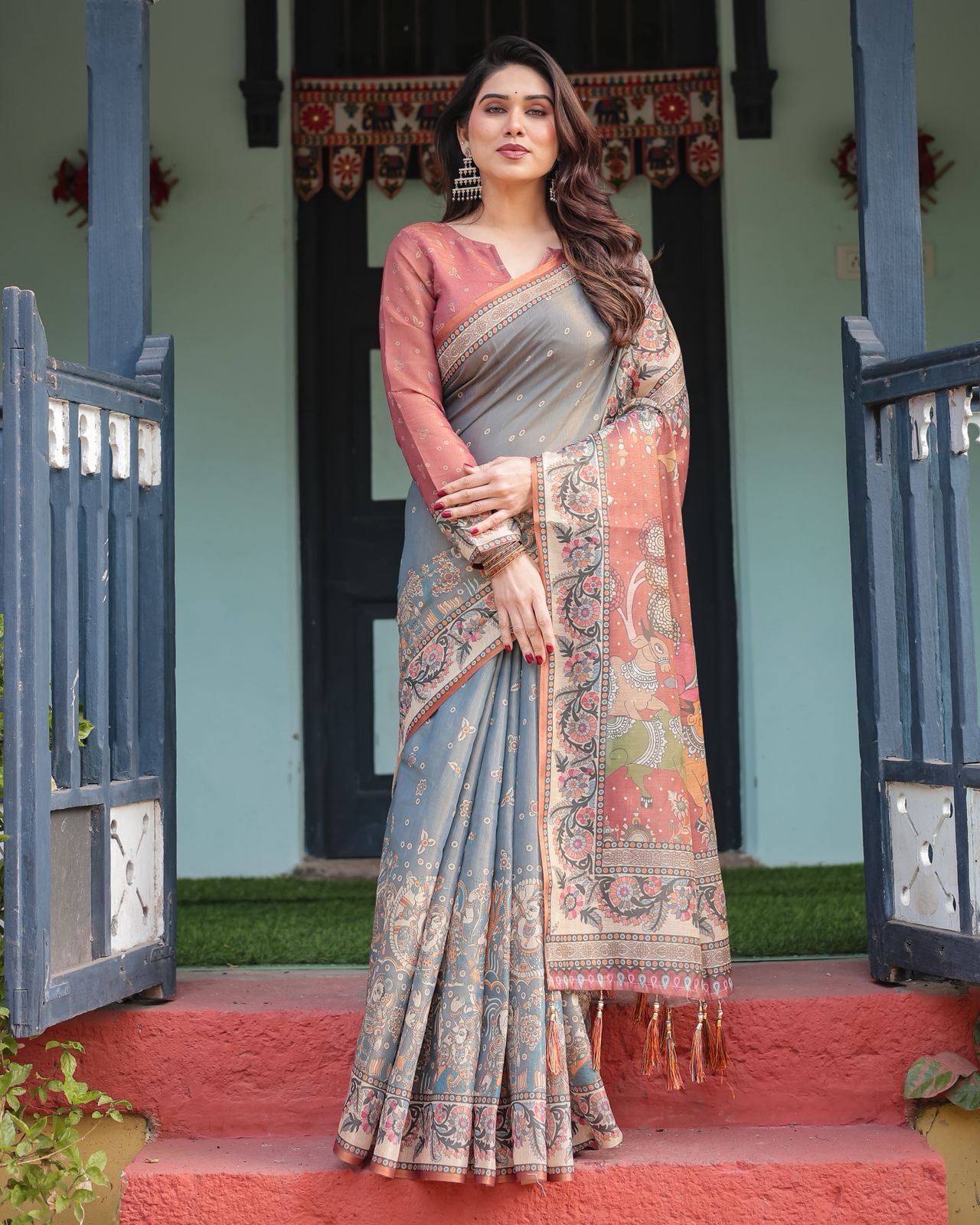
Quality is better assessed through consistent weaving, secure border attachment, even selvedges, stable colour and clear care information. Before washing, examine whether the border lies flat, whether the seam is secure and whether the pallu and body appear aligned. Photographing the saree laid flat can also help you compare its shape after cleaning.
Understanding why some saree borders shrink differently from the main fabric makes care decisions more precise. Cool water, short handling time, full support while wet and shade drying protect many washable sarees, while silk, zari and heavily finished designs are best sent to a cleaner experienced with Indian textiles.
Common Questions About Saree Border Shrinkage and Care
Why did my saree border become wavy after washing?
A saree border can become wavy when the border and body shrink or relax at different rates. Wringing, machine spinning, hot water and uneven drying increase tension along the border seam and can make the distortion permanent.
Can a saree with a zari border be washed at home?
A saree with a zari border should be washed at home only when its care label specifically permits gentle washing. Cool water, a short wash, pH-neutral detergent and shade drying are safer, while silk, metallic zari and colour-sensitive designs often require professional dry cleaning.
Does linen shrink more than silk in a saree?
Untreated linen commonly shows more first-wash relaxation than silk, although the final result depends on yarn tension, weave and finishing. A linen body paired with a dense silk or zari border can therefore develop puckering even when the border itself changes very little.
How can I test whether a saree will bleed colour?
Press a damp white cotton cloth on a concealed fold for about 10 seconds without rubbing. Any visible colour transfer suggests that home washing may be unsafe, especially when a dark body sits beside a pale border.
Can ironing repair a saree border that has shrunk?
Low-temperature pressing or gentle steaming can reduce mild waviness but cannot reliably restore permanently shrunken fibres. A textile professional should treat severe puckering, separated seams, melted metallic film or a visibly shortened border.
How should a saree be dried to prevent border distortion?
A wet saree should be supported across its full length, dried in shade and kept away from direct heat. Do not lift a dripping saree by one corner, twist it or secure a heavy wet border with a narrow clip.