Saree Fabrics That Photograph Differently Under Indoor Lighting can look warmer, duller, brighter or more reflective than they do beside a window. The change usually comes from three factors working together: the colour temperature of the bulb, the way the weave reflects light, and the phone camera's automatic exposure. A saree that appears soft beige on a product page may look yellow under a warm ceiling lamp, while a pale grey saree may turn blue near a cool LED panel.
Understanding that difference helps with two practical decisions: choosing a saree online and planning photographs for a wedding, festive gathering or family event. Fabric names alone don't predict the final image. Surface texture, metallic yarn, print density, border width and the direction of the light all matter.
Saree Fabrics That Photograph Differently Under Indoor Lighting and Colour Temperature
Saree fabrics change colour indoors because artificial light contains a different balance of warm and cool wavelengths than daylight. A warm white bulb around 2700K-3000K adds yellow or amber tones, while a cool white LED around 4000K-6500K can make blue, grey and green shades appear sharper.
Human eyes adjust quickly to a room's lighting, but a phone camera may not correct the scene in the same way. Automatic white balance attempts to make neutral areas look neutral, yet a large beige saree, a colourful wall or a wooden background can confuse the camera. The resulting photograph may exaggerate yellow, remove subtle pink or make a muted shade look unusually saturated.
Reflective surfaces create a second shift. Zari, metallic borders and shimmer yarns send concentrated highlights towards the lens. Those highlights can appear almost white in one frame and disappear when the saree is turned a few degrees. A matte cotton weave spreads light more evenly, so the photograph generally shows texture rather than sharp glare.
What does colour temperature mean for a saree?
Colour temperature describes whether a light source appears warm or cool, and it's measured in Kelvin. A 3000K bulb usually makes cream, beige, peach and gold look warmer, while a 5000K light tends to preserve cooler greys, blues and greens more faithfully.
Mixed lighting is especially unpredictable. A room with a warm ceiling bulb and daylight entering through a window may produce one yellow side and one blue side on the same saree. Photographing beside a window with the room lights switched off is often more consistent than combining several light sources.
Which Saree Fabrics That Photograph Differently Under Indoor Lighting Show Texture?
Linen cotton, tissue cotton, shimmer weaves and sarees with zari or metallic edging usually show more visible changes under indoor lighting than fully matte, tightly uniform surfaces. The reason isn't that one category is always better; each surface handles reflection differently.
Linen cotton has natural slubs and an irregular texture. Small raised fibres make small highlights and shadows, especially when light comes from above or from one side. A floral print may therefore look more dimensional in a photograph than it appears in flat daylight. The same texture can also make a pale colour seem slightly dark where the weave folds.
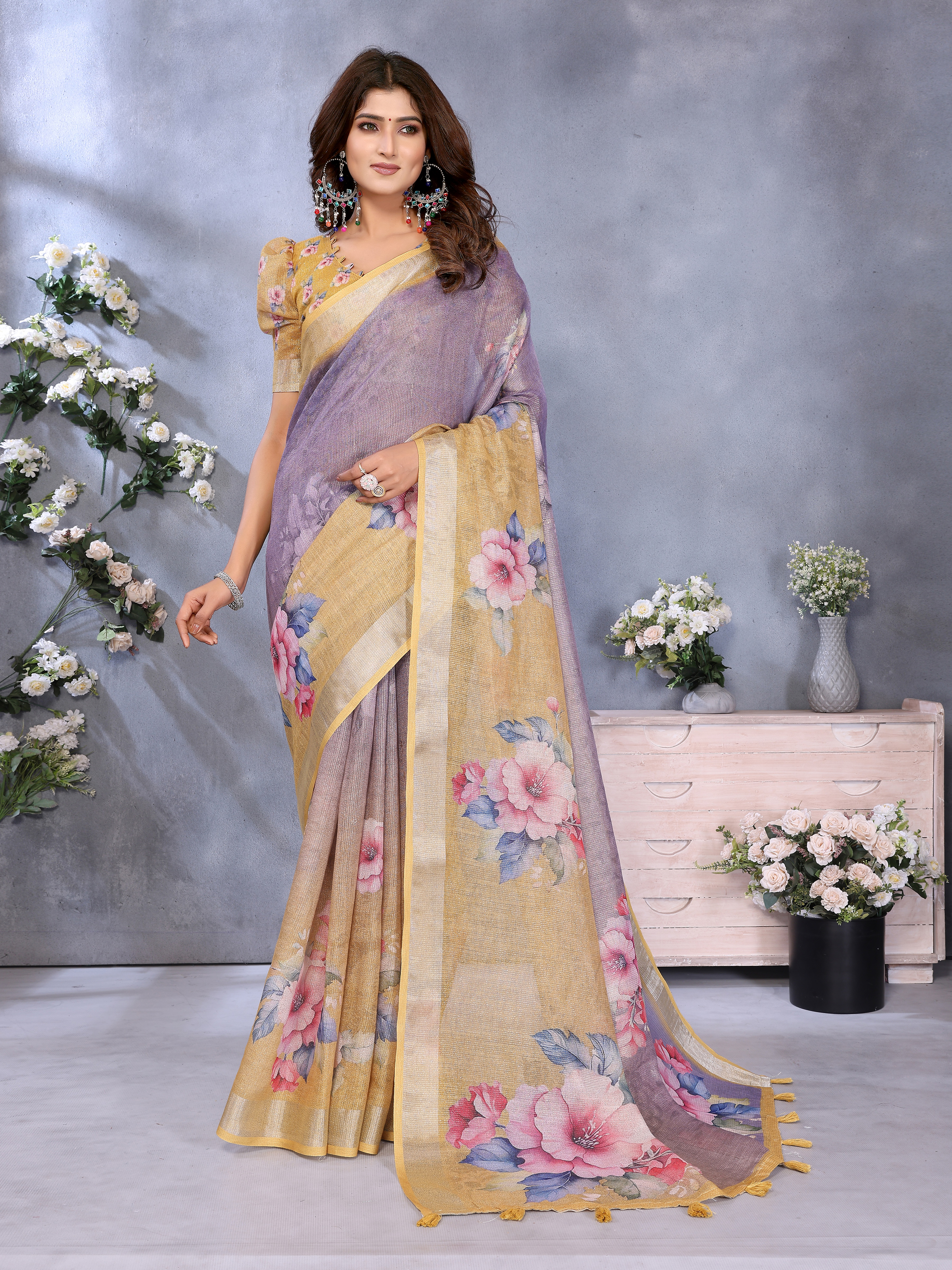
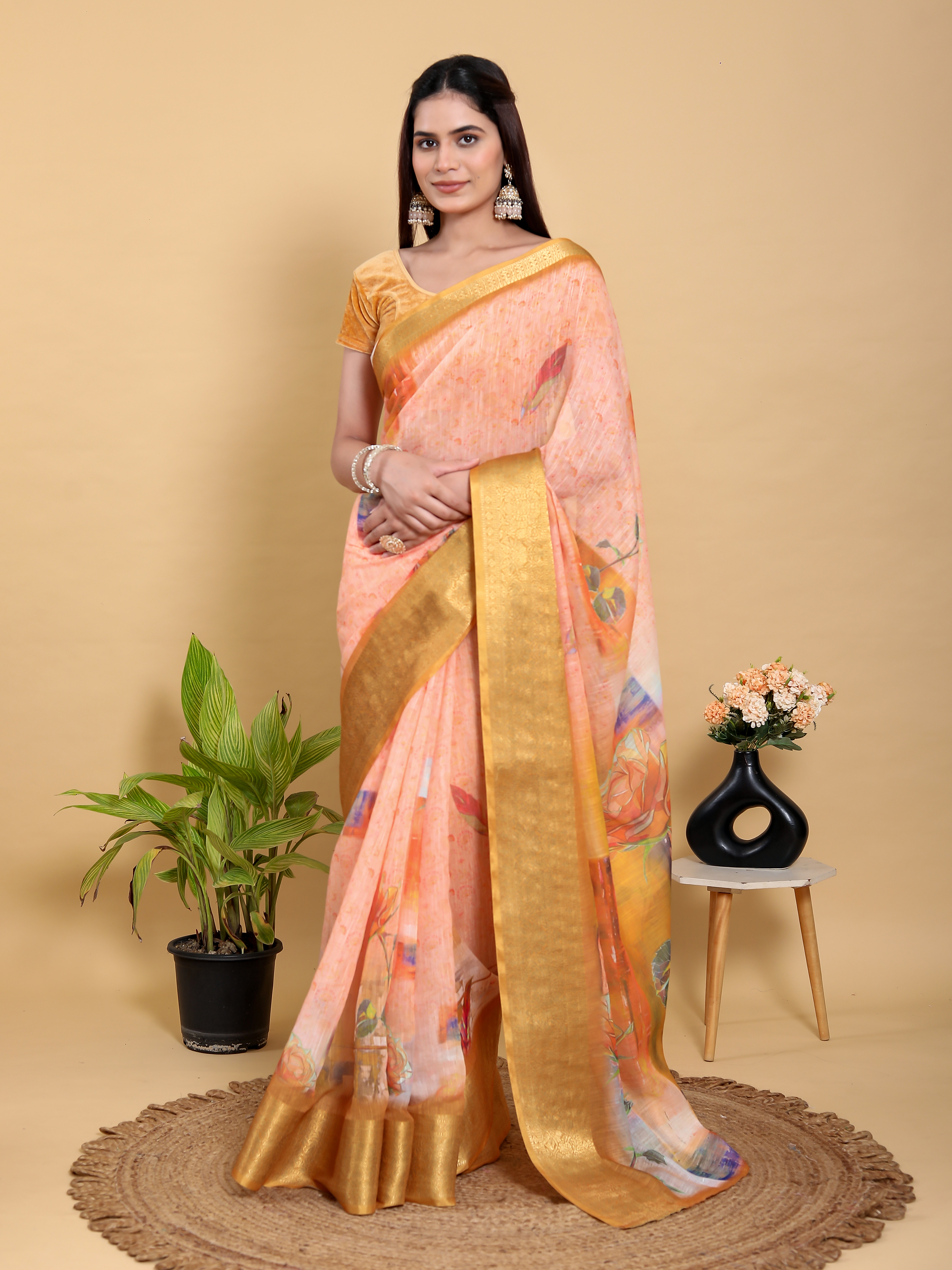
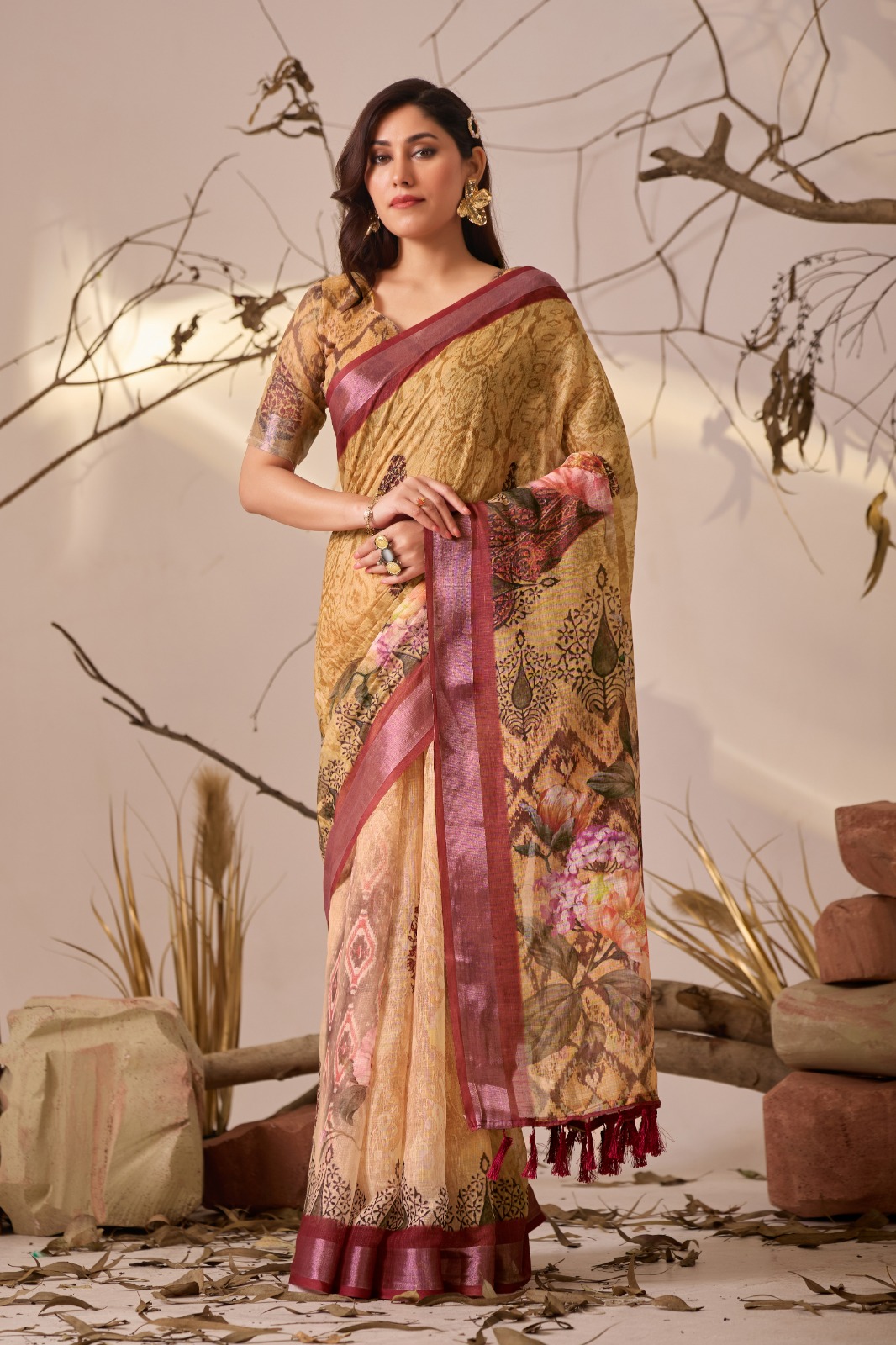
Pastel Floral Tissue Handloom Cotton Saree with Zari Weaves is an example of a saree that may show both soft cotton texture and brighter points from zari. Under a warm lamp, the gold elements can become more prominent; under a cool LED, the pastel ground may look cleaner while the metallic detail appears more silvery.
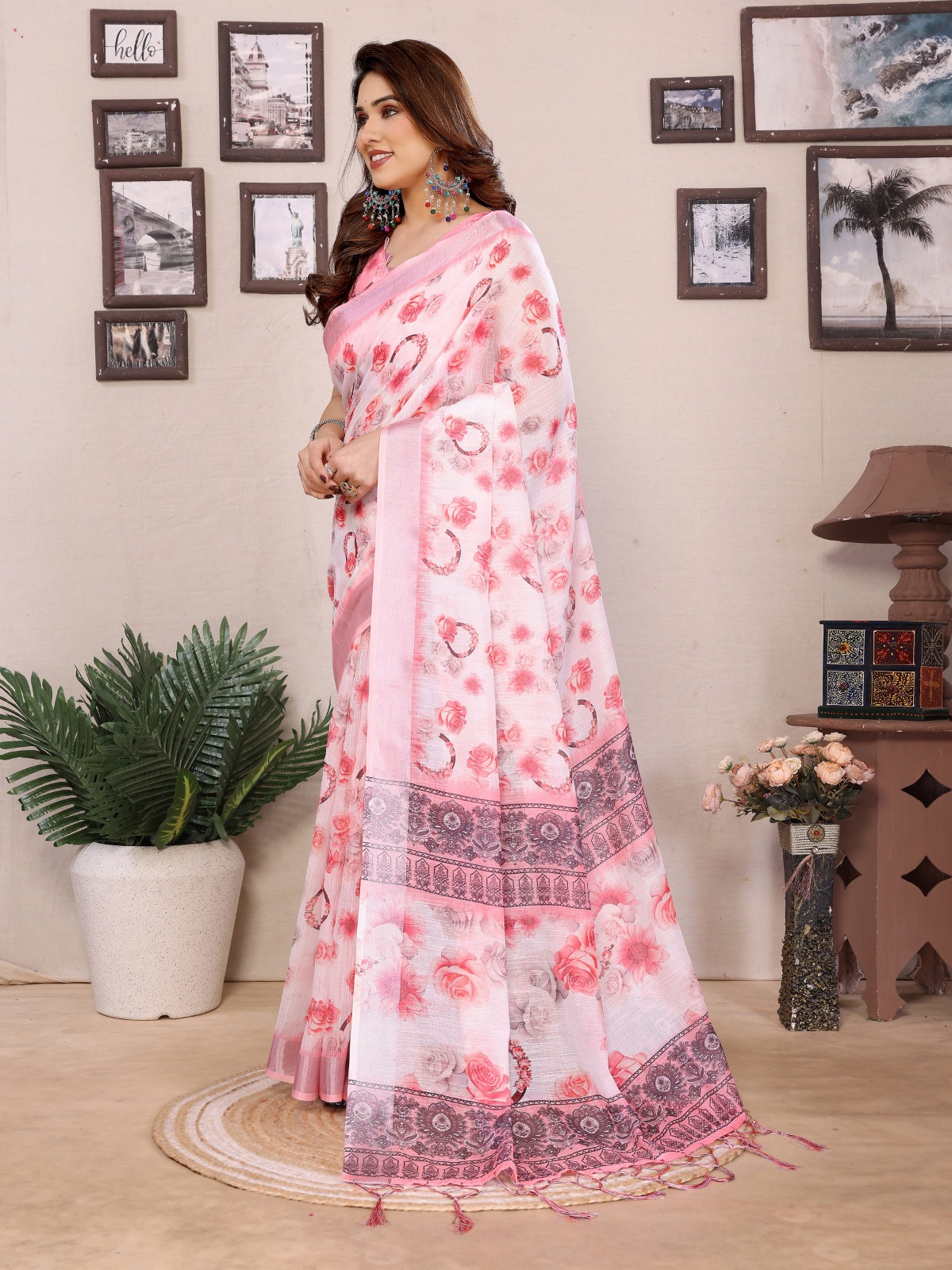
Shimmer linen cotton combines a textured base with a reflective thread or finish. Pastel Sage Shimmer Linen Cotton Floral Ethnic Saree Womens and Lavender Floral Printed Shimmer Linen Cotton Saree may photograph brighter along folds than across the body. A front-facing light can flatten that contrast, while a side light can emphasise every crease and reflective strand.
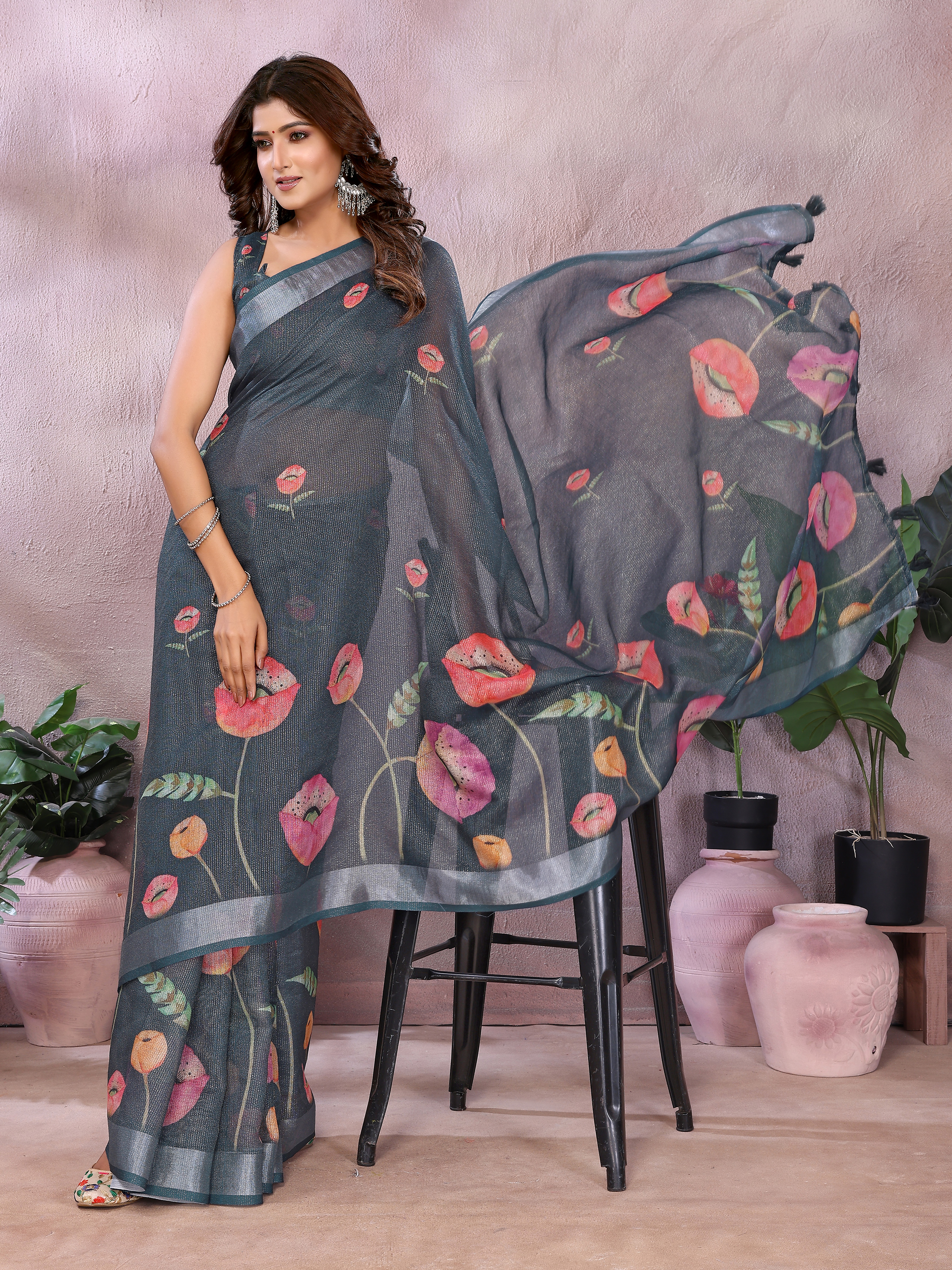
Matte cotton is usually more forgiving, but printed density still matters. A dark, closely packed floral print absorbs more light than a small, widely spaced motif. A pale printed saree photographed against a white wall may also lose contrast because the camera exposes for the bright background.
How Do Saree Fabrics That Photograph Differently Under Indoor Lighting Affect Prints?
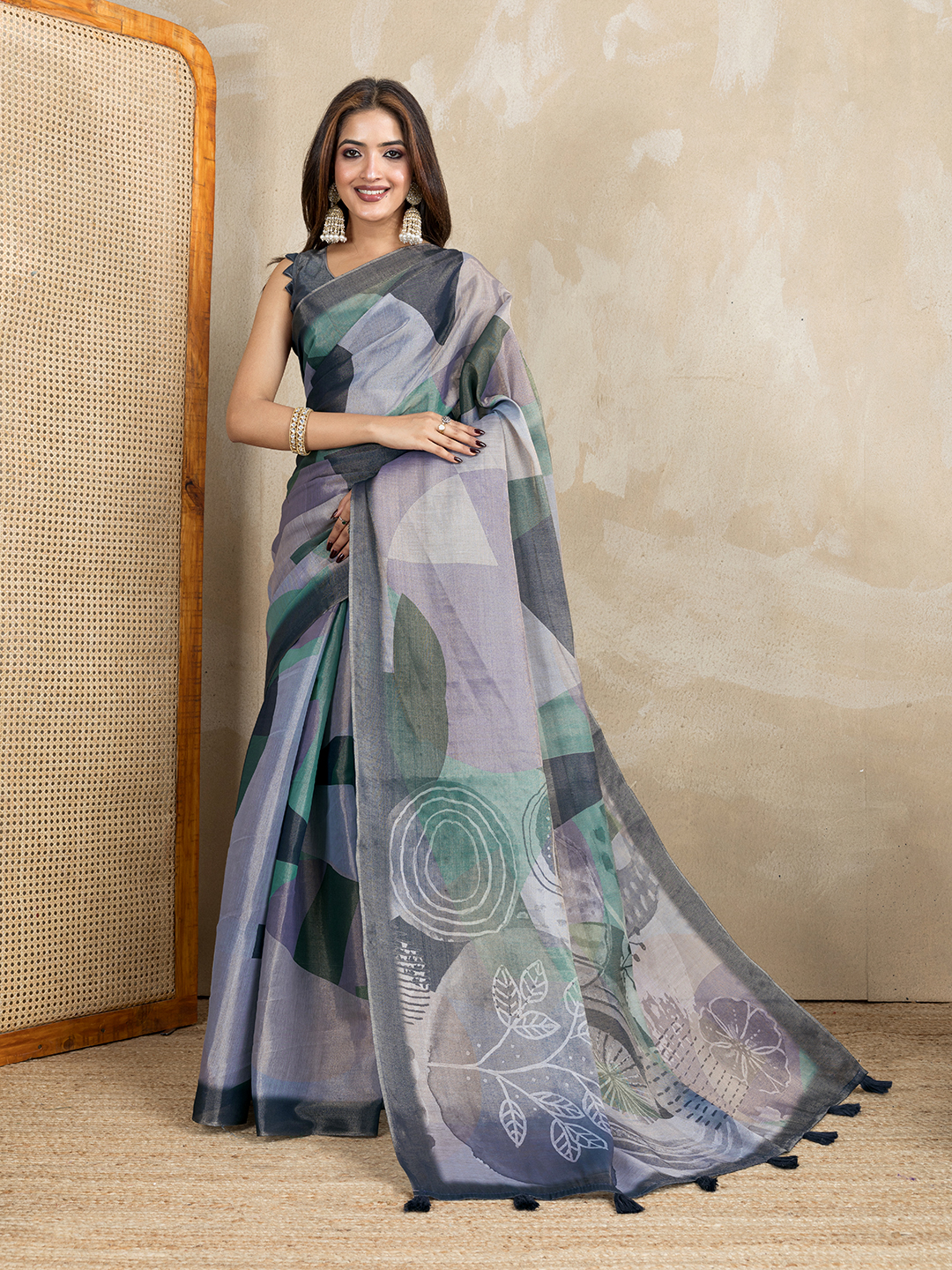
Print scale, border contrast and metallic detail determine where a camera places visual emphasis. Large motifs remain readable from several metres away, while fine floral details may merge into a single colour in a low-light phone photograph.
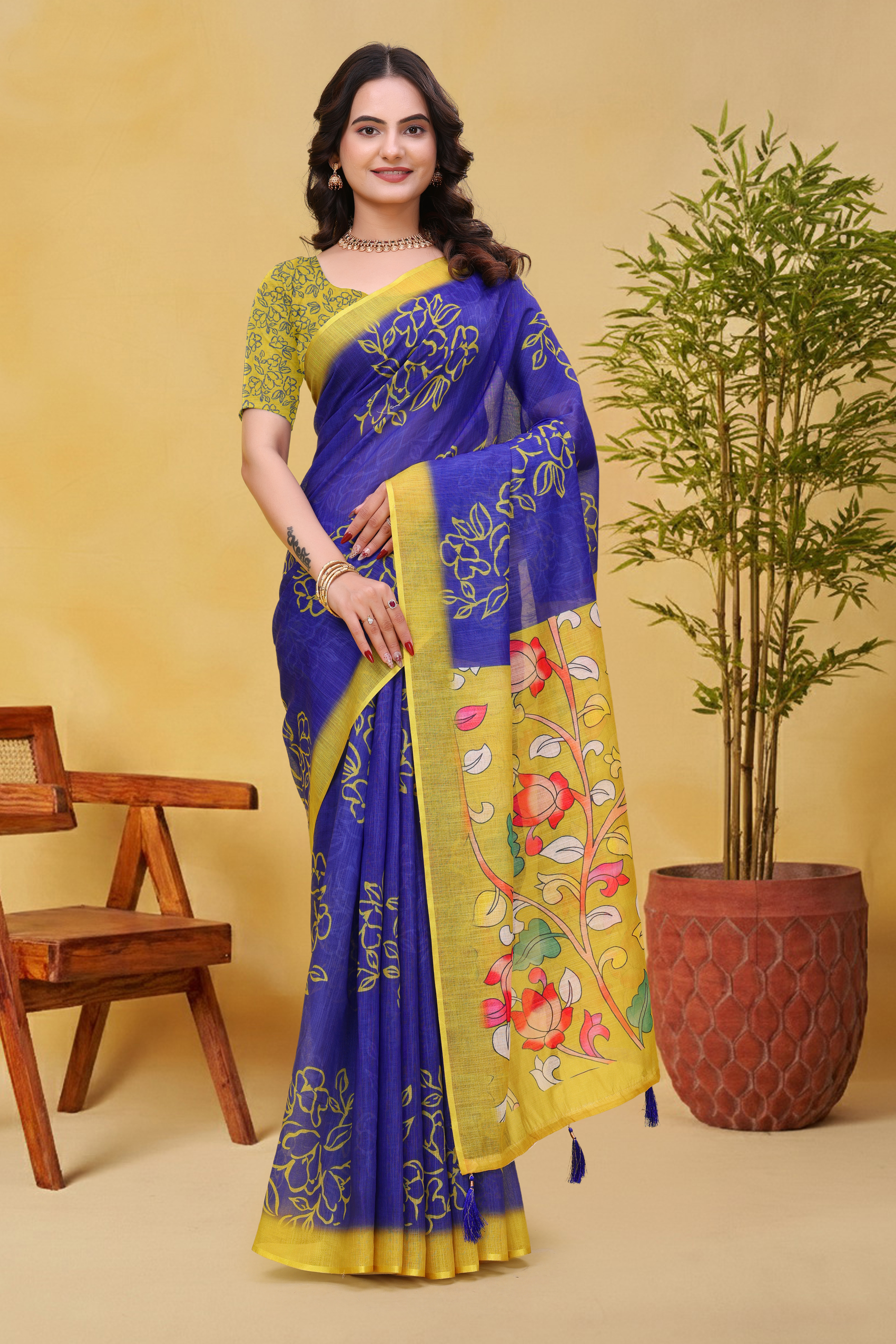
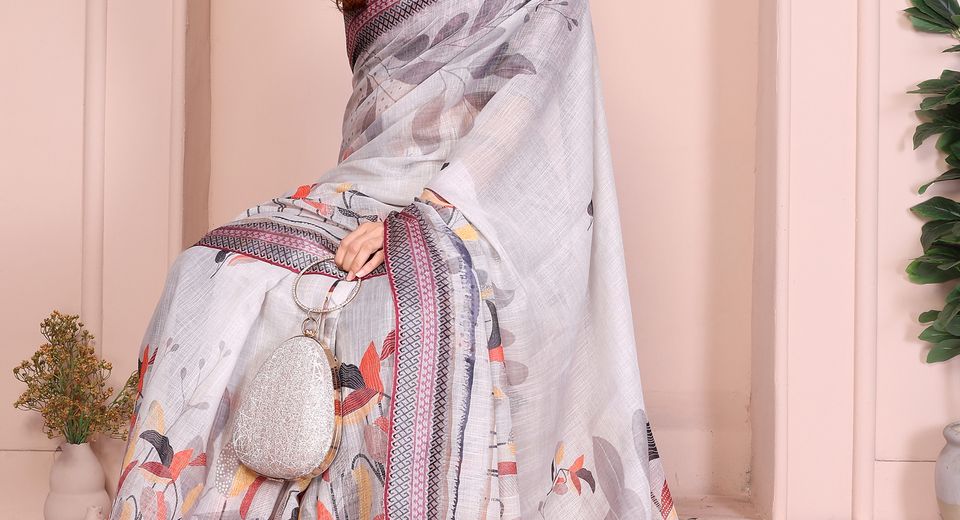
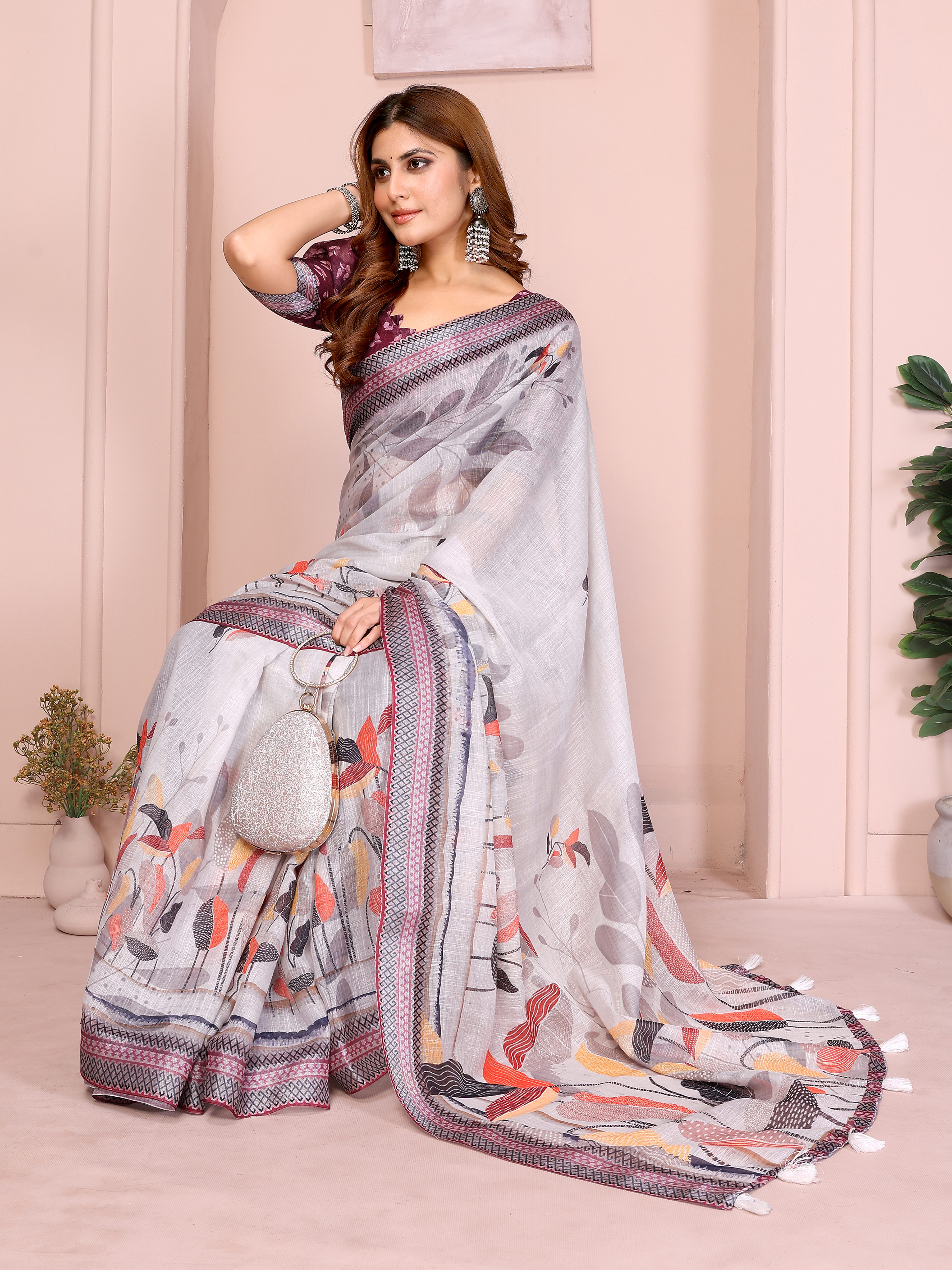
A strong border can make the saree appear darker or more saturated because the camera evaluates the whole frame. Light Grey Linen Cotton Floral Print Saree with Blue Border illustrates this effect: the blue edge may encourage the phone to deepen blue tones, while the light grey body can appear cooler than it does in person.
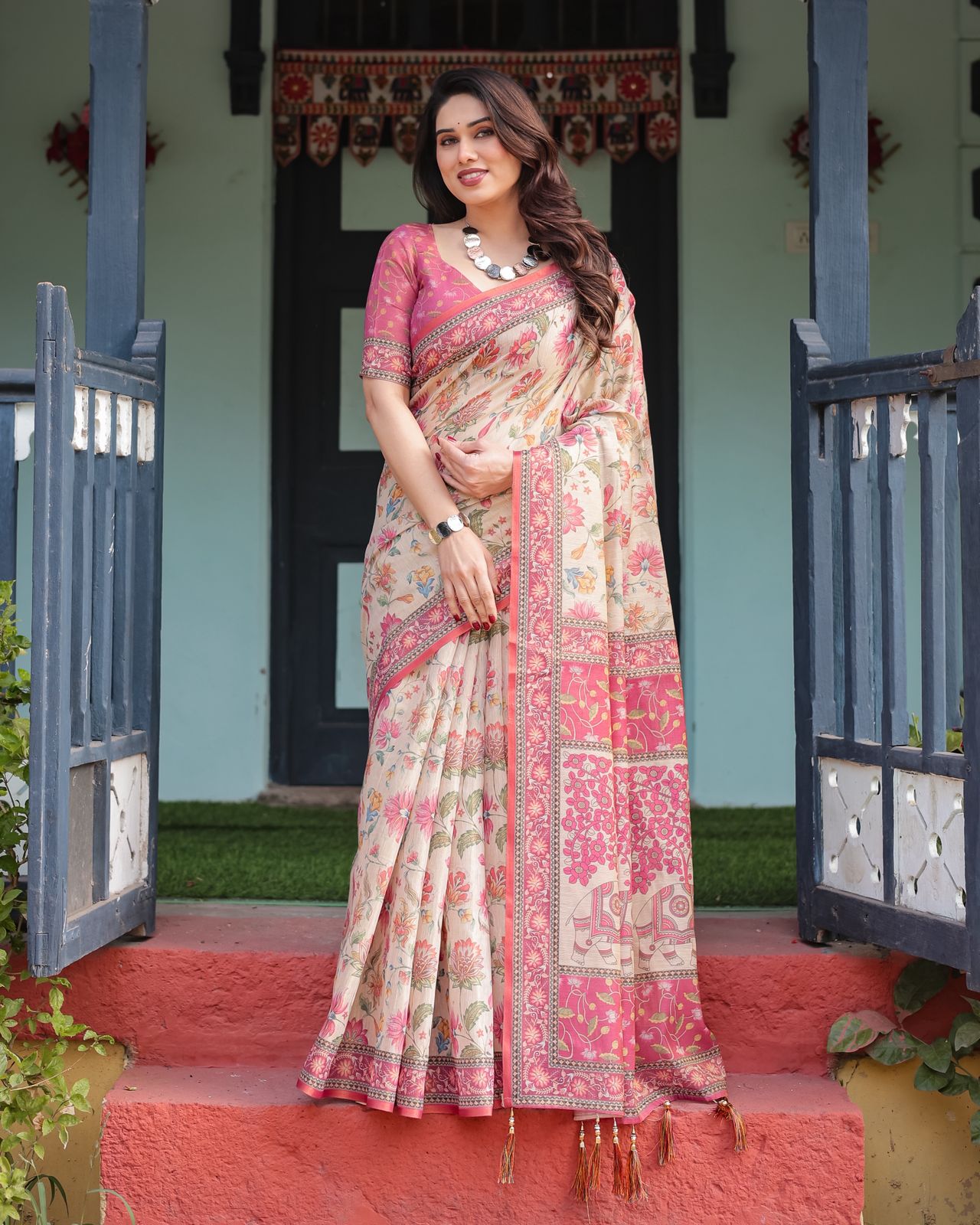
Beige and cream bases are particularly sensitive to indoor light. Traditional Beige Multicolor Printed Saree may look neutral near a window but more golden beneath a warm chandelier. Beige Floral Printed Linen Cotton Saree with Blue Border can show a similar shift, with the blue border retaining contrast while the beige body absorbs the room's amber cast.
Metallic grey isn't identical to silver, white or black in a photograph. Printed Linen Cotton Saree in Beige with Metallic Grey Edge may produce a narrow highlight along the edge when the fabric is angled towards a lamp. If the edge faces away from the light, the same detail can look softly charcoal.
Photography also changes the apparent width of a border. A reflective border attracts exposure and attention, which can make it seem broader than it's. A matte border against a contrasting body may look narrower in a compressed online image because its texture has less highlight separation.
How Can You Test Saree Fabrics That Photograph Differently Under Indoor Lighting?
You can test a saree online by comparing the fibre description, close-up images, natural-light photographs and the likely room lighting where you'll wear it. No single product photograph can show every possible colour response.
- Read the fibre and weave information. Linen cotton, handloom cotton, silk, chiffon and tissue have different reflection patterns. A fibre label doesn't guarantee a particular finish, but it gives you an useful starting point.
- Inspect the full-length image and the close-up. The full image shows overall colour and proportion; the close-up reveals slubs, print edges, zari and surface sheen.
- Look for a neutral reference. White, cream, grey or black elements in the image help you judge whether the photograph has a warm cast. Background walls are not always neutral, so don't use the background alone as a colour reference.
- Compare multiple angles. If the saree looks significantly lighter or darker when folded, the surface is responding strongly to directional light. That response is common with shimmer and metallic details.
- Ask for a daylight video when colour is critical. A short video near a window can show how the fabric moves and whether the shine is woven, printed or caused by a temporary lighting reflection.
- Allow for device differences. Two phone screens can display the same image differently because of brightness, colour profile and night-mode settings. Use the written colour name and fabric details alongside the photograph.
A practical price check can also make online comparison easier. Sarees from Rs 1000 to Rs 1500 may suit a first purchase when you want to test how a particular linen cotton or printed surface behaves in your home lighting. Sarees Under 20% Off and Sarees Under 10% Off can widen the choice, but sale labels should never replace checking fibre, measurements and care instructions.
What Indoor Setup Shows Saree Fabrics That Photograph Differently Under Indoor Lighting?
Large, diffused light placed near the saree and slightly to one side usually produces the most reliable indoor saree photograph. Diffusion softens harsh reflections while preserving weave and print detail.
For a simple home setup, stand two to three metres from a large window and face the window at roughly a 45-degree angle. Turn off warm ceiling bulbs, switch off the phone flash and keep the saree away from a brightly coloured wall. If daylight is unavailable, use two matching LED lights around 4000K-5000K and place them at equal height on opposite sides of the camera.
Direct flash can create a white hotspot on zari, shimmer linen cotton and glossy synthetic surfaces. Flash can also make the foreground bright while leaving the pleats behind it dark. A lamp bounced off a white wall or a softbox produces a more even result.
Keep the camera lens parallel to the saree when photographing colour and print. A steep angle adds folds and shadow, which is useful for showing drape but less reliable for judging the base shade. Tap the screen on a mid-tone area, lower exposure slightly if the border is glowing, and avoid portrait mode because computational blur can distort fine fringe or zari edges.
Should you photograph a saree with flash?
You should usually avoid direct flash when the saree contains zari, shimmer yarn, tissue or a reflective border. Direct flash can make metallic detail look whiter and brighter than it appears during normal indoor wear.
Flash can still help in a very dark room when documentation matters more than colour accuracy. If you use flash, photograph a second version without flash, keep the phone several feet away and compare both images with the saree under ordinary room lighting.
How Should You Choose Saree Fabrics That Photograph Differently Under Indoor Lighting?
You should choose the fabric according to the room, event and photographic result you want, rather than selecting only by colour name. A matte linen cotton or cotton saree is generally easier to photograph consistently, while shimmer, tissue and zari create more variation but also more visible detail.

For a family gathering in a warm-lit living room, beige, peach, coral and muted gold can look richer than expected. Time-honoured Beige Multicolor Printed Saree may work well if you want a warm, classic appearance, but check a daylight image so the beige doesn't become overly yellow indoors.
For a cool-lit office event or indoor daytime function, grey, sage, lavender and blue can retain a fresher appearance. Light Grey Linen Cotton Floral Print Saree with Blue Border and Lavender Floral Printed Shimmer Linen Cotton Saree should be checked from several angles because cool light can intensify blue or violet undertones.
For a subtle festive photograph, zari gives small points of brightness without requiring a heavily embellished surface. Pastel Floral Tissue Handloom Cotton Saree with Zari Weaves can show this effect, although a warm lamp may make the zari look more golden than it does in daylight.
Budget comparisons are easiest when similar fabrics are viewed together. Sarees Flat 60% Off and Sarees Flat 50% Off may include different surface treatments, so compare close-up weave photographs rather than assuming two sarees will reflect light in the same way because their prices or discounts are similar.
Care also affects future photographs. Store linen cotton and handloom cotton sarees folded with clean tissue or unbleached cotton between folds, avoid prolonged direct sunlight and follow the stated washing instructions. Creases create additional shadows, while residue from unsuitable detergent can reduce the clarity of colour and make a surface appear dull.
An useful final check is the three-light test: view the saree beside a window, under the room's normal bulb and in the exact corner where photographs will be taken. Note the base colour, border colour and brightest reflective point in each setting. That three-part comparison gives a more realistic expectation than judging a single edited product image.
Common Questions About Saree Fabrics in Indoor Photographs
Why does my beige saree look yellow in indoor photographs?
A beige saree often looks yellow because warm bulbs around 2700K-3000K contain more amber light than daylight. Turn off mixed room lighting, photograph near a window or use a neutral LED around 4000K-5000K to reduce the colour cast.
Which saree fabric is easiest to photograph indoors?
Matte cotton and relatively even linen cotton surfaces are usually easiest to photograph indoors because they create fewer sharp highlights. Printed linen cotton can still show colour changes when a warm bulb, dark background or strong border affects the camera's exposure.
Why does zari look white or silver in my saree photo?
Zari can look white or silver when direct flash or a strong lamp reflects directly into the camera lens. Move the light to one side, avoid flash and rotate the saree slightly so the metallic thread produces a softer highlight.
How can I check a saree’s real colour before buying online?
Compare the full-length image with close-up photographs and look for images taken in daylight. Check the written colour description, request a daylight video when possible and remember that phone screens can display the same image with different brightness and colour profiles.
Why do blue borders look darker in indoor photos?
A blue border may look darker when the surrounding saree body is pale or when the camera exposes for a bright light source. Cool LEDs can increase blue contrast, while a warm bulb can make the body yellow and make the blue edge appear deeper by comparison.
Is indoor flash suitable for photographing a shimmer linen cotton saree?
Direct indoor flash is usually unsuitable for a shimmer linen cotton saree because it creates hard white hotspots and hides the fabric's natural tonal variation. Diffused window light or matching LED lights gives a more useful record of the weave, print and drape.