Choosing Saree Colours When Most of the Event Happens Outdoors requires more than matching a saree to the invitation. Direct sunlight can make pale colours appear brighter, deepen some warm shades and reveal how strongly a print or border contrasts with the background. Venue surfaces, event timing, photographs and personal comfort all affect the final result. A colour that looks refined in a bedroom mirror may appear washed out beside a sunlit lawn, while a vivid shade may become overpowering in harsh afternoon light.
The most dependable approach is to decide when and where the main photographs will happen, then choose a colour with enough contrast to remain visible without absorbing unnecessary heat. Fabric, print scale and blouse colour matter almost as much as the saree's base shade.
Why outdoor light changes saree colours
Outdoor light makes saree colours look more exposed, reflective and contrast-dependent than indoor lighting. Sunlight reveals the difference between a flat solid colour and a surface with texture, print variation or a contrasting border.
Midday sunlight is particularly strong because it creates hard highlights and shadows. White, ivory, pale yellow and very soft beige can lose definition in full sun, especially when the saree has little surface contrast. Deep navy, black and dark maroon remain visually strong, but they can absorb heat and look heavy at a daytime event.
Open shade produces a gentler colour result. Under a canopy, trees or a covered veranda, pastel shades retain more depth and darker colours look less severe. Evening outdoor lighting creates a different challenge because warm bulbs, fairy lights and sunset tones can make orange, rust and red appear more intense.
Camera exposure also changes the result. A phone camera may reduce detail in a very pale saree against a bright sky, while a dark saree can appear almost black in a backlit photograph. A contrasting pallu, border or blouse gives the camera a clear colour boundary.
Choosing Saree Colours When Most of the Event Happens Outdoors
Choose a medium-light or medium-depth colour with visible contrast, a fabric suitable for the weather and one accent shade that separates the saree from the venue.
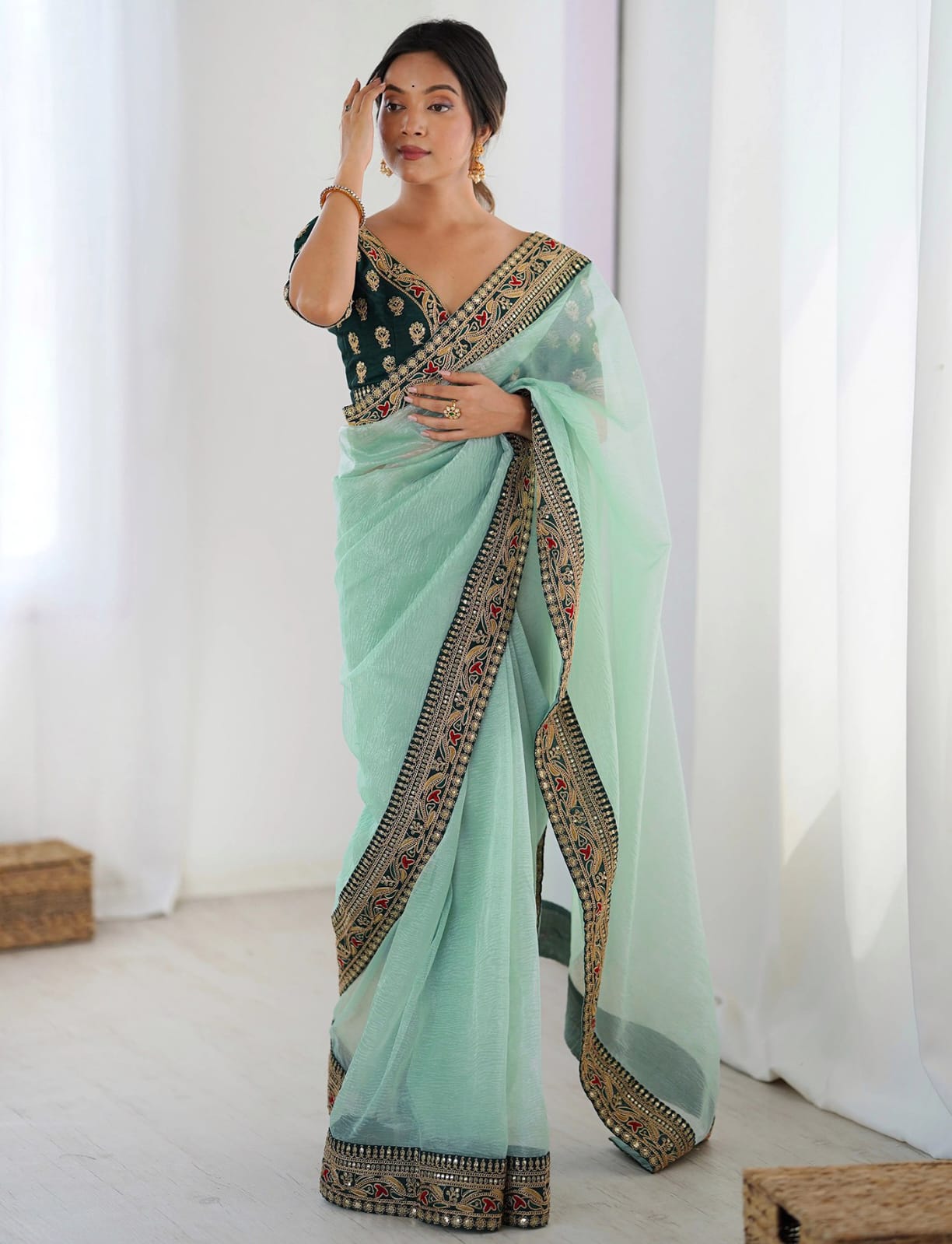
For a daytime garden wedding, powder blue, leaf green, muted pink, lavender, soft coral and fresh yellow can work well when they include a defined border or print. These shades harmonise with natural surroundings without disappearing into them. Blue against green foliage, pink against a pale venue wall and warm yellow against shaded trees generally create readable photographs.
For an open-air Haldi ceremony, yellow can be joyful but should not be selected without considering the décor. If the venue already contains marigold garlands, yellow drapes and turmeric-coloured seating, a yellow saree may blend into the background. Green, pink, orange with a darker pattern or blue with a warm border creates more separation.
For an evening sangeet under artificial lighting, jewel-toned teal, emerald, wine, cobalt and fuchsia provide stronger definition than very pale pastels. A saree with a reflective zari border can catch warm lights, but excessive shine may create bright patches in flash photography. Matte cotton, linen cotton and textured weaves often photograph with more even colour under mixed lighting.
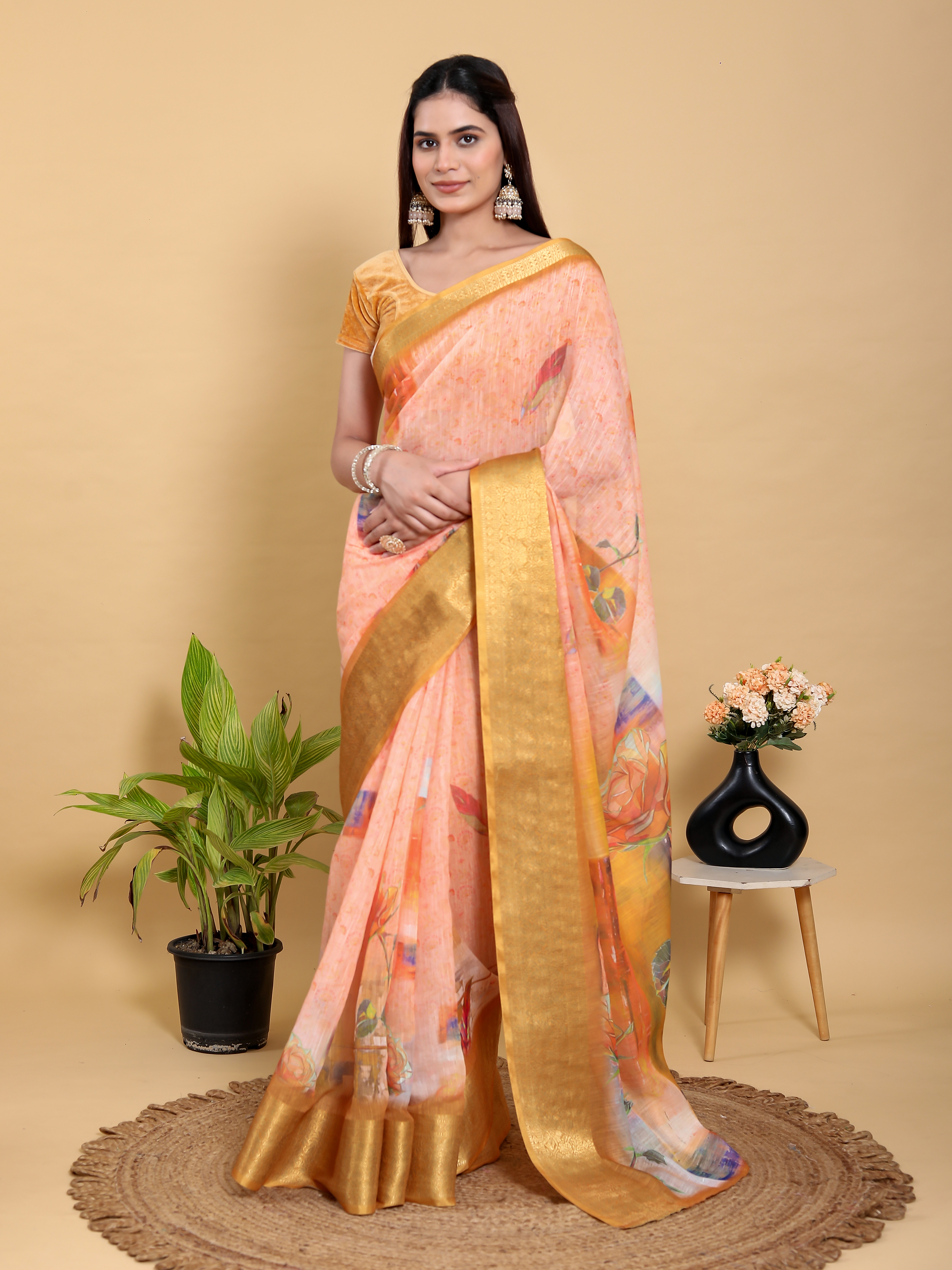
For a daytime work event, restrained blue, sage green, brown, ivory with a coloured border and dusty rose are practical choices. A print can add personality without requiring heavy jewellery. Brown Erode Cotton Saree with Sage Green Floral Pallu demonstrates how a grounded base and a cooler accent can create definition in an outdoor setting.
Match the colour to event time and weather
Event timing should determine whether you prioritise heat control, visibility or evening richness. A simple time-based colour plan prevents many outdoor styling mistakes.
Morning events
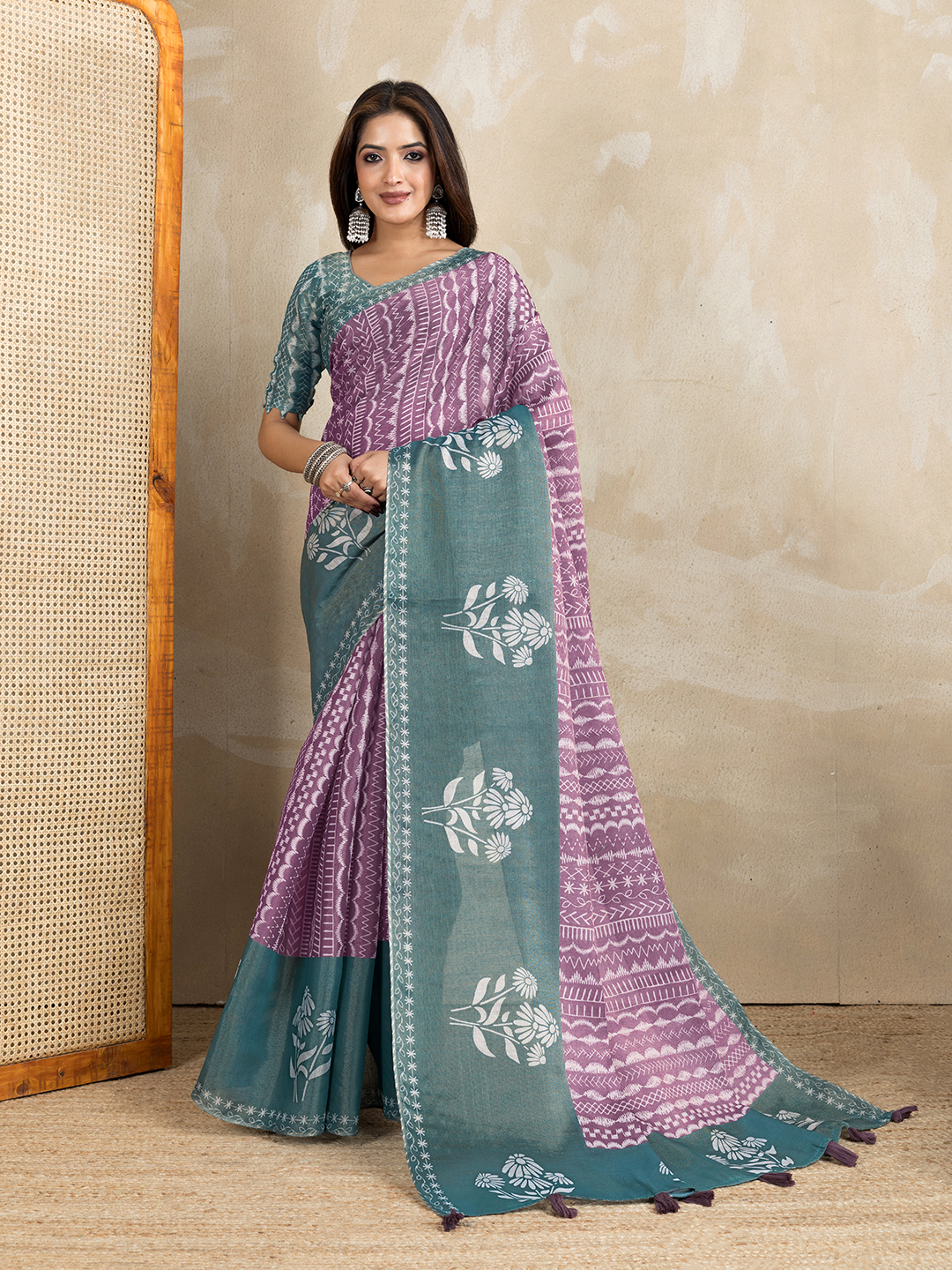
Morning events suit fresh, low-to-medium saturation colours such as sky blue, mint, peach, soft pink and light green. Early sunlight is usually gentler than midday light, so a delicate print can remain visible without looking harsh. Sky Blue Umbrella Print Linen Cotton Saree with Unstitched Blouse offers a clear example of a cool base with a distinctive motif that can stand out against lawns or pale walls.
Morning ceremonies often involve movement between parking areas, lawns and covered spaces. A breathable saree and a blouse with secure shoulder and underarm coverage are more useful than a colour choice based only on photographs.
Midday events
Midday events suit colours with moderate depth and clear contrast, including turquoise, leafy green, coral, cobalt, rose and muted orange. Avoid choosing a nearly white saree with a white blouse if the ceremony will be photographed in direct sun. A border in blue, green, pink or gold helps the outline remain visible.
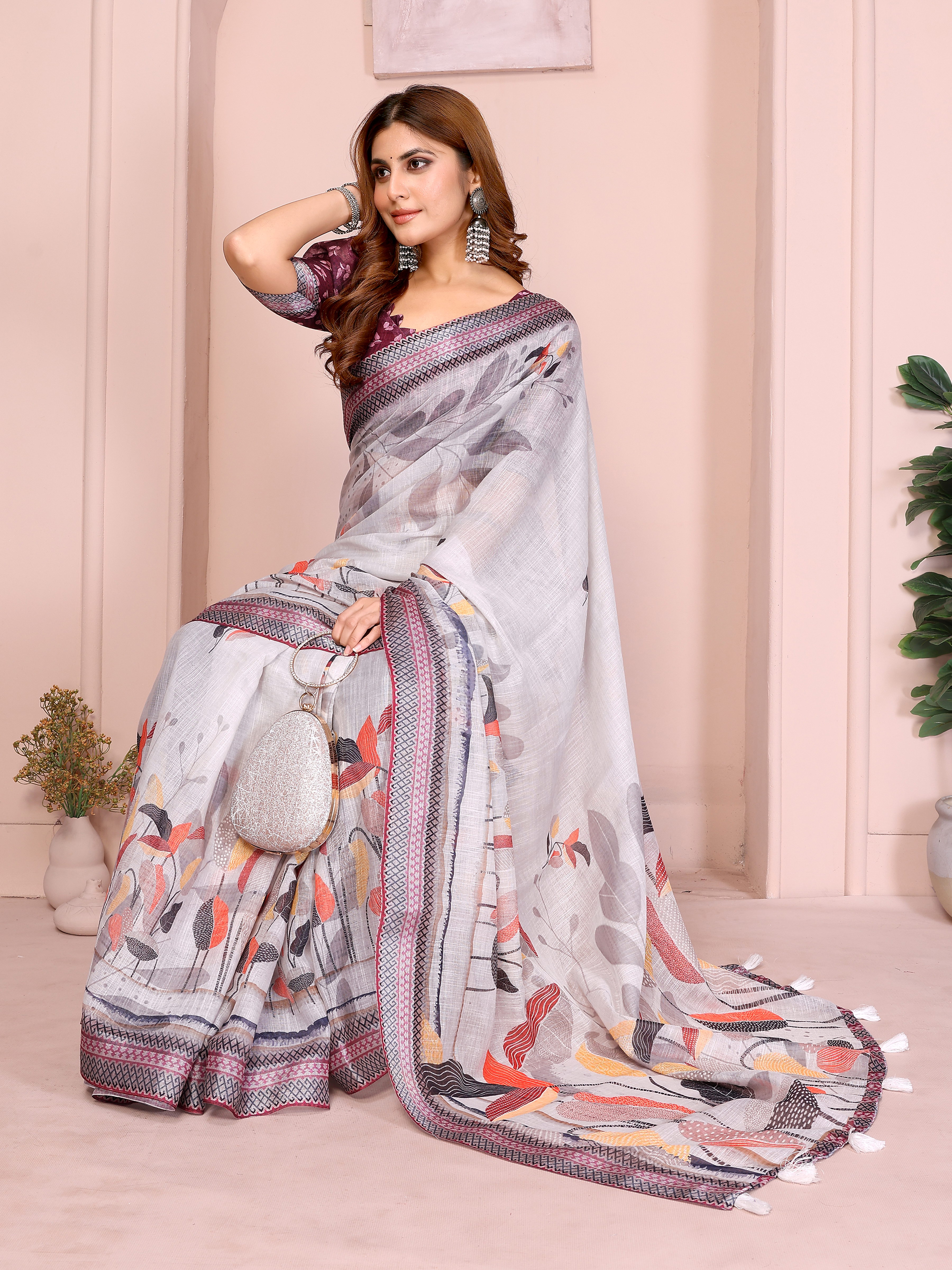
Orange Bandhani Kalamkari Linen Cotton Saree combines a warm base with a visibly patterned surface, making the colour easier to read than a single flat orange field. A patterned saree can also break up the intensity of a strong colour across the full drape.
Late afternoon and evening events
Late afternoon and evening events support richer colours because the background light becomes warmer and less intense. Rust, berry, bottle green, plum, deep blue and burnt orange can look especially effective. If the venue uses amber bulbs, red and orange may appear more saturated, so a cooler blouse or border can balance the overall look.
Use prints and borders to prevent colour washout
A contrasting print or border prevents a saree from losing its visual structure in bright outdoor light. Contrast doesn't always mean a dramatic dark border; a difference in hue, texture or pattern density can define the drape.
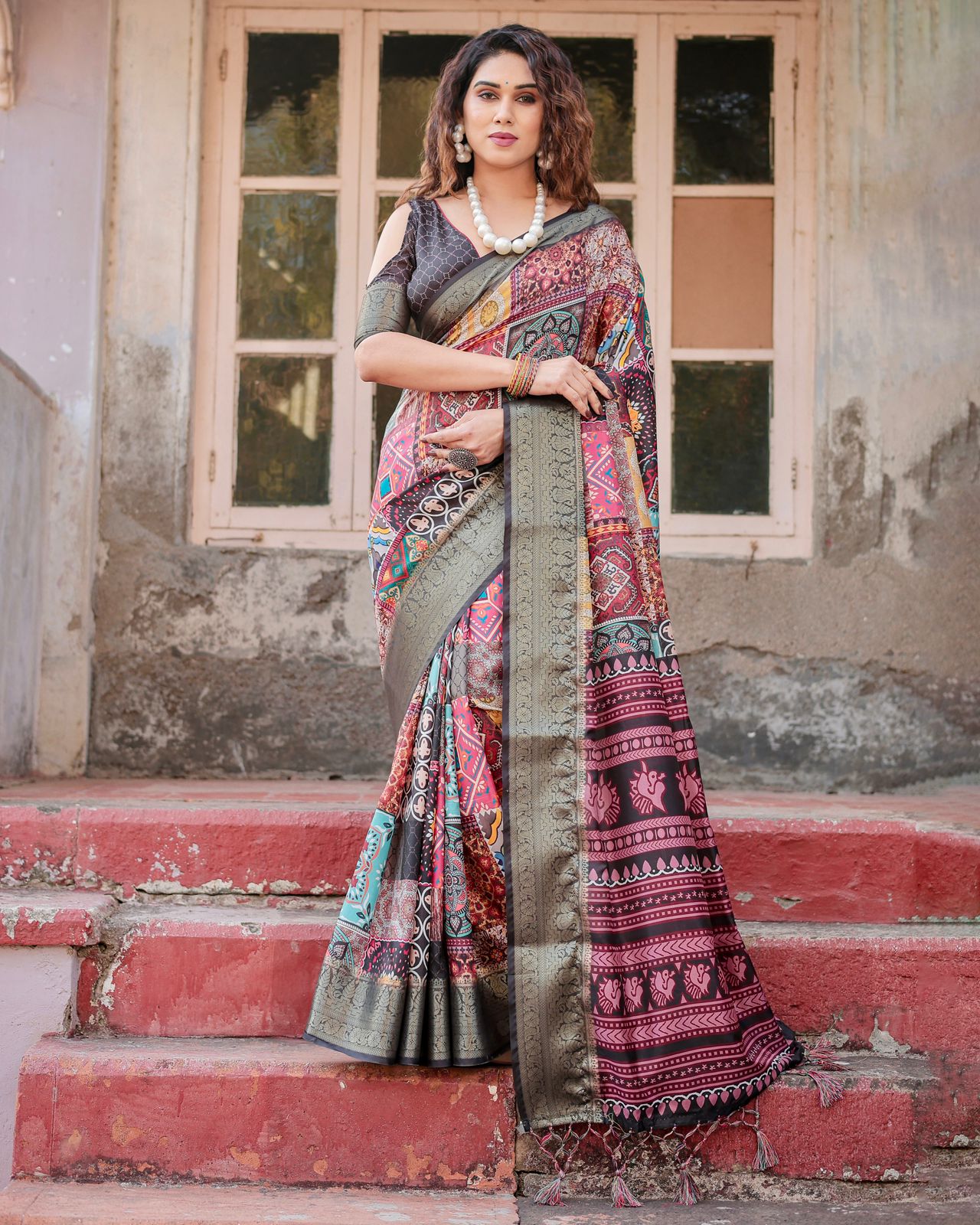
Floral prints work especially well at garden venues, but the scale should match the distance from the camera. Small florals appear delicate in person and may read as texture in wide photographs. Larger flowers remain recognisable from a distance but can compete with a heavily decorated mandap or floral backdrop.
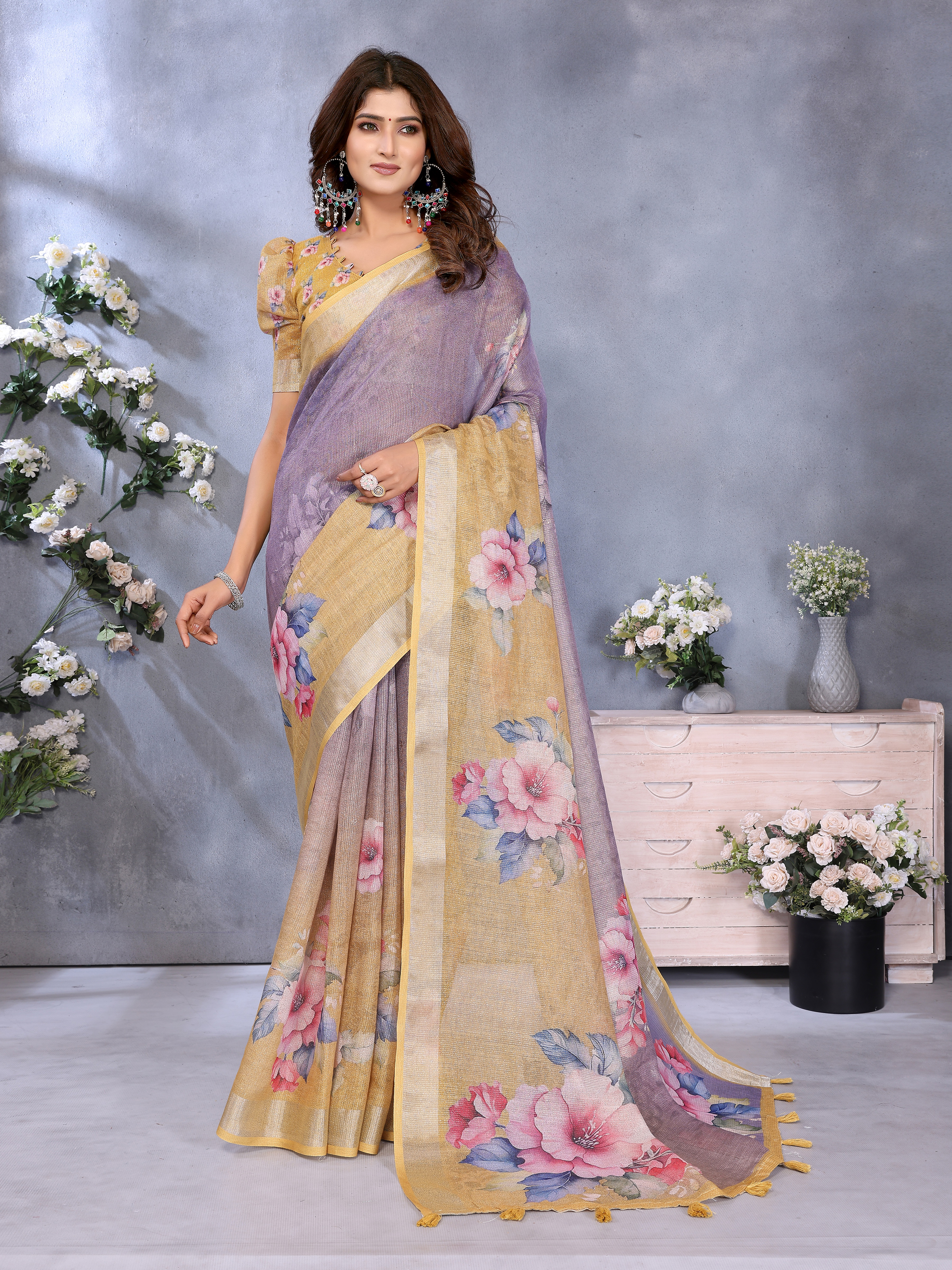
Pastel Green Linen Saree with Elegant Floral Print uses a light base and a visible motif to create detail without relying on a dark colour. Pastel Linen Cotton Floral Print Saree with Designer Blouse gives another approach: the blouse can supply stronger definition if the saree itself is intentionally soft.
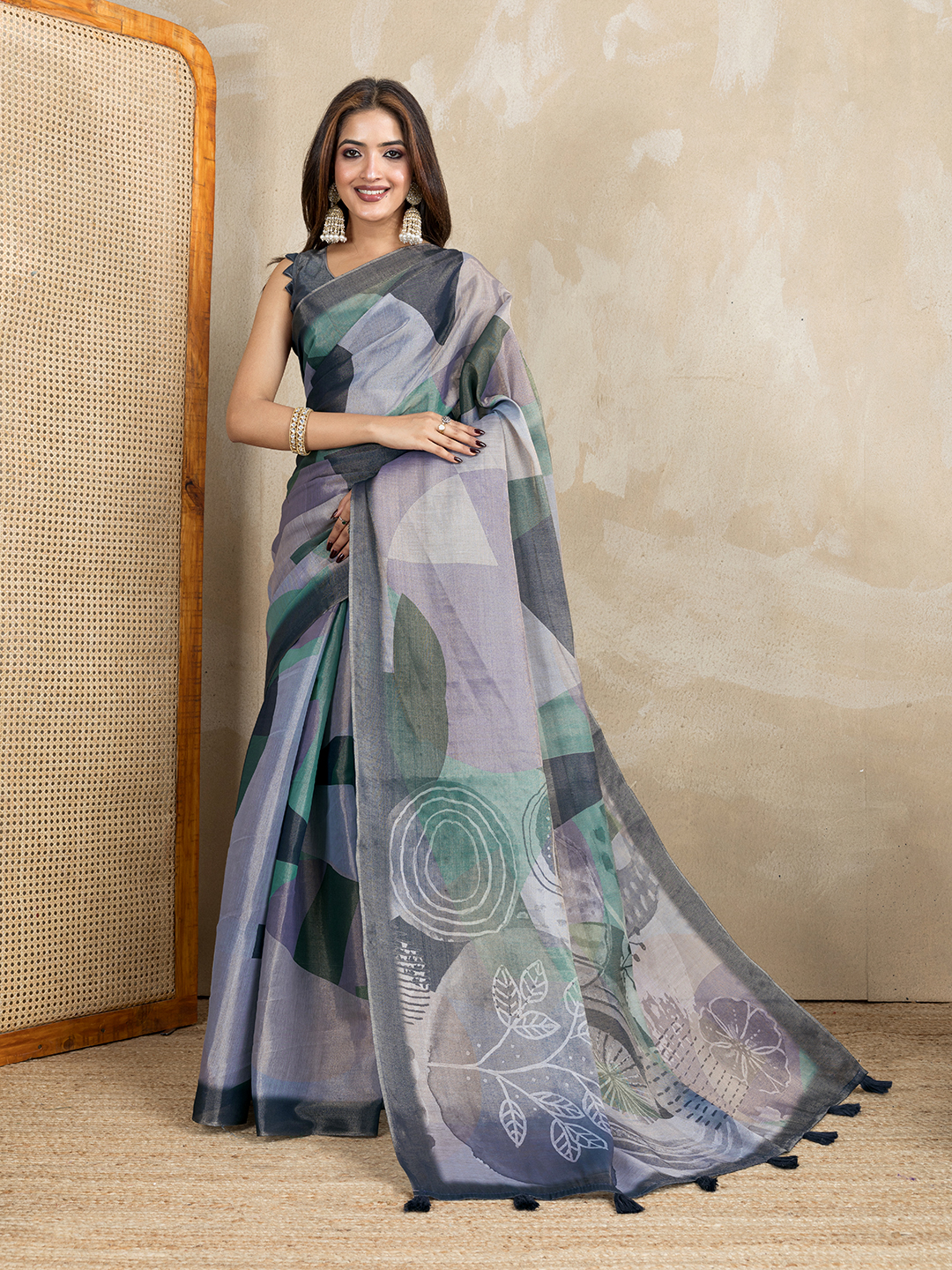
Green Pink Erode Cotton Abstract Saree with Artistic Border illustrates the value of a defined edge. Pink and green create a two-colour frame, while the abstract design adds interest without requiring elaborate jewellery.
don't judge a border only while the saree is folded. Spread the saree across a chair or hold the pallu at shoulder height to see how much contrast remains after pleating. A narrow border may almost disappear in tightly packed pleats, whereas a broader artistic border may remain visible in full-length photographs.
Build the palette around complexion and accessories
The most flattering outdoor saree colour is one that gives the face enough contrast without reflecting excessive brightness upward. The right choice depends on undertone, styling and the intensity of the surrounding light rather than on a fixed rule about which colours suit a particular skin tone.
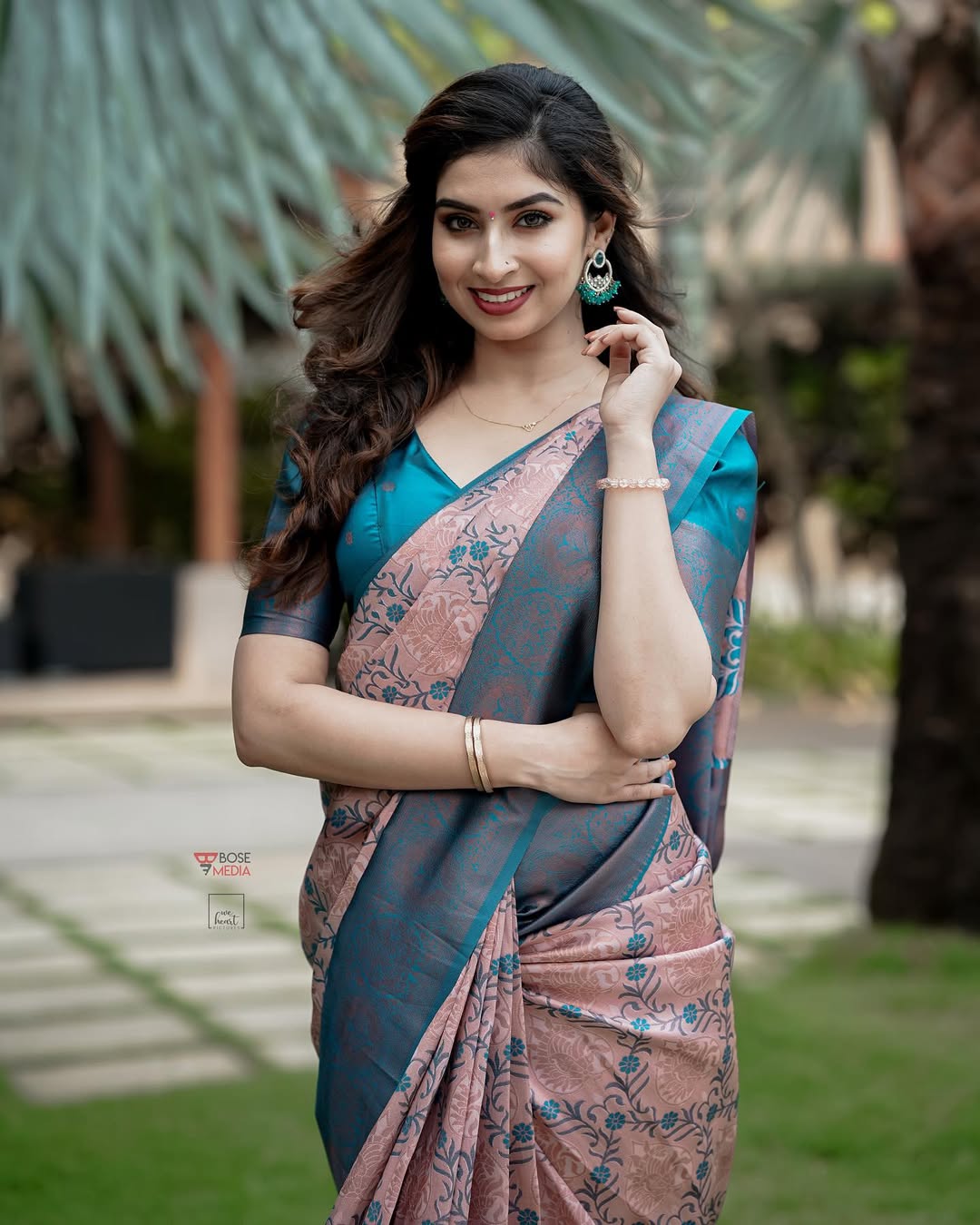
Warm undertones often pair naturally with rust, coral, mustard, olive, orange, brick red and warm pink. Cool undertones may find blue, mauve, lavender, emerald, berry and blue-green especially clear near the face. Neutral undertones can move between both groups, with the blouse or jewellery deciding whether the final palette feels warm or cool.
When a saree is very light, choose a blouse that's one or two steps deeper in value, such as sage with pale green or blue with powder blue. When a saree is dark, an ivory, blush, metallic or lighter-toned blouse can stop the face from being surrounded by a heavy block of colour.
Jewellery should respond to the colour temperature. Gold complements mustard, orange, rust, coral and warm green. Silver, white gold and pearl tones support blue, lavender, pink and cool green. Oxidised silver can ground a printed cotton saree without competing with its motifs.
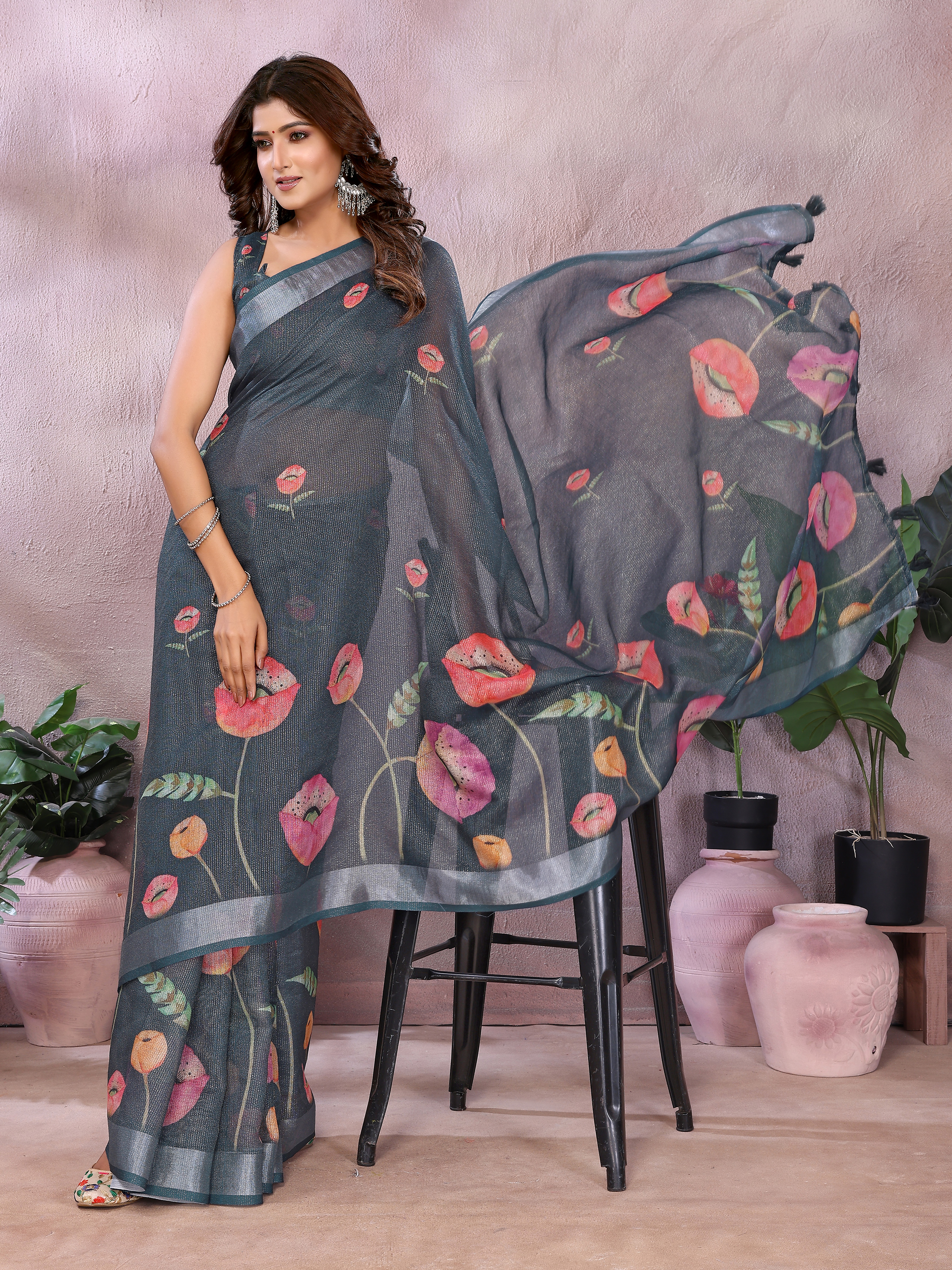
Green Floral Designer Saree can be styled with gold for a festive daytime appearance or with antique silver for a more artisanal, relaxed mood. The accessory choice changes the perceived formality even when the saree colour remains unchanged.
Choose fabric and colour together
Fabric affects how a colour behaves against sunlight and how comfortable the wearer remains after several hours outside. Linen cotton and Erode cotton generally offer a breathable, structured appearance, although comfort also depends on weave, lining and weather.
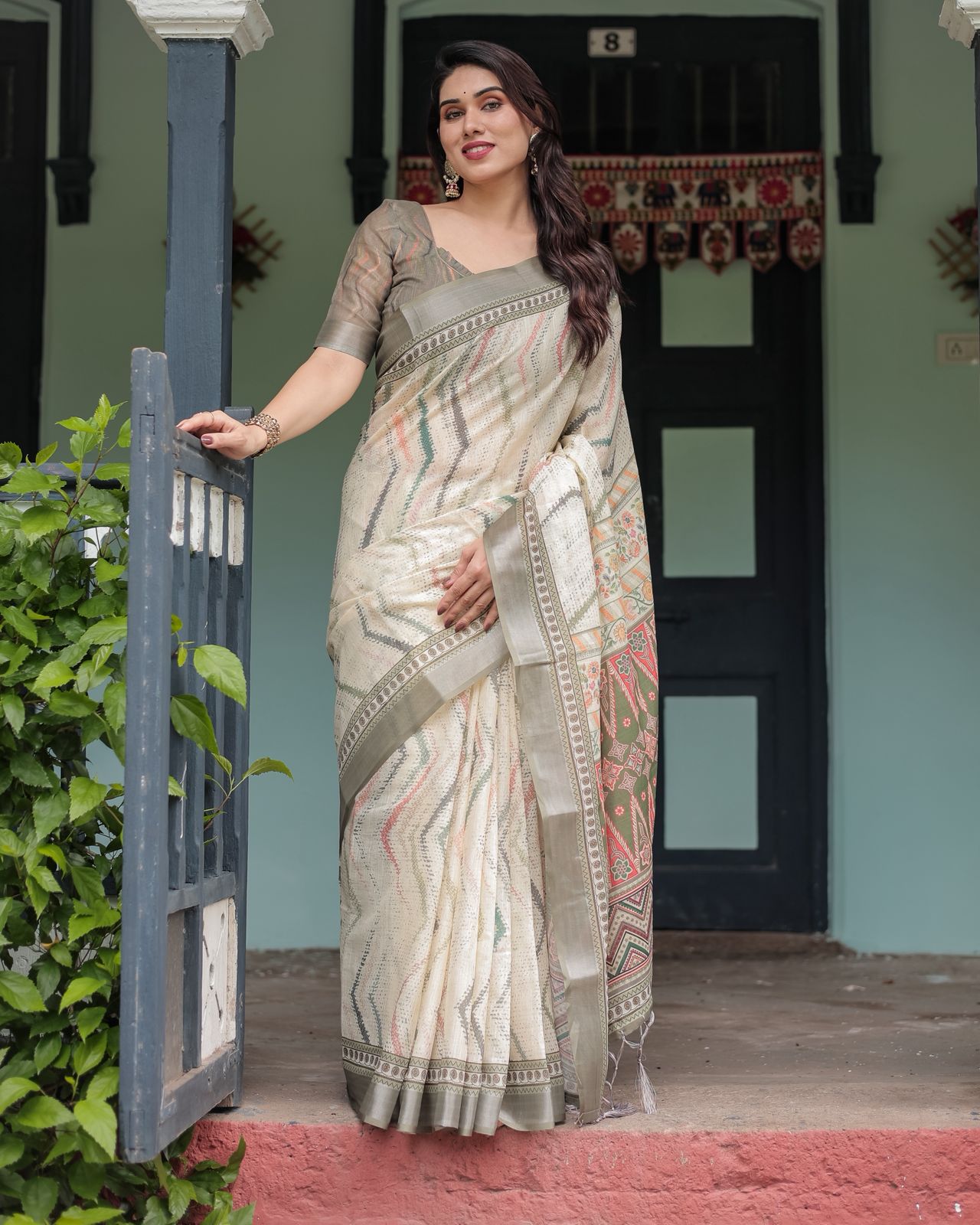
Linen cotton prints can show colour variation across the weave, giving a soft, matte effect that's useful in bright light. Cotton sarees with a firm hand often hold pleats well during movement, while a lighter drape may need more careful pinning in wind. A saree that photographs well but requires constant adjustment isn't a practical outdoor choice.
Colour can also influence perceived heat. Black, navy, deep brown and very dark green absorb more sunlight than pale or medium shades. If the event lasts from noon into late afternoon, a medium shade such as blue, sage, rose or muted orange may offer a better balance than an extremely dark colour.
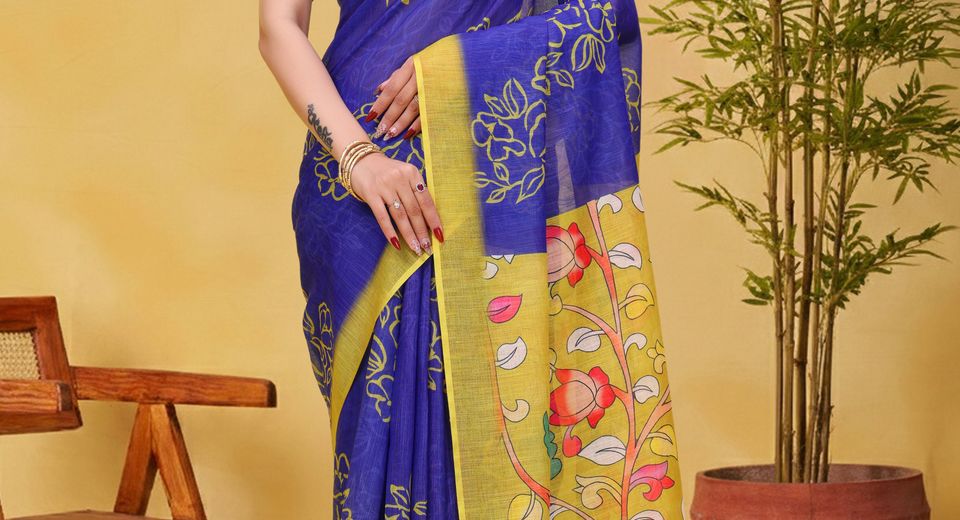
Buy Blue Linen Cotton Floral Print Saree with Yellow Border shows how a cool base and a warm border can provide contrast without relying on heavy embellishment. Green Pink Erode Cotton Abstract Saree with Artistic Border similarly uses colour separation to keep the drape legible in changing light.
Test the saree before the outdoor event
A short home test can reveal whether a saree will work outdoors. Place the saree near a window or outside for five minutes, photograph it in direct light and then photograph it in open shade.

Check whether the face remains separated from the blouse, whether the border is visible after pleating and whether the print competes with the background. Take one front-facing photograph, one three-quarter photograph and one seated photograph because each angle displays a different amount of colour.
Pair the saree with the actual blouse, footwear and jewellery before deciding. A pastel saree may need a deeper blouse, while a saturated saree may need simpler accessories. Test the drape while walking for ten minutes, especially if the event includes grass, uneven paving or wind.
For a practical budget search, Sarees from Rs 1000 to Rs 1500 can be assessed using the same colour and fabric checks rather than chosen only by price. Discount collections such as Sarees Under 20% Off, Sarees Under 10% Off, Sarees Flat 60% Off and Sarees Flat 50% Off can also be compared by print scale, border contrast and fabric suitability.
Choosing Saree Colours When Most of the Event Happens Outdoors becomes straightforward once colour is treated as part of the setting. Start with the light, check the venue background, select a fabric that supports movement and use a border, blouse or print to create definition. The final saree should look attractive in person, remain distinct in photographs and keep the wearer comfortable from the first ceremony to the last group picture.
Common Questions About Choosing Saree Colours for Outdoor Events
Which saree colour is best for a daytime outdoor wedding?
Medium-light or medium-depth shades such as powder blue, coral, leafy green, rose and muted orange usually work well for a daytime outdoor wedding. A visible border or print helps the saree remain distinct in strong sunlight and photographs.
Which saree colours should be avoided in direct sunlight?
Very pale white, ivory and beige sarees can lose definition in direct sunlight when they have little contrast. Black, navy and very dark colours remain visible but may absorb more heat, so medium shades are often more comfortable for long midday events.
What colour saree is suitable for an outdoor Haldi ceremony?
Green, pink, blue or orange with a contrasting pattern can work well for an outdoor Haldi ceremony. Yellow is festive, but it may blend into marigold décor, turmeric stains and yellow drapes unless the saree has a clearly different border or accent.
Are floral sarees suitable for garden events?
Floral sarees are suitable for garden events when the print scale complements the venue. Medium or larger motifs remain visible in photographs, while a defined border prevents a small floral print from disappearing against foliage.
How can a pastel saree look better in outdoor photographs?
Pair a pastel saree with a blouse that is one or two shades deeper, and choose a contrasting border, pallu or jewellery accent. Photograph the complete outfit in direct light and open shade before the event to check whether the face and drape remain distinct.
Is cotton or linen cotton suitable for a summer outdoor function?
Cotton and linen cotton are often practical for summer outdoor functions because their structured, breathable surfaces can feel comfortable in warm weather. Choose the weave, lining and drape carefully, and secure the pleats and pallu if the venue is windy.