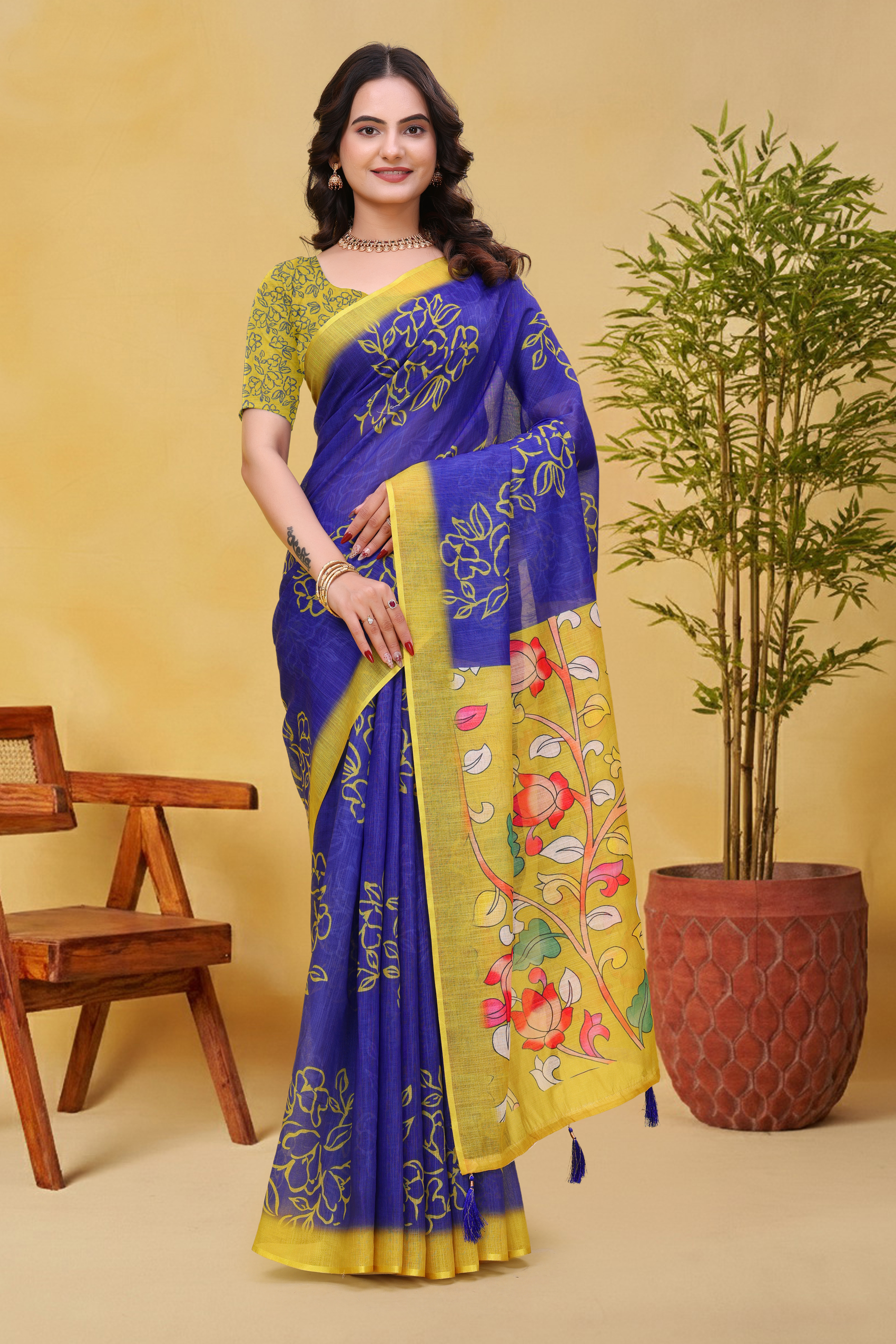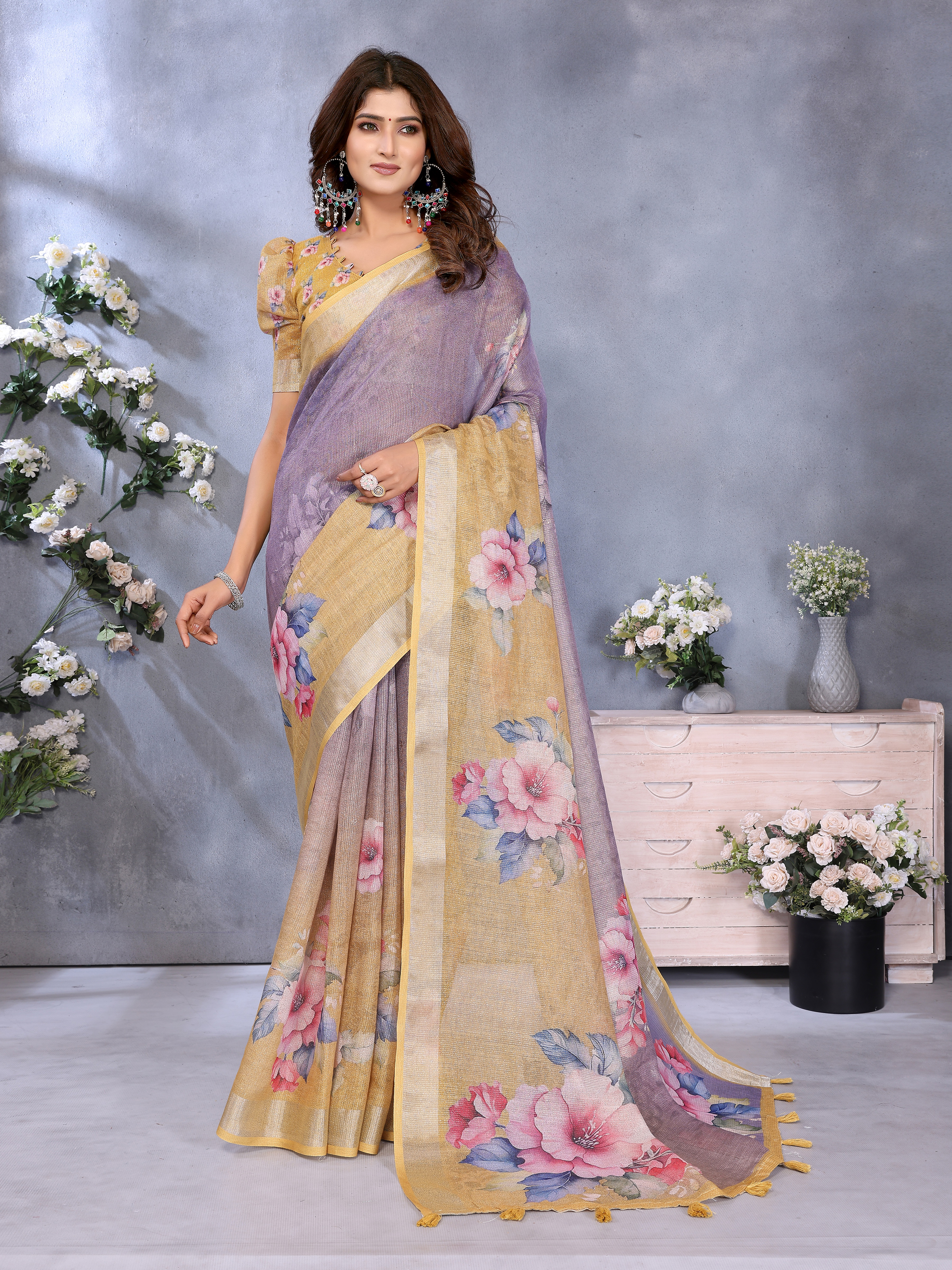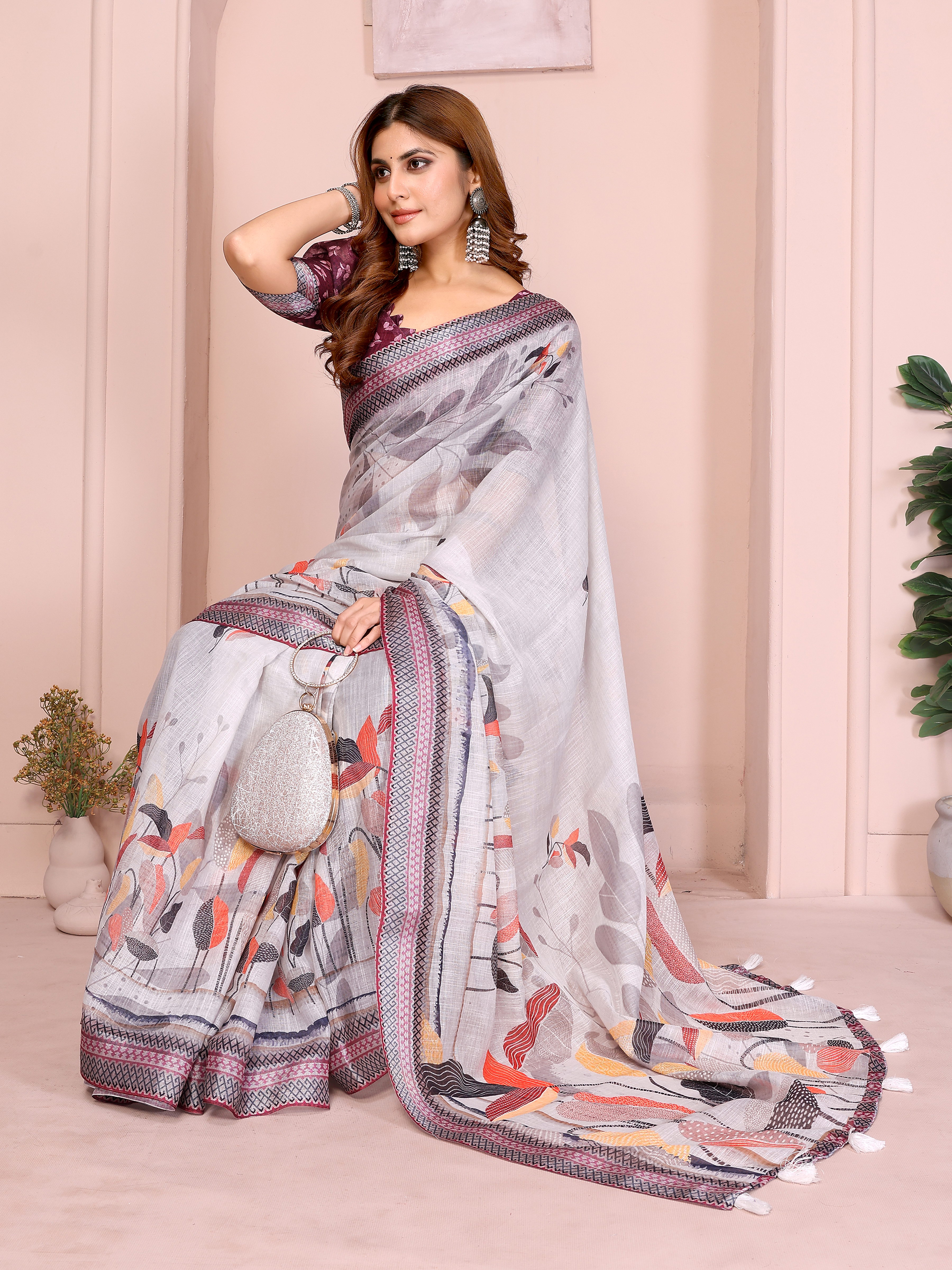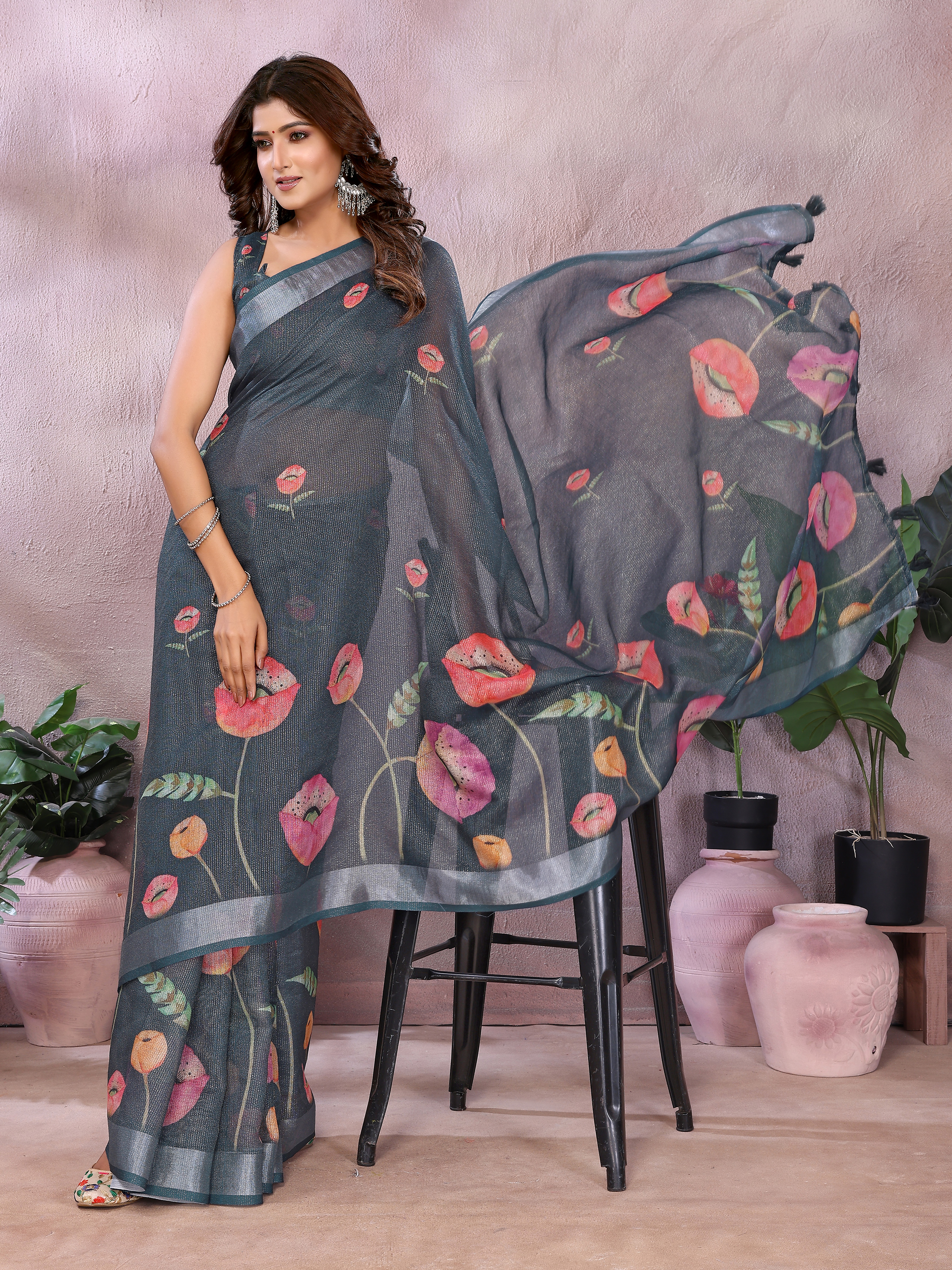
A long temple queue, bare or slippery floors, low seating and several hours of standing can make an attractive saree surprisingly difficult to wear. Sarees That Feel Easier to Manage During Temple Visits and Pujas usually have three practical qualities: breathable fabric, a border that doesn't catch underfoot and a drape that stays secure without constant adjustment. The right choice supports prayer, movement and respectful dressing instead of making every step a small negotiation.
Pooja shopping becomes easier when the occasion is considered before the colour or embellishment. A short pooja at home may suit a light linen-cotton saree, while a crowded Kolkata Durga Puja visit may call for firm pleats, a pinned pallu and shoes that can handle walking. Fabric, length, blouse construction and drape technique matter more than labels such as traditional or designer.
What makes Sarees That Feel Easier to Manage During Temple Visits and Pujas?
Sarees That Feel Easier to Manage During Temple Visits and Pujas stay in place, allow comfortable walking and don't become excessively warm or heavy. Medium-weight cotton, linen cotton and selected handloom blends generally provide a useful balance between structure and breathability.
Weight affects every part of a religious visit. A very light saree can shift while walking, but a heavily embellished saree can pull at the shoulder and become tiring during a two- or three-hour function. A fabric with moderate body helps the pleats stand neatly while reducing the need for repeated tucking.
Border width also changes mobility. A narrow or medium border is less likely to fold beneath the heel than a broad, stiff border. Zari can look appropriate for festive worship, but dense zari throughout the saree adds weight and may feel warm in crowded indoor spaces. A smaller zari accent or woven pallu can give ceremonial character without making the complete drape cumbersome.
Surface texture matters when the pallu is pinned. Smooth, slippery fabrics can move away from the shoulder unless the blouse and pin placement are carefully matched. Cotton, linen cotton and textured handloom sarees usually grip themselves better, making them useful for first-time wearers or busy family pujas.
Which fabrics suit Sarees That Feel Easier to Manage During Temple Visits and Pujas?
Linen cotton, breathable cotton and moderate-weight handloom cotton are practical fabric choices for most temple visits and home pooja ceremonies. These fabrics are comfortable in warm weather, comparatively easy to pleat and suitable for both seated and standing rituals.

Why linen cotton works for daytime worship
Linen cotton combines the crispness associated with linen with the softer handling of cotton, although the exact feel varies by weave. A linen-cotton saree can be a strong option when the wearer expects walking because the fabric often holds pleats more clearly than a very fluid synthetic fabric. Light creasing is normal and can look natural rather than untidy.
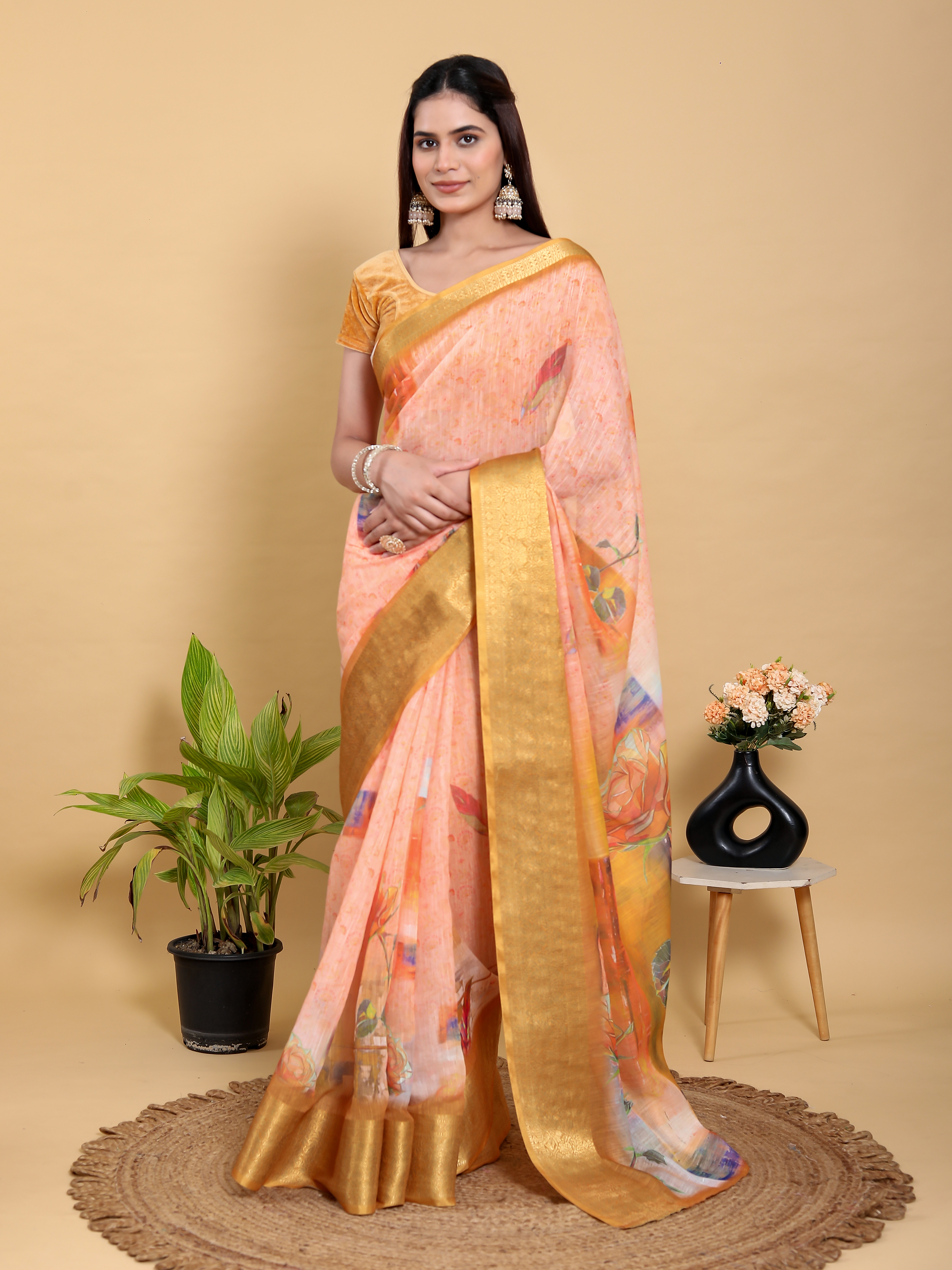
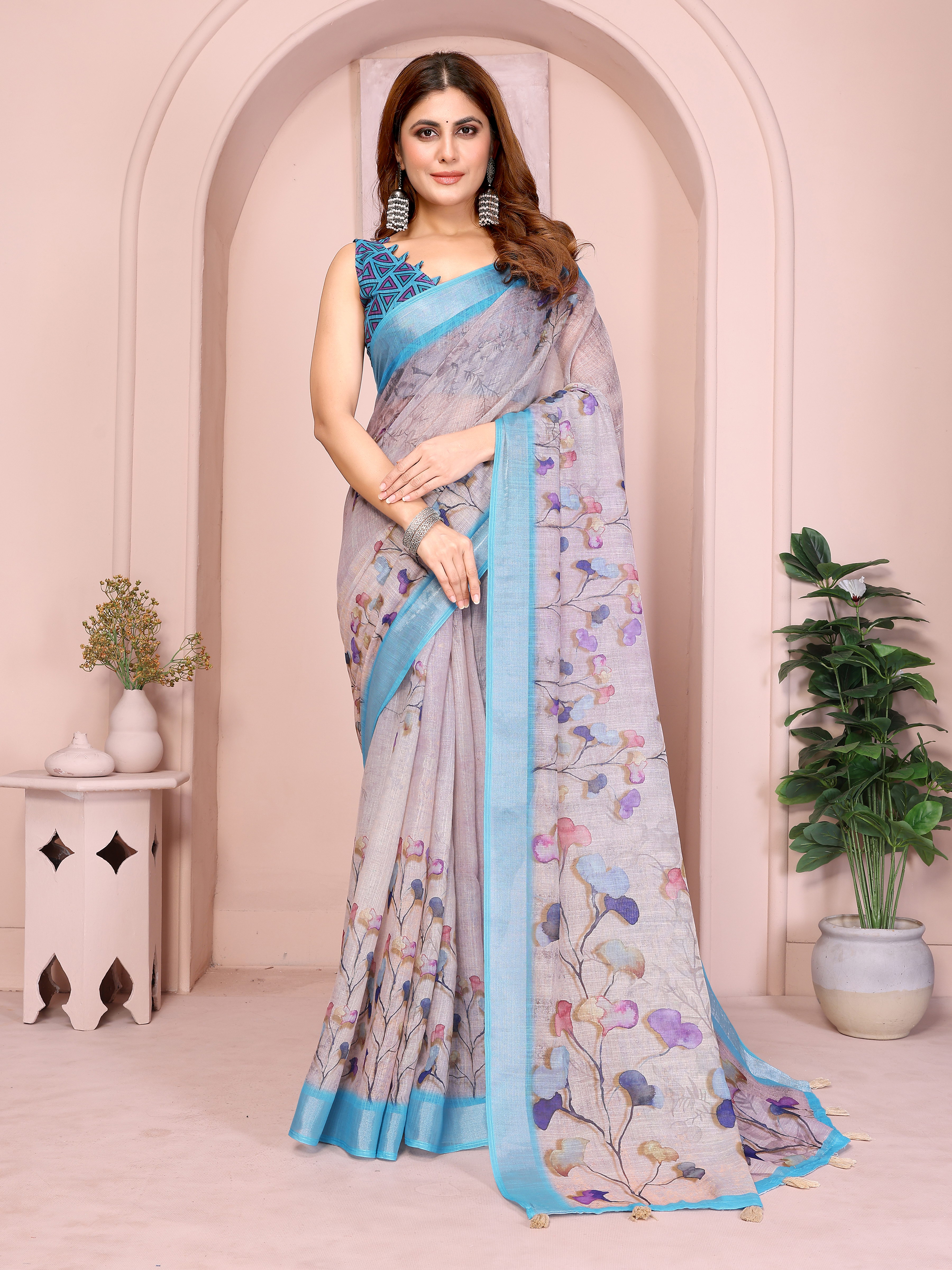
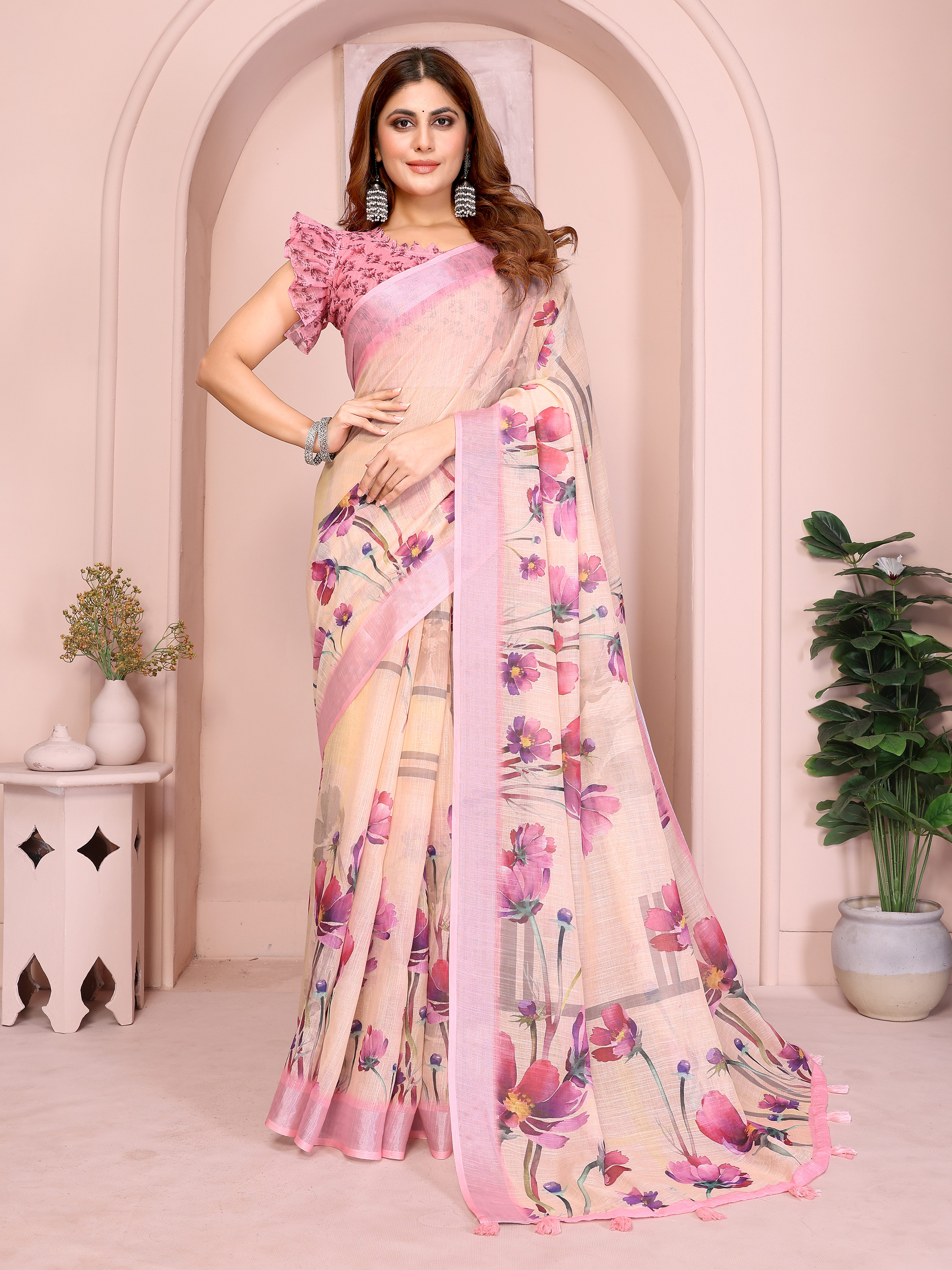
The Pastel Linen Cotton Floral Print Saree with Designer Blouse illustrates how a soft print and a coordinated blouse can create a complete look without requiring heavy jewellery. The Peach Linen Cotton Floral Print Saree with Blouse for Women offers a similarly gentle palette for a daytime home pooja or a small Pooja Function. Pastel shades are especially useful when the room is brightly lit because they keep the outfit festive without relying on reflective embellishment.
The Peach Floral Linen Cotton Saree with Beautiful Blue Border adds a defined edge that can help with visual alignment during pleating. A strong border makes uneven pleats easier to notice before leaving home, although the border should still be kept clear of the heel.
Why cotton and handloom cotton are useful for repeated wear
Cotton is a dependable choice for repeated puja use because it breathes well and can usually be pressed into stable pleats. Erode cotton is particularly suited to practical daytime dressing when the wearer wants a saree with visible structure and a regional handloom character.
The Teal Erode Cotton Floral Saree with Statement Printed Pallu demonstrates how a printed pallu can provide visual interest without the weight of dense embroidery. The Buy Teal Floral Abstract Erode Cotton Saree with Tassel Pallu brings movement at the edge of the saree, so the tassels should be checked before sitting on the floor or entering a crowded queue.
When silk and tissue cotton are appropriate
Silk and tissue sarees work best for shorter, more formal pujas where appearance matters more than extensive walking. A silk pooja look can be beautiful for a seated ceremony, but a heavy Banarasi silk or densely embellished saree may become uncomfortable during a long temple visit.
Tissue handloom cotton can offer festive sheen with less weight than many classic silk options. The Pastel Floral Tissue Handloom Cotton Saree with Zari Weaves adds zari interest while retaining a cotton base. The Olive Green Tissue Handloom Cotton Saree With Floral Prints suits a richer colour story without automatically requiring a heavy blouse or elaborate accessories.
How can Sarees That Feel Easier to Manage During Temple Visits and Pujas be draped safely?
A secure temple drape uses a firm waist tuck, controlled front pleats, a pinned pallu and a hem that clears the floor by roughly one to two centimetres when worn with the chosen footwear. The drape should be tested by walking, sitting and climbing a few steps before leaving home.

Start with a well-fitted petticoat or underskirt that doesn't slide at the waist. A drawstring that's too loose allows the saree to descend during walking, while an excessively tight tie makes sitting uncomfortable. The waist should feel secure but should not restrict breathing or bending.
Make five to seven front pleats of even width rather than creating many narrow pleats that can loosen quickly. Tuck the pleats firmly at the centre, then check that the lower edge forms a level line. A slightly shorter front hem is safer than a trailing edge, particularly when temple floors are uneven or when footwear may be removed.
Bring the pallu over the shoulder at a length that allows the arm to move freely. Pin the pallu at the shoulder seam and, if the fabric is slippery, add a discreet second pin near the blouse side seam. Safety pins should close fully and should be placed from the inside where possible to protect the saree surface.
Carry out a five-minute movement test before the event. Walk across a room, sit cross-legged, stand without stepping on the hem and raise both arms to shoulder height. Any adjustment needed during this test is easier to solve at home than in a temple corridor.
Which blouse and accessories support Sarees That Feel Easier to Manage During Temple Visits and Pujas?
A well-fitted blouse with secure shoulder seams reduces saree movement more effectively than a large number of decorative pins. Blouse sleeves should allow the arms to lift for prayer, while the neckline should remain comfortable when sitting or bending.
Choose a blouse length that meets the saree waist without leaving a large gap between the blouse edge and the petticoat. A blouse that rides upward can make the saree feel loose, and a very slippery satin lining can encourage the pallu to slide. Cotton lining or a lightly textured inner finish can improve grip.
Keep jewellery close to the body during a crowded visit. Small studs, a short chain, slim bangles and a lightweight bindi create a finished festive appearance without catching on the pallu or pressing uncomfortably while seated. Long necklaces and broad bangles can interfere with repeated hand movements during aarti.
A compact crossbody bag or a small wristlet is more practical than a large shoulder bag. The bag should hold a phone, keys, tissues and a small amount of cash while leaving both hands available for footwear, offerings or prayer. Avoid carrying loose safety pins inside the bag without a case; a small fabric pouch prevents accidental scratches.
Choose footwear with a firm sole and a secure strap if the temple allows footwear inside particular areas. Three- to five-centimetre block heels are generally easier to control than narrow heels, while flat sandals with a textured sole are practical for walking and standing. Check the finished saree length with the exact footwear because changing shoes after draping can make the hem unsafe.
How do colours and prints affect Sarees That Feel Easier to Manage During Temple Visits and Pujas?
Colour should match the light, duration and formality of the puja rather than follow a single rule about auspicious shades. Soft pastels suit daytime home ceremonies, saturated hues hold their presence in large halls, and floral prints work well when the rest of the styling remains restrained.

Peach, pink, teal, olive green and ivory-based palettes are versatile for daytime worship. The VARNAVI Peach Linen Cotton Floral Saree with Border Tassels brings texture through its edge, so the rest of the look can remain simple. Tassels should be secured away from oil lamps, incense and crowded seating to prevent snagging.
For a more heritage visual language, red and gold remain familiar choices, but tradition doesn't require a heavy weave. The Red Banarasi Silk Sarees for Weddings Under 1100 collection may offer inspiration for colour and zari placement, although a wedding-oriented silk style may not be the most comfortable choice for a long temple queue. A saree selected for worship should be judged by its actual weight and drape, not by colour alone.
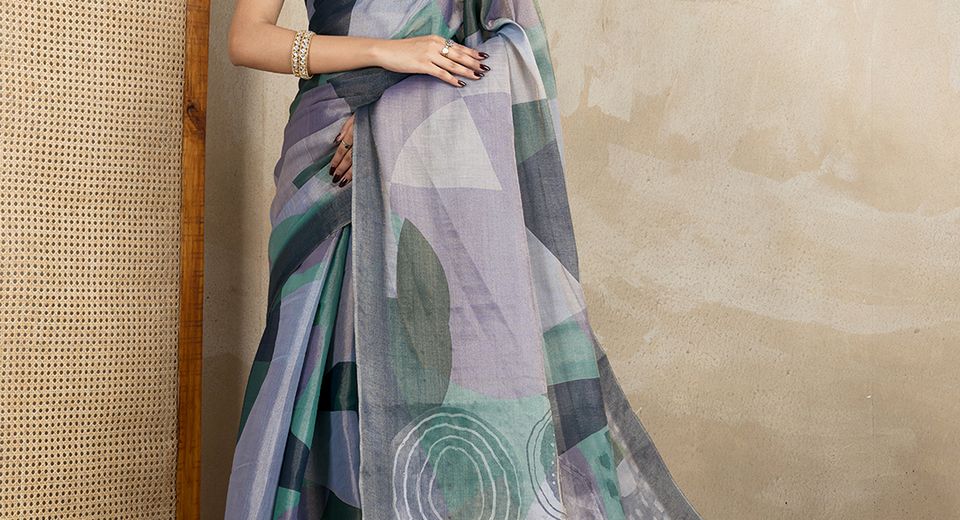
Grey, muted green and blue can look elegant in indoor temples where warm lights bring out woven texture. The Gray Color Sarees Under 1000 collection can be useful for comparing understated palettes and affordable styling ideas. Very dark colours may show dust less readily, but local temple customs and family preferences should always guide the final decision.
How should Sarees That Feel Easier to Manage During Temple Visits and Pujas be chosen for different settings?
A crowded temple visit calls for a stable cotton or linen-cotton saree, a pinned pallu, low secure footwear and minimal accessories. The outfit should be prepared for walking, waiting, removing shoes and sitting without constant readjustment.
A home pooja allows more flexibility because the route is shorter and seating is familiar. A pastel linen-cotton saree with a floral print works well for a morning prayer, especially when the ceremony includes cooking, arranging flowers or moving between rooms. A blouse with comfortable sleeves is valuable when the wearer is helping with lamps or offerings.
A larger Pooja Function may require a more polished finish without demanding bridal-level embellishment. Tissue handloom cotton with zari weaves can provide a festive surface, while a moderate-width border gives definition without adding excessive weight. Keep the pallu pinned if the event includes standing near a havan, receiving guests or moving through narrow spaces.
Kolkata Durga Puja involves a distinctive combination of walking, queueing, visiting several pandals and taking photographs. A breathable Erode cotton saree or linen-cotton saree is usually more forgiving than a heavy silk for this schedule. Secure pleats, a crossbody bag and footwear that can tolerate several hours of walking matter more than elaborate jewellery.
A temple visit in hot or humid weather makes airflow a priority. Cotton and linen cotton can feel more comfortable than dense synthetic or heavily embellished fabrics, although every saree should be checked for opacity, drape and personal comfort. Carry a light shawl only if the temple interior is air-conditioned or the visit extends into the evening.
Collections such as Silk Sarees Under 3000 With Discount, Pink Georgette Sarees and Party Wear Sarees can help compare formality, colour and fabric categories during pooja shopping. Georgette may look graceful but often needs more careful pinning because its fluid surface shifts more readily than cotton. A collection name alone can't determine comfort; the actual weave, weight and length remain decisive.
How should Sarees That Feel Easier to Manage During Temple Visits and Pujas be stored and cared for?
Temple-use sarees stay manageable when they're aired after wearing, folded along their weave and stored away from moisture. Basic care preserves the fabric's structure, which in turn makes future pleating and draping easier.

Air the saree in shade for 30 to 60 minutes after a visit if it has absorbed perspiration, incense or cooking smoke. Avoid leaving linen cotton, cotton or zari-weave sarees in direct midday sunlight because strong exposure can affect colour over time. Do not spray perfume directly on zari, tissue or delicate printed areas.
Remove pins before folding and inspect the pallu, border and tassels for pulls. Fold the saree with the printed or zari surface inward when possible, placing clean, acid-free tissue between heavier folds if the saree will be stored for several months. Refold stored sarees every eight to twelve weeks to reduce permanent crease lines.
Follow the care label before washing. Many cotton sarees benefit from gentle hand washing in cool water and shade drying, while zari, tissue and blended fabrics may require professional cleaning. Iron linen cotton and cotton on the reverse side at a moderate temperature, and place a thin cloth between the iron and any metallic weave.
The most comfortable puja saree is one that matches the actual demands of the day. A breathable fabric, secure waist, controlled hem, practical blouse and restrained accessories will usually make a greater difference than a more elaborate design. Preparing the complete outfit once before the ceremony turns dressing from a source of worry into one less thing to manage.
Common Questions About Choosing a Saree for Temple Visits and Pujas
Which type of saree is best for puja?
Medium-weight cotton, linen cotton and breathable handloom cotton are practical choices for most pujas because they allow airflow and hold stable pleats. Tissue handloom cotton with limited zari can suit a more festive ceremony without the weight of a heavily embellished silk saree.
Are cotton sarees suitable for a temple visit?
Cotton sarees are suitable for temple visits when the pleats are secure and the hem does not trail on the floor. Erode cotton, linen cotton and other structured cotton weaves are particularly useful for walking, waiting and sitting.
What should I wear for a pooja at home?
A light linen-cotton or cotton saree with a comfortable blouse works well for a pooja at home. Choose a length and drape that allow you to sit, arrange offerings and move between rooms without repeated tucking.
Is silk suitable for a silk pooja look?
Silk is suitable for a short, formal and mostly seated pooja, especially when the ceremony calls for a traditional appearance. A heavy Banarasi silk or densely embellished saree may be less comfortable for a long temple queue or an outdoor Durga Puja visit.
How can I stop my saree from slipping during a temple visit?
Use a secure petticoat or underskirt, make five to seven firm front pleats and pin the pallu at the shoulder seam. A blouse with a stable fit and a lightly textured lining can reduce sliding more effectively than adding many visible pins.
Where can I shop for a saree for Durga Puja?
You can compare cotton, linen-cotton, handloom and festive saree categories through reputable online ethnic-wear stores and local saree retailers. For Durga Puja, assess fabric weight, walking comfort, pallu security and washing instructions before choosing a colour or trend-led style.