Why some lehengas pull backward while you walk usually comes down to an imbalance between the waistband, skirt flare, lining, petticoat structure and the way the choli fits your torso. A skirt may feel comfortable while standing but travel toward the back after several steps because fabric is catching at the hips, the waistband is tilting, or the hem is too long in front. Identifying the exact cause before a wedding, Garba night or Haldi ceremony can prevent repeated tugging, awkward bunching and restricted movement.
Why some lehengas pull backward while you walk
A lehenga pulls backward when the skirt's lower layers can't move freely around the body, so walking shifts fabric toward the area offering the least resistance. The movement is often caused by a tight waist or hip area, a slippery or clingy lining, an uneven hem, too much stiffness at the front, or a choli that changes the position of the waistband.
Walking creates a repeated forward-and-back motion at the hips. Each step needs the skirt to expand briefly at the front and sides before settling back into place. If the skirt is narrow at the hips, the lining grips the garment underneath, or the waistband sits on a sloping part of the waist, the fabric can't reset evenly after each step. The back then accumulates more material and appears to drag.
Heavy embellishment can add to the problem. A richly embroidered bridal or designer lehenga may have more weight at the front, back or hem than a lightweight cotton style. Weight alone doesn't guarantee poor fit, but uneven weight distribution can make a waistband rotate during movement. A skirt with a broad flare and a firm can-can layer may also need more room around the knees than a soft, fluid skirt.
How waist and hip measurements affect lehenga movement
The waist and hip measurements must leave enough movement room for a lehenga to walk comfortably without allowing the waistband to rotate. A waistband that's tight at the hips or fastened below the natural waist often slides backward because the body is trying to find space with every step.
Waistband tension
A tight waistband is a common reason a lehenga rides backward. Measure the waist at the exact height where the waistband will sit, rather than using a smaller high-waist or low-waist measurement. Add movement ease according to the construction: a fitted skirt generally needs more comfort than a drawstring skirt, while a structured bridal lehenga may need professional alteration rather than simply loosening a hook.
Check the waistband while sitting as well as standing. If the top edge digs into the stomach when seated, the waistband may push downward at the front and upward at the back during walking. If the garment has hooks, ask an experienced tailor whether the hook position, side seam or waist facing can be adjusted without disturbing the embroidery.
Hip and thigh restriction
A lehenga needs sufficient room over the fullest hip and upper-thigh area to move forward with each stride. A skirt can match the waist measurement and still pull backward if the hip measurement is too small. This problem is especially noticeable in semi-stitched designs that have been closed too close to the body.
Wear the intended footwear and walk ten to fifteen steps in the skirt. If the front hem rises slightly, horizontal wrinkles appear at the hips, or the back gathers after each step, the hip area may be restricting movement. Do not solve a hip-fitting issue by tightening the drawstring; tightening can make the backward shift worse.
How lining, flare and fabric create drag
Lining friction, insufficient flare and uneven fabric weight can all make a lehenga move backward even when the waist measurement is correct. The outer fabric and inner layers must travel together without catching against the petticoat, leggings or thighs.
Lining and underlayers
A synthetic lining can cling to shapewear, hosiery or a cotton petticoat, particularly in dry weather. Static friction makes the skirt stick at one point and then release suddenly, which creates bunching rather than a smooth fall. A breathable underskirt with a smooth surface can reduce friction, but adding another bulky layer may increase crowding around the hips.
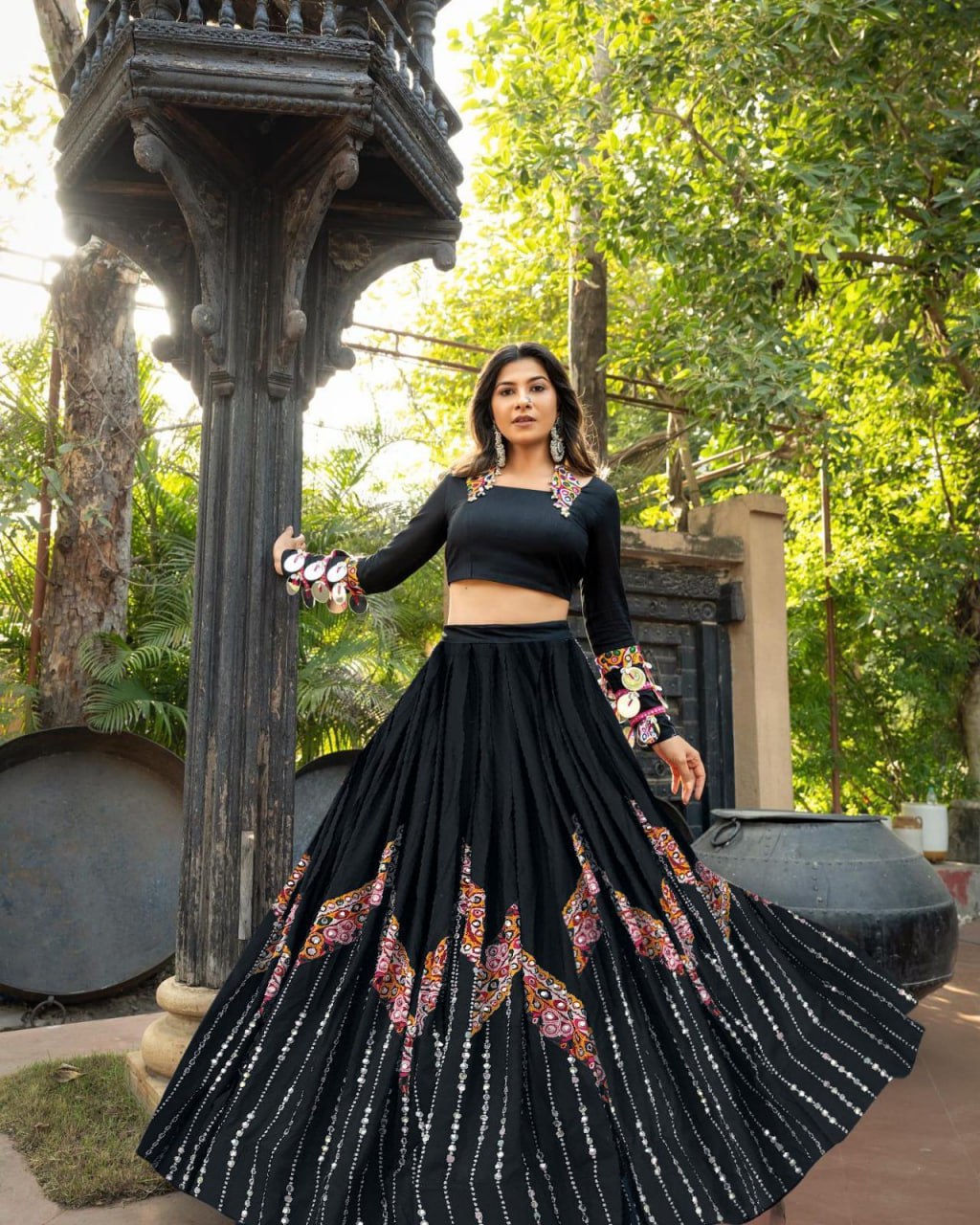
Test the skirt with the exact blouse, footwear and underlayer planned for the event. A choli ending at the waist, a long fitted top or a voluminous underskirt can each change how the waistband rests. The Festive Multicolor Muslin Cotton Lehenga Choli Set for Navratri and the Premium Black Muslin Cotton Lehenga Choli Set illustrate why fabric hand matters: soft muslin generally behaves differently from a stiff, heavily structured skirt, so the correct underlayer depends on the garment's construction.
Flare and can-can balance
A skirt with too little flare at knee level can restrict the stride, while a stiff can-can concentrated near the hem can push the front upward and force the upper skirt backward. Can-can is a net or crinoline layer used to increase volume; its width, stiffness and placement affect how the skirt moves.
Lift the skirt slightly and inspect whether the can-can begins too high, feels twisted or is attached unevenly. A tailor can sometimes reduce the stiffness, shorten the can-can, reposition it or open a side seam for more movement. Removing all structure isn't always the answer because the skirt may then lose its intended silhouette.
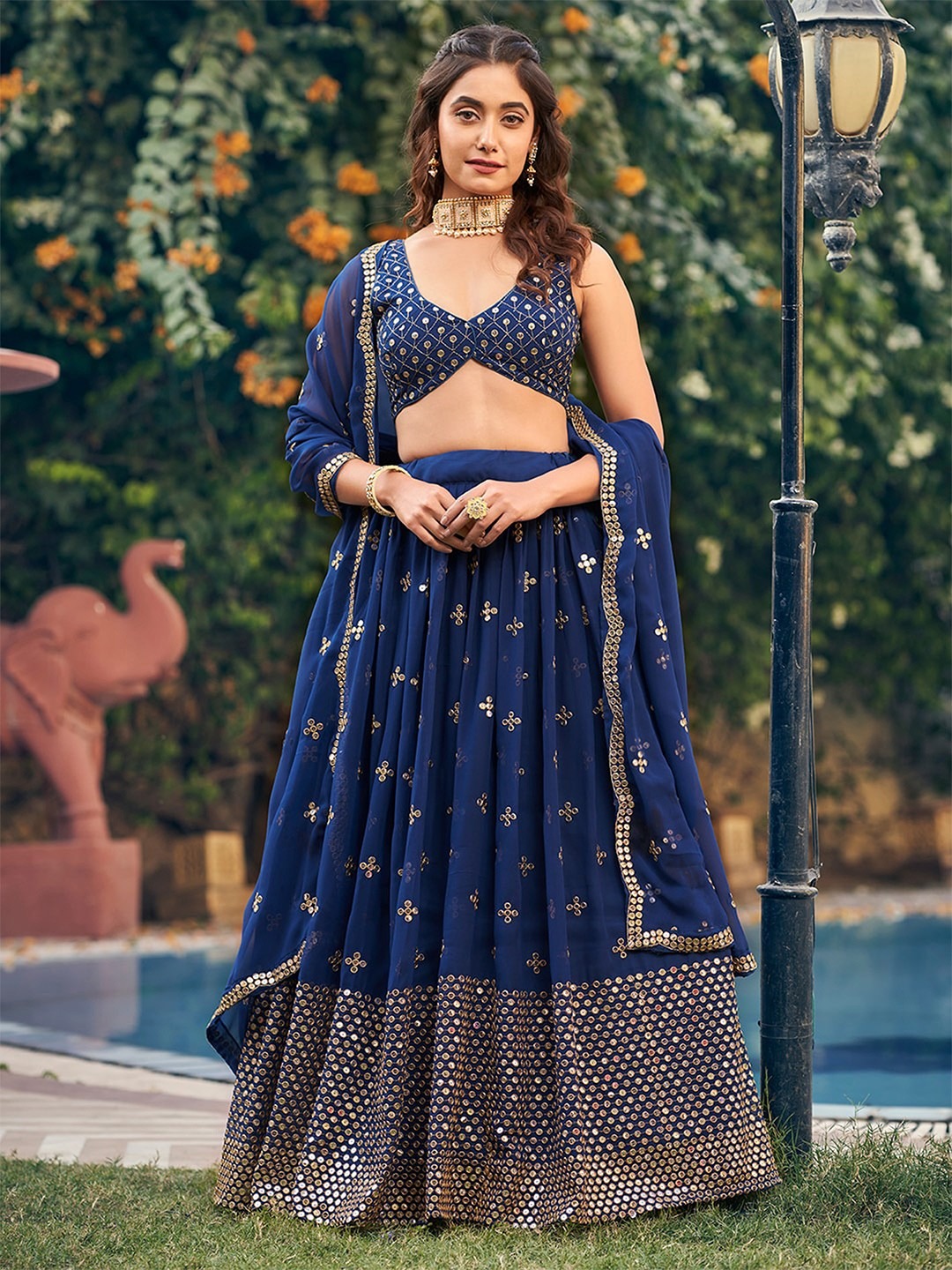
Fabric weight also matters. Silk, velvet-like surfaces, dense zari work and layered embroidery can create more downward pull than lightweight muslin or georgette. The Designer Threadwork Silk Lehenga Choli Set with Dupatta needs a different movement test from the Varnika Sequin Georgette Lehenga because the surface, embellishment and drape respond differently to walking.
How to diagnose a backward-pulling lehenga at home
You can usually identify the cause with a five-minute movement test using a full-length mirror, the intended footwear and the undergarments you'll actually wear. Testing the garment in a static pose is insufficient because many fitting faults appear only after repeated steps.
- Mark the waistband position. Use a removable fabric marker or small safety pin to note the centre front and centre back before walking. If the centre back travels noticeably upward or the front drops, the waistband is rotating.
- Take twenty normal steps. Walk at a natural pace, turn twice and sit once. Watch whether the skirt shifts immediately, only after turning, or mainly while sitting and standing.
- Check the side seams. Side seams that move toward the back indicate that the entire garment is rotating. A back-only bunch usually points to lining drag, uneven fullness or a restricted hip area.
- Pin the outer layer temporarily. If a gentle temporary adjustment at the waist improves movement, the waist placement may be wrong. Do not permanently cut or stitch embellished fabric without a tailor's assessment.
- Test the hem. Measure the distance from the floor at the front, sides and back while wearing the event footwear. A hem that's longer at the front can catch under the foot and pull the skirt backward.
Photographs from the front, side and back can reveal rotation more clearly than a mirror. Ask someone to record ten seconds of walking from behind. Look for diagonal wrinkles running from the side waist toward the back hip, a rising front hem, or a waistband that no longer sits level.
What to check before buying a readymade or semi-stitched lehenga
A readymade lehenga should be assessed for actual waist placement, hip ease, hem length and closure adjustability rather than selected by waist size alone. A semi-stitched lehenga offers more alteration scope, but the available seam allowance and panel construction determine how much the fit can change.
Readymade measurements
Ask for finished garment measurements, not only the body-size chart. Confirm the waistband circumference, hip circumference, skirt length, flare and closure type. A drawstring may provide useful adjustment, but a drawstring can't create missing hip room or correct an uneven hem.
Fully stitched choli shopping also requires attention to the blouse's lower edge. A choli that's too tight across the bust or too short at the waist can pull upward when the arms move, lifting the waistband and encouraging the skirt to shift. A comfortable choli should allow arm movement without lifting the lehenga every time you reach, dance or sit.
Semi-stitched and custom adjustments
A semi-stitched lehenga is a practical option when your waist-to-hip proportions don't match standard sizing, provided the panels contain enough extra fabric. Ask whether the waist can be altered, whether the lining follows the same seam allowance, and whether the hem can be shortened without cutting through a border.
For a bridal lehenga or a heavily embellished designer style, schedule the first fitting at least three to four weeks before the event. Keep a second fitting after the final blouse and footwear are ready. Wedding outfits often include a dupatta, belt, can-can or additional underskirt, and each piece can alter the waistband position.
Practical fixes that don't damage the lehenga
The safest fix depends on the source of the movement: a tailor should correct waist rotation, a lining specialist should address drag, and a hem alteration should correct length imbalance. Avoid aggressive pinning through zari, sequins, mirror work or delicate net because visible punctures and pulled threads may remain.
- For a loose waist: use a concealed waist adjuster or have the side seams taken in evenly. Uneven tightening can twist the skirt.
- For a tight waist or hip: release available seam allowance or add a discreet extension panel. Do not rely on a tighter drawstring.
- For lining cling: test a smooth, lightweight underskirt and reduce static-producing layers. A tailor can replace a problematic lining when the construction permits.
- For a long front hem: shorten the skirt while wearing the actual shoes. Border placement should be checked before cutting.
- For twisted can-can: steam or reshape only if the care label permits it, then have the layer repositioned if the problem returns.
- For a rotating belt: secure the belt at the intended waistline rather than using it to force a badly fitting skirt into place.
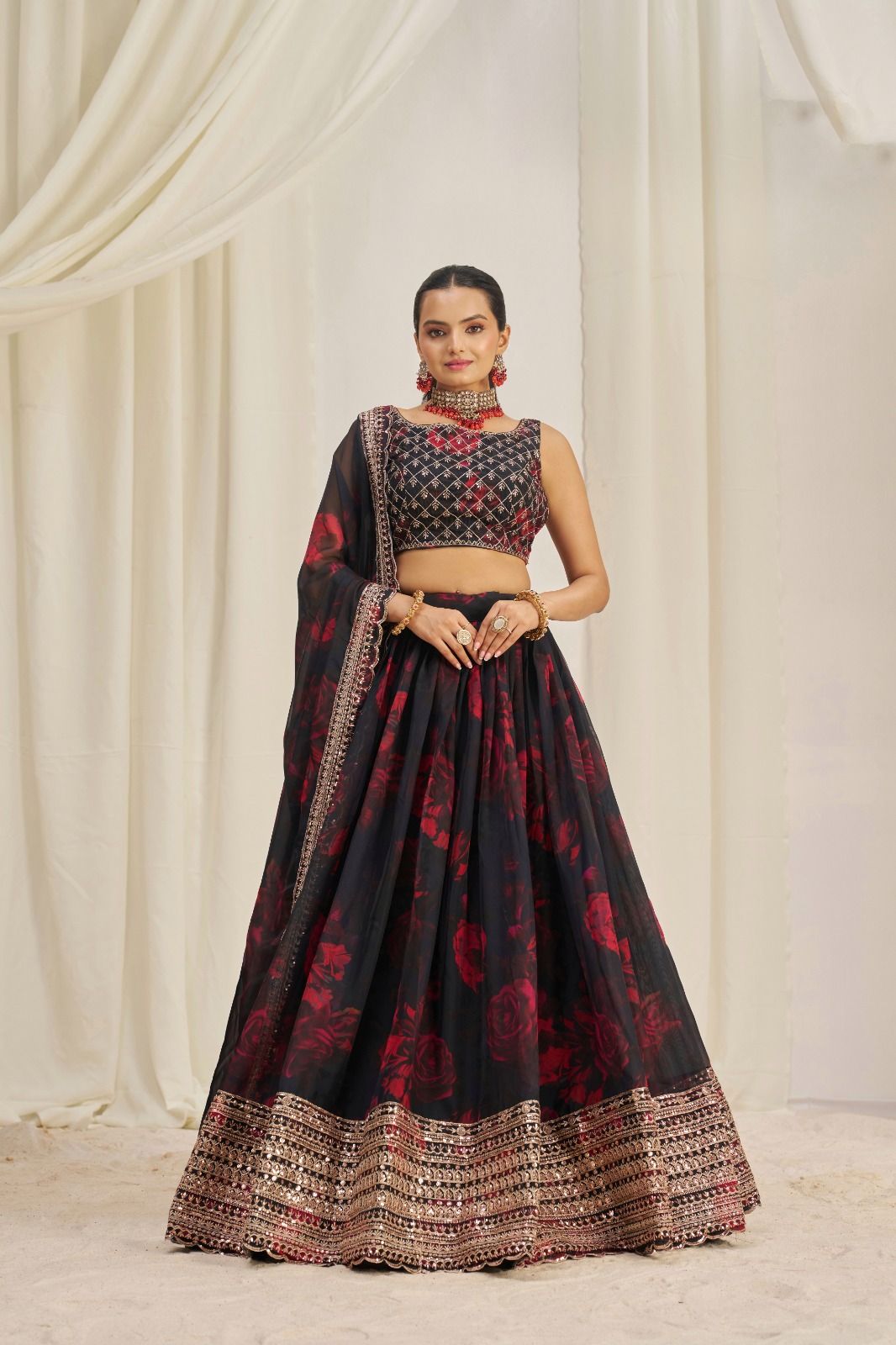
Temporary fashion tape can help secure a blouse edge, but it won't correct a skirt that's too tight or poorly balanced. Safety pins should be placed in seam allowances whenever possible, especially on embroidered surfaces. A professional alteration is more reliable for the Black Wedding & Festive Wear Designer Lehenga and the Stylish White Mirror Work Lehenga for Festive Wear because dense decoration can hide seam access points.
Choosing a comfortable lehenga for each event
The most comfortable lehenga depends on walking distance, dance movement, fabric weight and how long the outfit must remain secure. A short family ceremony may tolerate a more structured skirt, while a full wedding day requires easier sitting, stairs and repeated movement.
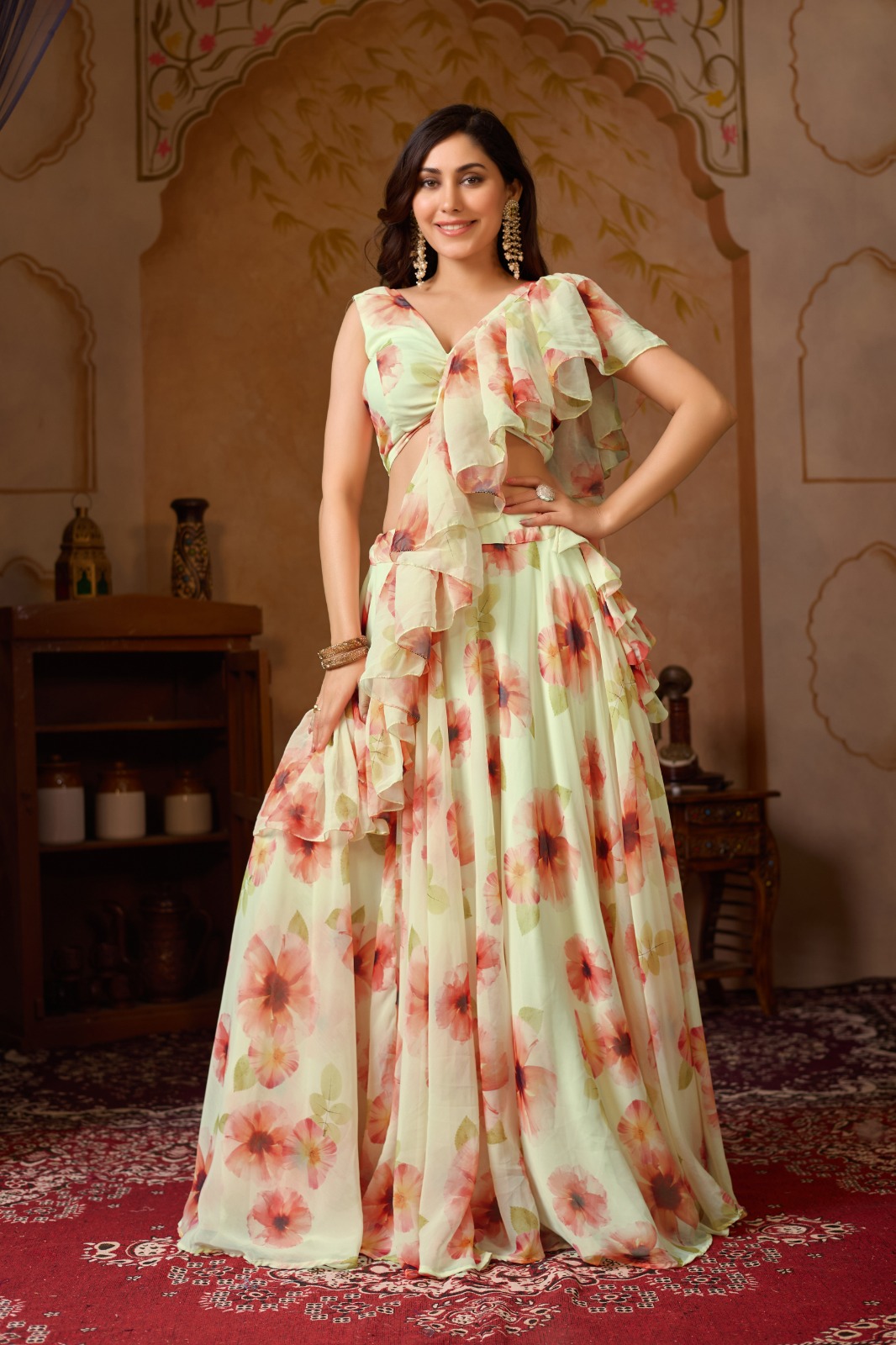
For a Haldi ceremony, breathable cotton or muslin and moderate flare can be more practical than a heavy embellished skirt. For Navratri or Garba, check whether the skirt allows repeated side steps and turns; the Vibrant Multicolor Navratri Lehenga Choli Set and the Beige Ethnic Printed Lehenga Set for Navratri and Garba are useful examples of why movement testing should match the activity.
Colour-led browsing can still be useful when fit remains the priority. Yellow Lehengas and Green Lehengas may suit Haldi or festive styling, while Mehendi Lehengas can guide a ceremony-specific search. Ready Made Lehenga options save stitching time, but finished measurements deserve careful checking. Semi Stitched Lehengas Collection pieces may offer better adjustment potential when standard proportions are not comfortable.
For a reception or wedding, dense embroidery and zari deserve a longer trial because weight becomes more noticeable after several hours. Walk upstairs, sit on a firm chair and practise turning before approving the final fit. The Black Wedding & Festive Wear Designer Lehenga can look balanced while standing under bright lighting, yet the movement test remains the more useful measure of comfort.
When should a tailor alter a lehenga?
A tailor should alter the lehenga when the waistband rotates, the hem catches underfoot, the hip area restricts your stride, or the skirt shifts despite correct underlayers. Alterations are especially important when the garment contains zari, mirror work, sequins, heavy borders or multiple net layers.
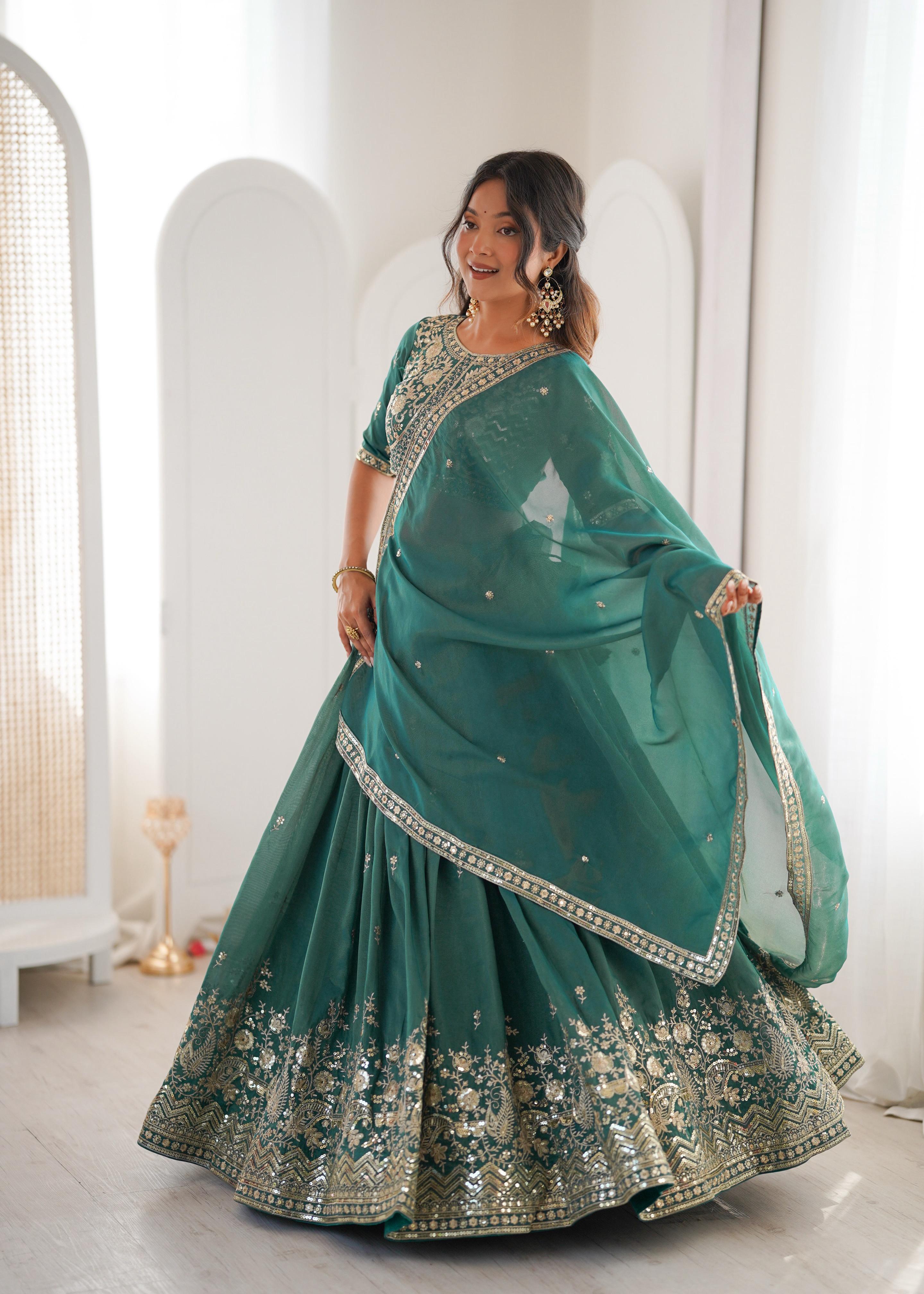
Bring the complete outfit to the appointment, including the choli, dupatta, footwear, belt, shapewear and underskirt. Explain where the skirt moves and show the tailor a short walking video if the issue is difficult to reproduce. Request that the tailor mark the body while standing naturally rather than pulling the waistband into an artificially straight position.
A good final test includes twenty steps, two turns, one staircase or low step, and five minutes of sitting. The waistband should remain level, the side seams should stay near the sides, and the hem should clear the floor without requiring constant lifting. Comfort isn't a minor finishing detail; a stable fit protects the fabric from repeated dragging and lets the lehenga perform as intended.
Common Questions About a Lehenga That Pulls Backward
Why does my lehenga move backward when I walk?
A lehenga usually moves backward because the waist or hip area restricts the stride, the lining catches on an underlayer, or the waistband rotates. An uneven hem and stiff or poorly positioned can-can can create the same effect.
How can I stop a readymade lehenga from riding up at the front?
Check the hip ease, front hem length and lining before tightening the waist. A tailor may need to release the hip seam, shorten an uneven hem or adjust the can-can; a tighter drawstring often makes the problem worse.
Can a semi-stitched lehenga be altered for a larger hip measurement?
A semi-stitched lehenga can often be enlarged if the panels and lining include sufficient seam allowance. Ask a tailor to inspect the inside seams before stitching, because borders, embroidery placement and limited fabric may restrict the alteration.
Does a petticoat or underskirt make a lehenga pull backward?
Yes, an underskirt can cause backward movement when its fabric clings, its waist sits at a different height, or its volume crowds the lehenga at the hips. Test the skirt with the exact underlayer, blouse and footwear planned for the event.
How much room should a lehenga have for walking?
A lehenga should allow a natural stride without horizontal pulling at the hips, rising at the front or rotating at the waistband. The precise ease depends on the construction, so a walking test is more reliable than adding a universal number to every measurement.
When should I get a bridal lehenga altered?
Arrange the first bridal lehenga fitting three to four weeks before the wedding and schedule a final check after the blouse, footwear and underlayers are ready. A complete movement test should include walking, turning, sitting and climbing a step.