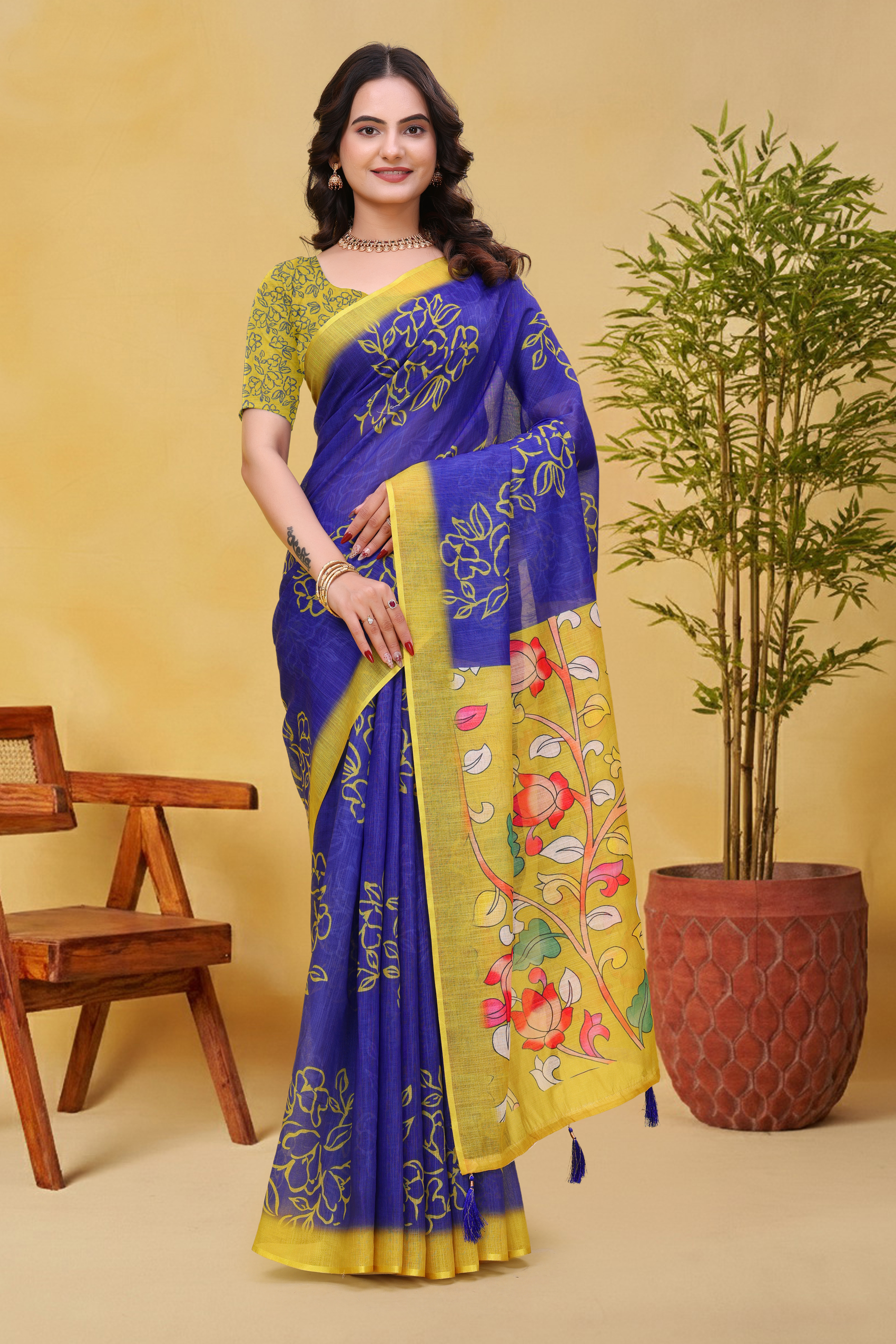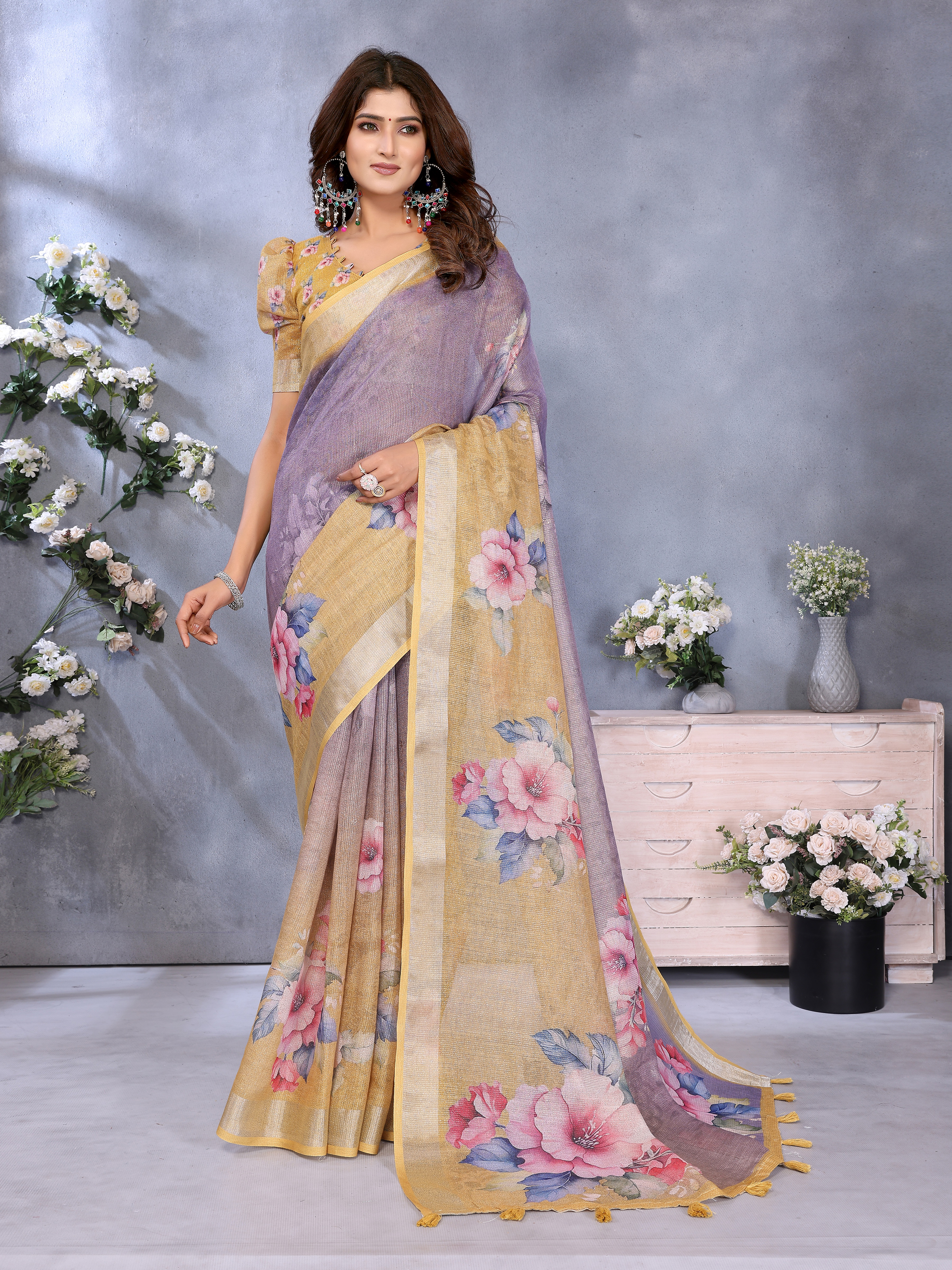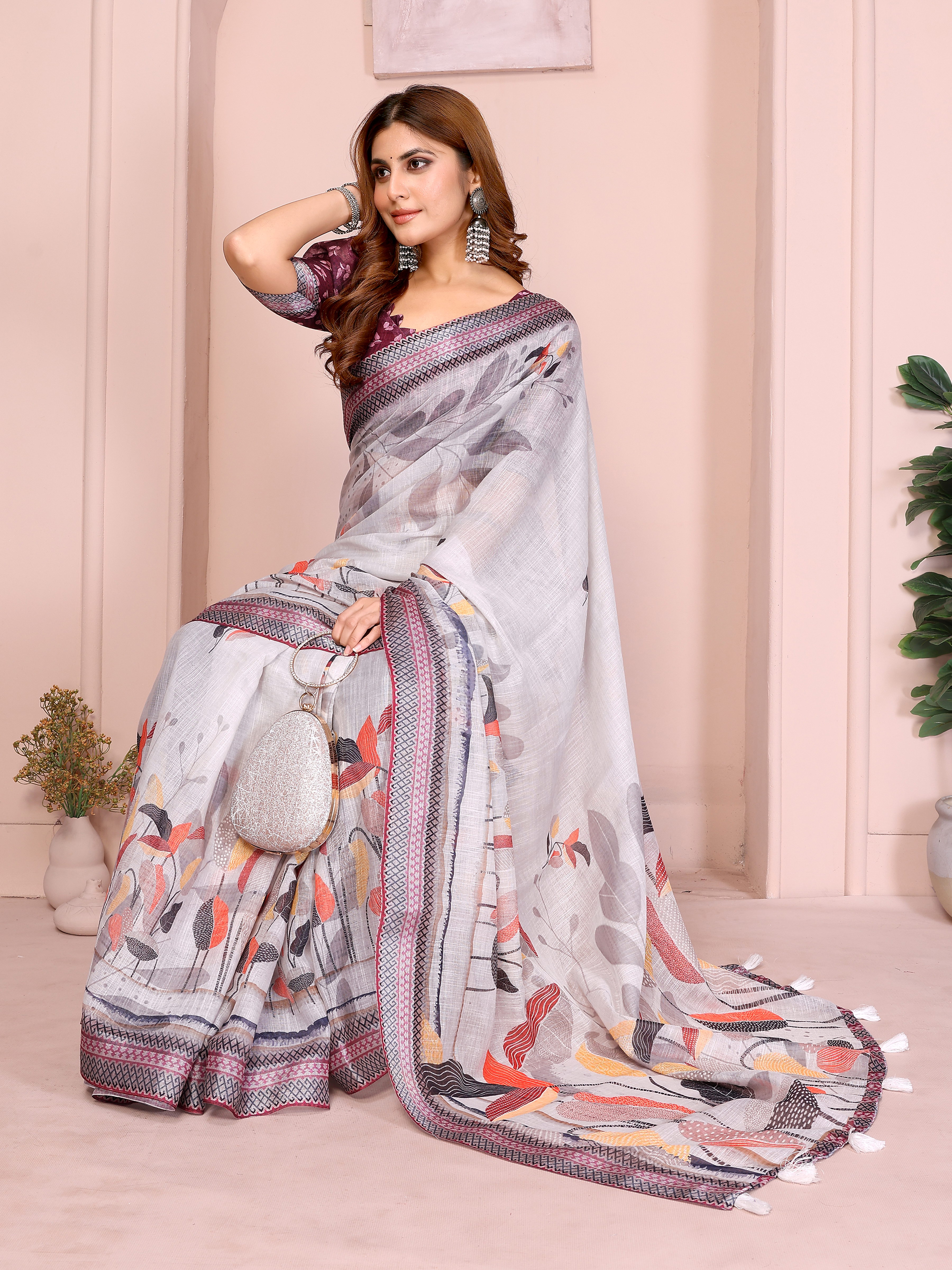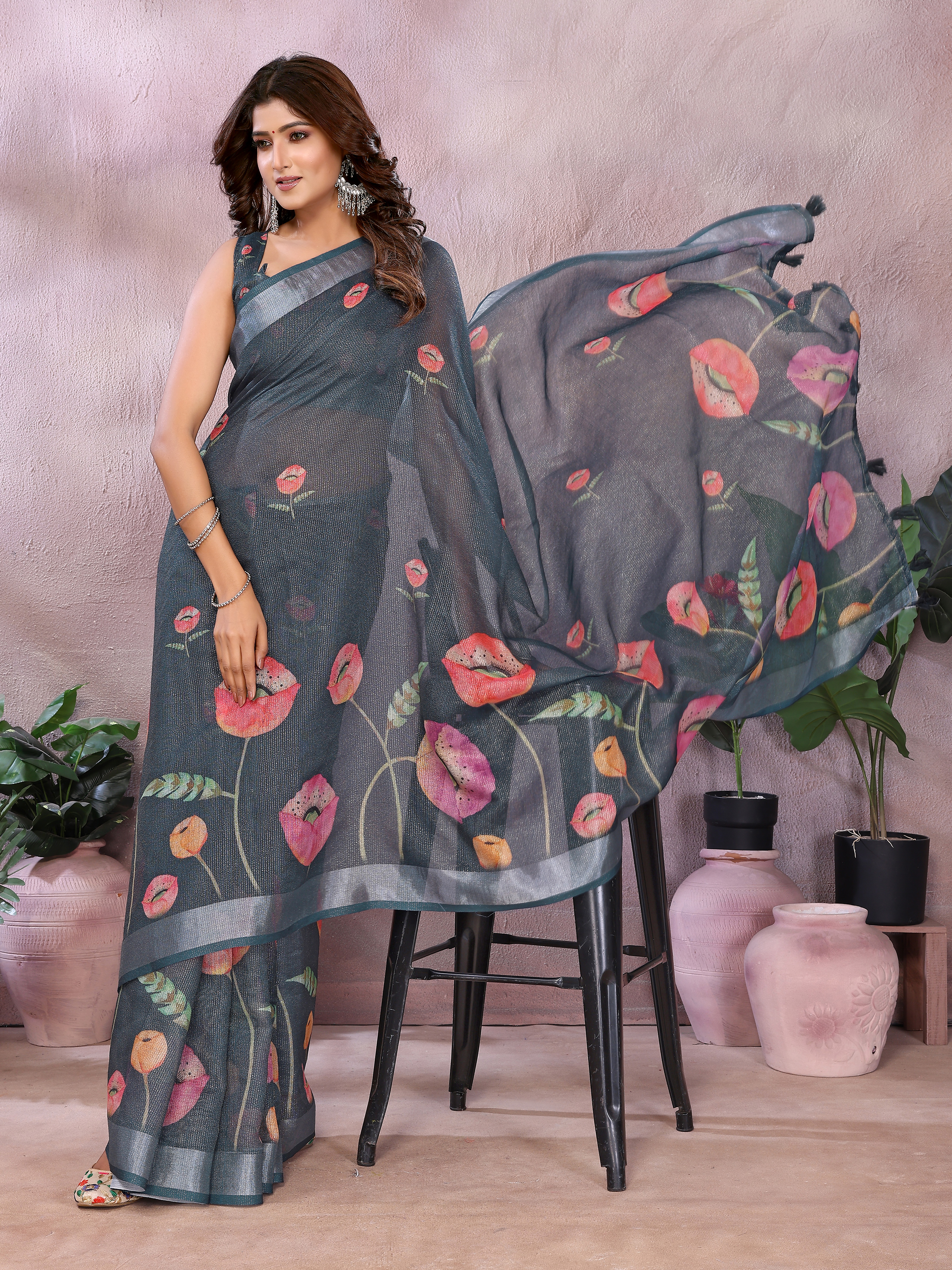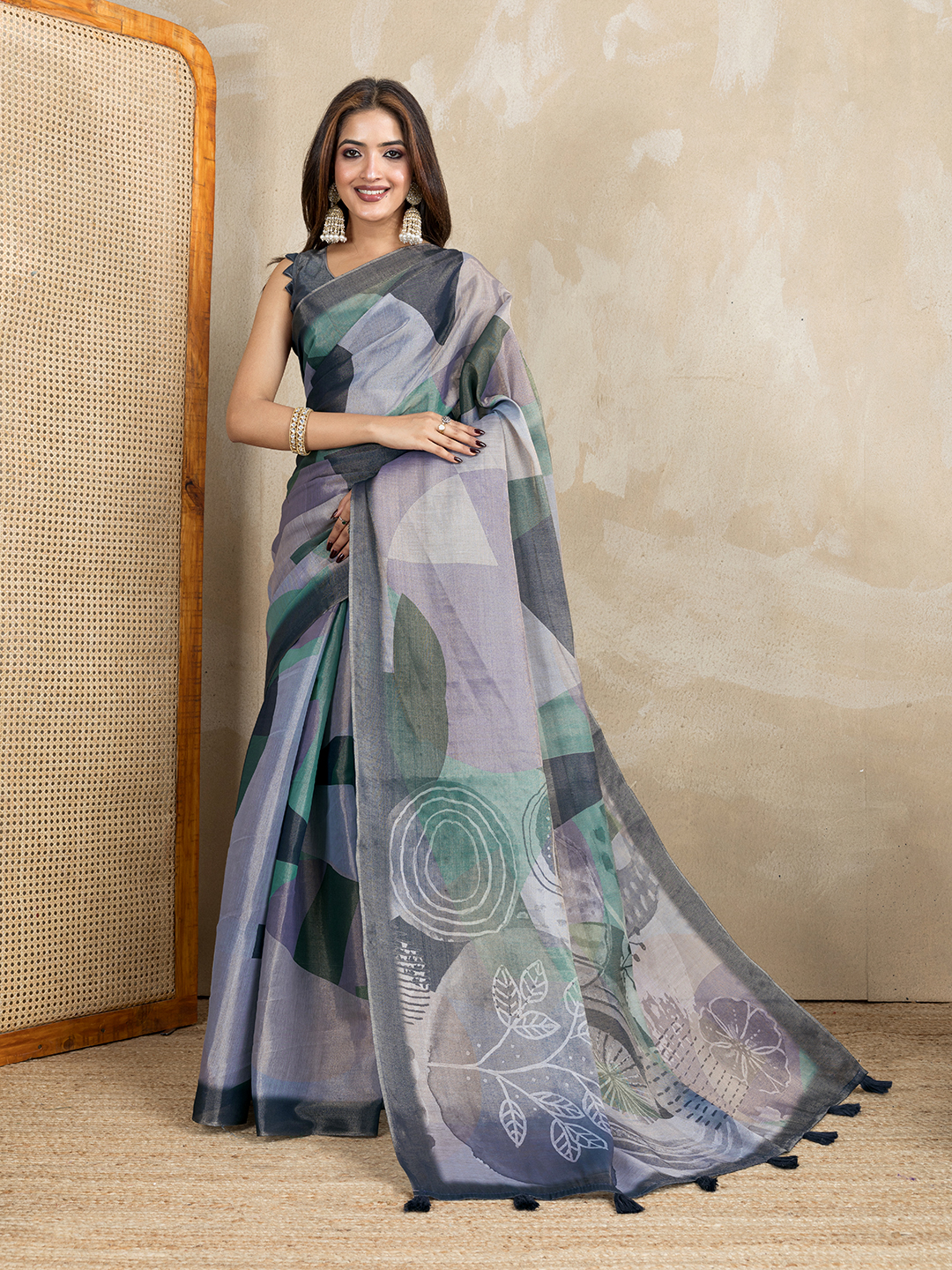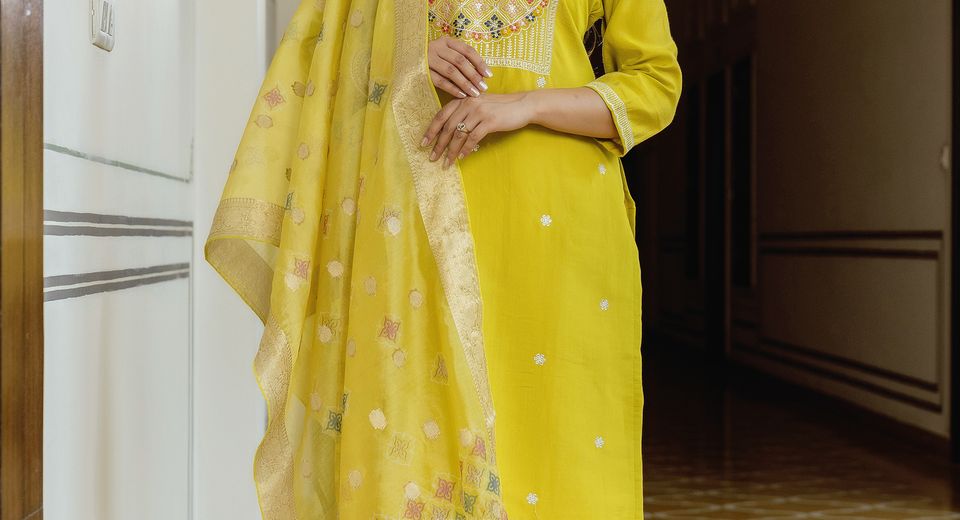
Why Side Slits on Some Kurtis Keep Folding Inward is a useful question when a new kurti looks neat on the hanger but twists towards the legs after you walk or sit. The cause is rarely one mysterious defect. Fabric weight, grain direction, seam allowance, body measurements, pressing and the way a kurti is worn can all change the opening. A small inward fold may be corrected at home, while a persistent diagonal pull usually needs a tailor.
Side slits have a practical purpose: they give the hips and legs room to move while allowing a straight kurta to retain a clean vertical shape. When the two edges don't hang on the same plane, the slit can roll inward, overlap, or form a small pocket of fabric. The problem appears in everyday cotton kurtas, lightweight chiffon sets and structured silk-blend garments, so the right solution depends on the garment rather than on the slit alone.
Why Side Slits on Some Kurtis Keep Folding Inward
Side slits fold inward when the fabric is pulled, twisted or unbalanced around the opening. The most common reasons are a tight hip measurement, unstable fabric, uneven seam tension, an off-grain cut, or a hem that has been pressed towards the inside.
A kurti doesn't hang from the side seam alone. The shoulder line, bust, waist, hip, armhole and side seam work together to distribute weight. If one area resists movement, the slit becomes the easiest place for excess pressure to show. The front or back panel then rolls inward because the cloth is seeking a less tense position.
Another frequent cause is a narrow slit. A straight kurta with a close fit at the hips needs enough opening length to permit walking. If the side seam ends too low, the lower edge is pulled sideways with every step. Repeated movement trains the fabric into a fold, particularly when the kurti is made from soft rayon, chiffon or a blended silk.
What does a correctly hanging slit look like?
A correctly hanging slit falls almost vertically when the wearer stands naturally, and both edges remain visible without one edge wrapping around the leg. The opening may move while walking, but it should return to its original position when the wearer stops.
Check the kurti in front of a mirror while wearing the trousers or palazzos intended for it. Keep your arms relaxed, place equal weight on both feet and avoid pulling the hem down. If the slit folds only when the arms are raised, the issue may be sleeve or armhole tension rather than the slit itself.
How Fabric Weight and Weave Change the Slit
Fabric weight and surface structure strongly influence whether a side slit stays open or curls inward. Heavier, stable fabrics tend to hold a pressed edge, while very light or fluid fabrics respond quickly to body movement and seam tension.
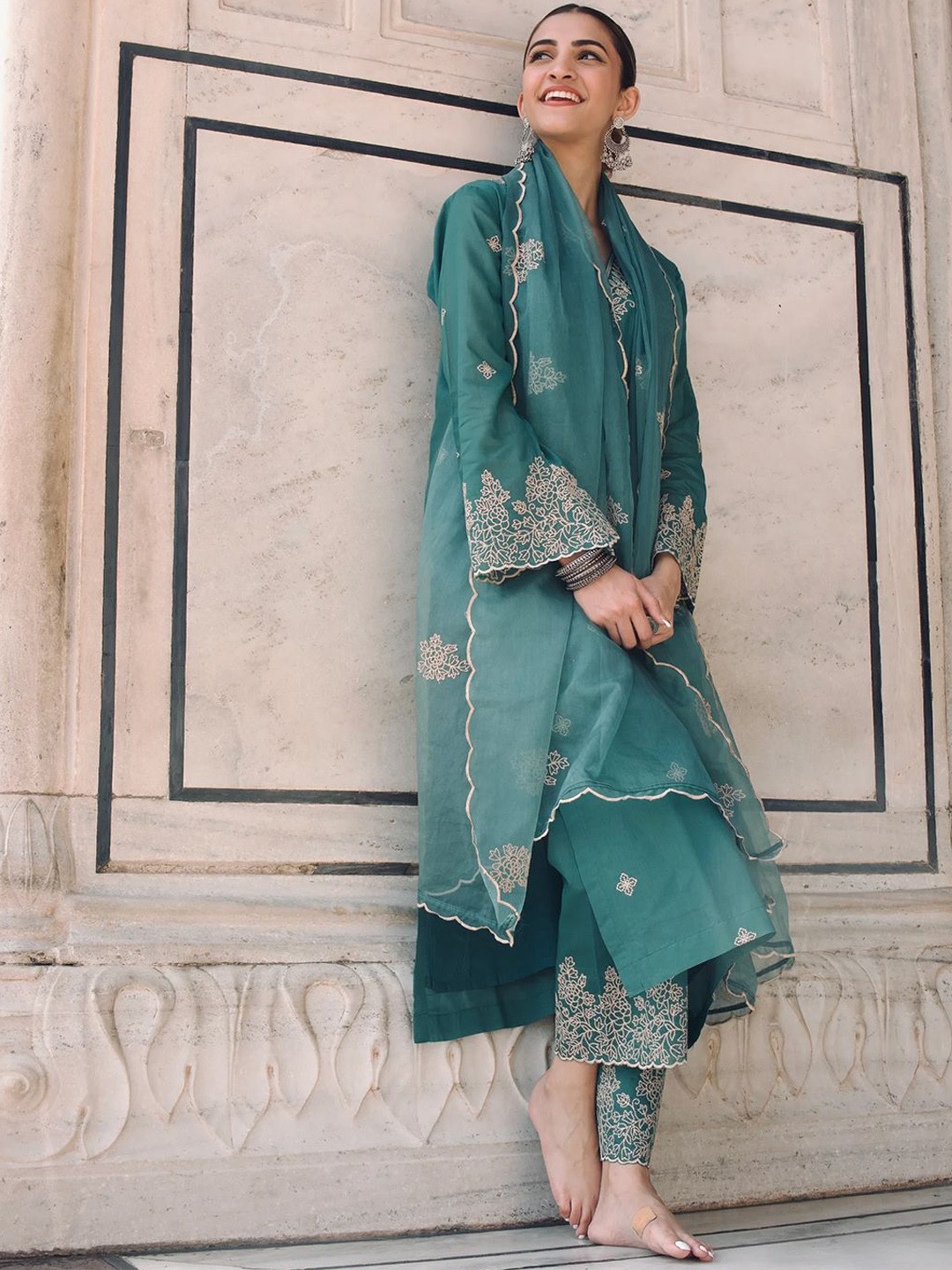
Medium-weight cotton usually gives a straight kurta a dependable fall, but a crisp cotton can remember a fold after washing. A soft cotton may collapse towards the inside because it has little body at the unstitched edge. Chanderi has a lighter, slightly crisp character, so a slit may show a sharp fold if the edge isn't pressed evenly. Banarasi silk and silk blends carry more visual weight, but their smooth surfaces can slide against an underlayer.
Chiffon deserves special attention because it's light, fluid and difficult to stabilise with a narrow seam. A garment such as Shop Floral Digital Printed Chiffon Kurti Palazzo Set with zari embroidery may need careful handling at the slit because embroidery, lining and the outer chiffon can move at different rates. The slit may look straight when new and begin to turn after the garment is washed or stored folded.
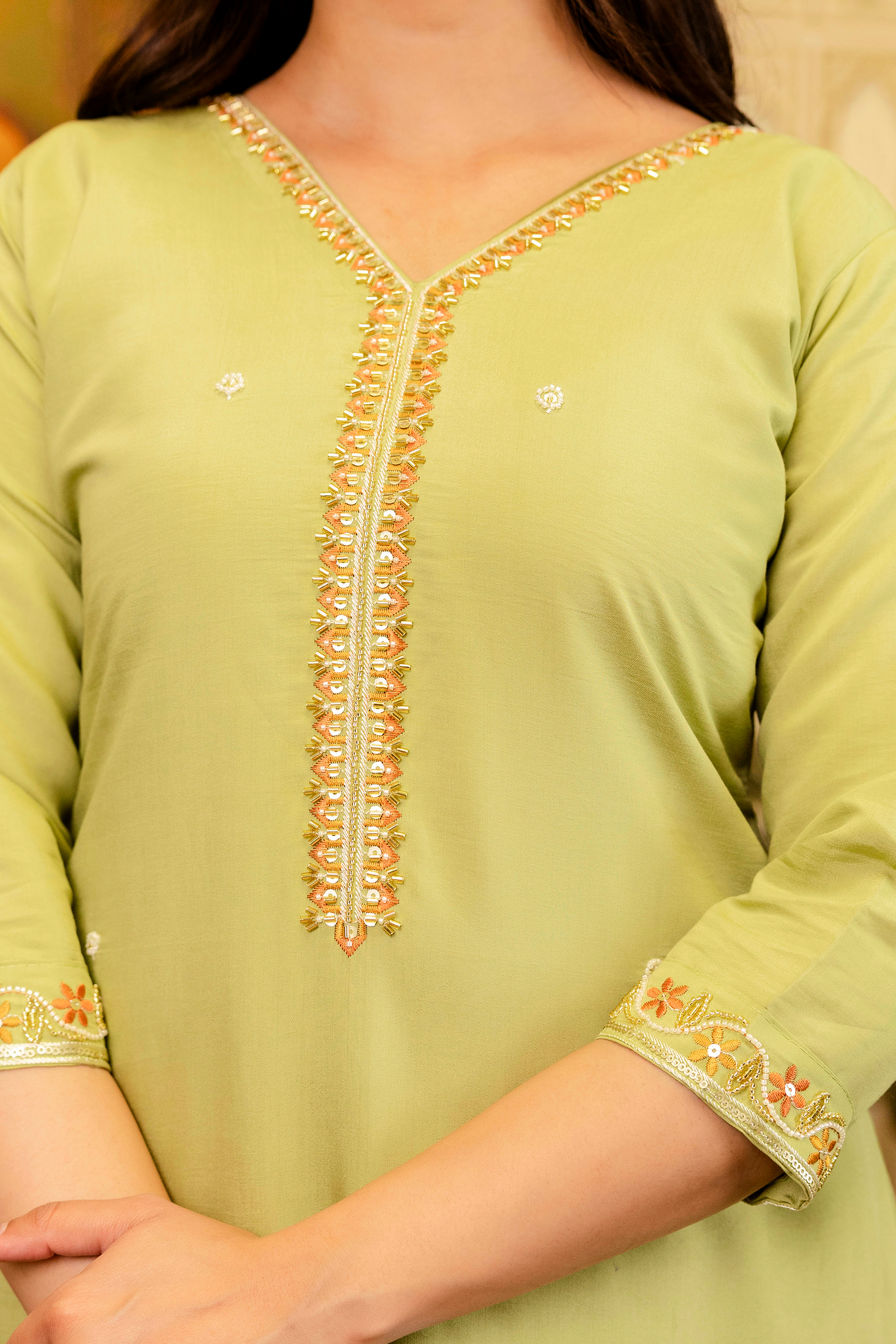
Zari embroidery can also create local weight. A heavily worked section beside a plain section doesn't hang evenly, especially when the embroidery stops near the hip. The result isn't necessarily poor workmanship; it can be a balance issue that becomes visible during movement. A lining, facing or narrow stay tape can help a tailor control the edge without making the entire kurti stiff.
Can a printed kurti fold more than a plain one?
A printed kurti can appear to fold more than a plain one because the print makes small changes in direction easier to notice. Digital florals, vertical stripes and border motifs reveal whether the side seam is staying vertical.
Compare the placement of a motif above and below the slit. If the design itself shifts sharply towards the front, the cloth may be twisting on the body. Floral Digital Printed Chiffon Kurti Palazzo Set with Zari Embroidery demonstrates why print scale and embellishment placement matter: a fluid base and decorative surface can make a small change in fall visually prominent.
How Fit and Seam Construction Create Inward Folds
A kurti that's tight across the hips is the most common fit-related reason for inward-folding side slits. The garment needs enough ease for the body to move without stretching the side seam sideways.
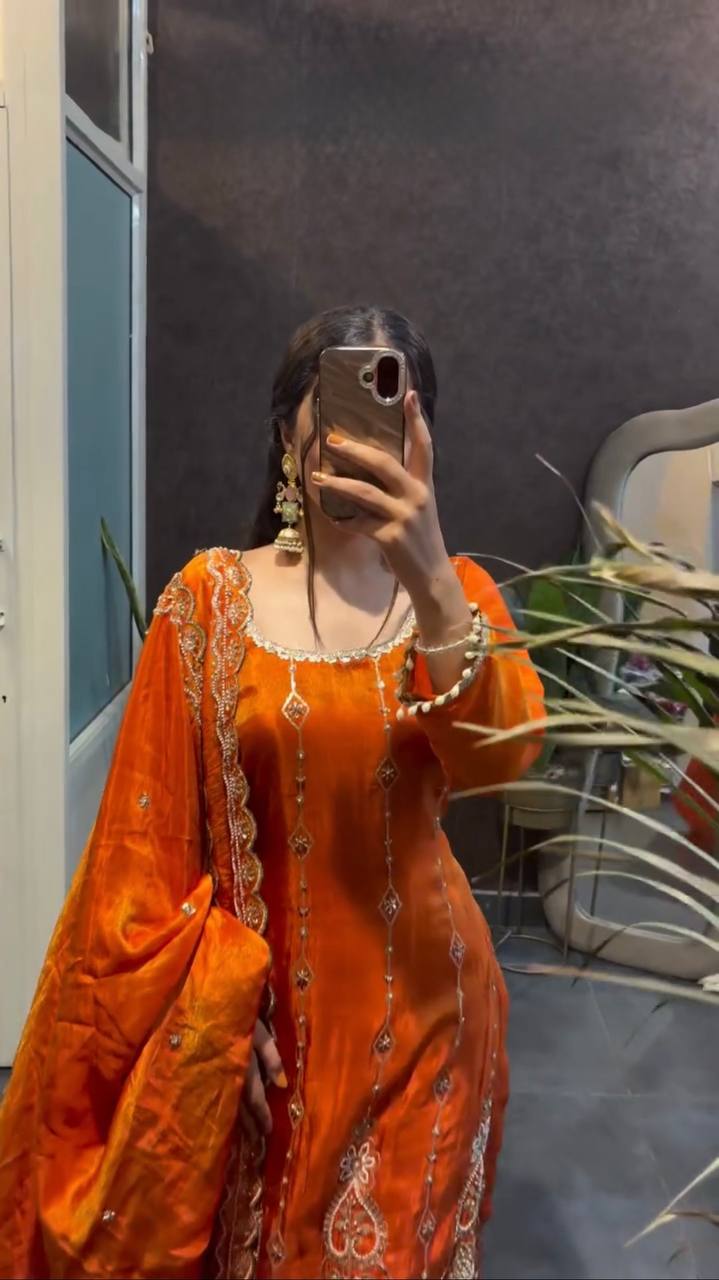
Measure the fullest hip area while wearing the undergarments normally worn with the salwar suit. A straight kurta generally needs wearing ease in addition to the body measurement; the exact amount depends on fabric, silhouette and preference. A firm cotton straight kurta may require more practical ease than a fluid garment because cotton doesn't slide as readily over the hips.
Look for horizontal drag lines extending from the side seam towards the front or back. Lines pointing towards the slit suggest insufficient hip ease. A slit that opens outwards while standing but folds inward during walking often indicates that the opening length is too short for the stride or that the hip seam allowance is too narrow.
Seam construction matters as much as circumference. Unequal seam allowances can make one side edge heavier than the other. A seam allowance that's clipped too close at the slit opening may lose stability. A side seam stitched with uneven tension can pucker one panel, encouraging the edge to roll towards the seam.
Vertical Cotton Straight Kurta Set with Dupatta is a useful example of why grain direction matters in a straight silhouette. Cotton panels should be cut with the warp running as vertically as possible. If a panel is cut slightly off grain, the side seam may drift even when the measurements are correct.
What does a diagonal slit tell you?
A diagonal slit usually signals uneven tension, an off-grain panel or a mismatch between the garment's hip width and the wearer's body. A simple edge press won't permanently solve a diagonal pull.
Pin the slit closed temporarily and inspect the side seam from the underarm to the hem. If the seam itself spirals, a tailor may need to open and restitch part of it. If the seam is straight but the body pulls across the hips, adding ease or raising the slit can restore balance. Altering only the slit edge without correcting the source can make the opening look neat for a short time and then return to the same fold.
How Washing, Pressing and Storage Affect Kurti Slits
Washing and pressing can set an inward fold even when the original stitching was sound. Shrinkage, uneven drying and heat applied to one edge change the shape of the slit opening.
Cotton can shrink more across one panel if the kurti is washed aggressively or dried in a twisted position. Always straighten the side seams before air-drying. Avoid hanging a wet kurti from one shoulder because the weight can pull the garment diagonally. Lay delicate chiffon, Chanderi and embellished pieces flat or use a broad hanger after excess water has been removed without wringing.
Press the slit from the wrong side on a suitable temperature setting. Place the kurti flat, align both edges and press from the seam towards the hem rather than dragging the iron across the opening. A pressing cloth protects zari, embroidery and glossy silk blends from direct heat. Steam can relax a fold, but steam alone can't correct a tight hip or badly placed seam.
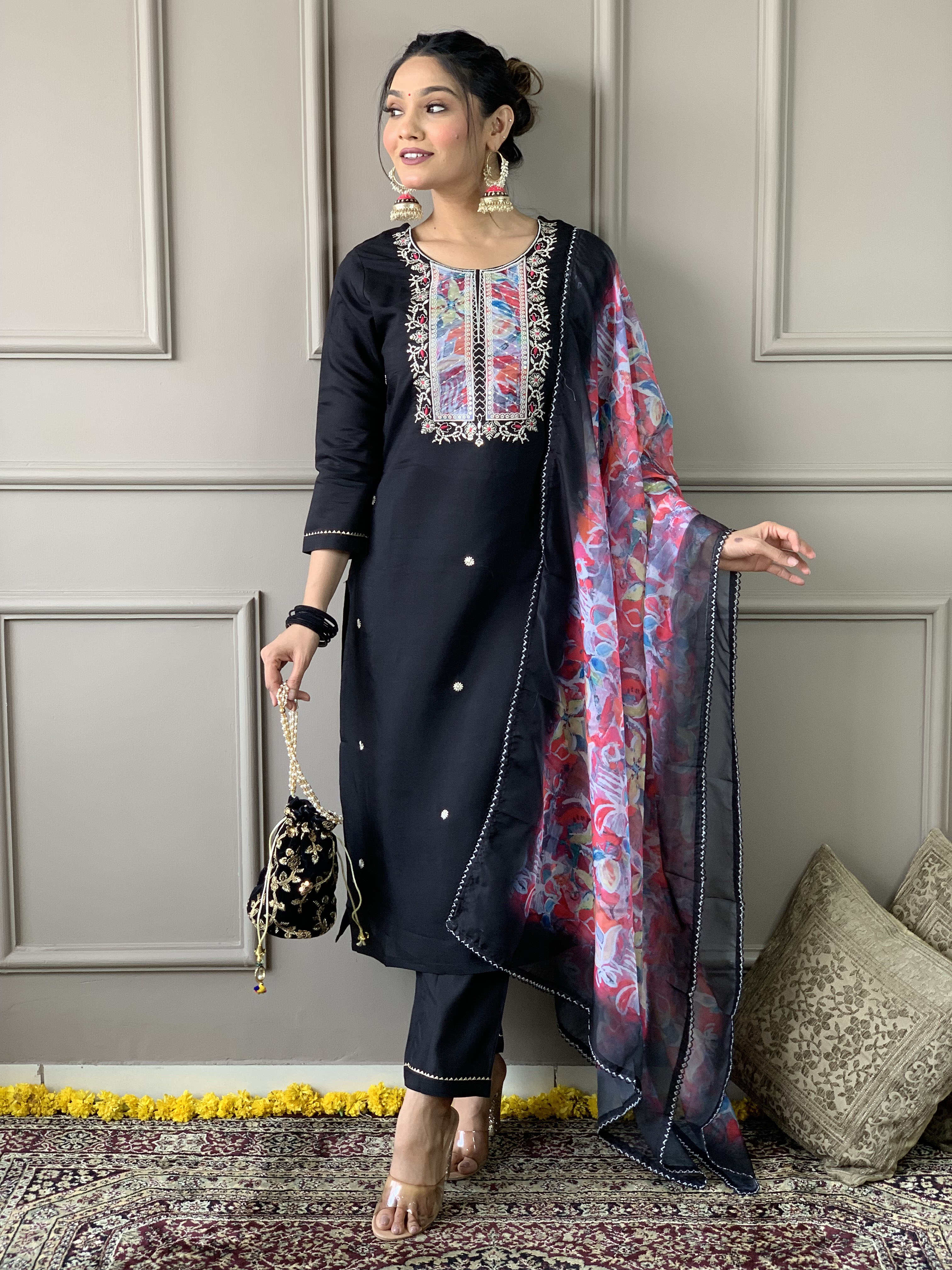
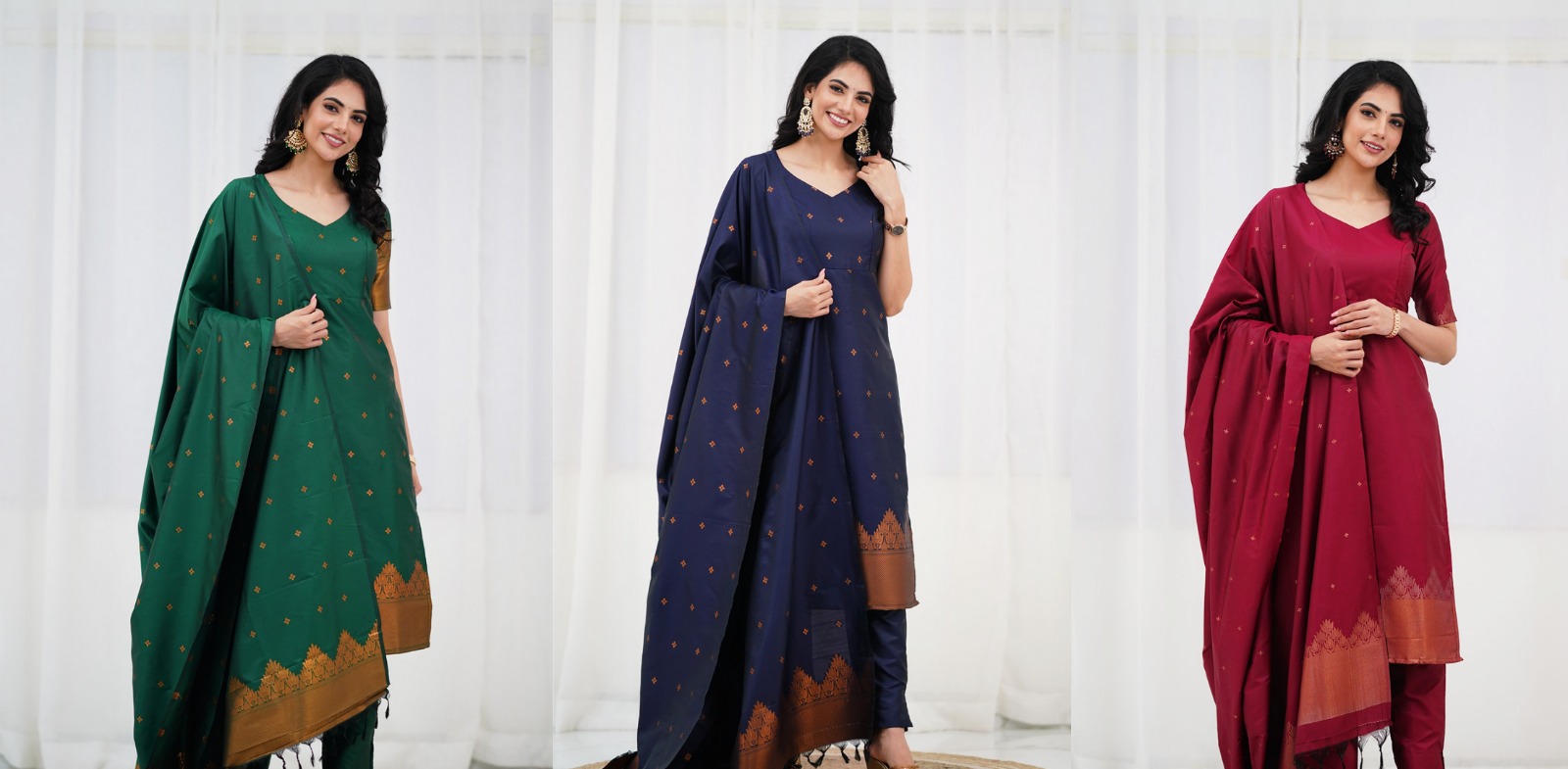
Storage also affects the fall. A narrow hanger can create shoulder distortion that travels down to the side seam. Heavy garments such as Navy Blended Silk Zari Kurti Pant Dupatta Set are better stored on a broad, padded hanger or folded with the side seams aligned. Do not place a heavy embroidered dupatta on top of a lightweight kurti for long periods.
How to Diagnose and Fix an Inward-Folding Slit
The quickest diagnosis uses three checks: observe the slit standing still, observe it while walking, and inspect the side seam inside out. These checks separate a temporary press issue from a genuine fit or construction problem.
- Check the standing fall. Wear the intended bottom and stand naturally. If the slit folds while standing, inspect pressing, seam allowance and grain first.
- Check movement. Walk ten steps, sit down and turn. If the slit folds only during movement, examine hip ease and slit length.
- Check both sides. If only one side folds, compare shoulder, bust and side-seam alignment. One-sided distortion often points to construction or posture rather than fabric alone.
- Check the inside. Look for puckering, a twisted seam, loose lining or a facing that ends unevenly. Photograph the garment while wearing it so a tailor can see the problem at the correct tension.
A temporary home fix is to steam the edge, align the seam and press it flat from the wrong side. Use a few concealed hand stitches only if the opening is decorative and you understand that the stitches may restrict movement. Do not iron over zari or mirror work without a pressing cloth.
A tailor can raise the slit, release the side seam, add a small triangular gusset or stabilise the opening with a facing. The correct alteration depends on the symptom. A gusset helps restricted movement, while releasing the hip seam helps drag lines. A facing helps a light edge roll, but a facing won't cure a garment that's too tight.
How Different Kurti Silhouettes Behave
Straight, A-line and embellished kurtis need different expectations at the side opening. A straight kurta shows tension quickly, an A-line kurta distributes width lower down, and a decorated kurti may need extra support at the seam.
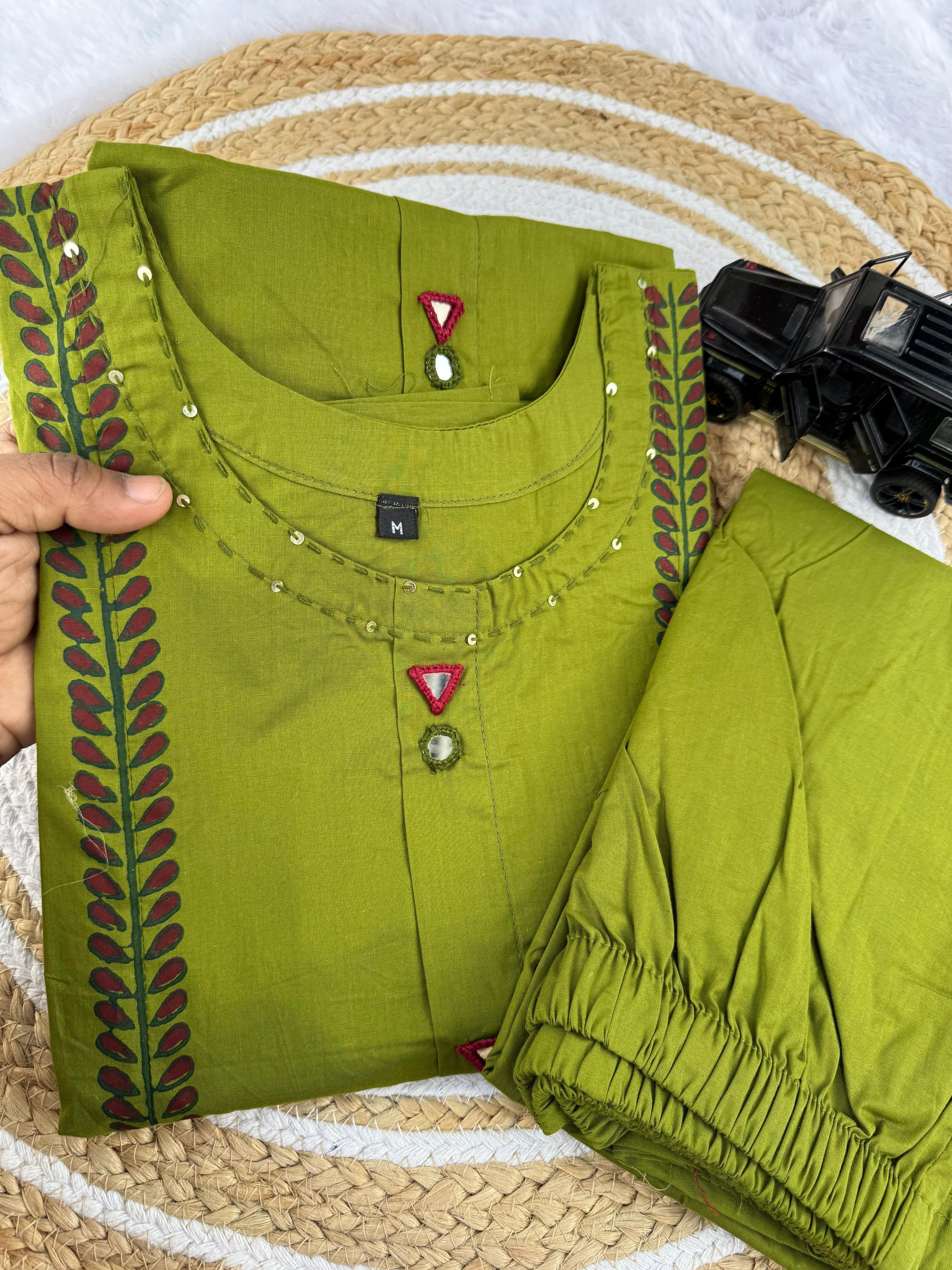
An A-line shape normally gives more room below the waist, so inward folding may indicate a badly pressed hem or a lining that's shorter than the outer layer. Designer Cotton A-Line Kurti Pant Set with Mirror Work illustrates why embellishment placement should be assessed with the silhouette. Mirror work can add local weight, while the A-line cut changes how the lower panels swing.
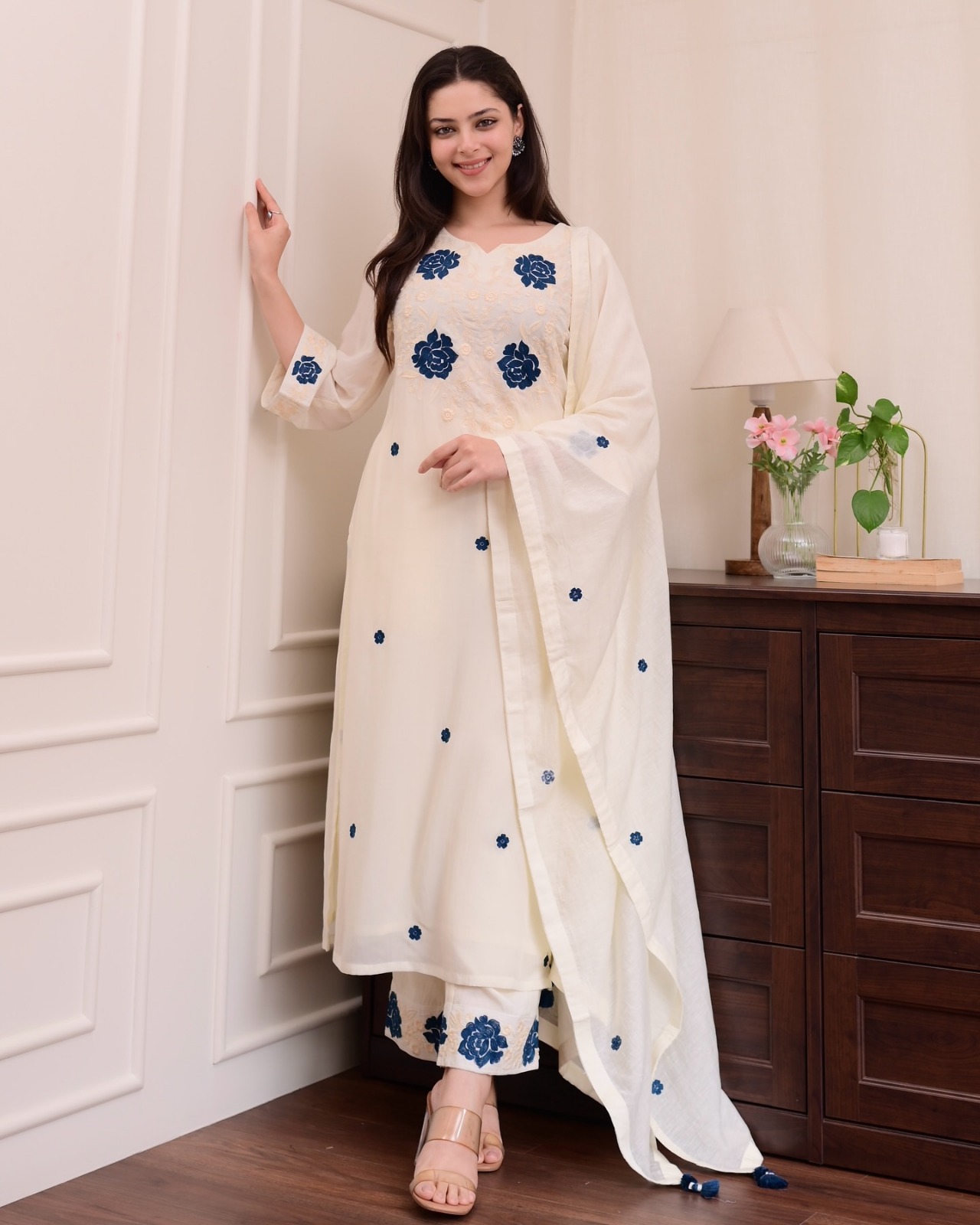
A straight set with a dupatta can also look uneven when the dupatta is repeatedly tucked into one side. The extra weight pulls the shoulder and side seam on that side. Designer Cream Straight Kurti Set with Dupatta may hang differently depending on whether the dupatta is worn over both shoulders, over one shoulder or wrapped around the arm.
Traditional textile-inspired designs can have distinct fabric behaviour. Kanchi Cotton Zari Woven Kurti Set with Traditional Dupatta combines a woven surface with zari detail, so pressing and storage deserve more care than they would for a plain jersey-like fabric. Maharashtra Paithani Inspired Salwar Suits, Odisha Sambalpuri Salwar Suits and Gujarat Bandhej Salwar Suits may also use visual borders or patterned panels that make a slight side-seam shift noticeable.
How to Choose a Kurti That Will Keep Its Shape
Choose a kurti by checking the hip ease, side-seam alignment, fabric stability and slit finishing before judging the print or embroidery. A polished appearance depends on how the garment behaves in motion, not only on how it looks flat.
For regular wear, medium-weight cotton, stable cotton weaves and well-finished blends are generally easier to maintain than extremely light fabrics. Inspect whether the slit edges are symmetrical, whether the stitching is even and whether the hem remains level when the kurti is held from both shoulders. A slit that already rolls on the hanger may need correction before wearing.
Match the garment to the bottom. A wide palazzo can catch the inner edge of a lightweight slit and push it inward, while a close pant can reveal every fit line across the hip. A salwar suit should allow the kurti and bottom to move together without one layer repeatedly trapping the other.
Regional-inspired collections can also guide styling choices. Kalamkari Print Salwar Suits suit a more structured, print-led look where straight seams are easy to assess. Punjab Patiala Salwar Suits have a fuller lower silhouette, so checking the kurti's hip ease remains important even when the bottom is voluminous. The goal isn't to eliminate all movement; the goal is to ensure that movement doesn't permanently train the slit into a fold.
A side slit that folds once after sitting is normal garment movement; a side slit that stays folded after the wearer stands is evidence worth investigating.
When Should a Tailor Correct the Slit?
Consult a tailor when the slit folds after careful pressing, restricts walking, exposes the leg unexpectedly or shows diagonal drag lines. These signs indicate a structural issue rather than a minor styling problem.
Take the kurti to the tailor unwashed if the problem appears immediately after purchase, and carry the bottom and dupatta worn with it. Ask the tailor to assess the garment while you stand and walk, not only while it lies on a table. Explain whether the fold appears on one side, after sitting, or throughout the day.
don't request a blanket alteration such as "make the slit tighter" without identifying the cause. Tightening can worsen restricted movement, while adding a gusset to a garment with an off-grain panel may not correct the twist. A measured alteration preserves the intended silhouette and avoids unnecessary changes to embroidery, borders or zari work.
Most inward folds have a practical explanation: insufficient ease, unstable fabric, uneven construction, or a fold set by care. Once the cause is identified, a straight kurta or salwar suit can regain a clean side line without sacrificing comfort or movement.
Common Questions About Inward-Folding Kurti Side Slits
Why do my kurti side slits fold inward when I walk?
Kurti side slits usually fold inward while walking because the hip area is tight, the slit is too short, or the fabric and seam are twisting under movement. Check for horizontal drag lines and compare the slit while standing and walking before choosing an alteration.
How much hip ease should a straight kurta have?
A straight kurta needs additional room beyond the fullest hip measurement, but the amount depends on fabric, silhouette and personal comfort. Firm cotton generally needs more functional ease than a fluid chiffon or silk blend because firm fabric does not slide over the body as easily.
Can ironing stop a kurti slit from folding inward?
Ironing can remove a fold caused by washing or poor pressing, but ironing cannot correct a tight hip, off-grain panel or uneven seam. Press the slit from the wrong side with the edges aligned, and use a pressing cloth over zari, embroidery and mirror work.
Should I make the side slit longer if it keeps folding?
Making a side slit longer can help when the opening restricts walking, but the alteration should be assessed by a tailor. A longer slit will not solve a twisted side seam, diagonal grain problem or insufficient hip ease and may change coverage.
Why does only one side slit of my kurti fold inward?
One-sided folding often comes from uneven seam tension, a slightly off-grain panel, shoulder distortion or the weight of a dupatta worn on one side. Inspect the garment inside out and have it assessed while you stand naturally in the styling you normally wear.
Which kurti fabrics are least likely to fold at the side slit?
Medium-weight cotton and stable woven fabrics usually hold a side slit more reliably than very light chiffon or highly fluid fabrics. Chanderi, Banarasi silk and zari-woven fabrics can also hang well when their seams, lining and pressing are properly balanced, but each requires fabric-specific care.