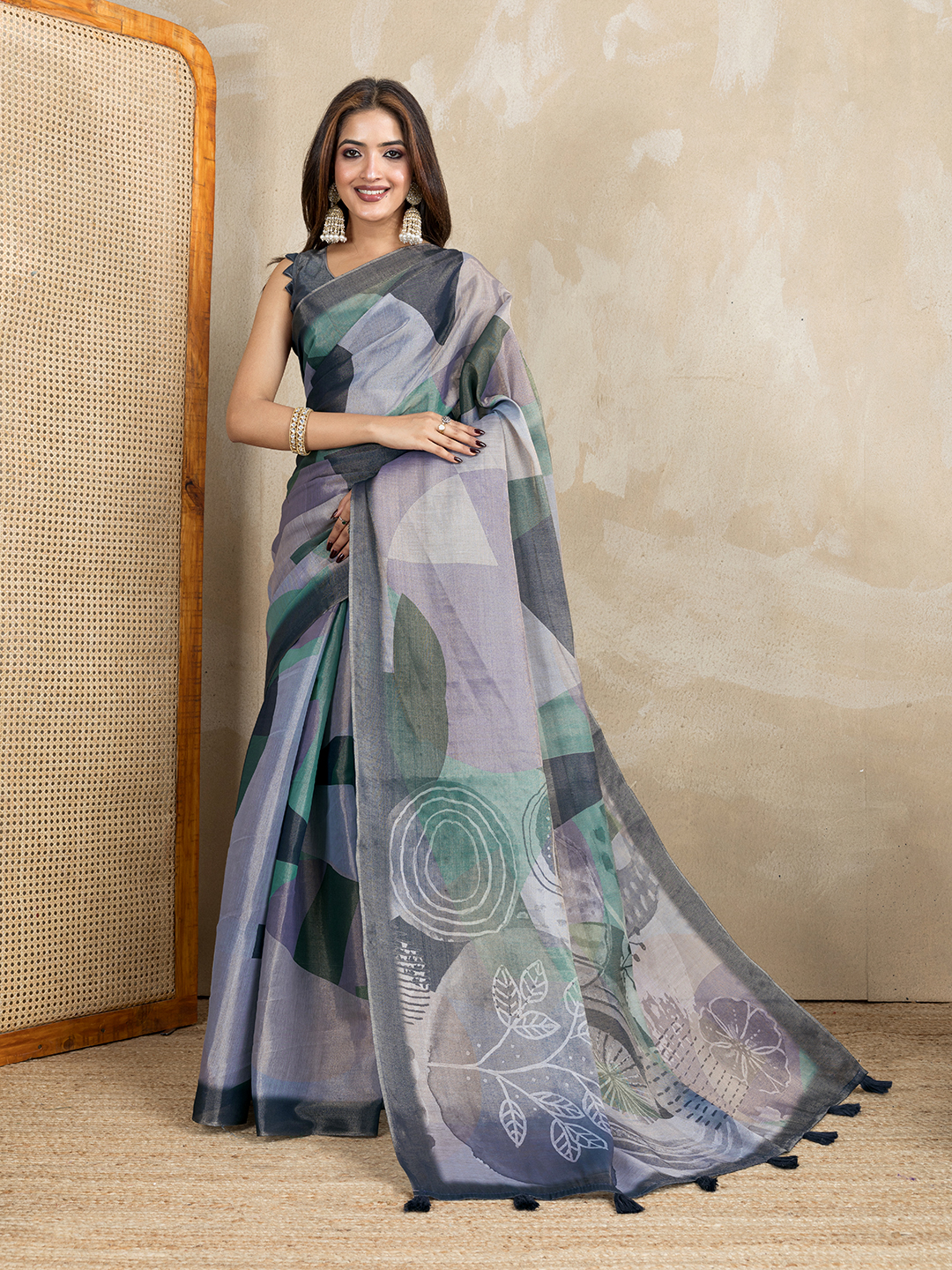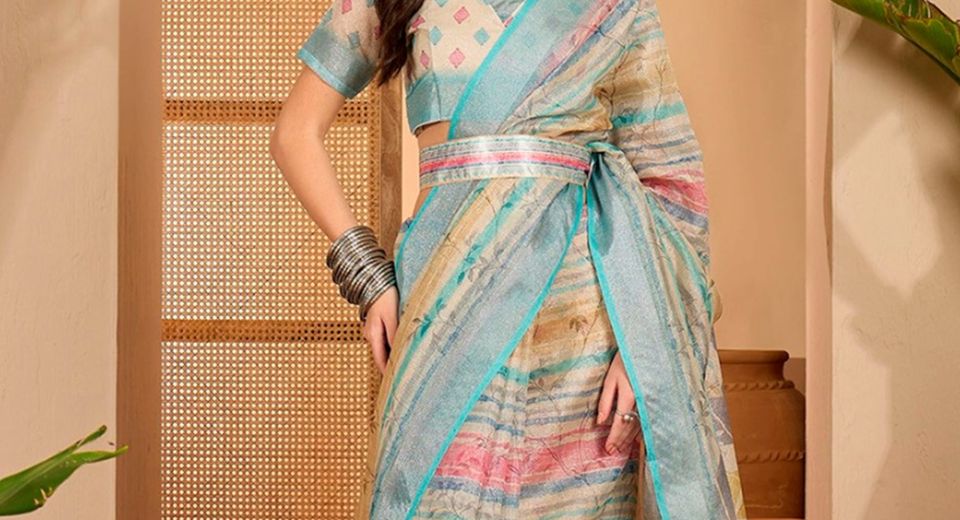
Why Saree Fall Stitching Still Matters With Lightweight Fabrics becomes clear when a thin saree develops a curling hem, uneven pleats or a snagged edge after only a few wears. A fall is a strip of fabric stitched along the lower inside hem of a saree. The strip adds controlled weight, reinforces the edge and helps the saree hang steadily without changing the character of the main fabric.
Lightweight sarees made from linen cotton, fine cotton, Chanderi, georgette, tissue or light silk often need more careful finishing than heavy textiles. A delicate weave has less mass to keep the pallu and pleats in position, while a narrow hem faces repeated friction from floors, footwear and walking. Correct fall stitching addresses both problems, but poor fall selection can create a stiff ridge, visible shadow or uncomfortable extra weight.
The practical question isn't whether every saree needs the heaviest available fall. The practical question is which fall width, material, colour and stitch finish will support the specific saree while preserving its natural drape.
Why Saree Fall Stitching Still Matters With Lightweight Fabrics for Hem Protection
Saree fall stitching protects the lower edge by placing a replaceable, reinforced layer between the original saree fabric and everyday abrasion. The fall sits on the reverse side, so the wearer usually sees only a neat finish at the hem.
What does a fall protect?
A fall protects the saree hem from rubbing, stretching and early fraying. The bottom few centimetres of a saree may brush against a staircase, tiled floor, chair leg or sandal, particularly when the garment is worn at a longer length. A sewn cotton or blended fall absorbs much of that contact instead of allowing the main fabric edge to weaken.
Protection matters especially for lightweight linen cotton and fine cotton. Yarns in a light weave can loosen when repeatedly pulled, and a damaged edge may begin to show small loops or a wavy line. Fall fabric doesn't make a saree indestructible, but it creates a protective layer that can be repaired more easily than a weakened original hem.
Does a fall prevent all hem damage?
A fall reduces common abrasion but can't prevent damage caused by dragging, sharp jewellery, rough footwear or careless washing. A saree should still be worn at a sensible length, folded without crushing the hem and washed according to its fibre content.
Fall stitching also helps a tailor work with a cleaner edge during later repairs. If the fall becomes worn after several seasons, replacing the strip is usually less disruptive than rebuilding a frayed border. The repair remains easier when the original hem has not been allowed to unravel.
Why Saree Fall Stitching Still Matters With Lightweight Fabrics for a Better Drape
Saree fall stitching improves drape when the strip lies flat, follows the entire hem and ends cleanly at the corners. Even weight along the lower edge helps the saree settle in a consistent arc instead of collapsing in random sections.
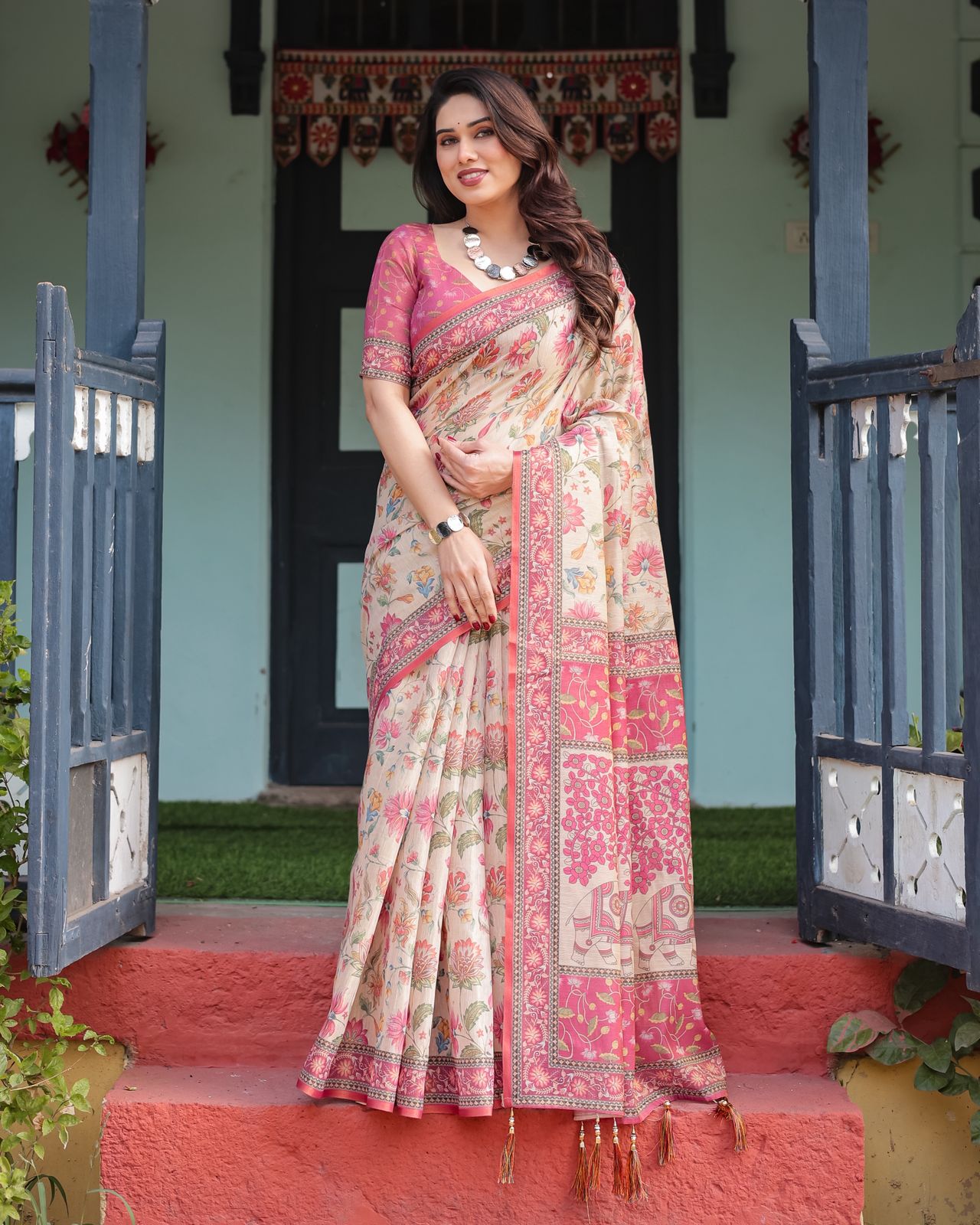
A fall adds measured weight along the bottom edge, helping the saree drop more straightly. The added weight can make front pleats stack more neatly and can reduce the tendency of a lightweight pallu to lift or twist while the wearer walks.
How does fall stitching affect pleats?
Fall stitching can make front pleats look more defined because the lower edge has slightly more resistance. Pleats may be less likely to fan apart immediately after pinning, although petticoat fit, pleat width and fabric surface still determine much of the final shape.
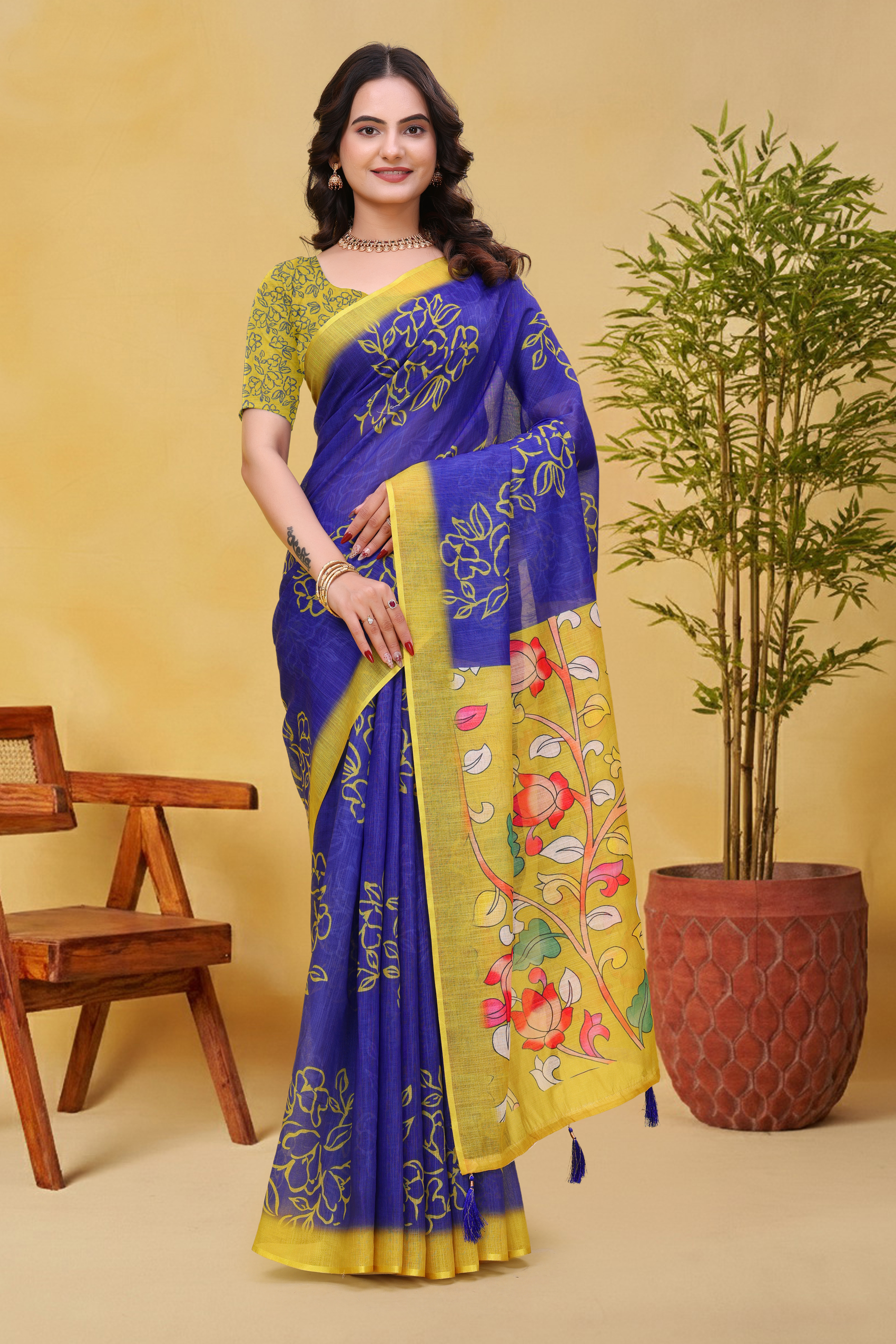
The Maroon Cotton Saree with Zari Work for Wedding demonstrates why proportion matters. Cotton can hold pleats effectively, but an excessively thick fall may create a bulky lower fold and compete with the zari border. A flexible, moderate-weight fall supports the pleats without making the hem feel rigid.
How does fall stitching affect the pallu?
A pallu may swing more predictably when its lower edge has even weight across the width. Lightweight printed and linen cotton sarees often feel airy at the shoulder, but that same lightness can make the pallu twist during walking. Fall stitching can't prevent every movement, yet it can reduce irregular curling along the trailing edge.
Fall stitching works alongside good draping technique rather than replacing it. A properly fitted petticoat, even pleats and secure shoulder pin remain necessary for a polished result. The fall provides a stable foundation for those choices.
Why Saree Fall Stitching Still Matters With Lightweight Fabrics in Colour and Weight Matching
The right fall combines compatible material, practical width and a colour that remains discreet beneath the saree. A tailor should assess opacity, border, weave and expected use before selecting the strip.
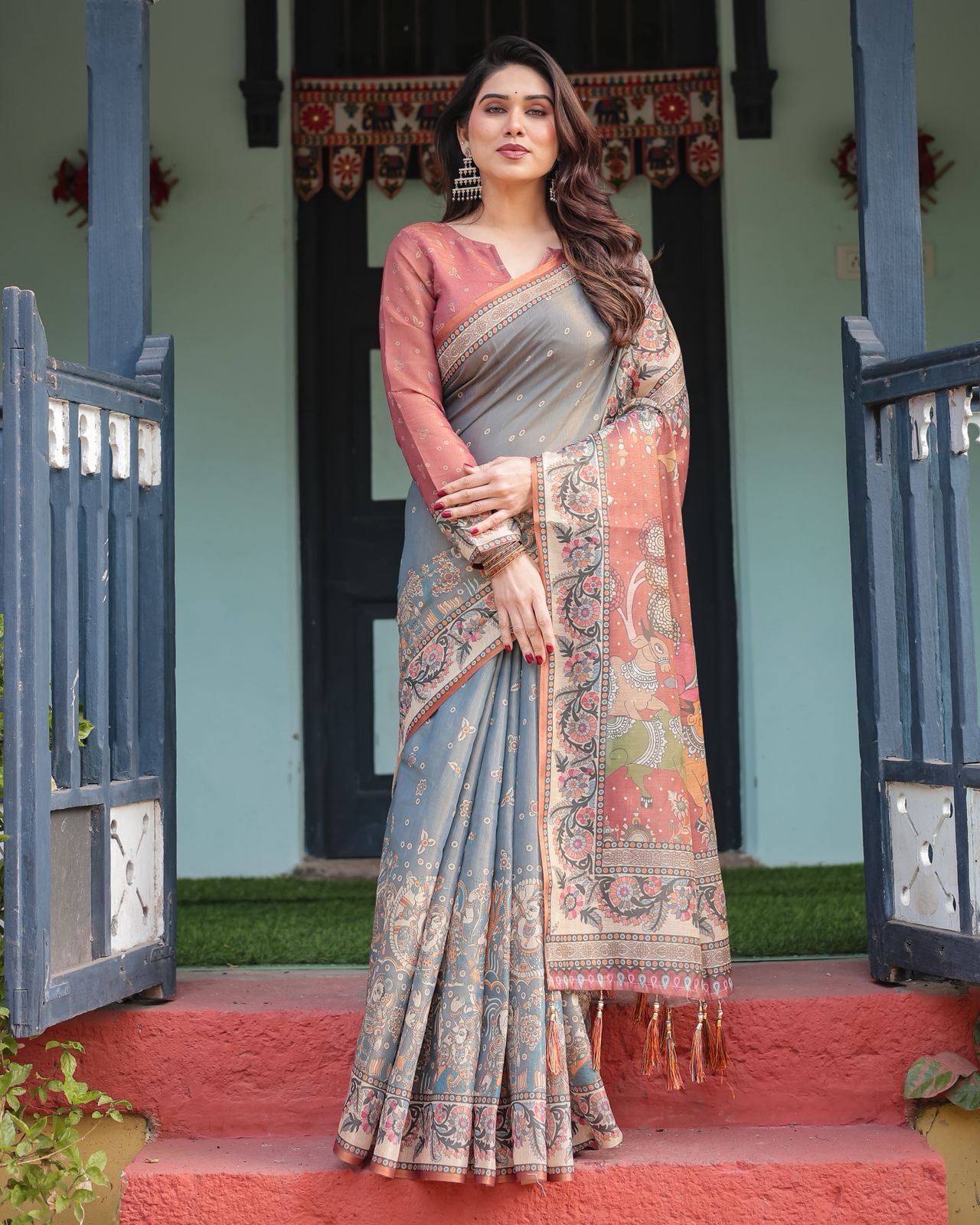
Which fall colour suits a pale saree?
A fall colour that closely matches the saree's lower edge usually suits a pale or semi-sheer saree best. A stark white strip can show as a bright line beneath cream fabric, while a grey, blue-grey, ivory or warm beige fall may blend more naturally.
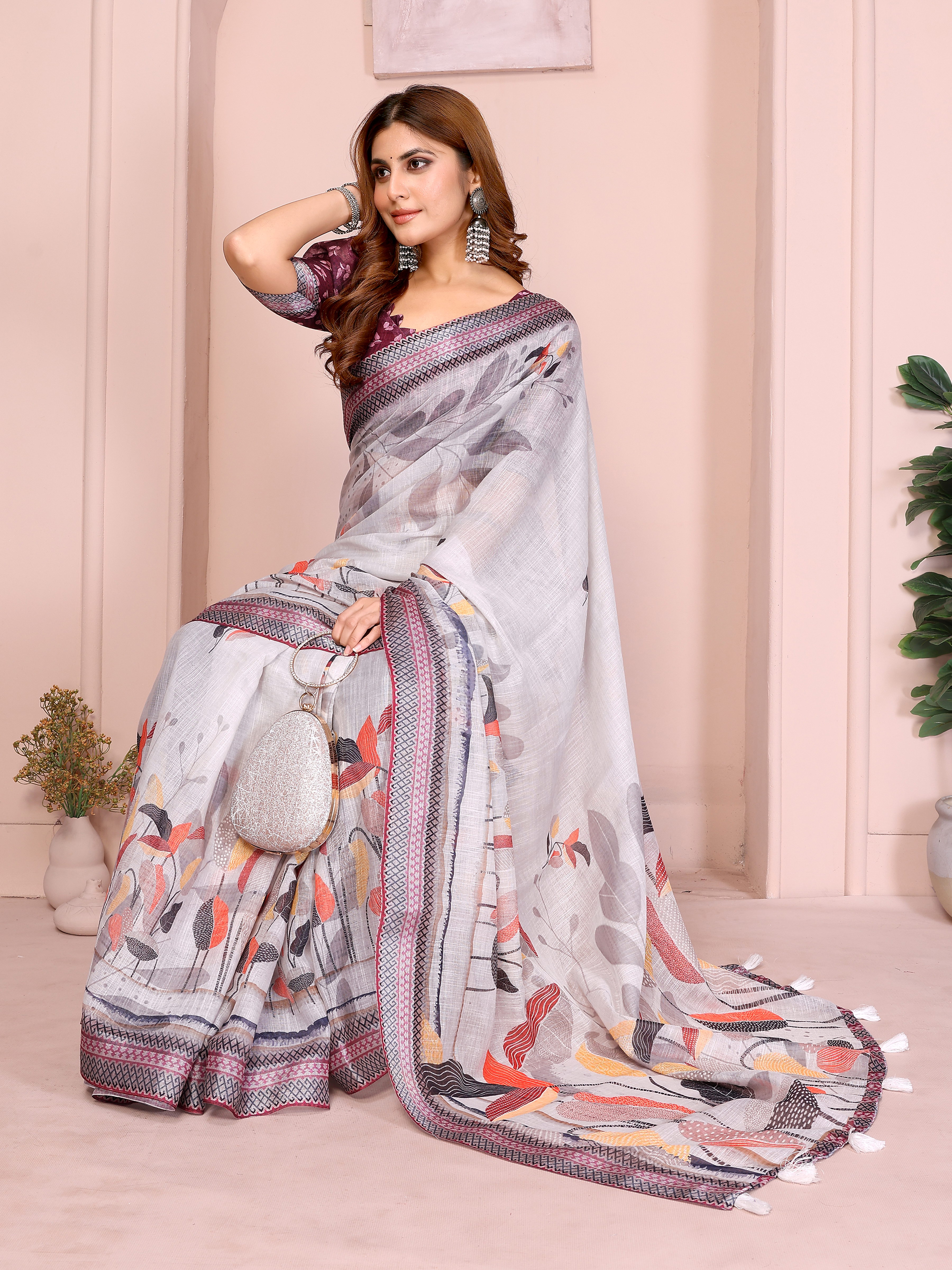
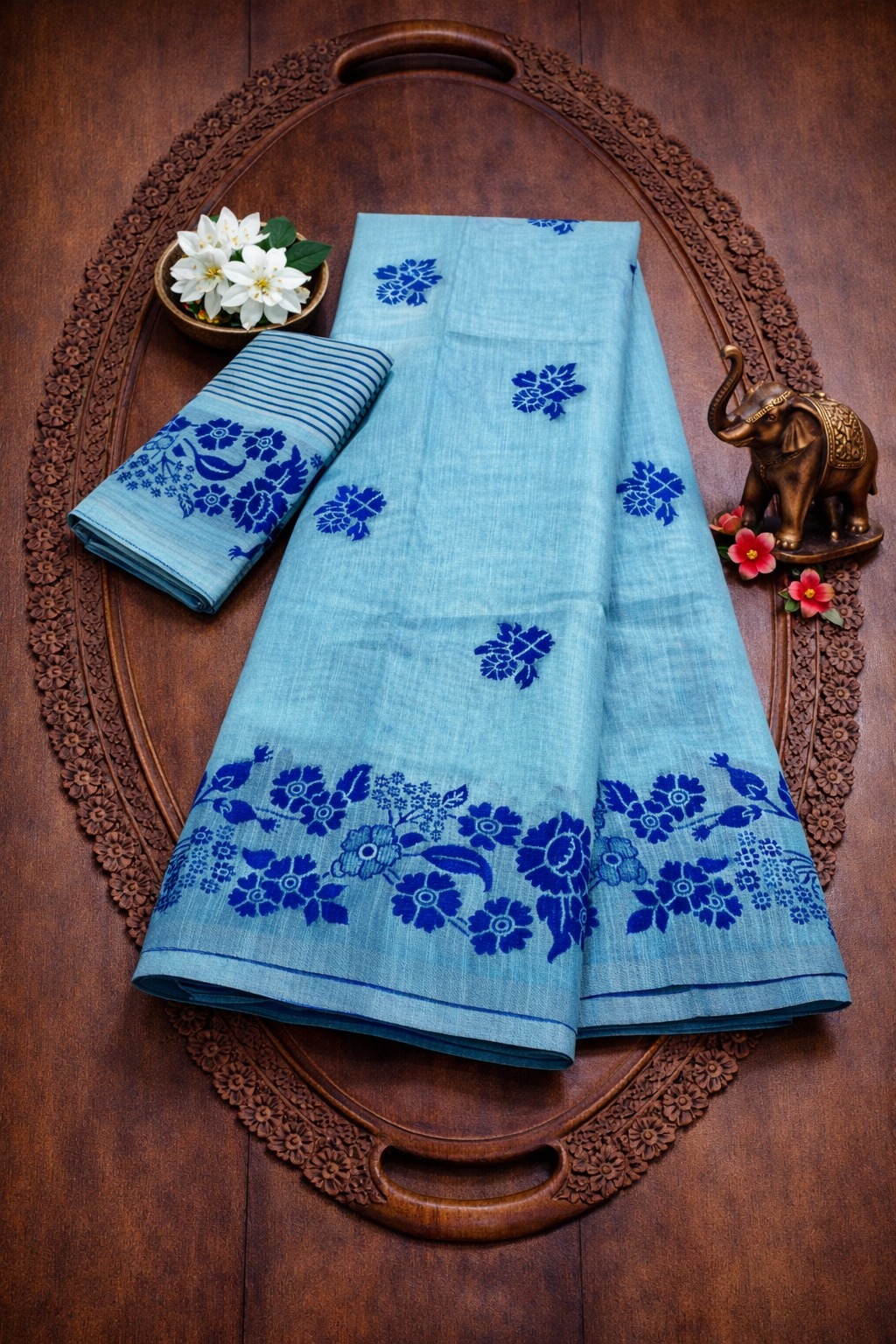
The Light Grey Linen Cotton Floral Print Saree with Blue Border illustrates why colour matching matters. A grey, blue-grey or closely coordinated cotton fall is less likely to create visible contrast when the saree shifts. A fall that's too thick may also make the floral body appear raised above the hem.
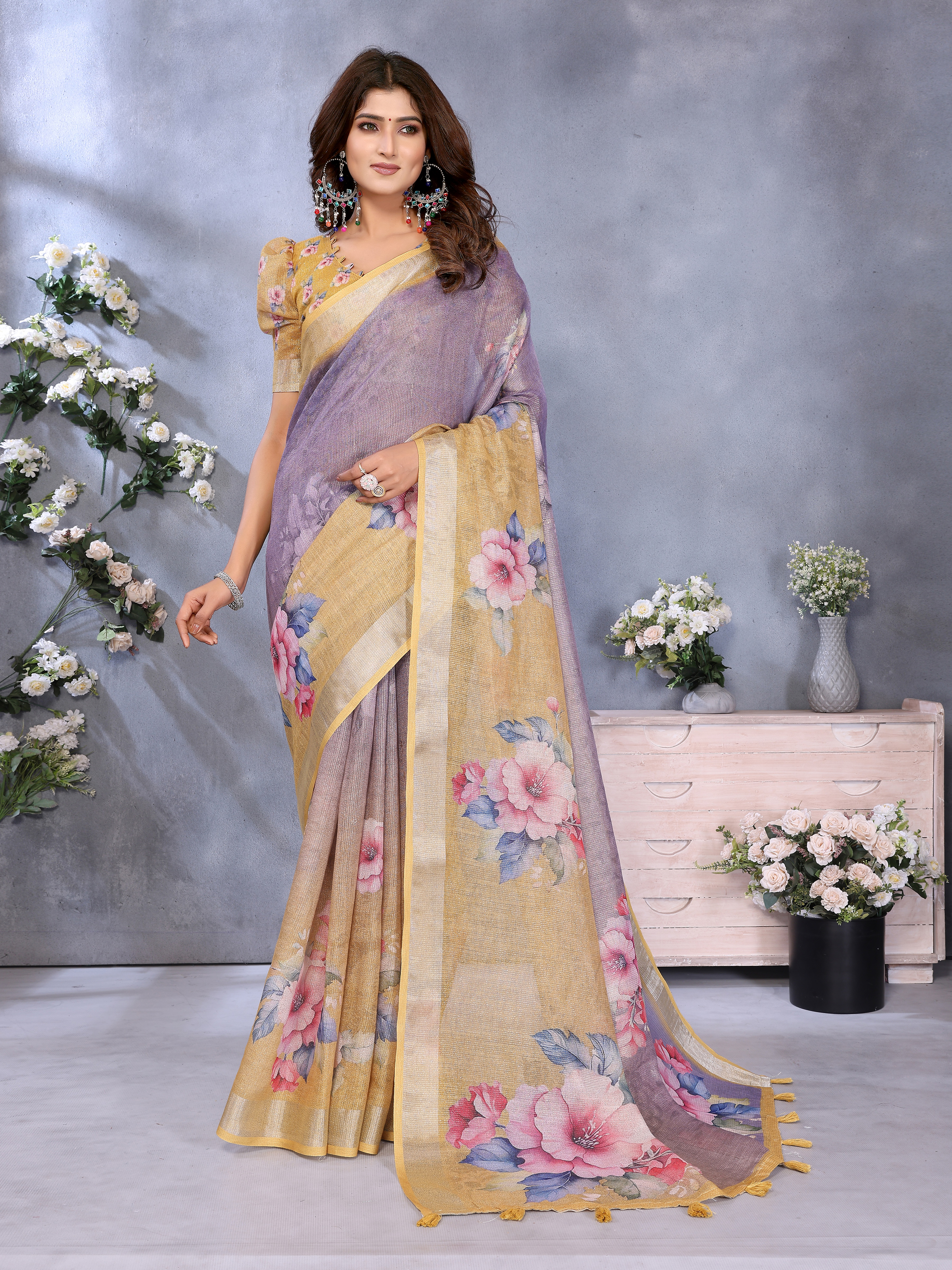
The Lightweight Cream Saree with Designer Floral Pattern needs similar care. Cream fabric can reveal shadows and colour differences more readily than a saturated shade. A cream or warm ivory fall, narrow enough to remain unobtrusive, is generally more suitable than a bright white strip.
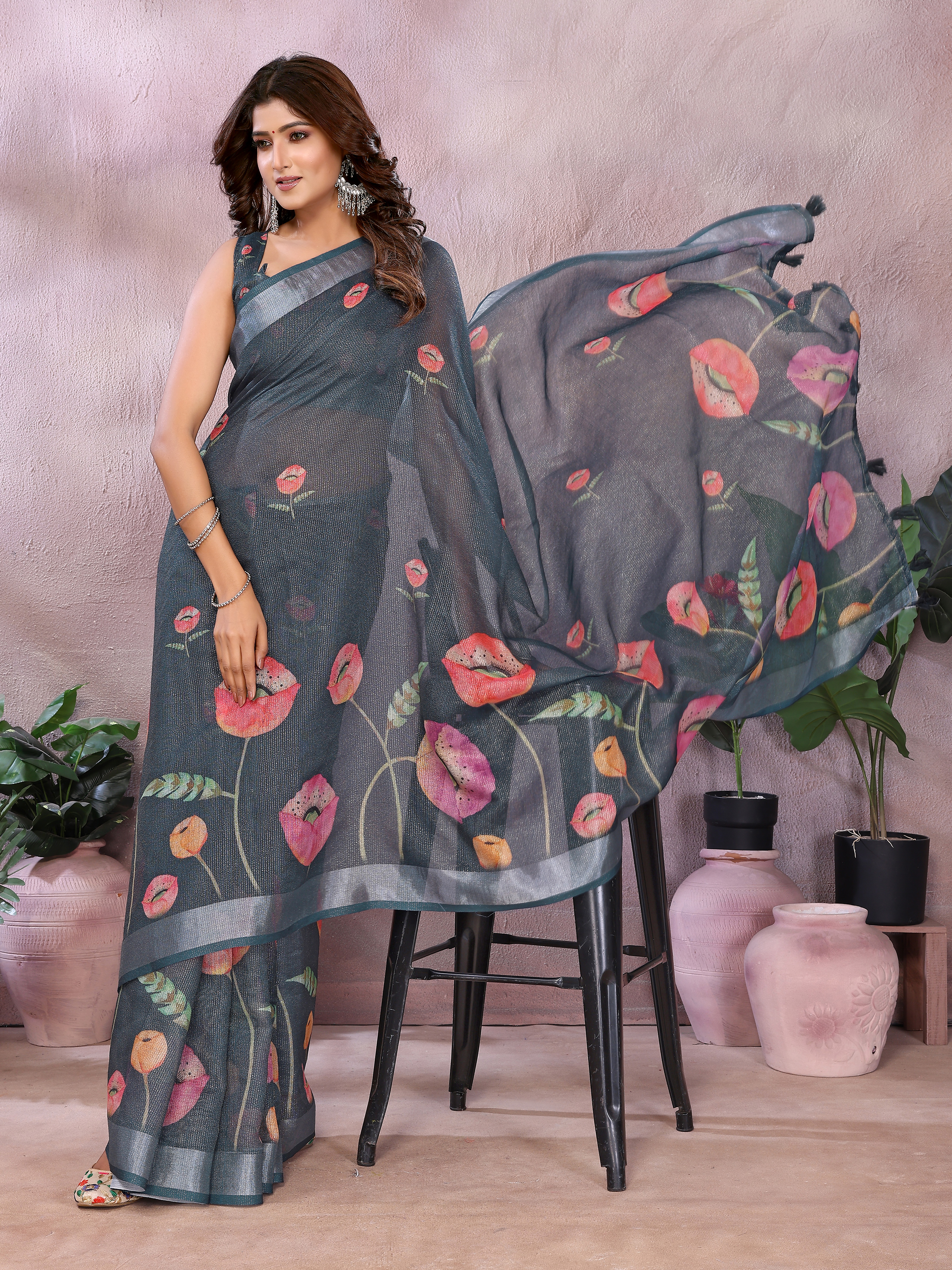
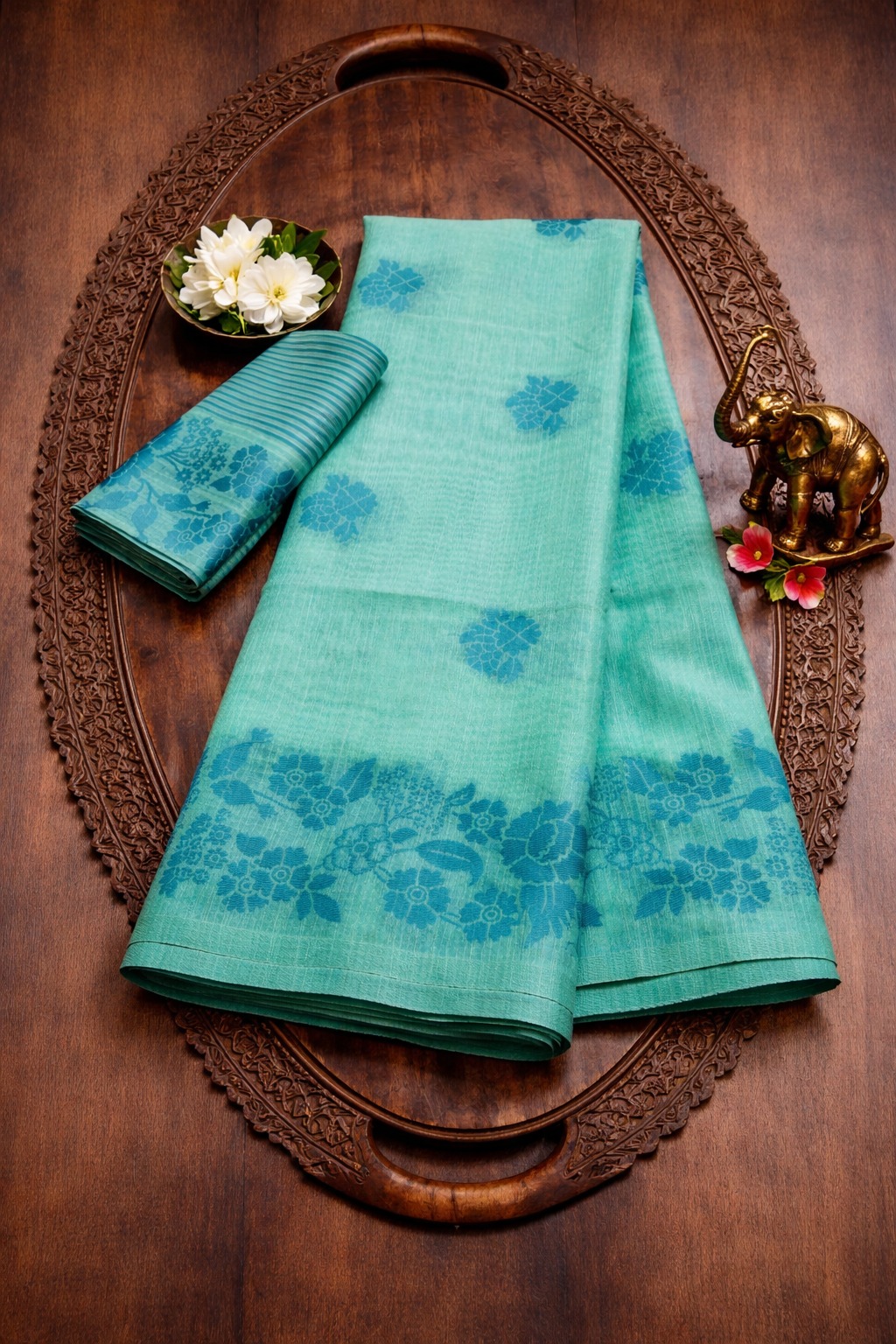
For the Sea Green Floral Linen Cotton Saree with Border, a lightweight fall in sea green, soft green or a coordinated neutral can support the border without competing with it. The fall should sit flat beneath the fabric, especially where the border already contains additional yarns or surface detail.
How much weight should a lightweight saree fall have?
A lightweight saree needs a flexible fall with enough body to protect the edge but not enough mass to overpower the weave. A heavy cotton tape or thick synthetic strip can pull the lower edge down while the upper body remains light, creating a rigid or slightly flared appearance.
A fall that's too flimsy can fail to protect the hem and may wrinkle independently of the saree. The seam can then look puckered after washing. A tailor should compare the fall's flexibility with the saree before stitching the full length and should avoid using the same material for every fabric category.
Why Saree Fall Stitching Still Matters With Lightweight Fabrics Across Linen, Cotton and Silk
Fall material should be selected according to the saree's fibre, surface and intended use. Cotton, linen cotton and silk don't respond identically to added weight, friction or washing.
Which fall works for linen cotton and cotton?
Cotton fall remains a dependable choice for cotton and linen cotton sarees because cotton is flexible, breathable and relatively easy to stitch. A lightweight blended fall can work for delicate synthetic or fluid sarees when the strip remains soft and doesn't become rigid after washing.
The Multicolor Linen Cotton Saree with Artistic Stripe Design may suit a neutral fall such as beige, grey or a shade drawn from its border. Matching one stripe exactly isn't always necessary; a low-contrast colour can be more discreet when the saree moves during wear.
The Peach Linen Cotton Printed Saree for Women Online benefits from a fall that complements the peach ground or the darker colours in its print. A very dark fall could show at the bottom if the saree is light or slightly translucent, while a closely related peach, beige or soft tan may remain less noticeable.
Which fall works for a silk saree?
Silk sarees require a fall that supports the hem without flattening the textile's natural movement. The Premium Handloom Silk Saree with Handkatha deserves a finish that respects handloom texture and avoids an overly firm tape.
Silk sarees with zari also need protection from direct rubbing against the floor. Zari borders can lose alignment or develop surface wear when repeatedly dragged. A smooth, flexible fall reduces contact without pulling the zari border out of shape.
Banarasi silk, Kanjeevaram and handloom silk may all need different finishing choices because weave density, border construction and weight vary. A tailor should inspect the actual saree rather than assume that every silk saree requires the same width or fall material.
Why Saree Fall Stitching Still Matters With Lightweight Fabrics When Measuring Length
Fall stitching works properly only when the finished saree length matches the wearer's height, footwear and preferred drape. A well-sewn fall will wear quickly if the saree regularly drags on the ground.
How should saree length be measured before fall stitching?
Saree length should be checked while wearing the intended blouse, petticoat and footwear before final fall stitching. People who wear flats may need a different finished length from people who wear three-inch heels.
Leave enough clearance above the floor for the saree to move without dragging. The exact clearance depends on the wearer's height, draping style and footwear, but the hem should not repeatedly sweep the floor during ordinary walking. A fall isn't a substitute for correcting an excessively long drape.
Measuring the worn length also prevents a common mistake: stitching the fall first and discovering later that the border sits too low or the pallu pulls unevenly. The tailor should inspect the front pleats, pallu and hem position together.
Should the fall cover the complete saree length?
The fall should generally follow the complete lower hem, including the section that becomes the pallu edge. Continuous coverage gives the saree more even protection and avoids an abrupt change in weight near the side seam.
The fall should be aligned rather than pulled tight. Tension during stitching can cause the saree to curl after the thread is released. Corners should be secured neatly, and decorative zari or embroidery should not be caught unnecessarily in the seam.
Why Saree Fall Stitching Still Matters With Lightweight Fabrics After Washing and Storage
Care after stitching determines whether the fall continues to protect the saree without puckering, shrinking or separating from the hem. Lightweight sarees need gentler handling because their surface can crease and distort more easily.

How should a saree with fall be washed?
A saree with a cotton or linen cotton fall should be washed according to the main saree fabric, not according to the fall alone. Hand washing in cool water with a mild detergent is generally gentler for many washable cotton sarees, while silk, zari and delicate prints may require professional dry cleaning or the care method specified by the maker.
don't twist the saree tightly after washing. Excess twisting can stretch the hem and create diagonal tension between the fall and the main fabric. Press water out gently, support the garment while moving it and dry it away from harsh direct sunlight when colour or print sensitivity is a concern.
How should the saree be stored?
A saree should be completely dry before folding and storing. Fold the saree with the fall lying flat rather than crushed into a narrow, hard ridge. Refolding along slightly different lines from time to time can reduce permanent creasing in the same area.
Store zari sarees with a breathable protective layer and avoid placing heavy garments on top of delicate linen cotton or lightweight silk. Inspect the fall before an important event, especially if the saree has not been worn for several months.
Why Saree Fall Stitching Still Matters With Lightweight Fabrics When Buying Online
Online saree buying should include a check for fall requirements, fabric weight and alteration timing rather than focusing only on colour and price. Product descriptions may identify linen cotton, cotton or handloom silk, but the buyer should still confirm whether fall stitching is included or needs to be arranged separately.
Collections such as Sarees from Rs 1000 to Rs 1500, Sarees Under 20% Off and Sarees Under 10% Off can contain fabrics with very different finishing needs. A lower price or discount doesn't determine whether a saree needs a fall; fibre, transparency, border construction and intended frequency of wear matter more.
For a lightweight saree bought for a Haldi ceremony, office wear or travel, ask whether the fall should be stitched before the first wear and whether the chosen tailor has worked with the specific fabric. A printed linen cotton saree may need a softer treatment than a structured cotton saree, while a light silk saree may need more careful alignment around zari.
Sarees Flat 60% Off and Sarees Flat 50% Off can be useful places to compare styles, but a discount should not encourage rushed alterations. Budget for a compatible fall and professional stitching when the saree is delicate, translucent, heavily bordered or intended for repeated use.
Good fall stitching is a small alteration with a measurable purpose. It protects the hem, steadies the drape, reduces uneven wear and helps lightweight fabrics remain comfortable. The best result isn't the heaviest or widest fall; it's a flat, flexible and well-matched finish that supports the saree without announcing itself.
Common Questions About Fall Stitching for Lightweight Sarees
Do lightweight sarees really need fall stitching?
Lightweight sarees often benefit from fall stitching because their hems are more vulnerable to abrasion, curling and uneven settling. A correctly matched fall adds protection and controlled weight without making the saree bulky.
Which fall is suitable for a linen cotton saree?
A soft, flexible cotton or lightweight blended fall is usually suitable for a linen cotton saree. The fall should match or quietly coordinate with the saree's lower edge and should not be thick enough to create a rigid hem.
Can a saree fall change the way pleats look?
Yes, fall stitching can help pleats settle more evenly by adding modest weight along the bottom edge. Pleat width, petticoat fit and fabric texture still influence the final appearance, so fall alone cannot create perfect pleats.
What colour fall should be used for a cream or pale saree?
A cream, ivory or closely coordinated fall generally works best for a pale saree. Bright white or strongly contrasting fall fabric may show as a visible line beneath light or semi-sheer material.
How long does saree fall stitching usually last?
Fall stitching can last for years when the saree is worn at a suitable length, washed carefully and stored dry. Frequent floor contact, rough washing and heavy zari borders can wear the fall sooner and may require replacement.
Should fall stitching be done before wearing a saree bought online?
Fall stitching is advisable before regular wear when a lightweight saree has a delicate hem, slippery drape or long floor-skimming length. Confirm the fabric and finished measurement first so the tailor can choose the appropriate material, width and colour.