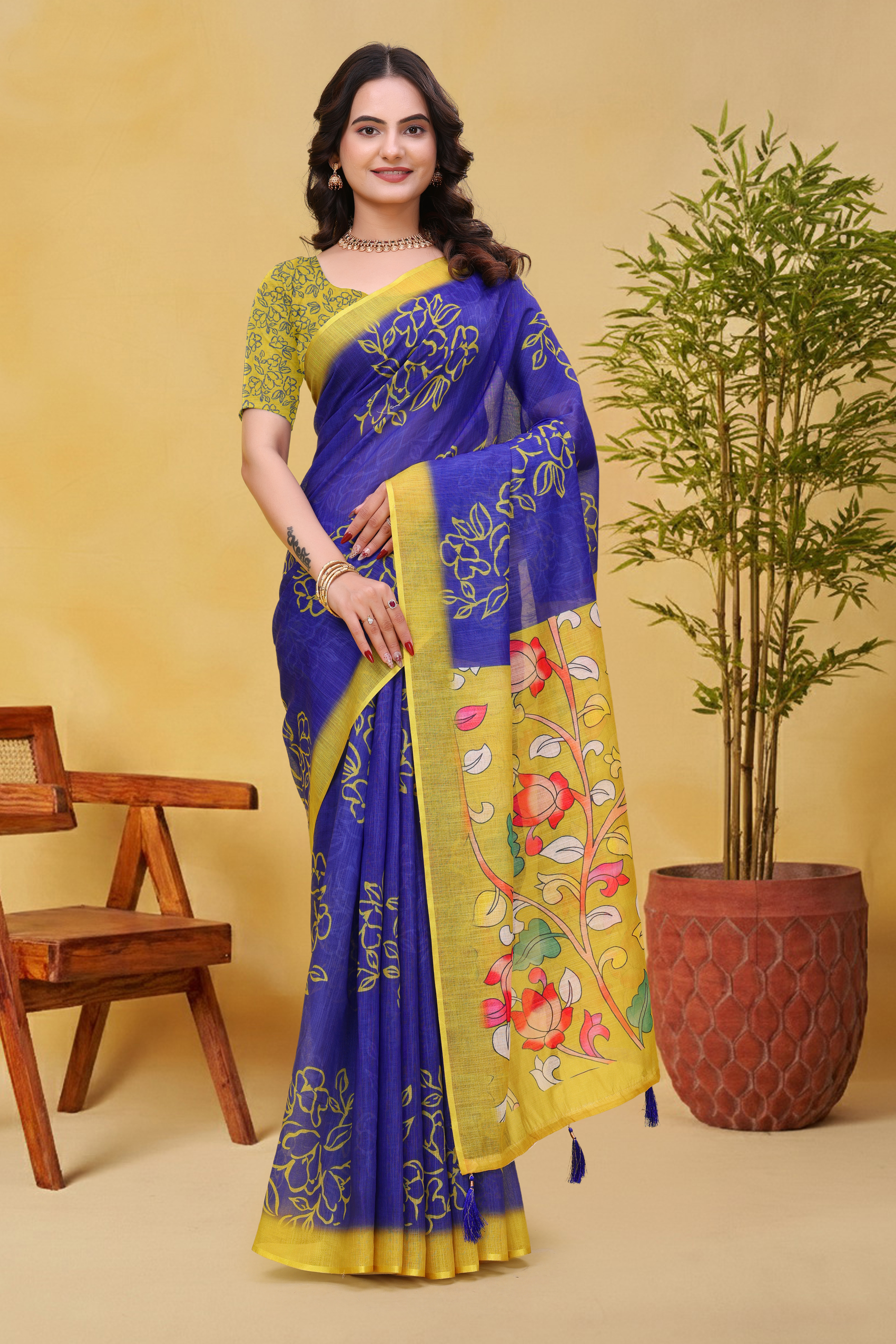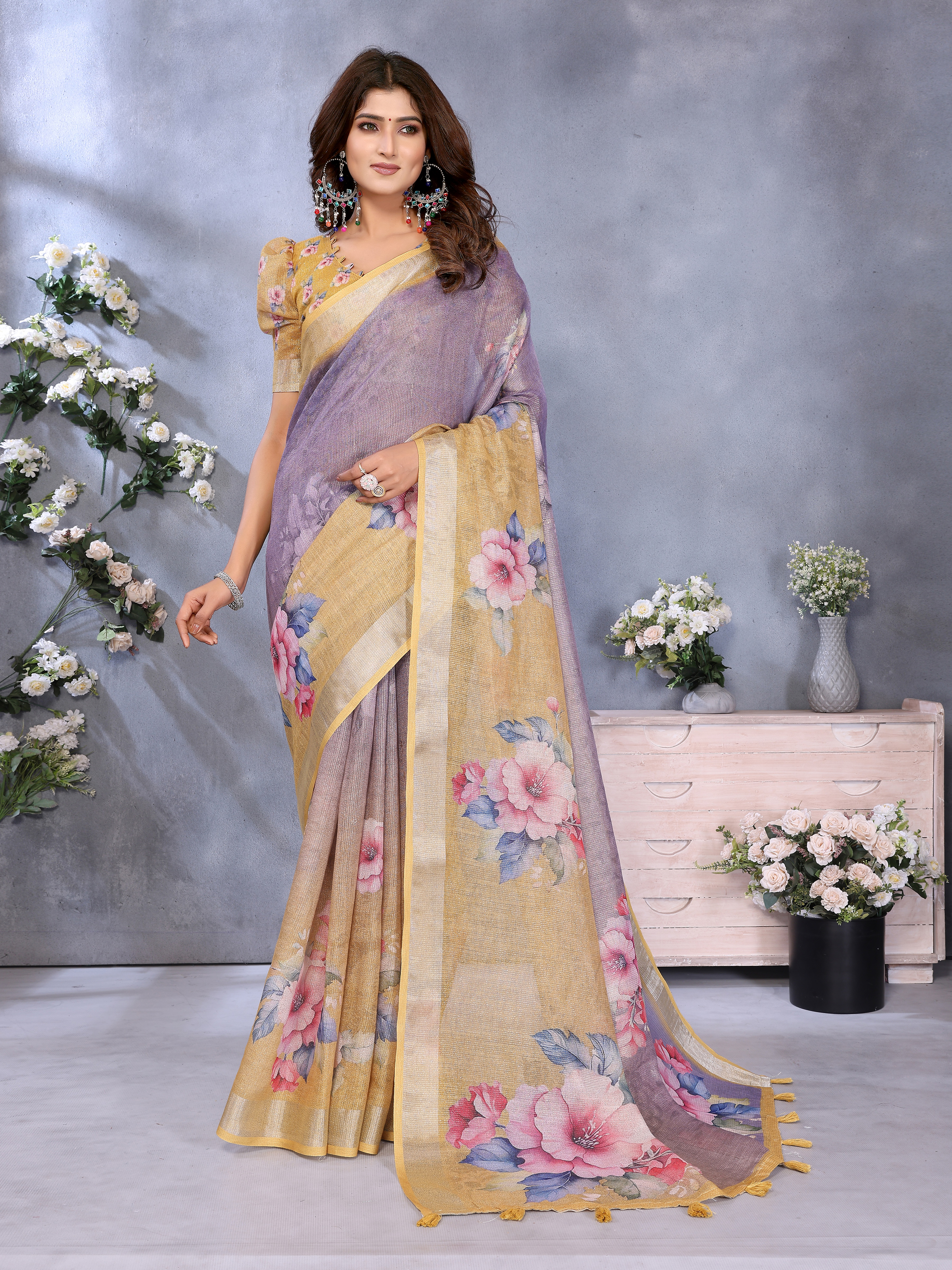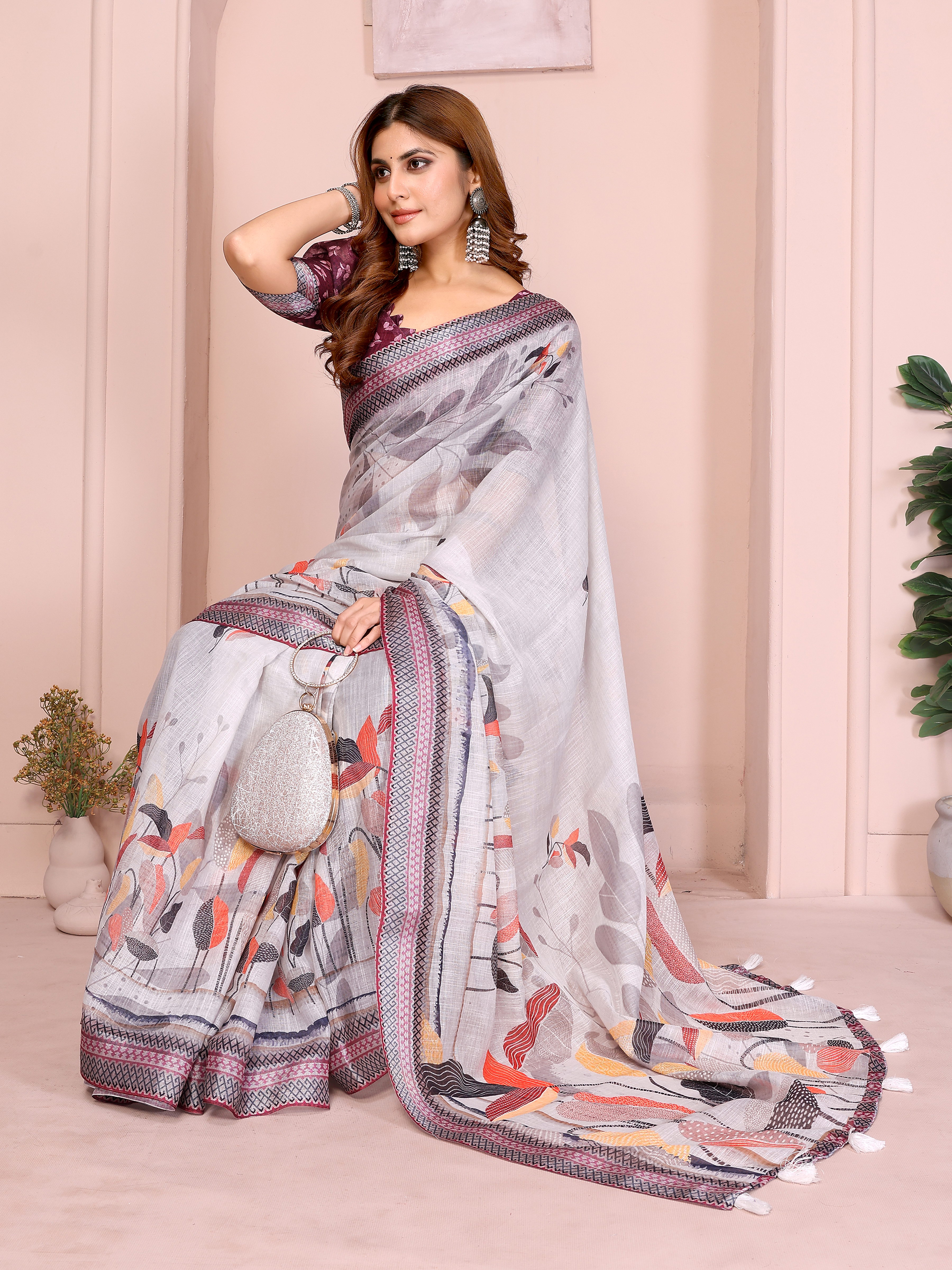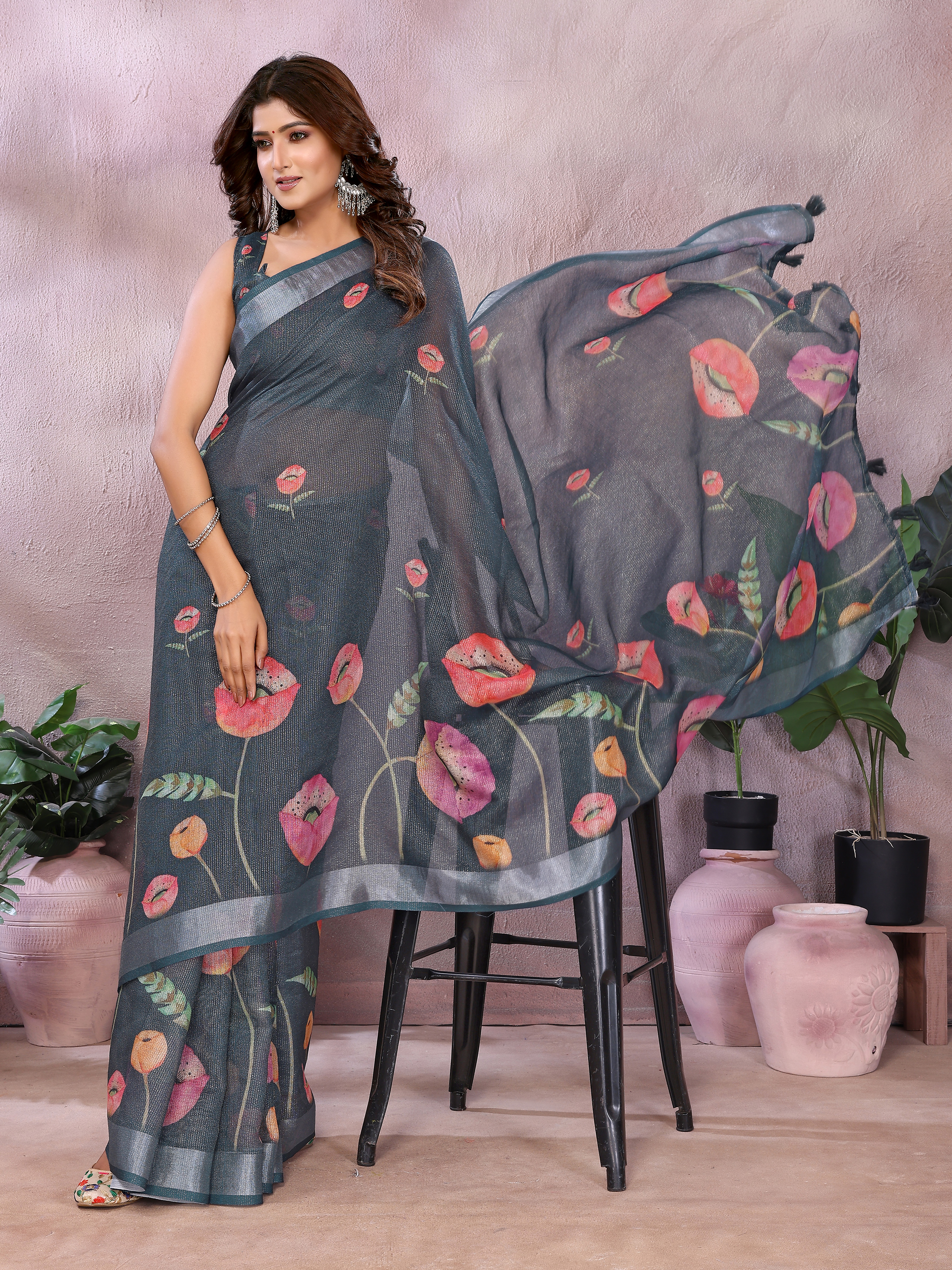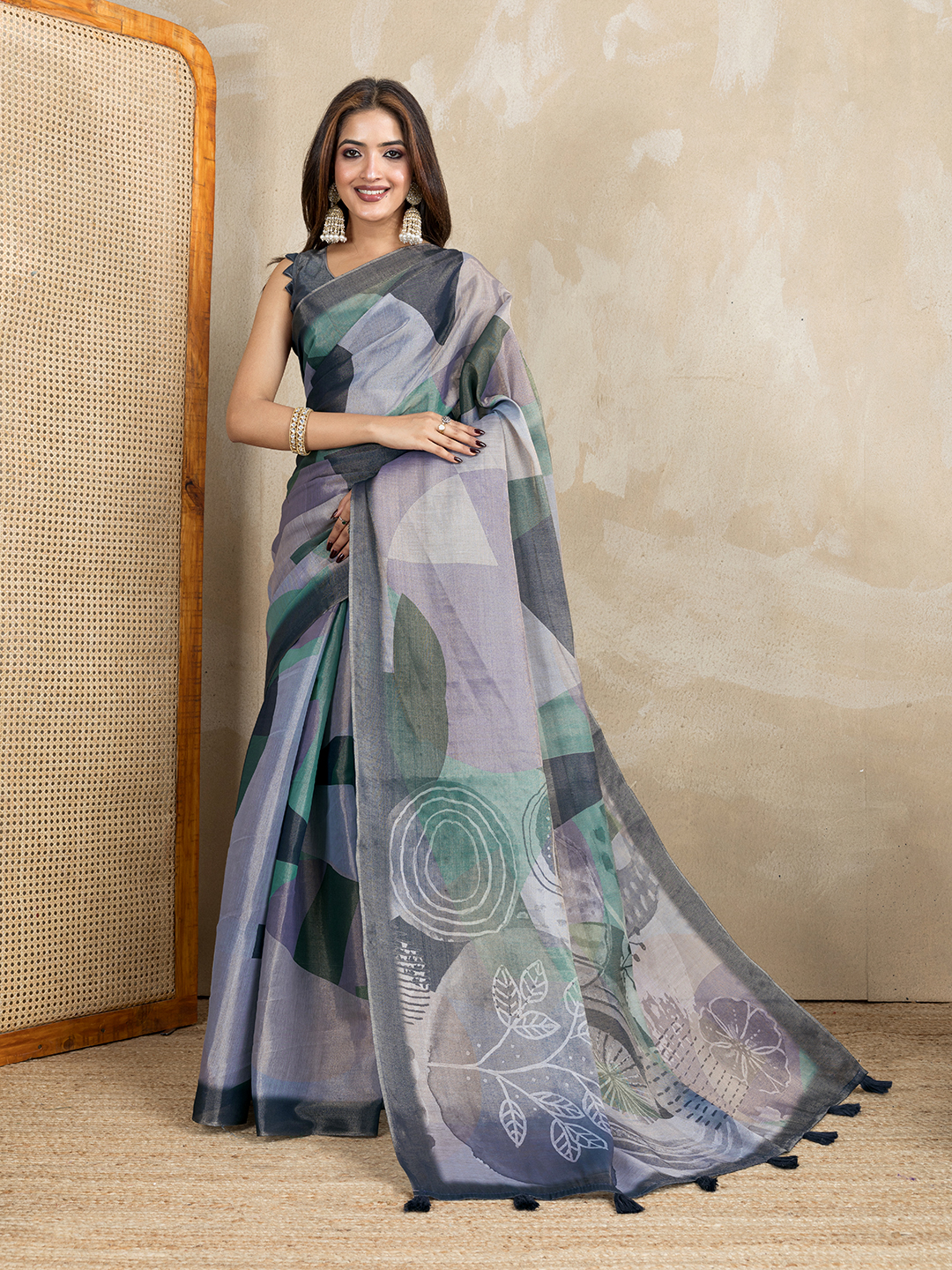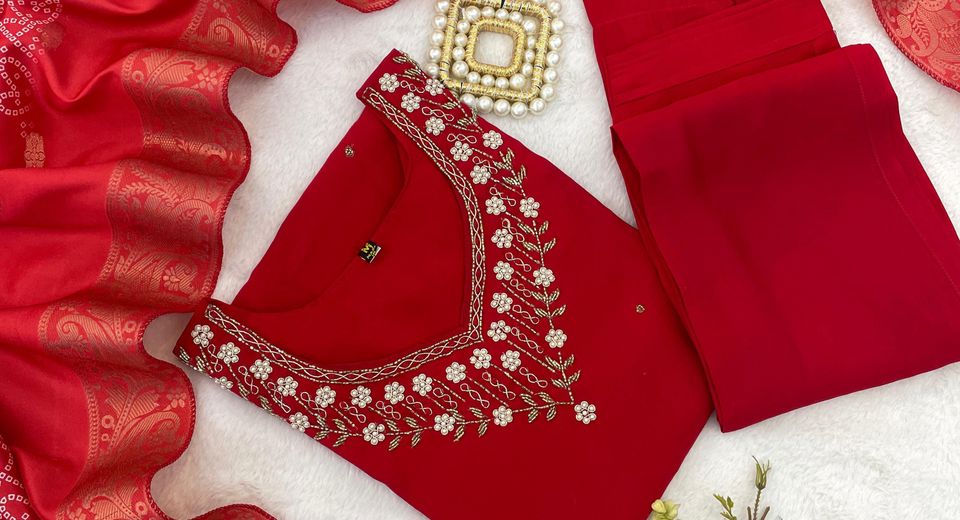
A long kurti can look perfectly smooth while standing and still creep upward after ten minutes of walking. Why Long Kurtis Sometimes Ride Up When Worn With Leggings usually comes down to contact between two garments: the kurti hem meets a close-fitting lower layer, friction slows the fabric's downward movement, and each stride gathers a little more material above the hips.
The problem isn't automatically a sign of poor stitching or an unsuitable ethnic silhouette. Legging thickness, kurti width, fabric texture, static electricity, body movement and even the height of the side slits all affect where a long kurti settles. Understanding those variables makes it easier to correct the fit without abandoning leggings or switching to a completely different outfit.
Why Long Kurtis Sometimes Ride Up When Worn With Leggings
Long kurtis ride up with leggings primarily because a narrow, grippy lower layer creates friction against the kurti's inner surface while the body moves.
During walking, the thighs and hips move forward and backward while the kurti swings around them. A flowing kurti needs enough clearance to pass over the widest parts of the body. When the garment brushes tightly against leggings, the lower layer can hold the kurti momentarily instead of allowing the hem to fall after every step. Repeated steps gradually push the fabric upward.
Leggings with a brushed, matte or ribbed finish create more drag than smooth ponte, stretch cotton or lightweight hosiery. A slightly damp pair can also cling more strongly. Polyester-rich leggings may build static against rayon, georgette or synthetic blends, making the hem stick to the legs instead of hanging vertically.
Hem shape changes the effect. A narrow straight kurti has less room around the thighs than an A-line kurti or flared Anarkali. A curved hem can climb at the front when it catches on the upper thigh, while a broad, even hem often redistributes movement more successfully. Side slits help with stride length, but short slits can leave the fabric pulling across the hips when you take a longer step.
Which fit measurements determine whether a kurti will stay down?
A kurti stays in place more reliably when its hip ease, hem circumference, slit height and length match the wearer's movement and the leggings' compression.
Hip ease matters more than bust ease
Hip ease is the extra space between the garment and the body at the fullest hip measurement. For a straight long kurti worn over leggings, approximately 4 to 6 centimetres of total hip ease gives a close appearance while leaving room for walking. A very slim cut with only 1 to 2 centimetres of ease may look neat when stationary but catch repeatedly at the thighs.
Measure the kurti's garment circumference rather than relying only on the labelled size. Measure the fullest hip area, add the garment's total ease, and compare that figure with a relaxed standing measurement. If the kurti feels tight when you sit or climb stairs, the hem is likely to migrate because the fabric is being pulled upward by the hips.
Length and slit placement change the pull
A kurti ending just below the knee usually moves differently from one ending at mid-calf. A mid-calf hem can encounter more leg surface and therefore more friction, especially when the leggings reach the ankle and remain tight through the calf. A side slit that ends too low can leave enough fabric around the thighs to catch, while a slit that ends too high can create diagonal pulling at the hip.
Try sitting, walking ten steps and lifting one knee before judging a long kurti's fit. The hem should remain reasonably level without forming a tight horizontal fold across the hips. For daily wear, a straight kurta with a little extra room at the hip often behaves better than a narrow, body-skimming design.
How do leggings, fabrics and surface texture affect hem movement?
Legging surface, fabric weight and the kurti's inner texture jointly determine how much the hem grips instead of gliding.
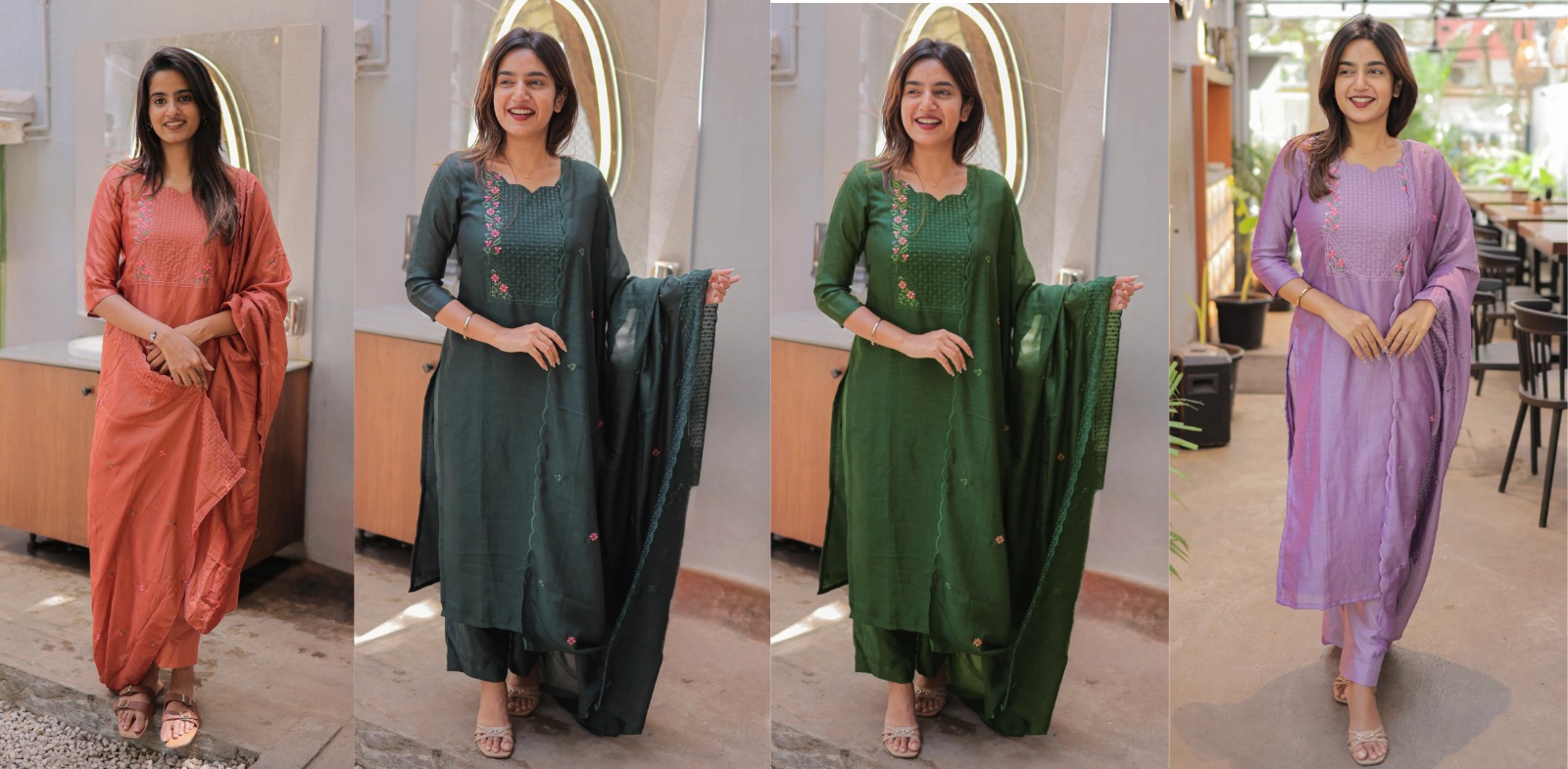
Smooth leggings made from cotton-elastane or a sleek ponte knit generally create less resistance than brushed fleece, ribbed jersey and heavily textured performance fabrics. Very compressive leggings can also exaggerate the shape of the thighs, leaving the kurti with less clearance than its size chart suggests. A waistband that sits high on the waist may create a ridge beneath the kurti, and the hem can catch at that ridge as the body bends.
Rayon and viscose kurtis are soft and fluid, but their drape can make them cling to synthetic leggings when static develops. Cotton, Kanchi cotton and other crisp woven fabrics usually resist clinging, although a stiff cotton hem can still catch if the hip fit is too narrow. Silk blends may slide smoothly against one legging and cling to another depending on the finish.
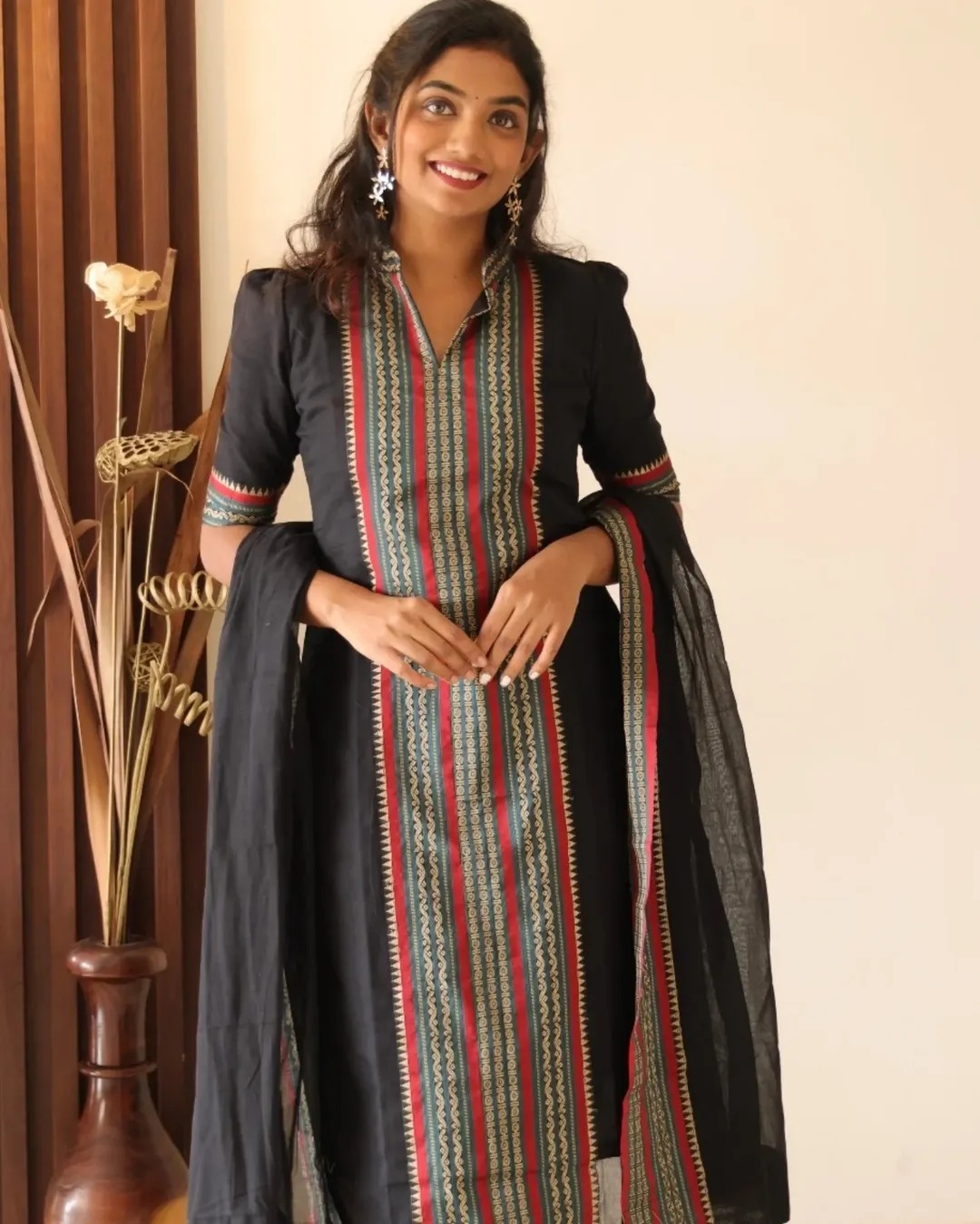
A garment such as Vertical Cotton Straight Kurta Set with Dupatta demonstrates why weave and structure matter: a cotton straight kurta generally has more body than a fluid rayon style. Teal Embroidered Rayon Kurti Set, by contrast, needs attention to the inner surface, embroidery placement and hip ease because rayon can fall beautifully but also follow the contours of a close lower layer.
Woven options such as Kanchi Cotton Woven Kurta Pant Dupatta Set and Black Jacquard Woven Kanchi Cotton Kurti Set can offer a more stable outer layer, particularly when their hem has enough width. A jacquard weave may feel substantial, but substantial fabric doesn't compensate for a tight hip measurement.
What can you do when a long kurti rides up during the day?
The most effective fix is to reduce fabric-to-leg friction or add enough garment ease for the kurti to move independently from the leggings.
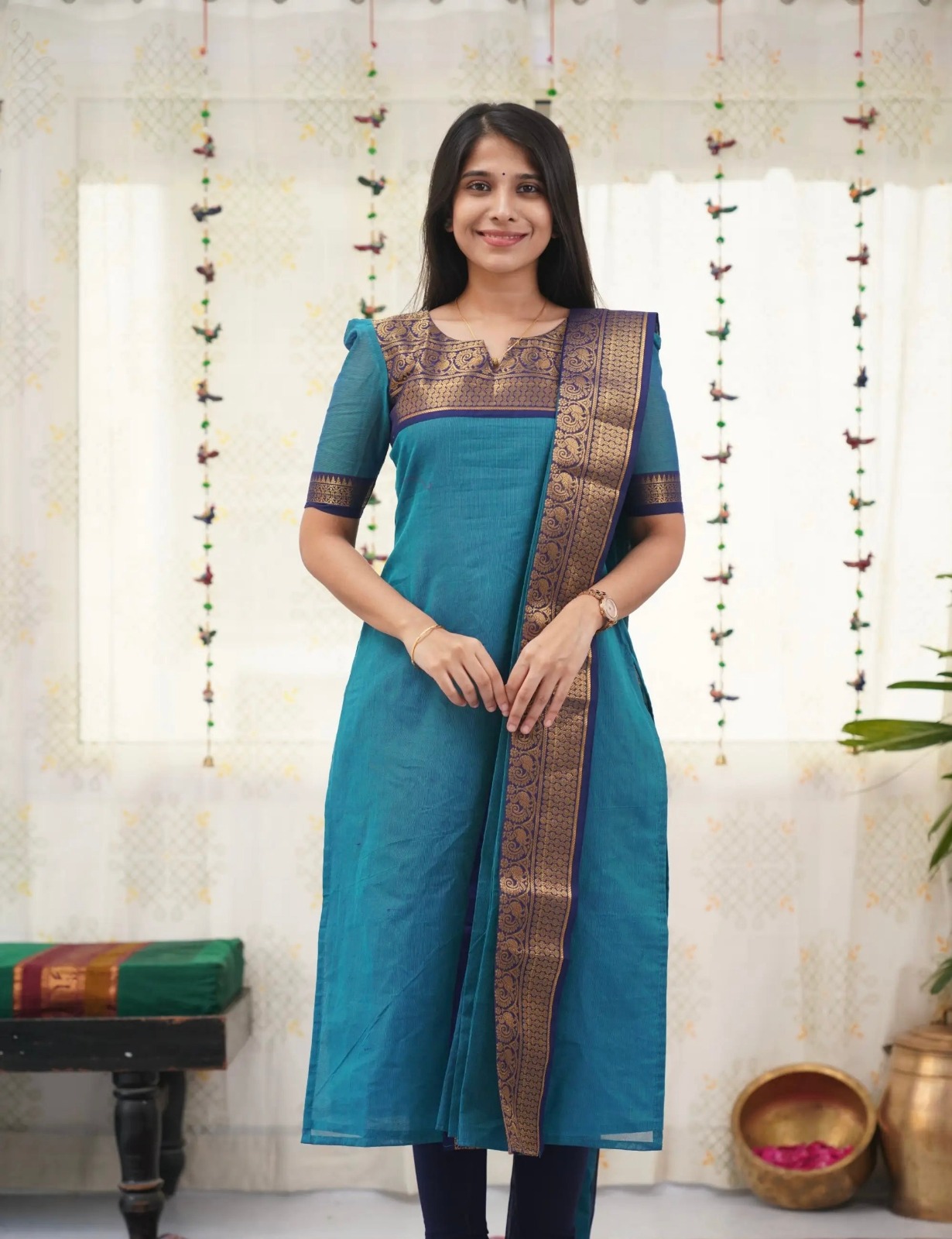
- Change the legging surface. Test the same kurti with smooth cotton-elastane leggings rather than brushed, ribbed or fleece-lined leggings. A slight difference in surface can stop the hem from grabbing.
- Check the size at the hip. If the fabric forms diagonal drag lines from the side seam toward the upper thigh, try one size larger or choose a roomier cut. A larger bust measurement alone won't solve a tight hip.
- Choose a slip layer for cling. A lightweight, smooth full-length slip or anti-static underskirt can create separation between the kurti and leggings. The slip should not be so tight that it adds another restrictive layer.
- Use a small amount of anti-static spray correctly. Apply a fabric-safe anti-static product to the inside of the kurti according to its label, then let the garment dry fully before wearing it. Do not spray perfume, hair spray or an untested household product onto silk, zari or dyed textiles.
- Inspect the hem and side seams. A twisted hem, uneven side seam or bulky embroidery at one hip can make the garment rise asymmetrically. A tailor can correct a minor hem distortion or add a little side-slit width.
- don't keep pulling the hem down every few minutes. Constant downward tugging can stretch the hem and produce a wavy edge. Step aside, smooth the kurti from the hip downward with both hands, and identify where the first catch occurs.
Alterations should preserve movement rather than simply add length. Adding 2 to 4 centimetres to the side slit, releasing a centre-back seam where seam allowance exists, or adding small godets at the side seams can improve walking comfort. A tailor should assess the construction before cutting, especially on embroidered silk, jacquard or zari work.
Which kurti silhouettes work most comfortably with leggings?
A-line, lightly flared and straight silhouettes with adequate hip ease usually pair more comfortably with leggings than narrow body-skimming kurtis.
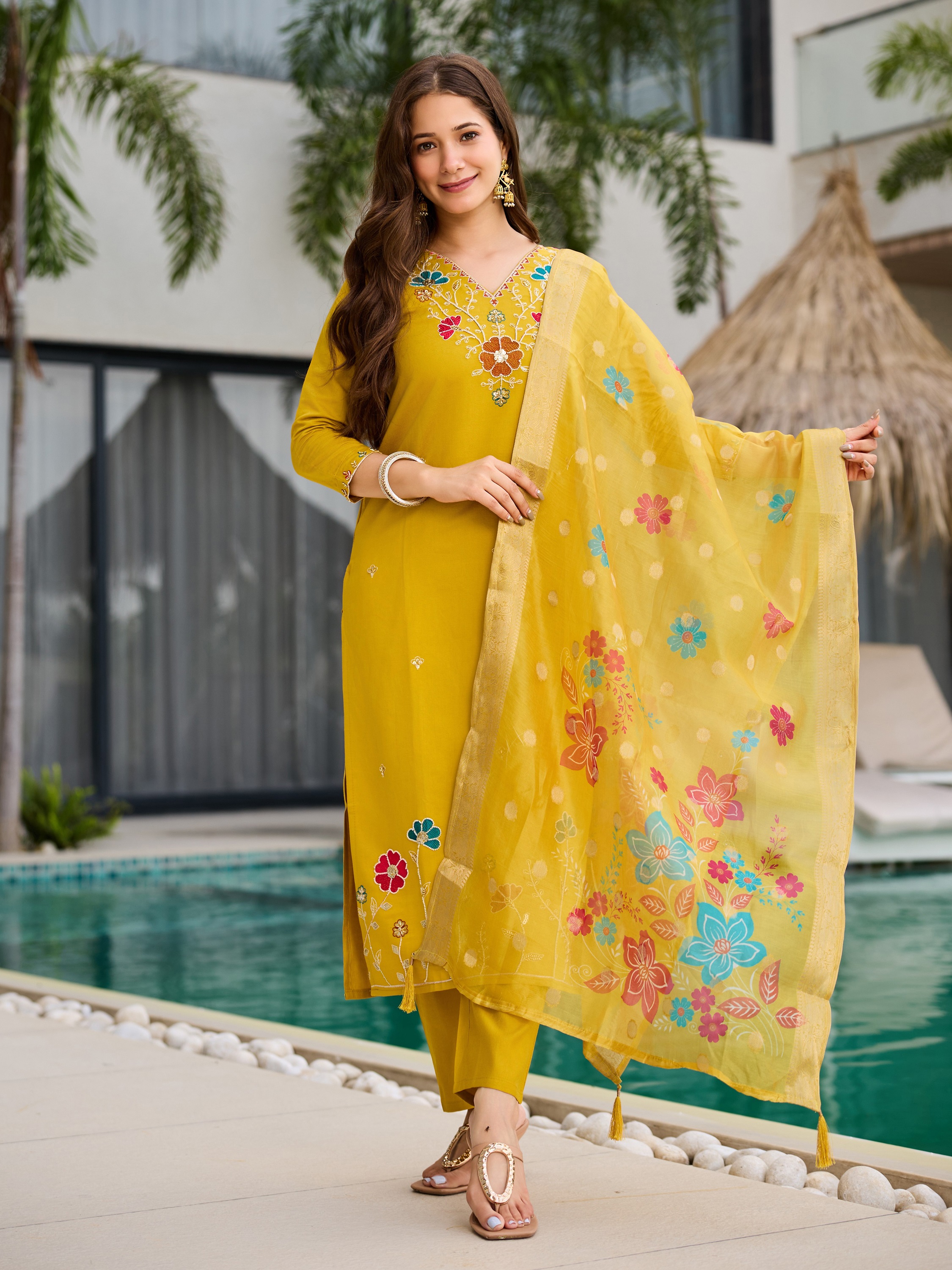
An A-line kurti widens gradually from the bust, so the hem has room to clear the thighs. A straight kurta can also work well when the hem circumference is generous and the side slits support a natural stride. An Anarkali creates the most separation from the legs but may bunch at the waist if the flare is very full or the leggings are highly compressive.
Pairing a long kurti with leggings is also influenced by visual proportion. A very long, narrow kurti over shiny leggings can emphasise every small upward shift. A matte legging, a kurti ending around the lower calf, and a modest side slit usually create a calmer line. If the kurti has a broad hem, keep the dupatta light enough that it doesn't pull one shoulder and rotate the garment.
Cream Embroidered Silk Kurti Pant with Designer Dupatta is better evaluated as a coordinated set rather than as a random long kurti over leggings. Silk, embroidery and a matching pant can require smoother layering and careful sitting tests. Mustard Designer Kurti Dupatta Set with Rich Weaving offers another reminder that surface ornament and woven weight should be balanced with the lower layer; heavy texture at the hem can increase catching.
When should you choose a coordinated pant or salwar instead?
A coordinated pant or salwar is preferable when the kurti's cut, fabric or ornamentation repeatedly catches on leggings despite correct sizing.
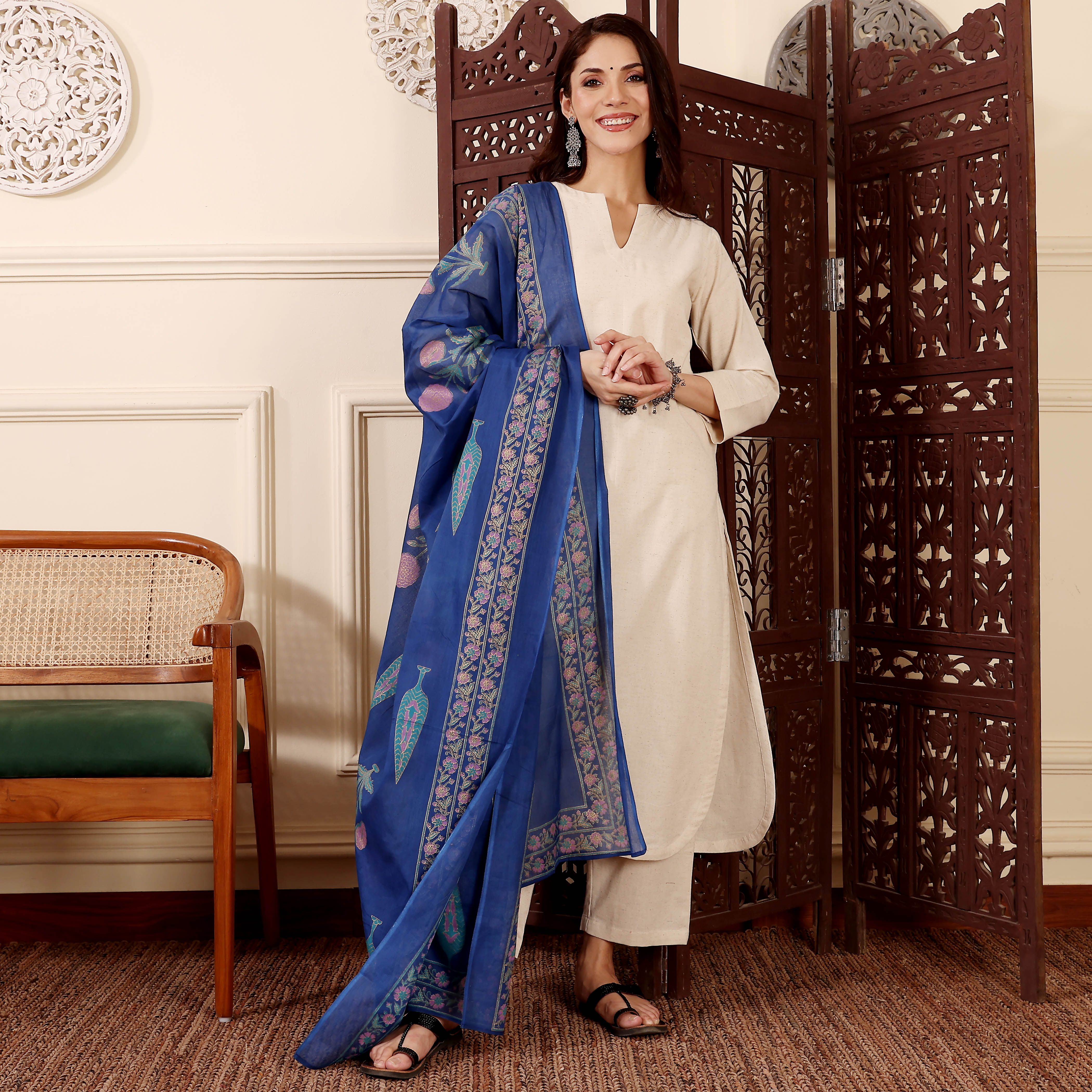
Matching bottoms are often cut with the kurti's proportions in mind. A straight pant may be smooth through the thigh without the extreme compression of leggings, while a salwar provides additional room and gathers below the knee. A palazzo creates the greatest airflow and separation, though its volume changes the overall silhouette.
Kanchi Cotton Jacquard Kurti Dupatta Set and Black Kanchi Cotton Jacquard Kurti Dupatta Set can be styled with their intended coordinated pieces when a woven kurti feels too structured for clingy leggings. Cream embroidered, jacquard and zari-adjacent surfaces deserve particular care because repeated rubbing can disturb threads or create abrasion at the hem.
Print and regional styling can guide the choice without dictating it. Kalamkari Print Salwar Suits often suit cotton or smooth woven bottoms. Maharashtra Paithani Inspired Salwar Suits may call for a coordinated pant that doesn't compete with decorative motifs; and Gujarat Bandhej Salwar Suits can work with a simple, low-friction bottom that keeps the printed upper layer visually clear. Odisha Sambalpuri Salwar Suits and Punjab Patiala Salwar Suits also show why silhouette matters: a roomier salwar or Patiala-style bottom changes movement substantially compared with close leggings.
How should you test a long kurti before buying or wearing it?
A five-minute movement test reveals more about ride-up risk than a mirror check performed while standing still.
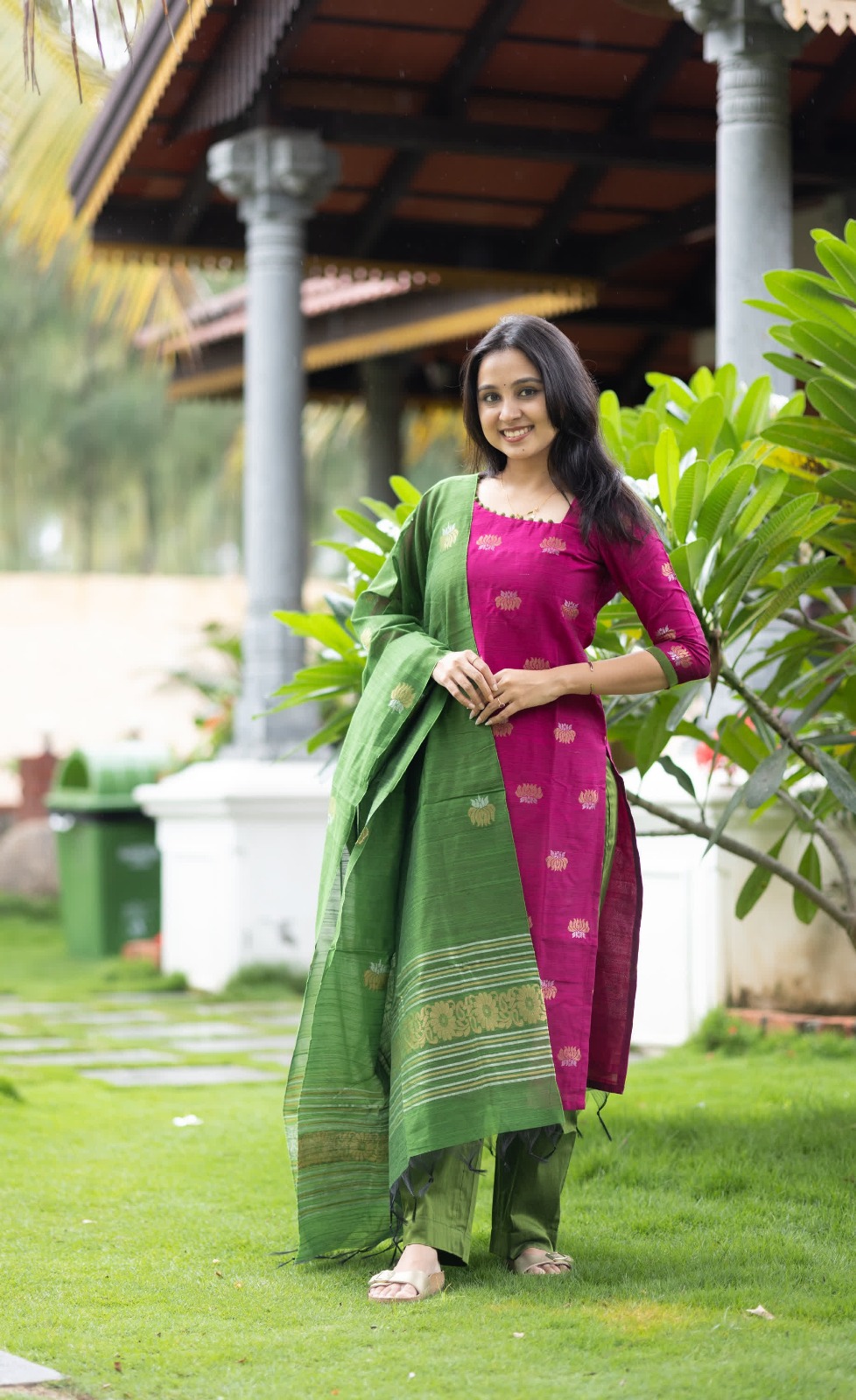
- Stand naturally. Check whether the hem hangs evenly and whether the fabric already touches the front of the thighs.
- Walk for one minute. Take normal steps, turn twice and notice whether the first upward movement occurs at the front, sides or back.
- Sit on a chair. The kurti should not pull sharply across the hips or remain folded above the waistband when you stand.
- Climb two or three steps. Stair movement exposes insufficient side-slit height and narrow hip ease quickly.
- Raise one knee and bend slightly. A kurti that catches only during this test may need a roomier slit or a smoother bottom rather than a larger overall size.
Online shoppers can use the garment measurements, not just the body-size recommendation. Compare the listed hip or garment width with a kurti already owned and comfortable over leggings. Read the fabric description for cotton, rayon, silk, jacquard, stretch and lining details, because fibre and finish affect friction. Product photographs can show styling, but photographs can't confirm how a hem behaves while walking.
Care habits that prevent new cling and friction
Correct washing and drying help preserve the fabric finish that allows a kurti to hang properly.
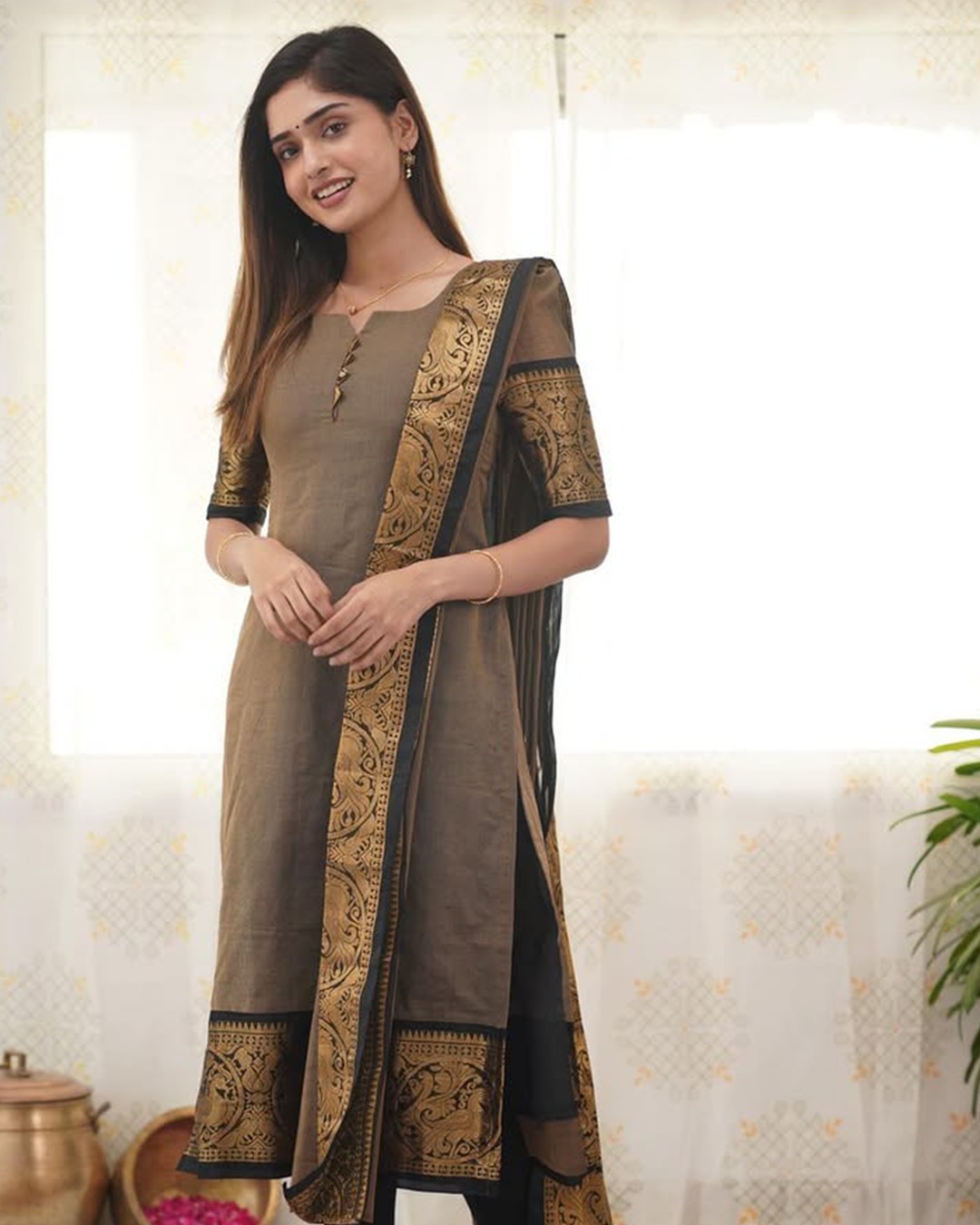
Follow the garment label, but generally wash rayon and embroidered garments gently, avoid excessive detergent, and keep dark and light dyes separate. Residual detergent can leave a slightly tacky surface that attracts lint and increases cling. Fabric softener may reduce static for some fibres, but it can coat absorbent cotton and alter the hand of embellished textiles, so use only when the care label permits.
Dry garments fully before pairing them with leggings. Do not store a damp kurti folded against synthetic bottoms. Press the hem according to the fibre's heat tolerance; a distorted or rolled hem is more likely to catch than a flat one. Store embroidered and zari garments with breathable separation, and avoid abrasive hangers that can snag the inner surface.
Why Long Kurtis Sometimes Ride Up When Worn With Leggings has a practical answer: the garment needs enough room to move, and the two fabrics need to slide rather than grip. Testing hip ease, hem width and movement, then choosing a smoother bottom or coordinated pant, usually solves the issue without sacrificing the long-kurti silhouette.
Common Questions About Long Kurtis and Leggings
Why does my kurti ride up only when I walk?
Walking makes the thighs and hips move against the kurti, so friction can gradually push the hem upward. A narrow hip fit, short side slits or textured leggings can make the movement more noticeable than when standing.
Do cotton leggings stop a long kurti from riding up?
Cotton-elastane leggings with a smooth surface may reduce riding compared with brushed or ribbed synthetic leggings. Fibre alone is not decisive; the legging finish, compression and the kurti's hip ease also matter.
Should I buy a larger kurti if the hem keeps moving up?
Buy a larger size only when the current kurti is tight at the hips or creates diagonal drag lines. If the bust and shoulders fit correctly, a tailor may instead add side-slit width or release a seam where sufficient allowance exists.
Which kurti style is best with leggings?
A-line, lightly flared and comfortably eased straight kurtis generally work best with leggings. Very narrow straight kurtis can also work when the hip measurement, hem circumference and side slits allow a normal walking stride.
Can a slip prevent a long kurti from clinging to leggings?
A smooth, lightweight slip can create separation and reduce static between the kurti and leggings. The slip should be full enough to cover the areas that rub but not so tight that it restricts movement.
Are coordinated pants better than leggings under embroidered kurtis?
Coordinated pants are often better for embroidered or structured kurtis because they can provide a smoother, less compressive surface and match the intended proportions. Leggings remain suitable when the kurti has adequate hip ease and the lower layer does not grip the embroidery or hem.