A saree can develop a sharp line along the same fold even when it's handled carefully. Why Fold Lines Become Permanent on Some Saree Fabrics comes down to fibre memory, moisture, pressure, finishing treatments and repeated storage in one position-not simply to the age of the saree. A crease that looks permanent is often a set crease: the yarns and fabric structure have been compressed and need controlled moisture and gentle reshaping to recover.
The risk is especially noticeable in lightweight sarees, tissue cotton, linen, fabrics with a crisp finish and sarees carrying zari or densely woven borders. Understanding the cause helps you choose the right remedy. A high-temperature iron may flatten one line while creating shine, scorching, or damage around another part of the saree.
Why Fold Lines Become Permanent on Some Saree Fabrics
Fold lines become permanent when repeated compression, moisture, heat and time alter the position of yarns within the fabric. The fold is usually more stubborn where the same crease has been pressed tightly for weeks or months.
Every woven saree contains two main yarn directions: the lengthwise warp and the crosswise weft. Folding bends both directions at a narrow point. When a saree stays folded, the outer side of the bend remains under tension while the inner side is compressed. Repeating that bend gradually makes the yarns settle into a new position.
Humidity increases the problem because many natural fibres absorb water from the air. Moisture makes fibres more flexible, but pressure during that flexible stage encourages the fibres to conform to the fold. When the saree dries while compressed, the crease can become sharper. Cotton, linen and silk can all show this effect, although their response differs according to yarn twist, weave and finish.
Heat can set a crease in two ways. Gentle, controlled warmth can relax a fold, but excessive heat combined with pressure can flatten the yarns and create a lasting glossy line. A folded saree left in a hot cupboard, near a window, or beneath a heavy stack may therefore develop a mark without ever being ironed.
Fabric construction also matters. A loose, fluid weave may release a crease after hanging, while a crisp tissue weave can retain a precise fold because the structure has less visual drape to disguise the mark. A saree with a firm zari border may bend differently from its softer body, creating a transition line where the two areas meet.
Why Fold Lines Become Permanent on Some Saree Fabrics with Crisp Weaves
Tissue cotton, linen, crisp cotton weaves and sarees with firm zari areas commonly show stubborn fold lines because they hold a defined shape under pressure. The exact result depends on the yarns, weave density, finish and length of storage.

Why does tissue cotton need careful folding?
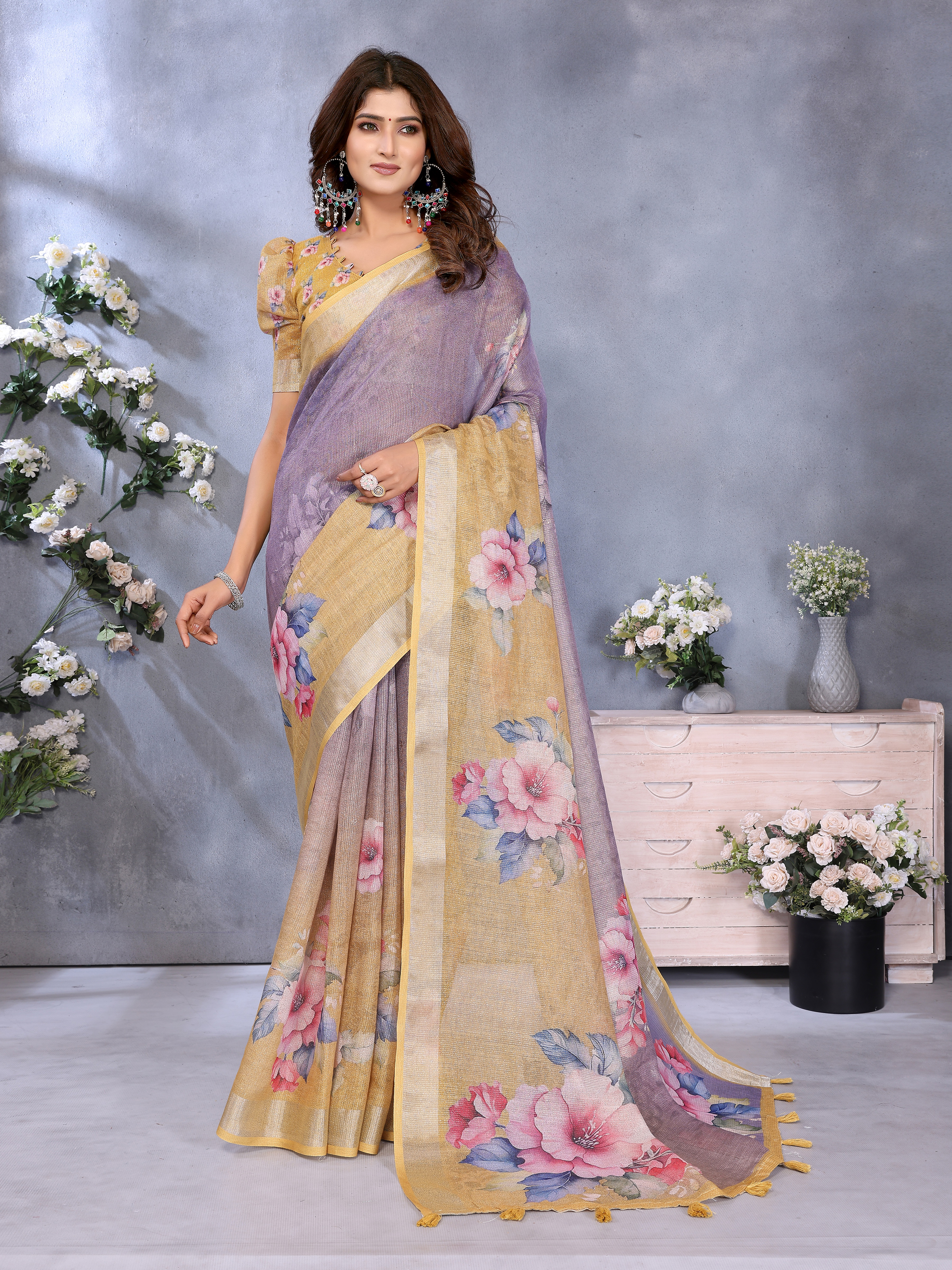
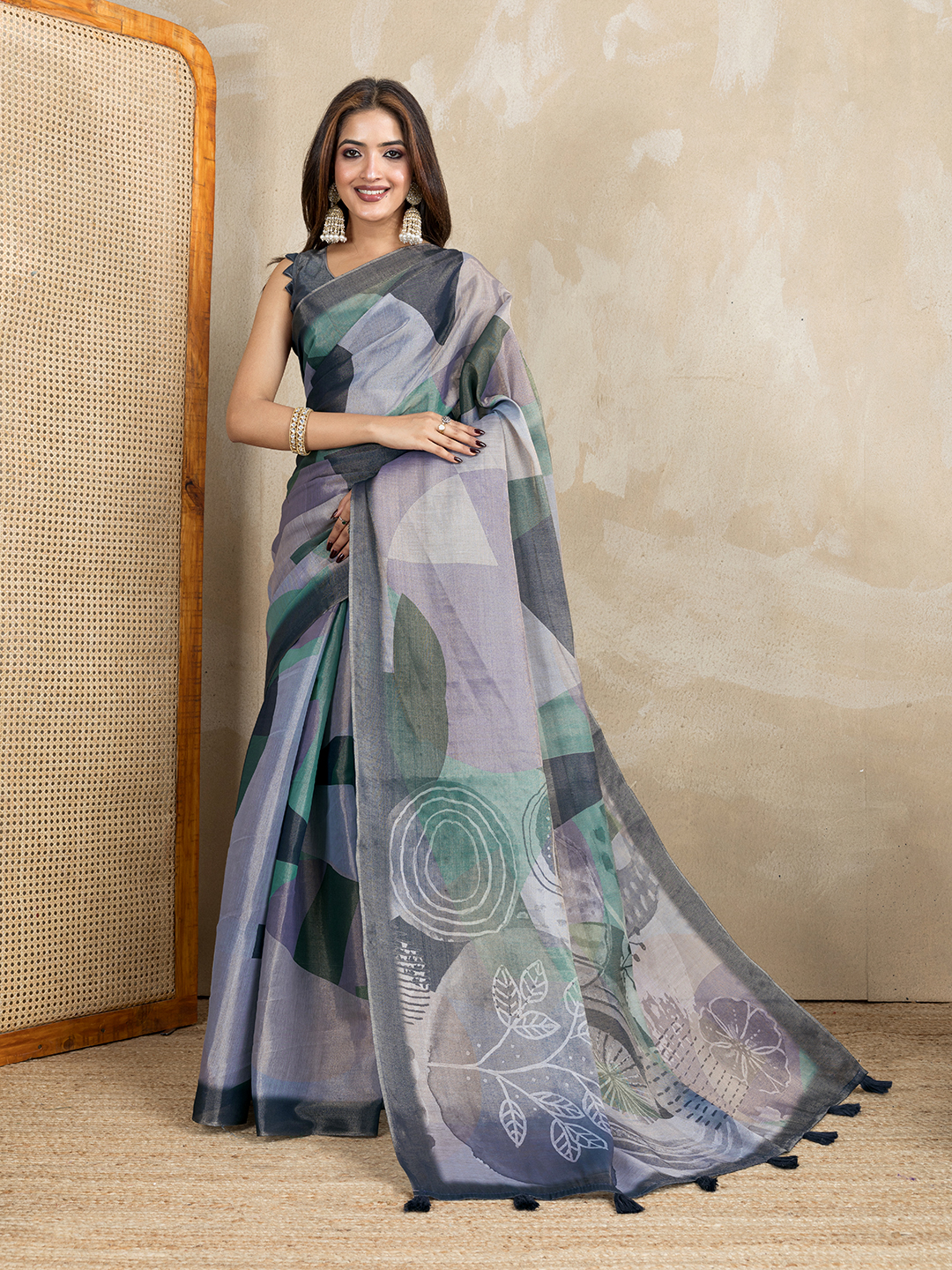
Tissue cotton can show sharp fold memory because its lighter structure and crisp surface make compressed lines visually prominent. Pastel Floral Tissue Handloom Cotton Saree with Zari Weaves illustrates why the body, printed areas and zari details should not all be treated with the same ironing pressure.
Tissue surfaces can also reveal shine when a hot iron is dragged over them. The shine isn't necessarily a stain; it may be the result of flattened yarns reflecting light in a different direction. A pressing cloth, low heat and short lifting motions are safer than continuous back-and-forth ironing.
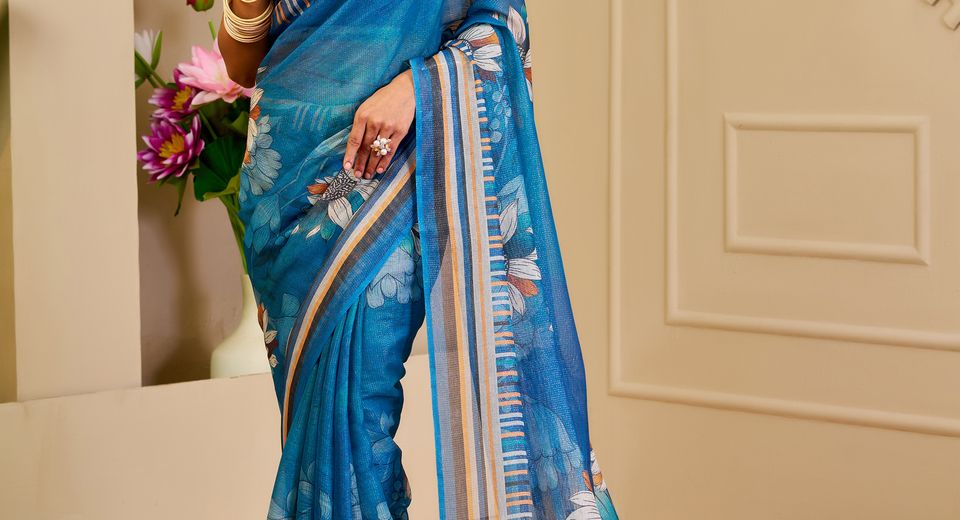
Blue Tissue Cotton Saree With Floral Print | Varnavi is another example of a lightweight printed saree that benefits from gentle handling. Printed cotton may tolerate more heat than delicate silk, but direct high-temperature pressing can still alter the surface or make a fold line more visible.
Why can linen retain a visible fold?
Linen often retains creases because flax fibres are relatively firm and don't spring back as readily as highly elastic fibres. The crease may soften after hanging in a humid room, but a deep fold usually needs light moisture and careful pressing to disappear completely.
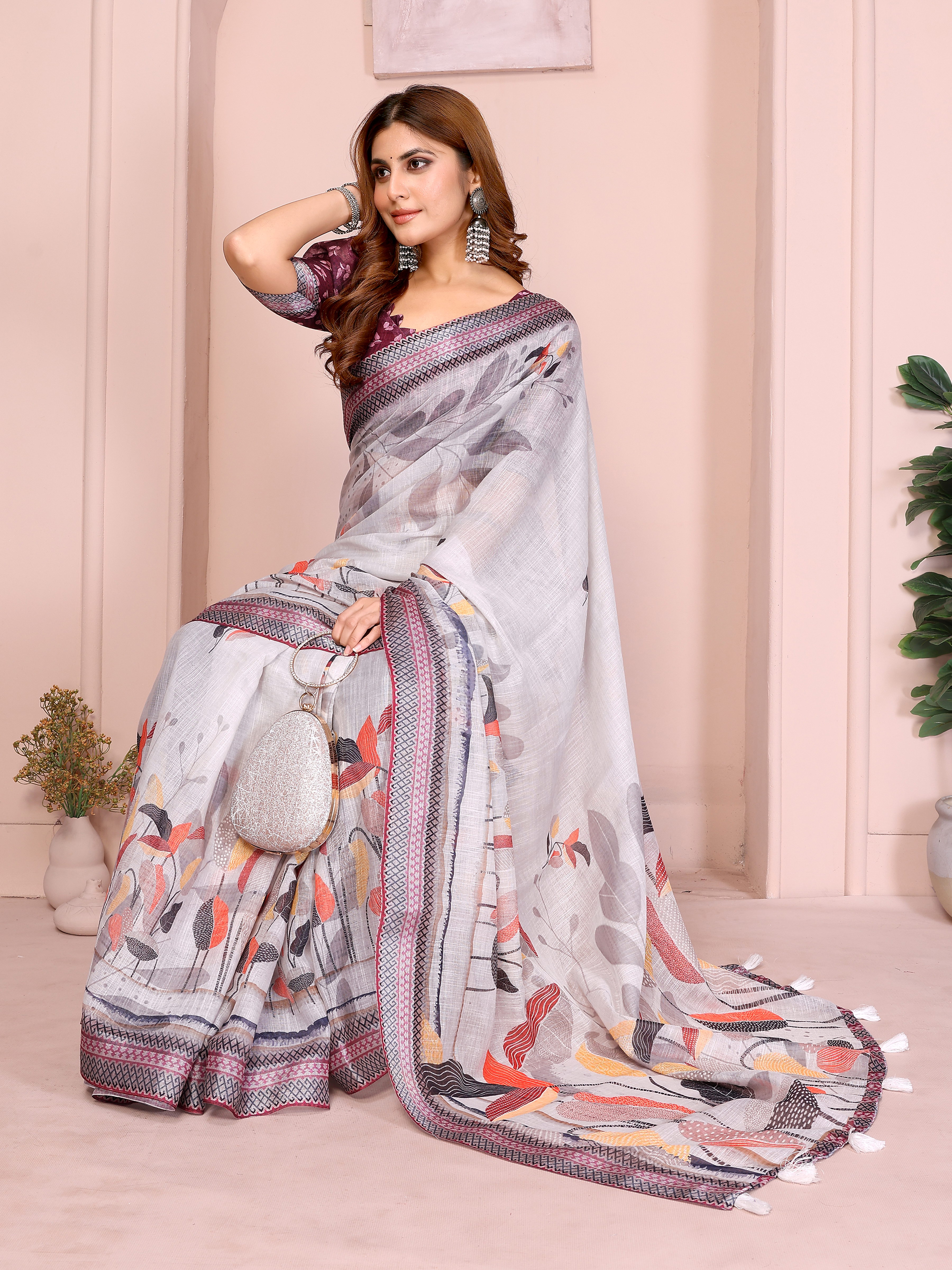
Ivory Linen Saree with Geometric Prints & Designer Pallu should be opened fully before pressing so the printed body and designer pallu can be checked separately. Printed areas should be pressed from the reverse side or through a clean pressing cloth when the care label permits ironing.
How do zari and borders change crease care?
Zari borders need lower-risk handling because metallic-looking threads, coated yarns and dense woven areas can react differently to heat and friction than the main saree body. Direct ironing over zari may dull the surface, flatten its texture or transfer residue from an unclean iron.
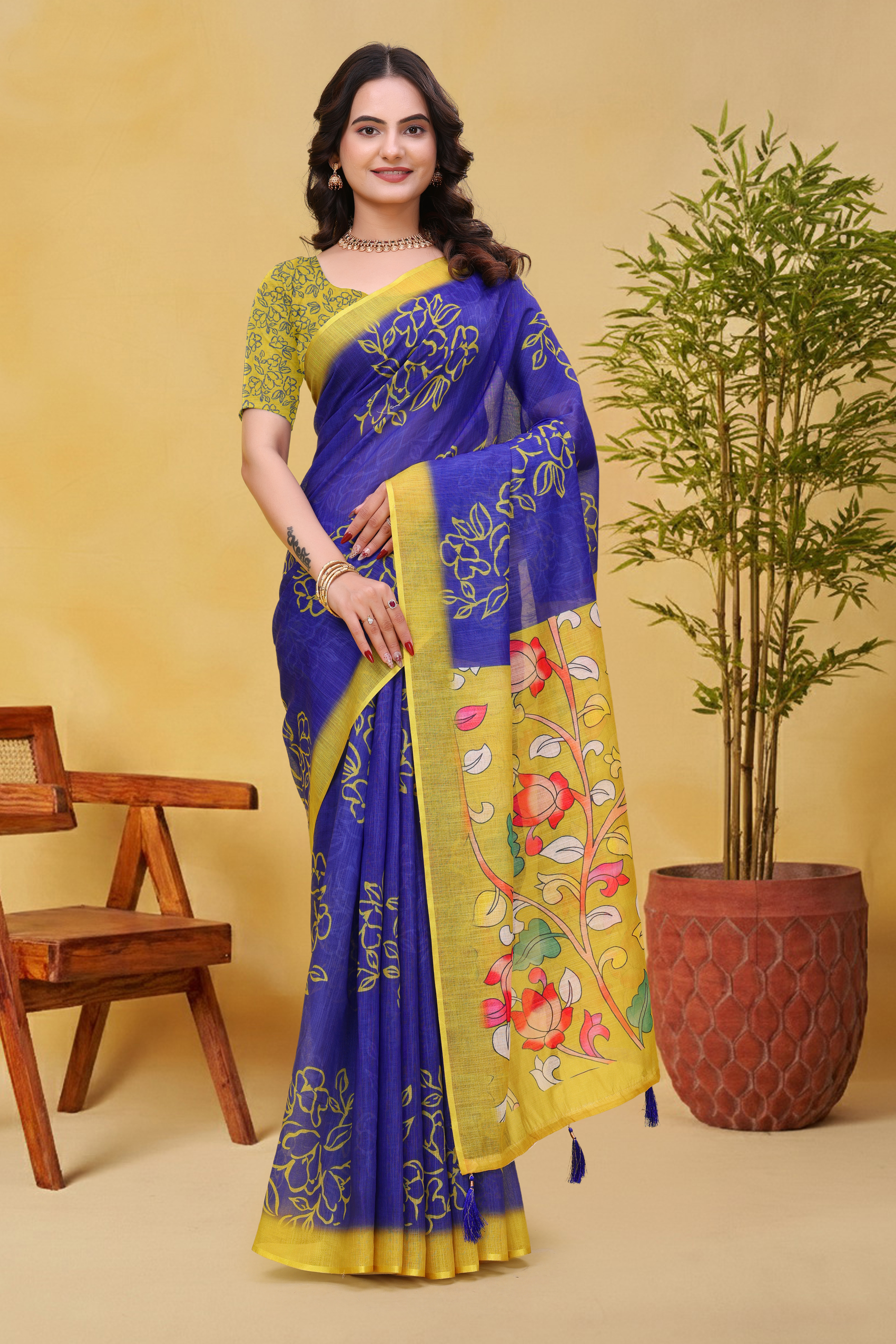
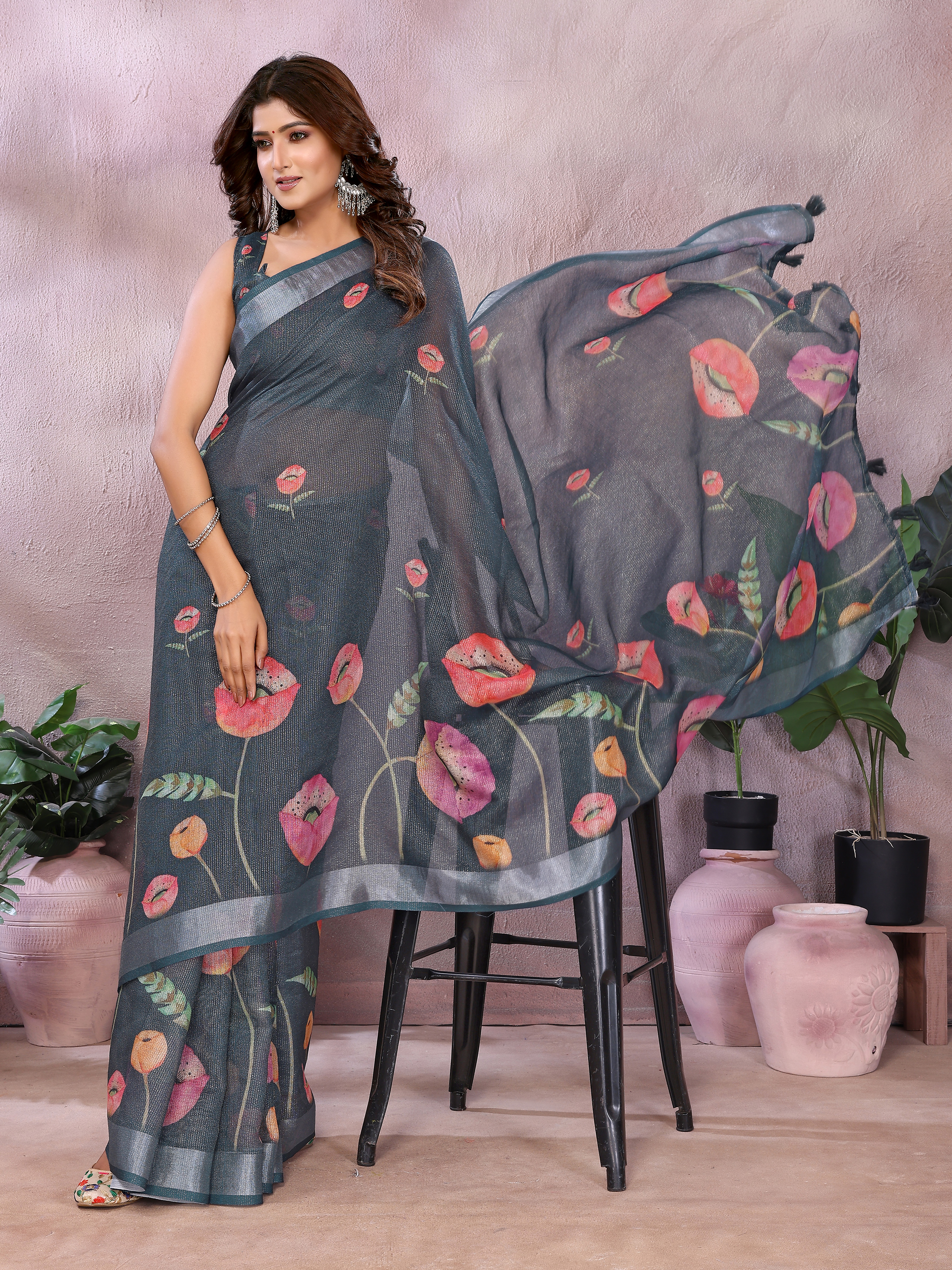
Blue Tissue Handloom Cotton Saree with Zari Floral Print and Sea Green Tissue Handloom Cotton Saree With Floral Patterns demonstrate why the border, pallu and body should be inspected before pressing. Press the reverse side first, use a cotton cloth as a barrier, and avoid dragging the iron across raised floral or zari work.
Why Fold Lines Become Permanent on Some Saree Fabrics After Storage
A stored saree develops a persistent fold when the same narrow area receives pressure, humidity and small movement for a long period. Storage conditions can therefore be as important as the primary fabric composition.

Refolding a saree at the same six or eight positions creates repeated compression points. A heavy stack adds downward force to the lowest sarees, while a tightly packed cupboard prevents air circulation. Damp walls and monsoon humidity make natural fibres more pliable, so the fibres settle into the compressed fold more readily.
Plastic covers can intensify the problem during long storage. A sealed plastic cover may trap humidity, perspiration residue and odours against the textile. Breathable cotton bags or clean textile boxes are generally more suitable for saree storage, provided the saree is completely dry before being packed.
Blue Tissue Handloom Cotton Saree With Zari | Varnavi's should not be placed beneath a dense stack immediately after wearing. Perspiration and body moisture need time to evaporate. Air the saree in shade, check the border and pallu for dampness, and fold only after the fabric feels dry.
Different fibres also age differently in storage. Cotton can become more sharply creased as it dries under pressure, linen can retain angular folds, and silk can develop a permanent-looking change in sheen if a crease is repeatedly rubbed or pressed. A brittle feel, powdery surface or burnt smell indicates that home ironing may be unsafe.
Why Fold Lines Become Permanent on Some Saree Fabrics Despite Ironing
A fold line can survive ironing when the iron temperature, moisture level, pressure or direction is unsuitable for the fabric. More heat doesn't always produce a better result.
A hot, dry iron may polish the surface rather than relax the fold. Continuous dragging can stretch the weave along the crease and flatten the yarns, creating a second line that catches the light. Pressing a warm saree and folding it immediately can also recreate the original mark because the fibres have not yet cooled in their new position.
Begin by unfolding the saree completely on a clean, dry surface. Look at the fold under indirect daylight rather than strong sunlight. A normal crease is a narrow line with no colour change. A pressure-set crease may appear wider, feel slightly flatter, or reflect light differently from the surrounding fabric.
Check whether the line runs through the body, the pallu, the border, or all three. A crease that crosses zari, embroidery, a printed panel or a selvedge requires more caution than a line in an undecorated cotton area. Test any treatment on an inconspicuous section first, using a clean white cloth to identify colour transfer.
don't assume that a crease is permanent because one pass of an iron fails to remove it. Deep folds often need gradual relaxation. Conversely, don't keep increasing the temperature to force a result. Heat can make a surface change permanent even when the original fold could have been removed with moisture and time.
Why Fold Lines Become Permanent on Some Saree Fabrics During Crease Removal
The safest home method is to unfold the saree, allow it to rest, add minimal controlled moisture when suitable, and press from the reverse side through a clean cloth at the lowest effective temperature.

- Inspect the care information. Follow the manufacturer's instructions first, especially for silk, zari, coated surfaces, prints and mixed-fibre sarees.
- Remove surface dust. Shake the saree gently outdoors or use a soft garment brush. Dust trapped under pressure can cause fine abrasion during pressing.
- Let the fabric relax. Hang the saree over a broad, smooth hanger for several hours. A narrow wire hanger can create a new line at the shoulder.
- Test an inconspicuous area. Place a clean white cotton cloth between the iron and fabric. Test near an inner edge to check for colour transfer, shine or texture change.
- Use light moisture only when suitable. A fine mist on the pressing cloth is safer than soaking the saree. Never spray water directly on zari, metallic details or a fabric that may water-spot.
- Press, lift and move. Set the iron down briefly, lift it, and reposition it. Avoid rubbing the iron along the crease, which can stretch the weave and polish the surface.
- Cool the saree flat. Leave the pressed section undisturbed until it's completely cool and dry. Folding warm fabric can immediately recreate the same line.
Steam can help some washable cotton or linen sarees, but steam isn't automatically safe for every saree. Excess moisture can produce water marks, encourage colour bleeding, or affect glued and coated decorative elements. Professional textile cleaning is the better choice for vintage textiles, expensive Banarasi silk, delicate Kanjeevaram, fragile zari, or a crease crossing elaborate handwork.
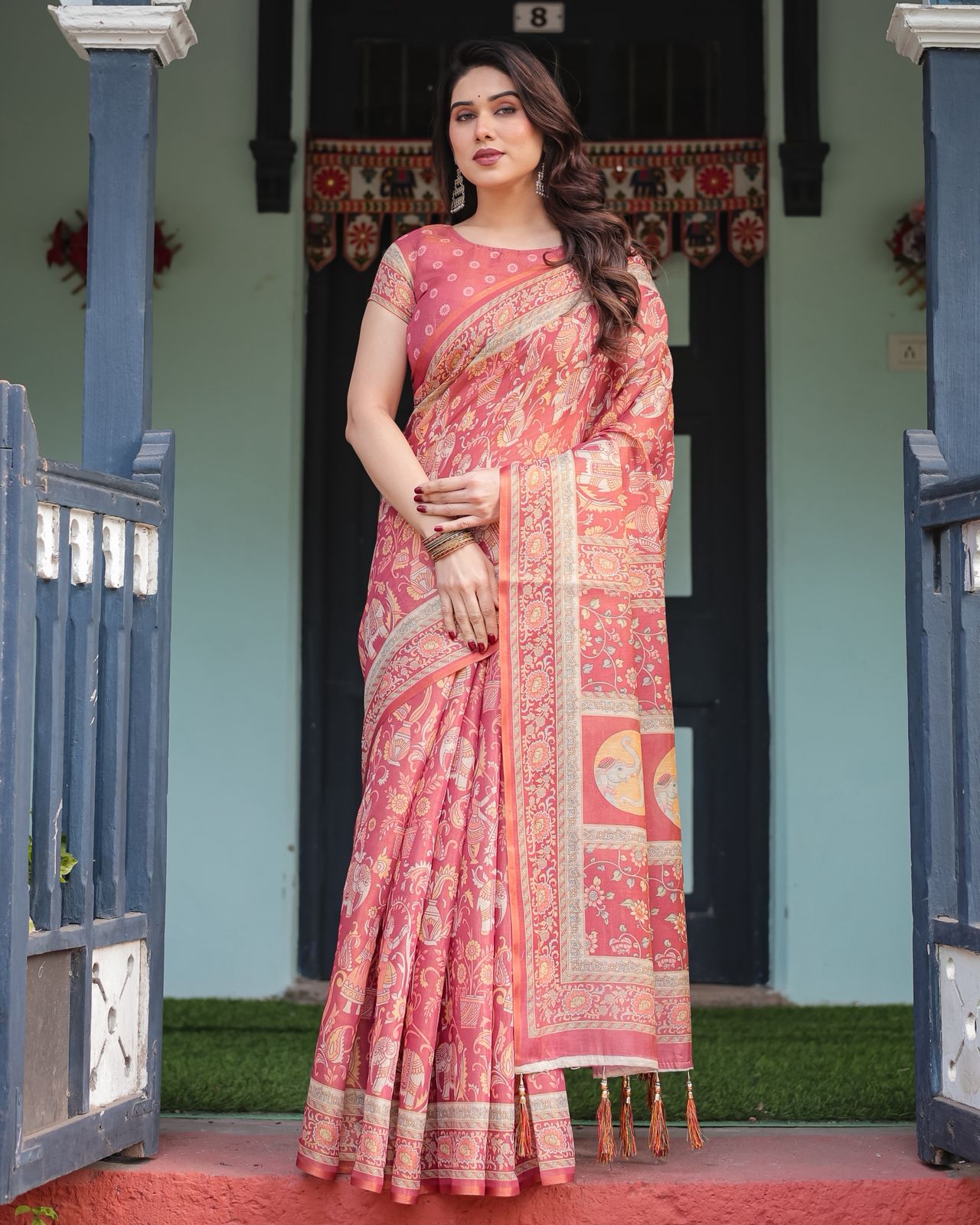
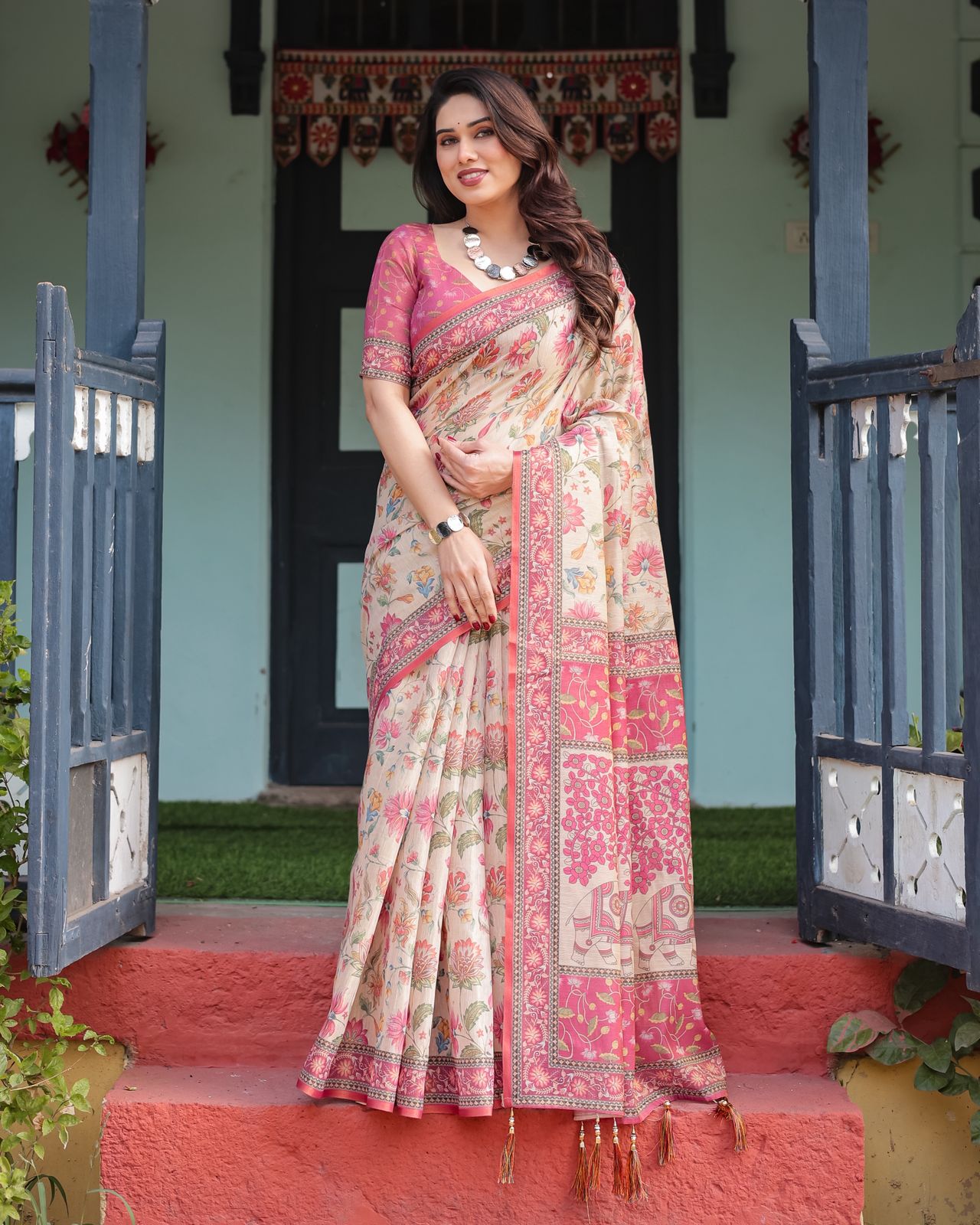
Blue Tissue Handloom Cotton Saree With Floral Print and Cream Tissue Cotton Saree With Floral Print | Varnavi's should be tested on an inner edge before the main body is pressed. A pressing cloth is especially useful when a floral print and a crisp tissue surface appear together.
Why Fold Lines Become Permanent on Some Saree Fabrics in the Wardrobe
Sarees should be refolded along different lines each time and stored in a clean, dry, breathable environment with the heaviest decorative sections protected from pressure.
Refolding changes the point that bears compression. Shift the fold by a few centimetres when storage space allows, or roll a heavily embellished saree around a broad, smooth tube. Rolling isn't suitable for every textile, but it can reduce sharp bends in zari-heavy borders and dense pallu work.
- Use a soft inner layer: Place acid-free tissue paper or a clean, colourfast cotton cloth between folds to reduce friction and sharp compression.
- Protect the pallu and border: Keep zari and dense decorative areas from being trapped beneath a heavy stack.
- Avoid plastic for long storage: Use a breathable cotton bag or textile box in a dry cupboard instead.
- Keep the stack manageable: A heavy pile presses the bottom sarees continuously. Store fewer sarees per stack and rotate the pieces you wear.
- Air the sarees periodically: Open stored sarees every two to three months, keep them out of direct sunlight, and let them dry fully before refolding.
Store sarees away from damp walls, bathroom steam, kitchen grease and direct sunlight. Silica gel packets can help in a closed storage box, but packets should not touch the fabric and must be replaced when saturated. Naphthalene balls should not sit directly against sarees because their odour and residue can affect textiles.
Sarees from Rs 1000 to Rs 1500 and Sarees Under 20% Off can be useful collection references when building a rotation of everyday sarees rather than repeatedly storing one favourite piece under pressure. Sarees Under 10% Off and Sarees Flat 60% Off offer further ways to rotate frequently worn sarees, reducing the number of months that one garment remains tightly folded.
Sarees Flat 50% Off is another collection reference for comparing everyday fabrics and construction details before purchase. The practical question isn't only whether a saree looks crisp on arrival, but whether its weave, border and storage requirements suit the way the saree will be worn and maintained.
Why Fold Lines Become Permanent on Some Saree Fabrics: A Practical Care Routine
A simple care routine prevents most permanent-looking fold lines: air the saree after use, refold it differently, protect decorative areas, and address a deep crease before long-term storage.
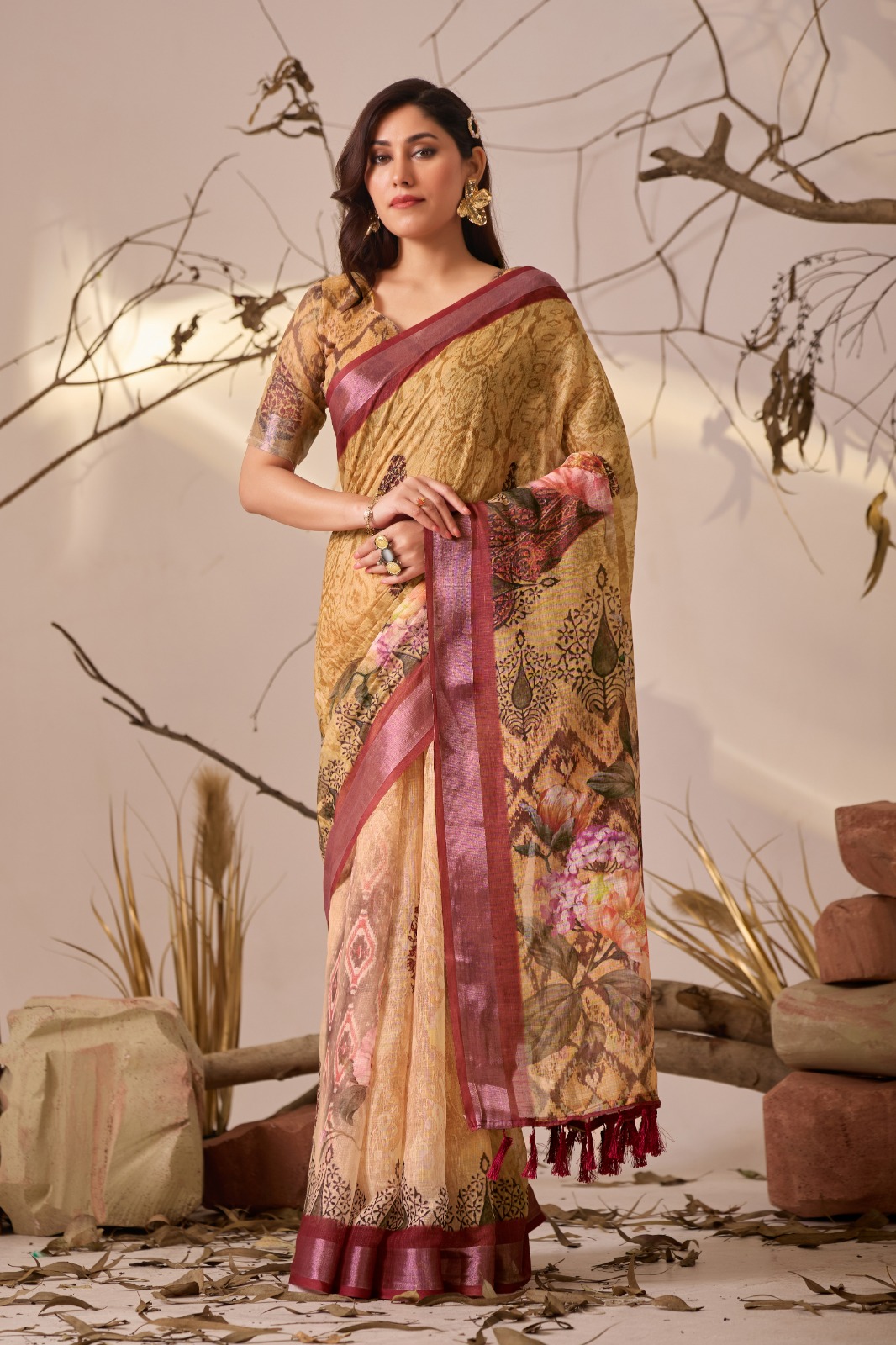
After wearing a saree, hang it in shade for four to eight hours if weather and indoor humidity permit. Check the waist area, pallu and blouse-contact area for moisture. Do not spray perfume directly on the saree, because alcohol, oils and colourants can leave marks that become more difficult to remove under heat.
Before folding, brush away loose dust and fasten any hooks or brooches that could press into the fabric. Fold the saree loosely enough that the stack doesn't bulge under tension. Place the pallu and zari border so that they're not trapped beneath the heaviest part of the garment.
For a saree worn every few weeks, opening and refolding it every two to three months is a practical maintenance interval. Sarees stored through a humid monsoon period deserve more frequent inspection. Early, shallow lines are easier to relax than folds that have been compressed for an entire season.
Professional help is appropriate when the saree has colour bleeding, brittle yarns, extensive zari, antique construction, embroidery, adhesive embellishments or a crease that crosses a fragile handloom area. A textile specialist can identify fibre content and test moisture, solvents and heat before treating the full saree.
A permanent-looking saree crease should be treated as a fabric-structure problem, not an ironing contest: reduce pressure, introduce only suitable moisture, and allow the textile to cool before folding again.
Common Questions About Permanent Fold Lines in Sarees
Why do saree fold lines become permanent?
Saree fold lines become permanent when repeated pressure, humidity, heat and time reposition or flatten the yarns at the same fold. Crisp tissue cotton, linen, cotton weaves and zari borders can show this change more visibly than fluid fabrics.
Can a permanent crease be removed from a saree at home?
A deep crease can sometimes be softened at home by hanging the saree, using minimal suitable moisture and pressing the reverse side through a clean cloth at low heat. Professional care is safer for Banarasi silk, delicate Kanjeevaram, fragile zari, vintage sarees and creases crossing embroidery.
How should a tissue cotton saree be ironed?
A tissue cotton saree should be ironed from the reverse side through a clean cotton pressing cloth, using the lowest effective temperature and short lifting motions. Direct high heat and continuous dragging can create shine or flatten the crisp weave.
Does humidity make saree creases worse?
Humidity can make saree creases worse because natural fibres absorb moisture and become more flexible while compressed. A saree that dries inside a tight fold may retain that fold more strongly, so garments should be aired completely before storage.
How can sarees be stored without permanent fold lines?
Store sarees in breathable cotton bags or textile boxes, refold them along different lines, keep stacks light, and separate zari areas with acid-free tissue or clean cotton cloth. Open stored sarees every two to three months and keep them away from damp walls and direct sunlight.
Is steam safe for every saree fabric?
Steam is not safe for every saree because moisture can cause water marks, colour bleeding or damage to coated and glued embellishments. Check the care instructions and test an inconspicuous area; delicate silk, zari and embellished sarees are better handled by a professional.