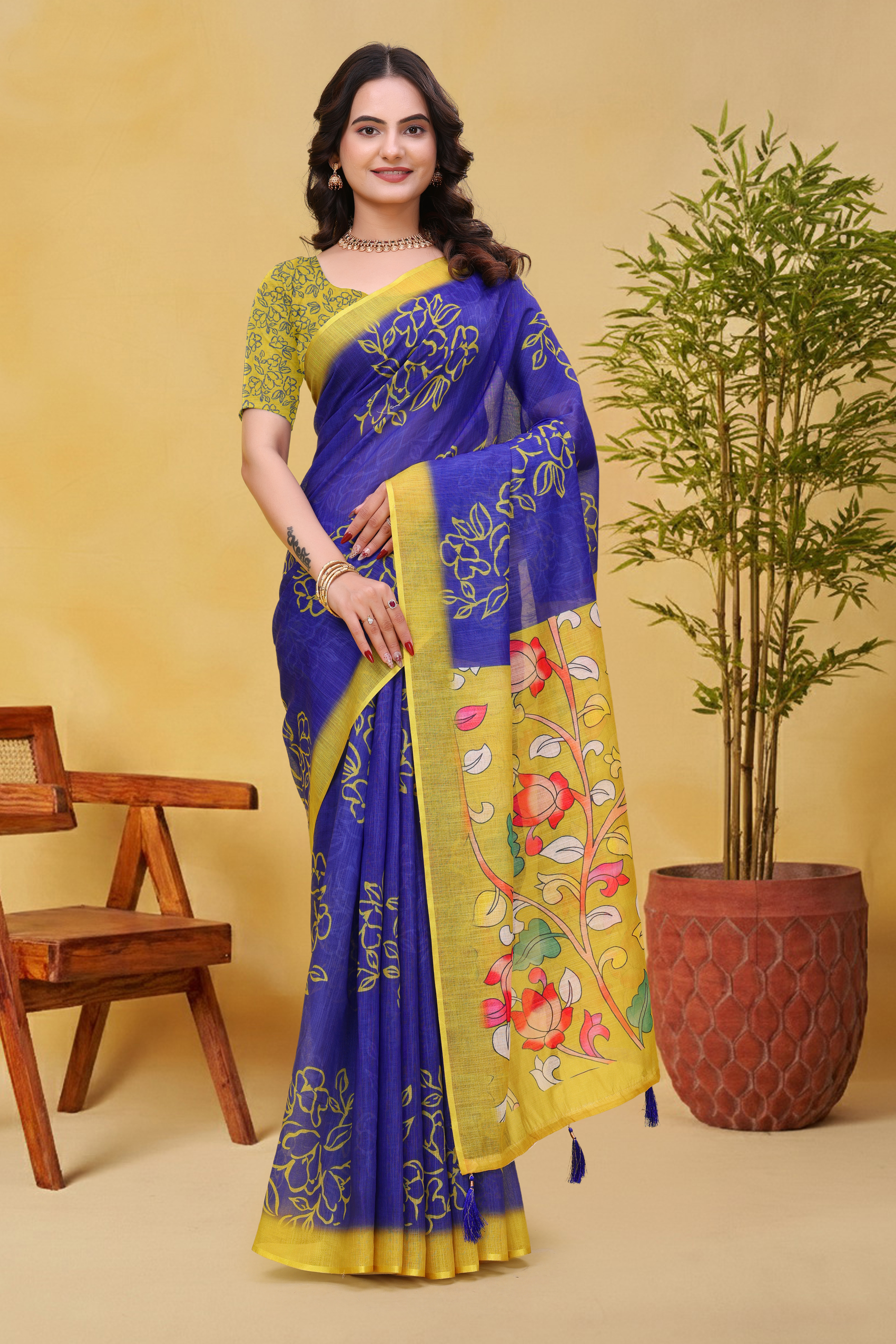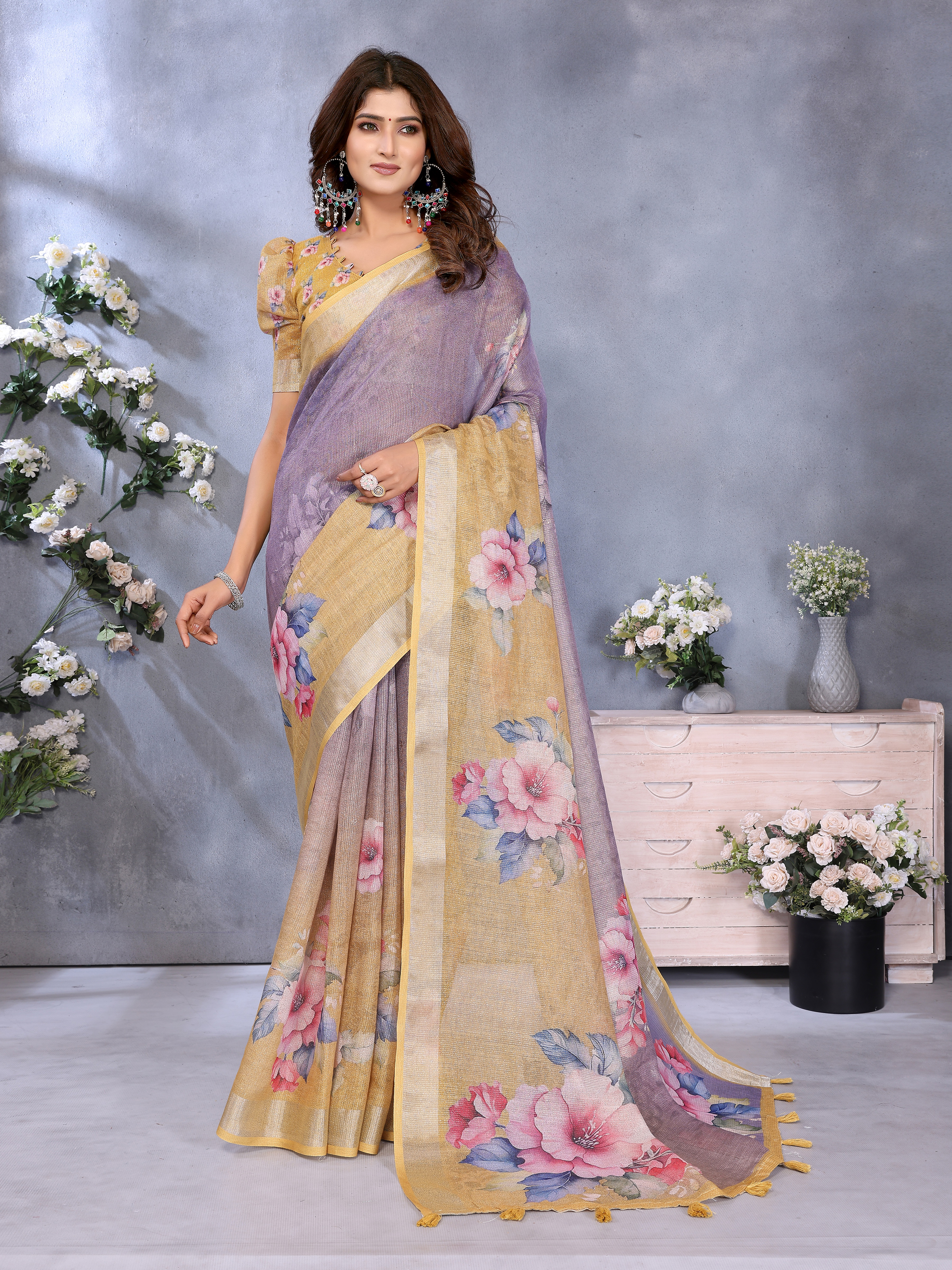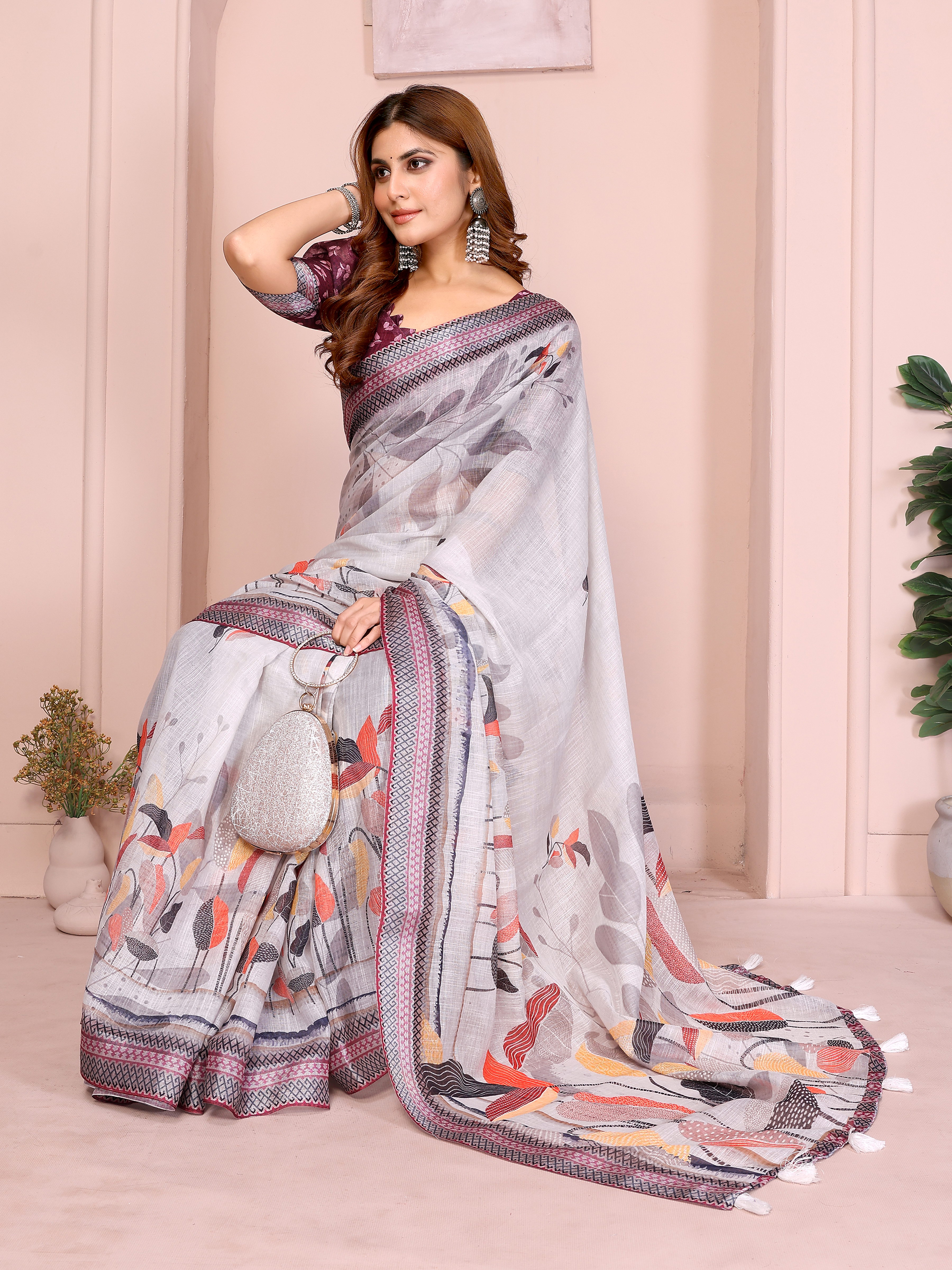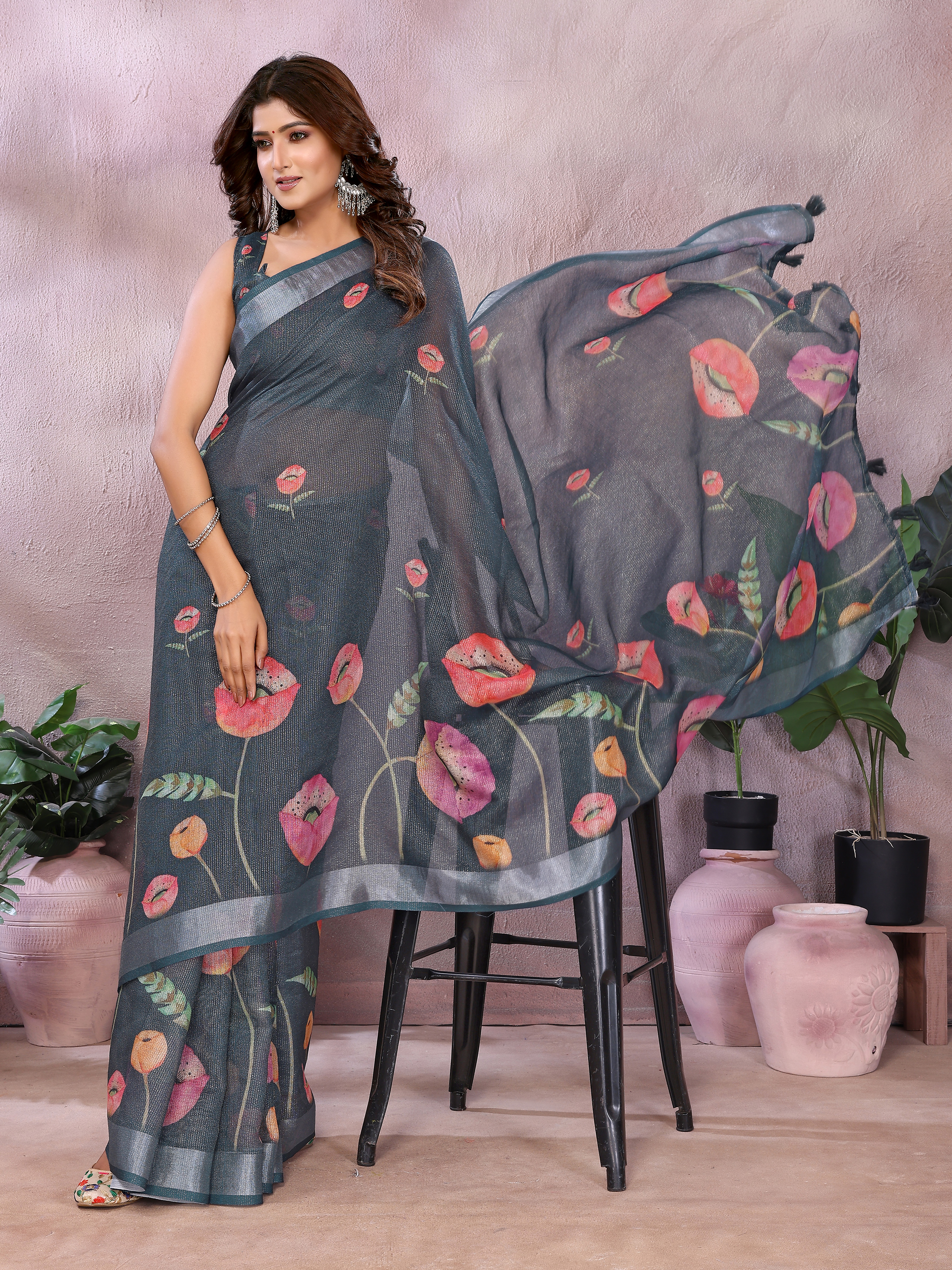
A cotton kurti can come out of the first wash noticeably shorter through the body or sleeves while appearing broader across the chest and hem. Why Cotton Kurtis Become Shorter but Wider After Washing has a technical answer: cotton fibres relax, yarns contract, and the fabric's length and width don't always respond equally to water, agitation, heat and drying. The change is usually a combination of fibre recovery and fabric construction, not a sign that the garment was deliberately made incorrectly.
Understanding the cause helps you choose the right size, wash a salwar suit without distorting its proportions, and judge whether a change is normal or excessive. A few minutes of preparation before the first wash can protect the length of a cotton kurti far better than trying to stretch it back afterwards.
Why Cotton Kurtis Become Shorter but Wider After Washing
Cotton kurtis become shorter but wider after washing when lengthwise yarns relax or contract more than crosswise yarns, while wet fabric spreads laterally during agitation, rinsing or drying. Cotton fibres absorb water, swell slightly and release the tension created during spinning, weaving, dyeing, finishing and stitching.
Woven cotton fabric contains two yarn directions: the warp runs from shoulder to hem, and the weft runs across the body. Manufacturers often apply tension while weaving and finishing fabric, so the cloth may be temporarily held longer than its relaxed state. Washing removes some of that tension. If the warp contracts more strongly than the weft, the kurti loses length while the width remains stable or increases visually.
Width doesn't always increase because the cotton fibres themselves expand sideways. A loose weave can open or settle across the body, and a garment can spread when it's lifted wet, squeezed, hung from the shoulders or laid unevenly to dry. A shorter body combined with a broader hem creates the impression of a wider garment even when the measured chest changes only slightly.
Does every cotton kurti shrink in the same way?
Every cotton kurti doesn't shrink by the same amount because fibre type, yarn twist, weave density, finishing, dyeing and pre-washing differ from one fabric to another. Pre-shrunk cotton generally changes less, while untreated or lightly finished cotton may show more movement after the first wash.
Plain woven cotton, handloom cotton, khadi cotton and textured cotton can behave differently even when the labels simply say "cotton." A dense fabric may retain its width but lose a small amount of length. A softer, more open weave may show a larger change in drape and width. A garment with a lining, zari detailing, embroidery or a contrasting dupatta may also dry at different rates because each material responds differently to moisture.
What causes uneven shrinkage in cotton salwar suits?
Uneven shrinkage in a cotton salwar suit usually comes from differences in fabric tension, grain direction, panels, trims and washing stress. The kurta, pants and dupatta may not change by identical amounts because they can use different weaves, finishes or construction methods.
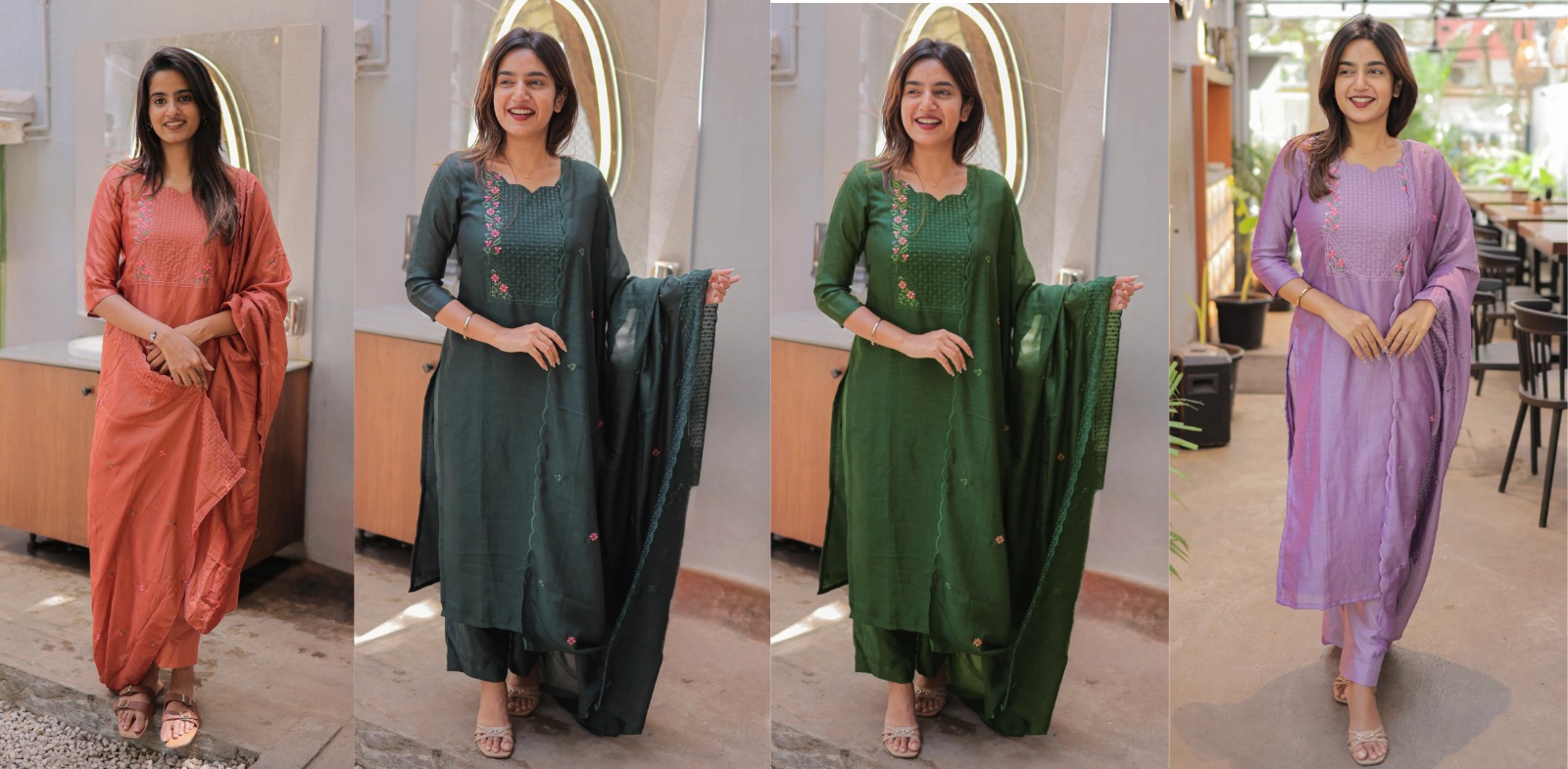
Cutting along the fabric grain is important. If a kurta panel is cut slightly off-grain, the wash can pull the panel diagonally, causing one side seam or hem to look shorter. Bias movement is more visible in an A-line silhouette because the flared panels have more fabric to redistribute. Seams can also draw up when thread and fabric shrink at different rates.
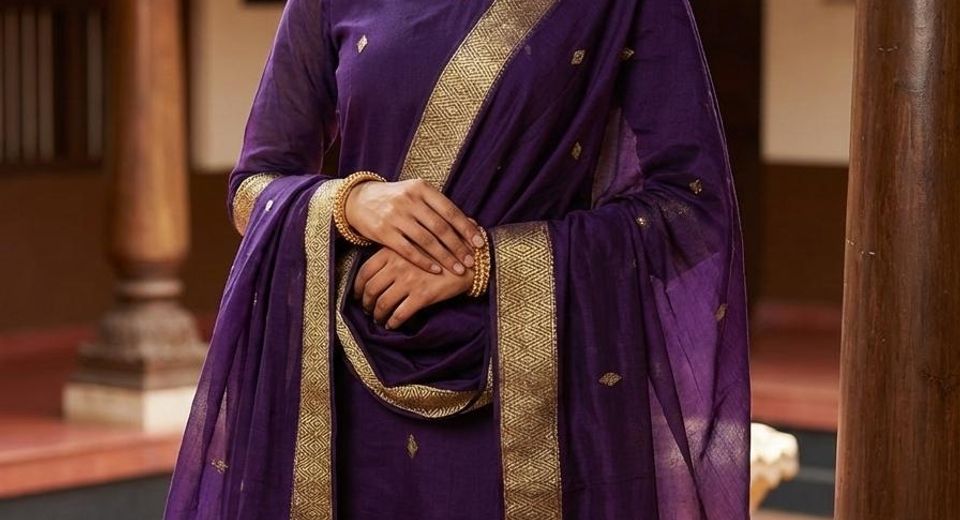
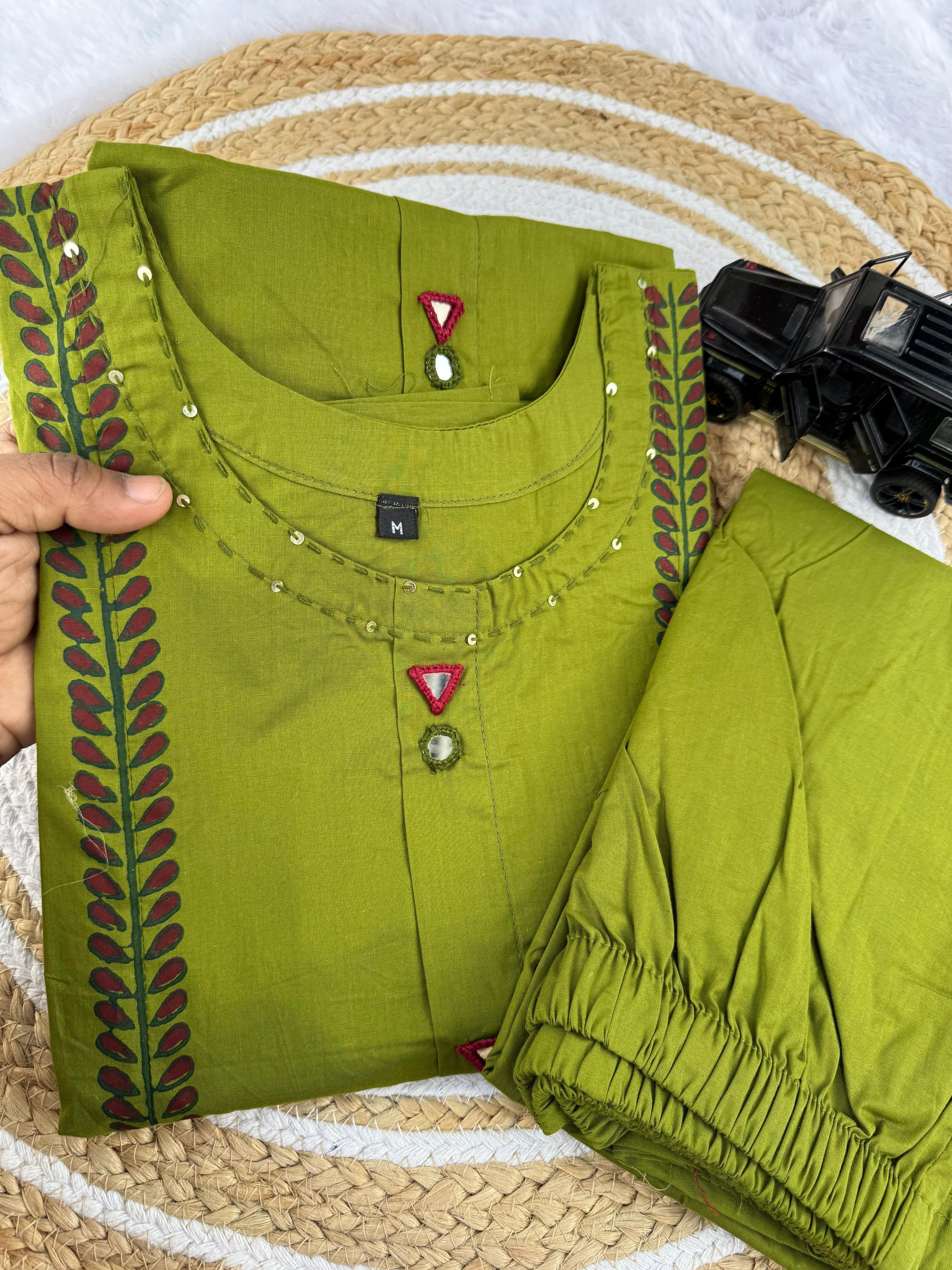
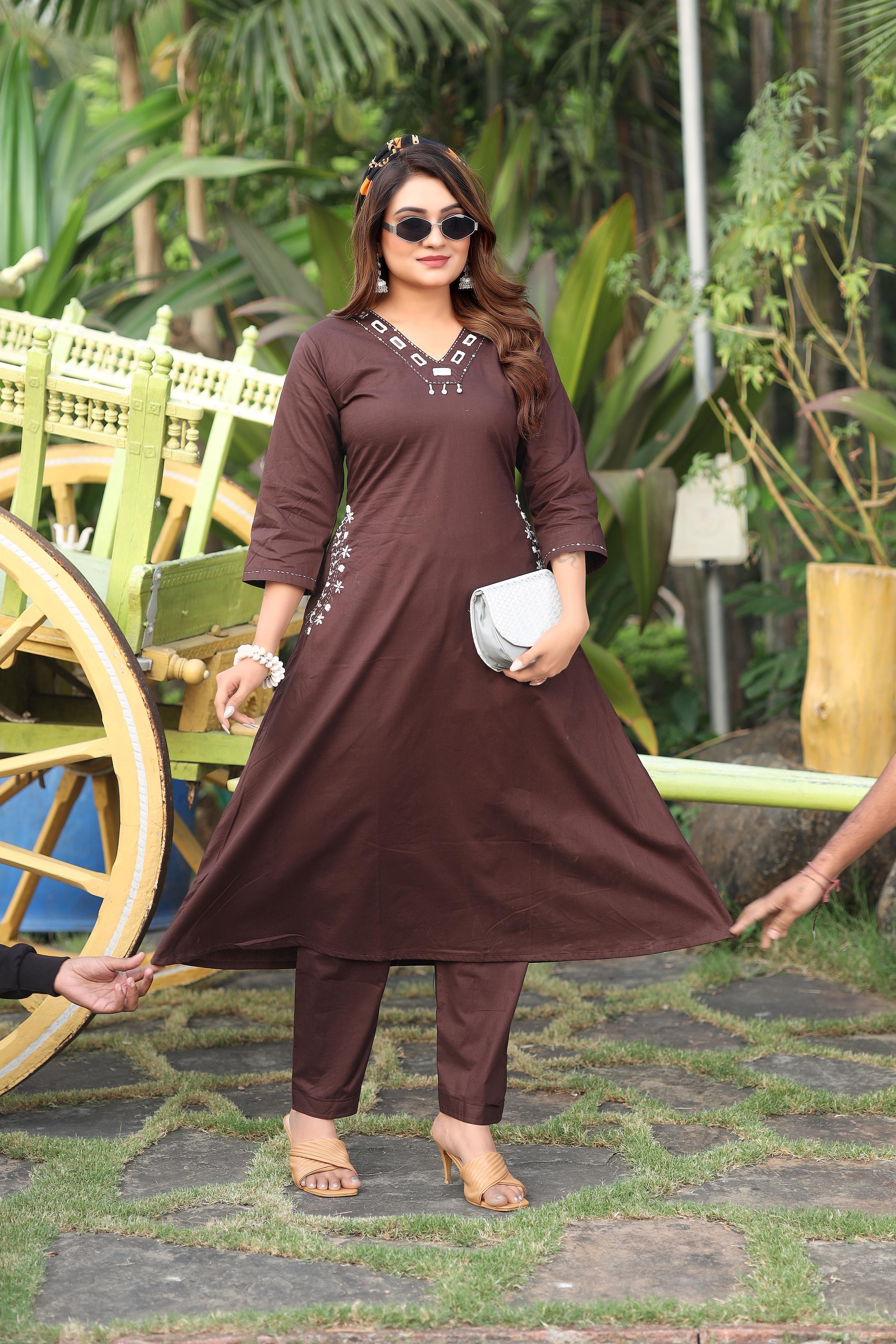
Heavy embellishment changes the balance of a garment. Mirror work, dense embroidery and zari add weight to selected sections, so a wet kurti can sag at the decorated front or dry with a distorted hem. A garment such as Designer Cotton A-Line Kurti Pant Set with Mirror Work should be handled gently and dried flat or supported evenly instead of being suspended from one shoulder.
Colour treatment can matter as well. Cotton fabric may be stretched during dyeing and finishing, and repeated washing gradually releases that tension. Dark dyed cotton can also require careful rinsing to reduce colour transfer, although colour bleeding and dimensional shrinkage are separate issues.
Why do the kurta, pants and dupatta behave differently?
The kurta, pants and dupatta behave differently because each piece has a different shape, seam structure, fabric weight and exposure to mechanical stress. A dupatta can lose length along its long edge, while a kurta can contract at the body and pants can tighten at the waistband or loosen through the legs.
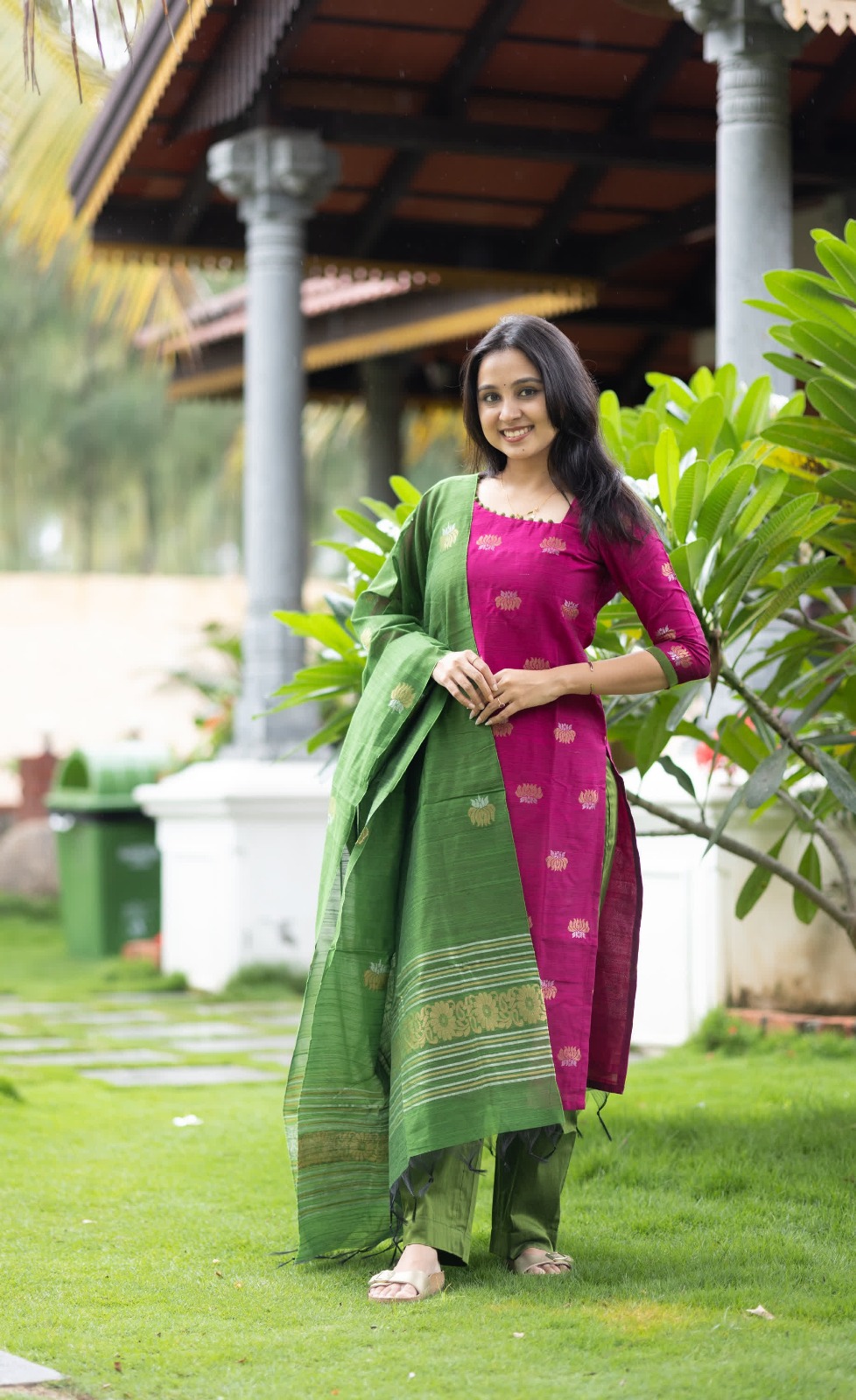
Pure Salwar Suit Dupatta searches often assume that a coordinated dupatta will remain just proportional to the kurta, but a lightweight dupatta may dry faster and crease more easily. A heavier Kanchi cotton kurta can hold moisture longer around seams and hems. A set such as Kanchi Cotton Woven Kurta Pant Dupatta Set should therefore be washed and dried as a perfect set when care instructions permit, so colour and texture changes remain visually balanced.
How washing and drying change a cotton kurti's measurements
Hot water, vigorous agitation, high-speed spinning and direct heat are the main laundry factors that increase cotton dimensional change. Each factor can affect the fabric separately, but the combination is particularly hard on lengthwise stability.
Water temperature above the care-label recommendation encourages fibre relaxation. A long, aggressive machine cycle repeatedly bends and rubs the wet fabric. A fast spin twists the garment and can pull the hem out of alignment. A dryer or harsh sunlight removes moisture quickly and can lock the fabric into a contracted shape, especially when the garment is left crumpled.
Hanging a heavy wet cotton kurti from a narrow hanger creates another kind of distortion. Gravity may stretch the shoulder area while the hem remains damp and contracts. Hanging a kurta by its neckline can make the neckline drop, whereas hanging it by a single loop or pinching one side can create an uneven side seam.
Washing a kurti with towels, denim or garments with zippers increases friction and snagging. Friction doesn't always cause shrinkage directly, but it can roughen the surface and disturb the fabric's alignment. A short, gentle cycle with similar lightweight garments reduces that stress.
Can ironing restore the original length?
Gentle steam ironing can recover a small amount of temporary length, but ironing can't reliably reverse permanent fibre shrinkage. A damp cotton kurti can be reshaped while warm, yet excessive heat may set wrinkles, flatten texture or damage zari and mirror work.
Place the kurti on a flat surface, align the side seams and hem, and press from the centre outward with a medium or cotton-safe setting. Do not drag a hot iron aggressively across a stretched neckline. Kanjeevaram-inspired cotton or zari-bearing garments should be ironed from the reverse side with a pressing cloth when the care label permits.
How to wash cotton kurtis without losing length
Wash cotton kurtis in cool or lukewarm water, use a mild detergent, reduce agitation and reshape the garment before drying. The first wash deserves the greatest care because the first exposure to water often produces the largest dimensional change.
- Read the care label first. The label's temperature, drying and ironing instructions take priority over general cotton advice.
- Test for colour transfer. Dab a hidden seam with a damp white cloth, especially on deep navy, black, red or heavily dyed cotton.
- Turn the garment inside out. Turning reduces surface friction and protects printed, embroidered, mirrored and zari details.
- Use cool water and mild detergent. Avoid bleach and strong detergents unless the label specifically allows them.
- Choose a gentle cycle or hand wash. Keep soaking short, ideally around 5 to 10 minutes, because prolonged soaking can loosen dyes and seams.
- Remove excess water without twisting. Press the garment between clean towels or use a low-speed spin.
- Restore the grain while damp. Lay the kurti flat, match the side seams, straighten the placket and gently ease the hem back into shape.
- Dry in shade with airflow. Direct midday sun and high heat can intensify colour fading and set uneven contraction.
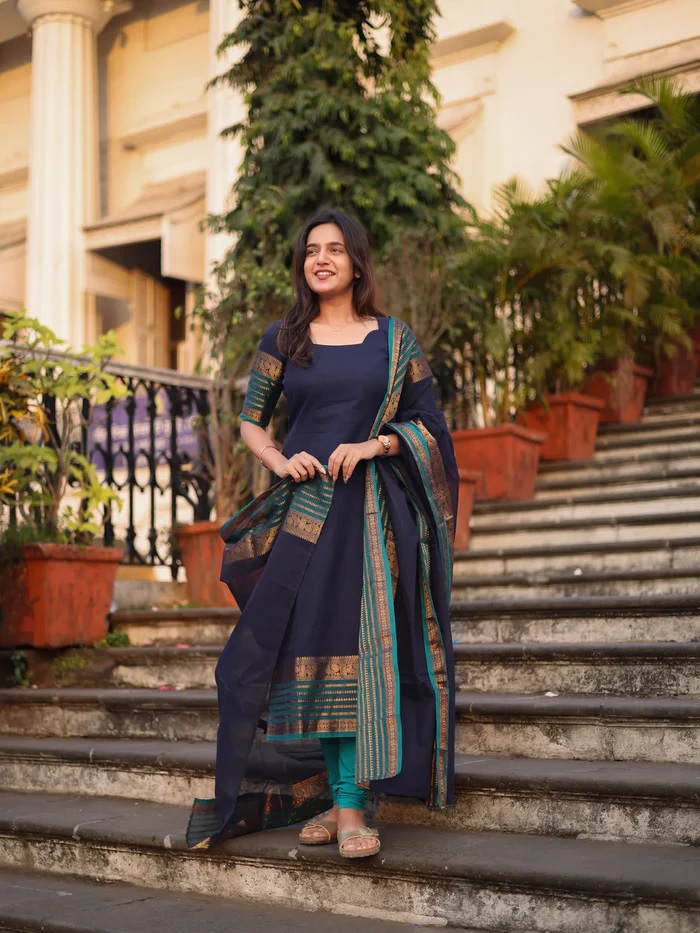
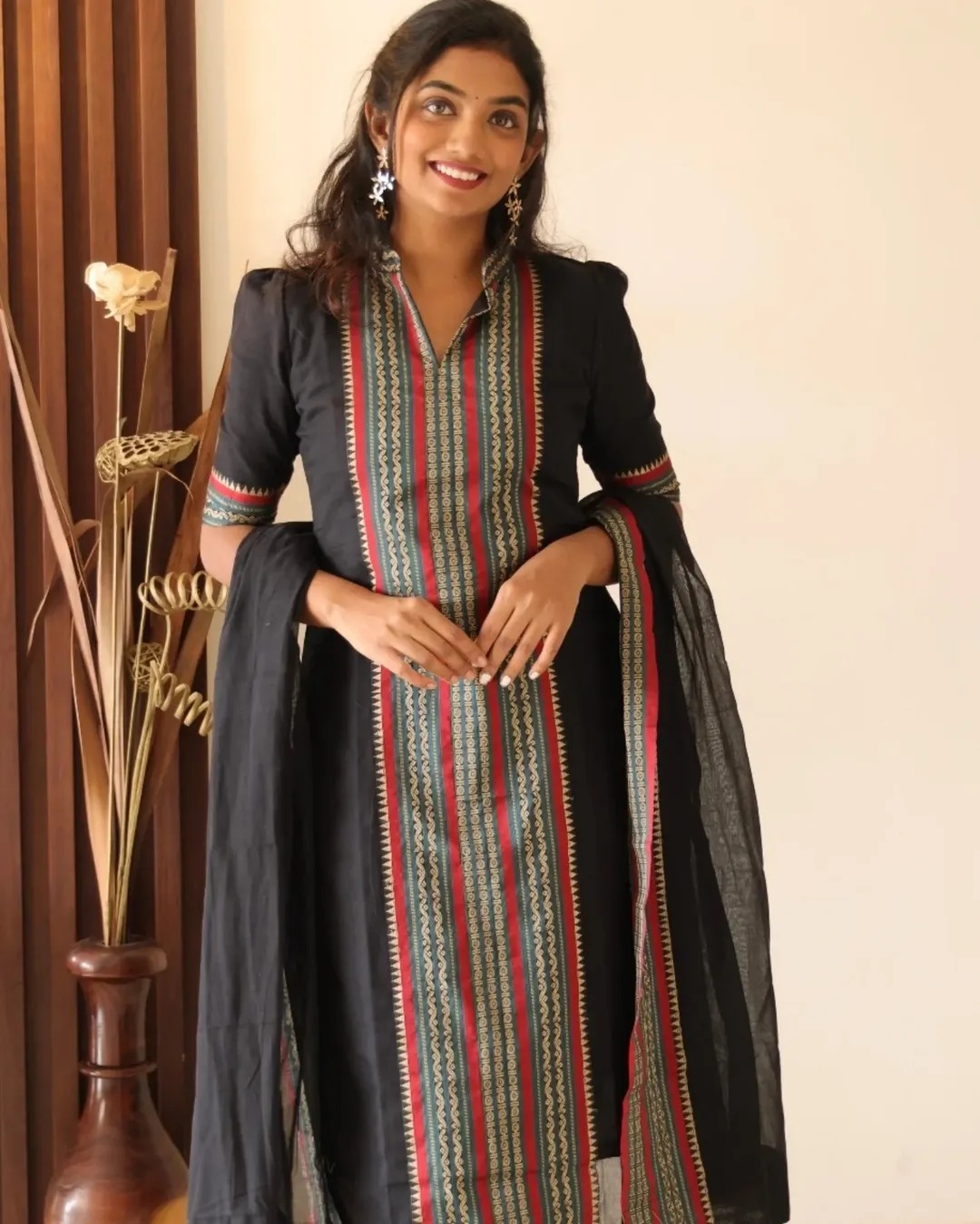
A Navy Kanchi Cotton Kurti Set with Woven Dupatta illustrates why set care matters: the kurti and dupatta should be checked together for colour change, drape and length after washing. A Black Kanchi Cotton Kurti Dupatta Set for Women should also be washed separately or with similarly dark garments during its first few washes to reduce the risk of dye transfer.
How to measure a cotton kurti before and after washing
Measure a cotton kurti flat before the first wash and again after it has dried in its normal shape. Flat measurements are more reliable than trying to measure a soft garment while it hangs.
Record the centre-back length from the highest shoulder point to the hem, half-chest from armpit to armpit, shoulder width, sleeve length and hem width. Double the half-chest measurement for an approximate garment chest. Photographing the tape position makes the comparison repeatable.
A simple calculation shows the percentage change: subtract the post-wash measurement from the pre-wash measurement, divide by the pre-wash measurement, and multiply by 100. For example, a 44-inch kurti length that becomes 43 inches has lost about 2.3% of its length. A 42-inch half-hem measurement that becomes 43 inches has increased by about 2.4% across that flat measurement.
don't compare measurements taken while one garment is stretched and the other is relaxed. Use the same surface, tape placement, drying state and time after ironing. A difference of a few millimetres may come from measurement technique, while a major change in length, twisted seams or an uneven hem suggests a construction or care problem worth documenting.
Choosing cotton salwar suits with shrinkage in mind
Choose a cotton salwar suit with enough length and ease to accommodate modest first-wash movement, while avoiding an oversized fit that may become shapeless after drying. Ask whether the garment has been pre-washed, whether the fabric is pure cotton or a blend, and which washing method the seller recommends.
A straight silhouette generally makes small length changes less visually dramatic than a sharply flared A-line silhouette. A cotton kurti with a narrow hem may show a one-centimetre shift more clearly than a wide hem. Designs with side slits, panels or contrast borders should be checked for grain alignment and border placement.
The Lime Green Kanchi Cotton Kurta Dupatta Set - and Kanchi Cotton Zari Woven Kurti Set with Traditional Dupatta are useful examples of why weave and surface detail deserve attention during care. Zari, woven borders and textured cotton should not be treated like plain everyday jersey. The Cream Khadi Cotton Straight Kurta Set with Dupatta may also benefit from gentle handling because khadi texture can change in appearance when aggressively rubbed or wrung.
Price doesn't predict shrinkage by itself. Cotton Salwar Suits Under 2000 Rupees can be comfortable and well made, while an expensive set can still change if it's washed with heat and friction. Fabric information, finishing and care instructions provide more useful evidence than price alone.
Which cotton options suit regular office wear?
Lightweight, opaque cotton with a stable weave and moderate ease is usually practical for regular office wear. Straight kurta sets are easier to measure and reshape than heavily layered or highly embellished silhouettes.
Collections such as Kolkata Cotton Salwar Suits and Bengali Cotton Salwar Suits can help shoppers compare regional cotton aesthetics, weave texture and styling choices, but collection names don't guarantee identical shrinkage behaviour. A Jaipuri Salwar Suit or a Kalamkari Print Salwar Suits (Copy) design should be assessed by its actual fibre content, print method and care label rather than by the print name alone.
When is cotton shrinkage normal, and when is it a problem?
Small, even dimensional change after the first wash can be normal, while severe shortening, twisting, colour bleeding or a visibly uneven hem indicates a problem. Cotton garments should remain wearable and proportionate when the recommended care method has been followed.
Normal change is usually gradual and reasonably consistent across matching panels. Problematic change includes one sleeve becoming shorter than the other, a side seam rotating toward the front, a border turning uneven, the neckline collapsing or the kurta losing enough length to alter coverage. Take dated photographs and measurements before contacting the seller, particularly if the garment changed after a cool, gentle wash.
don't repeatedly stretch a damaged kurti while wet. Repeated pulling can enlarge seams, distort embroidery and create a garment that looks temporarily longer but no longer hangs correctly. A professional tailor may be able to release a hem, adjust a side seam or rebalance a panel when sufficient seam allowance exists, but tailoring can't recreate missing woven fabric.
Good cotton care is a repeatable routine rather than a single rescue technique: cool water, mild detergent, low agitation, no wringing, careful reshaping and shaded drying. Those steps preserve not only length but also the relationship between the kurta, pants and dupatta, which is what makes a salwar suit look properly fitted after many wears.
Questions About Cotton Kurti Shrinkage and Washing
Which cotton is best for a salwar suit?
A stable, breathable cotton with a dense, even weave is usually the easiest choice for a salwar suit that needs regular washing. Pre-washed or sanforised cotton generally offers better dimensional stability, but the care label and garment construction still matter.
Why does my cotton kurti shrink more in length than width?
The lengthwise warp yarns may have been held under greater tension during weaving or finishing, so they contract more after absorbing water. Wet handling and drying can also spread the garment sideways, making the kurti appear wider as the body becomes shorter.
Can I prevent a cotton kurti from shrinking after the first wash?
You can reduce shrinkage by washing in cool or lukewarm water, using a gentle cycle, avoiding wringing and drying the garment in shade after reshaping it flat. You cannot completely prevent change in untreated cotton, especially during its first wash.
Are cotton salwar suits formal attire?
Cotton salwar suits can be formal attire when the weave, colour, tailoring and detailing suit the setting. A structured straight kurta with a neat dupatta works for many offices, while zari, mirror work or elaborate prints are better matched to festive or semi-formal settings.
Which salwar suit is trending now in India?
Straight cotton kurta sets, breathable A-line kurtis, coordinated dupattas and regionally inspired woven or printed fabrics remain versatile choices in India. Trend relevance should not replace fit and care practicality, because a poorly handled cotton set can lose its proportions after washing.
How should I wash a cotton salwar suit dupatta?
Wash the dupatta in cool water with mild detergent, avoid twisting, and reshape the long edges while damp before drying it in shade. Wash the dupatta with its matching kurta when the care label allows, especially when colour matching matters.