A border can develop ripples even when the saree body looks perfectly smooth. Why a saree border starts waving after steam or ironing usually comes down to uneven shrinkage, trapped moisture, excess heat, or tension between two differently constructed sections. A woven border, printed border, zari edge and attached decorative strip each respond differently to pressing. The good news is that a mild wave can often be corrected at home if you stop reheating the saree and identify the cause first.
The safest approach is controlled, indirect pressing: place the saree flat, cover it with a thin cotton cloth, use the lowest suitable temperature, and press in short sections without dragging the iron. Severe puckering, melted fibres, colour transfer or a permanently distorted edge requires a professional saree or textile-care service rather than repeated ironing.
Why a Saree Border Starts Waving After Steam or Ironing
A saree border starts waving after steam or ironing when the border and the main saree body absorb heat and moisture at different rates or are held under different levels of tension. The longer, heavier or more tightly woven section then contracts unevenly, creating a rippled edge.
Many sarees combine a lightweight body with a denser border. Cotton, linen, silk, viscose, zari yarn and synthetic embellishment don't relax or dry at the same speed. A border can therefore become shorter than the adjoining fabric by a few millimetres, enough to push the edge into soft waves. The problem is especially visible when the saree is pressed while damp.
Steam adds moisture deep into the yarns, while a hot soleplate dries the top layer quickly. That uneven drying can lock temporary ripples into place. Dragging the iron along the length of the border makes the effect worse because the body stretches while the border resists movement.
Some waves are not caused by ironing alone. A saree folded tightly while warm, stored under heavy garments, washed without support, or hung from a narrow hanger can develop edge distortion that becomes more noticeable after pressing.
Which border constructions are most sensitive?
Dense woven borders, zari borders and borders joined to lightweight cotton or linen bodies are most sensitive to uneven pressing. A printed border on the same continuous fabric is generally less likely to separate, but high heat can still distort the fabric or dull the print.
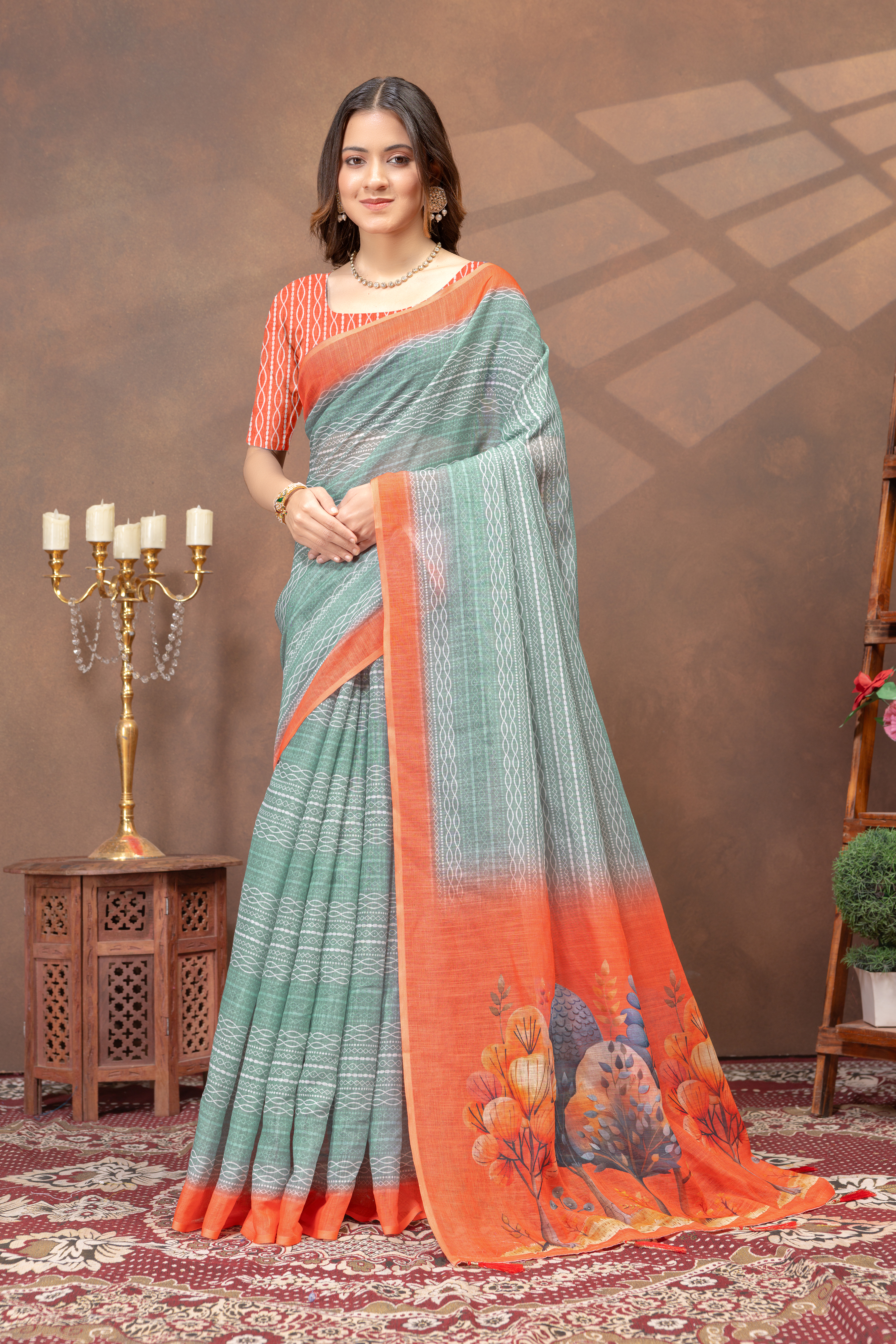
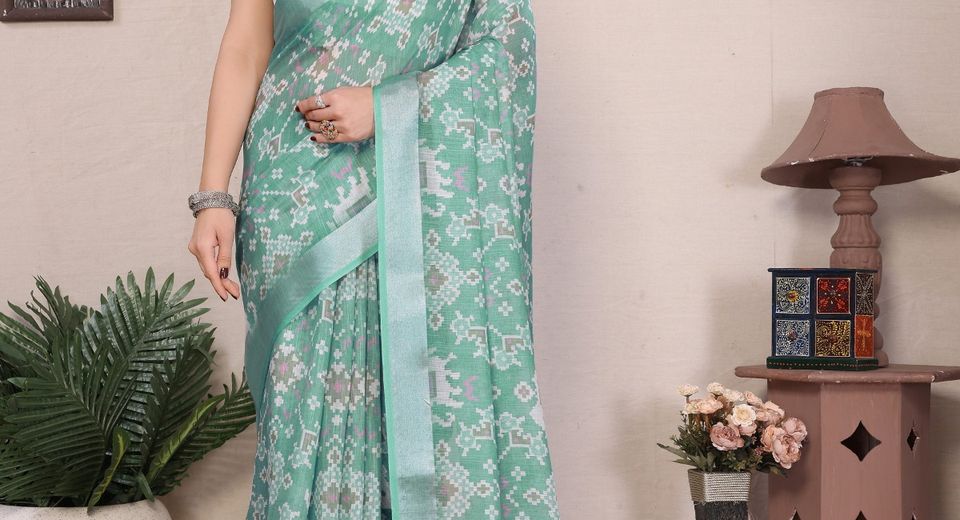
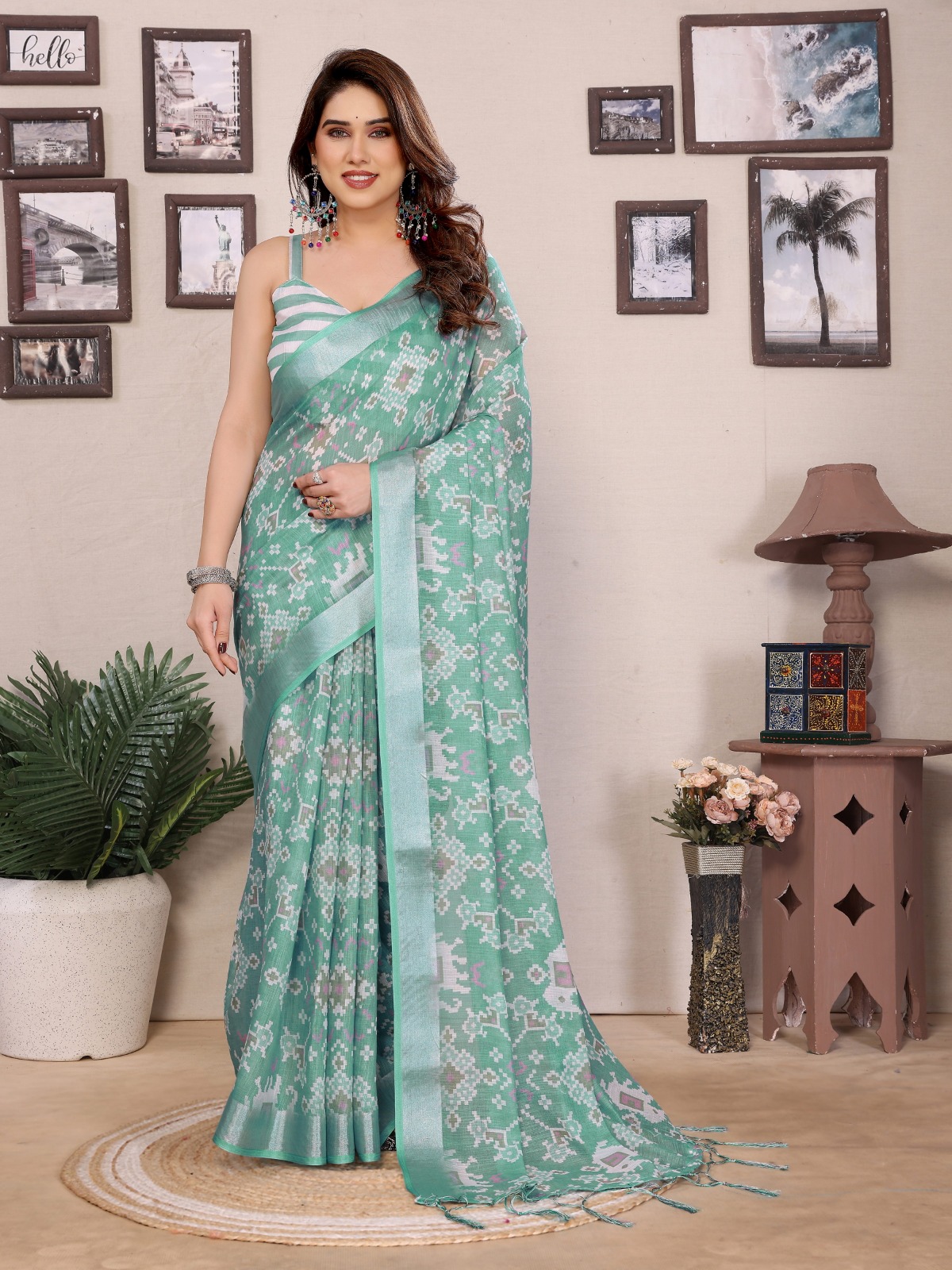
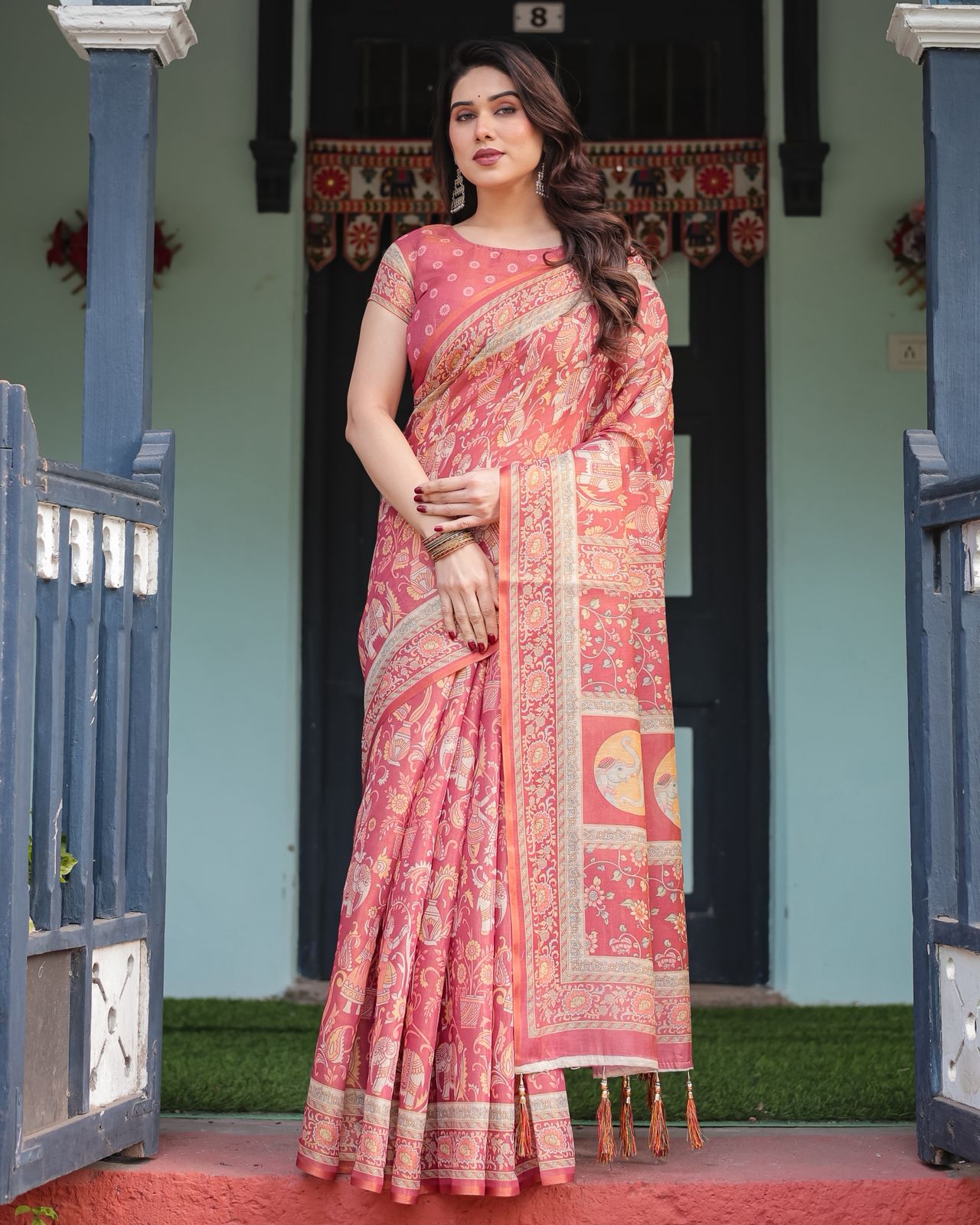
For example, a Sea Green Cotton Linen Printed Saree with Woven Border combines a breathable body with a denser woven edge, so the border should be pressed with minimal moisture and no sideways pulling. A Green Kora Silk Leheriya Saree with Brasso Border also needs restraint because kora silk and brasso details can respond differently to heat and pressure.
How Heat, Steam and Pressure Create Border Ripples
Heat softens fibres and relaxes yarn tension, while steam swells many natural fibres; uneven application of either one can change the border's shape. Pressure then fixes the changed shape while the fabric cools.
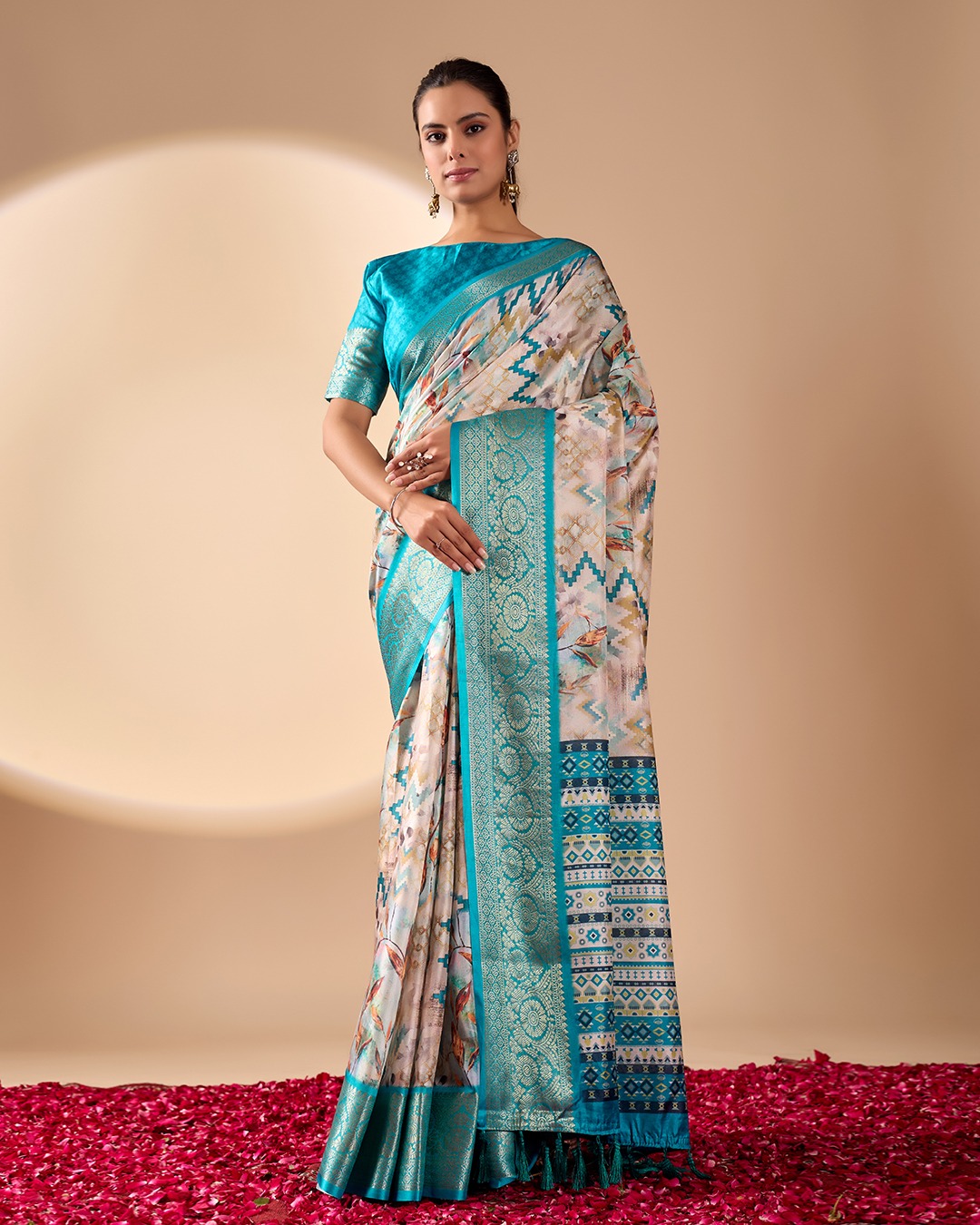
Cotton and linen absorb water readily and may contract after drying. Silk responds to heat and moisture more delicately, particularly when the finish is crisp or the weave is lightweight. Zari may contain metal-coated yarn or metallic-looking synthetic yarn, and direct high heat can flatten its surface, cause dull patches or affect the adhesive used on decorative work.
A steam iron held in one place can create a damp island surrounded by dry fabric. When the island dries, the border may contract locally rather than evenly. A conventional iron can create the same problem if the temperature is high and the pressing motion is fast.
- Too much heat: Fibres relax suddenly, and a border can shrink or lose its original edge alignment.
- Too much steam: Moisture swells the yarns and encourages uneven drying, especially in cotton, linen and silk blends.
- Sideways dragging: The saree body stretches along the ironing direction while the border resists, producing scalloped waves.
- Direct contact with zari: Metallic yarn can become flattened, shiny or discoloured under a hot soleplate.
- Pressing over a fold: A crease may be transferred into the border and repeated across several layers.
How to Tell Whether the Wave Is Temporary or Permanent
A wave is probably temporary when the fabric is clean, the yarns are intact, and the edge becomes straighter after resting flat under light, even pressure. A permanent change is more likely when the border has puckered seams, melted fibres, broken zari, colour bleeding or a sharp repeated ridge.

Lay the saree on a clean bed or table in natural light. Do not pull the edge taut. Compare the rippled section with an undistorted section and check whether the wave follows the entire border or appears only near pleats, the pallu, a seam or a decorative motif.
Run clean fingertips lightly across the reverse side. A soft, flexible ripple suggests moisture or tension. A hard ridge, rough patch or sticky area may indicate heat damage, adhesive failure or a synthetic fibre that has partially fused.
Test any correction on an inside fold or a concealed area first. A hidden test can't guarantee complete safety, but it can reveal colour transfer, shine, water marks or texture change before the visible border is treated.
How to Flatten a Waving Saree Border Safely
A mildly waving border can often be flattened by allowing the saree to rest flat, then pressing it from the reverse through a dry cotton cloth at low or medium-low heat.
- Clear a large surface. Use a clean, dry ironing board or a table covered with a thick cotton sheet. Remove jewellery, clips and rough objects that could catch the fabric.
- Spread the saree in one layer. Align the border naturally instead of stretching it to force the waves out. Work on a section no longer than 30 to 45 centimetres at a time.
- Let damp fabric dry first. If the saree feels cool or wet from steam, leave it flat for at least 30 minutes, or until it's completely dry. Do not seal moisture beneath a cloth.
- Cover the border. Place a clean, thin cotton pressing cloth over the area. A white cloth is safest because coloured cloth can transfer dye under heat.
- Press vertically and lift. Lower the iron for two or three seconds, lift it, move it to the next section, and repeat. Do not slide the iron sideways across the edge.
- Cool under light support. Leave the pressed section flat for 10 to 15 minutes. A second clean cotton cloth can hold the border in position, but heavy books or tight weights may leave an imprint.
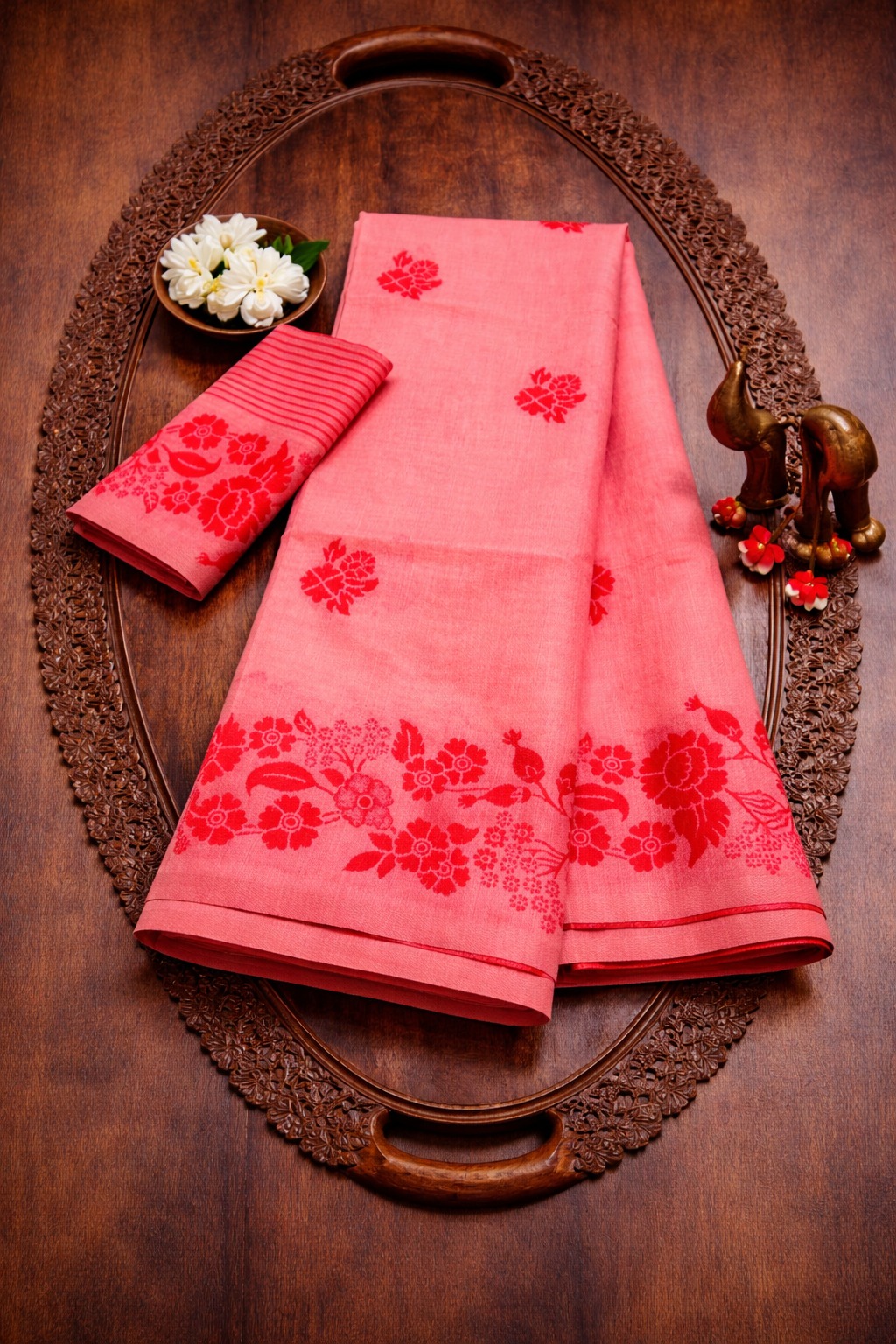
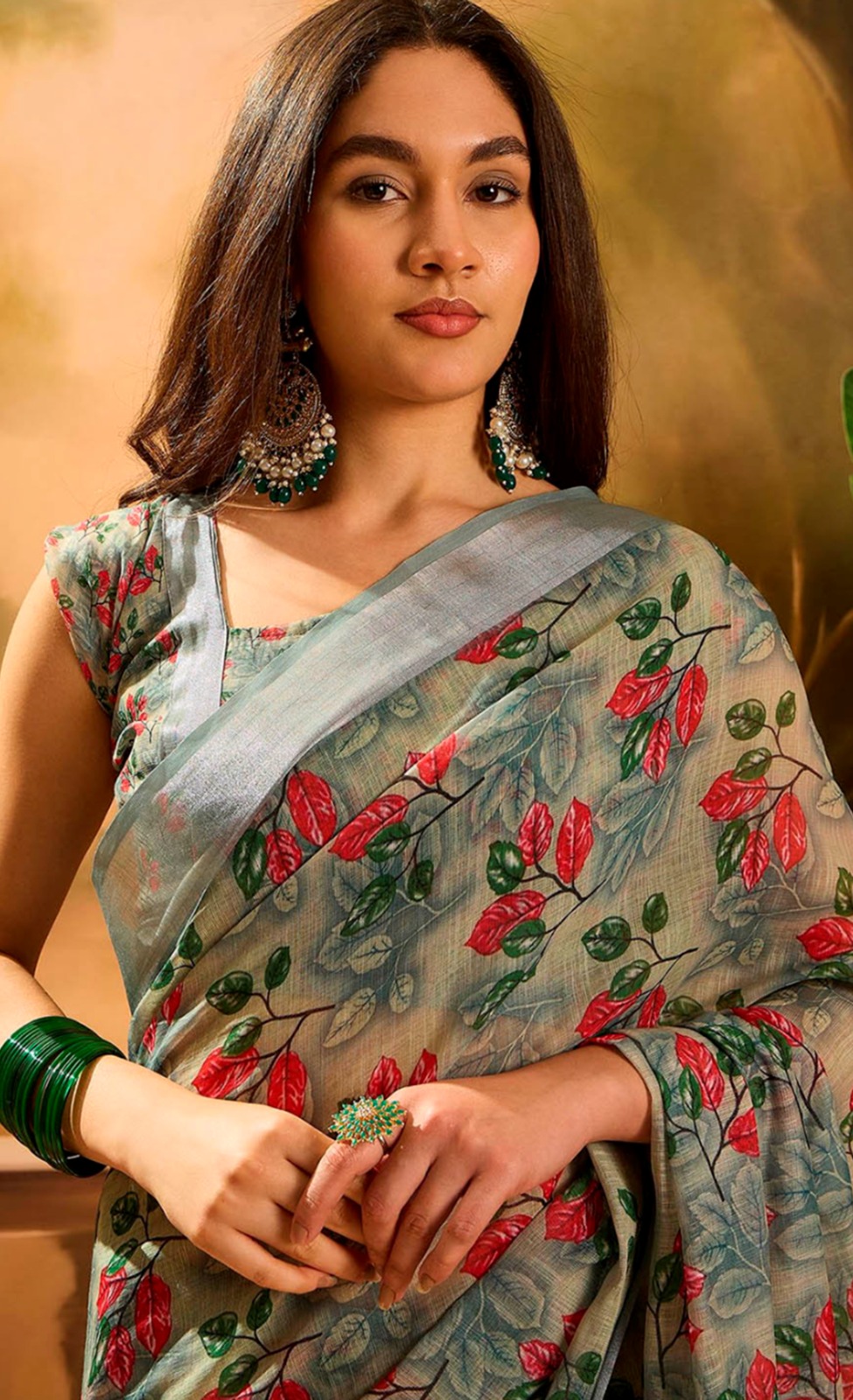
For a printed cotton or linen saree, a small amount of controlled moisture may help release ordinary creases, but direct steam on a decorative border is still unnecessary. A Lightweight Grey Saree with Rust Designer Border and a Peach Linen Cotton Printed Saree for Women Online should be pressed from the reverse with particular care around dark-to-light colour combinations, since excess moisture can encourage colour transfer.
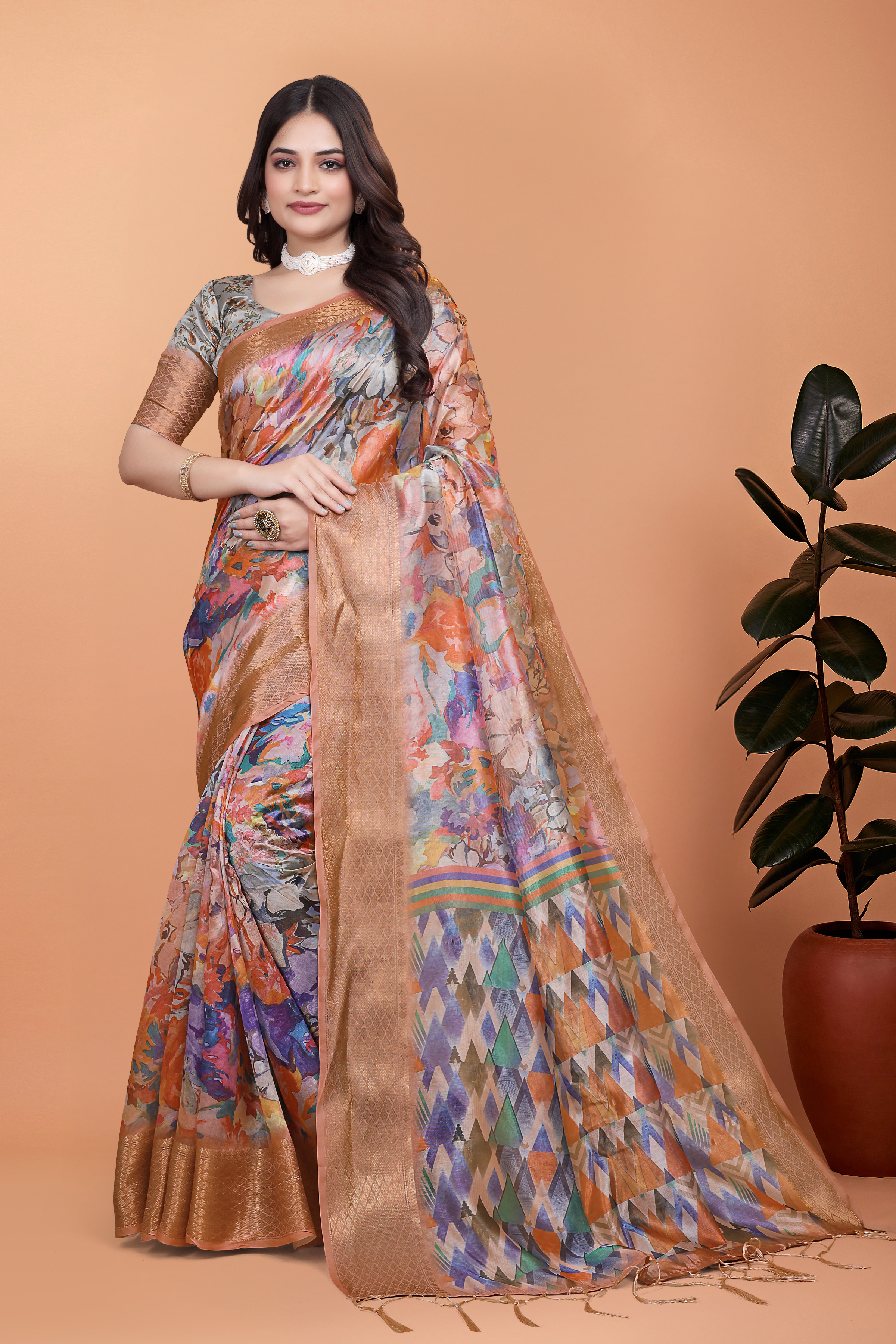
For silk, brasso and zari, use a dry pressing cloth and the lowest temperature that removes the crease. A Navy Blue Floral Silk Saree with Peach Zari Border should never receive prolonged direct heat on the peach zari section. Press around the border first, then touch the zari briefly through the cloth only if the care label permits ironing.
Pressing Methods for Cotton, Linen, Silk and Zari Borders
Each saree fibre needs a different balance of heat, moisture and pressure; one universal ironing setting is unsafe. The fibre content and care label should take priority over appearance.
What is the safest way to press cotton and linen borders?
Cotton and linen borders are safest when pressed from the reverse at low to medium heat after the fabric is nearly dry. A dry cotton pressing cloth prevents shine and allows the border to settle without stretching.
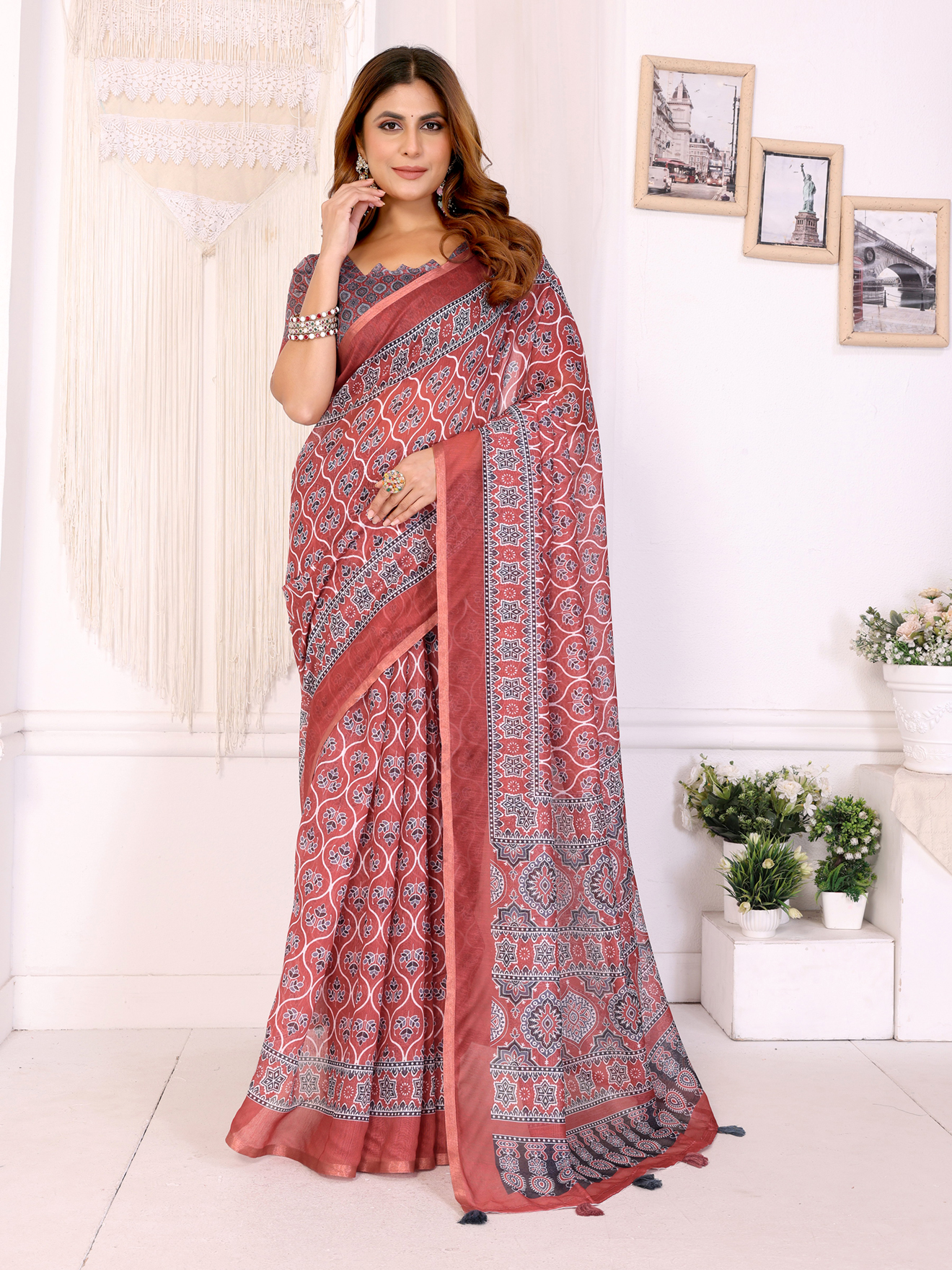
Linen can crease stubbornly, but increasing heat isn't always the answer. Align the border first, press in short lifts, and allow the section to cool before checking it. The Rust Red Handloom Printed Saree with Ethnic Border may need slightly more patience than a smooth printed saree because handloom yarns can have natural variations in tension.
Can silk and zari borders be steam-ironed?
Silk and zari borders should generally be pressed from the reverse through a dry cloth, with steam avoided unless the care label or a textile professional specifically permits it. Direct steam can leave water marks on some silk finishes, while direct heat can flatten or dull zari.
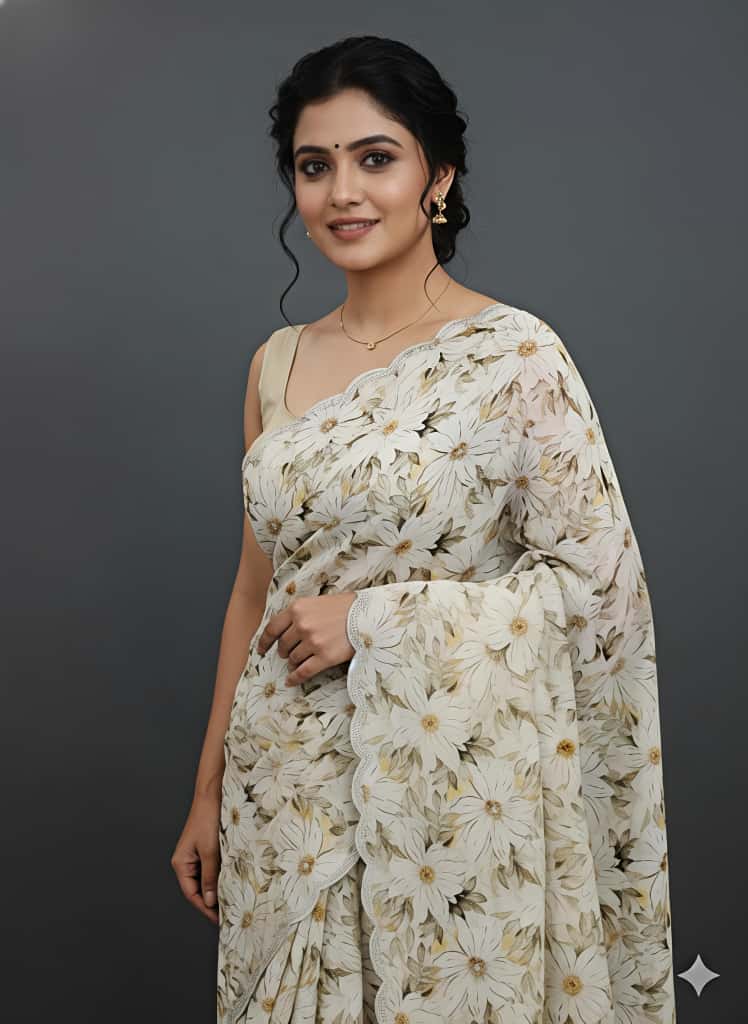
Use a smooth, short contact rather than repeated passes. A Lightweight Cream Saree with Designer Floral Pattern should be checked for colour stability before any moisture is introduced, particularly if the floral design is printed rather than woven.
Care Mistakes That Make a Border Wave Again
A corrected border will wave again if the saree is stored damp, pulled during pressing, folded along the same ridge, or washed without protecting the edge.
- Ironing a freshly washed saree: Allow the saree to dry evenly before pressing. Damp patches create uneven contraction.
- Using maximum heat for speed: High heat may remove a crease quickly but can permanently change silk, synthetic fibres, zari and printed finishes.
- Pulling the border straight: Stretching hides the wave temporarily and may leave the border shorter or more distorted after release.
- Folding while warm: Cool the saree completely before folding it along broad, relaxed folds.
- Storing on a thin wire hanger: A padded hanger or folded shelf storage distributes weight more evenly.
- Washing decorative sarees at home: Handloom silk, zari and embellished sarees are safer with professional dry cleaning or specialist cleaning recommended by the seller.
For regular-use cotton and linen sarees, refold along a different line every few weeks. Keep the saree away from direct sunlight for long periods, and place breathable cotton fabric between delicate sarees rather than using airtight plastic for extended storage.
When comparing everyday options, the Sea Green Floral Linen Cotton Saree with Border illustrates why a light pressing routine is useful: a breathable fabric can be refreshed with careful reverse-side pressing instead of repeated high-temperature ironing. Price-led collections such as Sarees from Rs 1000 to Rs 1500, Sarees Under 20% Off and Sarees Under 10% Off can include different fibre constructions, so discount or price should never determine the ironing setting.
When Professional Repair Is Safer Than Home Ironing
Professional textile care is the safer choice when a border remains wavy after one gentle correction, when seams pucker, or when heat has altered the colour, texture or metallic finish.
don't continue experimenting if the border has melted-looking spots, adhesive residue, broken threads, severe colour bleeding, a burnt smell or a crease that feels hard. A saree specialist may be able to relax, reblock or resew a border, but no home method can reliably restore fibres that have fused or degraded.
Photograph the saree before sending it for care and describe whether steam, a dry iron, washing or storage caused the change. Mention the fibre if known, such as Banarasi silk, Kanjeevaram silk, Chanderi, cotton-linen or synthetic blend. Specific information helps a cleaner choose a less aggressive treatment.
Heavily decorated sarees deserve extra caution even when they come from sale collections such as Sarees Flat 60% Off or Sarees Flat 50% Off. A reduced price doesn't change the care requirements of zari, handloom weaving or delicate surface work.
A Simple Border-Smoothing Checklist
Use the following checklist before touching a waving saree border with an iron.
- Identify the fibre, border construction and presence of zari or embellishment.
- Confirm that the saree is completely dry and free from dust or loose colour.
- Test the reverse side in a concealed area.
- Use a clean white cotton pressing cloth.
- Start with the lowest suitable heat and no steam.
- Press in short lifts rather than dragging along the border.
- Let each section cool flat before moving the saree.
- Stop immediately if shine, colour transfer, smell or texture change appears.
Understanding why a saree border starts waving after steam or ironing turns a frustrating crease into a manageable fabric-care problem. Gentle temperature, even drying, reverse-side pressing and patient cooling protect the border far better than forceful ironing.
Common Questions About a Waving Saree Border After Ironing
Why does my saree border wave after ironing?
A saree border usually waves after ironing because the border and saree body react differently to heat, steam and pressure. Uneven shrinkage, damp patches and dragging the iron sideways can create the rippled edge.
Can steam remove waves from a saree border?
Steam can relax a mild crease, but it can also worsen border rippling by adding uneven moisture. For most borders, allow the saree to dry fully and press the reverse side through a thin cotton cloth without direct steam.
How should I iron a saree with zari border?
Iron a zari-border saree from the reverse through a dry cotton pressing cloth at the lowest suitable temperature. Avoid prolonged direct heat, sideways dragging and direct steam because zari can dull, flatten or become damaged.
Can a permanently wavy saree border be repaired at home?
A mild tension ripple may improve with careful flat pressing, but melted fibres, puckered seams, broken zari and hard heat ridges are not reliably repairable at home. A saree or textile-care specialist should assess those problems.
Should a saree be ironed while damp?
A saree should generally be completely dry before routine ironing, especially when it has a dense border or zari. Damp ironing can cause uneven contraction, water marks, colour transfer and new waves as different sections dry.
How can I stop my saree border from waving in storage?
Store the saree completely dry, fold it along broad relaxed folds, vary the fold lines periodically and avoid heavy pressure on the border. Padded hanging or breathable folded storage is safer than a thin wire hanger or long-term airtight plastic.