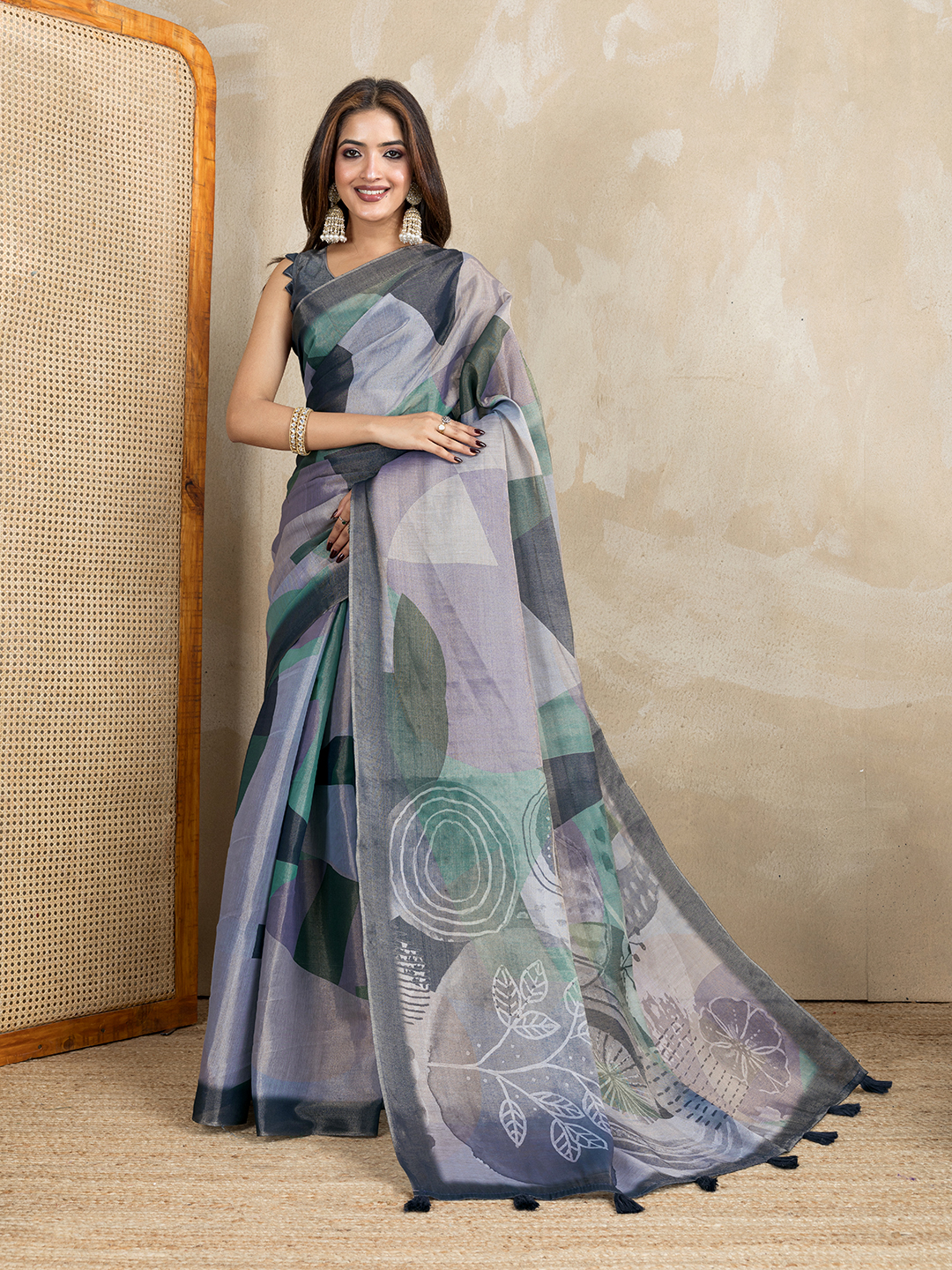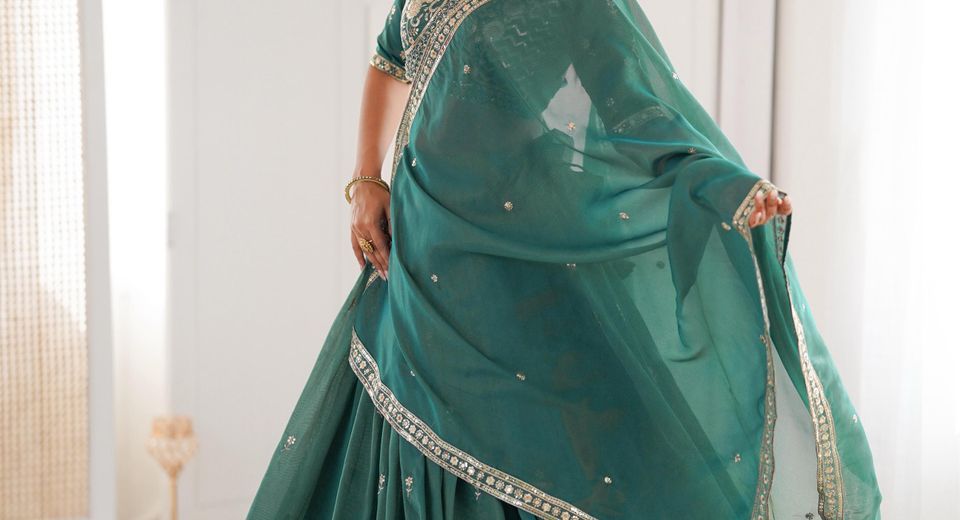
Why a Lehenga Looks Shorter Once You Start Walking has a practical explanation: the hem moves upward as the skirt opens, swings and catches against the lining or inner layers. A lehenga can reach the ankle when you stand still yet reveal more footwear during a normal stride. The effect becomes stronger with a wide flare, stiff fabric, heavy embroidery, a slippery lining or a high waist placement.
Checking a lehenga only in front of a mirror is therefore an incomplete fitting test. A reliable check includes walking, turning, sitting, climbing two steps and wearing the shoes planned for the event. Those movements show whether the skirt has enough length, whether the waistband stays in place and whether the inner layers support the silhouette instead of pushing the hem upward.
Why a Lehenga Looks Shorter Once You Start Walking
A lehenga looks shorter during walking because the skirt's circular panels move outward and upward instead of hanging in one vertical line. When one leg moves forward, the fabric follows the leg, and the opposite side may lift slightly as the flare swings. The hem can appear 1-3 centimetres higher during an ordinary stride, although the visible change depends on fabric, volume and walking speed.
Standing still allows gravity to pull the full skirt downward. Walking creates a different shape: the moving leg needs room, the panels spread over the ankles and the lower edge travels along an arc rather than dropping straight down. A broad ghera usually produces a more noticeable visual lift than a narrow A-line skirt because more fabric is moving away from the body.
A stiff textile can make the effect more obvious. Organza and some structured silk blends hold their shape away from the legs, while georgette usually falls closer to the body. A heavily embellished bridal skirt may also resist vertical drape because embroidery, sequins and lining add weight in selected areas rather than evenly across the hem.
Does posture change the apparent length?
Posture changes the apparent length because a forward tilt at the waist shortens the front distance between the waistband and the floor. High heels create a similar visual effect by raising the body, while a relaxed flat-footed stance lowers the hem. A wearer who stands on the toes, takes large steps or lifts the skirt with one hand can make a correctly fitted lehenga look short.
The waistband position matters as much as the stated skirt measurement. A lehenga worn above the natural waist has less vertical distance to the floor than a lehenga worn at the waist. Ready-made sizing charts may list skirt length without making clear whether the measurement begins at the natural waist, high waist or lower waist.
Which construction details make the hem rise?
Flare, lining, can-can, stiff trims and a tight waistband are the main construction details that can make a lehenga rise while walking. Each detail affects movement differently, so a longer skirt isn't always the correct solution.
Flare and panel shape
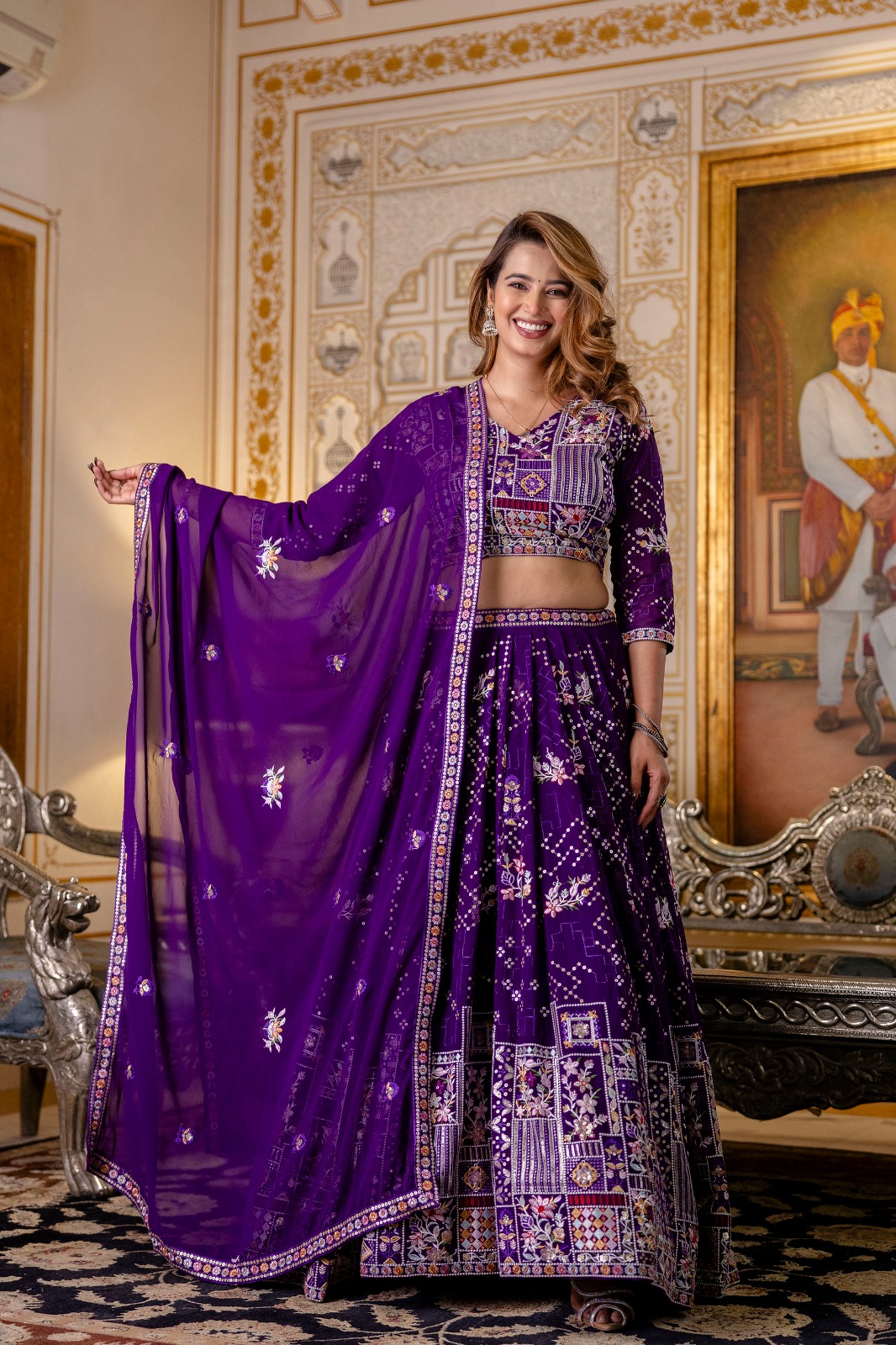
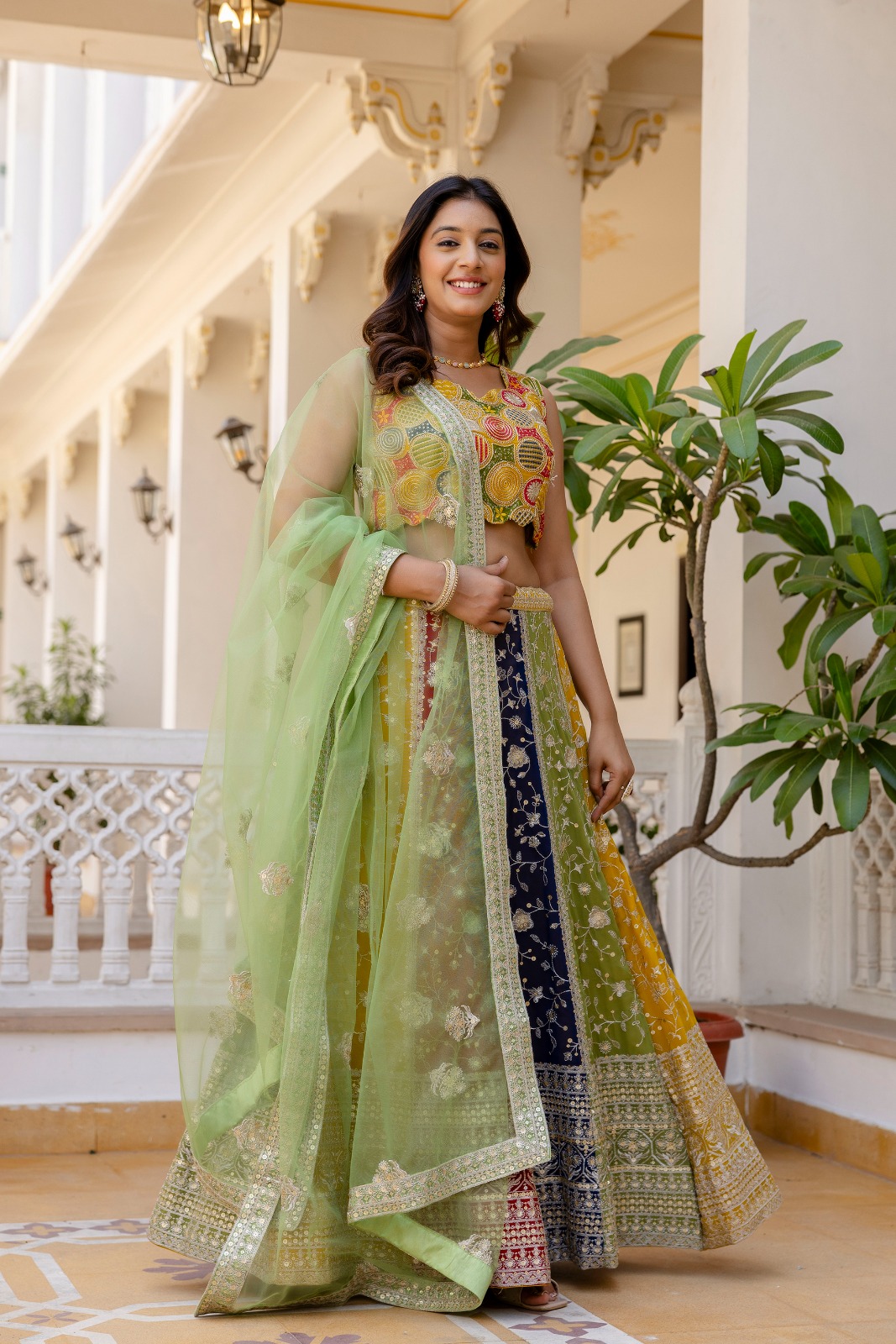
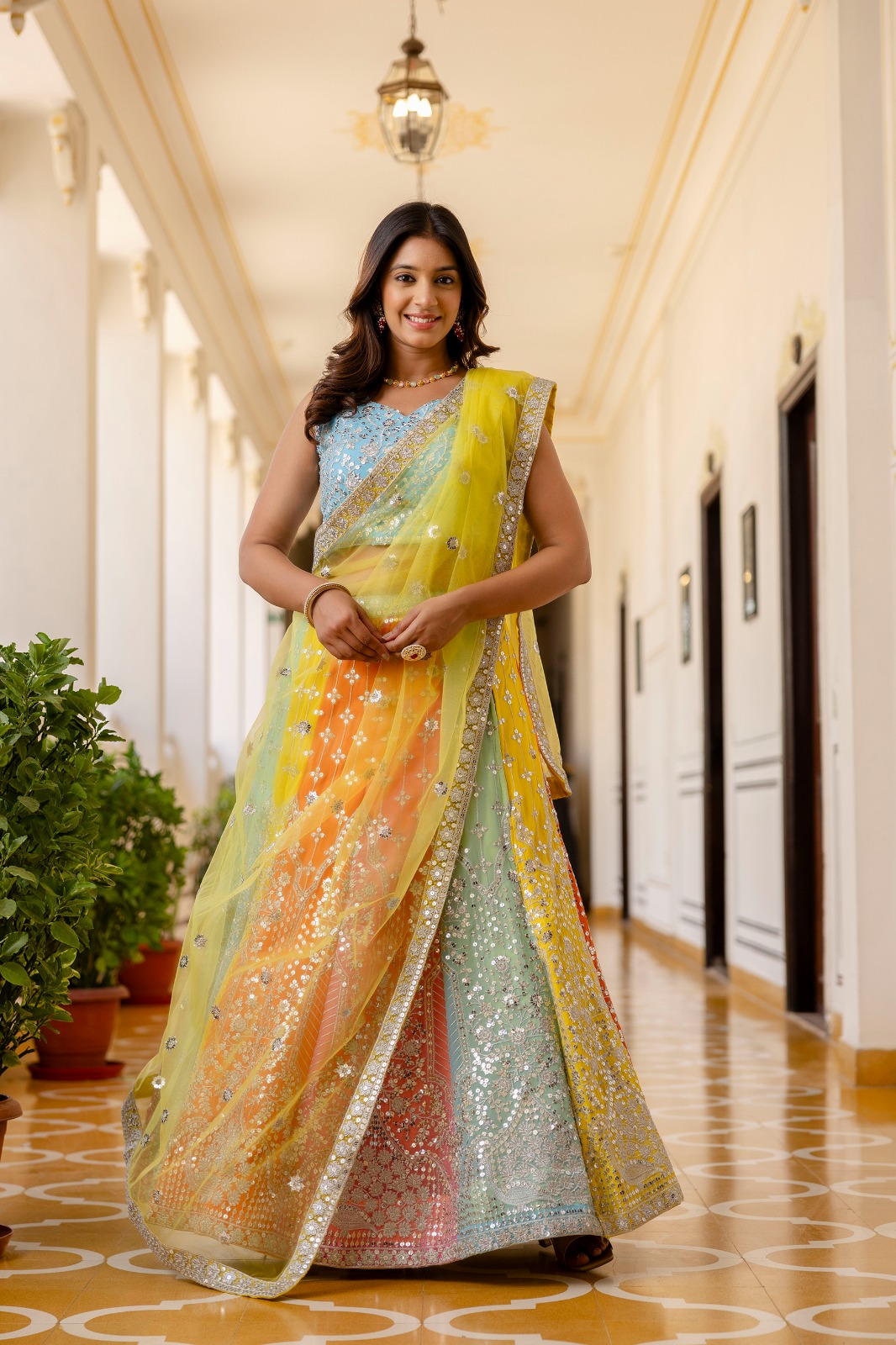
A circular or multi-panel lehenga needs additional fabric to create movement, but the panels may lift as they swing around the legs. Stylish Multicolor Butter Silk Lehenga Choli Set shows why fabric behaviour matters: a fuller butter silk skirt may hold a more defined shape than a soft, fluid skirt. The correct length should be judged while walking, not by comparing the stationary hem with a straight skirt.
Lining and underskirt layers
A lining that grips the legs can pull the outer skirt upward with every step. A very full can-can or net layer can also push the outer skirt away from the body, making the hem look shorter from the front. Smooth lining, adequate ease around the hips and a hem that's not overloaded with rigid trim usually improve movement.
Layered volume is useful for bridal and festive styling, but the volume should match the wearer's height and walking pattern. A stiff inner layer placed too close to the hem can cause repeated lifting. A tailor can often reduce the problem by changing the inner layer's length or removing unnecessary stiffness rather than cutting the outer skirt shorter.
Waistband and drawstring placement
A waistband that slips upward can make the entire lehenga look shorter within minutes. Elastic that's too tight, a drawstring tied above the intended position or a heavy dupatta pulling on one side can shift the waistline. A secure waistband should remain at the same level after ten ordinary steps, one turn and a seated movement.
How should you measure lehenga length before buying?
Measure lehenga length from the exact waist position where the waistband will sit to the floor while wearing the intended footwear. Use a firm tape, stand naturally and keep the tape vertical at the front of the body. Add only a small movement allowance rather than automatically ordering a much longer skirt.
Put on the blouse or a similar fitted top so the waist position is realistic.
Wear the shoes planned for the wedding, reception, sangeet or festive event.
Measure from the waistband position to the floor at the front, side and back.
Repeat the measurement while taking a normal step, without lifting the skirt.
Record the smallest practical floor clearance that still prevents the hem from dragging.
For many wearers, a finished hem that sits about 1-2 centimetres above the floor with the planned footwear offers an useful balance between elegance and safety. The exact clearance depends on heel height, terrain and the skirt's stiffness. A floor-length bridal lehenga worn outdoors may need more clearance than a softer skirt worn on a clean indoor stage.
Online shopping requires checking whether the product is readymade, fully stitched or semi stitched. A fully stitched choli can save blouse construction time, but the skirt may still have a fixed waistband and limited length adjustment. Semi Stitched Lehengas Collection generally gives a tailor more control over waist placement and final length, provided the panels and borders are assembled carefully.
What is the best way to test a lehenga in motion?
The best motion test takes about five minutes and includes walking, turning, sitting and stepping up while wearing the actual blouse, footwear and any planned inner skirt. A mirror view from the front and side reveals whether the hem rises evenly or lifts more on one side.
Walk ten normal steps at the pace used at a wedding or family gathering.
Turn once in each direction and watch whether the hem swings above the ankle.
Sit on a chair without pulling the waistband down.
Climb two or three steps and check whether the front edge catches under the foot.
Hold the dupatta in its intended drape and repeat the walk.
Take a short video from the side because the eye often misses a brief lift in a mirror.
Red Floral Organza Lehenga Set with One Shoulder Blouse deserves a motion check that includes the shoulder drape because an asymmetrical blouse and one-sided dupatta weight can alter posture. A skirt may appear balanced while standing and shift diagonally once the wearer walks with fabric concentrated on one shoulder.
Stylish White Mirror Work Lehenga for Festive Wear and Festive White Lehenga Choli with Mirror Work Design also show why embellishment placement deserves attention. Mirror work adds visual weight and can make a moving hem look more active, while a bright border creates sharper contrast against the floor. A slight lift that's hard to notice on a dark, soft skirt may look dramatic on a white embellished one.
How do fabric and embellishment affect perceived length?
Fabric affects perceived length through drape, stiffness, shine and contrast, while embellishment affects it through weight and visual scale. A glossy or reflective border draws the eye to the hem, so even a small gap above the floor becomes easier to see.
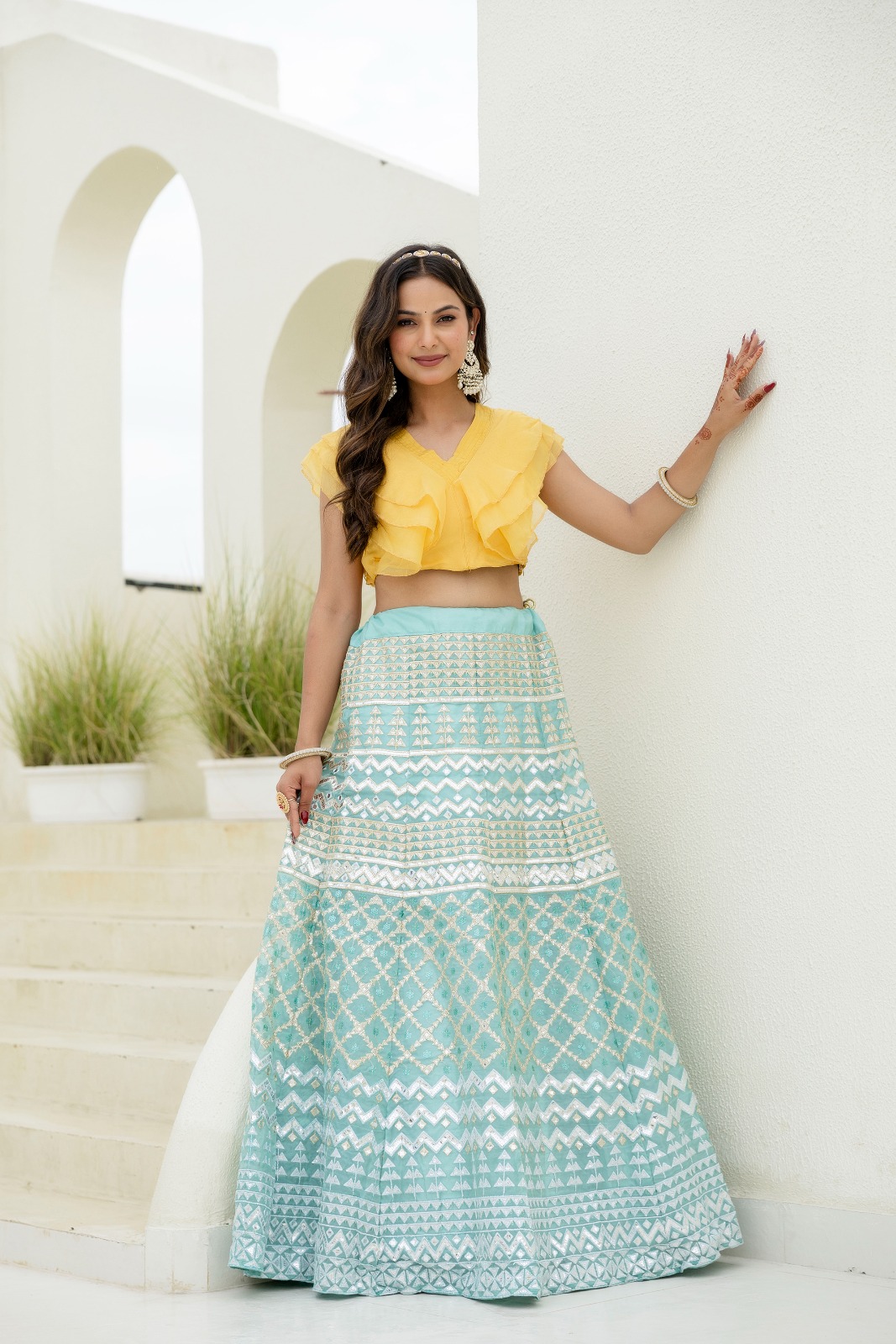
Georgette generally falls softly but may cling to a lining or gather at the ankles. Organza can hold a crisp edge away from the legs. Silk behaves differently according to its weave and finish; Designer Threadwork Silk Lehenga Choli Set with Dupatta may look more structured than a lightweight skirt with comparable measurements because threadwork and silk body influence how the panels settle.
Varnika Sequin Georgette Lehenga may appear shorter in motion when sequins catch the light along the lower skirt. The physical hem may not have changed dramatically, but repeated flashes at the border make movement more visible. Dark colours can visually recede, while a bright border against a pale floor can exaggerate the apparent gap.
Colour and print also influence proportion. White Digital Print Festive Lehenga Choli Set can look longer when the print flows vertically and shorter when a strong horizontal border divides the skirt near the ankle. The same measured length can therefore produce a different visual result across designs.
What alterations fix a lehenga that rides up?
The correct alteration depends on whether the hem is physically too short or only appears short because the waistband, lining or volume is moving. A tailor should diagnose the movement before adding length.
When the waistband is moving
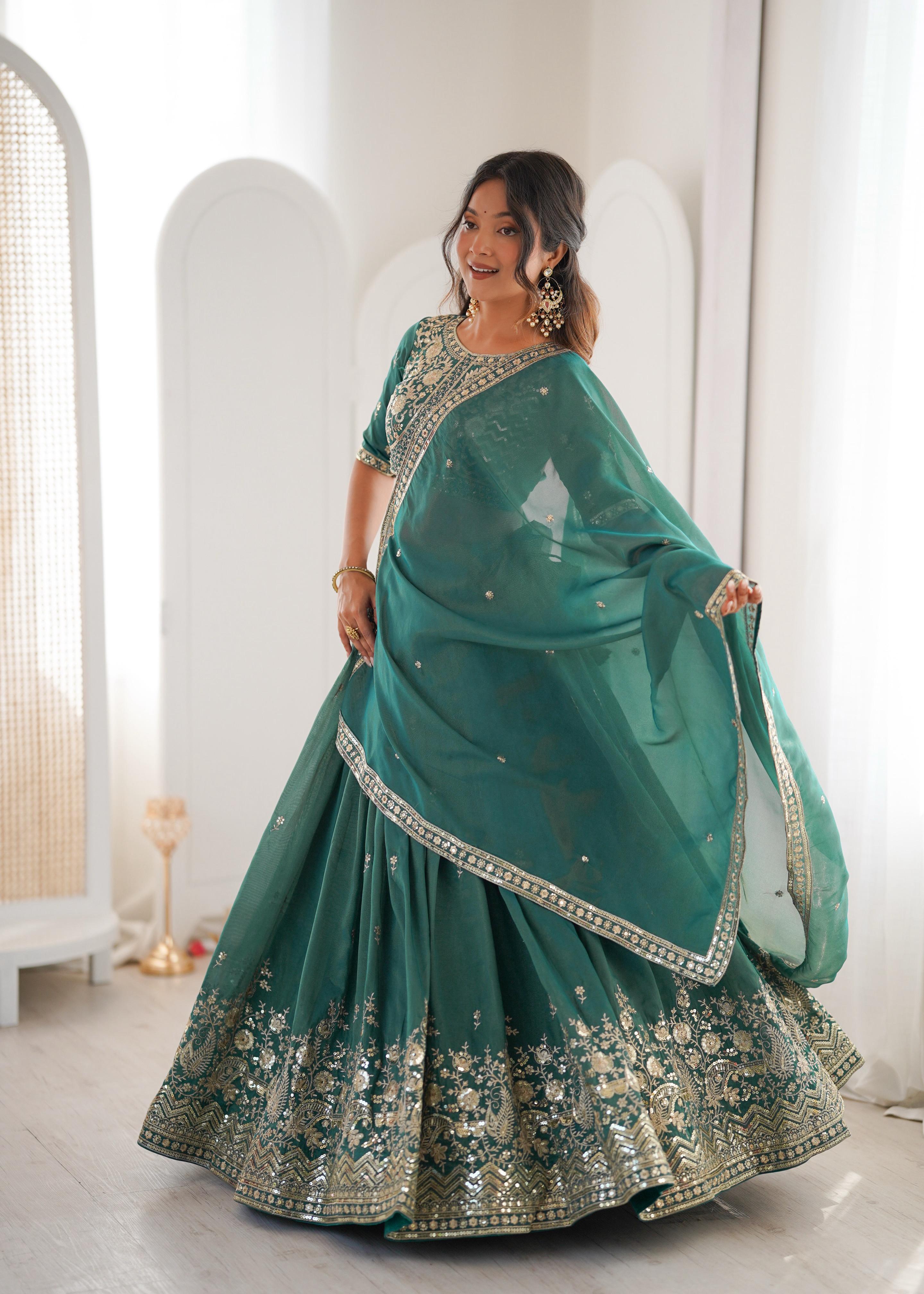
Stabilise the waistband when the skirt rises from the waist rather than from the hem. A tailor may adjust the elastic, reposition a drawstring, add waist hooks or improve the fit at the side seams. Tightening the waistband excessively isn't a reliable fix because a restrictive waistband can ride upward even faster during walking.
When the outer hem is genuinely short
Add length only when the skirt remains short after the waistband is secured and the intended shoes are worn. A tailor may use a matching border, a concealed hem extension or extra seam allowance if the construction permits it. A visible contrast border can become a deliberate design detail, but an extension should match the original skirt's weight so the hem doesn't hang unevenly.
When the lining causes the lift
Alter the lining when the outer fabric has sufficient length but the inner layer pulls upward. The lining may need extra ease, a shorter finished length or a smoother textile. Removing a stiff can-can layer can also help, although that change will reduce the skirt's flare and should be approved after trying the garment without the layer.
Tailoring should be completed at least 7-10 days before the event, followed by a full movement test. Last-minute alterations leave little time to correct a waistband that twists, a border that no longer matches or a hem that drags after the shoes change.
How should you choose a lehenga for height and occasion?
Choose the length and volume according to footwear, venue, movement needs and the degree of structure required for the occasion. A bridal lehenga may justify a fuller ghera and more elaborate finishing, while a guest outfit for several hours of walking benefits from lighter construction and stable waist placement.
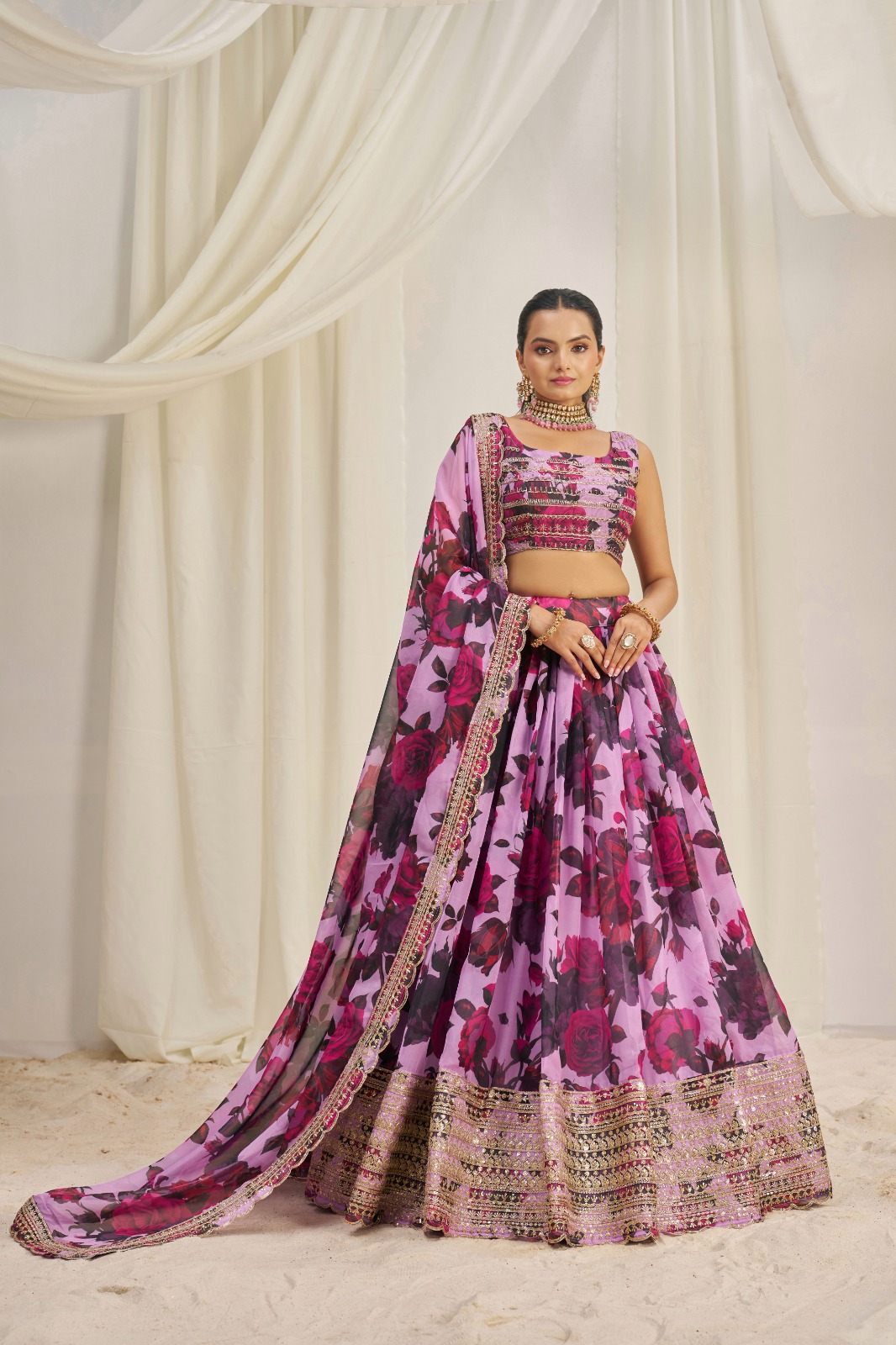
For a Haldi ceremony, Yellow Lehengas can work well with practical clearance because outdoor floors, flower petals and turmeric preparations make a dragging hem difficult to manage. Green Lehengas suit Mehendi Lehengas styling, but the same motion test remains important when the outfit includes a heavy dupatta or multiple layers. Ready Made Lehenga options are convenient when the waist and length measurements closely match the wearer's body, but semi-stitched construction gives more scope for final adjustment.
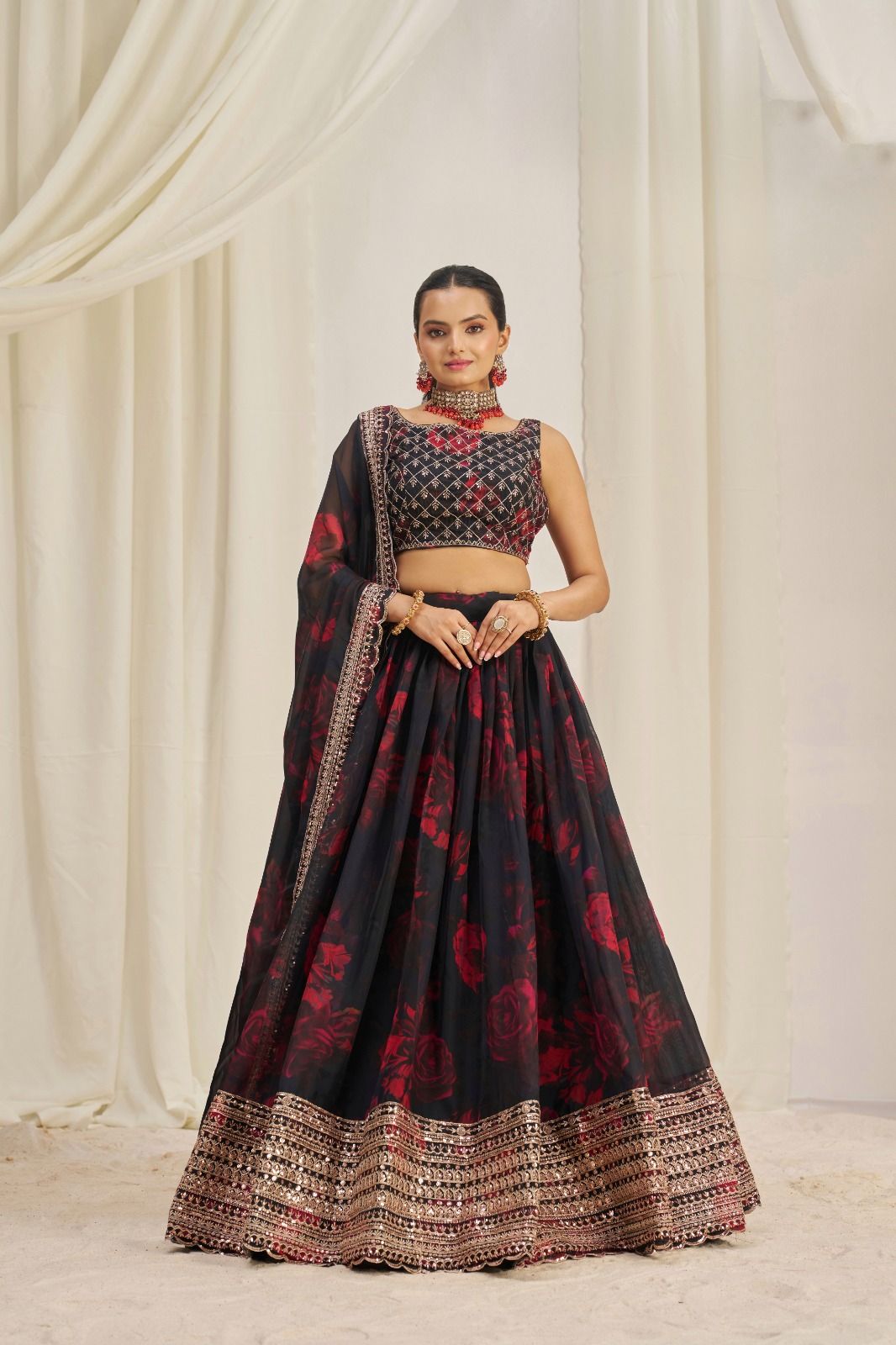
Black Wedding & Festive Wear Designer Lehenga can make a small hem lift less visually obvious because dark fabric reduces contrast, but comfort and safety still depend on the physical measurement. A pale skirt with a reflective border may need a more careful floor-clearance check even when both skirts have identical lengths.
For girls, avoid choosing a dramatically oversized length on the assumption that the garment will remain useful as height changes. Excess fabric increases the chance of stepping on the hem, especially when the wearer runs, climbs stairs or dances. A modest alteration allowance is safer than a skirt that's visibly pooling at the feet.
The most dependable buying decision comes from treating a lehenga as a moving garment. Check the product measurements, identify the waist position, confirm the fabric and inner layers, wear the final shoes and record a short walking video. A skirt that remains secure through ten steps, a turn, a seated position and stairs will usually look longer and more polished than a skirt that only performs well in a stationary photograph.
Common Questions About Lehenga Length While Walking
How much shorter can a lehenga look while walking?
A lehenga can look approximately 1-3 centimetres shorter during ordinary walking, although the apparent change varies by flare, fabric, lining and waistband position. A stiff or heavily layered skirt may show more movement than a soft A-line design.
Should a lehenga touch the floor?
A lehenga should usually sit about 1-2 centimetres above the floor when worn with the intended shoes. The correct clearance depends on heel height, venue conditions and whether the hem has a rigid border or heavy embellishment.
Why does my lehenga keep rising at the waist?
A lehenga often rises at the waist because the waistband is too tight, the skirt is too narrow at the hips, or the lining grips the legs. Adjusting the waist, adding ease and checking the inner layer can solve the problem more effectively than simply lengthening the skirt.
Is a ready-made lehenga easier to fit than a bridal lehenga?
A ready-made lehenga is faster to wear when the supplied waist and length measurements already match the wearer. A bridal lehenga may offer more tailoring scope, but its embroidery, can-can and heavy borders require alterations to be planned carefully.
Can a tailor make a lehenga longer?
A tailor can make a lehenga longer when the hem contains seam allowance or when a matching border, fabric panel or concealed extension can be added. The result depends on the original construction, embroidery placement and fabric availability.
Should I measure lehenga length with heels or flats?
Measure lehenga length with the exact footwear planned for the event. Changing from heels to flats can lower the body and cause the hem to drag, while changing to higher heels can make a correctly fitted skirt appear too short.
Common Questions About Lehenga Length While Walking
How much shorter can a lehenga look while walking?
A lehenga can look approximately 1-3 centimetres shorter during ordinary walking, although the apparent change varies by flare, fabric, lining and waistband position. A stiff or heavily layered skirt may show more movement than a soft A-line design.
Should a lehenga touch the floor?
A lehenga should usually sit about 1-2 centimetres above the floor when worn with the intended shoes. The correct clearance depends on heel height, venue conditions and whether the hem has a rigid border or heavy embellishment.
Why does my lehenga keep rising at the waist?
A lehenga often rises at the waist because the waistband is too tight, the skirt is too narrow at the hips, or the lining grips the legs. Adjusting the waist, adding ease and checking the inner layer can solve the problem more effectively than simply lengthening the skirt.
Is a ready-made lehenga easier to fit than a bridal lehenga?
A ready-made lehenga is faster to wear when the supplied waist and length measurements already match the wearer. A bridal lehenga may offer more tailoring scope, but its embroidery, can-can and heavy borders require alterations to be planned carefully.
Can a tailor make a lehenga longer?
A tailor can make a lehenga longer when the hem contains seam allowance or when a matching border, fabric panel or concealed extension can be added. The result depends on the original construction, embroidery placement and fabric availability.
Should I measure lehenga length with heels or flats?
Measure lehenga length with the exact footwear planned for the event. Changing from heels to flats can lower the body and cause the hem to drag, while changing to higher heels can make a correctly fitted skirt appear too short.