Why a Blouse Neckline Ripples Instead of Sitting Flat is usually a fit or construction problem, not simply a sign that the blouse is too small. Ripples can come from an incorrect neckline curve, excess fabric, stretched bias edges, tight lining, uneven stitching or unsuitable interfacing. Cotton, Banarasi silk and lightweight linen also react differently when cut, pressed and worn.
A rippled neckline becomes more noticeable when a saree pallu pulls across the shoulder or when a padded readymade blouse has a firm cup but a loose neckline edge. Most causes can be identified with a few simple checks before a tailor makes permanent alterations. The right diagnosis matters because removing fabric from a neckline that's already too tight can make the problem worse.
Why a Blouse Neckline Ripples Instead of Sitting Flat: the main causes
A blouse neckline ripples when the neckline edge is longer, shorter or more stressed than the fabric and lining can accommodate. The mismatch creates small waves, puckers or ridges instead of a smooth curve against the skin.
The most common causes are an overstretched neckline, excess seam allowance, a lining that's smaller than the blouse shell, incorrect interfacing and a neckline cut off-grain. A tailor may also create ripples by sewing a curved edge with excessive tension or by failing to clip and press the seam correctly.
- Stretched edge: A neckline cut on the bias can lengthen during cutting, handling or pressing, especially in soft cotton and loosely woven fabric.
- Unequal layers: A lining that's shorter than the blouse shell pulls the outer fabric inward and forms a ridge.
- Excess fabric: A neckline that's too wide for the upper chest can collapse into shallow folds.
- Insufficient shaping: A deep V-neck or wide round neck needs accurate darts, princess seams or shoulder balance to follow the body.
- Construction tension: A tight stitch length or uneven machine feeding can produce puckering along the curve.
- Poor pressing: A curved seam needs pressing over a tailor's ham or rounded form rather than being forced flat on a straight ironing board.
Rippling is different from ordinary neckline gaping. Gaping means the edge stands away from the body, while rippling means the edge itself forms waves or puckers. A blouse can have both problems when the neckline is too large and the fabric has been stretched during finishing.
Why a Blouse Neckline Ripples Instead of Sitting Flat: fit or stitching?
You can separate a fit problem from a stitching problem by checking the neckline while the blouse is worn naturally, without pulling the fabric downward.
Stand straight and place one finger beneath the neckline. If the edge becomes smooth when you gently lift or reposition the blouse, the garment may have excess length or incorrect shoulder balance. If the edge remains puckered when the blouse is laid flat, the issue is more likely related to sewing, interfacing or pressing.
Signs of a fit problem
A fit problem usually appears as consistent gaping, diagonal drag lines from the bust toward the neckline or folds that change when the wearer moves. A blouse that's tight across the bust can pull the neckline outward, while a blouse that's loose across the upper chest can leave extra fabric collapsing near the collarbone.
Shoulder position is another useful clue. When the shoulder seam sits too far forward or backward, the neckline can ripple even when the measured neck size is correct. A padded blouse can exaggerate the effect because the bust shape is held firmly while the neckline and shoulder area remain mobile.
Signs of a construction problem
A construction problem produces small, regular puckers along the seam line, often with visible thread tension or a narrow ridge. The fabric may look smooth several centimetres away from the neckline but distort exactly where the facing or lining is attached.
Uneven ripples on only one side often point to asymmetrical cutting, one shoulder being higher or a lining layer being attached off-centre. A skilled tailor can release the facing, stay-stitch the edge and reshape the seam without changing the entire blouse.
Why a Blouse Neckline Ripples Instead of Sitting Flat in cotton and silk
Cotton and silk need different neckline treatments because their weight, drape, stretch and response to heat are not the same.
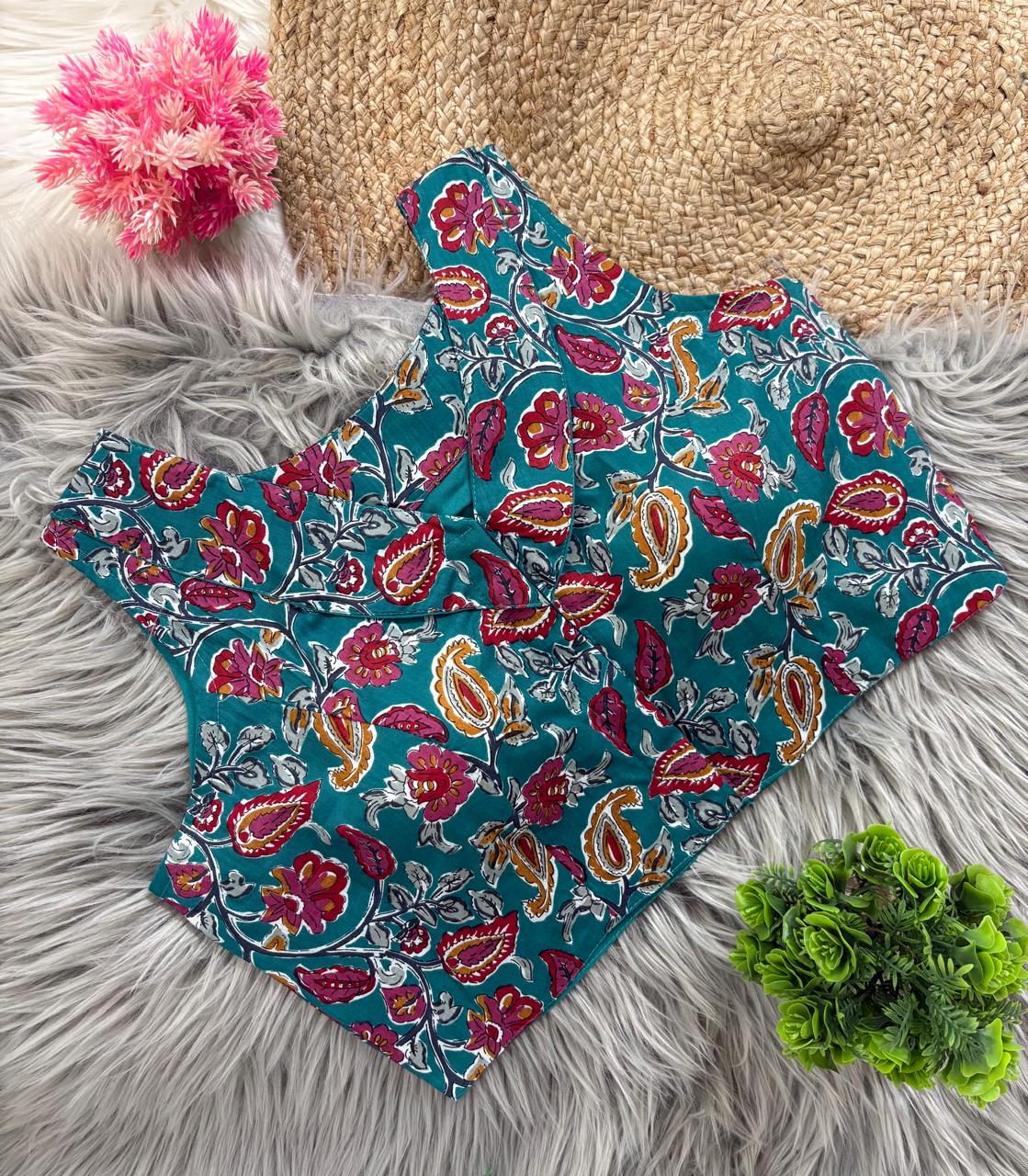
Cotton generally holds a crisp curve well, but lightweight cotton can stretch along a bias neckline if it's not stay-stitched soon after cutting. Kalamkari cotton and Ikkat cotton may also have a visibly directional weave, so cutting the front neckline slightly off-grain can create uneven behaviour between the two sides.
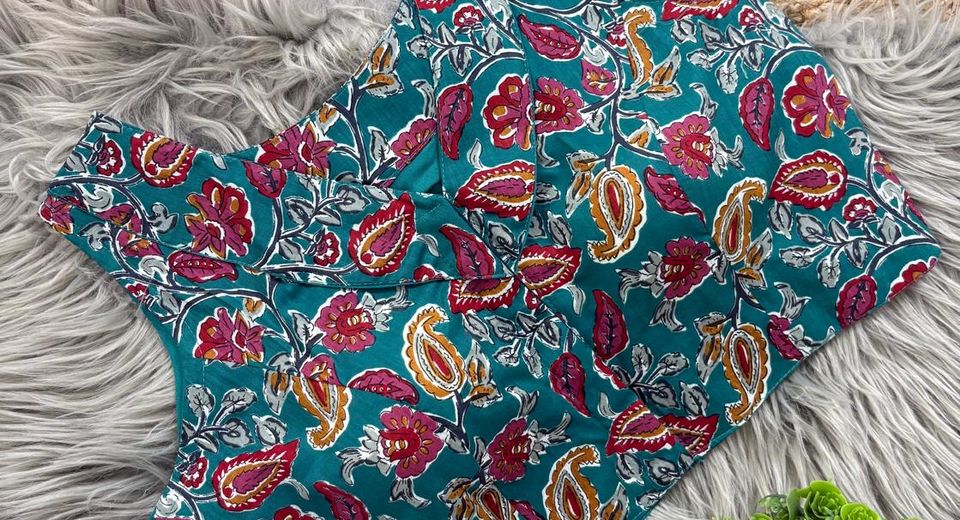
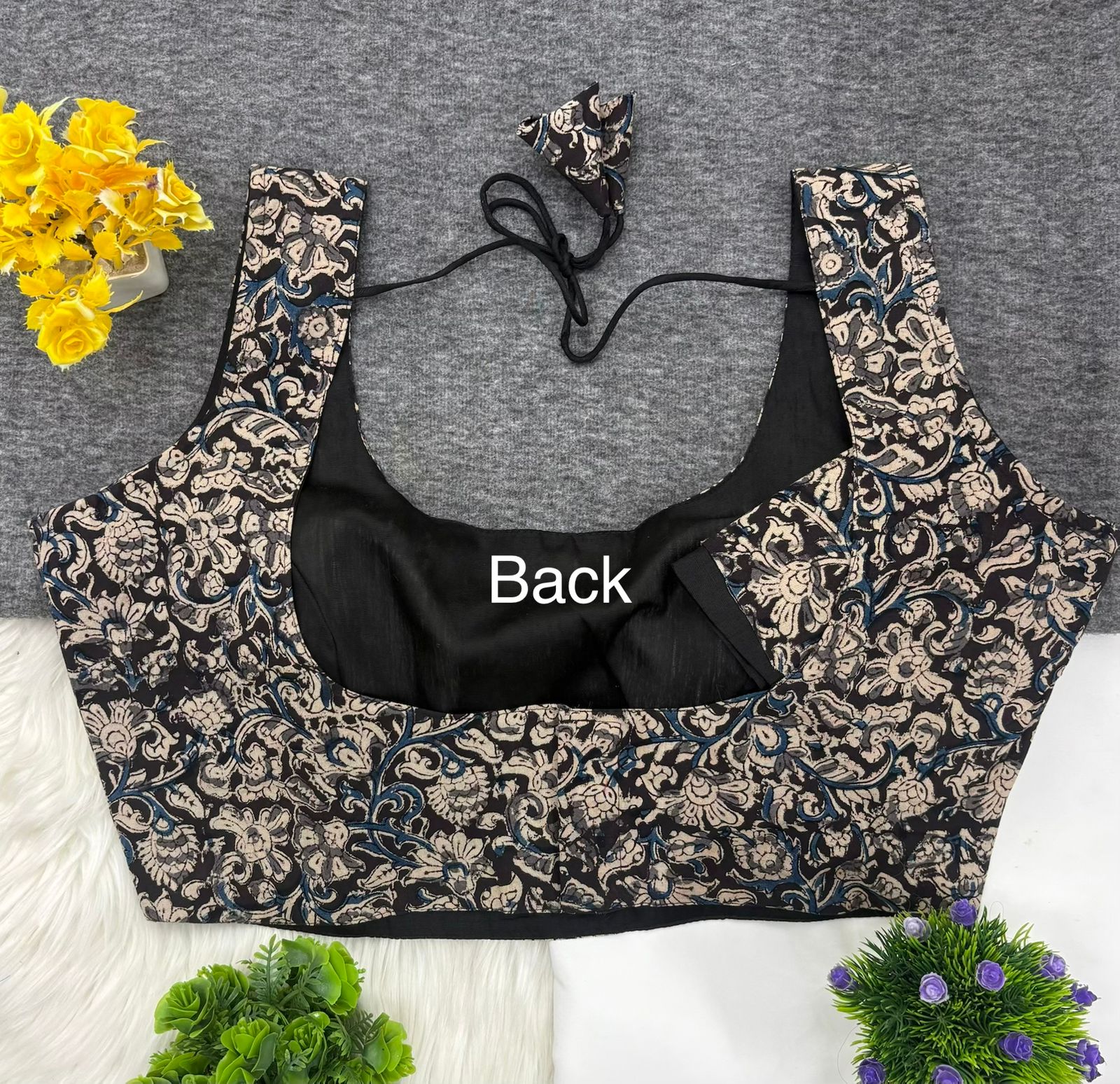
A structured cotton blouse such as Kalamkari Cotton V Neck Collar Blouse for Women needs a clean V point and controlled seam allowance. The point should be clipped close to, but not through, the stitching before turning. Without that clip, fabric gathers at the point and creates a small ripple or lump.
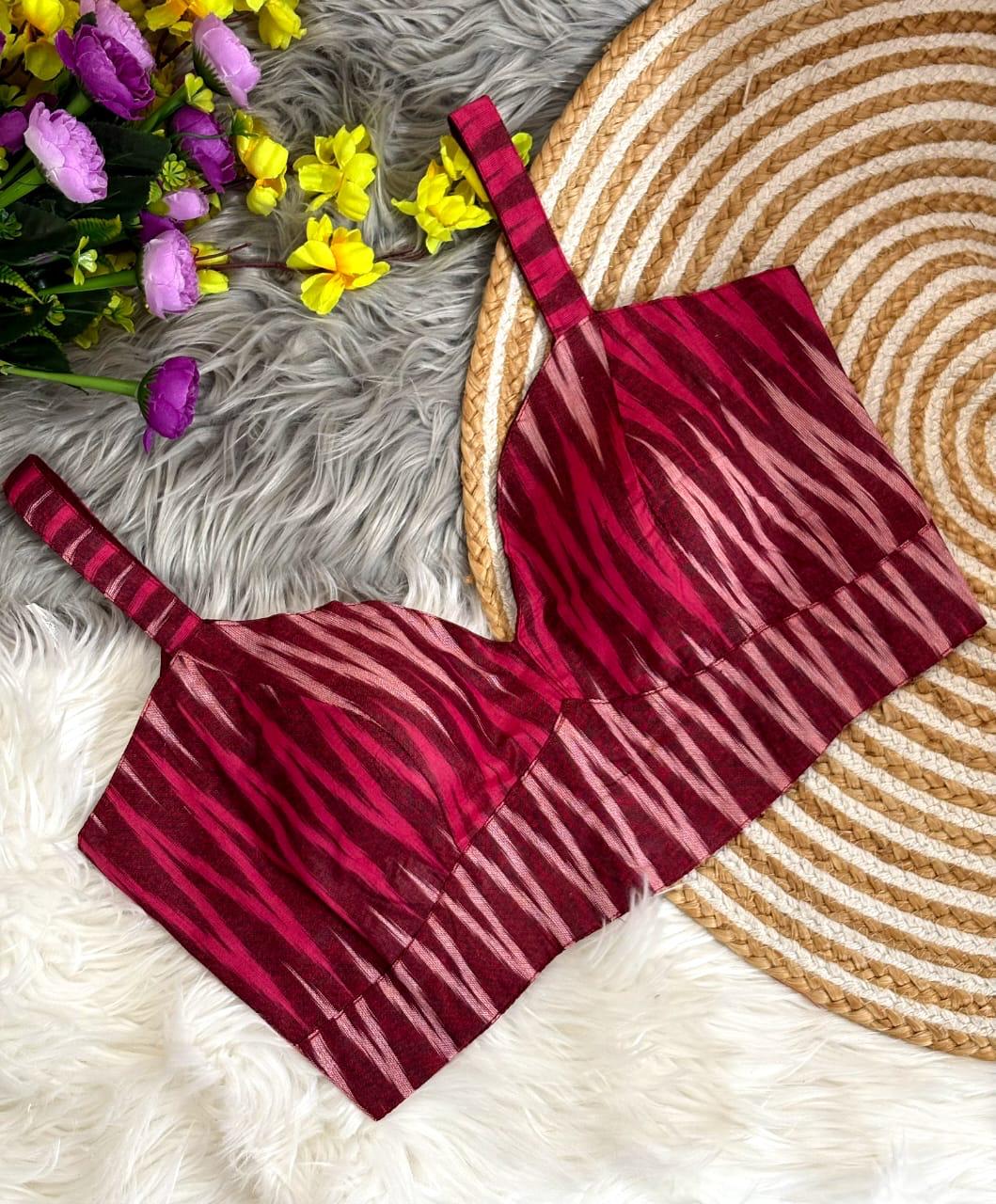
Padded cotton styles require an additional check: the outer shell, foam or padding and lining must all finish at compatible lengths. Ikkat Cotton Padded Blouse for Women Sleeveless and Cream Ikat Cotton Padded Blouse Sleeveless Trendy illustrate why a firm padded front may need stronger neckline support than an unpadded cotton blouse.
Silk has a smoother surface and can reveal small construction errors more clearly than textured cotton. Banarasi silk, particularly when combined with zari, may be heavier near the front or border. A neckline facing that's too lightweight can roll outward, while a facing that's too stiff can stand away from the body.
Banarasi Silk Golden Jari Padded Blouse for Women should be checked for balance between the zari-rich outer fabric, lining and padding. Heavy embellishment or zari doesn't automatically cause ripples, but additional weight makes an unsupported neckline more likely to distort during wear.
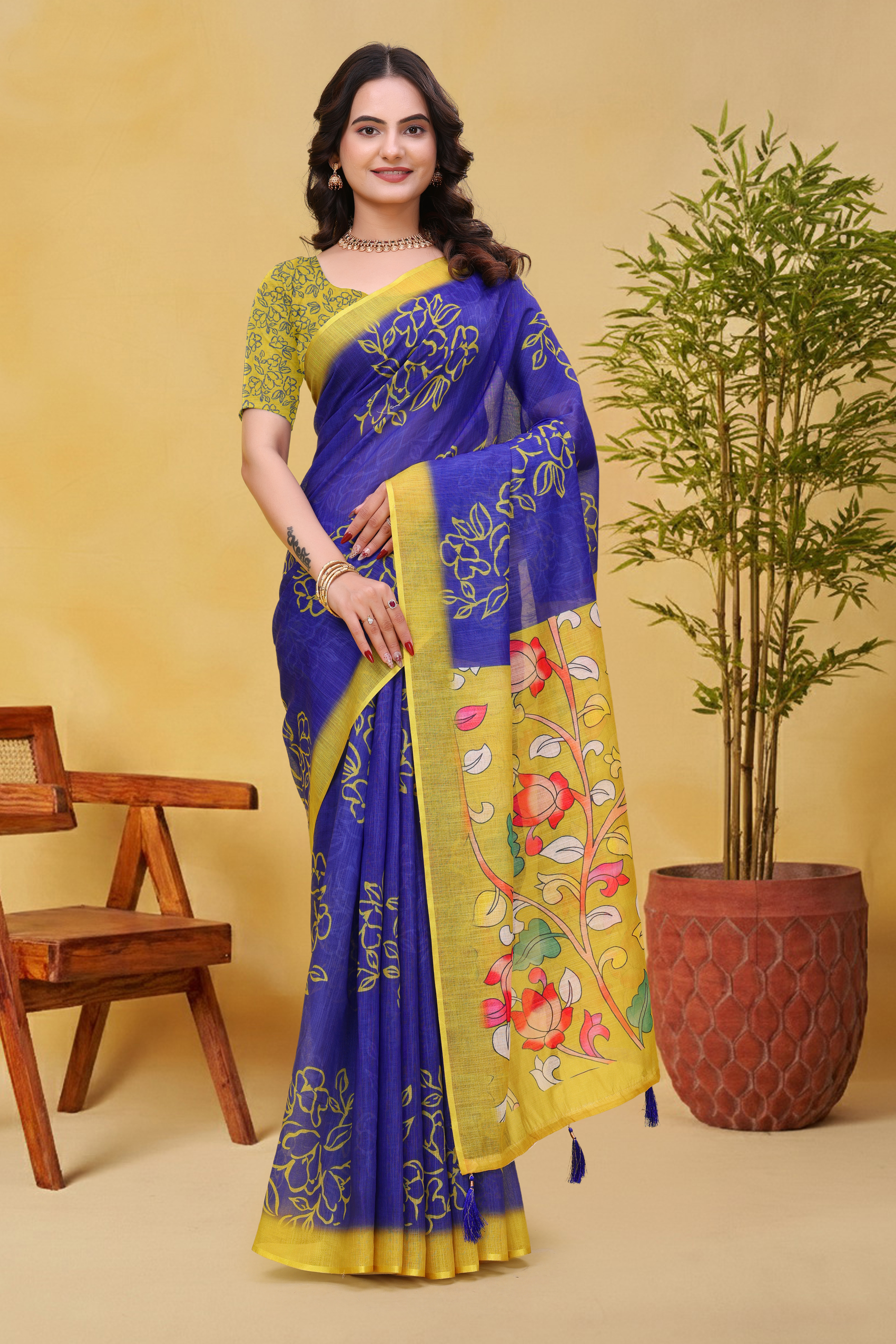
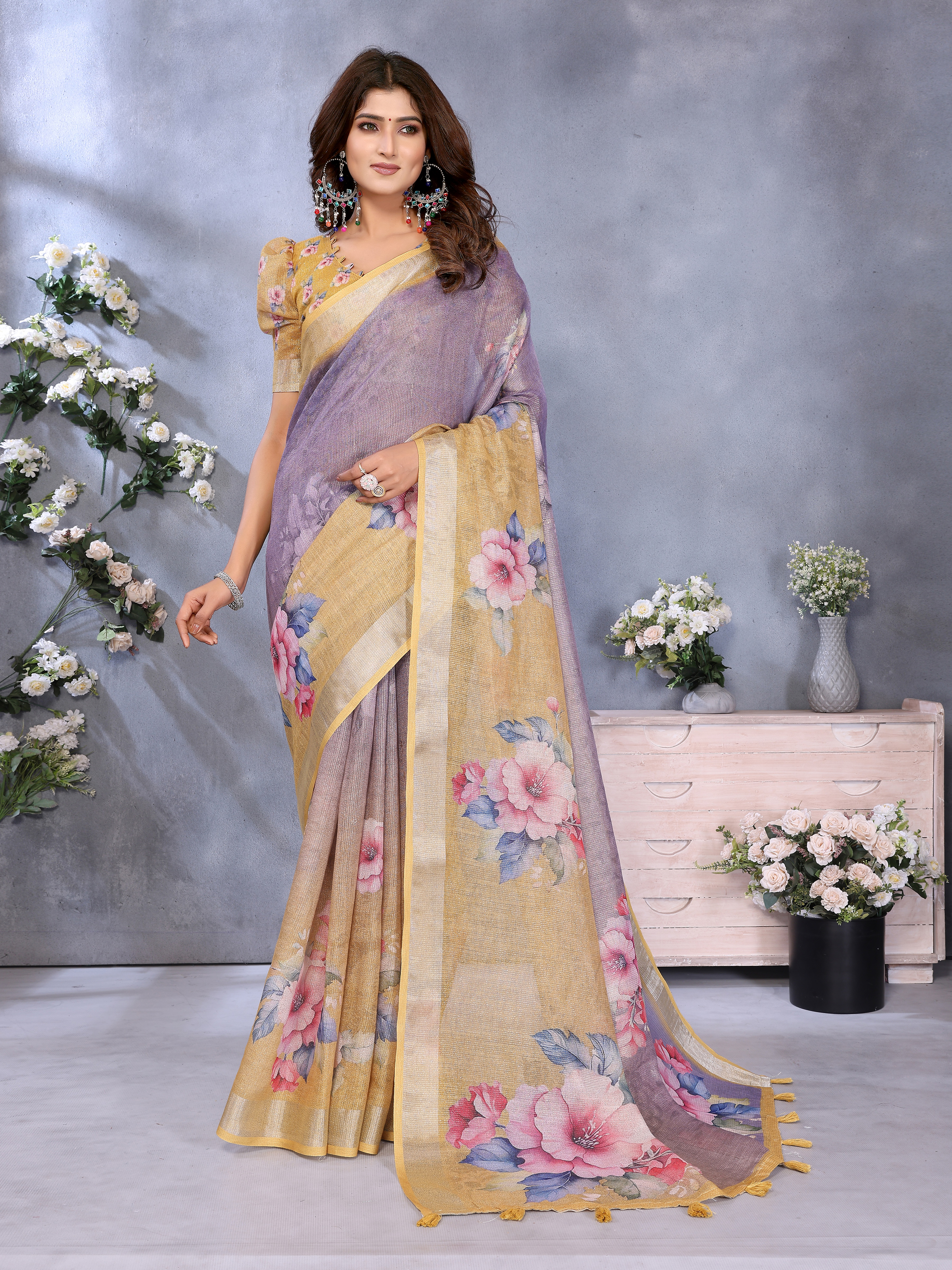
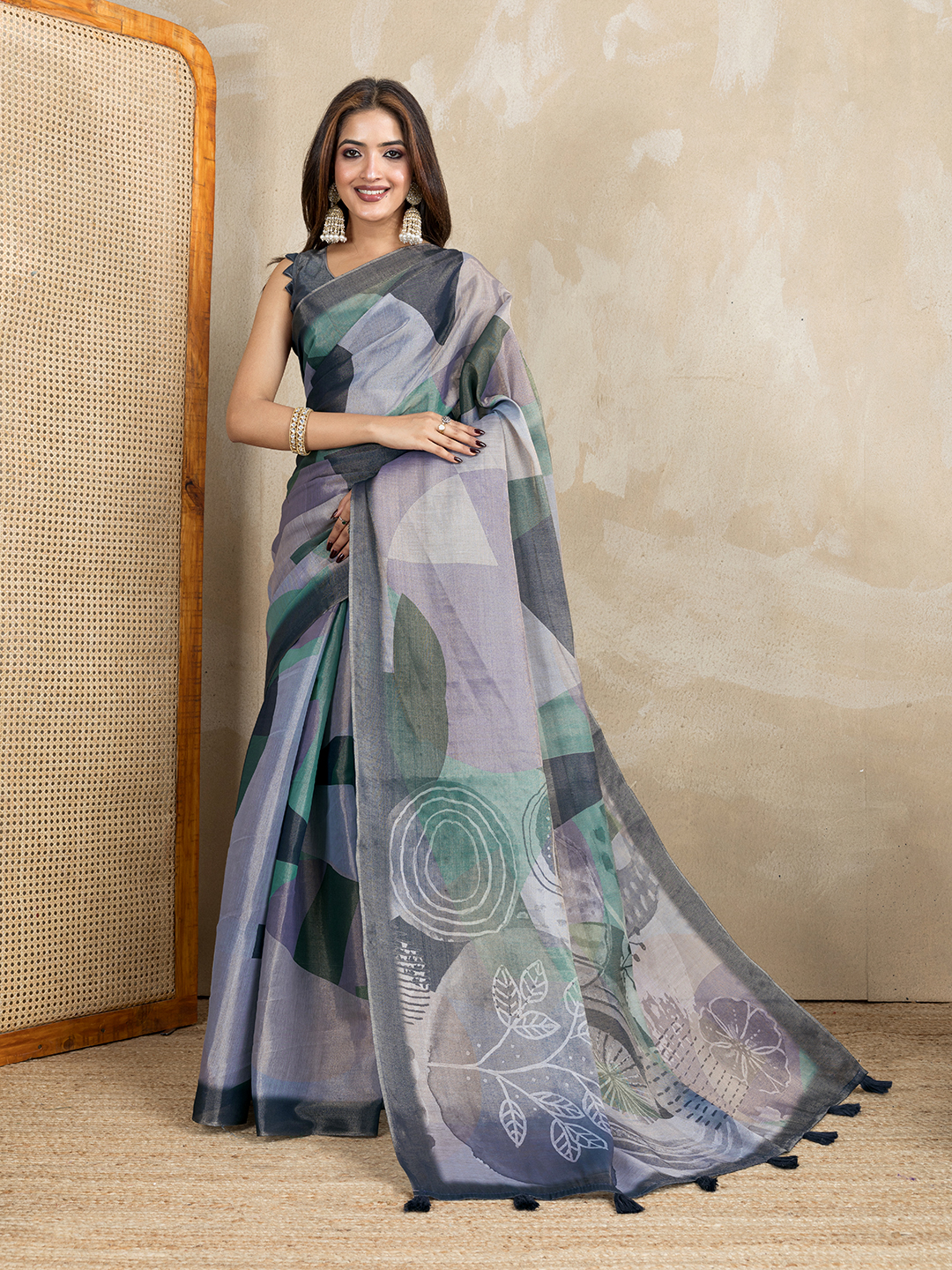
Linen-cotton blends can soften and relax after pressing or perspiration. A blouse worn with Blue Linen Cotton Floral Print Saree with Plain Dark Border may look smooth at first and develop slight edge movement later if the neckline was not stabilised. A narrow stay tape sewn into the seam can reduce that change.
Why a Blouse Neckline Ripples Instead of Sitting Flat in readymade designs
A readymade blouse can ripple after wearing when the standard pattern matches the bust measurement but not the wearer's shoulder, upper-chest or neckline proportions.
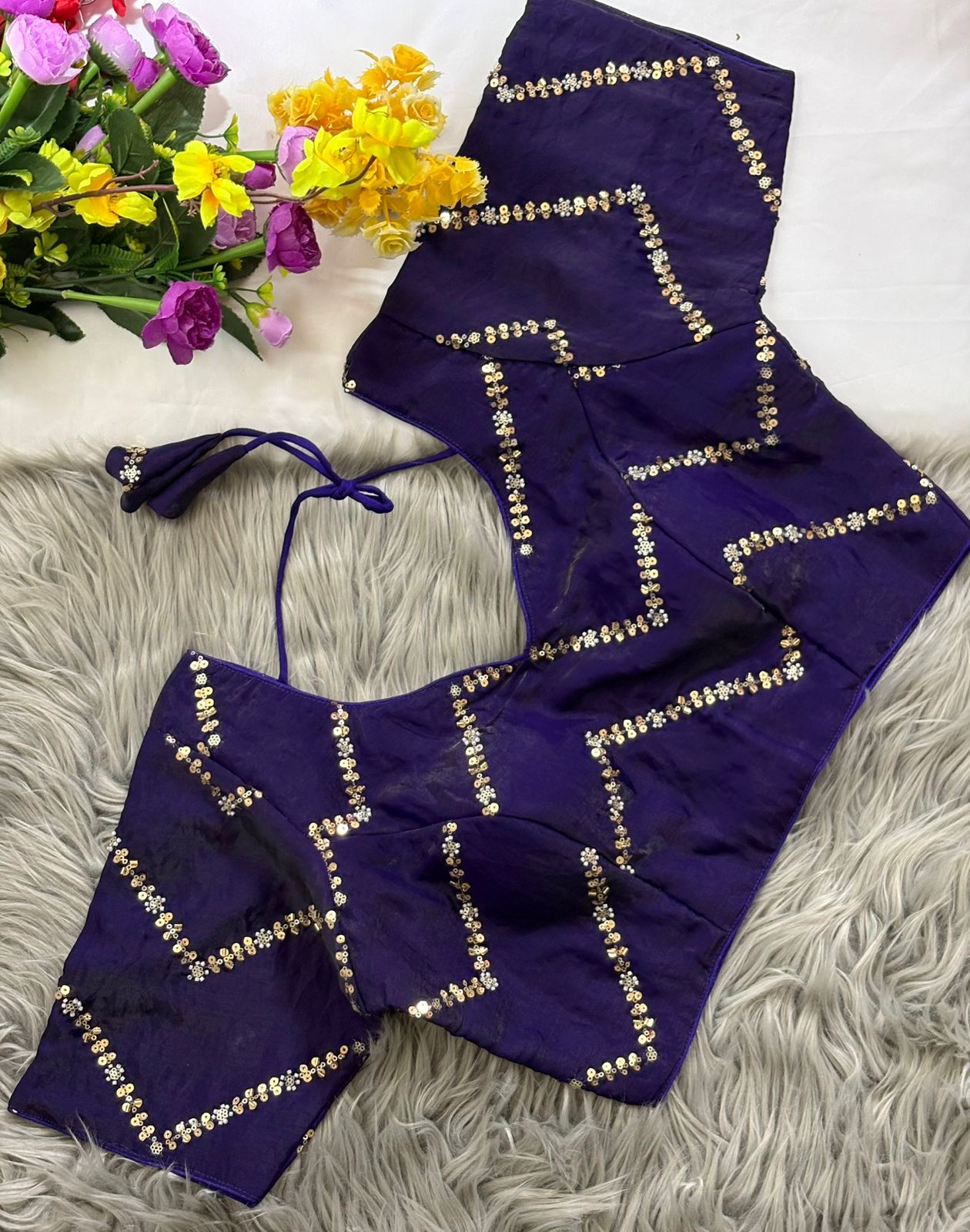
Ready-made construction usually relies on a minor set of measurements, such as bust and blouse length, while neck depth, shoulder slope and bust-point position vary considerably between people. A blouse may therefore fit around the body but still have a neckline that's too long, too high on one side or too loose near the collarbone.
Designer readymade blouses can have more complex necklines, padding and decorative fabric, which makes small proportion differences more visible. A deep V, collar neckline or sleeveless armhole needs closer adjustment than a simple round neck because the edge follows a longer and more directional curve.
Check a readymade blouse in the posture in which it will actually be worn. Raise both arms, sit down, turn the shoulders and place the saree pallu over one shoulder. A neckline that's smooth while standing but ripples when an arm is raised may be responding to armhole tension or shoulder restriction rather than a defective neckline.
Products with different construction methods should not be judged by the same fitting standard. Pure Kalamkari Cotton Padded Blouse for Women may feel firmer than an unpadded cotton design, while Brown Ikat Cotton Padded Blouse Sleeveless Stylish may need attention around the armhole and upper bust because sleeveless cuts transfer more movement to the neckline.
A readymade blouse should generally be exchanged rather than altered when the neckline is more than about 1.5 centimetres too wide, the shoulder seam is clearly misplaced or the bust point sits substantially above or below the wearer's natural bust point. Small gaping at one shoulder is more realistically corrected by a tailor than a major pattern mismatch.
Why a Blouse Neckline Ripples Instead of Sitting Flat at different shapes
V-necks and wide round necks are especially likely to ripple when their pointed or curved edges are not stabilised correctly.
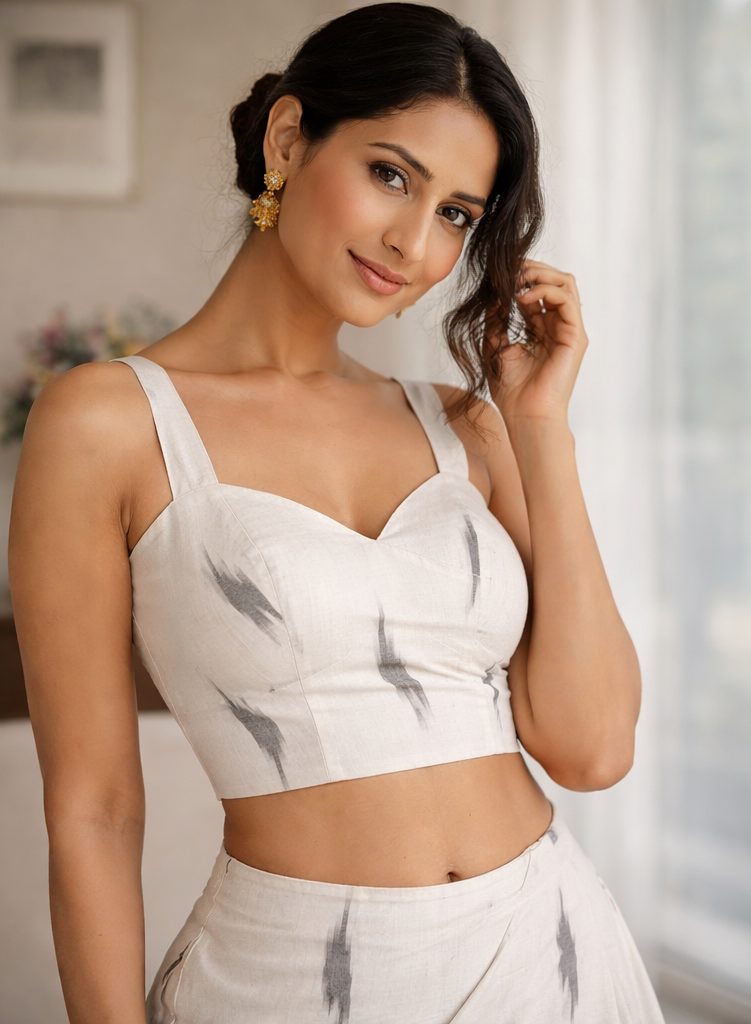
A V-neck concentrates stress at one point. The two diagonal edges must meet at exactly the same depth, and the seam allowance must be clipped so the point can turn cleanly. A collar attached to a V-neck adds another layer that must match the neckline length precisely.
Boat necks spread across the shoulder and can ripple when the blouse is too wide at the upper chest or when the shoulder seam sits incorrectly. High necks may show horizontal puckers if the collar circumference is smaller than the neckline opening.
Round necks usually tolerate small fitting variations better, but a very wide round neck can gape at the front. A sweetheart or scooped neckline needs careful shaping around the bust; otherwise the edge may fold inward between the bust points.
Neckline width and depth should be evaluated together. A deep narrow V may need less edge length than a shallow wide U, but both must correspond to the wearer's upper-chest contour. Changing only the depth without redrawing the curve can create a new ripple instead of solving the original problem.
Why a Blouse Neckline Ripples Instead of Sitting Flat after washing or ironing
Washing and ironing can make a previously minor neckline imbalance more visible by shrinking the lining, relaxing the outer fabric or stretching the edge with heat and moisture.
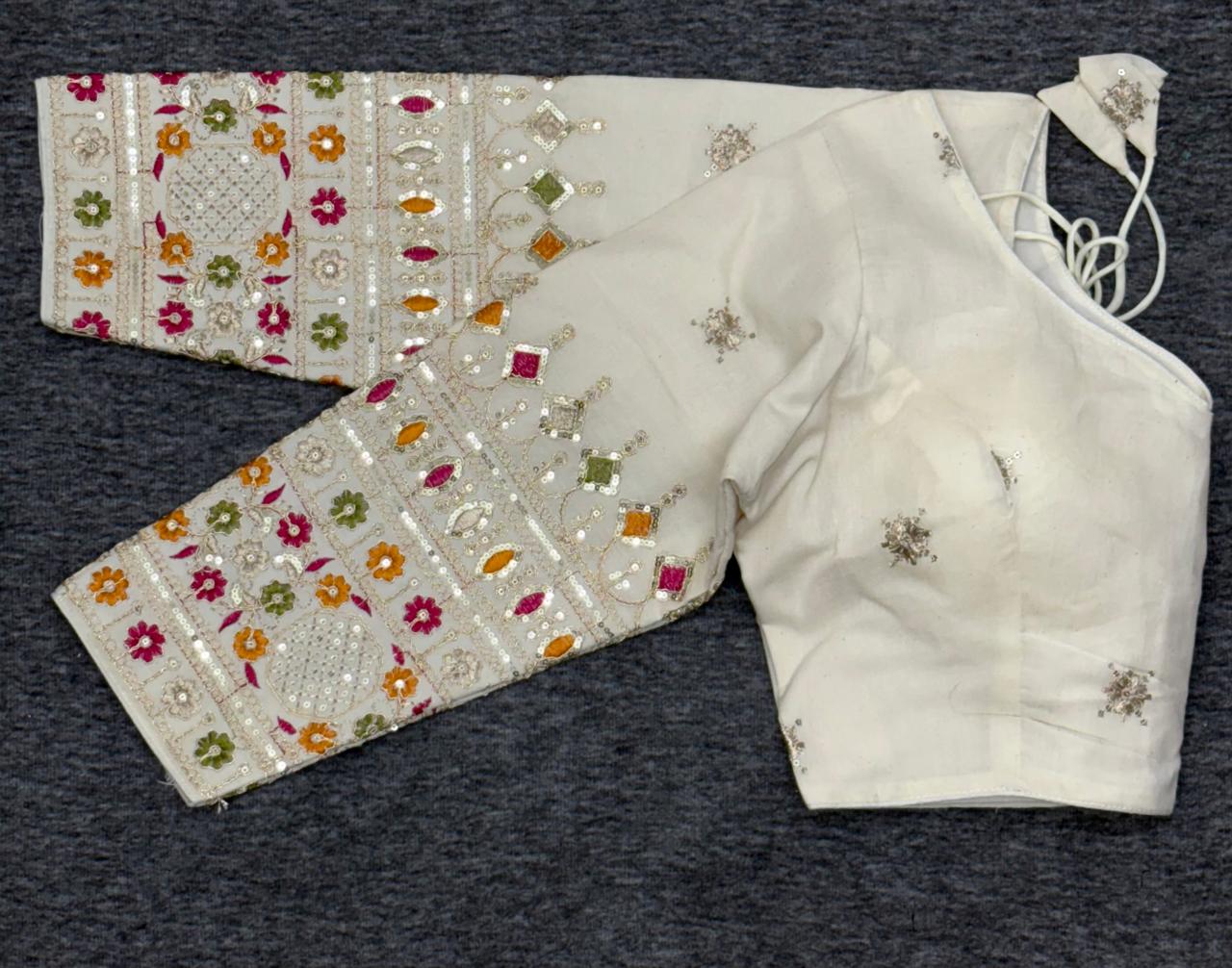
Cotton may shrink unevenly if the outer fabric and lining were not pre-shrunk together. A blouse can then develop a pulled neckline after its first wash even though the stitching was initially smooth. Hand washing in cool water and drying the blouse flat reduces sudden dimensional change.
Silk and zari fabrics should not be aggressively rubbed or pressed at high heat. Direct heat can flatten texture, create shine or soften an adhesive interfacing unevenly. A pressing cloth, low-to-medium temperature and gentle inside-out pressing are safer for Banarasi silk and embellished blouses.
Never stretch a wet blouse by pulling the neckline over a hanger. Wet fabric is more vulnerable to distortion, particularly along a bias-cut V-neck. Support the garment across a clean towel or use a broad padded hanger after excess water has been removed without wringing.
Ironing should follow the curve rather than drag the iron across it. Place the neckline over a rounded pressing form, press in short sections and allow the seam to cool before moving the fabric. Heat can temporarily flatten a ripple, but only correct stitching or fit will prevent it from returning.
How can a tailor make a rippled neckline sit flat?
A tailor can make a rippled neckline sit flat by identifying whether excess edge length, inadequate shaping or layer distortion is responsible, then correcting the seam instead of merely pressing the ripple away.
- Stabilise the edge: Stay-stitching or narrow twill tape inside the seam allowance can prevent further stretching.
- Reduce excess length: Small darts or controlled removal at the shoulder can eliminate gaping when the neckline is too large.
- Correct the facing: A facing that's too short can be released and recut so it matches the neckline edge without pulling.
- Clip the curve: Small clips into the seam allowance help a V point and rounded neckline turn smoothly.
- Adjust shoulder balance: Moving the shoulder seam slightly can remove diagonal drag lines caused by an incorrect front-to-back balance.
- Replace unsuitable interfacing: A lighter or more flexible interfacing may be needed when a stiff layer causes the neckline to stand away.
- Press correctly: The finished seam should be shaped over a rounded form and cooled in position.
Ask the tailor to baste the proposed alteration before permanently cutting fabric. Wear the blouse with the intended saree and pallu during the fitting. A neckline that looks correct on a table can behave differently when the shoulder carries the weight and movement of a draped saree.
don't rely on safety pins placed at the neckline as a permanent solution. Pins can create sharp stress points, damage delicate silk and shift the problem toward the shoulder. Temporary pins are useful for testing a fitting adjustment, but a sewn alteration is safer for regular wear.
A well-constructed blouse should have a neckline that remains smooth while standing, sitting and moving naturally. Checking grain direction, lining length, shoulder balance, padding and seam treatment before purchase or alteration will solve more rippling problems than choosing a different neckline depth alone.
Why a Blouse Neckline Ripples Instead of Sitting Flat: practical checks before buying
You can prevent many neckline problems by checking construction details and movement before keeping a blouse.
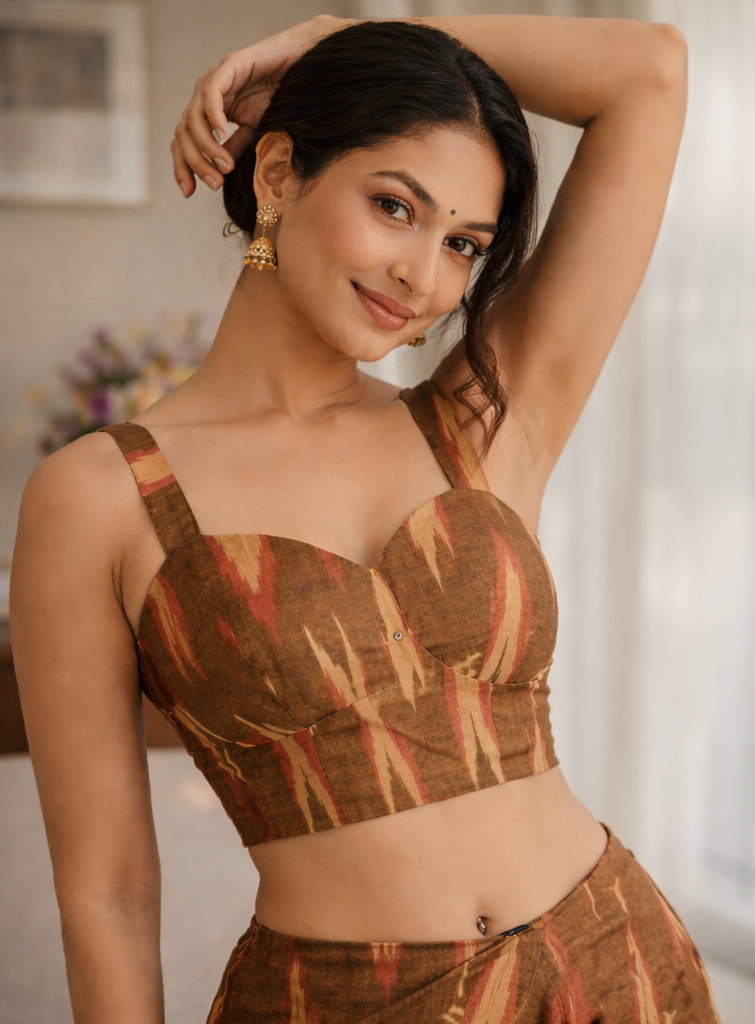
- Lay the blouse flat and inspect whether the neckline edge is smooth without the body providing tension.
- Check both sides of a V-neck for equal depth and matching seam width.
- Look inside for loose threads, tight lining, uneven facing and bulky seam allowances.
- Try the blouse with the bra or padding normally worn under a saree blouse.
- Raise the arms and sit down to test whether the armhole pulls the neckline.
- For padded styles, check that the cup, shell and lining don't end at visibly different points.
- For cotton or silk, ask whether the garment has been pre-shrunk or follow the stated care instructions carefully.
Classic Festive Wear Blouse for Stylish Saree Look can be evaluated using the same principles as a casual cotton blouse: the neckline should lie smoothly, the shoulder should stay in place and the lining should not pull. Decorative styling doesn't compensate for an unstable neckline.
Choosing between a readymade blouse and a tailored blouse depends on how closely the standard pattern matches your shoulder and upper-chest measurements. A readymade blouse is convenient when the neckline, bust point and shoulder balance already align; a tailored blouse is preferable when those measurements differ significantly.
Common Questions About a Blouse Neckline That Ripples
Why does my blouse neckline ripple only when I wear it?
A neckline that ripples only when worn usually reflects body fit, shoulder balance, armhole tension or the weight of the saree pallu. Lay the blouse flat to separate a construction fault from a movement-related fit problem.
Can ironing remove ripples from a blouse neckline?
Ironing can temporarily flatten minor ripples caused by poor pressing, but it cannot correct excess fabric, a short lining or an incorrect neckline shape. Press the neckline over a rounded form using a pressing cloth rather than dragging the iron across the edge.
Why does a padded blouse neckline gape or ripple?
A padded blouse can ripple when the firm cup holds the bust in place but the neckline has excess length, or when the shell, padding and lining do not match. Check the upper-chest fit and layer lengths before altering the neckline.
Are silk blouses more likely to show neckline puckering?
Silk blouses can show puckering more clearly because their smooth surfaces reveal small stitching and tension errors. Banarasi silk and zari fabrics also need balanced lining, suitable interfacing and low-to-medium heat during pressing.
Should I exchange a readymade blouse with a rippled neckline?
Exchange a readymade blouse when the shoulder is misplaced, the bust point is substantially wrong or the neckline is more than about 1.5 centimetres too wide. A tailor can usually correct minor gaping or one-sided rippling more successfully than a major pattern mismatch.
How can I stop a cotton blouse neckline from stretching?
Stay-stitch the neckline soon after cutting, avoid pulling the edge while sewing and use a narrow stay tape when the fabric is soft or bias-cut. Wash the finished blouse gently and never stretch a wet neckline over a hanger.