Why a blouse back band feels tight only after the saree is draped can be explained by one important change: the saree creates forward, downward and sideways tension around the torso. A blouse that feels comfortable with a skirt or trousers may pull once pleats are tucked, the pallu crosses the bust and the waist is secured. The problem isn't always an incorrectly measured blouse band. Fabric friction, petticoat position, hook placement and back shape can all contribute.
A useful diagnosis begins with the exact moment discomfort appears. If the band feels tight as soon as the first pleats are tucked, the lower saree anchoring may be pulling the blouse downward. If the band tightens after the pallu is placed over the shoulder, pallu weight or the shoulder route may be adding forward drag. If discomfort appears only when you sit, bend or raise your arms, the blouse may have enough standing ease but insufficient movement ease.
Why a Blouse Back Band Feels Tight Only After the Saree Is Draped
A blouse back band feels tight after saree draping because the blouse changes position under the combined pressure of pleats, pallu and waist tucks. A saree isn't passive once worn: tucked pleats grip the petticoat, the pallu pulls across the bust and shoulder, and the waistline can shift as the wearer walks.
The blouse band usually sits across the widest part of the upper back, where small changes in garment position are noticeable. When the saree is tucked firmly, the lower edge of the blouse can be pulled down at the front. The back band then moves slightly upward or becomes more horizontal, reducing the available circumference. A band with only 1 to 2 centimetres of ease can feel restrictive after this movement.
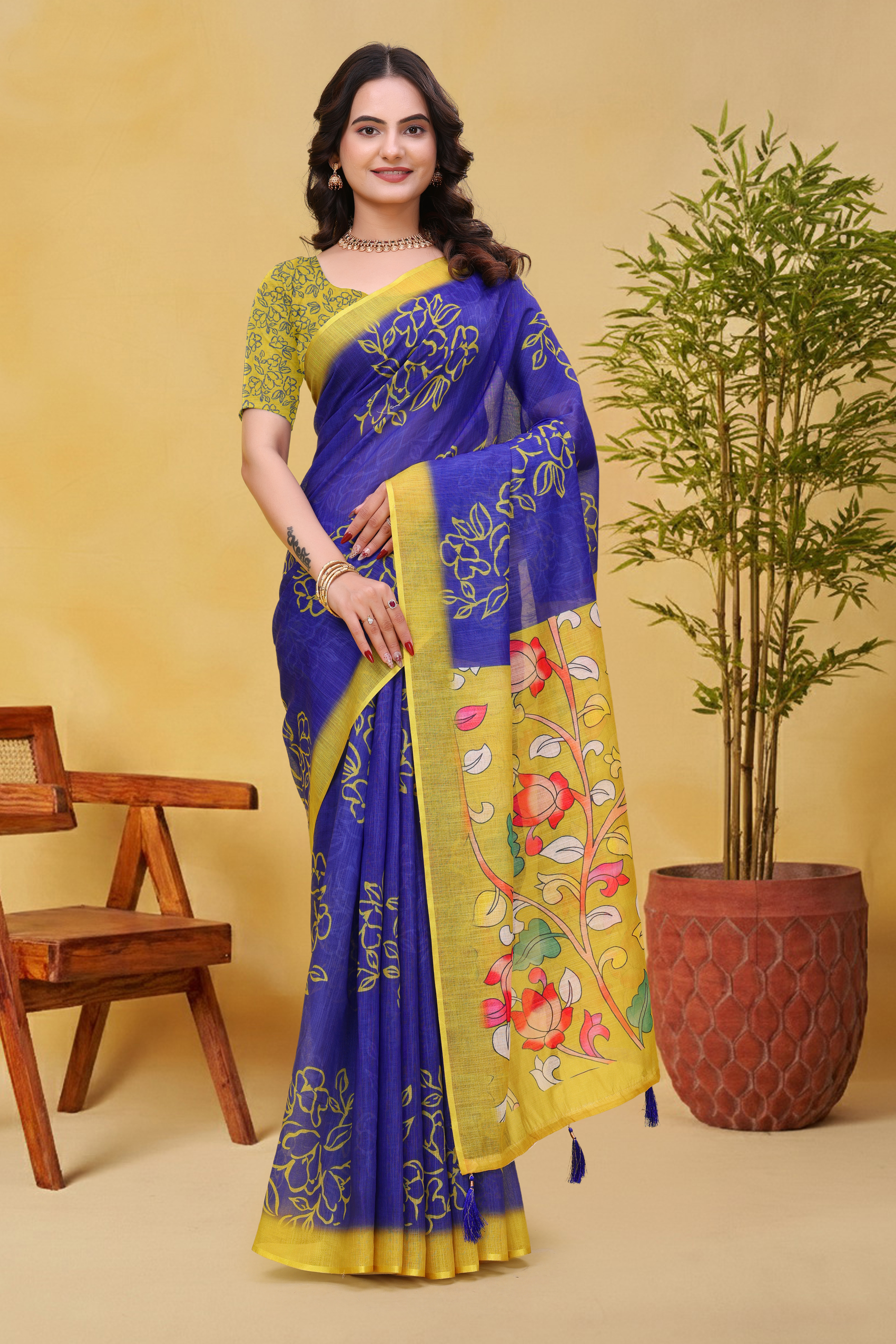
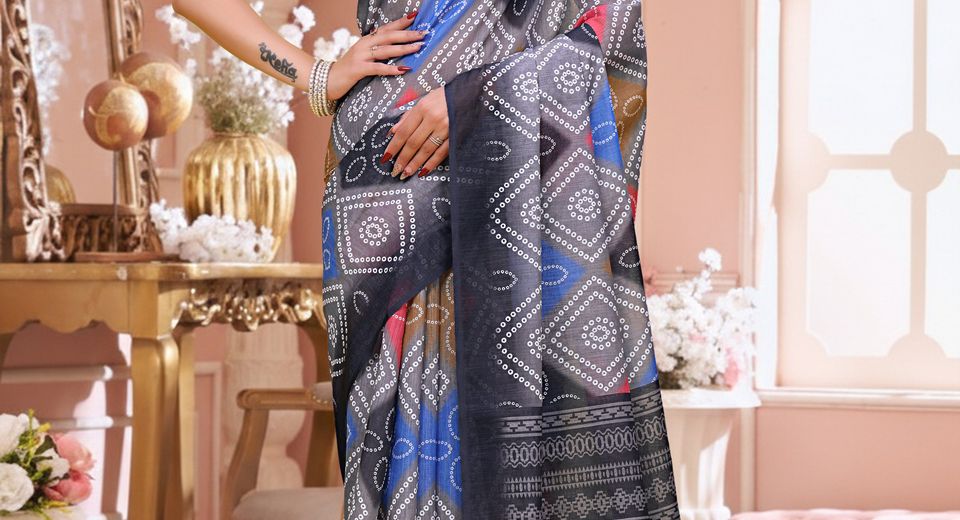
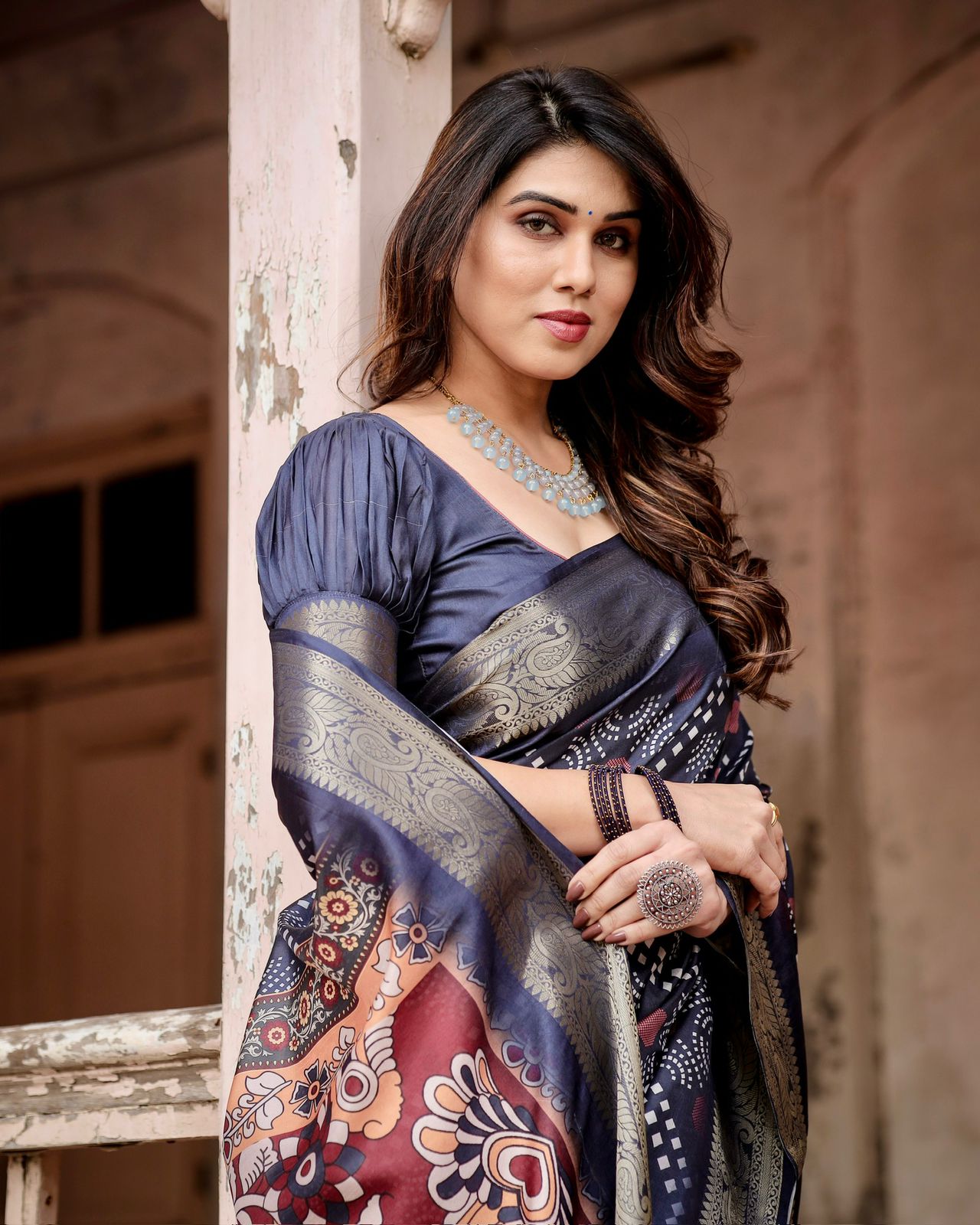
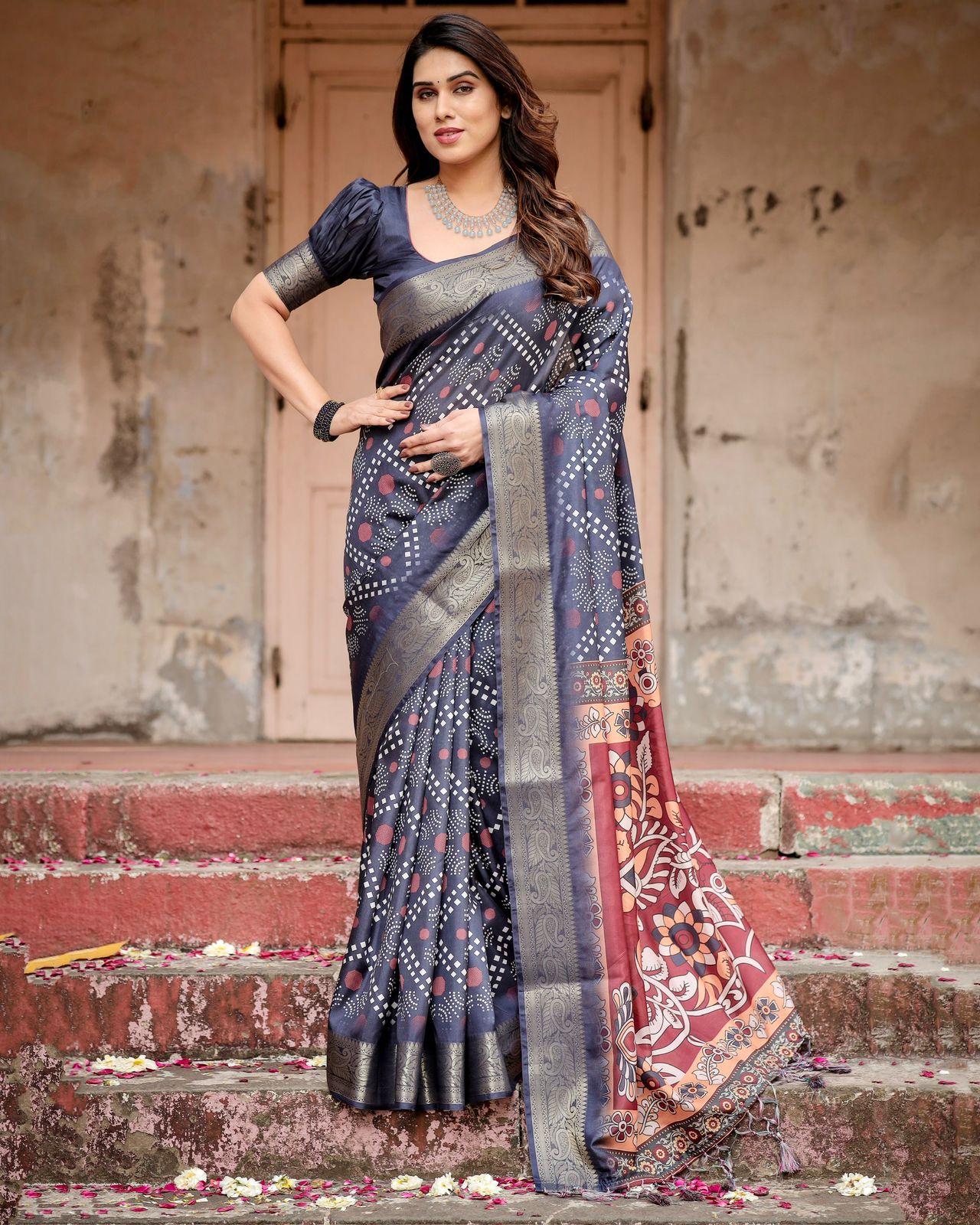
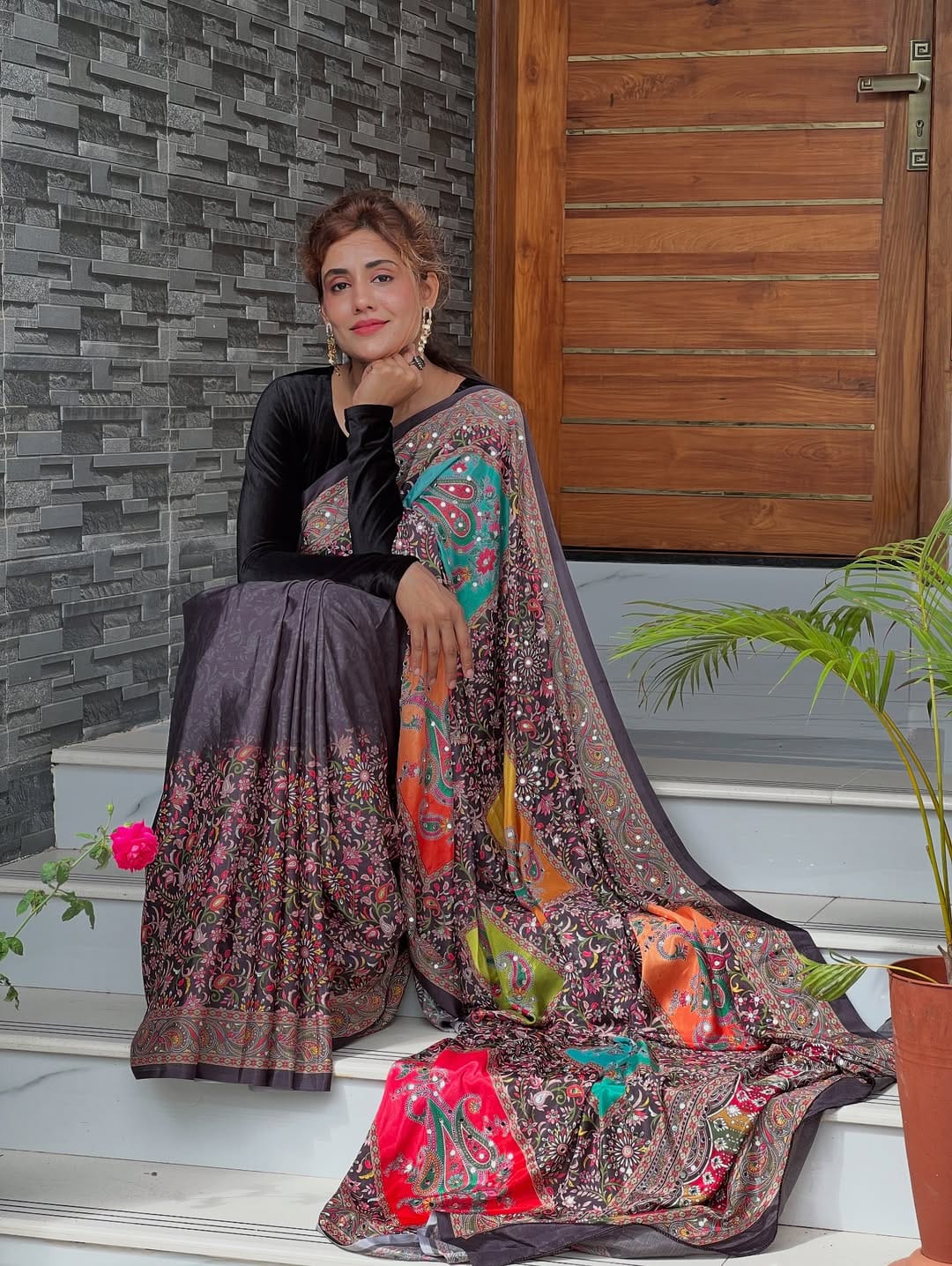
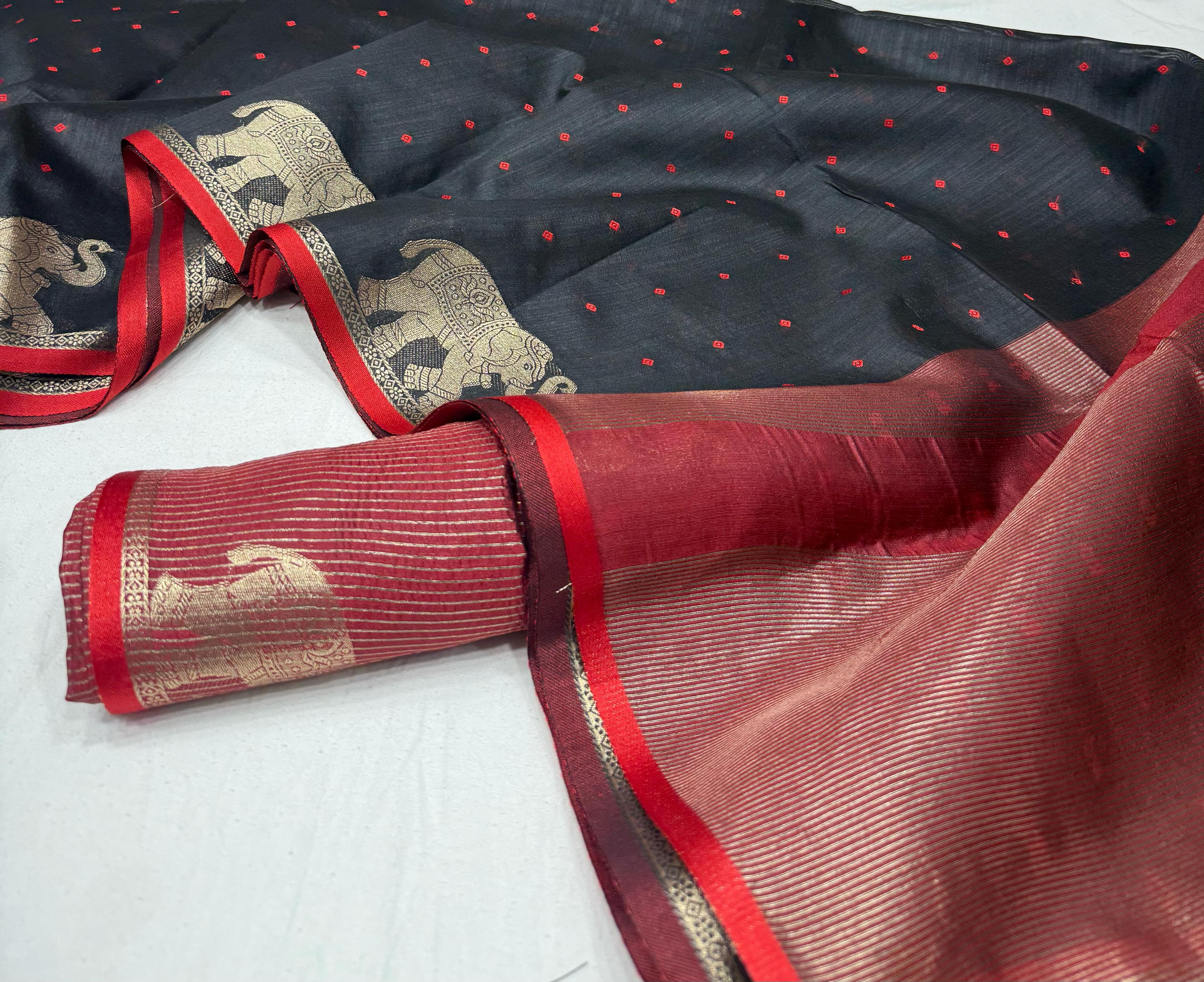
Heavy borders and dense embellishment increase the effect. A zari border on Navy Blue Bandhani Print Tussar Silk Saree with Zari may create more downward drag than a light cotton saree, particularly when the pallu is folded into several layers. Black Ethnic Mirror Work Bandhej Silk Saree can also feel less forgiving because mirror work adds weight and surface friction where the saree crosses the blouse.
How a Blouse Back Band Feels Tight Only After the Saree Is Draped During Waist Tucking
Waist tucking can make a blouse back band feel tight by pulling the front hem downward and changing the angle of the blouse around the torso. The effect is strongest when the petticoat or underskirt is tied below the natural waist and the saree is tucked under tension.
A petticoat should sit at the height used for the final drape rather than several centimetres lower for convenience. The saree should be secured firmly enough to hold the pleats but not so tightly that the wearer can't slide one or two fingers beneath the waistband. A very tight tuck may make the saree look neat while pushing fabric upward toward the blouse back band.
Front pleats should fall vertically from the waist. If the pleat stack angles sharply toward one hip, the saree pulls diagonally across the lower blouse and can make the back band feel tighter. Loosening the tuck by 2 to 3 centimetres is a useful diagnostic before altering the blouse.
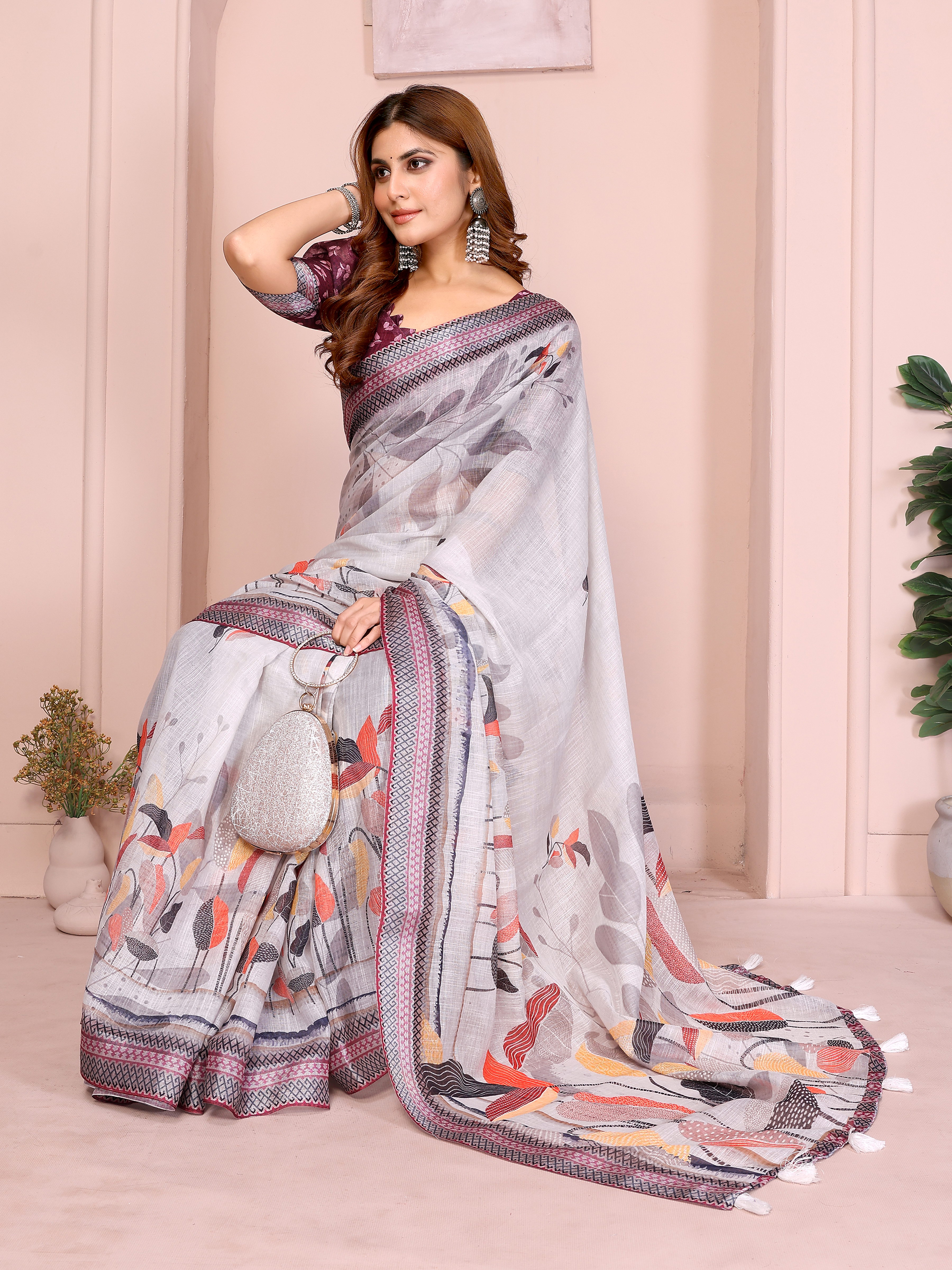
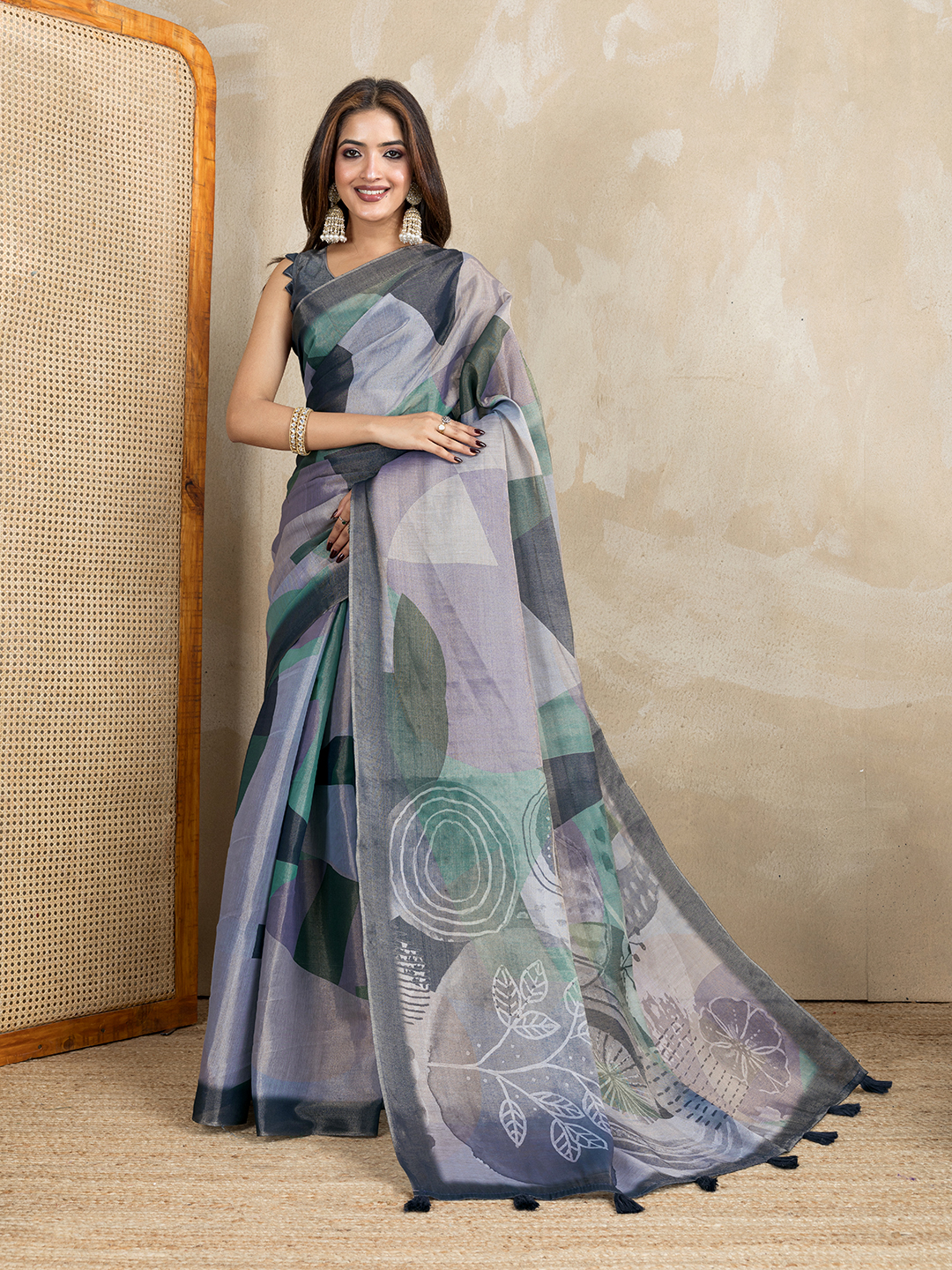
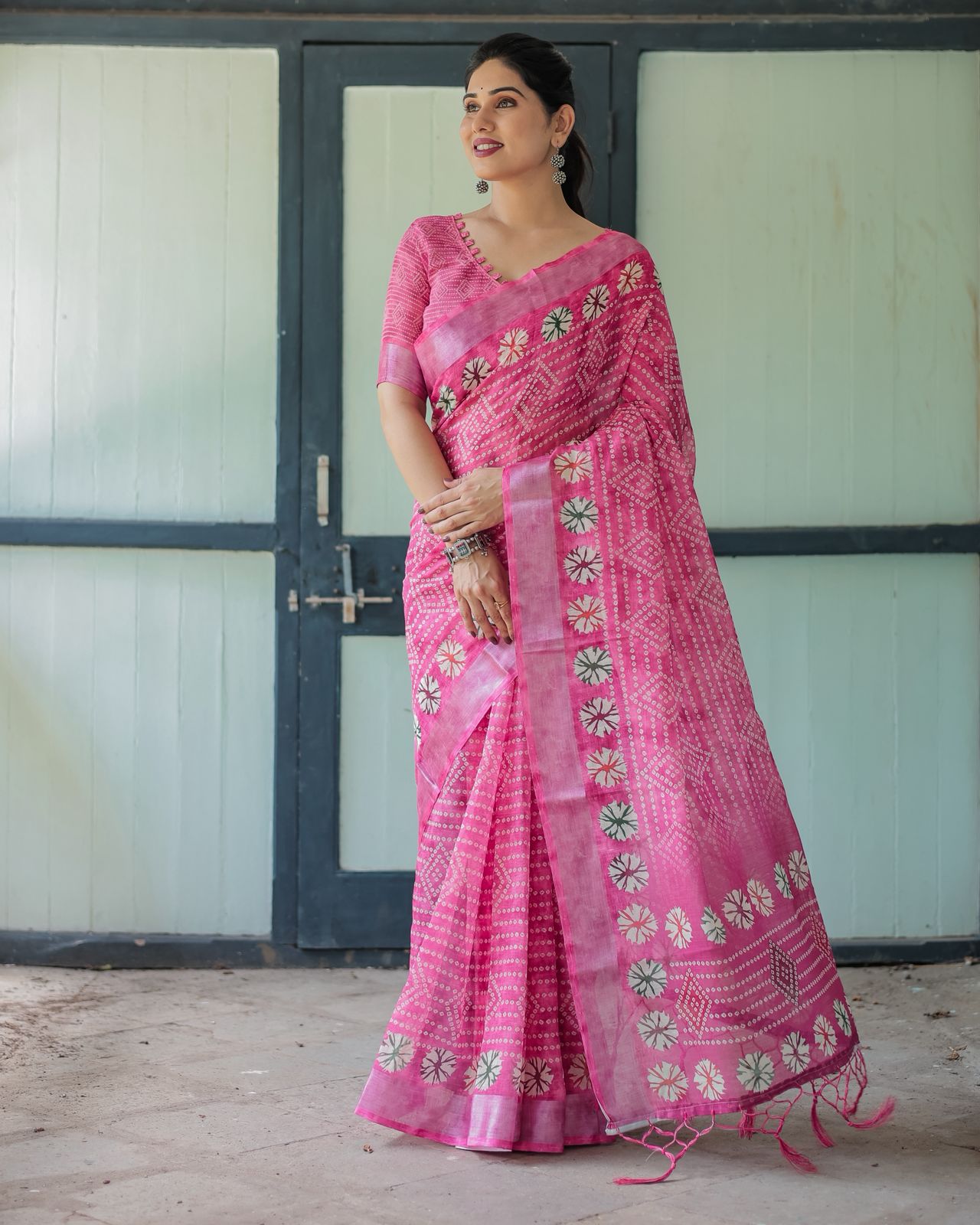
A textured saree can grip the petticoat and stay in position, while a smooth saree can shift before suddenly loading the waist. Navy Blue Linen Cotton Bandhani Print Saree with Blouse Set and Green Pink Erode Cotton Abstract Saree with Artistic Border illustrate how cotton texture and border construction can change the amount of force transferred to the blouse.
How a Blouse Back Band Feels Tight Only After the Saree Is Draped With the Pallu
The pallu causes a blouse back band to feel tight when its weight and direction of pull travel across the bust, shoulder and upper back. A long, broad or densely decorated pallu can exert more force than a short, lightly finished one.
A pallu folded tightly and pinned high on the shoulder pulls upward and slightly sideways. A pallu left loose may pull downward as the wearer moves. Both arrangements can transfer tension to the blouse, although they do so in different directions. A firm shoulder pin can also make the fabric behave like a fixed strap rather than a flexible layer.
Indigo Peach Satin Saree with Striped Pallu and Border Work may slide before the shoulder pin takes the load, whereas a Bandhani or silk saree may resist movement through surface texture. The difference is mechanical rather than a question of which fabric is better. A satin pallu often benefits from a concealed safety pin at the shoulder and a second stabilising pin near the blouse seam.
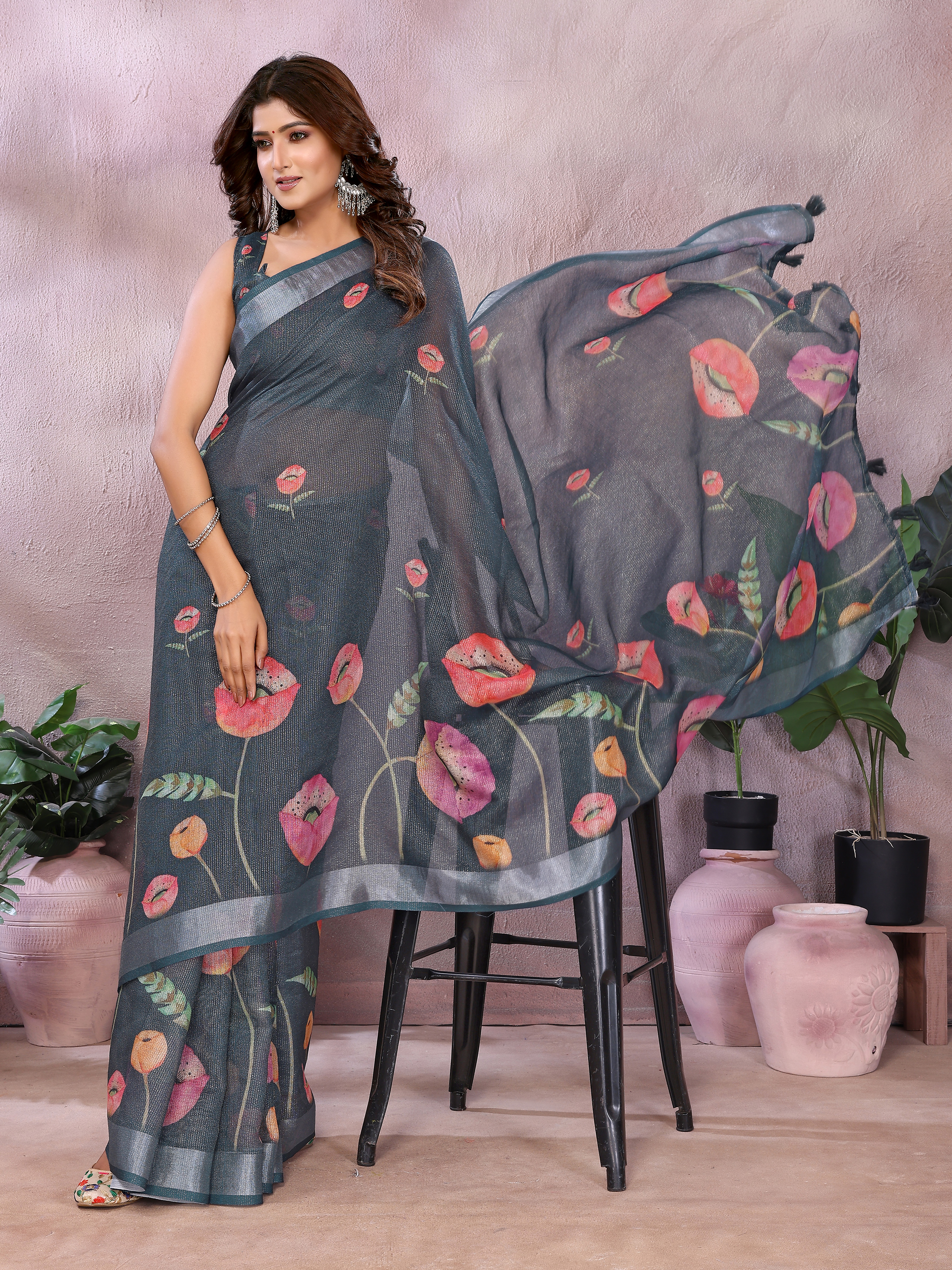
Turquoise Floral Heavy Chinnon Ready to Wear Saree can distribute tension differently because a ready-to-wear construction may place support, pleats and fastening points in predetermined positions. If a fixed pleat line pulls toward the back, the blouse should be tested with the saree fastened exactly as it will be worn.
How Can You Tell Why a Blouse Back Band Feels Tight Only After the Saree Is Draped?
The blouse is more likely to be at fault when the band remains tight with the saree loosened, while the drape is more likely to be at fault when the band relaxes after the waist and pallu are adjusted. Testing both conditions prevents unnecessary alterations.

- Wear the blouse alone for five minutes. Sit, lift both arms halfway and rotate the shoulders. A practical fit should allow these movements without hooks gaping or the band cutting into the skin.
- Wear the petticoat at its intended height. Tie the waistband at the same position used for the saree rather than testing over a loose or low underskirt.
- Drape without tightening. Make the pleats and place the pallu, but don't pin anything initially. Notice whether discomfort begins at the waist, bust, shoulder or back.
- Loosen one variable at a time. Release the waist tuck by 2 to 3 centimetres, then loosen the pallu fold. If the band relaxes immediately, the drape is transferring excessive tension.
- Check the back band visually. Horizontal wrinkles radiating from the hook line indicate circumference strain. Vertical wrinkles near the side seam can indicate that the armhole or bust fit is pulling the blouse sideways.
- Test sitting and walking. A blouse that works only while standing isn't fully comfortable for a ceremony, meal or commute. Movement can add several centimetres of temporary reach across the back.
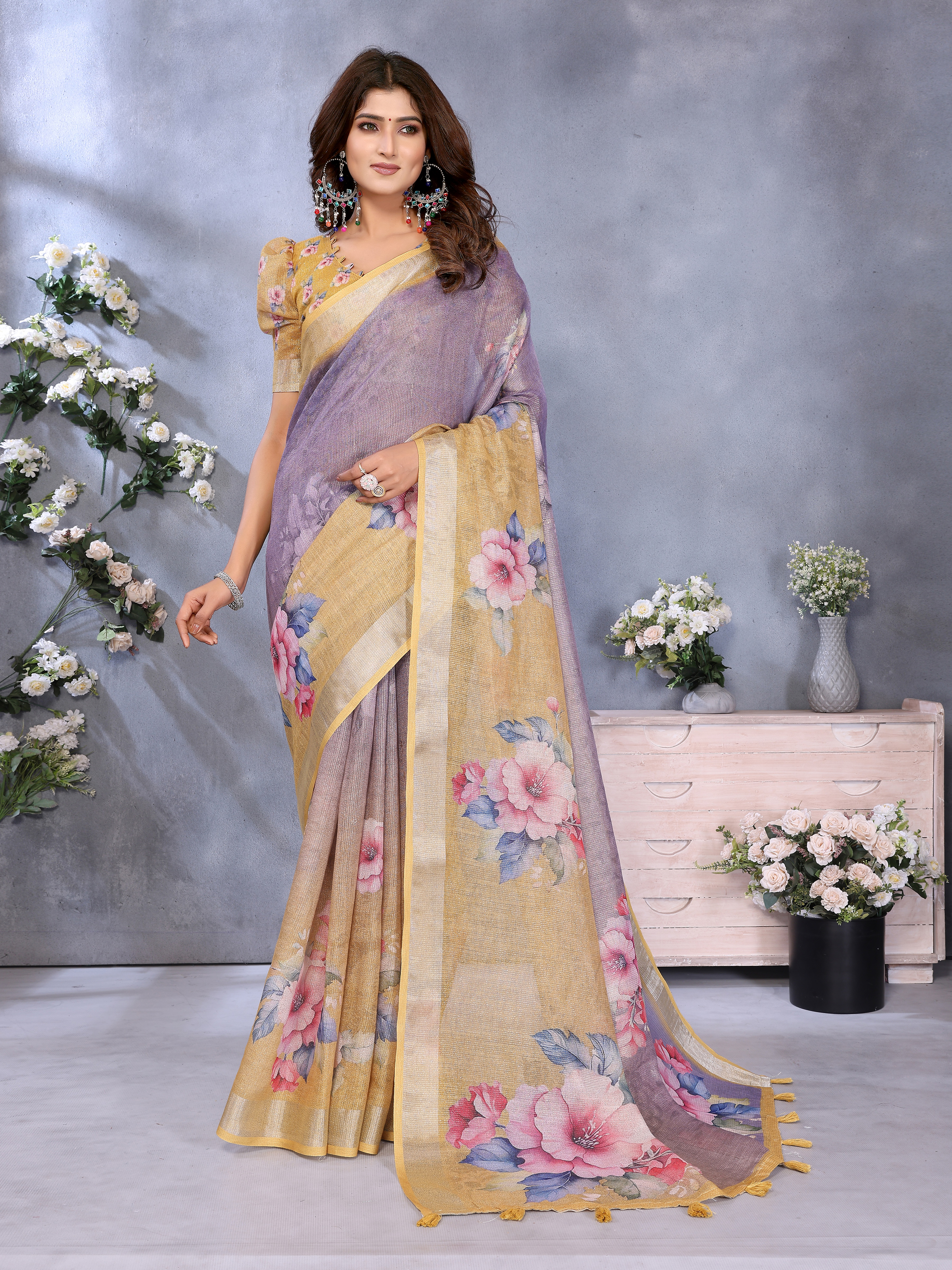
Compare at least two sarees if possible. White Satin Floral Print Saree with Unstitched Blouse Piece is likely to behave differently from Black Ethnic Mirror Work Bandhej Silk Saree because satin surface movement and mirror-work weight create different stresses. A problem that appears with only one saree usually points toward drape, friction or pallu weight rather than a permanently undersized blouse.
What Measurements Explain Why a Blouse Back Band Feels Tight Only After the Saree Is Draped?
The most useful measurements are the body circumference at the band line, the finished blouse circumference, bust circumference and movement ease. Measuring only the underbust doesn't show how the blouse behaves after a saree is tucked.
Measure around the perfect line where the blouse band sits while standing naturally. Take a second measurement with the arms raised slightly and the shoulders relaxed. The difference between the two readings shows part of the movement required by the garment. A fitted woven blouse should not have a finished band minor than the body measurement at that line. The amount of comfort allowance depends on fabric, lining, construction and personal preference.
Measure the finished blouse from hook edge to hook edge while the garment lies flat and unstretched. Double the flat measurement for an approximate circumference, then compare it with the body measurement. Do not pull the tape across a curved hook band because a curved band can appear longer when flat but become restrictive when fastened.
Hook placement matters as much as total length. A blouse with one fixed hook setting offers no adjustment when a heavy pallu changes the fit. Two or three hook positions can provide a practical adjustment range. A wide back band may need additional length because it covers more of the body's changing contour.
Check seam allowance before planning an alteration. A tailor may be able to release 1 to 2 centimetres from the side or centre-back seams, but a very narrow seam allowance can't safely provide unlimited extra room. Repeated stretching can distort the lining, weaken hook stitching and make the band curl.
How Can Alterations Fix Why a Blouse Back Band Feels Tight Only After the Saree Is Draped?
A genuinely tight band should be altered by adding width at the back or changing the closure position rather than by repeatedly stretching the blouse. The correct alteration depends on whether the tightness is minor, moderate or accompanied by armhole strain.
Minor tightness
Moving the hooks outward by about 1 to 1.5 centimetres can solve minor tightness when the overlap contains sufficient fabric. The alteration should retain a secure overlap between hook and eye. A tailor should reinforce the new hook area with interfacing or a backing strip, particularly for satin, silk or lined blouses.
Moderate tightness
A back extension is appropriate when the blouse needs approximately 2 to 5 centimetres of additional circumference. The extension can match the blouse fabric, use a coordinated contrast fabric or sit beneath a decorative panel. A matching extension is easiest to conceal under the saree pallu, but the seam must be pressed and secured so it doesn't create a ridge.
Uneven strain
Side-seam adjustment is better than a back-band extension when wrinkles point from the bust or armhole toward the closure. Letting out the side seams can restore balance if enough seam allowance remains. A tight armhole may need separate reshaping because adding back width won't correct restricted arm movement.
don't add fabric to a band that feels tight because the blouse length is wrong. If the blouse rides upward after the saree is tucked, the hem or waist placement may need adjustment. A tailor should assess the blouse while the saree is worn because a flat-table alteration can remove the tension clue that caused the problem.
How to Prevent Why a Blouse Back Band Feels Tight Only After the Saree Is Draped
Prevention begins with a full drape test before the blouse is finalised, stitched or altered. The test should reproduce the intended petticoat height, pleat count, pallu fold, pins and footwear because each factor changes posture and fabric tension.
Wear the complete outfit for at least 15 minutes before an important event. Walk, sit on a chair, climb a few steps and raise one arm as though adjusting the pallu. Discomfort that appears after 10 minutes is useful information; a five-second mirror check may miss it.
Leave enough space for the closure to be adjusted without exposing the back. Hook-and-eye closures are practical for fitted blouses because they permit small corrections. A concealed extension piece can provide additional flexibility for sarees with heavy zari, dense embroidery or broad borders.
Pin the pallu to the blouse or shoulder seam rather than relying on a single high pin when the fabric is heavy. Distribute the pallu weight across two secure points and avoid pulling the fabric sharply across the bust. Keep front pleats straight and release an overly tight waist tuck before concluding that the blouse needs alteration.
When buying a saree for a fitted blouse, compare construction and weight rather than colour alone. Sarees Under 20% Off, Sarees Under 10% Off and Sarees from Rs 1000 to Rs 1500 can contain very different fabrics and border weights, so a collection label or discount percentage doesn't predict blouse comfort. Sarees Flat 60% Off and Sarees Flat 50% Off are also shopping categories rather than fit guarantees; inspect the fabric description and plan a drape test.
The key lesson is simple: a blouse must be assessed with the saree, not only on its own. If loosening the waist and redistributing the pallu solves the problem, change the drape. If the band remains tight in every configuration, pulling the blouse and alter the closure, back width or side seams. That two-stage test saves time, protects the garment and produces a more comfortable saree fit.
Common Questions About a Tight Blouse Back Band After Saree Draping
Why does my blouse fit before draping but feel tight after I wear the saree?
The saree can pull the blouse downward at the waist and forward across the bust when pleats and the pallu are secured. A tight petticoat, heavy border or firmly pinned pallu can make a correctly sized blouse feel restrictive.
Can a tight saree tuck make the blouse back band uncomfortable?
Yes, a tight waist tuck can pull the front blouse hem downward and shift the back band upward. Loosen the tuck by 2 to 3 centimetres and check whether the band relaxes before altering the blouse.
How can I tell whether the blouse or saree drape is causing the tightness?
Wear the blouse alone, then repeat the test with the petticoat and saree. If the band is comfortable alone but tight after the pallu or waist is secured, adjust the drape; if it remains tight in every configuration, the blouse needs measurement or alteration.
How much can a tailor loosen a blouse back band?
Moving hooks can usually provide about 1 to 1.5 centimetres of extra room when the overlap allows it. A back extension may add approximately 2 to 5 centimetres, but the available seam allowance, lining and fabric determine the safe limit.
Does a heavy saree make a blouse feel tighter?
A heavy saree can increase tension when its pallu, zari border or embellishment pulls on the shoulder and bust. Distributing the pallu with two secure pins and avoiding an excessively tight waist tuck can reduce the pressure.
Should I alter a blouse before testing it with the saree?
No, test the blouse with the exact saree, petticoat height, pleat arrangement and pallu style first. Altering a blouse on a flat table can remove the evidence that the drape, rather than the blouse circumference, caused the discomfort.