

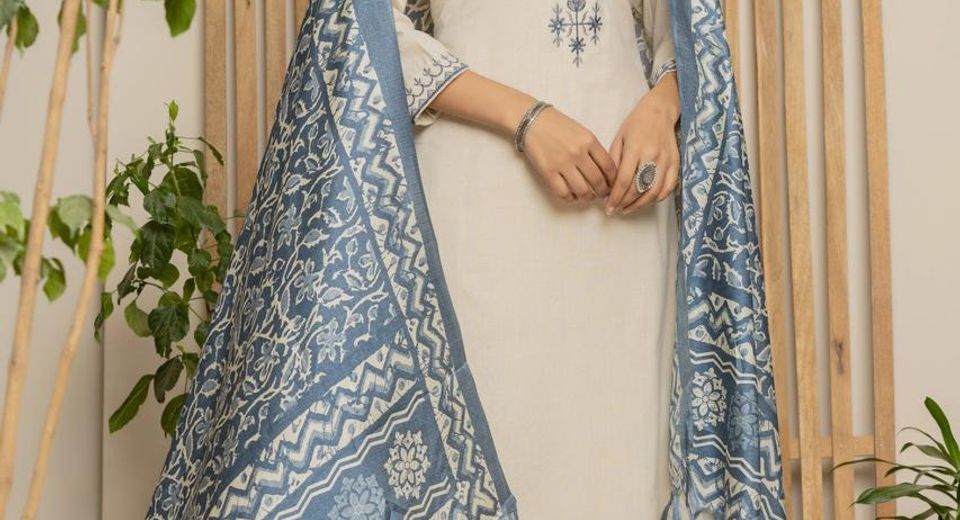
Who Straight-cut Kurtis Suit and Which Bottoms Work Best depends less on a fixed body-shape rule and more on proportion, fabric weight, hem length and the amount of volume below the waist. A straight kurti falls in a relatively even line from the shoulder to the hem, so the bottom determines whether the outfit looks streamlined, relaxed or heavily layered. The right pairing can make a short kurti look balanced, give a long kurta more movement and keep a printed salwar suit comfortable through a long day.
A straight-cut kurti usually suits people who prefer clean tailoring, moderate ease and a silhouette that doesn't cling around the hips. The shape works across petite, tall, curvy, athletic and fuller figures when the garment length and bottom width are selected together. The useful question isn't whether a person is allowed to wear a straight kurti; the useful question is which proportions create the most comfortable visual line.
Who Straight-cut Kurtis Suit and Which Bottoms Work Best?
Straight-cut kurtis suit most body types, and slim trousers, cigarette pants, palazzos, salwars and Patiala bottoms each create a different proportion beneath the same kurti.
A straight silhouette has side seams that descend with little flare, unlike an Anarkali or an A-line kurti. The shape is especially practical for office dressing, travel and everyday salwar suits because the cut allows movement without adding gathered volume at the waist. A side slit can provide extra walking ease, while a closed straight hem creates a more formal appearance.
- Petite frames: A kurti ending around the knee or slightly above the knee, worn with slim ankle-length pants, keeps the leg line visible. Tonal bottoms and a moderate neckline can add visual length.
- Tall frames: Long straight kurtas, wide-leg palazzos and cropped cigarette pants can all work. A contrasting dupatta or a hem detail prevents a long outfit from looking visually flat.
- Curvy and fuller figures: A gently relaxed straight kurti with side slits and a structured fabric creates ease without excess bulk. Straight pants or fluid palazzos usually balance the silhouette better than very tight leggings.
- Athletic or rectangular frames: Embroidery, a printed dupatta, a defined shoulder and wider bottoms can introduce softness and movement. A waist tie or shaped side panel can also create subtle definition.
- Inverted-triangle proportions: Palazzos, flared pants and Patiala trousers add volume below the hip, balancing stronger shoulders. Keep upper-body embellishment controlled if the goal is an even outline.
How Should You Match Bottom Width to Kurti Length?
Match a longer straight kurti with a narrower or fluid bottom, while a shorter kurti can carry more volume such as a palazzo or Patiala.

Bottom width and kurti length are linked because both occupy the same vertical frame. A calf-length straight kurta paired with a wide, stiff palazzo can look dense around the lower half, particularly when the fabric has heavy embroidery. The same kurta with a soft, draping palazzo may look elegant because the folds fall away from the body instead of standing out.
Long straight kurtis
Long straight kurtis generally work best with cigarette pants, slim trousers, narrow churidars or soft palazzos. The hem should not finish at the widest part of the calf if the aim is a lengthened appearance. An ankle-length bottom and a kurti with side slits create a clean vertical break.
The Cream Khadi Cotton Straight Kurta Set with Dupatta illustrates the appeal of a restrained, straight silhouette. Khadi cotton has a matte, textured character, so narrow bottoms help preserve the fabric's crisp appearance. A simple dupatta draped over one shoulder adds length without introducing a second bulky layer around the waist.
Short and mid-thigh straight kurtis
Short and mid-thigh straight kurtis can be paired with palazzos, sharara-style bottoms, Patiala trousers or tapered pants. The shorter hem leaves room for the bottom shape to be seen, making the combination useful for festive dressing and casual daywear.
The Designer Cotton A-Line Kurti Pant Set with Mirror Work and Brown Cotton A-Line Kurti Pant Set with Mirror Work are examples of how a coordinated kurti-and-pant format can use surface detail without needing an additional wide bottom. Although an A-line hem differs from a strict straight cut, the same proportion lesson applies: when the top already has visual movement, a neat pant keeps the outfit readable.
Which Bottoms Work Best With a Straight Kurti?
Cigarette pants work best for a polished narrow line, palazzos work best for comfort and balance, and salwar or Patiala bottoms work best when the kurti is shorter and the style is intentionally traditional.
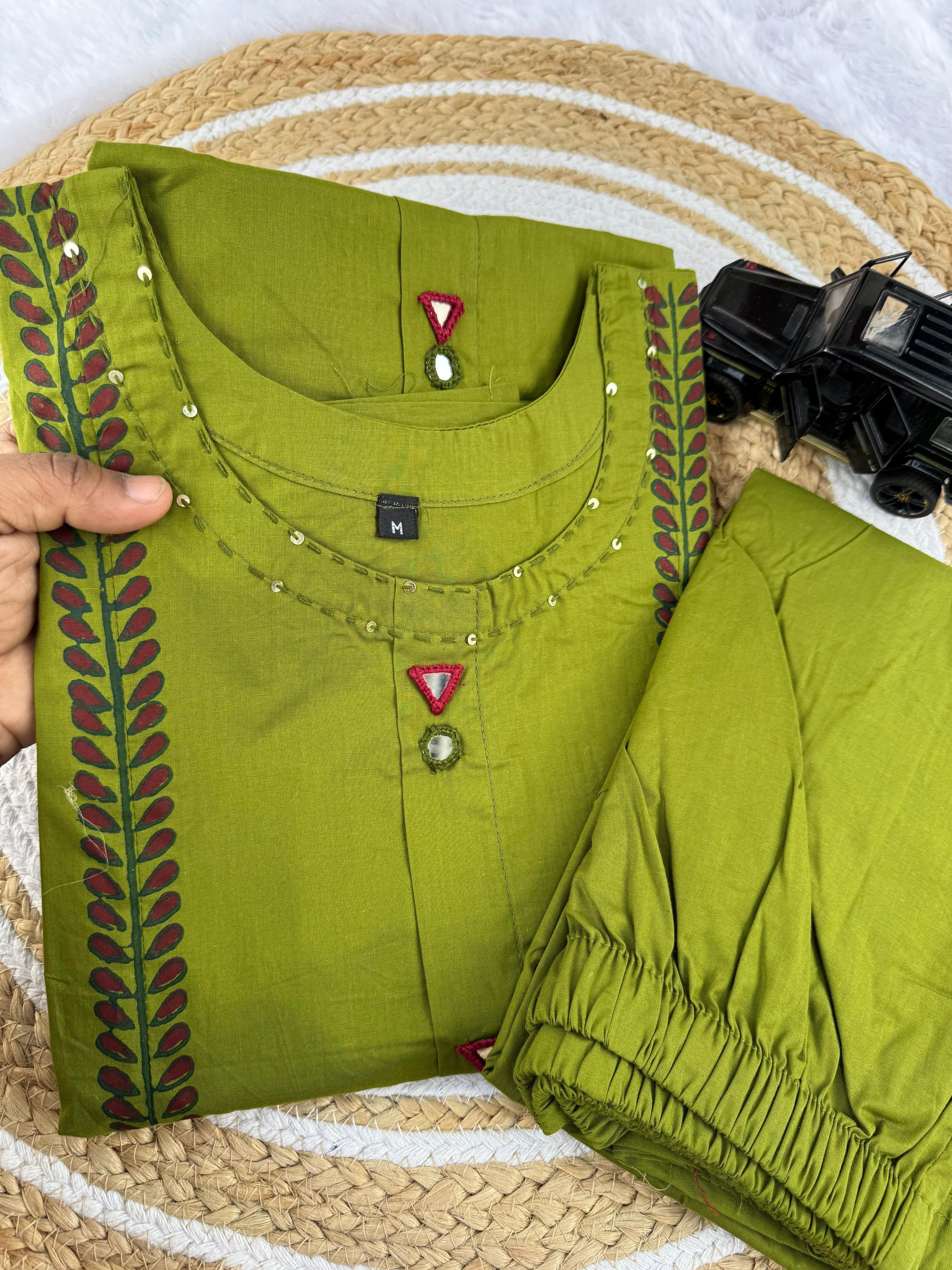
- Cigarette pants: These pants usually finish at or just above the ankle and sit close to the leg without the extreme cling of leggings. Cigarette pants suit long straight kurtis, office outfits and printed sets where the kurti should remain the main focus.
- Straight pants: A straight pant has more ease through the calf than a cigarette pant. The shape is useful for cotton kurtas, commuting and fuller legs because it offers a neat line without feeling restrictive.
- Palazzos: Palazzos add air and movement below a straight kurti. Choose a fluid rayon, viscose or lightweight cotton palazzo with a longer kurti; choose a structured cotton palazzo with a shorter kurti so the silhouette doesn't become shapeless.
- Churidars: Churidars create a time-honoured, close-fitting lower line with gathers at the ankle. They complement longer straight kurtas and work particularly well when the dupatta or neckline carries embroidery.
- Salwar bottoms: Salwars have a fuller seat and gathered ankle, giving a classic salwar kameez appearance. A knee-length straight kurti usually provides enough space for the gathered shape to remain visible.
- Patiala bottoms: Patiala trousers have substantial pleated volume and are best with short or medium-length kurtis. Punjab Patiala Salwar Suits demonstrate the intended relationship between a shorter top and a fuller classic bottom.
- Sharara bottoms: Shararas create a dramatic flare from the knee or upper leg. A relatively simple straight kurti prevents the combined outfit from competing with itself, making the pairing appropriate for festive events.
Leggings can still work with a straight kurti, but the combination is most successful when the kurti falls below the widest part of the hip and the leggings are opaque, comfortable and properly fitted. Very thin leggings under a short kurti can make the outfit look more casual than intended and may place too much attention on the leg line.
Which Fabrics and Prints Make a Straight Kurti More Flattering?
Medium-weight fabrics with controlled drape usually make a straight kurti look most balanced, while very stiff or very clingy fabrics require more careful sizing.
Cotton, cotton blends, Chanderi, rayon, viscose and silk blends produce different outcomes. Cotton poplin and khadi hold a clean edge and suit daytime tailoring. Rayon and viscose fall closer to the body and work well with palazzos. Banarasi silk, Roman silk and jacquard have more surface presence, so a narrow or moderately fluid bottom often prevents visual overload.
The Designer Roman Silk Kurti Set with Jacquard Dupatta combines a dressier fabric direction with a coordinated dupatta. A set with a sheen or woven pattern benefits from a bottom that repeats one colour from the kurti instead of introducing a competing print. Metallic thread, zari or mirror work should also be considered as part of the outfit's total visual weight.
Print scale affects proportion. Small prints can look refined on petite frames and busy on a large surface if the garment is heavily gathered. Large motifs can suit taller frames or a plain straight silhouette because the uninterrupted front gives the print room to read. Kalamkari Print Salwar Suits, Gujarat Bandhej Salwar Suits and Odisha Sambalpuri Salwar Suits each show how regional pattern language can become the focus of an outfit; a solid bottom generally lets those motifs remain clear.
Does colour matching change the apparent height?
A near-matching kurti and bottom usually creates a longer uninterrupted line, while a strong contrast makes the waist or hip break more noticeable.
Monochrome doesn't require identical shades. A cream kurti with ivory pants, a blue kurti with muted navy trousers or a mustard kurti with warm beige bottoms can create continuity while retaining depth. The Mustard Yellow Cotton Kurti Pant Set for Women uses the coordinated-set idea directly, while the Sky Blue Printed Cotton Kurti Pant Set for Women shows how a related bottom can calm a printed upper layer.
How Do You Choose a Straight Kurti for Work, Daily Wear or Festive Events?
Choose a breathable, moderately embellished straight kurti for daily wear, a structured narrow-bottom set for work and a richer fabric or regional textile detail for festive dressing.
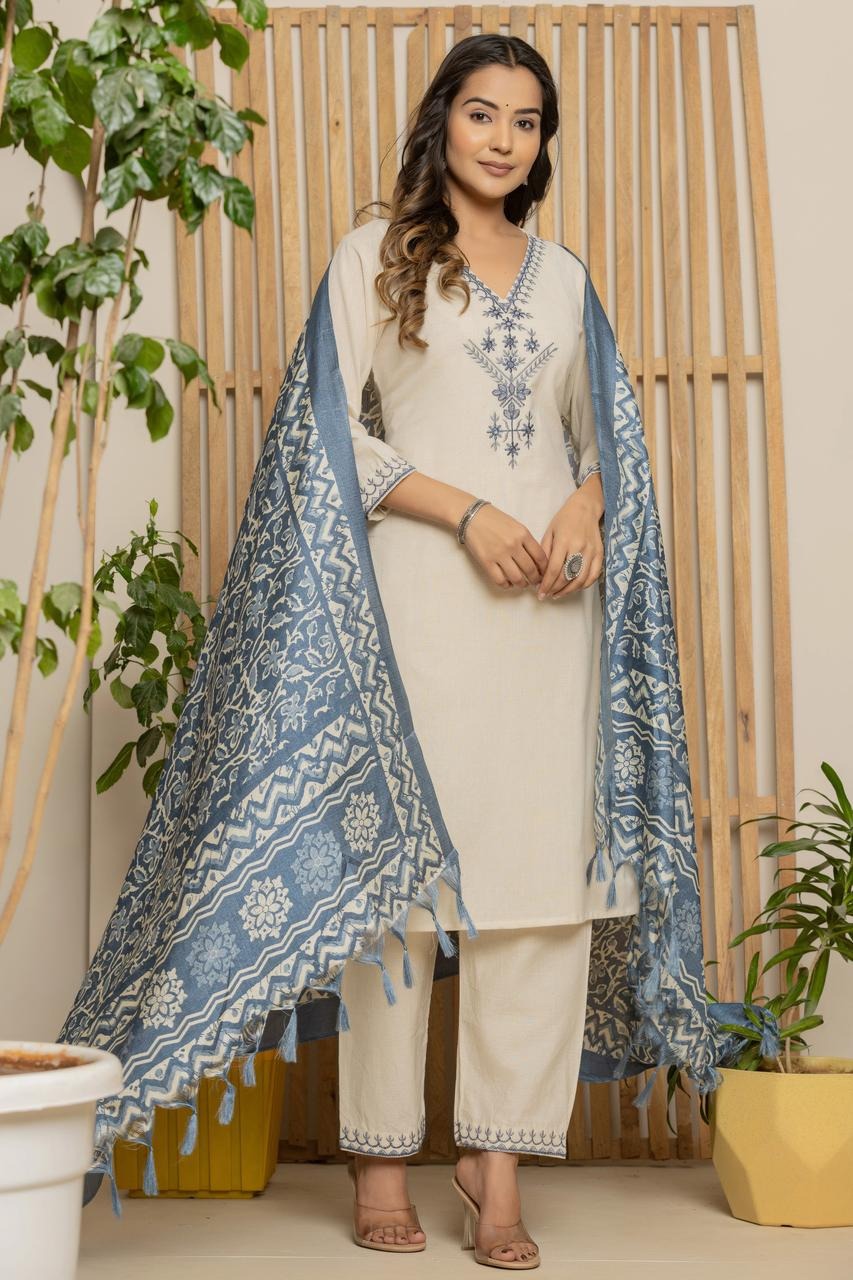
For office wear, knee-length or calf-length straight kurtis with cigarette pants or straight trousers are dependable. Choose cotton, Chanderi or a low-sheen blend, and check that the armhole allows reaching and sitting comfortably. A dupatta should stay manageable at a desk; a narrow drape, lightweight fabric or a neatly folded shoulder placement is more practical than a heavily embellished wide layer.
For daily errands and warm climates, cotton straight kurtis with straight pants, palazzos or cropped trousers offer airflow and easy movement. The Mustard Embroidered Kurti Pant Set for Women Festive can inspire a transition outfit when paired with understated jewellery and comfortable footwear, but heavily embroidered pieces should be checked for scratchy lining and seam comfort before a full-day wear.
For celebrations, silk blends, jacquard, zari accents, mirror work and distinctive dupattas add formality. Maharashtra Paithani Inspired Salwar Suits bring a regional silk vocabulary to the styling conversation, while a straight kurti keeps the overall shape less voluminous than a heritage Anarkali. Festive dressing doesn't require a flared silhouette; fabric richness and finishing can provide enough occasion value.
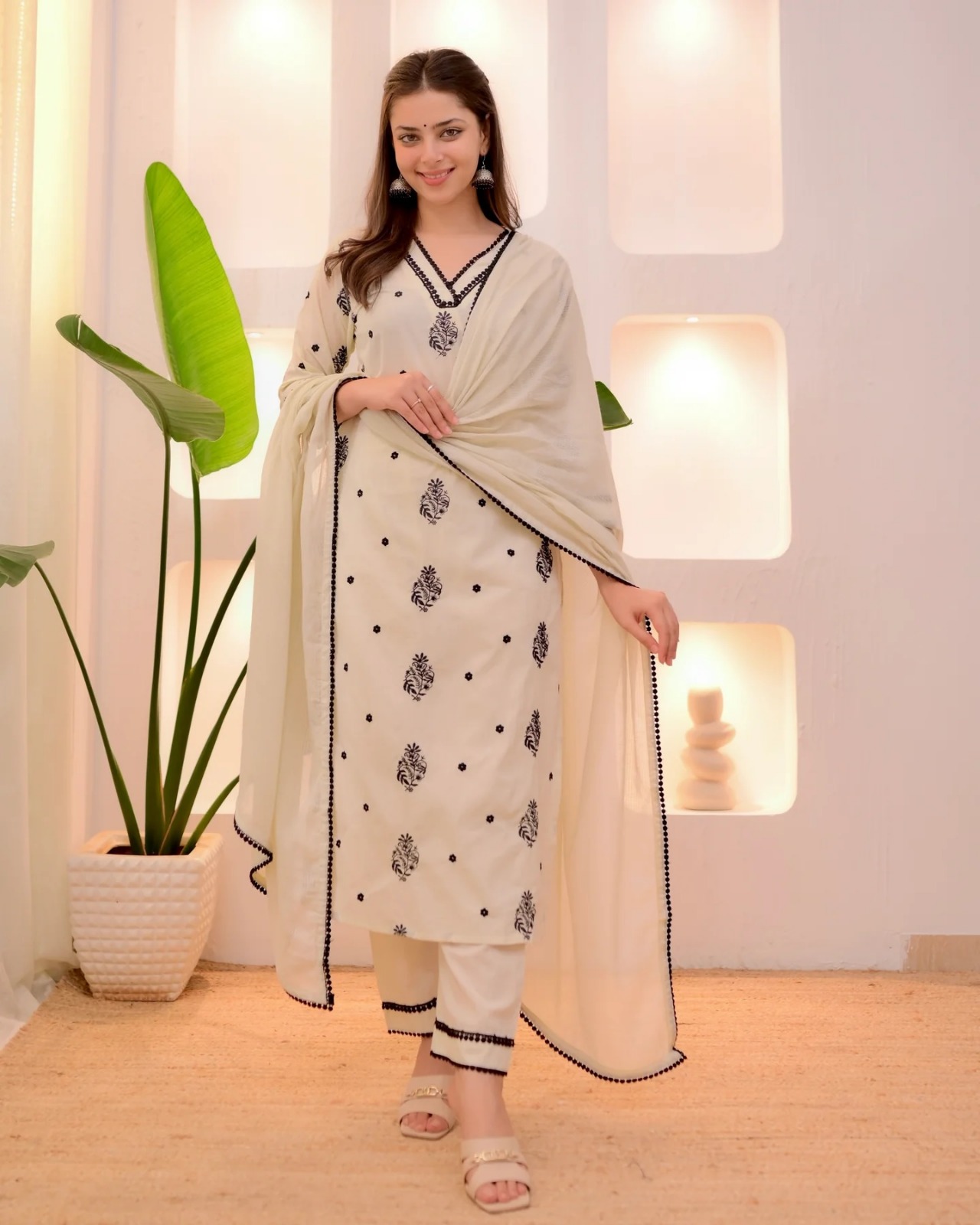
The Designer Cream Straight Kurti Set with Dupatta is an useful example of a neutral base that can be changed through accessories. Gold-toned earrings and embellished footwear create a festive direction, while silver jewellery and flat sandals make the same colour family suitable for a daytime gathering.
What Fit Details Should You Check Before Buying?
Check shoulder fit, bust ease, hip ease, hem placement, sleeve comfort and trouser rise before judging whether a straight kurti set will flatter.
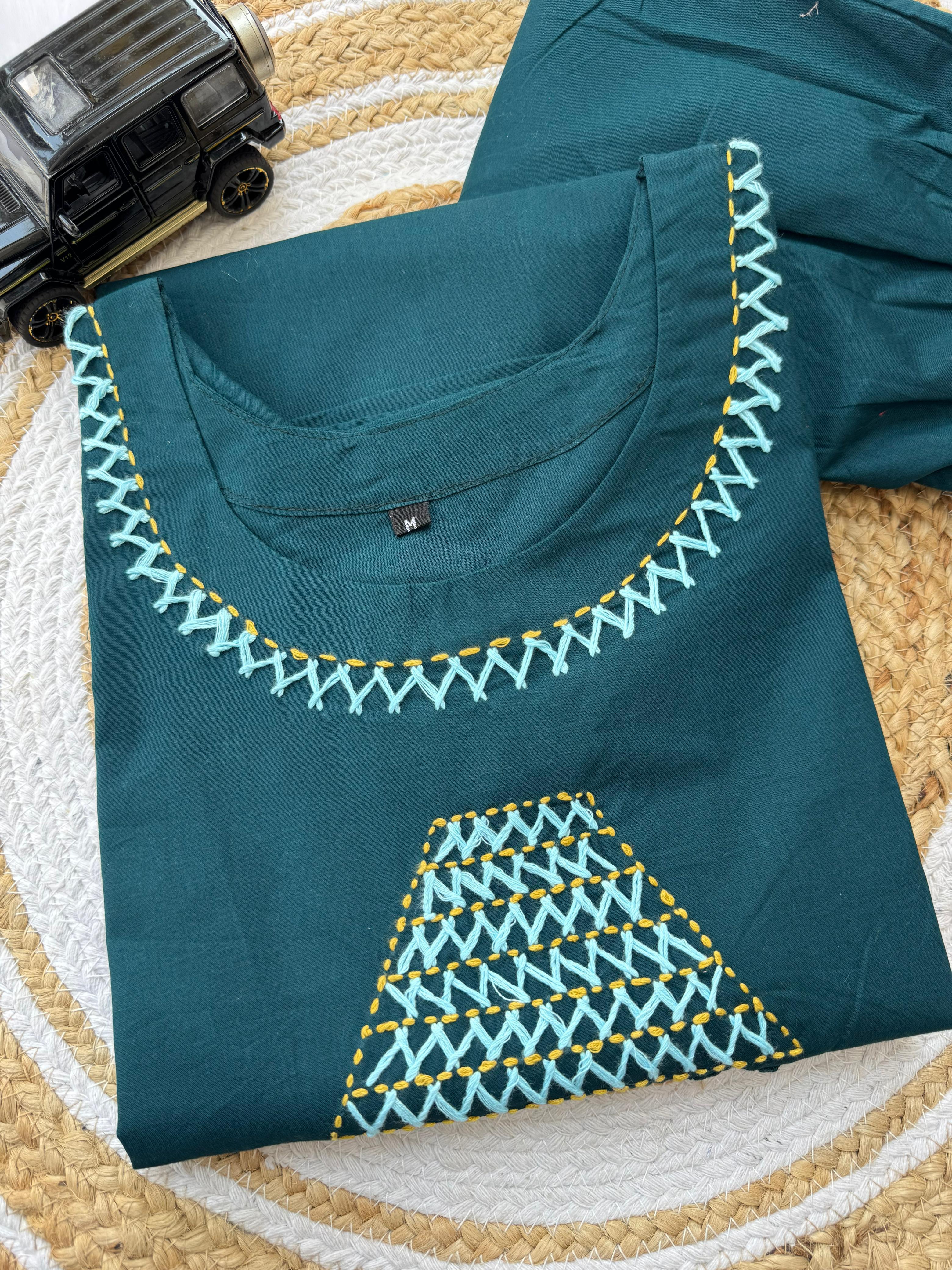
- Shoulders: The shoulder seam should sit close to the natural shoulder edge rather than dropping several centimetres. A shoulder that's too wide can make a straight kurti look boxy.
- Bust and armhole: Raise both arms and sit down. Pulling across the bust or underarm indicates insufficient ease, while excessive fabric can create unwanted side bulk.
- Hip and slit position: The kurti should glide over the hip without pulling at the side seam. Side slits should begin at a comfortable point and should not open dramatically while walking.
- Length: Measure the kurti against the intended bottom and shoes. A hem that ends just above the knee reads differently from one that falls at mid-calf, even when both garments have the same straight cut.
- Bottom rise: The waistband should sit securely without digging in when seated. A low rise may create a gap between the kurti and bottom, while an excessively high rise can add bulk under a fitted waist area.
- Fabric behaviour: Hold the fabric under light and inspect transparency, especially in white, cream and pastel cottons. Check whether mirror work, zari or embroidery has a backing that could irritate the skin.
Measurements are more reliable than a small, medium or large label because sizing differs between cuts and fabrics. Compare bust, hip, shoulder, kurti length, waist and inseam measurements with a garment that already fits well. Allow extra room for non-stretch cotton and structured khadi, but avoid sizing up so far that the shoulder and sleeve become visibly oversized.
Simple Styling Formulas That Keep the Proportion Balanced
A balanced straight-kurti outfit usually has one dominant feature, one supporting layer and a bottom whose volume matches the top's length.
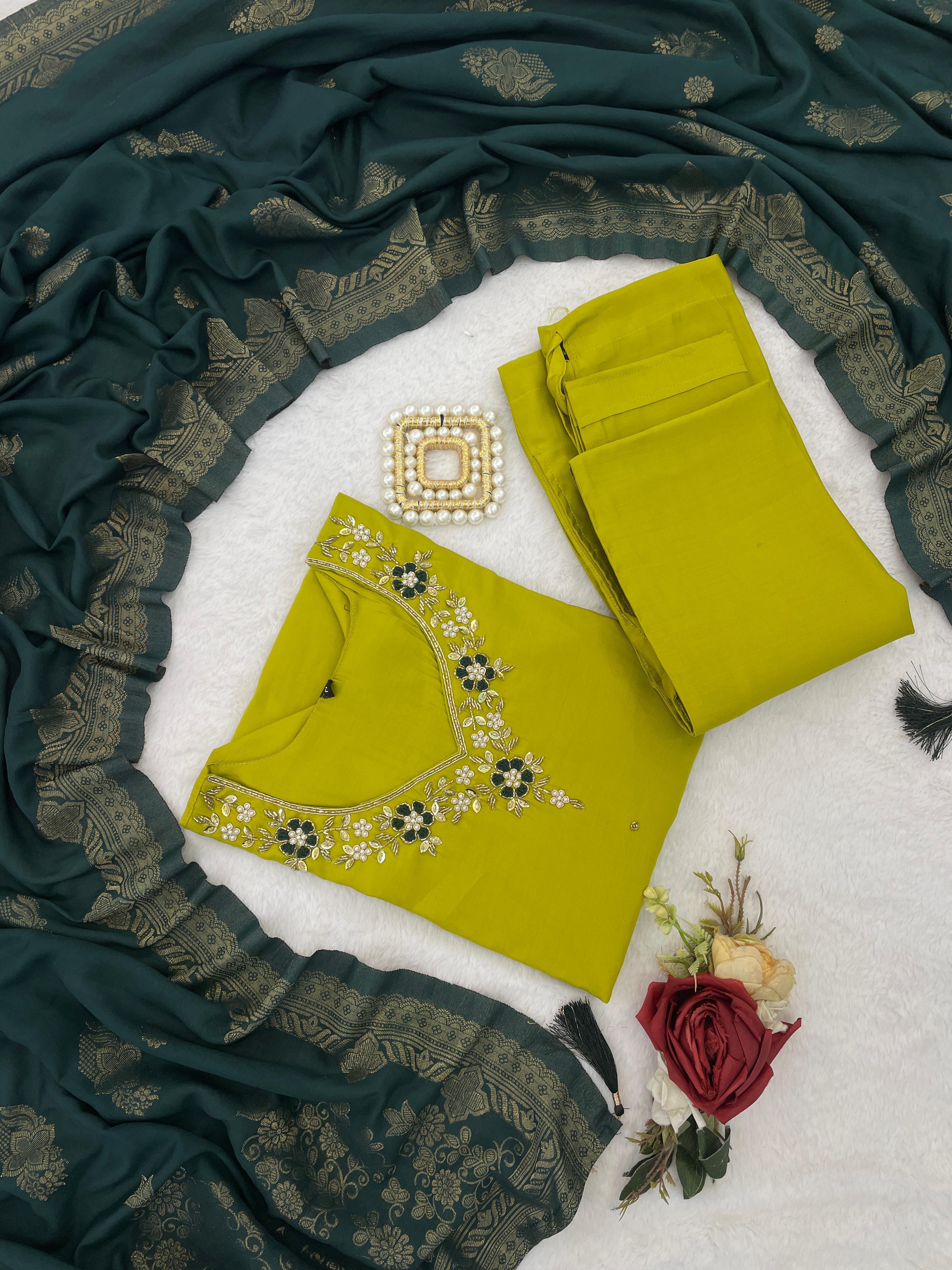
- Long kurti plus narrow pant: Add small earrings, a structured tote and low block heels for a clean workwear formula.
- Short kurti plus palazzo: Keep the dupatta light and let the trouser width provide movement. This pairing works well for cotton prints and daytime events.
- Mid-length kurti plus salwar: Use juttis, a compact shoulder bag and a dupatta with a controlled border for a traditional salwar kameez look.
- Plain kurti plus regional print dupatta: Let a Kalamkari, Bandhej or Sambalpuri dupatta carry the pattern, and choose a solid bottom in a colour already present in the textile.
- Embroidered kurti plus simple pants: Repeat one embroidery colour in the footwear or earrings instead of adding another heavily decorated layer.
A straight kurti rewards deliberate editing. When the kurti has a bold print, zari, mirror work or jacquard texture, the best bottom is often the quietest one. When the kurti is plain and short, a palazzo, Patiala or patterned dupatta can supply the needed movement and character.
The most dependable answer to who straight-cut kurtis suit and which bottoms work best is therefore practical: almost everyone can wear the silhouette, but the right result comes from coordinating hem length, bottom volume, fabric weight and personal comfort. A well-fitted straight kurti with the accurate bottom can move from everyday cotton dressing to festive ethnic wear without relying on an exaggerated flare.
Straight-cut Kurti and Bottom Pairing Questions Answered
Who can wear a straight-cut kurti?
Almost every body type can wear a straight-cut kurti because the silhouette is relatively even and easy to adjust through length, fabric and side slits. Petite wearers often benefit from shorter hems and tonal bottoms, while fuller or curvier wearers may prefer relaxed cuts with straight pants or fluid palazzos.
Which bottom is best with a long straight kurti?
Cigarette pants, straight trousers and narrow churidars usually work best with a long straight kurti. Soft palazzos can also work when the fabric drapes rather than standing stiffly away from the body.
Can I wear a palazzo with a straight kurti?
Yes, a palazzo pairs well with a straight kurti when the kurti is short or mid-length, or when a long kurti is made from a lightweight fabric. A fluid palazzo gives comfort and movement, while a stiff wide-leg bottom can make a long straight outfit look bulky.
Are straight kurtis suitable for plus-size women?
Straight kurtis can be very comfortable for plus-size women when the garment has enough bust and hip ease without becoming oversized at the shoulders. Side slits, medium-weight fabrics and straight or fluid bottoms usually create a clean, mobile silhouette.
Which bottom should I wear with a short straight kurti?
Short straight kurtis can be worn with palazzos, Patiala trousers, salwars, shararas or straight pants. Patiala and salwar bottoms create a traditional look, while palazzos offer a more contemporary and relaxed proportion.
How do I choose the right length for a straight kurti?
Choose the length according to the bottom and your intended visual proportion. A knee-length or shorter kurti gives wide bottoms room to show, while a longer kurti generally looks neater with cigarette pants, straight trousers or a softly draped palazzo.


