

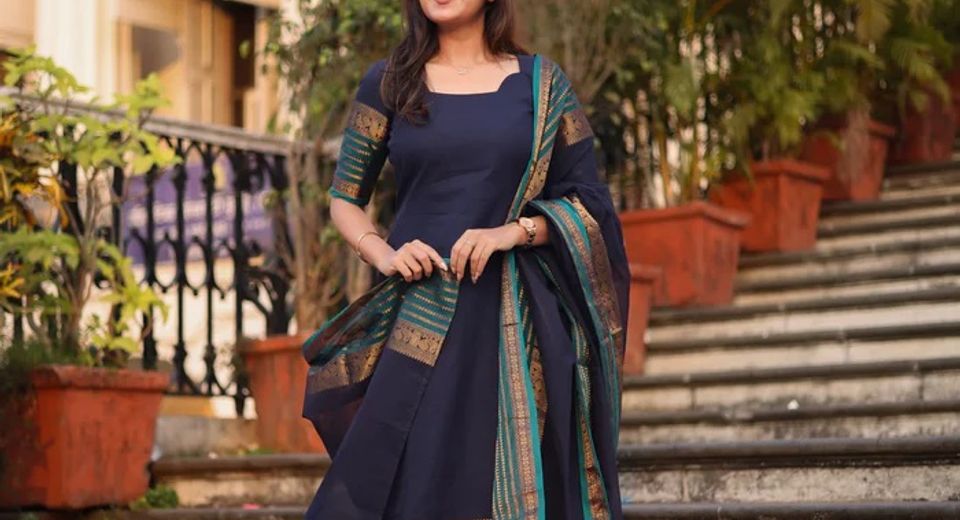
The neckline of a kurti changes the visual balance of an entire outfit. Who Should Wear Round Neck Kurtis and What Pairs Well With it's an useful question because a round neck works across ages, body proportions and dress codes when the depth, fabric and fit are chosen carefully. A round neck kurti can look modest with straight pants, relaxed with palazzos, or festive with a woven dupatta and traditional jewellery.
The most important decision isn't whether a round neckline is universally flattering; the important decision is whether the curve, opening and shoulder fit suit the wearer's proportions and the setting. A neckline that sits close to the base of the throat gives a neat, conservative appearance, while a slightly deeper U-shaped round neck creates more vertical space around the face. A difference of only 2 to 4 centimetres can change the character of a kurti.
Who Should Wear Round Neck Kurtis and What Pairs Well With It for Different Body Proportions?
Round neck kurtis suit people who want a balanced, approachable neckline with moderate coverage and easy compatibility with Indian jewellery. The shape works especially well for oval, long and heart-shaped faces, but face shape should never be the only deciding factor.
A round neck creates a soft horizontal curve near the collarbone. That curve can visually soften angular shoulders and provide structure for a narrow upper body. Wearers with a longer neck can choose a closer, higher round neck without making the outfit feel crowded. Wearers with a shorter neck may prefer a wider or slightly deeper round neck, which leaves more skin visible and prevents the upper body from looking compressed.
Round neck kurtis are practical for fuller busts when the garment has enough room across the chest and doesn't pull at the neckline. A well-fitted shoulder seam matters more than choosing a particular neck shape. If the neckline gapes, stretches or forms diagonal wrinkles from the bust, size up or select a cut with a more generous front panel.
Petite wearers can use a shallow round neck, a straight kurti and slim ankle-length pants to maintain clean vertical lines. Taller wearers can carry deeper round necks, longer kurtis, wide-leg pants and generous dupattas without losing proportion. Curvier wearers may find that a medium-depth round neck paired with side slits and fluid fabric offers comfort without adding unnecessary bulk around the chest.
Who should wear a round neck kurti for everyday dressing?
A round neck kurti suits everyday dressing when the neckline is comfortable, the shoulder seam sits correctly and the fabric allows movement. Cotton, Kanchi cotton and soft rayon are practical choices for commuting, errands, classes and informal lunches.
A high round neck with three-quarter sleeves gives a composed office look, while a medium-depth round neck with a printed dupatta feels more relaxed. A straight kurti with ankle-length pants is easy to sit and walk in, and a side slit prevents the hem from restricting movement.
Who Should Wear Round Neck Kurtis and What Pairs Well With It for Different Face Shapes?
A round neck can suit every face shape when its width and depth are adjusted to create balance. A slightly wider curve can complement a round face by opening the neckline, while a higher round neck can soften a long face without adding visual length.
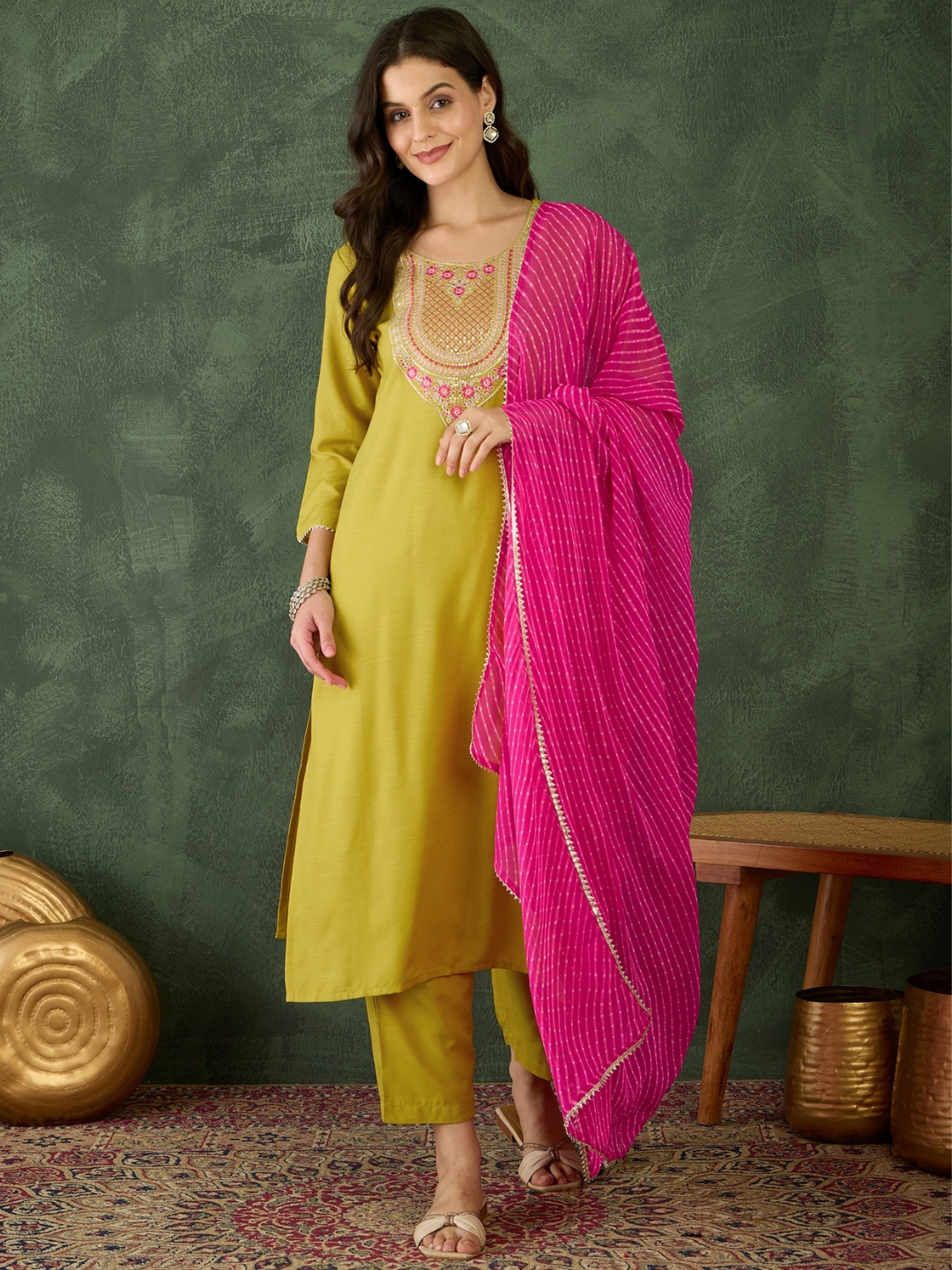
Oval faces can usually carry narrow, medium or wide round necks because the face already has balanced proportions. Long faces often benefit from a higher round neck, a fuller dupatta drape or medium-sized earrings that add horizontal interest. Round faces can look more elongated with a wider, moderately deep neckline and longer earrings rather than a very tight neck opening.
Heart-shaped faces often work well with medium-width round necks because the curved line softens a broader forehead and narrower chin. Square or angular faces can use a round neck to introduce a gentler line near the jaw. These guidelines are starting points rather than strict rules; personal preference, hairstyle and the shape of the kurti also influence the result.
Face-shape advice should not replace a fit check. A round neck in crisp cotton will hold a defined curve, whereas a rayon or soft blended fabric will fall closer to the body. Trying the kurti with the intended dupatta and earrings gives a more accurate result than judging the neckline alone.
Who Should Wear Round Neck Kurtis and What Pairs Well With It in Neckline Depth?
The ideal round neck depends on neckline depth, width, collarbone exposure, fabric and the amount of embroidery around the face. These five details determine whether a round neck looks minimal, youthful, formal or festive.
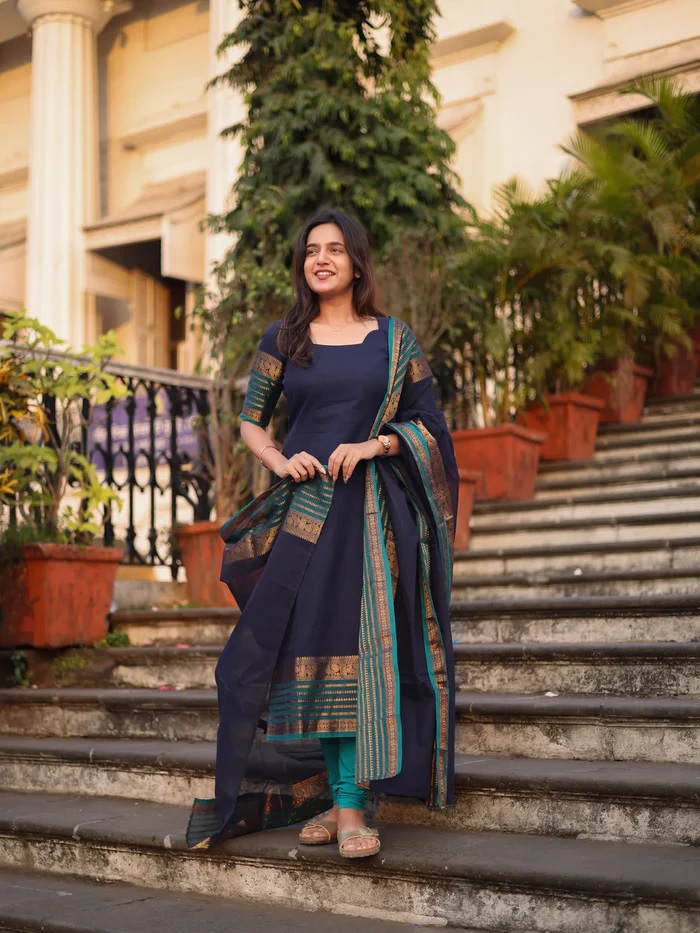
A high round neck usually ends about 2 to 4 centimetres below the base of the throat and works well for office wear, school functions and cooler months. A medium round neck generally sits 5 to 8 centimetres below the throat and gives the most versatile balance for everyday salwar suits. A deeper round neck can be effective for evening dressing, but it needs stable stitching and a well-positioned camisole or inner layer.
Neckline width also matters. A narrow curve concentrates attention around the face and pairs neatly with small pendants. A wider curve exposes more of the collarbone and creates space for a short necklace, choker or layered chain. Heavy embroidery, zari or contrast piping around the neck makes the neckline appear visually higher, so a decorated round neck often benefits from slightly more depth.
Fabric should support the intended silhouette. Cotton and Kanchi cotton hold a clean round shape and suit structured daily wear. Rayon drapes closer to the body and can make an embroidered kurti feel softer. Woven dupattas add visual weight, so a round neck kurti with a broad neckline or restrained front decoration can prevent the upper half from appearing crowded.
Who Should Wear Round Neck Kurtis and What Pairs Well With It in Bottom Wear?
Straight pants, cigarette pants, palazzos, salwars and Patiala trousers all pair well with a round neck kurti when the bottom volume matches the kurti's length and width. The most reliable choice is a bottom that repeats either the kurti's colour or one small accent from its print.
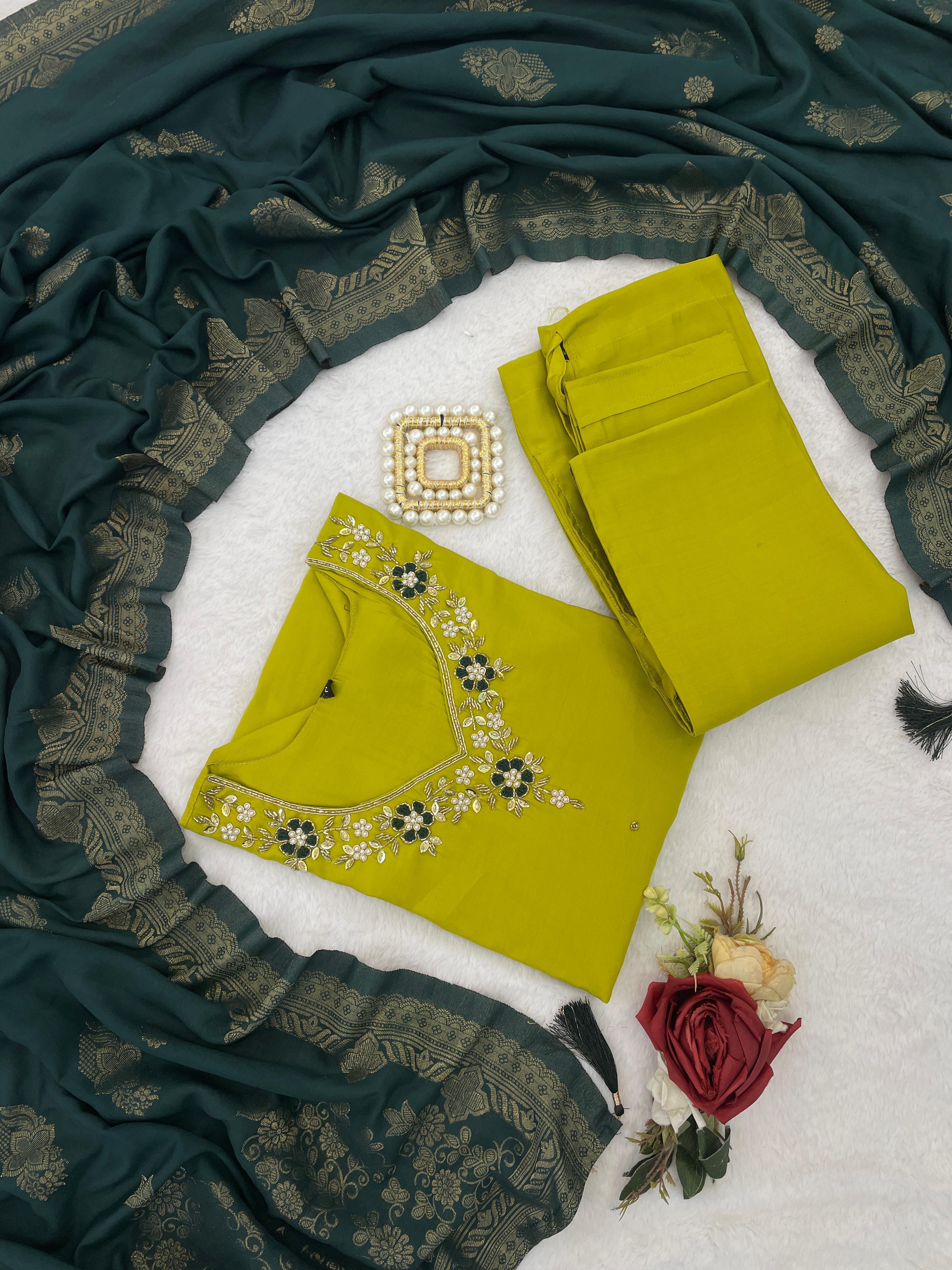
Straight pants create a clean, elongated line with a knee-length or calf-length kurti. Mustard Embroidered Kurti Pant Dupatta Set Women demonstrates why coordinated pants work: the three pieces keep the neckline, hemline and dupatta visually connected. Choose straight pants when the kurti has embroidery, a busy print or a decorative hem.
Cigarette pants suit a shorter straight kurti and create a tailored result for office meetings, festive lunches and daytime ceremonies. Ankle exposure gives the outfit lightness, especially when the round neck is high and the kurti has three-quarter sleeves. Neutral cigarette pants in ivory, beige, navy or charcoal are easier to rewear than a closely matched bright colour.
Palazzos balance a fitted or lightly shaped kurti with movement through the lower half. A medium-depth round neck, three-quarter sleeves and wide palazzos make a comfortable silhouette for travel and informal celebrations. Keep the dupatta relatively narrow or drape it over one shoulder so the outfit doesn't become too voluminous.
Salwar and Patiala trousers work particularly well when the outfit has a regional or relaxed character. Punjab Patiala Salwar Suits provide an useful styling reference because the gathered bottom already carries volume and movement. A shorter round neck kurti, fitted at the shoulders and simple around the hips, prevents Patiala pleats from looking overwhelmed.
A flared bottom should be balanced by a kurti with enough structure at the shoulder. Conversely, a straight kurti with straight pants can look severe if every line is narrow and rigid. Adding a textured dupatta, jhumkas or a small contrast border introduces movement without changing the basic silhouette.
Who Should Wear Round Neck Kurtis and What Pairs Well With It in Dupatta Draping?
A round neck kurti pairs best with a dupatta that either frames the neckline neatly or creates a deliberate contrast in texture and scale. The drape should leave enough of the round curve visible to show that the neckline is intentional.
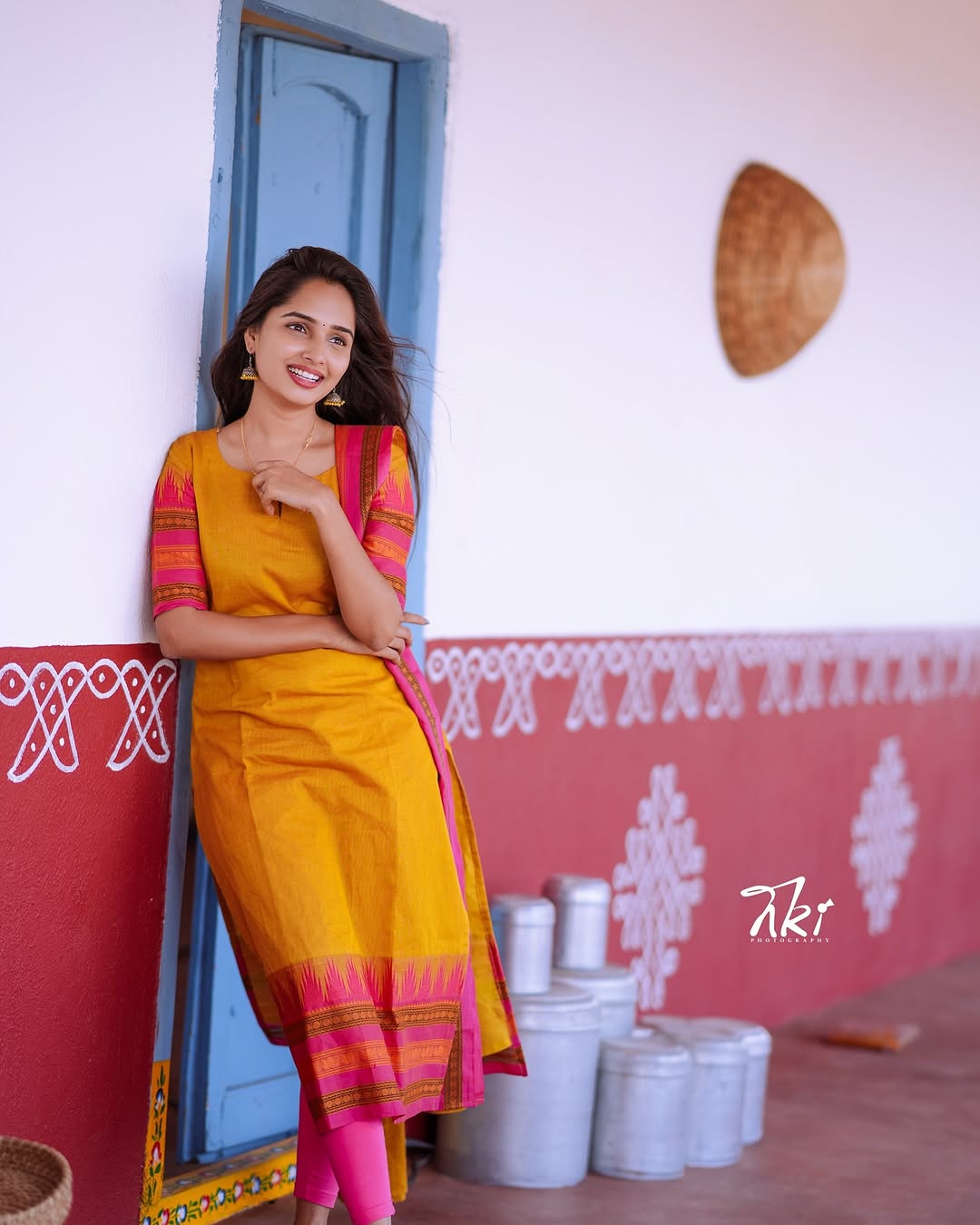
For a simple daily look, place one end of a lightweight dupatta over one shoulder and let the other end fall behind the arm. This arrangement keeps the neckline open and works well with Classic Yellow Cotton Kurti Set with Woven Dupatta. Cotton dupattas, woven borders and small geometric prints complement a round neck without making the upper body look heavy.
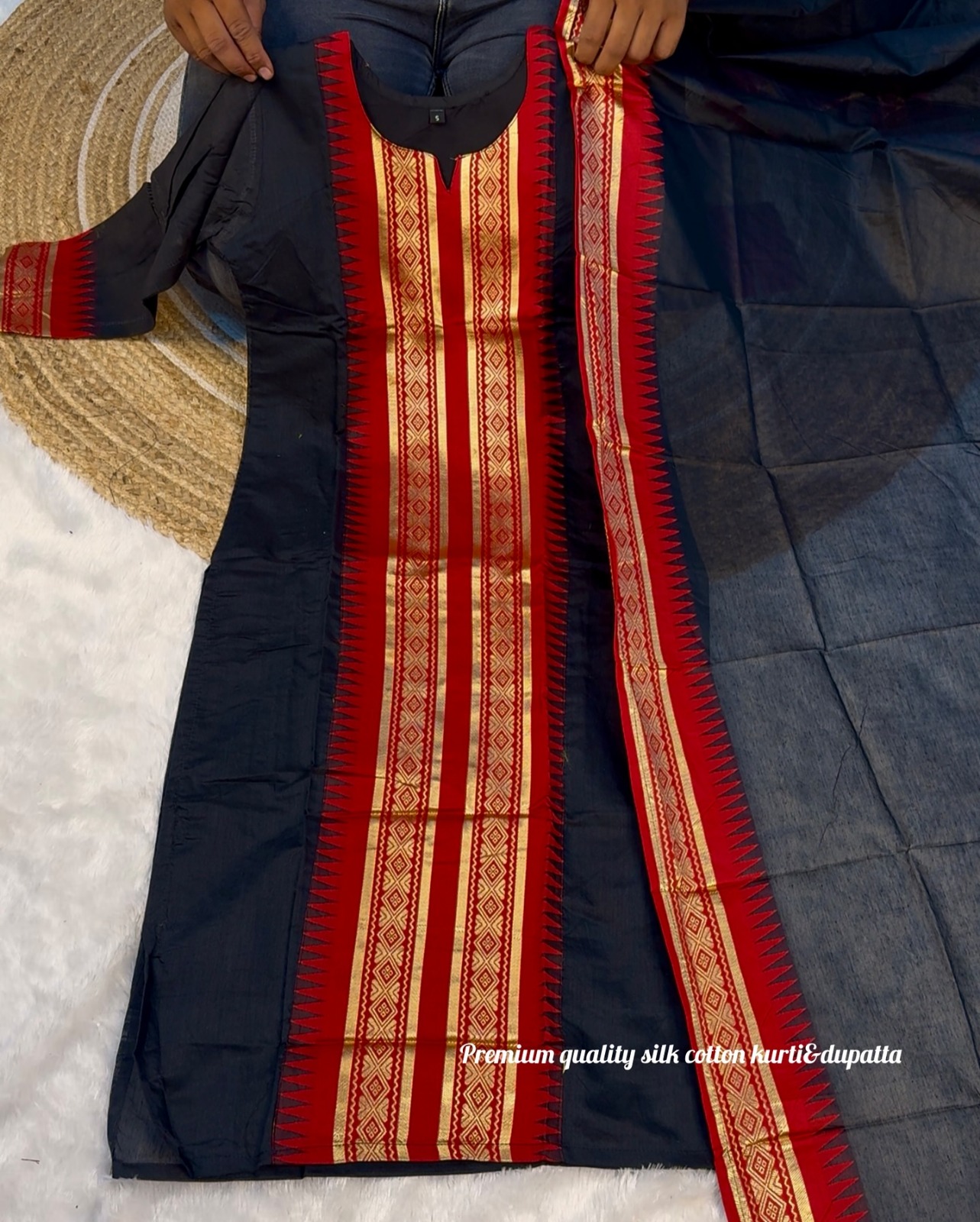
For a more classic appearance, drape a zari or woven dupatta over both shoulders and allow a narrow central section of the kurti to remain visible. Mustard Kanchi Cotton Kurti Set with Zari Dupatta shows how a metallic border can provide occasion appeal without requiring a deep neckline. Keep necklaces shorter when the dupatta has a wide zari edge.
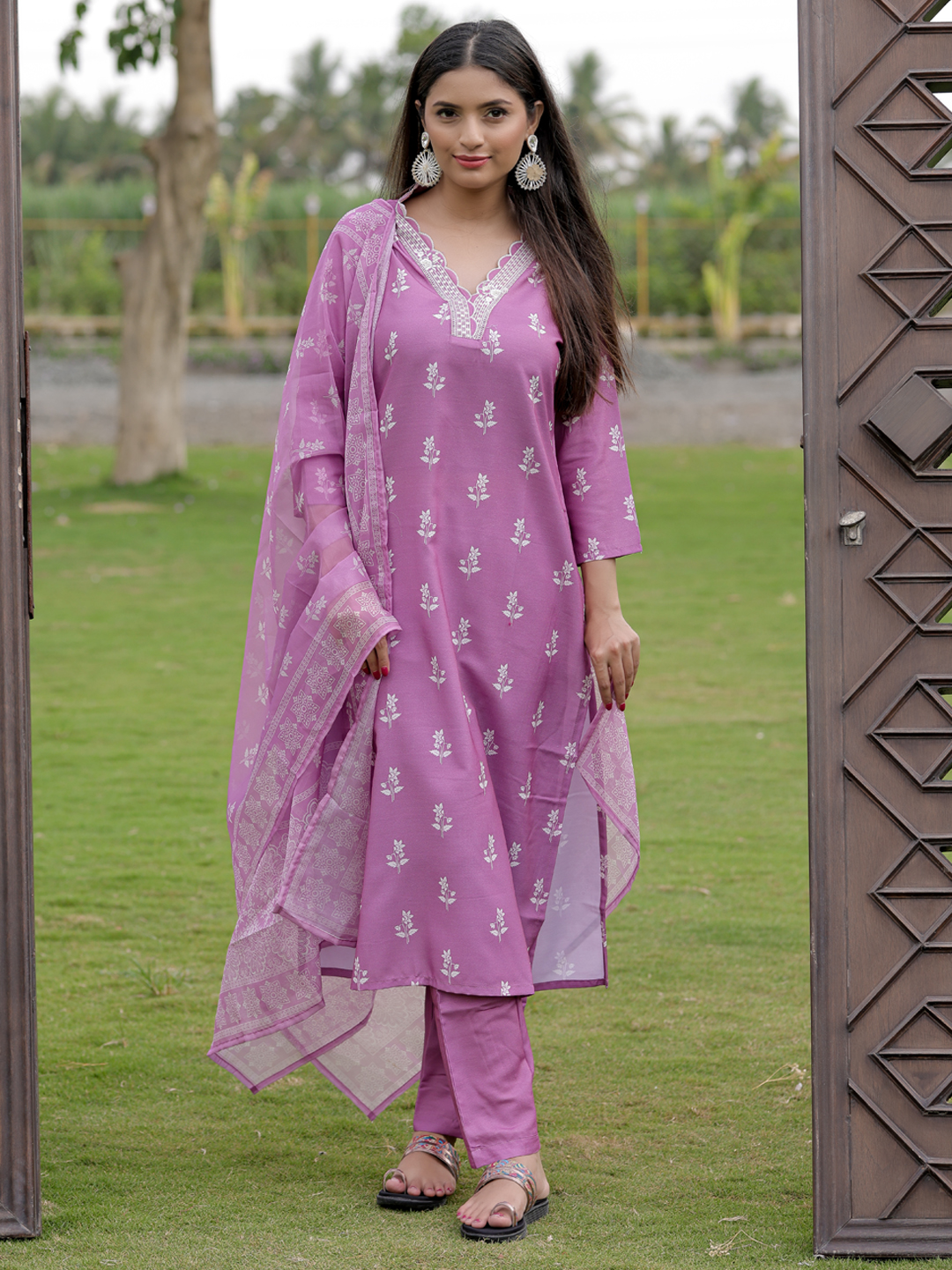
Printed dupattas work best when one colour is repeated in the kurti or bottom. Onion Pink Printed Kurti Pant Dupatta Set gives an useful example of a coordinated printed approach: matching pants prevent the dupatta pattern from appearing disconnected from the neckline. If the print is dense, choose plain earrings and let the textile provide the decoration.
A woven dupatta can also introduce regional character. Maharashtra Paithani Inspired Salwar Suits, Gujarat Bandhej Salwar Suits and Odisha Sambalpuri Salwar Suits suggest three different directions for colour, border and surface interest. A round neck kurti acts as a calm base for these distinctive textile references, particularly when the bottom is plain.
Who Should Wear Round Neck Kurtis and What Pairs Well With It in Fabric and Colour?
Cotton and Kanchi cotton are dependable fabrics for a polished round neck kurti because they hold the neckline, breathe well and coordinate naturally with woven dupattas. Rayon gives softer drape, while embroidery and zari details make a simple round neck suitable for festive dressing.
For hot weather, select cotton with a lining only where transparency requires it. A lined bodice can feel warmer around the chest, so breathable sleeves and a looser side seam help maintain comfort. Kanchi cotton works well for structured kurti sets because its texture adds interest even when the neckline and silhouette remain simple.
Mustard, yellow, navy and onion pink each create a different effect with a round neckline. Mustard and yellow look lively with ivory, cream or muted green bottoms. Navy works with white, beige, silver or rust accents. Onion pink pairs easily with ivory, rose, wine and soft grey, depending on whether the desired result is delicate or more dramatic.
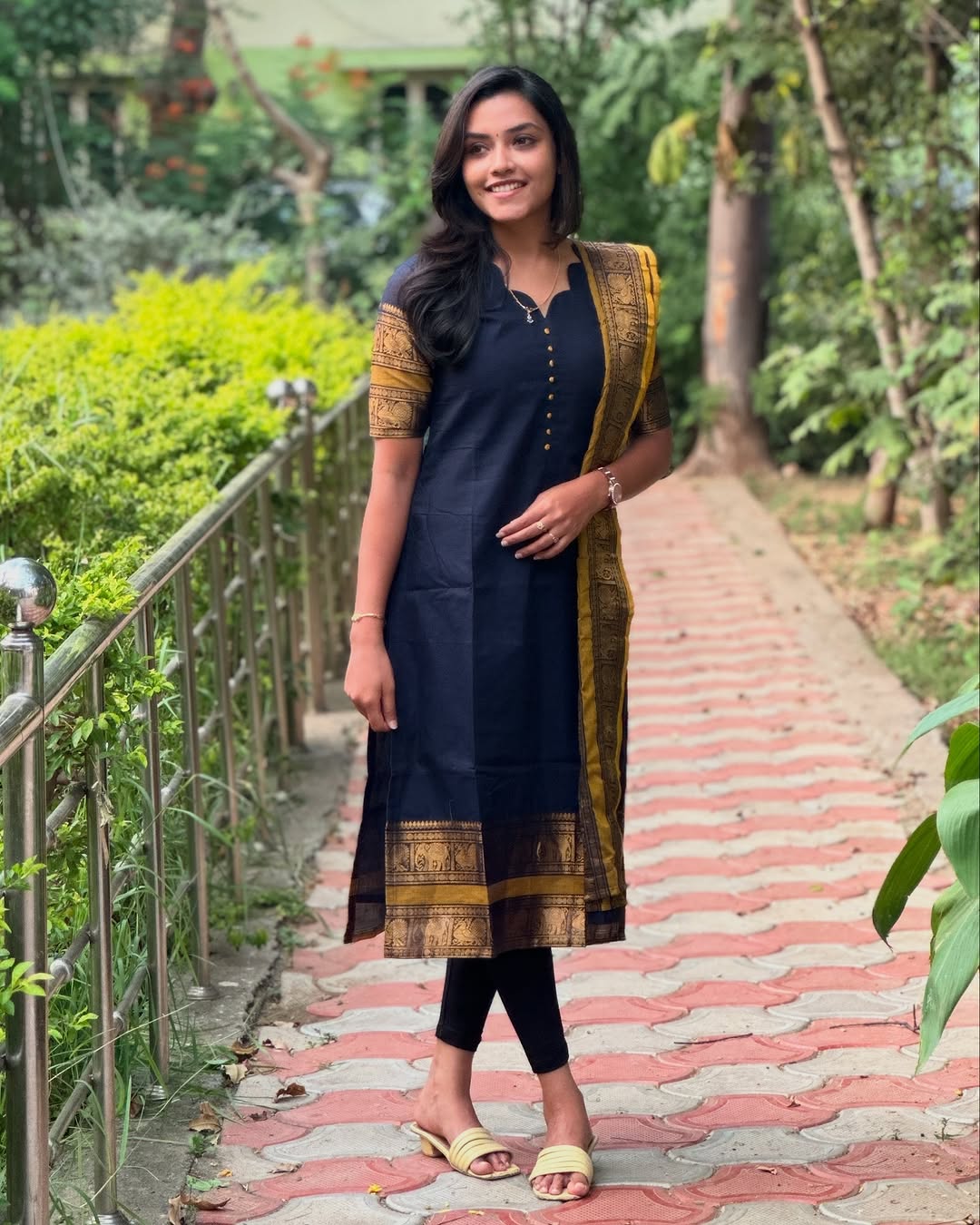
Mustard Embroidered Rayon Kurta Set with Printed Dupatta suits a softer, fluid interpretation because rayon allows the kurta to fall naturally. Navy Kanchi Cotton Kurti Set with Woven Dupatta gives a more composed daytime impression because the darker base and textured dupatta provide definition around a modest neckline.
Royal Navy Blue Kanchi Cotton Kurta Set with Elegant Woven Dupatta can move from a family lunch to a small festive gathering when paired with silver-toned earrings and neutral footwear. Classic Yellow Cotton Kurti Set with Woven Dupatta is more suited to bright daytime styling, especially with tan sandals or cream juttis.
Who Should Wear Round Neck Kurtis and What Pairs Well With It for Jewellery?
Jewellery should fill the visual space around a round neck without competing with the neckline, embroidery or dupatta border. Small pendants, short chains, jhumkas, studs and medium-sized hoops are dependable choices.
A high round neck usually looks cleaner with earrings rather than a necklace. Choose small jhumkas for a heritage finish, studs for workwear or medium hoops for a contemporary look. A medium-depth round neck can accommodate a short pendant, a delicate chain or a compact choker if the kurti has limited embroidery.
A broad necklace can work with a plain round neck, but the necklace should not finish at exactly the same point as the neckline. A gap of approximately 2 to 4 centimetres creates separation and prevents the jewellery from appearing stuck to the fabric. If the dupatta has zari, metallic thread or a wide woven border, reduce necklace size and allow the textile to provide the main shine.
Mustard and pink kurtis work well with antique gold, brass and warm wooden jewellery. Navy blue pairs effectively with silver, oxidised metal, pearls and white stones. Onion pink can take rose-gold, pearl or quiet gold accents. The best accessory choice repeats one colour or material already present in the outfit.
Who Should Wear Round Neck Kurtis and What Pairs Well With It for Different Occasions?
Round neck kurtis can suit work, casual outings, festive gatherings and family ceremonies when the fabric, sleeve, bottom and accessory level match the dress code.
For office wear, choose a high or medium round neck in cotton or Kanchi cotton, straight pants, minimal embroidery and a compact dupatta. Navy Kanchi Cotton Kurti Set with Woven Dupatta works well with closed sandals, a structured tote and small earrings. Keep the dupatta securely pinned if the workday involves frequent movement.
For a Haldi ceremony, brighter colours, breathable cotton and easy movement matter more than heavy embellishment. Classic Yellow Cotton Kurti Set with Woven Dupatta or a printed onion pink set can be styled with flat juttis, floral earrings and a single-shoulder dupatta drape. Avoid a long, loose dupatta if the event involves sitting on the floor or participating in rituals.
For a family lunch or puja, choose a woven or printed dupatta and moderate jewellery. Mustard Kanchi Cotton Kurti Set with Zari Dupatta brings a festive accent while retaining the comfort of a structured cotton base. For an evening gathering, embroidery, rayon drape and antique-gold earrings can make a round neck kurta feel more dressed up without requiring a plunging neckline.
Regional-inspired designs can guide colour coordination without forcing a costume-like look. Kalamkari Print Salwar Suits can be paired with earthy jewellery and plain bottoms. Maharashtra Paithani Inspired Salwar Suits suit zari accents and a neat drape. Gujarat Bandhej Salwar Suits work with colourful bangles, while Odisha Sambalpuri Salwar Suits pair naturally with silver-toned accessories.
The most reliable formula is simple: select the neckline depth for comfort, match bottom volume to kurti length, repeat one colour in the dupatta or jewellery, and keep only one part of the outfit highly decorative. That approach allows a round neck kurti to look intentional rather than over-styled.
Common Questions About Round Neck Kurti Styling
Who can wear a round neck kurti?
Anyone can wear a round neck kurti when the neckline width, depth and garment fit suit their proportions and comfort. Higher necklines give more coverage, while wider or deeper curves create more space around a shorter neck or fuller upper body.
What bottoms look best with a round neck kurti?
Straight pants and cigarette pants create the cleanest tailored line, while palazzos add movement and Patiala trousers create a relaxed traditional silhouette. Match bottom volume to the kurti's length and avoid pairing a very loose kurti with an excessively full bottom unless the outfit is intentionally voluminous.
Can a round neck kurti be worn with a dupatta?
A round neck kurti pairs well with a dupatta when the drape leaves part of the neckline visible. Lightweight cotton dupattas suit daily wear, while woven or zari dupattas add festive texture; heavy borders usually require simpler jewellery.
Which jewellery suits a round neck kurti?
Small pendants, short chains, jhumkas, studs and medium hoops suit most round neck kurtis. High round necks often look better with statement earrings and no necklace, while plain medium-depth necklines can support a short pendant or compact choker.
Is a round neck kurti suitable for office wear?
A round neck kurti is suitable for office wear when it has a high or medium neckline, opaque fabric, modest side slits and a neat bottom such as straight pants or cigarette pants. Cotton and Kanchi cotton are practical choices because they hold their shape and remain comfortable during long workdays.
What should be worn with a round neck kurti for a Haldi ceremony?
Bright cotton or printed kurti sets with flat footwear, floral or lightweight earrings and a secure single-shoulder dupatta drape work well for a Haldi ceremony. Yellow, mustard and pink are easy festive colours, but breathable fabric and unrestricted movement should remain priorities.


