

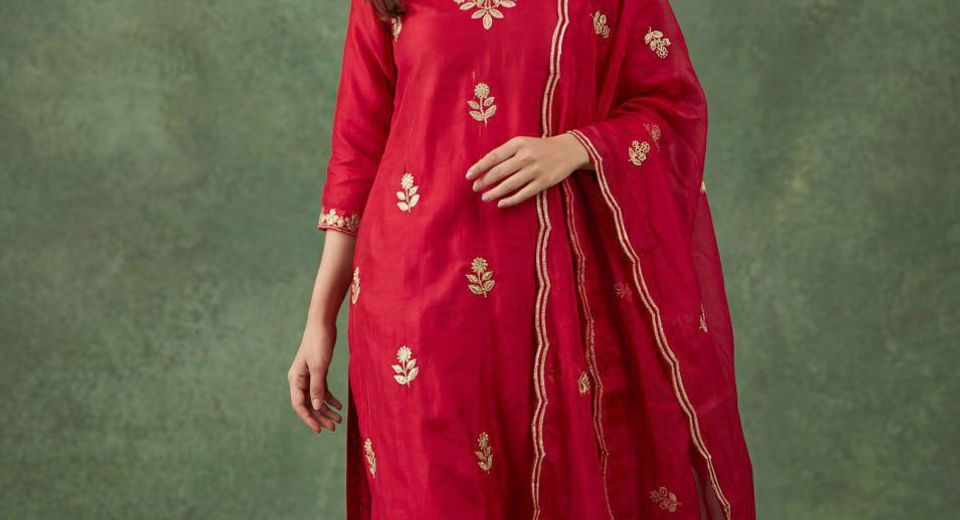
Who Long Kurtis Suit and Which Bottoms Work Best depends on more than height or body shape. The most flattering combination comes from matching the kurti's hemline, flare, fabric weight and neckline with the visual volume of the bottom. A long kurti can look streamlined with cigarette pants, graceful with a narrow churidar, or heavily layered with a sharara, so the right pairing changes with the silhouette and the event.
Long kurtis generally suit women who enjoy more coverage around the hips and thighs, prefer a vertical line through the outfit, or want an elegant alternative to a short straight kurta. The style also works across petite, tall, curvy and rectangular body proportions when the length is adjusted rather than chosen blindly. An useful starting point is to check where the hem ends: mid-calf, ankle, and just above the ankle create noticeably different effects.
Who Long Kurtis Suit and Which Bottoms Work Best?
Long kurtis suit most body types when the length and bottom width are balanced to preserve a visible vertical line. Slim or straight pants work best with flared, embroidered or heavily patterned kurtis, while palazzos and shararas work better with relatively narrow, straight or lightly flared kurtis.
Women with petite proportions can wear long kurtis successfully by choosing a hem around the mid-calf or a few inches above the ankle, rather than a very full ankle-length Anarkali. A monochrome or low-contrast bottom, a V-neck, and small-to-medium motifs help the outfit appear longer. High-waisted pants also reduce the visual break between the kurti and the bottom.
Taller women can carry ankle-length kurtis, longer side slits and wider palazzos with ease because extra vertical height accommodates more fabric. Tall wearers should still check the relationship between hem and bottom: a kurti that ends at the widest part of a very flared palazzo can make the lower half look crowded.
Curvier women may prefer A-line, straight or gently flared long kurtis with side slits that begin below the hip. These cuts offer movement without placing a large concentration of fabric across the stomach or hips. A well-fitted shoulder and bust area is more important than choosing an oversized garment, because excess fabric can erase the intended vertical shape.
Women with a hourglass shape can use a lightly shaped waist, princess seams or a belt-like yoke to retain definition. Rectangle body shapes can create movement with an A-line hem, layered dupatta or flared palazzo, while inverted-triangle proportions often look balanced with a simple upper half and a little extra width in the bottom.
How Kurti Length Changes the Overall Proportion
A kurti ending at mid-calf creates the easiest balance for everyday wear because the hem leaves enough ankle and footwear visible. A kurti ending near the ankle looks more formal and elongates the outfit, but it needs a narrow bottom or a clean slit to prevent the lower half from appearing heavy.
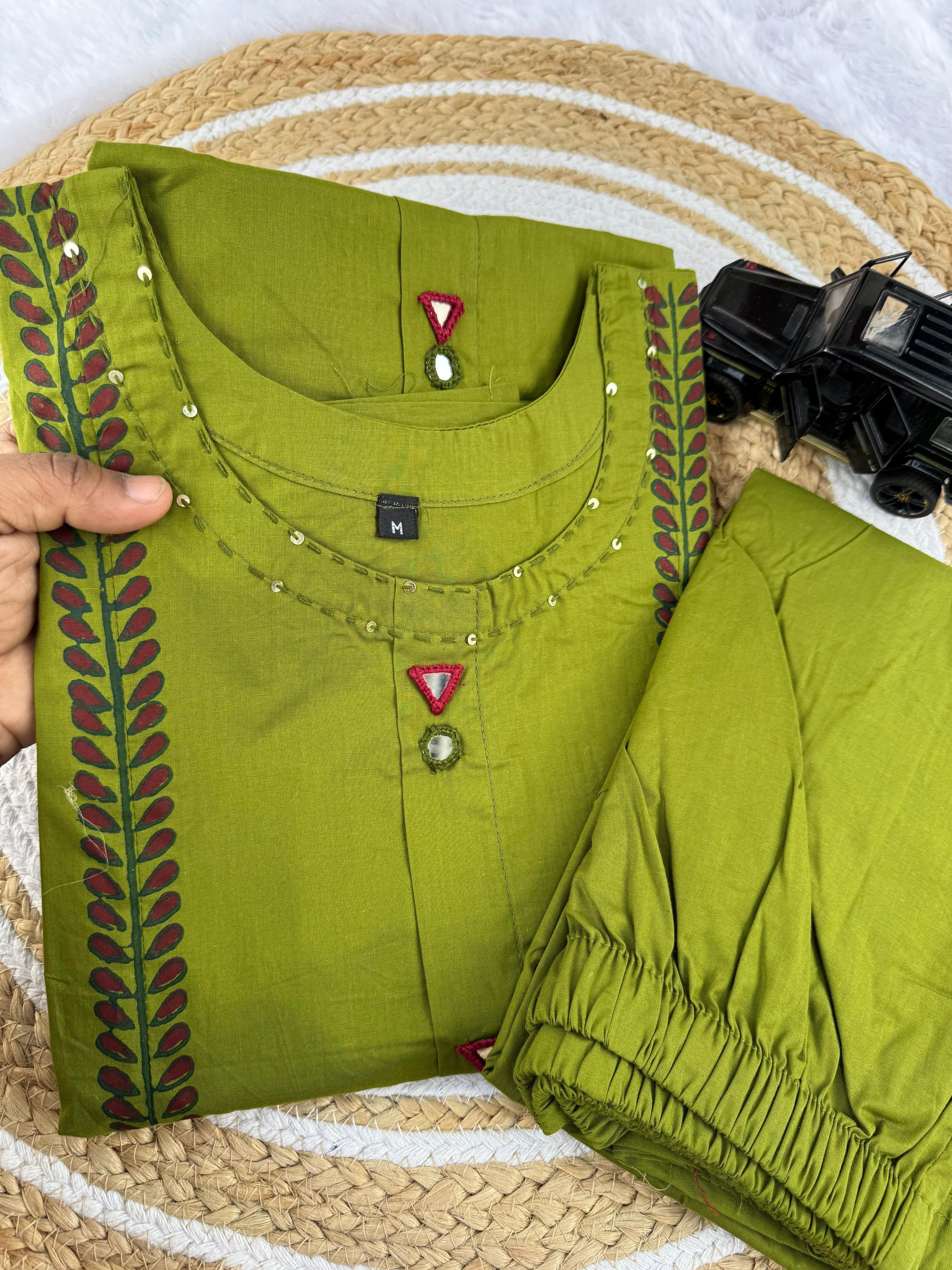
For a long kurti worn with straight pants, the hem should ideally fall above the ankle bone or cover most of the pant without bunching around the foot. Cigarette pants that end one to two inches above the ankle create a crisp break and work especially well with juttis, pointed mojaris or low block heels.
Long kurtis with palazzos need a deliberate length relationship. A straight kurti can finish below the knee or around mid-calf when the palazzo has a fluid drape. A flared kurti with a very wide palazzo may require a shorter hem, because two large silhouettes competing at the knee and calf can overwhelm a smaller frame.
Side slits change how the garment moves and how much of the bottom is visible. A slit beginning around mid-thigh gives palazzos and cigarette pants space to show, while a closed lower panel creates a more continuous column. The choice is practical as well as visual: higher slits improve stride, while a closed panel offers more coverage for travel or formal settings.
Which Bottoms Pair Best With a Long Kurti?
Cigarette pants are the most reliable bottom for a long kurti because their narrow leg keeps the outfit visually clean. Cigarette pants work with straight, A-line and embroidered kurtis, and they're particularly useful when the top already has zari, mirror work, a jacquard weave or a large print.

Churidar pants create a traditional, close-fitting line below the knee and suit Anarkali-style or flared long kurtis. The gathered folds at the ankle add a classic salwar-kameez character, but they can look busy with a heavily patterned kurti. Choose a smooth cotton, viscose or silk-blend churidar when the kurti has substantial surface decoration.
Straight pants offer more ease than cigarette pants while keeping a narrow outline. Straight pants are a practical choice for workwear, family lunches and long days because they don't cling as closely at the calf. The Brown Cotton A-Line Kurti Pant Set with Mirror Work and the Designer Cotton A-Line Kurti Pant Set with Mirror Work show why coordinated pants help an A-line kurti retain a clear shape.
Palazzo pants introduce width, movement and a contemporary feel. Palazzos suit straight or lightly flared long kurtis made from fluid materials such as viscose, Chanderi silk or soft cotton. A long kurti with a wide palazzo is most flattering when the waist sits at the natural waist or slightly above it, preventing the legs from appearing shortened.
Sharara pants create the most festive volume because they flare sharply from the knee or upper calf. Sharara bottoms work best with a straight long kurti, a short-to-mid-length kurta, or a kurti with controlled flare. Pairing a full Anarkali with a heavily tiered sharara can make the outfit difficult to move in and visually dense.
Patiala salwars provide pleats and volume around the hips, so they need a kurti with enough length to cover the upper hip and a relatively simple surface. The Punjab Patiala Salwar Suits collection illustrates the time-honoured proportion: a roomy salwar balances a kurta that's not overloaded with competing flare. Patiala bottoms are less suited to a narrow, low-slit long kurti that compresses their pleats.
Fabric and Detail Should Decide the Bottom
Fabric weight should guide the amount of volume below a long kurti. A heavy jacquard or dense embroidered kurti needs a lighter, narrower bottom, while a lightweight cotton or fluid viscose kurti can carry wider palazzos without becoming stiff.
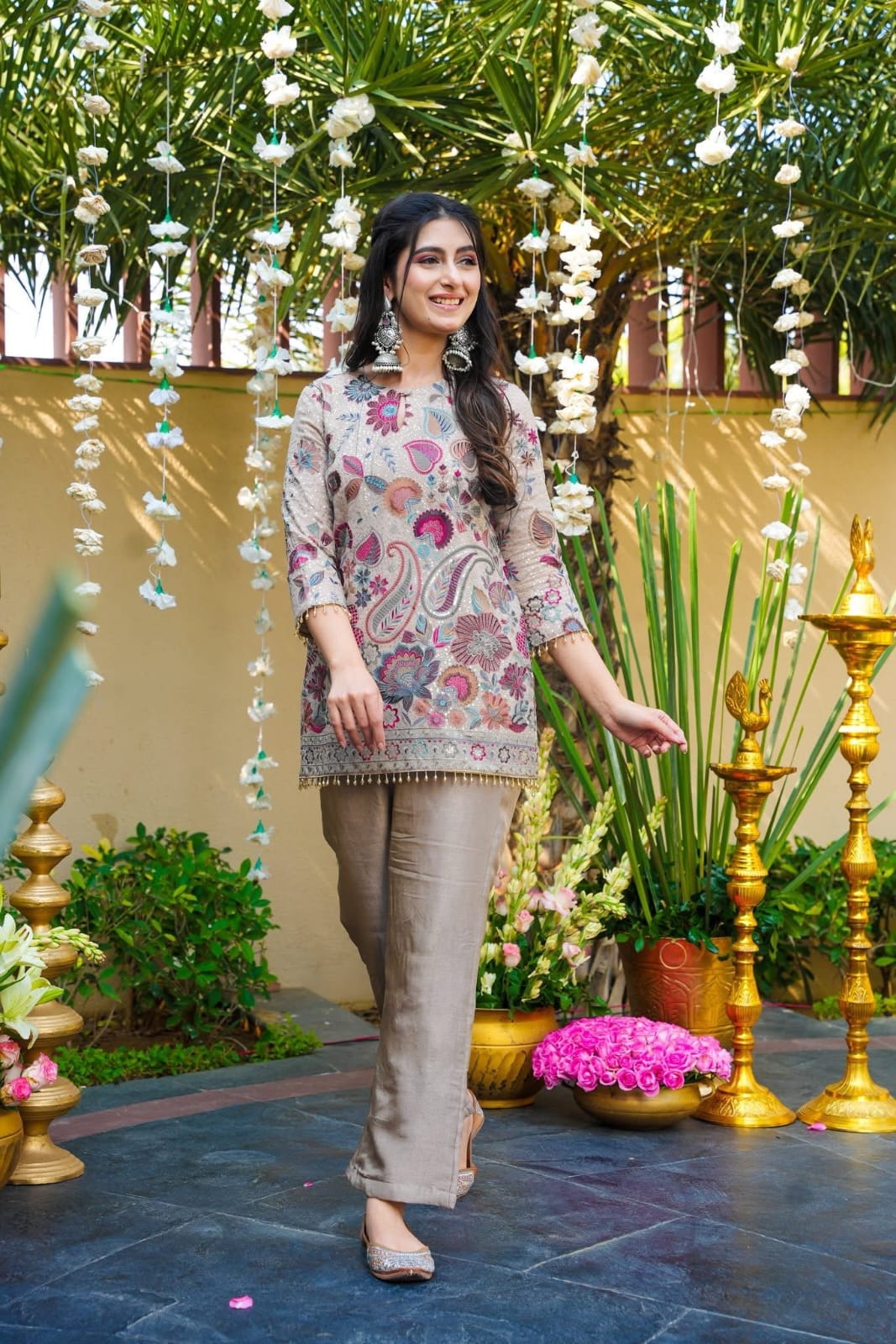
Banarasi silk, Kanjeevaram-inspired silk and dense zari surfaces naturally look formal, so cigarette pants, narrow churidars or understated straight pants allow the fabric to remain the focal point. Vichitra silk and Chanderi silk have a dressier sheen and pair well with clean bottoms that don't hide the drape or add unnecessary bulk.
The Elegant Beige Vichitra Silk Embroidered Kurta Set for Women demonstrates the value of restraint: a refined neutral kurta can be accompanied by a slim, tonal bottom for weddings, festive dinners or engagement events. The Maroon Viscose Chanderi Silk Embroidered Kurta Set for Women can similarly take a narrow bottom when the embroidery already supplies colour and texture.
Cotton supports more volume because the fabric usually feels breathable and less visually dense than a heavily woven silk. The Brown Cotton A-Line Kurti Pant Set with Mirror Work is suited to a practical straight-pant proportion, while a light cotton A-line kurti can also work with a modest palazzo for summer gatherings.
Jacquard needs special attention because woven patterns can add stiffness and visual weight even when the garment isn't physically heavy. The Black Jacquard Woven Kanchi Cotton Kurti Set is best supported by a streamlined bottom and simple footwear, allowing the Kanchi cotton texture to remain distinct rather than competing with a large flare.
Matching Necklines, Sleeves and Dupattas With Bottom Volume
A long kurti with a V-neck or vertical front detail usually supports more bottom volume than a high, closed neckline with dense embellishment. Vertical seams, a centre placket and long front panels continue the eye downward, making palazzos or a lightly flared sharara easier to wear.
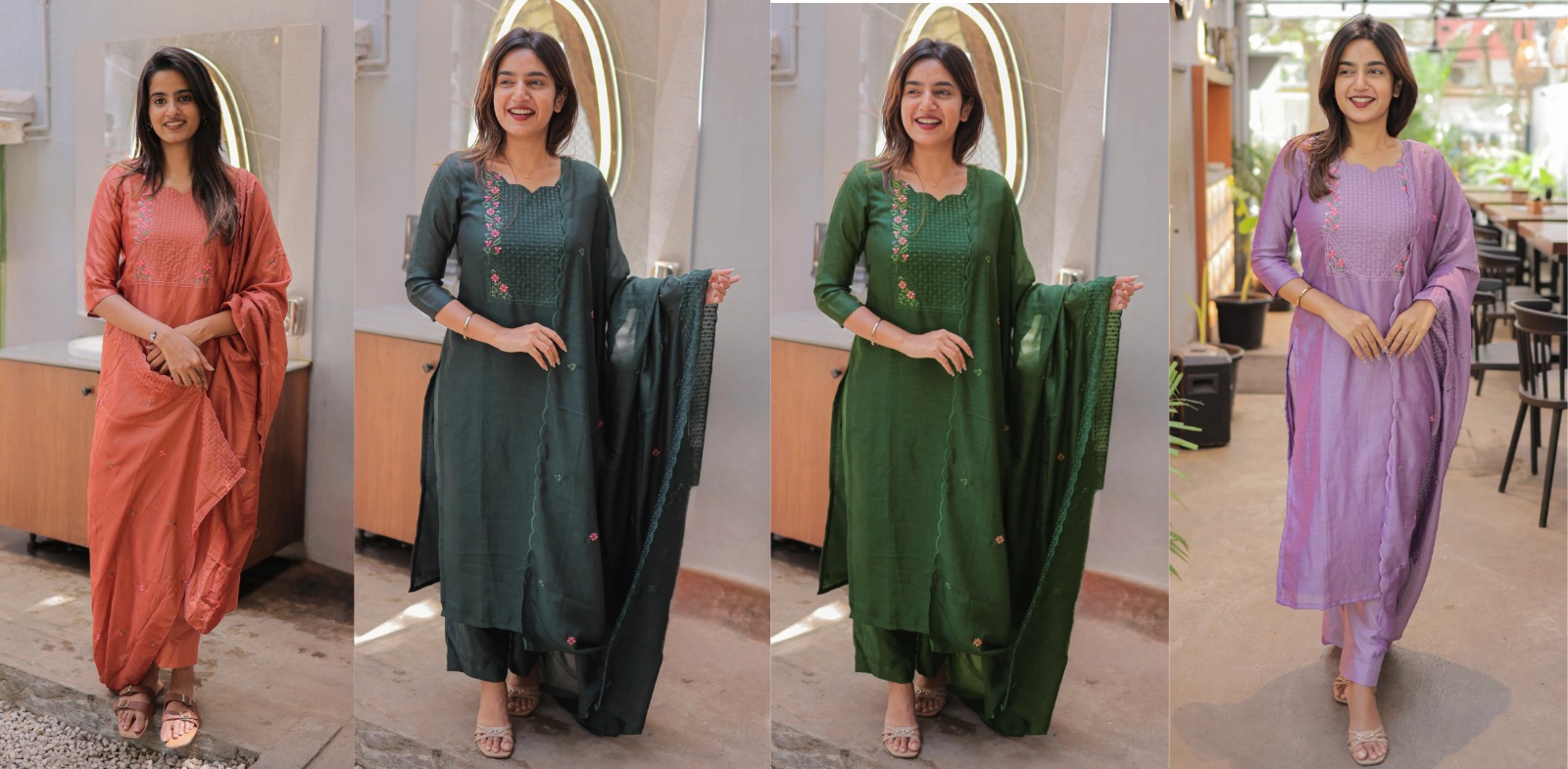
Wide boat necks, puff sleeves and statement shoulders already add width near the upper body. A narrow cigarette pant or straight pant balances those features better than a very wide palazzo. Conversely, a simple round-neck kurti with plain sleeves can accept a printed or pleated bottom without the outfit becoming top-heavy.
Dupatta placement also changes proportion. A dupatta worn over one shoulder creates a vertical line and works well with a long straight kurti. A dupatta draped across the chest adds horizontal width, so a narrow bottom can restore balance. The Designer Roman Silk Kurti Set with Jacquard Dupatta provides an useful formal example: the textured dupatta calls for controlled lower-half volume and uncomplicated jewellery.
Organza dupattas are lightweight but visually crisp. An outfit such as the Lavender Kurti Pant Set with Organza Dupatta benefits from a fitted or straight bottom because the organza supplies structure and lift around the shoulders without needing another dramatic element below.
Long Kurti Combinations for Different Occasions
Everyday dressing works best with breathable fabric, moderate length and a bottom that permits a full stride. Cotton straight pants, narrow palazzos and ankle-length cigarette pants are practical for commuting, errands and daytime family visits. Flat sandals, juttis or cushioned kolhapuris maintain comfort without shortening the line of the outfit.
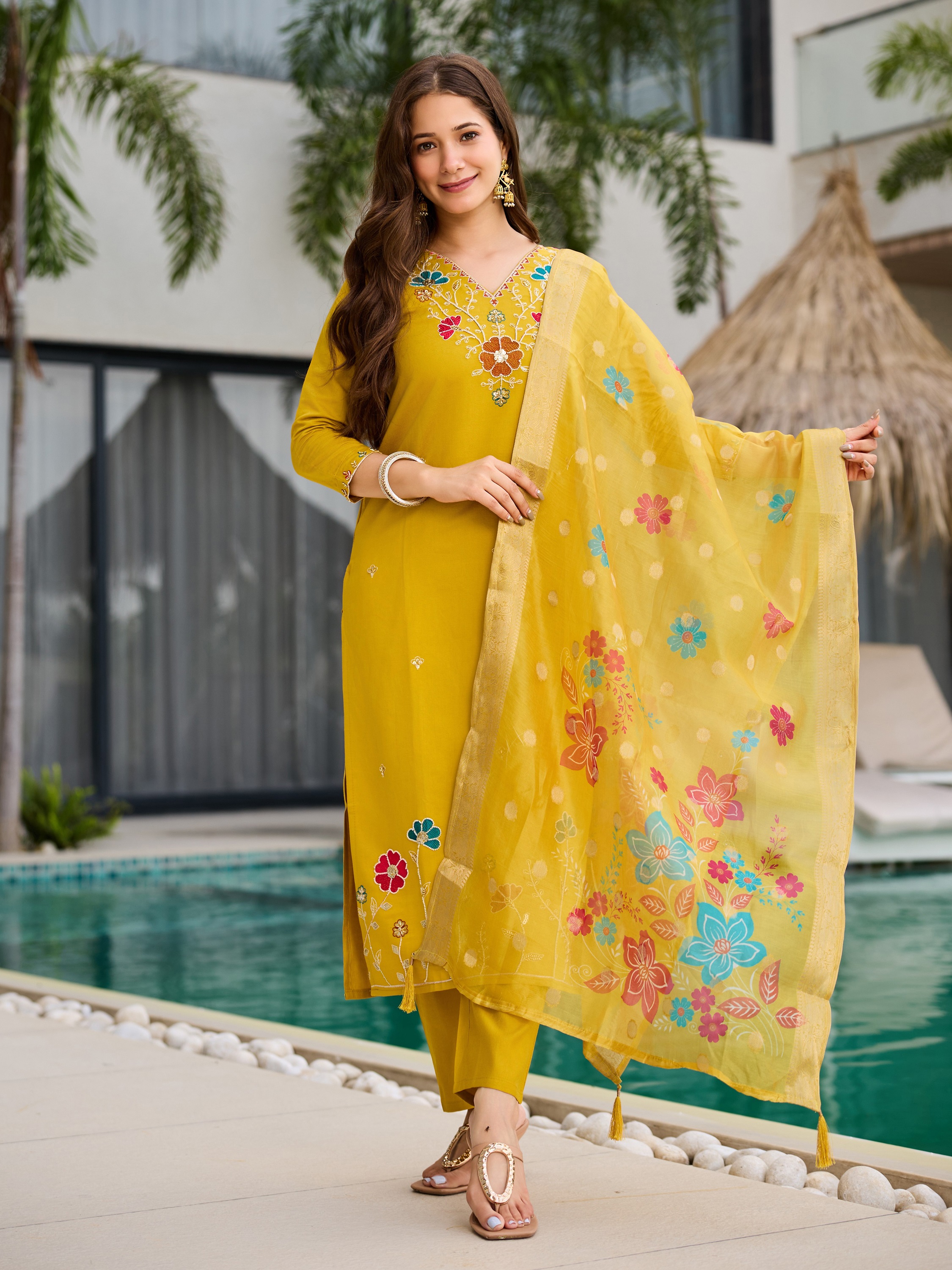
Office and semi-formal dressing benefits from a long straight or A-line kurti with cigarette pants or tailored straight pants. Keep contrast controlled: a beige, navy, black, maroon or muted green bottom creates a more deliberate appearance than a randomly contrasting print. A small structured handbag and low block heel complete the proportion without adding excessive ornament.
Festive dressing allows more surface detail, but a single focal point creates a more polished result. A heavily embroidered kurti can use a plain narrow bottom, while a plain kurti can support a zari-bordered palazzo, printed sharara or brocade bottom. The Maharashtra Paithani Inspired Salwar Suits collection and Gujarat Bandhej Salwar Suits collection demonstrate how regional colour and pattern can carry the outfit without requiring every garment component to be equally ornate.
Daytime cultural events call for fabrics that remain comfortable under warm conditions. Kalamkari Print Salwar Suits and Odisha Sambalpuri Salwar Suits can be styled with straight pants or a restrained palazzo, depending on the scale of the print. A large Kalamkari or Sambalpuri motif usually looks clearer with a solid bottom, while a small repeat print can tolerate a subtle woven texture below.
A Practical Fitting Checklist Before You Buy
Check the shoulder, bust and armhole before judging the length of a long kurti. A well-positioned shoulder seam keeps the garment looking tailored, while an armhole that pulls can make even a flattering hem feel restrictive. Measure the garment from the highest shoulder point to the hem and compare that number with your height and preferred footwear.
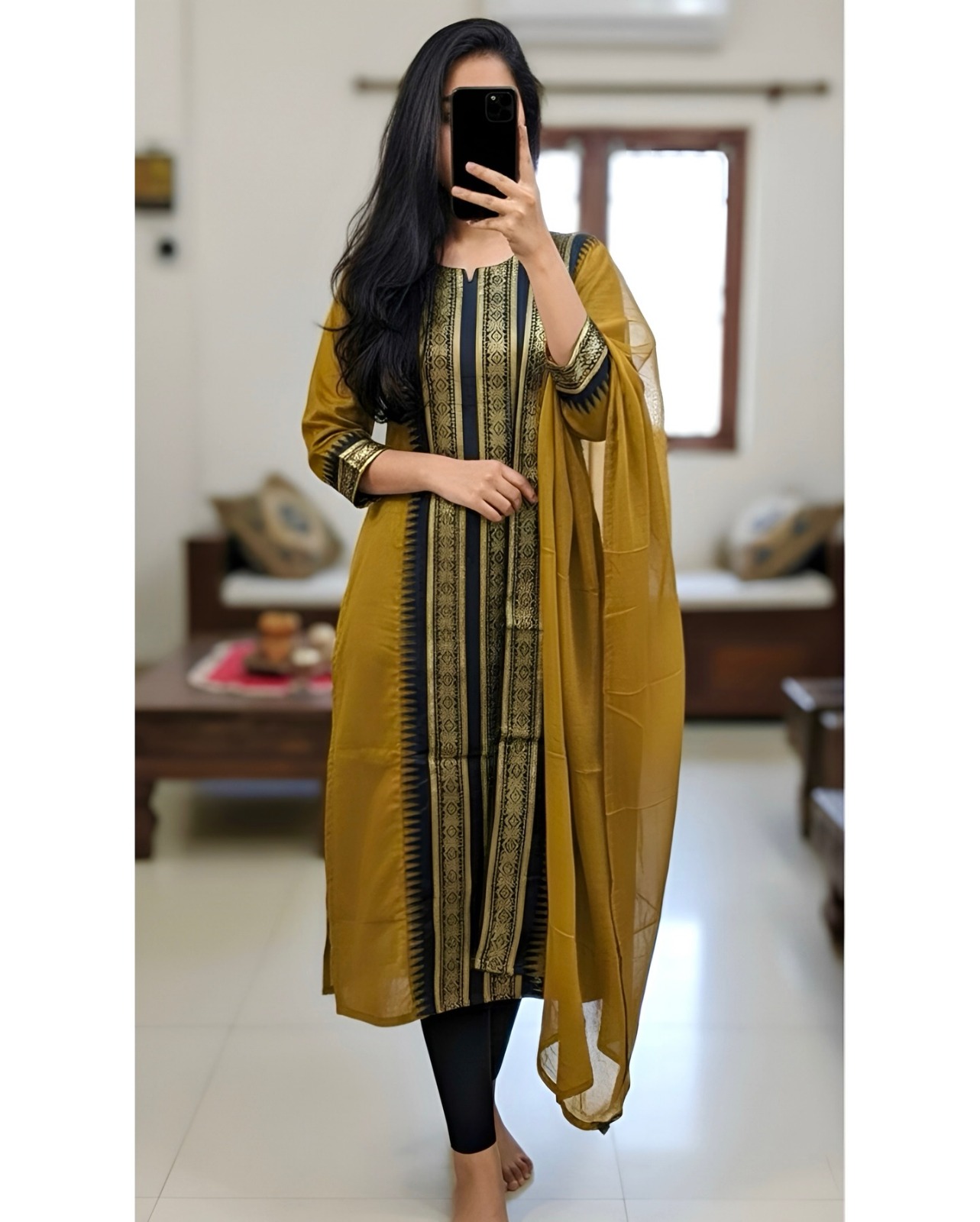
Check the side slit height when planning to wear palazzos or shararas. A slit that ends too low can restrict walking, while a slit that begins too high may require an additional inner layer for comfort and coverage. Sit, climb a few steps and raise one arm before removing tags from a new outfit.
Check the fabric's transparency in daylight, especially with ivory, beige, lavender and pastel bottoms. Chanderi silk, organza and lightweight cotton may need a lining or an opaque inner depending on the weave. Check whether embroidery, mirror work or zari catches on jewellery and bags before choosing the outfit for a long celebration.
Check the waist and hip ease of the bottom rather than relying only on the labelled size. A palazzo should fall from the waist without twisting, a cigarette pant should allow sitting without pulling, and a churidar should gather naturally at the ankle rather than forming tight horizontal ridges behind the knee.
Three Simple Rules for a Balanced Long-Kurti Outfit
Keep only one major volume point when the wearer is unsure. A flared kurti with a narrow bottom, a straight kurti with a palazzo, or a simple kurti with a sharara usually creates a clearer silhouette than combining flare, tiers, heavy sleeves and a voluminous dupatta.
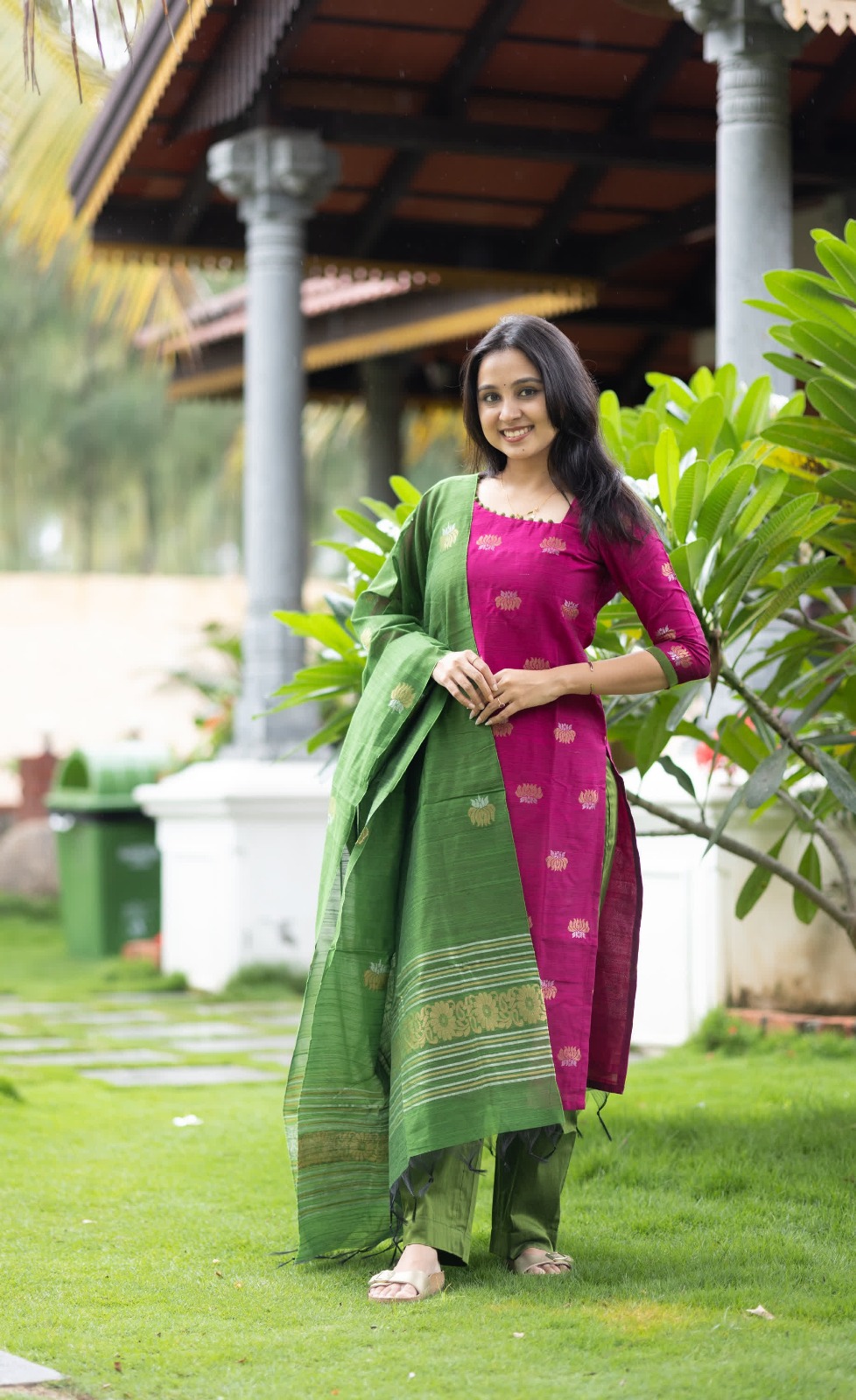
Repeat one colour from the kurti in the bottom or dupatta to connect separate pieces. Exact matching is unnecessary, but a shared maroon, beige, lavender, black or blue undertone makes a mixed set appear intentional. The Beige Kurta Set with Blue Chanderi Dupatta for Women shows how a neutral kurta can provide a calm base for a contrasting blue layer.
Choose footwear according to the hem rather than treating footwear as an afterthought. A pointed or almond-toe shoe lengthens cigarette pants, a flat jutti suits a narrow churidar, and a low block heel helps a palazzo or ankle-length kurti clear the floor. The best long-kurti outfit is one that preserves movement, keeps the hem clean and lets the fabric fall without constant adjustment.
Common Questions About Choosing Bottoms for Long Kurtis
Who can wear a long kurti?
Women of every height and body proportion can wear a long kurti when the hem and bottom are balanced. Petite women often find mid-calf lengths and narrow bottoms easier to style, while tall women can carry ankle-length hems and wider palazzos.
Which bottoms look best with a long kurti?
Cigarette pants and straight pants are the safest choices because they maintain a clean vertical line. Palazzos suit straight or lightly flared kurtis, while shararas and Patiala salwars need a simpler kurti to prevent excessive volume.
Can short women wear long kurtis with palazzo pants?
Short women can wear long kurtis with palazzos by choosing a high waist, a moderate kurti length and a low-contrast colour combination. Very wide palazzos and a hem that ends at the widest part of the calf can visually shorten the body.
What pants should I wear with an Anarkali kurti?
A narrow churidar, cigarette pant or slim straight pant usually works best with an Anarkali kurti. A full palazzo or heavily layered sharara can be used for festive styling only when the Anarkali has controlled flare and the fabric remains lightweight.
Can I wear a long kurti with jeans?
A long kurti can be worn with slim or straight jeans when the kurti has side slits and a relatively simple shape. Dark, clean-finish denim generally looks more polished than distressed jeans with embroidered silk, zari or formal jacquard kurtis.
How long should a kurti be with straight pants?
A kurti worn with straight pants usually looks balanced when the hem falls around mid-calf or a few inches above the ankle. The correct length also depends on height, slit placement and footwear, so the hem should allow comfortable walking without bunching over the pants.


