

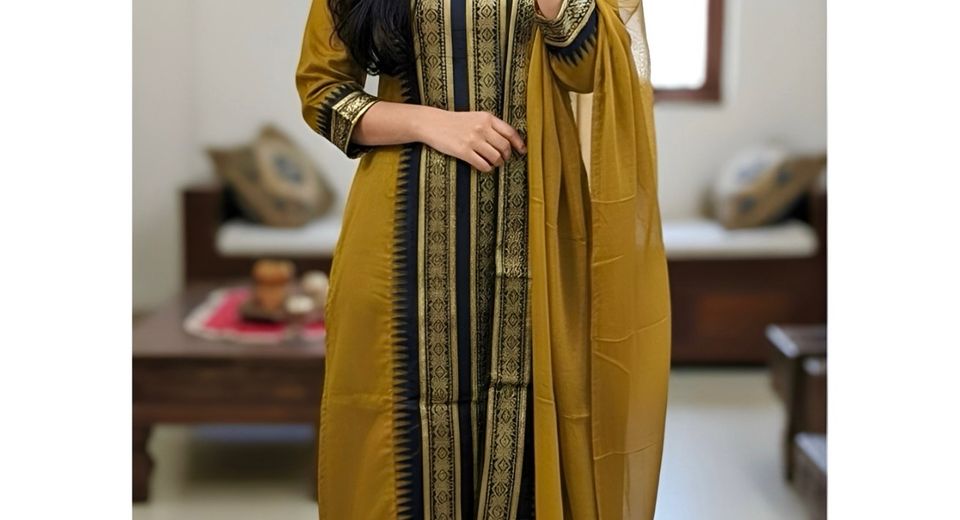
Who Front-slit Kurtis Suit and Which Bottoms Work Best depends on three measurable details: the height of the slit, the volume of the kurti and the width of the bottom. A front slit creates a vertical opening that can lengthen the appearance of the body, show the movement of trousers or palazzos, and make a salwar suit feel more contemporary. The right pairing keeps that line visible without making the outfit look either too narrow or unnecessarily bulky.
Front-slit kurtis suit many body shapes, including petite, pear-shaped, apple-shaped and straight figures, when the proportions are adjusted correctly. A slit that begins below the waist creates a softer effect, while a slit reaching the upper thigh gives a sharper, more elongated silhouette. Fabric, lining, side seams and the way the kurti falls over the hips also matter more than a simple body-shape label.
Who Front-slit Kurtis Suit and Which Bottoms Work Best?
Front-slit kurtis suit wearers who want a longer-looking silhouette, easy leg movement and a modern interpretation of the salwar suit. Straight pants work best for a clean, balanced look; palazzos work best with fitted or lightly flared kurtis; shararas work best with shorter or moderately flared front-slit kurtis.
A front slit is especially useful when a kurti has a long vertical line, tonal embroidery or a narrow neckline. The opening draws the eye from the hem towards the centre of the body. A matching or closely related bottom reinforces that line, while a contrasting bottom makes the slit a stronger styling feature.
- For a slim, tailored silhouette: choose cigarette pants, straight pants or narrow churidar-style bottoms.
- For a fluid festive silhouette: choose palazzos with a fitted bodice and controlled flare.
- For a dramatic wedding look: choose a sharara when the kurti ends around the knee or slightly above it.
- For a traditional Punjabi influence: choose Patiala bottoms only when the kurti is relatively straight and not heavily flared.
- For daily comfort: choose cotton pants or a restrained palazzo with enough room at the hip and thigh.
How Does a Front Slit Change Kurti Proportion?
A front slit changes kurti proportion by separating the front panel into two falling sides and exposing the vertical line of the bottom. The slit makes the lower half look lighter, but a high slit also draws attention to the waist, hips and legs.
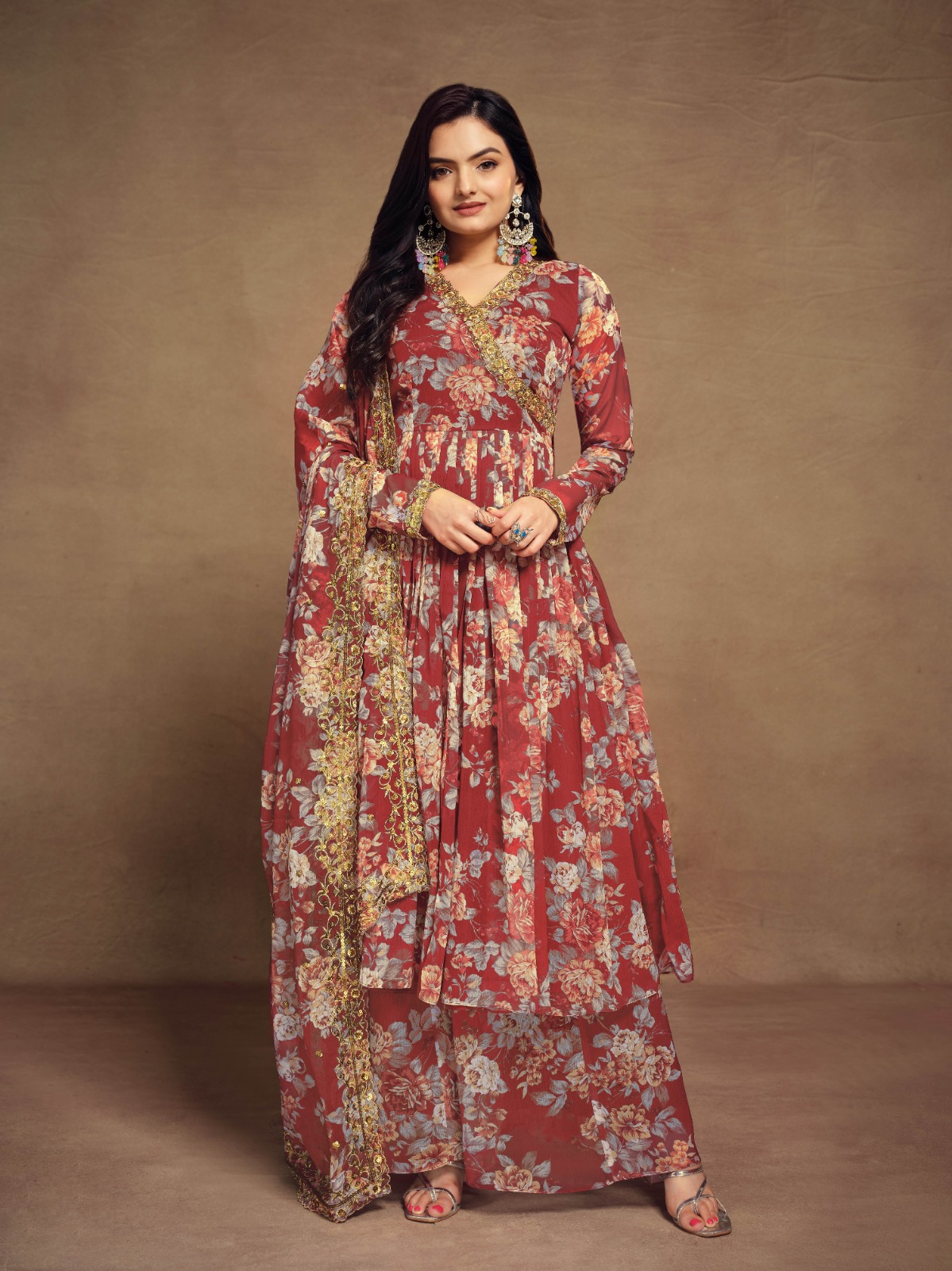
Slit height should relate to the kurti length. A knee-length kurti can usually carry a slit that begins around the mid-thigh, while a calf-length kurti looks more balanced with a slit beginning closer to the knee. A very high slit on a short kurti can reduce coverage during walking or sitting, especially when the fabric is slippery.
Hem width is equally important. A straight or slightly A-line kurti supports narrow pants because the outfit has one controlled outline. A heavily flared kurti needs roomier bottoms only when the flare is deliberately coordinated; otherwise, straight pants keep the outfit from becoming visually wide.
What should you check before choosing a size?
Check the bust, waist, hip, shoulder and slit measurements rather than relying only on the stated size. The hip measurement is particularly important because the two front panels must fall without pulling across the body. A front slit that opens or twists while walking usually indicates insufficient hip ease or an unstable lining.
Also check whether the slit is reinforced at its starting point. A bartack, facing or strong seam finish reduces strain when sitting and climbing stairs. A lining that ends several centimetres above the outer hem can affect opacity, so inspect the complete garment description before choosing a light-coloured kurti.
Which Bottoms Work Best with Front-Slit Kurtis?
Straight pants are the most versatile bottom for front-slit kurtis because they echo the kurti's vertical lines without competing with the opening. Straight pants suit office wear, daytime ceremonies and understated festive dressing, particularly when the kurti has embroidery or a patterned dupatta.
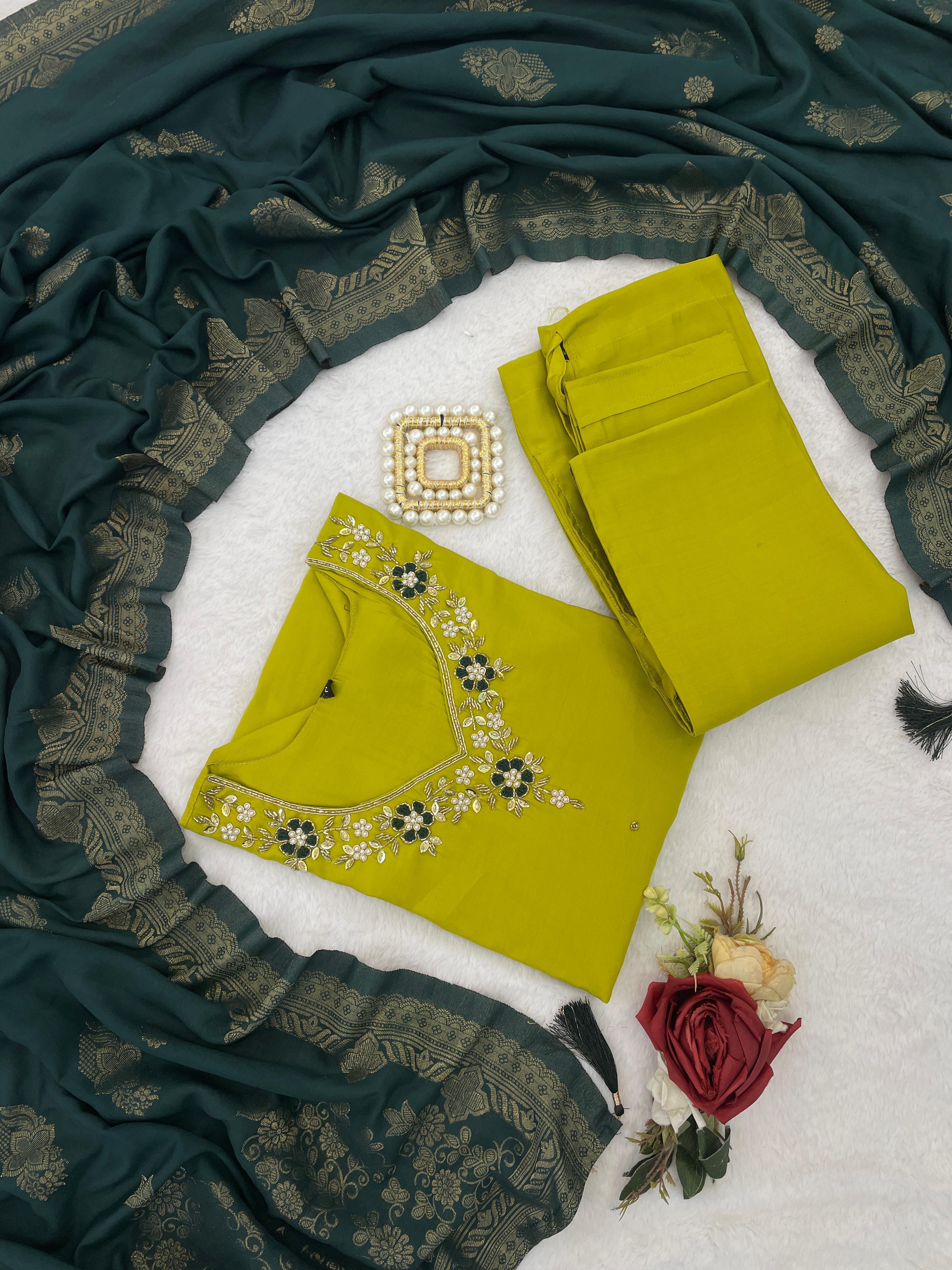
Palazzos create the most fluid movement under a front-slit kurti. A palazzo works best when the kurti is fitted through the bust and waist or has a restrained A-line shape. Very wide palazzos under a heavily flared kurti can obscure the slit and create excess fabric around the legs.
Sharara bottoms provide a celebratory, high-volume silhouette. Sharara trousers work well with a shorter front-slit kurti, a peplum-inspired upper section or a straight kurti with a defined waist. A long, full Anarkali-style kurti and a wide sharara can overwhelm the frame unless the fabric is lightweight and the colour palette is quiet.
Patiala bottoms add distinctive pleats and volume at the hips. Patiala styling works best with a straight front-slit kurti that ends around the knee or upper calf. Pairing a heavily flared front-slit kurti with a full Patiala can hide both silhouettes and make the centre front look crowded.
Cigarette pants deliver the sharpest contemporary result. Cigarette pants are a strong choice for petite wearers, formal events and kurtis with a border at the hem because the narrow leg keeps the decorative edge visible.
How should bottom volume relate to kurti volume?
Bottom volume should usually move in the opposite direction to kurti volume: a wide kurti needs a narrow bottom, while a fitted kurti can support a wider bottom. This proportion rule isn't absolute, but it prevents the most common front-slit styling mistake: placing two competing flares on the same vertical line.
- A straight front-slit kurti pairs with straight pants, cigarette pants or a moderate palazzo.
- An A-line front-slit kurti pairs with cigarette pants or slim straight pants.
- A fitted front-slit kurti pairs with a palazzo, sharara or flared gharara-style bottom.
- A short front-slit kurti pairs with a fuller bottom only when the upper body remains visually clean.
Which Front-slit Kurti Fabrics Hold the Shape Best?
Medium-weight cotton, viscose Chanderi silk, blended silk and Roman silk generally hold a front-slit kurti shape better than very thin, slippery fabrics. A stable fabric keeps the slit aligned, prevents the front panels from twisting and gives embroidery or weaving a defined surface.
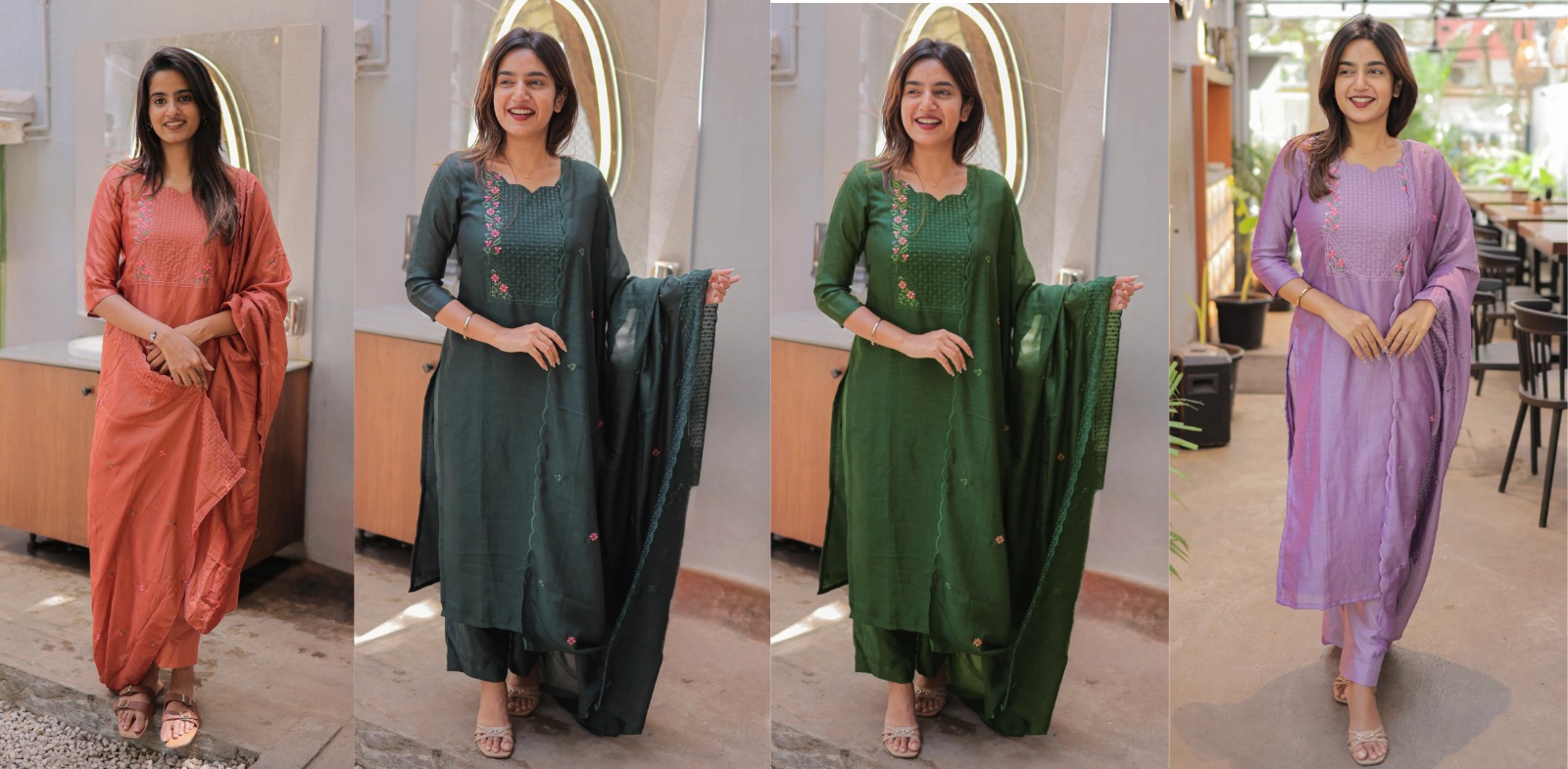
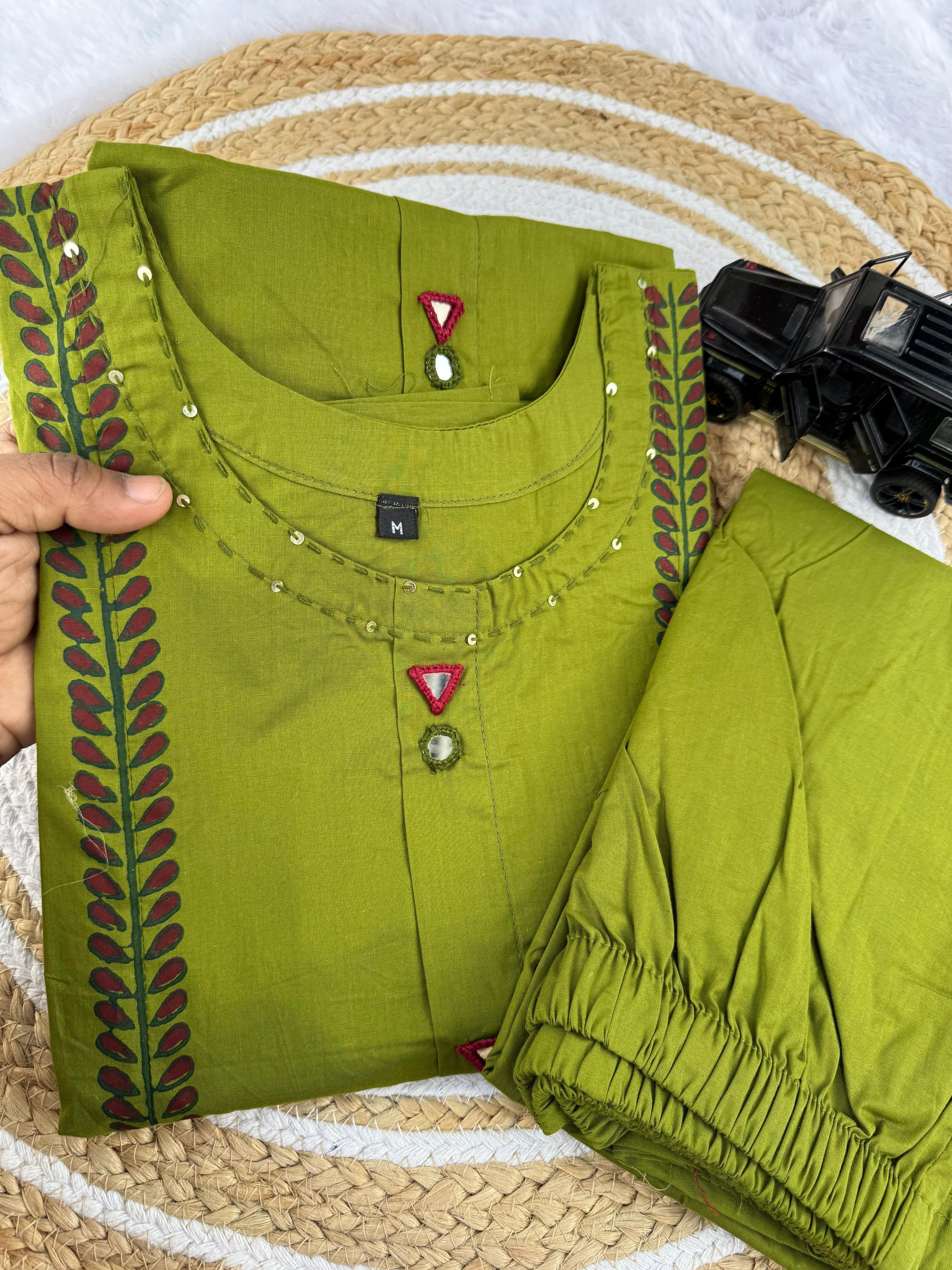
Cotton is practical for warm weather and daily use because it absorbs moisture and usually has a more stable hand-feel. The Brown Cotton A-Line Kurti Pant Set with Mirror Work and Designer Cotton A-Line Kurti Pant Set with Mirror Work illustrate why an A-line cotton shape works naturally with a straight or narrow pant: the mirror work supplies interest while the controlled lower volume preserves movement.
Viscose Chanderi silk has a dressier drape and a subtle sheen, but the fabric still benefits from careful lining and gentle handling. The Maroon Viscose Chanderi Silk Embroidered Kurta Set for Women can be styled with a narrow pant when the goal is to let the maroon surface and embroidery remain the visual focus.
Roman silk and blended silk create a more polished line for evening dressing. The Designer Roman Silk Kurti Set with Jacquard Dupatta suits a straight pant or slim palazzo because the jacquard dupatta already adds texture and structure above the waist. The Navy Blended Silk Zari Kurti Pant Dupatta Set demonstrates a coordinated pant approach, where a matching bottom keeps zari work from looking fragmented.
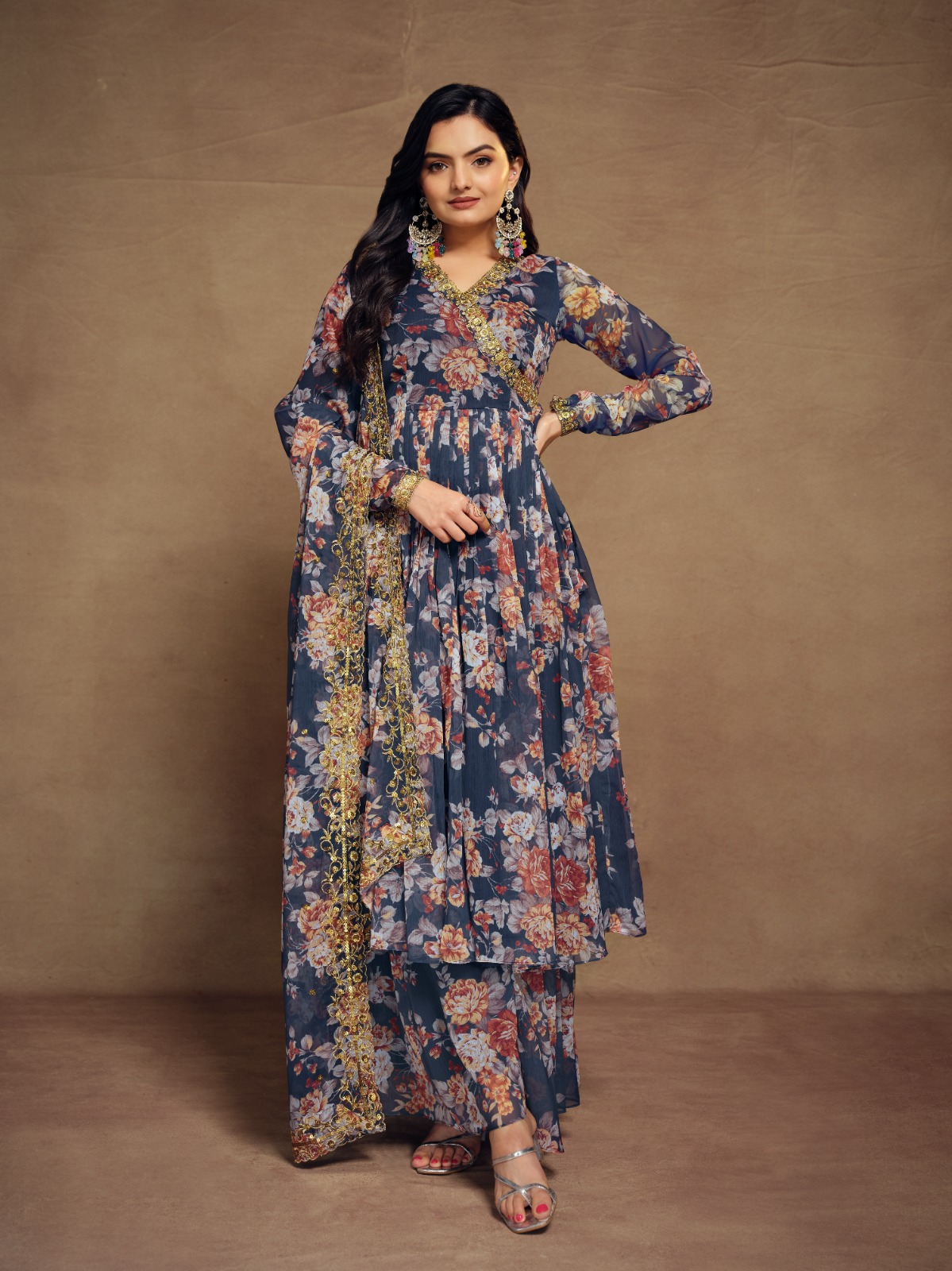
Chiffon is light and fluid, so a chiffon front-slit kurti or set needs an opaque lining and a stable waistband in the bottom. The Shop Floral Digital Printed Chiffon Kurti Palazzo Set with zari embroidery is better approached as a movement-led outfit: the palazzo supports the chiffon's flow, while the zari embroidery supplies enough definition for festive wear.
How Can Different Body Proportions Be Balanced?
Different body proportions can be balanced by adjusting slit height, neckline emphasis, kurti flare and bottom width rather than hiding the body under extra fabric. The objective is a continuous line from shoulder to hem, with enough ease for sitting and walking.
Petite frames
Petite frames usually benefit from a moderate slit, a high-waisted bottom and a kurti hem that doesn't end at the widest part of the calf. Narrow pants or a lightly flared palazzo maintain vertical length. A monochromatic kurti and bottom combination can make the centre line appear longer.
Pear-shaped proportions
Pear-shaped proportions benefit from a kurti that skims rather than clings across the hips, with attention directed towards the neckline, sleeves or dupatta. A slit beginning slightly below the fullest hip area can create ease without outlining the hips too closely. Straight pants usually provide better balance than a heavily pleated Patiala.
Apple-shaped proportions
Apple-shaped proportions often work well with a front-slit kurti that has a clean fall from the bust and a slit beginning below the midsection. A V-neck, open dupatta drape or long pendant can reinforce the vertical line. Mid-weight palazzos can add movement, while a tight waistband may create discomfort after meals or extended sitting.
Straight or athletic proportions
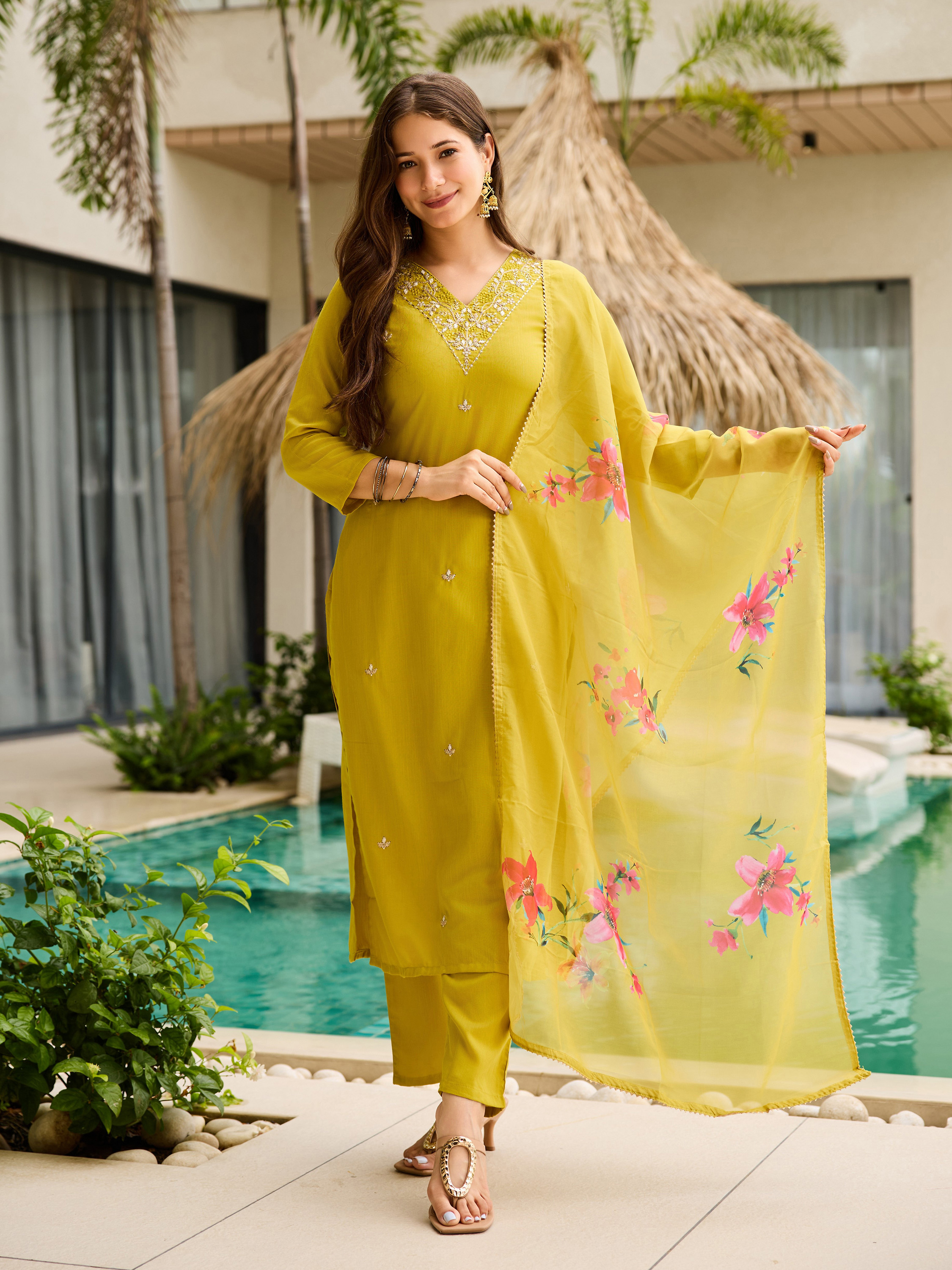
Straight or athletic proportions can carry more volume and surface detail. A peplum section, embroidered yoke, wide palazzo or sharara can add shape, provided the front slit remains clearly visible. The Trendy Green Ethnic Kurti Dupatta Set for Festive Wear can be interpreted with a fuller bottom when the kurti itself remains relatively controlled.
How Do Regional Salwar Suit Styles Work with a Front Slit?
Regional-inspired textiles work with a front slit when the current opening is balanced by a recognisable weave, print or drape detail. The bottom should support the textile's visual identity rather than introduce an unrelated silhouette.
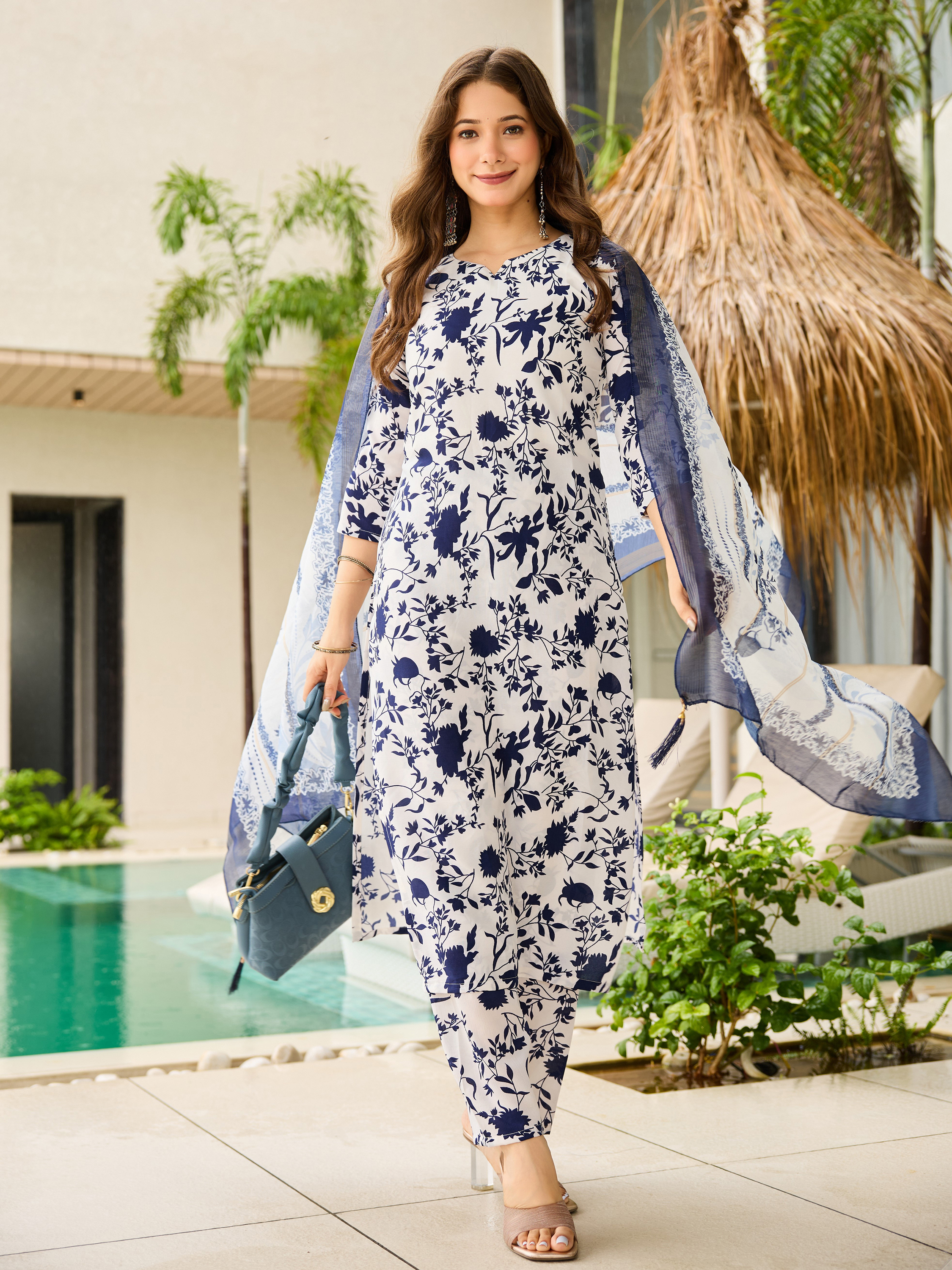
Kalamkari Print Salwar Suits pair naturally with straight cotton pants or a calm palazzo because Kalamkari motifs already create a strong surface pattern. Keep the bottom solid or use a restrained border to prevent the front opening from becoming visually busy.
Maharashtra Paithani Inspired Salwar Suits benefit from a structured straight pant or a softly flared bottom that lets the Paithani-inspired colour and border remain prominent. A heavy, unstructured palazzo can dilute the crispness associated with Paithani-inspired styling.
Gujarat Bandhej Salwar Suits can take a lively palazzo or a narrow pant depending on the scale of the Bandhej pattern. A solid bottom in one colour drawn from the Bandhej palette creates cohesion without repeating every shade.
Odisha Sambalpuri Salwar Suits work well with straight pants because Sambalpuri-inspired motifs often need a clean frame. A front slit can modernise the silhouette while allowing the textile identity to remain visible along the kurti panel.
For a fuller Punjabi interpretation, Punjab Patiala Salwar Suits should use a straight or lightly shaped kurti so that the Patiala pleats remain the main source of volume. A front slit can be modest rather than high, especially when the Patiala has substantial fabric at the hip.
How Should You Style the Dupatta and Accessories?
The dupatta should preserve the front slit's vertical opening instead of covering the centre completely. An one-shoulder drape, open-front drape or neatly pinned shoulder placement keeps the kurti line visible.
Heavy zari, jacquard or embroidered dupattas need a simpler bottom and fewer competing accessories. The Mustard Designer Kurti Dupatta Set with Rich Weaving can be balanced with understated earrings and a solid straight pant when the weaving is the primary feature.
Footwear should follow the hem and bottom width. Juttis and low block heels complement straight pants, while a slightly higher heel can prevent wide palazzos or shararas from pooling at the floor. Avoid letting a palazzo hem drag because repeated abrasion can weaken the fabric and make laundering more difficult.
What Should You Check Before Buying a Front-slit Salwar Suit?
Check the slit height, fabric opacity, lining, bottom waistband, hip ease and finished garment length before buying a front-slit salwar suit. These measurements predict comfort more reliably than a product photograph.
- Measure the slit: compare the slit opening with the height at which you feel comfortable sitting, walking and climbing stairs.
- Check the hip ease: allow enough room for the front panels to fall without pulling or separating.
- Inspect the bottom: confirm whether the pants, palazzo or sharara has an elastic, side zip, drawstring or fixed waistband.
- Compare lengths: a bottom that's too long can hide the shoe and drag; a bottom that's too short can interrupt the intended vertical line.
- Consider the occasion: cotton suits work well for daytime use, while zari, jacquard, blended silk and embroidered surfaces suit festive or evening settings.
- Read care instructions: zari and embellished garments may require gentle washing, low-friction storage or professional cleaning.
An useful trial involves taking six normal steps, sitting on a chair and raising one knee slightly. The slit should remain comfortable, the waistband should not dig in and the front panels should return to position without constant adjustment. That simple test reveals more than a static mirror view.
Common Questions About Front-Slit Kurtis and Bottom Pairings
Who can wear a front-slit kurti?
Most body shapes can wear a front-slit kurti because the slit height and bottom shape can be adjusted for proportion. Petite wearers often suit moderate slits and narrow pants, while taller or straighter frames can carry wider palazzos or shararas.
Which bottom is best with a front-slit kurti?
Straight pants are the safest and most versatile choice because they reinforce the kurti's vertical line. Palazzos suit fitted kurtis, while shararas suit shorter or more controlled front-slit kurtis.
Can I wear a Patiala with a front-slit kurti?
A Patiala can work with a front-slit kurti when the kurti is straight and reaches around the knee or upper calf. Avoid combining a full Patiala with a heavily flared kurti because the two sources of volume can hide each other.
What slit length is appropriate for a salwar suit?
A moderate slit that begins around the knee or mid-thigh is practical for many wearers, but comfort and coverage are personal choices. Check the slit while walking and sitting, and choose a lower opening when the fabric is slippery or lightly lined.
Do front-slit kurtis make you look taller?
A front slit can create a longer-looking vertical line, especially when the kurti and bottom are similar in colour. The effect is strongest when the slit remains visible, the bottom is not excessively wide and the hem length is proportionate to the wearer.
Can a front-slit kurti be worn for festive occasions?
A front-slit kurti suits festive occasions when the fabric, surface work and styling provide enough occasion weight. Blended silk, Chanderi silk, zari, jacquard, rich weaving and embroidery can be paired with a polished pant, palazzo or sharara and a well-placed dupatta.


