Which Size Chart Details Matter Most for a Ready Made Lehenga depends on the parts of the outfit that control comfort: the choli bust, the finished waist, the skirt length and the garment's construction. A listed size such as S, M or L is only a starting point. A reliable purchase decision comes from comparing your body measurements with the seller's garment measurements, then checking whether the fabric and design allow alterations.
A ready made lehenga normally arrives with a finished choli and a completed skirt, so there's less room for adjustment than with an unstitched outfit. The difference between a 36-inch and 38-inch bust, or between a 30-inch and 32-inch waist, can change how the blouse sits during a wedding function. The size chart deserves as much attention as the colour, embroidery and silhouette.
Which Size Chart Details Matter Most for a Ready Made Lehenga?
The most important details are finished bust, waist, skirt length, shoulder, sleeve opening, hip or flare information, and the alteration allowance. These measurements show whether a ready made lehenga can sit correctly without pulling at the seams or dragging at the hem.
Start with the choli because the blouse has the least tolerance for a poor fit. Next, confirm the skirt waist and length. Finally, review the notes about elastic, drawstrings, padded cups, lining, closures and whether the measurements describe the body or the finished garment.
Body measurements and garment measurements are different
Body measurements are taken directly around you, while garment measurements describe the completed clothing. A garment may be slightly larger than the body measurement to provide ease, but the required amount depends on the cut, fabric and lining.
For example, a structured satin choli may need less ease than a loose blouse, while a fitted blouse with non-stretch lining needs enough room for breathing and arm movement. A size chart that says "bust 36" may mean a recommended body size or a finished garment measurement of 36 inches. Product notes should clarify the difference; if they don't, contact the seller before ordering.
How should you measure your bust, waist and hips for a lehenga choli?
Measure your bust at the fullest point, your natural waist at the narrowest point, and your hips around the fullest area while wearing the undergarments you expect to use with the lehenga. Keep the tape level and comfortably close to the body without pulling it tight.
Use a soft measuring tape and stand naturally rather than holding your breath or pulling in your stomach. Ask another person to check the tape across your back, because a tape that slopes upward or downward can change the result by an inch or more.
- Bust: Run the tape around the fullest part of the bust and across the shoulder blades. Do not measure over a thick sweater.
- Underbust: Record this measurement when the choli has a fitted bust panel, corset-style construction or a defined underbust seam.
- Natural waist: Measure the narrowest torso point, then separately measure where you want the lehenga waistband to sit.
- High hip and full hip: Check both when the skirt is narrow at the upper hip or has a fitted mermaid shape.
- Shoulder: Measure from the end of one shoulder to the other across the back, especially for a structured or one-shoulder blouse.
The natural waist and the skirt waistband are not always at the same height. A high-waisted lehenga may sit above the navel, while a low-waisted design may rest closer to the upper hip. Measuring only the natural waist can lead to a waistband that feels too tight even when the chart appears correct.
Why is choli bust measurement more important than the labelled size?
Choli bust measurement is more important than the S, M or L label because the blouse must close, support the bust and permit arm movement at the same time. A size label varies between cuts and sellers, but a measured bust gives you a direct comparison.
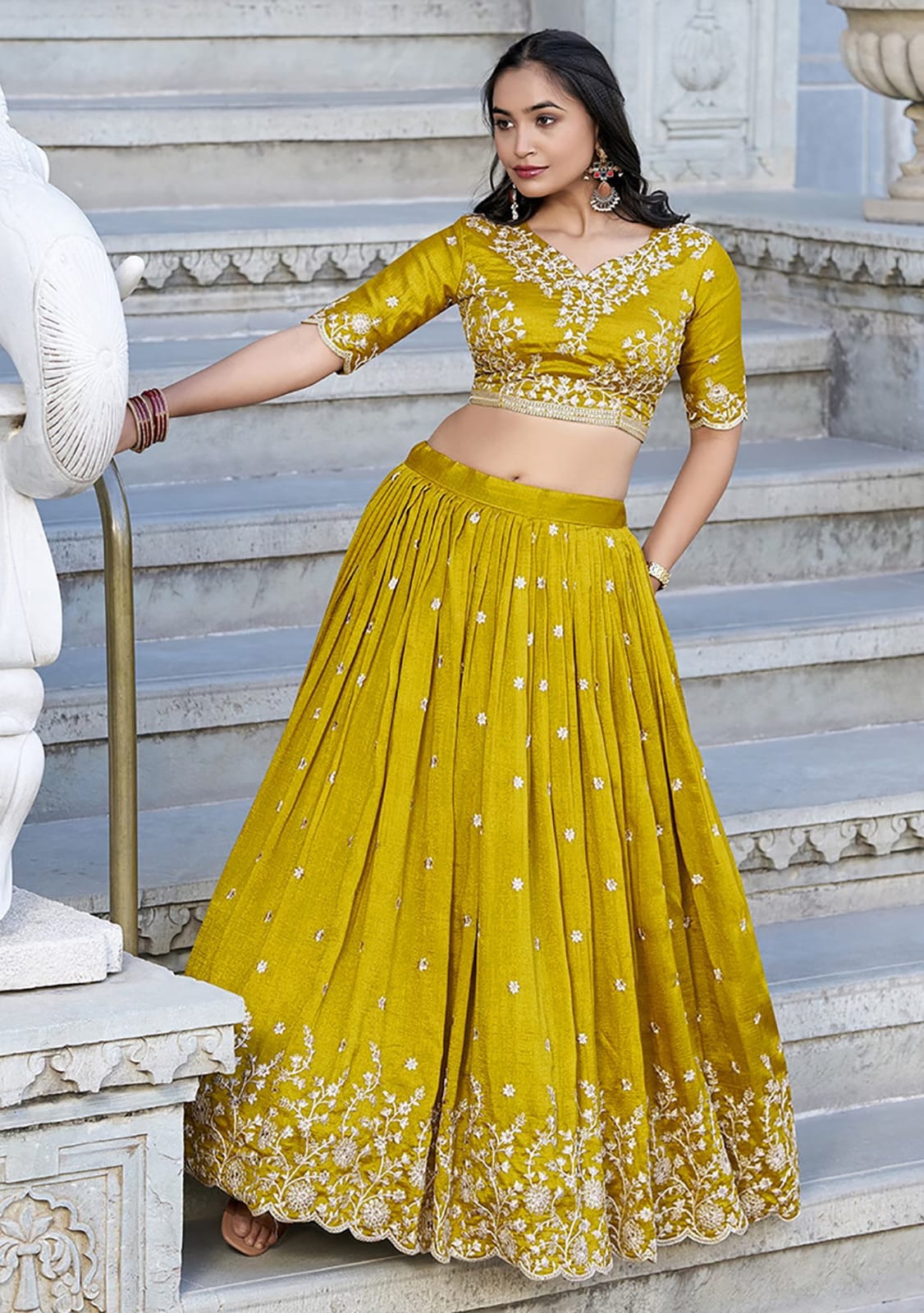
Check whether the chart lists the bust as a body range, such as 34-36 inches, or as a finished garment measurement. A finished choli measurement should generally provide modest ease, but the ideal amount depends on darts, princess seams, lining and fabric structure.
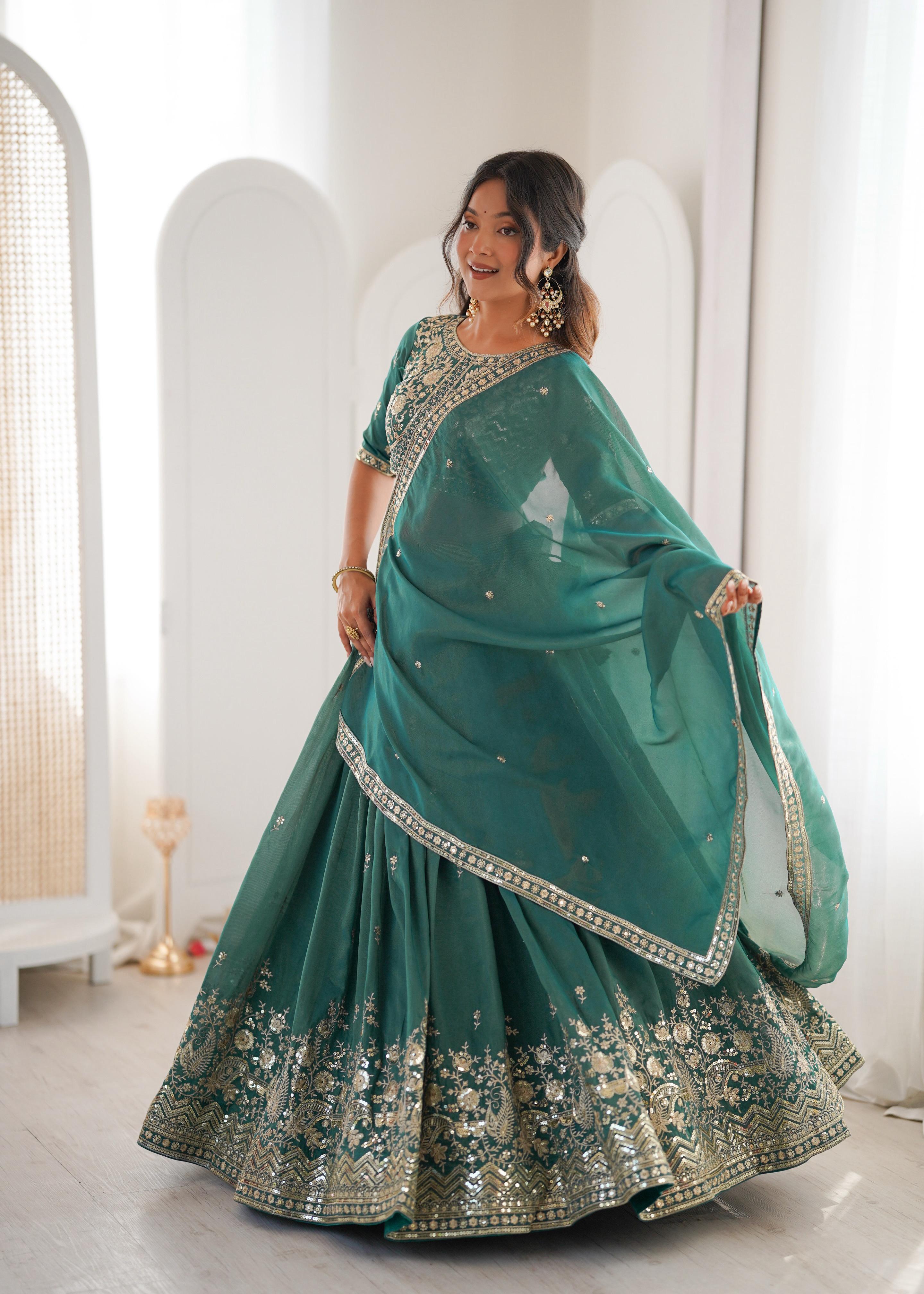
Blouses with heavy embroidery, zari-like metallic work, sequins or thick lining may feel less flexible than a plain blouse of the same measurement. Designer Threadwork Silk Lehenga Choli Set with Dupatta should be assessed for its structured textile and threadwork before you assume that the labelled size will feel like a lightweight blouse.
A one-shoulder cut needs additional checking. Red Floral Organza Lehenga Set with One Shoulder Blouse has an asymmetric neckline, so bust width alone doesn't explain the fit. Compare shoulder placement, armhole comfort and the side seam position, because a blouse can fit across the bust while slipping at the shoulder.
When can a blouse be altered?
A blouse can often be altered when the side seams contain usable margins, but enlarging a garment is harder than reducing it. A tailor may reduce the bust or waist, adjust straps and shorten sleeves; adding significant width requires spare fabric, matching embroidery and sufficient seam allowance.
Ask whether the choli is padded, lined, back-open, side-zip or hook-fastened. Padding can affect internal space, while an ornate border or close-set embroidery can limit where a tailor can open a seam. Fully stitched choli shopping becomes safer when the product page states the closure and alteration possibilities clearly.
Which lehenga skirt measurements should you compare?
Compare the finished waistband, waistband-to-hem length, hip fit and flare before ordering a lehenga skirt. These details determine whether the skirt sits at the intended height, clears the floor and moves comfortably when you walk or sit.
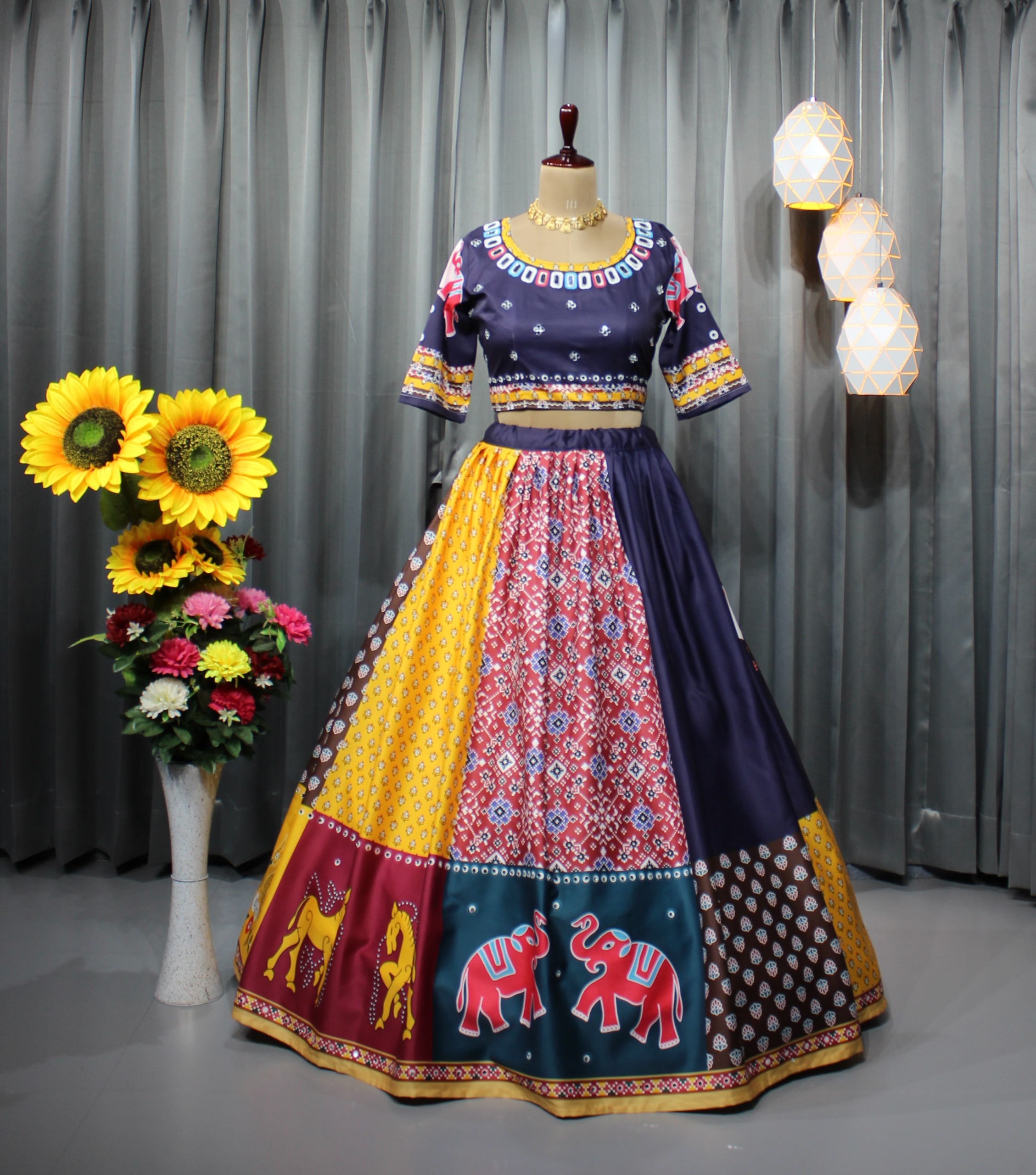
Skirt length should be measured from the top edge of the waistband to the hem, not from the waist to the ankle. Wear the footwear planned for the event when estimating your preferred length. A heel can change the visual proportion and the amount of hem clearance required.
Height alone can't produce an accurate lehenga length. Torso length, waistband position, footwear and the volume of the underskirt all affect where the hem falls. If your preferred finished length is 40 inches and the chart lists 44 inches, a tailor may be able to shorten the hem, but a wide embroidered border may restrict the adjustment.
The waistband measurement matters even when the skirt has elastic. Elastic can provide flexibility, but the chart should ideally give both the relaxed and stretched waist or a recommended body range. A drawstring can improve adjustability, although a large difference between the smallest and largest waist setting may create gathers or an uneven fall.
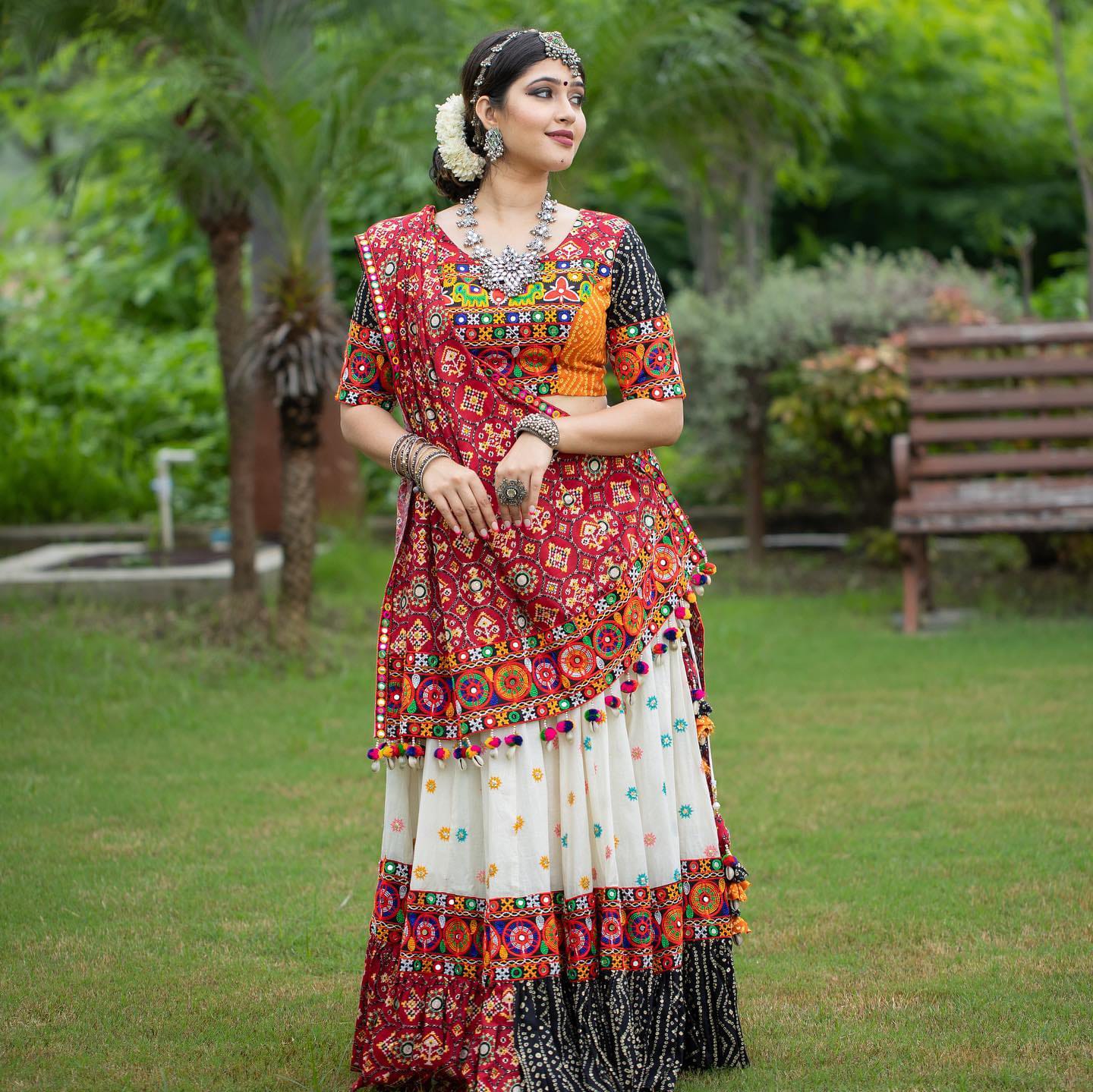
Skirt flare is useful information for dancing and sitting. A broad flare offers more walking ease, while a narrow or panelled skirt may show the body line more clearly. Pastel Floral Georgette Lehenga Set with Ruffle Blouse illustrates why fabric and construction belong in the same decision: a soft georgette skirt and a ruffled blouse may require different ease expectations from a rigid, heavily embellished set.
How do fabric and embellishment change the right size?
Fabric changes the right size because stretch, stiffness, lining and surface work affect how much ease the outfit needs. Georgette, organza, satin, silk blends and muslin cotton don't behave identically at the same measurements.
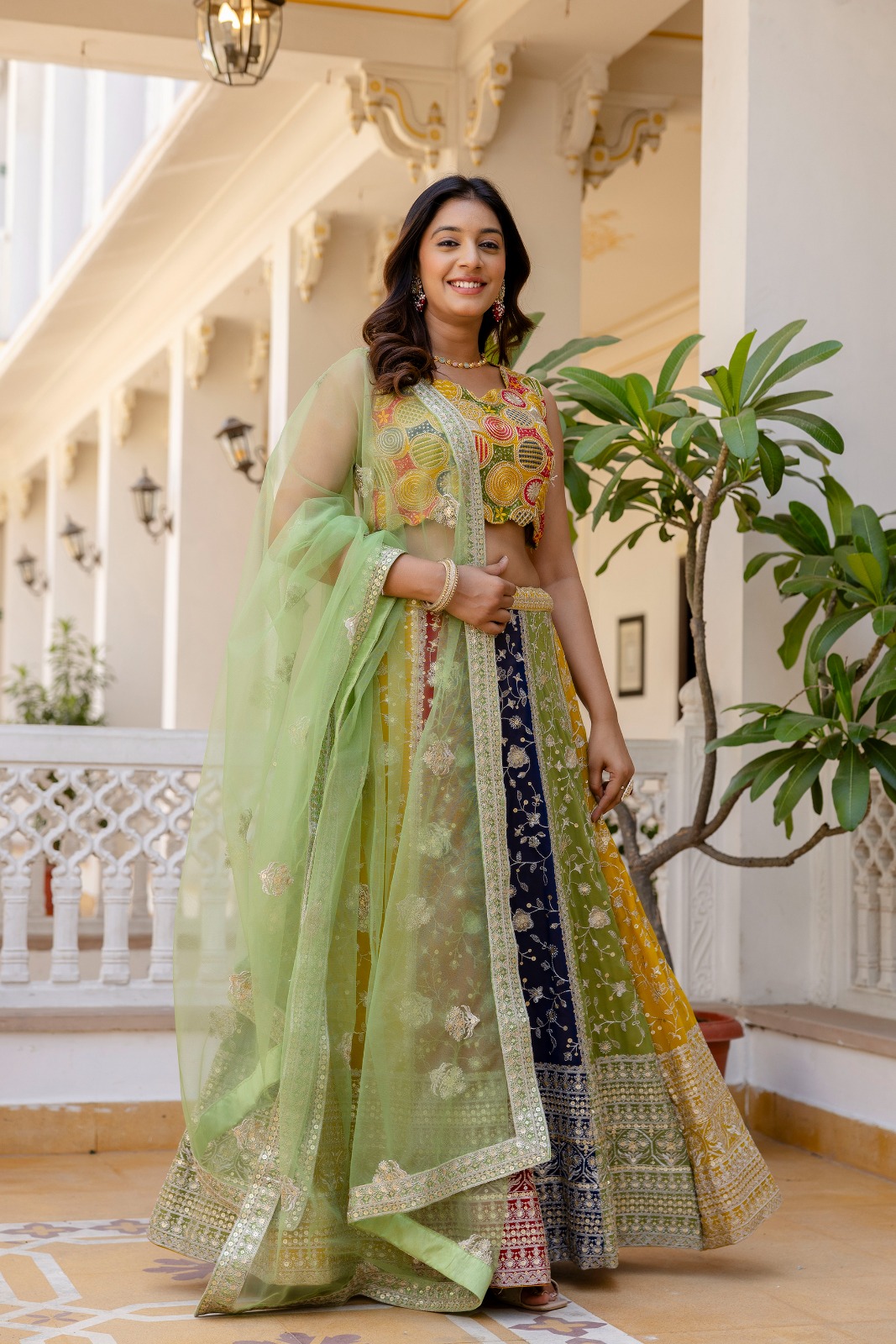
Organza usually has little give and can feel firm at the waist or armhole, particularly when layered. Satin may glide over the body but can reveal pulling at a tight seam. Muslin cotton generally feels breathable, although a lined or embellished version may have a different drape from an unlined one.
Red Floral Organza Lehenga Set with One Shoulder Blouse calls for careful checking of the neckline and armhole because organza structure won't compensate for an inaccurate shoulder measurement. Multicolor Mirror Work Muslin Cotton Lehenga Choli Set deserves attention to the weight of mirror work as well as the bust and waist, since embellishment can influence drape and comfort.
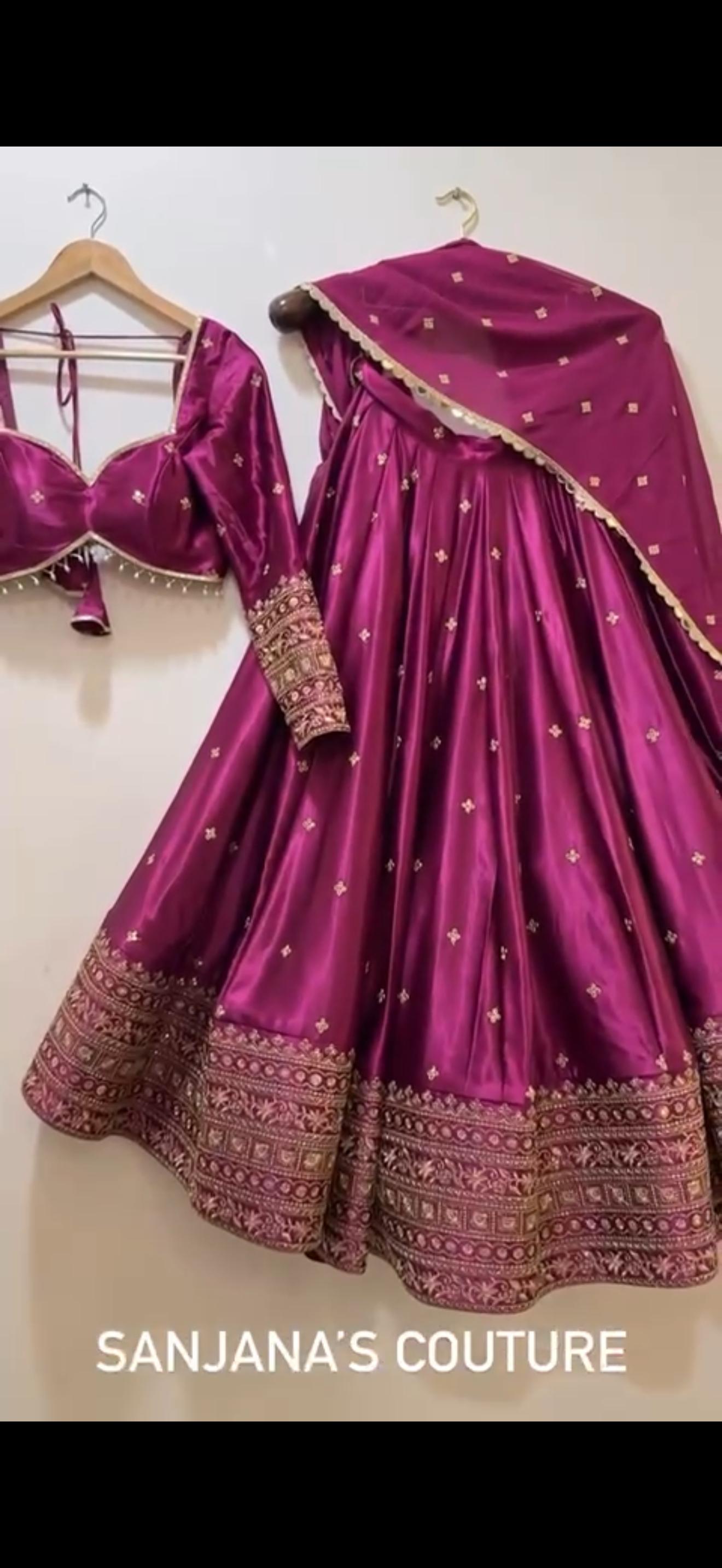
Embroidery doesn't automatically make a garment little, but thick work can reduce practical flexibility and make later alterations visible. Magenta Satin Embroidered Lehenga Set Online and Pink Embroidered Roman Silk Lehenga Set Online should therefore be checked for lining, closure and pulling allowance rather than judged by size label alone.
How do ready-made and semi-stitched lehengas differ in sizing?
A ready made lehenga arrives in a predetermined finished shape, while a semi-stitched lehenga leaves selected parts for adjustment by a tailor. Semi-stitched construction can offer more fitting flexibility, but it still requires accurate measurements and professional finishing.
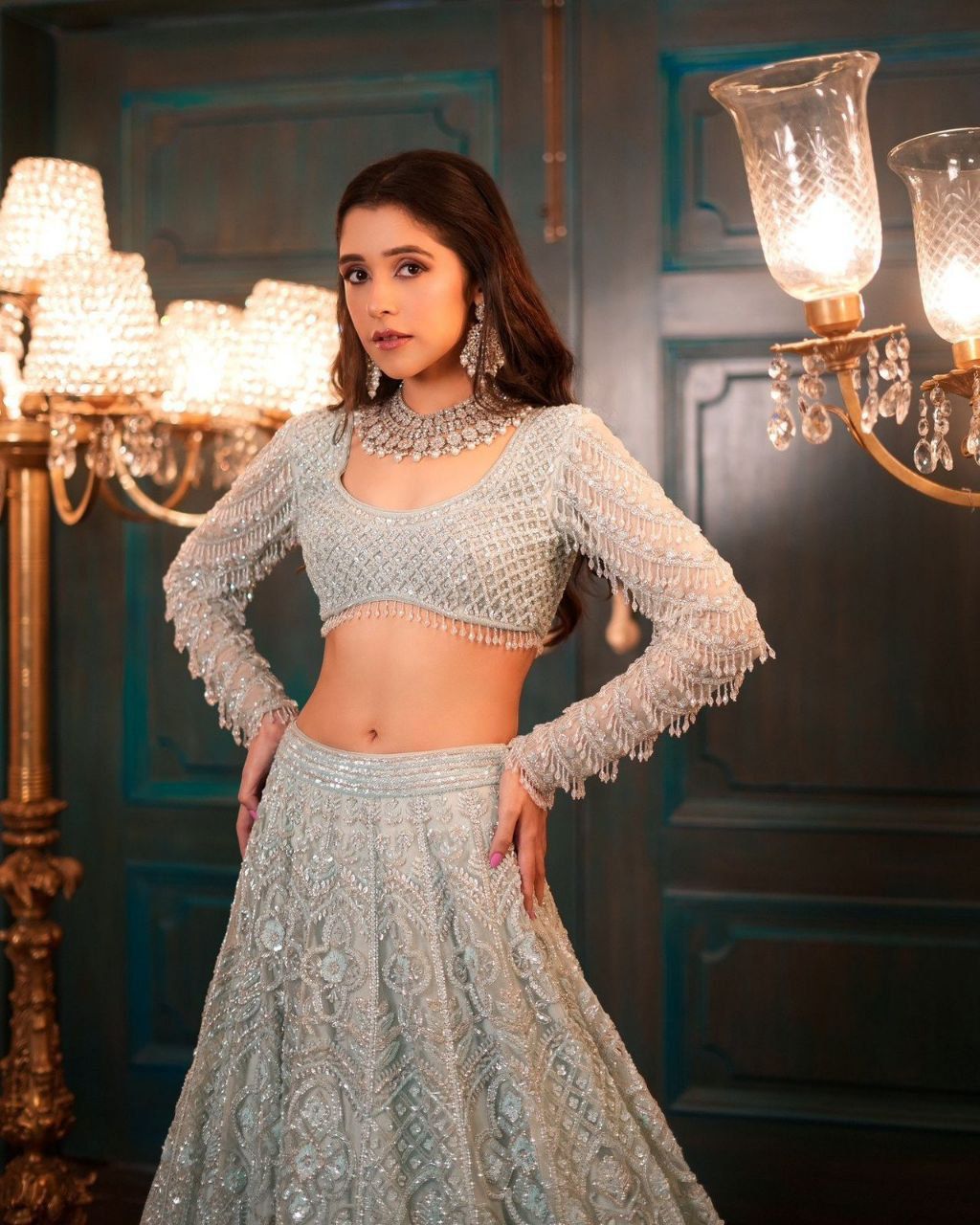
A Ready Made Lehenga is usually the faster option for wedding guests, festive dressing and last-minute shopping because the choli and skirt are already constructed. Semi Stitched Lehengas Collection may provide extra fabric or unfinished panels, but "semi-stitched" doesn't mean every measurement can be changed without limits.
Check whether the semi-stitched choli has a pre-shaped bust, fixed neckline or marked side seams. Confirm whether the skirt waistband and length are unfinished or merely adjustable within a narrow range. A tailor must also preserve borders, motifs and the placement of mirror work or embroidery.
Bridal shoppers should be particularly careful with heavy lehengas. A bridal outfit may include multiple layers, dense embroidery, a wide waistband and a long hem, so the correct waist measurement alone doesn't guarantee comfort. A lighter outfit for a Haldi ceremony may tolerate more movement, but the choli still needs accurate bust and shoulder measurements.
What should you check before ordering a lehenga online?
Before ordering online, compare your measurements with the chart, confirm whether the numbers describe body or garment size, and identify which parts can be altered. Save a screenshot of the size chart and product notes because specifications can be difficult to reference later.
- Measure twice: Take each measurement at least twice on the same day and use the consistent result.
- Check the largest relevant measurement: For a fitted choli, prioritise bust and shoulder; for the skirt, prioritise the waistband and finished length.
- Read the construction notes: Look for lining, padding, closure type, elastic, drawstring and side-seam allowance.
- Account for clothing underneath: Measure with the bra or shapewear intended for the event, not over bulky daily clothing.
- Plan for tailoring time: Allow at least 7-14 days before a wedding or reception if alterations may be needed.
- Check the return and exchange conditions: Altered garments may not be eligible for return, so confirm fit questions before visiting a tailor.
Colour-based shopping can also be organised by event without ignoring fit. Mehendi Lehengas, Yellow Lehengas and Green Lehengas may suit pre-wedding celebrations, while a richer embroidered set may work for a reception. Colour and occasion help narrow the choice, but the size chart decides whether the outfit can be worn comfortably for several hours.
For example, Dusty Pink Satin Embroidered Lehenga Set Online may appeal for a soft wedding palette, while Premium Black Muslin Cotton Lehenga Choli Set may suit an evening celebration. Both outfits still require the same disciplined checks: bust, waistband, length, shoulder and alteration scope.
How can you tell whether a lehenga size chart is reliable?
A reliable lehenga size chart identifies the measurement type, uses consistent units and provides more than a single S-to-XL label. A useful chart normally includes bust, waist, hip, shoulder, sleeve and length information, along with fit notes about stretch or adjustment.
Look for a clear distinction between body size and garment size. Product photographs can show silhouette, but photographs can't confirm whether the waistband is elastic or whether the blouse has side margins. Reviews that mention actual measurements, height, tailoring and comfort can provide helpful context, although individual body proportions still differ.
A chart is less useful when it lists only "free size" for a structured blouse or gives skirt length without waistband information. Ask for missing measurements before buying, particularly when the garment is for a wedding, bridal function or an event with limited time for exchange.
The most dependable choice is the design whose smallest critical measurement is close to your own and whose adjustable areas match your needs. A slightly longer skirt can often be shortened, but a choli that's substantially too small may be difficult to enlarge without changing the design.
Common Questions About Choosing the Right Ready Made Lehenga Size
What measurements do I need for a ready made lehenga?
Record your bust, underbust if relevant, natural waist, intended waistband position, full hip, shoulder, sleeve opening and preferred skirt length. Compare these measurements with the finished garment chart and check whether the seller lists body or garment measurements.
Should I choose a lehenga size according to my bust or waist?
Choose according to the most difficult measurement to alter, which is usually the choli bust and shoulder for a fitted blouse. Check the skirt waistband separately because the best choli size may not match the best skirt size.
How much extra room should a ready made lehenga have?
The required ease depends on the cut, fabric, lining and closure. A non-stretch fitted choli needs comfortable room for breathing and arm movement, while an elastic or drawstring skirt can accommodate a wider waist range.
Can a ready made lehenga be altered if the size is slightly wrong?
A ready made lehenga can often be reduced, shortened or adjusted at the straps when it has usable seam allowance. Enlarging a blouse is more difficult because matching fabric, embroidery and seam allowance may not be available.
What is the difference between a ready made and semi-stitched lehenga?
A ready made lehenga has a completed choli and skirt in predetermined measurements. A semi-stitched lehenga leaves selected seams or panels for a tailor, but the available adjustment still depends on the fabric, borders, embroidery and original construction.
How do I choose lehenga length for heels?
Measure the finished length from the top of the waistband to the hem while wearing the footwear planned for the event. Leave enough clearance to walk safely, and remember that a wide embroidered border may limit later shortening.