A Sangeet guest may pass the evening moving between the dance floor, family photographs and a crowded dinner area. Punjabi Jaggo Night Clothes for Guests Who Want to Dance therefore require more than festive colour and embroidery: the outfit must require wide steps, raised arms, comfortable sitting and several hours of wear. The most dependable choices combine breathable fabric, secure construction and embellishment placed where it won't restrict movement.
Jaggo nights often have a high-energy, informal rhythm even when the clothing is richly dressed. Bhangra involves raised arms, bent knees and energetic footwork, while group dances create frequent contact with dupattas, jewellery and hems. The right Sangeet outfit keeps the silhouette celebratory without making every movement feel like a wardrobe adjustment.
What should Punjabi Jaggo Night Clothes for Guests Who Want to Dance achieve?
Punjabi Jaggo Night Clothes for Guests Who Want to Dance should provide unrestricted leg movement, a stable neckline, manageable weight and secure accessories. Those four details matter more than choosing the heaviest embroidery or the widest flare.
A guest-friendly outfit should pass a simple movement test before the event. Raise both arms above the head, sit on a low chair, take a long step forward and turn once without holding the hem. If the garment pulls at the shoulders, exposes the midriff unexpectedly or catches around the ankles, the design needs alteration or a different styling approach.
Movement also changes how fabric behaves. A stiff waistband can feel acceptable during a five-minute fitting but become uncomfortable after two hours. A heavy dupatta can slide during group choreography. A narrow sleeve can restrict arm lifts, and a floor-length hem can collect dust or become a tripping hazard outdoors.
Which silhouettes work best for bhangra and group dancing?
Palazzo suits, straight kurta-and-pant sets, shorter Anarkalis and carefully hemmed gowns usually offer the easiest movement for dancing guests. Palazzo trousers provide width around the calves without trapping the knees, while straight pants reduce the chance of stepping on a loose hem.
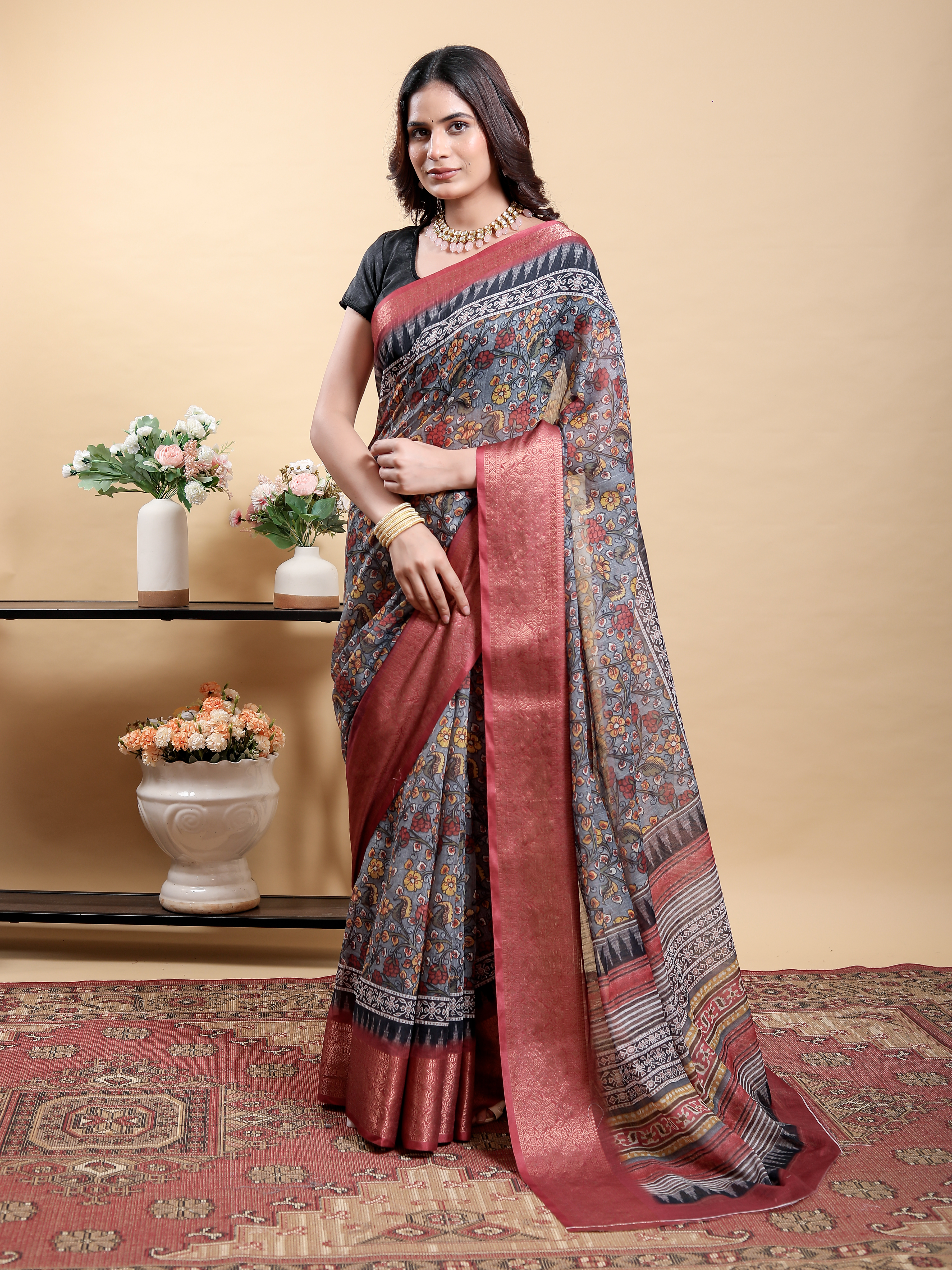
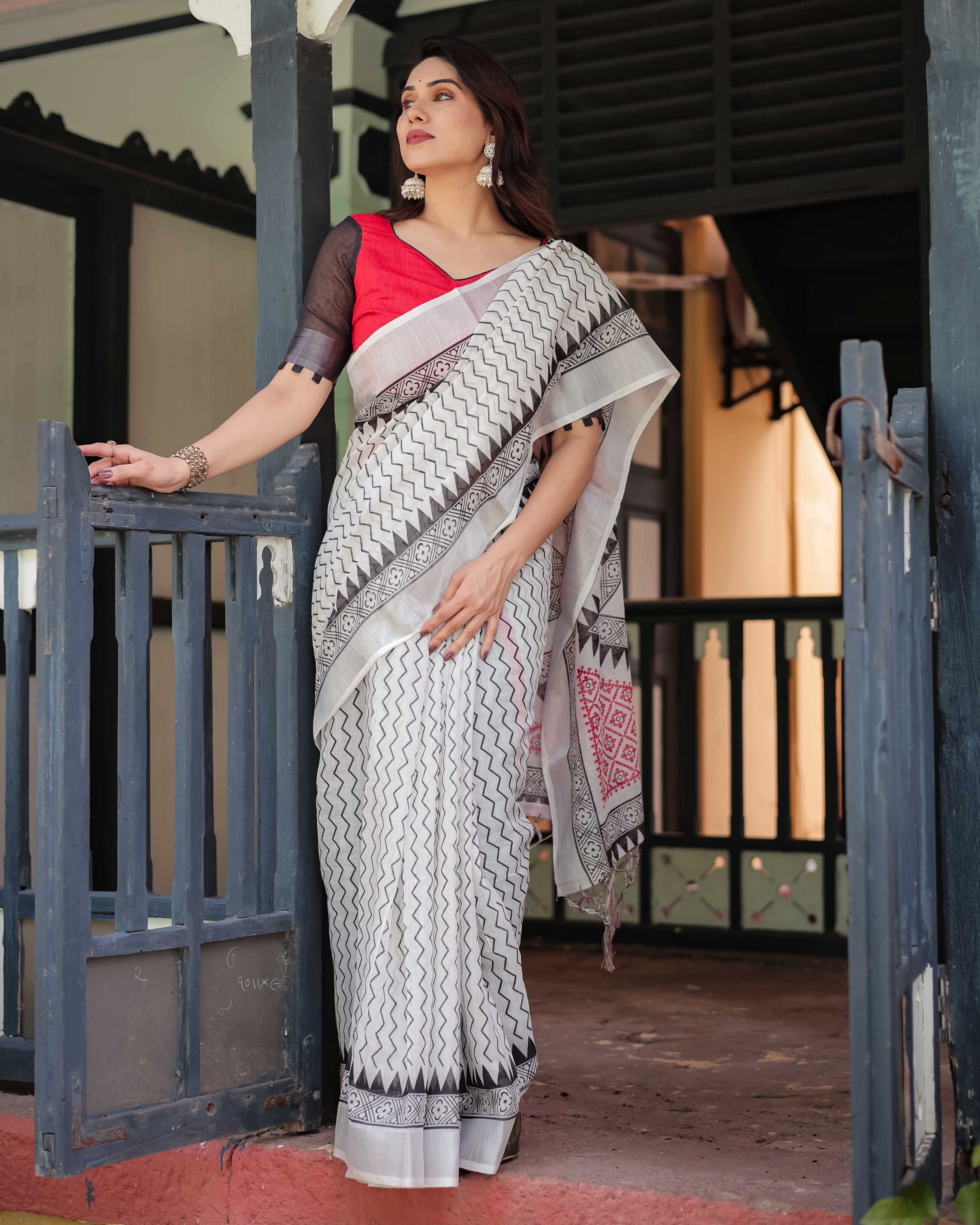
A kurta ending between mid-thigh and mid-calf is generally easier to manage than a floor-length layer. Anarkali panels can work well when the hem stays clear of the floor and the lining doesn't cling to the legs. A saree can also be dance-friendly when the pleats are pinned securely, the pallu is shortened and the footwear has a stable sole.
Which fabrics keep a Jaggo outfit comfortable for hours?
Lightweight georgette, crepe, cotton blends, rayon and soft chiffon generally keep guests more comfortable during prolonged dancing than dense velvet or heavily layered brocade. Fabric choice should account for the venue, weather and amount of movement expected.
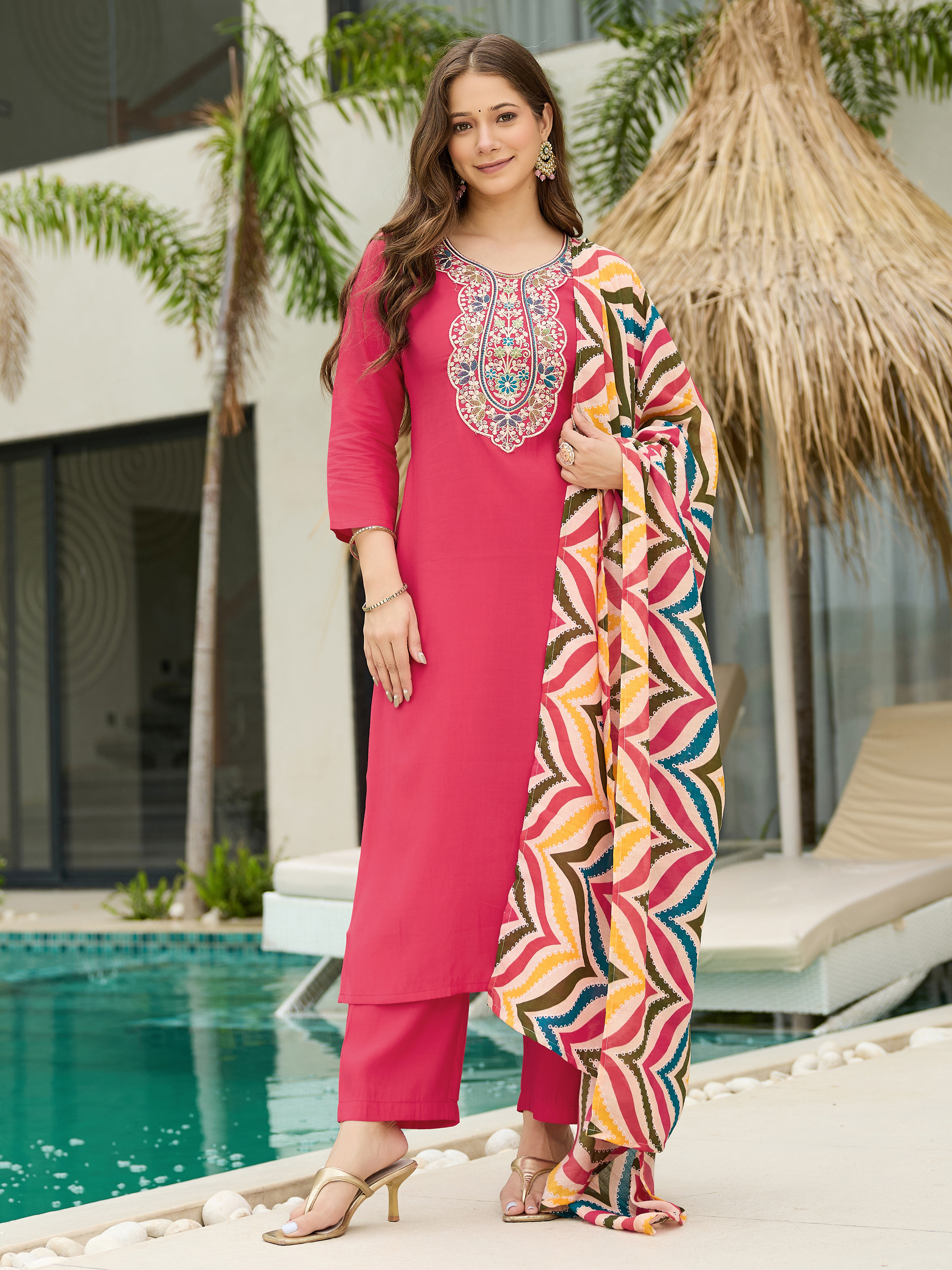
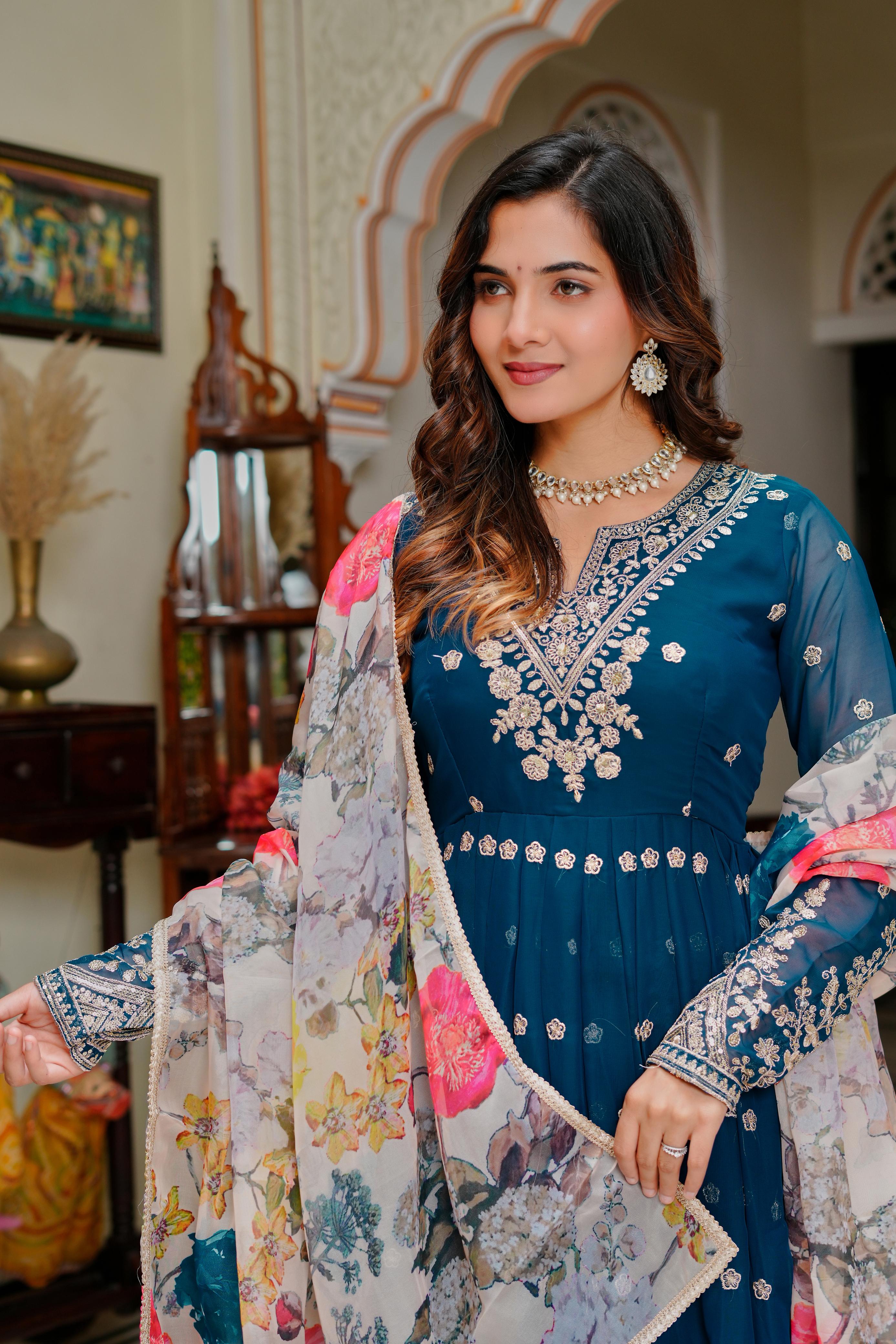
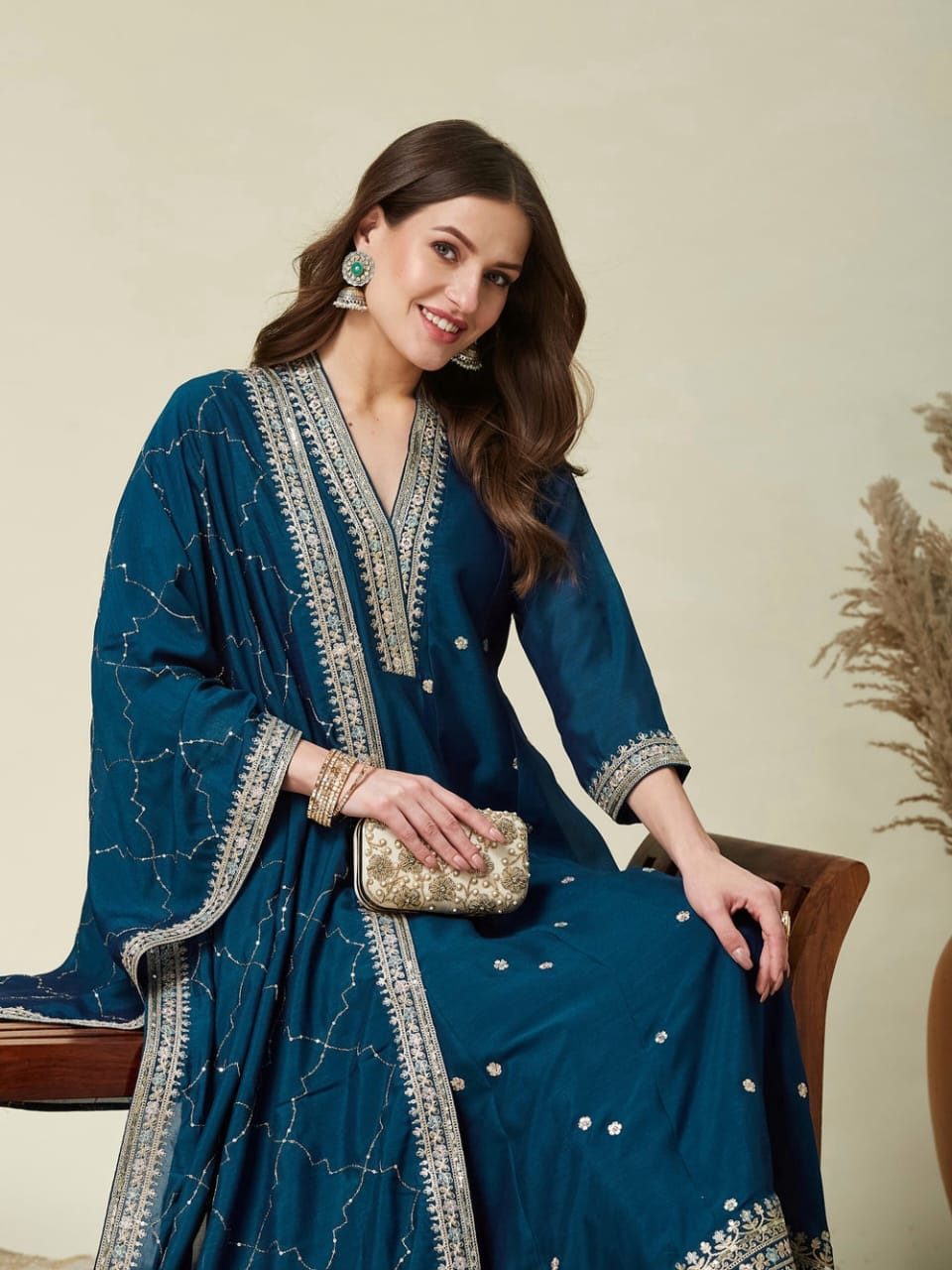
Georgette has an useful balance of drape and resilience for gowns, dupattas and flowing overlays. BLUE Georgette Designer Gown Set with Dupatta Women demonstrates why georgette suits a lively Sangeet silhouette: the fabric can create movement without the rigid bulk of several stiff layers. A breathable lining remains important because synthetic georgette may feel warm under bright lights.
Cotton-rich and rayon fabrics can be practical for an outdoor Jaggo, particularly in warm weather. These fabrics usually release heat more comfortably than thick polyester satin, although rayon may crease and cotton may need pressing immediately before departure. Chanderi can offer a light festive finish, but a very crisp Chanderi skirt needs careful hemming and a flexible lining for dancing.
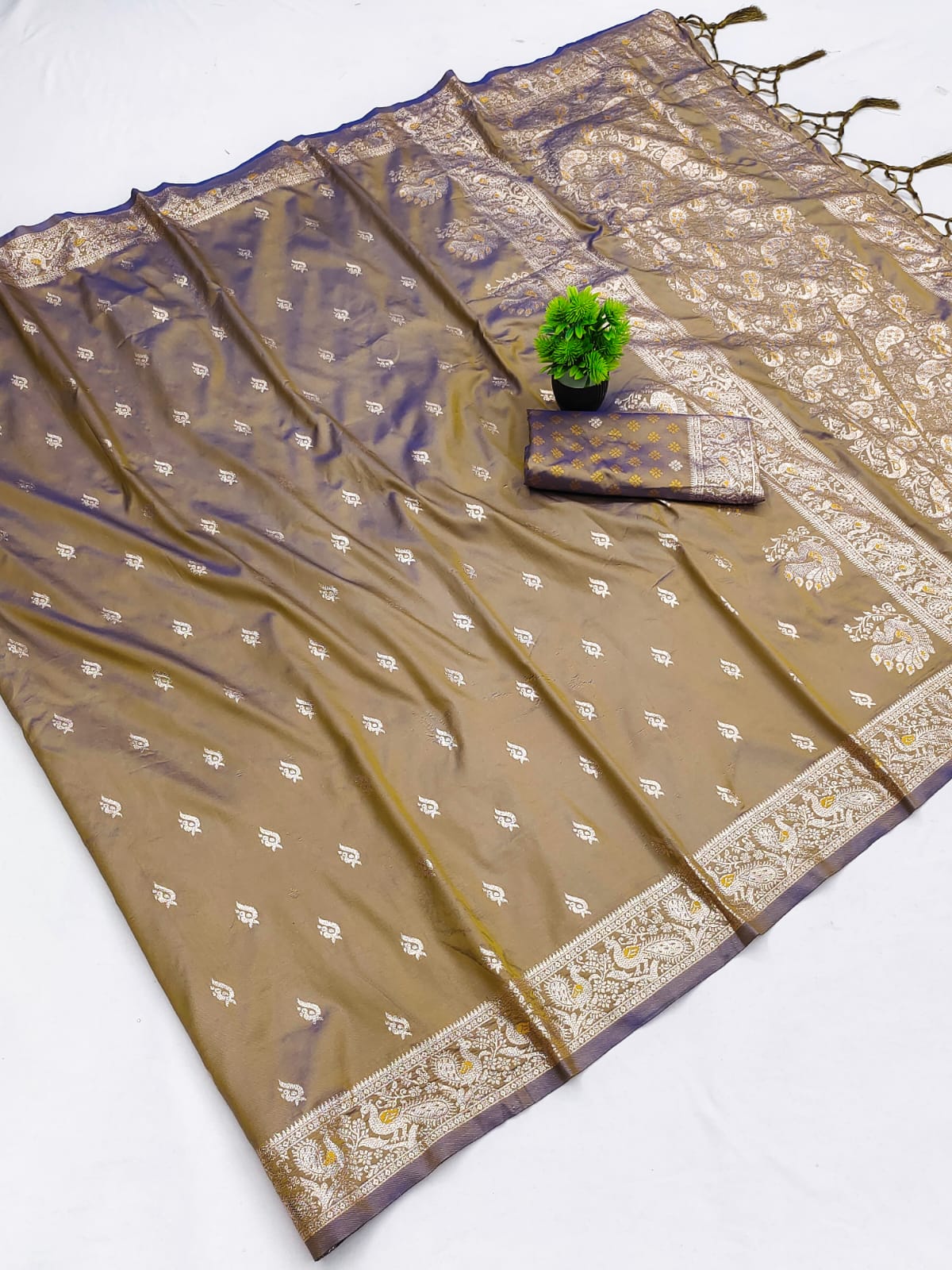
Banarasi silk and Kanjeevaram are beautiful choices for formal wedding functions, but heavier silk garments can become tiring during continuous movement. Guests who prefer Banarasi silk can reserve the fabric for a blouse, border or dupatta instead of wearing a fully layered outfit. Zari also adds visual richness without requiring the entire garment to be densely embroidered.
How should guests judge embroidery and embellishment?
Embroidery should be concentrated on the bodice, neckline, cuffs or border rather than spread heavily across every moving panel. Dense work around the knees and ankles can make bending, climbing steps and dancing less comfortable.
Elegant Pista Festive Wear Kurta Pant Set is an useful colour and construction reference for guests who want a coordinated outfit without a large circular skirt. A kurta-and-pant combination leaves the lower legs visually clean, while pista green provides a softer alternative to the usual red, pink and gold palette.
Sequins, beads and zari should be checked for rough edges before wearing. Turn the garment inside out and run a thin cotton cloth over the lining; snagging indicates a finishing problem that could irritate the skin or catch on another garment. A soft cotton camisole or full-coverage slip can provide an extra barrier when embellishment is concentrated near the armholes.
How can you choose the right outfit shape for your dance style?
The best outfit shape depends on whether you expect gentle movement, repeated bhangra steps or an entire evening of high-energy dancing. Matching the garment to the dance style prevents discomfort and keeps the outfit looking composed in photographs.
For guests joining occasional group dances
A saree, Anarkali or embellished gown works well for guests who will dance for short periods between photographs and conversations. The garment should still have a secure waist and a hem that clears the floor by approximately one to two centimetres when worn with the intended footwear.
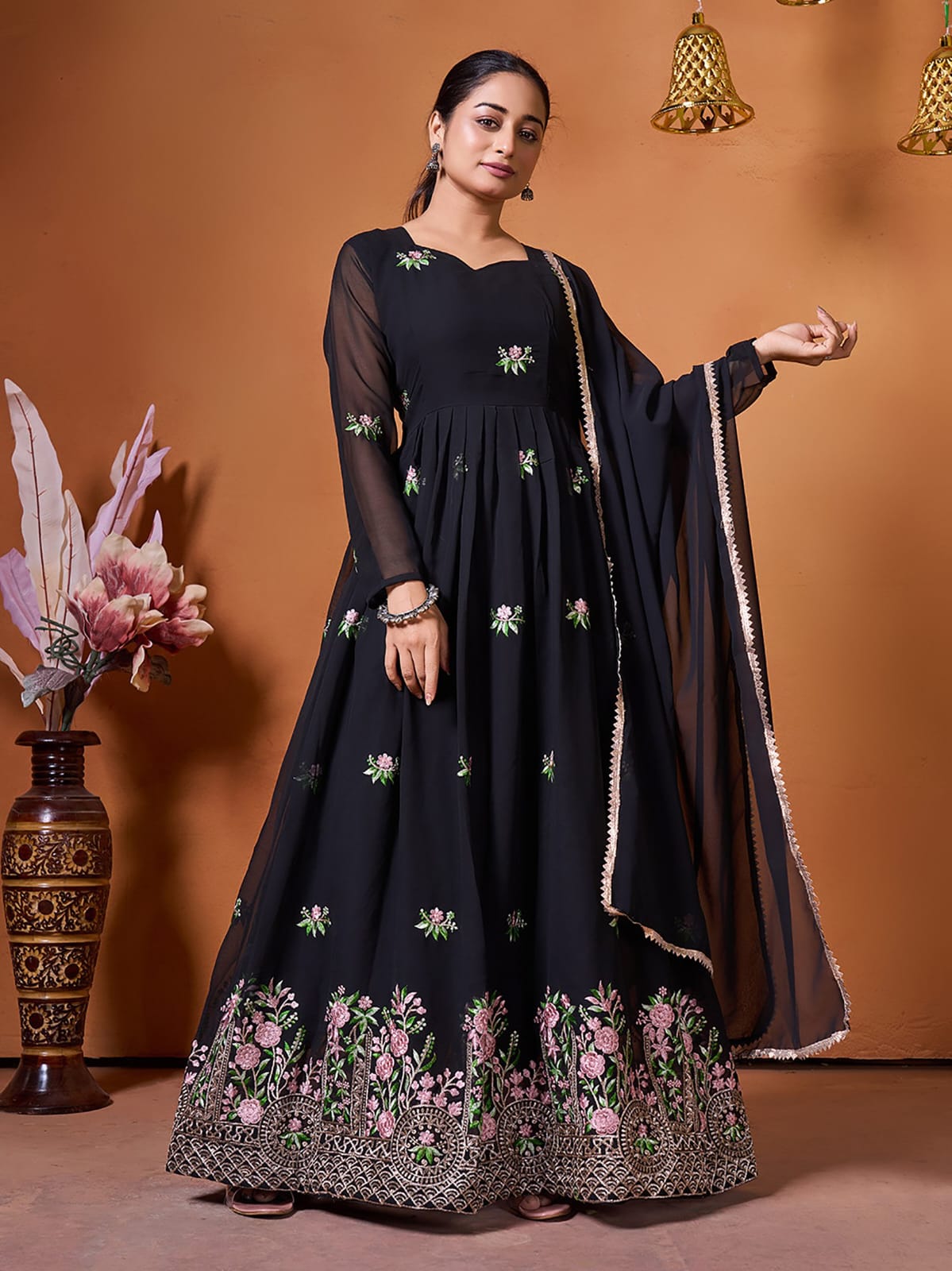
Wine Party Wear Anarkali Gown with Lace Dupatta offers a wine-toned, occasion-ready direction for a guest who wants a dramatic silhouette without assembling multiple separates. A lace dupatta should be secured at one shoulder and lightly tacked at the waist when dancing is likely. A hidden safety pin at the opposite shoulder can stop the lace edge from slipping backward.
For guests expecting sustained bhangra
A palazzo suit or kurta-pant set is usually safer than a very full floor-length gown for sustained bhangra. The cut allows the knees to bend and reduces the need to gather fabric while moving.
Designer Black Party Wear Palazzo Suit Set shows how a dark base can remain festive when paired with metallic earrings, a colourful bindi or a bright Punjabi jutti. Black also photographs well under coloured stage lighting, but reflective embellishment should be checked for comfort because hard metallic work can press into the waist while sitting.
Maroon Wedding Wear Embroidered Palazzo Suit Set gives a richer, traditional direction for guests who prefer a deeper festive shade. Maroon pairs naturally with antique gold, rose gold and warm ivory accessories. A palazzo hem should remain at least one centimetre above the floor with the chosen shoes to avoid stepping into the trouser opening.
For guests who want a shorter, flexible option
A kurti with pants or a kurti-pant-dupatta set brings flexibility for dancing, travelling and sitting on the floor. The shorter upper layer also reduces contact with food, outdoor dust and crowded seating.
Gajri Embroidered Kurti Pant Dupatta Set Women brings a bright, celebratory colour into the outfit plan without requiring a heavy skirt. Gajri, a lively pink-purple tone, works with silver, mirror-work or contrasting green accessories. The dupatta can be worn over one shoulder, looped around the neck or left behind entirely if the garment neckline brings enough coverage.
How do you secure a dupatta, hem and neckline before dancing?
Secure the dupatta at two points, check the hem with the final footwear and test the neckline with raised arms before leaving for the venue. Small adjustments prevent most common wardrobe problems on a crowded dance floor.
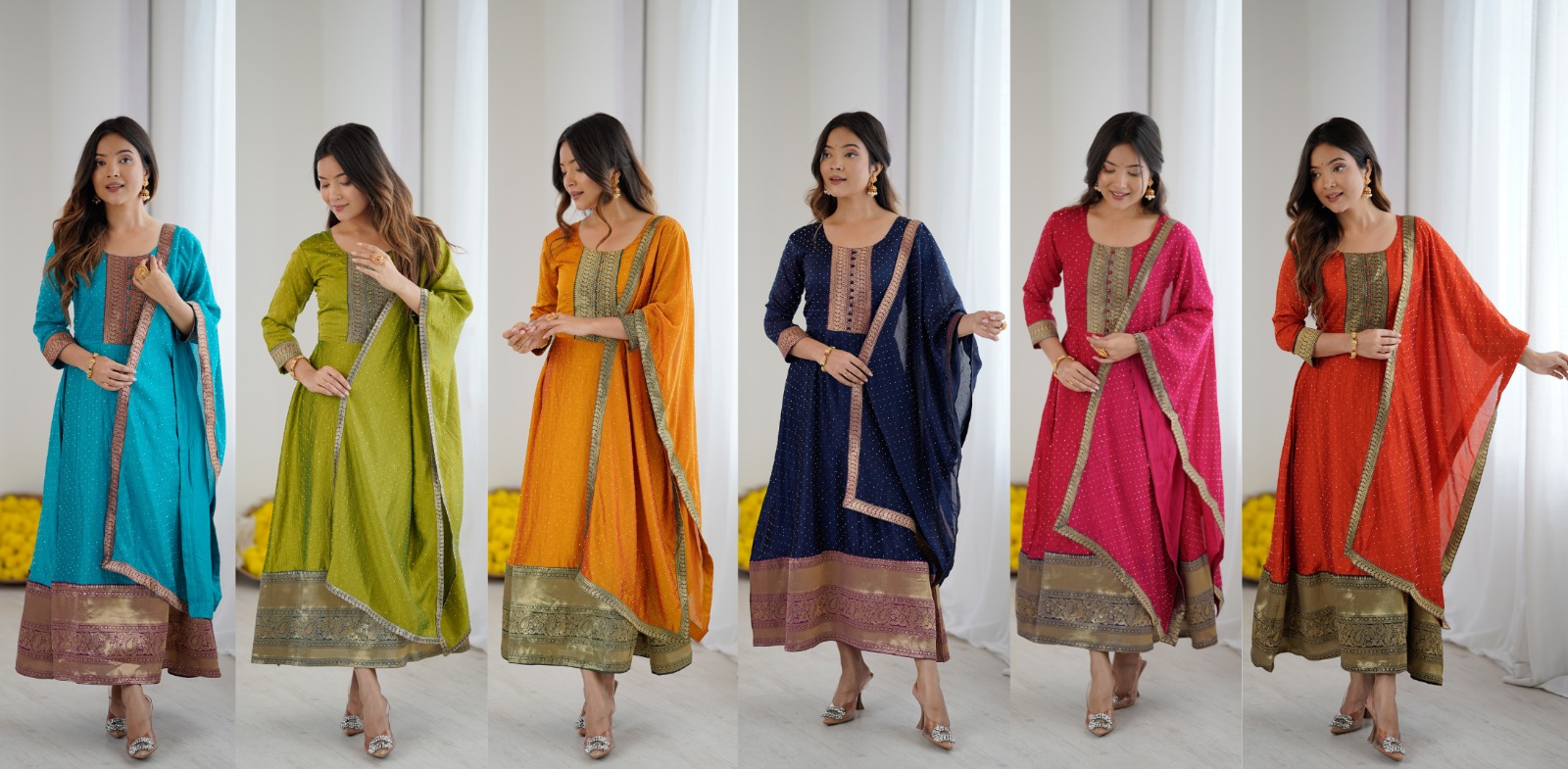
Use one pin near the shoulder and another at the waist or side seam. Pins should pass through the dupatta and an inner layer rather than hanging only from a delicate outer edge. For a slippery chiffon or satin dupatta, a small brooch or hidden loop can hold the fabric more reliably than one exposed pin.
Dupatta draping also changes the apparent proportion of the outfit. A front drape creates a formal frame but may interfere with arm movement. A shoulder-to-back drape leaves the hands free but requires a secure shoulder pin. Guests carrying phones or small bags should avoid placing the phone directly under a pinned dupatta because repeated pressure can loosen the pin.
Hems should be tested on the actual venue surface. A garment that clears a polished indoor floor may drag on grass, paving or carpet. Wear the planned footwear during alterations because a two-centimetre heel difference can change whether a palazzo or gown catches underfoot.
Necklines deserve equal attention. A wide round or V-neck should stay flat when the arms lift. Fashion tape can support a gaping edge, while a modesty panel can add coverage without changing the overall design. Heavy necklaces should not be allowed to pull a lightweight neckline forward during dancing.
Which colours and accessories suit a Punjabi Jaggo night?
Jewel tones, bright pinks, pista green, cobalt blue, maroon, gold and vivid orange suit the celebratory atmosphere of a Punjabi Jaggo night. Colour should be balanced with venue lighting and the rest of the family group so photographs don't become visually flat.
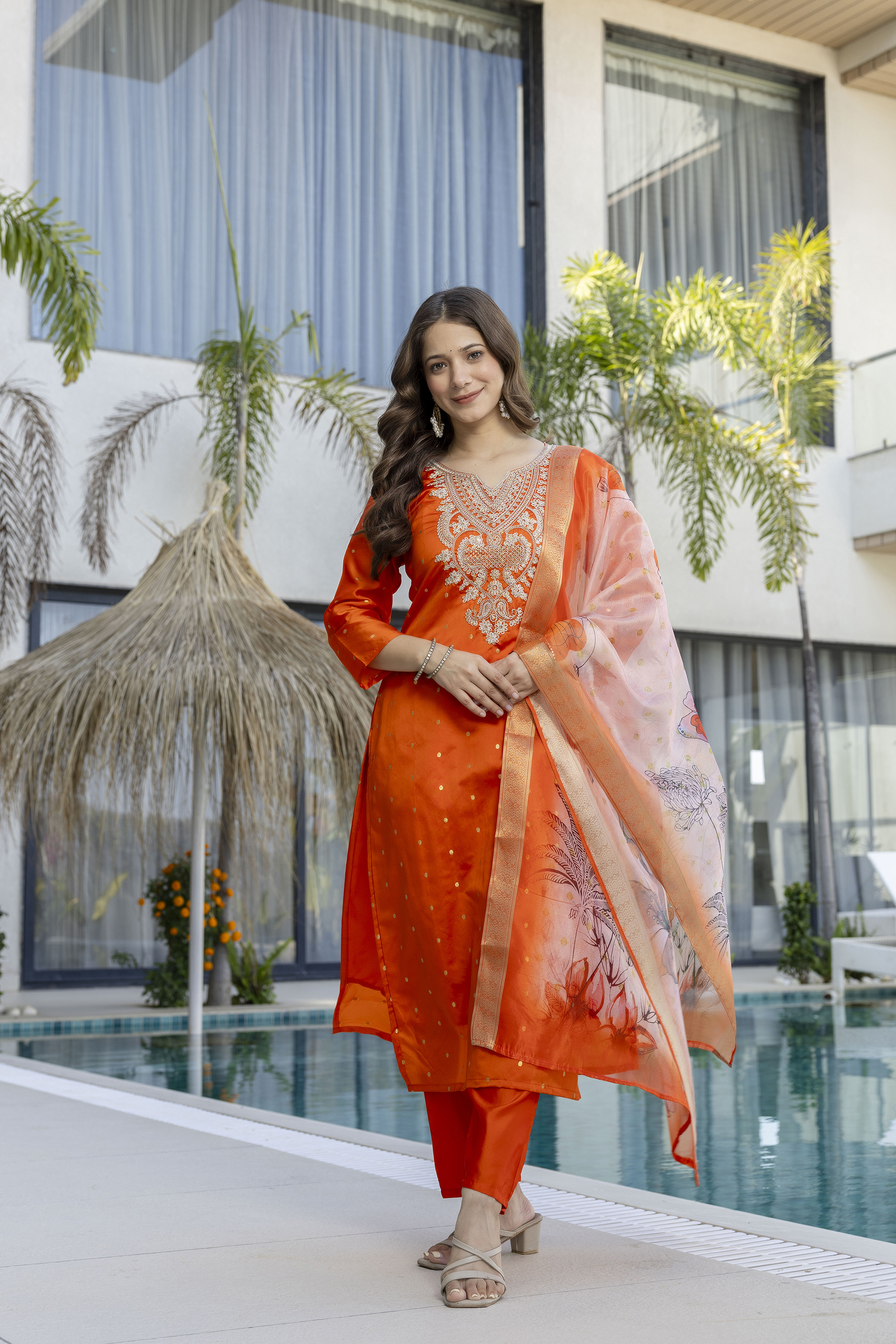
Elegant Black Ethnic Gown with Floral Embroidery shows how black can work as a strong base while floral detail gives celebration. Black doesn't need to look sombre when paired with emerald, fuchsia, cobalt or antique-gold accessories. Keep the jewellery lighter if the gown already has dense work around the neckline.
Golden Glow Gold Crush Embroidered Party Wear Saree for Women suits guests who want a heritage festive statement, but a gold saree should be made movement-ready before the event. Secure the pleats with two concealed pins, attach the pallu at the shoulder and choose low block heels or embellished flats instead of narrow stilettos.
For a cooler, high-contrast palette, BLUE Georgette Designer Gown Set with Dupatta Women can be styled with silver-toned jhumkas, a neutral clutch and a low bun. For a more saturated party look, pair warm maroon or wine with antique gold. Jewellery should remain secure with screw-back earrings and bangles that don't catch on embroidery.
The Sangeet Collection is a practical starting point for comparing these colour directions because a Sangeet wardrobe often needs to perform across dancing, dinner and photographs. The Sangeet Collection also makes it easier to compare coordinated silhouettes instead of choosing an outfit based only on a close-up fabric image.
What footwear and accessories make dancing easier?
Low block heels, cushioned juttis, embellished flats and secure sandals are usually more suitable for Jaggo dancing than thin stilettos or backless footwear. A stable sole matters because uneven outdoor surfaces and crowded dance floors make ankle support more important than extra height.
Wear the selected footwear indoors for at least 30 minutes before the event. This test reveals rubbing around the heel, pressure across the toes and whether the sole slips during turns. Gel pads can reduce friction, but gel pads can't correct a shoe that's the wrong size.
A small crossbody bag or wristlet is more practical than a large shoulder bag during bhangra. Keep essentials limited to a phone, identification, one card, lip colour and tissues. A heavy bag changes balance and can strike another dancer during quick movements.
Hair should be secured with pins that match the hairstyle rather than relying only on a loose elastic. A low bun, braided ponytail or half-up style keeps hair away from the face while leaving room for earrings. Avoid long dangling jewellery if you expect frequent arm movements or close group choreography.
How can you prepare the outfit before the Sangeet?
Prepare the full outfit at least 24 hours before the Sangeet so alterations, pressing and accessory checks happen before departure. A short rehearsal in the complete look is more reliable than trying each piece separately.
Lay out the kurta or gown, bottom, dupatta, footwear, jewellery and bag together. Check whether the colours work under indoor white light and warm yellow light. Photograph the complete outfit from the front and side; a side view often reveals a dragging hem or a dupatta that sits too low at the back.
Steam delicate garments according to their care label and place a clean cotton cloth between an iron and metallic embroidery. Do not apply high heat directly to sequins, zari or synthetic georgette. Pack one or two safety pins, a small sewing kit, fashion tape, blister plasters and a stain-removal pen for emergencies.
Guests who want the richest selection of festive silhouettes can use the Sangeet Collection as a comparison point, then narrow the choice by movement test rather than colour alone. A garment that permits comfortable dancing for three hours will usually look more polished than a heavier design that requires constant adjustment.
Choose the outfit you can move in confidently, sit in comfortably and wear without repeated fixing. That combination lets the clothing support the celebration instead of competing with it.
Common Questions About Dance-Ready Punjabi Jaggo Outfits
What should a guest wear to a Punjabi Jaggo night?
A palazzo suit, kurta-pant set, shorter Anarkali or neatly secured saree is suitable for a Punjabi Jaggo night. Choose breathable fabric, a manageable hem and footwear that remains comfortable during several hours of standing and dancing.
Which outfit is best for bhangra at a Sangeet?
A palazzo suit or straight kurta-pant set is usually best for sustained bhangra because both silhouettes allow knee bends and wide steps. Avoid hems that drag on the floor and dupattas that are pinned at only one point.
How do I stop my dupatta from slipping while dancing?
Secure the dupatta at the shoulder and waist or side seam instead of using one shoulder pin alone. A hidden brooch, small loop or concealed safety pin can provide extra stability for slippery chiffon, satin or lace.
Can I wear a saree if I want to dance at a Jaggo?
You can wear a saree for dancing if the pleats are firmly pinned, the pallu is secured and the hem clears the floor with your chosen footwear. Low block heels or embellished flats are safer than unstable narrow heels on a crowded dance floor.
Which fabrics are comfortable for a long Sangeet night?
Lightweight georgette, rayon, cotton blends, crepe and soft chiffon are generally comfortable for prolonged wear. Dense velvet, heavily layered brocade and very stiff fabric can feel warm or restrictive when guests dance for extended periods.
What footwear is safest for Punjabi wedding dancing?
Low block heels, cushioned juttis, embellished flats and secure sandals are safer choices for Punjabi wedding dancing. Break in the footwear before the event and test it on the type of surface expected at the venue.