How to Plan Internal Links Between Ethnic Wear Articles and Product Collections requires more than adding a product link to every saree article. A useful system connects a reader's question to the next relevant decision: fabric, print, drape, occasion, care, or purchase. When internal links follow that journey, readers find suitable products faster, search engines understand topical relationships, and older articles continue sending qualified traffic to collection pages.
An effective internal-linking plan begins with the structure of the wardrobe, not with a spreadsheet of URLs. A reader searching for linen-cotton sarees may need help choosing a summer fabric, understanding prints, selecting a blouse, and caring for the finished garment. Those needs should form a connected path rather than four isolated pages.
Why Internal Links Matter for Ethnic-Wear Websites
Internal links help readers move from information to a relevant next step while distributing authority across related pages. A saree-care article can support a linen-cotton collection page, while a draping guide can support a saree product page with a different search intent.
Ethnic-wear websites usually contain several page types with different purposes. A blog article answers a question, a product page describes one garment, and a collection page groups products around a shared need such as fabric, colour, silhouette, or occasion. Internal links clarify the relationship between these page types.
- Informational pages: These explain topics such as how to identify Banarasi silk, how to style a sharara, or how to wash Chanderi.
- Collection pages: These help shoppers compare several garments within a theme, such as printed sarees, linen-cotton sarees, or festive sarees.
- Product pages: These provide specific details about one saree, kurti set, blouse, or lehenga.
- Trust and service pages: These explain sizing, delivery, returns, or fabric authenticity, although they should not interrupt an editorial article too frequently.
Search engines use links, surrounding text, and page relationships to interpret a site. A page about Haldi ceremony dressing that links to a relevant yellow saree collection sends a clearer contextual signal than the same page linking randomly to a black satin saree.
How to Plan Internal Links Between Ethnic Wear Articles and Product Collections
How to Plan Internal Links Between Ethnic Wear Articles and Product Collections starts with mapping search intent before choosing anchor text or link positions. Build a topic map that records what the reader wants, which page answers the question, and which page naturally continues the journey.

Begin with a page inventory. Record every article, product page, collection page, and high-value informational page in a spreadsheet. Add columns for the primary topic, fabric, colour, occasion, garment type, audience, current organic traffic, conversion value, and pages that already link to it.
Next, group pages into topic clusters. A practical ethnic-wear cluster might contain one broad guide about linen-cotton sarees, supporting articles about summer draping and fabric care, a printed saree collection page, and several individual products. A second cluster might cover festive dressing with articles about zari, Banarasi silk, Kanjeevaram, blouse styling, and wedding guest sarees.
Use a hub-and-spoke structure for each cluster. The hub should be the strongest broad page, while the spokes should answer narrower questions. The hub can link to the spokes, and the spokes can link back to the hub when the connection helps the reader. Product pages should receive links from the most relevant spokes rather than from every article on the site.
What should the page map record?
A useful page map should record the page's primary search intent, its intended audience, and the next decision a reader is likely to make. A guide about saree fabrics may answer an informational question, while a collection page may serve comparison intent and a product page may serve purchase intent.
- Primary topic: Record terms such as linen cotton, printed sarees, wedding guest dressing, or kurti sets.
- Search intent: Label the page informational, comparison-focused, transactional, or navigational.
- Destination type: Note whether the best next page is an article, collection, product, or care guide.
- Link priority: Mark commercially important pages that need stronger contextual support.
Which Page Types Should Link to Each Other?
Articles should link to collection pages when the reader is ready to compare products, and collection pages should link to articles when extra guidance would improve the buying decision. Product pages should link to closely related guides, not to a long list of unrelated editorial posts.

Article-to-collection links
An article about breathable sarees can link to a linen-cotton saree collection after explaining how linen and cotton behave in warm weather. An article about statement prints can link to a printed saree collection after discussing scale, contrast, and pallu placement. The link should appear when the reader has enough information to evaluate products.
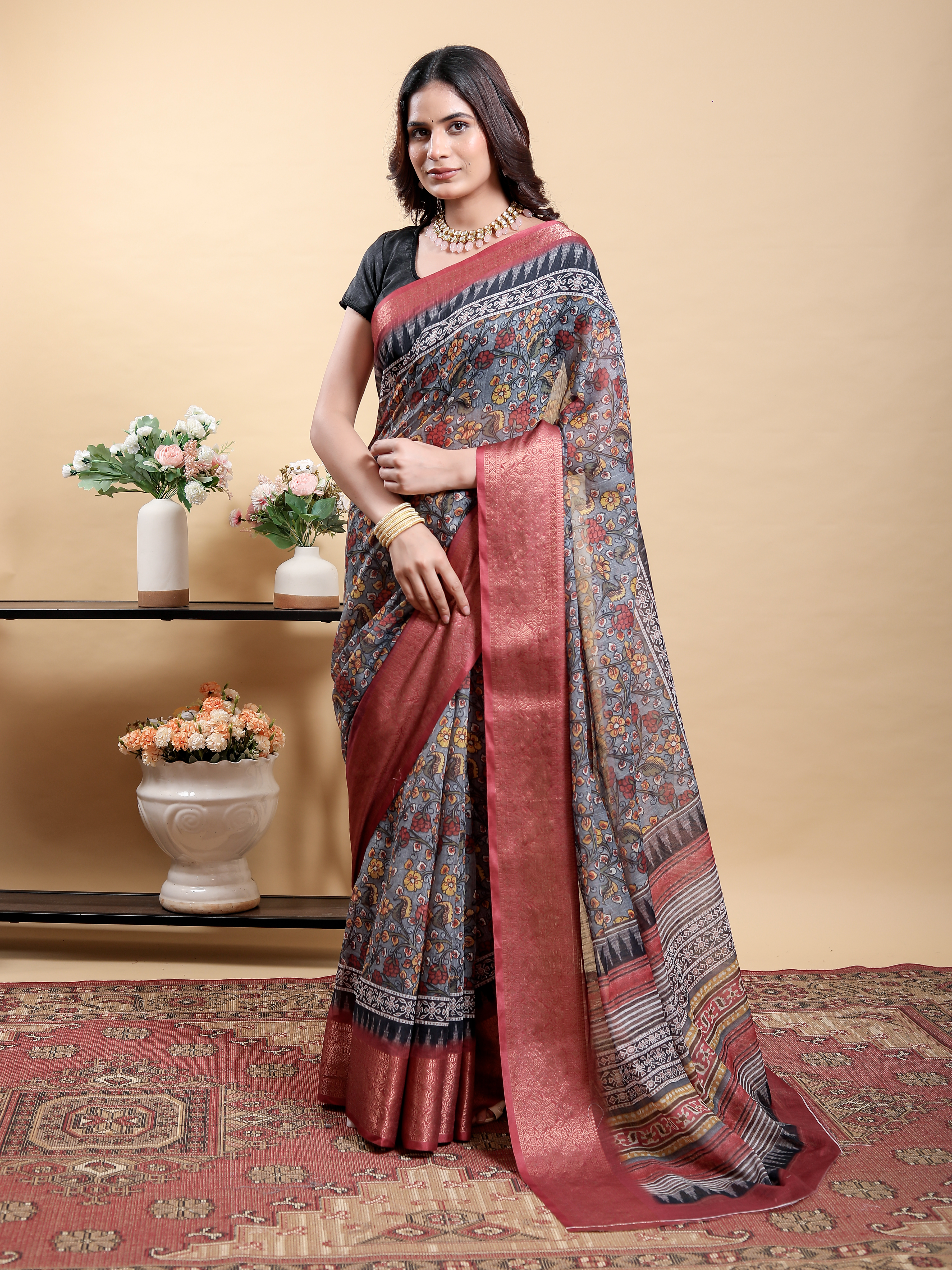
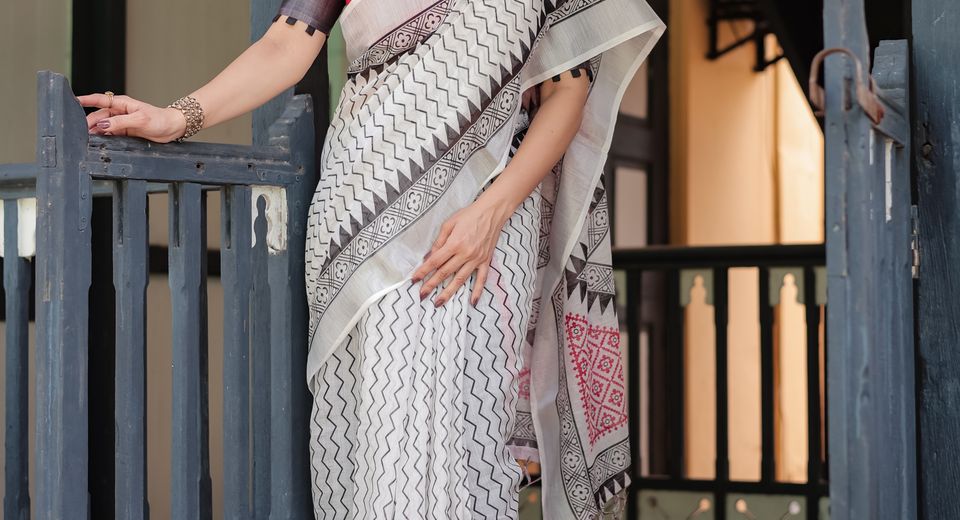
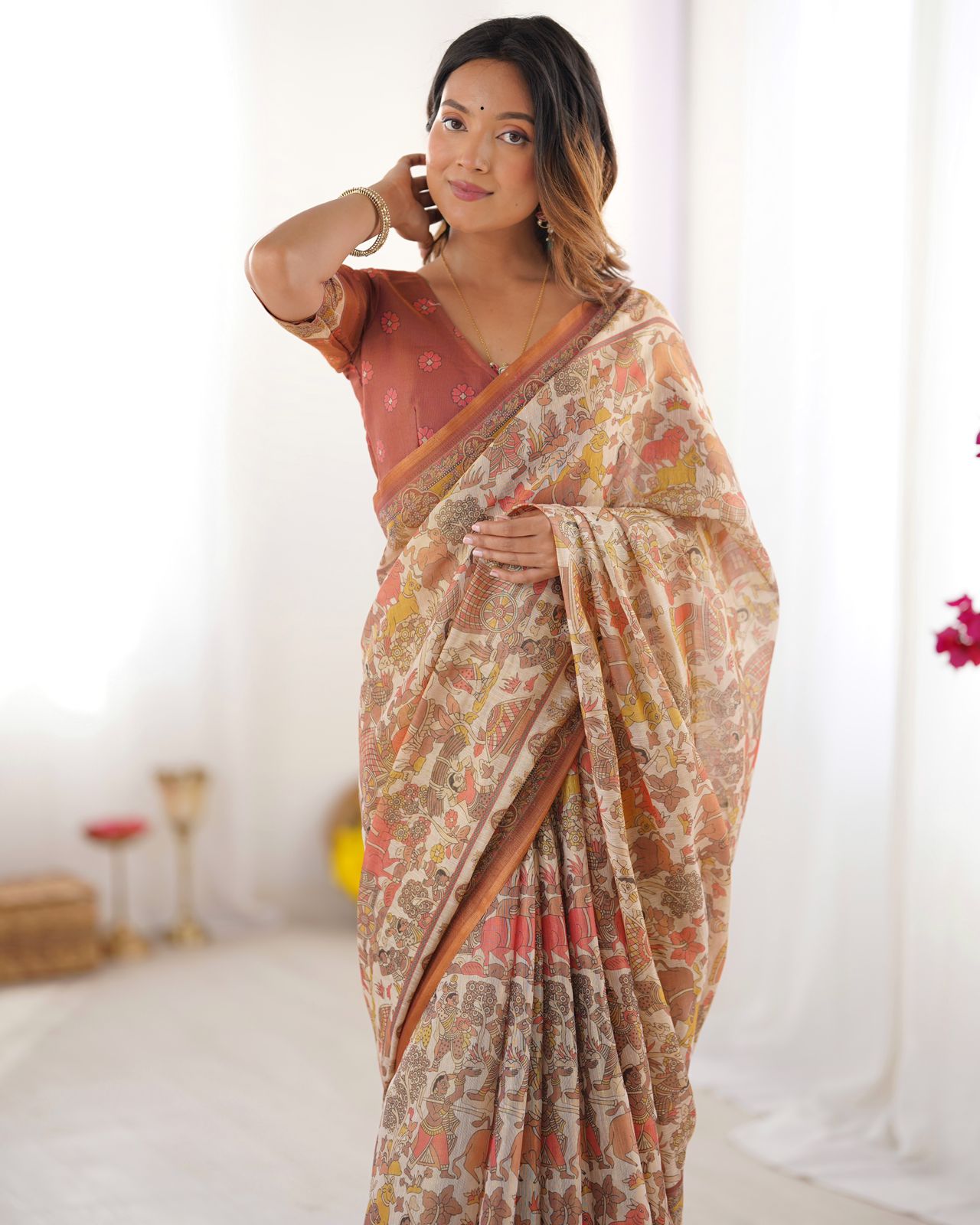
An article explaining how folk motifs affect the visual balance of a saree could mention Ivory Red Folk Art Print Linen Cotton Saree as a concrete illustration. A separate discussion of tribal-inspired borders could naturally reference Ivory Linen Cotton Saree with Black Pink Tribal Pattern. Product mentions are most useful when the garment demonstrates the principle being explained.
Collection-to-article links
A collection page should link to a guide when shoppers may need help comparing fabrics, occasions, or care requirements. A linen-cotton page might point to an article on preventing shrinkage, while a silk page might point to guidance on zari storage and professional cleaning.
Collection-page links should be short and purposeful. A sentence such as "Read how linen-cotton sarees behave in humid weather before choosing a weave" gives the reader a clear reason to leave the collection page.
Product-to-article links
A product page should link to an article that resolves a likely objection or styling question. A page for Black Satin Saree with Leaf Print & Blouse | Varnavi could link to guidance on evening draping, satin handling, and blouse proportion. A page for Brown Embroidered Vichitra Silk Kurti Set with Dupatta could link to a guide on styling a kurti set for a reception or intimate festive dinner.
Product pages should usually link to one or two highly relevant guides, one closely related collection, and possibly one complementary garment category. Ten loosely related links make the page harder to scan and dilute the importance of every recommendation.
How Should Anchor Text Be Written?
Anchor text should describe the destination accurately and naturally, using the reader's likely language without repeating the same keyword on every page. "Linen-cotton saree care guide" is more useful than "click here," while "printed sarees for summer dressing" is more precise than "shop now."
Vary anchors according to context, not according to a forced synonym list. Suitable variations may include "how to care for linen cotton," "summer saree fabric guide," "printed saree collection," and "sarees with contrast pallus." Each phrase should match the actual content of the destination page.
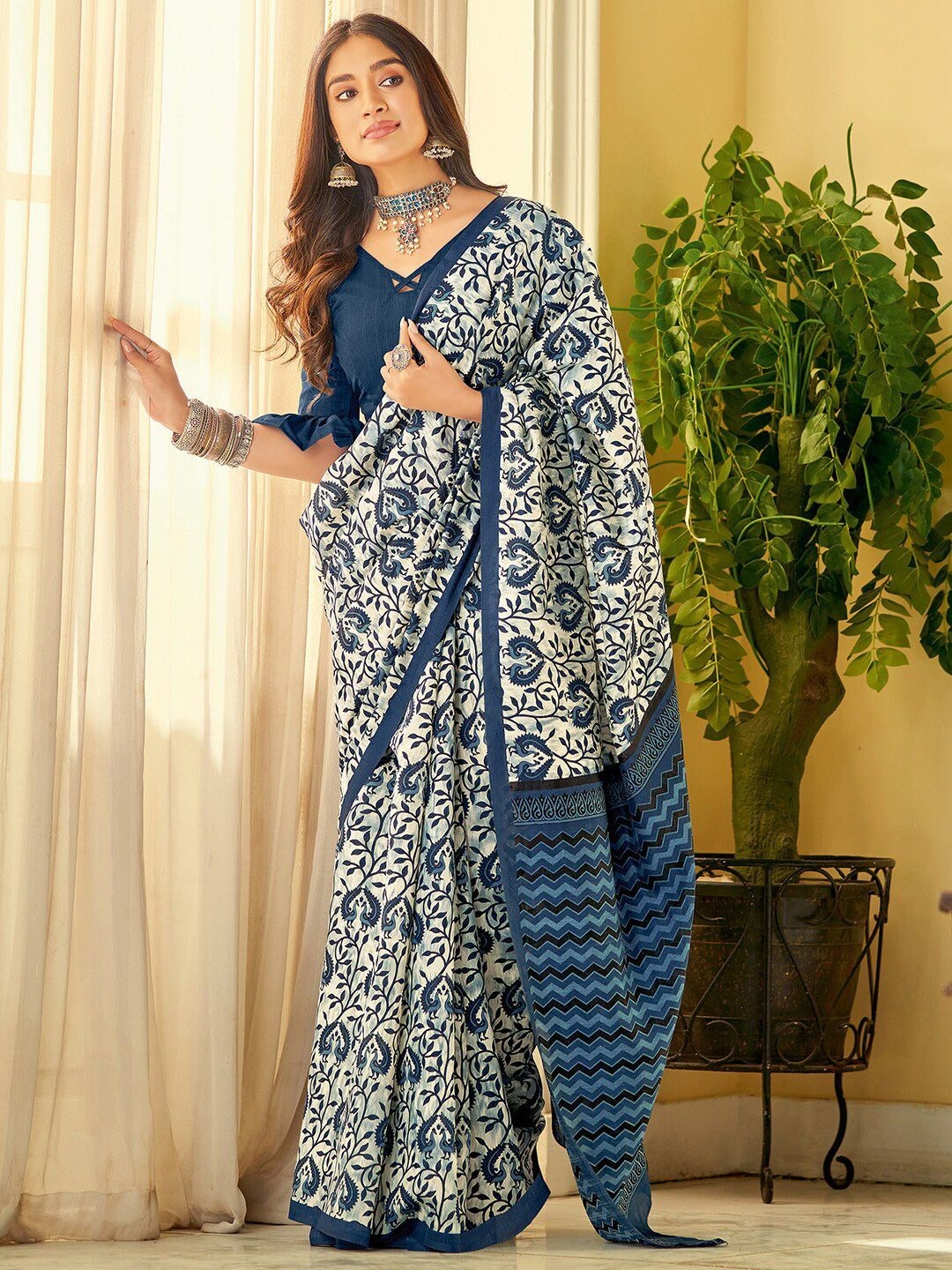
Use exact product names when the product itself is the subject of the sentence. A discussion of contrast and visual movement could refer to Ivory Indigo Floral Linen Cotton Saree with Chevron Pallu. A section on pallu details could mention Indigo Blue Geometric Print Saree with Contrast Pallu. The surrounding sentence should explain why the item is relevant rather than placing the name in an isolated promotional block.
Anchor text should not promise more than the destination provides. A link labelled "Kanjeevaram silk buying guide" should not lead to a general saree collection with no Kanjeevaram information. Misleading anchors increase friction and can make readers distrust future recommendations.
Where Should Links Appear in a Long Article?
The strongest internal links appear inside paragraphs where the destination directly answers the point being discussed. Contextual links near the first relevant explanation are generally more useful than a group of unrelated links placed at the end of an article.
Place a primary collection link after the article has established the reader's need. For a guide to breathable festive clothing, explain fabric weight and lining first, then direct the reader to a suitable collection. Place a supporting article link immediately before or after a technical term that some readers may not understand, such as zari, Chanderi, or viscose.
Use headings and lists to make navigation predictable. A "Choose by fabric" section can link to linen-cotton, Chanderi, and silk resources, while a "Choose by occasion" section can link to Haldi ceremony, wedding guest, and evening-dressing pages. Do not turn every list item into a link; link only when the destination adds meaningful detail.
For a 1,500-word article, four to eight internal links is often enough when the links are closely relevant. A longer buying guide may support eight to twelve links, but the correct number depends on reader usefulness and page complexity rather than a fixed SEO target.
How Can Product Links Feel Editorial Instead of Promotional?
Product links feel editorial when the product demonstrates a specific styling, fabric, or construction point that the article has already explained. Readers accept a recommendation more readily when the reason is visible.
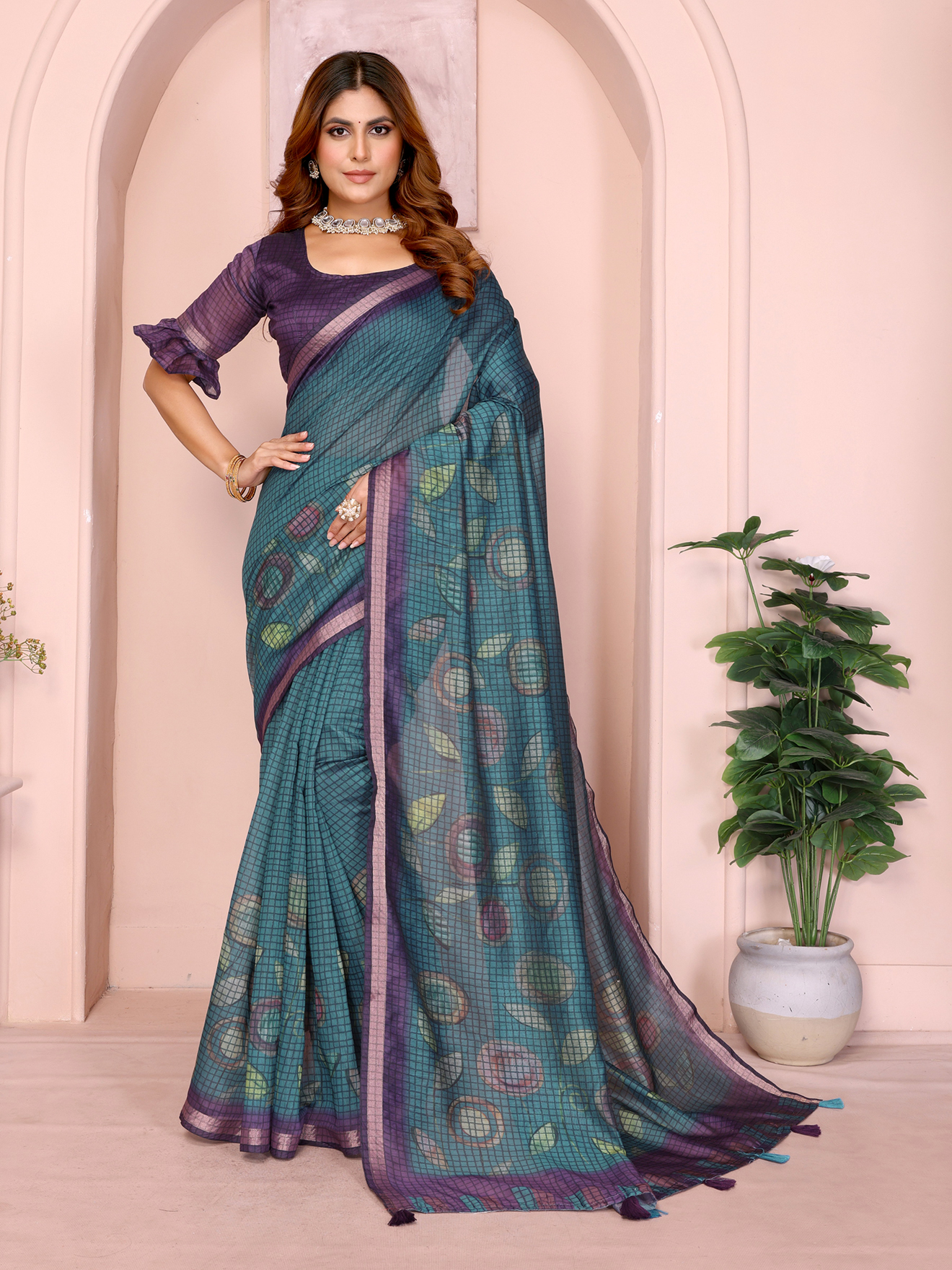
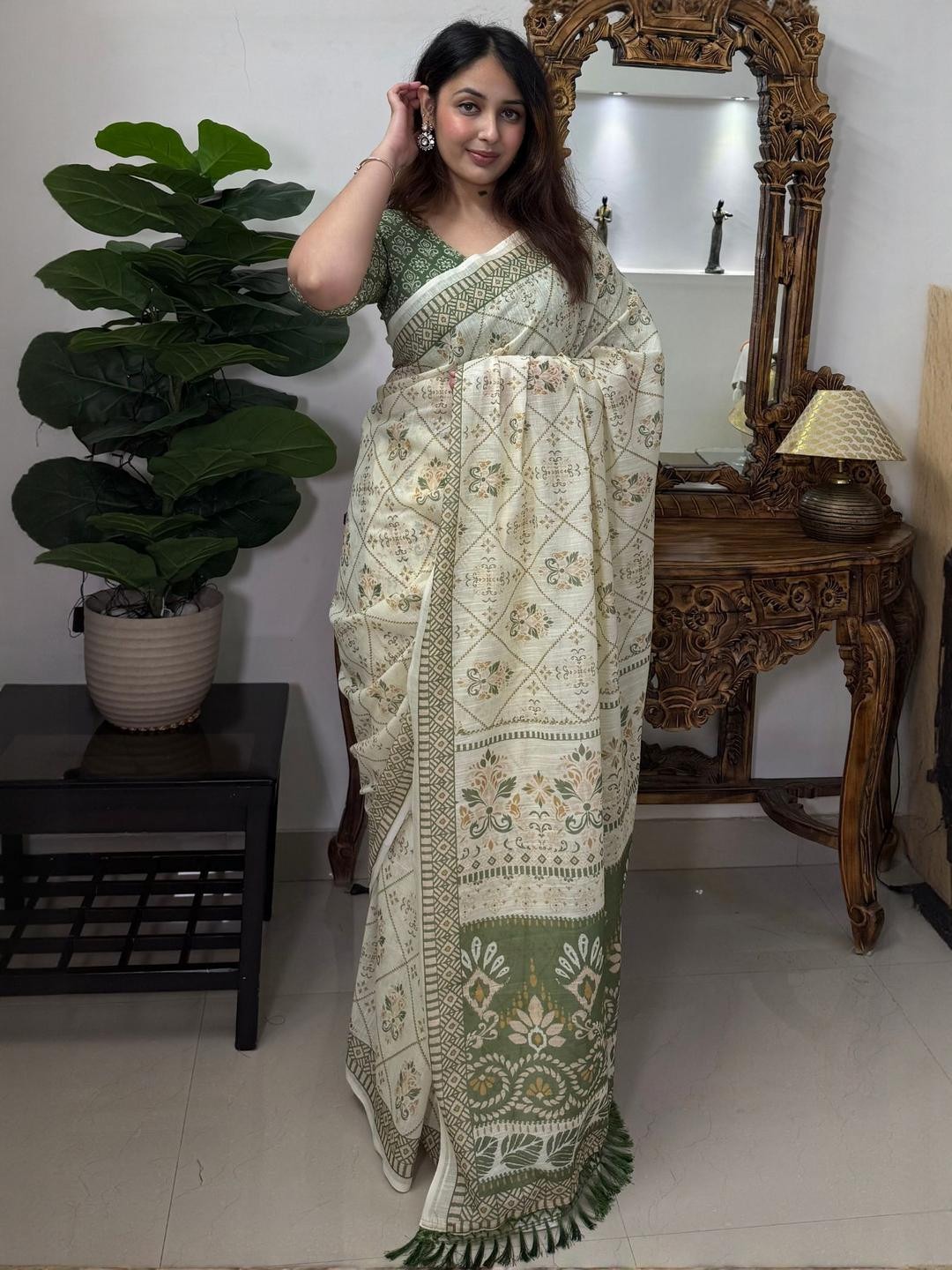
Compare two approaches. "Shop this beautiful saree" gives no useful information. "A tasselled pallu adds movement to a restrained floral base, as shown by Ivory Olive Floral Linen Cotton Saree with Tasselled Pallu" connects the recommendation to a design principle.
Use products as evidence for concrete observations. Ivory Red Folk Art Print Linen Cotton Saree can illustrate how a large motif changes the visual weight of a drape. Ivory Linen Cotton Saree with Black Pink Tribal Pattern can illustrate a neutral base with high-contrast motif placement. Indigo Blue Geometric Print Saree with Contrast Pallu can show how a contrasting pallu creates a deliberate focal point.
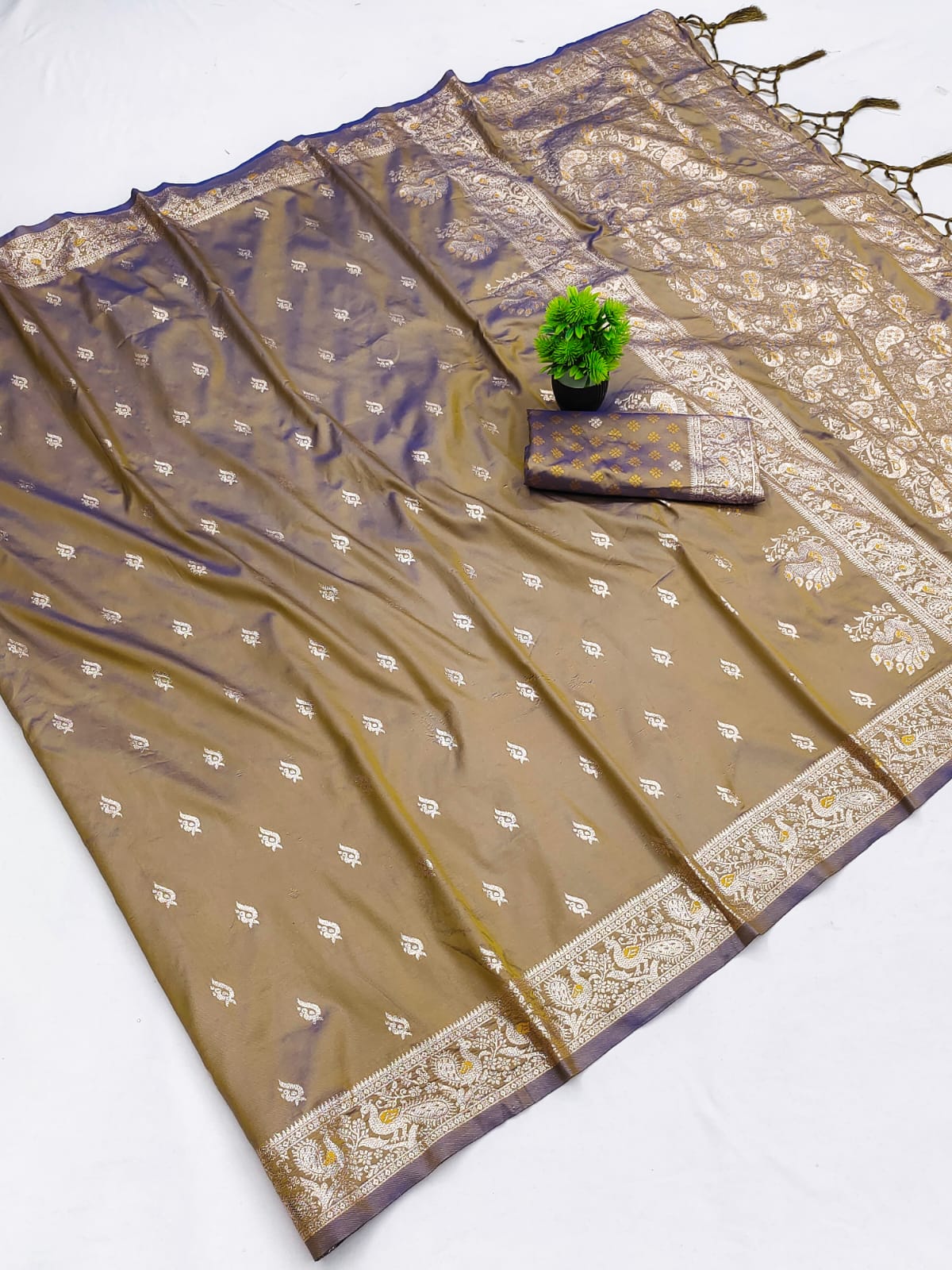
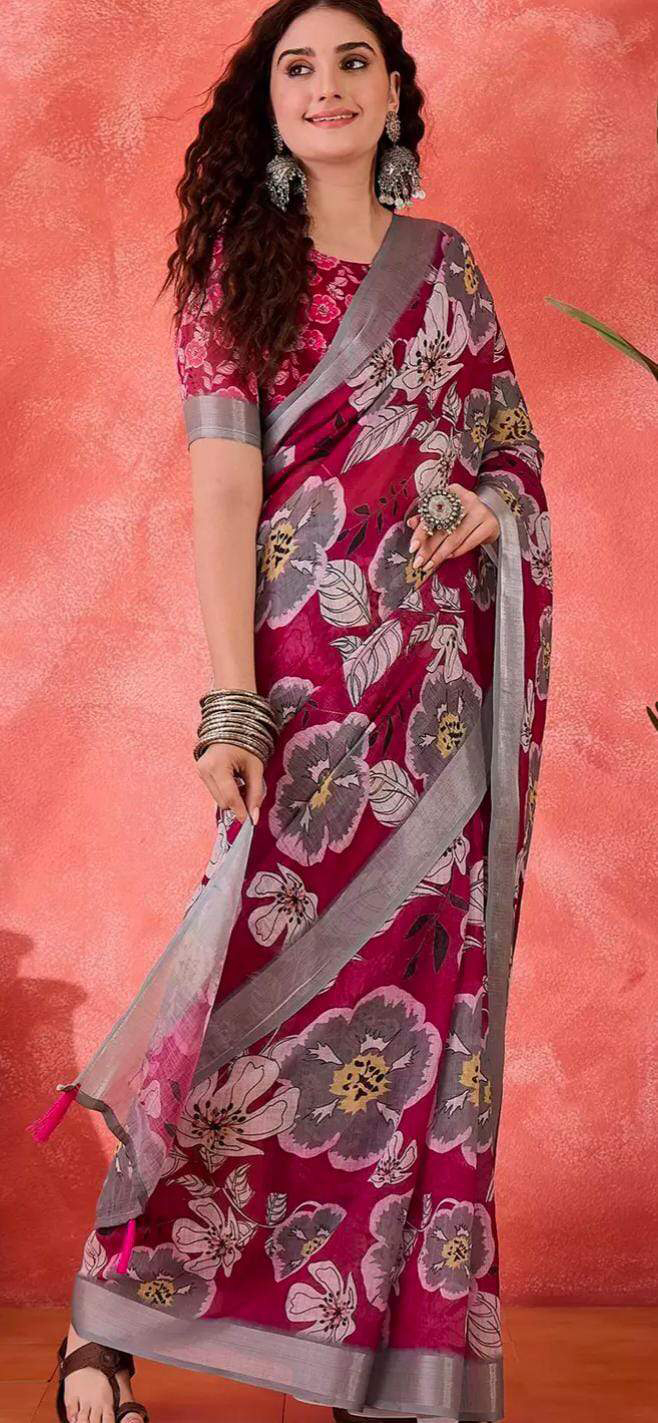
Colour and construction can also guide useful links. Maroon Mal Cotton Ethnic Saree With Blouse from VARNAVI can support a discussion of earthy festive palettes and coordinated blouse planning. Brown Embroidered Vichitra Silk Kurti Set with Dupatta can support an explanation of how embroidery and a dupatta create occasion value without requiring a full lehenga.
How Should Internal Links Be Audited?
An internal-link audit should check relevance, accessibility, distribution, and performance at least once every quarter. A quarterly review is frequent enough for a growing editorial site and practical for a catalogue with changing products.
Start by checking broken links, redirected URLs, discontinued products, and pages that return errors. Replace a discontinued product link with a relevant collection page only when the collection genuinely satisfies the same need. Do not redirect every unavailable product to the homepage.
Review link distribution next. Important collection pages should receive links from several relevant articles, but no single article should become a dense directory of every product category. Check whether new articles link to established hubs and whether older high-traffic articles mention newer, relevant collections.
Measure performance with organic entrances, assisted conversions, click-through rate on internal links, and engagement after the click. A link with a lower click rate may still be valuable if it helps readers reach a high-conversion product page. Compare performance over at least four to eight weeks because seasonal ethnic-wear demand can distort short-term results.
What should be removed?
Remove links that lead to irrelevant pages, duplicate destinations, expired products, or thin collection pages with no useful inventory. Remove repeated links to the same destination when the repetition adds no new context.
Keep a link when it answers a genuine question even if it doesn't produce an immediate sale. A fabric-care guide may reduce purchase hesitation, improve product satisfaction, and support future conversions that analytics don't attribute directly to the original click.
A Practical Workflow for New Ethnic-Wear Articles
A repeatable workflow can turn internal linking from a last-minute SEO task into part of editorial planning. The writer, merchandiser, and SEO reviewer should agree on the primary destination before publication.
- Choose the article's main question. Define whether the article explains a fabric, styling method, occasion, garment, or buying decision.
- Select one primary destination. Choose the collection or guide that most naturally continues the reader's journey.
- Choose two to four supporting destinations. Add only pages that answer likely follow-up questions.
- Write contextual sentences. Explain why each destination is relevant before or after the link.
- Check the exact page promise. Confirm that the anchor text accurately describes the destination.
- Review after publication. Use analytics after four to eight weeks and update weak or outdated links.
The final review should also check mobile readability. Long product names can make a paragraph difficult to scan, especially on a narrow screen. Keep the surrounding sentence short, avoid stacking several linked names together, and place the most useful destination first.
A well-planned internal-link network respects both editorial judgment and commercial structure. Readers receive guidance that feels relevant, product pages gain context, collection pages become easier to discover, and search engines receive a clearer map of the ethnic-wear catalogue.
Common Questions About Internal Linking Ethnic-Wear Content
How many internal links should an ethnic-wear blog article contain?
A 1,500-word ethnic-wear article will often need four to eight closely relevant internal links. A longer buying guide can support more links, but relevance and reader usefulness matter more than reaching a fixed number.
Should a saree article link directly to products or to a collection page?
A saree article should link to a collection page when readers need to compare several options and to a product page when one garment clearly illustrates the advice. Many strong articles use one primary collection link alongside one or two carefully chosen product examples.
What is the best anchor text for an ethnic-wear product link?
The best anchor text accurately describes the product or destination in natural language. Phrases such as "linen-cotton saree care guide," "sarees with contrast pallus," or the exact product name are more useful than "click here."
Can too many internal links hurt a fashion website?
Too many irrelevant or repetitive links can make an article difficult to read and can weaken the distinction between important destinations. A page should contain enough links to answer likely next questions without becoming a catalogue of every product category.
How often should internal links between articles and collections be audited?
Internal links should be checked at least quarterly, with additional reviews when products are discontinued, collections change, or major seasonal content is published. Broken links, redirected URLs, outdated anchors, and irrelevant destinations should be corrected first.
Should internal links use exact-match SEO keywords every time?
Internal links should not use the same exact-match keyword every time. Natural variations such as "summer saree fabric guide," "printed saree collection," and "how to care for linen cotton" create clearer context when each phrase accurately matches its destination.