A guest at Gaye Holud should look celebratory without competing with the bride's turmeric-yellow sari. Bengali Gaye Holud Guest Outfits That Are Not Another Bridal Saree begin with an useful distinction: the bride may wear the most recognisable yellow, while guests can interpret the Haldi ceremony through softer colour, interesting texture and a more relaxed silhouette. The result feels festive, photograph-friendly and practical enough for sitting on the floor, joining rituals and moving between indoor and outdoor spaces.
Gaye Holud is the Bengali pre-wedding turmeric ceremony, closely related to Haldi functions in other parts of India. Yellow remains meaningful because turmeric represents auspiciousness, warmth and blessing, but guests don't need identical marigold sarees with heavy gold borders. A floral print, mauve satin, sky blue embroidery, brown cotton or mustard Banarasi silk can carry the spirit of the event while leaving the bridal look visually central.
What should Bengali Gaye Holud Guest Outfits That Are Not Another Bridal Saree look like?
Bengali Gaye Holud Guest Outfits That Are Not Another Bridal Saree should be lighter in visual weight, easier to move in and less heavily embellished than a bridal saree. Guest dressing can acknowledge the ceremony's colour story without reproducing bridal markers such as dense zari coverage, an oversized pallu, elaborate hand embroidery or a complete ceremonial jewellery set.
The distinction becomes especially useful when an invitation specifies yellow or bright festive clothing. One strong celebratory element is usually enough. A printed saree with a sculpted blouse can make a complete outfit. A plain cotton saree with statement earrings can also look finished. A Banarasi silk saree works when the zari is balanced with a simple blouse and restrained accessories.
Photographs also benefit from separation between the bride and guests. If the bride is wearing bright yellow silk, a guest can choose cream, peach, blush, green, lilac, sky blue or muted mustard. If the bride is wearing red or pink, turmeric yellow becomes more available to guests, although a quieter shade still looks more considered than an exact replica of the bridal outfit.
Which colours suit Bengali Gaye Holud Guest Outfits That Are Not Another Bridal Saree?
Soft yellow, mustard, pastel blue, pink, mauve, ivory, green and warm neutrals all suit Bengali Gaye Holud Guest Outfits That Are Not Another Bridal Saree. The best colour depends on the venue, the bride's outfit, the time of day and whether turmeric or coloured powders may touch the saree.
Yellow without looking like the bride
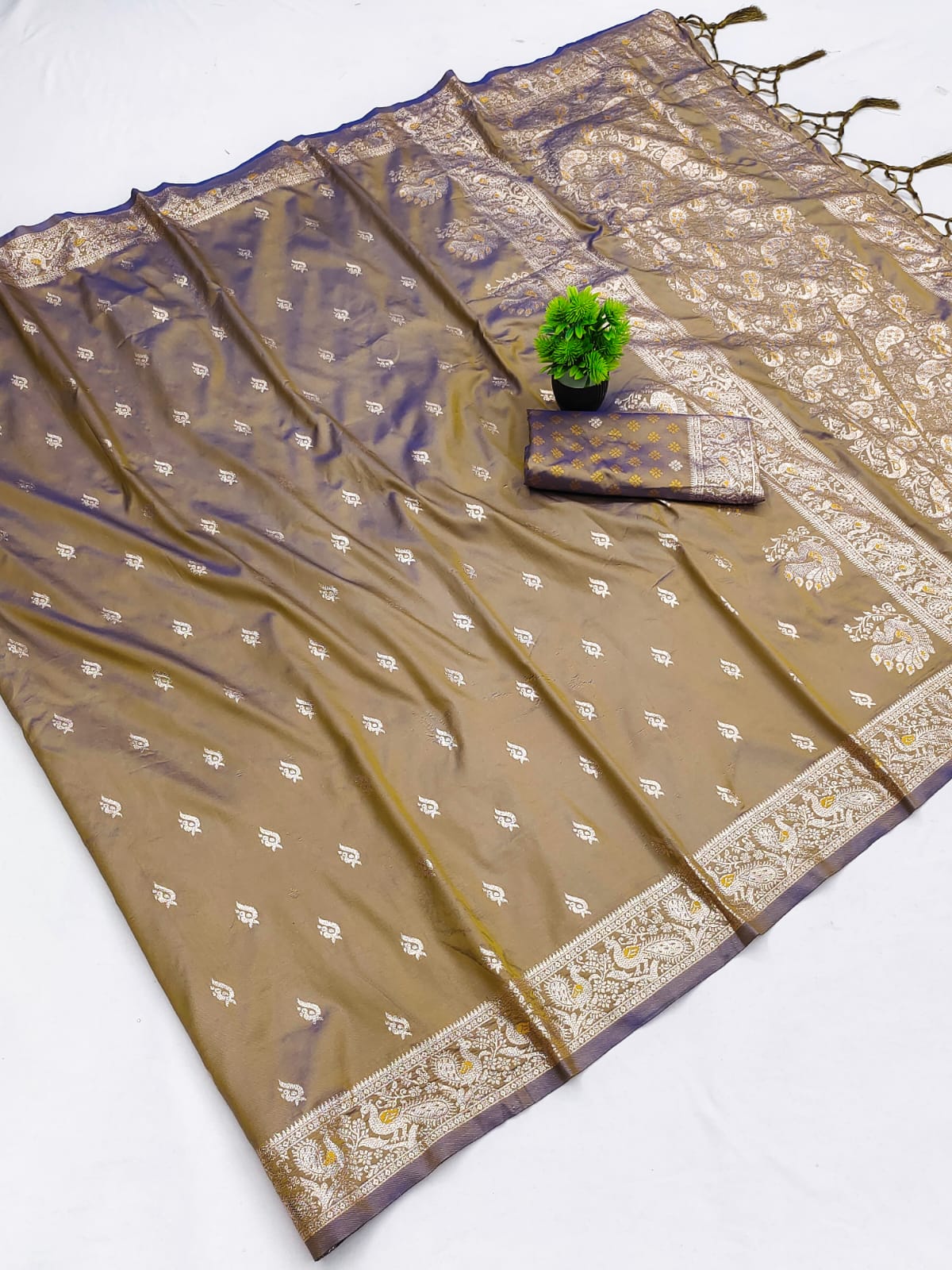
A pale lemon, ochre, dusty mustard or yellow floral print creates a connection with the ceremony without copying bridal yellow. Royal Mustard Bloom Banarasi Silk Saree demonstrates how mustard can look festive through weave and colour depth rather than excessive decoration. Pairing mustard with a plain green, maroon or antique-gold blouse creates contrast and makes the outfit feel more appropriate for a guest.
Yellow can also appear in the blouse, border, bangles or handbag instead of covering the entire saree. A muted base with a yellow embroidered blouse gives the outfit a clear Gaye Holud connection while keeping it rewearable for a puja, daytime reception or spring celebration.
Colourful alternatives to yellow
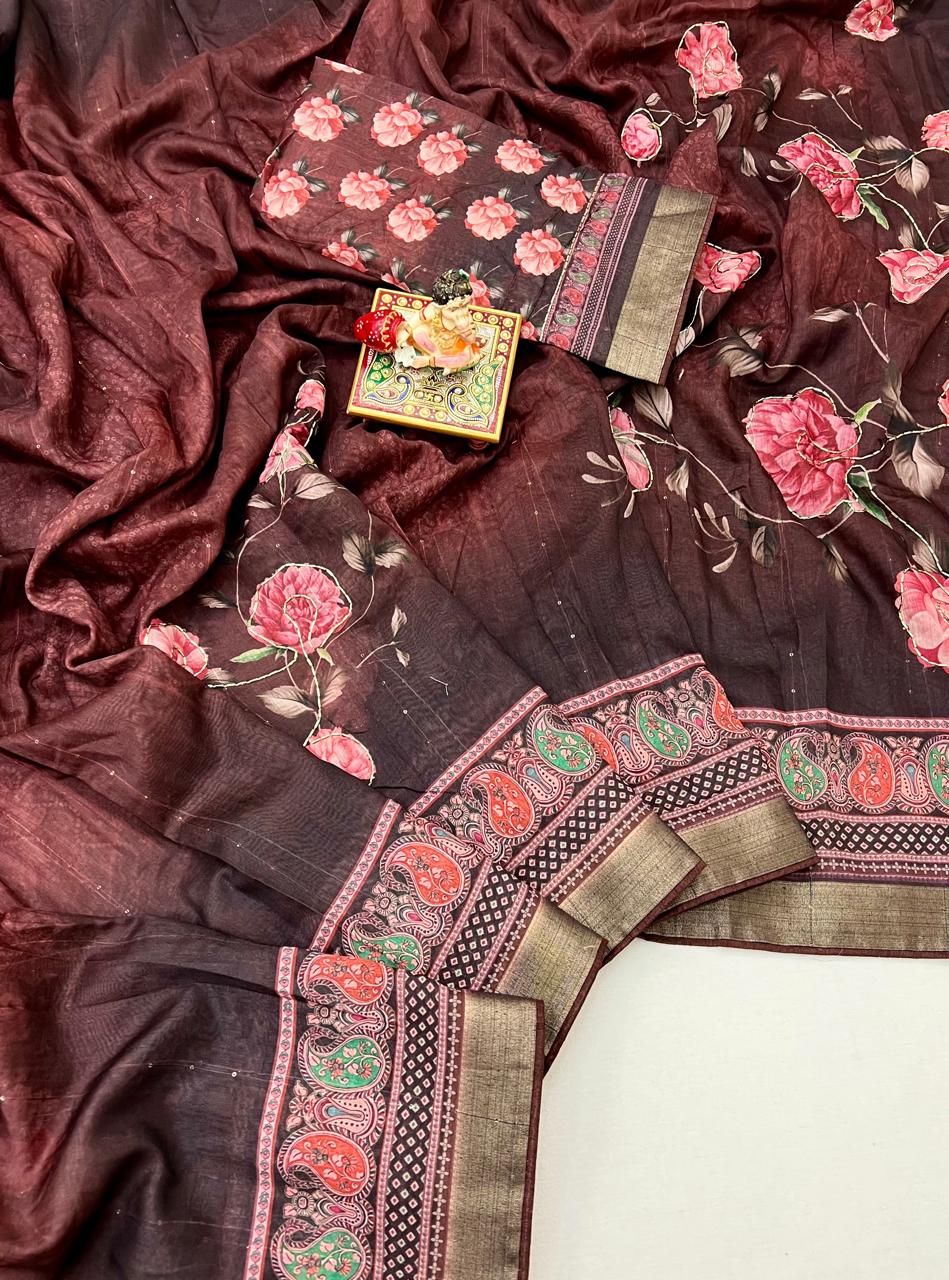
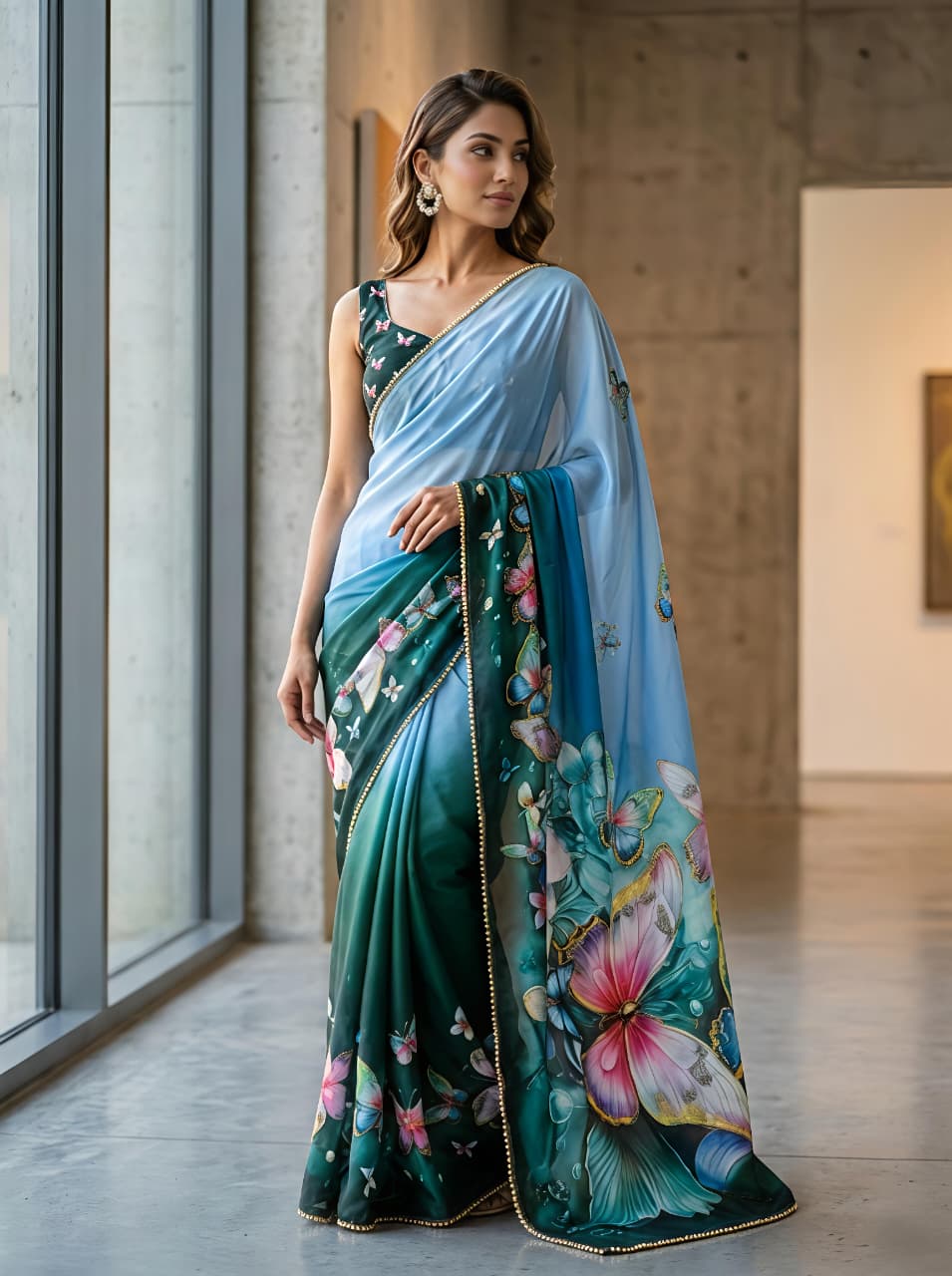
Pastel blue and mauve are strong alternatives when the bride has chosen yellow. Sky Blue Party Wear Saree with Embroidered Blouse offers an useful direction for an afternoon ceremony because blue provides visible contrast in group photographs while embroidery preserves the festive mood. Buy Mauve Floral Printed Satin Saree With Woven Border creates a softer evening interpretation, especially with pearl, silver or rose-gold accessories.
Pink can be attractive, but guests should check whether the bride or immediate family are wearing a signature pink palette. Pink Georgette Sarees can inspire a light, movement-friendly look, while a floral pink print is generally less bridal than solid hot-pink silk with a broad zari border.
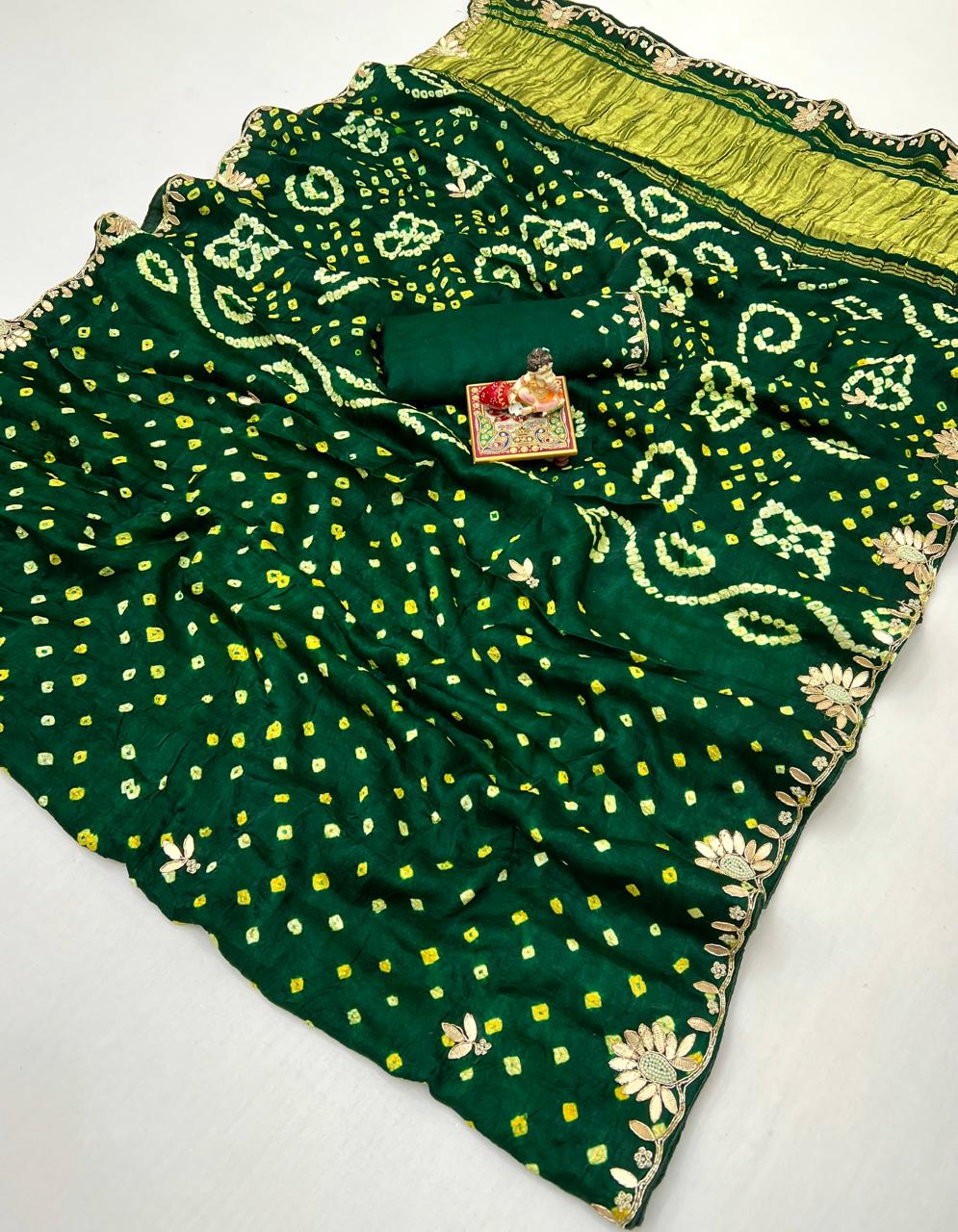
Black requires more context. Black Ethnic Mirror Work Bandhej Silk Saree can suit a contemporary evening Gaye Holud when the family welcomes darker colours, but black may not be appropriate for every Bengali household or daytime ritual. A close family member can clarify the dress code when the invitation gives no colour guidance.
Which fabrics work for Bengali Gaye Holud Guest Outfits That Are Not Another Bridal Saree?
Cotton, linen-cotton, light georgette and soft satin are comfortable starting points for a Haldi ceremony, while silk works best when the event is more formal or held indoors. Fabric choice matters because Gaye Holud involves heat, movement, sitting, dancing and a real possibility of turmeric stains.
Cotton and linen-cotton for daytime rituals
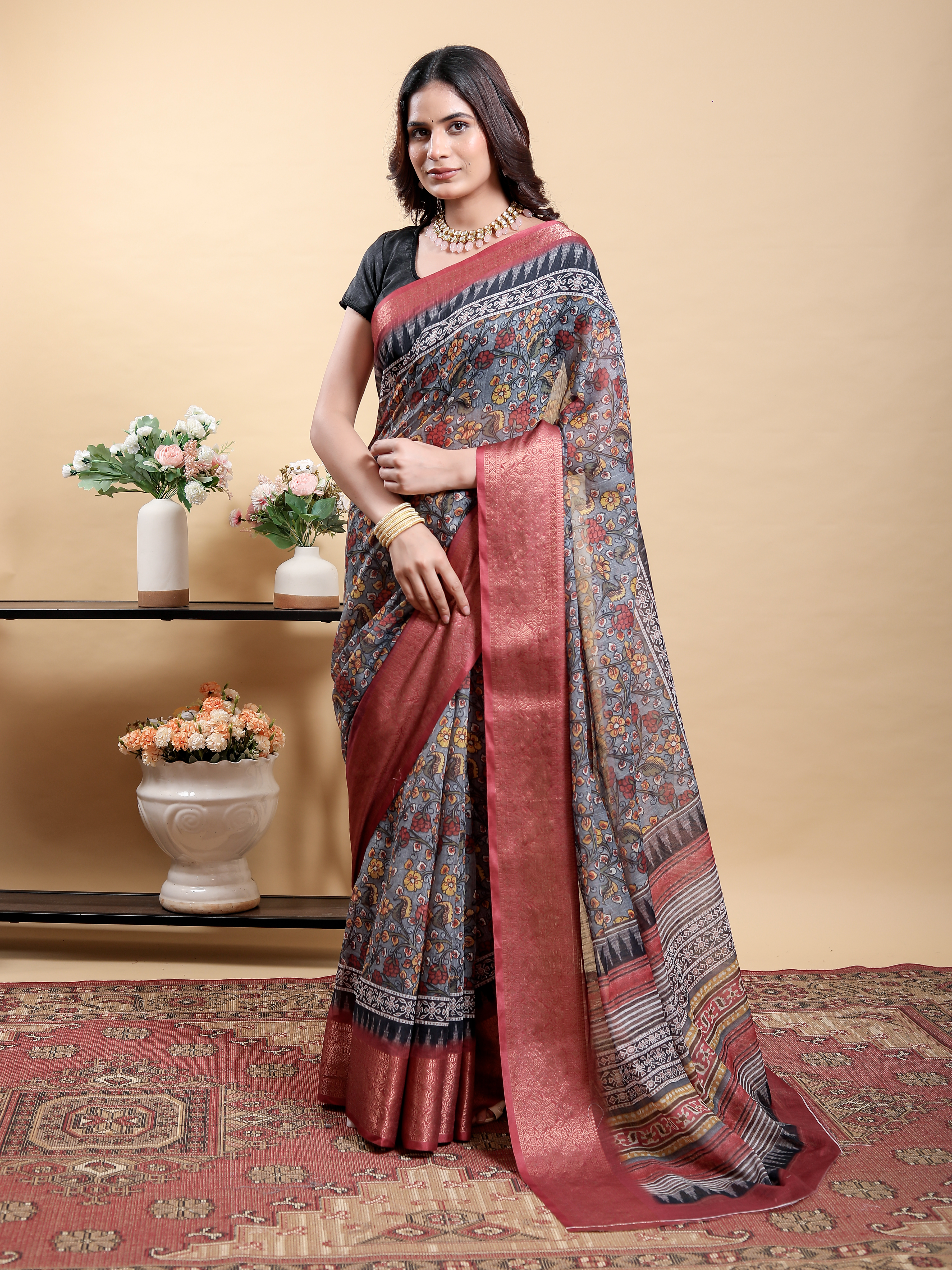
Cotton absorbs some moisture and usually feels easier in warm weather than a densely woven synthetic fabric. Party Wear Brown Cotton Saree With Designer Blouse gives a guest a structured yet breathable option; brown also makes a practical base when food, turmeric or flower petals may touch the lower pleats. Party Wear Maroon Cotton Saree With Designer Blouse brings a deeper alternative for guests who prefer jewel tones.
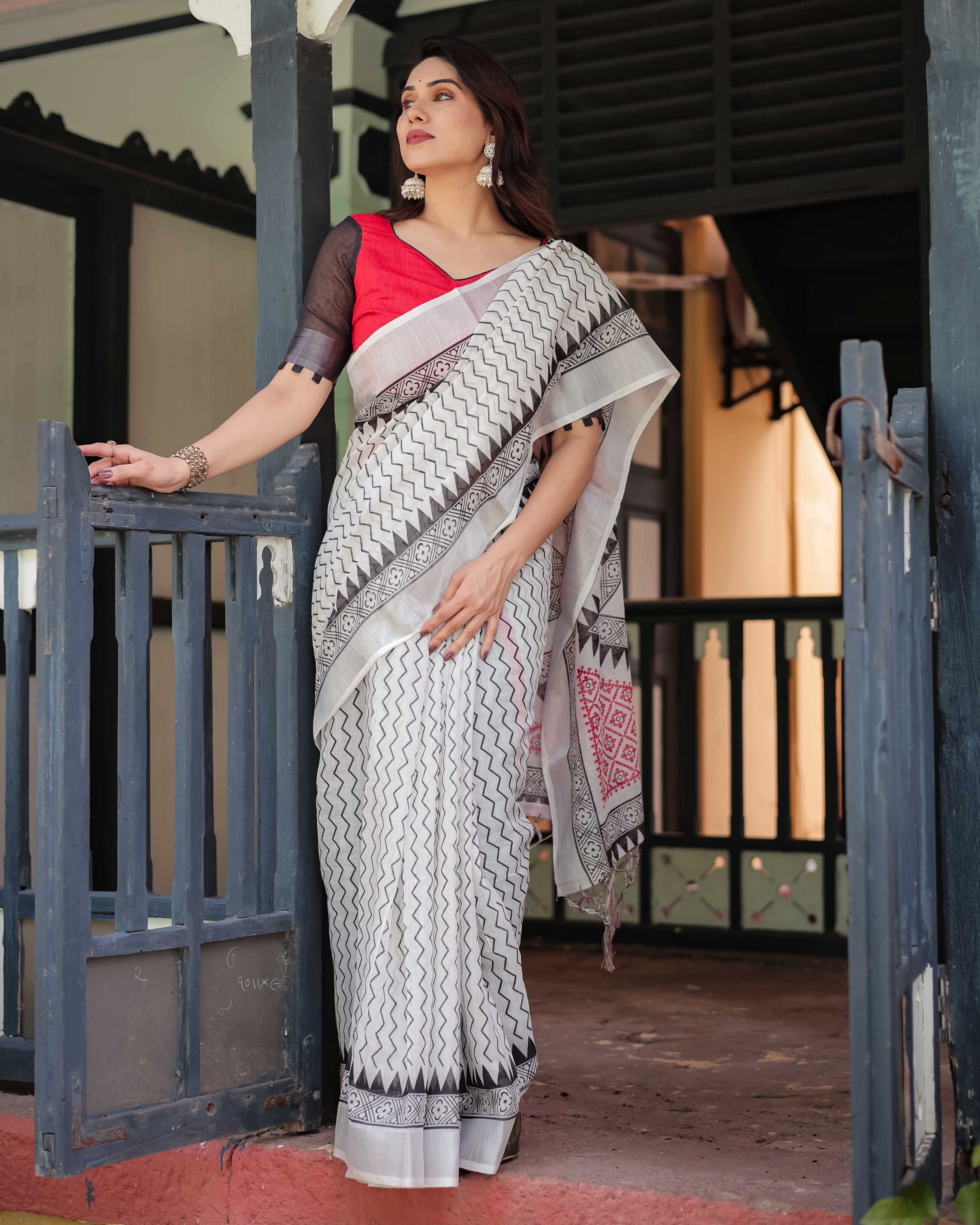
Pastel Linen Cotton Floral Print Saree with Designer Blouse works when the dress code feels festive but not heavily formal. Linen-cotton has a naturally textured appearance, and a floral print supplies visual interest without requiring sequins or extensive zari. Press the saree before wearing it, but don't aim for a perfectly flat finish if the weave is designed to look softly textured.
Silk and satin for a polished event
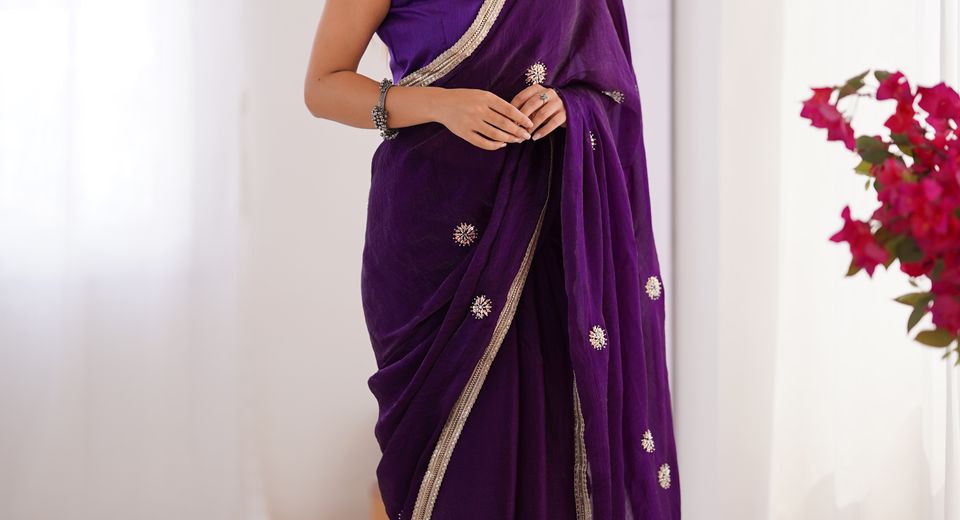
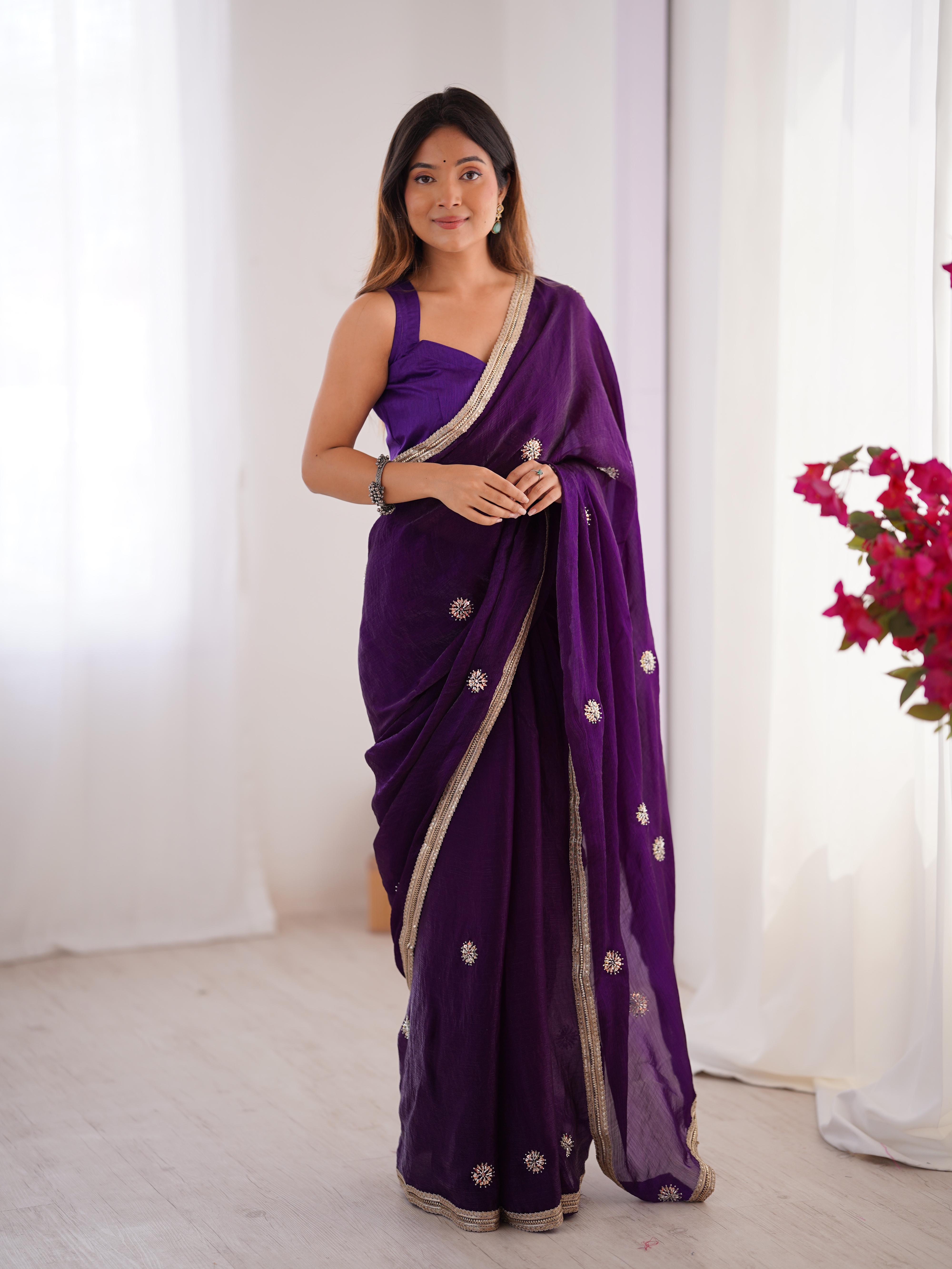
Banarasi silk and satin create a more dressed-up appearance, but both need sensible styling for a turmeric ceremony. Royal Mustard Bloom Banarasi Silk Saree suits an indoor lunch or evening event where the host expects time-honoured attire. Purple Wedding Wear Embroidered Saree brings colour and surface detail without forcing the guest into a yellow bridal template.
Satin reflects light strongly, which can look elegant in evening photographs but may highlight every fold. Buy Mauve Floral Printed Satin Saree With Woven Border should be draped with neat, moderately narrow pleats and a secure shoulder pin. Excessive layering over satin can make the pallu shift during dancing or rituals.
For a budget-conscious silk direction, Silk Sarees Under 3000 With Discount is a practical collection to compare colour, border width and embellishment level. A lower price doesn't automatically mean a better Gaye Holud choice; check whether the fabric feels manageable, whether the blouse fabric is included and whether the border remains comfortable when seated.
How should Bengali Gaye Holud Guest Outfits That Are Not Another Bridal Saree be draped?
Bengali Gaye Holud Guest Outfits That Are Not Another Bridal Saree should use a secure, breathable blouse and a drape that allows movement before decorative details are added. The blouse changes the perceived formality of a saree more dramatically than many accessories do.
A high-neck or elbow-sleeve blouse makes a floral or satin saree look polished and reduces the need for a large necklace. A sleeveless or short-sleeved blouse can make cotton feel younger and lighter, provided the cut suits the ceremony and the wearer's comfort. Contrast blouses work well with mustard, brown, maroon and ivory sarees; matching blouses look calmer with prints and mirror work.
For a crowded ritual space, pin the shoulder pleats with two concealed safety pins and secure the lower pleats at the waist. Keep the pallu at a length that reaches near the knee or slightly below, rather than allowing it to trail on a floor where turmeric paste, flower water and footwear may create stains. A belt can hold a lightweight saree in place, but a classic Bengali drape may be preferable when the event has a clearly heritage dress code.
The Bengali-style drape, often recognised by broad pleats and an expressive pallu, can look beautiful for Gaye Holud, but it requires a trial run. Practise sitting, lifting an arm and walking up stairs before the event. A simpler Nivi drape is more practical for guests who will help with arrangements or spend time outdoors.
Which accessories complete Bengali Gaye Holud Guest Outfits That Are Not Another Bridal Saree?
One prominent jewellery category supported by two quiet accessories usually gives Bengali Gaye Holud Guest Outfits That Are Not Another Bridal Saree enough finish. Choose earrings, a necklace or bangles as the focal point instead of wearing a complete bridal jewellery set.
Gold jhumkas pair naturally with mustard, maroon, brown and Banarasi silk. Silver or oxidised metal suits sky blue, mauve, black and contemporary mirror work. Pearls soften satin and pastel florals. Terracotta jewellery can complement cotton and linen-cotton, especially for a daytime Bengali celebration.
Flowers are appropriate for a Gaye Holud, but a small gajra or a few fresh flowers at the back of a low bun is more guest-appropriate than a large floral crown. Waterproof or long-wear makeup is sensible because Haldi ceremonies can be warm. A cream-based foundation may transfer onto the saree, so allow makeup to set and carry blotting paper instead of repeatedly touching the face with the pallu.
Footwear should be stable rather than merely decorative. A block heel of 2 to 3 inches, a flat embellished sandal or a clean jutti is easier to manage than a narrow stiletto on grass, uneven courtyards or wet floors. A small crossbody or potli bag should hold a phone, tissues, safety pins and a stain-removal wipe without becoming a visual distraction.
How can Bengali Gaye Holud Guest Outfits That Are Not Another Bridal Saree remain practical?
Bengali Gaye Holud Guest Outfits That Are Not Another Bridal Saree remain practical when the guest plans for stains, heat, movement and reuse before selecting decorative details. Practicality doesn't reduce elegance; it prevents an uncomfortable outfit from distracting the wearer throughout the ceremony.
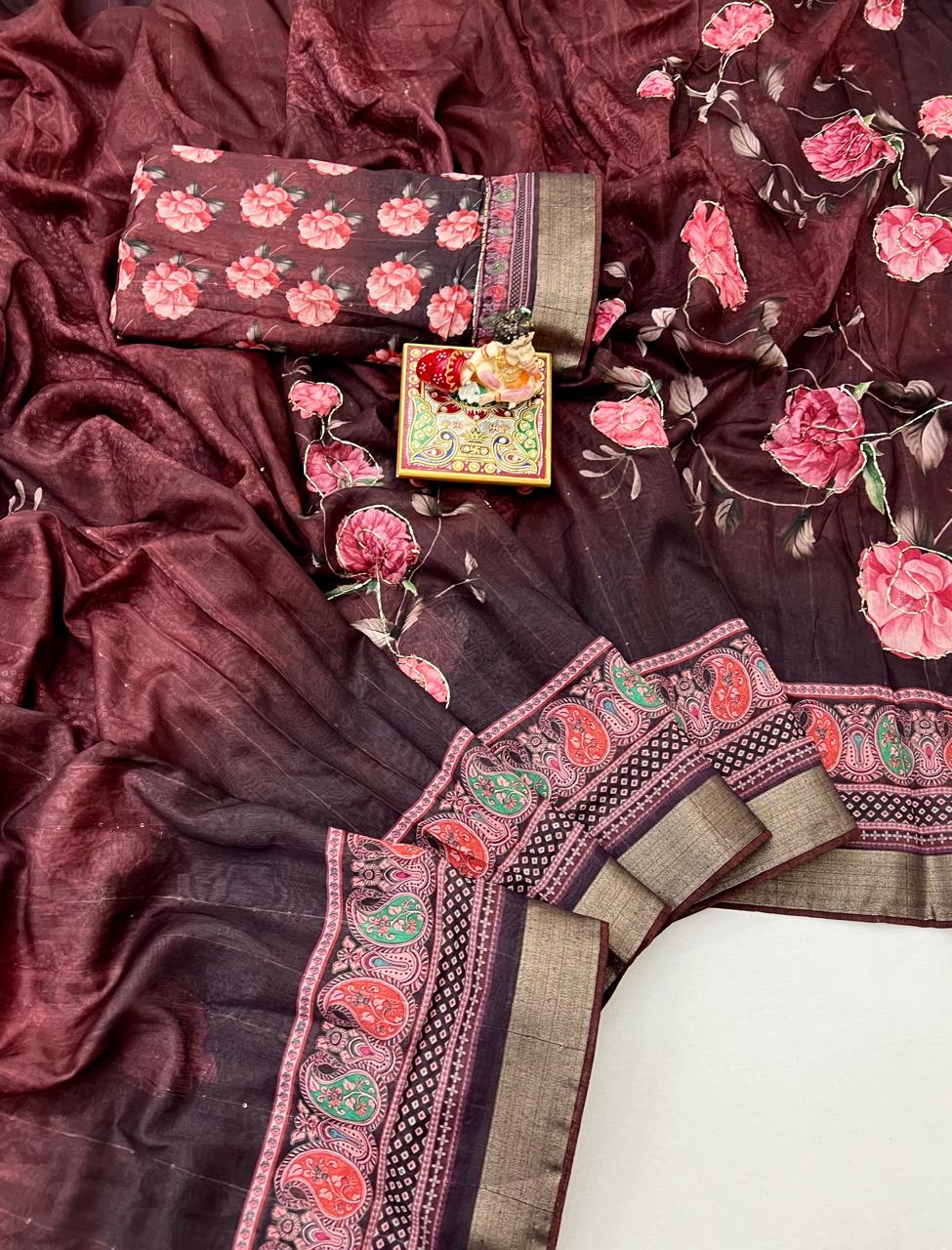
Guests who expect direct participation in the turmeric ritual should avoid very pale silk, trailing tassels and elaborate three-dimensional embellishments near the hands. Cotton and linen-cotton are easier choices for guests helping with seating, food or photographs. A darker lower border can disguise minor marks, although turmeric should still be treated quickly.
For a more economical comparison, Haldi Sarees Under 3600 can help narrow the search by occasion and budget. Party Wear Sarees is useful when the same outfit may later be worn to a reception, festive dinner or family celebration. Red Banarasi Silk Sarees for Weddings Under 1100 can provide ideas for border proportion and festive colour, even when a guest ultimately chooses a different shade for Gaye Holud.
Stain care should begin with restraint. Blot fresh turmeric with a clean, dry cloth instead of rubbing it into the fibres. Do not apply bleach to silk, zari or dyed cotton. Follow the garment's care label, and send a valuable Banarasi silk or embroidered saree to a professional cleaner when the stain remains after gentle blotting.
Rewearing also helps define a good guest purchase. A pastel floral saree can work at a brunch, a mauve satin saree can suit an evening celebration, and a cotton saree can return for a puja. The most successful guest outfit therefore does more than match one Haldi photograph: it fits the wearer's wardrobe, comfort and actual calendar.
Common Questions About Bengali Gaye Holud Guest Saree Styling
Can a guest wear yellow to a Bengali Gaye Holud?
Yes, a guest can wear yellow to a Bengali Gaye Holud, but a muted mustard, pastel lemon or yellow floral print is usually more distinctive than bright bridal yellow. Checking the bride's outfit and the family's colour expectations prevents an accidental duplicate.
What colour saree should a guest wear to a Haldi ceremony?
Mustard, pastel blue, mauve, pink, ivory, green, brown and maroon all work for a Haldi ceremony. The best choice depends on the bride's colour palette, the time of day and whether the guest will participate directly in the turmeric ritual.
Is silk saree suitable for a Gaye Holud guest?
Silk saree is suitable for a Gaye Holud guest when the event is formal, indoors or held in the evening. A lighter Banarasi silk with restrained jewellery is more guest-appropriate than a heavily embellished bridal silk.
Which saree fabric is best for a daytime Gaye Holud?
Cotton and linen-cotton are strong choices for a daytime Gaye Holud because they are breathable and easier to move in. Light georgette can also work, while satin and dense silk may feel warmer in direct sunlight.
How can a guest avoid looking bridal in a Haldi saree?
A guest can avoid looking bridal by choosing a softer colour, moderate embellishment, a simpler blouse and one main jewellery statement. Avoiding dense zari, oversized bridal jewellery and a matching head-to-toe yellow look creates useful visual distance.
How should turmeric stains be removed from a guest saree?
Fresh turmeric should be blotted gently with a clean, dry cloth rather than rubbed. Bleach should not be used on silk, zari or dyed cotton; valuable or persistent stains should be handled by a professional cleaner according to the garment's care label.