Gujarati Mameru function outfits beyond heavy Gharchola give women more room to dress for movement, family photographs and the emotional warmth of a maternal blessing. A Mameru ceremony, also called Mosalu in some Gujarati families, marks the bride's maternal relatives bringing gifts, clothing, sweets and blessings before the wedding. Traditional red-and-white Gharchola remains meaningful, but a ceremony outfit can also be built around silk, Chanderi, embroidered crepe, a graceful Anarkali or a coordinated kurta set.
The most successful outfit choice balances three requirements: respect for Gujarati wedding customs, enough visual richness for a ceremonial setting and practical comfort for several hours of sitting, greeting guests and participating in rituals. The right colour, fabric weight, sleeve shape and dupatta drape often matter more than the amount of embroidery.
Why choose Gujarati Mameru function outfits beyond heavy Gharchola?
Gujarati Mameru function outfits beyond heavy Gharchola are useful when you want ceremonial presence without the stiffness, weight or styling restrictions of a dense brocade saree. A Gharchola may feature a distinctive checked layout, zari work and auspicious motifs, while a contemporary suit or gown can retain festive colour and embellishment in a lighter construction.
A lighter alternative is especially practical for the bride's mother, sisters, cousins and guests who may spend much of the Mameru moving between the mandap, dining area and family groups. Heavy zari can also become uncomfortable in warm weather, particularly when layered with a blouse, petticoat, jewellery and a pinned dupatta.
Choosing an alternative doesn't mean rejecting tradition. Gujarati identity can appear through vermilion, bandhani-inspired colour, mirror work, gota, meenakari jewellery, a patola-style accent, a red-and-green palette or a carefully draped dupatta. The ceremony's cultural meaning comes from the family ritual and relationships as well as from one specific garment.
Which silhouette works best for a Mameru ceremony?
An Anarkali, floor-length gown, embroidered kurta set or festive palazzo suit works well for a Mameru ceremony because each silhouette provides coverage, movement and a polished family-portrait appearance. The best shape depends on your role, the ritual schedule and whether you'll sit on the floor.
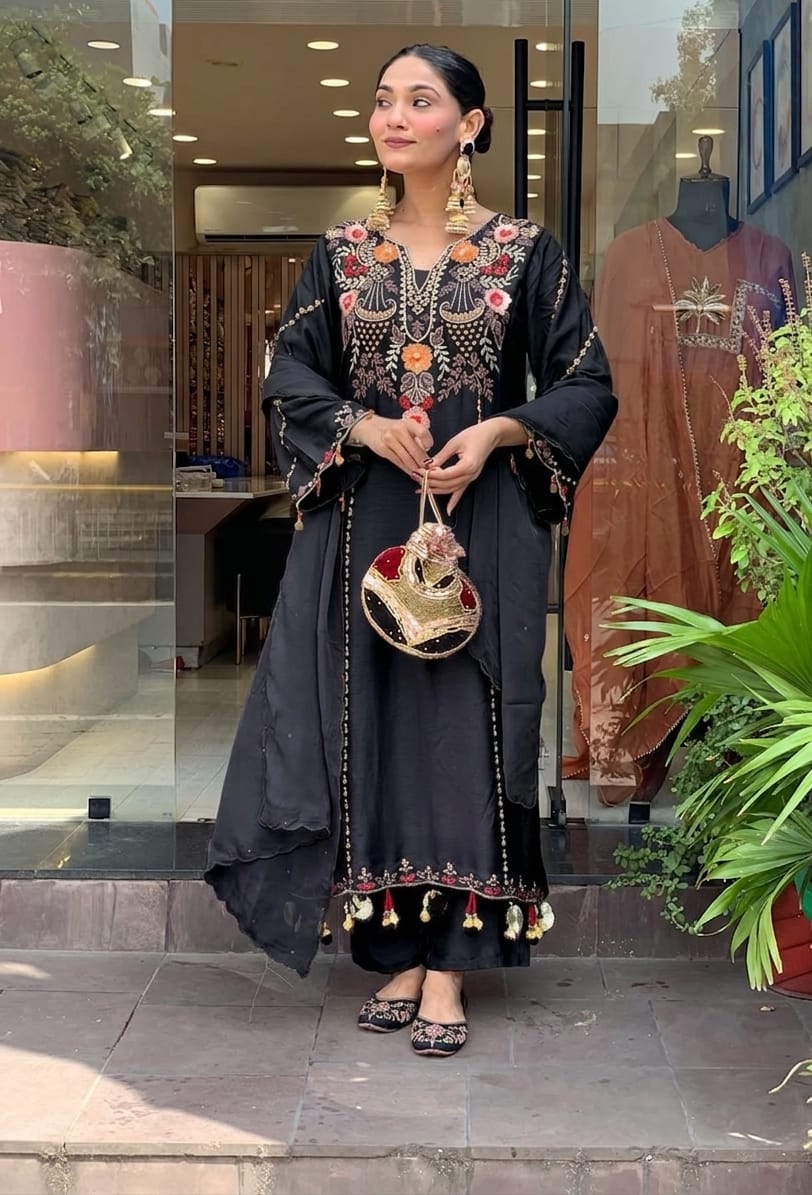
Anarkali suits for graceful movement
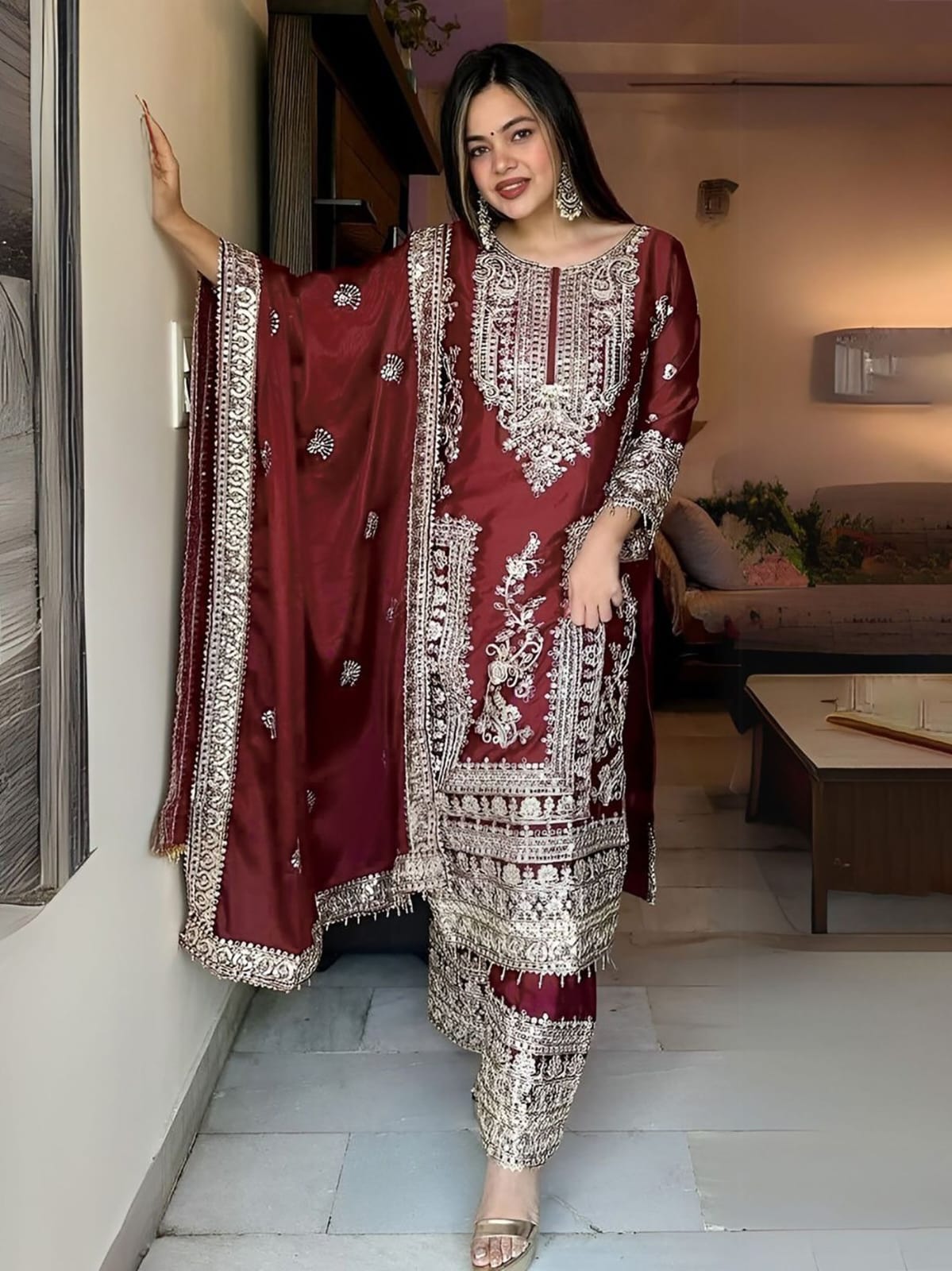
Anarkali suits suit mothers, sisters and close relatives who want time-honoured volume without managing saree pleats. A flared hem creates visual richness, while a knee-length lining, a well-fitted bodice and a soft dupatta prevent the outfit from feeling cumbersome. Maroon Vichitra Silk Embroidered Anarkali Suit Set is an example of how a deep wedding colour and a flowing cut can deliver formality without requiring a heavy Gharchola.
Choose an Anarkali with a flare that begins below the waist rather than directly under the bust if you prefer a longer, more structured line. For floor seating, check that the hem doesn't spread so widely that it catches beneath your knees. A 3 to 3.5 metre dupatta is usually easier to arrange for a ceremony than an excessively long, heavily bordered piece.
Gowns and maxi suits for a contemporary family look
A gown or maxi suit is a strong option for women who want a single-piece outfit with a clean silhouette and minimal draping. A gown can look ceremonial when it includes zari, thread embroidery, tonal sequins or a richly finished neckline. The vichitra Jacquard Woven Gown Dupatta Set offers the structure of a gown with the flexibility of a separate dupatta, making it easier to adjust coverage during rituals.
The Multicolor Embroidered Crepe Maxi Suit Set for Festive Wear works particularly well when the Mameru function includes several generations and a daytime-to-evening schedule. Crepe falls close to the body, resists bulky volume and can carry multicolour embroidery without needing a contrasting saree border. Pair a colourful maxi suit with one dominant jewellery tone so the outfit remains composed in photographs.
Kurta sets for comfort and repeat wear
A silk or viscose kurta set is the most adaptable choice when comfort, travel and future wear matter. A straight kurta with cigarette pants suits a smaller venue, while a kurta with a flared palazzo creates a more festive proportion. DEVANSHI 2 Olive Green Embroidered Crunchy Silk Kurta Set brings an useful example of how an unusual jewel-toned colour can feel wedding-ready without relying on bright red or gold.
Kurta sets also make practical sense for guests attending more than one wedding event. You can wear the kurta with a plain palazzo for a smaller puja, change the dupatta for the Mameru and add a long jacket for a reception. This modular approach reduces wardrobe cost while giving family photographs a different look at every function.
Which fabrics feel festive without becoming too heavy?
Banarasi silk, Chanderi, vichitra silk, viscose silk, crepe and jacquard can all create a festive Mameru outfit without the full weight of densely woven Gharchola. Fabric choice should account for climate, the time of day, the amount of embroidery and how long you'll remain dressed.
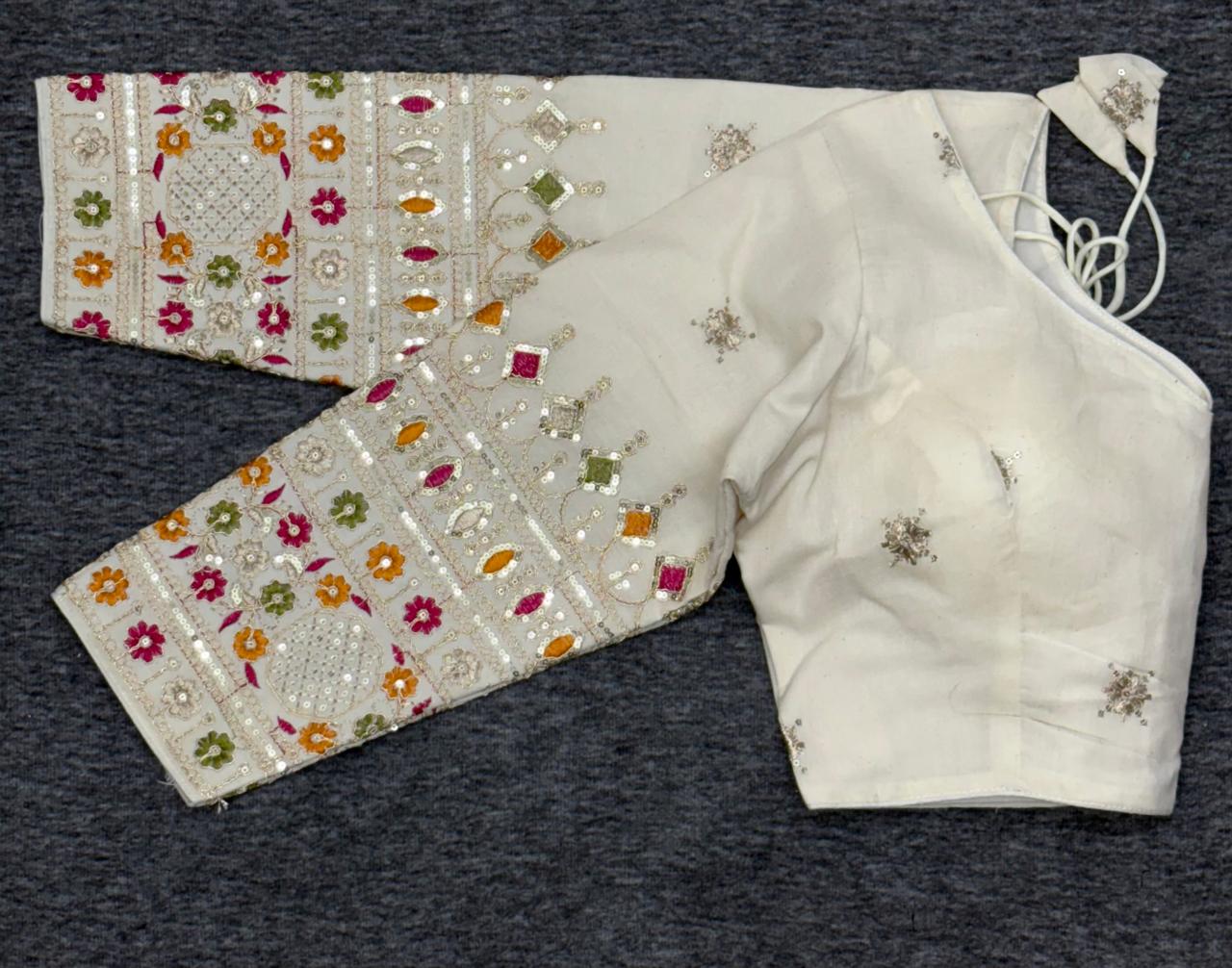
Banarasi silk has a luminous surface created by woven zari and is naturally suited to wedding dressing, but a full Banarasi garment may feel warm when lined heavily. Chanderi gives a lighter, slightly sheer hand and works well with a lining and a substantial dupatta. Maroon Viscose Chanderi Silk Embroidered Kurta Set for Women demonstrates how a Chanderi-silk blend can provide a festive sheen while remaining easier to wear than a heavily brocaded ensemble.
Vichitra silk has a textured, lustrous appearance that supports embroidery and structured silhouettes. Emerald Green Embroidered Viscose Silk Kurti Set Online is an useful direction for a guest or cousin who wants colour and surface detail in a relatively easy kurti format. Viscose silk can drape softly, although the exact feel depends on the weave, lining and embroidery density.
Crepe is smooth, fluid and usually less bulky than brocade. Crepe suits are helpful for travel because they fold compactly and recover their shape more easily than stiff zari textiles. Jacquard creates pattern through the weave itself, so a jacquard gown can look detailed even when additional embroidery is restrained.
How much embellishment is enough?
Medium-density embellishment is enough for most Mameru outfits because the ceremony already includes bright textiles, jewellery, flowers and family movement. Look for embroidery concentrated at the neckline, sleeves, yoke or hem rather than heavy work across every panel.
Zari borders, resham thread, sequins and mirror details each create a different effect. Zari gives a heritage metallic finish, thread embroidery feels softer in daylight, sequins catch movement during photographs and mirror work brings a distinctly festive sparkle. Combining all four on one garment can make a lighter silhouette feel visually heavy even when the fabric itself is comfortable.
How should you select colour for a Gujarati Mameru outfit?
Red, green, pink, orange, yellow, maroon and jewel tones are dependable choices for a Gujarati Mameru outfit, while ivory, black and very pale neutrals require more thoughtful styling. Colour should reflect your relationship to the bride, the ceremony's timing and the existing family dress code.
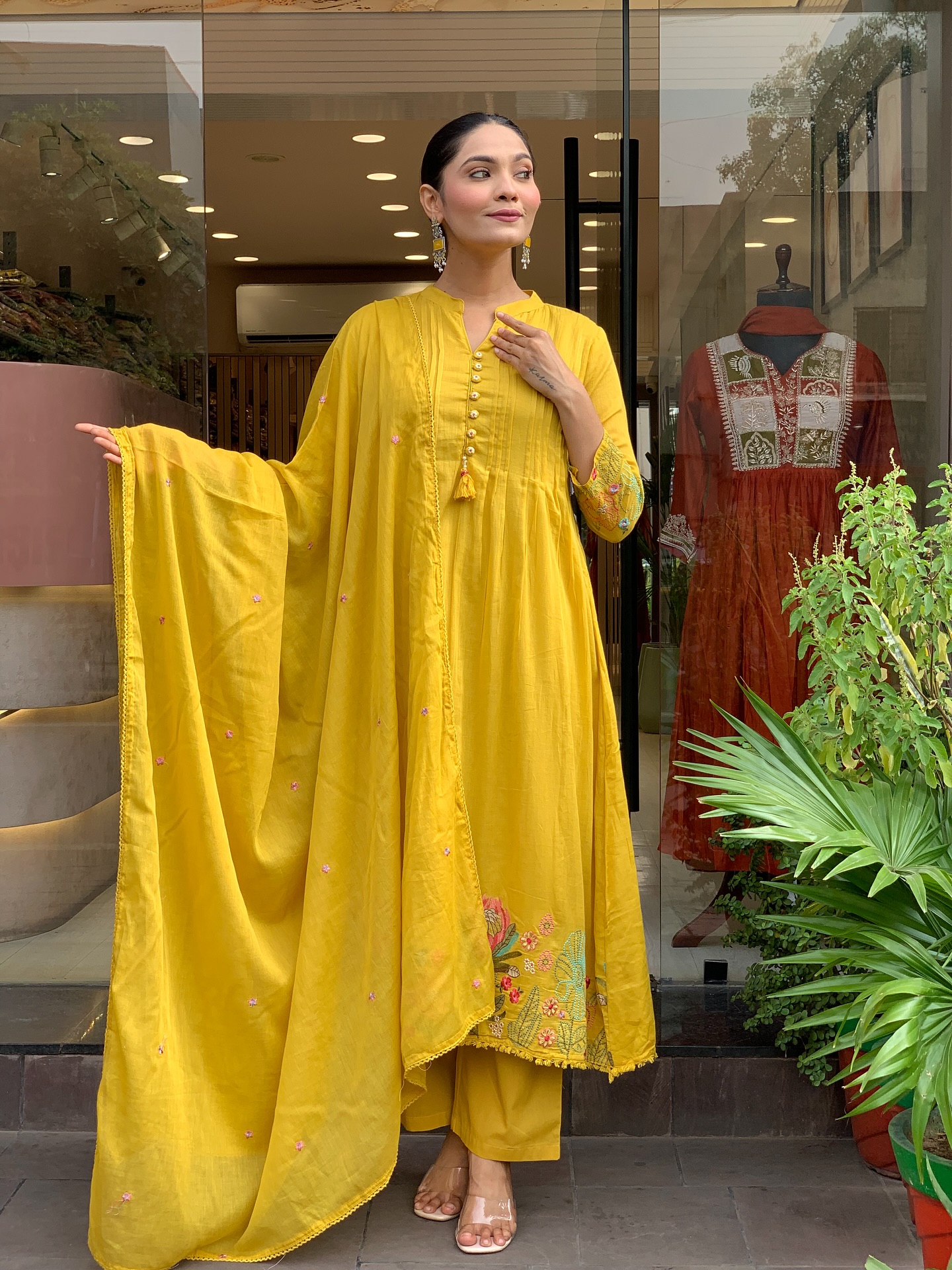
Red and maroon connect naturally with bridal symbolism and photograph well against cream, gold and floral décor. Green is associated with freshness and prosperity and works beautifully in emerald, olive or bottle-green variations. Yellow and orange are particularly effective for a daytime Mameru, especially when the ceremony is combined with a Haldi ceremony or a family lunch.
Teal, emerald and olive offer a modern alternative when several relatives are already wearing red. Teal Blue Vichitra Silk Embroidered Gown Set Online shows how a blue-green palette can remain festive through sheen and embroidery rather than relying on conventional bridal colours. A multicolour outfit can also work, but choose accessories in one repeated shade to prevent the look from appearing disconnected.
Close family members may coordinate without dressing identically. For example, the mother can wear maroon, a sister can choose emerald, and cousins can use pink or teal while repeating a shared gold border or jewellery finish. Coordinated colour creates a family portrait that looks intentional without turning the Mameru into an uniformed event.
How do jewellery and dupatta styling preserve the classic mood?
Time-honoured jewellery and a deliberate dupatta drape preserve the ceremonial mood when the garment itself is lighter or more contemporary. Gold-toned jhumkas, a choker, bangles, a maang tikka and a small bindi can make a simple suit feel appropriate for a Gujarati wedding ritual.
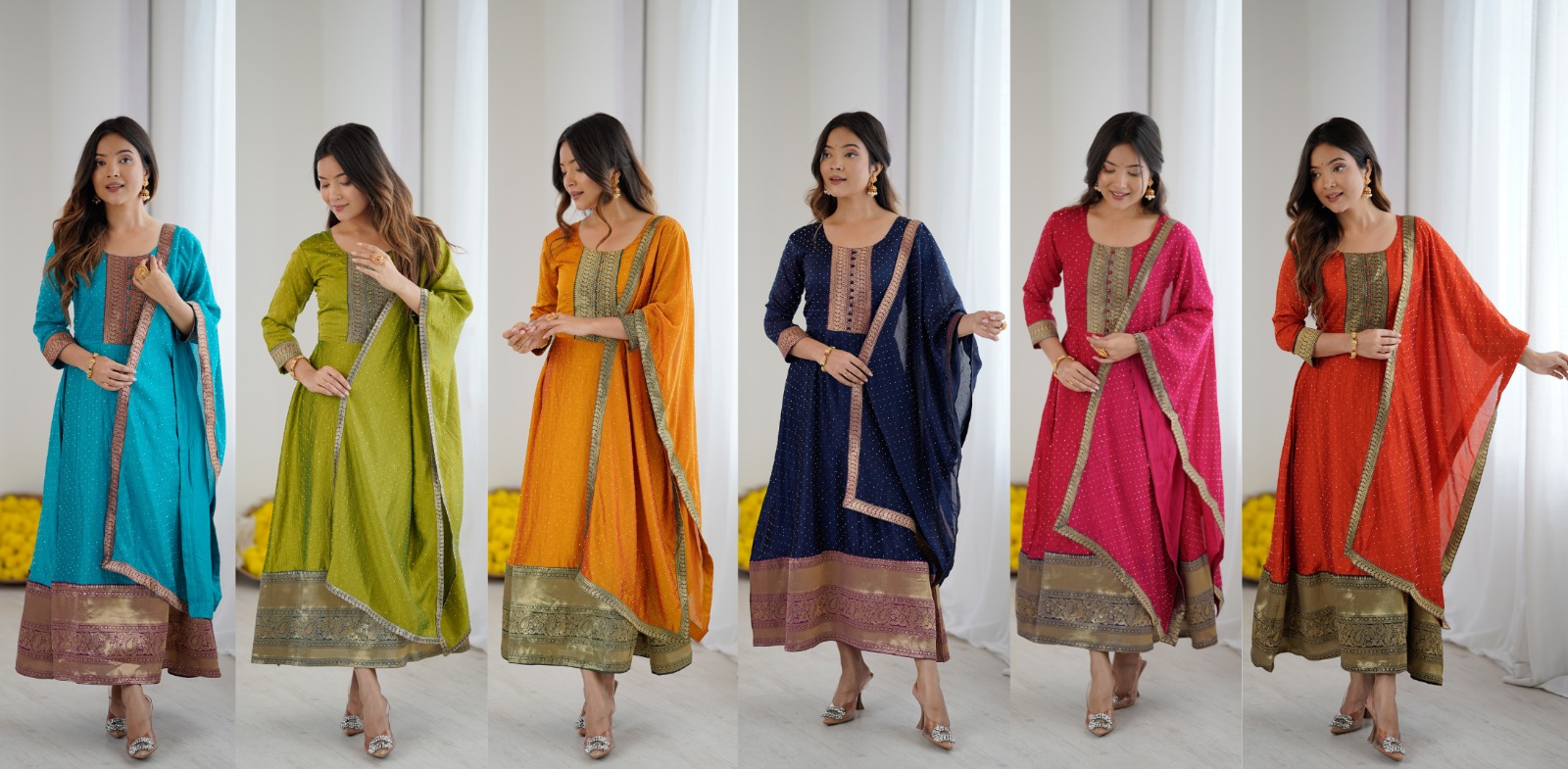
Choose jewellery according to the neckline. A high embroidered neckline needs earrings and bangles more than a large necklace, while a wide V-neck can accommodate a short rani haar or choker. Kundan, polki, meenakari and temple-inspired pieces each create a different visual language; meenakari works especially well with multicoloured Gujarati textiles.
The dupatta can introduce Gharchola-inspired character without reproducing a heavy saree. A red dupatta with small gold motifs, a bandhani-style print, a gota border or a woven check can reference tradition while keeping the main garment light. Drape one end over the opposite shoulder and secure the inner edge at the waist when you need both hands free for greetings and rituals.
For a gown, pin the dupatta at the shoulder and secure it at the wrist only if the fabric is light enough to move comfortably. For a kurta set, a front drape creates a more formal line, while a single-shoulder drape feels relaxed for a daytime function. Keep two concealed safety pins and a small fashion tape strip in your handbag for last-minute adjustments.
What should different family members wear?
The bride's mother can choose a richly coloured silk Anarkali, a Chanderi kurta set or a moderate-weight saree that permits comfortable sitting. Maroon Vichitra Silk Embroidered Anarkali Suit Set suits a formal maternal role because the colour and embroidery feel celebratory while the silhouette remains easier to manage than a heavily layered saree.
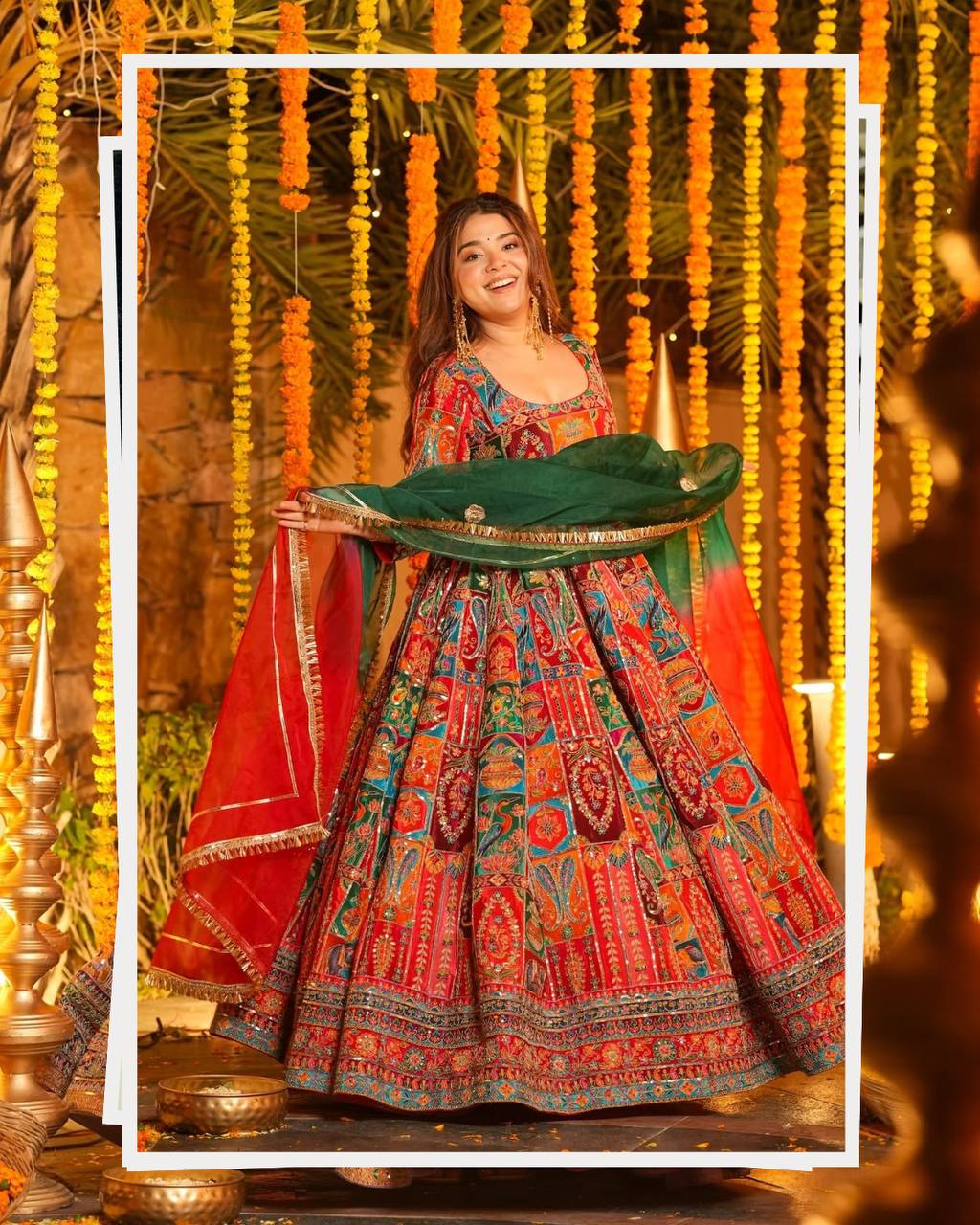
The bride's sisters can take more experimental styling risks with a gown, maxi suit or sharply tailored palazzo set. The Multicolor Embroidered Crepe Maxi Suit Set for Festive Wear gives a sister or close cousin a lively appearance without competing with the bride's principal wedding outfit.
Older relatives often benefit from breathable lining, three-quarter sleeves, a stable neckline and a dupatta that doesn't require repeated adjustment. Maroon Viscose Chanderi Silk Embroidered Kurta Set for Women gives a balanced direction for a guest who wants a dignified colour and traditional surface detail with less volume.
Wedding guests should avoid copying the bride's exact palette if the family has announced one, but guests can still wear festive jewel tones. Emerald Green Embroidered Viscose Silk Kurti Set Online or DEVANSHI 2 Olive Green Embroidered Crunchy Silk Kurta Set can create a polished appearance when styled with understated jewellery and comfortable footwear.
How can you check comfort and fit before the ceremony?
Check the outfit while sitting, walking, raising both arms and wearing the intended footwear at least one week before the Mameru. A garment that looks perfect while standing may pull at the armhole, expose the waist during floor seating or drag on stairs.
Confirm that the lining reaches the hem, the sleeve seam doesn't restrict the upper arm and the neckline stays flat when you bend forward. Test the dupatta weight on the shoulder for ten minutes; pressure or slipping during a home trial usually becomes more irritating during a three-hour function.
Wear low block heels, embellished juttis or cushioned sandals rather than untested stilettos when the ceremony includes standing and walking. A 1.5 to 2.5 inch block heel usually adds posture without making a long hem hazardous. Steam the garment according to its care label, and never apply a hot iron directly to zari, sequins or delicate jacquard.
For storage after the event, air the outfit away from direct sunlight before folding it in a clean cotton cover. Keep embroidered pieces flat or on a broad padded hanger, separate jewellery from the fabric and send silk or embellished garments to a specialist cleaner when the care label recommends it.
A memorable Mameru outfit doesn't need the greatest amount of zari; it needs the right balance of cultural cues, movement, colour and personal comfort.
Practical Questions About Modern Gujarati Mameru Dressing
What can I wear to a Gujarati Mameru function instead of a Gharchola?
You can wear an Anarkali suit, embroidered kurta set, festive palazzo suit, crepe maxi suit or gown instead of a Gharchola. Choose a rich colour, a traditional dupatta, zari or embroidery to retain the ceremonial feeling.
Is a gown appropriate for a Gujarati Mameru ceremony?
A gown is appropriate for a Gujarati Mameru ceremony when the design has festive fabric, embroidery or a traditional dupatta. Avoid an overly western cocktail shape if the event includes family rituals, and select a neckline and hem that allow comfortable movement.
Which colours are suitable for a Mameru function?
Red, maroon, green, emerald, pink, orange, yellow, teal and other jewel tones are suitable for a Mameru function. Coordinate with the family dress code and avoid wearing the bride's exact signature colour if the family has requested otherwise.
Can I wear a Chanderi or crepe suit to a Gujarati wedding function?
You can wear a Chanderi or crepe suit to a Gujarati wedding function, particularly when the garment includes embroidery, a rich dupatta or metallic detailing. Chanderi feels light and elegant, while crepe offers fluid drape and lower bulk for long ceremonies.
How do I make a simple kurta set look festive for a Mameru?
Make a simple kurta set look festive with a contrasting bandhani-style or zari dupatta, jhumkas, bangles, a bindi and embellished footwear. Choose one strong jewellery finish instead of layering several competing colours and textures.
What should I wear if I need to sit on the floor during the Mameru ceremony?
Wear an Anarkali, straight kurta set or palazzo suit with a manageable hem and a dupatta secured at the shoulder and waist. Test the outfit while sitting before the event, and avoid very stiff skirts, narrow trousers or excessive trailing fabric.