Which measurements should you request before ordering a blouse? Start with the full bust, underbust, waist, shoulder width, armhole and sleeve length, then confirm how the seller took each measurement. A blouse can match your usual clothing size and still fit poorly because saree blouses sit close to the body, follow the bust line and often have structured necklines or padded cups.
A reliable measurement request should clarify whether the numbers refer to body measurements or finished-garment measurements. That distinction matters for a readymade blouse, a silk blouse with lining and a padded blouse. The same 36-inch bust measurement can describe either a person's body or a garment that includes wearing ease, so ordering without clarification creates avoidable alteration work.
Which Measurements Should You Request Before Ordering a Blouse?
Request six core measurements: full bust, underbust, natural waist, shoulder width, armhole and sleeve length. Add neck depth, blouse length, front length, back length and upper-arm circumference when the design has a deep neckline, padding, sleeves or a close fit.
Ask the seller to label every number as either a body measurement or a finished-blouse measurement. Request the measurement unit as well, because a size chart in inches can't be compared accurately with a number supplied in centimetres without conversion. One inch equals 2.54 centimetres, and rounding several measurements can noticeably change the fit.
- Full bust: Measure around the fullest part of the bust, keeping the tape level across the back.
- Underbust: Measure directly below the bust, where a fitted blouse band or padded cup may rest.
- Natural waist: Measure the narrowest comfortable point of the torso without pulling the tape tight.
- Shoulder width: Measure from the outer shoulder bone on one side to the other.
- Armhole: Measure around the armhole area or confirm the finished armhole circumference supplied by the seller.
- Sleeve length and upper-arm circumference: Request both for elbow-length, puff, fitted or full sleeves.
Which Measurements Should You Request Before Ordering a Blouse for Bust Fit?
Take bust and underbust measurements over the bra you plan to wear with the blouse, while standing naturally and keeping the tape parallel to the floor. A snug tape gives a useful body measurement; a tight tape compresses the bust and produces a blouse that feels restrictive.
For the full bust, place the tape over the fullest point and pass it across the shoulder blades at the back. Do not measure over a bulky padded bra unless the finished blouse will always be worn over that same bra. A heavily padded bra can add several centimetres and distort the size choice.
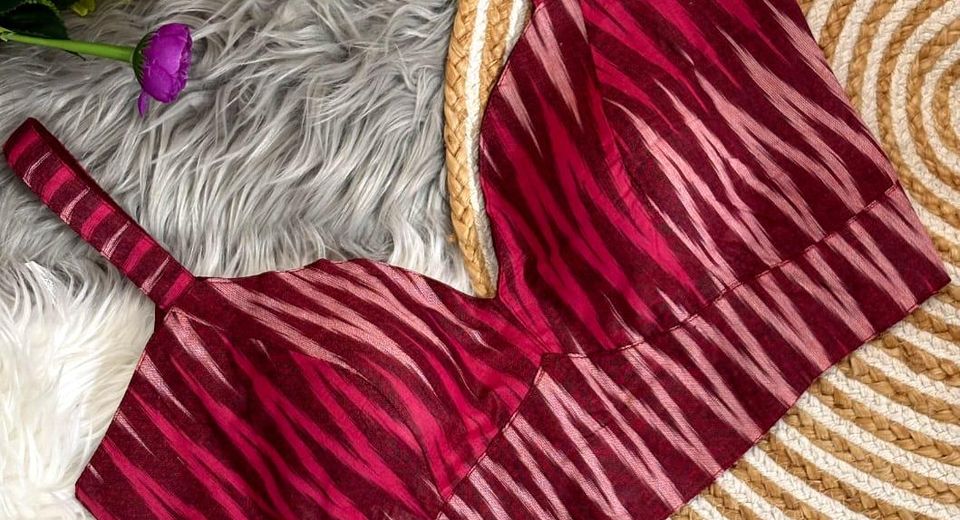
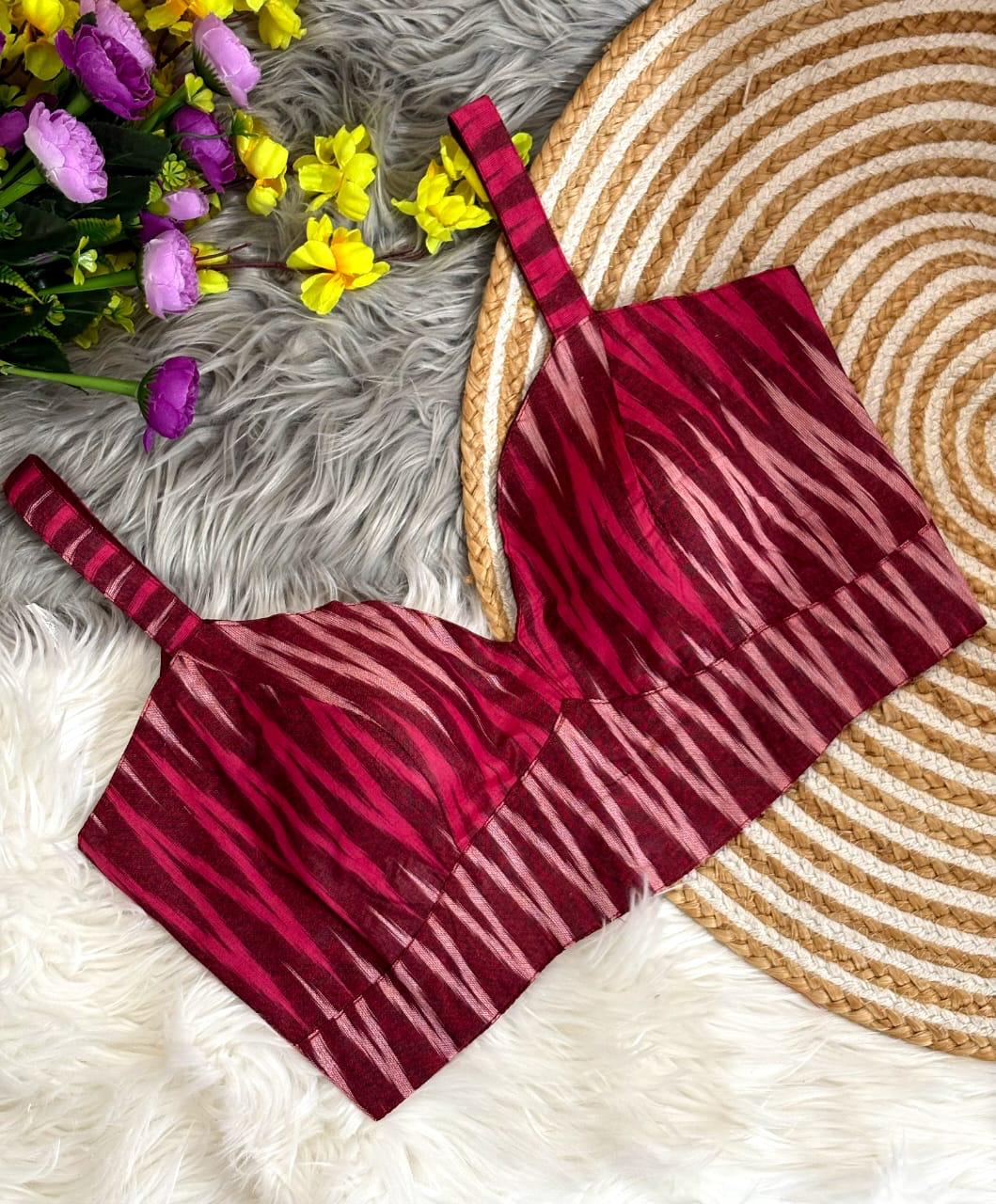
For the underbust, place the tape immediately below the bust. The underbust is particularly important for padded designs such as Banarasi Silk Golden Jari Padded Blouse for Women and Ikkat Cotton Padded Blouse for Women Sleeveless. Padding, lining and elastic at the lower edge can make a blouse feel tighter than an unlined blouse with the same bust measurement.
Request the cup or padding construction when the blouse includes built-in cups. Ask whether the padding is removable, stitched into the lining or fixed into a structured panel. A seller may quote a bust size that accommodates the padding, while another may quote the wearer's body size, so the measurement label alone isn't enough.
Which Measurements Should You Request Before Ordering a Blouse for a Fuller Bust?
Request the full bust, underbust, bust-point distance and front length when the wearer has a fuller bust or a significant difference between bust and waist measurements. These details help prevent pulling across the bust and darts that sit too high or too low.
Measure bust-point distance from the shoulder or neckline reference point to the fullest point of the bust. A blouse with darts or shaped cups needs the bust point in the correct position. A standard size may fit around the bust but still place the dart incorrectly, creating visible folds beneath the saree drape.
A blouse that fits at the bust can still gape at the armhole or strain at the waist. This is common when a wearer has a fuller bust, a smaller waist, a long torso or a broad back. Sending all three measurements-bust, underbust and waist-is more useful than sending only a standard size such as M, L or XL.
Which Measurements Should You Request Before Ordering a Blouse for Shoulder and Sleeve Fit?
Request shoulder width, armhole circumference, upper-arm circumference, sleeve length and sleeve opening to check whether a blouse will allow comfortable arm movement. These measurements matter especially for sleeved cotton blouses, fitted designer saree blouses and garments made from non-stretch fabrics.
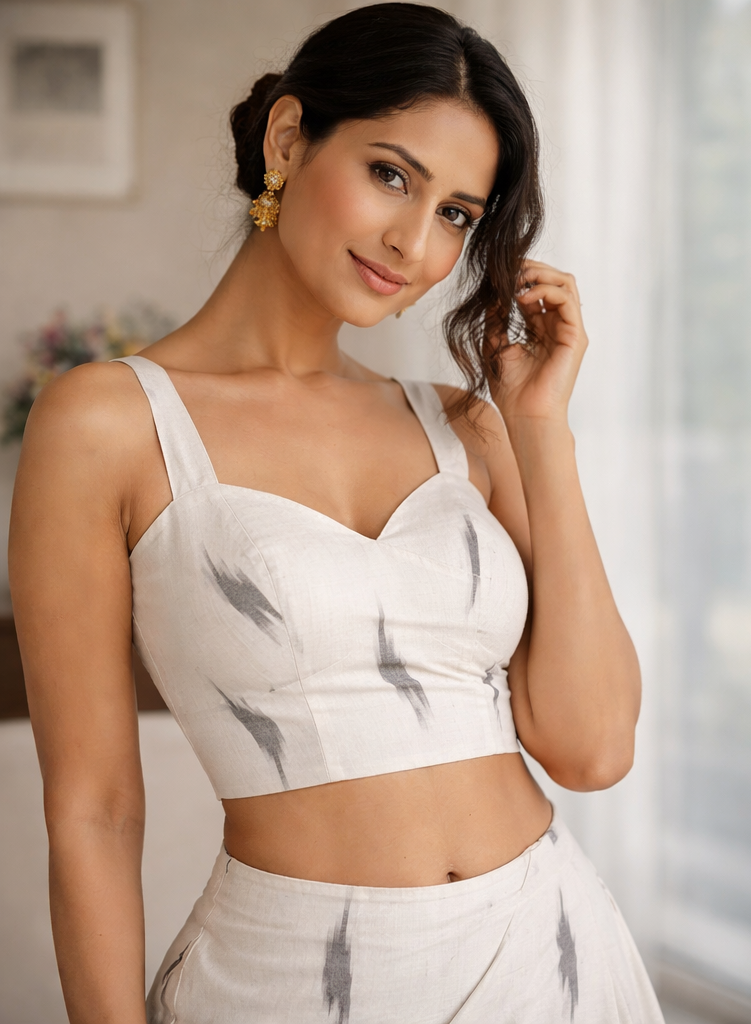
Measure shoulder width from the point where one shoulder seam normally sits to the matching point on the opposite shoulder. Do not measure across the curve at the front of the body. A shoulder measurement that's too narrow can cause the neckline to shift backwards, while a shoulder measurement that's too wide can create slipping and excess fabric near the armhole.
Armhole fit should allow you to raise both arms and bring them forward without the blouse digging into the underarm. Ask whether the seller provides an armhole circumference or uses a standard armhole depth in each size. A small armhole may look neat when standing but become uncomfortable during a Haldi ceremony, while a very deep armhole can expose the bra or saree drape.
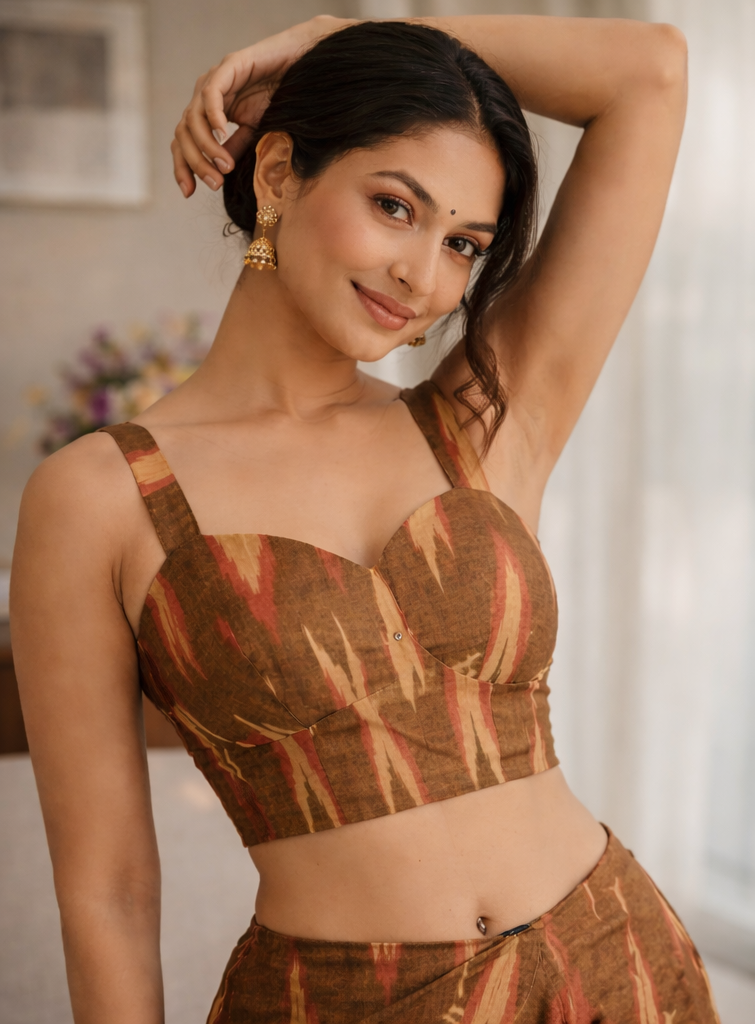
For sleeves, request the upper-arm circumference at the fullest point, sleeve opening and finished sleeve length. A short sleeve can be measured from the shoulder seam to the hem, but a sleeveless blouse still needs an armhole check. Brown Ikat Cotton Padded Blouse Sleeveless and Cream Ikat Cotton Padded Blouse Sleeveless Trendy show why sleeveless fit depends on the armhole edge, not only on the bust size.
Which Measurements Should You Request Before Ordering a Blouse for Neckline and Length?
Request neck depth, neckline width, front length, back length and shoulder-to-bust-point distance when a blouse has a deep, high or unusual neckline. Extra measurements reduce gaping, misplaced darts and a hemline that sits too high above the saree waistband.
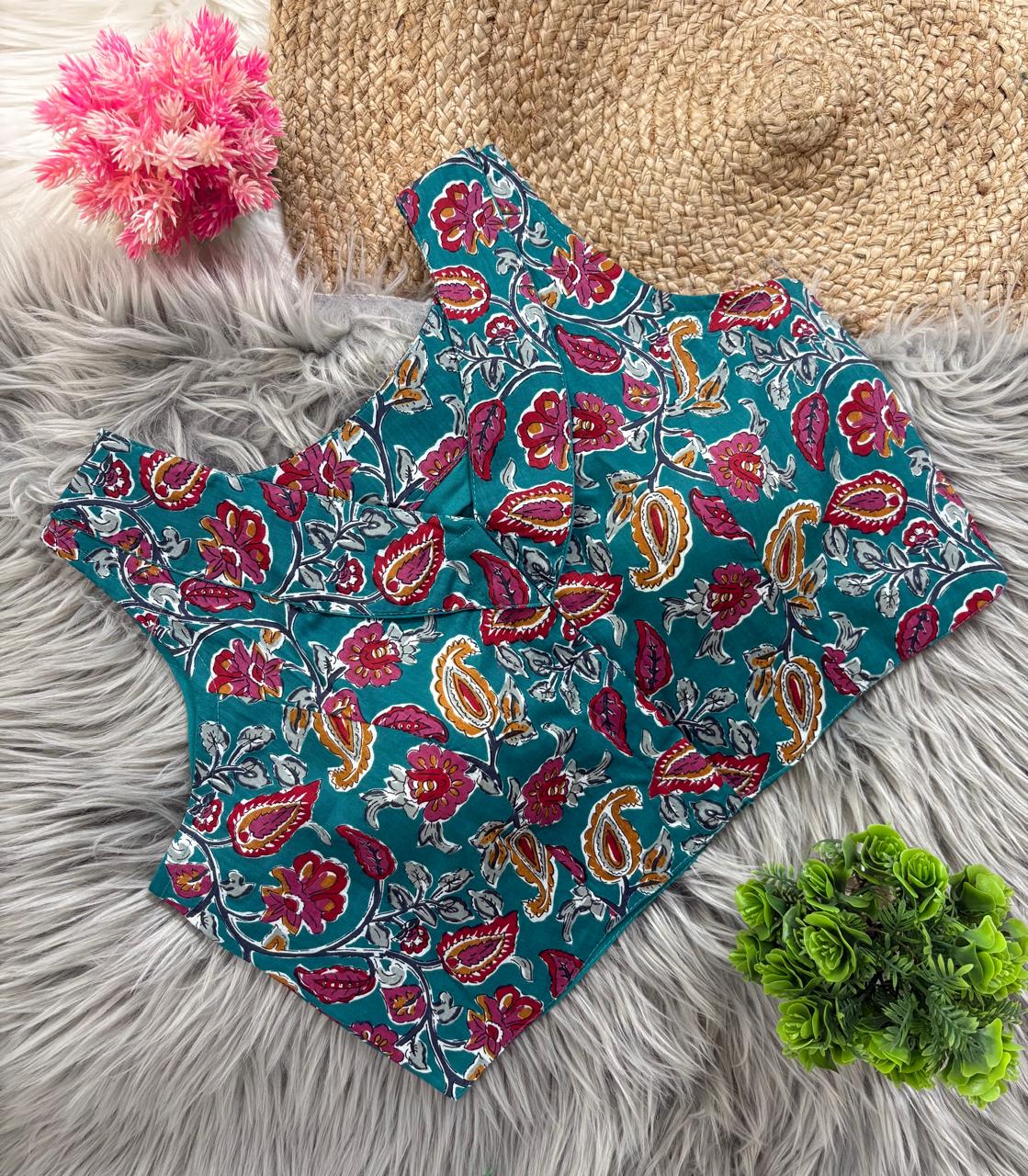
Measure front neck depth from the highest point of the shoulder near the neck to the lowest point of the front neckline. Measure back neck depth separately because front and back necklines are rarely identical. Neck width can be measured from one side of the neckline to the other across the base of the neck, but the seller should state whether the measurement refers to the body or the finished opening.
Blouse length usually runs from the highest shoulder point down to the lower hem. Request the length you want in a standing position while wearing the saree or petticoat height you normally use. A cropped blouse may end near the natural waist, whereas a longer blouse can cover the waistband and change how the saree pleats sit.
Ask for front and back lengths separately if the blouse has a curved hem, a sweetheart neckline or a longer back panel. Pure Kalamkari Cotton Padded Blouse for Women and Classic Festive Wear Blouse for Stylish Saree Look may be styled with different saree drapes, so the desired hem position should be confirmed rather than assumed from a generic size chart.
Which Measurements Should You Request Before Ordering a Blouse in Readymade or Silk Fabric?
Ask for the seller's finished-measurement chart, fabric composition, lining, stretch, padding, closure and alteration allowance before ordering a readymade or silk blouse. These details explain why two blouses with the same nominal size can feel very different.
A readymade size chart may list bust, waist and shoulder values, but those values may represent the garment's finished dimensions. Some sellers instead show the body size intended for each garment. If a chart says "36-inch bust," ask whether the blouse itself measures 36 inches around the bust or whether it's designed for a wearer whose bust measures 36 inches.
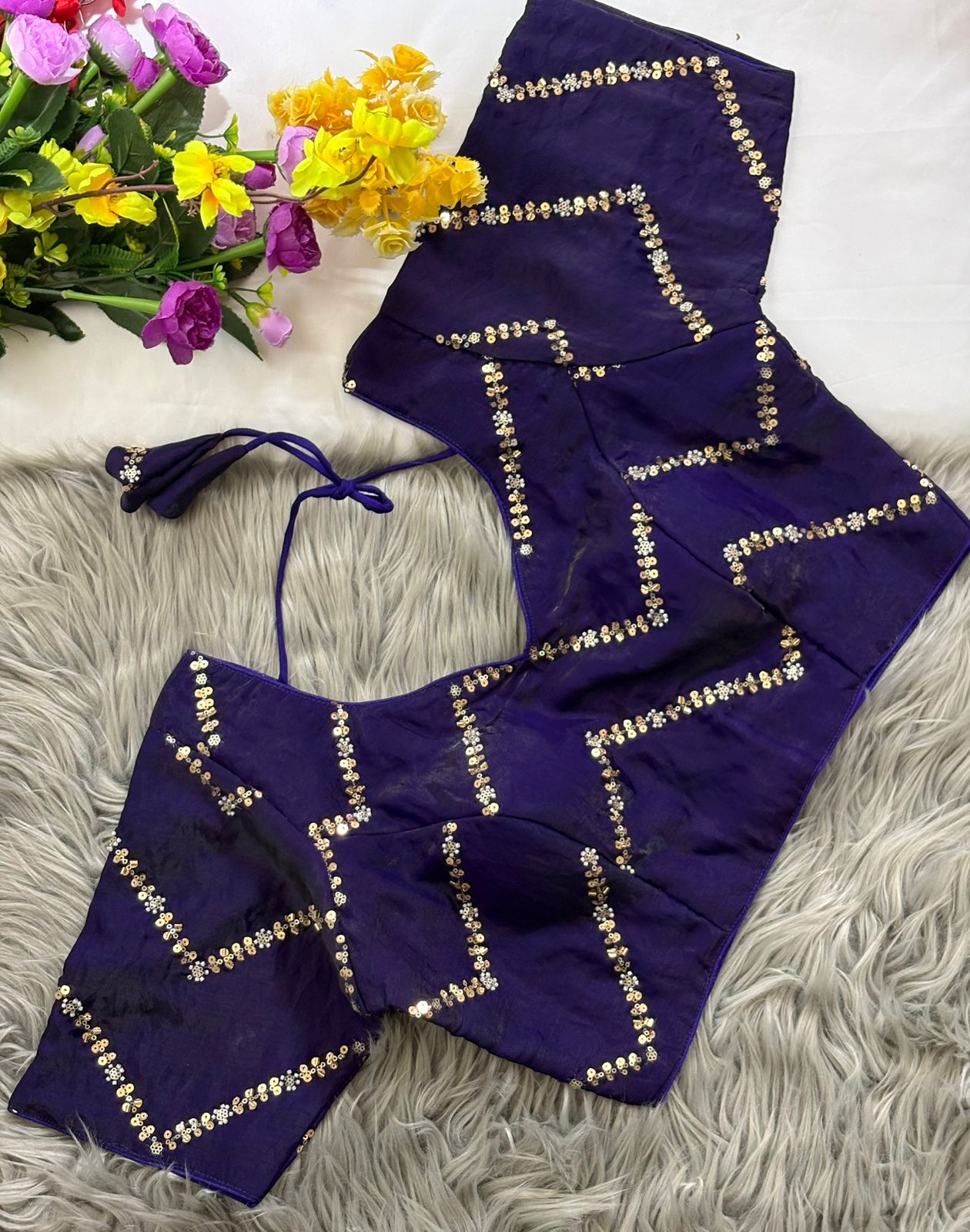
Non-stretch fabrics require more care than stretch fabrics. Cotton, Banarasi silk, Kalamkari cotton and linen-cotton blends generally don't provide the same recovery as elastane or knitted fabric. Fendy Silk Zigzag Moti Work Readymade Blouse has decorative surface work, so alterations may be limited if motifs or embellishments sit close to the side seams.
A readymade blouse can often be altered at the side seams, shoulder or hook panel, but the available allowance depends on the construction. Ask whether the blouse has extra seam allowance, adjustable hooks, a tie-back, elastic or a back opening. A fixed padded cup, heavy zari border or embroidered panel may prevent a tailor from changing the bust area substantially.
How much ease should you request in a blouse measurement chart?
A close-fitting blouse commonly needs about 1 to 2 inches of total ease at the bust, but the correct amount depends on fabric, lining, padding, closure and personal comfort. A non-stretch silk blouse may need more functional room than a lightly structured cotton blouse.
Total ease means the difference between the wearer's body measurement and the finished garment measurement. For example, a 36-inch body bust and a 37.5-inch finished bust provide 1.5 inches of total ease. Ease should not be added blindly to every measurement because the shoulder, neckline and armhole use different fit rules.
Ask whether the blouse is intended to fit tightly, comfortably or loosely. A blouse worn for several hours at a wedding needs enough room for breathing, sitting and lifting the arms. A blouse used only for photographs may tolerate a closer fit, but excessive tightness can create horizontal strain lines and distort the neckline.
Which Measurements Should You Request Before Ordering a Blouse for Different Sarees?
Request the blouse length, neckline, sleeve and ease requirements according to the saree fabric and drape, because a heavy silk saree and a lightweight cotton saree don't place the same demands on a blouse. Saree volume, waistband height and pallu arrangement can all affect comfort.
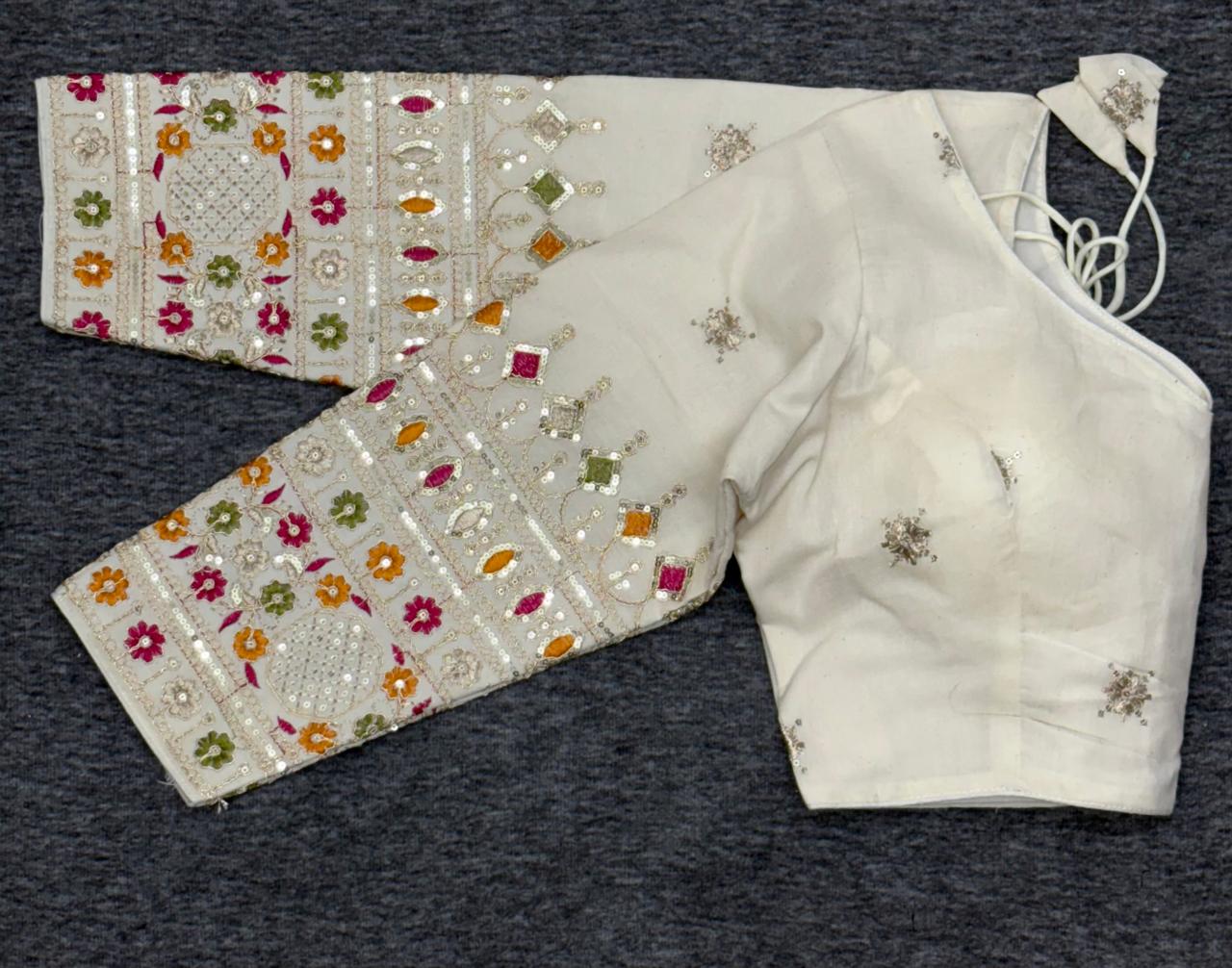
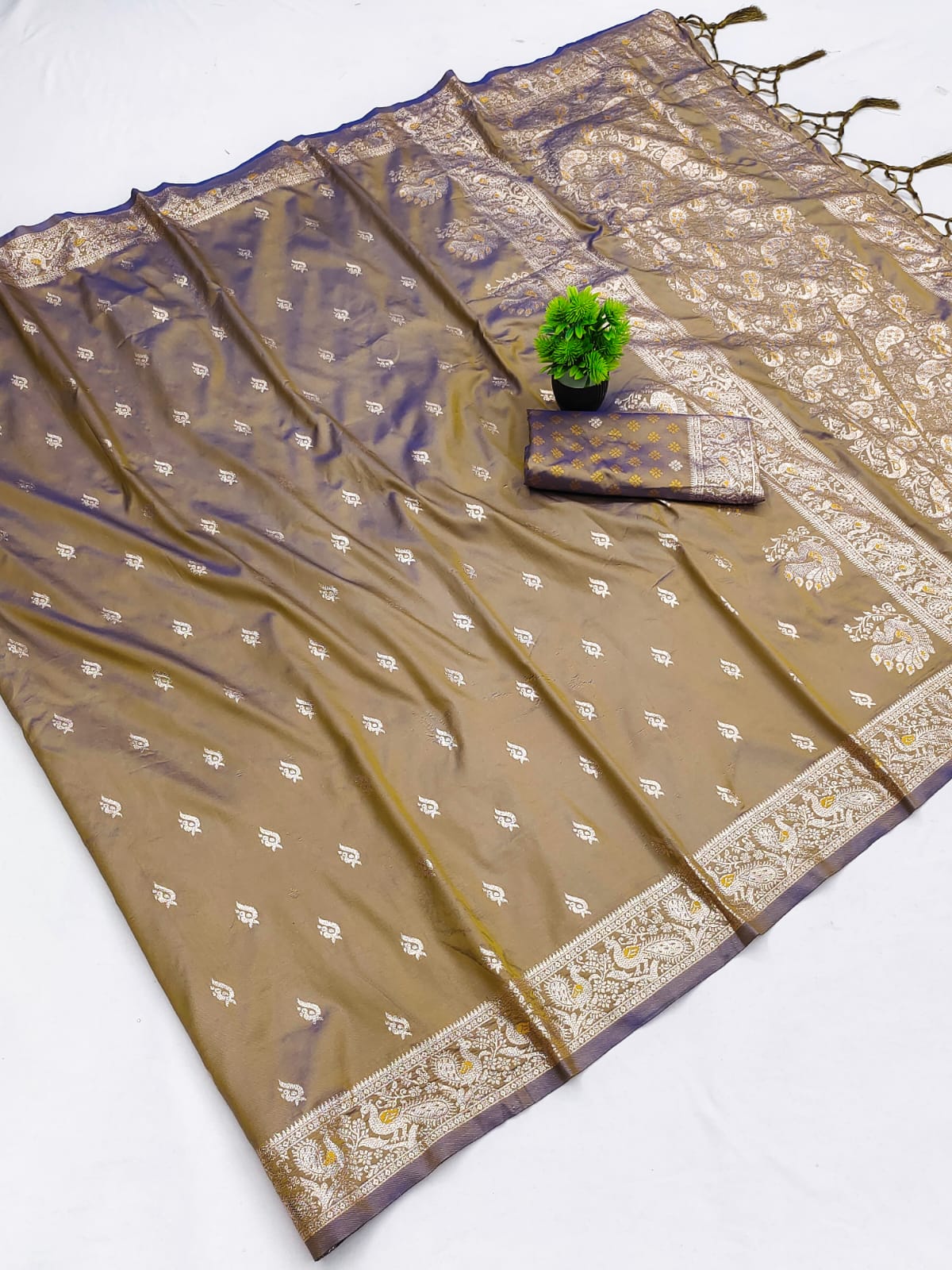
A Banarasi silk saree with zari may be paired with a structured blouse that has a firm lining and close neckline. A cotton saree may work comfortably with a lighter blouse and a slightly easier armhole. A designer saree with a narrow pallu may reveal more of the shoulder and back, making neckline placement and back length especially important.
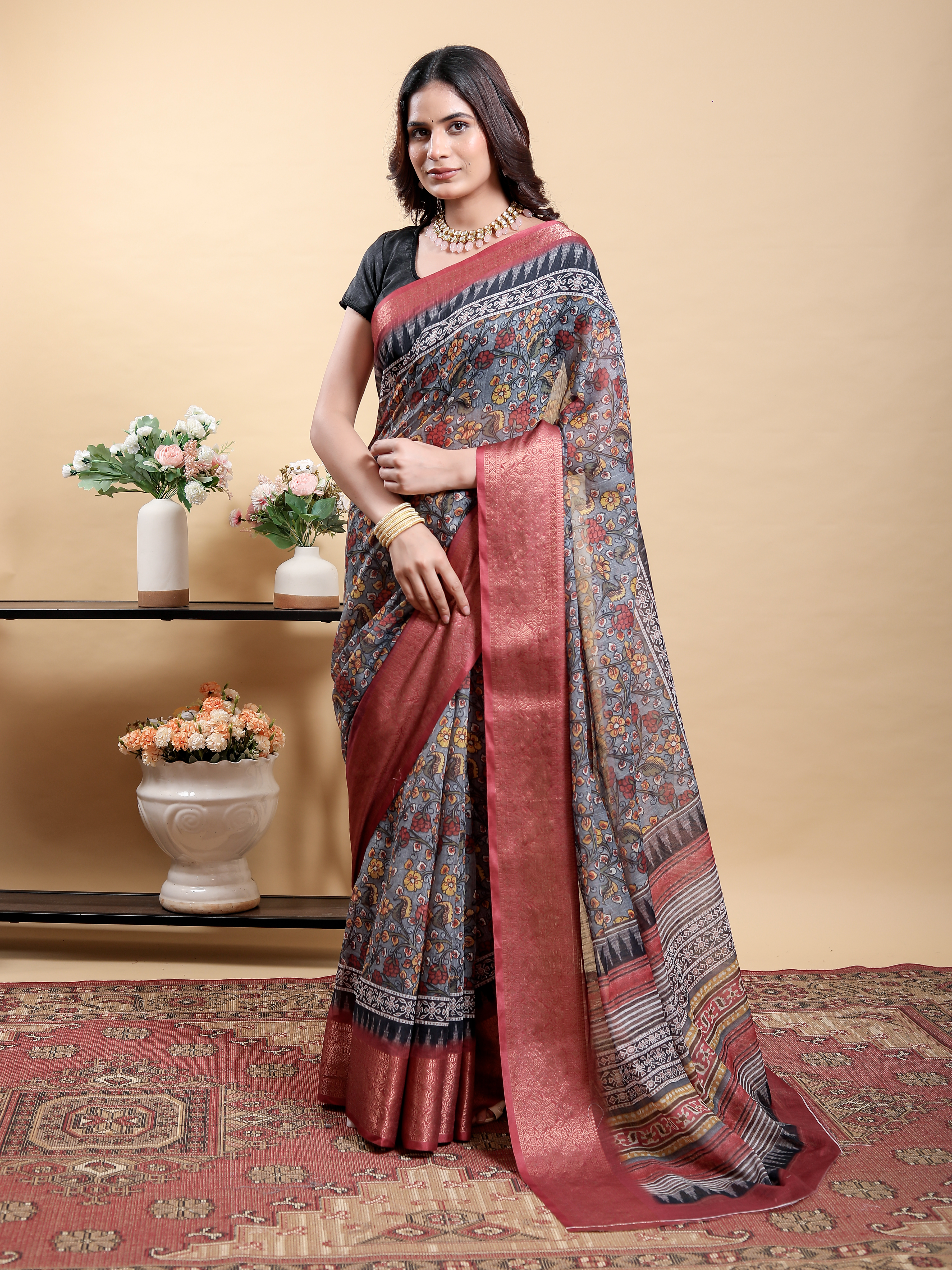
Blue Linen Cotton Floral Print Saree with Plain Dark Border demonstrates why fabric weight and border placement should be considered when choosing blouse length. A blouse that ends too low can compete with a plain border, while a blouse that ends too high may expose the waist when the saree is tucked at a higher position.
For a Haldi ceremony or long wedding event, request a comfortable armhole, breathable lining and enough ease to sit and move. For a formal reception, the priority may be a precise shoulder line and neckline. The intended wearing time is a practical fit consideration, not merely a styling preference.
Which Measurements Should You Request Before Ordering a Blouse Online?
Before placing an online blouse order, request a current size chart, finished garment measurements, fabric details, closure information, padding details and a clear alteration process. Save the seller's reply so the agreed specifications can be checked when the garment arrives.
- Measure twice on the same day, preferably with a second person holding the tape level.
- Record bust, underbust, waist, shoulder, armhole, upper arm and blouse length in inches or centimetres.
- State the bra type, saree style and preferred fit used for the measurements.
- Compare body measurements with the seller's chart and identify whether the chart shows body or finished measurements.
- Ask how much extra ease is included and whether the fabric has stretch.
- Confirm padding, lining, hooks, zip placement, sleeve opening and possible alteration points.
- Request a tailor's opinion when bust-to-waist proportions differ substantially from standard sizing.
don't rely on a photograph, a previous garment size or a single bust number when ordering a blouse online. A previous blouse may have stretched, shrunk, been altered or used a different measurement system. A careful measurement record gives the seller information that a generic size label can't provide.
After delivery, try the blouse over the intended bra before removing tags or making alterations. Check that the shoulder seam sits on the shoulder bone, the armhole allows movement, the bust doesn't pull and the neckline remains in position when you lift your arms. A five-minute movement test can reveal fit problems that are invisible while standing still.
For future orders, keep a personal measurement record with the date, measuring clothes, bra type and preferred ease. Body measurements can change, and padded or lined blouses can require different finished dimensions from unlined cotton styles. Updating the record every six to twelve months is more reliable than ordering from memory.
Common Questions About Blouse Measurements Before Ordering
Which measurements should you request before ordering a blouse online?
Request full bust, underbust, natural waist, shoulder width, armhole, upper-arm circumference and sleeve length. Add blouse length, neckline depth and bust-point distance when the design is padded, sleeved or deeply cut.
Should blouse measurements be taken over a bra?
Yes, take body measurements over the bra you intend to wear with the blouse. Avoid measuring over a heavily padded bra unless that bra will be worn consistently, because padding can add several centimetres to the bust measurement.
Is a 36-inch blouse measurement the body size or the finished garment size?
It can mean either, so ask the seller directly. Confirm whether the listed number describes the wearer's body or the blouse's finished circumference, and ask how much ease has been included.
How much ease is suitable for a readymade saree blouse?
A close-fitting blouse commonly has about 1 to 2 inches of total bust ease, although silk, lining, padding and personal comfort can change the requirement. Non-stretch fabrics usually need more functional room than stretch fabrics.
Can a readymade blouse be altered if the measurements are slightly wrong?
A readymade blouse can often be altered at the side seams, shoulders or hook panel when sufficient seam allowance exists. Heavy zari, fixed padding, embroidery near the seams and very small armholes can limit the changes a tailor can make.
What measurements matter for a sleeveless blouse?
A sleeveless blouse needs accurate bust, shoulder, armhole and blouse-length measurements. Upper-arm circumference is also useful because the armhole edge must sit securely without digging into the underarm or exposing the bra.