

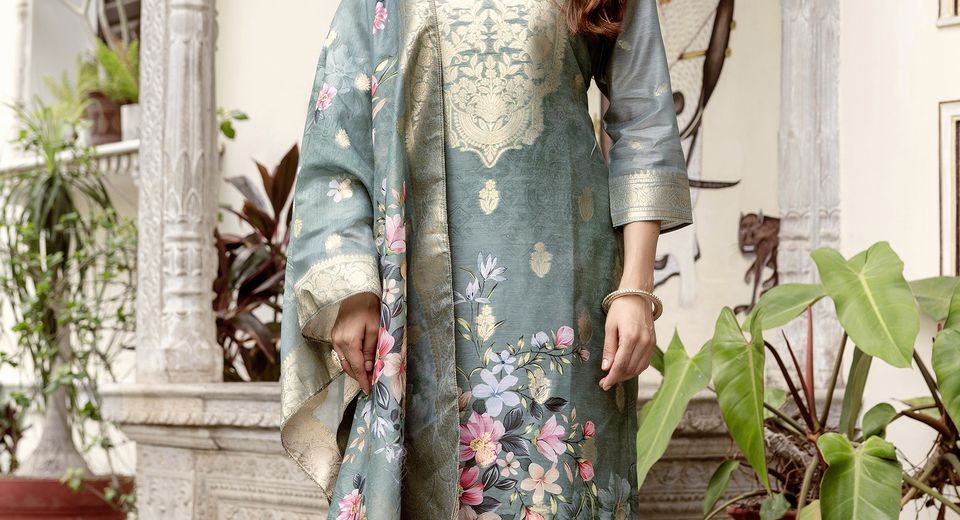
The hemline of a long kurti changes the entire visual proportion of an outfit. When deciding which looks more balanced for churidar vs leggings with long kurtis, examine the kurti's width, fabric, side slits and the amount of ankle showing. A churidar adds gathered length and a traditional finish, while leggings create a cleaner, more continuous line below the hem.
The better choice depends on the silhouette rather than on a universal rule. A narrow, straight long kurti often works with either bottom, but a flared, embroidered or very long kurti needs a closer look at fabric weight and visual volume. Footwear, dupatta placement and the contrast between the kurti and bottom can also determine whether the final outfit feels balanced.
Which Looks More Balanced for Churidar vs Leggings With Long Kurtis?
Leggings generally look more streamlined with long kurtis, while churidars create a more classic and textured silhouette. Leggings suit straight, lightly shaped and contemporary kurtis because their smooth surface keeps the lower half visually quiet. Churidars suit Anarkali-inspired, embroidered and festive kurtis because ankle gathers add movement and reinforce an Indian silhouette.
A long kurti ending at mid-calf or lower leaves less visible bottom fabric, so a smooth legging can prevent the outfit from appearing crowded. A churidar works particularly well when the kurti has enough flare or when the design already uses classic details such as zari, gota, a broad hem border or a prominent dupatta.
Proportion matters more than body type. A petite wearer may prefer leggings with a long straight kurti because a continuous colour line can make the outfit appear longer. A taller wearer can carry a gathered churidar with a long kurti more easily, although a close-fitting churidar remains important when the kurti is heavily embellished.
How Do Churidar and Leggings Change the Shape of a Long Kurti?
Churidars add visual detail around the ankle, whereas leggings extend the kurti's vertical line without interruption. The difference becomes noticeable when a long kurti covers the knee, reaches mid-calf or falls close to the ankle.
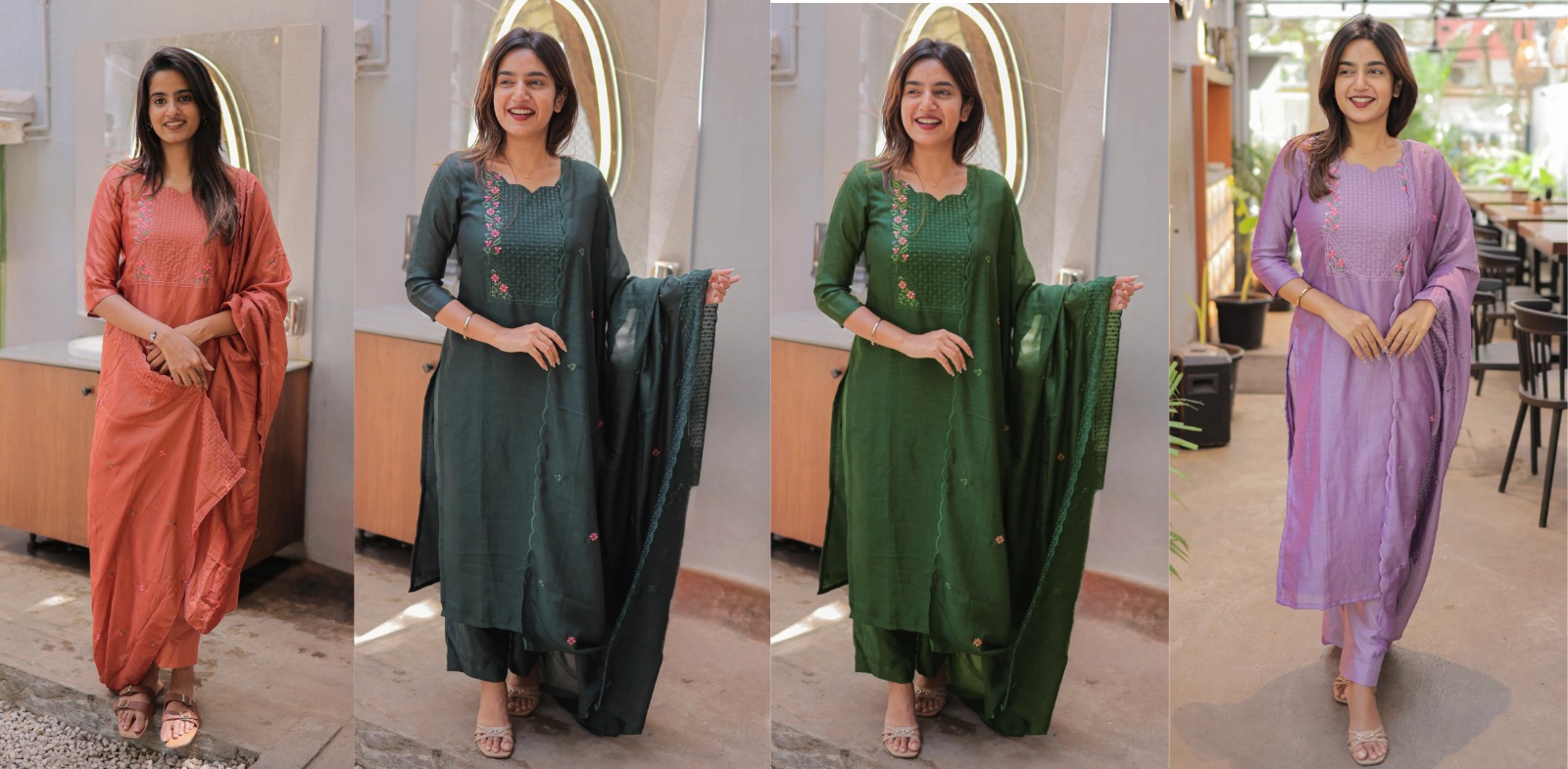
When a churidar creates better balance
A churidar creates better balance when a long kurti has flare, structured shoulders or heritage decoration that needs a similarly classic lower half. The gathered fabric at the ankle provides a deliberate finishing point instead of leaving a plain, uninterrupted column below a richly designed kurti.
Anarkali-style kurtis, angrakha kurtis and long kurtis with a broad hem often pair naturally with churidars. A fitted churidar gives a flared silhouette room to move without adding width at the hip. Choose a length that gathers neatly at the ankle rather than forming thick folds across the calf.
When leggings create better balance
Leggings create better balance when a long kurti is straight, narrow or already detailed through the neckline and hem. The simple lower line allows printed panels, embroidery, buttons or a contrast dupatta to remain the main focus.
Leggings are especially useful with a long kurti that has side slits. The slit reveals the leg line during walking, and a smooth legging keeps the opening visually clean. A matching or slightly darker legging can also make a contrasting kurti appear taller and less divided at the waist.
Which Bottom Works With Different Long-Kurti Fabrics?
The bottom should match the weight and finish of the kurti fabric. Light fabrics usually need a neat, low-volume bottom, while richer fabrics can support the extra texture of a churidar.
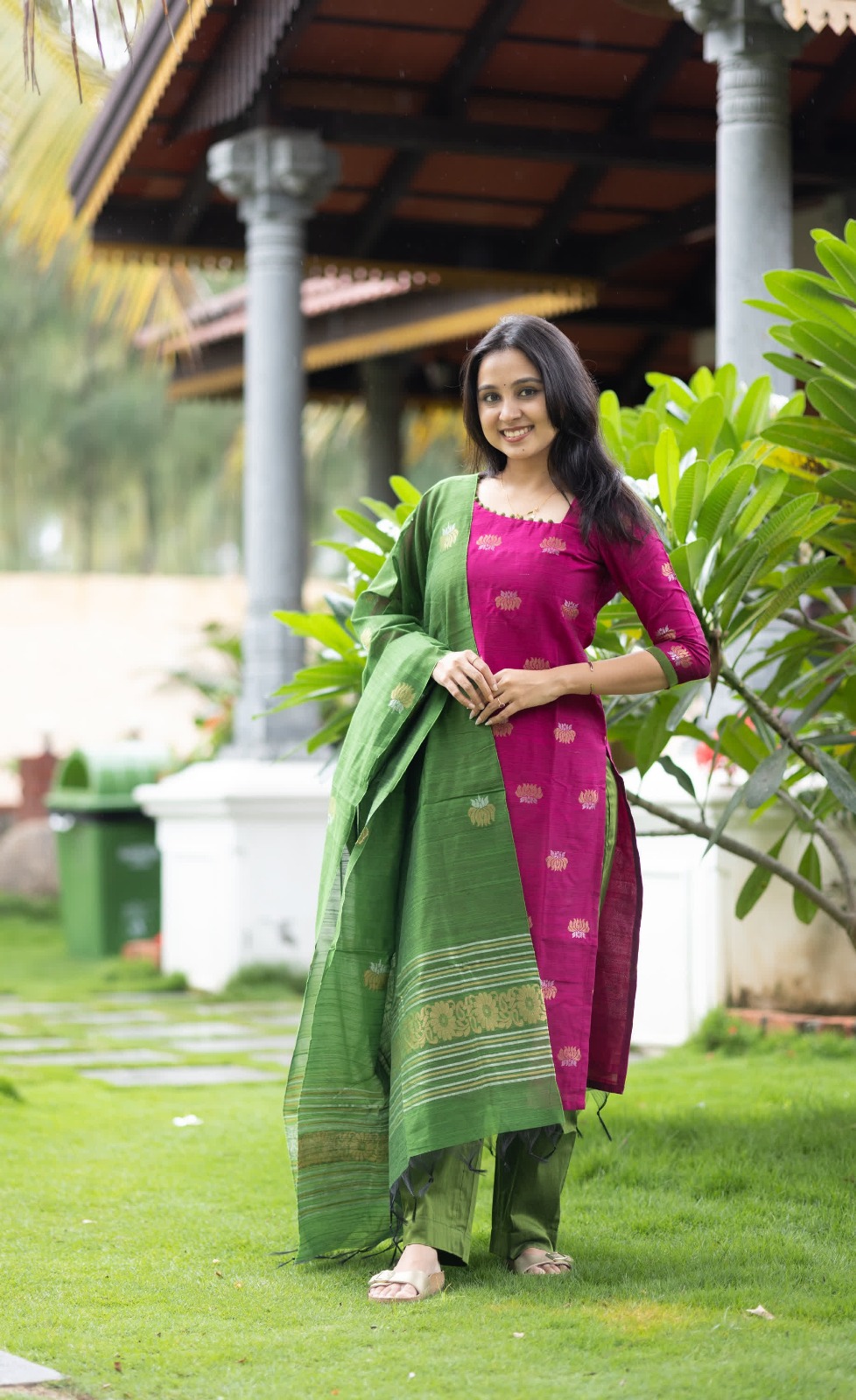
- Chanderi: A Chanderi kurti has a light, crisp surface and often benefits from leggings or a fine cotton churidar. A bulky bottom can compete with Chanderi's delicate drape, especially when the kurti includes zari or a sheer dupatta.
- Chanderi silk: Chanderi silk can support either option. Use leggings for a polished daytime line and a churidar for a more classic festive appearance. Cream Chanderi Silk Kurti Pant Dupatta Set for Women demonstrates why a coordinated straight bottom works well with a refined three-piece silhouette.
- Cotton: Cotton long kurtis pair comfortably with cotton leggings for everyday wear. A cotton churidar is preferable when the outfit has a salwar-suit construction or when the kurti has enough flare to balance ankle gathers.
- Vichitra silk: Vichitra silk has a dressier surface and looks composed with a slim churidar, particularly when embroidery is concentrated around the neckline or front panel. Elegant Beige Vichitra Silk Embroidered Kurta Set for Women illustrates how a controlled bottom can support a formal kurta.
- Embroidered fabrics: Heavy embroidery usually benefits from a plain bottom. Leggings give the cleanest result, while a plain churidar adds heritage character without introducing a competing print.
An useful test is to view the outfit from a distance of three metres. If the kurti, dupatta and bottom all have strong surface detail, remove one visual element by choosing a solid legging or an unembellished churidar.
How Should Colour and Contrast Be Used?
A low-contrast bottom lengthens the outfit, while a high-contrast bottom creates a visible horizontal break at the hem. The right choice depends on whether the long kurti needs extension or definition.
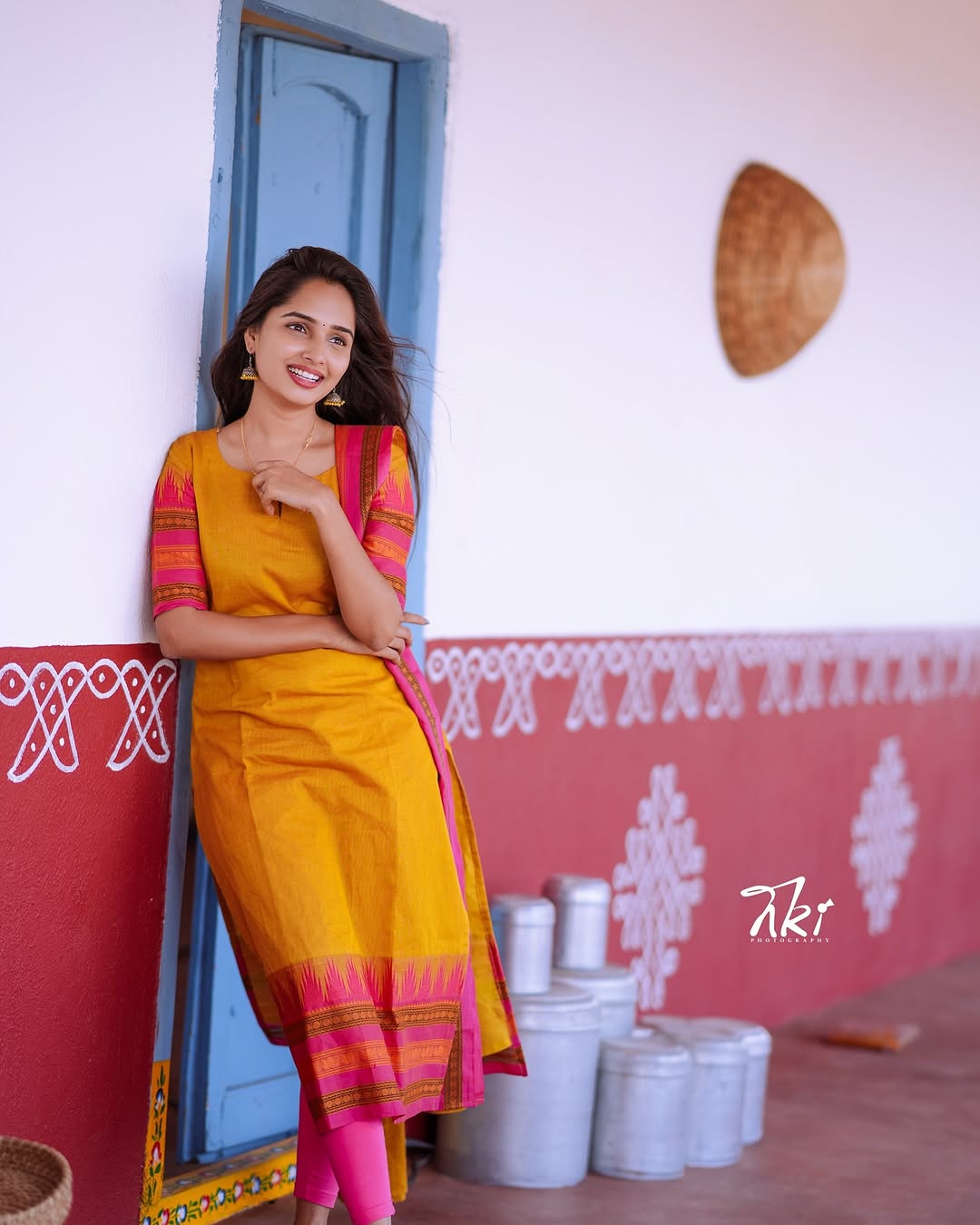
Matching leggings work well with a long kurti in beige, cream, black, navy, olive or another solid colour because the uninterrupted line makes the kurti appear longer. Beige Kurta Set with Blue Chanderi Dupatta for Women can be styled with a beige, cream or muted blue bottom when a calm, elongated effect is preferred.
A contrasting churidar is useful when the outfit needs a more clearly defined heritage structure. An ivory kurti with a deep maroon churidar creates a strong lower border that can echo embroidery or a dupatta edge. Contrast should be intentional; a random bright bottom can make a long kurti look visually shortened.
Monochrome doesn't require identical shades. A cream kurti with a warm beige legging, or an olive kurti with a deeper moss churidar, maintains continuity while adding depth. Elegant Green Chanderi Silk Kurti Pant Dupatta Set shows how related colours can keep a coordinated outfit composed without making every piece look flat.
Which Bottom Is Better for Petite, Tall and Curvier Proportions?
Leggings usually provide the easiest lengthening effect, while churidars add definition and heritage detail when the outfit has enough vertical space. Neither bottom is restricted to one body shape.
For petite proportions
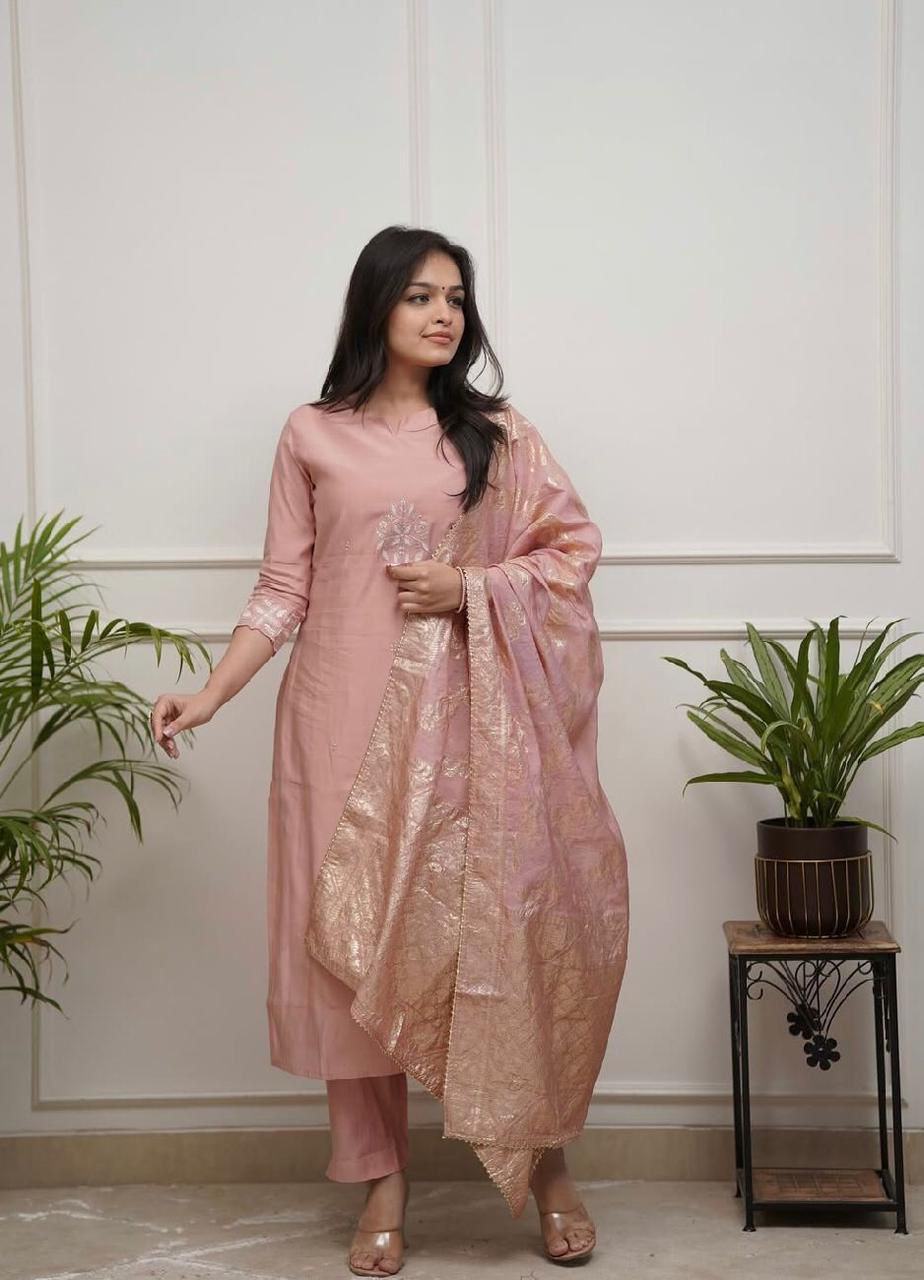
Petite wearers can use a close-colour legging, a pointed-toe jutti or a low-contrast sandal to create one continuous line. A long kurti with a narrow front panel and minimal horizontal borders will usually appear more lengthening than a heavily tiered style.
If a churidar is preferred, choose fine gathers and keep the kurti hem above the widest part of the calf. A very long kurti combined with thick ankle folds can make the lower half look compressed. Avoid a strong colour break between kurti, churidar and footwear unless the outfit is deliberately festive.
For tall proportions
Tall wearers can use a contrasting churidar to introduce visual structure beneath a long kurti. A printed dupatta, border or statement footwear can also distribute attention across the full height of the outfit.
A tall frame can carry a long, straight kurti with leggings, but the kurti should have enough design interest to prevent a plain column effect. Vertical embroidery, a patterned dupatta or a distinctive neckline helps maintain balance.
For curvier proportions
Curvier proportions often look balanced in a smooth, opaque legging paired with a kurti that skims rather than clings. The kurti should have adequate ease at the bust and hip, because a tight top combined with a tight bottom can make movement uncomfortable and draw attention to every seam.
A churidar can also work well when the fabric stretches comfortably and the kurti has a gentle flare. The most important fit detail is avoiding excess bunching at the calf, which can add width where the outfit should look clean.
How Do Occasion and Dupatta Choices Affect the Decision?
Leggings are usually more practical for everyday long kurtis, while churidars are more convincing for heritage celebrations and dressier salwar suits. Occasion determines how much texture, movement and formality the outfit should communicate.
For office wear, choose a straight cotton or Chanderi kurti with a matching legging, restrained embroidery and a neatly folded dupatta. Vertical Cotton Straight Kurta Set with Dupatta represents the kind of straight silhouette where a clean, close-fitting bottom supports an organised daytime appearance.
For a family gathering, a churidar can add ethnic definition to a long embroidered kurti. Cream Chanderi Embroidered Kurta Set with Dupatta works with a cream churidar for tonal elegance or a muted contrasting churidar that picks up a border colour.
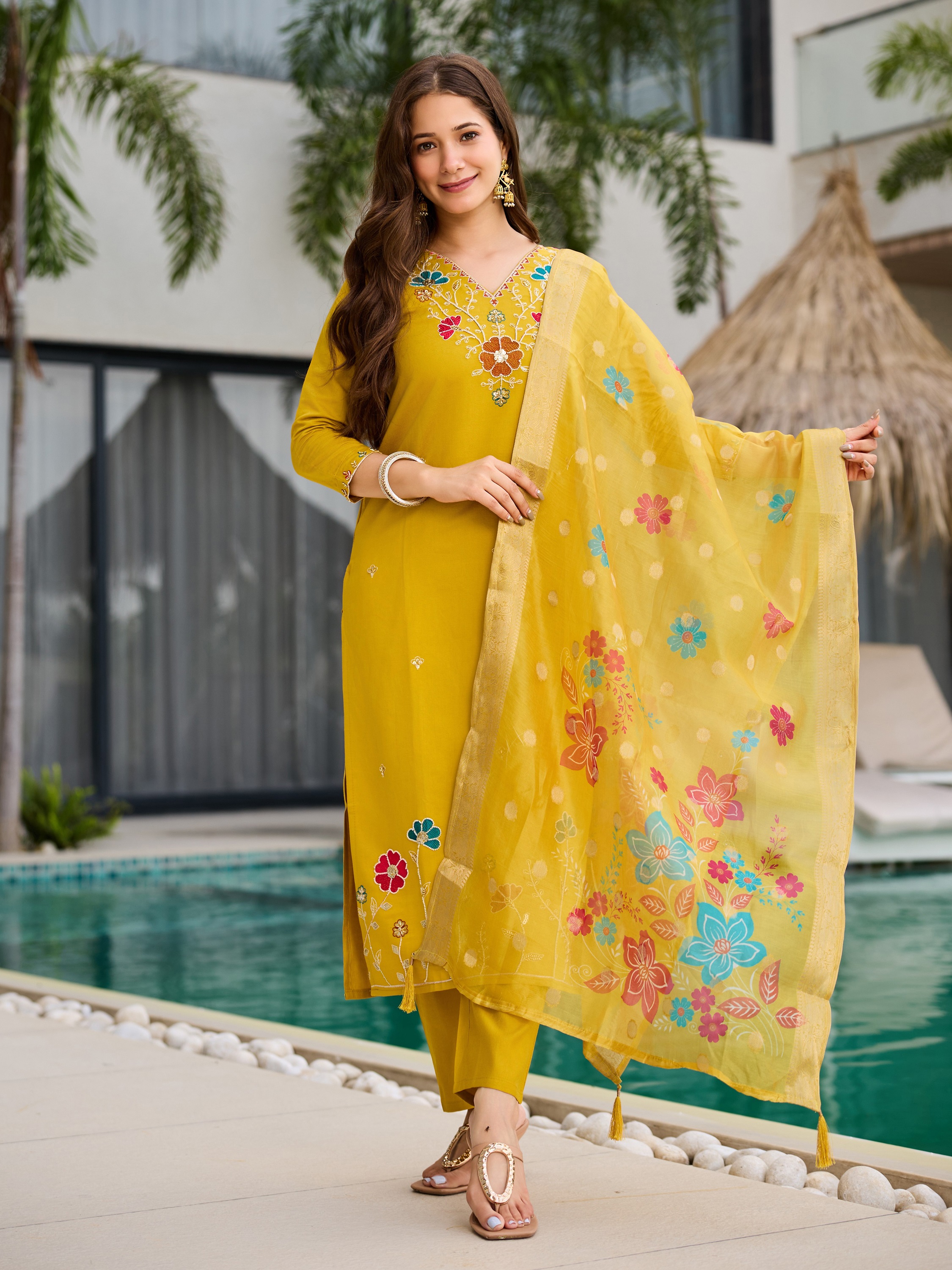
For a Haldi ceremony, breathable cotton and easy movement matter more than a perfectly formal ankle gather. Elegant Mustard Chanderi Cotton Kurta Set with Embroidery can be paired with a comfortable mustard or warm beige legging when sitting, walking and managing turmeric-friendly practicality are priorities.
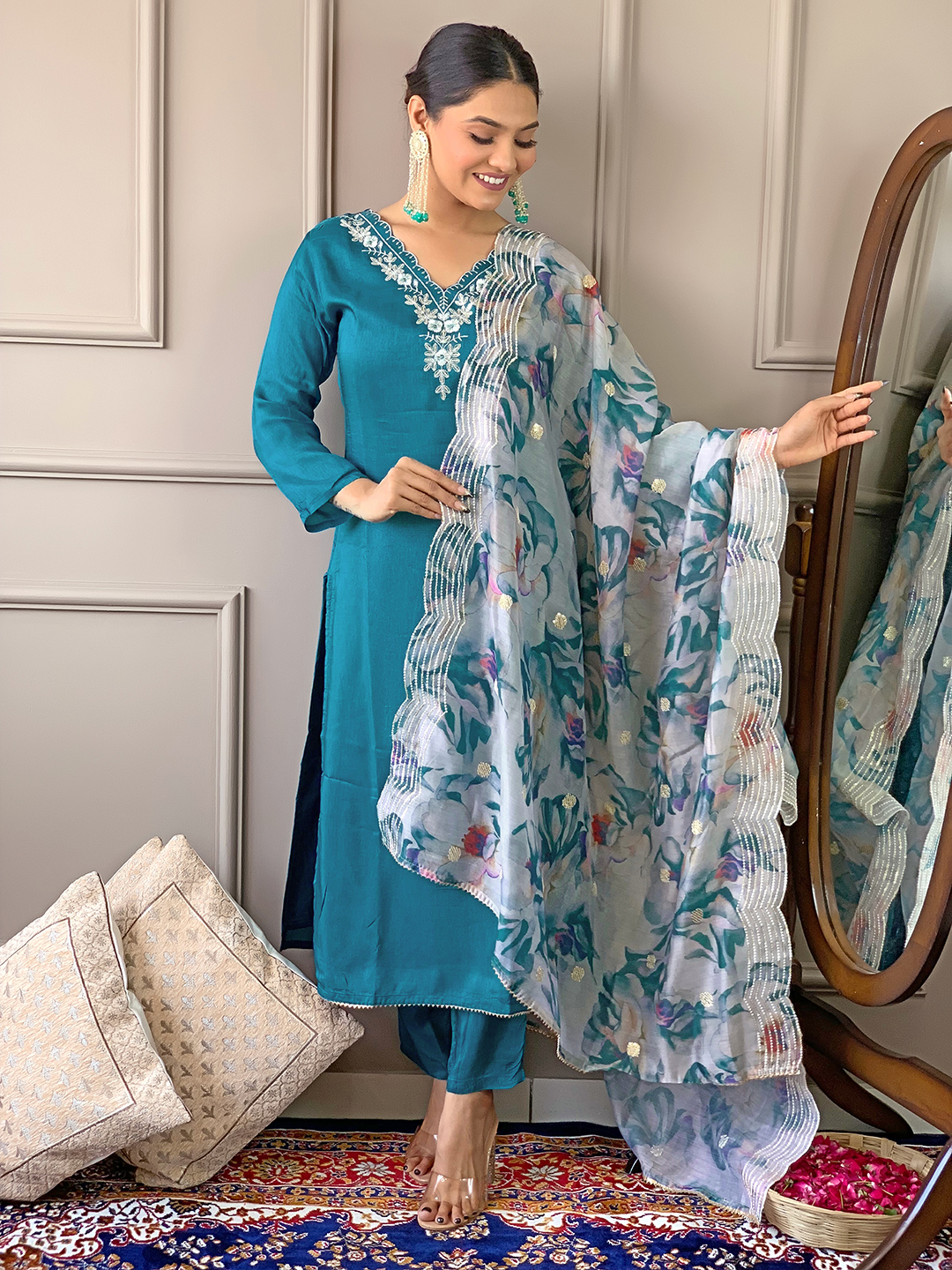
For an evening celebration, a slim churidar can complement silk, embroidery and a more structured dupatta. Lavender Chanderi Kurta with Olive Embroidered Palazzo Suit offers an useful reminder that the bottom silhouette must be assessed alongside the kurta and dupatta; if the outfit already includes a wider lower shape, adding a churidar would create a different proportion from the intended palazzo effect.
How Can Regional Salwar-Suit Details Guide Styling?
Regional design language can help determine whether a smooth legging or gathered churidar feels more authentic with a long kurti. The choice should support the motif, border and drape rather than compete with them.
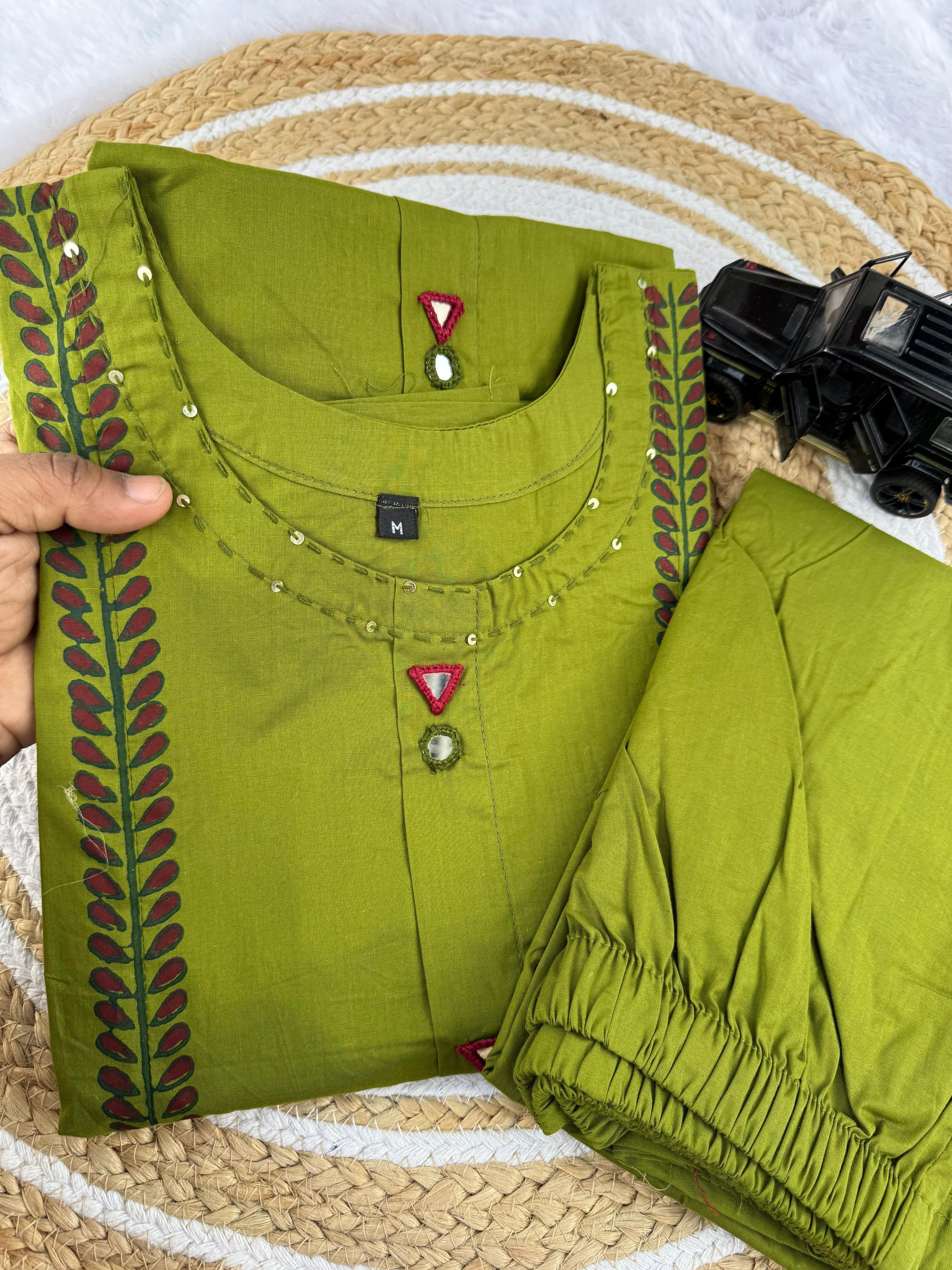
Kalamkari Print Salwar Suits (Copy) usually benefit from a quiet solid bottom in a shade taken from the print. Leggings keep a busy Kalamkari-inspired surface from becoming visually fragmented, while a plain churidar can work when the print has a distinctly time-honoured silhouette.
Maharashtra Paithani Inspired Salwar Suits often use jewel tones and border-led styling. A fitted churidar can reinforce the formal Indian character of a long kurti with a Paithani-inspired border, especially when the dupatta has a defined edge.
Gujarat Bandhej Salwar Suits and Odisha Sambalpuri Salwar Suits can both carry a contrasting bottom, but the contrast should repeat a colour already present in the textile. A mismatched neon legging can distract from Bandhej dots or Sambalpuri-inspired geometric patterning.
Punjab Patiala Salwar Suits follow a different proportion because the Patiala bottom is intentionally voluminous. A standard legging or churidar should not be substituted casually when the design depends on pleated volume. If a long kurti is styled with a narrow bottom, the kurti needs enough flare or surface detail to preserve visual balance.
What Fit Details Should Be Checked Before Buying?
The most balanced bottom is one that stays smooth at the waist, sits correctly at the ankle and permits comfortable movement. Visual proportion can't compensate for a poorly fitting garment.
- Check the rise: The waistband should sit securely without rolling under the kurti or pressing into the waist while seated.
- Check opacity: White, cream and pastel leggings should be opaque enough that seams and skin don't show through under daylight.
- Check the ankle: A churidar should create small, even gathers rather than thick folds that stop halfway up the calf.
- Check the hemline: Try the bottom with the actual kurti length. A legging that looks balanced with a knee-length kurti may appear too plain under an ankle-length style.
- Check movement: Walk, sit and climb a few steps before deciding. Tight fabric that pulls at the knee will make an otherwise attractive salwar suit impractical.
- Check the dupatta: A heavily bordered dupatta may need a simpler bottom, while a plain dupatta can accommodate a more decorative churidar.
For regular wear, keep at least one neutral legging in black, beige, cream or navy and one matching or tonal churidar for festive outfits. A small, coordinated bottom wardrobe makes long kurtis more versatile without forcing every outfit into the same silhouette.
A Simple Decision Rule for Long-Kurti Styling
Choose leggings when the long kurti is straight, printed, slit-sided or already detailed, and choose a churidar when the long kurti is flared, festive or traditionally embroidered. Use a low-contrast bottom to lengthen the outfit and a controlled contrast to define the silhouette.
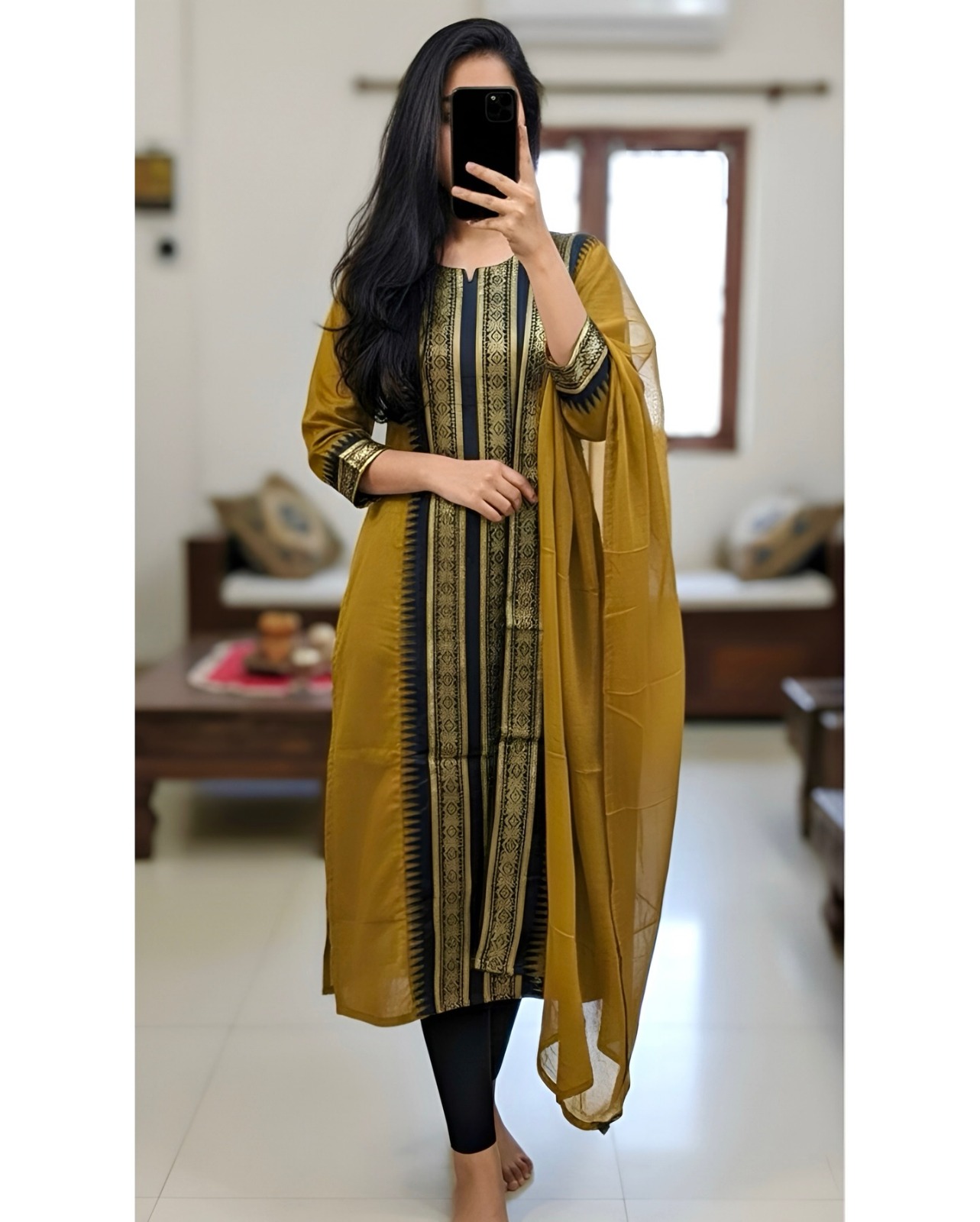
When both choices appear possible, compare three points: the kurti's widest area, the hemline length and the amount of decoration below the neckline. A smooth legging usually wins when the outfit feels crowded. A fine churidar usually wins when the outfit feels too plain or lacks a traditional finishing detail.
The most reliable answer to which looks more balanced for churidar vs leggings with long kurtis is therefore situational. Leggings create a sleek vertical line; churidars create gathered, occasion-ready structure. The correct selection is the one that balances the kurti's volume, fabric, colour and intended use while allowing comfortable movement.
Common Questions About Choosing Churidars or Leggings for Long Kurtis
Are leggings or churidars better with a long straight kurti?
Leggings are usually better with a long straight kurti because their smooth, close-fitting line preserves the kurti's vertical shape. A slim churidar can also work when the outfit has embroidery, a traditional dupatta or enough flare to support ankle gathers.
Can I wear a churidar with an ankle-length kurti?
You can wear a churidar with an ankle-length kurti if the churidar gathers neatly and the kurti has a classic or festive silhouette. Avoid thick folds at the ankle because very long hems combined with heavy gathers can make the lower half look crowded.
Do leggings make a long kurti look taller?
Leggings can make a long kurti look taller when the bottom is close in colour to the kurti and the footwear does not create a strong horizontal break. A straight hem, vertical embroidery and a low-contrast dupatta can strengthen the lengthening effect.
Which bottom is more comfortable for everyday salwar suits?
Leggings are often more convenient for everyday salwar suits because they are easy to pair, stay smooth under side slits and require less adjustment. A soft cotton churidar is comfortable too, provided the ankle gathers are not tight and the fabric allows easy movement.
What should I wear with an embroidered Chanderi kurti?
A plain legging or a fine plain churidar works well with an embroidered Chanderi kurti. Choose leggings for a refined daytime line and a churidar when you want to emphasise the traditional character of Chanderi, zari or a formal dupatta.
Can a contrasting churidar shorten the appearance of a long kurti?
A strongly contrasting churidar can shorten the appearance of a long kurti because it creates a clear horizontal break at the hem. Use a tonal or darker churidar when you want continuity, and reserve strong contrast for outfits where a defined festive silhouette is intentional.


