

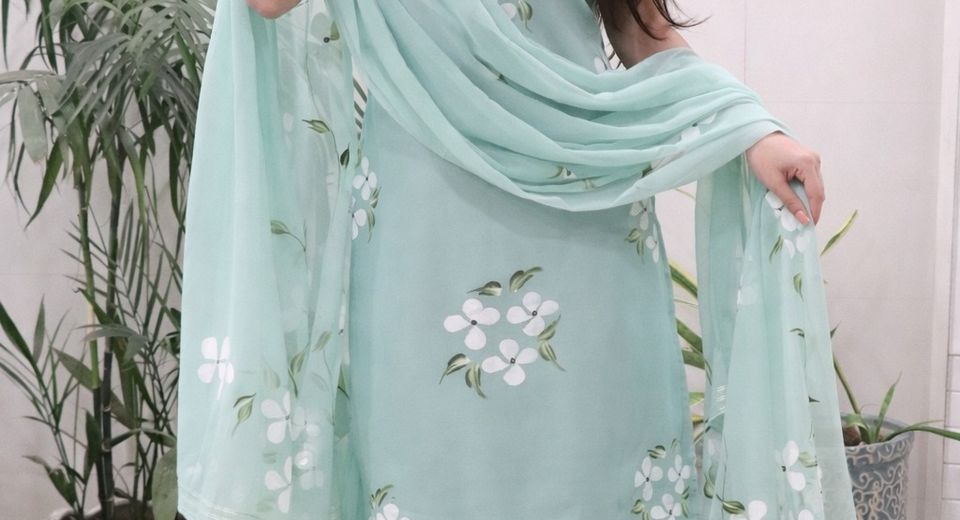
Which Kurti Length and Shoes Work Best With Sharara Pants depends on the volume of the sharara, the wearer's proportions, the event and the amount of embroidery around the hem. A sharara already creates movement from the waist down, so the kurti and footwear should give that movement a clear shape rather than adding competing layers. The most reliable starting point is a kurti that ends at the upper thigh, knee or just below the knee, paired with shoes that provide enough height to keep the flare from brushing the floor.
Small adjustments make a substantial difference. A short kurti can make a heavily flared sharara look youthful and festive, while a knee-length kurti creates a more balanced silhouette for weddings and formal dinners. A longer kurti can work with a narrow, controlled sharara, but a long, loose kurti over a very wide flare may hide the waist and make the outfit appear heavier. Footwear also changes the visible length of the leg: a pointed-toe jutti extends the line of the foot, while a thick ankle strap visually shortens it.
Which Kurti Length and Shoes Work Best With Sharara Pants?
The most versatile combination is a kurti ending around the upper thigh or knee with a low-to-medium heel, a pointed jutti or a slim-strap sandal. An upper-thigh kurti suits a dramatic, wide-legged sharara because the shorter top leaves more of the flare visible. A knee-length kurti gives better coverage and proportion when the sharara has moderate volume or dense embroidery. A medium heel of approximately 2 to 3 inches works for most formal outfits because it raises the hem without making walking difficult.
For a daytime gathering, flat juttis or embroidered mojaris are practical when the trouser hem is ankle length or slightly above the floor. For a reception or evening wedding, block heels are usually steadier than narrow stilettos, especially when the sharara has a broad hem or a dupatta that requires movement. Metallic sandals, zari-trimmed juttis and muted nude heels can all work, but the shoe should repeat one colour already present in the outfit rather than introduce an unrelated contrast.
Why does the hemline matter more with a sharara?
The kurti hemline matters because sharara pants carry significant width below the hip. A hem that ends at the widest point of the flare can interrupt the body's vertical line, while a hem that ends above or below that point creates clearer proportion. The final result depends on the actual garment measurements, so a fitting-room check is more useful than relying on labels such as "short" or "long."
Measure from the shoulder seam to the kurti hem and compare that distance with the rise and flare of the sharara. If the kurti ends just where the trouser begins to widen, try moving the hem 2 to 4 inches higher or choosing a longer straight-cut style. This small alteration can make the waist easier to see and prevent the outfit from looking like one uninterrupted block of fabric.
How to Choose a Kurti Length for Different Sharara Volumes
Sharara volume should determine kurti length: the wider the trouser flare, the cleaner and shorter the kurti usually needs to be. Fabric weight, embellishment and the position of the flare also affect the decision. A georgette sharara often moves softly from the hip, whereas a structured silk sharara can hold a wider shape and needs more visual space around the waist.
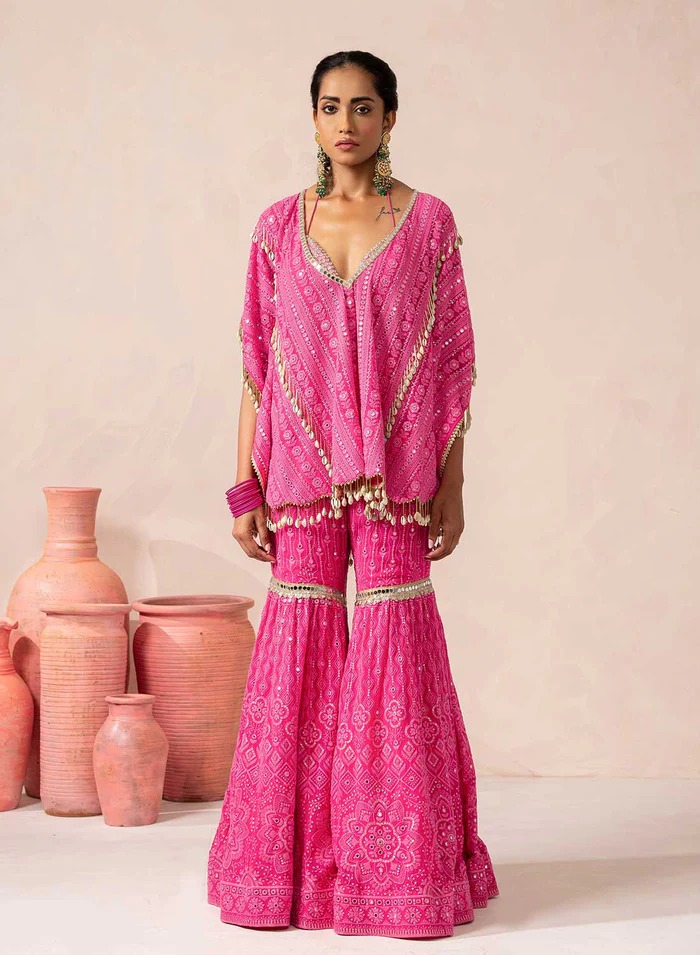
Wide and heavily flared shararas
An upper-thigh or high-knee kurti usually works best with a very wide sharara. The shorter length reveals the waist area and allows the pleats, panels or gathered flare to remain visible. A fitted yoke, side slits or a slightly shaped waist can add definition without making the outfit restrictive.
For example, Elegant Mint Green Handpainted Sharara Set with Dupatta benefits from a kurti treatment that lets the coordinated trouser volume remain visible. Keep the footwear delicate rather than bulky: a slim metallic sandal, pointed mule or simple embroidered jutti will support the pastel palette without competing with handpainted detail.
Moderately flared shararas
A knee-length kurti is the safest choice for a moderately flared sharara. The knee hem gives enough coverage for family celebrations while preserving a visible break between the top and trouser. Straight, A-line and gently flared kurtis can all work, but an A-line kurti should not be so wide that it merges with the sharara panels.
Georgette Sharara Set with Heavy Thread, Sequin and Mirror Embroidery can be styled with a knee-length kurti when the embroidery is concentrated around the bodice and hem. Choose shoes with a stable 2-inch block heel or a pointed jutti. A shoe covered in heavy sequins may compete with mirror embroidery, so a plain metallic finish often looks more polished.
Narrow or softly flared shararas
A below-knee or mid-calf kurti can work with a narrow sharara because the trouser line remains controlled. A longer kurti is particularly useful for a more modest silhouette or for cooler evening events. The kurti should still have some shape at the shoulders or waist so that the outfit doesn't become a single loose column.
Georgette Embroidered Sharara Set with Sequin Work Top and Dupatta can accommodate a longer kurti only when the lower flare is restrained. If the trousers are very wide, choose the original shorter proportion instead. The sequined top already creates a focal point, so a clean shoe such as a satin mule or low block heel will keep the look coordinated.
What Shoes Should You Wear With a Sharara Suit?
Block heels, pointed juttis, mojaris, slim sandals and low wedges are the most useful shoe choices for a sharara suit. The correct pair depends on hem clearance, walking conditions and formality. A shoe should be fitted before the trouser length is finalised because a 2-inch change in heel height can alter where the sharara falls at the ankle.
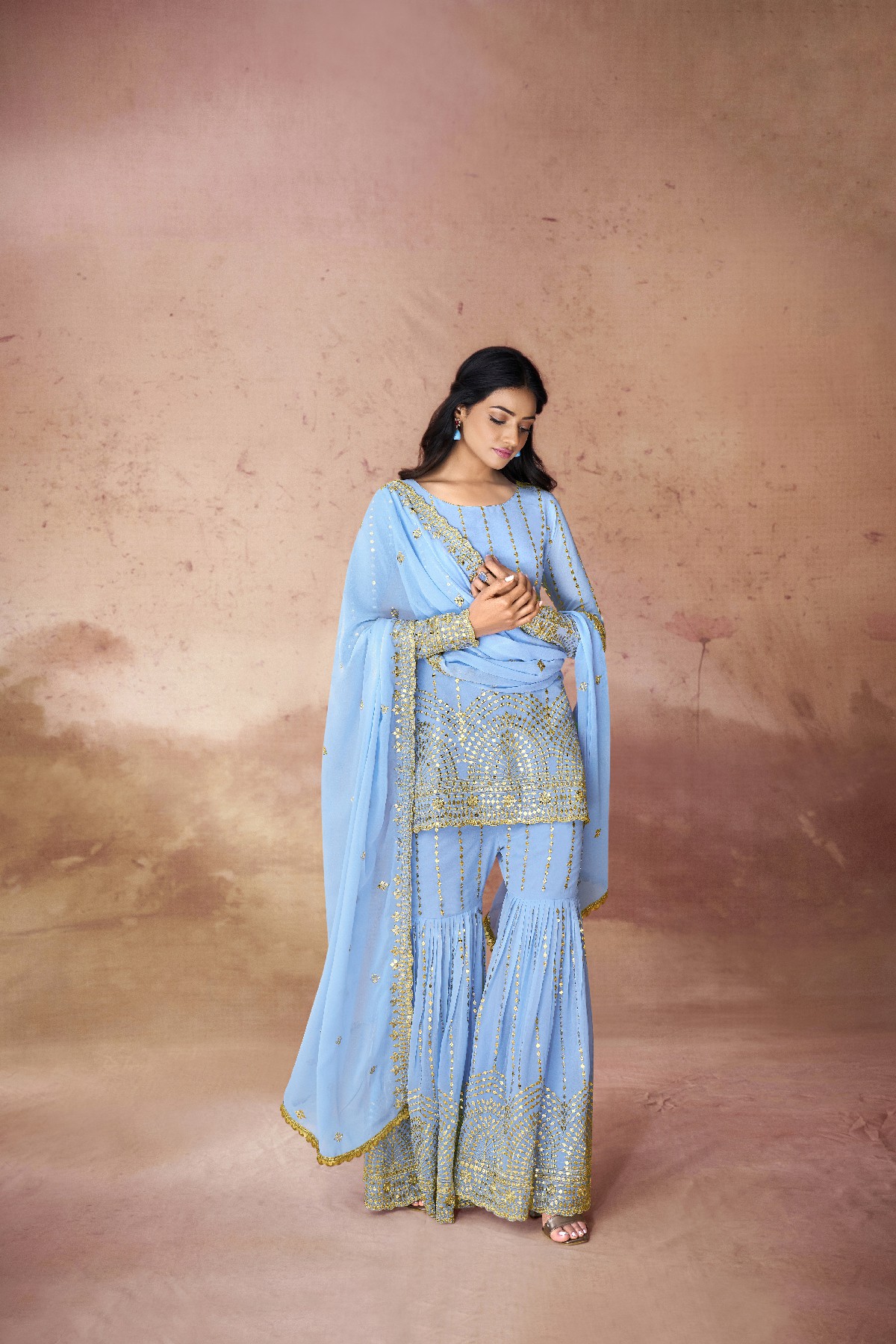
Block heels for weddings and receptions
Block heels provide height and stability, making them the most practical formal option for a wedding or reception. A heel between 2 and 3 inches usually lifts the hem enough while allowing the wearer to stand for photographs and walk across uneven flooring. Choose a square or almond toe when comfort is important, and avoid a high ankle strap if the wearer wants the leg to appear longer.
Block heels pair especially well with Pink Mirror Work Zari Sharara Suit Set Online - Varnavi because the metallic surface can echo zari and mirror accents. Keep the heel in silver, champagne or soft gold, depending on the dominant embroidery. The matching principle should be subtle: repeating one metallic detail is more refined than matching every accessory to the shoe exactly.
Juttis and mojaris for daytime functions
Juttis and mojaris are excellent for daytime festivals, pujas and home celebrations when the sharara hem is tailored for flats. Pointed or slightly elongated toes create a longer visual line than rounded toes. A thin cushioned insole can make embroidered footwear more comfortable during several hours of standing.
Flat footwear requires careful hem control. The trouser hem should sit close to the ankle or skim the top of the foot without dragging. If the hem pools on the ground, shorten it rather than relying on an inner platform, because excess fabric can catch under the opposite foot while walking.
Sandals and mules for lighter outfits
Strappy sandals and backless mules suit lightweight georgette, chiffon and summer shararas. Sandals expose more of the foot, which helps maintain a light appearance when the trousers have a lot of fabric. Mules are convenient for indoor events but should have a secure fit if the sharara requires frequent movement.
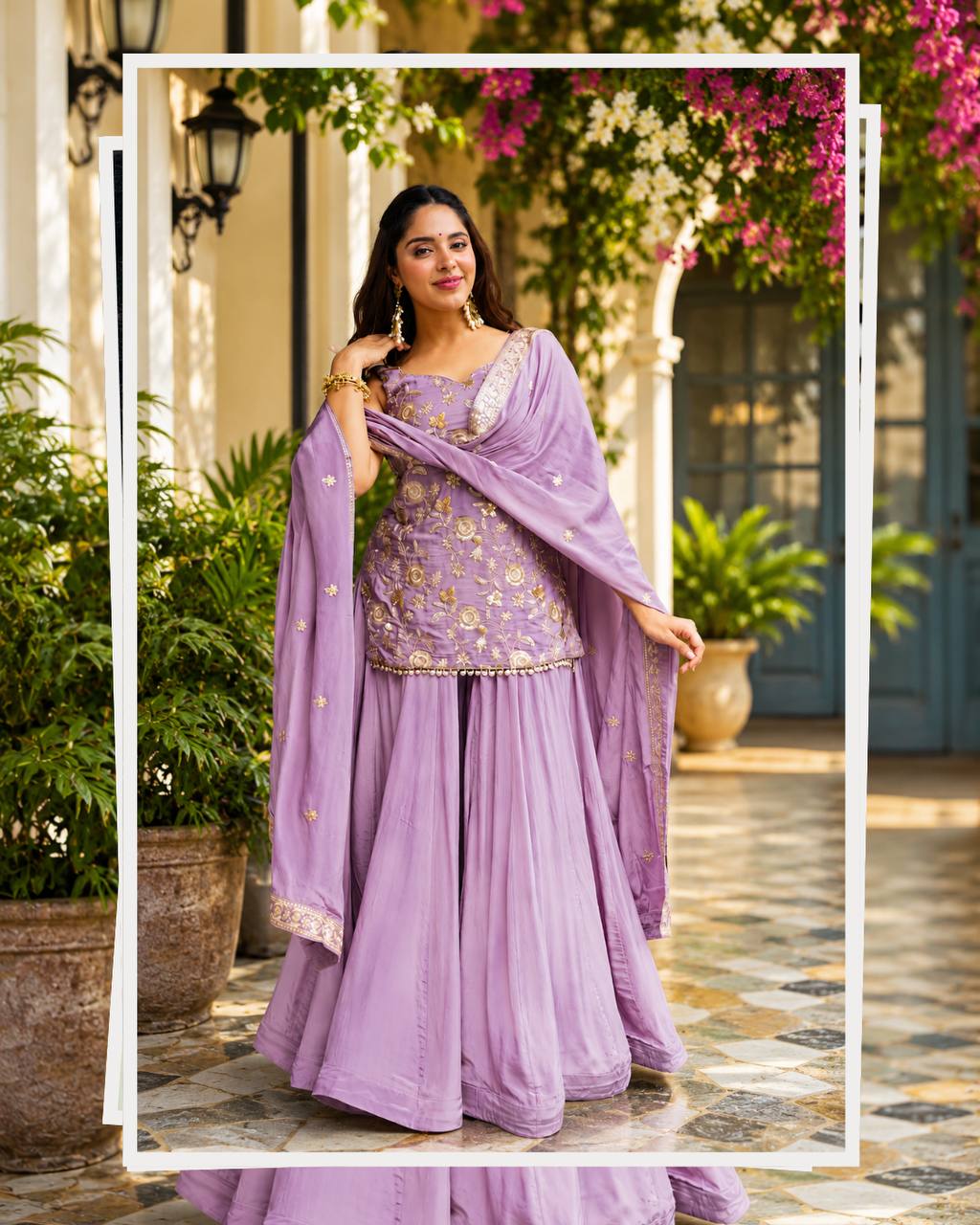
Lavender Zari Sequins Sarara 3 Piece Suit Set | Varnavi can be balanced with silver sandals, lavender-toned mules or a neutral block heel. Avoid a very dark, heavy shoe unless the dupatta or jewellery contains the same depth of colour. A pale outfit benefits from footwear that maintains the airy quality of the fabric.
How Height and Body Proportion Change the Styling Choice
Height doesn't impose a fixed rule, but proportion determines whether a kurti and sharara combination feels balanced. Shorter wearers often benefit from a shorter kurti, a higher waist seam and a pointed shoe, while taller wearers can carry a longer knee-length or below-knee kurti more easily. Every wearer can use the same principles by adjusting the hem, rise and shoe height.
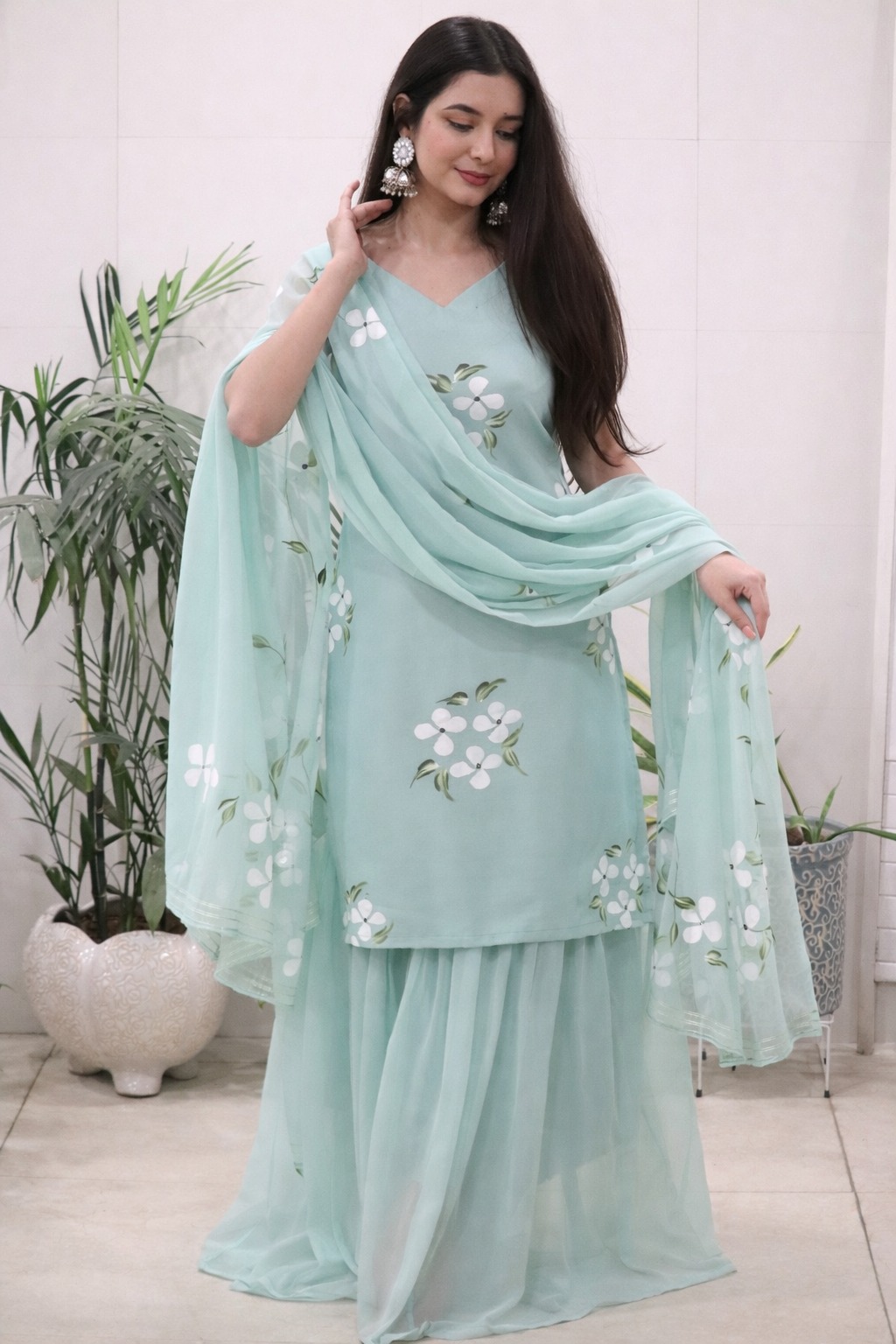
For petite proportions
A kurti ending 2 to 4 inches above the knee can create a longer-looking lower body when paired with a mid-rise or high-rise sharara. Choose a shoe close to the skin tone, trouser colour or dominant metallic detail. Avoid a broad contrasting ankle strap because it creates a horizontal break at the narrowest visible part of the leg.
Petite wearers should also watch dupatta placement. Draping the dupatta over one shoulder and allowing one clean vertical fall can add length, while wrapping it repeatedly around the torso can make the outfit look crowded. A narrow border is generally easier to balance than a very wide border placed directly across the waist.
For taller proportions
Taller wearers can experiment with knee-length, below-knee and calf-length kurtis, particularly when the sharara isn't extremely wide. Flat juttis, low wedges and 2-inch block heels can all work without compromising the silhouette. A longer kurti can look elegant when side slits reveal enough of the trouser movement.
A tall frame can also carry stronger contrast between the kurti and shoe. Even so, the contrast should connect to the outfit through one detail such as zari, a border, a blouse accent or the dupatta print. Deliberate repetition keeps a bold shoe from looking disconnected.
How Fabric, Embellishment and Colour Affect the Final Look
Fabric weight and surface decoration should influence both the kurti length and the footwear finish. Banarasi silk, brocade and heavier silk blends hold their shape and can support a structured short kurti or a tailored knee-length design. Georgette and chiffon fall more softly, so a shaped kurti prevents the outfit from losing definition around the waist.
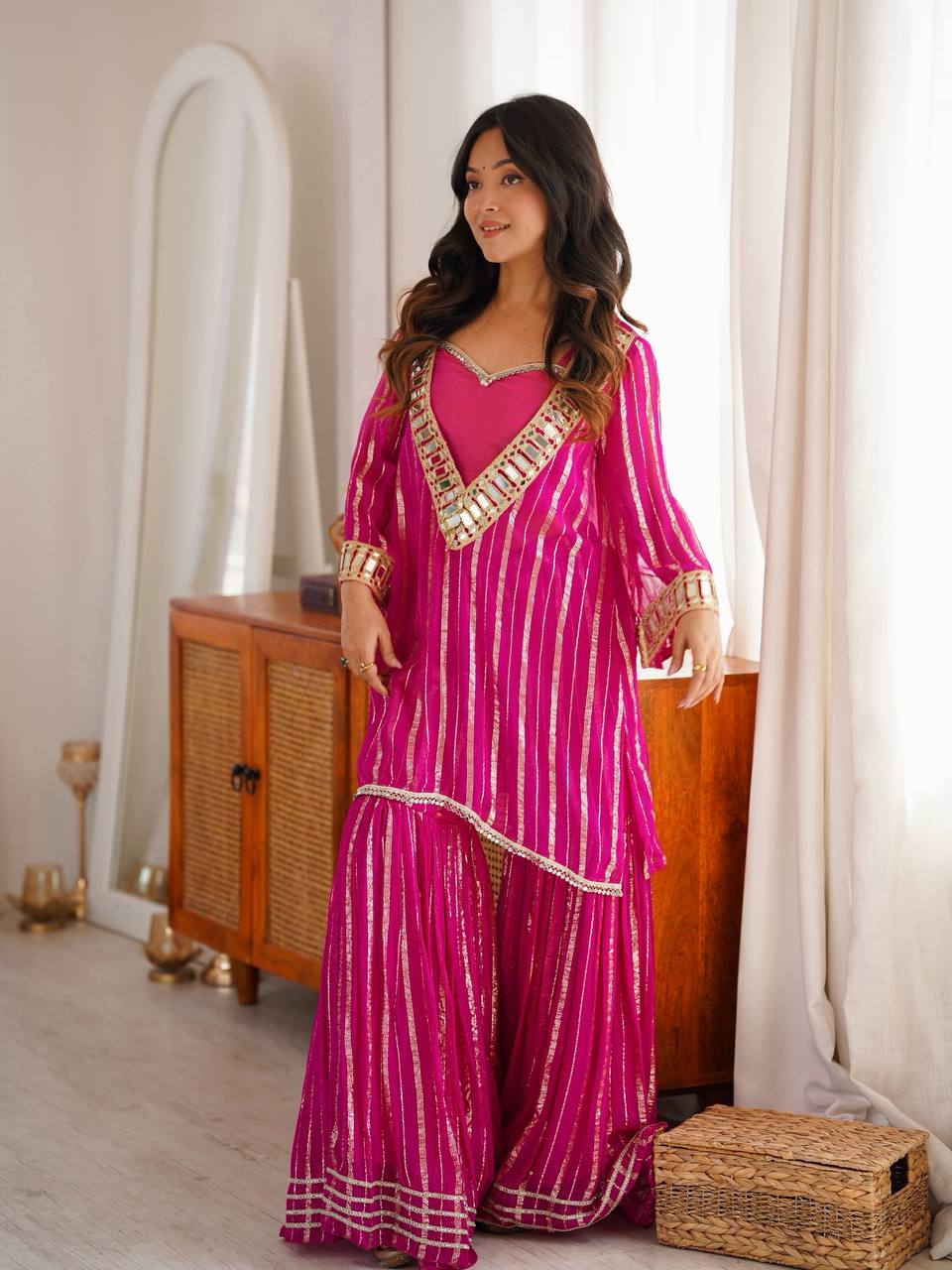
Embroidery placement also changes the visual balance. Dense zari at the trouser hem draws attention downward, so a simple shoe and a clean kurti hem are useful. Mirror work and sequins already reflect light, making matte or softly metallic footwear preferable to highly embellished shoes. Thread embroidery allows more freedom because the surface is usually less reflective.
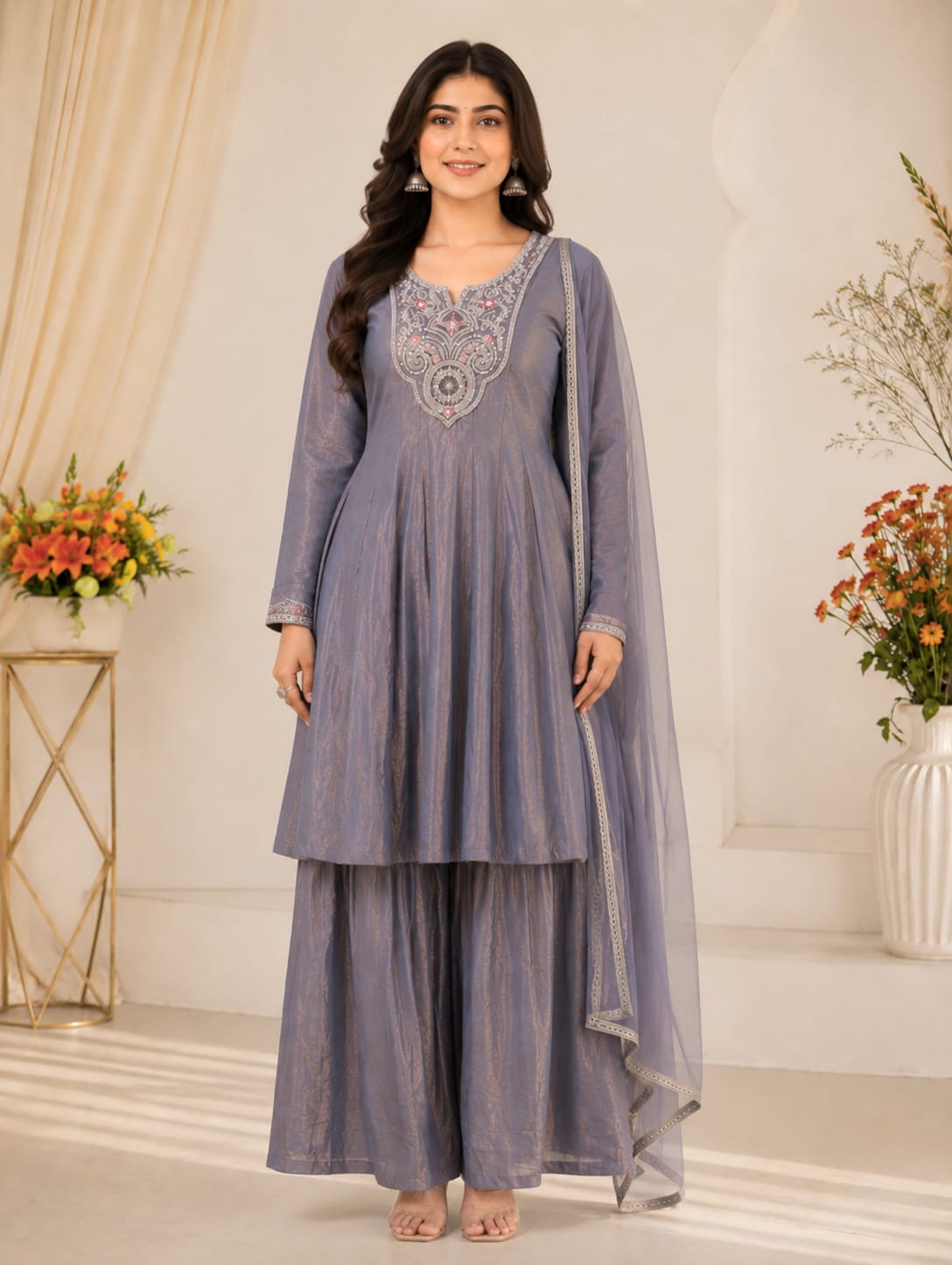
Grey Fandy Silk Sarara Set with Embroidery and Dupatta illustrates why texture matters. Grey silk can support antique gold, silver or pewter footwear, but the choice should follow the embroidery rather than the name of the colour alone. A short structured kurti will highlight the silk's body, while a low block heel will retain comfort for a long evening.
Colour proportion matters as much as colour matching. If the kurti and sharara are the same shade, a contrasting shoe can define the lower edge. If the outfit contains two strong colours, a neutral shoe may prevent visual overload. Silver generally suits cool pastels and grey, while champagne or antique gold often complements warm pink, mint and ivory.
How to Check the Outfit Before Altering the Hem
Check the complete outfit with the final shoes before altering the sharara hem. Wear the intended inner layers, footwear and dupatta, then walk at least 10 steps, sit on a chair and turn once to see whether the fabric catches under the foot.
- Stand naturally rather than pulling the sharara upward at the waist.
- Ask someone to check whether the hem clears the floor by approximately 1 to 2 centimetres with heels or touches the top of the foot with flats.
- Walk on both smooth flooring and a carpeted surface because fabric behaves differently on each.
- Check whether the kurti hem ends at the widest part of the flare and adjust the top length if the proportion feels interrupted.
- Secure the dupatta and repeat the walk test, since additional fabric can change posture and stride.
Tailoring should preserve the intended flare. Removing too much length from a sharara can disturb border placement, while raising the waist may change the position of embroidery. A skilled tailor should mark the hem while the wearer stands in the exact shoes planned for the event.
Simple Rules for a Sharara Outfit That Looks Balanced
A balanced sharara outfit usually has one dominant feature and quieter supporting pieces. If the sharara has a broad embroidered border, choose a clean kurti hem and understated shoes. If the kurti has a dramatic neckline or heavily worked bodice, let the trouser and footwear remain simpler.
- Pair a very wide sharara with an upper-thigh or high-knee kurti.
- Pair a moderate flare with a knee-length kurti for the widest range of body proportions.
- Use a below-knee kurti only when the sharara is narrow or softly flared.
- Choose a 2 to 3-inch block heel for formal events and uneven outdoor surfaces.
- Choose pointed juttis or mojaris for daytime functions when the hem is cut for flats.
- Repeat one colour or metallic detail between the shoes and the outfit.
- Finalise the trouser hem after choosing the shoes, not before.
The strongest styling decision is usually the quietest one: give the sharara enough room to move, keep the kurti hem intentional and choose footwear that matches the practical demands of the event. A carefully measured hem will look more polished than an expensive shoe hidden beneath trailing fabric.
Common Questions About Kurti Lengths and Shoes for Sharara Pants
What kurti length looks best with sharara pants?
An upper-thigh or knee-length kurti works best with most sharara pants. Choose an upper-thigh kurti for a very wide flare and a knee-length kurti for moderate volume or a more formal, covered silhouette.
Can I wear a long kurti with sharara pants?
A long kurti can work with a narrow or softly flared sharara, especially when the kurti has side slits and some waist shaping. A long, loose kurti usually overwhelms a very wide sharara by hiding the waist and merging with the trouser volume.
Which shoes are best for a sharara suit at a wedding?
A 2 to 3-inch block heel is the most practical wedding choice because it provides height and stability. Metallic sandals and pointed juttis also work when the hem is tailored for the selected footwear.
Can I wear flat juttis with sharara pants?
Flat juttis work well with sharara pants when the hem sits at the ankle or skims the top of the foot without dragging. Pointed juttis usually create a longer visual line than rounded designs.
What shoes make a sharara outfit look more flattering?
Pointed shoes, slim sandals and low-to-medium block heels generally create the longest, cleanest line. Avoid bulky ankle straps when you want the lower body to appear visually longer.
How high should heels be with a sharara?
A heel of approximately 2 to 3 inches suits most formal sharara outfits and provides useful hem clearance without sacrificing comfort. The sharara should be measured and altered while wearing the exact heel height planned for the event.


