

Which Kurti Cuts and Lengths Suit Rectangle Body Shapes depends on the proportions you want to create, not on hiding your natural frame. Rectangle body shapes commonly have shoulders, waist and hips with similar widths, so a kurti can add definition through an A-line flare, a shaped waist, strategic embroidery or a fuller bottom. The most versatile starting point is a kurti that ends around the knee or mid-calf, depending on height, footwear and the volume of the trousers.
A straight body shape can wear nearly every salwar-suit silhouette. Small changes in cut make the difference: a straight kurti creates a clean vertical line, while a flared kurti, peplum-inspired waist or layered dupatta introduces movement and dimension. Fabric weight, side slits and neckline placement matter as much as colour or print.
Which Kurti Cuts and Lengths Suit Rectangle Body Shapes?
A-line, panelled, flared and gently shaped kurtis usually suit rectangle body shapes because they create visual movement between the shoulders, waist and hips. An A-line kurti remains relatively neat around the upper body and widens from the bust or waist, giving the lower half more volume without looking bulky.
An A-line kurti with a defined yoke is useful when you want structure around the upper torso. The yoke can end above the natural waist, while the lower panels fall away from the body. A waist seam, princess seam or narrow tie detail creates definition without requiring a tight fit.
Panelled kurtis also work well because vertical seams lengthen the body while the flare adds shape. Four to eight panels generally provide visible movement; very broad panels can add excessive fullness on a petite frame. A lightly flared hem is easier for daily wear than a dramatic Anarkali flare, especially with narrow trousers.
Peplum-style kurtis and short kurti sets create a clear waist-to-hip transition. A peplum hem looks most balanced when paired with a high-waisted palazzo, cigarette pant or straight salwar. The hem should finish near the high hip or upper thigh rather than at the widest point of the hip.
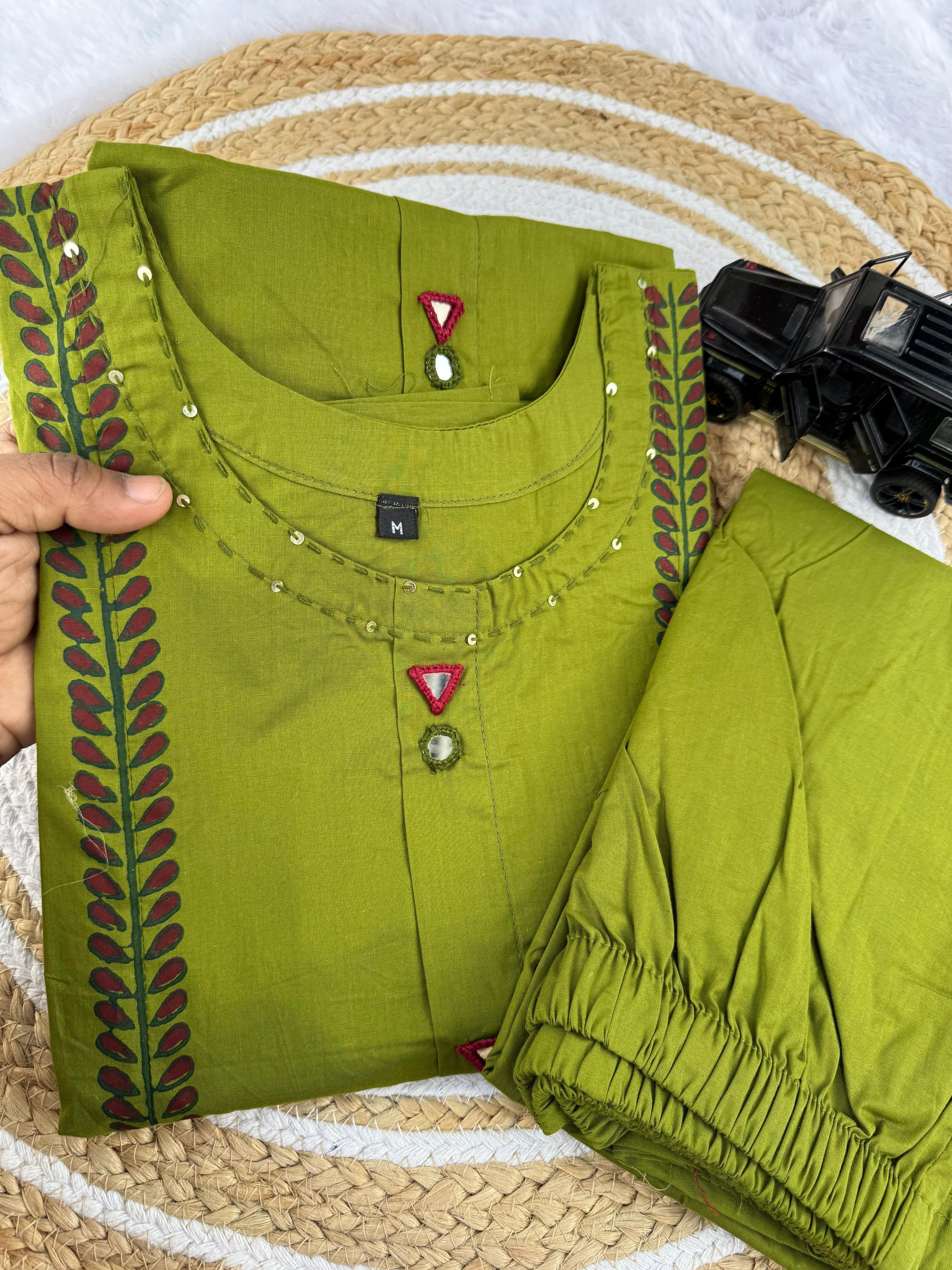
The Designer Cotton A-Line Kurti Pant Set with Mirror Work shows how an A-line shape can create structure without relying on a body-hugging fit. Mirror work around the yoke or upper chest draws attention upward, while the widening hem prevents the outfit from looking like one uninterrupted column.
Are straight kurtis suitable for a rectangle body shape?
Straight kurtis are suitable for rectangle body shapes when the styling adds contrast through the bottom, neckline, sleeves or dupatta. A straight cut doesn't automatically make the figure look shapeless; a side-slit hem, patterned yoke, curved hem or contrast dupatta can break up the vertical line.
A straight kurti works particularly well for office dressing and petite proportions because the silhouette feels neat and doesn't overwhelm the body. Choose a hem just above the knee for cigarette pants, or around mid-calf for a slim palazzo. Avoid pairing a long straight kurti with a very long, loose bottom when the goal is to create visible waist definition.
The Designer Cream Straight Kurti Set with Dupatta is an useful example of a streamlined silhouette. A contrasting or printed dupatta can add a diagonal line across the torso, while the straight kurti remains comfortable and polished for daytime dressing.
How should kurti length be chosen for a rectangle figure?
The most flexible kurti length for a rectangle figure is just above the knee to mid-calf, selected according to height, footwear and bottomwear volume. A hem 2 to 4 inches above the knee looks balanced with cigarette pants, while a mid-calf hem pairs better with slim trousers or a controlled palazzo.
Short kurtis ending at the upper thigh can add shape when worn with high-waisted palazzos or flared pants. Short lengths expose more of the bottom and therefore make the lower half look fuller. A high-low hem can create movement, but a large difference between front and back can shorten the appearance of a petite wearer.
Knee-length kurtis are a dependable choice for most heights. The knee acts as a visual midpoint, allowing a rectangle frame to gain volume below through a palazzo, Patiala or flared salwar. A side slit beginning around the knee keeps the outfit mobile and prevents a long straight kurti from appearing rigid.
Mid-calf kurtis create an elegant vertical line and work particularly well with slim bottoms. A mid-calf hem should not finish exactly at the widest part of the calf if the aim is to lengthen the legs. Moving the hem a few inches higher or lower creates a cleaner proportion.
Floor-length Anarkali styles can suit rectangle shapes when the flare begins near the waist and the fabric has enough structure to hold its shape. A very narrow, floor-length straight kurti lengthens the body but may not create the balanced effect many wearers want. Shoes with a modest heel can keep a long kurti from pooling or shortening the silhouette.
For practical shopping, measure from the shoulder seam to the desired hem before ordering. A 5-foot-tall wearer may find a 40 to 42-inch kurti close to mid-calf, while a taller wearer may need 44 to 48 inches for a similar visual result; garment measurements are more reliable than size labels.
Which necklines, sleeves and details add definition?
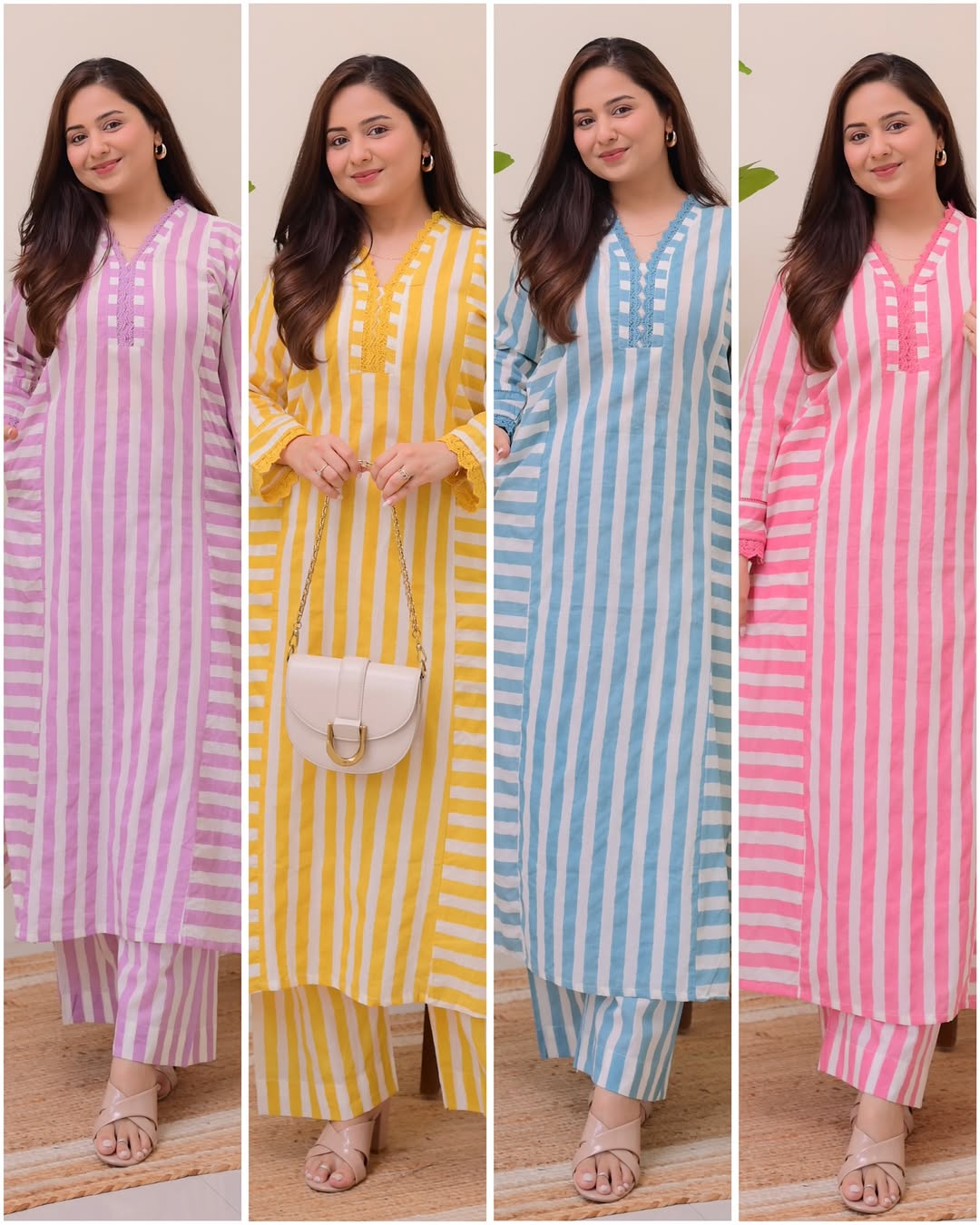
V-necks, sweetheart necklines, square necks and open round necks can add shape to a rectangle frame by directing attention toward the centre and upper torso. A shallow V-neck lengthens the neckline, while a square neck adds horizontal structure at the shoulders and bust.
A closed high neck can also work when the kurti has a flared hem or statement sleeves to balance the coverage. A narrow keyhole, embroidered yoke or contrast piping prevents a high neckline from looking visually heavy. The neckline should relate to the fabric: structured cotton supports a square neck, while soft rayon or georgette suits a V-neck or gathered neckline.
Three-quarter sleeves are the easiest sleeve length for a balanced salwar suit because the visible forearm creates a break between the sleeve and the hand. Slightly puffed sleeves, gathered sleeves and bell sleeves add volume around the upper body. Fitted sleeves are useful with a heavily flared kurti because they prevent the full outfit from becoming too voluminous.
Embroidery and mirror work can create a focal point, but placement matters. A decorated yoke or sleeve border builds interest around the upper half, while a broad hem border adds weight near the lower half. A design that uses both areas connects the silhouette instead of concentrating all attention at the centre.
The Red Cotton A-Line Kurti Set with Mirror Work Design is an example of combining surface detail with an A-line silhouette. Mirror work supplies small points of light, while cotton keeps the flare defined rather than allowing the garment to collapse against the legs.
The Rani Pink Embroidered Rayon Kurti Pant Dupatta Set demonstrates another approach. Rayon has a fluid fall, so embroidery around the neckline or upper front can establish a focal point while the matching pant maintains a clean lower line.
Which bottoms balance a rectangle-shaped body?
High-waisted palazzos, lightly flared pants, Patiala salwars and tapered cigarette pants are the most useful bottom options for a rectangle shape. Fuller bottoms add volume below the waist, while tapered bottoms keep the outfit streamlined when the kurti already has substantial flare.
Palazzo trousers are effective with short or knee-length kurtis because wide legs create a stronger difference between the waist and hem. A palazzo looks most polished when the fabric falls in long, uninterrupted pleats rather than stopping at the widest part of the calf. A shorter wearer can choose a moderate width and pair it with a visible heel or pointed flat.
Patiala salwars introduce rounded volume through pleats and gathers. The Punjab Patiala Salwar Suits collection naturally supports this styling direction, particularly when a shorter kurti exposes the pleated salwar. Keep the kurti relatively simple when the bottom has heavy pleating, and use a fitted or three-quarter sleeve to control overall volume.
Cigarette pants create a crisp line beneath an A-line or straight kurti. The narrow ankle gives the outfit definition and works well for workwear, daytime functions and travel. A kurti with a broad hem border should generally be paired with plain cigarette pants so the lower half doesn't look crowded.
Wide-leg trousers and palazzos should be treated differently from a full Anarkali. A short kurti can accommodate both volume sources because the waist and upper hip remain visible. A long, very flared kurti with an equally wide palazzo may hide the body's proportions, so slim trousers are usually the more balanced choice.
The Mauve Crunchy Silk Embroidered Kurti Palazzo Set for Women shows why a coordinated palazzo can work with a softly shaped upper piece. Crunchy silk has enough body to hold a clean fall, while embroidery gives the eye a focal area without requiring a tight waist.
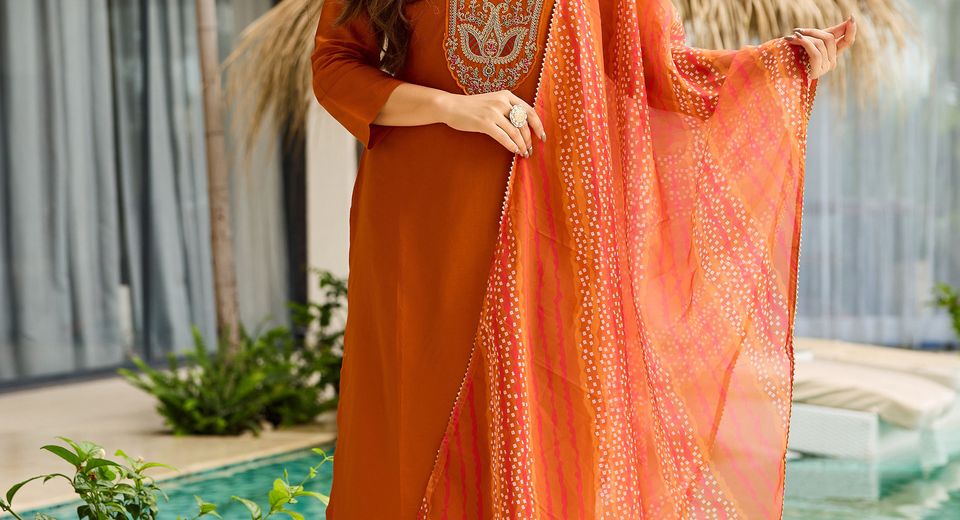
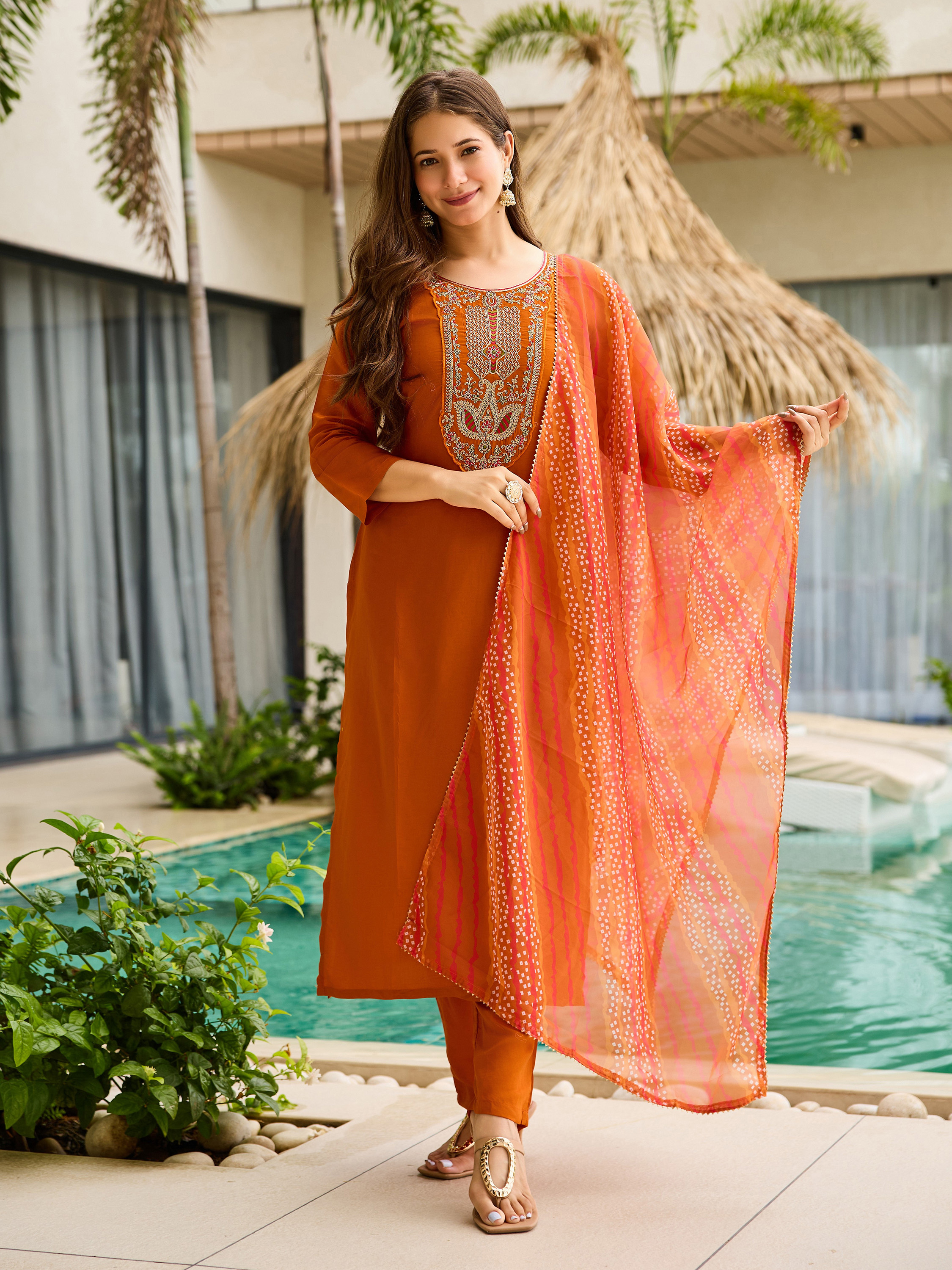
The Royal Orange Kurti Pant Set offers a simpler route for everyday styling. Pairing a modestly fitted pant with a bright kurti keeps the outfit visually defined; a narrow belt or a dupatta draped diagonally can add further waist direction when desired.
How do fabric, print and regional design change the silhouette?
Cotton, rayon, georgette, Chanderi and silk-based fabrics create different amounts of structure, drape and volume, so fabric selection changes how a kurti cut appears on a rectangle frame. Medium-weight cotton supports A-line panels, rayon skims the body, georgette creates fluid layers and silk-based fabrics hold a more formal shape.
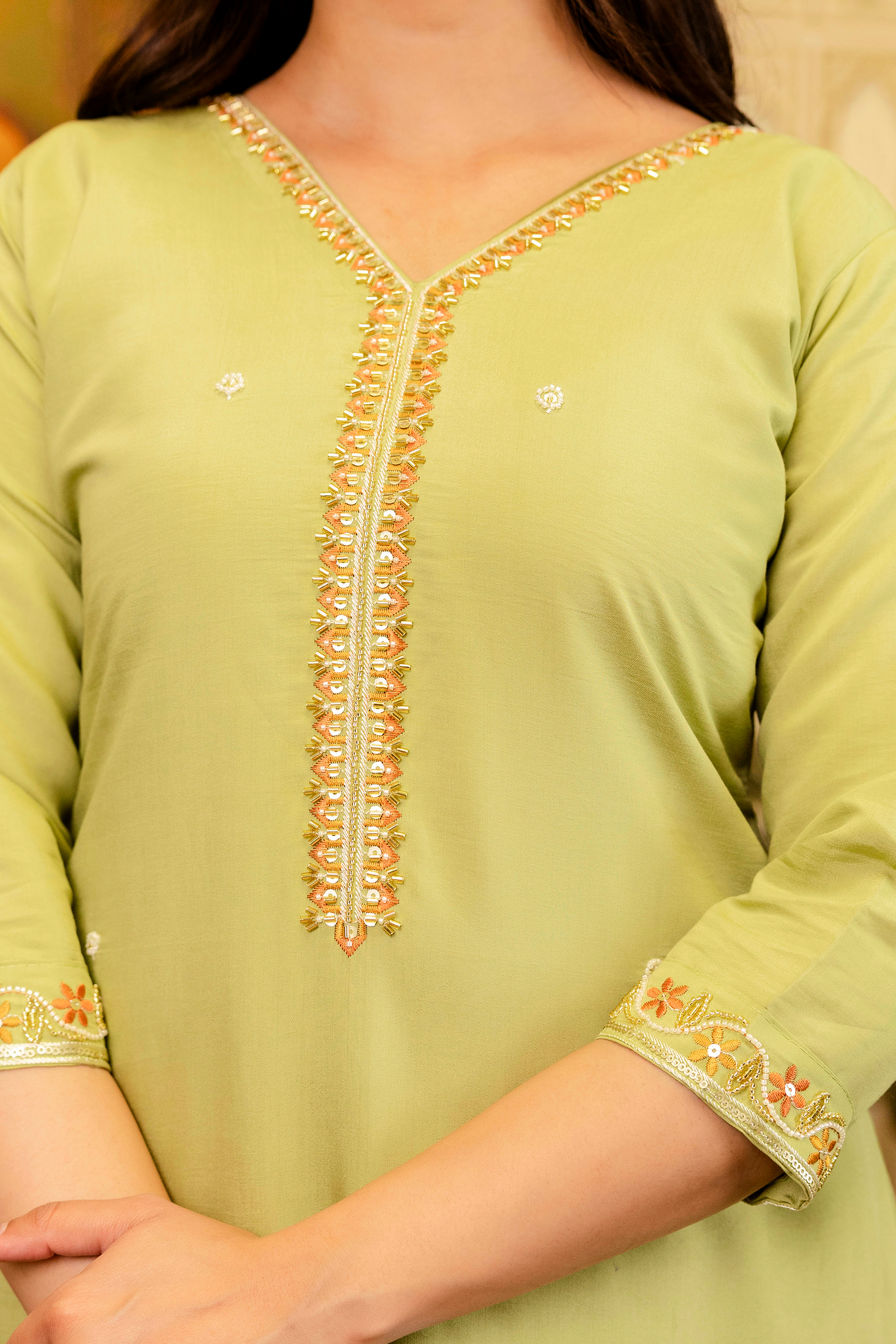
Cotton is useful for everyday A-line and straight kurtis because cotton can hold seams and side panels while remaining breathable. Rayon gives a softer fall and suits a straight kurti when the wearer wants movement rather than stiffness. Georgette works well for a dupatta or layered panel, but a fully flared georgette kurti may need lining to prevent cling.
Small-to-medium motifs distribute attention evenly, while large motifs can create a strong focal point at the bust, waist or hem. Vertical prints and narrow borders lengthen the silhouette. Horizontal yoke patterns, contrast waistbands and broad hem borders create breaks that can make the proportions look more defined.
The Kalamkari Print Salwar Suits (Copy) collection suggests a balanced print strategy: place a detailed Kalamkari-inspired area on the yoke or dupatta, then keep the lower half visually calmer. The Gujarat Bandhej Salwar Suits collection gives another route because Bandhej dots and tie-dye patterning add surface interest without requiring heavy embellishment.
Maharashtra Paithani Inspired Salwar Suits can be styled with a restrained silhouette when the border or motif is visually rich. A straight kurti with a clean pant prevents a prominent Paithani-inspired border from competing with a wide flare. Odisha Sambalpuri Salwar Suits can similarly benefit from controlled placement of geometric or traditional motifs on the dupatta, yoke or hem.
Colour contrast also affects proportion. A darker trouser under a brighter A-line kurti creates a defined lower edge, while a tonal kurta-and-pant combination creates a longer vertical line. A contrast dupatta placed over one shoulder introduces a diagonal that can soften the symmetry of a rectangle frame.
How should a dupatta be draped for more shape?
A diagonal, one-shoulder or lightly gathered dupatta drape usually adds more dimension than a perfectly symmetrical front drape. The diagonal line crosses the torso and creates visual movement, while an one-shoulder drape leaves part of the waist and hip line visible.
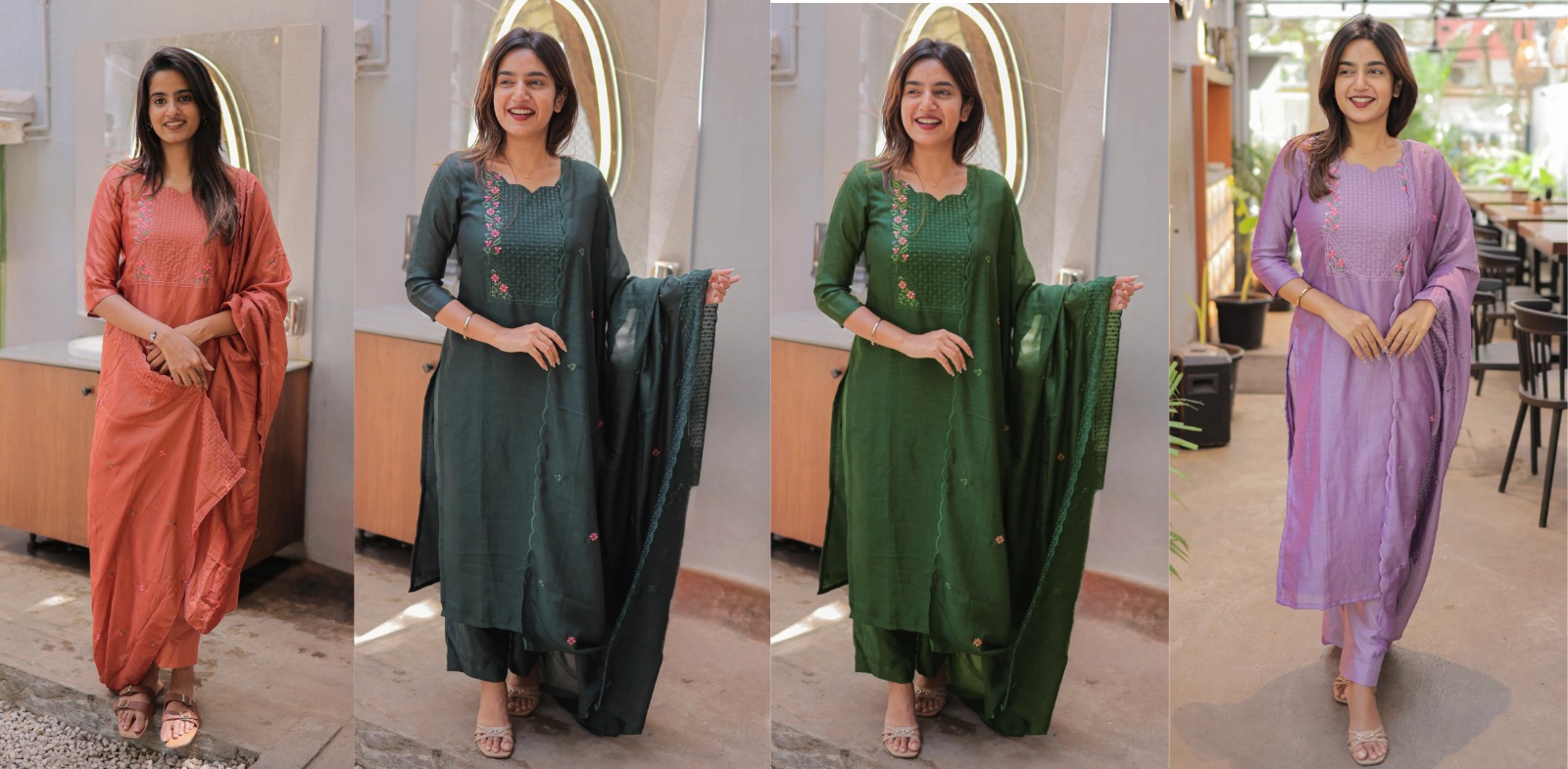
With a long straight kurti, avoid allowing a heavy dupatta to hang in two equal vertical panels unless a deliberately column-like look is intended. Pin one shoulder and let the opposite side fall across the body, or gather the fabric near the waist with a discreet brooch.
A dupatta with a narrow border can be worn open to add length without excessive width. A heavier zari border or embroidered edge can be placed near the shoulder and lower side so the design frames the body rather than sitting directly across the widest section.
For a short kurti with palazzos, a compact shoulder drape keeps the waistline visible. For a knee-length A-line kurti, an open dupatta can soften the flare and add vertical movement. The amount of fabric matters: a very wide dupatta may hide carefully chosen waist details.
How can you choose the right kurti using a simple fitting check?
A good kurti fit allows movement at the bust, leaves the intended waist detail visible and places the hem at a deliberate proportion point. Check shoulder seams, bust ease, armhole comfort, side-slit position and finished length before judging the silhouette.
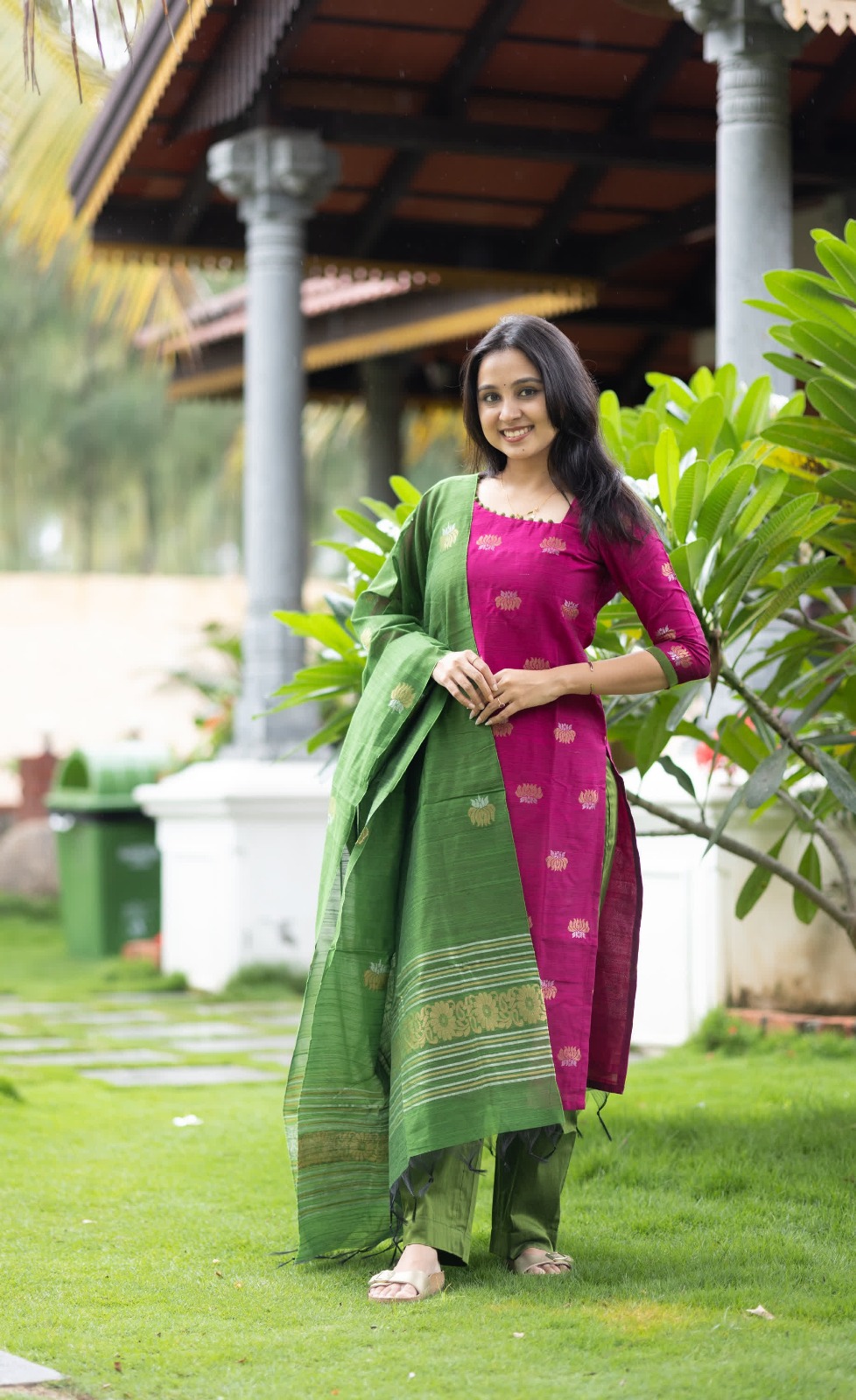
Allow approximately 2 to 4 inches of ease around the bust for a structured cotton kurti, with more ease for a relaxed rayon style or a layered winter outfit. Excess fabric at the side seams can erase an A-line shape, while insufficient ease can pull embroidery and distort the neckline.
Stand in the shoes you expect to wear and photograph the full outfit from the front and side. The front view shows colour and hem balance; the side view reveals whether the flare begins at the waist, whether the dupatta adds unwanted bulk and whether the trouser width is proportionate.
Use the outfit's strongest feature as the starting point. Choose the Designer Cotton A-Line Kurti Pant Set with Mirror Work for structured everyday definition, the Mauve Crunchy Silk Embroidered Kurti Palazzo Set for formal movement, or the Designer Cream Straight Kurti Set with Dupatta for a clean base that depends on draping and accessories for added shape.
Common Questions About Kurti Styling for Rectangle Body Shapes
Which kurti style is best for a rectangle body shape?
A-line, panelled and gently flared kurtis are usually the most effective because they add movement below the waist while retaining structure around the upper body. Straight kurtis also work when paired with a defined neckline, a diagonal dupatta or a fuller bottom.
What kurti length is most flattering for a straight body shape?
A length just above the knee to mid-calf is the most versatile range for a rectangle body shape. Choose just-above-knee hems with cigarette pants or fuller palazzos, and choose mid-calf hems with slimmer trousers.
Can rectangle body shapes wear Anarkali kurtis?
Rectangle body shapes can wear Anarkali kurtis successfully when the flare begins near the waist and the fabric has enough structure to hold its shape. A fitted or clearly defined yoke prevents the Anarkali from becoming a single loose column.
Are palazzos suitable with a kurti for a rectangle figure?
Palazzos are suitable when the kurti is short or knee-length, because the wide leg adds volume below the waist and creates contrast with the upper body. Pairing a very long, heavily flared kurti with a very wide palazzo can hide the intended proportions.
Which neckline looks good on a rectangle body shape?
V-necks, square necks, open round necks and sweetheart necklines can add definition to a rectangle frame. A high neck can also work when the kurti has statement sleeves or a flared hem to balance the covered neckline.
How should a dupatta be worn on a rectangle body shape?
A diagonal, one-shoulder or lightly gathered drape generally adds more dimension than two equal vertical panels. Keep part of the waist or hip line visible so the dupatta supports the kurti's shape instead of concealing it.


