Which Jhumka Size Works With a High Neck Kurta depends mainly on the visual space around your face, not on a fixed fashion rule. For most high-neck kurtas, medium jhumkas measuring about 3 to 4.5 cm from the top of the ear to the bottom of the bell create the most reliable balance. Small 2 to 3 cm jhumkas suit printed or heavily embroidered necklines, while larger 5 to 7 cm jhumkas work when the kurta has a simple front and the rest of the jewellery remains restrained.
A high neck kurta already brings fabric, embroidery or a collar close to the chin. Earrings therefore need enough presence to frame the face without visually merging with the neckline. The right choice also changes with face shape, hair placement, dupatta drape, fabric weight and the formality of the salwar suit.
Which jhumka size works with a high neck kurta?
Medium jhumkas between 3 and 4.5 cm are the safest choice for a high neck kurta because they create separation between the earlobe and the covered neckline. The measured drop should include the stud, dome and any small bead or chain attached below it.
Measure jhumkas vertically rather than judging them only by the width of the bell. A narrow 4 cm jhumka with a long hanging bead can appear more dramatic than a wide 4 cm dome with a compact finish. If a product description gives only the bell diameter, allow another 1 to 1.5 cm for the top and lower embellishment when estimating its total visual length.
- Small jhumkas, 2 to 3 cm: Choose these for dense embroidery, high collars, busy prints, office wear or a dupatta pulled close around the neck.
- Medium jhumkas, 3 to 4.5 cm: Choose these for most straight kurtas, kurta-pant sets and embroidered salwar suits.
- Large jhumkas, 5 to 7 cm: Choose these for plain high-neck kurtas, evening events and hairstyles that leave the ears fully visible.
- Extra-large jhumkas above 7 cm: Reserve these for deliberately dramatic styling with minimal necklaces, light neck detailing and enough shoulder-to-ear space.
The distance from the bottom of the earring to the top of the kurta is useful when deciding between two sizes. A visible gap of roughly 1 to 2 cm usually keeps the face, jewellery and neckline visually distinct. When the jhumka touches the collar or embroidered yoke, reduce the size or choose a slimmer silhouette.
Why does a high neckline change the earring proportion?
A high neckline reduces the amount of exposed skin below the face, so a heavy earring can make the upper body appear crowded. A jhumka also occupies vertical space beside the cheeks and horizontal space near the shoulders; both dimensions matter when the kurta rises toward the jaw.
A round or closed high neck creates a compact frame around the face. Medium dome jhumkas with a short drop usually complement that frame. A stand collar or band collar creates stronger vertical lines, so a slightly elongated jhumka can soften the outfit without competing with the collar.
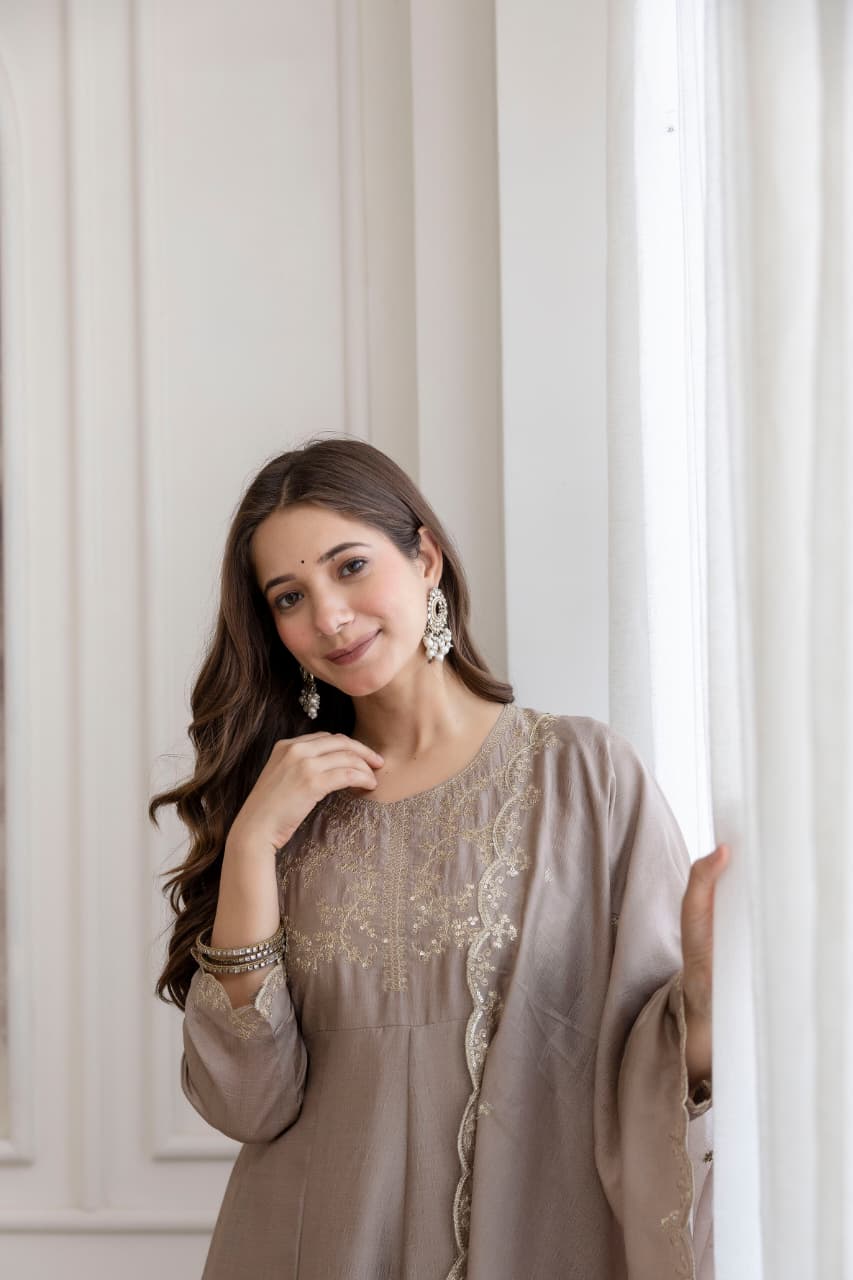
Embroidered necklines require particular care. A kurta with zari, sequins, threadwork or a contrasting embroidered yoke already has visual weight near the face. Small gold-tone jhumkas, pearl-edged domes or plain metal bells can preserve the traditional character while preventing detail from stacking on detail.
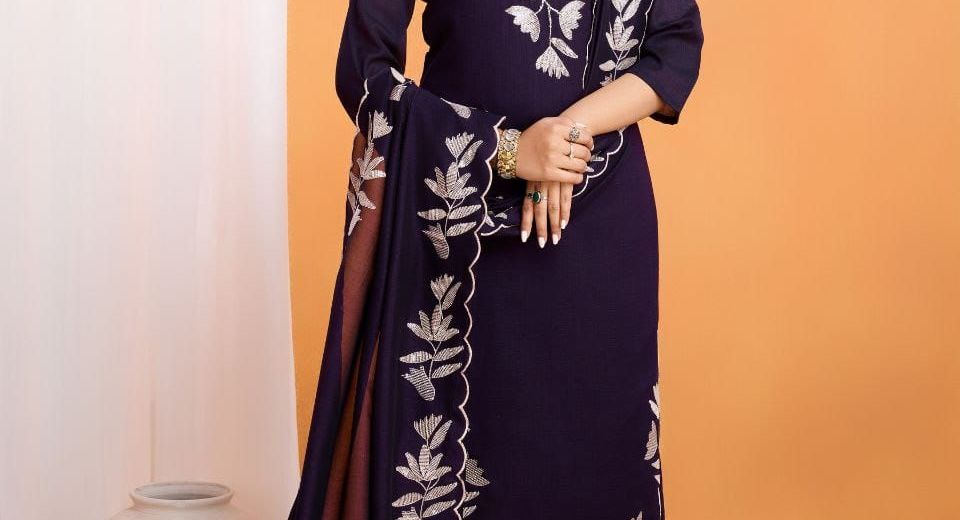
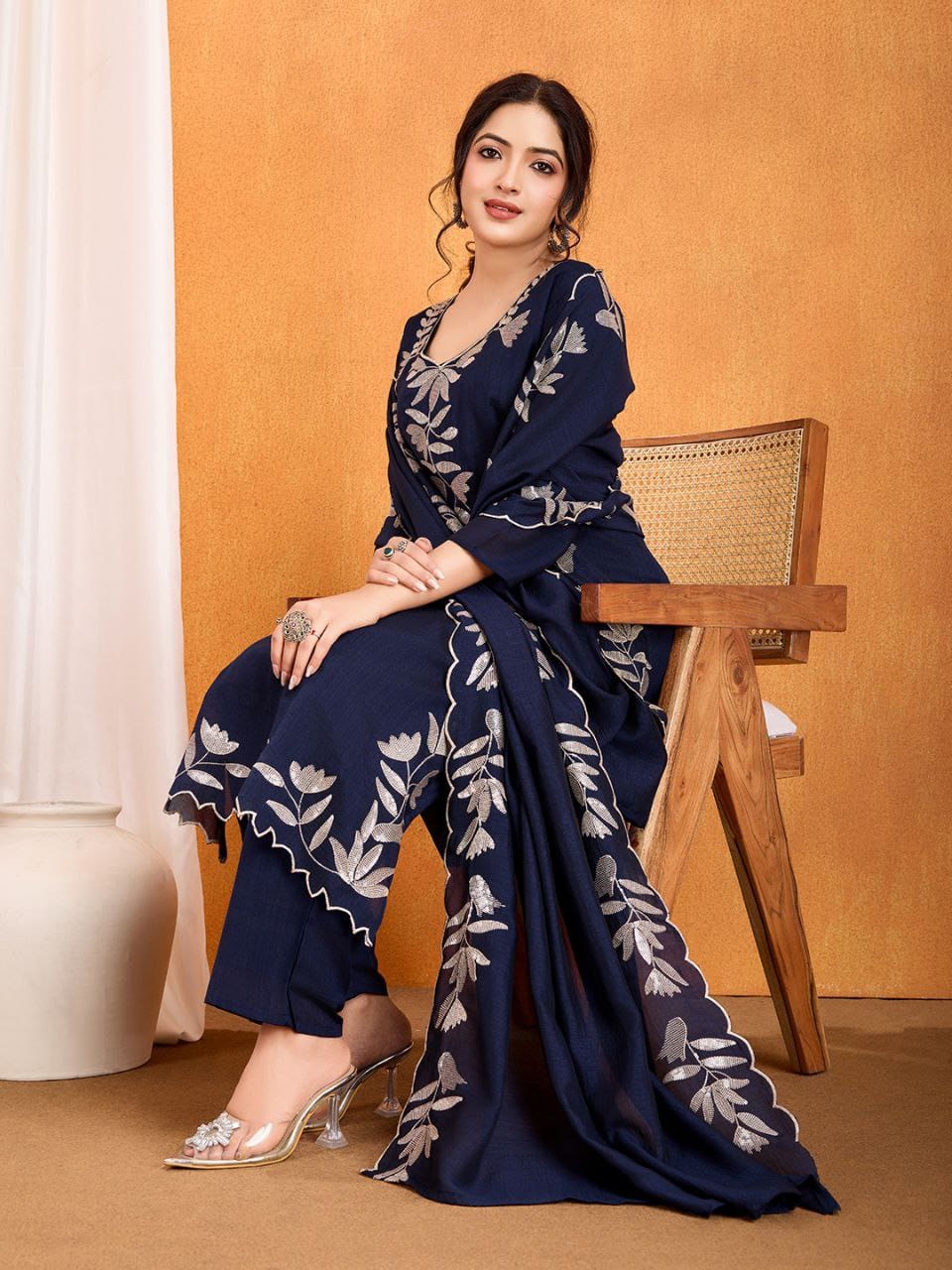
A plain neckline provides more freedom. A simple high-neck kurta in a solid colour can carry large antique-finish jhumkas, especially when the earrings are the only prominent jewellery. The Navy Blue Vichitra Silk Embroidered Kurta Pant Set has a rich, dressy colour direction, so a medium jhumka with a visible lower bell can add definition without requiring a large necklace.
How much space should remain between the jhumka and the collar?
Leave approximately 1 to 2 cm between the lowest part of the jhumka and the kurta collar whenever possible. That gap helps the earring read as a separate accessory instead of becoming part of the neckline decoration.
Movement changes the spacing during wear. Turn your head, sit down and place the dupatta over one shoulder before checking the earrings in a mirror. A jhumka that looks proportionate while standing still may catch on the collar or dupatta when the head moves.
How should face shape guide jhumka size?
Face shape should guide the width and drop of a jhumka, but it should not override the neckline and outfit scale. The aim is to add a contrasting line: width for long faces, length for round faces and moderate proportions for balanced or angular faces.
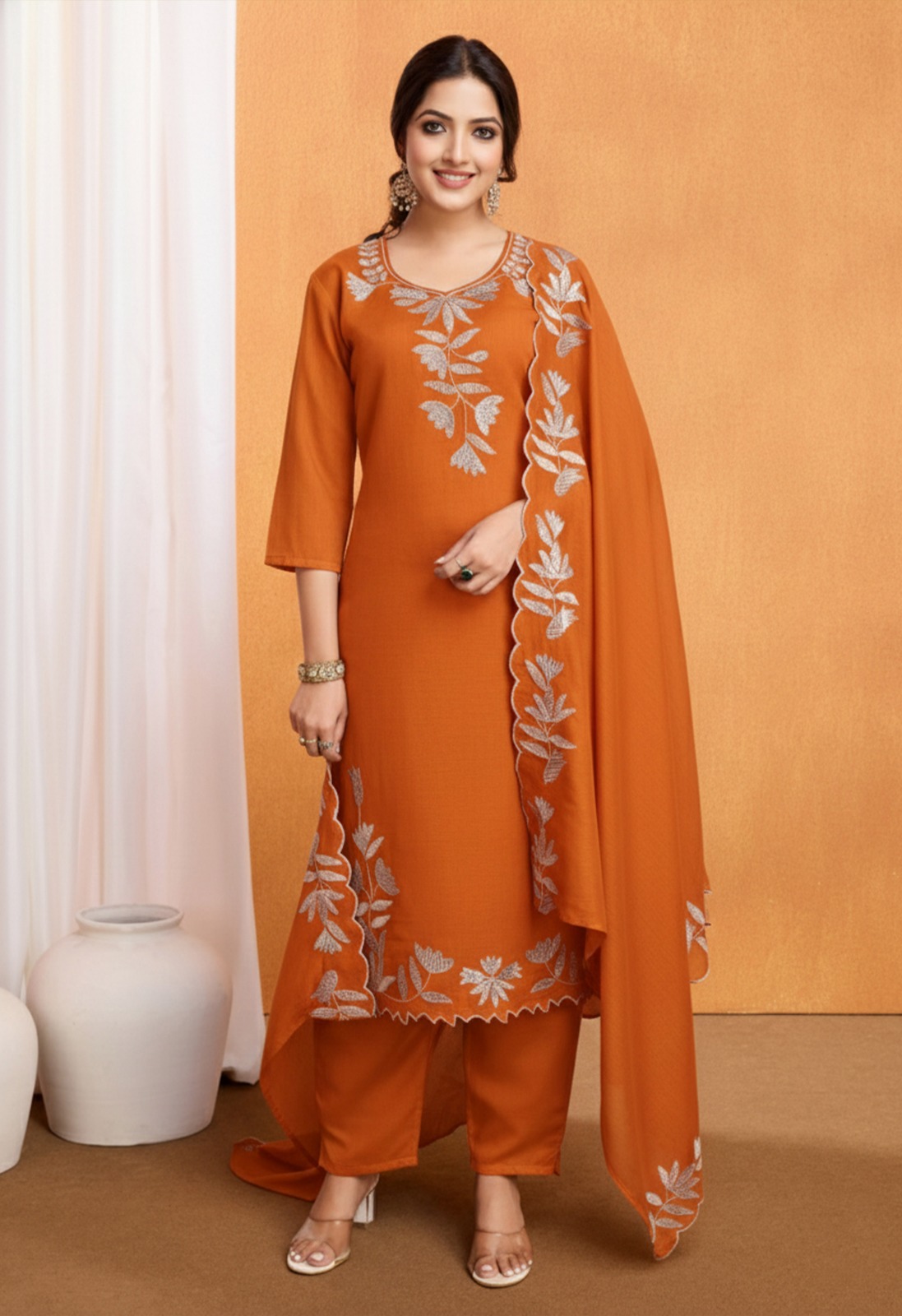
- Round face: Select elongated jhumkas with a 4 to 6 cm drop and a moderate dome width. Avoid very wide, compact bells that repeat the roundness of the cheeks.
- Long or oval face: Choose wider domes between 3 and 5 cm, with a shorter drop. A broad jhumka can add lateral balance without extending the face further.
- Square face: Rounded bells and softened dome edges work well. A medium 3.5 to 5 cm jhumka can balance a defined jaw without making the look severe.
- Heart-shaped face: A jhumka with a fuller lower bell or bead detail can add visual weight near the jawline. Keep the top stud moderate so the forehead area doesn't appear busier.
- Small or delicate facial proportions: Stay near 2.5 to 4 cm, particularly with a high-neck kurta. Large earrings may dominate the face before the outfit has a chance to register.
These measurements are starting points rather than restrictions. Hair volume, glasses, makeup and the width of the collar can shift the result. A long face with thick, voluminous hair may need a wider rather than longer jhumka, while a round face with short hair may comfortably take a longer drop.
Should jhumkas be small or large with an embroidered salwar suit?
Small to medium jhumkas are usually better with an embroidered salwar suit because embroidery already supplies texture and focal points near the face. Large jhumkas become more successful when the neckline and upper bodice are comparatively quiet.
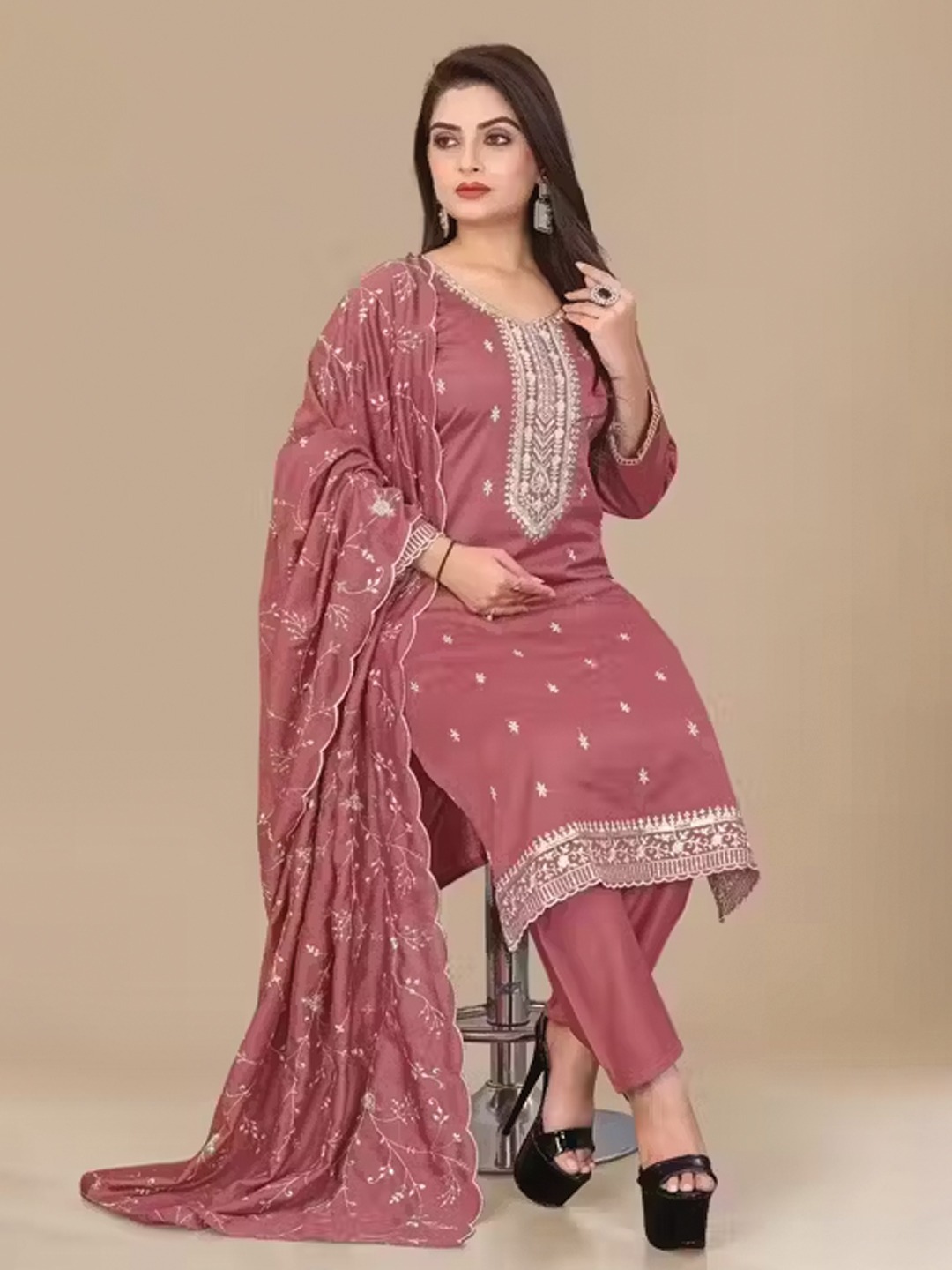
Colour depth also affects perceived size. Dark colours can make a metal jhumka stand out sharply, while bright or reflective fabrics can make a smaller earring look more substantial. The Rust Orange Vichitra Silk Embroidered Kurta Pant Set can support antique gold or warm brass-toned jhumkas, but a medium size is more versatile if the set already has noticeable embroidery.
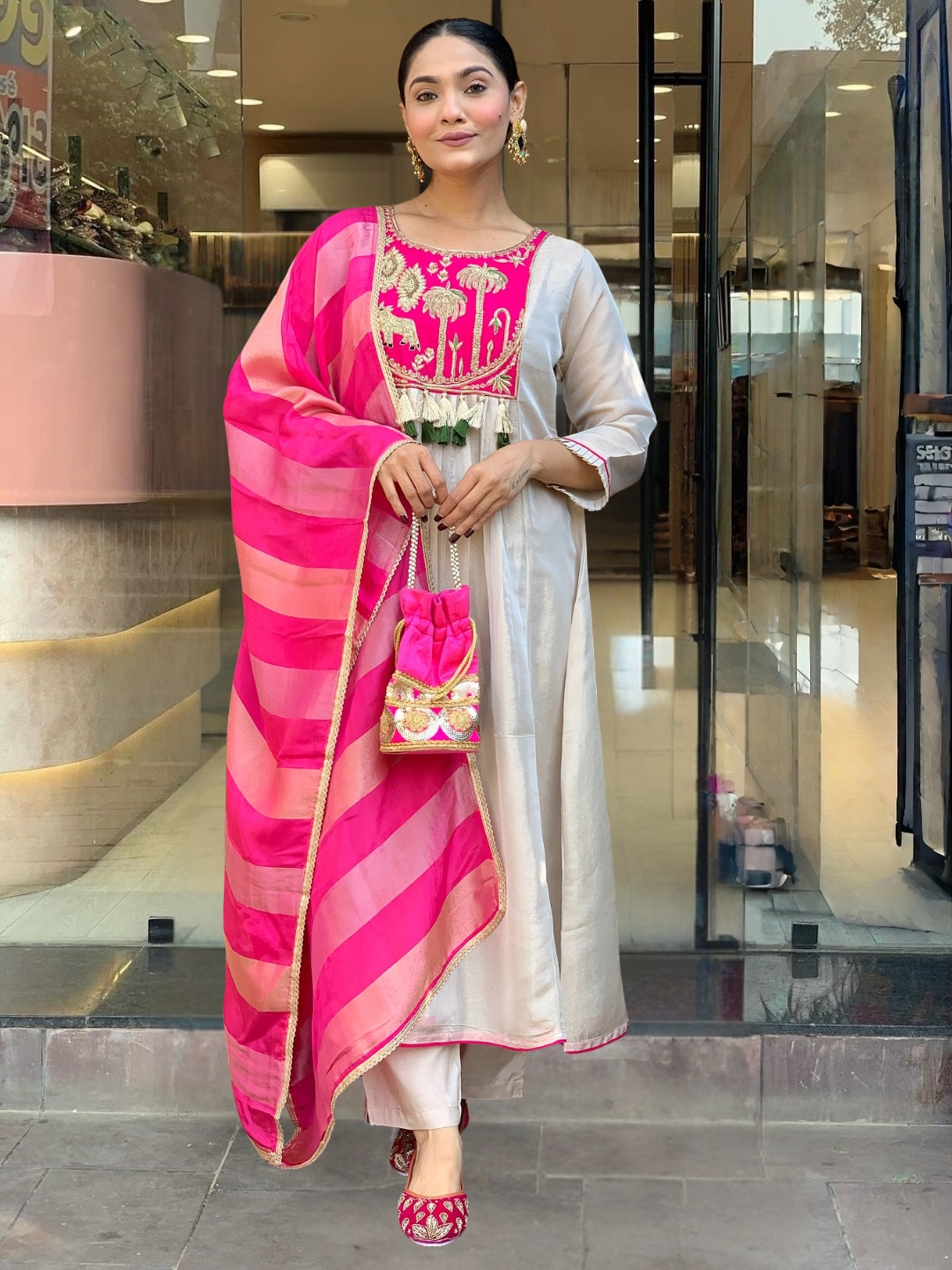
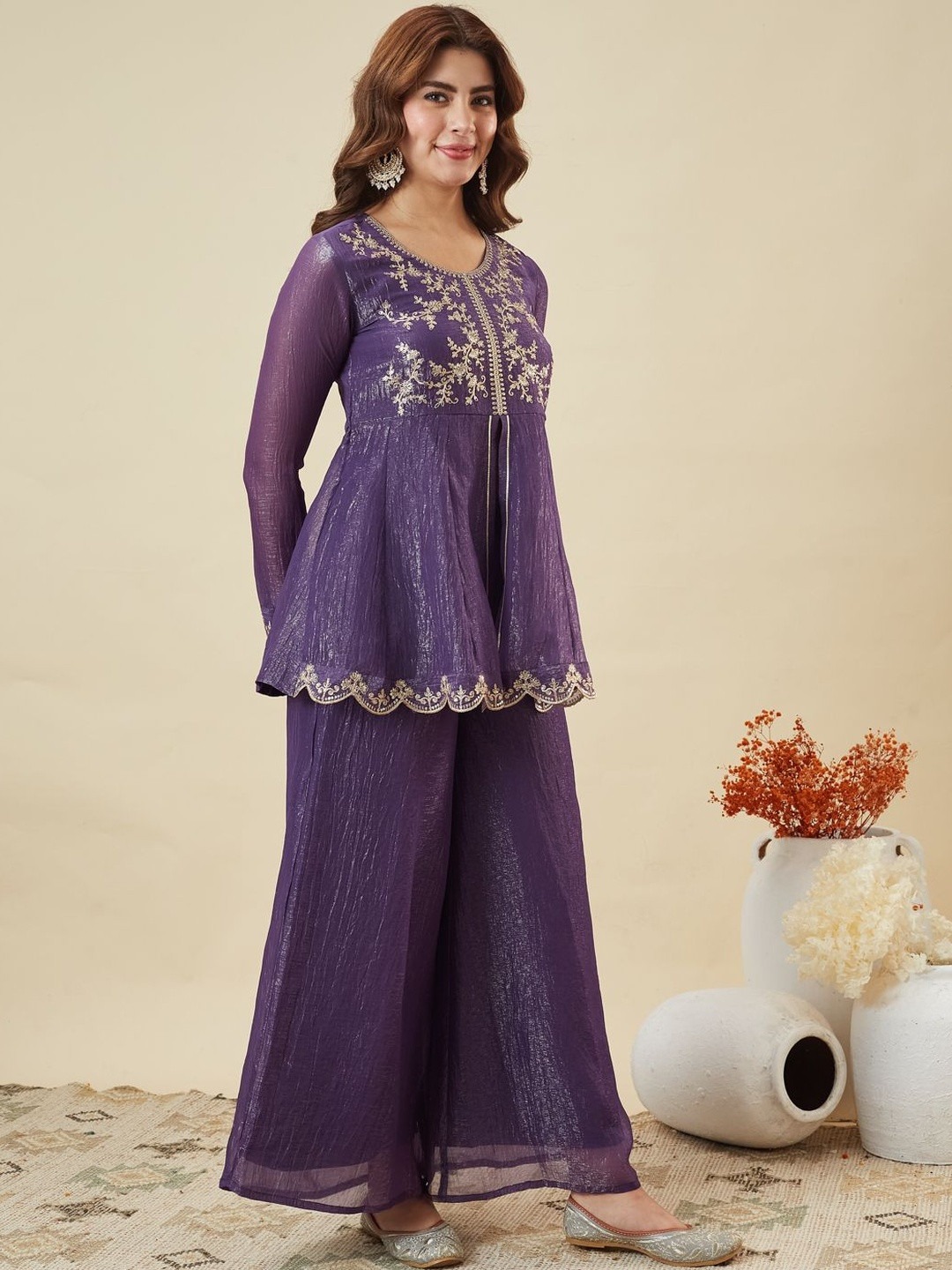
Bright pink and purple outfits can handle contrast, though contrast doesn't always mean maximum size. The Purple Vichitra Silk Embroidered Kurta Pant Set for Women pairs well with silver-tone, oxidised or mixed-metal jhumkas in a 3 to 4 cm range. The Rani Pink Vichitra Silk Embroidered Kurta Set with Dupatta can take pearl-accented or gold-tone medium jhumkas when the dupatta is arranged away from the ears.
Yellow and black create different styling opportunities. The Mustard Yellow Viscose Chinon Embroidered Kurta Set suits antique gold, temple-inspired or matte brass jhumkas, with 3.5 to 5 cm being an useful range for festive dressing. The Black Chinon Embroidered Kurta Set with Floral Dupatta can support a stronger jhumka silhouette, but keep the necklace minimal if the floral dupatta comes near the face.
What if the kurta has a dupatta?
A dupatta placed around the neck usually calls for a smaller or slimmer jhumka because fabric competes with the earring near the shoulder. A dupatta worn over one shoulder leaves more space around the face and allows a larger drop.
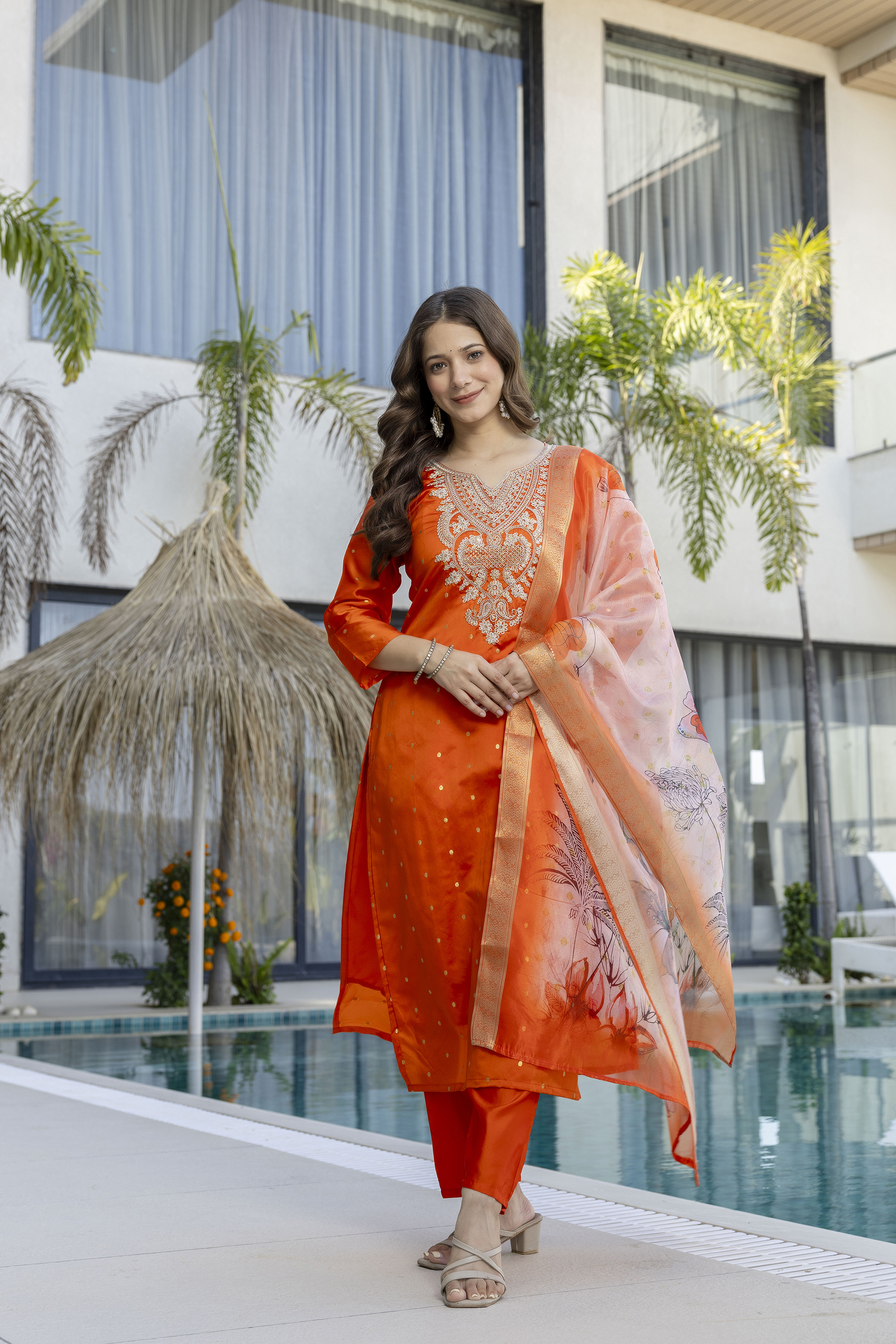
For a close neck drape, consider a 2.5 to 3.5 cm jhumka with a compact dome. For an open one-shoulder drape, a 4 to 6 cm jhumka can create a stronger vertical line. The Ruksha Orange Vichitra Silk Embroidered Kurta Set with Dupatta illustrates why drape placement matters: the same earrings can appear balanced or crowded depending on whether the dupatta covers the collar area.
How do fabric and colour affect jhumka selection?
Fabric weight and surface shine affect how large a jhumka appears, so silk-like shine generally needs cleaner jewellery proportions while matte fabrics can carry more texture. The physical weight of the earring should also match the comfort and structure of the outfit.
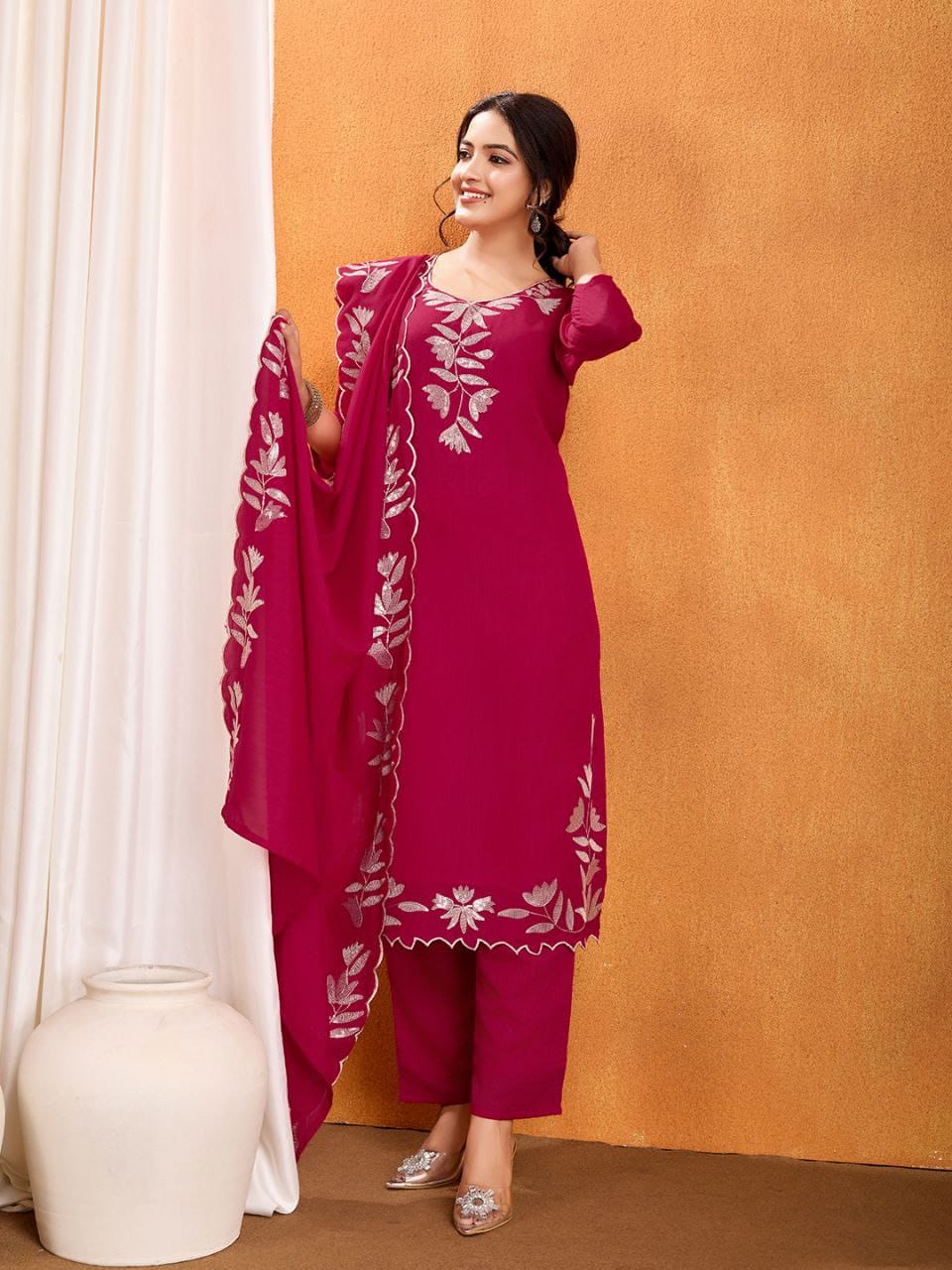
Vichitra silk has a dressier visual character than a lightweight everyday weave, so a polished dome, enamel detail or antique finish can look appropriate without being oversized. Chinon often has a fluid, occasion-ready appearance; a jhumka with a fine chain, bead or pearl drop can echo that movement, provided the total length doesn't catch in the fabric.
Rayon and similar everyday suit fabrics often benefit from moderate, repeat-wear jewellery rather than very heavy ceremonial pieces. The Beige Embroidered Rayon Kurta Set with Chinon Dupatta can be styled with 2.5 to 4 cm jhumkas in gold, pearl or muted oxidised finishes, depending on whether the outfit is being worn for daytime or an evening gathering.
Colour temperature helps coordinate the metal. Warm mustard, rust and orange shades commonly harmonise with gold, brass and antique finishes. Navy, purple and black can accommodate silver, oxidised metal, gold or two-tone designs. Beige offers the widest range, but a very shiny earring can look stark in daylight, so brushed or lightly antiqued finishes may appear more refined.
Can regional salwar suit styles change the ideal jhumka size?
Regional styling can change the ideal jhumka size because print scale, dupatta volume and classic jewellery references vary by outfit. A regional-inspired salwar suit doesn't require historically matched jewellery, but proportion should respect the visual density of the textile.
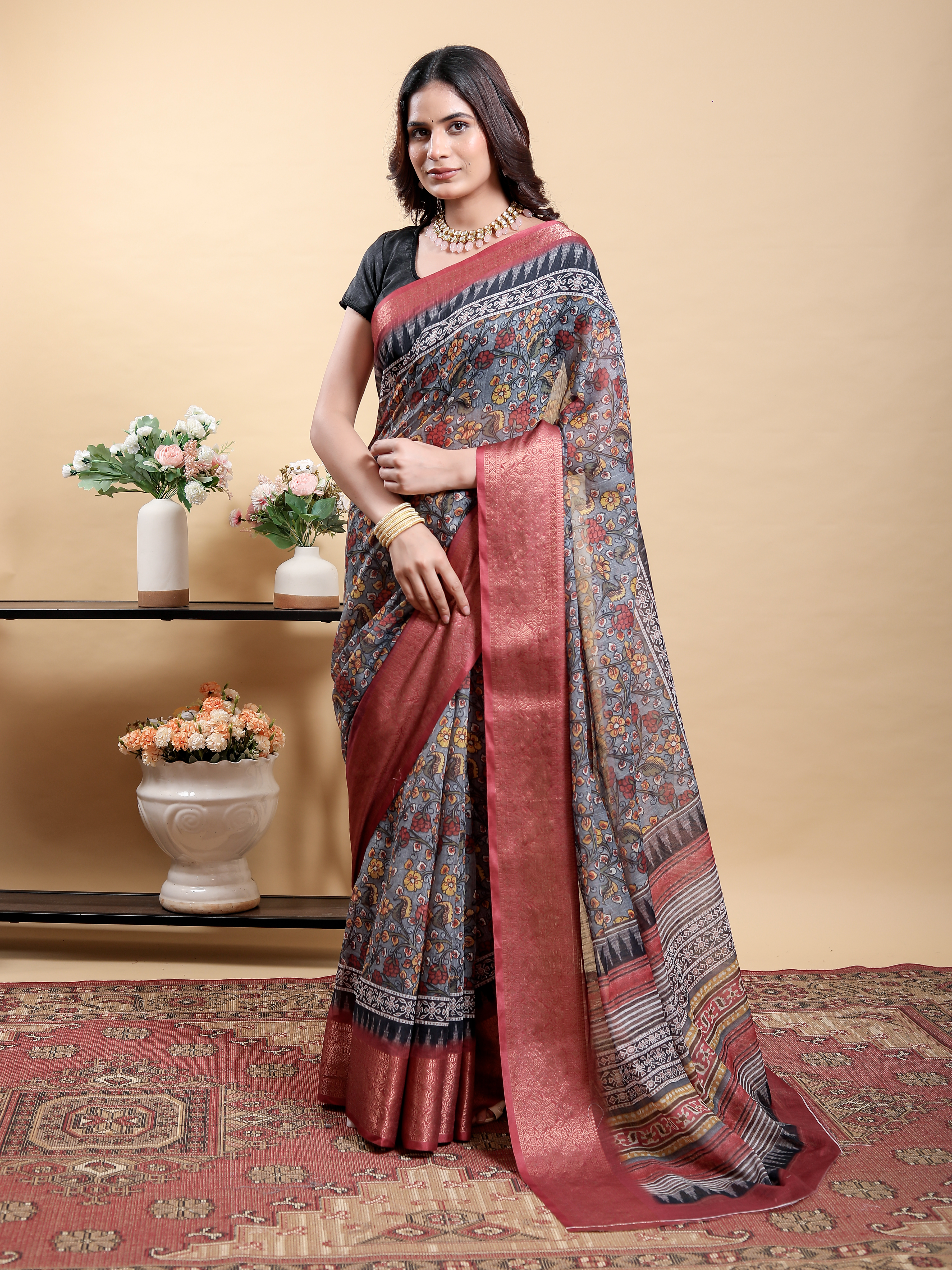
Kalamkari Print Salwar Suits (Copy) often invite earthy, handcrafted-looking jewellery, yet a busy printed neckline is usually better with 2.5 to 4 cm jhumkas. Choose one dominant detail, such as a coloured bead or antique finish, instead of combining a large earring with a heavy necklace and a crowded dupatta.
Maharashtra Paithani Inspired Salwar Suits can take a more pronounced gold-tone jhumka when the neckline is clean. A medium bell with a slightly ornate stud preserves a festive mood without making the outfit resemble full bridal jewellery.
Gujarat Bandhej Salwar Suits can support playful colour and movement. If the dupatta has a strong drape or embellishment, choose medium jhumkas with a coloured bead rather than very broad bells. Odisha Sambalpuri Salwar Suits often look grounded with oxidised silver or matte metal, while Punjab Patiala Salwar Suits can accommodate larger, more animated jhumkas when the neckline is simple and the dupatta isn't wrapped tightly around the throat.
How do you test jhumka proportion before wearing it?
Test jhumka proportion with the complete kurta, hairstyle and dupatta rather than with the garment on a hanger. A three-minute mirror check can reveal crowding that's difficult to predict from product photographs.
- Put on the kurta and arrange the neckline: Fasten the collar or settle the high neck exactly as it will sit during the event.
- Set the hairstyle: Check the earrings with hair down, behind the ears and tied back if those are possible styling options.
- Measure the visual gap: Look for around 1 to 2 cm between the earring's lowest point and the collar or embroidered edge.
- Add the dupatta: Place the dupatta in the intended drape and check whether it covers, catches or hides the jhumka.
- Assess the jewellery total: If the jhumkas are large, reduce the necklace, bangles or hair accessories. Three medium focal points can make a high neck look busier than one strong pair of earrings.
- Check comfort for 20 minutes: Heavy earrings can pull the earlobe, especially when a high neckline prevents the eye from travelling down the outfit and makes the earrings feel more prominent.
Photograph the outfit from the waist up in natural light. A mirror shows familiarity, while a photograph reveals whether the face, earrings and neckline form a clear visual triangle. Check the side view as well, because a long jhumka may sit comfortably from the front but touch the collar when the head turns.
What jewellery should accompany jhumkas with a high neck kurta?
Pair noticeable jhumkas with a restrained necklace, because a high neck already functions as a visual necklace line. A short chain can disappear into the collar, while a large choker may create unnecessary congestion.
For small jhumkas, a delicate chain or short pendant can work if the neckline is plain. For medium jhumkas, skip the necklace or choose a very fine chain. For large jhumkas, let the earrings remain the main accessory and use bangles, a ring or a slim bracelet as the secondary detail.
Match finish before matching every colour. Gold-tone jhumkas with gold zari or warm embroidery create continuity, while oxidised silver can give printed suits a more artisanal direction. Mixed metals can work when one finish clearly dominates, but combining bright gold earrings, a high-shine necklace and reflective bangles may make the upper body appear over-accessorised.
For day events, lighter 2.5 to 4 cm jhumkas reduce fatigue and look proportionate with cotton-blend, rayon or printed suits. For weddings, receptions and evening celebrations, 4 to 6 cm jhumkas offer enough presence for photographs, especially when the high-neck kurta is a solid colour or has restrained neckline work.
Quick decision guide for choosing your pair
Choose a 2 to 3 cm jhumka when the kurta has dense embroidery, a crowded print, a high collar and a dupatta close to the neck. Choose a 3 to 4.5 cm jhumka for the most flexible balance across embroidered kurta-pant sets and salwar suits. Choose a 5 to 7 cm jhumka when the neckline is plain, the hair leaves the ears visible and the earrings are the outfit's main statement.
The best final check is simple: the jhumka should frame the face, remain visibly separate from the collar and stay comfortable while the head moves. Once those three conditions are met, metal finish, colour and regional styling can be adjusted to suit the salwar suit and the occasion.
Common Questions About Jhumkas for High Neck Kurtas
Which jhumka size works with a high neck kurta for everyday wear?
A 2.5 to 3.5 cm jhumka usually works best for everyday wear with a high neck kurta. This size provides definition without catching easily on the collar, dupatta or hair, and it remains comfortable for several hours.
Can I wear large jhumkas with a high neck kurta?
Yes, large 5 to 7 cm jhumkas can work with a high neck kurta when the neckline is plain and the dupatta is worn away from the face. Keep the necklace minimal and use a hairstyle that leaves the ears visible so the earrings do not look crowded.
Are jhumkas suitable for an embroidered salwar suit?
Jhumkas are suitable for an embroidered salwar suit, but small to medium designs are usually more balanced. Dense zari, sequins or threadwork near the neck already creates visual detail, so a 3 to 4 cm jhumka often looks more polished than an oversized pair.
What earrings suit a high neck kurta with a dupatta?
A compact 2.5 to 3.5 cm jhumka suits a dupatta wrapped close to the neck. A 4 to 6 cm jhumka can work when the dupatta is placed over one shoulder, leaving the area beside the face clear.
Which jhumka shape suits a round face with a high neck kurta?
An elongated jhumka with a 4 to 6 cm drop usually suits a round face because the vertical line adds definition. Choose a moderate dome width and avoid very broad, compact bells that repeat the roundness of the cheeks.
Should I wear a necklace with jhumkas and a high neck kurta?
A necklace is optional, but a high neck kurta usually looks cleaner with medium or large jhumkas and no heavy necklace. If the neckline is plain and the jhumkas are small, a fine chain can add detail without competing with the collar.