Which ethnic fabrics dry faster after handwashing depends on fibre, yarn thickness, weave density, garment weight and airflow. In ordinary indoor conditions, lightweight cotton voile, cotton-linen blends and loosely woven handloom cotton usually dry sooner than dense silk, velvet, brocade or heavily embellished fabrics. A lightweight saree may dry in 2 to 5 hours, while a dense silk saree can need 8 to 24 hours.
Drying speed matters because damp fabric left folded can develop a musty smell, mildew spots and colour transfer. Handwashing also leaves more water in a saree than many people expect, particularly when the garment isn't spun in a machine. Understanding the fabric structure helps you choose a safer drying method instead of relying on direct, harsh sunlight.
Which ethnic fabrics dry faster after handwashing?
Lightweight cotton, cotton-linen, mulmul cotton, voile and loosely woven handloom fabrics generally dry faster after handwashing than silk, velvet and embellished brocade. Fibre absorbency alone doesn't decide the result: a thin, open weave can release water quickly, while a thick cotton fabric can remain damp for many hours.
For a typical 5.5-metre saree washed carefully in cool water and pressed inside a towel, a useful approximate order is:
- Lightweight synthetic blends: approximately 1 to 3 hours in warm, moving air, although synthetic fibres may hold odours if washed poorly.
- Mulmul, voile and thin handloom cotton: approximately 2 to 5 hours in a ventilated room.
- Cotton-linen blends: approximately 3 to 6 hours, depending on linen content and fabric weight.
- Medium-weight cotton: approximately 4 to 8 hours.
- Chanderi and lightweight silk blends: approximately 5 to 10 hours.
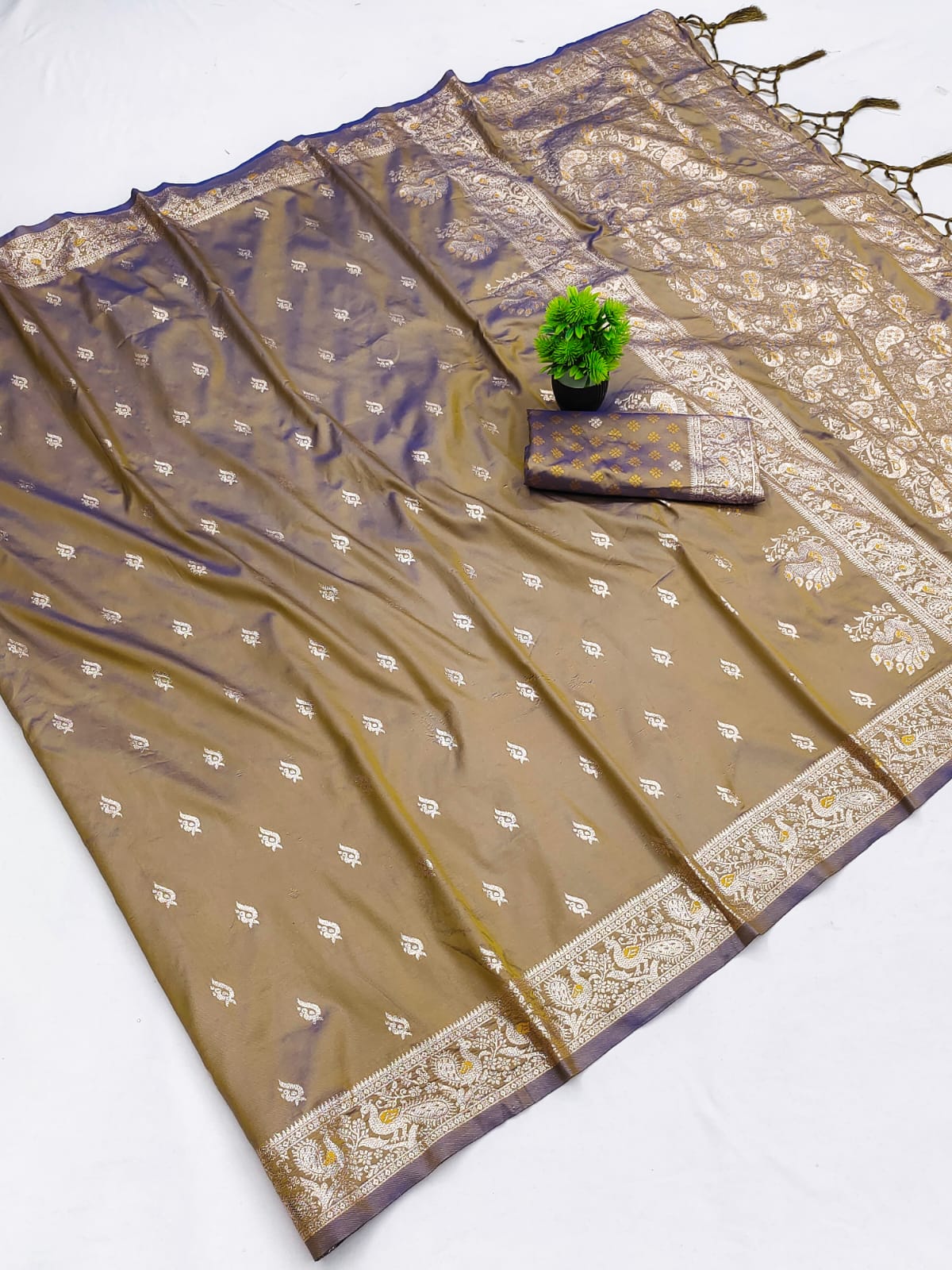
- Banarasi silk, Kanjeevaram silk, velvet and zari-heavy textiles: approximately 8 to 24 hours, sometimes longer during monsoon weather.
These timings assume 25 to 30°C, moderate humidity and a cross-breeze. A wet saree hanging in a closed bathroom can take twice as long, while a thin saree spread in a shaded, breezy balcony can dry substantially sooner.
How fibre content changes drying time
Does cotton dry quickly after handwashing?
Thin cotton dries relatively quickly, but thick cotton can retain a considerable amount of water. Cotton fibres are hydrophilic, which means they absorb and hold moisture inside their structure rather than keeping all water on the surface.

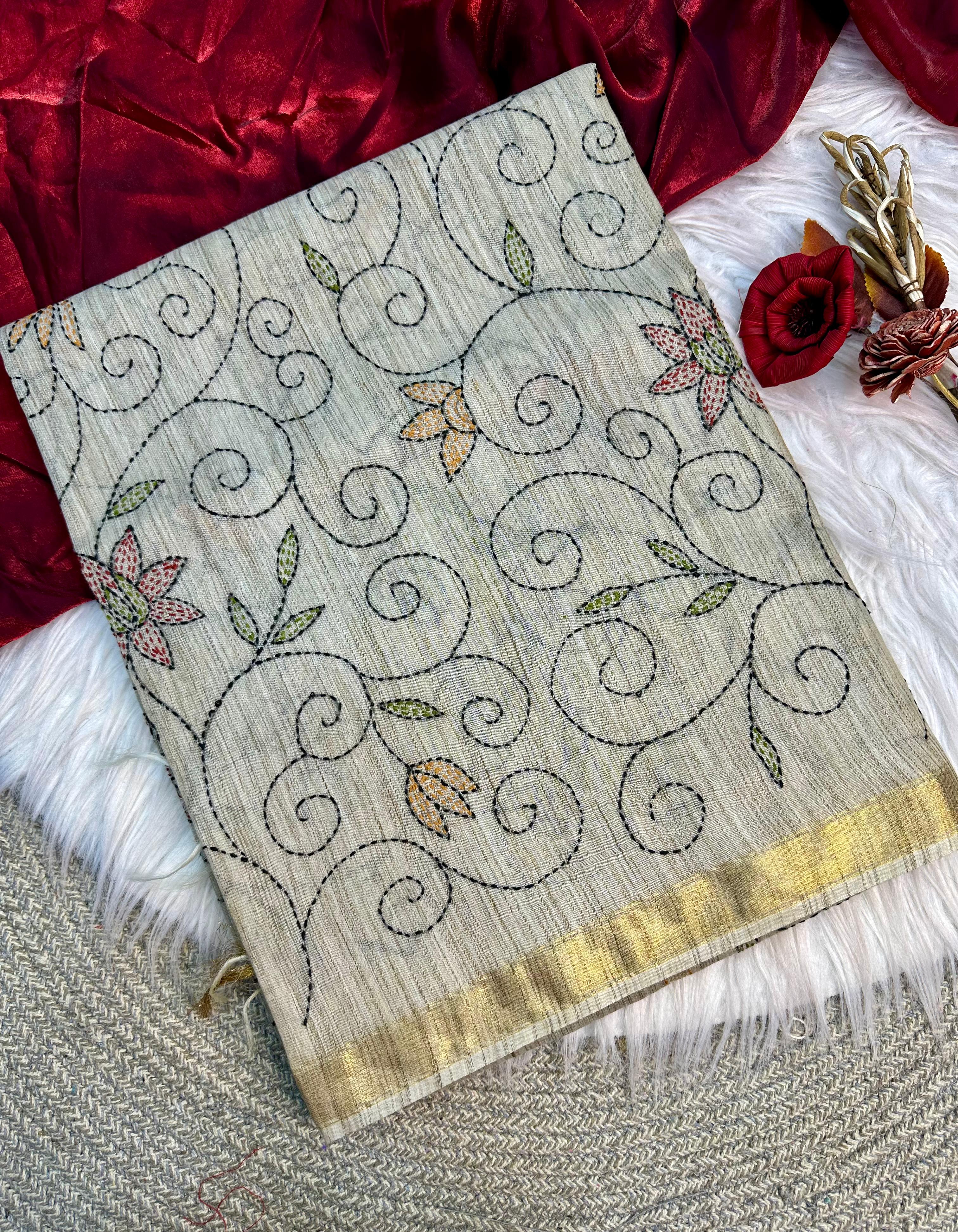
Weave makes the practical difference. Open handloom cotton allows air to move between yarns and usually dries sooner than compact, tightly spun cotton. A saree such as Tissue Handloom Cotton Saree with Zari Weave & Floral Print contains a lighter woven structure than many dense festive textiles, but the zari sections may remain damp after the surrounding cotton feels dry.
The safest test is to check the folded edge, pallu border and areas beneath zari or embroidery. A cotton surface can feel dry while the thicker border still contains moisture. Refolding or storing the saree at that stage traps water between layers.
Does linen dry faster than cotton?
Linen often feels dry sooner than medium-weight cotton because linen yarns are less absorbent by volume and commonly appear in airy weaves. Linen can still take several hours to dry when the garment is thick, tightly woven or left doubled over a narrow clothesline.
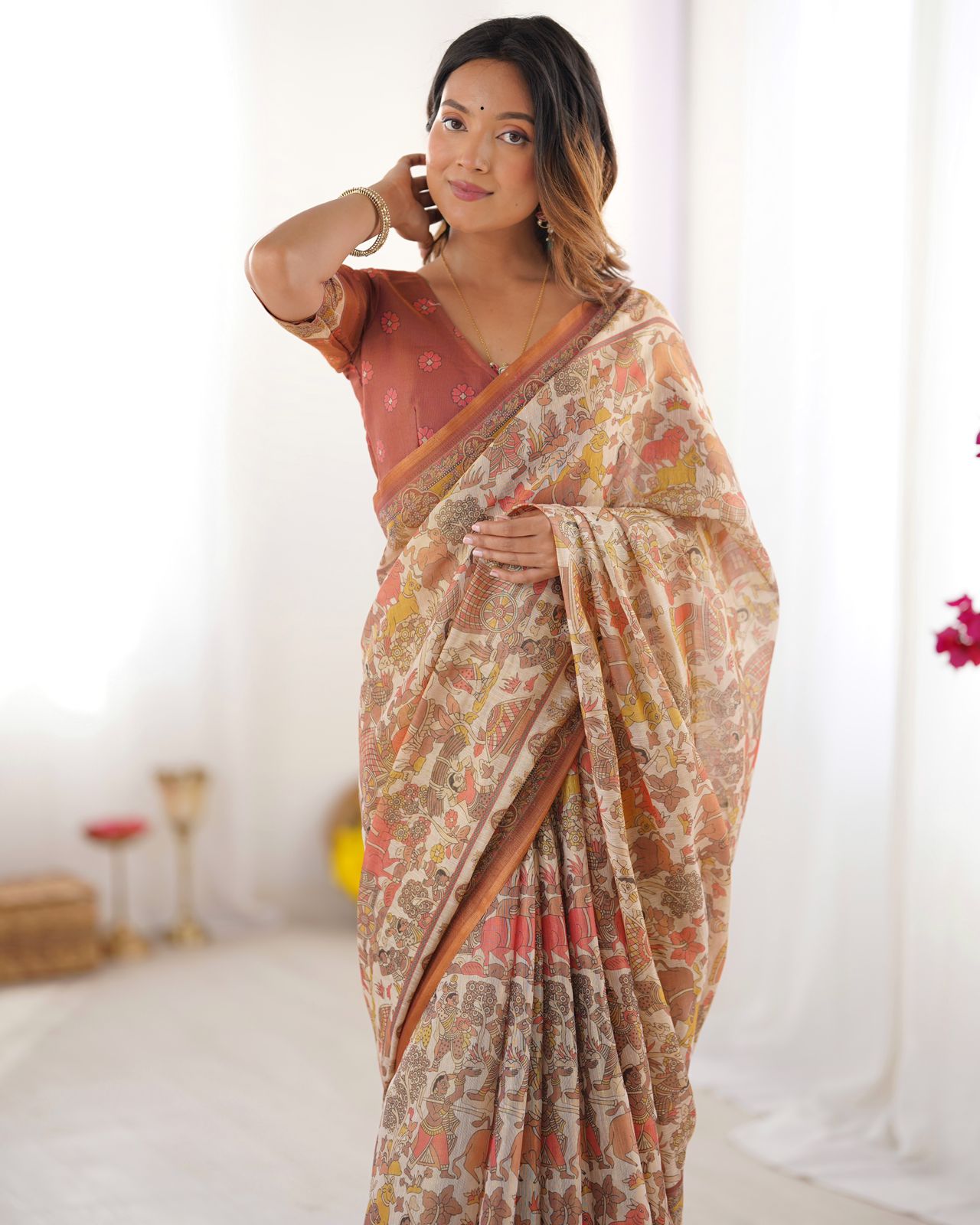
A cotton-linen saree may crease more visibly while drying, so the garment should be opened fully and aligned at the selvedge before hanging. Ethnic Beige Cotton Linen Saree with Village Art Design illustrates why fibre content and surface design should be considered together: the linen-rich base may dry efficiently, while painted or printed sections should not be exposed to intense midday sun.
Why do silk and zari take longer?
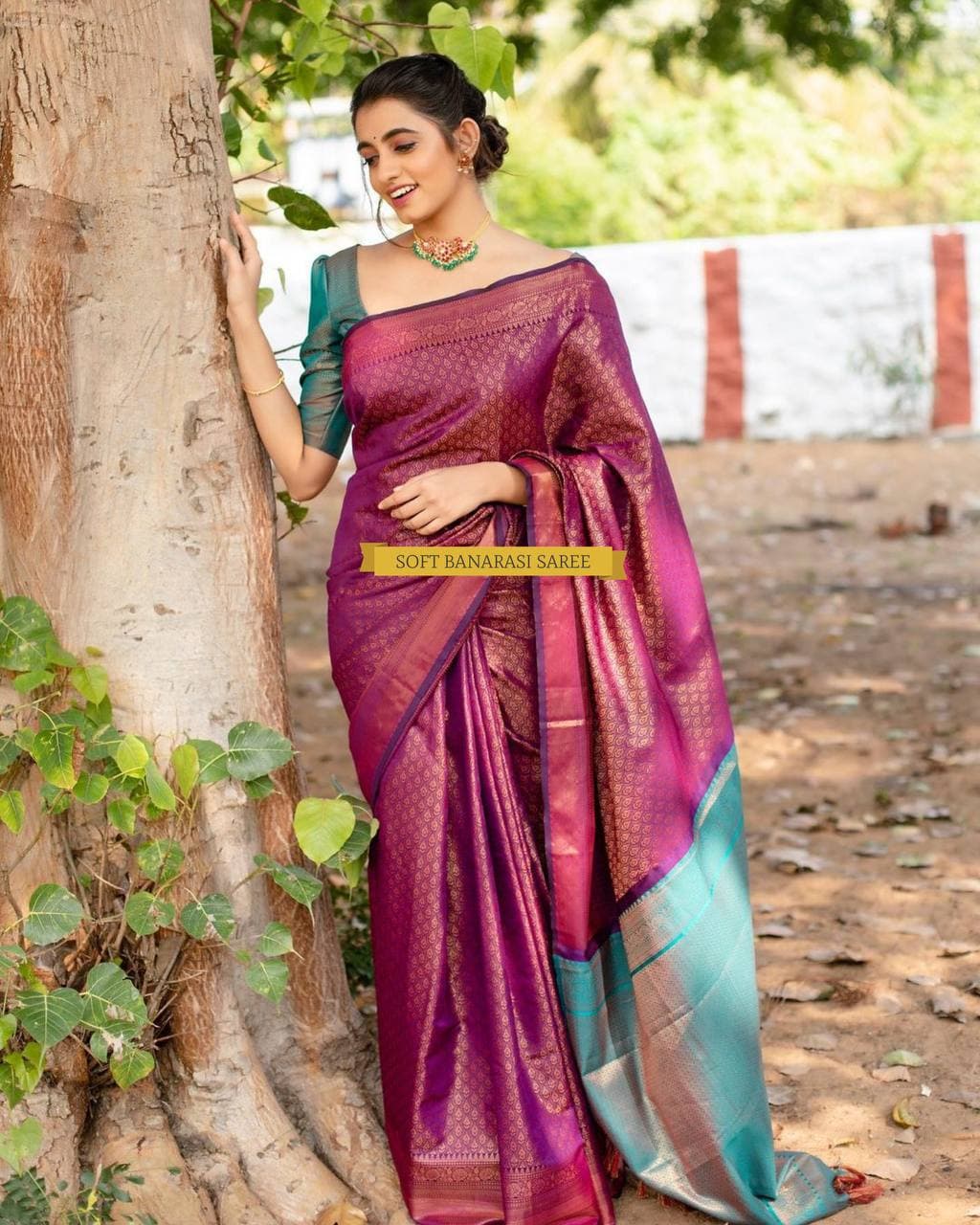
Silk and zari-heavy fabrics take longer because dense yarns, metallic threads, lining and layered borders slow evaporation. Banarasi silk and Kanjeevaram sarees can feel cool to the touch even after much of the surface water has evaporated, so touch alone isn't a reliable dryness test.
Zari also needs gentler handling than plain cotton. Do not wring a wet zari border, twist a silk pallu or hang a heavy saree from a few sharp clips. The concentrated weight can stretch the weave and leave permanent pressure marks.
Which weaves release water most efficiently?
Open, lightweight weaves release water more efficiently because air can reach more of the yarn surface. Plain weave, airy handloom cotton and thin tissue structures usually dry faster than dense jacquard, brocade or heavily layered weaves of similar fibre content.
The word "tissue" doesn't automatically mean a synthetic or fast-drying fabric. A tissue textile may contain cotton, silk, polyester, metallic yarn or a blend. Read the fibre label before choosing a wash method. A cotton tissue saree can usually tolerate a brief, gentle handwash when the care label permits it, while a silk tissue saree may require dry cleaning.
Blue Tissue Handloom Cotton Saree With Floral Print and Blue Tissue Handloom Cotton Saree with Zari Floral Print are useful examples of why visual similarity doesn't guarantee identical drying behaviour. Floral print adds little weight, but zari motifs can create small dense zones that dry after the plain ground fabric.
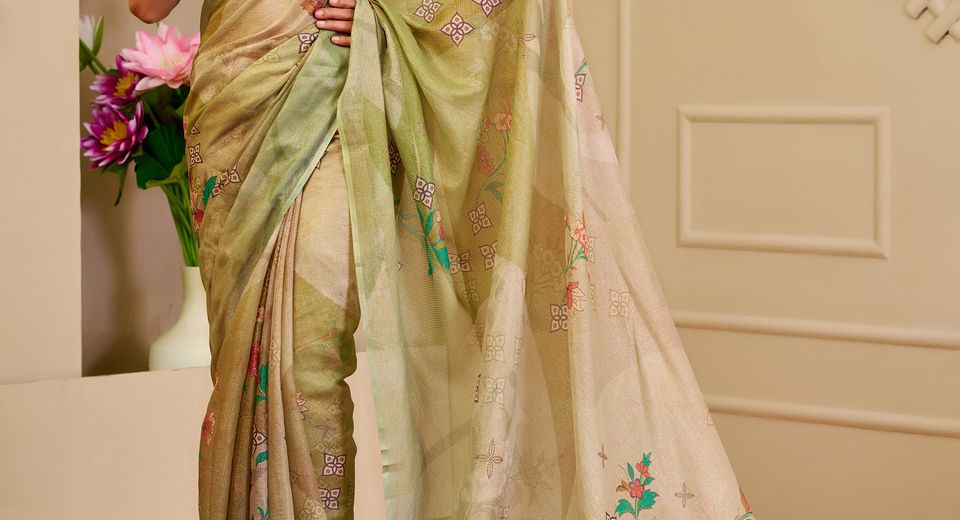
Sea Green Tissue Handloom Cotton Saree With Floral Patterns may dry faster than a thick cotton saree because tissue handloom construction reduces overall mass. The correct comparison is the fabric's weight when wet, not the colour or the word "handloom" alone.
What makes a handwashed saree dry faster?
Removing excess water before hanging has the greatest immediate effect on drying time. A careful towel-pressing method can reduce the remaining moisture without damaging yarns, prints or zari.
- Drain without lifting the full wet weight: Support the saree in a basin or clean laundry net while the wash water runs out.
- Press between clean towels: Lay the saree flat, place absorbent cotton towels above and below it, and press with your palms. Do not rub the fabric.
- Roll instead of wringing: Roll the saree loosely inside the towel, leave it for 5 to 10 minutes, then unroll and replace the damp towel if necessary.
- Open every layer: Separate the pallu, pleats and border so air can reach both sides.
- Use a wide support: A broad drying rack or padded line prevents a wet fold from holding moisture in one narrow strip.
- Turn once: Turn the saree after 60 to 90 minutes if the underside remains cool or damp.
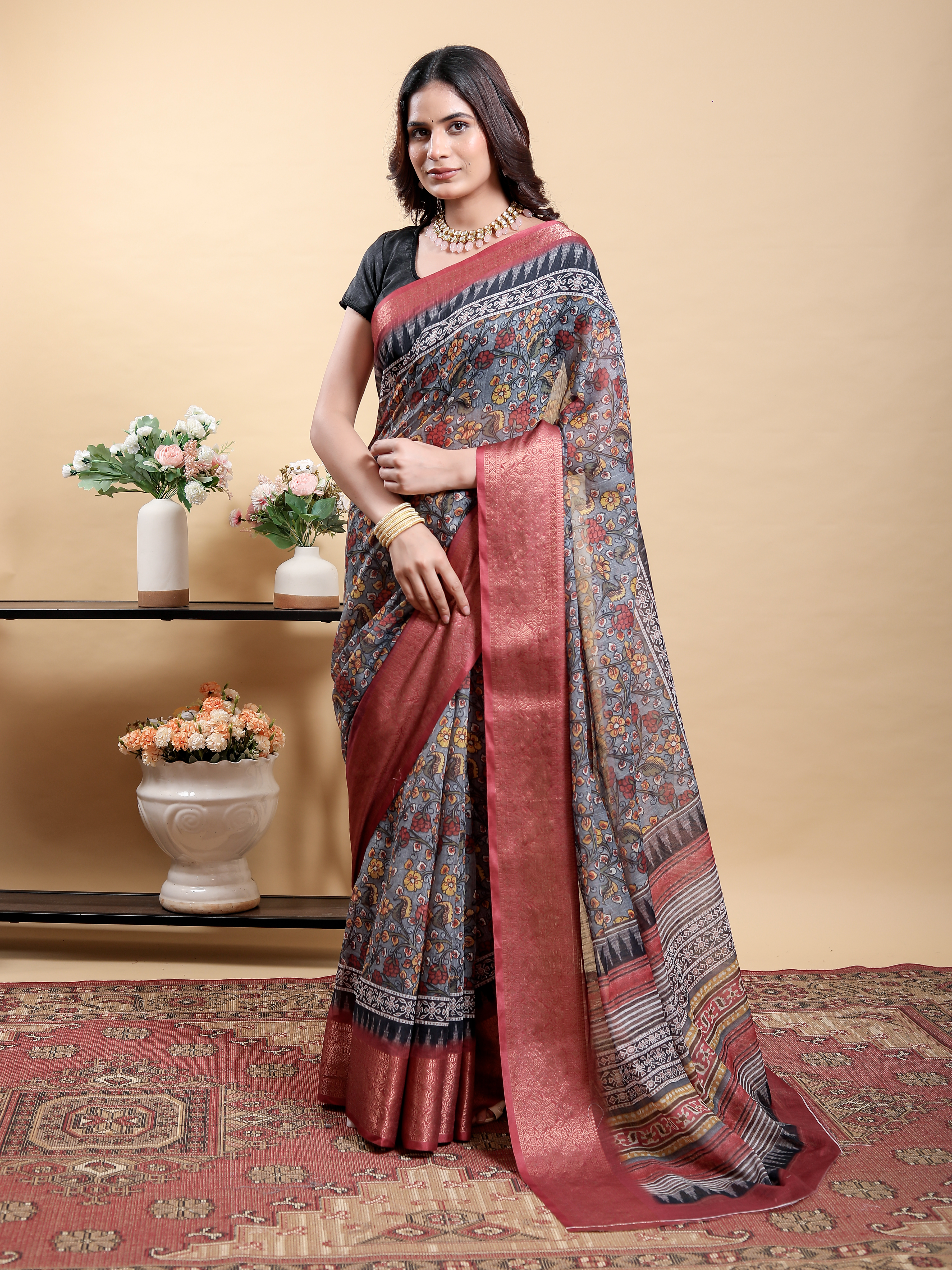
Blue Tissue Cotton Saree With Floral Print | Varnavi demonstrates a common care challenge: a light cotton ground may dry quickly, but a folded pallu or decorative border can stay wet. The vertical bar in the product name is part of the exact name; the care principle remains the same for any printed cotton saree.
Never use a high-speed spin cycle for silk, zari, tissue or delicate handloom cotton unless the care label specifically permits it. A low-speed spin inside a mesh laundry bag may be acceptable for sturdy cotton, but towel pressing is safer for an unlabelled ethnic garment.
Should ethnic fabrics dry in sunlight or shade?
Most coloured ethnic fabrics should dry in bright shade with strong airflow rather than under prolonged direct sunlight. Shade reduces the risk of fading, uneven colour change, print damage and fibre weakening.
Direct morning sunlight for 15 to 30 minutes can help a sturdy white or colourfast cotton garment, but long exposure is risky for indigo, navy, magenta, turmeric yellow and vegetable-dyed textiles. A wet garment can also show temporary water marks if one section dries much faster than another.
Hang sarees with the wrong side outward when the care label allows hanging. Place the strongest support near the upper edge, distribute the weight across a wide surface and avoid metal clips touching zari. Silk, velvet and embellished garments should generally be dried flat on a clean towel or mesh rack to prevent stretching.
Air movement matters more than heat alone. A fan set several feet away can shorten drying time without the concentrated heat of a hair dryer. Keep the fan's airflow gentle, and never aim hot air directly at silk, zari, sequins, glued embellishments or painted designs.
How humidity and garment design alter drying time
Humidity can add several hours to drying time because moist air accepts less water vapour from the fabric. During monsoon weather, even a lightweight cotton saree may need 6 to 12 hours indoors if windows remain closed.
Improve indoor drying by using a cross-breeze, running an exhaust fan and keeping the saree fully extended. A dehumidifier can help in a closed room, but the garment should still have space around both surfaces. Do not dry ethnic wear directly against a damp wall.
Garment design also matters. A saree with a broad zari border, attached tassels, lining, padded blouse or multiple layers will dry unevenly. Place the heaviest section where air circulates freely, and check the underside of borders before folding.
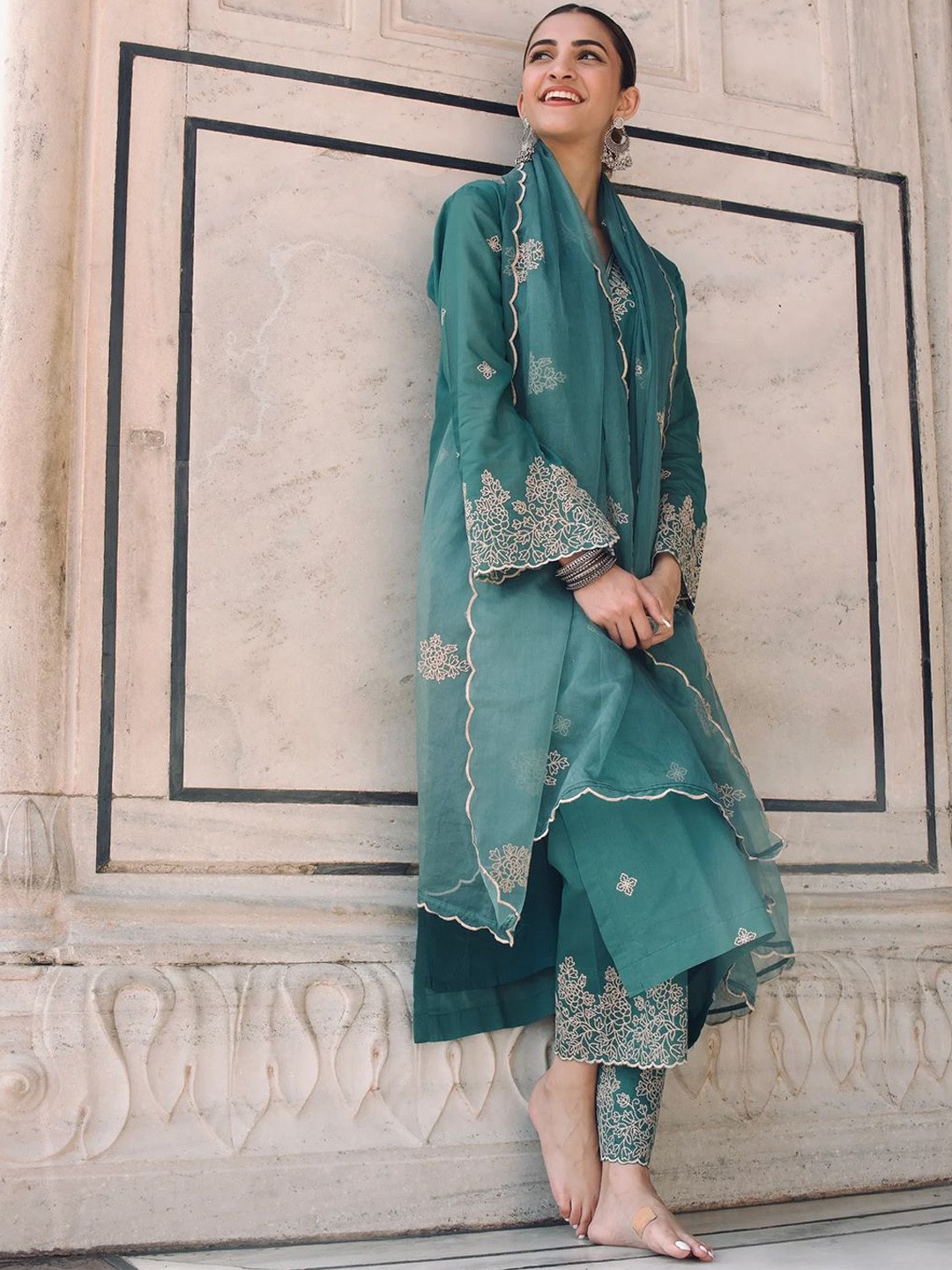
For a blouse, check the underarm seam, neckline facing and hook area separately. For a sharara or palazzo suit, inspect the waistband, inner lining and gathered panels. A garment can appear dry on the outside while seams remain damp because several fabric layers meet there.
How can you tell when a handwashed ethnic fabric is fully dry?
A handwashed ethnic fabric is fully dry when the thickest seam, border, fold and embellished section feel neutral in temperature and show no coolness, softness or damp smell after several minutes in open air. Checking only the centre of the garment isn't enough.

Lay the saree flat and inspect the pallu, selvedge, blouse piece and pleat area. Press a clean, dry tissue against a hidden seam for five seconds. Any moisture mark indicates that the garment needs more drying time.
don't iron a garment to remove hidden moisture. Heat can set stains, flatten texture, create shine on synthetic fibres and damage silk or zari. Allow complete drying first, then iron at the temperature recommended for the fibre.
Fold only after the entire garment has cooled and dried. Store cotton in a breathable cotton cover, keep silk away from direct light and avoid sealing a recently washed saree in plastic. Refold stored silk and zari garments every few months to prevent permanent crease stress.
Care decisions for common ethnic fabrics
Fabric-specific care is more reliable than a single rule for every saree. The following decisions help when a care label is missing, provided the fabric has no unstable dye, glued embellishment or specialist finish.
- Printed cotton: Wash briefly in cool water with mild detergent, press out water with towels and dry inside out in shade.
- Handloom cotton: Avoid aggressive rubbing because loose yarns can shift; support the wet saree across a wide surface.
- Cotton-linen: Smooth the garment while damp because creases become harder to remove after complete drying.
- Chanderi: Use gentle handling and avoid pulling the fine structure while wet.
- Silk and Kanjeevaram: Prefer professional cleaning unless the maker's label clearly permits handwashing.
- Zari and brocade: Keep metallic sections away from harsh detergents, rough surfaces and prolonged direct sunlight.
When comparing which ethnic fabrics dry faster after handwashing, choose the fabric with the lowest combination of thickness, lining, embellishment and water retention. A thin cotton saree can be practical for frequent washing, but colourfastness and weave stability still determine whether home washing is safe.
The fastest-drying fabric isn't automatically the easiest fabric to care for; the safest choice combines quick moisture release with colourfastness, stable construction and a suitable washing method.
Questions About Drying Handwashed Sarees and Ethnic Fabrics
Which ethnic fabric dries fastest after handwashing?
Lightweight cotton voile, mulmul cotton, open-weave handloom cotton and some cotton-linen blends usually dry fastest. Drying commonly takes 2 to 6 hours in warm, ventilated conditions, although humidity and garment weight can change the result.
Does cotton dry faster than silk?
Thin cotton generally dries faster than silk because cotton sarees are often lighter and more open in weave. Dense cotton can still take longer than lightweight silk, so fibre alone cannot predict drying time.
Can I dry a handwashed saree in direct sunlight?
Bright shade with airflow is safer for most coloured sarees. Direct sunlight can fade prints and dyes, weaken fibres over time and damage zari, so use short morning exposure only when the care label and colourfastness allow it.
How can I dry a saree quickly without damaging it?
Press the saree between clean towels, roll it loosely for 5 to 10 minutes, then spread it fully on a wide rack in a ventilated shaded area. Avoid wringing, high heat and folding the garment while any border or seam remains damp.
Why does a saree smell after handwashing even when it feels dry?
A saree can smell when moisture remains inside thick borders, folds, linings or embellished areas. Open every layer, improve airflow and dry the garment completely before folding or storing it.
Is a tissue saree quick-drying?
A tissue saree may dry quickly when it is lightweight and made from cotton or a thin blend, but the word tissue does not identify the fibre. Silk tissue, zari-heavy tissue and lined tissue sarees can take much longer and may require specialist cleaning.