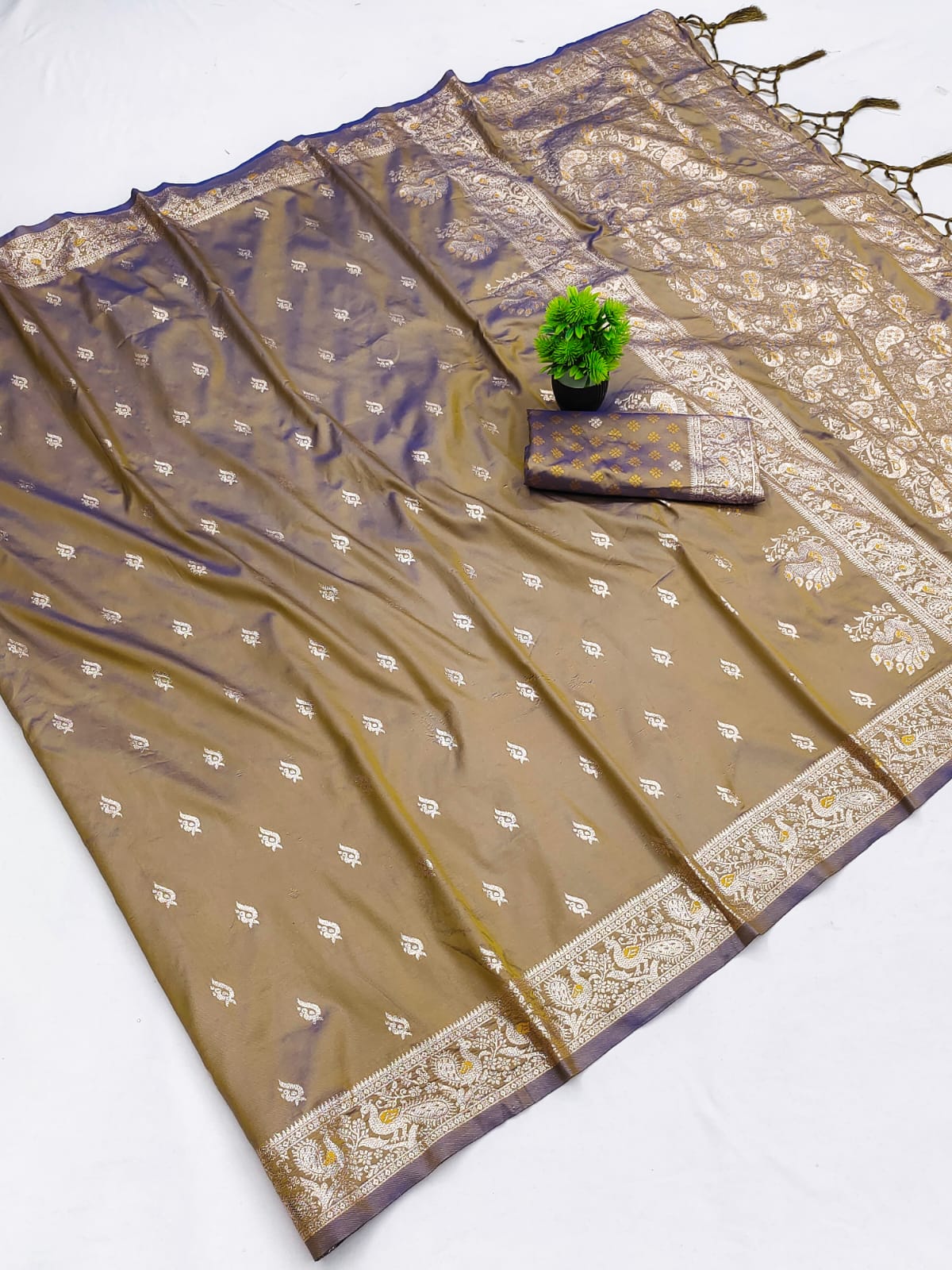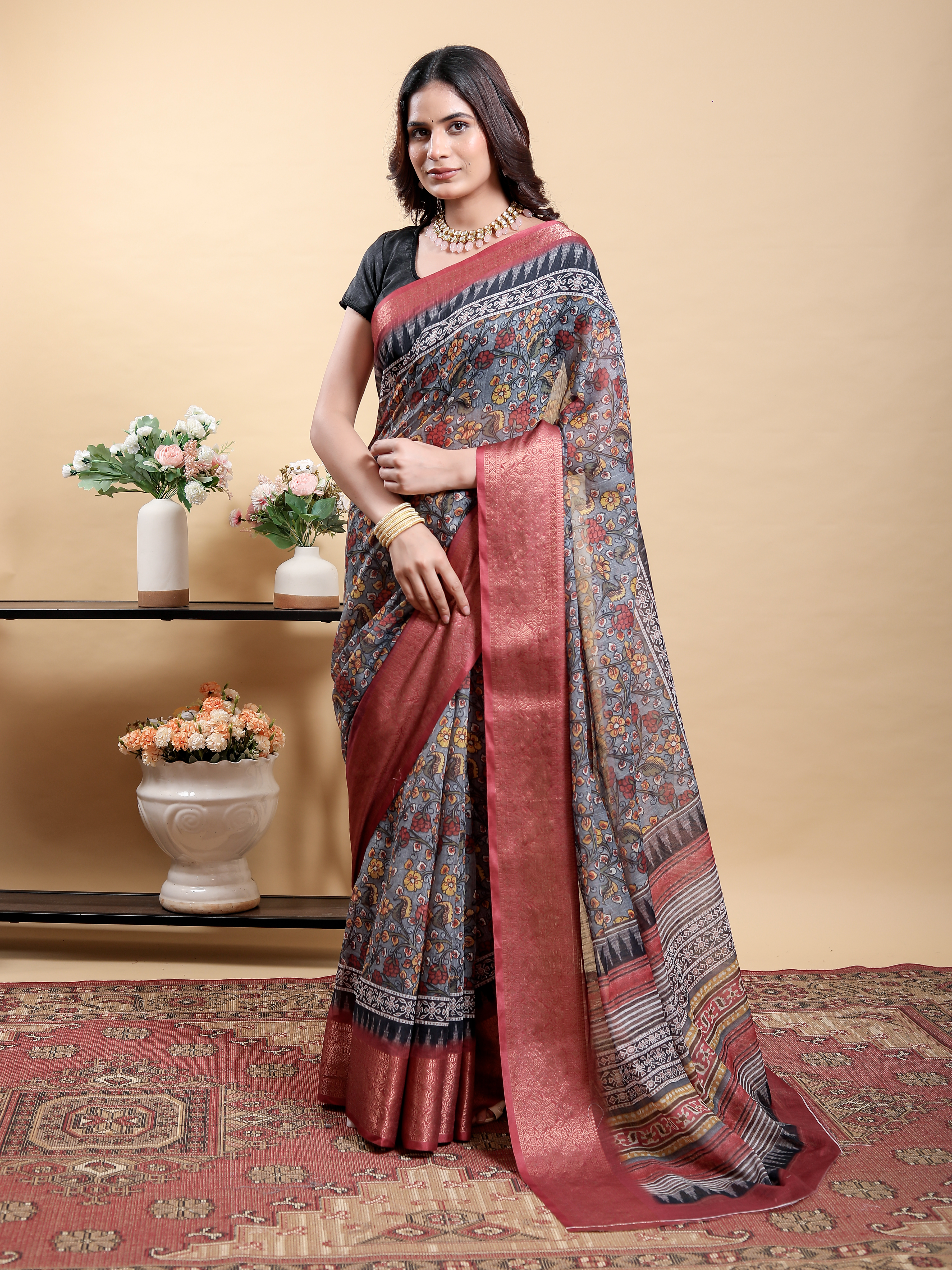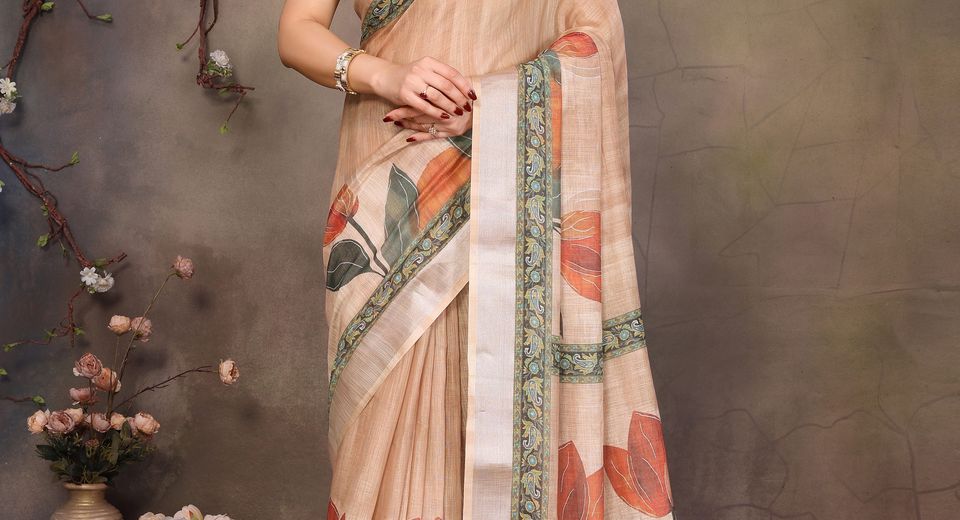
Where to buy cotton sarees online with clear fibre information matters because the word "cotton" alone doesn't tell you whether a saree is pure cotton, cotton-linen, cotton with a synthetic component, or a fabric that only resembles cotton. A dependable listing should identify the fibre composition, describe the weave or print technique, mention the blouse-piece details, and provide care guidance that matches the material.
Online photographs can show colour and pattern, but photographs can't reliably reveal fibre content, fabric weight, stiffness, transparency or the amount of zari. A careful buyer therefore reads the fabric description before judging the design. The checks below help separate useful information from vague labels while making it easier to choose a saree for office wear, hot weather, travel, festive gatherings or regular home use.
Why Fibre Information Matters When Buying Cotton Sarees Online
Fibre information predicts how a saree will feel, drape, crease, dry and respond to washing. Cotton generally offers absorbency and breathability, while linen adds a slightly crisp hand and visible slubbing; synthetic fibres can add shine, strength or wrinkle resistance but may feel warmer against the skin.
A listing that says only "cotton saree" leaves several practical questions unanswered. The saree may be 100% cotton, a cotton-linen blend, cotton with a polyester border, or cotton finished with starch. Each option can be useful, but each behaves differently. A cotton-linen saree may have a more textured drape than a smooth combed-cotton saree, while a tissue cotton design with zari may be better suited to occasional wear than repeated machine washing.
Fibre clarity also prevents a common mismatch between expectation and delivery. A buyer expecting a soft, opaque daily saree may be disappointed by a lightweight, slightly sheer weave. Another buyer seeking a crisp office saree may not enjoy a fluid printed fabric. Clear composition details turn those differences into informed choices instead of surprises.
What should a useful fabric description include?
A useful fabric description should state the main fibre, identify any blend, explain the border or decorative material, and specify whether the blouse piece is included. "Linen cotton" is more informative than "premium cotton," and "zari weaves" gives more useful context than simply calling a saree festive.
- Fibre composition: Look for terms such as 100% cotton, cotton-linen or a named blend rather than relying on the title alone.
- Construction: Handloom, woven, printed, digital print and embroidered describe different making processes; none automatically proves fibre purity.
- Weight and opacity: Lightweight, medium-weight, sheer or crisp descriptions help set expectations for drape and layering.
- Components: Check whether the blouse piece is attached, separate, contrast-coloured or absent.
- Care: Cotton can shrink or lose colour if washed aggressively, so washing and drying instructions are meaningful product information.
Where to Buy Cotton Sarees Online With Clear Fibre Information
The best place to buy cotton sarees online is a product page that names the fibre clearly, separates cotton from cotton blends, and gives enough construction and care information for a buyer to assess the saree without touching it.
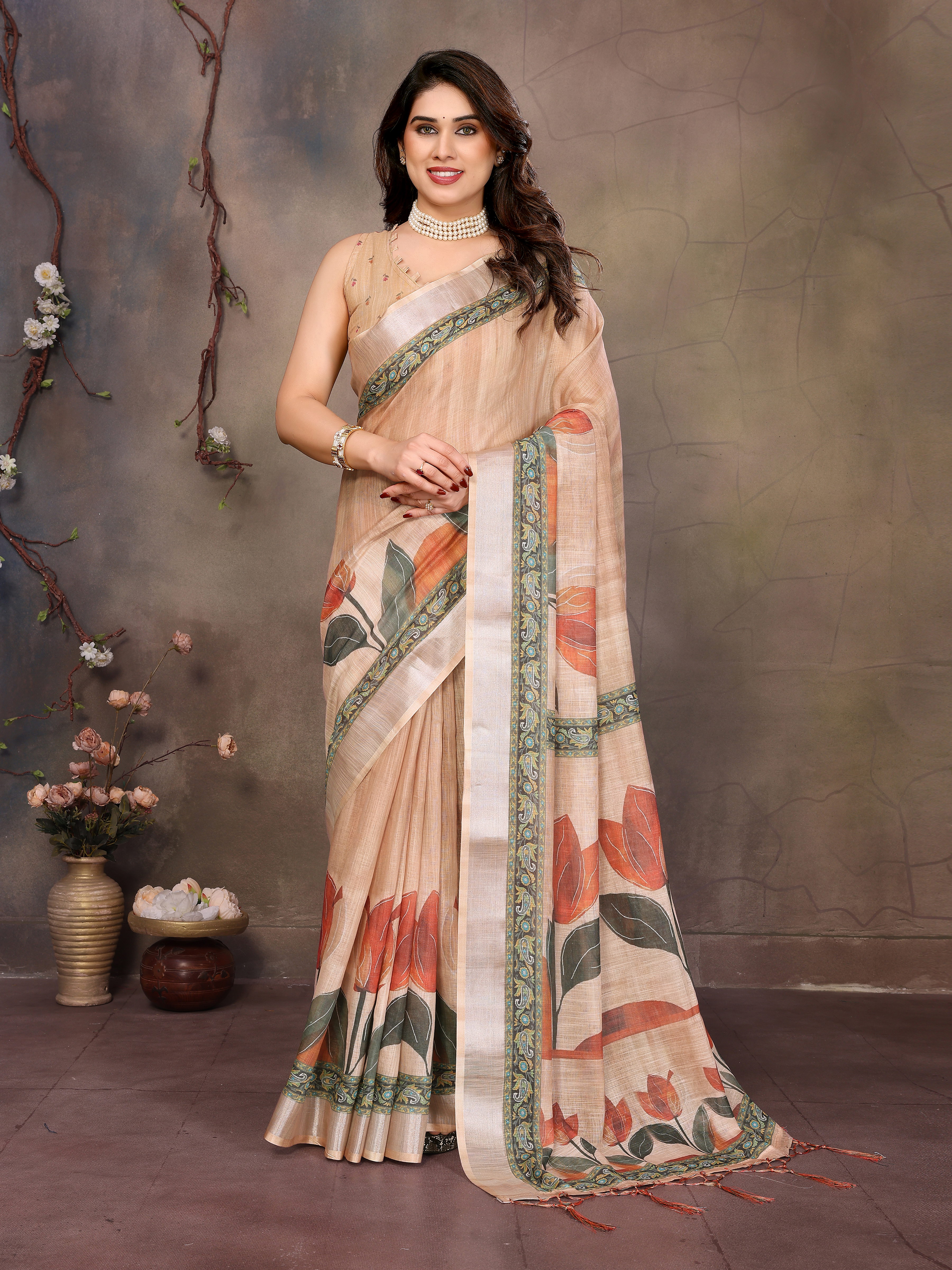
Use the product title as an initial clue, not as final proof. Pastel Floral Tissue Handloom Cotton Saree with Zari Weaves and Multicolor Linen Cotton Floral Saree with Blouse Online communicate more than a generic "designer cotton saree" because they identify a construction detail, a blend or a component. The title should still be checked against the detailed specifications.
Product pages are more dependable when the fabric field, description and images tell the same story. Pastel Linen Cotton Floral Print Saree with Designer Blouse signals that the buyer should expect linen cotton rather than pure cotton. Ivory Floral Print Linen Cotton Saree with Green Border similarly gives a useful composition clue before the colour and border are considered.
Collection pages can help with discovery, but collection names are not fibre certificates. A page for Party Wear Sarees may contain several materials, so open each product and read its individual fabric details. The same caution applies when browsing Gray Color Sarees Under 1000: a price or colour collection doesn't establish whether a saree is pure cotton.
Which online details deserve the most trust?
The fibre or fabric specification deserves the most attention, followed by care instructions and close-up images of the weave. A detailed product description is useful evidence, but a buyer should contact customer support when the listing uses contradictory terms such as "pure cotton polyester" without explaining the proportion.
Reviews can add practical information about transparency, thickness and colour, although reviews can't replace a stated fibre composition. Look for specific observations such as "the fabric is crisp after ironing" or "the border is decorative rather than heavy," rather than relying on short comments such as "good quality."
How to Read Cotton, Cotton-Linen and Tissue Descriptions
Pure cotton, cotton-linen and tissue cotton are not interchangeable descriptions; each points to a different balance of comfort, texture, structure and occasion suitability.

Pure cotton is generally absorbent and comfortable in warm conditions, but cotton can crease and may change slightly after washing. Handloom cotton can show small irregularities in the yarn or weave, which are normal characteristics rather than defects. A cotton saree with a printed surface may feel softer than a starched cotton saree even when both use cotton as the main fibre.
Cotton-linen combines cotton's familiar softness and absorbency with linen's crispness and natural texture. Linen cotton garments commonly develop creases during wear, so the blend suits buyers who appreciate a relaxed, textured appearance. Multicolor Linen Cotton Floral Saree with Blouse Online and Cream Cotton Linen Floral Digital Print Saree with Designer Border are examples of names that communicate the blend directly.
Tissue cotton usually refers to a lighter, lustrous or semi-sheer construction, sometimes with zari or another decorative element. Pastel Floral Tissue Handloom Cotton Saree with Zari Weaves may work well for a daytime celebration or a softly dressed festive event, but a buyer seeking maximum opacity for everyday commuting should inspect the images and description carefully.
Printed cotton describes surface decoration, not fibre purity. A digital print can appear on cotton, cotton-linen or another base, so the word "printed" can't answer the fibre question. Varnavi Multicolor Floral Printed Cotton Saree illustrates why the fibre and print terms should be read together rather than treated as competing descriptions.
Five Checks to Make Before Placing an Online Saree Order
A five-part check covers most of the information needed before ordering: composition, construction, dimensions, colour and care or return practicality.
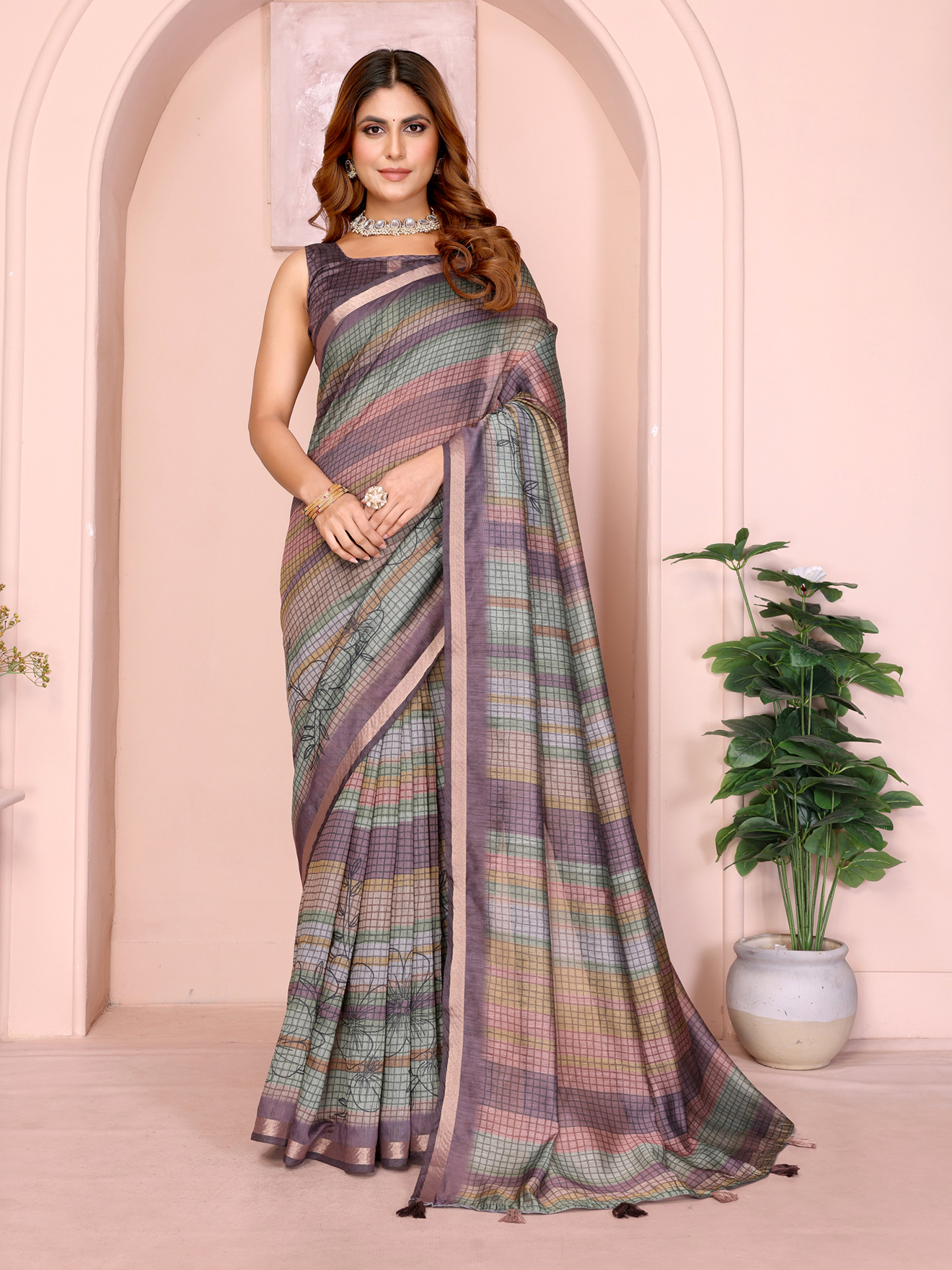
- Confirm composition. Find the exact fabric wording and distinguish "cotton" from "linen cotton," "cotton blend" or an unspecified "cotton-like" description. If a percentage is provided, note whether it applies to the whole saree or only to a component.
- Study construction. Handloom describes a weaving method, while block print and digital print describe decoration. A zari border may add visual richness and slightly alter care needs. Do not treat handloom, printed and pure cotton as synonyms.
- Check measurements. Saree length commonly falls near 5.3 to 5.5 metres, but listings vary, and blouse-piece length can vary considerably. Taller wearers or buyers planning a fuller pleated drape should check the stated length before ordering.
- Assess colour evidence. Indoor and outdoor images can look different on a screen. Read whether the product has a contrast border or pallu, as colour placement affects styling more than a thumbnail may show. Buy Grey Floral Printed Cotton Saree with Decorative Border and Ivory Linen Cotton Saree with Floral Border & Pallu demonstrate how border details can define the finished look.
- Read care and delivery information. Hand wash, mild detergent, shade drying and low-heat ironing are common precautions, but the listing's instructions should take priority. Check dispatch time, packaging, exchange conditions and whether the product is made to order before payment.
Price should be evaluated after these checks, not before them. A discounted saree may be excellent value, but a low price doesn't identify fibre purity, and a higher price doesn't guarantee handloom production. Silk Sarees Under 3000 With Discount and Red Banarasi Silk Sarees for Weddings Under 1100 are useful reminders that collection pricing must not be confused with cotton fabric information; both collection names concern silk rather than cotton.
Choosing Cotton Sarees for Work, Summer and Celebrations
The right cotton saree depends on the amount of movement, heat, formality and maintenance that your routine involves.
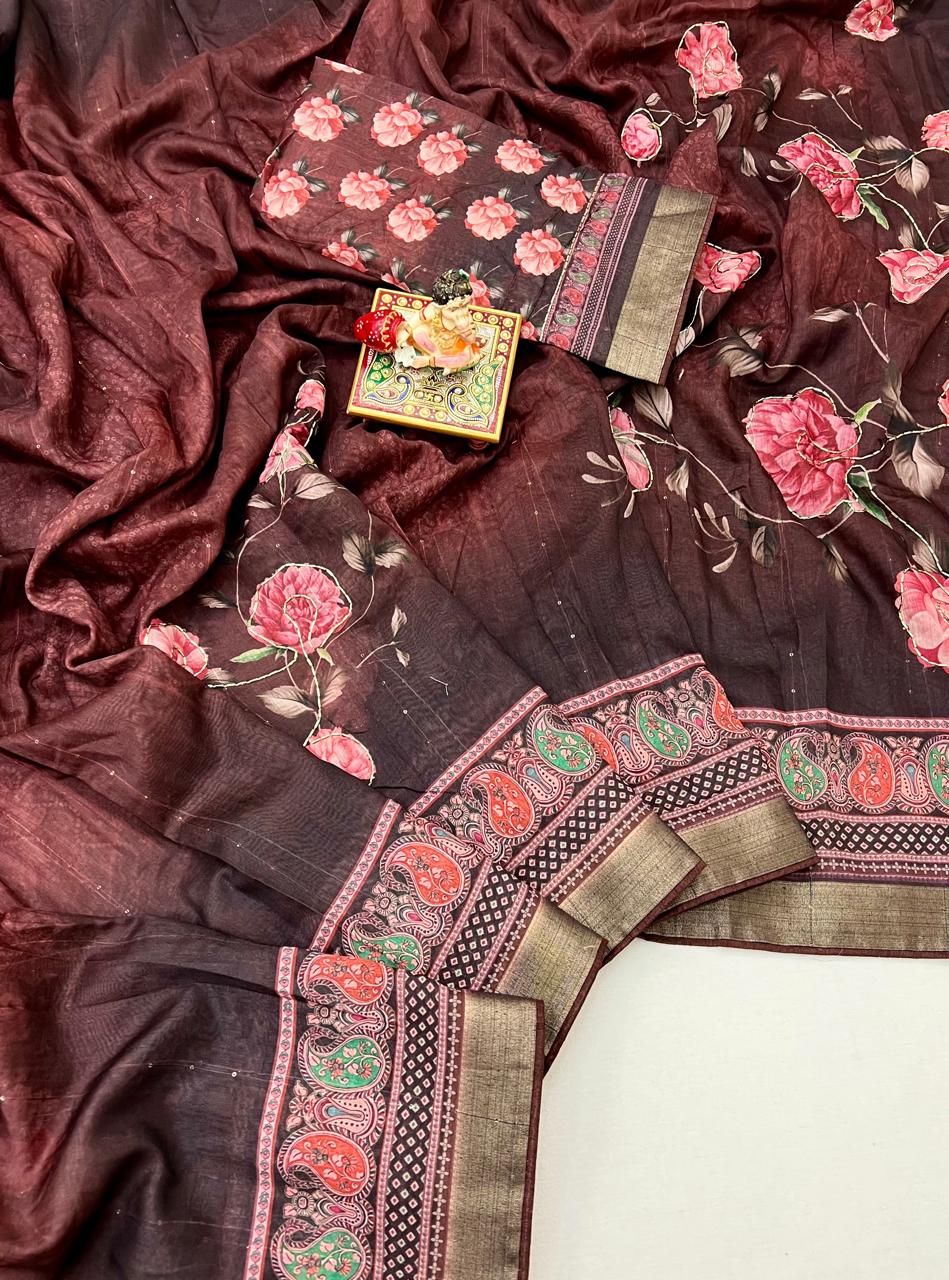
For office wear, choose a medium-weight cotton or cotton-linen saree with a stable border and moderate print scale. A structured drape usually stays neater through commuting than an extremely light, slippery fabric. Ivory Floral Print Linen Cotton Saree with Green Border can guide a practical styling decision: a defined green border gives the saree visual structure, so a solid blouse can keep the overall outfit balanced.
For hot weather, prioritise absorbent fibres, comfortable blouse construction and a weight that doesn't require excessive layering. Pure cotton may feel particularly suitable for long daytime use, while cotton-linen can suit buyers who prefer more texture. A breathable saree still needs an appropriate blouse; tight synthetic lining can reduce the comfort advantage of a cotton drape.
For a Haldi ceremony or daytime family gathering, floral prints, pastel colours and modest zari can look festive without the weight of heavily embellished silk. Pastel Linen Cotton Floral Print Saree with Designer Blouse and Cream Cotton Linen Floral Digital Print Saree with Designer Border show how print, border and blouse design can create occasion presence without changing the base fibre into silk.
For evening parties, inspect the description carefully before assuming that a shiny finish means silk. A cotton saree with zari, tissue construction or a decorative border can offer a dressed-up appearance, but the care requirement may be more delicate than that of a plain everyday cotton saree. Party Wear Sarees is therefore best used as a style filter, followed by a product-level fibre check.
Care Instructions That Protect Cotton Sarees
Cotton sarees last longer when they're washed gently, dried in shade and stored only after they're completely dry.
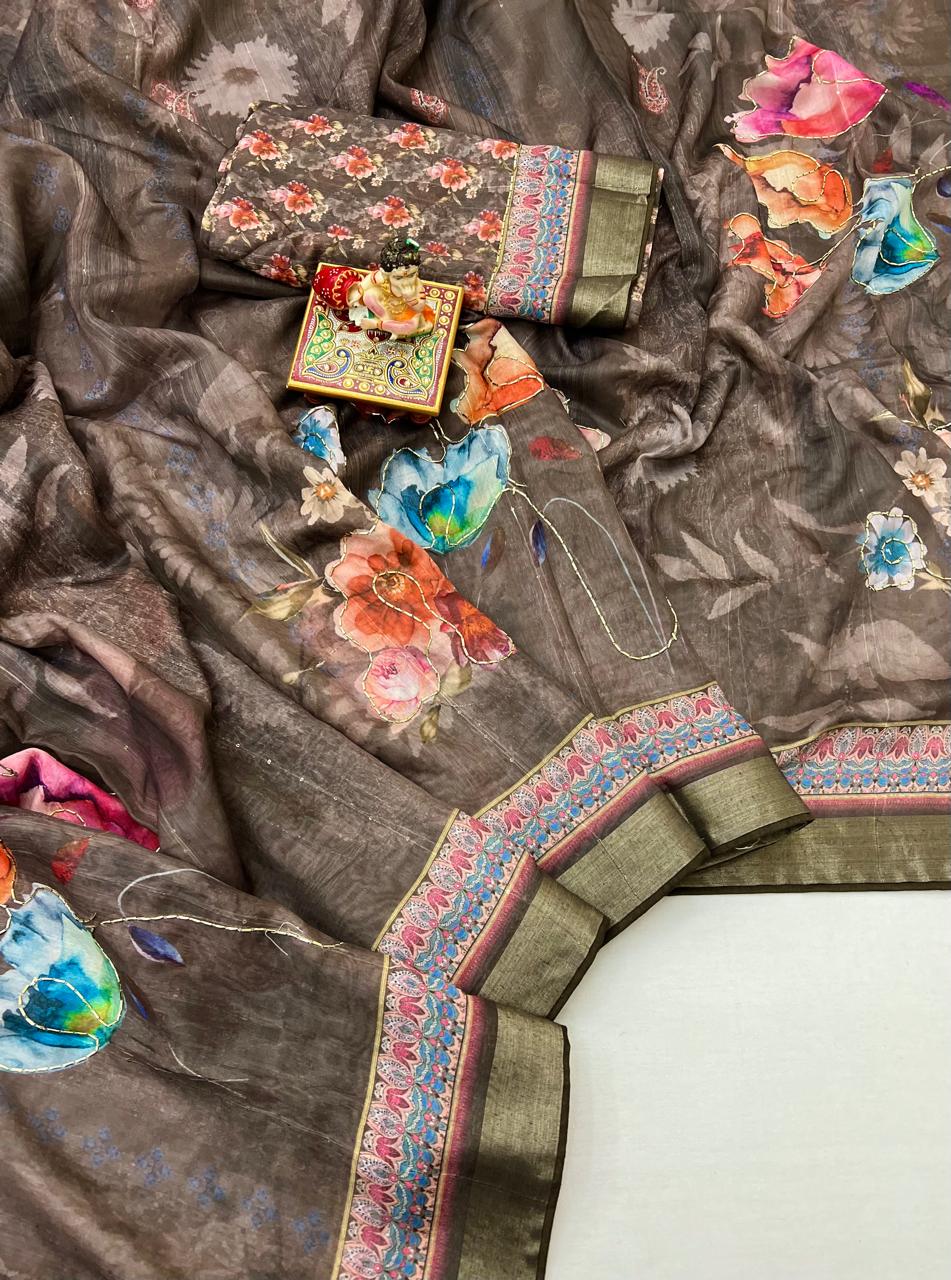
For the first wash, follow the product's stated instructions and avoid soaking a printed saree for a prolonged period. Cold or lukewarm water, a mild detergent and limited rubbing are safer starting points than hot water, bleach or vigorous brushing. Dark borders and digital prints should receive particular care because excess friction can affect surface colour.
Dry cotton sarees away from harsh direct sunlight when the care label permits. Strong sunlight can fade prints over repeated exposure, while leaving a damp saree folded can encourage mildew and create a persistent odour. Iron cotton on a suitable setting, preferably from the reverse side when the saree has a digital print, zari or delicate surface finish.
Store a clean, dry saree folded along different lines from time to time to reduce permanent fold marks. Acid-free tissue or a breathable cotton cover is preferable to tightly sealed plastic for long-term storage. Keep zari away from moisture and avoid spraying perfume directly on printed or metallic areas.
A Practical Fibre Checklist for Confident Online Shopping
A cotton saree listing is worth considering when its fibre, construction, measurements, components and care instructions answer the questions you would ask in a physical store.
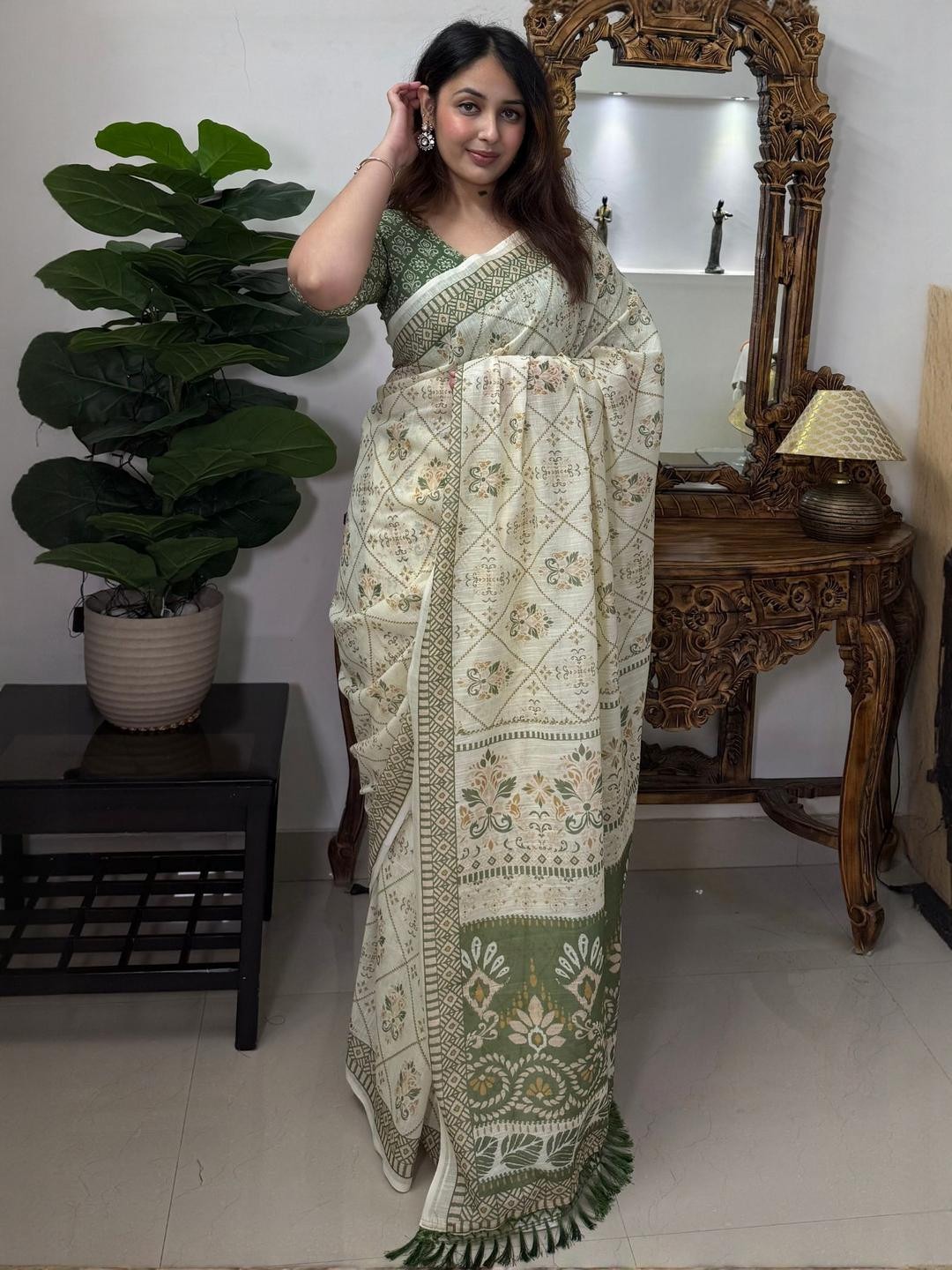
- Does the listing identify pure cotton, cotton-linen or another blend?
- Does the description distinguish weave from print technique?
- Does the product page state the saree and blouse-piece measurements?
- Do close-up photographs show texture, border, pallu and possible transparency?
- Are washing, drying and ironing instructions specific?
- Does the stated use match the fabric's weight and finish?
- Can customer support clarify an inconsistent or incomplete fibre description?
Buy Grey Floral Printed Cotton Saree with Decorative Border is an example of why a buyer should read beyond a colour name: the decorative border affects the visual proportion of the saree and may influence blouse selection. Ivory Linen Cotton Saree with Floral Border & Pallu similarly shows the value of identifying both the blend and the placement of the design.
Clear fibre information can't remove every uncertainty from online shopping, but it reduces the most avoidable ones. When composition, construction and care details are visible, a buyer can compare a pure cotton everyday saree with a cotton-linen printed saree on useful criteria rather than on colour and discount alone.
Common Questions About Buying Cotton Sarees Online
How can I tell whether an online saree is pure cotton?
Check the product specification for an explicit statement such as "100% cotton" or "pure cotton." Terms such as cotton-linen, cotton blend or cotton-like indicate that the saree should not be assumed to be pure cotton. Contact customer support when the title and fabric field disagree.
Are cotton-linen sarees cooler than synthetic sarees?
Cotton-linen sarees are generally absorbent and breathable, while linen adds a crisp, textured feel. Comfort also depends on fabric weight, lining, fit and the weather, so fibre content should be considered alongside construction.
Does handloom mean that a cotton saree is pure cotton?
No, handloom describes the method of weaving rather than the fibre composition. A handloom saree can use cotton, silk, linen or a blend, so the fibre specification still needs to be checked separately.
Do cotton sarees shrink after washing?
Cotton sarees can shrink slightly or change in handle after washing, especially when exposed to hot water or high heat. Follow the listed care instructions, use mild detergent, avoid harsh agitation and dry the saree away from intense direct sunlight.
What should I check before buying a printed cotton saree online?
Check the fibre composition, print method, saree length, blouse-piece details, border and pallu photographs, colour notes and washing instructions. A digital print identifies surface decoration, not whether the base fabric is pure cotton.
Is cotton suitable for a festive saree?
Cotton can suit daytime festivities, family gatherings and Haldi ceremonies when the saree has a refined print, tissue construction, zari detail or decorative border. Buyers seeking an evening-heavy look should compare the finish and embellishment rather than assuming every cotton saree has the same level of formality.