

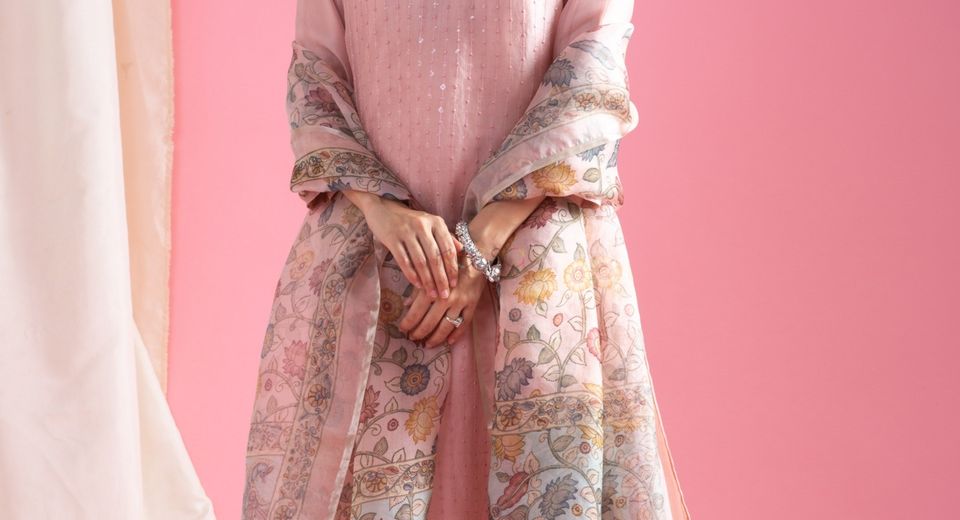
When to wear organza salwar suits and what the fabric feels like are closely connected questions. Organza suits work particularly well for weddings, festive lunches, engagement ceremonies, family portraits, and evening celebrations because the fabric holds a crisp shape and catches light gently. Organza feels smooth and light in the hand, but it's not as soft or fluid as chiffon, georgette, rayon, or cotton. Understanding that texture helps you choose the right lining, silhouette, season, and occasion.
When to Wear Organza Salwar Suits and What the Fabric Feels Like for Different Occasions
Organza salwar suits are most suitable for semi-formal and formal celebrations where a structured, luminous outfit feels appropriate. The fabric's subtle transparency, firm drape, and ability to support embroidery make it especially useful for festive dressing.
A wedding guest can wear an organza salwar suit for a daytime mehendi, sangeet, reception, or smaller home ceremony. A lightly embroidered suit works for a daytime event, while zari, sequins, threadwork, or dense appliqué are better suited to evening functions. An organza dupatta can add occasion value even when the kurta is made from Chanderi, rayon, silk blend, or cotton.
Organza also suits celebrations where photographs matter. The fabric creates defined edges around a dupatta, sleeves, and neckline, so the outfit usually retains its shape while standing, sitting, or posing. A softer fabric may collapse around the shoulders, whereas organza creates a cleaner frame.
Which occasions suit organza best?
Weddings, Diwali gatherings, Eid celebrations, pujas, engagement parties, festive dinners, and milestone birthdays are strong occasions for organza salwar suits. The fabric can also work for office celebrations when the embroidery is restrained and the colour palette is composed.
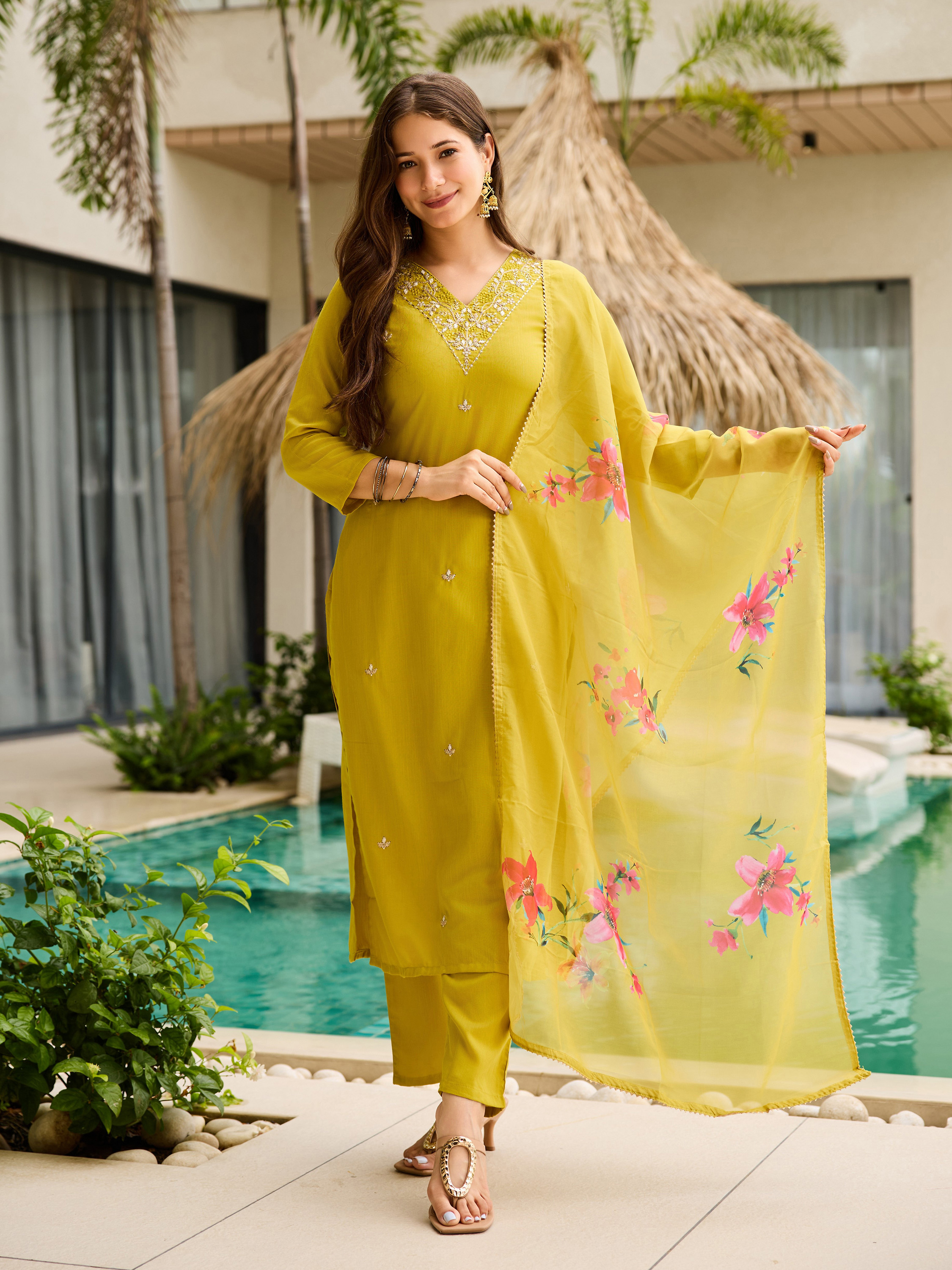
A Haldi ceremony requires a practical distinction. Organza can look beautiful at a Haldi ceremony, but a pale or heavily embellished organza dupatta may be difficult to protect from turmeric, oil, water, and crowded movement. A yellow kurta with a washable lining or a darker organza dupatta is safer than an ivory, blush, or heavily beaded set.
For everyday errands, long commutes, childcare, or activities that require frequent bending, soft cotton, cotton-silk, rayon, or viscose generally offers greater ease. Organza isn't unsuitable for daytime wear, but its structured hand-feel makes it more ceremony-oriented than lounge-oriented.
When to Wear Organza Salwar Suits and What the Fabric Feels Like Against Skin
Organza feels smooth, crisp, slightly firm, and lightweight rather than plush or fluid. Silk organza has a refined, airy hand-feel, while polyester organza can feel more papery, glossy, or stiff depending on its finishing.
The word "lightweight" can be misleading. Organza doesn't necessarily feel soft simply because it weighs little. The fabric contains a firm yarn structure that gives it body, allowing a dupatta to hold a fold or a sleeve to maintain a neat outline. That body is the reason organza looks polished, but it can also make unlined garments less comfortable against sensitive skin.
Organza is usually more breathable than a dense synthetic brocade of the same weight, but it's not automatically cooler than cotton. Breathability depends on fibre content, weave density, lining, embroidery, garment construction, and weather. A polyester organza suit with a synthetic lining may feel warmer than a cotton salwar suit during a humid afternoon.
Skin comfort depends on where organza touches the body. An organza dupatta often feels comfortable because it sits over a blouse or kurta. An organza sleeve, neckline, or trouser panel needs a soft lining or a smooth inner layer to prevent scratchiness. Sequin backs, metallic zari, and rough embroidery can create more irritation than the organza itself.
How does organza compare with other Indian fabrics?
Organza has more structure than chiffon and georgette, which makes it less fluid but more sculptural. Organza is crisper than rayon, less absorbent than cotton, and generally more transparent than Chanderi cotton unless the garment includes lining. Banarasi silk usually feels richer and heavier, while organza creates a lighter visual effect with a sharper edge.
Chanderi often has a soft, airy drape with a gentle sheen, so a Chanderi kurta paired with an organza dupatta balances comfort and occasion polish. White Chanderi Embroidered Kurta Set with Organza Dupatta illustrates that balance: the kurta gives a softer base while the dupatta supplies the crisp festive finish.
When to Wear Organza Salwar Suits and What the Fabric Feels Like in a Dupatta
Organza works particularly well as a salwar-suit dupatta because it provides volume and definition without the weight of a dense brocade. Designers use organza for dupattas, sleeves, yokes, borders, overlays, and occasionally complete kurtas.
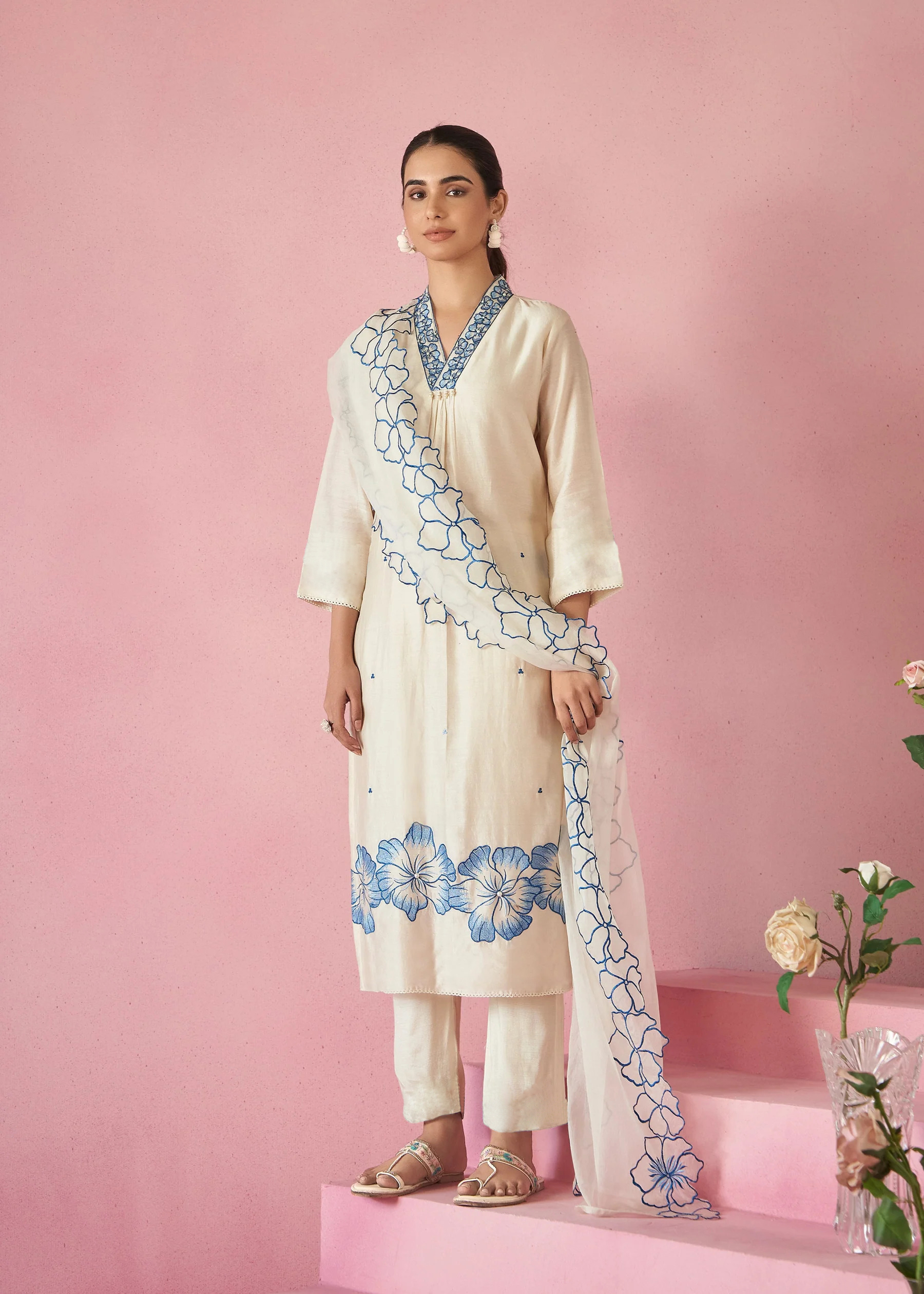
An organza dupatta can make a simple kurta set look more formal through its sheen and clean border. The dupatta may be plain, embroidered, printed, scalloped, or finished with zari. A narrow border creates a restrained look, while a broad embroidered border adds more visual weight around the shoulders and hemline.
Threadwork also shows clearly on organza because the transparent ground leaves space around each motif. Threadwork Salwar Suit with Pure Organza Dupatta demonstrates why embroidered organza can feel festive without relying entirely on metallic decoration. The contrast between a defined motif and an airy base keeps the outfit from appearing visually dense.
Jacquard can produce a different effect. Orange Jacquard Embroidered Kurta Set with Organza Dupatta combines a more textured kurta surface with a lighter, structured dupatta. The pairing is useful when you want the organza element to frame the outfit rather than cover the full body.
Traditional textile references can also guide styling choices. Kalamkari Print Salwar Suits usually bring an earthy, narrative quality, while Maharashtra Paithani Inspired Salwar Suits suggest jewel tones and decorative borders. Punjab Phulkari Embroidered Salwar Suits offer a lively embroidered direction, and an organza dupatta can add structure without taking away the regional character.
What silhouettes flatter an organza dupatta?
A straight kurta, A-line kurta, short kurta with palazzo trousers, and moderately flared anarkali all pair well with an organza dupatta. The best silhouette depends on how much volume the dupatta already contributes.
A broad organza dupatta usually looks balanced with a relatively clean kurta and straight or narrow trousers. A plain dupatta can support a more detailed kurta, wide-leg palazzos, or a flared salwar. Too much volume in the kurta, trousers, sleeves, and dupatta can make movement difficult and obscure the outfit's proportions.
Petite wearers may prefer a narrower border, a single-shoulder drape, and a kurta length that leaves some space above the ankle. Taller wearers can carry a broad border, longer kurta, layered drape, or fuller palazzo more easily. These are proportion guidelines rather than strict rules.
When to Wear Organza Salwar Suits and What the Fabric Feels Like in Warm Weather
The most comfortable organza salwar suit for warm weather combines a suitable lining, breathable base fabric, manageable embroidery, and enough room for movement. Fibre content matters, but garment construction matters just as much.
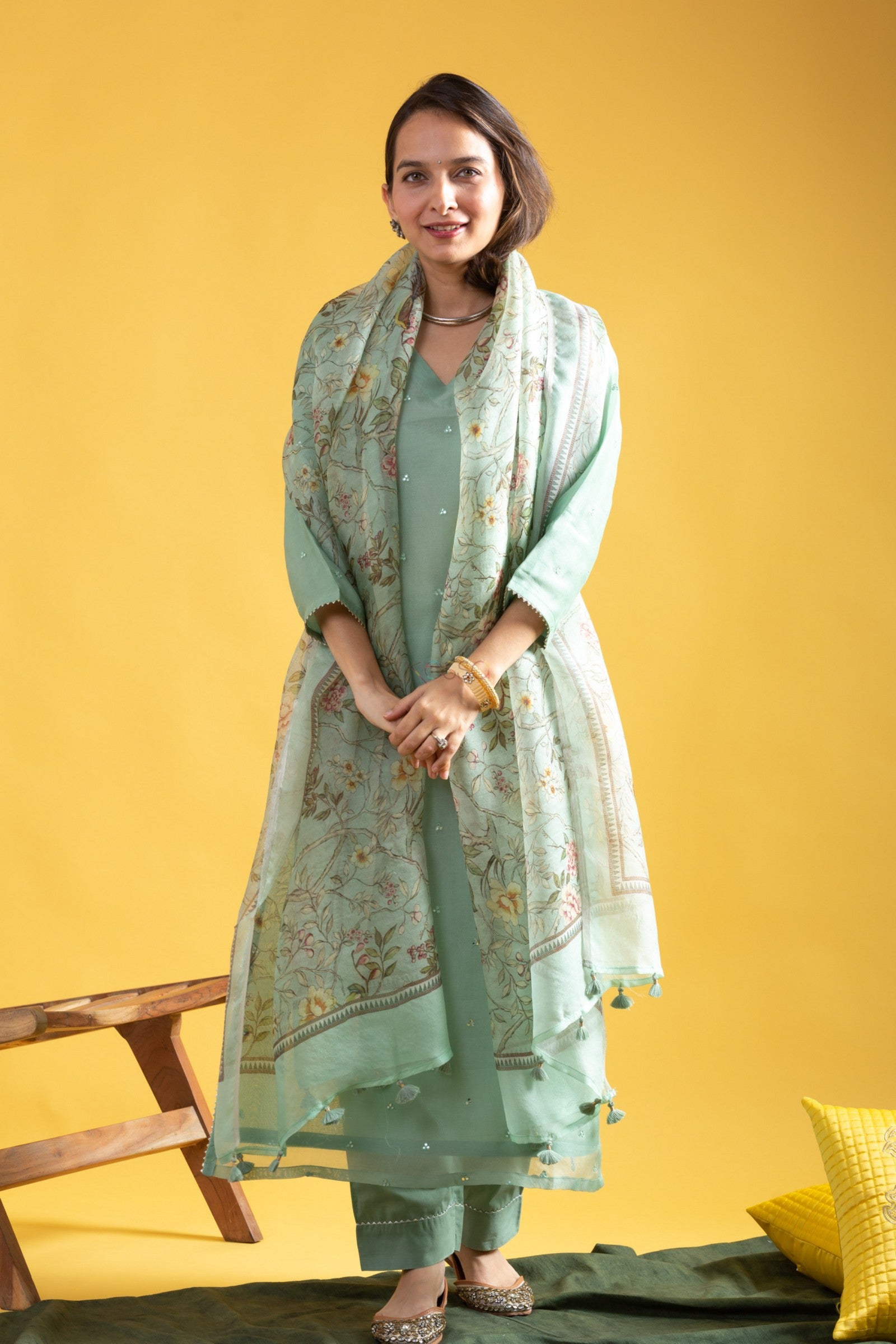
For hot weather, choose a cotton, Chanderi, silk-cotton, or rayon kurta with an organza dupatta rather than a fully lined polyester organza kurta. Look for cotton voile, mulmul, or soft cotton lining at the bodice and sleeves. A lined kurta should still allow approximately 5 to 8 centimetres of ease at the bust and enough room to raise the arms without pulling.
For cooler evenings, silk organza, jacquard, velvet accents, or a denser embroidered set can feel more appropriate. A lightweight stole, shawl, or matching jacket can add warmth without crushing the organza dupatta. Avoid placing a rough woollen layer directly against embellished organza because friction may catch threads.
Green Chanderi Embroidered Salwar Suit with Organza Dupatta and Blush Pink Chanderi Kurta Set with Organza Dupatta show how a breathable Chanderi base can make organza more wearable for daytime celebrations. The combination is useful when you want a festive finish without choosing a fully synthetic outfit.
Royal Dark Green Chanderi Cotton Kurta Set with Elegant Organza Dupatta gives another useful direction for an evening gathering. Chanderi cotton gives the body of the outfit a more breathable foundation, while an elegant organza dupatta adds polish around the shoulders and neckline.
What should you check before buying?
Check the fibre composition, lining, transparency, embroidery density, seam finishing, and care label before buying an organza salwar suit. A product description that says only "organza" doesn't reveal whether the fabric is silk, polyester, or a blend.
- Fibre content: Silk organza usually has a more delicate, natural hand-feel; polyester organza is often more affordable and easier to produce in bright colours.
- Lining: A soft lining improves comfort at the neckline, armhole, and sleeve.
- Transparency: Check whether the kurta includes a separate inner layer or whether only the dupatta is intended to be sheer.
- Embroidery: Dense zari and sequins add weight and may require gentler handling.
- Seams: Finished seams reduce snagging and help the garment hold its shape.
- Ease: A structured fabric needs enough room because it doesn't stretch like knitted rayon or elastane blends.
When to Wear Organza Salwar Suits and What the Fabric Feels Like While Styling
Comfortable styling begins with controlling friction, heat, and excess volume. Wear a smooth cotton camisole or slip under a sheer kurta, choose padded or finished shoulder seams, and pin the dupatta only where necessary.
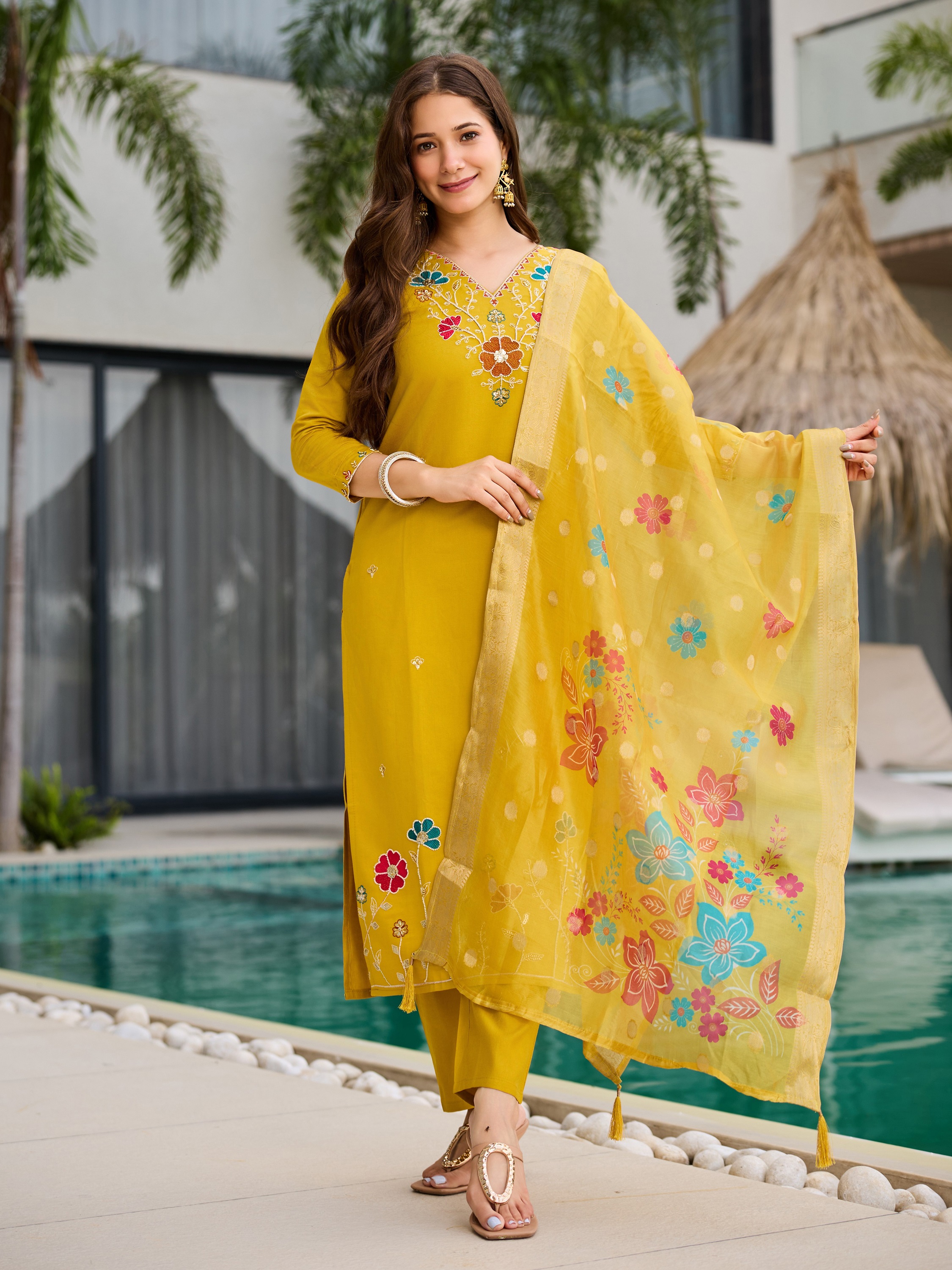
A single-shoulder drape keeps the organza visible and reduces repeated adjustment. For a formal gathering, place one end over the opposite shoulder and secure the edge with a small brooch or concealed safety pin. For active movement, fold the dupatta lengthwise once before draping it; the fold reduces spread and makes the border easier to control.
Keep accessories in proportion to the embroidery. Pearl studs, jhumkas, a slim bangle stack, or a single statement ring can complement a detailed organza border. Heavy necklaces may compete with a high embroidered neckline and add weight around the neck.
Footwear should match the movement expected from the event. Block heels, embellished juttis, and cushioned sandals are more practical for long wedding functions than very thin stilettos. A small matching potli or structured clutch complements organza's defined lines better than a large slouchy bag.
Yellow Kurti with Organza Dupatta is an useful example for a bright daytime look, particularly when paired with neutral footwear and minimal jewellery. Kashmir Embroidered Salwar Suits and Karnataka Silk Salwar Suits offer different styling references: Kashmir-inspired embroidery can be balanced with a simple drape, while Karnataka silk influences can support richer colour and more formal accessories.
When to Wear Organza Salwar Suits and What the Fabric Feels Like After Care
Organza garments should generally be dry-cleaned or gently hand-washed only when the care label permits it. Heat, friction, strong detergent, and wringing can distort the crisp surface, loosen embroidery, or create permanent creases.
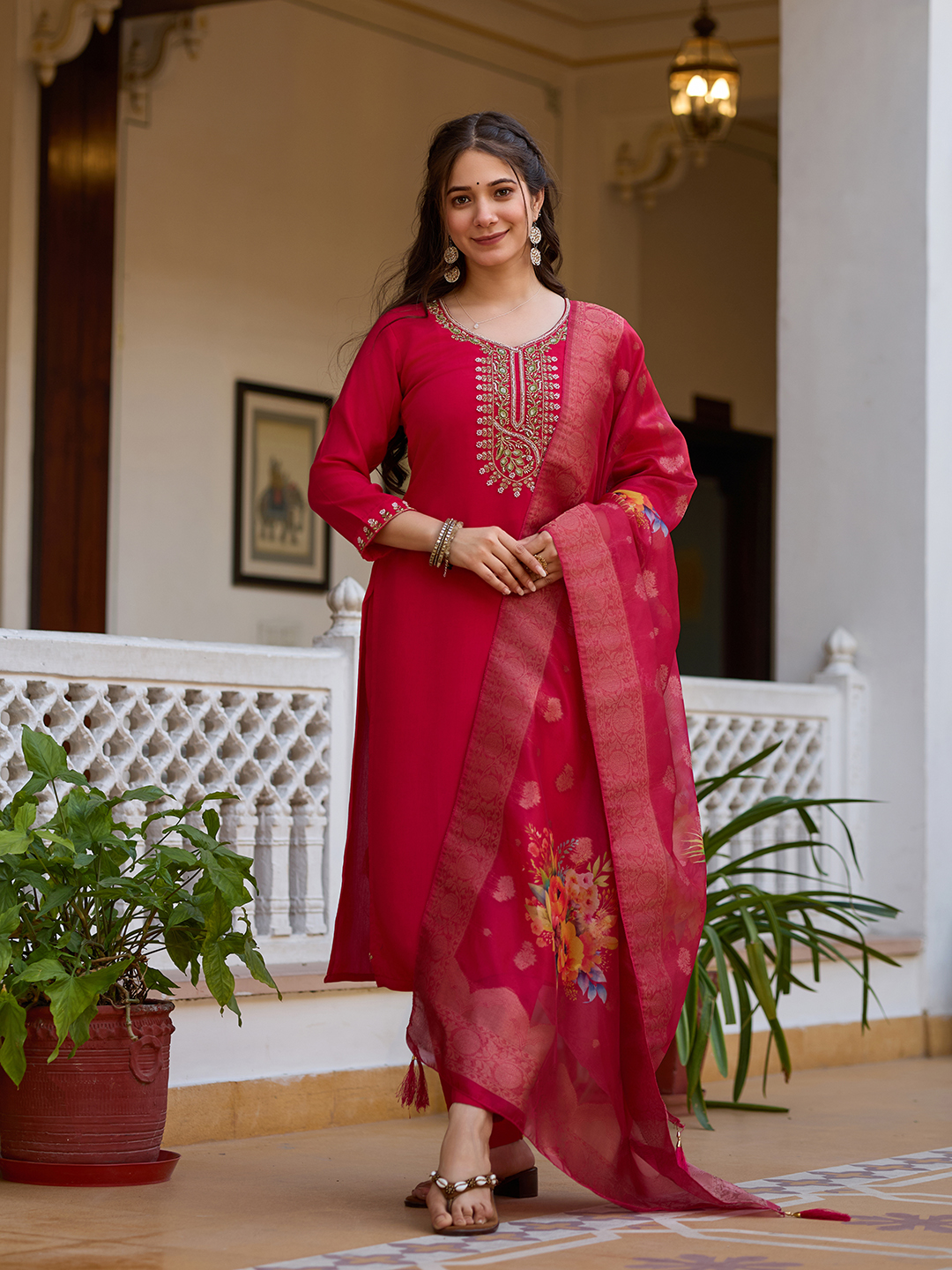
For permitted hand-washing, use cold water and a small amount of mild detergent. Submerge the garment briefly, press water out gently, and never twist an organza dupatta. Roll the garment in a clean towel to remove excess moisture, then dry it flat or hang it on a padded hanger away from direct sunlight.
don't use a hot iron directly on organza. Place a thin cotton pressing cloth over the fabric and use the lowest suitable temperature, or steam from a short distance while keeping the steamer moving. Test the method on an inner seam first, especially when the organza is synthetic or decorated with zari.
Store an organza salwar suit in a breathable cotton garment bag rather than sealed plastic for long periods. Fold embroidered sections with tissue paper to reduce friction, keep heavy jewellery away from the fabric, and avoid compressing the dupatta under stacked garments. A wide padded hanger is preferable for a structured kurta with embellished shoulders.
Correct care preserves the features that make organza distinctive: its crisp edge, controlled volume, clean transparency, and gentle sheen. Those features are also why organza deserves more careful handling than everyday cotton or machine-washable rayon.
Common Questions About Wearing and Caring for Organza Salwar Suits
When should I wear an organza salwar suit?
Wear an organza salwar suit for weddings, engagement ceremonies, festive dinners, pujas, Eid gatherings, and other semi-formal or formal events. Choose lighter embroidery for daytime and zari, sequins, or denser work for evening functions.
What does organza fabric feel like?
Organza feels smooth, crisp, lightweight, and slightly firm rather than soft and fluid. Silk organza generally feels more refined, while polyester organza may feel papery or stiffer depending on its finish.
Is an organza salwar suit comfortable in summer?
An organza dupatta over a cotton, Chanderi, or rayon kurta can be comfortable in summer. A fully lined polyester organza suit may feel warm, so check the lining, fibre content, embroidery, and garment ease before buying.
Is organza suitable for a Haldi ceremony?
Organza can suit a Haldi ceremony, but pale or heavily embellished pieces are difficult to protect from turmeric, oil, and water. A yellow or darker-coloured set with a washable lining and a manageable dupatta is a more practical choice.
How should I wash an organza salwar suit?
Follow the care label first, because embroidered or silk organza may require dry cleaning. If hand-washing is permitted, use cold water and mild detergent, avoid twisting or wringing, dry away from direct sunlight, and press through a cotton cloth at low heat.
How can I stop an organza dupatta from slipping?
Fold the dupatta lengthwise once and secure it at the shoulder with a concealed safety pin or small brooch. A single-shoulder drape usually stays more controlled than repeatedly repositioning an open dupatta.


