

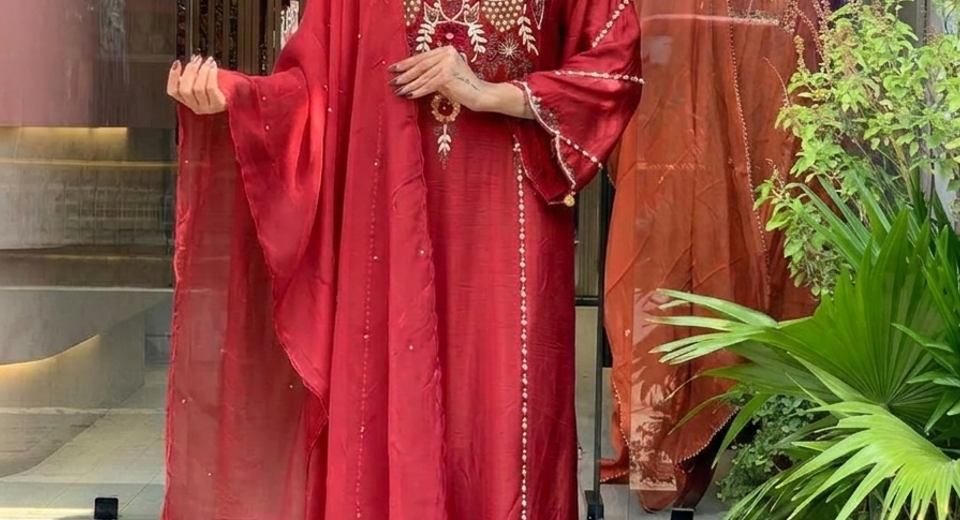
When to Wear Chanderi Salwar Suits and What the Fabric Feels Like matters because Chanderi can feel different depending on its fibre composition, weave and finish. Cotton Chanderi generally feels light, airy and gently crisp, while silk-rich Chanderi has a smoother surface and a more visible sheen. Understanding that difference helps you choose a salwar suit for a humid afternoon, a family puja, a wedding function or an evening celebration.
Chanderi refers to a weaving tradition associated with Madhya Pradesh, but product labels may describe cotton Chanderi, silk Chanderi, silk-cotton blends or a Chanderi-inspired weave. Fibre content, lining, embroidery and the weight of the dupatta all affect comfort. The most reliable buying decision begins with the stated composition rather than colour alone.
When to Wear Chanderi Salwar Suits and What the Fabric Feels Like in Real Life
Chanderi fabric generally feels lightweight, smooth and slightly crisp, with a surface that may have a subtle sheen and an airy drape. The exact sensation depends on whether the cloth contains cotton, silk or a combination of both.
Cotton Chanderi tends to feel breathable and dry against the skin. The weave can retain a little structure, so a cotton Chanderi kurta often looks neater and more upright than a soft, fluid cotton fabric. That light crispness suits straight kurtas, A-line silhouettes and dupattas that need to hold their shape.
Silk-rich Chanderi usually feels smoother and slightly warmer than cotton Chanderi. The surface catches light, but the cloth remains considerably lighter than many heavy brocades. A silk Chanderi salwar suit can look festive without feeling as dense as Banarasi silk or a heavily embellished silk suit.
Fine Chanderi may appear delicate because the yarns are slender and the fabric can be semi-sheer. Sheerness isn't automatically a sign of poor quality. A lined kurta, full inner slip or opaque bottom can make a lightweight Chanderi suit practical while preserving its graceful drape.
Embroidery also changes the hand-feel. Dense threadwork, sequins or zari can make the front of a kurta feel firmer and heavier than the plain fabric. The Woven Chanderi Cotton Readymade Salwar Suit and the Cream Chanderi Silk Kurti Pant Dupatta Set for Women illustrate why fibre and construction should be considered together when judging comfort.
When to Wear Chanderi Salwar Suits and What the Fabric Feels Like for Different Occasions
Chanderi salwar suits work especially well for daytime festivities, intimate celebrations, cultural gatherings and warm-weather events where a polished appearance should not require heavy clothing.
Daytime pujas and family gatherings
A cotton or silk-cotton Chanderi suit is a practical choice for a morning puja, housewarming, naming ceremony or family lunch. The fabric looks dressed-up through its texture and mild lustre, while a lightweight construction allows comfortable movement and sitting on the floor.
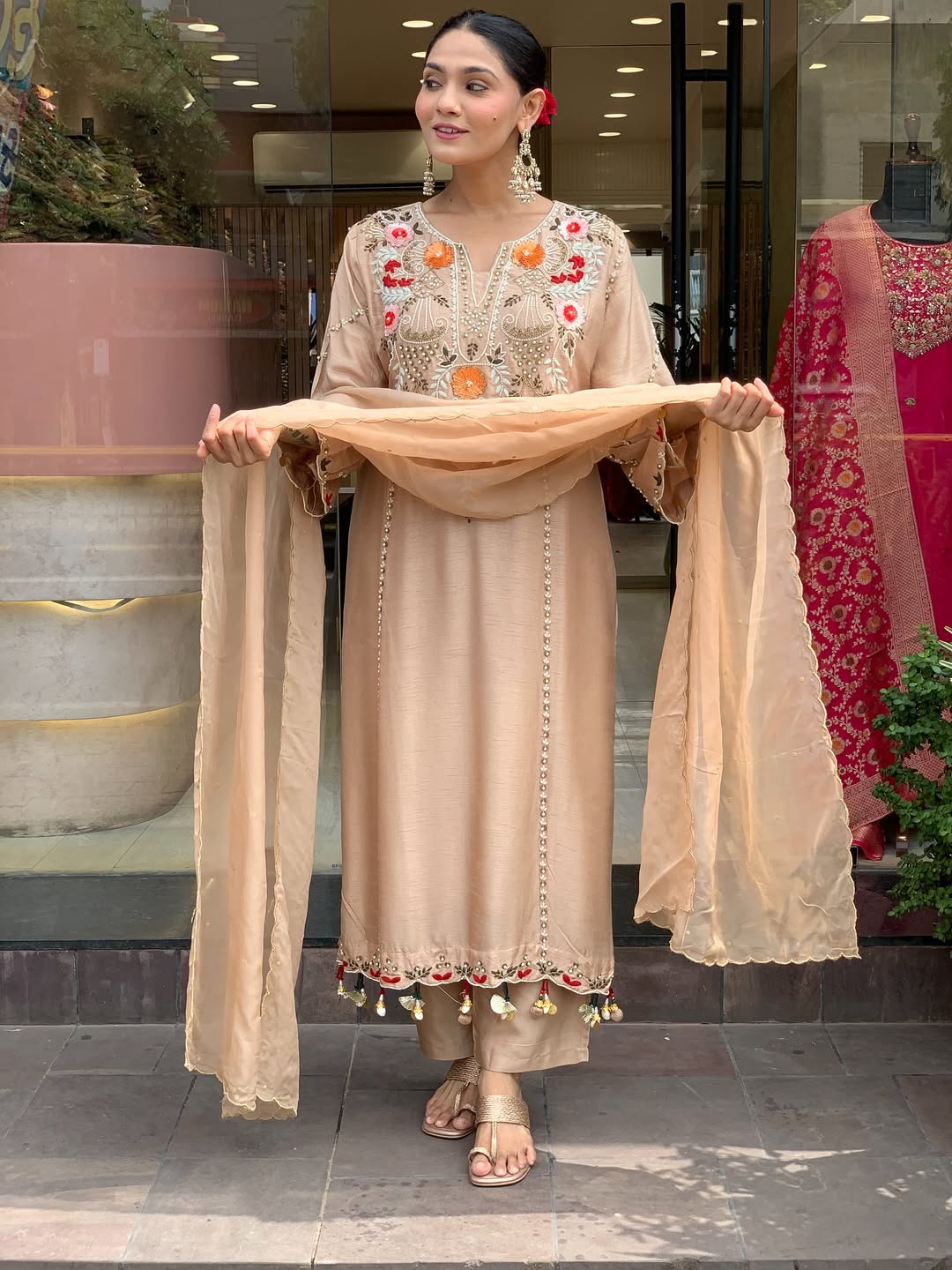
Soft ivory, cream, pastel green, lavender and muted yellow suit these settings because they look composed in daylight. The Cream Chanderi Embroidered Kurta Set with Dupatta can be styled with small pearl studs, a low bun and flat juttis when the event calls for restrained elegance rather than bridal-level embellishment.
Haldi ceremony and daytime wedding functions
Chanderi is suitable for a Haldi ceremony or daytime wedding function when the outfit includes a comfortable lining and embroidery that can tolerate active movement. Yellow, green, pink, coral and lavender complement a celebratory setting without requiring a heavy lehenga.
A salwar silhouette gives more freedom than a narrow skirt when guests are walking, greeting relatives or helping with ceremony preparations. The collection Chanderi Salwar Suits in Festive Colours suggests an useful approach: choose the shade first, then balance it with neutral footwear and a less ornate dupatta.
Festivals and cultural celebrations
Silk-rich or embroidered Chanderi suits are appropriate for Diwali visits, Navratri gatherings, Eid lunches, Raksha Bandhan and regional cultural events. Zari borders, resham embroidery or an organza dupatta can raise the formality without making the entire outfit heavy.
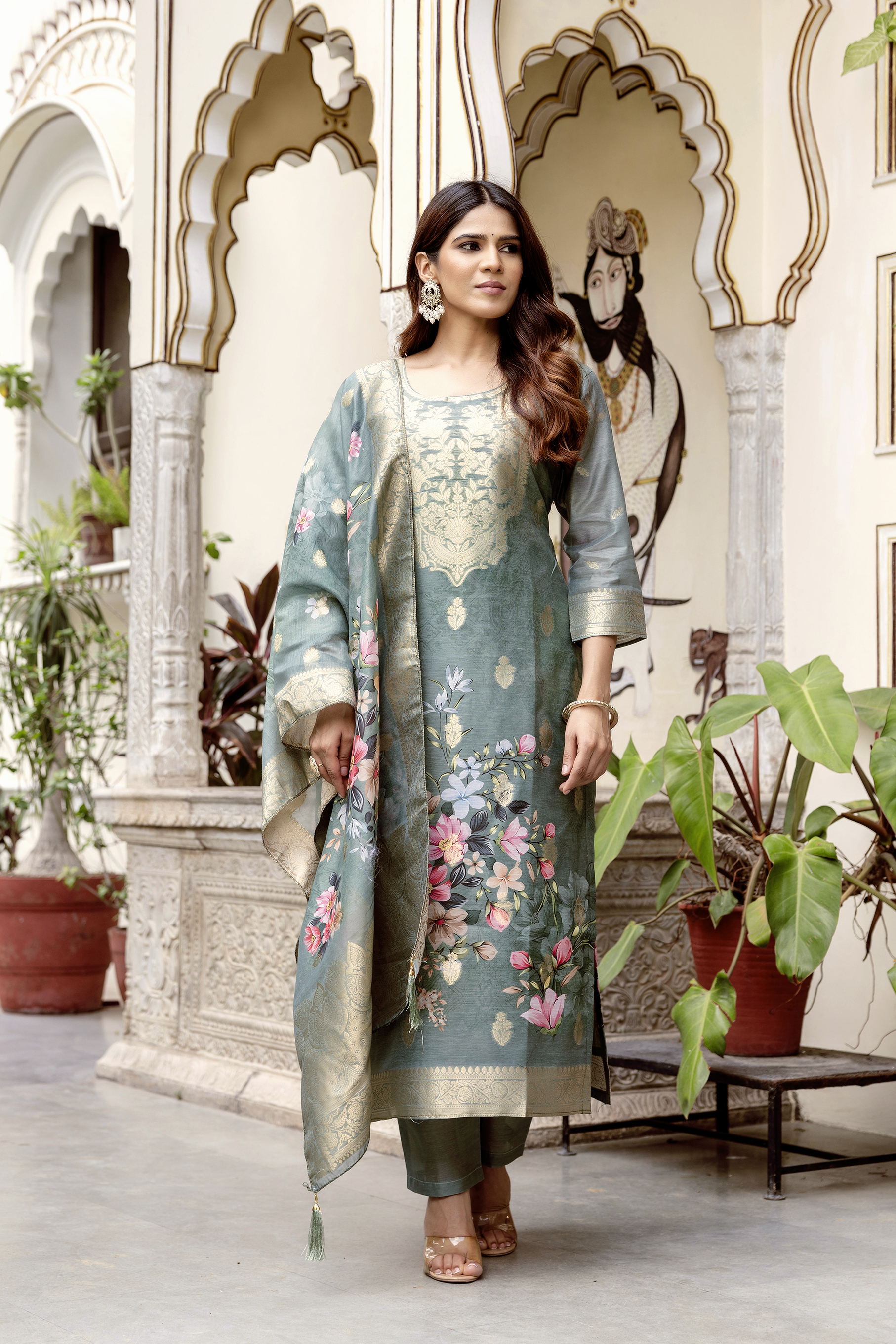
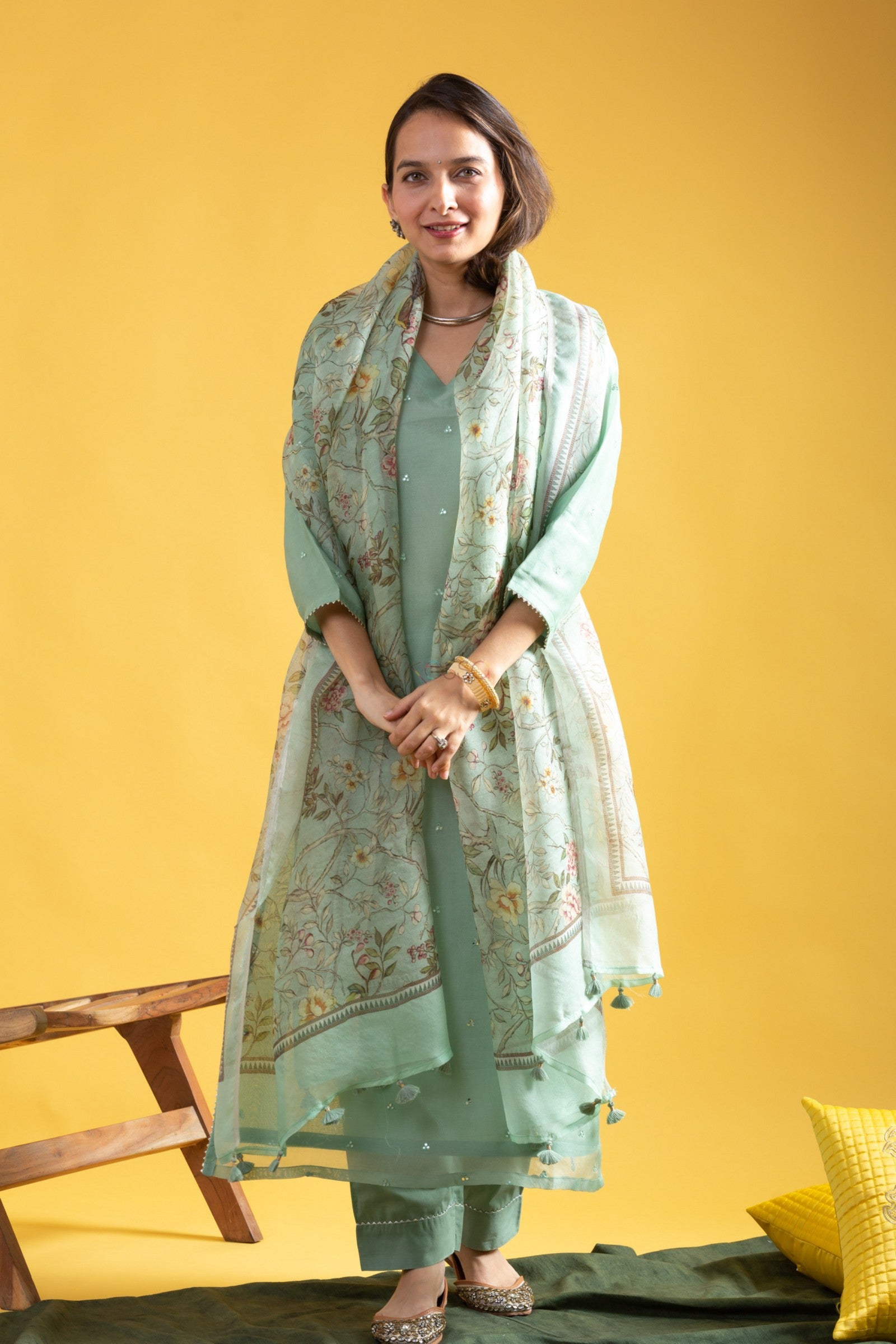
The Green Chanderi Embroidered Salwar Suit with Organza Dupatta shows how a sheer, structured dupatta can make a relatively light suit feel occasion-ready. Gold or antique-gold jewellery works well with green, while tan or metallic sandals keep the look lighter for daytime.
Office celebrations and semi-formal dinners
Chanderi suits are suitable for office festive days and semi-formal dinners when the embroidery, neckline and accessories remain controlled. A straight kurta with cigarette pants or a simple palazzo appears more professional than a heavily flared, highly embellished silhouette.
Choose small motifs, a clean hemline and a dupatta that doesn't require constant adjustment. A maroon or deep olive suit can move into evening more easily than a pale pastel, particularly when paired with modest gold earrings and a structured handbag.
When to Wear Chanderi Salwar Suits and What the Fabric Feels Like Across Seasons
Cotton Chanderi is generally the most comfortable choice for hot, humid daytime wear, while silk-rich Chanderi is better suited to mild weather, air-conditioned venues and evening functions.
Summer and humid weather
For summer, look for cotton Chanderi, a cotton-rich blend, a light lining and a dupatta that doesn't add unnecessary layers. A loose straight kurta, breathable salwar or palazzo and three-quarter sleeves allow more airflow than a close-fitting, heavily lined garment.
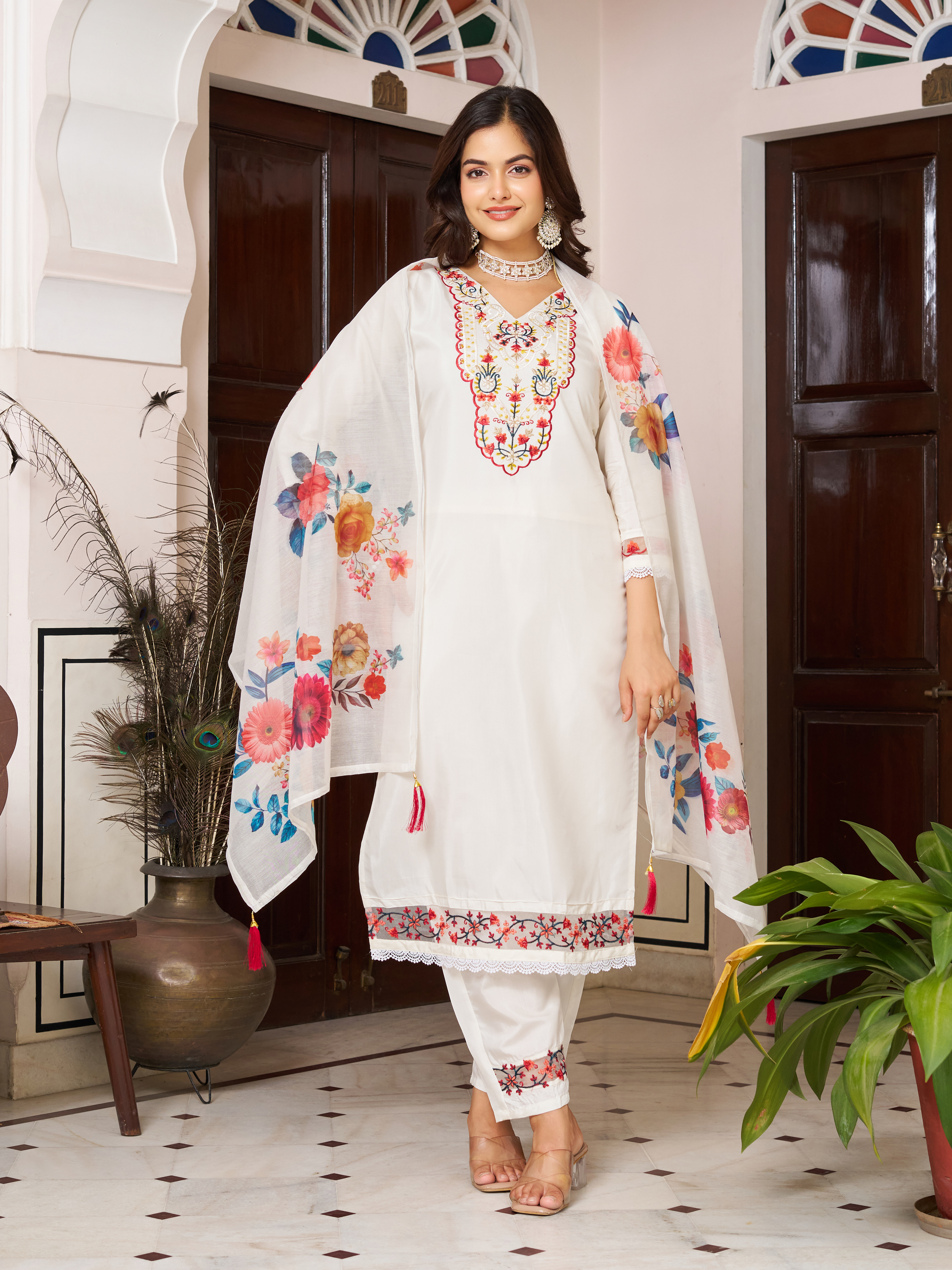
White, cream, powder blue, lavender and pistachio work naturally in bright daylight. The White Chanderi Blossom Salwar Suit represents a light-coloured direction that can suit a daytime lunch, temple visit or summer family gathering.
Monsoon considerations
Chanderi can be worn during the monsoon, but a manageable dupatta and a practical lining are preferable to a trailing silk layer. Avoid wearing a delicate, heavily embroidered suit in persistent rain because moisture, mud and friction can damage fine yarns and colour-sensitive embellishment.
For damp weather, carry the dupatta over one shoulder or secure it with a discreet brooch. Dry a wet Chanderi garment indoors in shade rather than leaving it folded, because trapped moisture can create odour and encourage mildew.
Winter and evening wear
Silk Chanderi suits work well in mild winter and air-conditioned indoor settings, especially when worn with a full-sleeved kurta or a light shawl. Chanderi alone may not provide enough warmth in cold northern winters, so layering matters more than the label.
A deep maroon set with antique-gold details can create an evening look without the weight of velvet. The Maroon Chanderi Embroidered Kurta Set with Dupatta can be paired with closed-toe juttis and a fine wool stole, provided the stole doesn't snag the embroidery.
When to Wear Chanderi Salwar Suits and What the Fabric Feels Like in Cotton, Silk and Mul Chanderi
Cotton Chanderi, silk Chanderi and mul Chanderi differ mainly in fibre composition, surface feel, transparency, lustre and the amount of structure they retain.
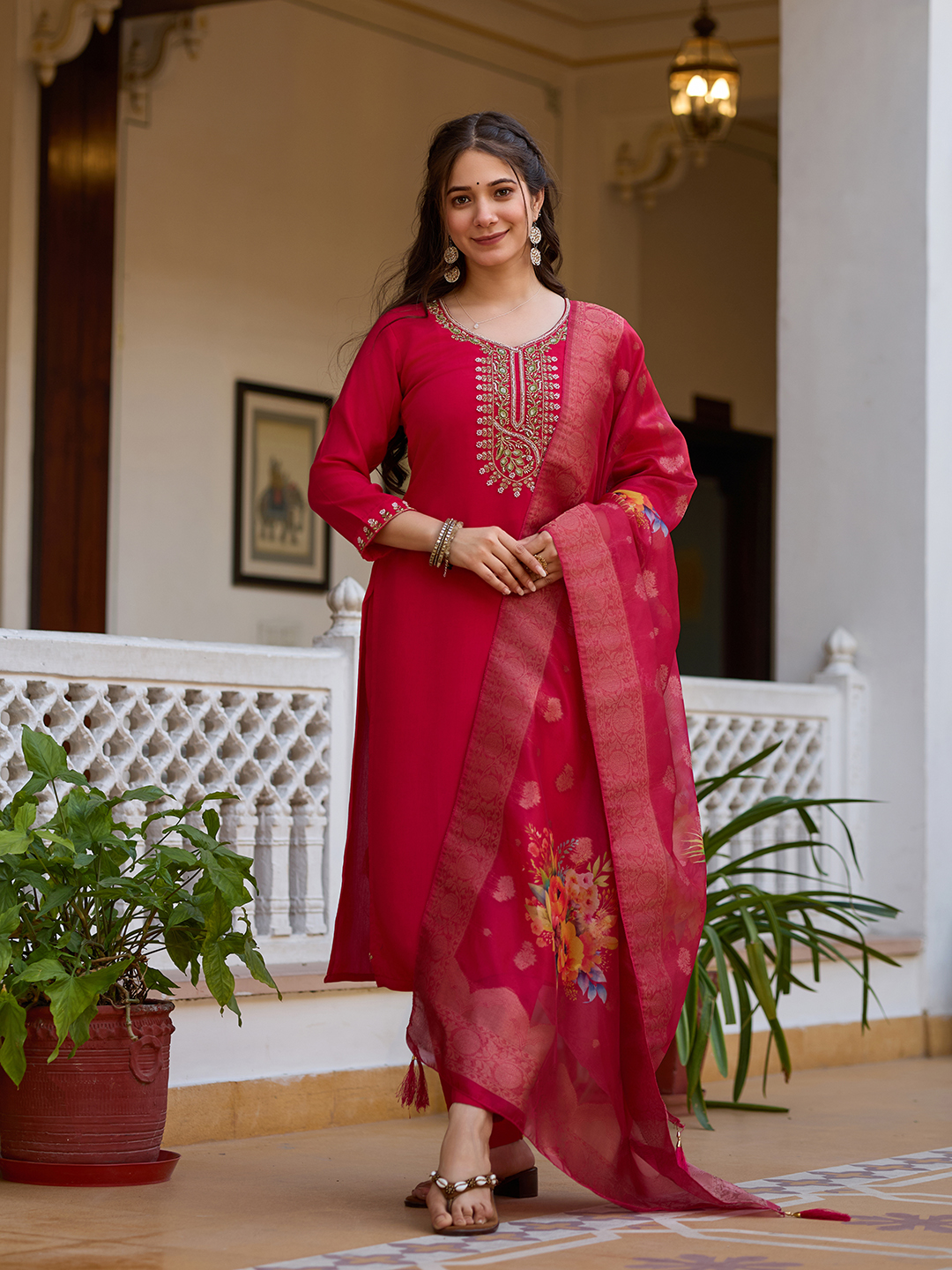
- Cotton Chanderi: Cotton-rich cloth usually feels breathable, lightly crisp and easy to wear in warm weather. Cotton Chanderi often has less shine than silk-rich cloth and suits everyday festive dressing.
- Silk Chanderi: Silk-rich cloth generally feels smoother and looks more luminous. Silk Chanderi is often selected for festive salwar suits, silk suits designs and evening gatherings where a soft sheen is desirable.
- Mul Chanderi: Mul commonly refers to a fine, soft cotton quality. Mul Chanderi may feel gentler and more fluid than crisp cotton Chanderi, although exact usage varies by weaver, seller and product label.
- Silk-cotton Chanderi: A blend can combine cotton's breathability with silk's lustre. The final feel depends on the percentage of each fibre, yarn thickness and finishing process.
Pure Chanderi doesn't always mean the same thing across every listing. Some sellers use "pure Chanderi" for a traditional silk-and-cotton construction, while others use "pure silk Chanderi" for silk-dominant cloth. Read the stated composition, lining details and care instructions instead of treating the word "pure" as a complete technical specification.
The Lavender Chanderi Kurta with Olive Embroidered Palazzo Suit demonstrates another important distinction: the kurta and bottom may not have identical visual or tactile qualities when embroidery, lining or contrasting fabric has been added. Inspect the complete three-piece construction, not only the kurta fabric.
When to Wear Chanderi Salwar Suits and What the Fabric Feels Like When Choosing a Set
The best Chanderi salwar suit depends on the event, climate, desired silhouette, amount of embellishment and whether you prefer a ready-made or unstitched garment.
Readymade versus unstitched suits
Readymade salwar suits are convenient when you need a complete outfit with coordinated proportions and minimal tailoring. Check the garment's actual measurements, especially the bust, shoulder, kurta length, sleeve opening and bottom length. A readymade suit isn't automatically a better fit simply because it includes three pieces.
Suit Set Unstitched options give greater control over length, sleeve style, neckline and ease. Unstitched fabric is useful when standard sizing doesn't suit your proportions, but tailoring costs and completion time must be included in the buying decision. Ask whether the set includes enough fabric for your preferred silhouette and whether the dupatta is included.
Choosing the bottom
A salwar gives a heritage, comfortable shape, cigarette pants create a cleaner urban line and palazzos allow more movement and airflow. A wide palazzo can make a short kurta look more balanced, while a longer straight kurta often works better with a narrower bottom.
The Cream Chanderi Embroidered Kurta Set with Dupatta suits a classic coordinated look, while the Lavender Chanderi Kurta with Olive Embroidered Palazzo Suit demonstrates how a contrasting bottom can add visual interest without additional jewellery.
Choosing the dupatta
A cotton suit dupatta is generally easier to manage during warm daytime wear, while an organza dupatta adds structure and a more formal finish. Silk dupattas bring lustre but may need more careful handling around rough jewellery, bags and furniture.
Keep the dupatta's weight proportional to the kurta. A heavily worked dupatta can pull at the neckline, create heat around the shoulders and overwhelm fine Chanderi. A lighter dupatta lets the weave remain visible and is usually more comfortable for long events.
The collections Kalamkari Print Salwar Suits (Copy), Maharashtra Paithani Inspired Salwar Suits, Punjab Phulkari Embroidered Salwar Suits and Karnataka Silk Salwar Suits can also help compare how prints, regional motifs and silk-led styling change the visual formality of a suit, even when the silhouette remains similar.
When to Wear Chanderi Salwar Suits and What the Fabric Feels Like After Proper Care
Chanderi garments last longer when they're protected from friction, washed according to the care label and stored away from moisture and direct sunlight.
Check the care label before washing because cotton Chanderi, silk Chanderi, embroidery and lining may require different treatment. Dry cleaning is often the safer choice for silk-rich or heavily embroidered suits. If hand washing is permitted, use cold water, a mild detergent and minimal soaking rather than vigorous rubbing.
Never wring a wet Chanderi kurta or pull embroidered areas into shape. Press excess water between clean towels, reshape the garment gently and dry it flat or on a broad hanger in shade. Direct sunlight can fade bright dyes, while high heat can affect silk fibres, zari and glued embellishment.
Iron Chanderi on the reverse side using low to medium heat and a pressing cloth. Avoid dragging the iron across raised embroidery. Store a completely dry suit in a breathable cotton cover, refold it periodically and keep heavy garments from crushing delicate dupattas.
Inspect areas that receive repeated friction, including underarms, handbag contact points and dupatta edges. Early repairs are easier than fixing a pulled yarn after several wears. With suitable fibre selection and careful storage, Chanderi can move from one festive season to the next without losing its light, distinctive character.
Common Questions About Wearing and Choosing Chanderi Salwar Suits
Where can I buy Chanderi fashion online?
You can buy Chanderi fashion online from established ethnic-wear websites that clearly state fibre composition, garment measurements, lining and care instructions. Compare cotton Chanderi, silk Chanderi and silk-cotton options before choosing a suit for a particular season or event.
Which website is the best for buying salwar suits?
The best website is one that provides accurate size charts, clear fabric details, product photographs, delivery information and a transparent exchange policy. For Chanderi salwar suits, detailed composition and care information are especially important because cotton, silk and blended versions feel different.
Is Chanderi silk better than cotton Chanderi?
Neither is universally better because each suits a different purpose. Silk Chanderi offers greater smoothness and lustre for festive or evening wear, while cotton Chanderi is usually more breathable and practical for warm daytime events.
What is the difference between mul Chanderi and pure Chanderi?
Mul Chanderi generally refers to a fine, soft cotton quality, while pure Chanderi can describe different constructions depending on the seller, including silk-cotton or silk-rich fabric. Check the listed fibre composition rather than relying on the words "mul" or "pure" alone.
Are Chanderi salwar suits suitable for summer?
Cotton Chanderi and lightweight silk-cotton Chanderi are suitable for summer, particularly when the kurta has breathable construction and limited lining. Choose a manageable dupatta, relaxed fit and lighter colours for humid daytime wear.
How should a Chanderi salwar suit be washed?
Follow the garment's care label because silk-rich, embroidered and lined suits may require dry cleaning. When hand washing is permitted, use cold water and mild detergent, avoid wringing, dry the garment in shade and iron it on the reverse with low to medium heat.


