When saree pleats keep opening even after pinning, the pin is rarely the only problem. Slippery fibres, an incorrectly fitted petticoat, uneven pleat widths and pins placed too close to the edge can make a carefully arranged front loosen within minutes. A stable drape comes from controlling fabric tension before the pin is added.
Most pleat failures are easy to diagnose. A soft silk saree needs a different approach from a crisp cotton saree, while a heavy border needs a different fold depth from a lightweight printed saree. The following method helps identify the cause, correct the base and choose the right amount of support without creating a stiff or bulky front.
When Saree Pleats Keep Opening Even After Pinning: What Causes It?
Saree pleats keep opening even after pinning when fabric movement, waist tension or pin placement is stronger than the small area held by the pin. The most common causes are a slippery weave, pleats that are too wide, a loose petticoat or a pin fastened only to the top layer.
Slippery or fluid fabric
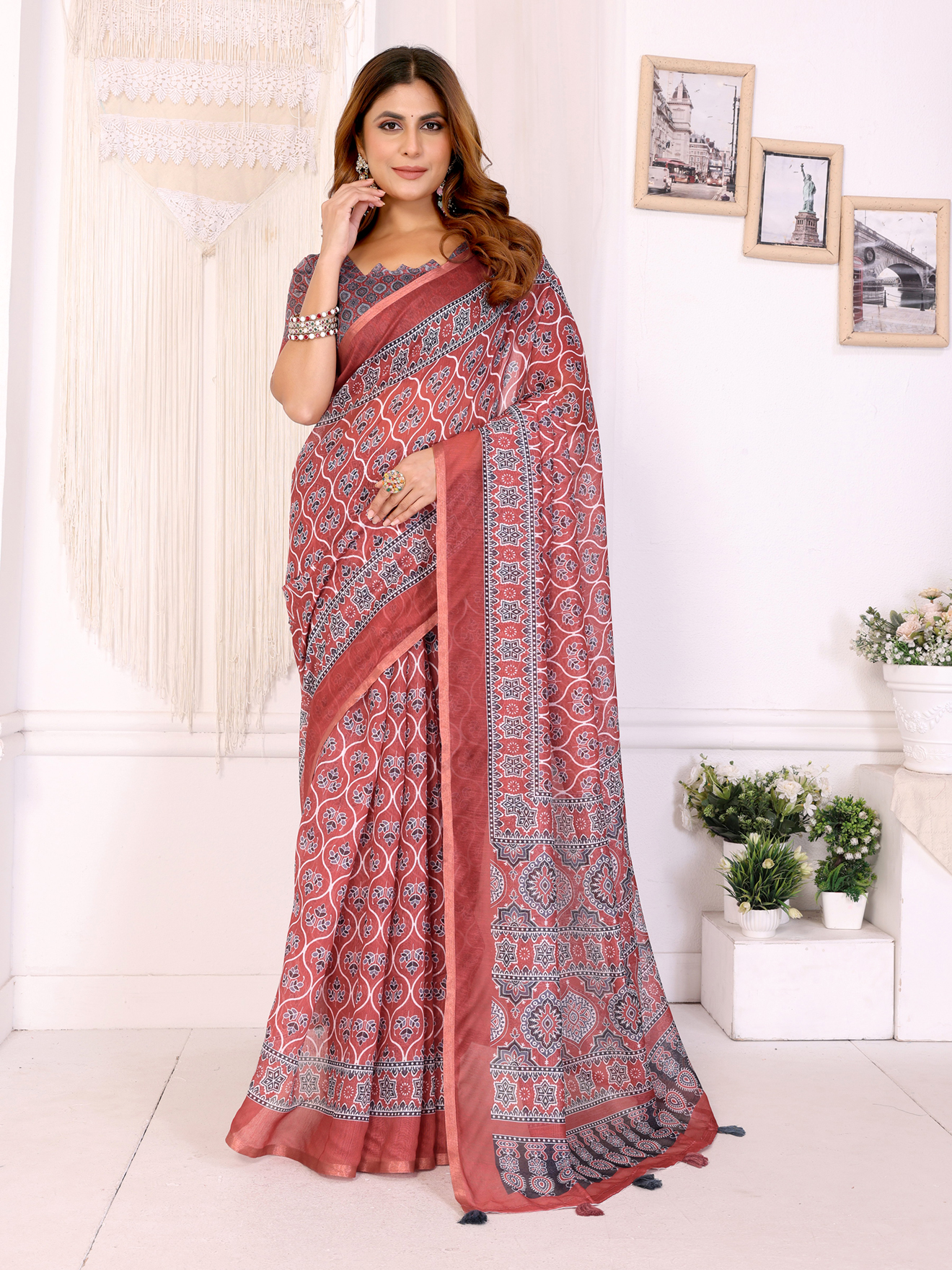
Banarasi silk, soft silk, satin-like blends and some polished synthetic fabrics have smooth surfaces that allow adjacent folds to slide apart. Pashmina silk can also relax after folding because its softer hand doesn't always hold a sharp crease without preparation. Pink Soft Pashmina Silk Printed Saree With Patola Border needs controlled tension and a deeper anchor than a dry, crisp cotton weave.
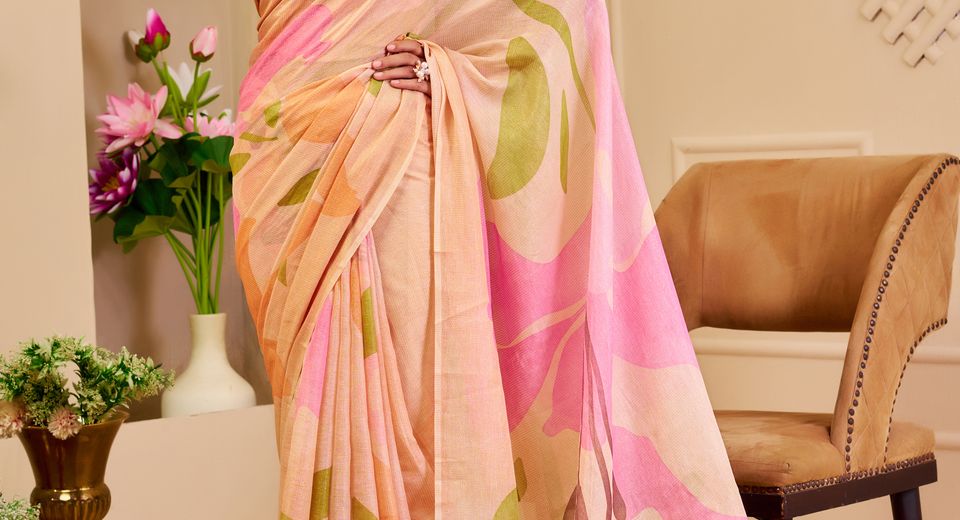
Printed linen cotton usually grips itself better, but a very soft linen cotton saree may still spread when the pleats are wide. Peach Floral Linen Cotton Saree with Soft Printed Pallu demonstrates why fabric body matters: a soft fall can look elegant while requiring narrower, more evenly compressed pleats.
Uneven pleat width
Pleats open when the outer folds are wider or shorter than the inner folds. The top edge may appear secure, but the lower half then pulls sideways as you walk, sit or climb stairs. Pleats measuring approximately 10 to 12 centimetres at the top usually create a manageable front for many adults, although the finished width depends on saree length, height and the desired number of folds.
Insufficient waist support
A petticoat tied loosely allows the entire pleated section to descend and spread. A petticoat tied too tightly can also distort the drape by creating a narrow ridge at the waist. The drawstring should sit securely at the natural waist or slightly above the hip, depending on the draping style, and should support the saree without digging into the skin.
When Saree Pleats Keep Opening Even After Pinning: How Should the Petticoat Fit?
The petticoat should fit firmly around the waist and hips, have enough flare for the saree volume and remain stable when you take several steps. Correct preparation gives the pleats a fixed base before any safety pin is used.
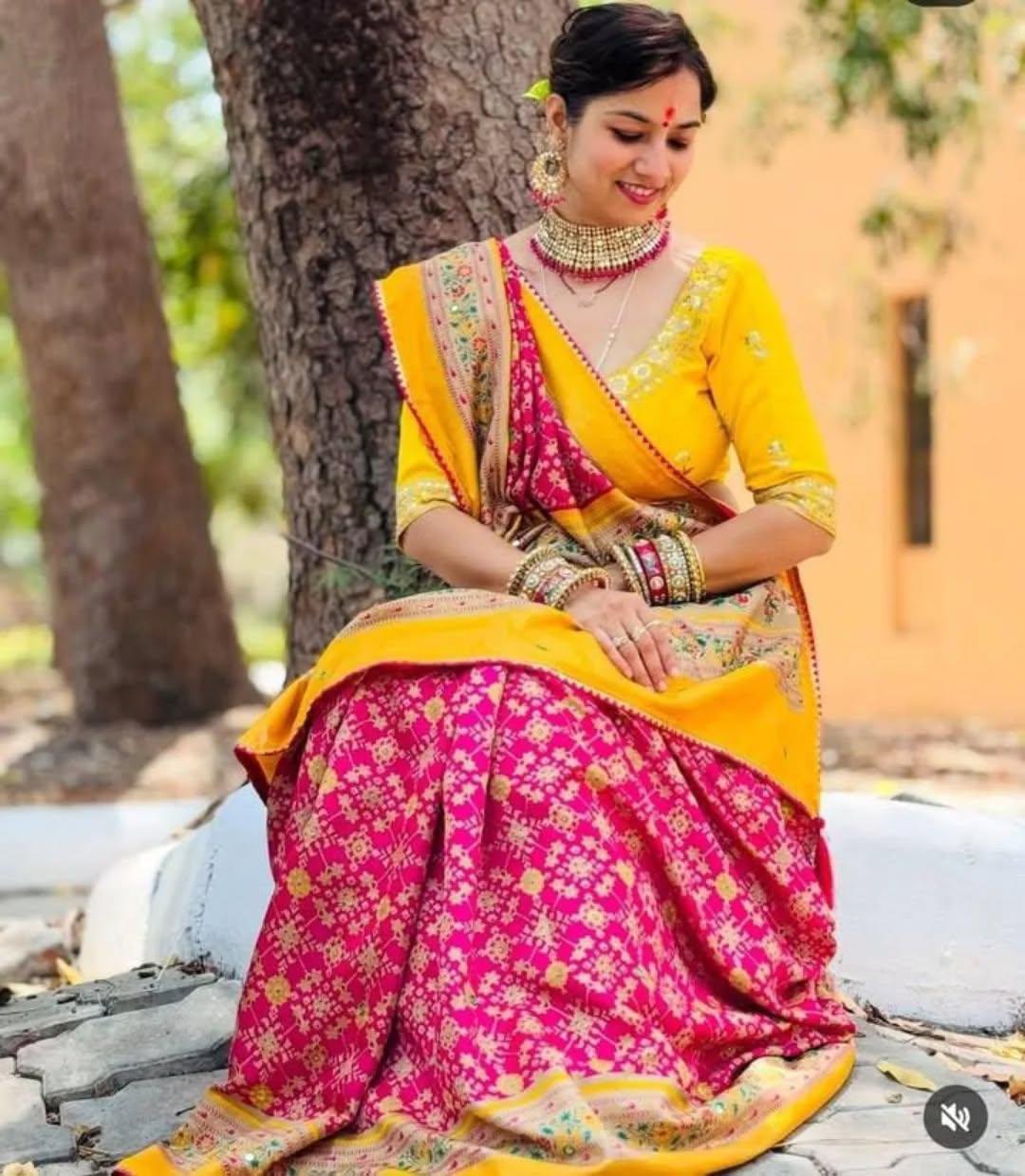
Stand upright while tying the petticoat rather than adjusting it while bending forward. Tie the drawstring with a secure double knot, then walk, sit and turn once. If the petticoat slides downward or twists, the pleats will inherit that movement. If the fabric bunches around the ankles, the petticoat may not have enough flare for the saree or may be tied at the wrong height.
A fitted petticoat is especially important for a heavier saree. Heritage Peacock Patola Pashmina Silk Saree has a visually substantial Patola-inspired border and a soft silk body, so the waist foundation should hold the weight without depending on a single pin. A narrow or weak petticoat drawstring can gradually loosen as the saree is worn.
- Keep the drawstring knot flat so it doesn't create a bump under the pleats.
- Place the knot slightly to the side if the front needs to remain smooth.
- Use a petticoat with enough flare for the saree to spread naturally at the feet.
- Check that the petticoat waistband doesn't roll when you sit down.
Comparing lighter everyday fabrics with more fluid festive weaves is easier when browsing Sarees from Rs 1000 to Rs 1500. The listed price doesn't determine pleat stability; fibre, weave, finishing and border weight matter more.
When Saree Pleats Keep Opening Even After Pinning: How Should You Fold Them?
The correct method is to align the lower edges first, keep every fold parallel and compress the pleats gradually from the waist to the hem. Folding from the top alone often produces a neat-looking waistband with spreading at knee level.
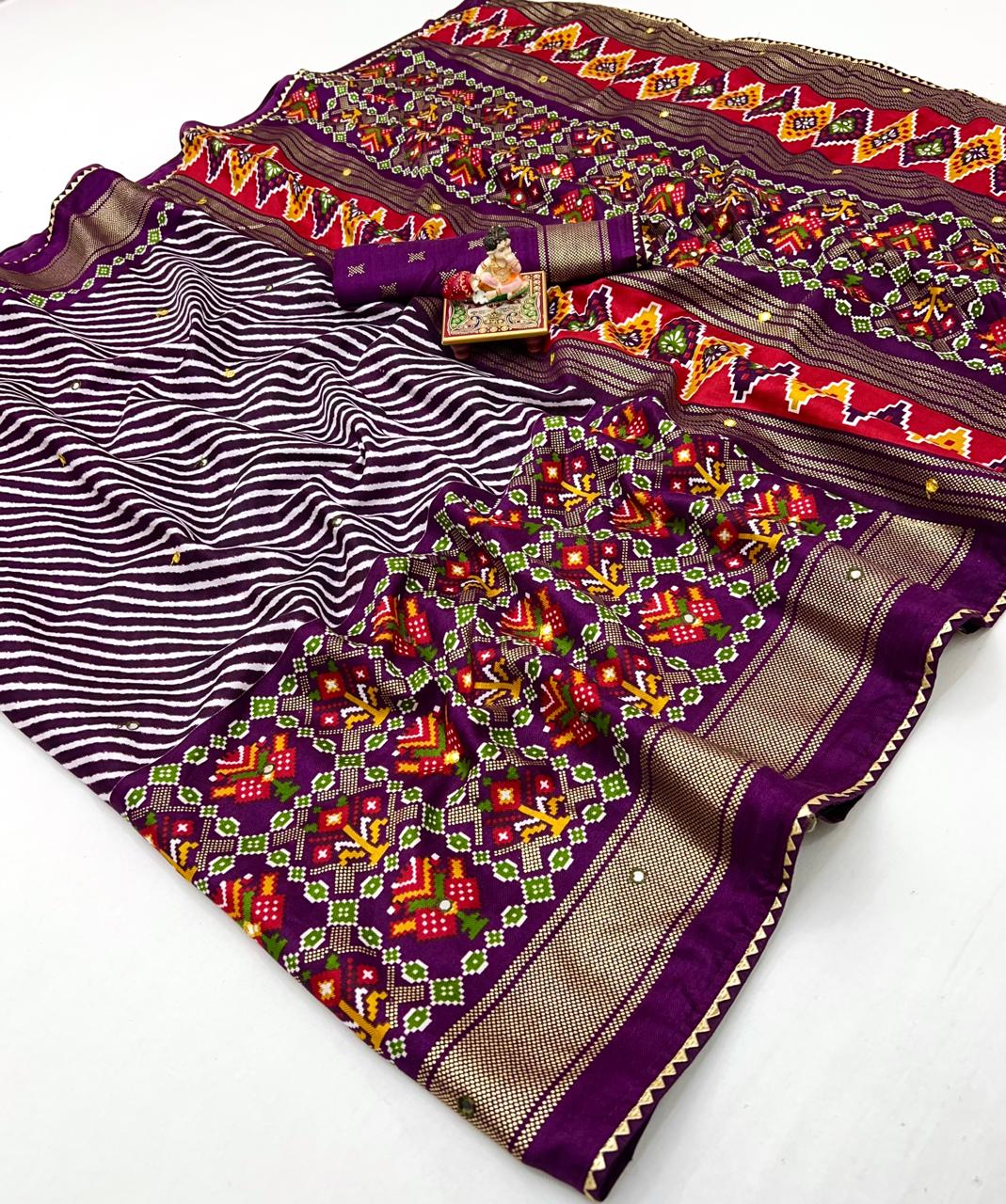
After deciding where the pallu will finish, bring the remaining front fabric across the body and hold the top edge at waist height. Run your fingers down to the hem and align the bottom edges. Make the first fold, then repeat at the same width until the panel is complete. Keep the pleat stack vertical rather than allowing it to fan outward.
Count the folds instead of relying only on appearance. Five to seven moderately narrow pleats are often easier to control than three or four broad pleats, especially with soft silk. A crisp cotton saree can sometimes support wider folds, but broad pleats become unstable if the fabric is thin or the border is stiff.
Press the completed stack between your palms for several seconds. Do not twist the pleats to make the bundle smaller, because twisting creates diagonal tension and causes the lower edges to separate. For a fluid saree, a clean temporary fold on a flat surface before wearing can help the fabric retain the arrangement.
Designer Black Soft Silk Saree with Intricate Patterns illustrates another useful principle: a dark, patterned body may hide small shifts, but a shifting border will still reveal uneven folds. Match the border lines at the hem before securing the top. Border alignment is a practical way to check whether the pleats are genuinely parallel.
When Saree Pleats Keep Opening Even After Pinning: Where Should Pins Go?
Saree pins should pass through the pleat stack and a stable layer beneath it, with the pin positioned horizontally or at a slight upward angle rather than dangling vertically. One well-placed anchor near the waist is usually more effective than several pins attached only to the top fold.
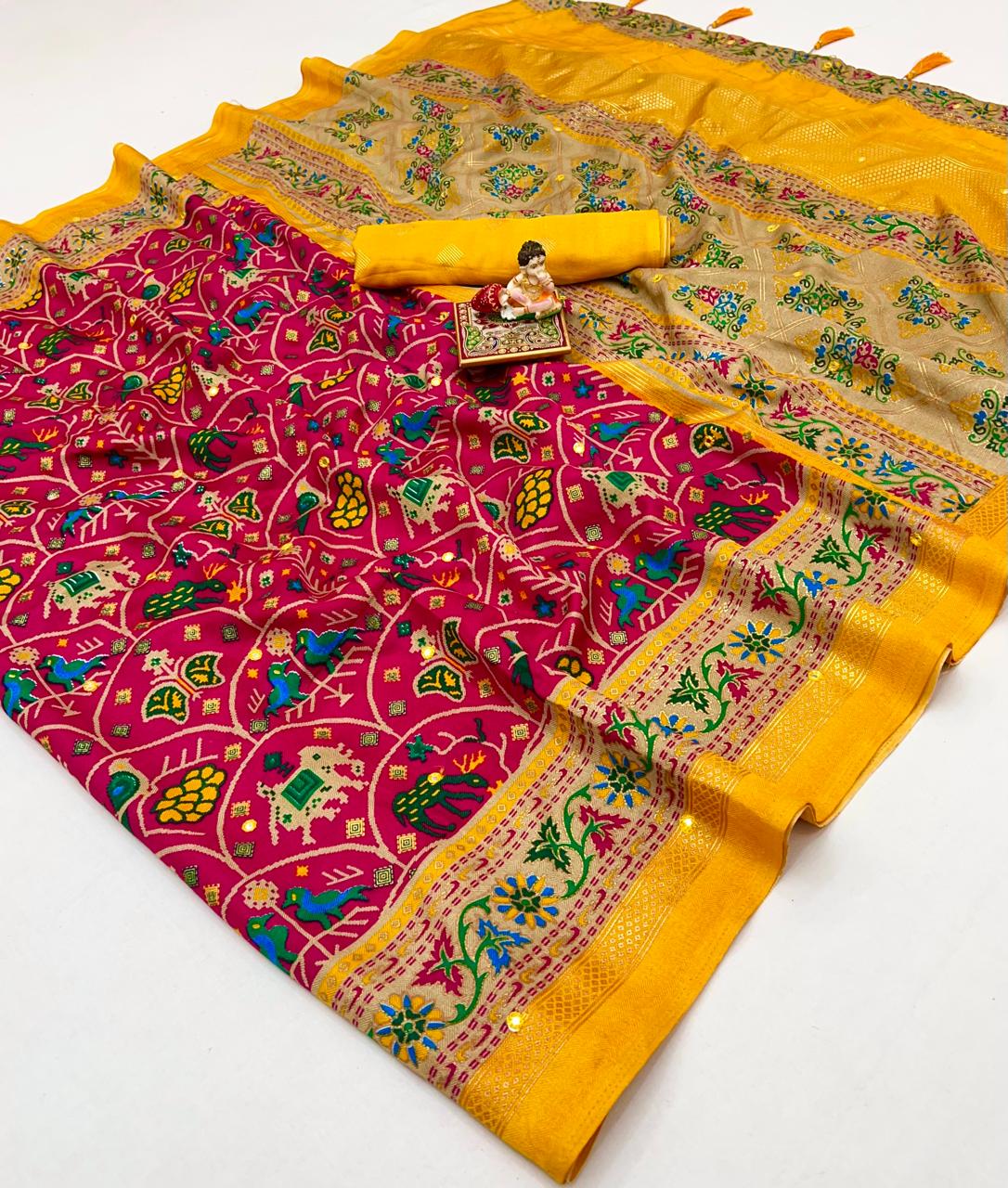
Use a two-point support system
Place the first safety pin approximately 2 to 3 centimetres below the waistband, catching the full pleat stack and the petticoat underneath. Place a second, smaller pin around 10 to 15 centimetres lower only if the fabric continues to spread. The second pin should not be so low that it restricts walking or creates a visible ridge across the front.
Insert the pin from the inside where possible, then close it completely. A half-closed pin can catch skin, blouse fabric or the saree edge. Choose a smooth, strong safety pin designed for clothing rather than a very large pin that leaves holes in delicate silk. Test the pin on an inconspicuous seam or allowance before using it on a fine saree.
Pin the border with care
A heavy zari border should not carry the entire weight of the pleated saree. Zari can add stiffness and weight, and repeated pinning through the border may leave visible punctures. Anchor the body of the pleats first, then use a discreet pin near the border only when the border is turning outward.
Elegant Mustard Linen Cotton Saree Set benefits from a clean border line. Pinning through a prominent edge may interrupt the design, so securing the inner pleat stack preserves both the drape and the appearance of the border.
When Saree Pleats Keep Opening Even After Pinning: Which Fabric Fix Works?
Fabric-specific adjustments work better than using the same pleat width and pin count for every saree. Soft silk needs friction and compression, linen cotton needs orderly folds, and tissue cotton needs gentle handling because sharp creases can become visually prominent.
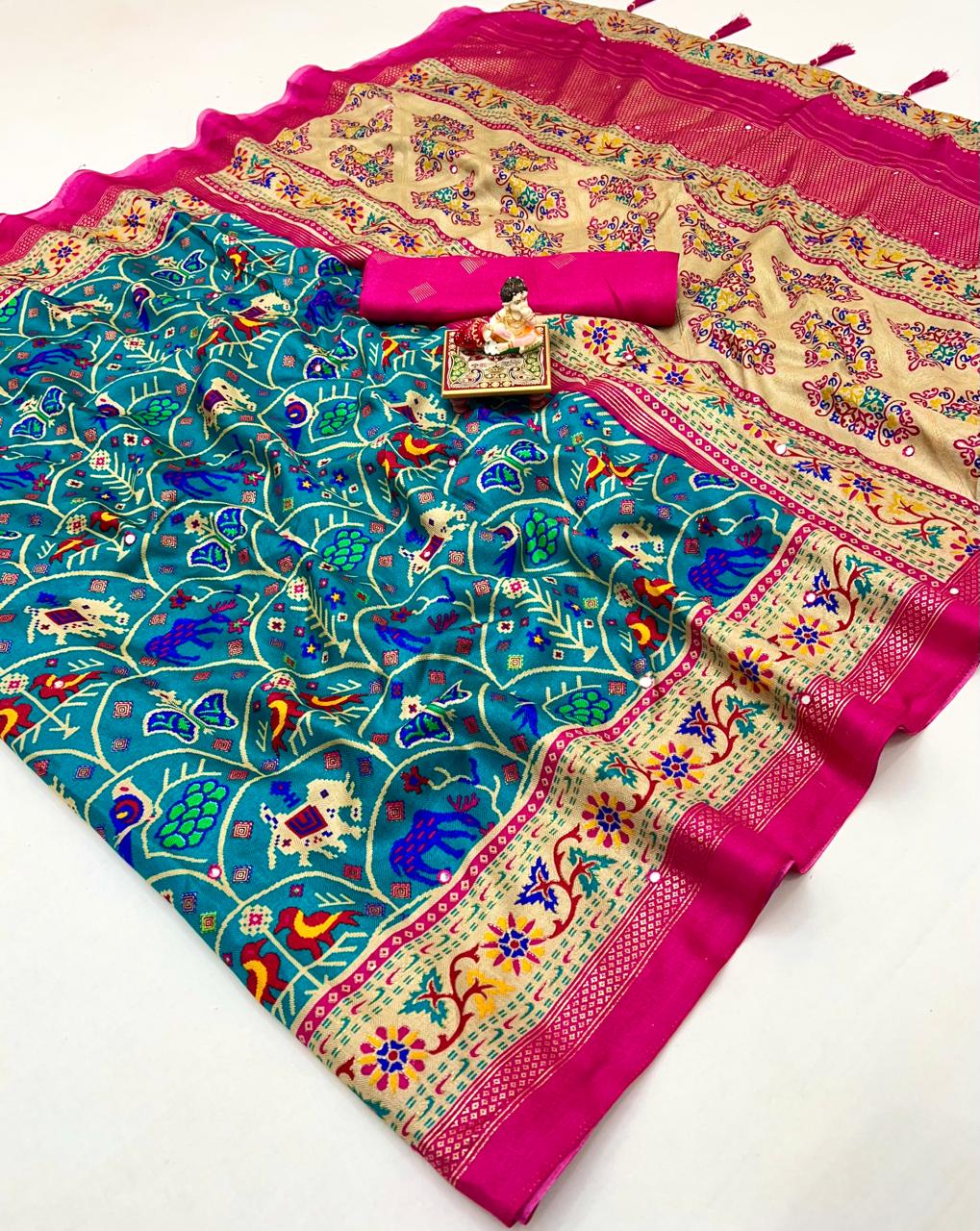
- Soft silk and Pashmina silk: Make narrower folds, compress the stack with both hands and use a concealed anchor through the petticoat. Designer Rani Pink Patola Print Pashmina Silk Festive Saree benefits from a stable base because a festive border and softer body can move at different rates.
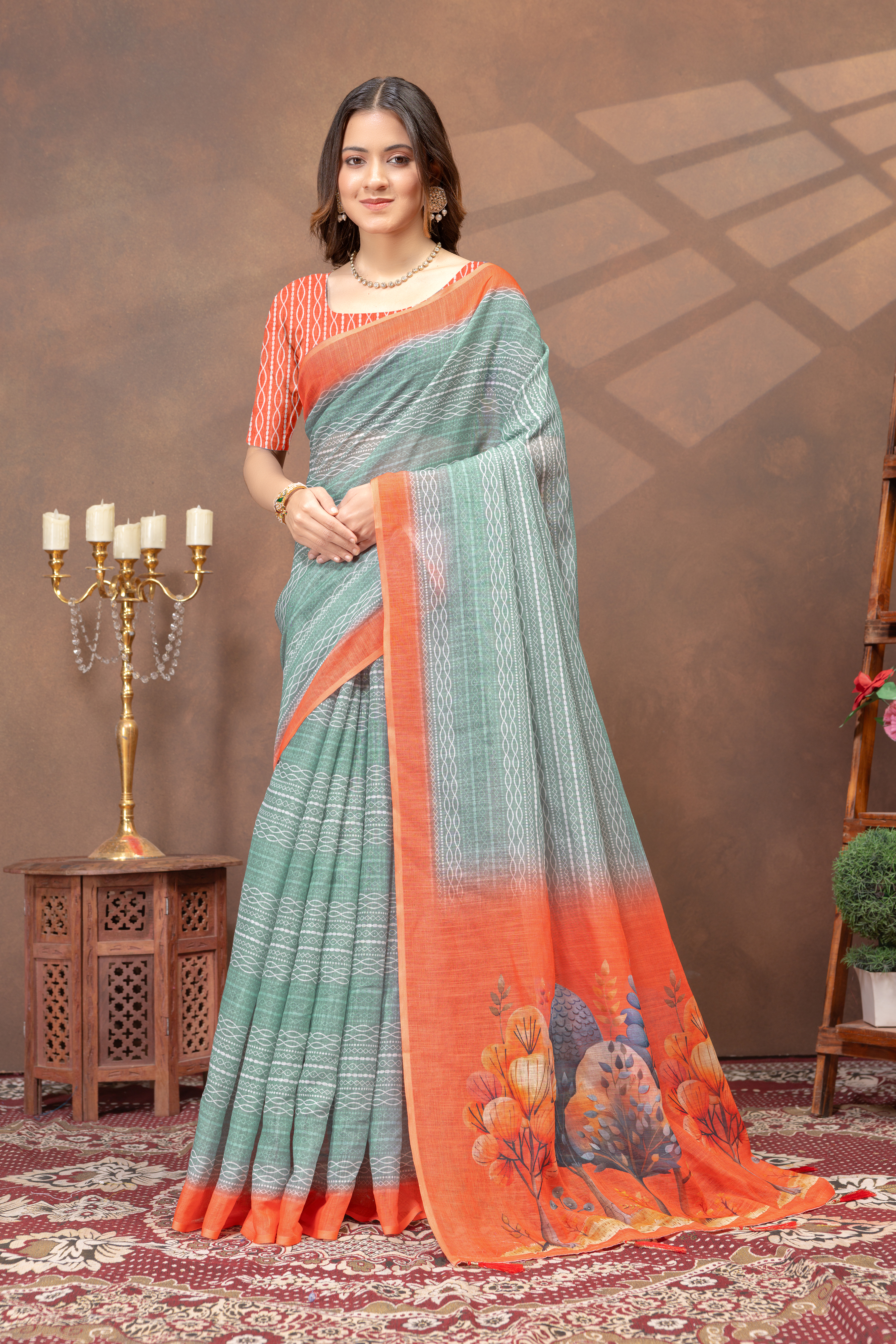
- Linen cotton: Align the selvedge and bottom edge carefully, then allow the natural body of the weave to support medium-width pleats. Peach Floral Linen Cotton Saree with Woven Jacquard Borders should be checked at the jacquard edge, where the woven section may behave more firmly than the plain body.
- Tissue cotton: Avoid dragging the pleats across the floor or pressing them with excessive heat. Peach Tissue Cotton Saree With Floral Print | Varnavi needs light, even compression and a pin placed through the inner stack rather than repeatedly through a delicate visible area.
- Silk with patterned borders: Use border motifs as alignment guides. If the motifs rise or dip across the hem, the pleats are probably not evenly folded.
Sales filters such as Sarees Under 20% Off and Sarees Under 10% Off can help when building a fabric-diverse wardrobe, but discount level doesn't indicate how easy a saree will be to pleat. Read the fabric description and inspect the border weight before deciding which drape technique to use.
When Saree Pleats Keep Opening Even After Pinning: How Can You Repair the Drape?
When pleats open after dressing, pause at a private space, release only the lower support pin, realign the hem and re-anchor the stack near the waist. Pulling loose pleats sideways while wearing them usually makes the problem worse.
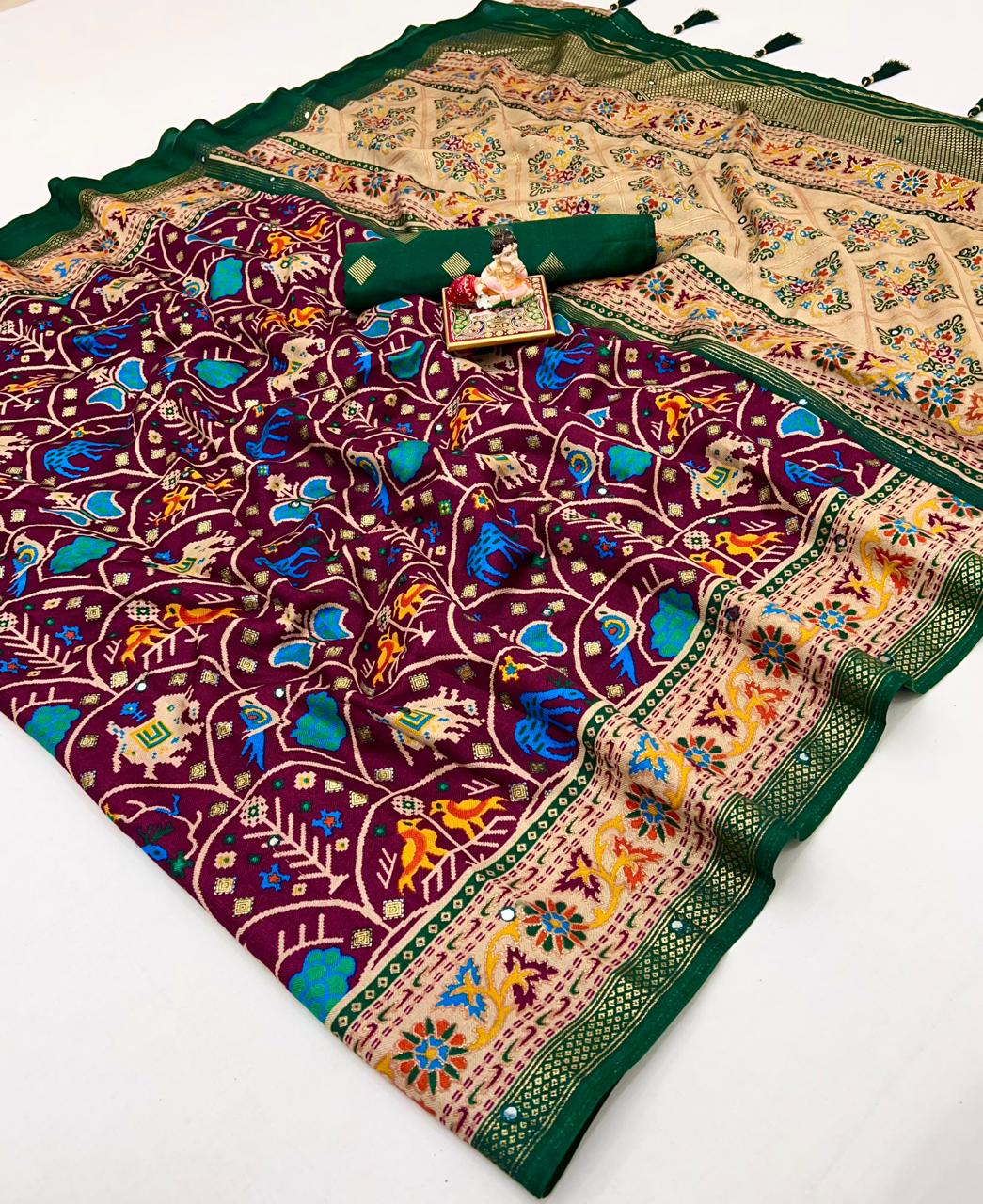
Stand with your feet slightly apart and lift the pleated section from underneath rather than tugging at the top edge. Let gravity show where the folds have separated. Compress the pleats from the hem upward, check that the border is level and then fasten the upper anchor again. If the entire front has moved down, retuck the saree at the waist instead of adding more pins to a displaced stack.
A temporary adjustment can be made with a small concealed pin through the inner folds, but repeated emergency pinning may damage silk, zari or delicate tissue cotton. Remove all pins before washing or storing the saree. Leaving pins in place can enlarge punctures and create permanent weak spots.
Sarees Flat 60% Off and Sarees Flat 50% Off may offer opportunities to practise with different textures, but a practice saree should still be handled carefully. Use a stable cotton saree first to learn pleat width and pin placement, then adapt the technique for soft silk, Patola, zari or tissue cotton.
When Saree Pleats Keep Opening Even After Pinning: What Should You Check Before Leaving?
A five-minute movement test reveals whether the pleats are secure enough for the day. Walk ten steps, sit on a chair, climb two or three stairs and turn your upper body before making final adjustments.

- Check that the petticoat has not slipped below the intended waistline.
- Look at the lower edges to confirm that the folds remain parallel.
- Feel whether the top pin has caught the petticoat and the entire pleat stack.
- Check that no pin point is facing the body or catching the blouse.
- Confirm that the saree hem isn't dragging, because floor contact can pull the pleats open.
Correcting a problem before leaving is easier than repairing a fully loosened drape at an event. A stable base, consistent pleat width and one properly placed anchor usually provide better results than a row of visible pins. The same checks work for daily cotton sarees, festive Pashmina silk and sarees with zari or woven jacquard borders.
Common Questions About Saree Pleats That Will Not Stay in Place
Why do saree pleats open even when I use safety pins?
Saree pleats usually open because the pin holds only the top layer while slippery fabric, uneven folds or a loose petticoat continues to move underneath. Secure the full pleat stack to the petticoat and check the waist foundation before adding more pins.
How many pins should I use for saree pleats?
One strong pin near the waist is often enough for a stable cotton saree, while soft silk may need a second concealed pin 10 to 15 centimetres lower. Too many pins can restrict movement and leave unnecessary holes, especially in silk, zari and tissue cotton.
How wide should saree pleats be?
Pleats measuring about 10 to 12 centimetres at the top are a practical starting point for many adults. Narrower pleats usually work better for soft silk and fluid fabrics, while crisp cotton can support moderately wider folds.
Can a loose petticoat make saree pleats spread?
Yes, a loose petticoat allows the pleated saree to slide downward and fan out. Tie the petticoat securely at the intended waist or hip position, then walk, sit and turn to confirm that the waistband stays stable.
How do I keep soft silk saree pleats from opening?
Use narrower, evenly compressed pleats and anchor the complete stack to the petticoat near the waist. Avoid relying on a pin through a heavy border, and test the drape by walking and sitting before leaving.
Should I iron saree pleats to keep them in place?
Gentle pressing can help a suitable fabric retain its folds, but excessive heat may damage silk, zari, tissue cotton or printed finishes. A firm hand press and correct pin placement are safer first steps than ironing every pleat.