

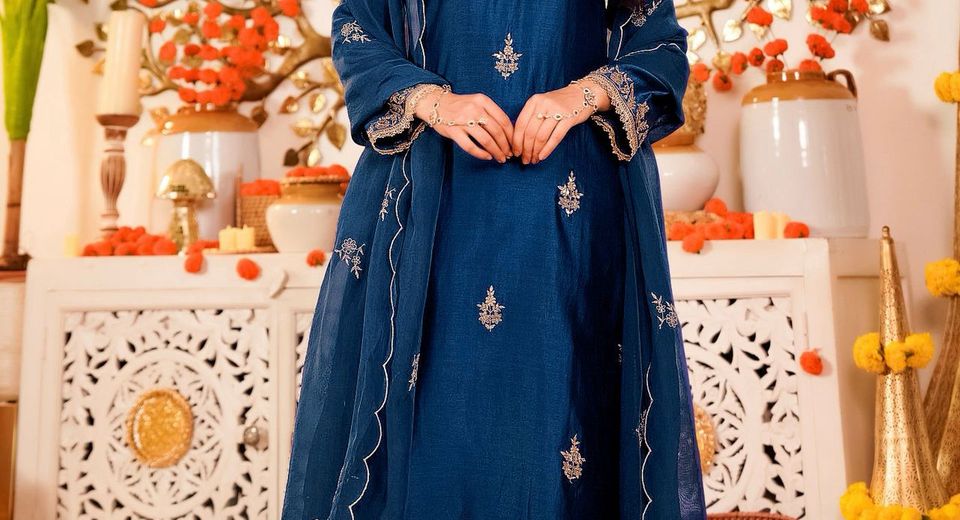
When Pant Salwar Suits Work Well and What to Pair With Them becomes easier to answer once you separate the outfit's silhouette from its decoration. A pant salwar suit combines a kurta with straight or gently tapered trousers, usually with a dupatta, so it offers more structure than a traditional salwar while remaining distinctly Indian. The shape works for office hours, travel, festive lunches and smaller celebrations when the fabric, length and accessories match the setting.
The most useful styling decision isn't colour alone. Consider how much movement you need, whether the venue is formal or relaxed, how visible the footwear will be, and whether the dupatta should add softness or formality. A well-proportioned pant salwar suit can look composed with flats and minimal jewellery, or occasion-ready with metallic sandals and a more decorative dupatta.
When Pant Salwar Suits Work Well and What to Pair With Them in Daily Dressing
Pant salwar suits work well when you want the comfort of trousers with the polish of a coordinated ethnic outfit. The straight lower half creates a clean vertical line, while the kurta and dupatta retain the cultural character of salwar kameez dressing.
For daily office wear, choose a knee-length or slightly longer kurta, a medium-weight fabric and restrained surface decoration. A straight pant salwar suit is practical for commuting because the trousers don't gather around the ankles, and a shorter dupatta is easier to manage at a desk. Solid colours, small prints and limited zari generally look more professional than heavy sequins.
For college, informal dinners and daytime visits, printed rayon, cotton blends and light silk provide useful flexibility. A printed kurta can carry the visual interest, allowing plain trousers and a simple dupatta to complete the outfit without competing motifs.
For festive gatherings, family pujas and pre-wedding lunches, a richer colour or a classic textile reference gives the streamlined silhouette more presence. Maharashtra Paithani Inspired Salwar Suits and Odisha Sambalpuri Salwar Suits, for example, bring regional visual language into a trouser-based outfit. Use time-honoured-looking details selectively so the modern cut remains visible.
Pant salwar suits are less suitable when a dress code specifically calls for a voluminous Anarkali, a heavily embroidered bridal outfit or a formal drape such as a sari. A pant silhouette can still look festive, but it communicates tailored ease rather than ceremonial grandeur.
When Pant Salwar Suits Work Well and What to Pair With Them for Proportion
A balanced pant salwar suit usually pairs one dominant proportion with two quieter elements. If the kurta is heavily printed or embellished, keep the trousers and dupatta comparatively calm; if the kurta is plain, a patterned dupatta can supply the focal point.
Choosing the trouser shape
Straight pants suit most body proportions because the hem stays consistent from hip to ankle and creates a neat outline. Gently tapered pants can look sharper with a shorter kurta, but they should not pull across the thigh or bunch heavily at the ankle. Wide-leg trousers can work with a fitted or column-shaped kurta, although they need enough length and movement to avoid looking like an accidental mismatch.
The trouser hem changes the apparent height of the wearer. An ankle-length hem shows sandals or juttis and gives the outfit a contemporary finish. A longer hem that nearly touches the top of the foot creates a more continuous line, but it requires footwear that won't catch in the fabric.
Choosing the kurta length
A kurta ending around the knee is the most adaptable length for a pant salwar suit. A shorter kurta highlights the trouser cut and works well with a tapered leg, while a longer kurta gives more coverage and suits straight pants. A side slit can make a long kurta easier to walk in and prevents the outfit from appearing visually heavy.
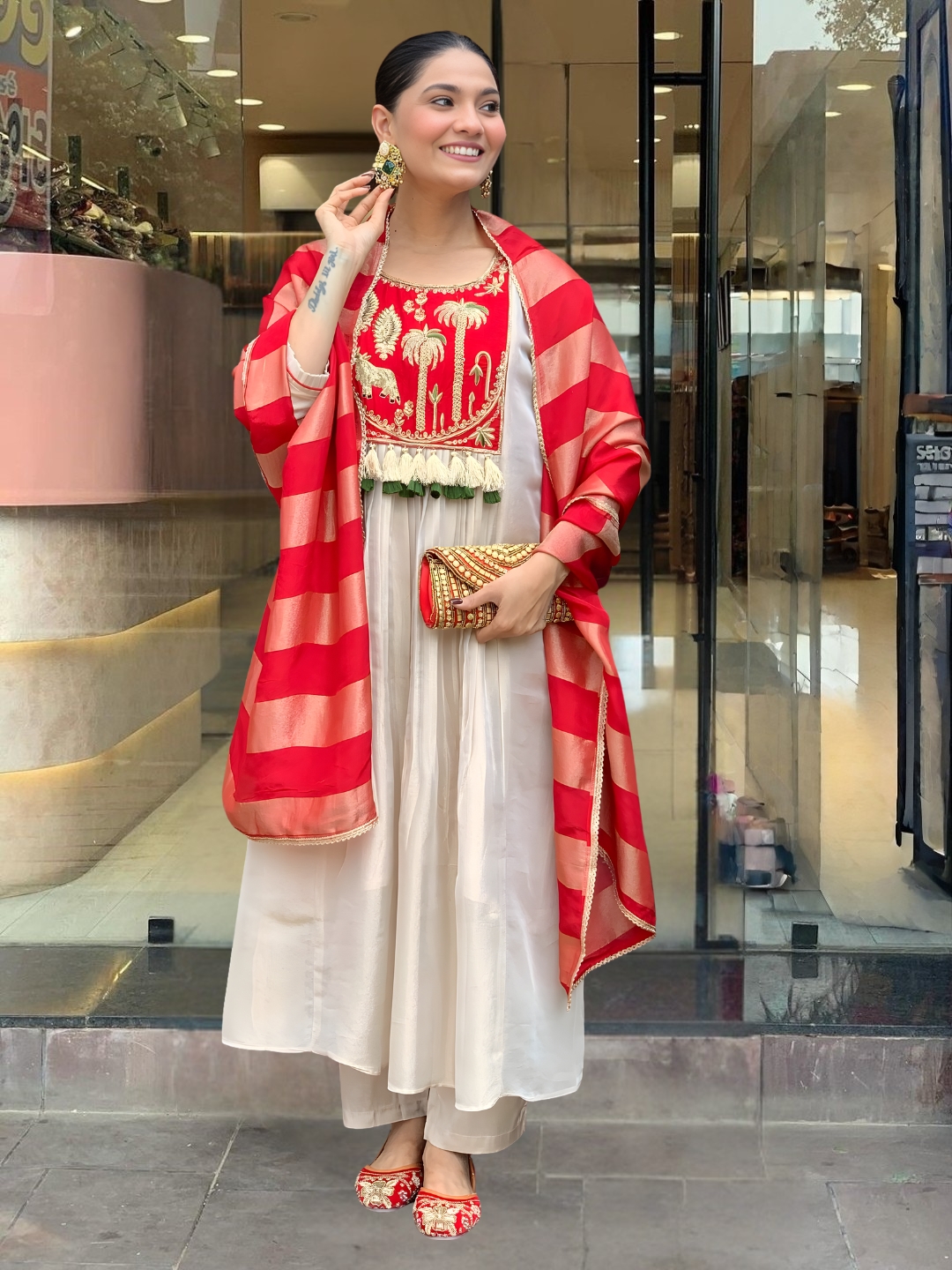
Elegant Beige Anarkali Kurta Pant Set with Dupatta shows how a flared upper layer can be paired with pants while preserving a dressier outline. The key styling lesson is to treat the Anarkali-inspired flare as the dominant volume and avoid adding an oversized handbag or very broad dupatta.
Deciding whether the dupatta is necessary
A dupatta is useful when you want more colour, coverage or ceremony, but a pant salwar suit doesn't always require elaborate draping. For work, place a lightweight dupatta evenly over both shoulders or fold it lengthwise for a narrow vertical line. For a festive event, let one end fall from the shoulder and bring the other end across the arm so the border remains visible.
A printed dupatta should usually be paired with a solid kurta or a small-scale print. A plain chiffon, organza or lightweight silk dupatta can calm a strongly printed suit, although the fabric should remain comfortable for the season and venue.
When Pant Salwar Suits Work Well and What to Pair With Them for Work
For office dressing, pair pant salwar suits with low-heel footwear, compact jewellery, a structured bag and a dupatta that stays secure during movement. The strongest office combinations use one clear colour story rather than several unrelated accents.
Stylish Navy Floral Silk Kurta Pant Dupatta Set can be styled with tan, black or muted gold accessories. Tan loafers or closed-toe block heels make the navy and floral pattern feel professional, while small gold studs and a firm tote prevent the silk from looking too evening-oriented. Keep makeup and hair relatively clean if the print already supplies visual detail.
Cream Pink Printed Rayon Readymade Salwar Suit works for a softer daytime wardrobe. Pair it with nude, cream or dusty-rose flats and a medium-sized neutral handbag. Rayon can drape comfortably, but it benefits from careful ironing and should not be crowded with heavy necklaces that pull at the neckline.
For a formal workplace presentation, choose a suit with a defined shoulder, modest neckline and trousers that allow a full stride. Avoid very long, trailing dupattas, noisy bangles and footwear that requires constant adjustment. A watch, small hoops and one ring are usually enough for a polished result.
When Pant Salwar Suits Work Well and What to Pair With Them for Festivals
For festive dressing, pair a pant salwar suit with one noticeable heritage element, such as zari edging, jhumka earrings, embroidered footwear or a regional print. One strong detail usually looks more refined than wearing every festive accessory at once.
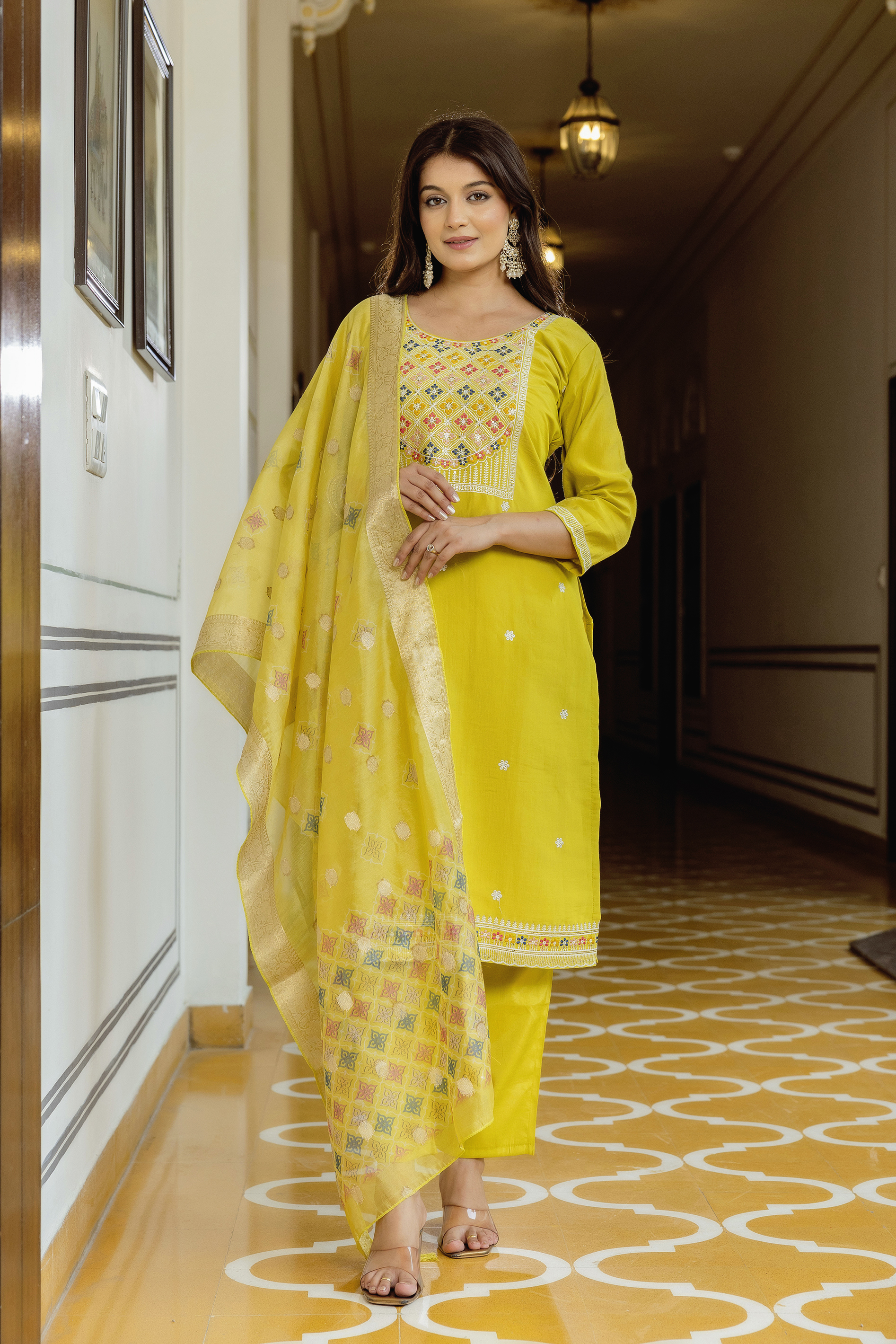
Designer Yellow Salwar Suit with Dupatta can be styled with antique-gold jhumkas, brown or gold kolhapuri-style sandals and a warm-toned potli. Yellow already has a high visual impact, so choose a restrained bindi and let the dupatta border provide the formal finish.
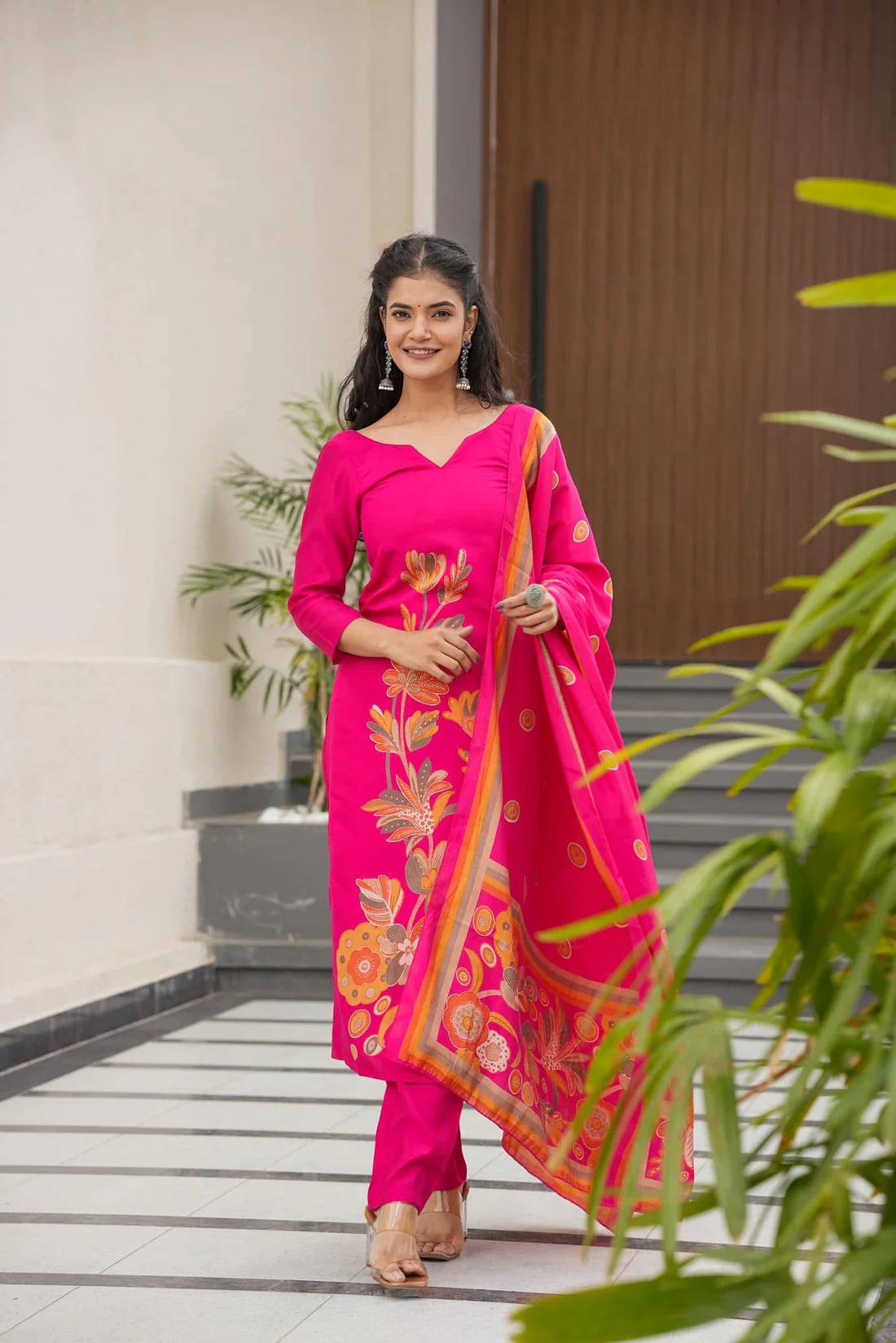
Pink Flower Printed Salwar Suit suits daytime celebrations when paired with pearl studs, silver-toned sandals or blush-coloured flats. A small white or rose-gold bag can connect the floral print to the accessories without matching every shade exactly.
Gujarat Bandhej Salwar Suits and Punjab Patiala Salwar Suits offer useful styling references for a regional festive mood. Bandhej-inspired colour combinations can be supported with oxidised silver jewellery, while a Patiala reference usually benefits from classic juttis and a more relaxed drape. A contemporary pant cut should not be overloaded with a full set of strongly time-honoured accessories; select one regional cue and keep the rest streamlined.
Pista Royale Salwar Suit is well suited to daytime pujas and garden gatherings when worn with pearl, champagne-gold or ivory accents. Pista green looks particularly composed with cream footwear and a dupatta border in gold or a related green, rather than a completely contrasting neon shade.
When Pant Salwar Suits Work Well and What to Pair With Them by Fabric
Colour, fabric and print should be selected according to the light, temperature and formality of the event. A colour that looks subtle indoors may appear much brighter in direct sunlight, while a glossy fabric can become more formal under evening lighting.
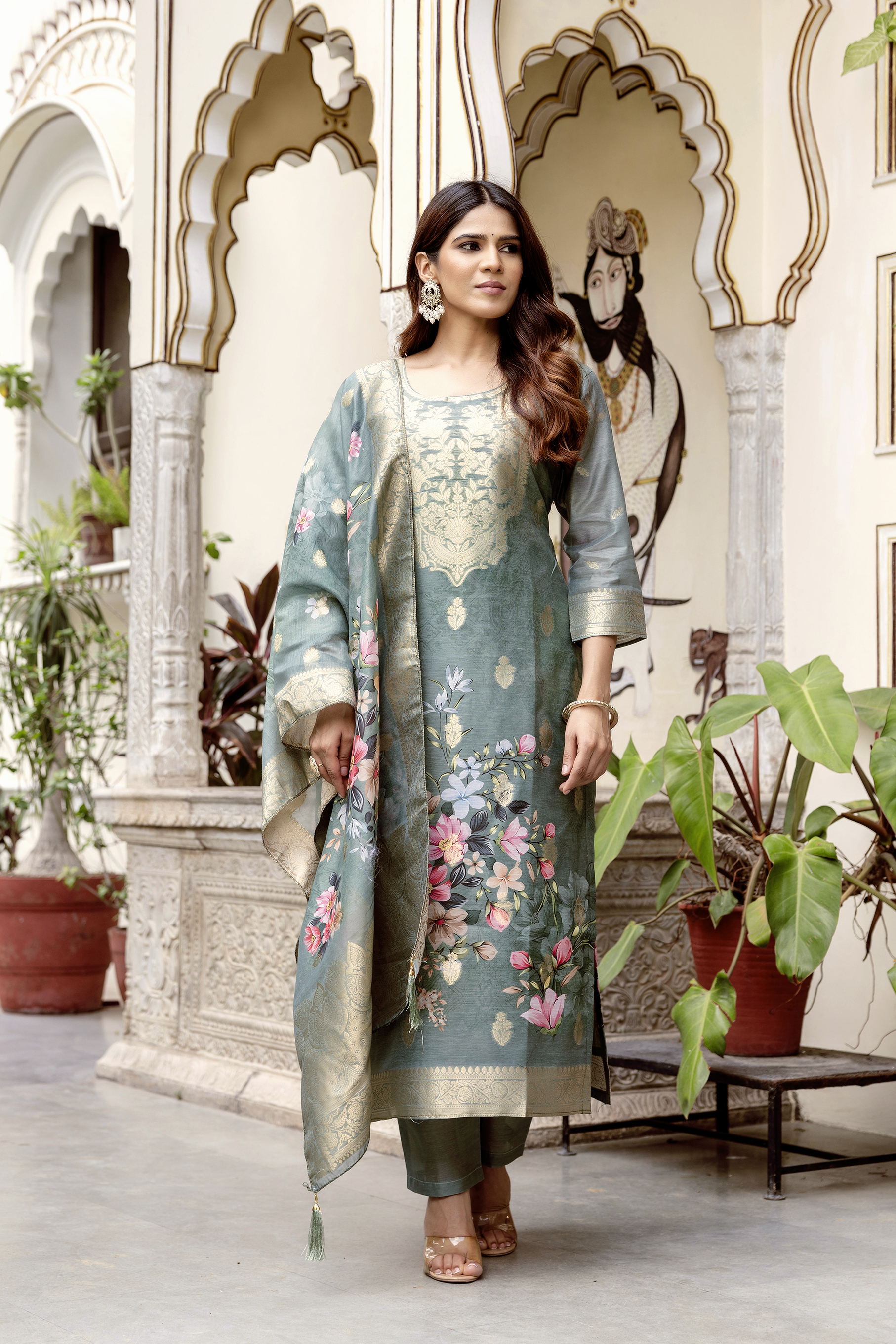
Rayon is comfortable for warm weather and falls fluidly around the body, making it useful for printed everyday suits. Silk has more sheen and structure, so a silk pant salwar suit often needs minimal jewellery and footwear. Chanderi can look delicate and festive but may require careful handling because its lightweight texture can stretch. Banarasi silk and zari are primarily rich choices that normally suit celebrations better than routine office hours.
Small floral prints, butis and restrained geometric motifs are easy to repeat with neutral accessories. Large florals or high-contrast patterns should be allowed to lead the outfit. Avoid pairing a large printed kurta with a heavily printed dupatta unless both prints share a clear colour relationship and one pattern is much smaller than the other.
Elegant Camel Shade Salwar Suit Set demonstrates the value of a neutral base. Camel works with tan leather, antique gold, ivory and deep brown, so the outfit can shift from daytime errands to an informal dinner by changing the earrings, lipstick and footwear.
Yellow Flower Printed Salwar Suit brings a brighter approach. Balance a vivid yellow floral print with white, beige, muted green or warm brown accessories instead of introducing several saturated colours. A neutral dupatta can absorb some of the brightness and make the outfit easier to wear during the day.
When Pant Salwar Suits Work Well and What to Pair With Them for Different Body Proportions
The best pant salwar suit pairing follows the wearer's proportions, comfort and preferred coverage rather than a rigid body-shape rule. Fit at the shoulder, bust, waist and hip matters more than a label such as pear-shaped or apple-shaped.
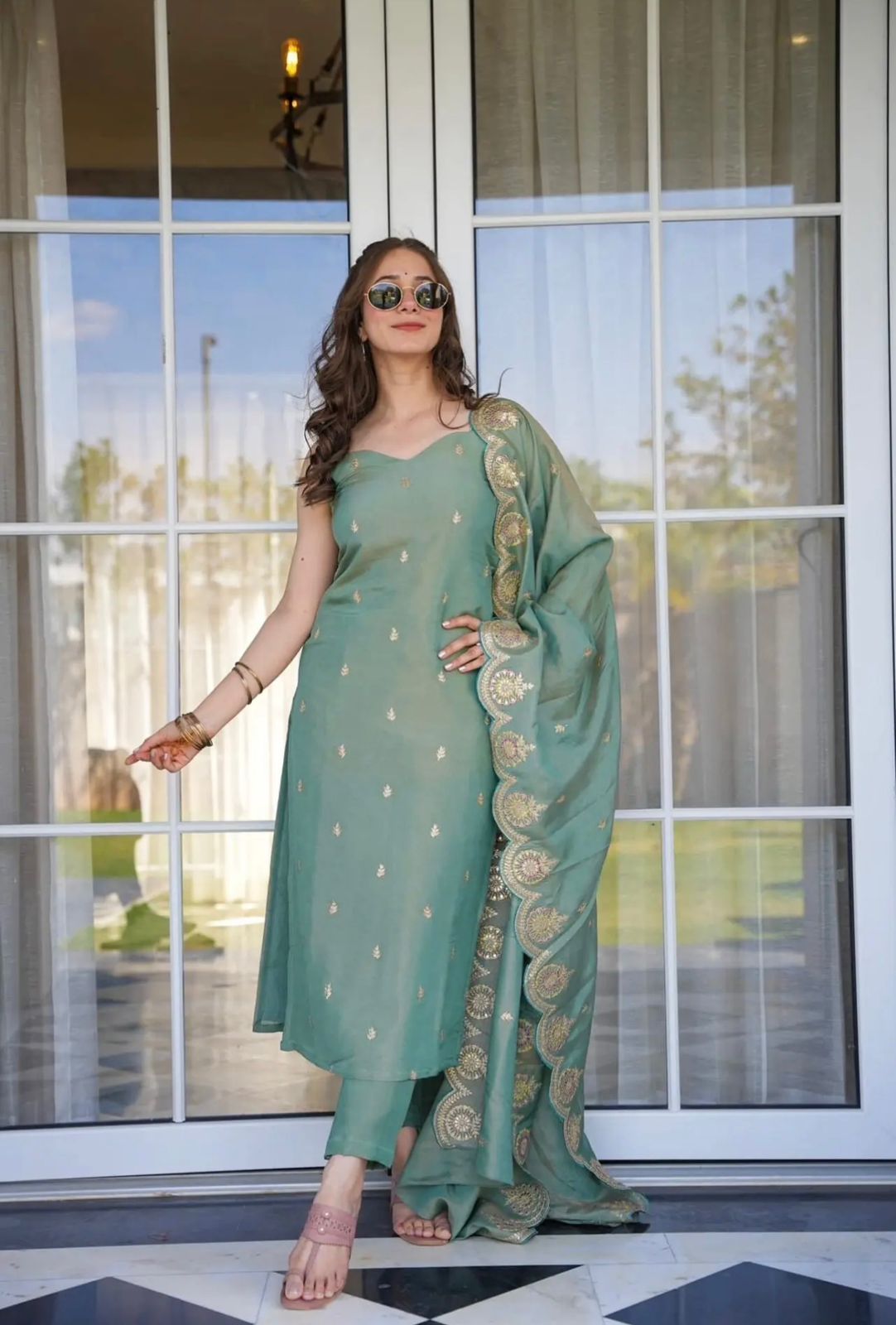
If you prefer to draw attention upward, choose a kurta with a defined neckline, interesting yoke, earrings or a patterned dupatta. Keep the trousers relatively plain and select a straight leg that falls cleanly without clinging. If you prefer a longer vertical line, choose a monochromatic kurta-and-pant combination and let the dupatta fall in a narrow, uninterrupted panel.
Those who want more movement around the hips can select a longer kurta with side slits and straight trousers. Those who prefer a sharper outline may choose a shorter kurta with gently tapered pants, provided the fabric doesn't pull at the thigh or waist.
Comfort is part of visual polish. Check that the waistband sits securely when sitting, the armhole allows normal movement and the dupatta doesn't need constant readjustment. A suit that fits correctly will look more refined than a more elaborate design that restricts walking, sitting or reaching.
When Pant Salwar Suits Work Well and What to Pair With Them for Travel and Care
Pant salwar suits work especially well for travel when the trousers allow easy movement, the fabric resists excessive creasing and the dupatta can be folded compactly. Choose a medium-length kurta, secure pockets if available and footwear that remains comfortable after several hours of walking.
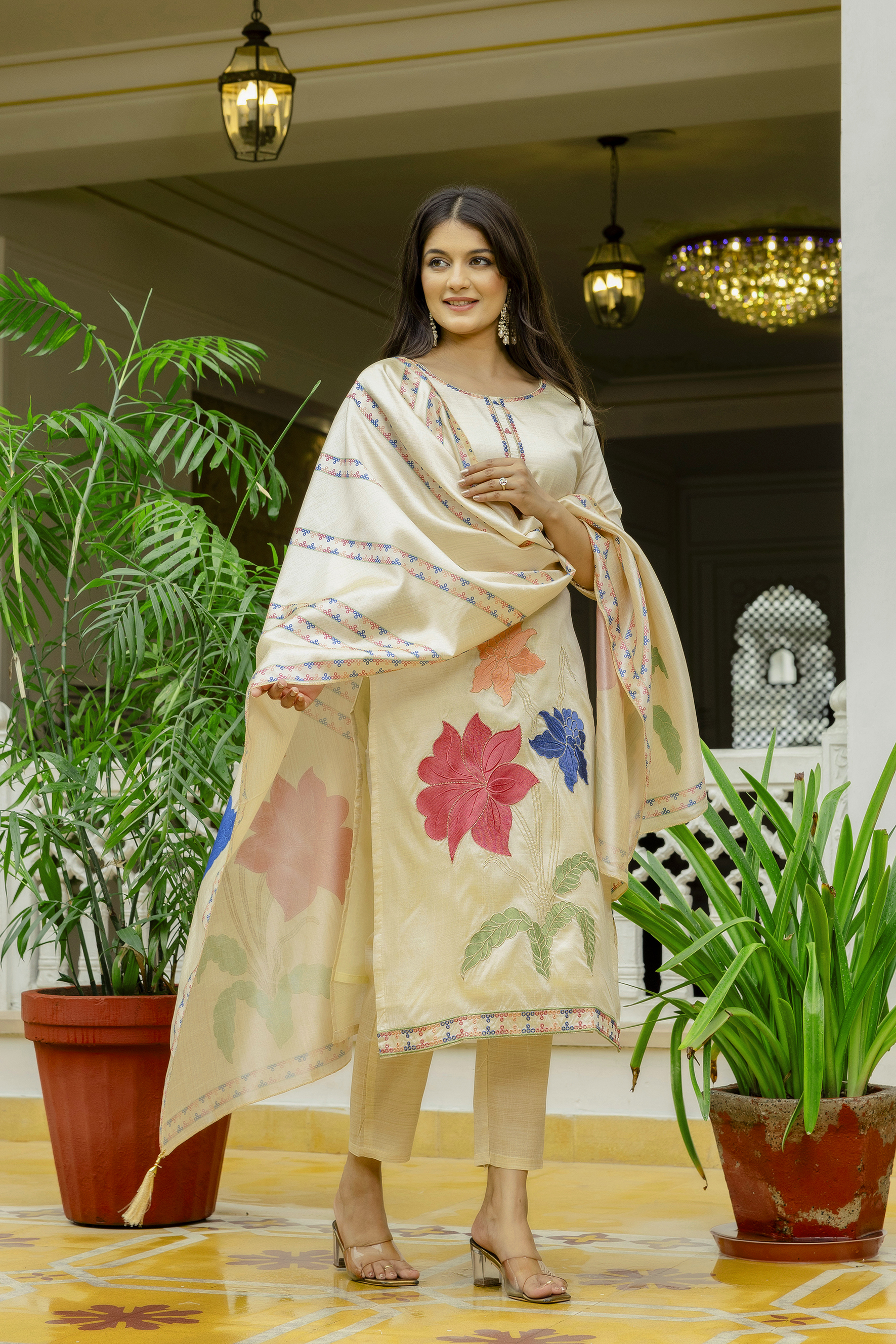
For train or flight travel, pair a printed rayon suit with flat juttis, soft leather sandals or cushioned slip-ons. Keep jewellery limited to small earrings and a watch so accessories don't interfere with luggage, security checks or seat belts. A crossbody bag can be more practical than a delicate clutch.
Care instructions depend on the fabric. Wash rayon according to the garment label, avoid high heat and hang the garment after drying to reduce deep creases. Fold silk and Chanderi with clean tissue or a soft cotton layer, and keep zari away from direct perfume, moisture and rough jewellery. Air a suit before storing it, and avoid leaving a damp dupatta inside a closed wardrobe.
Iron printed and embellished garments from the reverse side whenever possible. Use a low or medium temperature for rayon and a protective cloth for silk, zari or delicate surface work. Small repairs, such as securing a loose hem or replacing a missing hook, should be handled before the next wear because minor damage can worsen during movement.
An useful final check is to wear the complete outfit for ten minutes before leaving home. Sit down, walk up a few steps, lift one arm and check whether the trouser hem, waistband, sleeve and dupatta remain comfortable. That simple test often reveals more about whether a pant salwar suit suits the event than a mirror view alone.
Common Questions About When Pant Salwar Suits Work Well and What to Pair With Them
When do pant salwar suits work best?
Pant salwar suits work best for office wear, travel, daytime celebrations, family lunches and semi-formal festive events. Straight trousers offer easy movement, while the kurta and dupatta keep the outfit recognisably ethnic.
What footwear pairs well with a pant salwar suit?
Juttis, kolhapuri-style sandals, loafers, flats and low block heels pair well with pant salwar suits. Match footwear to the trouser hem: ankle-length pants show the shoes, while longer pants work best with a low heel or a flat sole that will not catch the fabric.
Can a pant salwar suit be worn to the office?
A pant salwar suit is suitable for office wear when the kurta has a modest neckline, the trousers fit comfortably and the decoration remains controlled. Choose small prints, solid colours or subtle zari, then add a structured bag, simple earrings and practical footwear.
How should a dupatta be styled with pant salwar suits?
A dupatta can be folded lengthwise over both shoulders for a neat workwear look or draped over one shoulder for a festive finish. Pair a printed dupatta with a quieter kurta, and use a plain dupatta to balance a bold floral or regional print.
Which fabrics are suitable for pant salwar suits in summer?
Rayon, lightweight cotton blends and airy silk blends are practical choices for summer pant salwar suits. Rayon drapes well for printed designs, while lighter fabrics reduce bulk around the legs and make the outfit more comfortable in warm weather.
How can a pant salwar suit look more festive without heavy embroidery?
Add one strong festive element such as zari edging, jhumka earrings, metallic sandals, a regional print or an embroidered potli. Keeping the remaining accessories simple prevents a tailored pant silhouette from looking overcrowded.


