

When lined and unlined kurtis make the most sense depends on more than personal taste. Fabric density, Indian weather, garment colour, embroidery, body movement and the intended occasion all affect whether a lining improves a salwar suit or makes it unnecessarily warm. A lined kurti adds coverage and structure, while an unlined kurti usually preserves breathability and a softer drape.
The right choice can change how a garment feels after six hours of wear. A lightweight cotton kurti may be comfortable without a lining in humid weather, while a pale woven fabric may need a lining to prevent transparency. Understanding the difference helps you judge a kurti by construction rather than by appearance alone.
What does a kurti lining actually change?
A kurti lining creates an additional inner layer between the outer fabric and the body, changing opacity, friction, structure, warmth and fall. The lining may cover the full garment, stop at the waist, or appear only in selected panels, depending on the design.
Opacity is the most obvious benefit. A lining can make a light-coloured kurti more practical when the outer weave is slightly sheer, particularly under bright daylight. A lining also prevents the body from showing through areas where embroidery, cutwork or a loose weave leaves small gaps.
Comfort depends on the lining material. Cotton lining generally feels more breathable than polyester lining, although a tightly woven cotton layer can still feel warm in peak summer. Synthetic lining may help a garment slide over the body, but it can hold heat and moisture in humid conditions.
Structure is another important difference. A lined A-line kurti can hold its flare more clearly, whereas an unlined A-line kurti often moves more lightly. A lining may also reduce cling, protect delicate embroidery from repeated contact with jewellery, and help the outer fabric retain a smoother appearance.
When lined and unlined kurtis make the most sense
Lined kurtis make the most sense when the fabric is transparent, the silhouette needs support, the garment includes heavy embellishment, or the wearer wants greater coverage. Unlined kurtis make the most sense when the fabric is opaque, breathable and comfortable against the skin in warm conditions.
Choose a lined kurti for pale or open-weave fabrics
A lining is usually useful for ivory, cream, blush, lemon and other pale kurtis made from lightweight or loosely woven fabric. A darker colour can hide the body more effectively, but colour alone doesn't guarantee opacity because an open weave remains visible in strong light.
Chanderi deserves special attention because Chanderi can be lightweight and subtly translucent, especially in lighter shades. A lining beneath a Chanderi kurti can provide coverage while allowing the outer weave and woven motifs to remain visible. The Navy Floral Woven Chanderi Kurti Pant Dupatta Set illustrates why the balance matters: the outer fabric should retain its airy character rather than being overwhelmed by a thick inner layer.
Choose an unlined kurti for breathable daily wear
An unlined kurti is often the better choice for regular commuting, household work, travel and daytime use when the outer fabric already provides enough coverage. Unlined cotton allows air to circulate more freely and avoids the weight of a second layer.
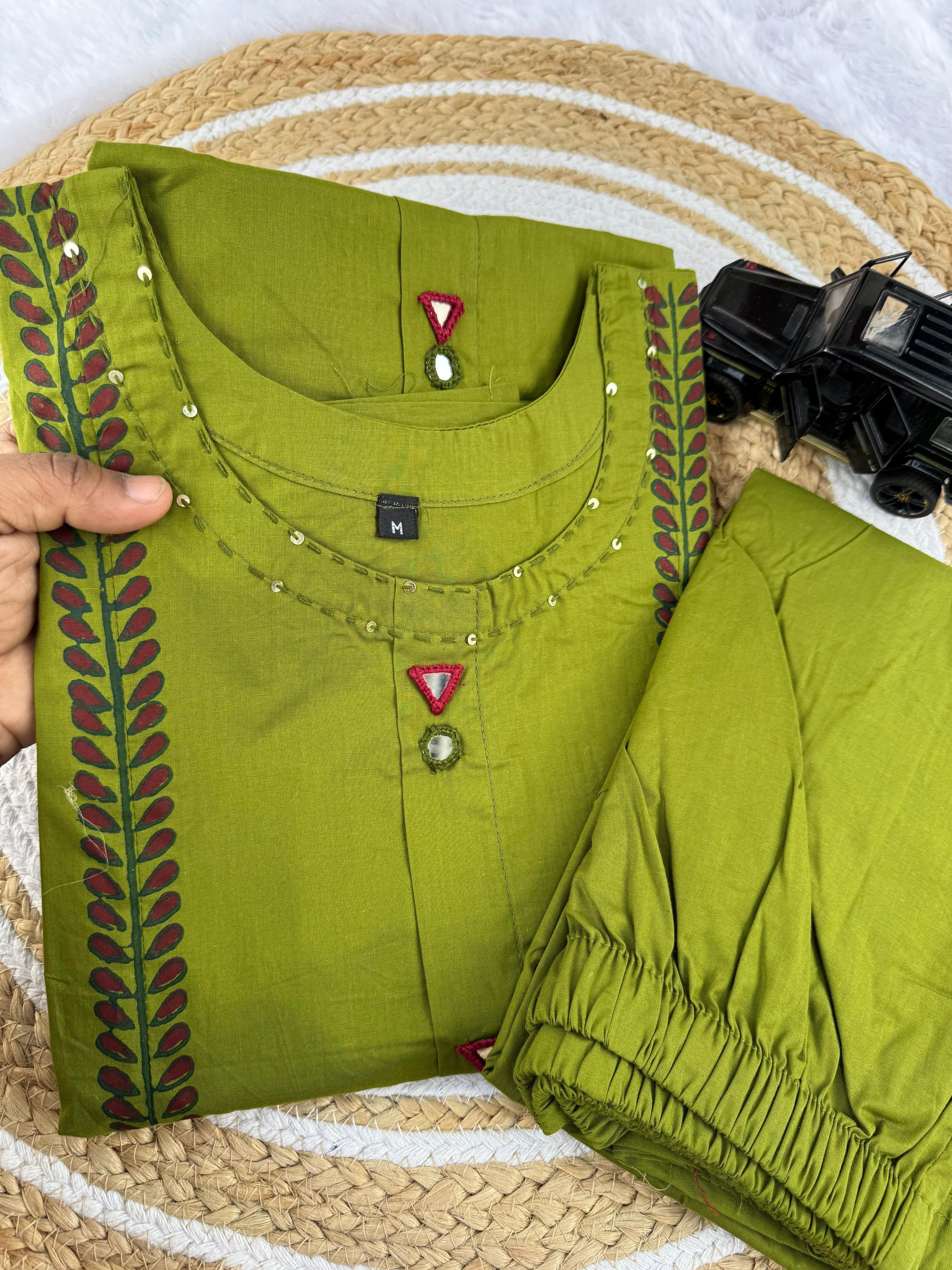
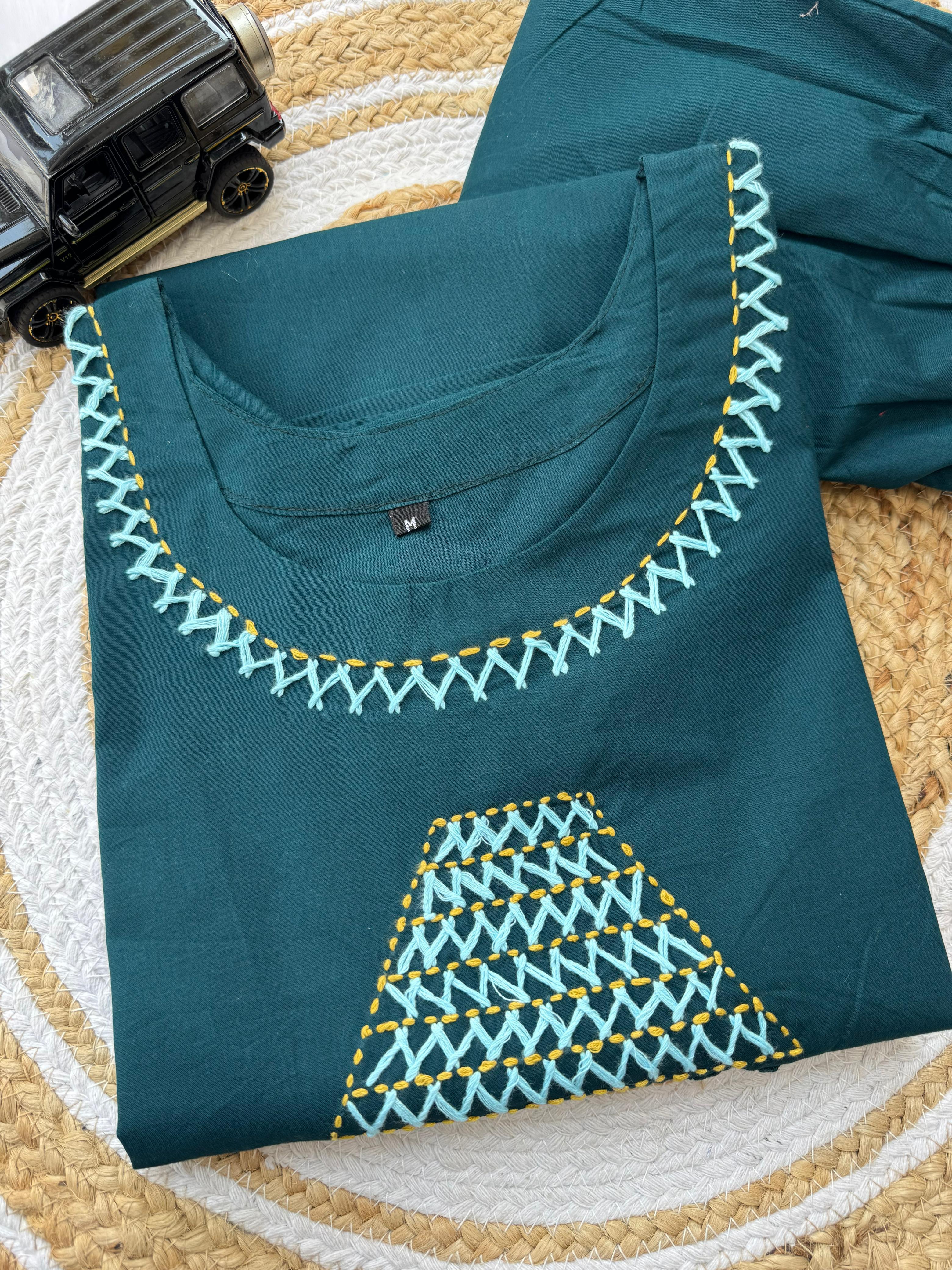
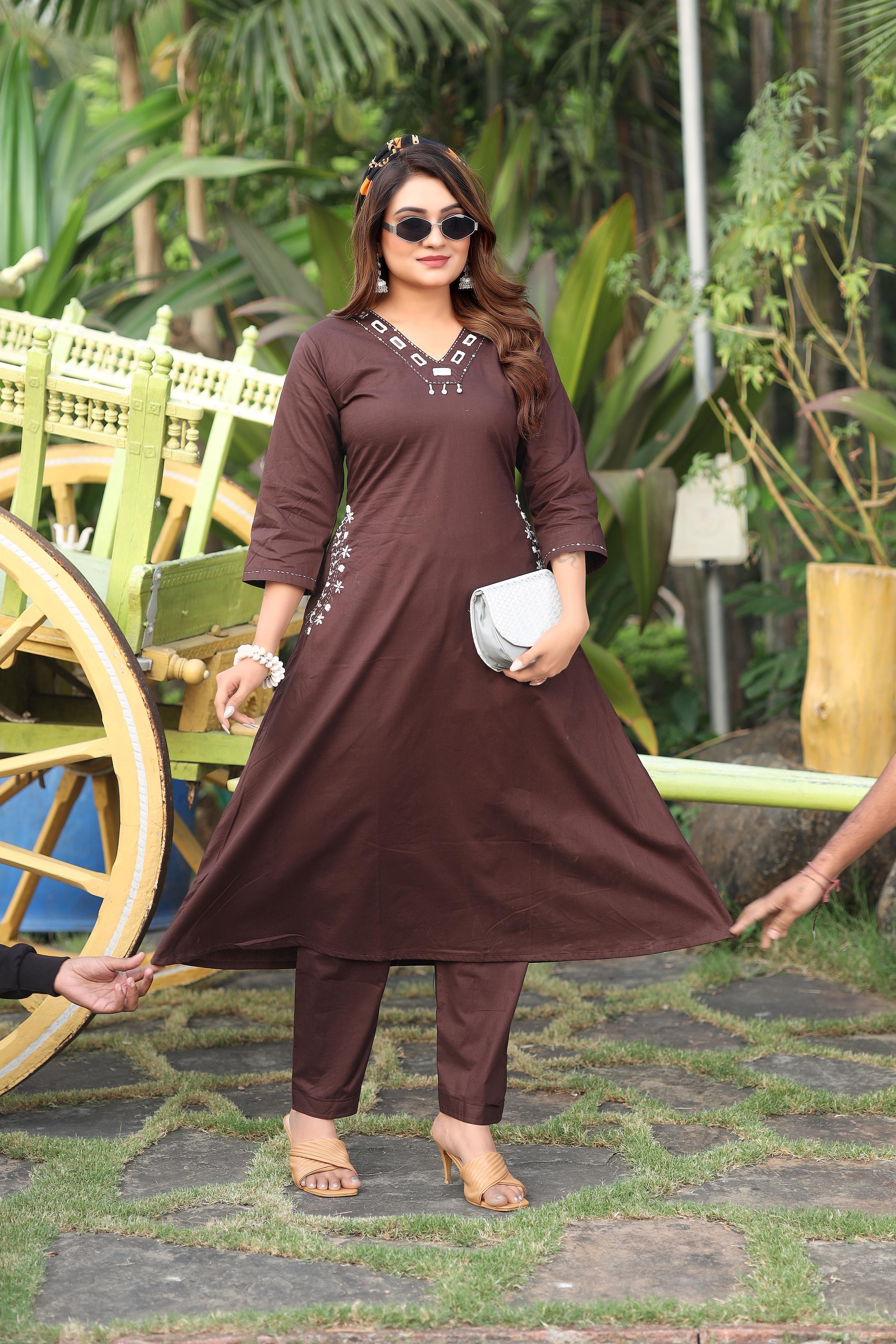
Cotton A-line silhouettes are particularly suitable for unlined construction when the fabric is medium-weight. The Designer Cotton A-Line Kurti Pant Set with Mirror Work and Teal Cotton A-Line Kurti Pant Set with Handwork can be assessed by checking whether the cotton is opaque in daylight and whether the mirror work sits comfortably without a lining pressing against the skin.
How do fabric, weave and colour guide the decision?
Fabric density, weave and colour together provide the most reliable guide to choosing a lining. A dense dark fabric may remain comfortable without lining, while a light, loosely woven fabric may need coverage even when the garment looks substantial on a hanger.
Cotton
Medium-weight cotton often works well without lining because cotton absorbs moisture and permits airflow. A cotton kurti may still benefit from partial lining in the bust area if the fabric is light-coloured or if the garment has a close fit. Full synthetic lining can defeat the purpose of choosing cotton for summer.
Mirror work, handwork and dense surface decoration can change the calculation. Decorative elements may create roughness on the inside, so a soft partial lining can protect the skin without making the entire garment hot.
Kanchi cotton and jacquard
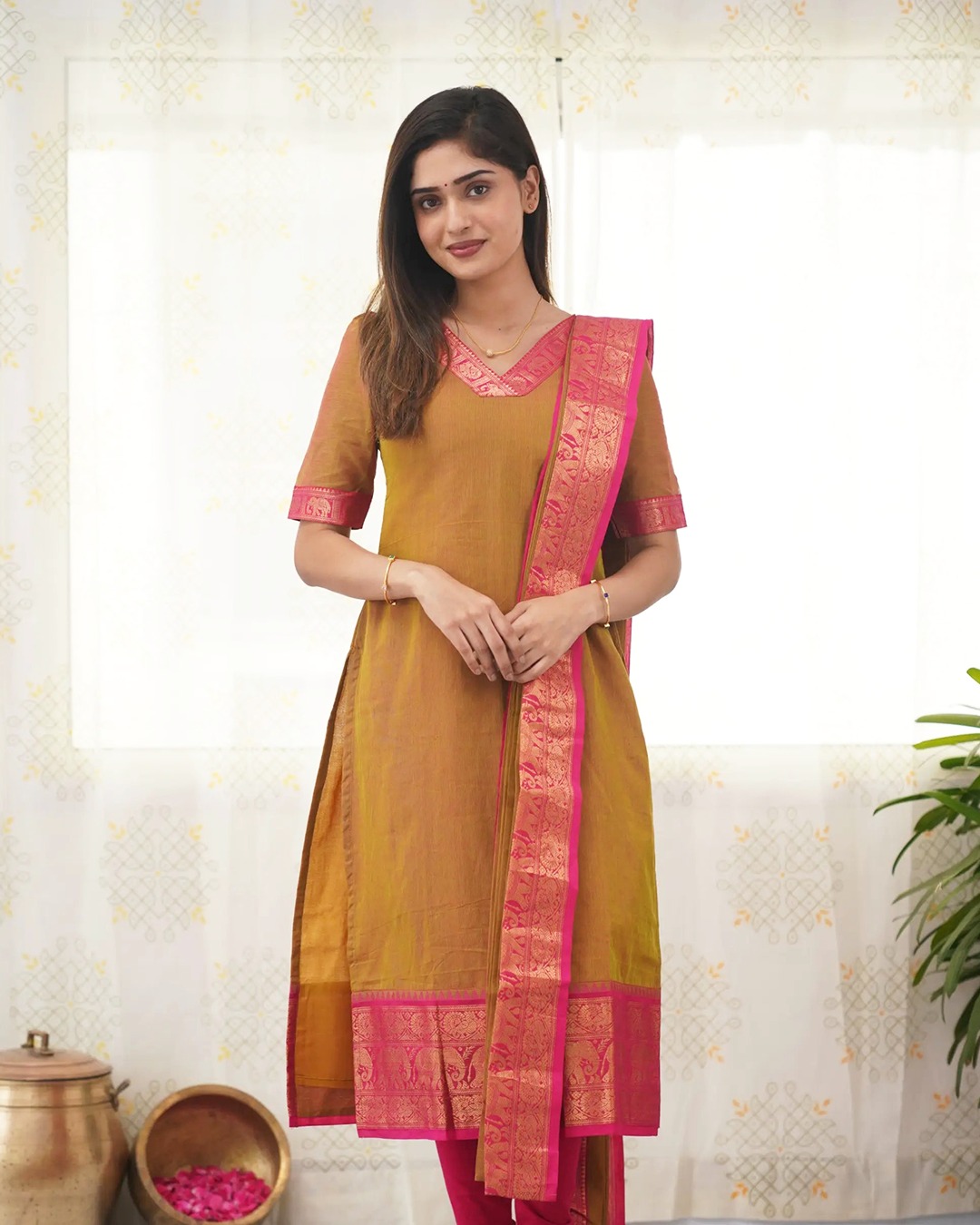
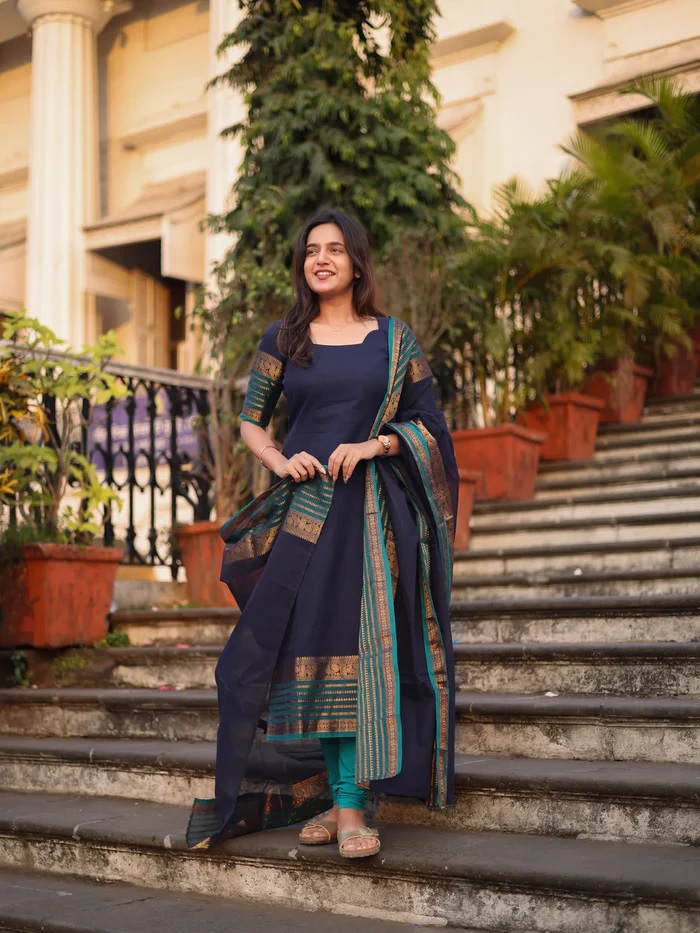
Kanchi cotton and jacquard fabrics often have enough body to work without a full lining, although the answer depends on the weave and colour. The Mustard Kanchi Cotton Kurti Set with Zari Dupatta and Navy Kanchi Cotton Kurti Set with Woven Dupatta demonstrate how woven texture can provide visual richness without requiring a heavy inner layer.
Jacquard can feel structured because its pattern is woven into the fabric, but structured doesn't always mean opaque. A black jacquard may be sufficiently covered for everyday wear, while a lighter jacquard with a looser ground may need a lining through the front and back bodice.
Zari and woven surfaces
Zari and metallic woven details are best judged from the reverse side as well as the front. A lining can prevent zari threads from catching on the skin or snagging against an undergarment, but a thick lining can also make a festive kurti feel stiff.
The Kanchi Cotton Zari Woven Kurti Set with Traditional Dupatta is a useful example of a garment where the lining decision should preserve the crisp woven surface. A lightweight cotton lining or a bodice-only lining is generally more comfortable than a dense, slippery inner fabric.
Which kurti construction suits different Indian climates?
Warm and humid climates generally favour unlined or lightly lined kurtis, while cooler weather and air-conditioned venues can accommodate fuller lining. Local temperature, humidity and the amount of walking involved matter more than a generic season label.
In cities with hot summers, an unlined cotton kurti can reduce trapped heat during commuting and outdoor errands. A lining becomes more useful when the outer fabric is sheer, when the wearer needs a smooth fit, or when the garment will be worn in strong sunlight for several hours.
During monsoon weather, a lining may slow drying if the garment becomes damp. Quick-drying, breathable construction is therefore practical for daily wear. A heavy lining combined with a damp outer fabric can feel clammy and may encourage odour if the garment is stored before it dries completely.
In winter, lined kurtis can add a small amount of warmth and reduce the need for a camisole or extra base layer. The warmth remains limited because a kurti lining isn't the same as a winter lining, but the added layer can make a difference in an air-conditioned office or evening venue.
How should fit and body movement influence lining?
Fit should influence lining because a close-fitting garment creates more friction and heat than a relaxed silhouette. A lining can improve glide in a fitted kurti, but an unlined construction often gives greater comfort in a loose A-line or straight cut.
For a straight kurti, lining can help the garment fall smoothly over the bust and waist, particularly when the outer fabric tends to cling. The lining should not be so tight that it pulls at the armhole or raises the hem when the wearer sits down.
For an A-line kurti, the lower flare usually benefits from freedom of movement. A full, stiff lining may restrict the flare and make the garment feel heavier than expected. A bodice lining that ends above the widest part of the hip can provide coverage while preserving movement through the skirt area.
For a kurti worn with palazzo pants or wide-leg trousers, an unlined outer layer often creates a lighter overall outfit. For a kurti worn with narrow pants, a lining may prevent cling and keep the silhouette neat. The correct choice is therefore connected to the complete salwar suit, not just the kurti in isolation.
Always check armhole and neckline finishing. A lining that ends unevenly near the armhole can rub during movement, while an unlined neckline with scratchy zari or embroidery can irritate the collarbone. These construction details are more important than simply asking whether a garment is lined.
When is a lined kurti better for festive and formal dressing?
A lined kurti is usually better for festive dressing when the outfit needs opacity, a polished fall or protection from surface embellishment. Formal settings also reward lining when the garment is worn under bright venue lighting or photographed with flash.
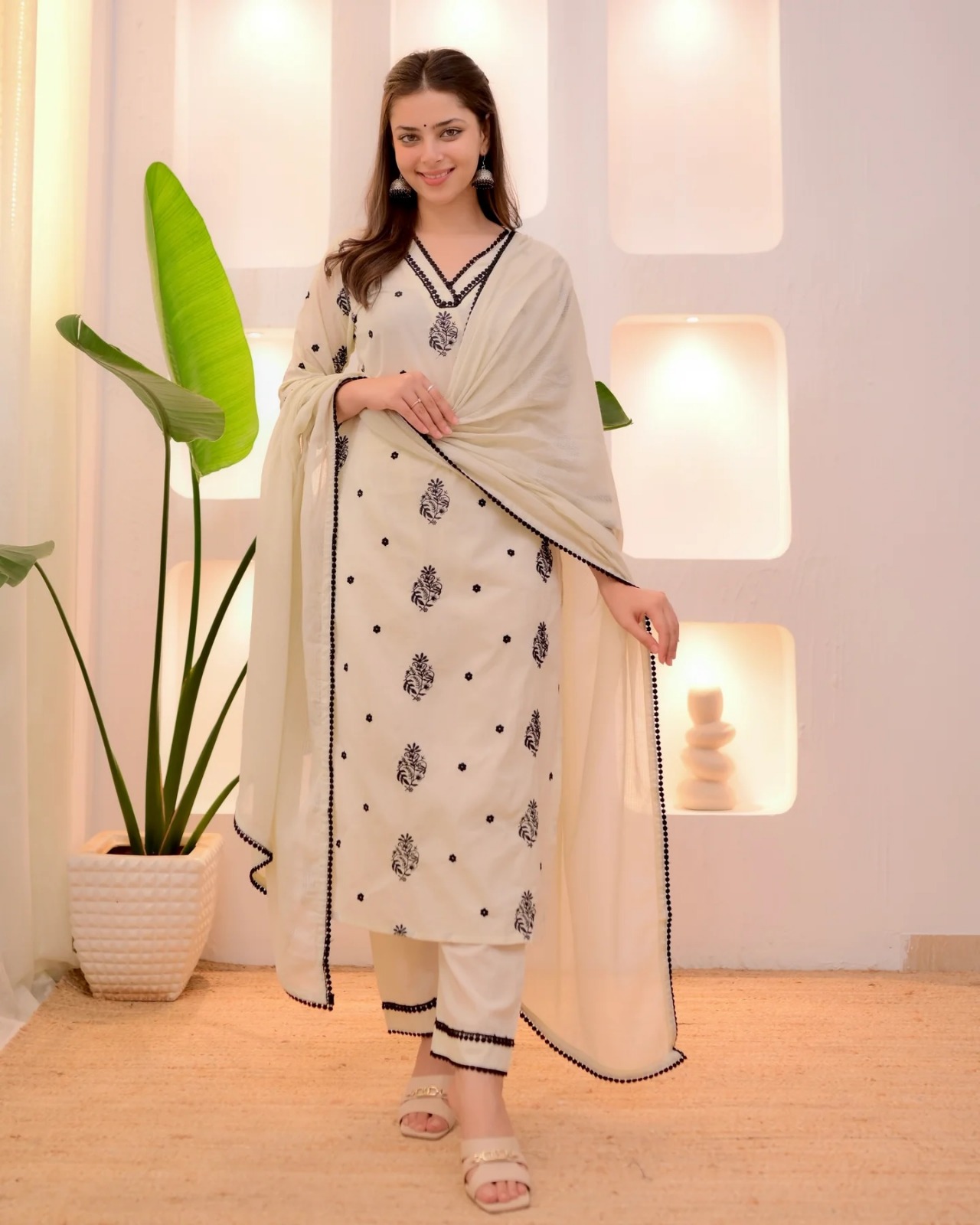
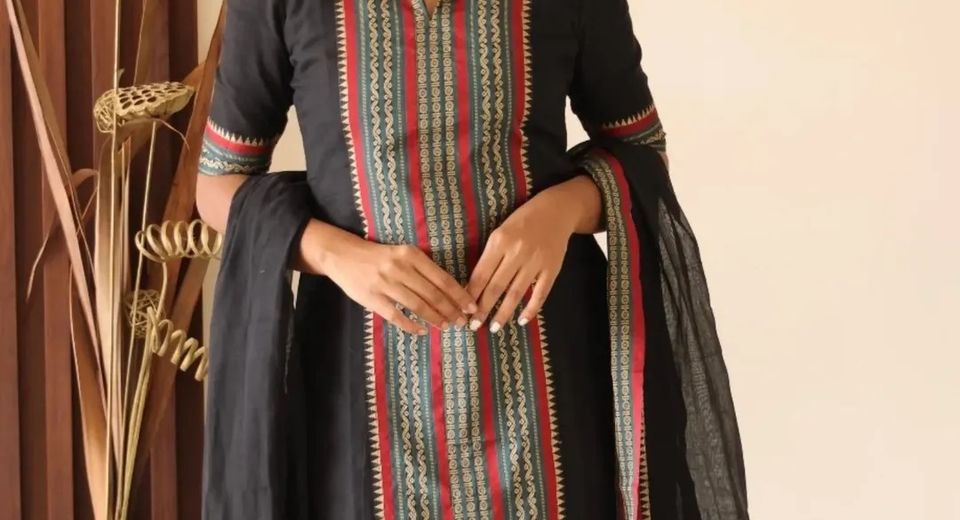
A festive Kanchi cotton kurti can look sharper with a light lining that supports the front panel without flattening the weave. The Black Kanchi Cotton Jacquard Kurti Dupatta Set and Black Jacquard Woven Kanchi Cotton Kurti Set can work well for evening dressing because darker woven surfaces are visually substantial. However, the wearer should still check whether the inner side feels comfortable and whether the jacquard catches on jewellery.
Traditional styling can also guide the choice. Maharashtra Paithani Inspired Salwar Suits and Odisha Sambalpuri Salwar Suits often draw attention to woven motifs and borders, so a lining should support the garment without hiding the textile character. A neat bodice lining can be preferable to a heavy full lining when the fabric itself already has body.
For a Haldi ceremony, breathable construction has practical value because outdoor seating, movement and turmeric-related mess can make a hot garment uncomfortable. Gujarat Bandhej Salwar Suits and Kalamkari Print Salwar Suits can be styled with a light cotton base layer when coverage is needed, rather than automatically choosing a warm synthetic lining.
How can you inspect lining before buying a salwar suit?
You can inspect a kurti lining by checking opacity, seam placement, fabric content, armhole comfort, hem movement and how the lining behaves when you sit. A product photograph alone rarely reveals all six points.
- Check against light: Hold the garment near a window or bright light and look at the front, back and side seams. Pay special attention to the bust and upper back.
- Read the fibre details: Cotton lining is generally preferable for hot-weather wear, while polyester may offer smoother movement but more heat retention.
- Test the armhole: Raise both arms and rotate the shoulders. A lining should not pull, cut into the underarm or expose the outer seam allowance.
- Test sitting movement: Sit on a chair and stand again. The lining should not ride upward significantly or make the hem twist.
- Inspect embellishment backs: Mirror work, zari and metallic thread should not create sharp contact points against the skin.
- Compare the lining length: A lining that stops much higher than the outer hem can be intentional, but an uneven or poorly finished edge may affect comfort and appearance.
Online shoppers should look for explicit construction information, garment measurements and close-up images of the fabric. When those details are unavailable, the safest decision comes from matching the likely fabric behaviour with the intended use: breathable cotton for daily wear, supported coverage for pale or embellished fabrics, and lighter lining for warm-weather festivities.
How should lined and unlined kurtis be cared for?
Lined and unlined kurtis should be washed according to the most delicate component, because the outer fabric, zari, embroidery and lining may respond differently to water and heat. Care labels take priority over general washing advice.
For cotton garments, gentle hand washing in cool water helps reduce shrinkage and colour transfer. Dark cotton and woven fabrics should be washed separately during the first few washes. Excessive wringing can distort both the kurti and its lining, so press out water gently and dry the garment in shade.
don't dry a damp lined kurti bunched over a hanger. The heavier inner layer can pull the shoulder seams out of shape. Spread the garment evenly or use a broad hanger, and make sure the lining is fully dry before storage.
Iron the outer fabric and lining at the temperature recommended on the care label. Zari, mirror work and jacquard surfaces should be ironed from the reverse side with a pressing cloth when permitted. Store heavily embellished kurtis folded with soft tissue or a clean cotton layer between decorated surfaces.
Can one kurti work for both everyday and occasion wear?
One kurti can serve both purposes when the fabric is comfortable for daytime use and the styling can be changed with accessories, dupatta and footwear. A versatile garment usually has medium-weight fabric, reliable opacity, a movement-friendly fit and decoration that doesn't require delicate handling after every wear.
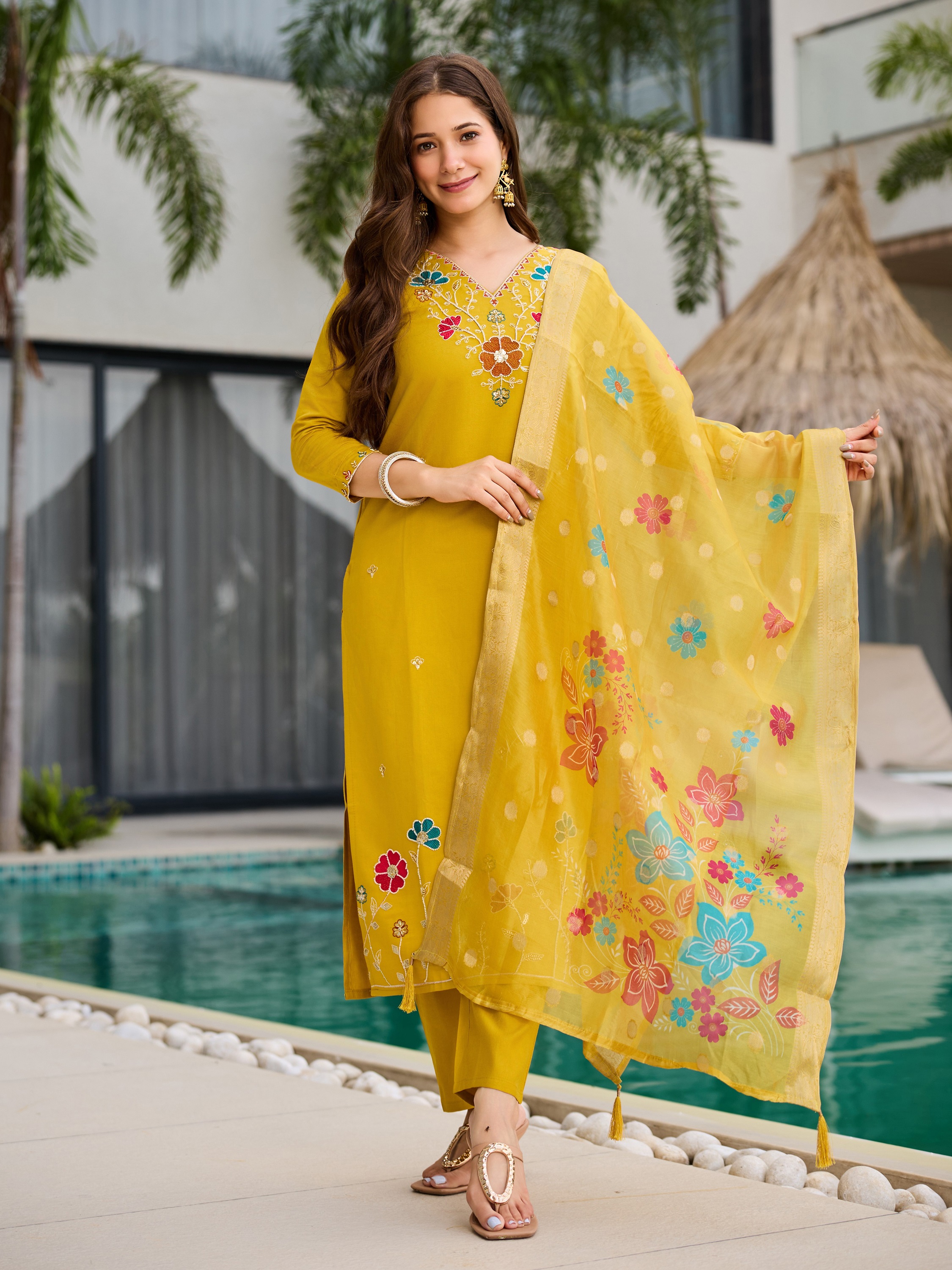
An unlined cotton kurti can become occasion-ready with a woven dupatta, earrings and dressier footwear, provided the fabric is opaque and the finish is polished. A lightly lined jacquard or zari kurti can move into daytime use when paired with simple pants and minimal jewellery, provided the wearer is comfortable in the local climate.
The most practical wardrobe doesn't treat lining as a mark of quality. A carefully made unlined kurti can be more valuable in hot weather than a heavily lined one, while a modest lining can make a delicate festive garment significantly easier to wear. The useful question is whether the construction suits the fabric, body and setting.
Common Questions About Choosing Lined or Unlined Kurtis
Should a cotton kurti be lined?
A cotton kurti should be lined when the fabric is pale, transparent, scratchy from embellishment or too clingy for the intended fit. Medium-weight opaque cotton usually remains comfortable without a full lining in warm weather.
Are unlined kurtis suitable for office wear?
Unlined kurtis are suitable for office wear when the fabric is opaque, the neckline and armholes are finished neatly, and the garment does not cling. A camisole or partial lining can add coverage if the fabric is lightweight.
Is Chanderi better with lining?
Chanderi is often better with a lightweight lining when the colour or weave is translucent. A breathable cotton lining or bodice-only lining can provide coverage while preserving Chanderi's light drape.
Does lining make a kurti warmer?
Lining usually makes a kurti warmer because it adds another layer between the body and the outer fabric. Cotton lining is generally more comfortable than synthetic lining in hot or humid weather, but even cotton can add heat when the garment is close-fitting.
Is a lined kurti better for a Haldi ceremony?
A lined kurti is better for a Haldi ceremony only when the outer fabric needs coverage or structure. For outdoor heat and active movement, a breathable unlined cotton kurti or a lightly lined bodice is usually more comfortable than a fully lined synthetic garment.
How can I tell if a kurti is transparent before buying online?
Check close-up photographs, fabric descriptions and customer images, then compare the colour and weave with the need for a base layer. Pale Chanderi, lightweight cotton and open jacquard may require a camisole or lining even when the product image appears opaque.


