

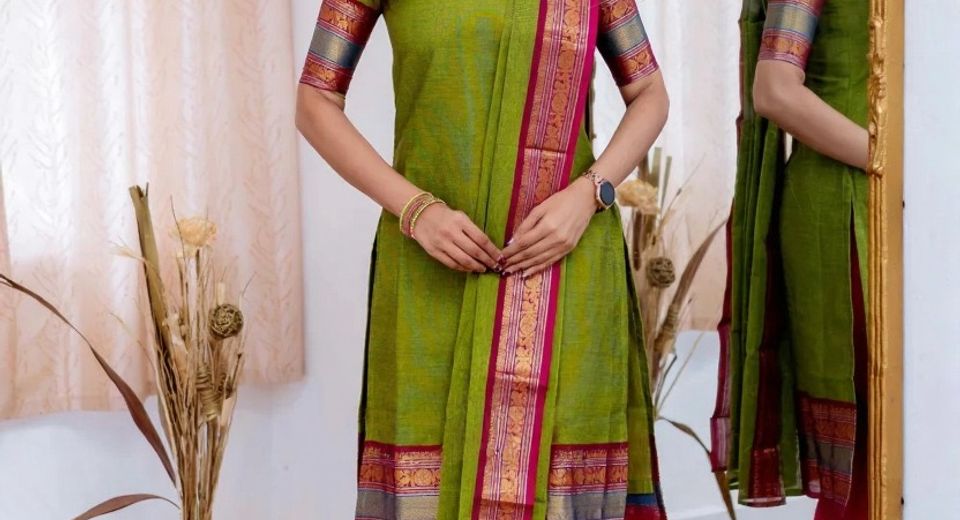
When Churidar Salwar Suits Work Well and What to Pair With Them depends on proportion, fabric weight and the setting rather than on trend alone. A churidar creates a long, close-fitting line from the knee to the ankle, so it works especially well when you want a neat silhouette under a kurta, a polished outfit for work or a graceful base for a dupatta. The right footwear and upper-layer volume keep the outfit comfortable instead of overly tight or visually top-heavy.
Many people use "churidar" and "salwar" interchangeably, but the shapes are different. A traditional churidar narrows at the calf and gathers into small folds near the ankle, while a classic salwar has more room through the leg and a deeper drop at the crotch. Knowing that difference makes shopping easier and helps you choose the right kurta length, dupatta and shoes.
When Churidar Salwar Suits Work Well and What to Pair With Them: understanding the silhouette
A churidar salwar suit combines a fitted, ankle-gathering bottom with a kurta and usually a dupatta. The lower garment follows the leg more closely than a Patiala salwar, palazzo or straight trouser, giving the outfit a formal and elongated appearance.
The silhouette is particularly useful when the kurta has movement or volume. An Anarkali kurta, flared panelled kurta or heavily embroidered top benefits from a narrow base because the outfit remains visually balanced. A slim churidar also fits neatly under a longer kurta, making it practical for commuting, sitting through ceremonies and moving between indoor and outdoor spaces.
Classic churidars are often cut longer than the wearer's inseam so that extra fabric forms folds above the ankle. Those folds should look intentional rather than bunched. A useful fitting check is to stand, sit and walk several steps: the fabric should gather without pulling across the knee, and the waistband should remain secure without digging into the waist.
When Churidar Salwar Suits Work Well and What to Pair With Them for office dressing
Are churidar suits suitable for office wear?
Churidar suits are suitable for office wear when the kurta has moderate coverage, the fabric is opaque and the decoration is restrained. A knee-length or calf-length kurta in Chanderi cotton, cotton blend or another breathable weave looks more professional than a very sheer or heavily sequinned style.
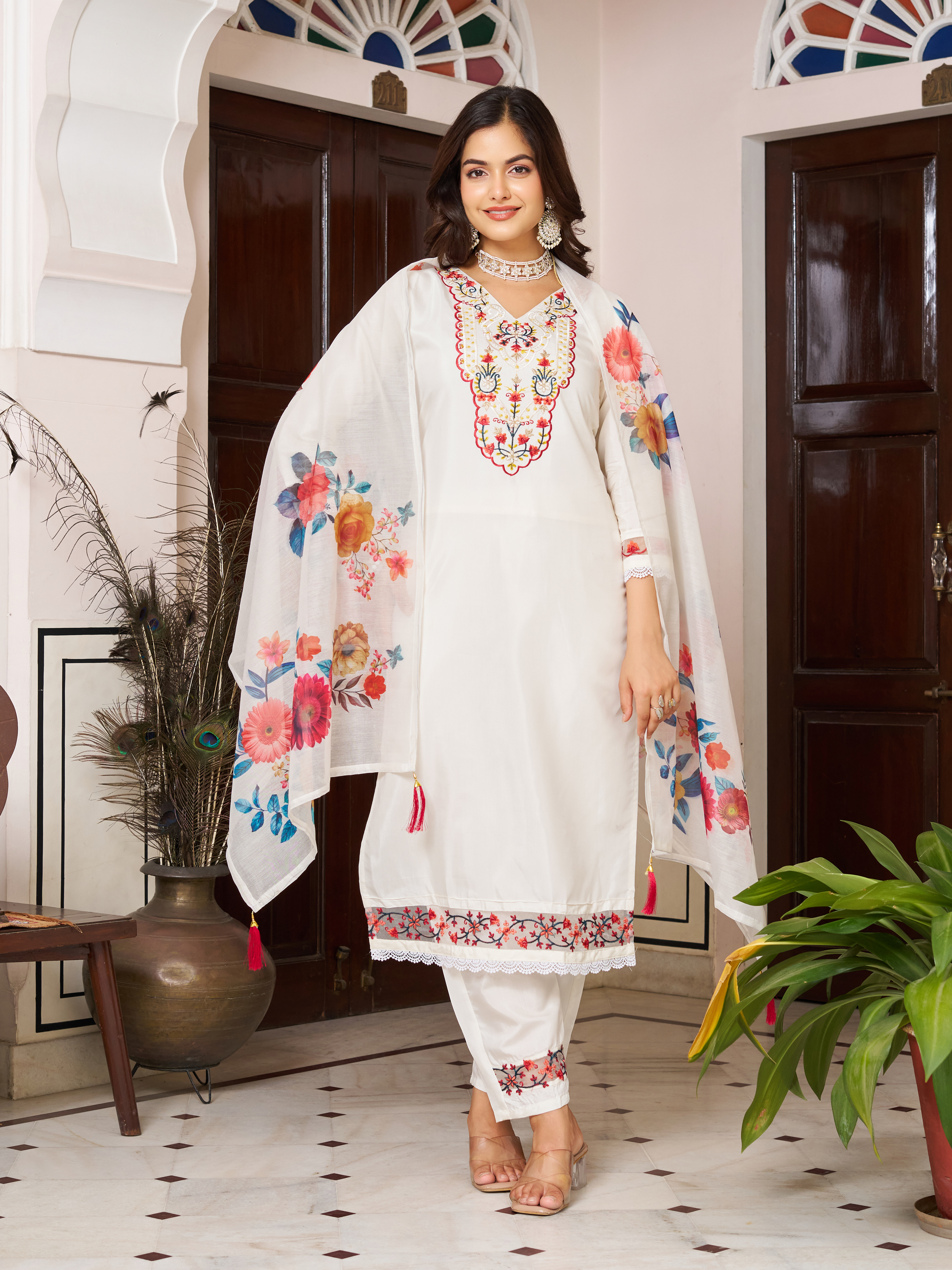
Choose a solid or small-scale print, a covered neckline and a dupatta that stays in place. A tonal churidar creates a continuous line, while a contrasting dupatta adds interest without making the outfit distracting. Small studs, a structured tote and low block heels complete the work-ready combination.
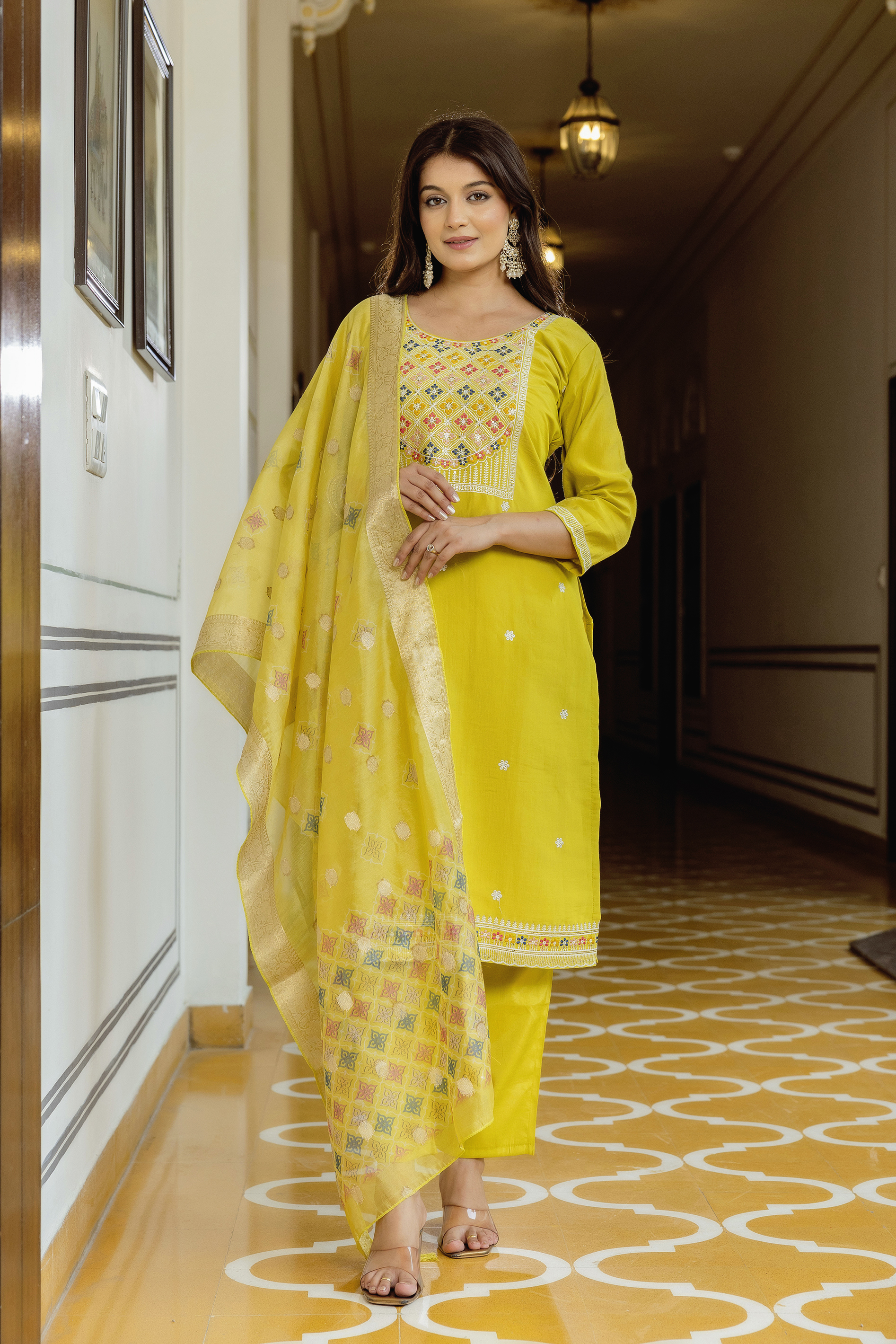
Elegant Mustard Chanderi Cotton Kurta Set with Embroidery demonstrates why texture can replace excessive ornamentation in daytime dressing. Mustard works well with tan, brown, ivory or muted green accessories, while Chanderi cotton provides visual texture without requiring elaborate jewellery.
For a five-day wardrobe, reserve heavily embellished churidars for client presentations, festive office events or cultural celebrations. Plain cotton or cotton-blend options are easier to wash, less likely to snag on office furniture and more comfortable during long periods of sitting.
When Churidar Salwar Suits Work Well and What to Pair With Them for family functions
Can you wear a churidar salwar suit to a family function?
A churidar salwar suit works well for a family function when the kurta, dupatta or jewellery supplies one clear festive element. Embroidery at the neckline, a zari border, a rich colour or a woven dupatta can make the outfit suitable for a puja, engagement lunch or dinner without requiring a full bridal silhouette.
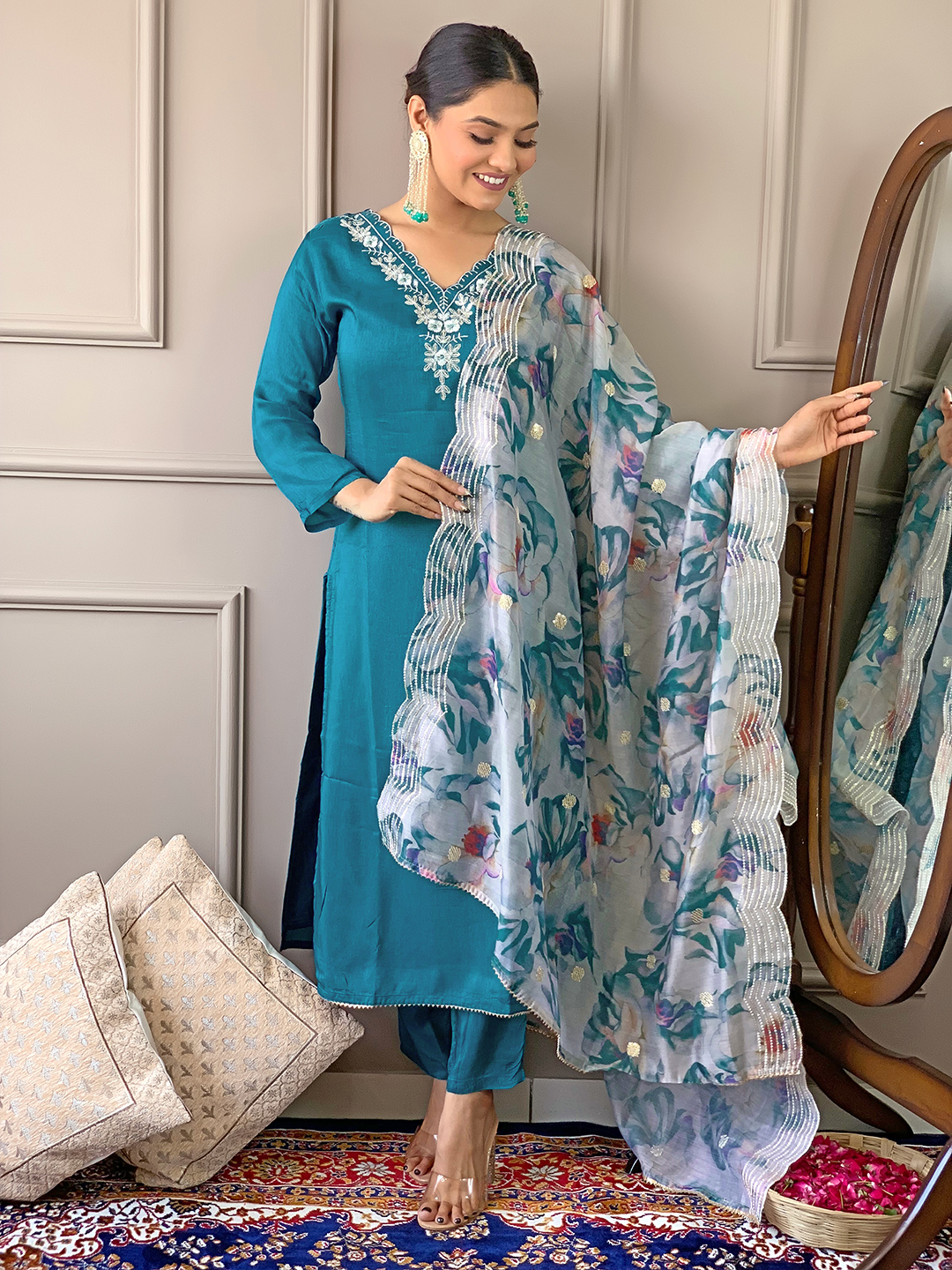
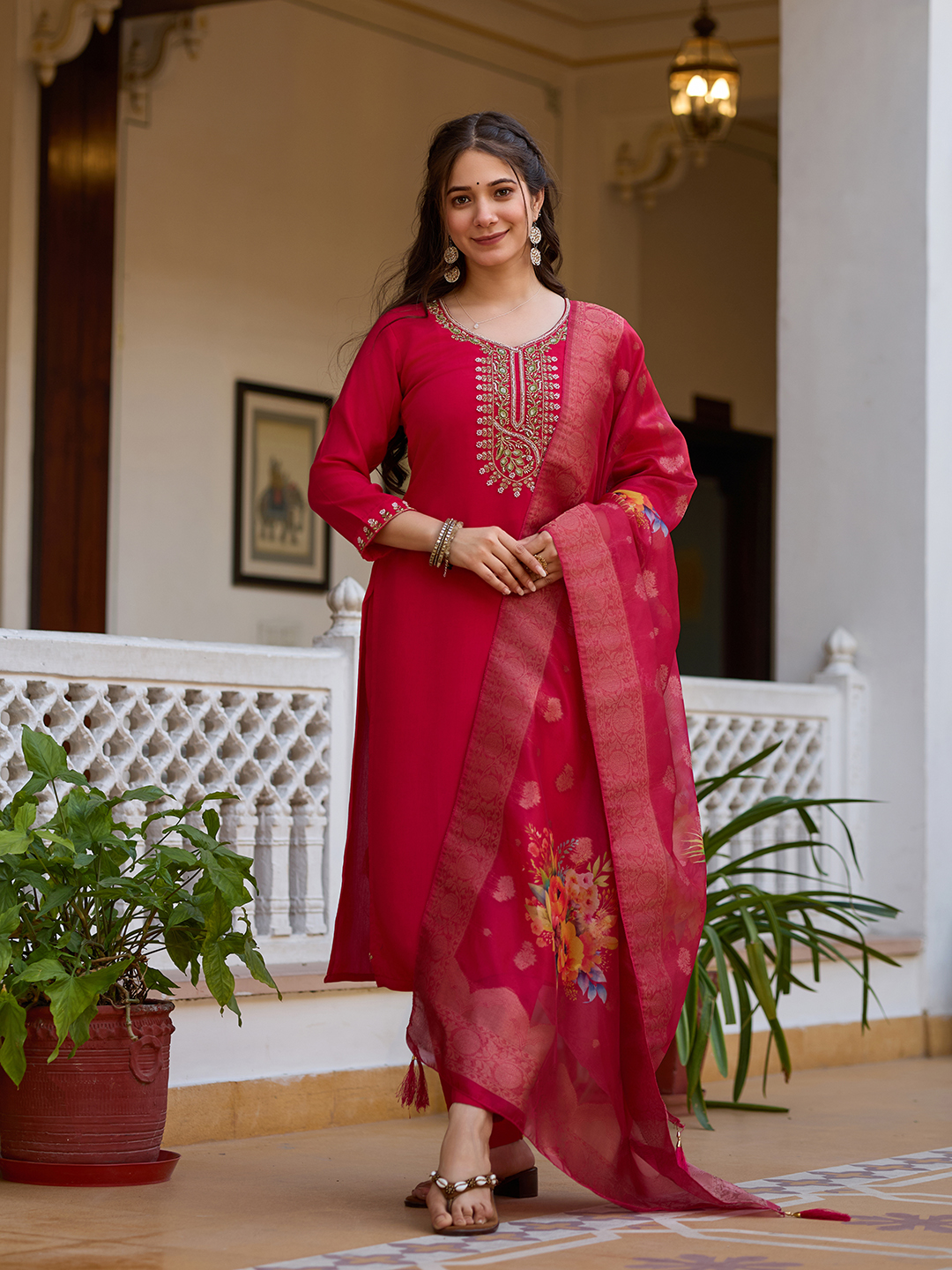
Embroidered Salwar Suit Set for Women offers a useful model for this kind of dressing: let the embroidery lead, then keep the earrings and footwear coordinated rather than competing with the surface detail. A jhumka, a slim bangle stack and embroidered juttis are usually enough for a daytime celebration.
For a religious gathering, choose a secure neckline and a dupatta that can cover the shoulders comfortably. For a dinner, a longer earring, metallic clutch and a slightly deeper lip colour can make the same churidar base feel more dressed up.
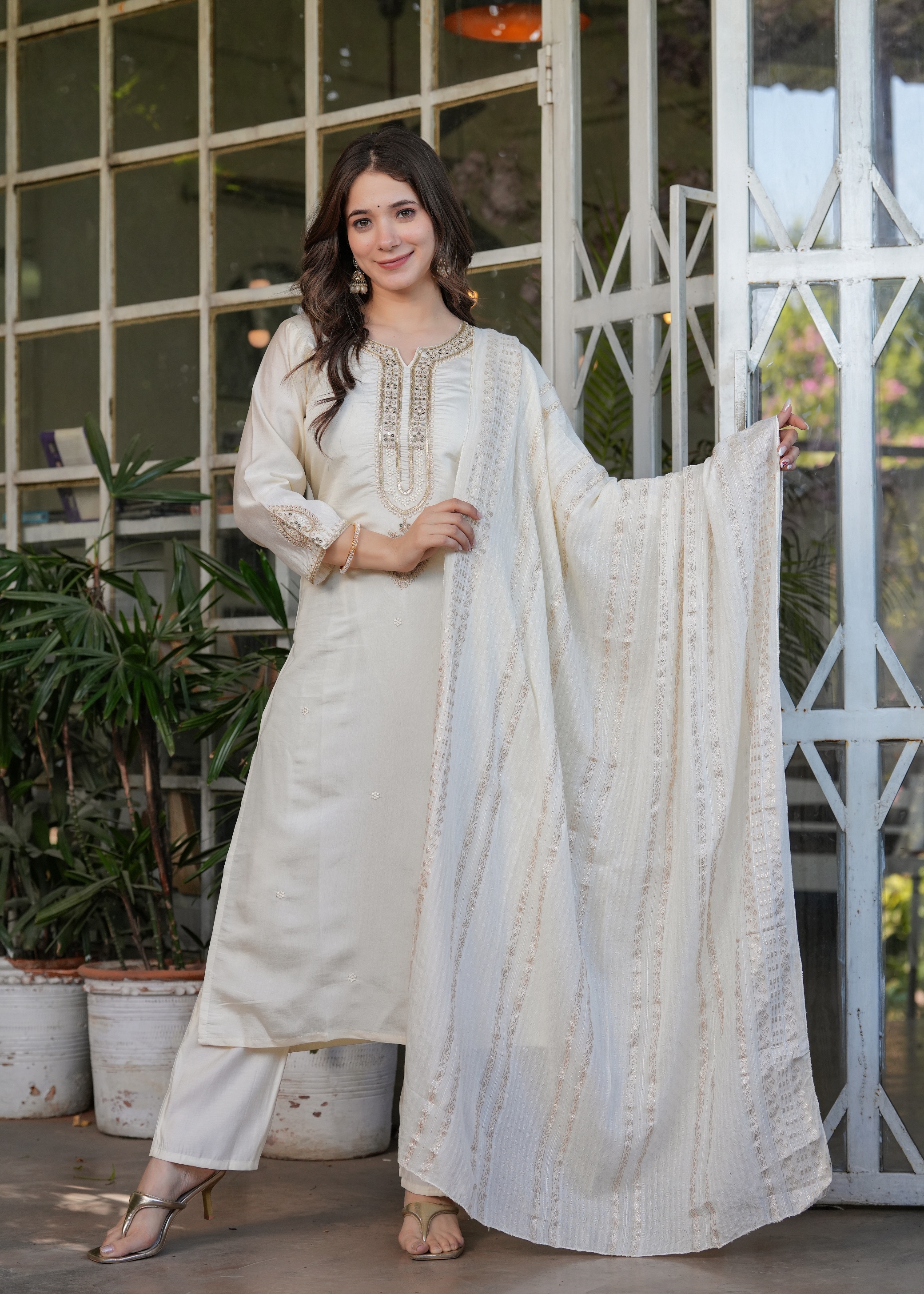
White Chanderi Blossom Salwar Suit is another adaptable option for a daytime ceremony. Pearl studs, silver sandals and a pastel or metallic dupatta keep the look light, while a coloured bindi or floral hair accessory adds definition without overwhelming the white base.
When Churidar Salwar Suits Work Well and What to Pair With Them for weddings
Does a churidar suit work for weddings and festive evenings?
A churidar suit works for weddings and festive evenings when the fabric and finishing carry enough richness for the dress code. Silk blends, Banarasi silk accents, velvet details, brocade panels, zari and dense thread embroidery are more appropriate for evening events than very plain cotton.
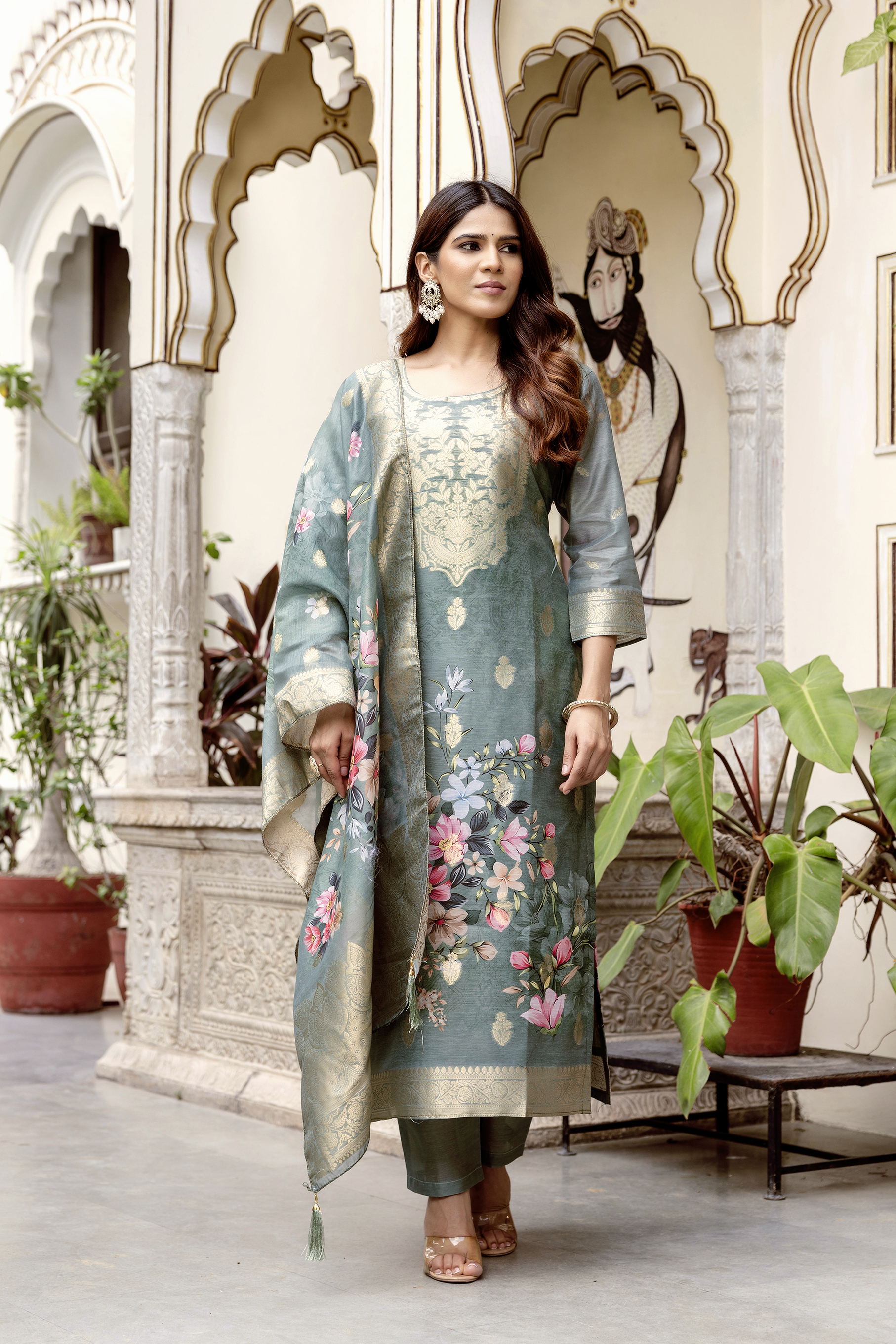
Lavender Chanderi Royale Embroidered Suit can be styled with silver-toned earrings and embellished sandals for a cool, luminous evening palette. Lavender also pairs effectively with pearl, champagne or soft silver accessories, while a strongly contrasting red or orange accessory creates a more dramatic result.
A wedding guest should consider the event's level of formality before selecting a churidar. A lightly embroidered suit suits a daytime mehendi or roka, while a heavily worked kurta with a bordered dupatta is better for a reception. Avoid a train or excessively long dupatta if the venue requires substantial walking.
Designer Yellow Salwar Suit with Dupatta can take antique gold earrings and brown or green footwear because those colours temper yellow's brightness. Keep additional jewellery selective if the dupatta already has a strong border. A compact potli and low block heel are more practical than a large shoulder bag and very high stilettos.
When Churidar Salwar Suits Work Well and What to Pair With Them for balanced proportions
The best kurta length depends on the amount of volume in the top and the wearer's height, but the hem should generally fall below the widest part of the hip for a streamlined churidar outfit. A fitted short kurta can work with a slim churidar, while a flared Anarkali needs a narrow lower half to prevent the outfit from looking bulky.
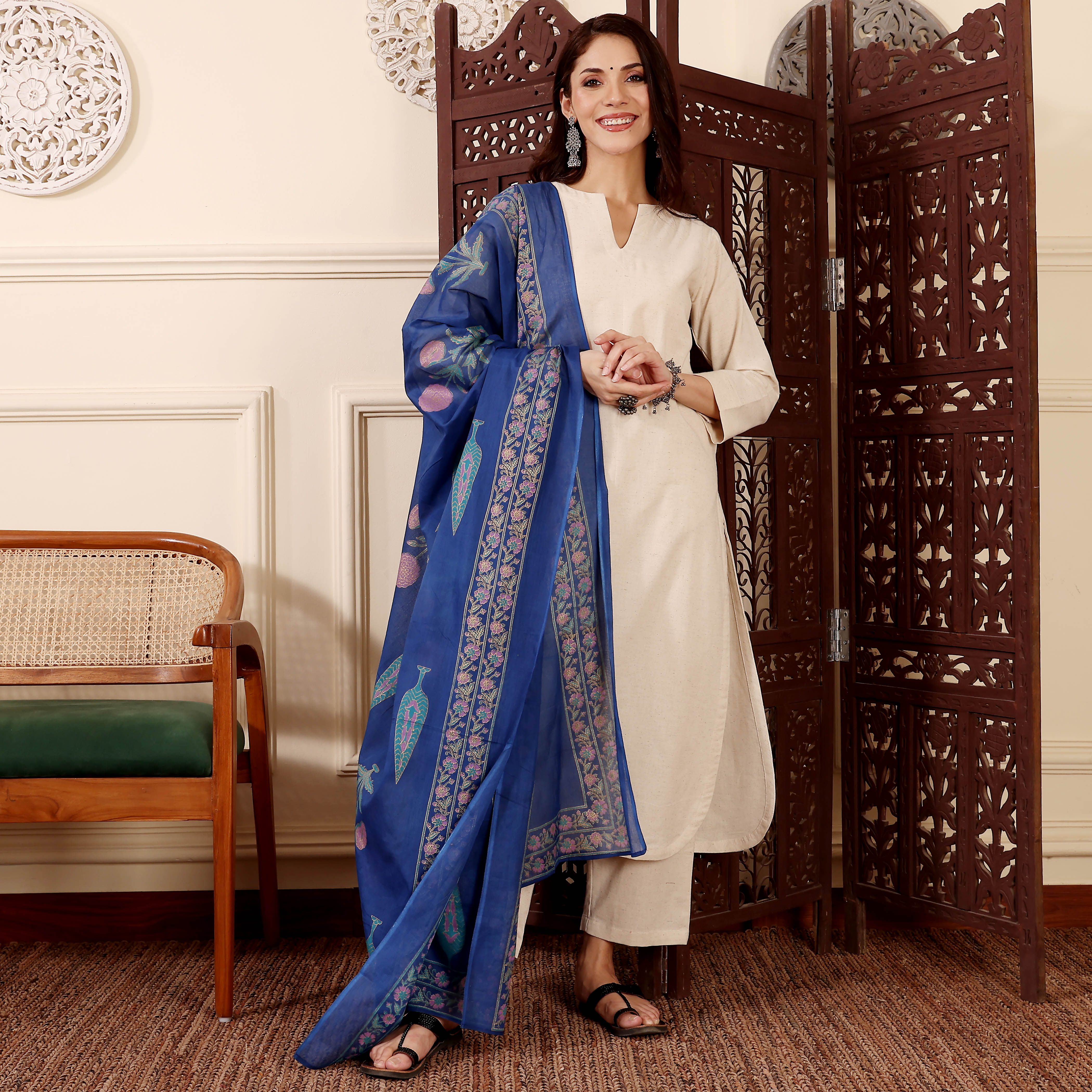
For petite wearers, a kurta that ends around the knee or slightly below can preserve leg length, especially when the churidar and shoes are close in colour. For taller wearers, a calf-length kurta, wider hem or longer dupatta can add proportion without making the outfit appear shortened.
Contrast should be deliberate. A dark churidar under a lighter kurta creates a strong vertical base, while a matching kurta and churidar produce a longer, quieter line. If the kurta has large motifs, use a plain churidar; if the kurta is simple, a woven or lightly textured lower garment can add depth.
Beige Kurta Set with Blue Chanderi Dupatta for Women illustrates a balanced colour relationship. Beige keeps the base calm, while the blue Chanderi dupatta becomes the focal layer. Blue juttis or a blue enamel bangle can repeat the accent without requiring a matching head-to-toe set.
Lavender Chanderi Kurta with Olive Embroidered Palazzo Suit shows why not every salwar suit needs a churidar bottom. A palazzo creates a wider, more relaxed line, so it's a better choice when ankle fit, leg comfort or extra movement matters. Comparing the two silhouettes helps you select based on the day's practical needs instead of choosing by colour alone.
When Churidar Salwar Suits Work Well and What to Pair With Them: dupattas and accessories
Which dupatta works best with a churidar?
The best dupatta for a churidar is one that complements the kurta's volume and the event's formality without creating unnecessary bulk at the waist. A lightweight cotton dupatta suits daytime wear, Chanderi adds translucent texture, and a zari-bordered or silk dupatta creates a festive finish.
Drape a light dupatta over both shoulders when you need stability for work or travel. For a formal event, place one end over the opposite shoulder and let the other fall from the forearm, but secure the shoulder point with a discreet pin. A narrow dupatta border often looks more refined with a heavily embroidered kurta than a second large motif.
Chanderi dupattas deserve particular attention because their gentle sheen and transparent structure can make a simple suit appear more formal. Handle the Chanderi layer carefully because snags and sharp jewellery can damage the fine surface. A cotton lining or a smooth inner garment can also prevent excessive cling.
Which shoes go with churidar suits?
Juttis, mojaris, low block heels, kolhapuris and embellished sandals all work with churidar suits, provided the footwear allows the ankle gathers to remain visible. A pointed or almond-shaped toe can extend the line of the leg, while a broad ankle strap may visually interrupt it.
For office wear, select a closed-toe flat, a low block heel or a clean leather sandal in tan, black, ivory or a colour drawn from the dupatta. For festive dressing, choose metallic juttis, embroidered mojaris or a two-to-three-inch block heel. Very high stilettos are not necessary because the churidar already supplies a narrow vertical line.
How should jewellery and bags be selected?
Jewellery should follow the embroidery scale and neckline of the kurta. A heavily worked neckline needs smaller earrings or a bracelet, while a plain round neck can support a longer necklace, layered beads or statement jhumkas.
Choose a structured tote for office dressing, a medium potli for a family event and a compact clutch for an evening celebration. Match the bag to one accent in the outfit rather than forcing an exact colour match. A metallic accessory can link zari to the rest of the outfit, while a tan bag can soften bright colours.
When Churidar Salwar Suits Work Well and What to Pair With Them through regional textile styles
Regional textile references can guide colour and styling choices even when a garment uses a contemporary churidar cut. Gujarat Bandhej Salwar Suits bring tie-dye dots and energetic colour, while Odisha Sambalpuri Salwar Suits are associated with distinctive woven and ikat-inspired visual language. Pair either with simpler jewellery so the textile pattern remains legible.
Maharashtra Paithani Inspired Salwar Suits can introduce jewel tones and peacock or floral-inspired woven references into a practical suit silhouette. Antique gold earrings and a plain churidar help preserve the richness of the Paithani influence without creating pattern overload.
Kalamkari Print Salwar Suits offer a more narrative, earthy direction through floral, botanical or figurative print language. A solid churidar in black, brown, cream or a deep colour pulled from the print keeps the outfit grounded. Avoid adding a second busy print unless the motifs are small and clearly coordinated.
Punjab Patiala Salwar Suits demonstrate the opposite proportion to a fitted churidar. The Patiala silhouette has generous pleats and volume, so it pairs best with a shorter or more fitted kurta. Understanding this contrast prevents a common styling mistake: treating every salwar bottom as though it needs the same kurta length and dupatta arrangement.
Black White Floral Embroidered Readymade Salwar Suit is an example of a high-contrast palette that can move between daytime and evening with different accessories. White or silver footwear keeps the look fresh for day, while black heels and a metallic clutch sharpen it for night.
When Churidar Salwar Suits Work Well and What to Pair With Them: fit and care checks
A churidar should allow comfortable bending, sitting and walking without pulling across the knees or exposing the ankle above the intended hem. Check the rise, waistband, calf width and ankle gathering before judging the appearance in a standing mirror.
Fabric care should follow the fibre and surface work. Chanderi, zari, embroidery and delicate embellishment generally benefit from gentle handling, low-friction storage and professional dry cleaning when the care label recommends it. Do not hang a damp embroidered suit for long periods because the weight of moisture can stress seams and shoulder areas.
Fold embellished dupattas with soft tissue between heavily worked sections, and store churidars away from sharp hooks or jewellery that can catch the fabric. Air the garments after wear before returning them to a cupboard. These simple steps reduce odour, snagging and unnecessary washing.
When deciding between a churidar and a palazzo, salwar or Patiala bottom, begin with the day's movement requirements. Churidar suits provide a neat, close line; palazzos offer airflow and stride; Patiala bottoms provide volume and visual drama. The most successful outfit is the one whose silhouette supports both the occasion and the way you'll spend your time.
Common Questions About When Churidar Salwar Suits Work Well and What to Pair With Them
When do churidar salwar suits work best?
Churidar salwar suits work best for office dressing, pujas, family functions, daytime celebrations and formal events where a neat, elongated silhouette is useful. The fitted lower leg balances flared, embroidered and longer kurtas particularly well.
Can I wear a churidar suit to the office?
You can wear a churidar suit to the office when the kurta is moderately covered, the fabric is opaque and the decoration is restrained. Chanderi cotton, cotton blends, small prints, low block heels and a stable dupatta create a polished work outfit.
What footwear looks best with a churidar suit?
Juttis, mojaris, low block heels, kolhapuris and embellished sandals all work well with churidar suits. Pointed or almond-shaped toes preserve the long line, while very wide ankle straps can interrupt the gathered ankle detail.
Which dupatta should I wear with a churidar salwar suit?
Choose a lightweight cotton dupatta for daytime comfort, a Chanderi dupatta for subtle sheen and texture, or a zari-bordered or silk dupatta for festive dressing. The dupatta should complement the kurta's volume without adding bulky layers around the waist.
How is a churidar different from a Patiala salwar?
A churidar is narrow through the calf and gathers into folds near the ankle, while a Patiala salwar has generous pleats and considerably more volume through the leg. A churidar usually suits longer or flared kurtas, whereas a Patiala often works with a shorter fitted kurta.
How should I care for an embroidered Chanderi churidar suit?
Follow the garment care label and use professional dry cleaning when recommended for Chanderi, zari or heavy embroidery. Store the suit folded with soft tissue between embellished areas, keep it away from sharp jewellery and air it after wearing before storage.


