

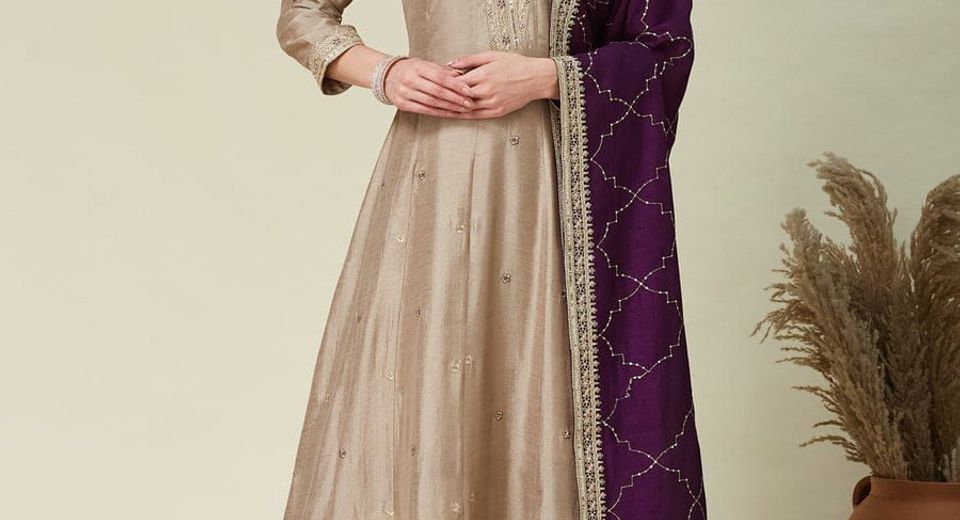
When Anarkali Kurtis Work Well and How to Balance the Silhouette depends on more than the amount of flare in the skirt. Length, fabric weight, neckline, sleeve volume, trouser shape and dupatta placement all affect whether an Anarkali looks graceful or visually heavy. A well-balanced Anarkali kurti creates a clear vertical line from the shoulder to the hem while allowing the flare to move below the waist.
An Anarkali works particularly well when you want one garment to provide structure, movement and occasion-appropriate detail. The same basic cut can suit a family puja, a wedding reception or a festive dinner, but the correct proportions will differ for each setting. Understanding those proportions makes online buying more reliable and prevents accessories from competing with the garment.
When Anarkali Kurtis Work Well and How to Balance the Silhouette through proportion
When Anarkali Kurtis Work Well and How to Balance the Silhouette comes down to a fitted upper section, a controlled flare and a hemline suited to the wearer's height and footwear. The waistline may sit at the natural waist, slightly above it or lower on the torso, and each position changes the visual balance.
A fitted bodice gives the eye a defined starting point, while panels or gathers create volume below that point. A floor-length Anarkali elongates the body when the hem falls close to the instep, whereas a calf-length Anarkali draws attention across the lower leg. Neither length is universally better; the right choice depends on the footwear, the amount of flare and the height of the wearer.
Vertical details support a longer-looking line. Narrow zari borders, front panels, centre embroidery and a dupatta worn close to one shoulder can all guide the eye downward. Wide horizontal borders, large motifs placed at the waist and a very broad dupatta drape create more visual width, so they work best when the rest of the outfit remains relatively clean.
For example, Black Anarkali Suit Set with Sequin Zari and Moti Lace Work already contains shine and surface texture. A slim earring, a restrained bracelet and a dupatta with a neat edge will preserve the garment's shape better than several large necklaces and stacked bangles.
When Anarkali Kurtis Work Well and How to Balance the Silhouette for different occasions
When Anarkali Kurtis Work Well and How to Balance the Silhouette depends on the formality, duration and movement expected at the event. A heavily embellished, full-length Anarkali suits evening celebrations, while a lighter rayon cotton or silk Anarkali can be more practical for daytime gatherings.
Weddings and evening celebrations
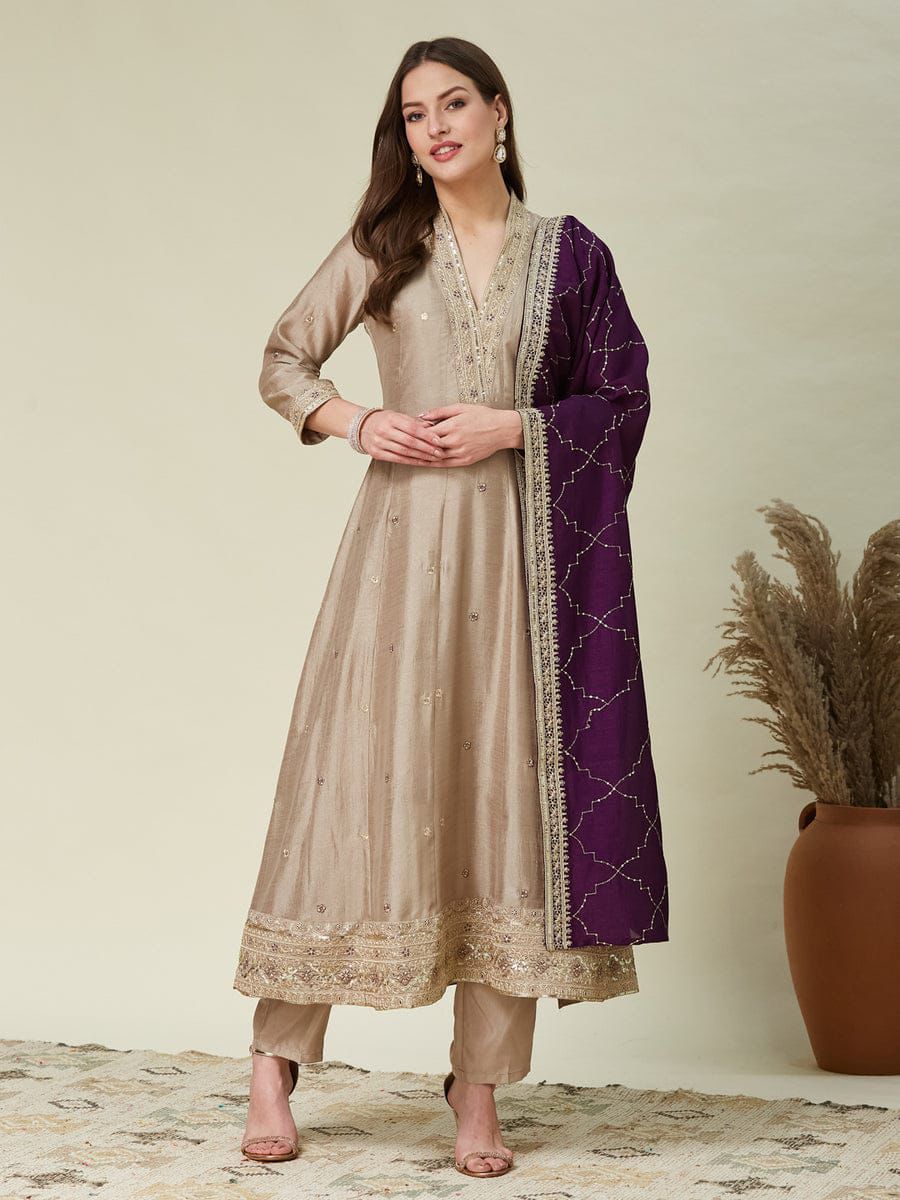
A floor-length Anarkali with zari, sequins or intricate embroidery works well for a wedding reception, sangeet or formal festive dinner. Black Anarkali Suit with Zari, Sequins & Moti Lace Work provides a strong evening direction because metallic detail catches warm indoor lighting without requiring a heavily layered necklace.
Choose a dupatta that doesn't obscure the main embroidery. A shoulder drape pinned near the collarbone keeps the neckline visible, while a narrow front fall prevents the torso from appearing wider. If the Anarkali has a broad hem border, select footwear with a modest heel so the border clears the floor by approximately 1 to 2 centimetres.
Daytime ceremonies and family gatherings
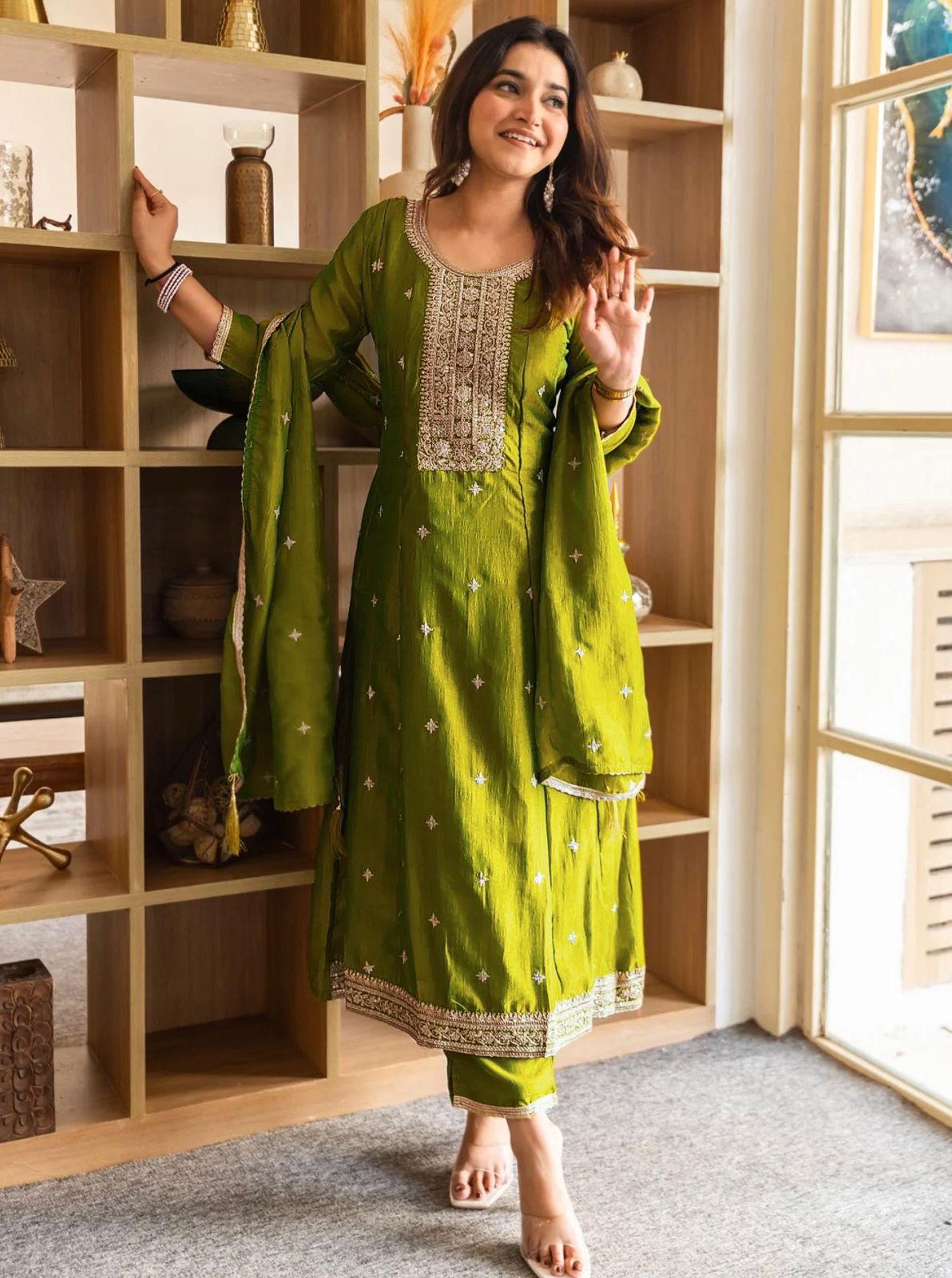
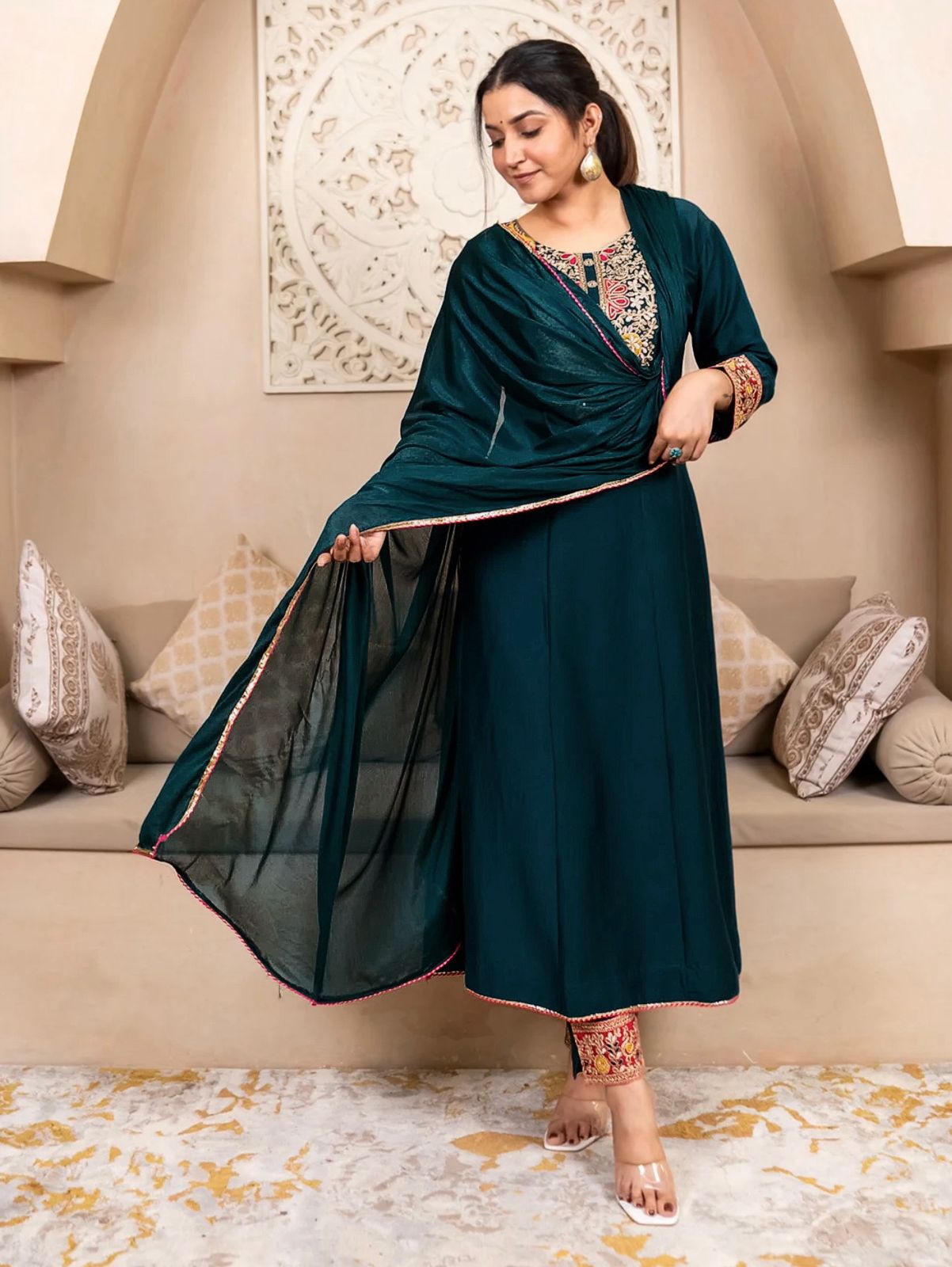
A daytime Anarkali works best with breathable construction, moderate flare and decoration that remains legible in natural light. Teal Green Embroidered Silk Anarkali Kurta Set can work for a festive lunch or family celebration when paired with small earrings, a low bun and sandals with a stable heel.
For a Haldi ceremony, bright colour and easy movement matter more than dense embellishment. A light dupatta that can be secured at both shoulders is safer than a long, trailing drape, particularly when guests are moving between indoor and outdoor spaces. A three-quarter sleeve also offers practical coverage without adding the bulk of a wide full sleeve.
Work-friendly and smaller occasions
An Anarkali can suit a workplace cultural day or a small festive event when the flare, shine and length remain moderate. Minimal embroidery, matte fabric and a straight or gently flared lower section create a quieter result than a heavily sequined skirt.
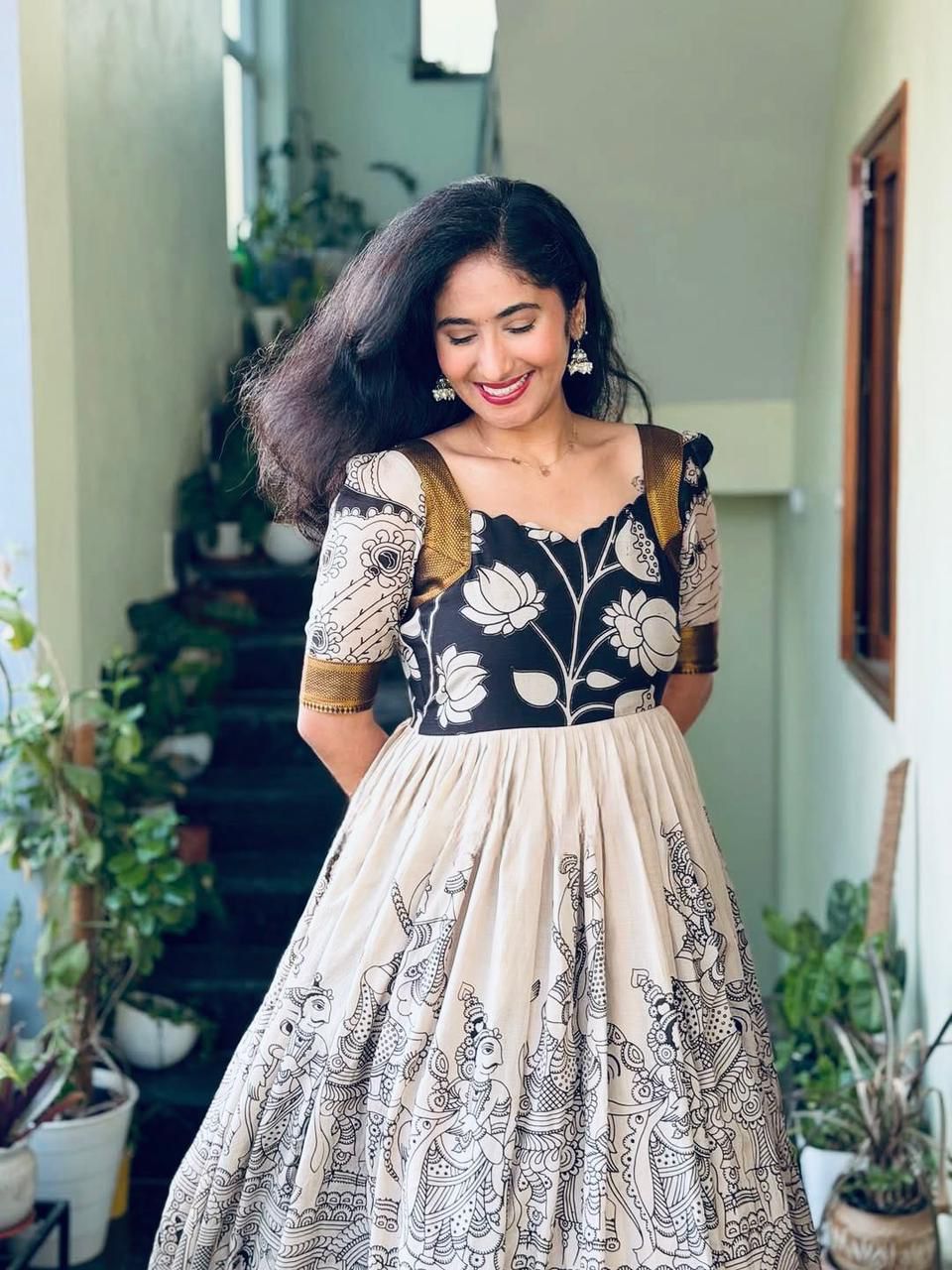
Regional prints can make an Anarkali feel distinctive without relying on metallic embellishment. Kalamkari Print Salwar Suits (Copy) offer an useful reference for balancing a patterned surface: keep jewellery simple, choose a solid or low-contrast dupatta and let the print remain the primary visual feature.
When Anarkali Kurtis Work Well and How to Balance the Silhouette with length and flare
When Anarkali Kurtis Work Well and How to Balance the Silhouette requires choosing length and flare according to height, walking space, footwear and the position of the hem border. A garment that looks elegant in a static photograph can become difficult to manage if the hem catches under the feet or the flare overwhelms the wearer's frame.
A near-floor-length Anarkali is most effective when the hem stops just above the floor in the intended shoes. If you plan to wear flats and heels interchangeably, alter the length for the lower shoe rather than allowing the fabric to trail. A 3 to 5 centimetre difference in hem position can change both comfort and the apparent proportion of the legs.
Petite wearers often benefit from a narrower flare, a raised waistline and a smaller or vertically arranged print. A deep V, narrow U or gently elongated square neckline can add length to the upper body. Very broad hems, large waist motifs and multiple heavy layers can visually shorten the figure when combined together.
Taller wearers can carry a fuller flare, a wider hem border or a longer sleeve more easily, but volume still needs a clear focal point. If the skirt has a dramatic flare, keep the bodice relatively fitted and avoid a dupatta that spreads across both shoulders. If the bodice has heavy work, a calmer skirt and controlled hemline will create better balance.
Black Embroidered Anarkali Suit Set with Zari Work demonstrates why placement matters. Concentrated embroidery on the bodice and lower border creates a defined top and bottom, so the middle section can remain visually quieter. Styling with a clean side-parted hairstyle and a narrow dupatta edge reinforces that vertical structure.
When Anarkali Kurtis Work Well and How to Balance the Silhouette with fabric and detail
When Anarkali Kurtis Work Well and How to Balance the Silhouette depends strongly on fabric weight and surface finish. Stiff textiles hold a wider flare, fluid textiles fall closer to the body, and reflective embellishment makes an area appear more prominent.
Silk and silk-blend constructions generally provide body and a polished fall, making them suitable for festive Anarkalis with shaped panels. Rayon cotton tends to offer softer, more relaxed movement for daytime wear. Chanderi has a light, slightly crisp character that can support delicate festive structure, while Banarasi silk and dense zari create stronger visual richness and should be balanced with simpler accessories.
Sequins, zari and moti lace work catch light and increase perceived volume even when the fabric itself isn't heavy. Black Zari Sequins Embroidered Anarkali Suit Set | Varnavi! Is therefore best treated as a statement outfit: use one dominant jewellery area, such as earrings, rather than adding a large necklace, maang tikka and deep belt together.
Embroidery scale also affects proportion. Small repeated motifs create an even texture, medium motifs can define the torso or skirt, and large motifs become focal points. A large motif placed at the bust draws attention upward; a wide motif at the hip draws attention outward. Select placement according to the area you want to frame, not simply according to the amount of decoration.
Matte fabrics and tonal embroidery are useful when you want the cut to lead. Shiny surfaces and contrasting zari are more suitable when the garment itself should carry the festive impact. Ivory Zari Sequins Embroidered Anarkali Suit Set | Varnavi combines a light base with reflective detail, so warm-toned footwear and restrained gold jewellery can connect the outfit without introducing another strong colour.
When Anarkali Kurtis Work Well and How to Balance the Silhouette with dupattas
When Anarkali Kurtis Work Well and How to Balance the Silhouette requires a dupatta whose width, border and drape support the garment's vertical line instead of adding unplanned bulk around the bust and waist. The most dependable drape for a heavily worked Anarkali is a narrow shoulder fall secured near the shoulder or upper arm.
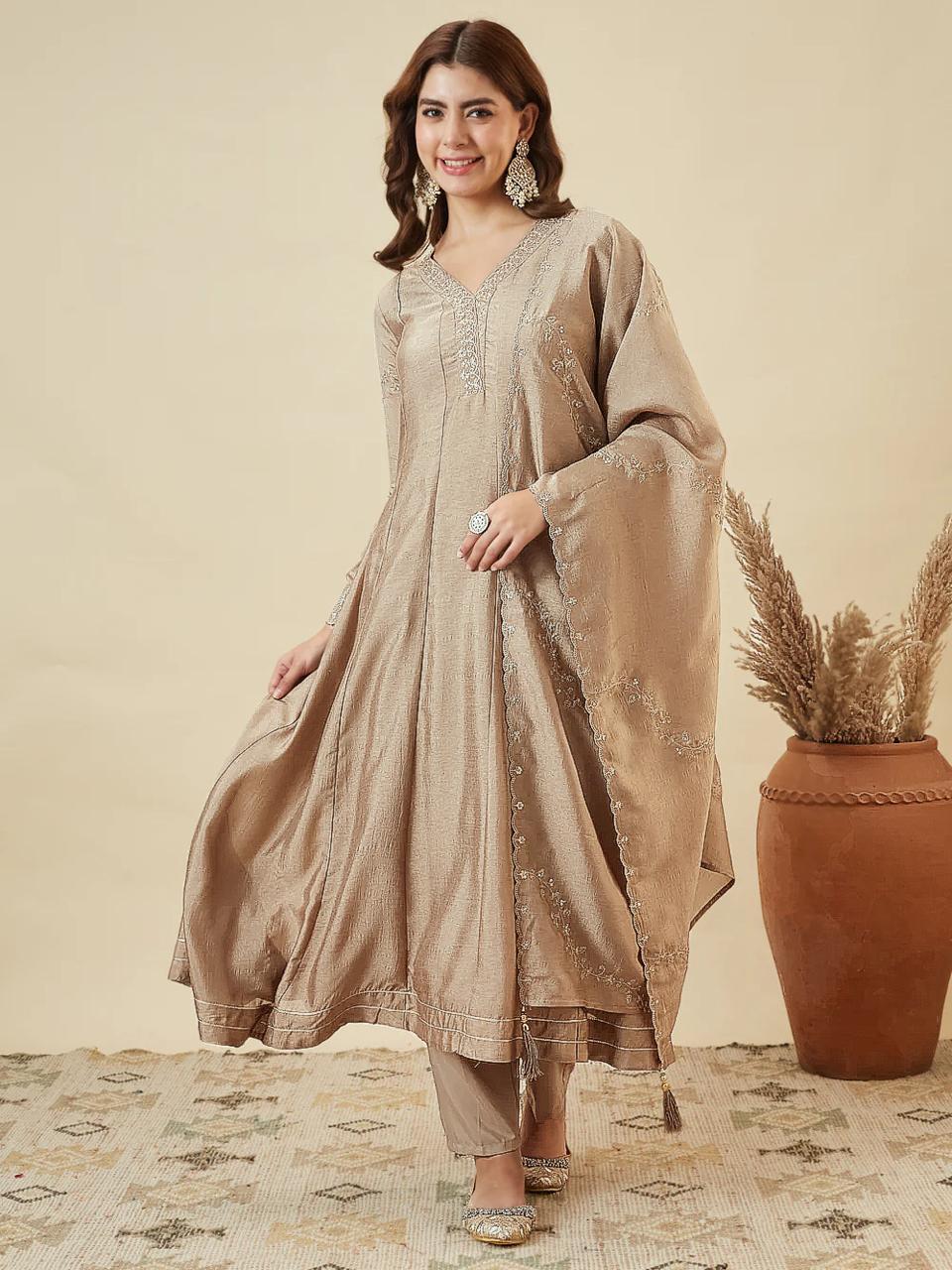
A dupatta worn over both shoulders can create symmetry, but a thick border on both sides may make the torso look broader. A single-side drape creates more asymmetry and movement, especially when the Anarkali has a plain neckline. Pinning the dupatta at one point is useful for ceremonies because it reduces repeated adjustment and protects the hem from being stepped on.
The bottom should support the kurta rather than compete with its flare. Narrow churidar trousers or slim pants usually work with a full Anarkali because they keep the lower body streamlined. Palazzo trousers can work with a shorter, less flared Anarkali, but a wide palazzo under a floor-length, heavily flared skirt may create excess volume that's visible during walking.
Sleeves deserve the same attention. A fitted three-quarter sleeve keeps the upper arm defined and suits most levels of flare. Bell sleeves, puff sleeves and heavily embellished cuffs add width near the shoulder and wrist, so they need a simpler dupatta and less volume elsewhere.
Regional styling gives useful lessons in managing proportion. Maharashtra Paithani Inspired Salwar Suits suggest the impact of a strong woven border, while Gujarat Bandhej Salwar Suits show how a small-scale tie-dye pattern can add colour without requiring heavy embellishment. Odisha Sambalpuri Salwar Suits offer another useful reference for patterned surfaces: let the textile design lead and avoid piling several competing borders into the same outfit.
When Anarkali Kurtis Work Well and How to Balance the Silhouette with accessories
When Anarkali Kurtis Work Well and How to Balance the Silhouette becomes easier when accessories are selected according to the garment's strongest feature. A high-shine Anarkali usually needs fewer decorative elements, while a plain Anarkali can support more visible jewellery or a printed dupatta.
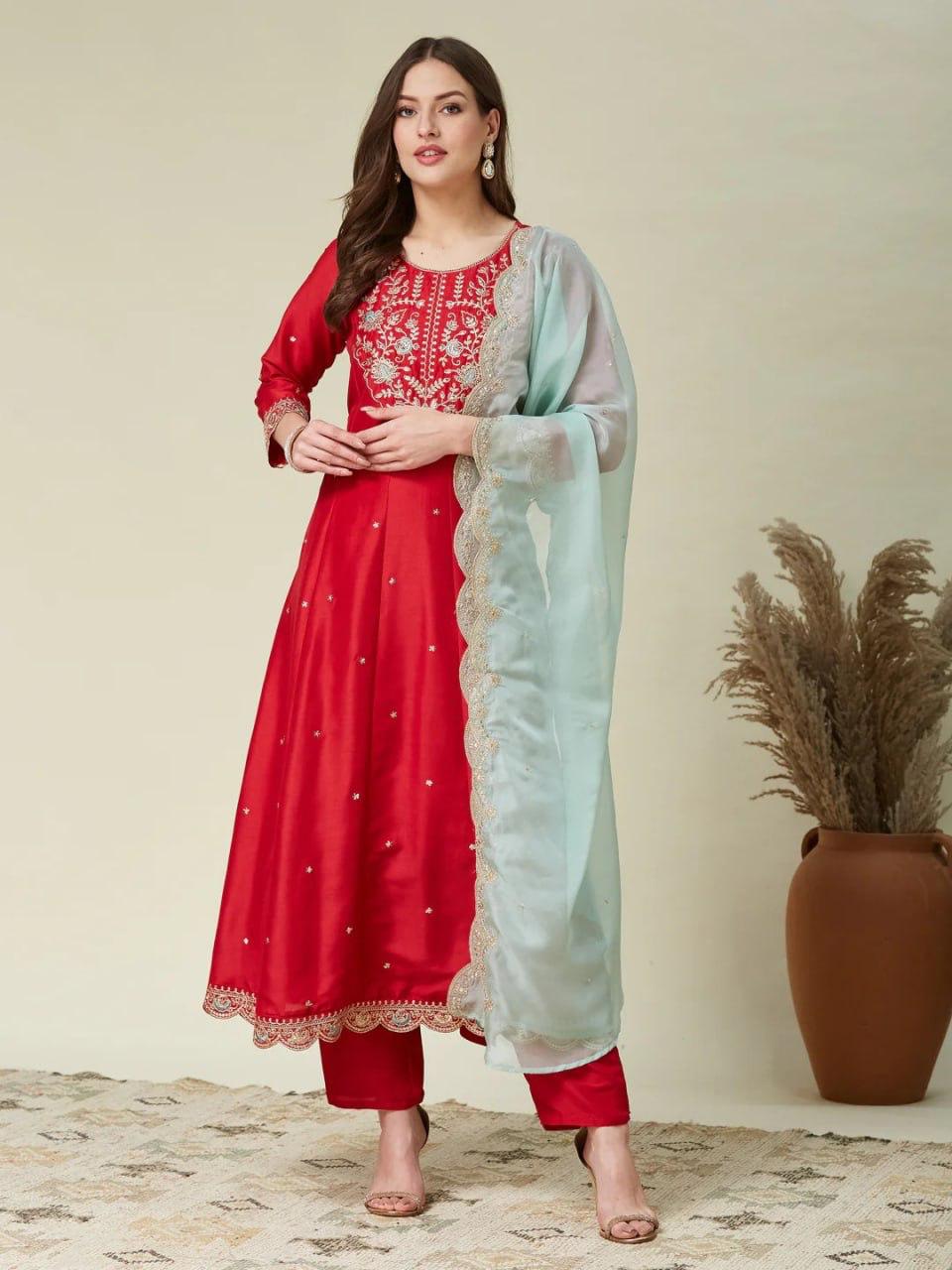
Neckline and jewellery should not fight for the same space. A deep neckline can carry a short necklace or pendant, while a high embroidered neckline often looks cleaner with earrings alone. If the bodice has dense zari, choose one metallic finish and repeat it in only two or three accessories rather than mixing gold, silver and coloured stones.
Footwear affects both proportion and practicality. A block heel of 3 to 5 centimetres can lift a long hem without making walking difficult, while embroidered juttis suit shorter Anarkalis and daytime gatherings. Match the shoe height to the garment's alteration plan because changing from heels to flats after tailoring can cause the hem to drag.
Hair placement also changes the perceived neckline. An updo exposes the shoulders and lengthens the neck, while loose hair adds width near the upper body. A side braid can complement an one-shoulder dupatta, whereas a sleek bun gives a cleaner counterpoint to a wide flare.
For a quieter festive look, White Embroidered Anarkali Suit Set with Gota Patti Dupatta can be paired with small gold hoops, neutral sandals and a compact potli. For a warmer, more relaxed appearance, Maroon Embroidered Rayon Cotton Anarkali Suit Set needs little more than tan footwear and understated earrings because the colour and surface already provide visual depth.
When Anarkali Kurtis Work Well and How to Balance the Silhouette before buying
When Anarkali Kurtis Work Well and How to Balance the Silhouette should be checked through measurements, fabric information and styling plans before purchase. A size chart alone can't reveal whether the flare will suit your shoes or whether a heavy border will sit at the right point.
Measure the fullest bust, natural waist, shoulder width and preferred garment length while wearing the undergarments you expect to use. Compare the garment length with a familiar kurta, then account for the thickness of the sole or heel. Check whether the product description identifies lining, sleeve length, fabric composition and the presence of a separate dupatta.
Photographs can help you judge embroidery placement, but they may not show the garment's actual weight. Dense zari and sequin work can make an outfit warmer and heavier than a plain textile of the same cut. For a long event, prioritise shoulder comfort, secure closures and a dupatta that can be pinned without distorting the neckline.
An useful final test is to imagine the outfit in motion. Walk up stairs, sit on a chair, raise one arm and turn sideways. If the hem, flare, sleeve and dupatta can all move without repeated adjustment, the Anarkali is more likely to remain balanced throughout the event.
Common Questions About Balancing an Anarkali Kurti Silhouette
When do Anarkali kurtis work best?
Anarkali kurtis work best for weddings, festive dinners, family celebrations, pujas and cultural events when the length and embellishment match the formality. Lighter fabrics and moderate flare also make Anarkalis suitable for daytime gatherings and workplace festive dressing.
Which Anarkali length suits a petite frame?
A petite frame often suits an Anarkali that falls near the ankle or just above the floor, with a raised waistline and controlled flare. Narrow borders, smaller motifs and a vertically arranged print can help preserve a longer-looking line.
Can a palazzo be worn with an Anarkali kurti?
A palazzo can be worn with a short or gently flared Anarkali kurti. A wide palazzo under a floor-length, heavily flared Anarkali may add too much lower-body volume, so slim trousers or a churidar are usually more balanced with a fuller skirt.
How should a dupatta be draped with a heavily embroidered Anarkali?
A heavily embroidered Anarkali usually looks balanced with a narrow shoulder drape secured near the shoulder or upper arm. Keeping the dupatta away from the main bodice embroidery prevents visual crowding and makes movement easier during long events.
Which fabric is suitable for a daytime Anarkali?
Rayon cotton is suitable for a softer, relaxed daytime Anarkali, while silk can work for a more polished festive look. Chanderi offers light structure, but dense zari, sequins and thick lining may feel warmer and more formal in daytime settings.
What jewellery looks best with a heavily embellished Anarkali suit?
One dominant jewellery feature usually looks best with a heavily embellished Anarkali suit. Choose statement earrings or a necklace, then keep the remaining accessories restrained so zari, sequins, embroidery or moti lace remain the outfit's main focal point.


