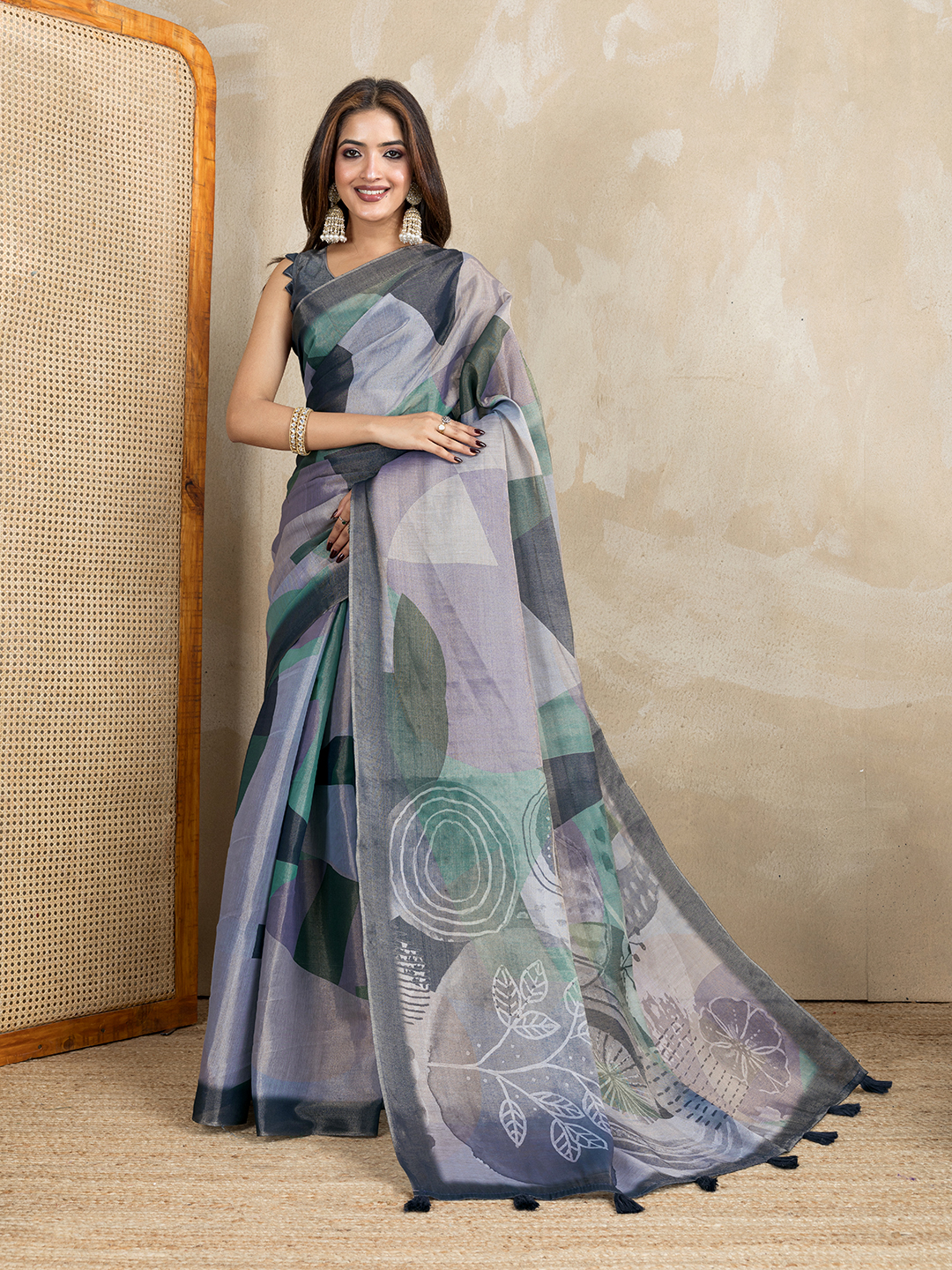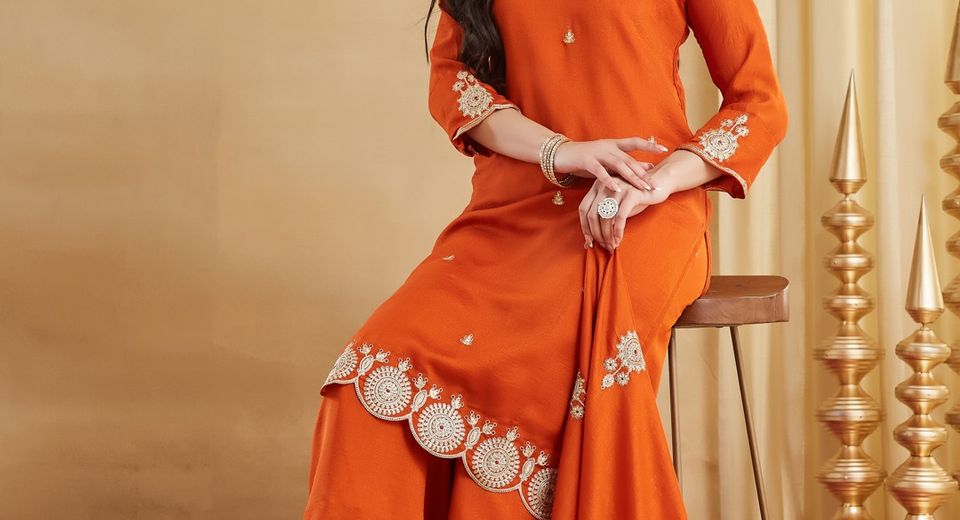
When a Short Kurti Looks Better With Straight Pants Than Jeans depends on proportion, fabric weight and the level of polish you want from an outfit. Jeans bring a western casual contrast, while straight pants extend the kurti's vertical lines and make a salwar suit look intentional from shoulder to ankle. The difference becomes especially visible with short kurtis that end around the hip or upper thigh.
A straight-pant pairing doesn't mean every short kurti requires a matching set. The useful question is whether the kurti already has an ethnic detail, such as zari, Chanderi silk, floral embroidery, a regional print or a dupatta, that deserves a visually quiet lower half. Once that principle is clear, choosing between denim and straight pants becomes much easier.
When a Short Kurti Looks Better With Straight Pants Than Jeans
A short kurti looks better with straight pants than jeans when the outfit needs a continuous, tailored line or when the kurti carries noticeable ethnic detail. Straight pants work particularly well with hip-length kurtis, formal workwear kurtis, three-piece kurti sets and fabrics that look refined rather than rugged.
Jeans introduce horizontal breaks through their waistband, pockets, seams and often a contrasting blue wash. Those details can make a short kurti appear more divided, especially when the kurti has a broad hem, heavy border or a dupatta. Straight pants reduce visual interruption because the leg falls in one clean column beneath the kurti.
Short kurtis also benefit from straight pants when the desired impression is neat and moderately dressy. A cotton kurti with jeans can look relaxed and youthful; the same cotton kurti with ankle-length pants can look suitable for an office, a family lunch or a daytime festive gathering. Straight pants are not automatically more formal, but their uninterrupted shape makes formality easier to create.
Which short kurtis suit straight pants most naturally?
Short kurtis with side slits, a straight hem, a lightly flared cut or a structured neckline suit straight pants most naturally. Kurtis ending between the upper thigh and mid-thigh usually look balanced with pants that reach the ankle or sit just above the footwear.
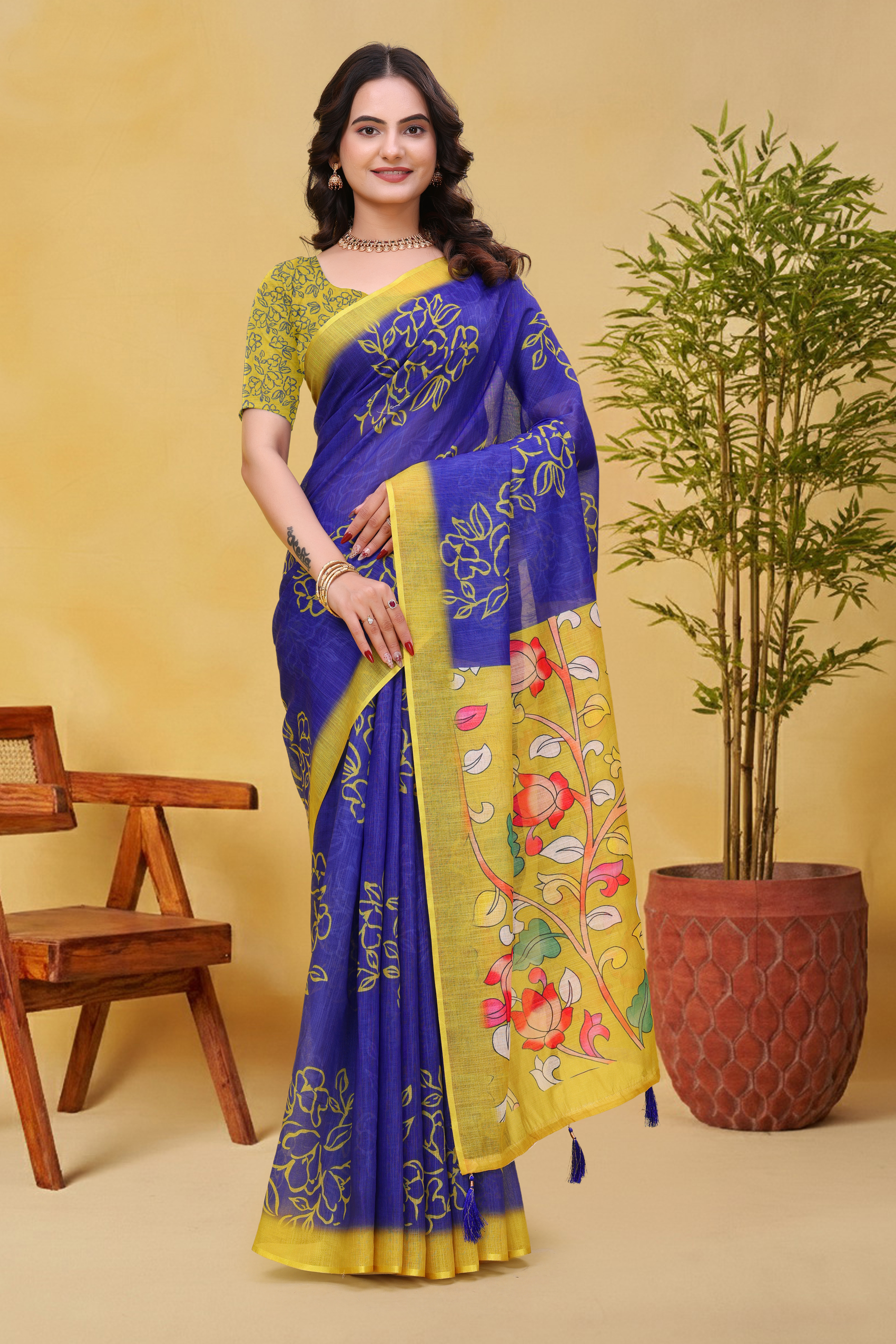
A kurti with a strong print also benefits from a solid pant in one of the print's supporting colours. Kalamkari Print Salwar Suits can be styled with a restrained straight pant so the print remains the focal point. A heavily distressed jean would compete with the pattern and shift the outfit toward casual streetwear.
How Proportion Changes the Outfit
The key proportion rule is simple: a short kurti needs a lower half that supports its length without adding unnecessary width. Straight pants do this by keeping the silhouette narrow from the hip downward, whereas some jeans create a sharp contrast at the hem and make the upper body look boxier.
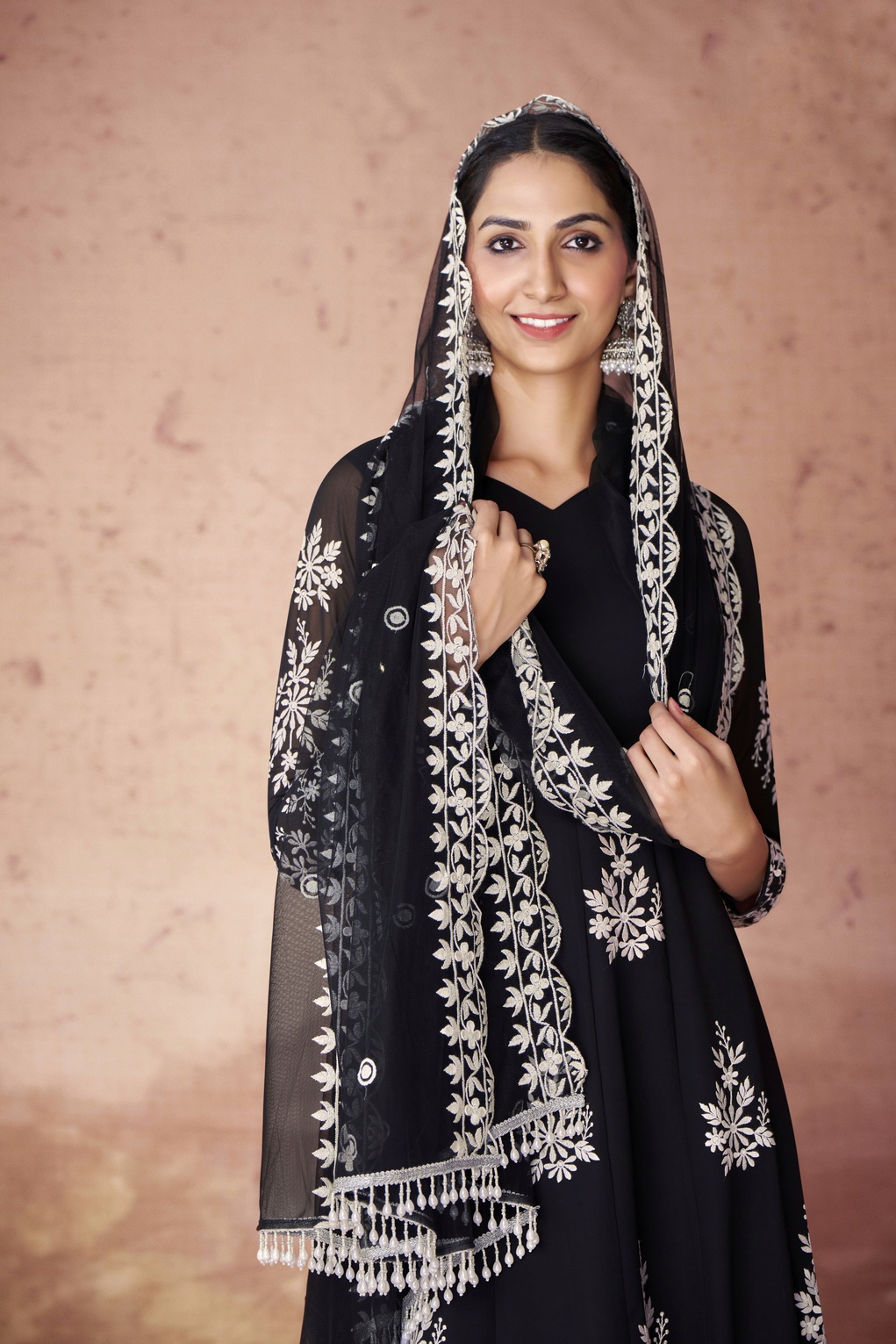
The most balanced trouser length usually falls at the ankle bone or approximately 1 to 2 centimetres above it. Pants that pool over the foot can shorten the leg line, while pants ending several centimetres above the ankle may make the kurti appear disproportionately long. The correct length also depends on footwear: flat juttis need a slightly shorter hem than low block heels.
Pay attention to the width of the pant rather than choosing the narrowest possible cut. A straight pant should skim the leg without clinging across the thigh. Approximately 2 to 4 centimetres of ease around the thigh generally allows comfortable movement while preserving a clean outline, although the ideal measurement depends on the fabric and the wearer's body shape.
What should petite and tall wearers adjust?
Petite wearers can create a longer line with a short kurti and high-waisted straight pants in similar or related colours. A kurti hem near the upper thigh, a narrow dupatta fall and pointed juttis can add visual height without requiring heels.
Tall wearers can handle more contrast between the kurti and trousers, including a printed short kurti with cream or navy pants. A slightly longer short kurti, a visible ankle and a wider dupatta border can prevent the outfit from looking too sparse.
Fabric Pairings That Make Straight Pants Look Intentional
Fabric compatibility determines whether a short kurti with straight pants looks like a complete salwar suit or two unrelated garments. Similar weight is the safest starting point, but controlled contrast can also work when one fabric clearly anchors the outfit.
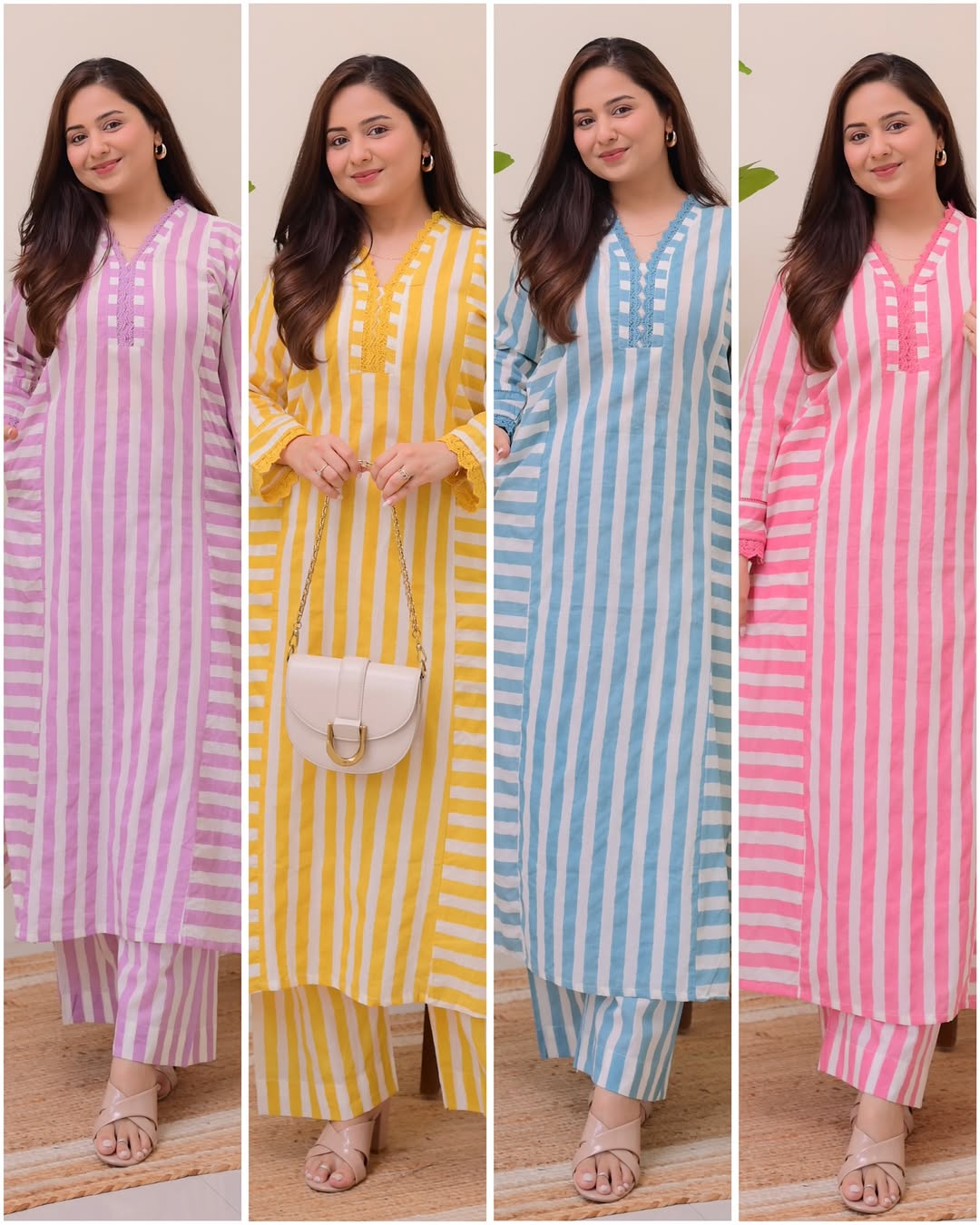
Cotton kurtis pair well with cotton, cotton-blend or lightweight rayon straight pants because both fabrics hold a modest shape. Elegant Yellow Cotton Kurti Pant Dupatta Set shows why coordinated cotton pieces look cohesive: the pant supports the colour and relaxed texture of the kurti without introducing denim's visual heaviness.
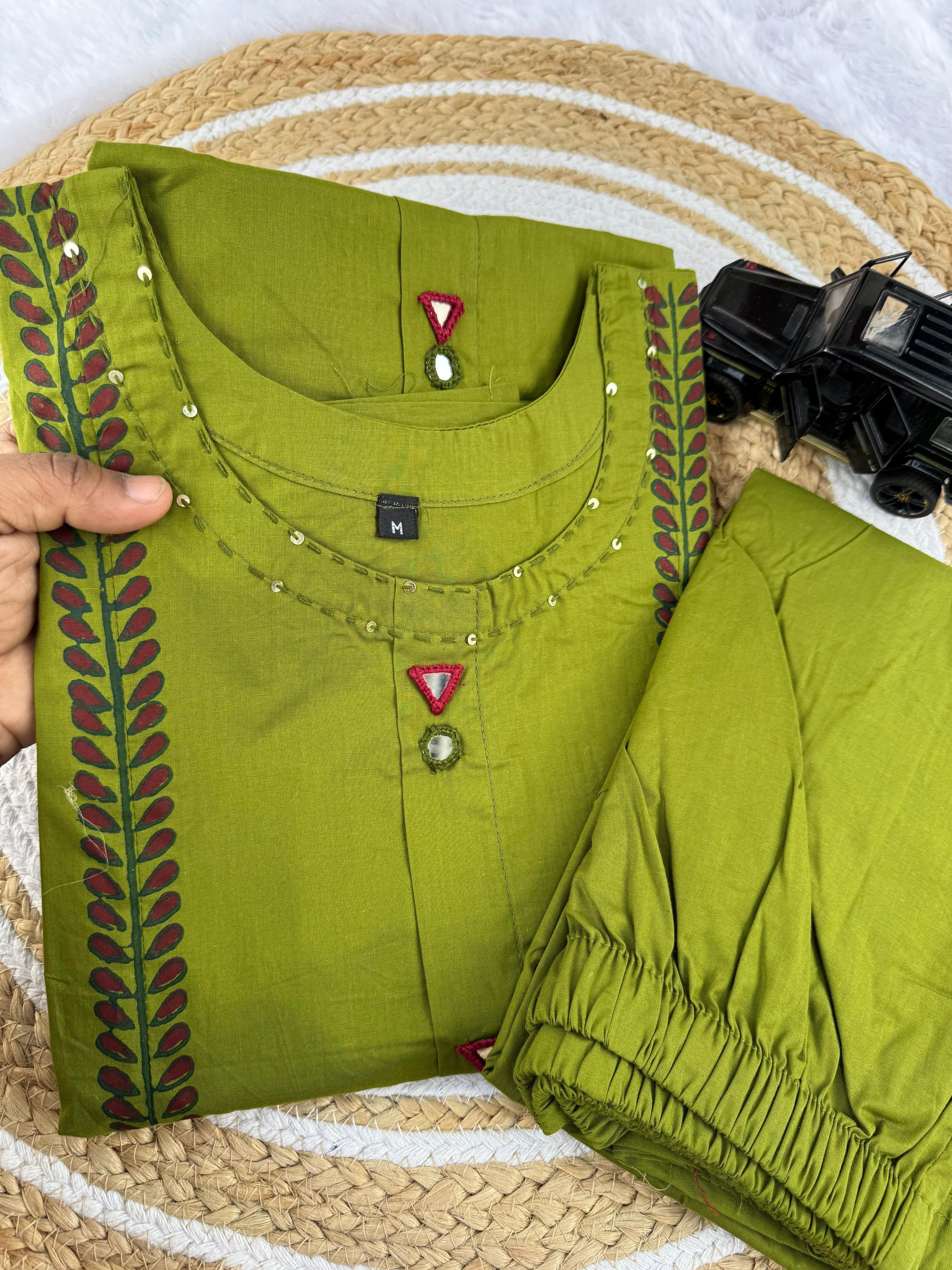
Embroidered kurtis need a smooth, quiet bottom. Mustard Embroidered Kurti Pant Dupatta Set Women uses the pant as a clean base for surface work on the upper garment. A plain straight pant is especially useful when embroidery appears around the neckline, sleeves and hem, because repeating decoration on jeans can make the outfit look busy.
Silk and silk-like textures need a trouser with enough body to avoid looking limp. Cream Chanderi Silk Kurti Pant Dupatta Set for Women offers a useful example of a dressier three-piece proportion, where a refined lower half preserves the light, airy quality associated with Chanderi silk. A faded blue jean would create a stronger casual contrast than many festive settings require.
Khadi cotton can work with denim for an intentionally rustic, everyday look, but straight pants create a more coherent ethnic outfit. Cream Khadi Cotton Straight Kurta Set with Dupatta shows how a neutral base can carry a dupatta without visual competition from a denim wash. Pressing khadi properly matters because creases can otherwise obscure the straight silhouette.
Colour Decisions: Matching Is Optional
Matching the kurti and straight pants is optional; repeating one colour or one undertone is usually enough to make the outfit look connected. Tonal dressing, light-dark contrast and print-based colour matching each produce a different effect.
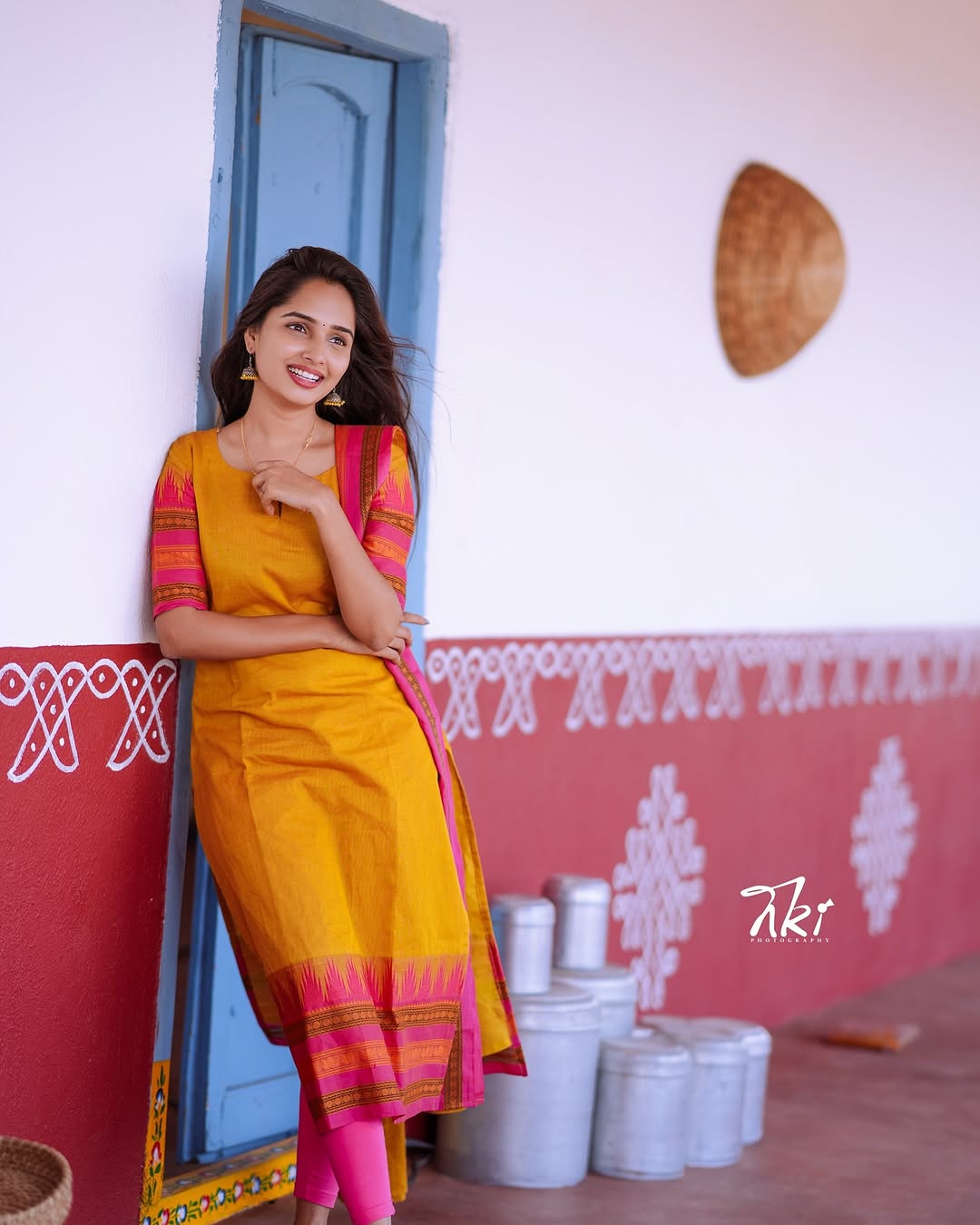
Tonal dressing uses nearby shades, such as cream with ivory, mustard with warm beige or navy with muted blue. This approach lengthens the body because the eye encounters fewer abrupt breaks. Designer Cream Straight Kurti Set with Dupatta illustrates the versatility of a neutral palette: cream straight pants can support metallic jewellery, colourful dupattas or minimal office accessories.
Light-dark contrast gives the short kurti more definition. A yellow or mustard kurti with cream pants feels brighter and more daytime-friendly, while a navy kurti with cream pants feels sharper. Yellow Floral Embroidered Kurti Pant Set Online shows how a floral upper can remain lively when the pant repeats a quiet background shade instead of introducing another strong colour.
Print-based matching means selecting a pant colour found inside the kurti or dupatta. A navy floral kurti can take navy, cream or muted green straight pants, depending on the smallest repeated colour in the print. Stylish Navy Floral Silk Kurta Pant Dupatta Set demonstrates the advantage of a coordinated dark base for evening events and indoor celebrations.
Yellow Embroidered Cotton Kurti Pant Set with Dupatta is another useful colour reference for daytime dressing. Yellow doesn't need a matching yellow pant to look complete; cream, beige or muted olive can lower the brightness while retaining the outfit's warmth.
How Dupattas and Regional Prints Affect the Choice
A dupatta makes straight pants more useful because the complete outfit benefits from a stable lower line. When the dupatta has a border, print or zari, jeans can add a second style language that competes with the drape.
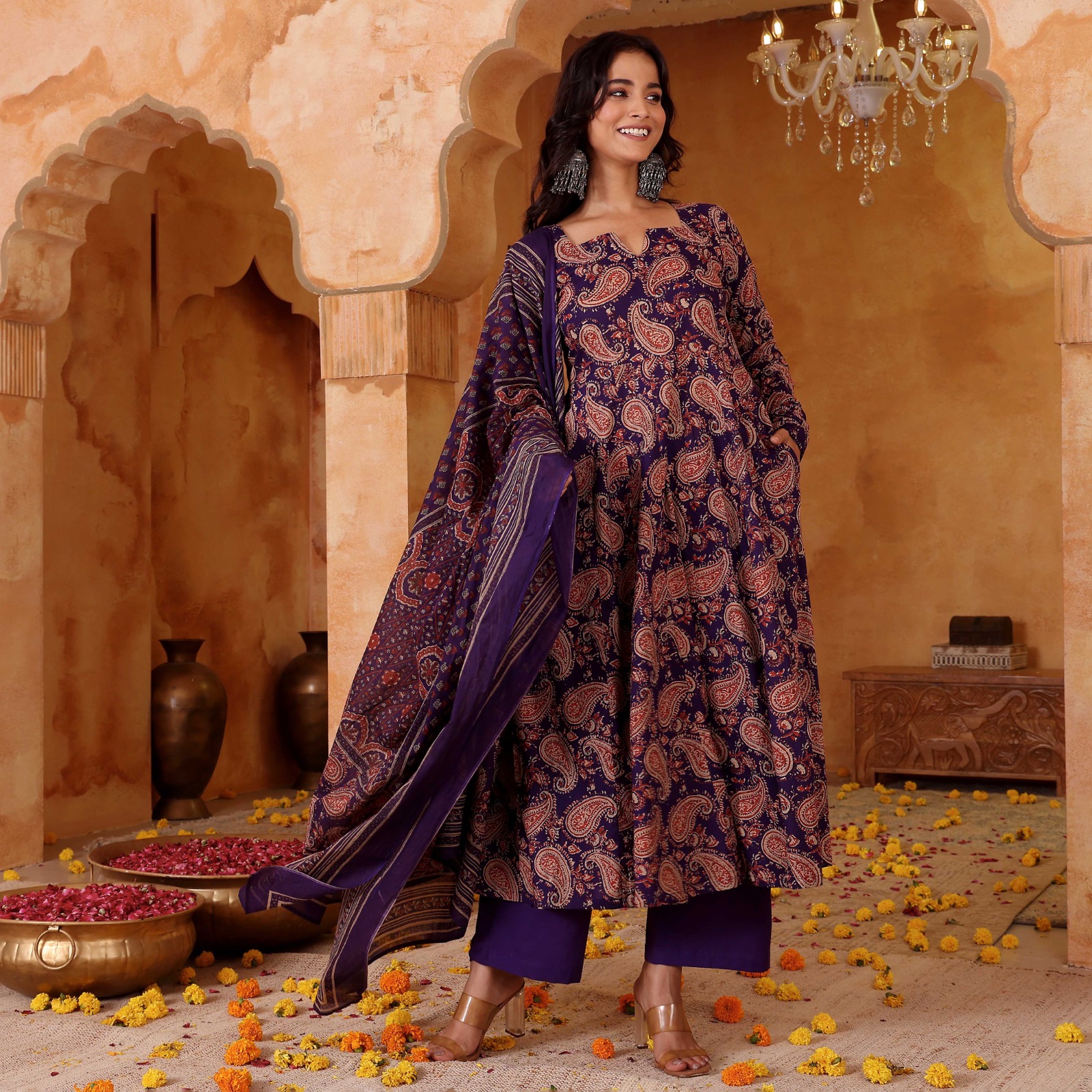
For a short kurti, place a bordered dupatta over one shoulder and let the longer edge fall near the knee or below the hip. The straight pant should remain visible from the kurti hem to the shoe; hiding the entire lower half under a voluminous drape removes the proportional advantage of the trouser.
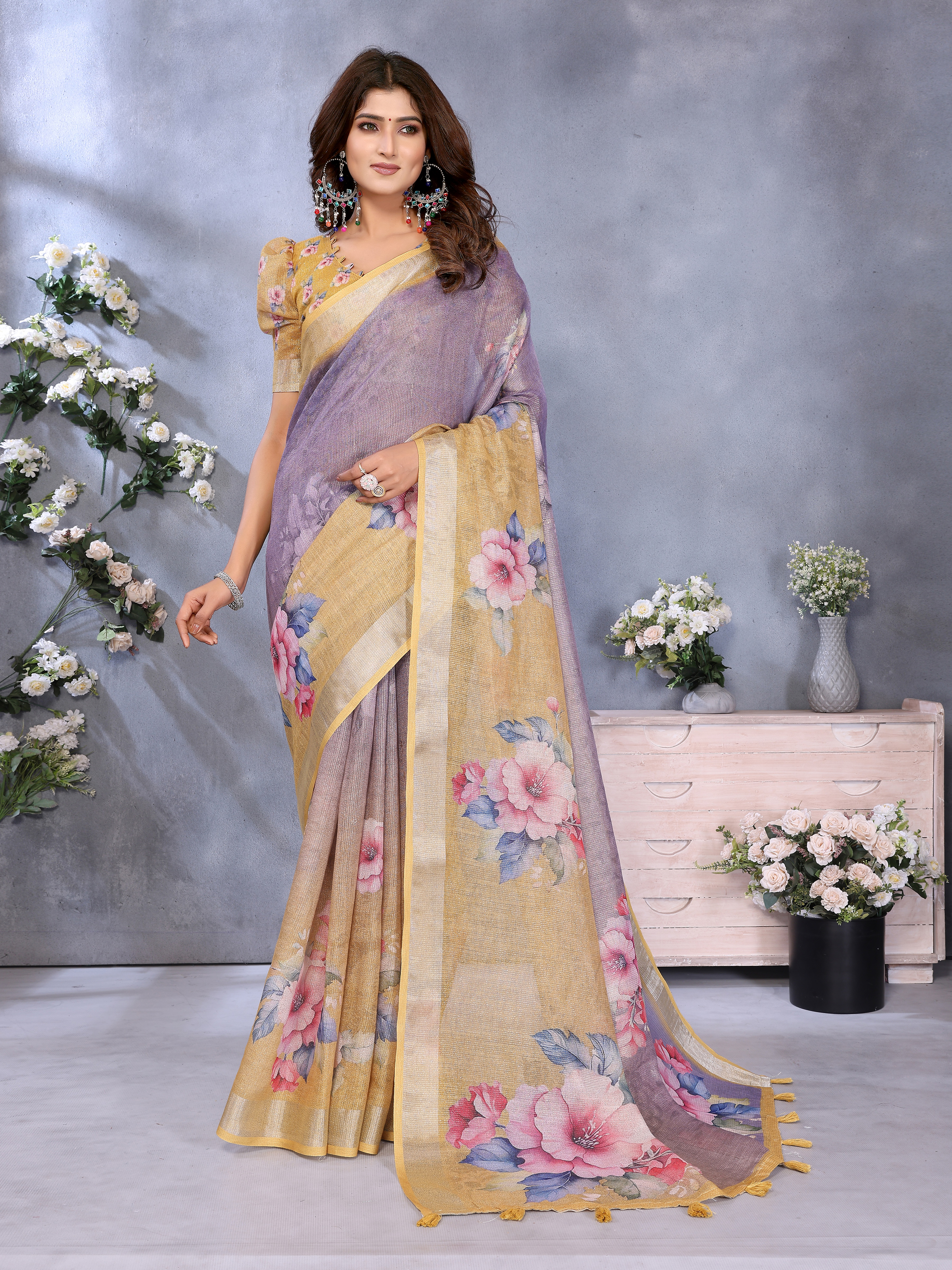
Regional textiles and prints deserve particular attention because their visual identity often comes from pattern, border or colour placement. Maharashtra Paithani Inspired Salwar Suits can be balanced with plain cream or jewel-toned pants, while Odisha Sambalpuri Salwar Suits benefit from a lower half that doesn't compete with their geometric character.
Gujarat Bandhej Salwar Suits bring a lively dotted pattern and often work well with solid straight pants that repeat a colour from the dupatta. Punjab Patiala Salwar Suits usually have a more relaxed, voluminous lower silhouette, so a short kurti with straight pants creates a noticeably sharper and more streamlined alternative rather than reproducing the traditional fullness.
Neckline shape also guides styling. A round or band collar can take a short necklace or layered beads, while a V-neck usually needs less jewellery at the centre. When the kurti includes embroidery around the neckline, earrings and bangles are safer than a large necklace. A clean straight pant gives these details room without adding another focal point.
When Jeans Are Still the Better Choice
Jeans are the better choice when the outfit is deliberately casual, the kurti is simple, or the setting rewards a mixed ethnic-western look. A plain short cotton kurti, sneakers and a medium-wash straight-leg jean can be practical for college, errands or a relaxed café visit.
Denim also works when the kurti has very little surface decoration and the wearer wants contrast rather than coordination. A short printed kurti with jeans can look energetic, particularly when the print is small and the footwear is casual. The goal isn't to reject jeans but to understand the visual message created by the combination.
Choose a straight-leg or slim-straight jean rather than a heavily tapered skinny pair when the kurti is loose. A very tight lower half can exaggerate the volume of the kurti, while a straight denim leg creates a more balanced casual silhouette. Avoid distressed knees and heavy contrast stitching when the kurti includes zari, silk, formal embroidery or a festive dupatta.
Jeans are also practical in cooler weather because denim provides more structure and warmth than lightweight cotton pants. In that situation, keep the ethnic element clear through the kurti, dupatta, juttis or jewellery instead of mixing several competing details.
Footwear and Accessories That Complete the Silhouette
Footwear should echo the formality and length of the straight pant. Juttis, mojaris, flat sandals and low block heels are the most reliable choices because they preserve the clean ankle-to-floor line.
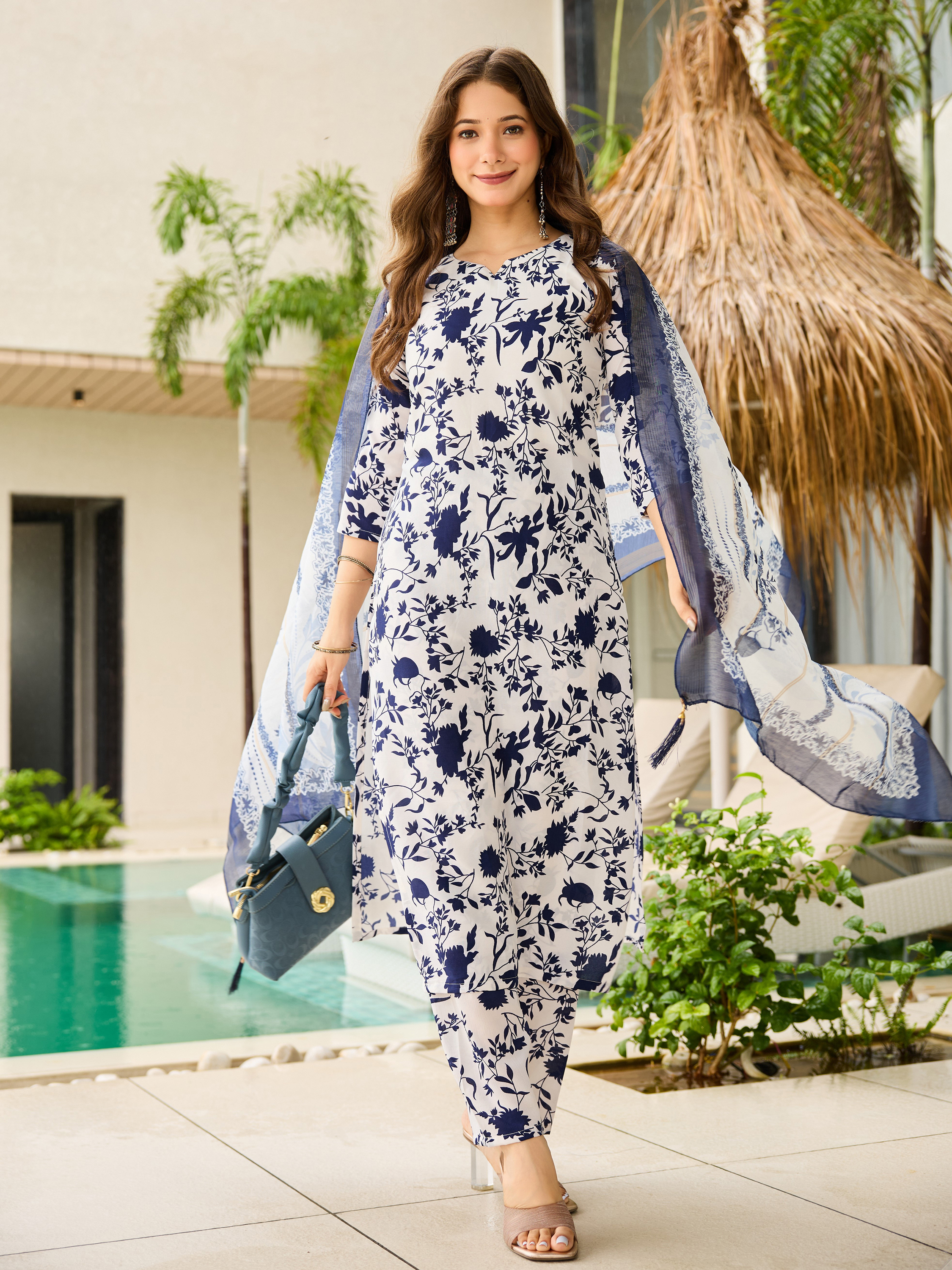
For office dressing, pair a short kurti and straight pants with closed-toe flats, a structured tote and small metal earrings. For a daytime family event, embroidered juttis, glass bangles and a light dupatta add festive interest without requiring a heavily embellished outfit.
Block heels between 3 and 5 centimetres can lengthen the silhouette without making the trouser hem difficult to manage. Very high heels may make a short kurti look visually top-heavy unless the trouser is long enough to fall close to the shoe.
Keep the accessory count proportional to the kurti. A printed or embroidered short kurti usually needs one dominant accessory, such as statement earrings, a bordered dupatta or a cuff bracelet. A plain cream or yellow kurti can carry more colour through a printed dupatta, a necklace and a bright pair of juttis.
A Practical Test Before You Choose the Pairing
The quickest test is to stand in front of a full-length mirror and check whether the eye moves smoothly from the shoulder to the ankle. If the kurti, pants and footwear appear connected, straight pants are probably supporting the outfit; if the waistband, hem and shoe create three competing breaks, reconsider the combination.
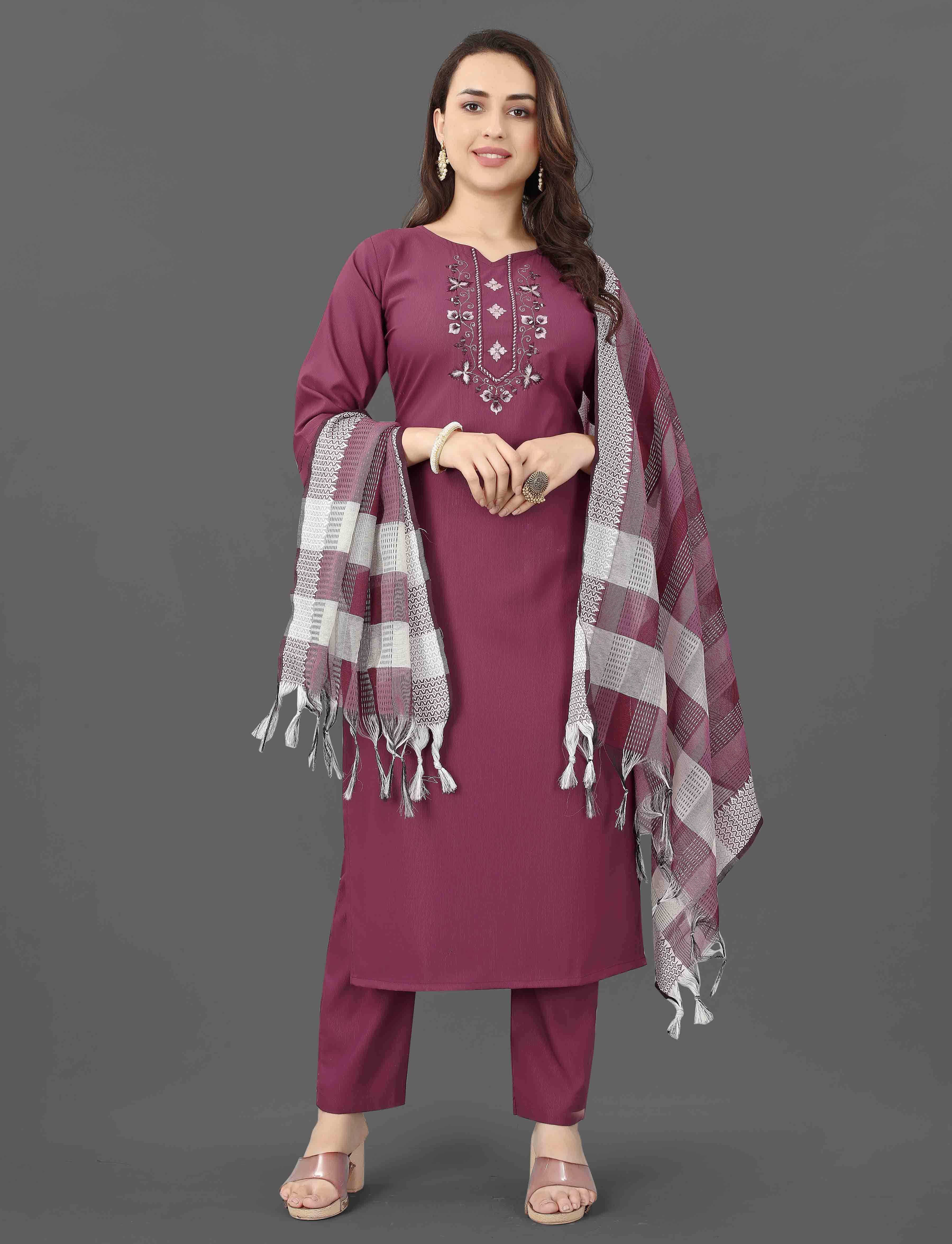
Check the side view as well as the front. The pant should not pull across the thigh, the kurti should not catch on a bulky waistband and the dupatta should not drag near the floor. Sit down, raise both arms and take several steps before deciding that a set fits well.
Use jeans when comfort, contrast and casual movement are the priority. Use straight pants when the kurti's fabric, embroidery, print or dupatta deserves a coordinated frame. That distinction explains When a Short Kurti Looks Better With Straight Pants Than Jeans more clearly than a fixed rule based only on colour or trend.
A well-chosen straight pant does more than complete a matching set. The right length, fabric weight and colour can make a short kurti appear taller, neater and more occasion-appropriate while preserving the ease that makes kurti dressing appealing.
Common Questions About Styling Short Kurtis With Straight Pants
When does a short kurti look better with straight pants than jeans?
A short kurti looks better with straight pants when the outfit includes embroidery, zari, Chanderi silk, a bordered dupatta or a dressier print. Straight pants create a continuous line and keep the ethnic details visually coordinated.
What length should straight pants be with a short kurti?
Straight pants usually look best at the ankle bone or 1 to 2 centimetres above it. The hem should remain clear of the floor and should be adjusted slightly for flat juttis or low heels.
Can I wear jeans with an embroidered short kurti?
You can wear jeans with an embroidered short kurti for a deliberately casual outfit. Choose clean, straight-leg denim with minimal fading and avoid distressed details when the kurti has zari, silk or a festive dupatta.
Should straight pants match the colour of the short kurti?
Straight pants do not need to match the kurti exactly. A related undertone, a neutral shade or a colour repeated inside the kurti's print is usually enough to create a connected outfit.
Which footwear works best with a short kurti and straight pants?
Juttis, mojaris, flat sandals and low block heels work best with a short kurti and straight pants. Footwear should leave the ankle line neat and should match the formality of the fabric and embellishment.
Are straight pants suitable for printed salwar suits?
Straight pants are highly suitable for printed salwar suits when the pant is solid and picks up a supporting colour from the print. A quiet lower half allows Kalamkari, Bandhej or Sambalpuri patterns to remain the main focus.