When a Saree Needs Rolling Instead of Folding for Storage depends on the fabric, surface decoration, storage duration and pressure placed on the garment. A saree doesn't automatically need to be rolled simply because it's expensive or handwoven. Tissue cotton, zari, metallic yarn, raised embroidery and very delicate weaves can develop sharp fold lines when they remain compressed for months. A sturdy everyday cotton saree may be perfectly safe when folded correctly.
The practical aim is to reduce stress at the same points. Rolling distributes pressure across a wider surface, while repeated folding creates lines that can weaken fibres, flatten texture or split metallic work. The right method also requires clean hands, breathable wrapping, a suitable core and periodic inspection.
When a Saree Needs Rolling Instead of Folding for Storage
A saree needs rolling instead of folding when it has a fragile surface, metallic work, a tendency to show permanent creases or a storage period longer than a few weeks. Rolling is especially useful for tissue cotton sarees, sarees with zari borders, textured handloom weaves and fabrics that will remain undisturbed in a cupboard for several months.
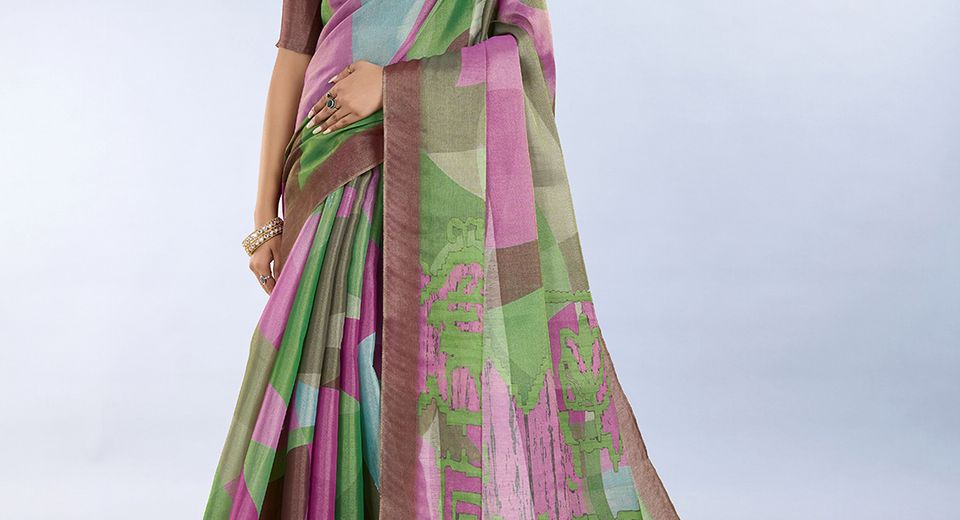
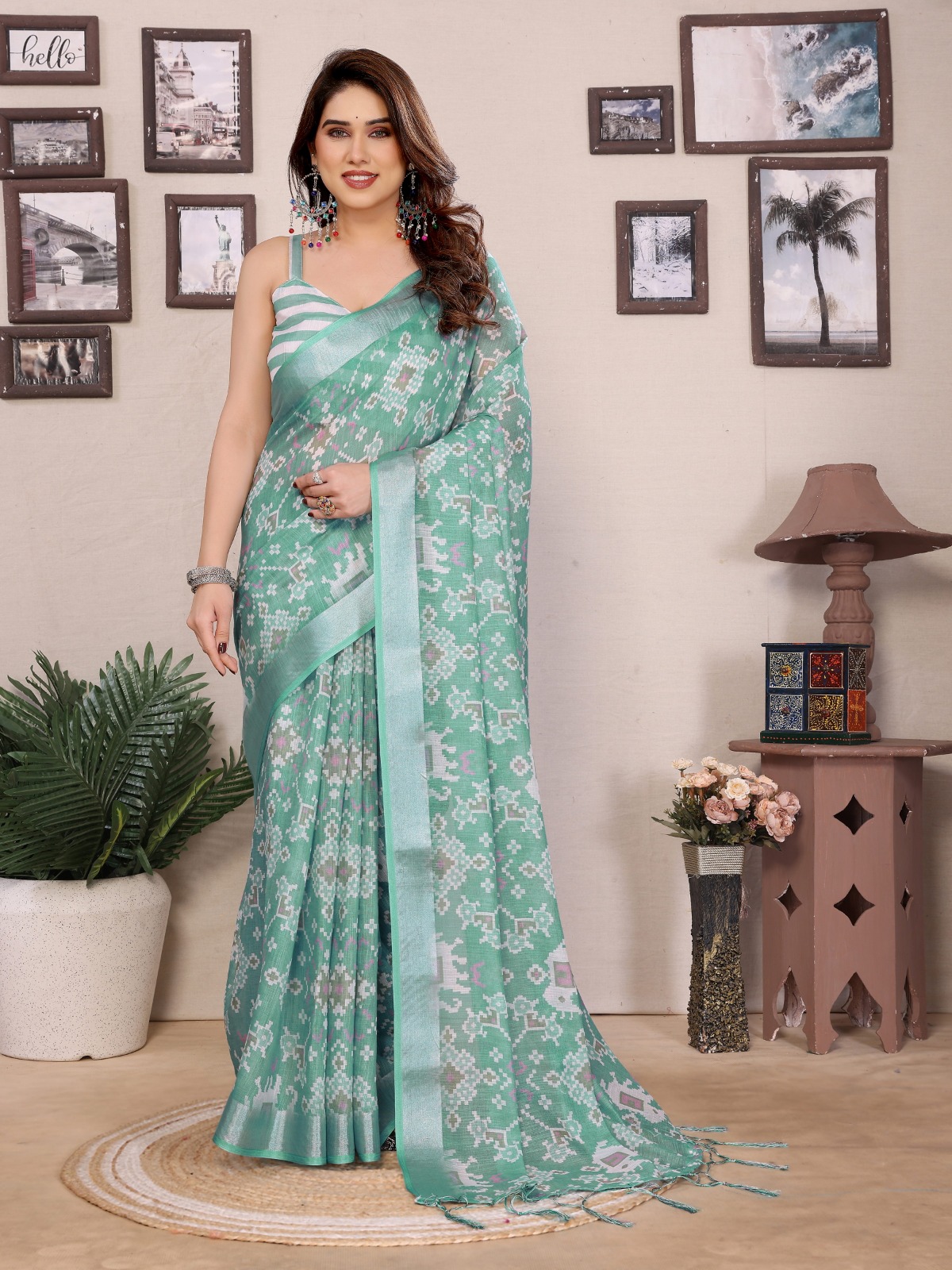
Tissue cotton combines a light, slightly crisp structure with a surface that can include sheen, woven motifs or metallic accents. Repeatedly folding the same six to eight lines can put concentrated pressure on the yarns. Sea Green Tissue Handloom Cotton Saree With Floral Patterns illustrates why gentle storage matters: floral patterning and a light tissue structure benefit from broad, soft support rather than tight creases.
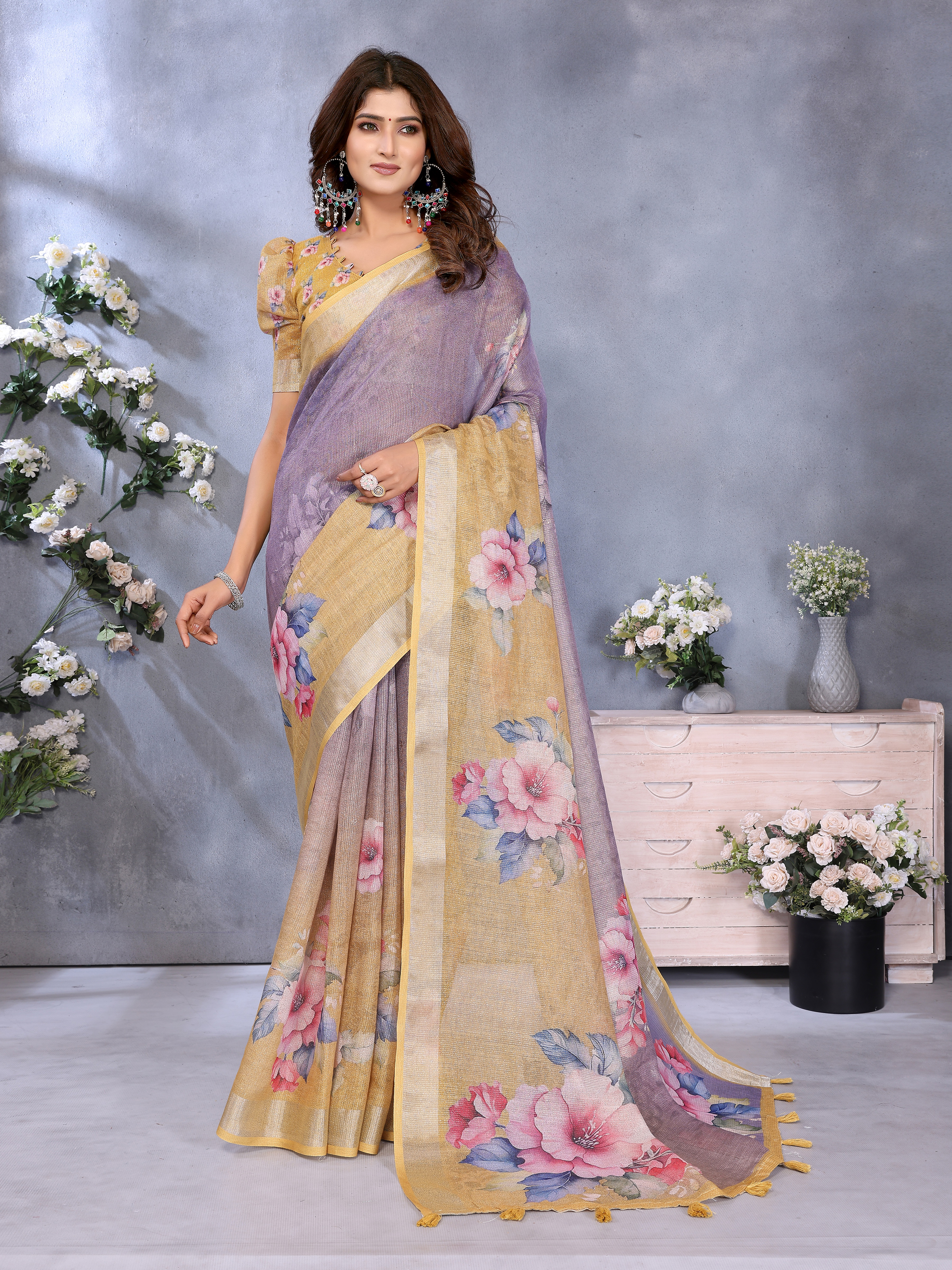
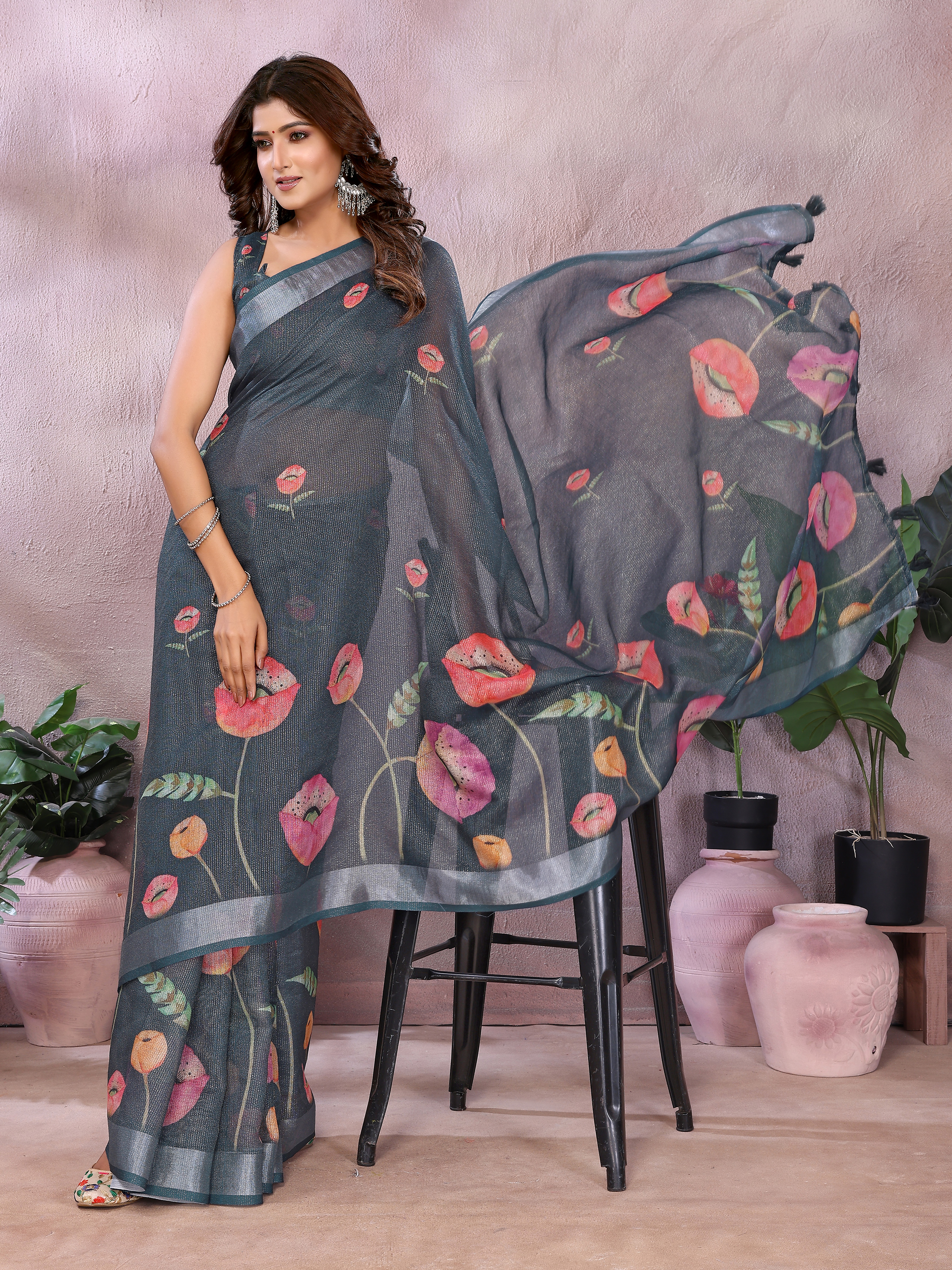
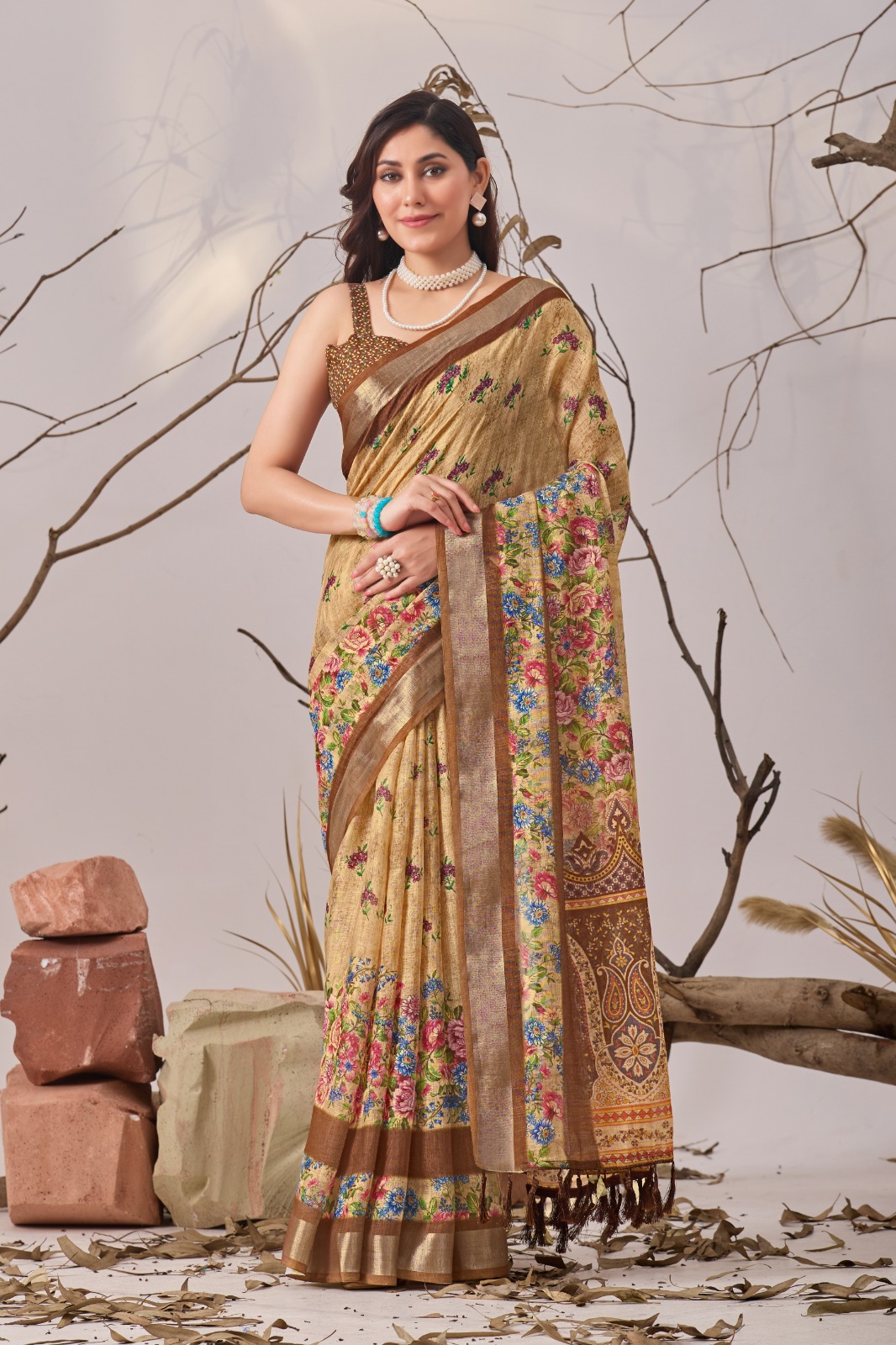
Rolling is also preferable when a saree has a wide zari border or a pallu that carries raised details. Metallic yarn can become dull, kinked or abraded when a sharp fold is pressed under other garments. Tissue Handloom Cotton Saree with Zari Weave & Floral Print and Teal Green Tissue Handloom Cotton Saree With Printed Pallu should therefore be stored with their decorated areas supported and free from heavy compression.
Folding remains suitable for many robust cotton sarees when the folds are changed occasionally and the saree isn't packed tightly. A Kanjeevaram saree, Banarasi silk saree or Chanderi saree may each require a different approach depending on zari, silk content, finish and embellishment. Fabric name alone doesn't decide the method.
Which Saree Fabrics Benefit Most from Rolling?
Tissue cotton, zari-rich weaves, delicate silk blends and sarees with raised decoration benefit most from rolling for long-term storage. Smooth, sturdy everyday cotton can generally be folded, provided the fabric is clean and completely dry.

Why tissue cotton deserves extra care
Tissue cotton can hold a crease more visibly than a soft, loosely woven cotton because its structure often has a crisp hand and a subtle sheen. Long storage on a narrow fold may leave a line that becomes difficult to remove without careful steaming. Emerald Green Tissue Cotton Saree With Digital Floral Print and Olive Green Tissue Handloom Cotton Saree With Floral Prints are examples of light sarees where a wide roll can preserve the fall and surface appearance better than a compressed stack.
A tissue saree should not be rolled tightly enough to create tension. The roll should feel supported but loose, with no wrinkled fabric trapped beneath the next layer. A broad cylindrical core is safer than a thin stick because a larger diameter reduces the sharpness of the curve.
Why zari and textured work change the decision
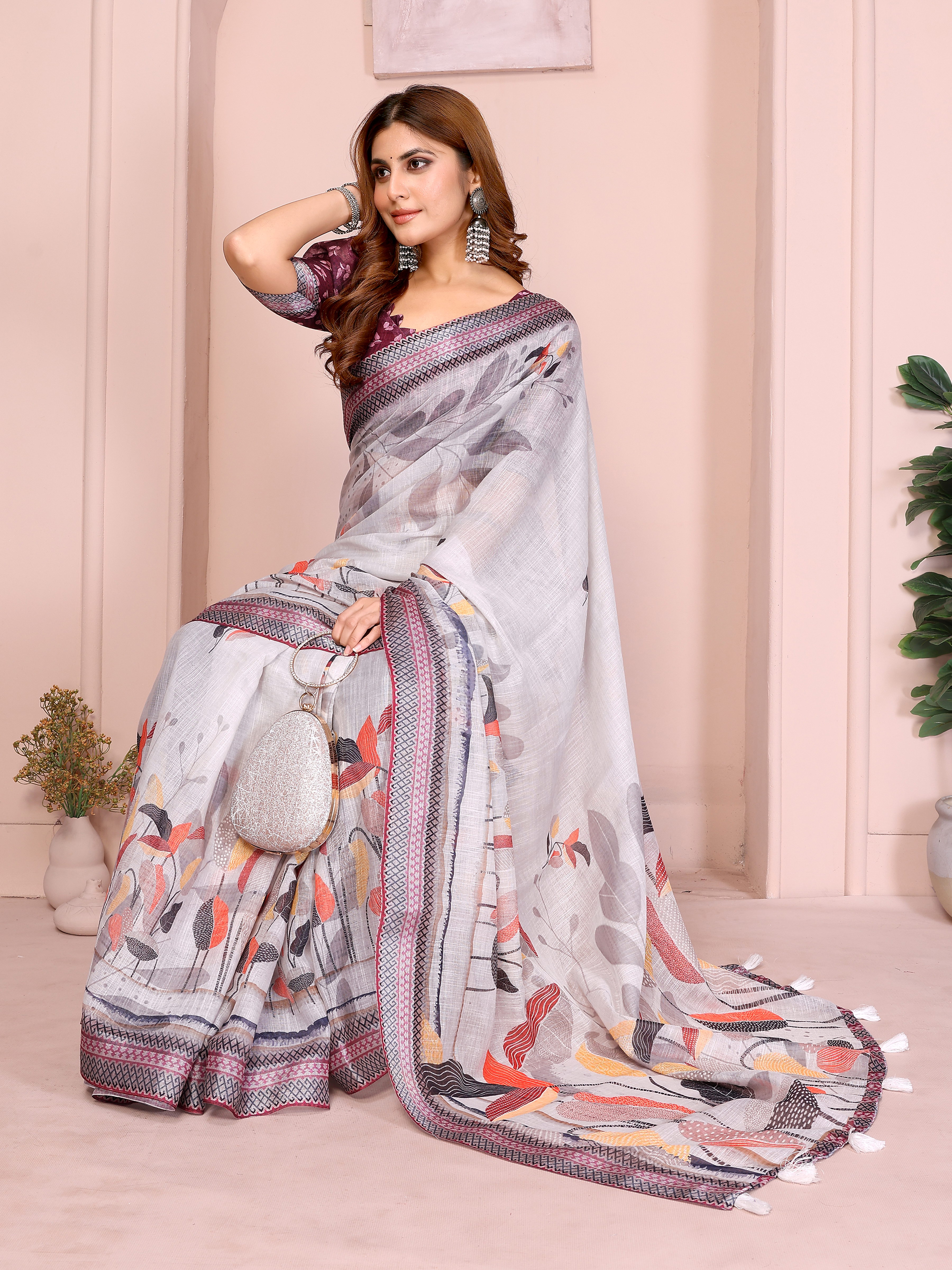
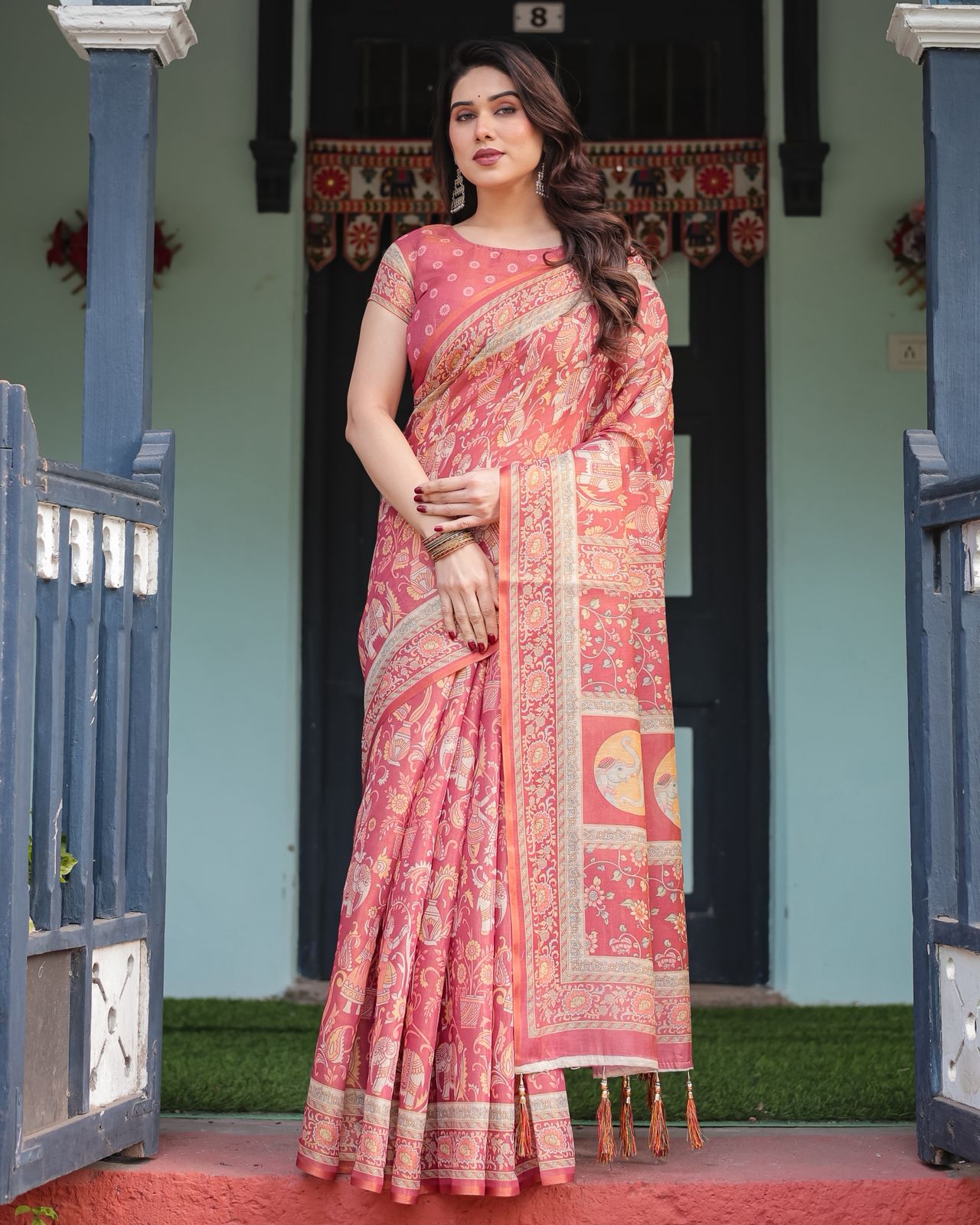
Zari requires separation from rough surfaces, direct plastic contact and excessive pressure. Zari is a metallic thread or metallic-looking thread used in borders, pallus and woven motifs, and repeated folding can stress the same sections of that thread. Ivory Rust Handloom Floral Saree with Storytelling Pallu should be rolled with the pallu flat and protected rather than folded into a small rectangle.
Banarasi silk, Kanjeevaram and Chanderi are not automatically roll-only fabrics. A plain Chanderi saree with no fragile embellishment may be folded with soft paper between layers, while a heavily zari-worked Banarasi silk saree may benefit from rolling. A traditional Kanjeevaram saree can also be folded if it's rotated and stored without pressure, but rolling may help during long periods of disuse.
How Should a Saree Be Prepared Before Rolling?
A saree should be cleaned according to its care label, dried fully in shade and checked for moisture before rolling. Dirt, body oil and invisible perspiration can attract insects or create stains that darken during storage.
- Wash or air the saree appropriately. Follow the stated care instructions rather than assuming that every cotton saree can tolerate a vigorous machine cycle. Dry the saree completely, because even slight dampness inside a roll can encourage mildew.
- Remove surface dust. Shake the saree gently outdoors or use a clean, soft garment brush. Avoid stiff brushes on zari, digital prints and delicate floral work.
- Inspect the borders and pallu. Look for loose threads, damp patches, colour transfer and snagged zari. Repairing a loose thread before storage is safer than allowing it to catch during unrolling.
- Place clean tissue between vulnerable surfaces. Unbleached cotton muslin or acid-free tissue paper can reduce friction. Avoid newspaper because ink can transfer, and avoid coloured tissue because dye may bleed.
- Remove heavy accessories. Brooches, pins, tassel charms and metal clips should not remain attached. These objects can press marks into the weave or catch the fabric.
Teal Tissue Cotton Saree With Floral Print - Varnavi should be prepared in the same way as any other tissue cotton saree: the product name doesn't replace a fabric-care check, and the saree should be fully dry before wrapping.
What Is the Safest Way to Roll a Saree?
The safest way to roll a saree is to place the fully spread saree on clean muslin or acid-free tissue, align the edges, support the pallu and roll it loosely around a wide smooth core. The roll should not be tightened by pulling the fabric.
- Choose a core. Use a smooth, wide archival tube or a clean fabric-covered cylindrical support. A diameter of about 7.5 to 10 centimetres is more forgiving than a narrow dowel. Never use a rough, splintered or adhesive-covered tube.
- Protect the core. Wrap the core in washed muslin or acid-free tissue so the saree never touches cardboard, wood residue or adhesive.
- Spread the saree flat. Place the saree on a clean bed or large table. Align the selvedges and smooth the fabric with your palms instead of pulling at the edges.
- Position the pallu. Keep the pallu flat and visible within the first layer of the roll if it has zari, embroidery or a printed design. Do not fold a decorated pallu into a narrow bundle.
- Roll with even pressure. Turn the core slowly and keep the width aligned. Stop and smooth any diagonal wrinkle before continuing.
- Wrap the finished roll. Cover the roll with breathable muslin and secure the covering with a loose cotton tie. Do not use rubber bands, adhesive tape or tight plastic.
A rolled saree should retain a cylindrical shape without bulges or compressed edges. If the roll feels hard, narrow or tightly bound, the storage method is placing unnecessary tension on the fabric.
Where Should a Rolled Saree Be Stored?
A rolled saree should be stored horizontally in a cool, dry, dark cupboard with airflow and without weight pressing on top of it. Direct sunlight, damp walls, hot lofts and sealed plastic bags create avoidable risks.

Choose a shelf that allows the roll to lie flat rather than stand vertically on one end. Vertical storage can cause the lower layers to bear uneven pressure. Keep the roll away from freshly painted wood, incense, perfumes and cleaning chemicals, because odours and volatile substances can affect textiles over time.
Plastic garment covers are useful for short transport but are poor long-term storage when they trap humidity. Breathable cotton muslin is a better outer layer. In a humid climate, leave a small gap between stored textiles and the cupboard wall, and inspect the roll more frequently during the monsoon.
Keep rolled sarees separate from garments with sequins, hooks or rough zippers. A smooth roll can be scratched when another garment is pulled across it. A clean shelf and a little space around each roll are more protective than adding multiple layers of plastic.
Collections organised by price, such as Sarees from Rs 1000 to Rs 1500, Sarees Under 20% Off and Sarees Under 10% Off, may contain different fibres and finishes. Storage should be decided by the individual saree's construction, not by its price range or discount label. Sarees Flat 60% Off and Sarees Flat 50% Off also require the same fabric-based assessment before folding or rolling.
How Often Should a Rolled Saree Be Unwrapped?
A rolled saree should be unwrapped and inspected every two to three months, or monthly during a humid monsoon period. Regular inspection catches moisture, insects, colour changes and pressure marks before they become permanent.

Unroll the saree on a clean surface and allow it to air in indirect light for a few hours. Do not leave a dark saree in harsh sunlight to remove odour, because strong light can fade dyes and prints. Check the edges, the zari border, the beginning and end of the roll, and the pallu for dampness or snagging.
Change the rolling direction or reposition the first layer during a long storage period if the care instructions permit it. Rotating the pressure points prevents one border from remaining on the outside or inside of the roll for years. Rewrap the saree only after it's completely dry.
A saree that has developed a sharp crease should not be ironed directly at high heat. Place a thin cotton cloth over the saree and use the lowest suitable temperature, or choose professional textile care when zari, silk or a delicate finish is involved. Steam should never saturate a stored saree.
When Is Folding Still the Better Choice?
Folding is still the better choice for sturdy, frequently worn sarees that are stored for short periods and don't have fragile zari or raised surface work. Folding also uses less shelf space and makes a wardrobe easier to organise.
Fold a robust cotton saree along different lines each time instead of reproducing one permanent crease. Keep the folds broad, avoid pressing the stack under heavy garments and place soft tissue between metallic or textured surfaces. A saree that's worn every few weeks is less likely to suffer from a long-term pressure line than a saree left untouched for a year.
Rolling isn't a cure for poor storage. A damp saree can mildew inside a roll, a rough tube can snag a selvedge, and a tight tie can create a new compression mark. Cleanliness, dryness, breathable wrapping and periodic checks matter whether a saree is rolled or folded.
The simplest decision rule is practical: roll a delicate, zari-worked or long-stored saree; fold a durable, frequently used saree with soft support and changing crease lines. For tissue cotton, inspect the weave and pallu before choosing. When a Saree Needs Rolling Instead of Folding for Storage is answered by construction and conditions, not by fashion, price or the name of the collection.
Common Questions About Rolling and Folding Sarees for Storage
Can every saree be rolled for storage?
Most sarees can be rolled if they are clean, dry and supported by a smooth, wide core, but rolling is not necessary for every saree. Very structured sarees may be easier to fold, while tissue cotton, zari-worked and delicate sarees usually benefit more from rolling.
How do I store a tissue cotton saree without creases?
Store a clean, fully dry tissue cotton saree loosely around a 7.5 to 10 centimetre smooth core, with muslin or acid-free tissue as protection. Avoid tight ties, narrow rods, direct sunlight and heavy garments placed on top.
Can zari sarees be folded instead of rolled?
Zari sarees can be folded for short-term storage when soft tissue separates the layers and the crease lines are changed periodically. Rolling is safer for long-term storage because it reduces repeated pressure on the same metallic threads and decorated borders.
Is plastic suitable for long-term saree storage?
Plastic is suitable for short transport but is usually unsuitable for long-term storage because it can trap humidity. Breathable cotton muslin in a cool, dry cupboard provides better airflow and reduces the risk of mildew.
How often should stored sarees be aired?
Stored sarees should be inspected every two to three months and about monthly during humid monsoon weather. Air the saree for a few hours in indirect light only after confirming that the storage area is clean and dry.
What should I do if a saree already has a permanent fold line?
Do not apply high heat directly to the saree or iron over zari, prints or delicate finishes. Place a thin cotton cloth over the area and use a low suitable temperature, or consult a professional textile cleaner for silk, metallic work and stubborn creases.